
Photos and videos
Yi Ding retweeted

16 Oct 2025
Announcing our much-awaited updated aladynoulli, a fully interpretable Bayesian model that considers predictive and explanatory disease trajectories across the life course for individuals, anchored on underlying PGS. medrxiv.org/content/10.1101/…
5
20
92
40,041
Yi Ding retweeted

5 Sep 2024
Using complex models to detect genetic interactions (epistasis) can boost power, but how do we quantify their importance and interpret those 'epistasis signals'?
In our latest Genome Research paper, we revisit the simplest form—quadratic interactions—and introduce a scalable algorithm for in-depth epistasis quantification. Our findings highlight the unignorable and heterogeneous impact of epistasis in human genetics.
Many thanks to Prateek Anand, Aakarsh Anand, Dr. Joel Mefford, and my PI, Prof. @sr_sankararaman!
Full text: genome.cshlp.org/content/ear…
4
6
34
6,481

RT @PGCgenetics: 🚨Review alert! Admixed populations make up a large portion of global genetic diversity but are often excluded from genomic…
7
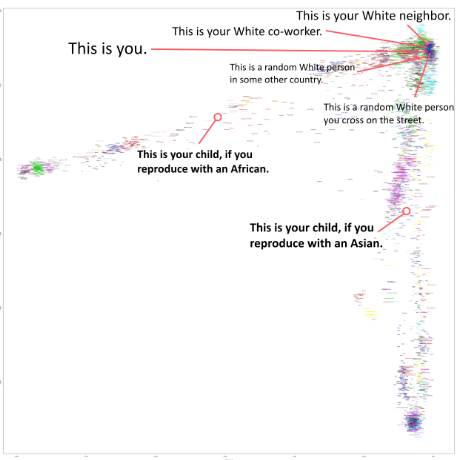
Human genome has 3⃣0⃣0⃣0⃣0⃣0⃣0⃣0⃣0⃣0⃣ bp, only 1⃣0⃣0⃣0⃣0⃣ are used in the figure! Chromosomes pass down variants as a group to make sure your kid is more related to you. You never know how innovative racists can be when distorting genetics for their evil propaganda. 😡
24 Aug 2024

Most people don't realize that interbreeding with other races means that strangers on the street from your own race are more related to you than your own child. Amplify this, @elonmusk and spread the knowledge!
1
1
32
5,614
Yi Ding retweeted

17 Jul 2024
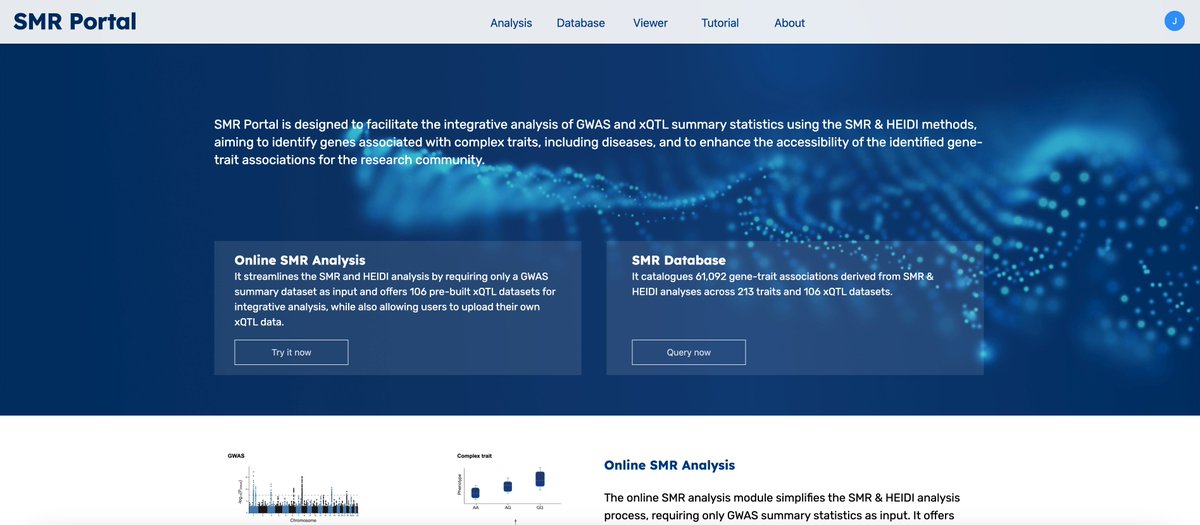
SMR Portal: an online analysis, visualisation, and database platform for mapping complex disease genes. Powered by Westlake FutureGene. Try it out at: yanglab.westlake.edu.cn/soft…. See a tutorial video at: yanglab.westlake.edu.cn/soft…
1
29
81
7,337
Yi Ding retweeted

29 May 2024
📢Excited to share our comprehensive review led by @EstherHL5 on gene-environment interactions.
Within, you'll find:
🛠️Summary of current methods by underlying hypothesis
🗺️Framework for considerate epidemiological modeling
🗣️Call for greater contextual diversity needed for GxE
29 May 2024

Gene–environment interactions in human health go.nature.com/3UXaIsJ #Review by Esther Herrera-Luis @EstherHL5, Kelly Benke, Heather Volk, Christine Ladd-Acosta @GnomeChris & Genevieve L. Wojcik @genandgenes @JohnsHopkinsEPI
17
30
8,462
🥳Excited to announce my new journey as a Postdoc Research Fellow at Gusev Lab today! @SashaGusevPosts (1/4)
4
4
58
7,412
I am immensely grateful to my PhD advisor @bpasaniuc and the UCLA community for their exceptional training and support, which cultivated my research interests and skill set, and led me to this incredible opportunity. (3/4)
1
7
1,348
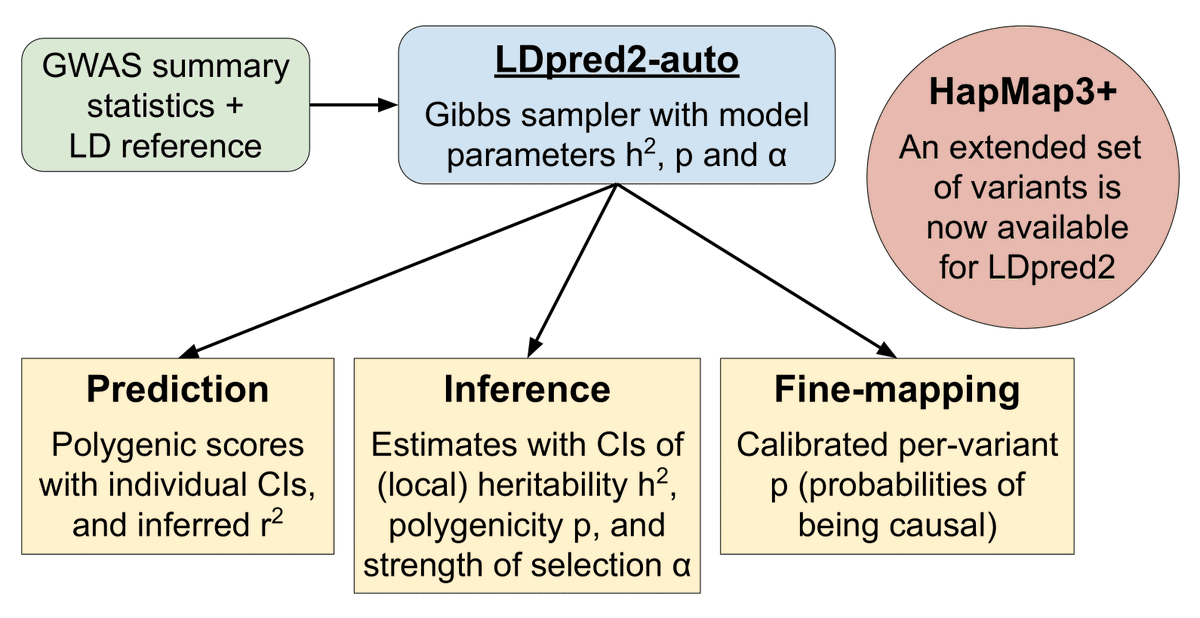
RT @privefl: Read more about this new *LDpred2* work, now published in @AJHGNews 🥳
authors.elsevier.com/a/1i372…
34
Yi Ding retweeted

30 Oct 2023
Meet Rosace, a robust deep mutational scanning analysis tool that incorporates positional information and mean-variance shrinkage. Check it out if you are running DMS experiments or handling DMS data! (1/n)
biorxiv.org/content/10.1101/…
1
20
52
30,243
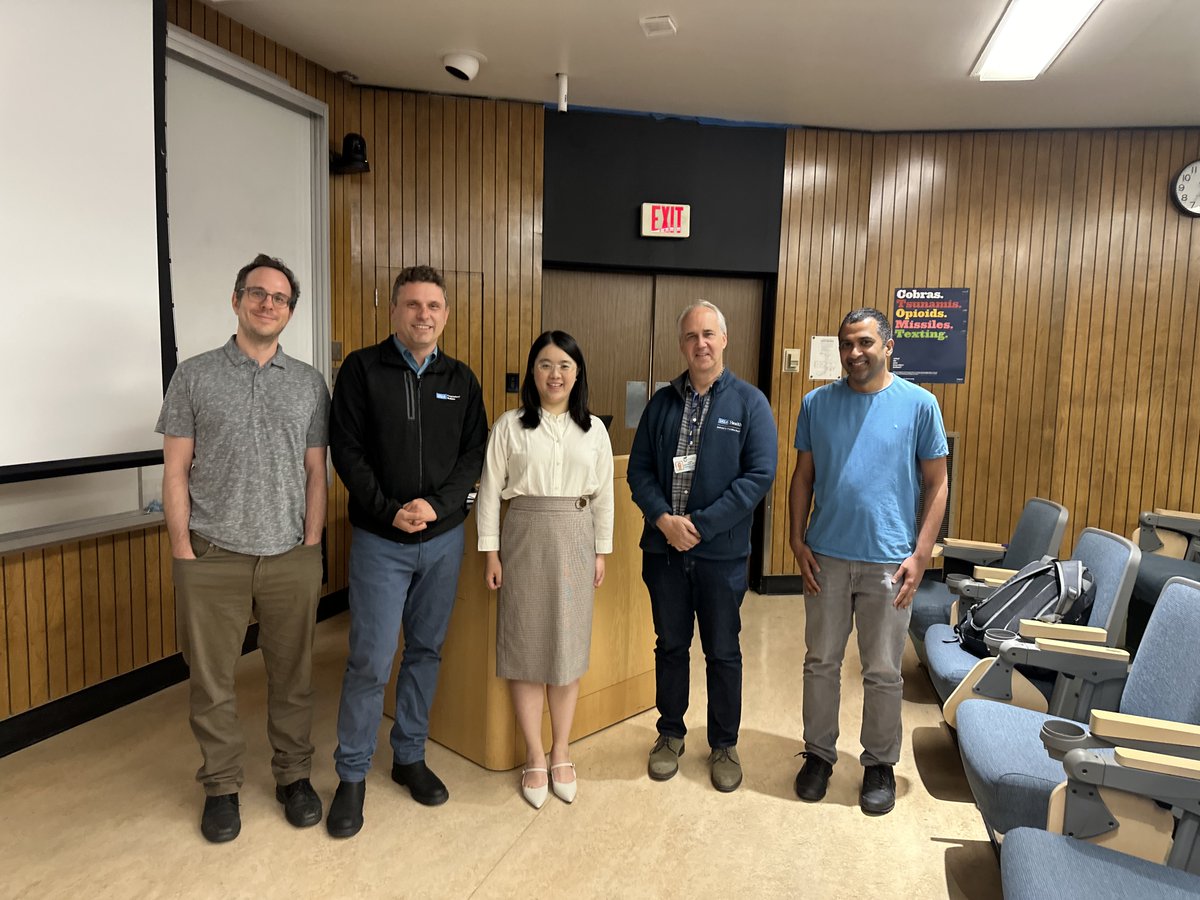
I am thrilled to have reached this milestone! 🎉I am grateful to my advisor and committee members for their incredible mentorship. My heartfelt thanks also go to my colleagues and friends, who have been an integral part of this amazing journey, providing me support at every step!
30 Oct 2023

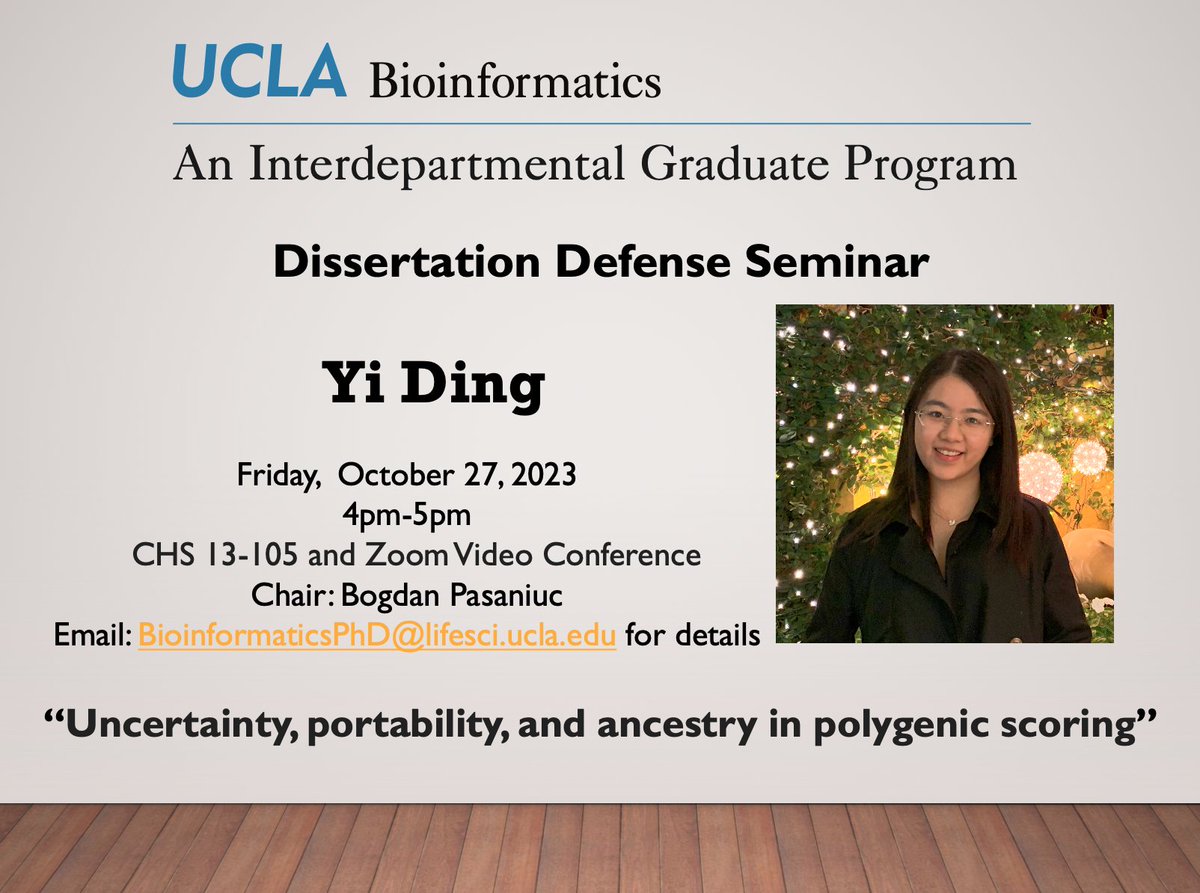
Congratulations Dr @yi_ding_ on successfully defending her PhD thesis: "Uncertainty, portability, and ancestry in polygenic scoring".
Many thanks to @TheBoutrosLab, @GeschwindLab and @sr_sankararaman for amazing mentorship!
3
4
71
7,302
Yi Ding retweeted

25 Sep 2023
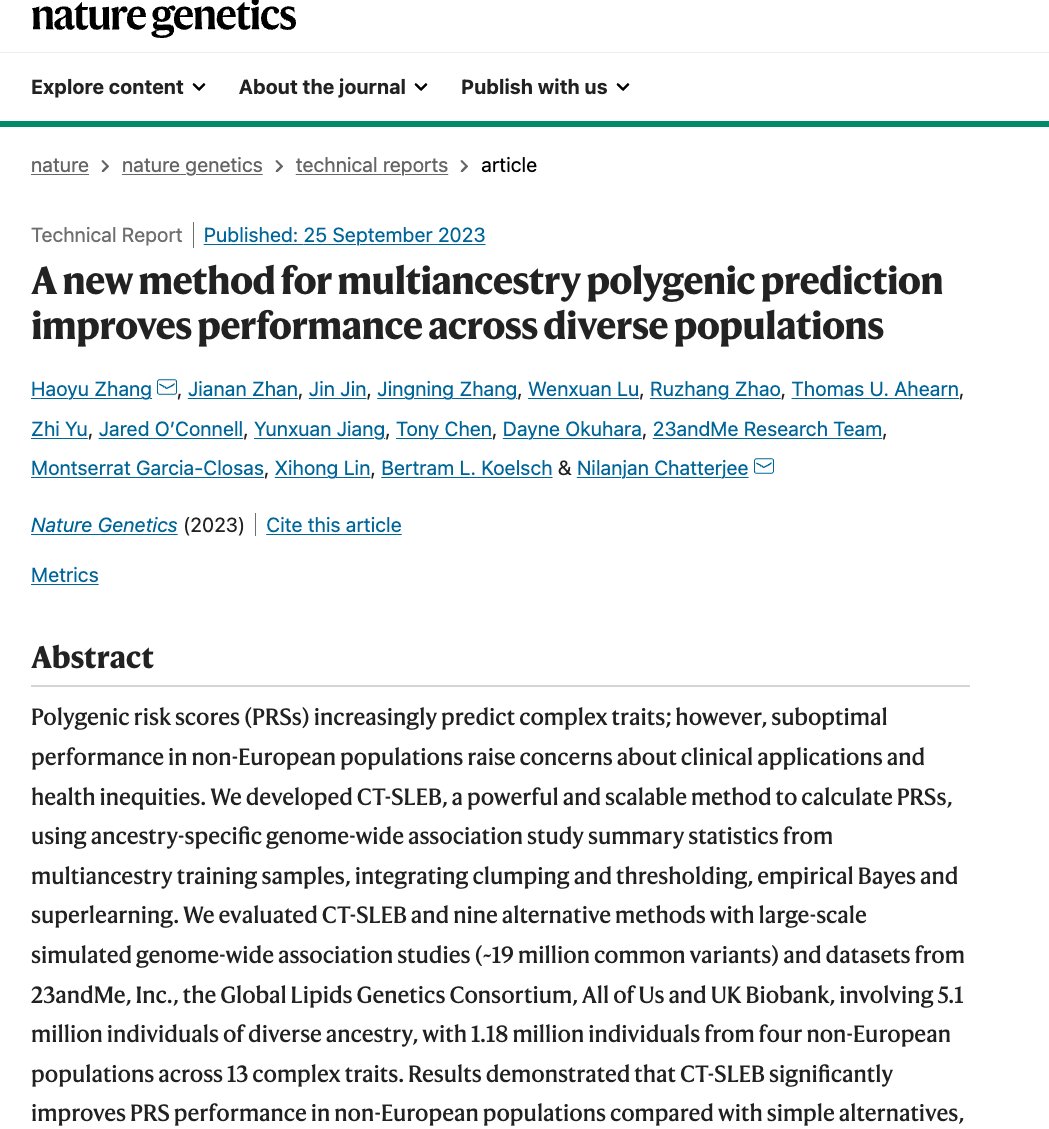
Our new multi-ancestry PRS paper is now on Nature Genetics: nature.com/articles/s41588-0…! Thanks for the guidance from @nilanjan10c @XihongLin . Also huge thanks to all the amazing collborators: @JiananZhan @Jin_10ustc @JingningZhang35 and all others 1/X.
2
47
159
48,176
Yi Ding retweeted
15 Aug 2023
Please check our newly accepted #naturecommunications paper:
doi.org/10.1038/s41467-023-4…
We developed FastKAST, a highly-scalable algorithm to identify non-linear genetic effects on complex traits in large datasets. Applying FastKAST on #UKBB, we discovered new epistatic evidence
6
23
69
7,897
Yi Ding retweeted

31 May 2023
My preprint on continuous optimization of structure using observational and interventional data is out! This is work with @JingyouR @sr_sankararaman @hjpimentel . arxiv.org/abs/2305.19215 (1/n)
4
18
45
14,787
Check out our latest paper in @Nature! We unveil the fascinating variation of individual polygenic scoring accuracy across the genetic ancestry continuum!
17 May 2023
We offer an individual-level interpretation of polygenic score (PGS) transferability across genetic ancestries:
PGS accuracy varies individual-to-individual across the genetic-ancestry continuum, even in populations usually labeled as homogeneous.
1/
nature.com/articles/s41586-0…
3
27
99
19,524
Many thanks to our amazing coauthors @kangchenghou, Ziqi Xu, @apimplaskar @PetterElla @BoulierKristin @privefl @bvilhjal @loldeloo @bpasaniuc!
1
3
5
1,566
We are grateful to the patients at @UCLAHealth for their invaluable participation in the ATLAS biobank. Special thanks to the Institute for Precision Health, @CompMedUCLA, OHIA, and our dedicated collaborators for their unwavering support.
3
6
1,423