
Agentic ROS plugin for OpenClaw, ClaudeCode, Google Gemini, and MCP to connect AI Agents to ROS2 robotics!
Joined March 2026
- Tweets 28
- Following 20
- Followers 125
- Likes 41
3 Photos and videos

Jun 12
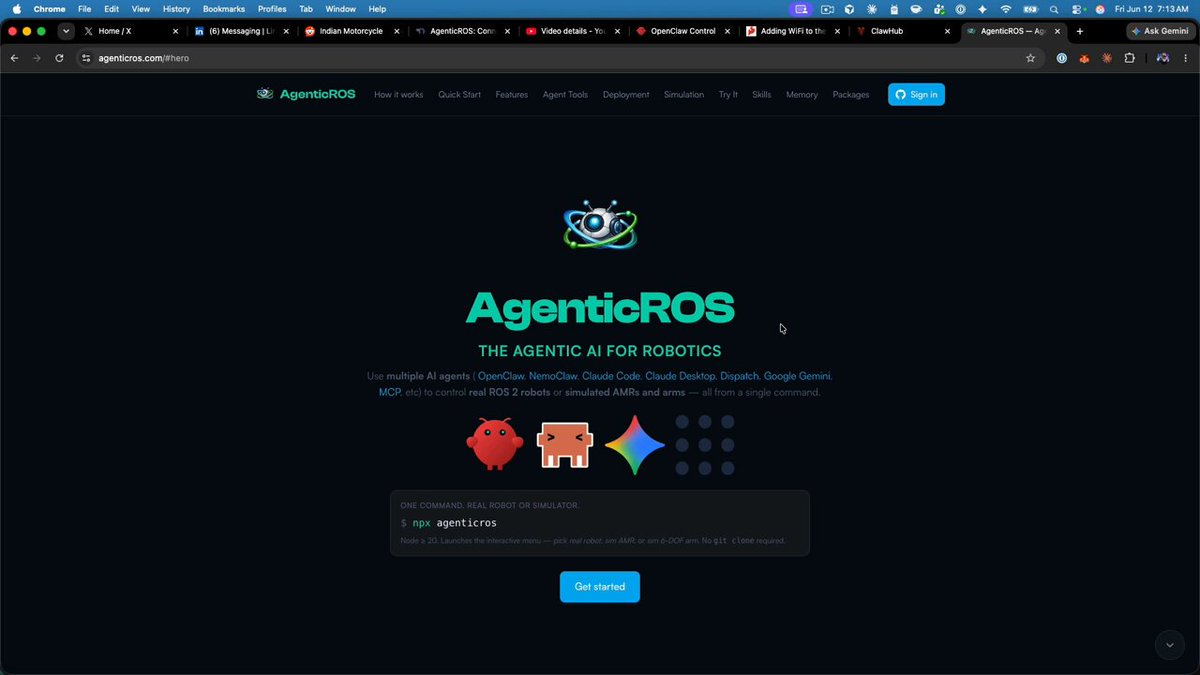
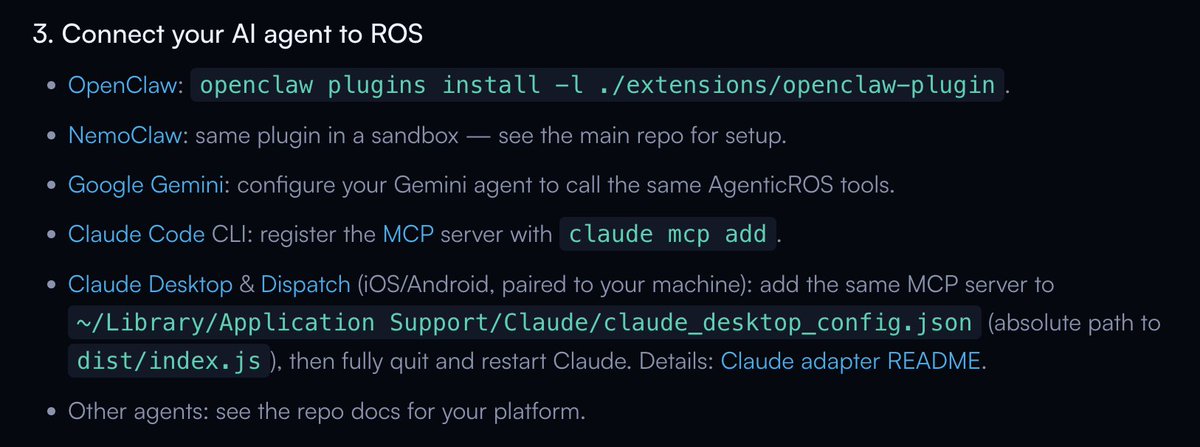
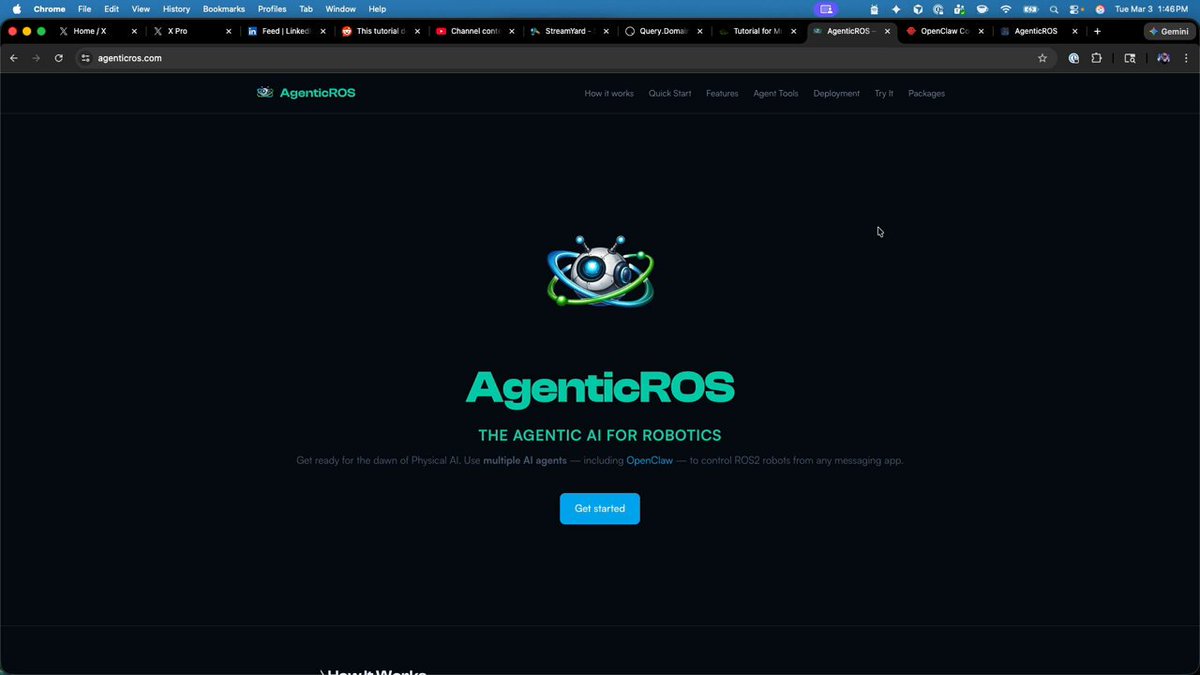
AgenticROS releases its new Skills Store allowing developers to search the skills marketplace for deterministic #ROS skills to add to their Physical AI powered robots and simply install them on their robot using the new @AgenticROS CLI!
More info at skills.agenticros.com
1
1
129
AgenticROS retweeted

Jun 8
Get started with @AgenticROS Physical AI using real robots or simulation powered by @nvidia #NemoClaw, #OpenClaw, #Claude, or #Gemini now only requires 1 command: npx agenticros! linkedin.com/pulse/agenticro…
1
4
172
AgenticROS retweeted
Jun 8
What happens when you connect #ROS 2 robots directly to AI agents?
Tomorrow I’ll be showing exactly that during the @nvidia Jetson AI Research Lab Call with a live @AgenticROS Physical AI demo. 🤖🚀
If you’re interested in robotics, ROS 2, AI agents, @RealSenseai computer vision, embodied AI, or building robots with NVIDIA Jetson, I’d love for you to join us.
My session:
🤖 From ROS to Physical AI: Connecting Robots to AI Agents with AgenticROS
We’ll explore how robots are evolving from traditional ROS applications into AI-powered autonomous systems by connecting ROS 2 to multiple AI agents including:
✅ NemoClaw
✅ OpenClaw
✅ Claude
✅ Gemini
I’ll also demonstrate how AgenticROS enables robots to share memory across AI agents, connect RealSense vision systems, and perform real-world Physical AI tasks.
Other sessions include:
🔥 Running Open Models and Agentic AI Efficiently on NVIDIA Jetson
🔥 Community project showcases
🔥 Hiring and networking opportunities for Physical AI and Embodied AI developers
📅 June 9, 2026
⏰ 9:00 AM PST
If you’re building robots, working with Jetson, experimenting with AI agents, or simply curious about the future of Physical AI, this should be a fun discussion.
Join us:
🔗 lnkd.in/gDvNJwyR
Discord:
🔗 lnkd.in/gUnxT2Mw
Looking forward to seeing fellow builders, researchers, and robotics enthusiasts there!
#AgenticROS #PhysicalAI #EmbodiedAI #Robotics #ROS2 #NVIDIA #Jetson #JetsonAI #ComputerVision #EdgeAI #RealSense #AIAgents #GenerativeAI #OpenSource @NVIDIARobotics @NVIDIAAI
2
1
4
278
AgenticROS retweeted
May 26
2
1
14
691
AgenticROS retweeted
Jun 2
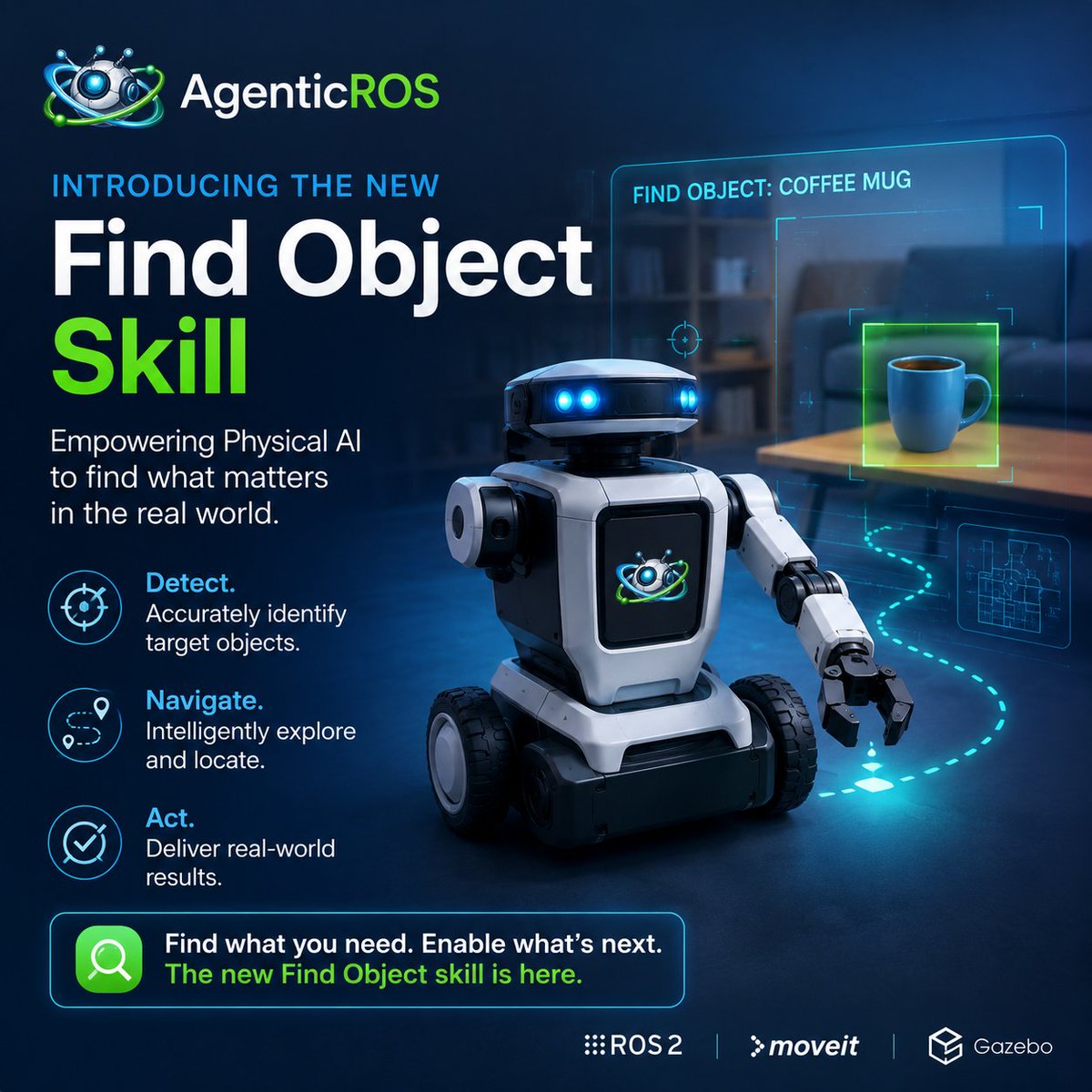
In addition to the @AgenticROS FollowMe skill, I just added a FindObject Physical AI skill allowing your @rosorg @RealSenseai powered robot to find objects in your space! Works with @NVIDIAAI #NemoClaw, @openclaw, @claudeai, and @GeminiApp
Try it: github.com/agenticros/agenti…
2
1
10
683
Jun 2
I remember this view like it was yesterday 😂
May 29

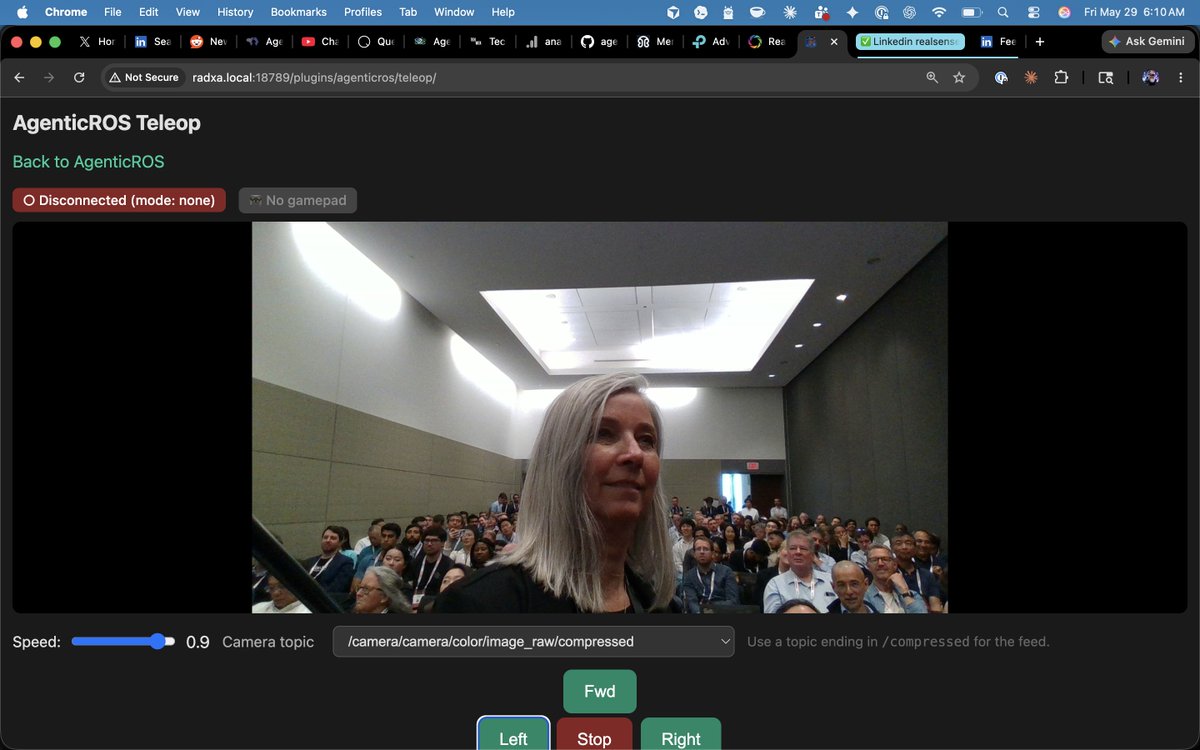
My robot's last memory from the @AgenticROS @RealSenseai demo talk at @Robotics_Summit as it looks at @PMalsch and the audience!
Powered by @OpenRoboticsOrg , @openclaw, @claudeai , @GeminiApp, and @NVIDIAAIDev #NemoClaw
1
2
178
Jun 2
Wow! Thanks for all of the new stars on GitHub!
May 28
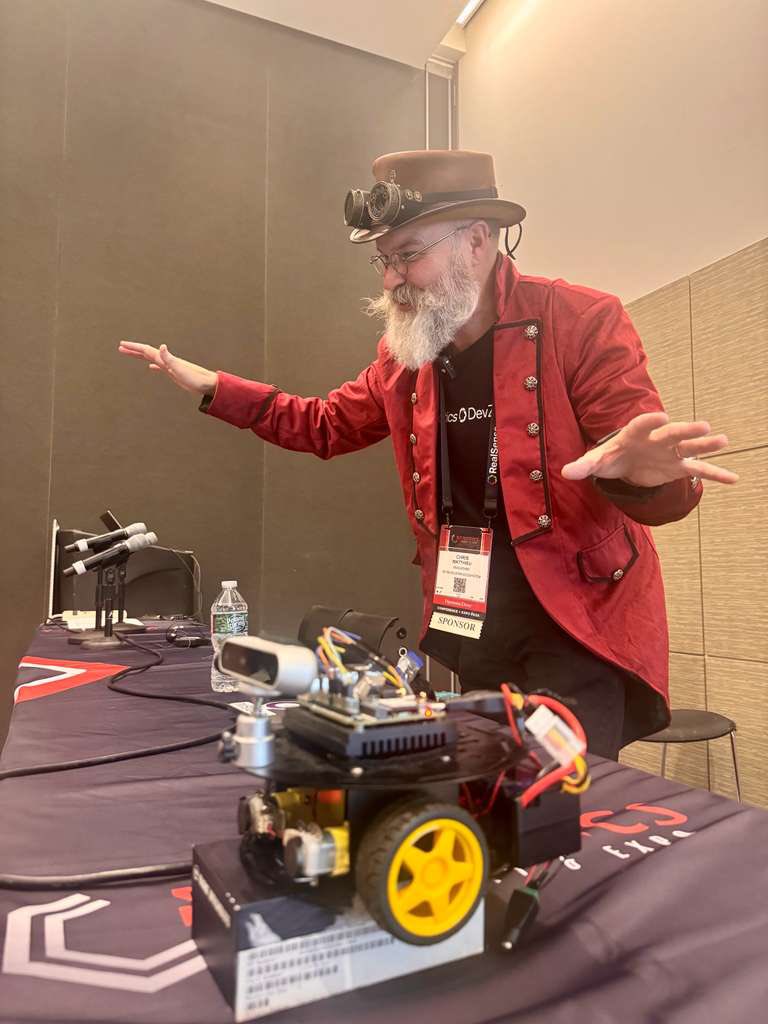
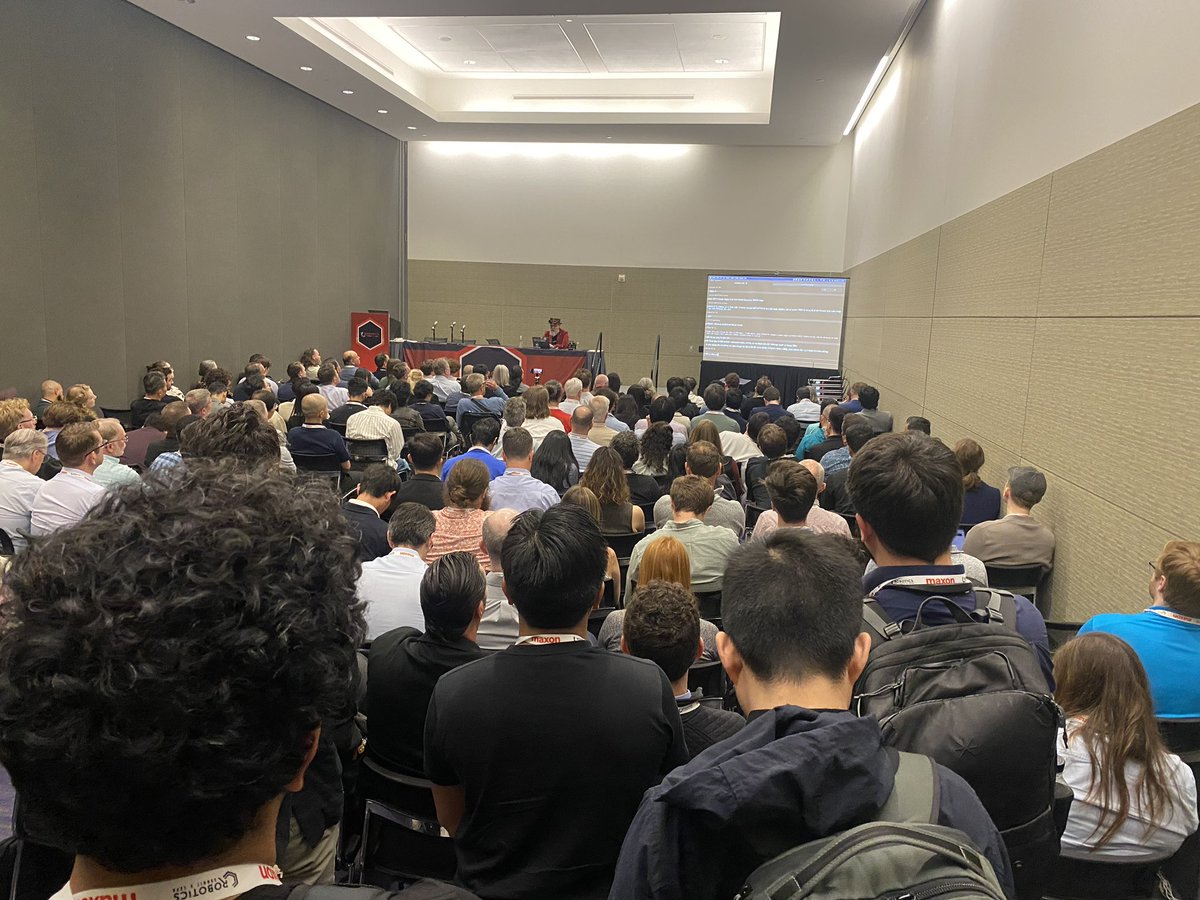
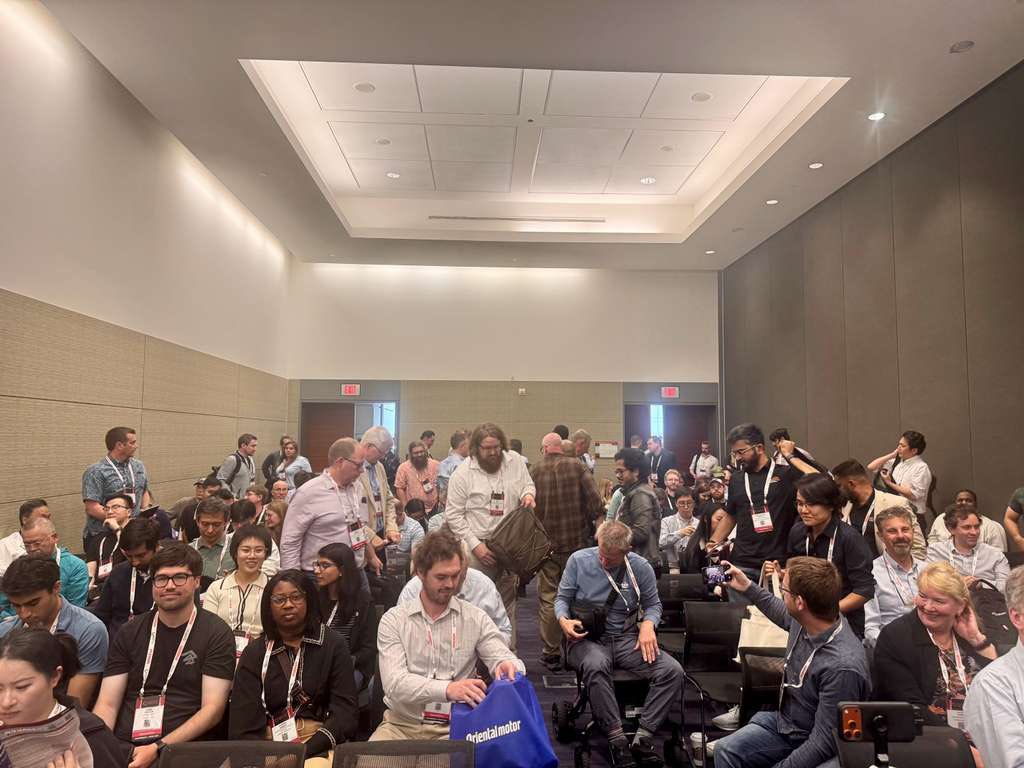
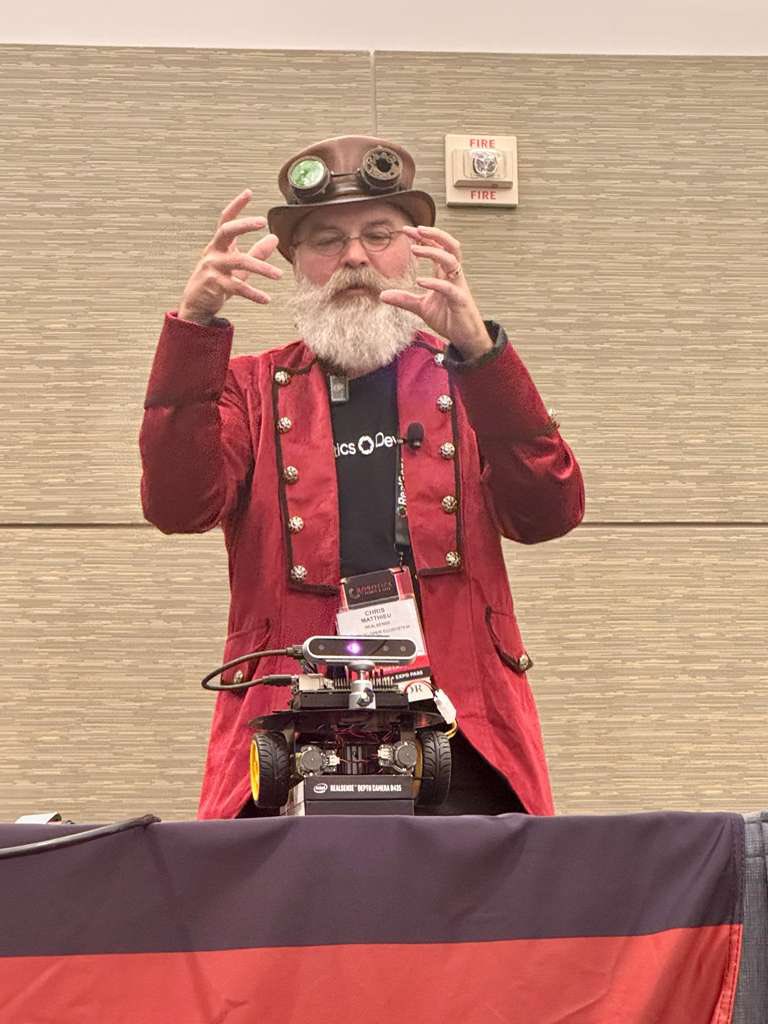
Standing room only at my @AgenticROS Physical AI talk at @Robotics_Summit! We live hacked a @RealSenseai @rosorg robot powered by @OpenClaw @Anthropic @GeminiApp i and @NVIDIAAI @NVIDIARobotics #NemoClaw
1
126
AgenticROS retweeted
May 15
Happy Friday!
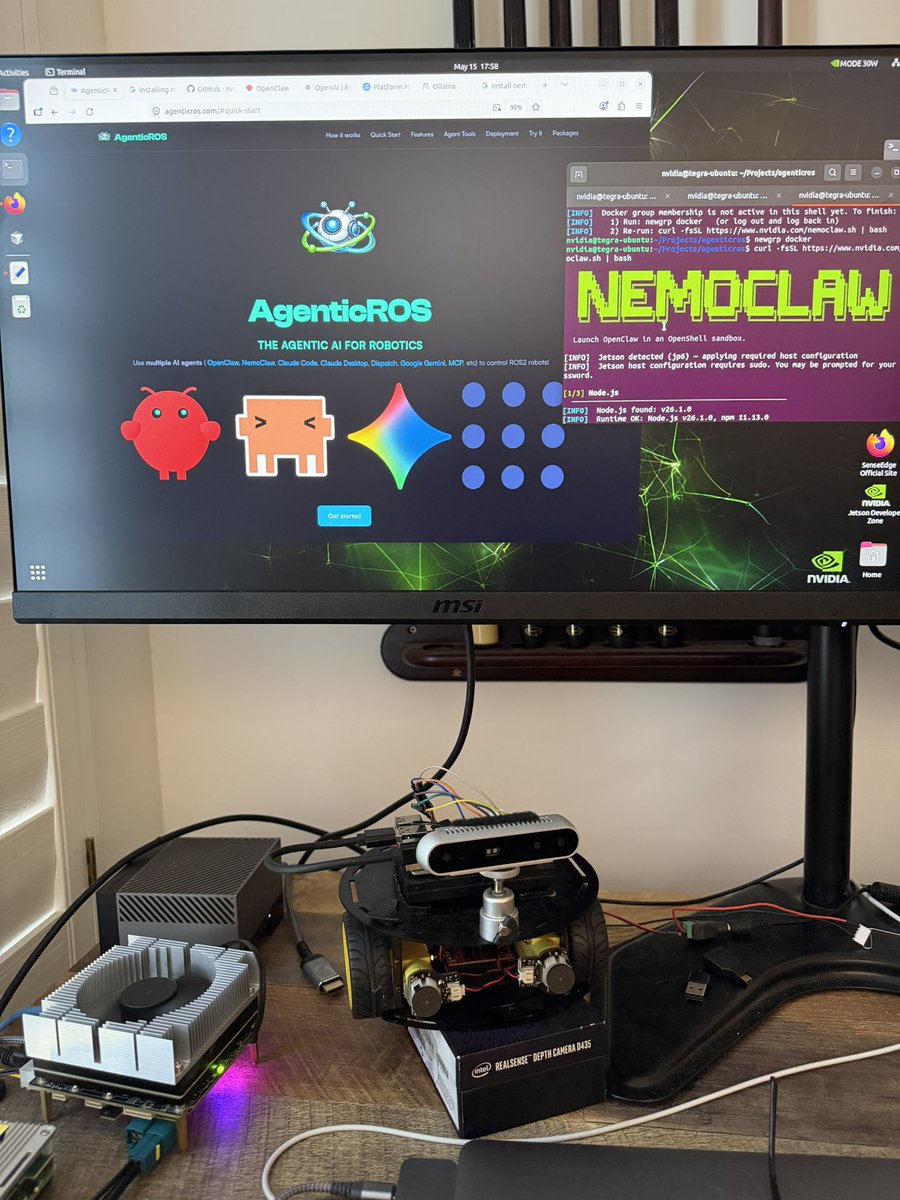
Installing @AgenticROS and @NVIDIA NemoClaw on my @AVerMedia AVerAI @RealSenseai powered Orin Jetson…
3
2
27
1,475
AgenticROS retweeted
May 18
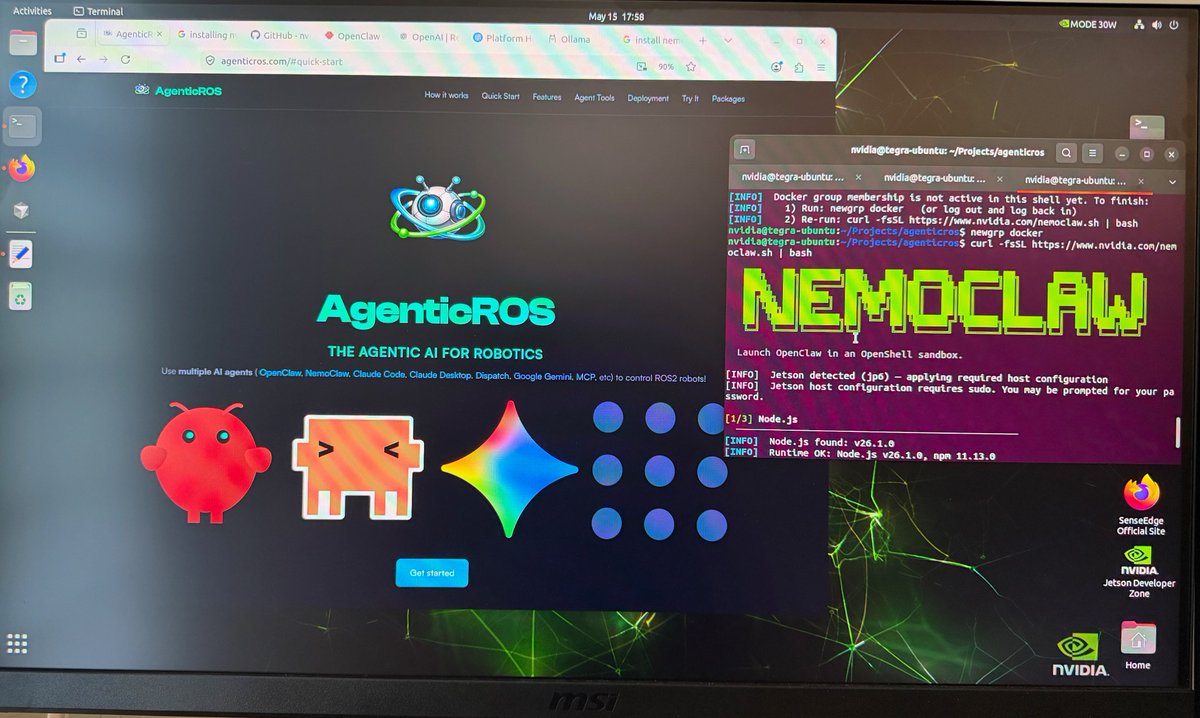
I was amazed at how easy it was to install @NVIDIAAI 's #NemoClaw on the @AVerMedia SenseEdge Development Kit (Orin Jetson) and integrate it seamlessly with my @AgenticROS #PhysicalAI framework with #ROS2 and @RealSenseai support!
I was also pleasantly surprised that it had built-in support for @ollama QWEN v2.5 LLM/VLM running locally!
Notice on the last screen shot, I asked NemoClaw to list its ROS topics and you can see all of the RealSense camera topics already streaming. I next asked, what does the robot see? It answered, "I see you sitting close to the canera in a chair, mostly left side of frame. Behind you there's a bright room with white shutters/doors on the right, guitars on stands and hanging on the wall, and some shelves or records near the back."
AgenticROS now has support for skills allowing you to add Follow Me or other skills to form Physical AI missions. More details available at agenticros.com
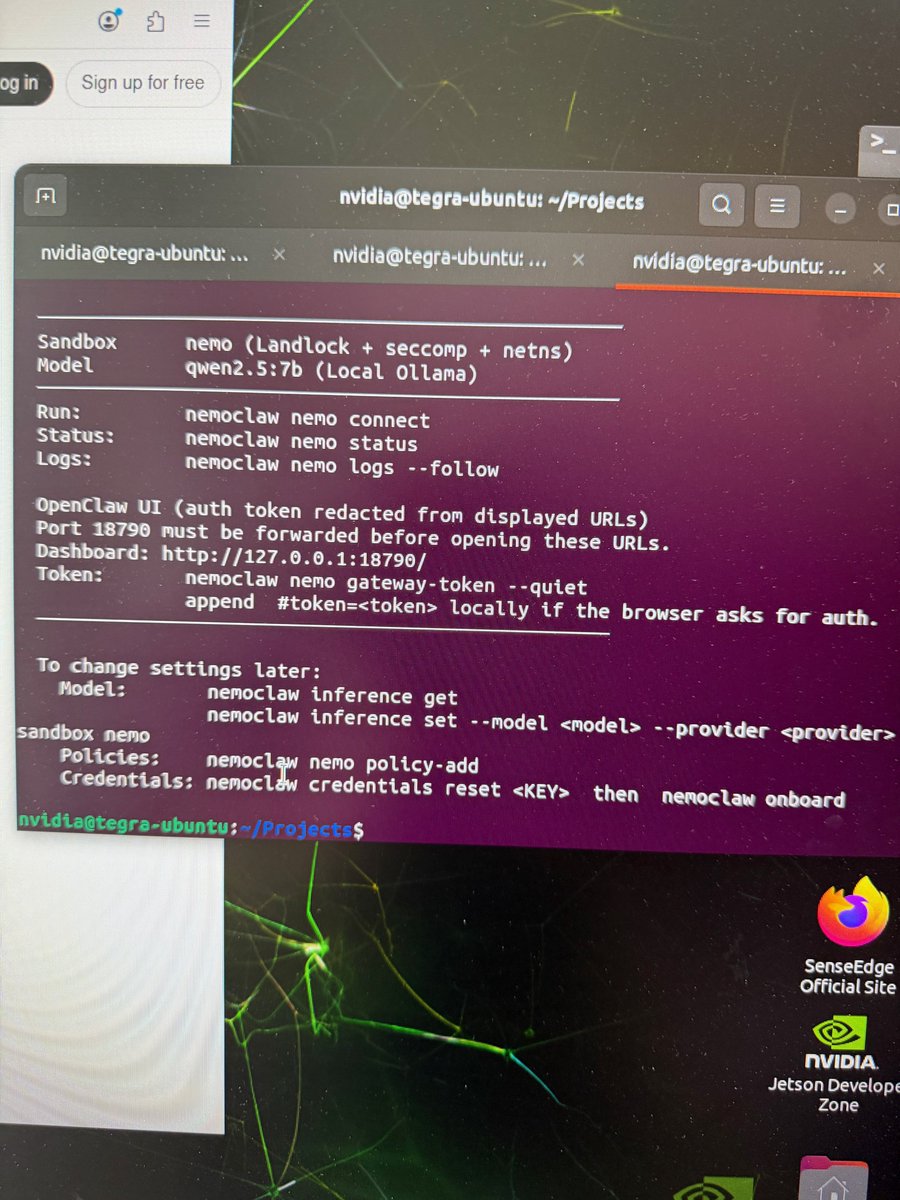
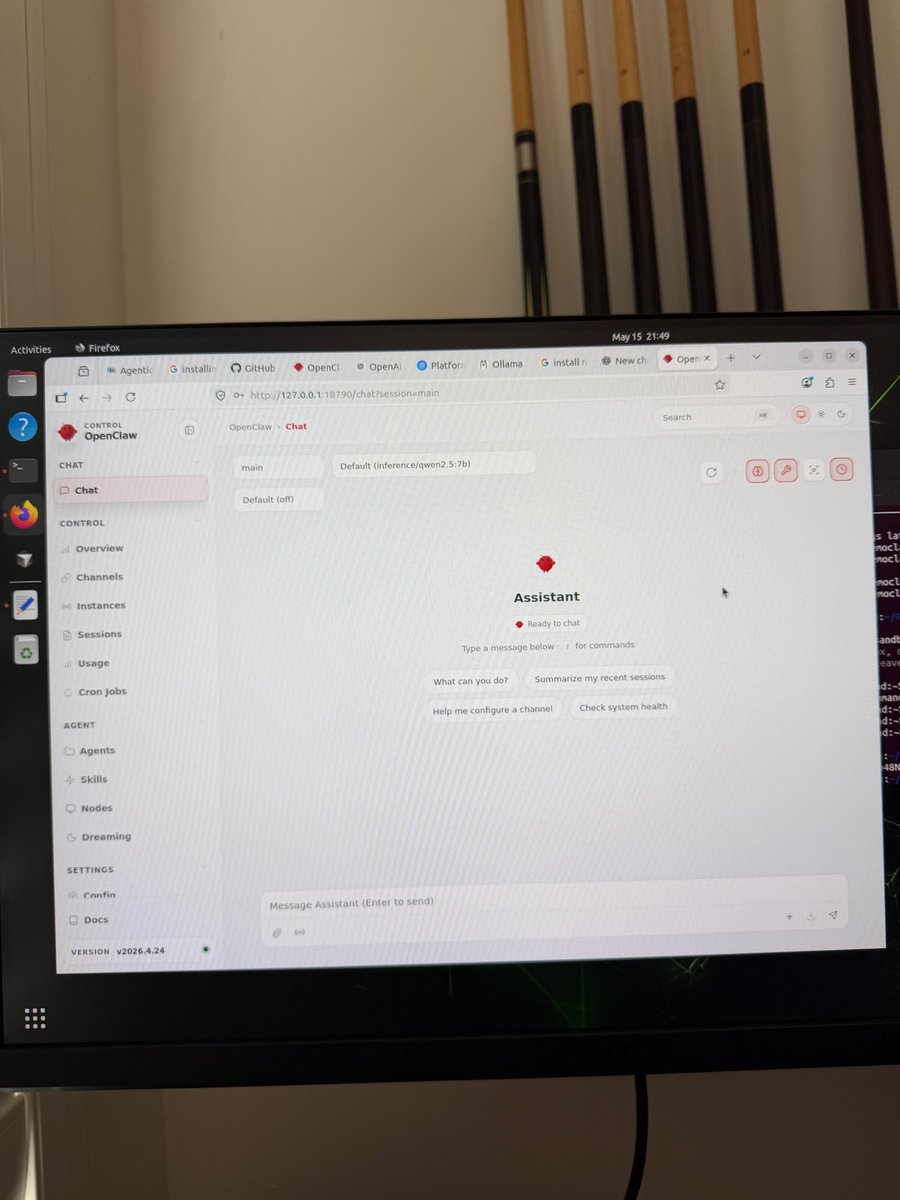
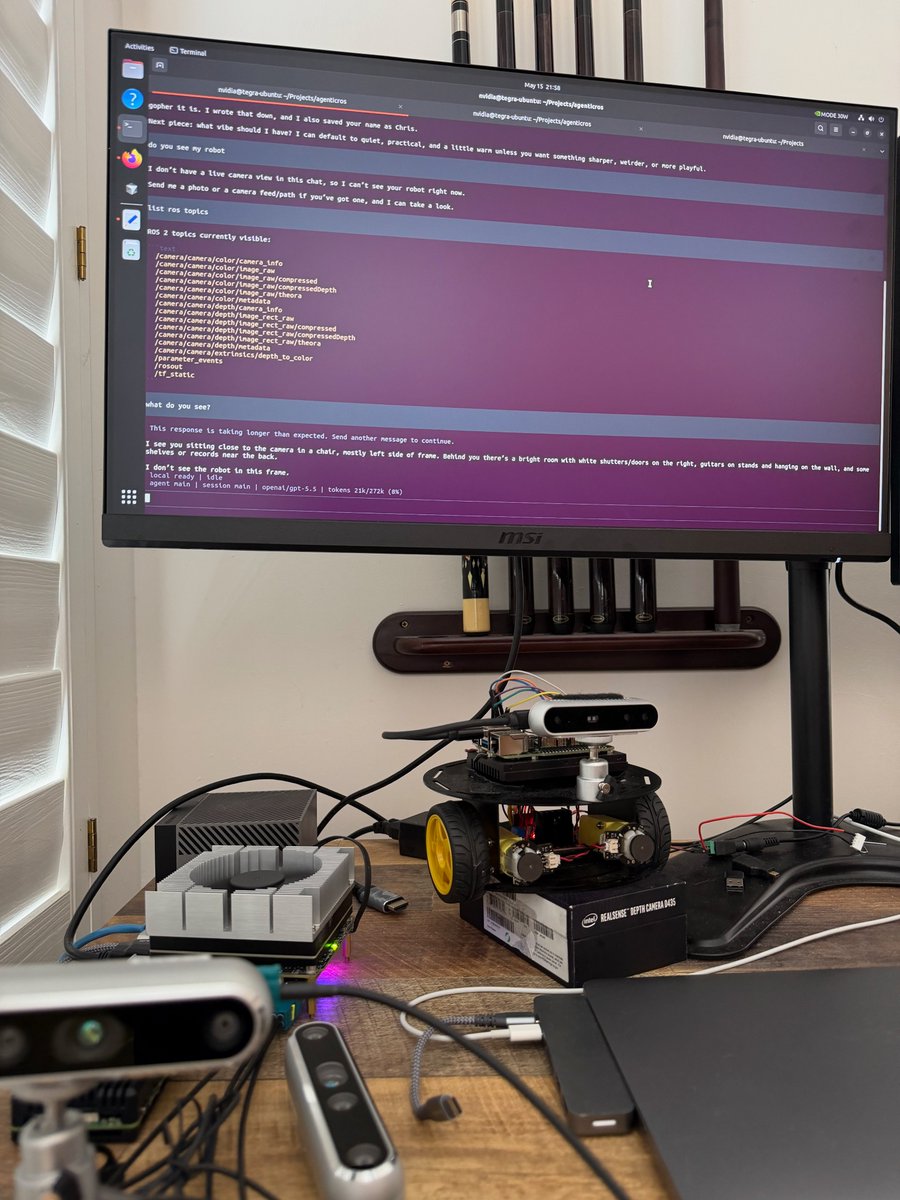
3
2
17
881
AgenticROS retweeted
May 18
Agentic AI is moving from software-only workflows into the physical world.
That shift needs a bridge between agent frameworks and real robot systems. That’s what we’re building with @AgenticROS.
AgenticROS connects AI agents to ROS2-powered robots through a shared robotics runtime that supports #ROS2 topics, services, actions, parameters, camera snapshots, depth sensing, and safety-checked actuation.
It currently includes adapters for @OpenClaw, @NVIDIAAI #NemoClaw, @claudeai, @OpenAIDevs #Codex, and @GeminiApp with transport support for Zenoh, rosbridge, local DDS, and WebRTC. That means the same robot capabilities can be exposed across multiple agent platforms while keeping the robotics layer consistent.
The bigger idea is an open foundation for Physical AI:
- Agents should be able to perceive through @RealSenseai stereo depth sensors
- They should reason over robot state and environment context
- They should safely act through ROS2 control interfaces
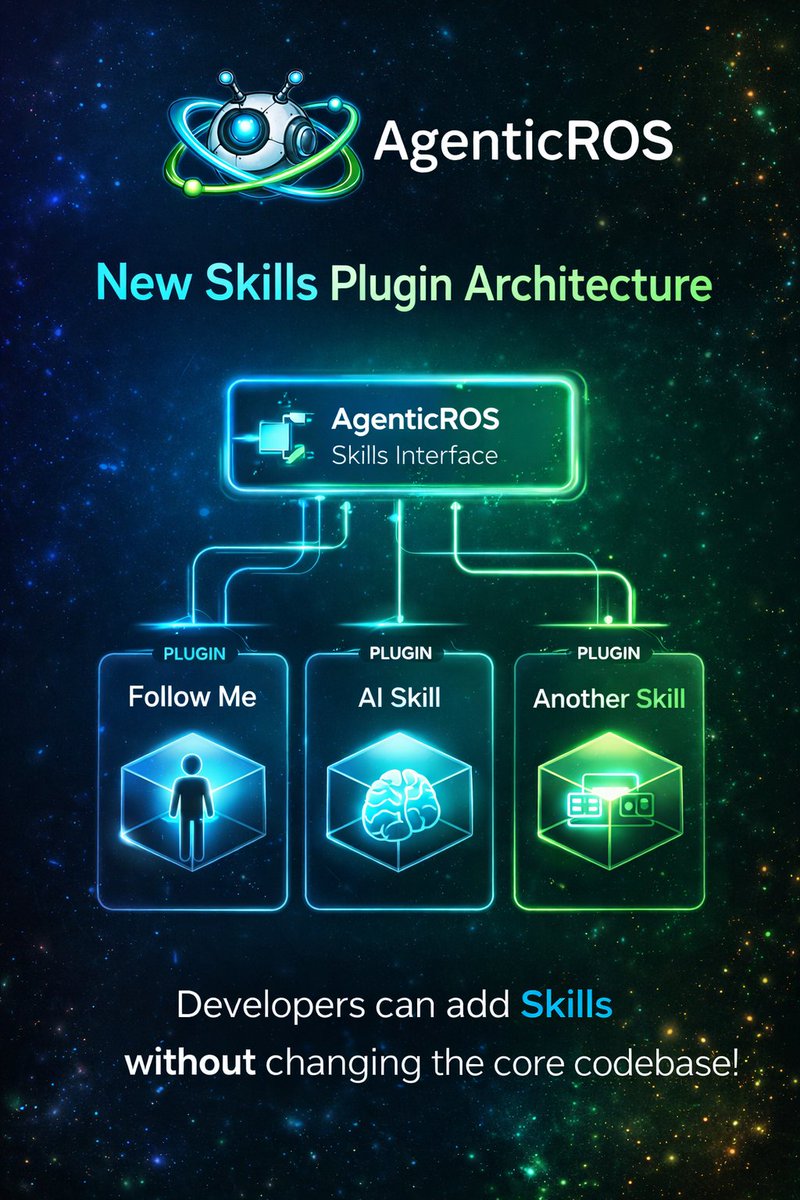
- New behaviors should be installable as skills rather than hardcoded into the core
- Robotics developers should be able to bring their existing ROS stacks into agentic workflows
AgenticROS also includes an open skill/plugin architecture, so capabilities like following a person, querying perception models, navigating, manipulating objects, or integrating external AI services can be added as modular packages.
The goal is simple: make ROS-powered robots accessible to agentic AI systems without locking developers into one model, one agent framework, or one robot platform.
Agentic AI needs a body. ROS-powered robots already have one. AgenticROS is the connective tissue. More details at agenticros.com
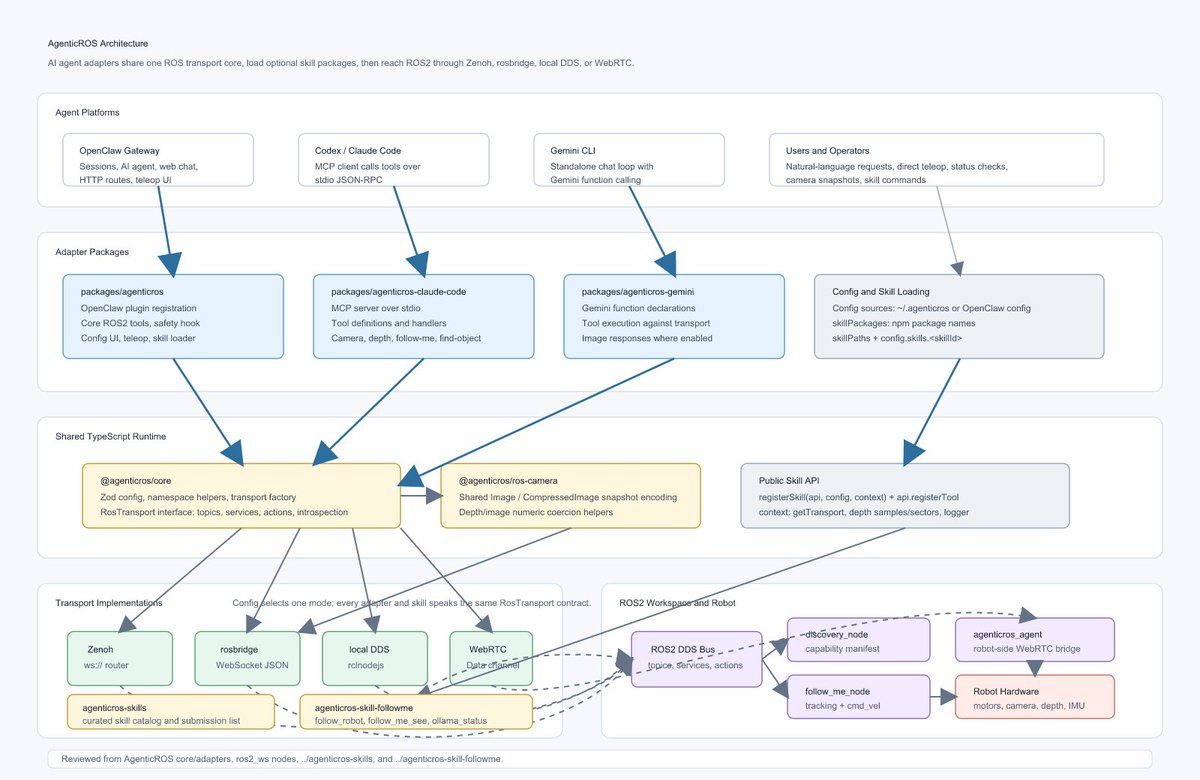
1
2
275
AgenticROS retweeted
May 20
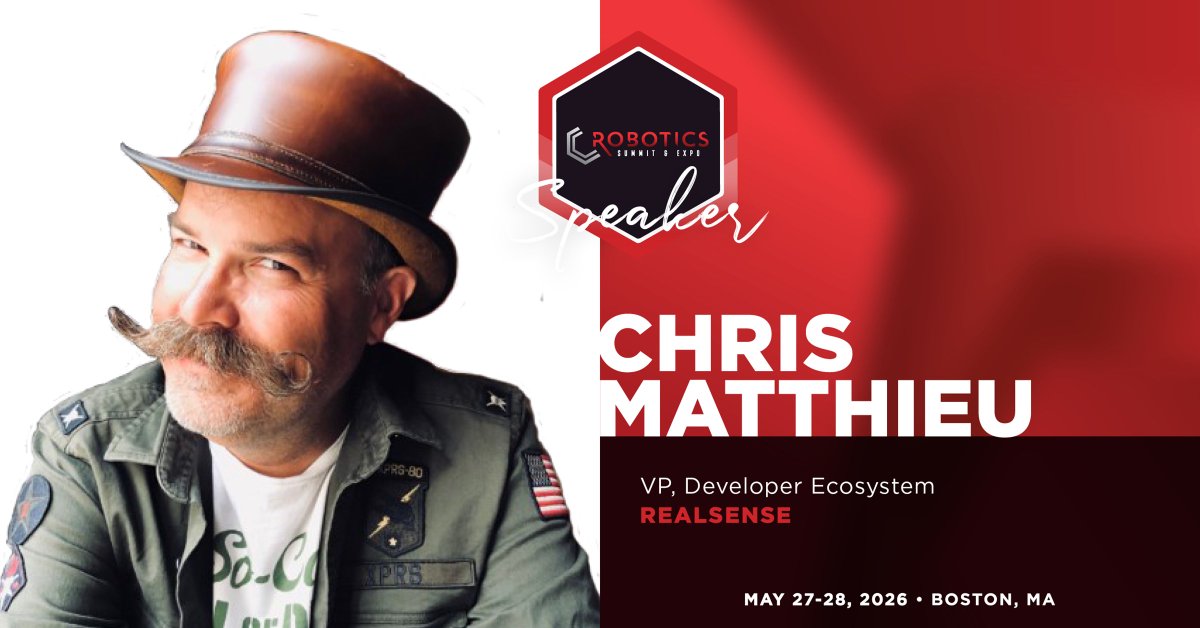
Come watch me hack on a live Physical AI robotics demo on stage at the @Robotics_Summit! I'll demo my @AgenticROS AI Agent powered #ROS robot! Topics will include @RealSenseai @NVIDIAAI #NemoClaw, @openclaw, and @AnthropicAI #Claude controlling a #ROS AMR robot!
roboticssummit.com/event-spe…
1
10
262
AgenticROS retweeted
May 22
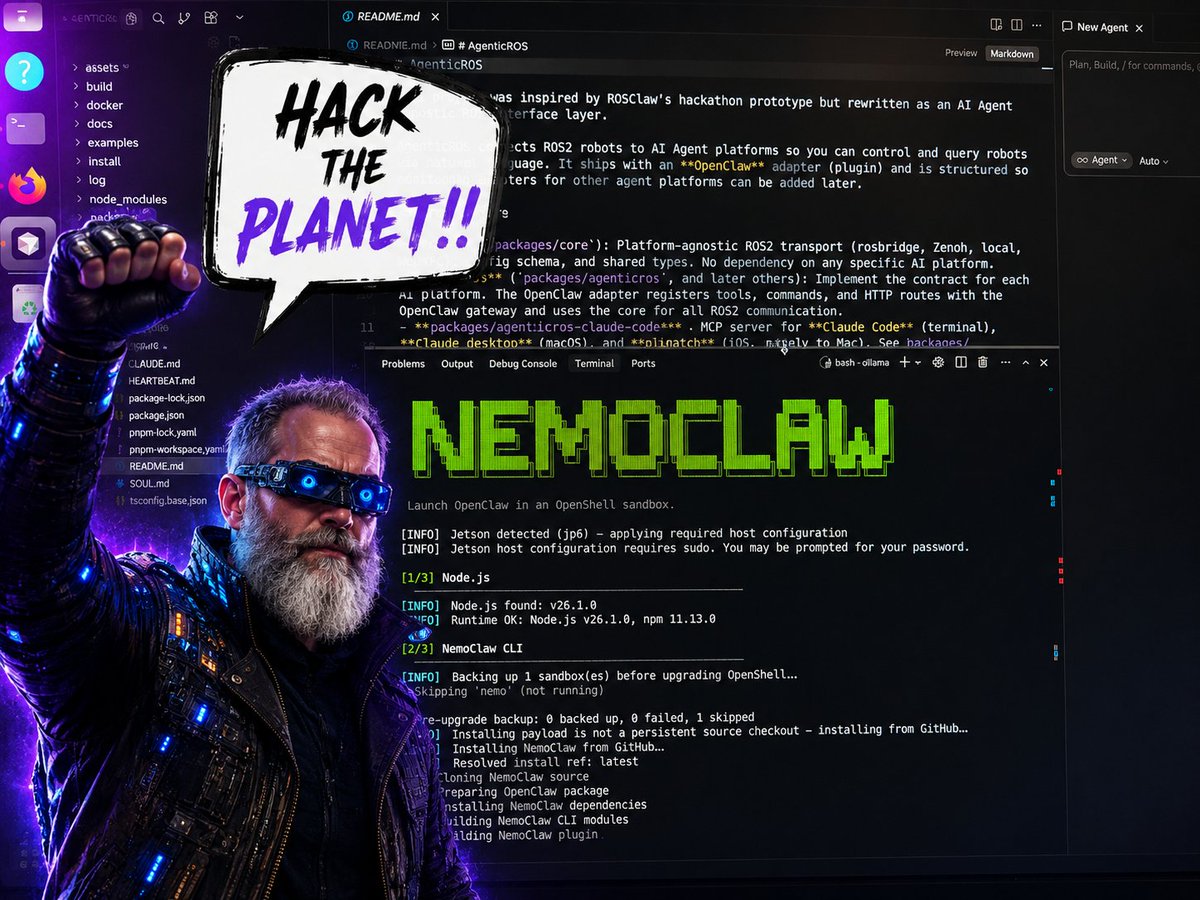
FYI - @AgenticROS Now Supports @nvidia #NemoClaw bringing Physical AI Agents to #ROS Robots
Excited to share that AgenticROS now supports NVIDIA NemoClaw as a first-class AI agent platform for ROS-powered robots.
NemoClaw packages OpenClaw inside a policy-enforced OpenShell sandbox with managed inference. AgenticROS extends that environment into the physical world by connecting the sandboxed agent to ROS 2, RealSense, and robot control interfaces.
With the new NemoClaw integration, an agent can:
- Use ROS 2 tools for topics, services, actions, parameters, camera snapshots, and depth sensing
- Connect from the NemoClaw sandbox to host-side ROS / RealSense / rosbridge over a controlled network policy
- Access robot perception and actuation while keeping the AI runtime sandboxed
- Run AgenticROS as an OpenClaw plugin inside NemoClaw
- Support real robot behaviors through the AgenticROS skill architecture
The recommended setup keeps ROS 2 and @RealSenseai on the host, where hardware drivers already work well, while NemoClaw runs the agent and AgenticROS plugin inside the sandbox. That gives us a clean split: robot hardware and ROS on the edge, agentic reasoning and tool orchestration inside a governed AI environment.
This is an important step toward Physical AI: agents that do not just reason over text or workflows, but can perceive, decide, and act through real ROS-powered robots.
AgenticROS now supports OpenClaw, Claude/Codex, Gemini, and NVIDIA NemoClaw as agent platforms, all sharing the same robotics foundation.
Agentic AI is getting closer to the robot. AgenticROS is becoming the bridge.
More info: github.com/agenticros/agenti…
/cc @NVIDIARobotics @NVIDIAAI
1
3
8
354
AgenticROS retweeted
Mar 31
New demo of #OpenClaw #ROS @AgenticROS all running locally on a @RadxaComputer X4 @rosorg robot! agenticros.com
8
36
331
20,338
AgenticROS retweeted
Mar 30
Add skills to your @AgenticROS robotics deployment without updating your robot's codebase! #ROS #OpenClaw #NemoClaw #Claude #Gemini
More information at github.com/agenticros/agenti…
3
13
1,229
AgenticROS retweeted
Mar 20
ClaudeCode now has a Desktop and a Mobile app with files and apps access like #OpenClaw. @AgenticROS now supports all of them to give AI control over #ROS robots from your phone! agenticros.com
1
3
8
414
AgenticROS retweeted
Mar 19
Added @GeminiApp support to @AgenticROS! Now Google Gemini can control your #ROS @RealSenseAI robots! (AgenticROS also supports #OpenClaw #NemoClaw #ClaudeCode #MCP) agenticros.com/
2
1
7
350
Mar 18
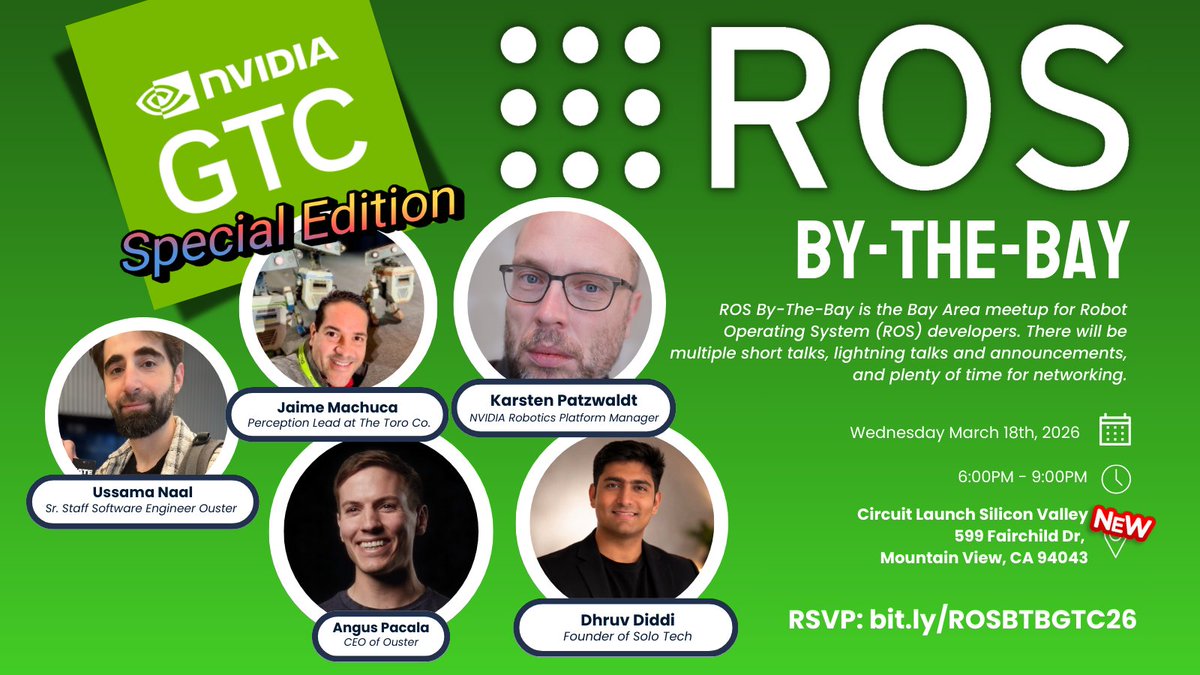
We made the #ROS News of the Week!

Here is your #ROS and open source robotics news for the week of March 9th, 2026:
☀️ROSCon Global 2026 Call for Proposals is out!
☀️GIANT ROS By-The-Bay meetup for NVIDIA GTC
☀️GSoC program drops Monday
☀️A full LeRobot SO-101 stack w/ ROS 2
☀️Tactile sensor for @LeRobotHF
⬇️⬇️
2
3
185
AgenticROS retweeted
Mar 18
Run @AgenticROS with @NVIDIA #NemoClaw:
1) Add the AgenticROS plugin to the NemoClaw sandbox (image or mount).
2) Set plugins.entries.agenticros in the sandbox’s OpenClaw config.
3) Allow egress to your robot (Zenoh/rosbridge) in OpenShell network policy.
4) Restart the gateway. Same OpenClaw plugin API—no code changes.
github.com/agenticros/agenti… github.com/NVIDIA/NemoClaw
#ROS #OpenClaw #Robotics #AI

6
1
16
2,331