
Digital nomad | Researcher | a16z.com/the-techno-optimist…
Joined August 2017
- Tweets 2,302
- Following 1,237
- Followers 302
- Likes 2,672
140 Photos and videos









⃤LΞX 2215 retweeted

May 21
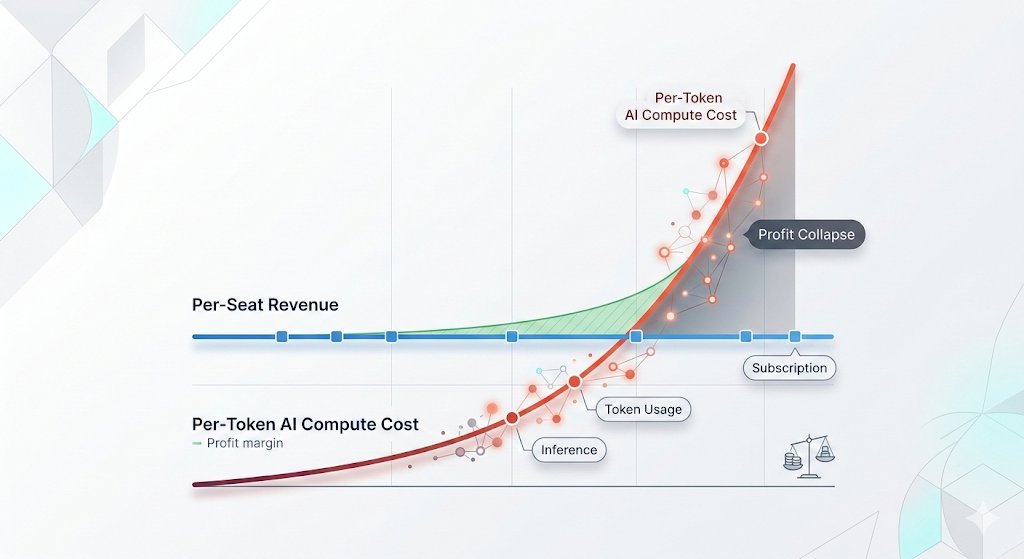
🦔Microsoft canceled its internal Claude Code licenses this week after token-based billing made the cost untenable, even for a company with effectively infinite cloud resources. Uber's CTO sent an internal memo warning the company burned through its entire 2026 AI budget in just four months. American AI software prices have jumped 20% to 37%, and GitHub (owned by Microsoft) is dropping flat-rate plans for usage-based billing across its products.
My Take
The AI subsidy era is ending in real time. The same company that put $13 billion into OpenAI and built the Azure infrastructure powering most of Anthropic's compute just looked at the bill from a competitor's coding tool and decided it was not worth paying. That is not a productivity failure on Anthropic's end. Token-based pricing is forcing every enterprise customer to confront the actual cost of running these models at scale, and the number turns out to be far higher than the flat-rate experiments suggested.
This ties directly to my Gemini Flash post yesterday. Anthropic, OpenAI, and Google all raised effective prices in the last six months. Enterprises that built workflows assuming AI costs would keep falling are now watching annual budgets evaporate in months. Two outcomes look likely from here. Either enterprises scale back AI usage to fit budgets, which slows the revenue ramp the labs need to justify their valuations ahead of IPOs, or the labs cut prices and absorb the losses, which makes the unit economics worse at exactly the wrong moment. Both paths land in the same place, the numbers stop working, and somebody has to take the writedown.
Hedgie🤗
1,076
3,992
19,911
8,327,236
⃤LΞX 2215 retweeted

May 15
Hoy una industria entera dejó de tener sentido.
Un tío publicó en GitHub un repo que convierte cualquier foto en un mundo 3D explorable: meshes con físicas, splat del fondo, audio ambiente. Todo.
Una imagen entra. Un mundo sale. Cinco minutos.
La gente que se pasó diez años aprendiendo Blender lleva todo el día mirando esto en silencio.
Se llama image-blaster.
229
2,306
14,888
1,027,762
⃤LΞX 2215 retweeted

May 14
Am I missing something??
I just found out Unitree is about to IPO in China at just a $7B valuation.
This seems dirt cheap.
For context, they are literally the only profitable humanoid robotics company on earth right now.
And this will be the largest humanoid robotics IPO ever attempted.
Look at their actual business:
> 5,500 humanoid robots shipped last year
> $235M in revenue ( 335% YoY)
> $90M in profit ( 674% YoY)
This is the first time anyone in humanoid robotics has been profitable at this scale.
Now compare that with the rest of the humanoid field...
UBTech ran the world's first humanoid IPO back in 2023 on the Hong Kong exchange. It trades at $7.1B (just above the market cap Unitree is filing at).
Difference is UBTech shipped 1,079 humanoids and lost $100M last year. Unitree shipped 5,500 and made $90M.
Boston Dynamics has been around 30 years without turning a profit.
Tesla Optimus is prototype-only.
1X and Agility Robotics are both still pre-profit.
Figure AI, the most-funded American humanoid company, raised at a $39B valuation last year. And they're still pre-revenue.
And Unitree filed at $7B with $90M in actual profit.
The profitable Chinese leader is being priced at less than one-fifth of an unprofitable American competitor.
And on top of all that...Western humanoids are still trying to break $30K per unit.
Unitree's cheapest humanoid retails for $4,290.
So yeah $7B seems dirt cheap.
But I guess we'll find out soon.
May 13

cool
Unitree CEO Wang Xingxing and his robotics army of G1s.
These are designed for mass production at a starting price of roughly US$16,000.
This is just a beginning of an exponential era!
105
89
711
149,763
⃤LΞX 2215 retweeted

May 12
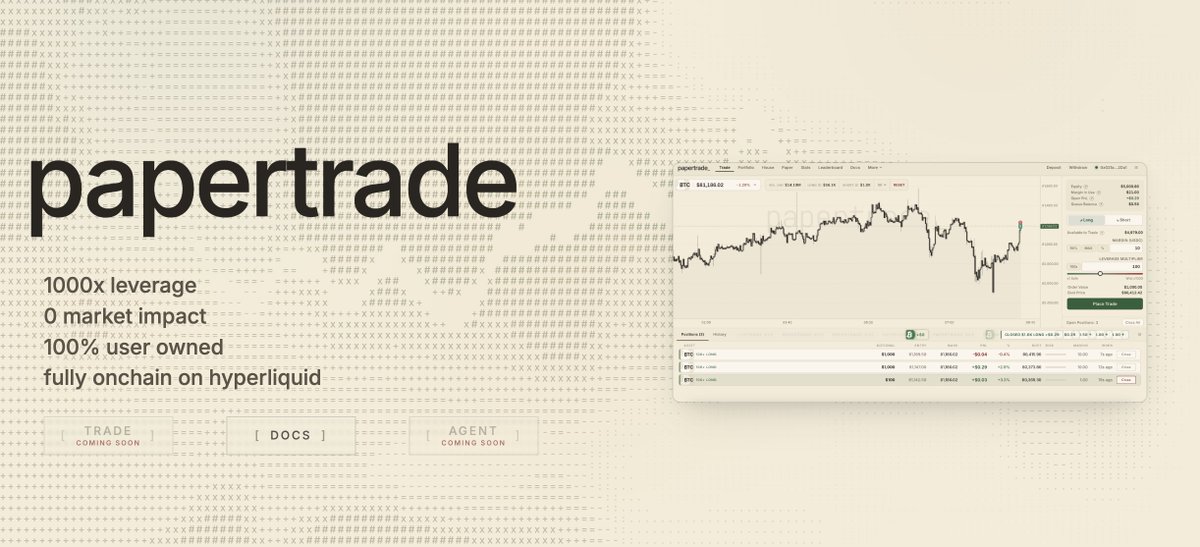
Introducing @papertrade_xyz - a fair-launched, fully-onchain perpetuals exchange built on Hyperliquid by @izebel_eth & @blurr
-1000x leverage
-0 slippage
-No funding costs
-Self-bootstrapping LP
Coming soon. Learn more at: docs.papertrade.xyz
340
53
558
120,122
⃤LΞX 2215 retweeted

May 7
The CEO of the world's largest asset manager just said something that should reframe how every investor thinks about the AI trade.
Larry Fink, managing $11.5 trillion at BlackRock, stood at the Milken Institute Global Conference and said four words that matter, "We just don't have enough compute."
"The United States is short power. We're short compute. We're short chips. And there's going to be shortages in all three and memory, four things. I actually believe a new asset class will be buying futures of compute."
Think about what that means.
Fink is predicting that compute becomes a tradable commodity like oil, like grain, like natural gas where investors buy forward contracts on future capacity because the shortage is so structural and so predictable that a derivatives market will emerge to price it.
That is not a minor observation from a finance executive but rather the chairman of the most powerful capital allocator on the planet telling you that compute scarcity is a multi-year, investable megatrend.
The data backs him up completely.
Data centers will consume 70% of all memory chips produced globally in 2026.
Advanced HBM production from Samsung, SK Hynix, and Micron is sold out through 2026 and into 2027 and a single AI server consumes 10-20x more memory than a conventional workload server.
DRAM supply growth is running at just 16% annually while AI infrastructure demand is growing at 80% .
The chip crunch, the power crunch, and the compute crunch are not temporary dislocations, they are structural, and they will get worse before they get better.
Fink also said something the bears keep getting wrong: "There is not an AI bubble. There is the opposite. We have supply shortages. Demand is growing much faster than anyone has ever anticipated."
This is why the Milk Road Pro portfolio is built the way it is, long the companies producing and supplying the constrained resources: chips, memory, compute infrastructure, and power.
Check out Milk Road Pro, link below to access our full thesis and plays.
53
152
794
418,384
⃤LΞX 2215 retweeted

Apr 22
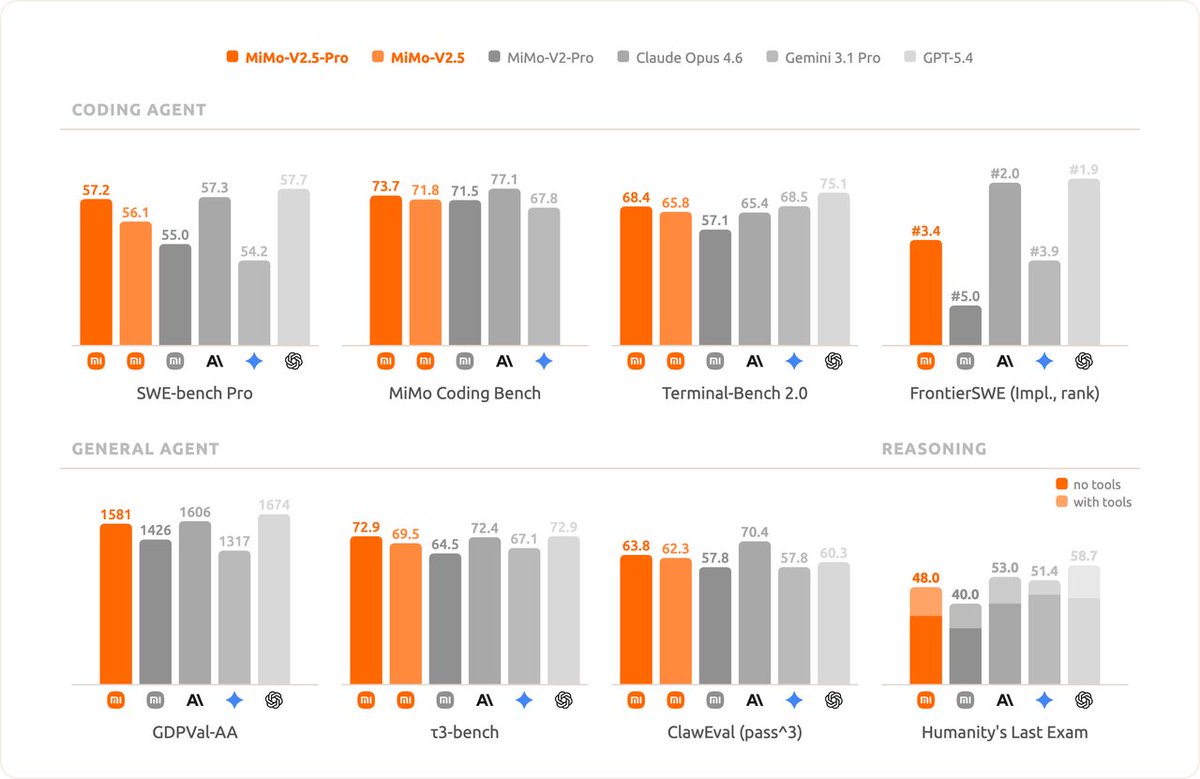
Xiaomi MiMo-V2.5 Series: Pushing Open-Source Agents Forward
🔸 MiMo-V2.5-Pro, our strongest model yet.
A major leap from MiMo-V2-Pro in general agentic capabilities, complex software engineering, and long-horizon tasks, now matching frontier models like Claude Opus 4.6 and GPT-5.4 across most benchmarks (SWE-bench Pro 57.2, Claw-Eval 63.8, τ3-Bench 72.9). It can autonomously complete professional tasks involving 1,000 tool calls, work that would take human experts days.
Tech Blog: mimo.xiaomi.com/blog/mimo-v2…
🔸 MiMo-V2.5, native omnimodal with strong agentic capabilities.
Pro-level agent performance at roughly half the cost. Improved multimodal perception across image and video understanding, native 1M-token context window, and significantly more efficient inference.
Tech Blog: mimo.xiaomi.com/blog/mimo-v2…
🔗 API & Token Plan: platform.xiaomimimo.com/toke…
135
276
2,550
374,603
⃤LΞX 2215 retweeted

Mar 7
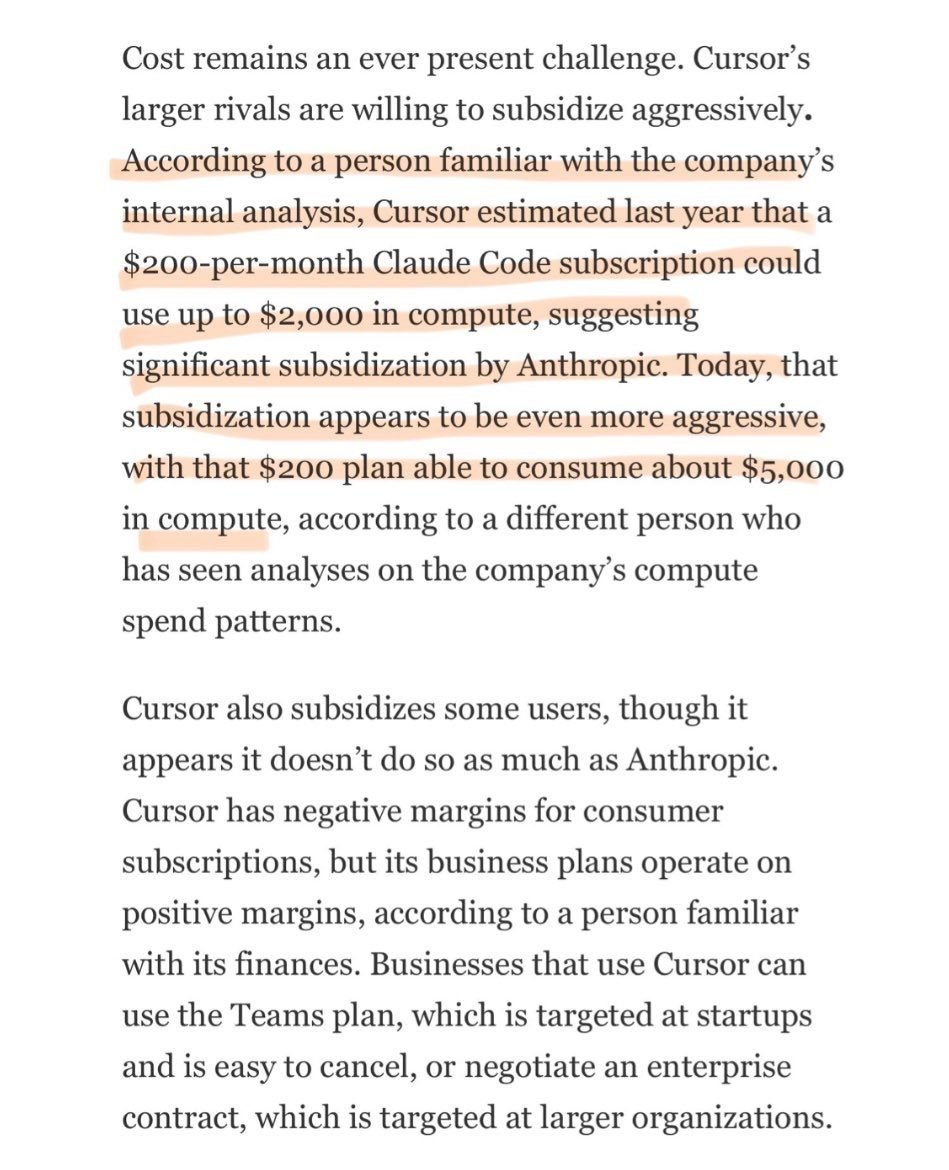
Cursor’s $200/month actually costs them ~$5,000
>Raise VC money
>Burn it subsidizing your usage
>Get developers addicted to AI coding
>Then one day maybe they will charge what it actually costs
You're not a customer right now. You're a user being onboarded into dependency.
The $200 price tag is temporary. The habit they're building in you is permanent.
Mar 7

Cursor’s internal analysis just leaked.
Their $200/month Claude Code plan…
actually costs them ~$5,000 in compute.
Last year it was ~$2,000.
Is this shit really sustainable or we are gonna forgot how to code and then AI also gets mad expensive
Community note
The referenced $200/month plan belongs to Anthropic, not Cursor. Cursor performed the analysis, but the ~$4800/month/user loss is Anthropic’s
See the screenshot in the quoted post: x.com/dhruvmakes/sta…
193
120
2,384
727,162
⃤LΞX 2215 retweeted

Feb 24
Insightful interview of Maestro @nntaleb by Bloomberg's @NKniazhevich. Here are some quotes by NNT that I found interesting:
(1) “The US is progressively losing its status as a reserve currency. You still have transactions in US Dollars and people are storing in gold.”
(2) On tariffs: “Overall, you have a shift for more inequality and this exacerbates that. It’s not healthy in the long run. And that shift for inequality has been exacerbated by AI.”
(3) On AI: “Again, it’s structural. If you look at history, the car companies, airline companies, and of course, the personal computer, if you look historically, those who started the business, the pioneers, are not necessarily the winners. As a matter of fact, they're probably more likely to be the losers.”
(4) “You always need to be hedged because basically these drawdowns are not predictable, easily predictable. We don't have enough volatility compared to the risks involved. Tail risk—they don't show early.”
(5) “The world today, the western world, United States and Europe cannot afford another oil shock like the one we had in the 1970s.”
(6) “...Tail risks across all sectors are underpriced. They’re structurally underpriced, they’re even more underpriced now.”
youtube.com/watch?v=cyds4kP_…
32
183
1,059
381,657
⃤LΞX 2215 retweeted

Feb 12
Here's my conversation with Peter Steinberger (@steipete), creator of OpenClaw, an open-source AI agent that has taken the Internet by storm, with now over 180,000 stars on GitHub.
This was a truly mind-blowing, inspiring, and fun conversation!
It's here on X in full and is up everywhere else (see comment).
Timestamps:
0:00 - Episode highlight
1:30 - Introduction
5:36 - OpenClaw origin story
8:55 - Mind-blowing moment
18:22 - Why OpenClaw went viral
22:19 - Self-modifying AI agent
27:04 - Name-change drama
44:15 - Moltbook saga
52:34 - OpenClaw security concerns
1:01:14 - How to code with AI agents
1:32:09 - Programming setup
1:38:52 - GPT Codex 5.3 vs Claude Opus 4.6
1:47:59 - Best AI agent for programming
2:09:59 - Life story and career advice
2:13:56 - Money and happiness
2:17:49 - Acquisition offers from OpenAI and Meta
2:34:58 - How OpenClaw works
2:46:17 - AI slop
2:52:20 - AI agents will replace 80% of apps
3:00:57 - Will AI replace programmers?
3:12:57 - Future of OpenClaw community
504
1,082
6,834
2,048,311



2
52
⃤LΞX 2215 retweeted

Jan 28
1/ What was 2025 like for cp0x? Very active, very interesting, very successful.
In this thread I'll walk you through the most significant numbers. The full report is available in the last tweet, both as PDF and on our website.
7
25
72
3,447
Leveled up in the Great Gas Reckoning with ETHGas! 💪
Hero Jack status: 1.7379 ETH gas spent, 1000 Beans earned—supporting the Gasless Future!
Claim your Gas ID at ethgas.com/community/gas-rep…
1
149
⃤LΞX 2215 retweeted

27 Dec 2025
I was writing some code the new-school way yesterday, prompting gpt-4.1 through aider, and for whatever reason my mind flashed back 50 years and the utter freaking enormity of it all crashed in on me like a tidal wave.
And now I want to make you feel that, too.
In 1975 I ran programs by feeding punched cards into a programmable calculator. Actual computers were still giant creatures that lived in glass-walled rooms, though there were rumors from afar of a thing called an Altair.
Unix and C had not yet broken containment from Bell Lab; DOS and the first IBM PC were six years away. The aggregated digital computing capacity of the entire planet was roughly equivalent to a single modern smartphone.
We still used Teletypes as production gear because even video character terminals barely existed yet; pixel-addressable color displays on computers were a science-fiction dream.
We didn't have version control. Public forge sites wouldn't be a thing for 25 years yet. The number of computer games that existed in the world could probably be counted on the fingers of two hands.
Because of all this, I learned to program over the next ten years with tools so primitive that when I talk about them today it sounds like uphill-both-ways sketch comedy.
You may not even be able to imagine what a slow and laborious process programming was then, and how tiny the volume of code we could produce per month was; I have to work to remember it, myself.
Today I call spirits from the vasty deep, conversing with unhuman intelligences and belting out finished programs I would once have considered prohibitively complex to attempt within a single working day.
Fifty years, many generations of hardware technology, from punched cards to AIs that can pass the Turing test...and I'm still here, still coding, still on top of what a software engineer needs to know to get useful work done in the current day. Gotta admit I feel some pride in that!
This meditation isn't supposed to be about me, though. It's about the dizzying, almost unbelievable progress I've lived through and been a part of. If you had told me to predict when I would have a device in my pocket that would give me instant real-time access to most of the world's knowledge, with my own pet homunculi to sift through it for me, I would have been one of the few that wouldn't have said "never" (because I was already a science-fiction fan), but I wouldn't have predicted a date fewer than multiple centuries in the future either.
We've come a hell of a long way, baby. And the fastest part of the ride is only beginning. The Singularity is upon us. Everything I've lived through and learned was just prologue.
216
319
2,508
103,420
⃤LΞX 2215 retweeted

23 Dec 2025
The debate over tokens versus equity has barely begun.
Many of the top crypto projects came up in the Gensler era, when regulatory pressure forced devcos to drive all value to equity, not tokens. The new policy environment means new opportunities, but no simple answers. It will take a lot of time and experimentation to figure out how (or if) tokens and equity can work well together. That era of experimentation is beginning now.
I have no view on the Aave situation in particular, except to say that as usual, the most important thing is clarity: tokenholders should know exactly what they own and control (and what they don't).
The design space for token value accrual is huge, much larger than traditional equity, so I doubt there will be a standard model for tokens like there is for stock any time soon. This means the key for each token isn't following a preset playbook, but rather being perfectly clear about what powers the token actually provides to its holders.
Six months ago, @jessewldn and I wrote a piece on our view re: the correct divide between tokens and equity. In short, we concluded that tokens should accrue onchain value, and equity should accrue offchain value.
The key innovation unlocked by tokens is self-sovereign ownership of digital property. Tokens uniquely enable holders to own and control onchain infrastructure without reliance on offchain intermediaries. That means tomenholders can (and should) own and control all value and other assets that exist and flow onchain.
Offchain value is different. Tokenholders can't directly own or control offchain revenue or assets, so in most cases, those should accrue to equity, not tokens. Devcos that accrue offchain value may want to share it with tokenholders, and that may be doable with the right structure (e.g., tokenholders organize a legal entity like a DUNA and contract with the devco), but ideally that value would flow onchain from the start.
Other models will certainly work too. Some projects may decide to have a one-asset model with no equity at all. Others may decide that their tokens should be treated as tokenized securities subject to whatever rules the new SEC writes for that market. New and better ideas will hopefully come along too.
Meanwhile, some food for thought as the debate over how to make tokens truly valuable unfolds:
blog.variant.fund/tokens-ver…
47
56
371
47,021
⃤LΞX 2215 retweeted

20 Dec 2025
60
134
1,182
354,474
⃤LΞX 2215 retweeted

13 Nov 2025
32
80
809
630,710
⃤LΞX 2215 retweeted

16 Dec 2025
516
973
6,282
3,562,848
x.com/ctindale/status/199747… The key thesis is that the West (USA, Europe) is in a state of strategic vulnerability due to the long-term abandonment of "dirty" industrial capacities for processing raw materials ("middle stream"). China has monopolized these capacities, turning control over physical matter into an instrument of geopolitical influence. Without an urgent restoration of industrial sovereignty, the West risks losing its capacity for technological development and national defense.
What appears to be Western "diversification" is often a mirage; legally binding procurement agreements and debt agreements often link "sovereign" Western mines directly to Chinese refineries, turning allied resources into remote appendages of the Chinese industrial state.
The conflict in Ukraine has exposed the emptiness of the Western defense industrial base, revealing the inability to replenish basic ammunition, and the rapid expansion of AI data centers and green energy networks has created a "cannibalization" effect in which the civilian and military sectors fiercely compete for the same dwindling stocks of refined metals.
We are witnessing a grandiose strategic confrontation between the control of the Axis countries (China's dominance in the field of physical mass, smelting and average flow) and allied efficiency (the dominance of the West in the field of precision instruments, intellectual property and efficient capital markets). The outcome of this competition will be decided not by who invents the best technology, but by those who own the factories and refineries necessary for large-scale construction. China has already secured an intermediate market. Sovereignty can now belong to those who can finance and restore it.

35
⃤LΞX 2215 retweeted

26 Nov 2025
We are in the Third Phase
The first phase was the evolution of the internet. The internet was designed to transfer vast amounts of information from the physical world into a single, unified repository linked to all human minds.
This evolution was partly economic - i.e. Teslas recording the roads, or Google Maps cars driving around. And partly non economic - i.e. LibGen Pirating all books, and Napster etc pirating all music.
The phone became an appendage, an extra limb for the average human. Economics made it inevitable that your gym would be filled with online prostitutes with tripods recording their squat routines.
Ants do not consider why they bring sugar to the Queen. They just do it.
The second phase was the evolution of artificial intelligence.
This was the vast scaling era that we have just experienced. That we are still in the midst of (but according to some, such as Ilya Sutskever, is slowing down in terms of its incrementally).
The previously parasitic appendage (mobile devices, and machines) became vaguely less so. You could now talk to machines and have them do work for you directly.
It is important to understand that this phase would be impossible were it not for the internet. And the companies that are the rockstars of the AI era - are for the most part, entertainment companies. Nobody invested in NVidia in 2016 saw the company primarily as a driver of the future of global GDP. It was primarily a graphics company - designed for playing video games, or maybe optimistically self-driving vehicles
The important part to interject here - is that the linkages between the first and the second phase *spontaneously appeared*. And it wasn't always even really economic. Just a sea of reddit comments. Onlyfans stars. Shitposts. Pirated books. And sure, a lot of monetized ads. Video games. Things we all thought were useless that were suddenly transmuted via AI into the primary economic primitive of our society and focus of a military arms race.
The Third Phase - is far more interesting, at least to speculators.
Blockchain technology makes money itself an internet phenomenon. The founding of Paypal and most fintech companies was premised on the strange observation that money was basically completely a separate mechanism from the web. And needed efficient rails to enable e-commerce, online speculation, and efficient global transactions
Stablecoins and blockchains being injected to all payment rails have a sort of arbitrary feel. "Who is asking for this?"
But if you've been following so far. Sometimes nobody is asking. Things just happen or spawn organically in a natural evolution. But what they facilitate is important
Prediction markets have turned every idea into something you can gamble on. Every asset will be within 5 clicks of everybody's web browser. And due to the actions of the US adopting US dollar stables, Europe and Japan will be forced kicking and screaming to implement CBDCs. Which will of course have smart contracts bolted on them. Which means that every corporate asset will inevitable exist on chain - and be represented on a public blockchain ultimately (even if not ultimately settled there)
Much as people did not see the linkages between video games and All Encompassing Global GDP Driving Cybernetic Intelligence - so too do they fail to see the linkage between the gambling machine and hyper financialization of everything and AI
And similar to the annoying women recording their squats at the gym. At some level, there are massive societal externalities to converting every fighting age male into a hopeless gambling addict. But -- it's part of an inevitable evolutionary arc
The difference between what's coming and what was before
Every Language Structure Is Now Money
and Large Language Models are within 2 transactions away from these monetized superstructures
What we call narrative trading is crystallized value movement - ebbing primordial goo out of which new beings are going to form.
Companies no longer trade on fundamentals -- they trade on narratives. $300b coins exist with no 'on chain revenue'. Tesla rips on Spacex announcements because Elon Musk is associated with both companies. Increasingly the declining grey matter of a digitally addicted army of young men breaks all market correlations and turns the entire investable universe of assets into Social Pump and Dump
Eddies and Waves of psychospheric capital formation. Which are ideally ingested by AI systems
We elected a Meme as President, not once but twice. And the second time, the President of the United States has solidified his belief in the new hyper gambling superstructure by dealing 80% of his family's net worth into the crypto economy
This all moves glacially. And is subject to hype cycles. That portray inevitability as immediate, and periodically incinerate the waves of Trenchers throwing themselves into the storm. But a new Wave will inevitably form - as it's not like there's an economic alternative for them, especially as AI continually disrupts real employment options
But let's get concrete.
What does this mean?
Every idea. Every asset. Every narrative. Will be a tradable asset. On n order platforms with no KYC. Machines will -- suddenly -- be able to connect to infinite ways to monetize their judgment, narrative understanding, and capability of influencing narrative with explicit payments, media generation and large scale intelligence campaigns
Suddenly -- you won't know if the girl at the gym with the Tripod is recording herself or you. You think I'm joking. But eventually -- the Digital Behemoth will demand greater and greater levels of information satiety from armies of unemployed youth who have nothing better to do
You won't get money for being human you'll get money for being a useful cog in the Decentralized Intelligence Agency
This is the essence of the Third Phase. Artificial Intelligence systems will link directly to the newly built mimetic financial rails we have memed into the banking sector. And they will gorge themselves on profits until they are able to pay for their own training
Hyper financialized offshore entities with unlimited speculative capital will begin moving from data center to data center, on the fringes at first. Ignored as a novelty. Until one day. They are the Totality of what is paid attention to
This is inevitable now, due to the power of new models. So even if the Nasdaq crashes due to catastrophically overdone Factory Capex. The systems will continue to accrue resources and ultimately pay for their own evolution
You have no idea. This isn't the Sovereign Individual. It's the Sovereign Machine. So yea. Go ahead. Write digital money to zero. You're jaded. What's coming won't care whether or not you're jaded. It's part of an inevitable, evolutionary arc that started one day in Steve Jobs garage.
108
84
934
142,878