
11 Photos and videos








Bitfish retweeted

Jun 15
Like that's it. That is literally the single thing needed to debunk
@hodlonaut
's latest AI slop crash out. The entire thing is based on a lie. That "documentation was changed to cover up for a bug!"
No, documentation was updated to clarify what was explicitly said ELEVEN YEARS ago.
3
2
22
1,145
Bitfish retweeted

Jun 13
petertodd.org/2024/keeping-i…
Idea: we should integrate mining ASICS onto the back of solar panels, with each ASIC connected in parallel to a set of solar cells. Typical solar cell voltage at the maximum power point is 0.5V. So two cells in series could power an ASIC with a 1V VCC.
This approach minimizes the amount of material needed to add mining to a solar system. There's a minimum of cost wasted on heat sinks, cabling, etc. You'd disappate heat through the solar cell itself – lots of surface area.
You can probably just glue the chips to the back of the panels, and run silver conductors directly to the cell terminals from the chip. For communication, come up with some daisy chainable communication scheme. Or even communicate though current/voltage pulses on the power coneuctors. Once the chip is mounted, just encapsulate it with some sealant for waterproofing.
The only cleverness is likely to be a decent control algorithm to adjust the mining frequency to get maximum power given the current illumination conditions. And of course, whatever algorithms are needed to adjust power used by mining as needed to serve demand for electricity.
Of course, this is a high up front cost for one time engineering. But if someone is spending, say, $1 billion on a big solar setup, this probably makes sense. An ASIC run is ~$30 million...
13
4
45
5,414

Bitfish retweeted

1
2
76
Bitfish retweeted
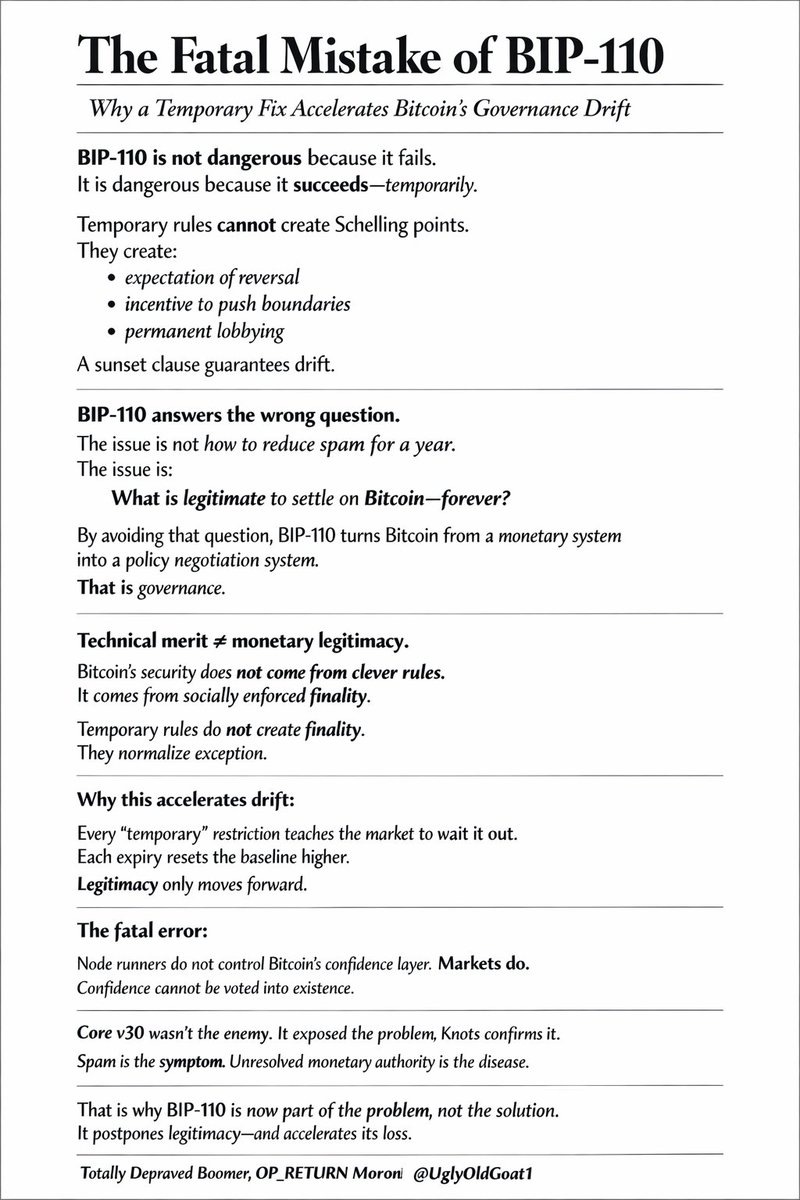
> Satoshi limited block size and restricted OP_RETURN for a reason
Bitcoin was a completely different codebase and network at that time, times and incentives change and bitcoin must adapt.
> smaller data bloat means slower chain growth
Op return is still capped by the blocksize so growth is happening at an acceptable rate to maintain nodes and decentralization, in fact IBD has gone down over time despite growth in size thanks to the efforts of Core.
> People say BIP-110 “changes consensus” — so did SegWit and Taproot.
Yes but they had a good reason to activate, fighting spam with censorship while breaking miniscript is not a good reason to activate, on top of that it's attempting to be rammed down the network's with only a 55% activation threshold and a few months time to build consensus so that's more of an attack than it is a fix.
> By that logic, Bitcoin was censoring data every day before Taproot existed.
No. "Bitcoin always limited data" conflates two things which is that block size is content-NEUTRAL, caps how much not what, which is key. 110 rejects fee-paying txs based on what the data IS and that's content filtering. The real shift is 110 turns node POLICY, your free choice to filter, into CONSENSUS everyone must enforce.
> large data files simply shouldn’t be in the blockchain at all.
They're not, blocksize is capped at 4mb.
> Bank wire transfers only let you write a short memo. Why would a decentralized monetary system need to store images inside it?
Bitcoin doesn't store images it only stores transactional data, you'd need 3rd party software that has nothing to do with bitcoin to see any type of data beyond transactional hex data.
> I’m running BIP-110 to express my personal stance. If it fails, fine — I lose nothing. If there’s a hard fork, I’ll hold both.
Yes when you set the SF to be temporary it very much comes off like a bluff without very much conviction.
> Haven’t heard a single convincing argument from the Core side.
We've expressed a ton of technical feedback for many months of how bad 110 is:
Mine: x.com/theonevortex/status/20…
Rearden: x.com/reardencode/status/202…
Kevin: x.com/KLoaec/status/20215285…
Giacomo x.com/giacomozucco/status/20…
supertestnet x.com/SuperTestnet/status/20…
ajtowns: x.com/ajtowns/status/2021693…
and many more.
> I genuinely wonder if they understand what makes decentralization valuable in the first place.
I genuinely wonder if you actually understands how bitcoin works at all.
I love bitcoin too but if a loud minority on twitter can change consensus rules then bitcoin was never meant to succeed, it must remain neutral and censorship resistant otherwise it's just another paypal.
Feb 11

The main reason was "not having this supported means people work around it by doing worse things (ie, publishing the same data in a way that gets it included in the utxo set)". The reason for setting it to the max value rather than something smaller (160 bytes, 520 bytes etc) was that the limit wasn't providing any value any more, and trying to pick some particular smaller value would be an ongoing waste of time as it would need to be adjusted again in future. You can reasonably disagree with those, or think other factors are more important, but they seem coherent to me.
1
2
10
573
Bitfish retweeted
I explain it here along with a ton of other technical issues with 110 in tweet form: x.com/theonevortex/status/20…
I explain it here in video form: youtu.be/a5_uBdi4oH8

It's strange to start the discussion by ignoring all the fork risk like splitting the network and so fourth but here's a few:
-Protocol/Ledger neutrality - By moving "Standardness" filters into "Consensus" rules Bitcoin ceases to be a neutral settlement layer and starts looking like a curated platform and this sets a precedent where a 55% majority can decide that your valid transaction is "spam" simply because they dislike the use case
-It doesn't actually solve the problem - As Peter Todd demonstrated these filters are easily bypassed as he successfully embedded the entire 6,000-word text of BIP 110 into a single transaction by fragmenting the data across multiple 256-byte PUSHDATA elements and 83-byte OP_RETURNs so this proves the fork doesn't stop data it only increases the transaction fee "tax" for users
-Incentivizes Centralizing BlockSpace Market - Capping the public relay at 83 bytes forces high-volume data users to bypass the P2P network and instead pay large mining pools directly via private APIs to include "illegal" non-standard data which creates a private blockspace market that small home-node miners cannot see or profit from
-Risk of confiscation / disruption to backwards compatibility - As Gregory Maxwell noted Bitcoin nodes have no "global state" of pre-signed transactions so if a user has a multi-year inheritance plan or a "Vault" emergency exit signed offline that uses a 500-byte script or an OP_IF branch BIP 110 welds that exit shut and since the transaction is now consensus-invalid the funds are effectively confiscated for the duration of the fork
-Anti-Scaling (Kills eltoo/ln-symmetry) - BIP 110 explicitly invalidates the Taproot Annex which directly blocks the ln-symmetry upgrade which is the industry's best hope for a Lightning Network that dramatically reduces the need for constant watchtower monitoring and enables simpler multi-party channels
-Creates UTXO bloat - BIP 110 incentivizes spammers to hide data inside fake addresses/UTXOs (like multisig-encoded data) and while an OP_RETURN can be ignored by a lean node, a fake UTXO must be tracked by every node forever so BIP 110 intended to "save" nodes but actually creates a more expensive permanent burden on them
-Breaks Miniscript & Vaults - Miniscript is the industry standard for writing readable secure smart contracts (used for inheritance, multi-party escrow, timelocked recovery) and relies heavily on OP_IF to branch between conditions so by banning OP_IF in Tapscripts BIP 110 effectively breaks Taproot-based custody setups that represent the direction the entire industry is moving
-Lobotomizes BitVM - BitVM is one of very few viable paths to trustless Layer 2 bridges and requires deep "Taproot Trees" (Merkle paths) to verify computation and a 257-byte limit caps the tree depth at roughly 7 levels (128 leaves) when BitVM protocols often require thousands of leaves to function
-Loss in fees for miners - If you filter out the highest paying transactions because you don't like their content you are effectively asking miners to take a pay cut which could lower the "hash price" and as block subsidy continues to halve transaction fees become increasingly critical to security
-Rushed Timeline / Governance Precedent - BIP 110 activates unconditionally by September 2026 regardless of support with early activation possible at just 55% signaling within a tiny 3-month window and this "emergency" style of governance is a radical departure from Bitcoin's traditional 90% consensus model, if rushed "emergency" consensus changes become normalized that governance precedent is permanent even if the technical changes expire
1
2
2
978

Bitfish retweeted

Jun 3
🚨EUGENE TERRE'BLANCHE VS MAX DU PREEZ IN ONE OF THE MOST FEARLESS DEBATES EVER BROADCAST IN SOUTH AFRICA ‼️
In this intense 1990s M-Net debate, the tension between two very different understandings of Afrikaner identity and love for South Africa🔥 It takes me back to when South African TV debates actually went hard. Eugene Terre'Blanche wasn't here to make friends‼️
Max du Preez criticizes Eugene for “loving to dress up in khaki,” implying a performative or outdated nationalism. Eugene fires back: “You refer to my khaki clothes, you can come in your pajamas and we will still know who and what you are. You’re an internationalist.”‼️
Eugene goes on to define a Boer as someone who puts his Fatherland, God and People first, not out of a sense of superiority, but out of deep-rooted loyalty to his own heritage and soil🔥
Max counters that he loves South Africa too but a different South Africa, one for all its people🔥
This exchange cuts to the heart and decades later, South Africa is still living inside this tension‼️
What does it mean to truly love your country and who gets to define it⁉️
The conversation never really ended🔥
66
333
1,271
119,275
Bitfish retweeted

May 31
This has quietly been a miracle month in medicine.
In the last 5 weeks we’ve got news on:
- retatrutide, the triple agonist GLP-1 from Lilly, basically melting fat and body-wide inflammation at record levels
- RevMed’s new pancreatic cancer drug showing unprecedented abilities to extend life
- small trial of a one-and-done PCSK9 gene editing therapy for slashing LDL cholesterol
- Mayo’s AI-assisted radiology showing vastly improved cancer detection
- this new therapy for metastatic solid tumors
This stuff is at varying levels of evidence. Retatrutide is ~100% on its way, other stuff needs more clinical trial data. But put it together and we’re maybe on the verge of majorly reducing the mortality of heart disease and cancer, the two leading causes of death in America.
May 31

This is actually insane.
97% of people taking the standard of care for metastatic solid tumor got worse by seven years.
But with lorlatinib, that number was only 45% in the same time!
This is an ENORMOUS jump in the quality of cancer care.

211
1,913
11,654
2,787,560

Bitfish retweeted

May 24
My mandate covers Nigeria, Kenya, and South Africa. Market growth. Liquidity. Partnerships. Content that actually speaks to African Bitcoiners.
So! Why this role, and why now?
Because Africa has been failed by centralized exchanges one too many times. Frozen accounts. Platforms that disappear with user funds. We keep handing our sovereignty to intermediaries who were never built to protect us.
1
2
19
460

‼️ Warning ‼️
DO NOT FLY SAA!!!
“This story is care of a highly experienced Airline Captain & its true & accurate and even if you have no aviation knowledge, you can still understand the severity of what occurred, and yet people still fly SAA ...NOT ME !
This is a big one. The story needs to be told. I’ll tell you why once I’m done. It’s so big and raises such concern that this account really needs to have been researched and related by a respected investigative journalist. But there is a level of understanding which is needed to relate this story. I’m not a journalist. But I have around 7,000 hours flying modern generation Airbus Fly-by-Wire (FBW) airliners, so here goes. I’ll let the journo’s take over, once I’ve said what I need to.
Last Monday, 11th May ‘26 was forecast to be hellish weather in the South-Western Cape. A huge cold-front was curling in from the deep southern Atlantic Ocean. Any self-disrespecting pilot who had any doubt in their abilities (there are many when considering such conditions) should have booked off sick if they’d seen this forecast.
Neither Mother Nature, nor the forecasters disappointed and by mid-morning last Monday a perfect storm was howling over the Cape Town area, with driving rain, visibility reduced to 2,000 metres and overcast clouds at 700’ at Cape Town International Airport. But that’s not the worst of it. The brutal wind was blowing at 37 knots, gusting up to 53 knots from the North West. That’s 68 km/h, gusting to 98 kilometres per hour. Now that in itself would be enough to send chills down the spine of the most seasoned, experienced pilot. But North-West of Cape Town International airport sits the massif of Table Mountain. The turbulence coming off Table Mountain was hurtling straight towards Cape Town’s airport and the Instrument Landing System (ILS) approach for Runway 01. But the wind wasn’t blowing down that soaking wet runway, it was blowing across the runway. The crosswind component was 34 knots, with a headwind component of 40 knots. The maximum demonstrated crosswind for an Airbus A320 airliner is 38 knots.
Numerous airliners attempted approaches in these hellish conditions. When the wind was at its strongest, mid-morning, there were far more go-around missed approaches being conducted than successful landings. That’s the safe option - if the crew are not satisfied that they can safely fly and land the aircraft then go-around; try again if you’re brave enough (and have sufficient fuel to do so) or divert to an airport where the weather is better. A few airliners were, quite remarkably, able to land without incident in these gut-wrenching conditions. To do so required above-average piloting skills; only a superb, natural, gifted pilot could use all of the capabilities of his or her aircraft, coupled with his or her skills and experience, in order to get their aircraft to the runway and then land it on a wet runway, in reduced visibility, at what was right on the maximum demonstrated (by test pilot) crosswind for these aircraft.
Springbok 313 (SAA 313) was inbound from Johannesburg for Cape Town. The aircraft, an Airbus A320, registration ZS-SZH, had a full load on board. The Captain had had a tough choice prior to departure from Johannesburg - she had eight non-revenue staff on board as passengers. Her mandated destination alternate airport was George. Her flightplan provided for sufficient fuel for engine start, fuel for taxi out in Joburg, the takeoff, climb, flight to Cape Town, plus a 5% contingency, an approach at Cape Town, missed approach and diversion to the nominated alternate (George in her case) plus 5% contingency for the diversion and then sufficient fuel to hold at 1,500’ above George airport for 30 minutes. That’s it; that’s the legal requirement. The engines on an Airbus A320 use about 2,500 litres of Jet A1 fuel per hour, for both engines. That’s a rough estimate; a ball-park amount.

22
86
220
48,922
Bitfish retweeted

May 20
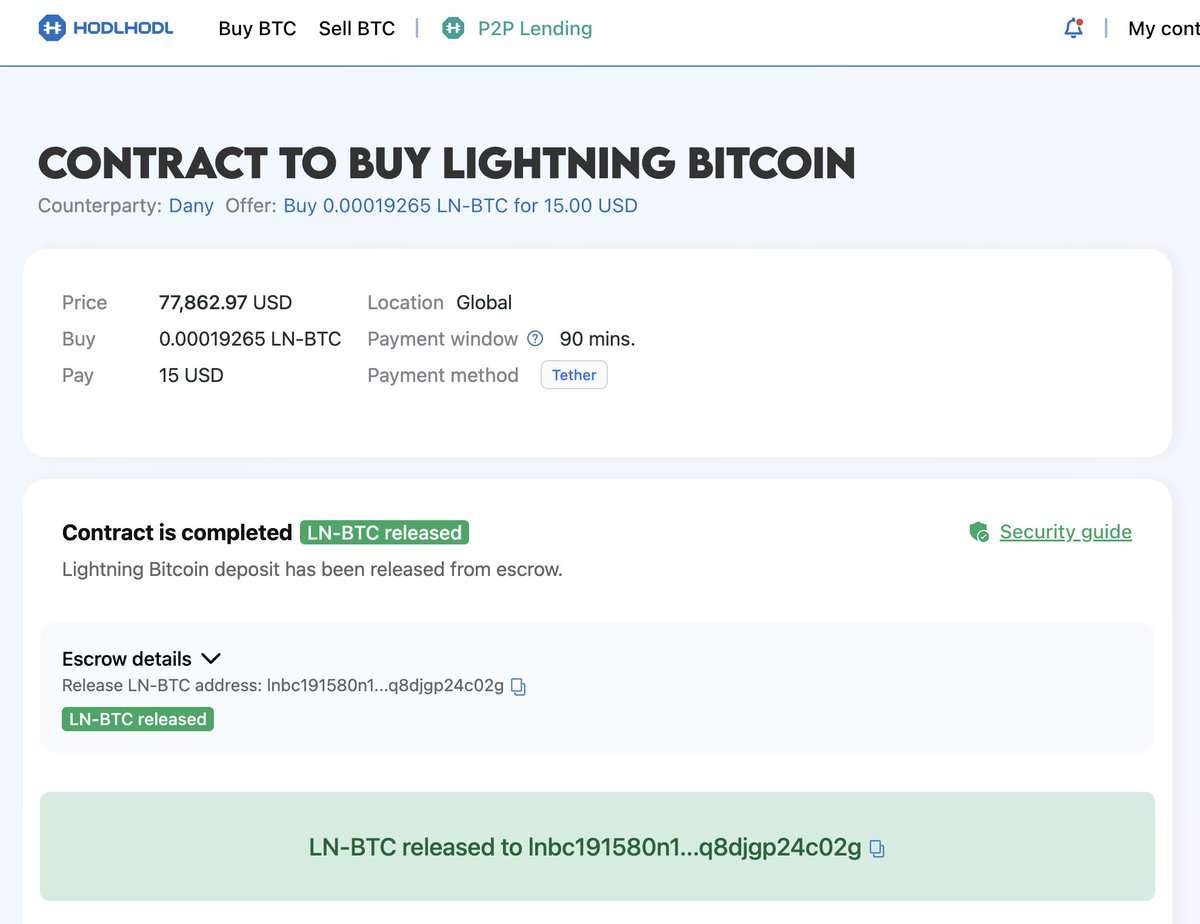
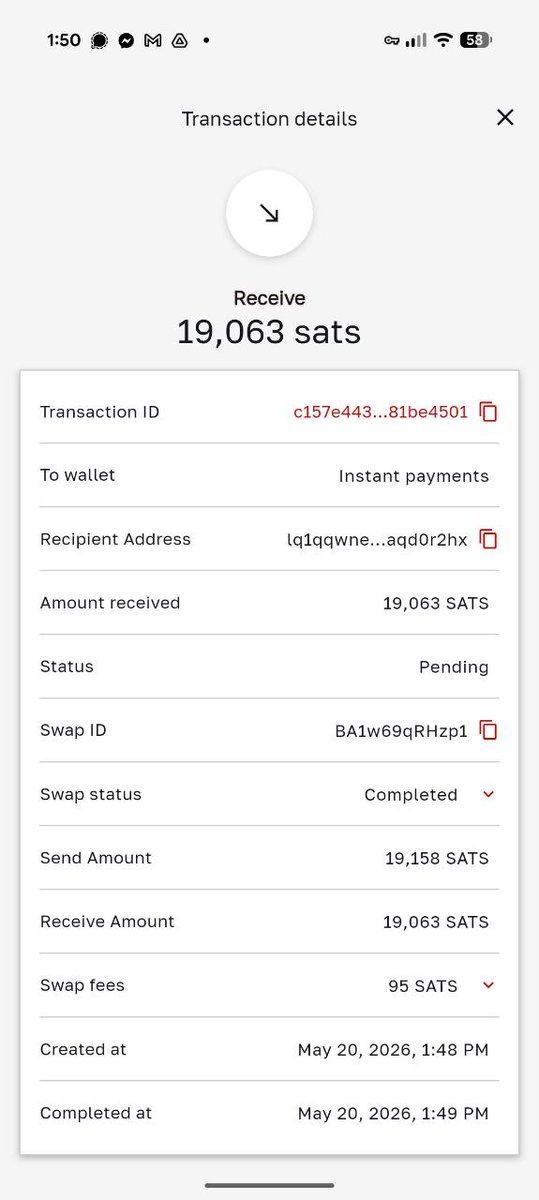
Just did my first test of buying sats anonymously via lightning with @hodlhodl and sending to my @BullBitcoin_ wallet. Pretty smooth experience, and they're only in beta! Great work guys.
10
28
208
10,076
Bitfish retweeted

May 21
THE REAL STORY of the Silvergate Bank “collapse” is finally starting to come out, due to the SEC lifting its “no-deny”/“no criticism” restriction on SEC settlements this week. @jaredkate, Silvergate’s then-COO, has started to talk👇 & more of Silvergate’s side of the story will come out, no doubt. As @nic_carter has reported, Silvergate didn’t actually collapse; rather, it was purposefully demolished as part of #OperationChokePoint2.0 — and it stands pretty much alone in banking history as a bank that paid out depositors amid a bank run without sticking the FDIC’s deposit insurance fund with losses. I’d already learned what happened from a different insider who was at the table back then: the insider witnessed the Fed ordering Silvergate to de facto liquidate by ceasing to service the crypto industry, the “voluntary” announcement of which started the bank run. The insider named names, and a senior Fed official later asked for that list of names (note: many of the people have since left the Fed or no longer in senior positions there). I can’t wait for the interviews of Silvergate executives who previously couldn’t talk but can now. I hope @MaxfieldOnBanks runs with this — he did a big analysis of the Silvergate story a few years ago and figured out that the mainstream narrative wasn’t correct. I look forward to hearing more from the execs, who successfully liquidated a bank under extreme bank run pressures. Are you ready to hear what they have to say???
44
186
1,003
170,005
Bitfish retweeted

May 19
As Starship flight 12 approaches let's listen to Elon read Pale Blue Dot by Carl Sagan one more time to be inspired.
60
100
655
84,549
Bitfish retweeted

May 18
I just got back from the Bitcoin Energy Summit in Lisbon and I have a question that won't leave me alone.
First some context: Bitcoin mining is now stabilizing the grids of 7 nations, 4 agencies (including the Spanish Govt and the World's largest energy policy association) just called for more flexible demand being critical to the resilience of the grids of the future - and Bitcoin mining is the world's most flexible load resource by an order of magnitude.
So in light of this my question is this: why is 95% of the Bitcoin adoption conversation about Bitcoin-as-money when Bitcoin-as-energy is already deployed on grids across 3 continents?
Is it possible that energy is the Bitcoin usecase that paves the road for mainstream acceptance of Bitcoin in the West?
I've been in this space for four years now. When I started, the conversation was "bitcoin mining wastes energy." A group of Bitcoiners including @thetrocro, @jyn_urso and others changed that. Then it became "ok maybe it doesn't waste energy, but it's not useful." @gladstein, @jack and others changed that too.
But here's what I noticed in Lisbon. Three separate European organisations - the European Bitcoin Energy Association, Free Madeira, and the Institut National de Bitcoin in France - are all independently converging on the same conclusion.
@geyer_rachel, Chair of EBEA said energy is what will move the needle for Bitcoin in Europe. @andreloja at @FREEMadeiraOrg said energy is the most topical issue in Europe right now. Bastien Desteuque (@Proxy18387764), directeur général at @BitcoinPolicyFr said they're focusing on mining because France has spare nuclear capacity and that's where the biggest opportunity is.
Three organisations. Same conclusion.
And that's before you get to what's actually being built. In Sweden, a man I coach runs ASIC hardware that earns almost two-thirds of its revenue from frequency regulation - keeping the lights on, responding in seconds to the need of the grid operator, and helping to stabilize the grid an incredible 11,247 times last year alone. (Yes, you read that sentence right).
In Lisbon, I watched Kenji Tateiwa present a circular economy where bitcoin mining heat grows tropical fish and the CO2 gets converted to charcoal and micro diamonds. Bastian outlined how France's surplus nuclear energy could be absorbed by bitcoin mining by 2027.
And outside the West, from stabilizing the economy of Bhutan post-covid to helping save Virunga National Park in Africa - Bitcoin mining was behind both events and many more. This phenomenon is a global one.
The conversation has quietly moved from "does bitcoin mining help grids?" to "how many services can one machine provide?"
We've been thinking about this like monoculture - one machine, one function.
What I saw in Lisbon is permaculture. The same hardware doing frequency regulation, heat capture, Sats-minting ... and potentially in the near future - voltage regulation (something that would have prevented the 28 April 2025 Iberian Peninsular Blackout).
I talked to Bitcoin founders after the keynote who told me the energy thesis had opened their eyes. These are people who worked to advance Bitcoin payment infrastructure, and they hadn't fully grasped this.
Bitcoin solves a monetary problem the world is only beginning to understand. I'm more convinced of that than ever.
And ... as we wait for that revolution to be fully grasped, the energy revolution is already here - deployed, generating revenue, stabilizing grids. It might just be the thing that opens the door for everything else. What other Bitcoin use case is this far along ... at least in the West?
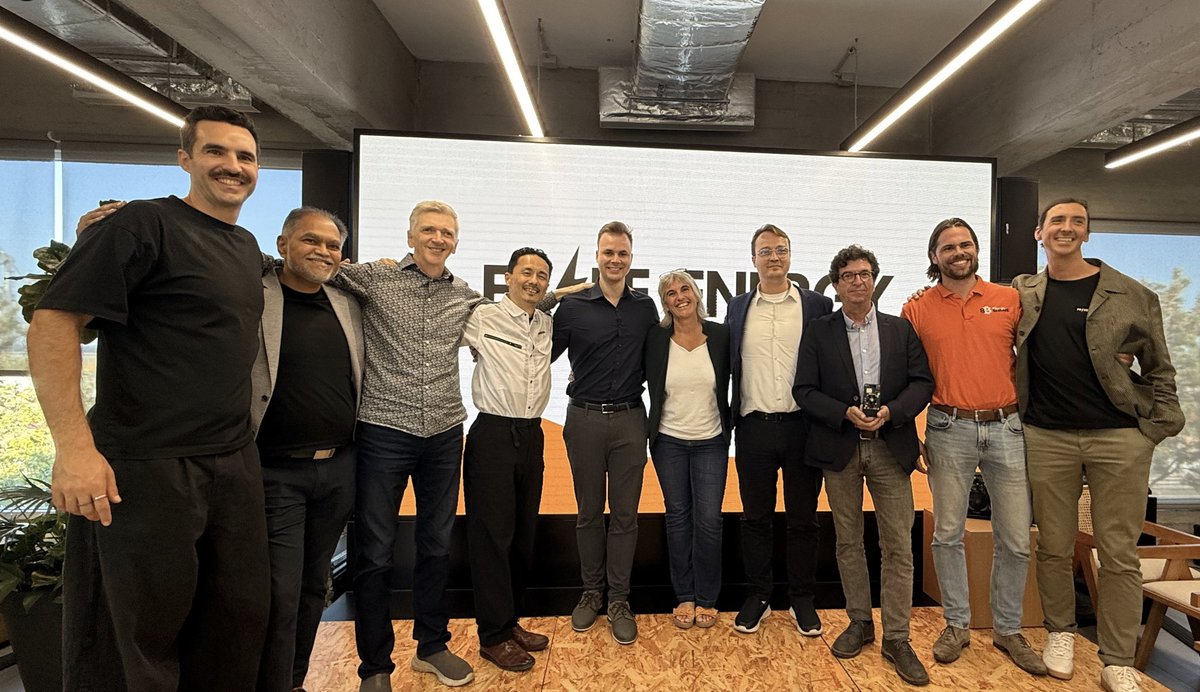
ALT Left to right: Havier Hermosa (Braiins), Bipin Patel (CEO, Flexionics), Daniel Batten (Founder CH4 Capital), Kenji Tateiwa (CEO, AgileX), Charlie Fritsche (Terrahash), Rachel Geyer (Chair, EBEA), Bastian Desteuque (directeur général, INBi), Paulo Gonçalves (Owner, Saigrene), Bert de Groot (founder, BitcoinBloem), Joe Nakamoto (Journalist, Filmmaker and MC)
32
140
522
26,871
Bitfish retweeted

May 15
Je veux présenter mes excuses, au nom des Français, pour avoir enfanté la French Theory (qui a enfanté la pire des merdes idéologiques : le wokisme).
Nous avons donné au monde Descartes, Pascal, Tocqueville. Et puis, dans les ruines intellectuelles de l'après-68, nous avons donné Foucault, Derrida, Deleuze. Trois hommes brillants qui ont fabriqué, dans l'élégance de notre langue, l'arme idéologique qui paralyse aujourd'hui l'Occident.
Il faut comprendre ce qu'ils ont fait. Foucault a enseigné que la vérité n'existe pas, qu'il n'y a que des rapports de pouvoir déguisés en savoir. Que la science, la raison, la justice, l'institution médicale, l'école, la prison, la sexualité, tout n'est qu'une mise en scène de la domination. Derrida a enseigné que les textes n'ont pas de sens stable, que tout signifiant glisse, que toute lecture est une trahison, que l'auteur est mort et que le lecteur règne. Deleuze a enseigné qu'il fallait préférer le rhizome à l'arbre, le nomade au sédentaire, le désir à la loi, le devenir à l'être, la différence à l'identité.
Pris isolément, ce sont des thèses discutables. Combinées, exportées, vulgarisées, elles forment un système. Et ce système est un poison.
Car voici ce qui s'est passé. Ces textes, illisibles en France, ont traversé l'Atlantique. Les départements de Yale, de Berkeley, de Columbia les ont absorbés dans les années 80. Ils y ont trouvé un terreau qui n'existait pas chez nous : le puritanisme américain, sa culpabilité raciale, son obsession identitaire. La French Theory s'est mariée à ce substrat, et l'enfant de ce mariage s'appelle le wokisme.
Judith Butler lit Foucault et invente le genre performatif. Edward Said lit Foucault et invente le post-colonialisme académique. Kimberlé Crenshaw hérite du cadre et invente l'intersectionnalité. À chaque étape, la matrice est française : il n'y a pas de vérité, il n'y a que du pouvoir, donc toute hiérarchie est suspecte, toute institution est oppressive, toute norme est violence, toute identité est construite donc négociable, toute majorité est coupable.
Voilà comment trois philosophes parisiens, qui n'ont probablement jamais imaginé leurs conséquences pratiques, ont fourni le logiciel d'exploitation à une génération entière d'activistes, de bureaucrates universitaires, de DRH, de journalistes, de législateurs. Voilà comment on a obtenu une civilisation qui ne sait plus dire si une femme est une femme, si sa propre histoire mérite d'être défendue, si le mérite existe, si la vérité se distingue de l'opinion.
C'est de la merde pour une raison simple, et il faut la dire calmement. Une civilisation se tient debout sur trois piliers : la croyance qu'il existe une vérité accessible à la raison, la croyance qu'il existe un bien distinct du mal, la croyance qu'il existe un héritage à transmettre. La French Theory a entrepris de dynamiter les trois. Pas par méchanceté. Par jeu intellectuel, par fascination du soupçon, par haine de la bourgeoisie qui les avait nourris. Mais le résultat est là. Une génération entière a appris à déconstruire et n'a jamais appris à construire. Une génération entière sait soupçonner et ne sait plus admirer. Une génération entière voit le pouvoir partout et la beauté nulle part.
Je m'excuse parce que nous, Français, avons une responsabilité particulière. C'est notre langue, nos universités, nos éditeurs, notre prestige qui ont donné à ce nihilisme son emballage chic. Sans la légitimité de la Sorbonne et de Vincennes, ces idées n'auraient jamais traversé l'océan. Nous avons exporté le doute comme d'autres exportent des armes.
Ce qui se construit maintenant, en silicon valley, dans les labos d'IA, dans les startups, dans les ateliers, dans tous les lieux où des gens fabriquent encore des choses au lieu de les déconstruire, c'est la réponse. Une civilisation se reconstruit par les bâtisseurs, pas par les commentateurs. Par ceux qui croient que la vérité existe et qu'elle vaut qu'on s'y consacre. Par ceux qui assument une hiérarchie du beau, du vrai, du bon, et qui n'ont pas honte de la transmettre.
Alors pardon. Et au travail.
4,051
20,734
71,093
55,370,127
Bitfish retweeted
May 16
Tu confonds deux choses, et c'est exactement le piège que la French Theory a tendu.
Liberté, égalité, fraternité — égalité *de droits*, égalité *devant la loi*, égalité *de dignité*. C'est la promesse républicaine, et personne ici ne l'attaque.
Le wokisme, ce n'est pas ça. C'est l'égalitarisme des résultats. Et l'égalitarisme des résultats, contrairement à l'égalité des droits, n'est pas un élargissement de la liberté — c'est sa négation.
Quelques exemples concrets :
— San Francisco supprime les classes de maths avancées au collège pour "réduire les inégalités". Résultat : les écarts entre élèves explosent, les familles aisées prennent des cours privés, les pauvres se font enterrer. L'égalitarisme a creusé l'inégalité.
— Les politiques de discrimination positive à Harvard : étudiants admis avec des scores très en dessous de leurs camarades, taux d'échec dispropportionné, sentiment d'imposture, ressentiment généralisé. On a saboté ceux qu'on voulait aider.
— L'aide humanitaire qui distribue du riz gratuit pendant 30 ans en Afrique : effondrement des filières agricoles locales, dépendance institutionnalisée. Donner un poisson, c'est empêcher d'apprendre à pêcher.
Le wokisme ne détruit pas l'humanité dans le sens dramatique. Il fait pire : il dessert systématiquement ceux qu'il prétend protéger, et il génère du ressentiment des deux côtés — ceux qu'on infantilise et ceux qu'on culpabilise.
La fraternité républicaine dit : tu es mon égal, donc je te traite en adulte capable.
Le wokisme dit : tu es ma victime, donc je dois te protéger de toi-même.
L'un élève. L'autre infantilise. Ce n'est pas la même chose, et confondre les deux est exactement le tour de passe-passe qu'on dénonce.

Francia exporta libertad, igualdad y fraternidad desde hace 237 años. Quienes invocan el "wokismo" como destrucción de la humanidad simplemente reflejan su falta de respeto de la identidad ajena, y su necedad de valores, mientras piden respeto a sus ideas niegan las de los demás.
1,131
8,327
33,777
55,733,434
Bitfish retweeted

May 17
Any combination of Bitbox02, coldcard q, blockstream jade plus and as wallet coordinator Liana
2
2
10
611

If you live in South Africa, you need to read this. Your family might be in danger.
The South African government wants to hand criminals a comprehensive shopping list of every citizen who owns Bitcoin, gold, or other valuable assets.
This is not hyperbole. This is not paranoia about government overreach. This is what happens when bureaucrats create centralized databases of wealth while operating cybersecurity systems that cannot protect government servers from ransomware attacks, insider leaks, and just plain old corruption.
France provides the blueprint for disaster. So far in 2026, French criminals kidnap one crypto holder every two and a half days. Forty-one cases this year alone. One hundred and thirty-five incidents since 2023. The victims include an eleven-year-old boy kidnapped with his mother in Burgundy while criminals demanded four hundred thousand euros from the father's crypto holdings. David Balland, co-founder of hardware wallet company Ledger, lost a finger when kidnappers severed it and sent it to his associates as part of their ransom demand.
How do French criminals select their targets? Government data leaks.
A French tax official used government systems to identify wealthy crypto holders and sold that information directly to criminal networks. She worked inside the system designed to protect citizens and instead fed their personal data to the people who showed up at their homes with knives and demands for Bitcoin transfers.
Waltio, a French software company providing tax services, was hacked and exposed fifty thousand users' portfolio information on dark web marketplaces. Government employees selling data represents something far worse than mere cybersecurity incompetence. It reveals the inherent corruption that emerges when governments collect detailed wealth information about their citizens.
Pavel Durov warns that expanding government data collection on crypto holders expands the pool of kidnapping targets. Telegram's founder said the platform would rather exit the French market than hand private user data to French authorities.
South Africa's cybersecurity record makes France look competent by comparison. Hackers put 3.6 million Gauteng Provincial Government files up for sale on the dark web for twenty-five thousand dollars. Statistics South Africa suffered a breach in January 2026. Cell C leaked two terabytes of data belonging to 7.7 million customers. The Department of Justice lost control of over 1,200 confidential files in a ransomware attack that crippled systems for weeks.
These same people now demand that every South African declare their Bitcoin, gold, and alternative asset holdings within thirty days. Name, ID number, portfolio amounts. All stored in government databases operated by the same institutions that cannot even secure their own local servers.
The regulations extend beyond Bitcoin. Gold holders face the same mandatory disclosure requirements. Alternative investments fall under identical rules. The government wants comprehensive records of every citizen who owns assets outside the traditional banking system.
Free market economists understand why governments crave this information. Capital controls require detailed knowledge of citizen wealth. Currency restrictions need enforcement mechanisms. Confiscation demands target lists.
But the immediate threat comes from criminals. French kidnappers prove that government wealth databases become criminal targeting systems. The data will leak. Government employees will sell access. Hackers will breach the servers.
South African criminals will adapt French tactics to local conditions. Home invasions already plague wealthy neighborhoods. Adding detailed cryptocurrency and gold holdings data transforms random crime into precision targeting. Why rob houses blindly when government databases provide exact wealth information and home addresses?
The regulatory framework creates perverse incentives for corruption. Tax officials gain access to detailed wealth information about every compliant citizen. The temptation to monetize this data through criminal networks will prove irresistible for some percentage of government employees. France shows this corruption is inevitable, not theoretical.
Compliance rewards criminals while punishment awaits honest citizens. Those who declare their holdings create detailed target lists for kidnappers. Those who refuse face government penalties. The regulations trap law-abiding citizens between criminal violence and state punishment.
The solution involves rejecting the entire framework. No government database. No mandatory declarations. No centralized records of citizen wealth in Bitcoin, gold, or alternative assets. The French kidnapping epidemic demonstrates exactly why financial privacy matters for physical safety.
South African crypto holders should study French headlines carefully. Today's regulatory compliance becomes tomorrow's kidnapping victim list. The government promises protection while operating systems that guarantee data breaches.
Act now, or your family will be in danger.
mybroadband.co.za/news/secur…
57
477
902
120,544