
The finance tool for GTM leaders. Revenue, headcount, capacity, and demand planning to help you beat your targets.
Joined August 2017
- Tweets 3,932
- Following 691
- Followers 690
- Likes 335
64 Photos and videos














NEW: AI has killed the sales “discovery call.” It’s now a “validation call.”
Buyers now complete 70–80% of their decision before ever talking to sales. The seller’s job has shifted to validate (or reframe) what the buyer already believes.
The Founder & CEO of @testboxofficial sits down with @sophiebuona to break down what’s happening to the B2B buying process and how to adapt.
Highlights:
2:43 - How buying has changed
5:48 - What founders/CROs should do now
7:05 - GEO: AI version of SEO
9:02 - Why mid-funnel is expanding
21:17 - Agent-to-agent procurement
26:02 - All procurement by agents in 3-5 years
29:09 - How vendors differentiate beyond product
33:30 - The croissant campaign breakdown
45:50 - 15 AI experiments per week
47:10 - Analyzing prospects via video AI
48:29 - Building AI culture in your team
52:39 - Book recommendations
1
3
7
457
BurnRate retweeted

Apr 8
Great advice especially the part about a specific ask and the offer. Clarity.

1
1
2
327
BurnRate retweeted

Feb 27
Technical founders: hiring salespeople is where you will most likely get wrecked.
38
57
645
126,204

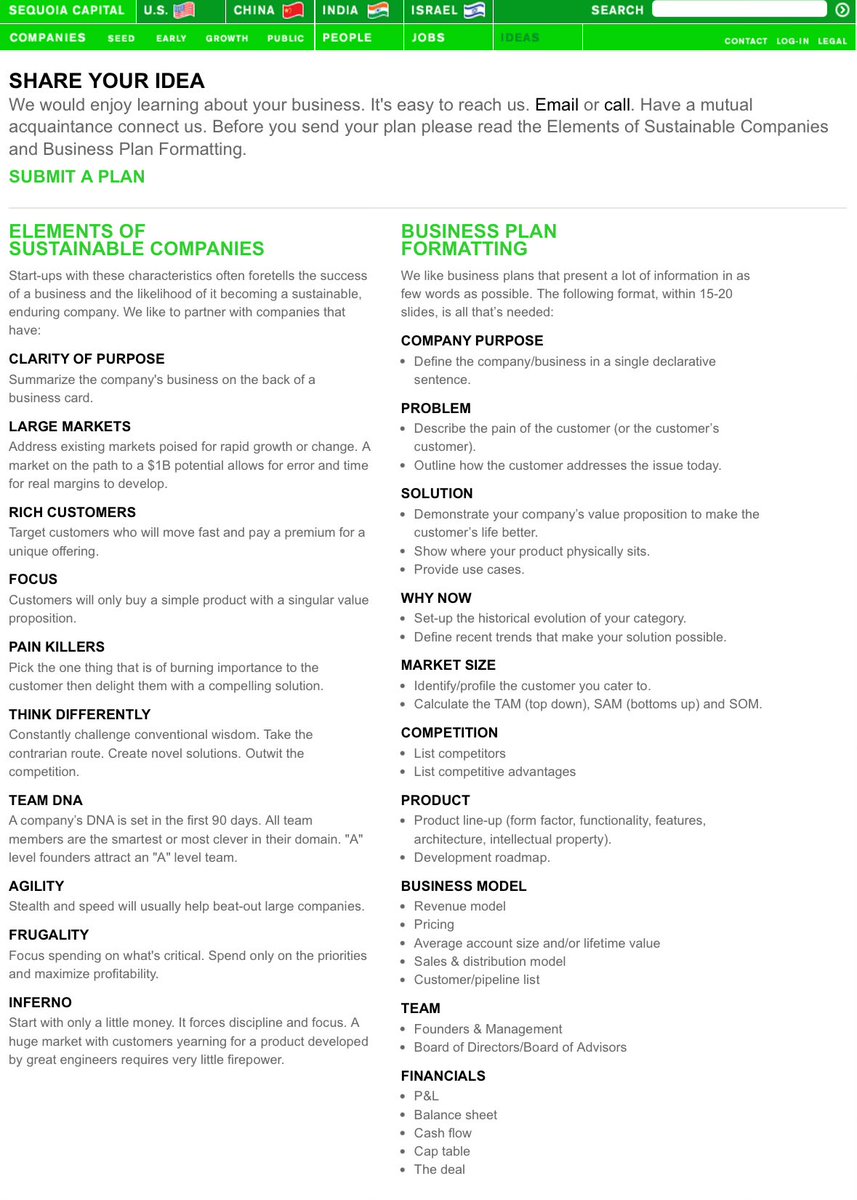
I've sent this to founders countless times over the past 20 years.
Still the best framework for a pitch at any stage - deck should be 10-15 pages long addressing these questions with long appendix.
The most common mistake for early stage founders is trying to answer each question. Emphasize 1-2 points and acknowledge the rest is to be discovered.
Feb 22

ELEMENTS OF
SUSTAINABLE COMPANIES
Start-ups with these characteristics often foretells the success of a business and the likelihood of it becoming a sustainable, enduring company. We like to partner with companies that have:
CLARITY OF PURPOSE
Summarize the company's business on the back of a business card.
LARGE MARKETS
Address existing markets poised for rapid growth or change. A market on the path to a $1B potential allows for error and time for real margins to develop.
RICH CUSTOMERS
Target customers who will move fast and pay a premium for a unique offering.
FOCUS
Customers will only buy a simple product with a singular value proposition.
PAIN KILLERS
Pick the one thing that is of burning importance to the customer then delight them with a compelling solution.
THINK DIFFERENTLY
Constantly challenge conventional wisdom. Take the contrarian route. Create novel solutions. Outwit the competition.
TEAM DNA
A company’s DNA is set in the first 90 days. All team members are the smartest or most clever in their domain. "A" level founders attract an "A" level team.
AGILITY
Stealth and speed will usually help beat-out large companies.
FRUGALITY
Focus spending on what's critical. Spend only on the priorities and maximize profitability.
INFERNO
Start with only a little money. It forces discipline and focus. A huge market with customers yearning for a product developed by great engineers requires very little firepower.
5
12
138
38,742
BurnRate retweeted

There’s an unspoken rule when using products. Any time a brand starts using Corporate Memphis art style, run. It’s over. The brand is lost.

61
150
2,405
81,117
BurnRate retweeted

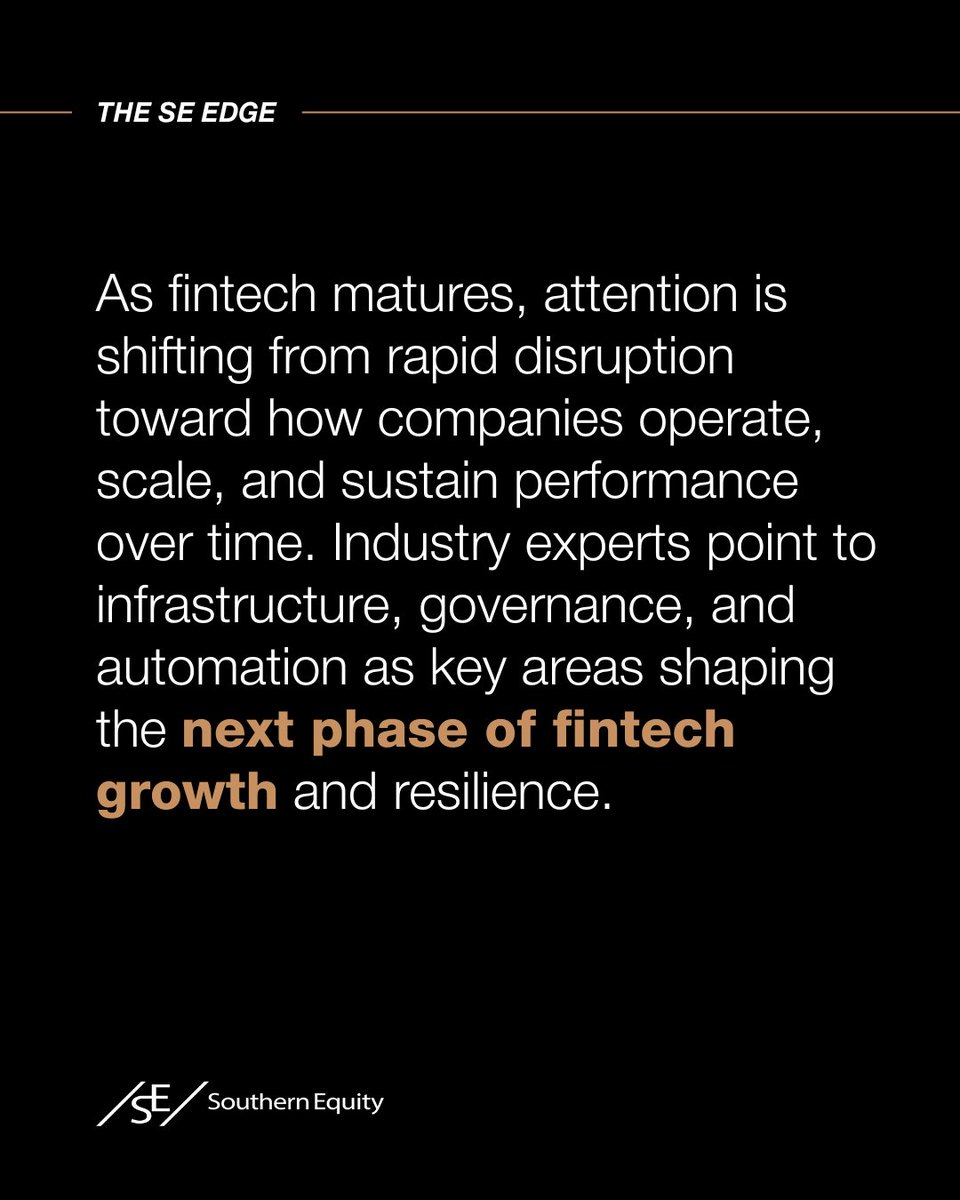
2026 is expected to be a defining year for fintech as the industry shifts from rapid disruption toward greater operational maturity. The focus is moving away from speed alone and toward stronger foundations across payments, governance, and infrastructure, even as the global fintech market is projected to reach roughly $460B in 2026, signaling continued growth alongside maturation.
Industry leaders anticipate that AI-enabled systems, real-time payments, and resilient multi-cloud architectures will play a larger role in how financial services operate, with governance and trust becoming more prominent considerations. ⇢
As the sector evolves, we’re inspired by fintechs like @Mercury and @BurnRate_io that are building with durability in mind, prioritizing scalable infrastructure, intelligent automation, and disciplined financial operations to support long-term stability.
► Read the full article: startupsmagazine.co.uk/2026-…
► Stat source: fortunebusinessinsights.com/…
#Fintech #VentureCapital #PrivateEquity #StartupTrends #FintechTrends
1
1
55
BurnRate retweeted

Jan 26
This is actually a great thread on how to drive momentum during fundraising!
Jan 25

Fundraising is a game of momentum. Without it, it’s almost impossible to raise capital.
So how can founders create momentum?
1: Go all-in on getting first money in 💵
Offer an incentive like a lower valuation cap on a SAFE, advisory shares, or take a smaller check.
Your first check *is* the momentum. Now your narrative is “We just opened our round and have first money in.”
2: Ask your first investor for referrals 🤝
Nothing is more compelling than a referral from an existing investor who says “I’ve cut a check into this company, and here’s why; you should take a call with the founder.”
3: Close an investor with strong signal 📡
This could be a VC, a successful entrepreneur turned investor, etc.
How do you find them? Ideally through a warm intro from one of their portfolio company founders. Find a way to make this happen.
4: Tranche the raise with better economics for early investors.
For example:
* First $500,000 at $6M post-money valuation cap
* Next $500,000 at $8M post-money valuation cap
If you can compel your early investors with better economics, you’re 50% funded which is the definition of real momentum!
Understanding the psychology of fundraising is critical.
Lean into it, and happy hunting! 💵
1
7
903
BurnRate retweeted

Jan 12
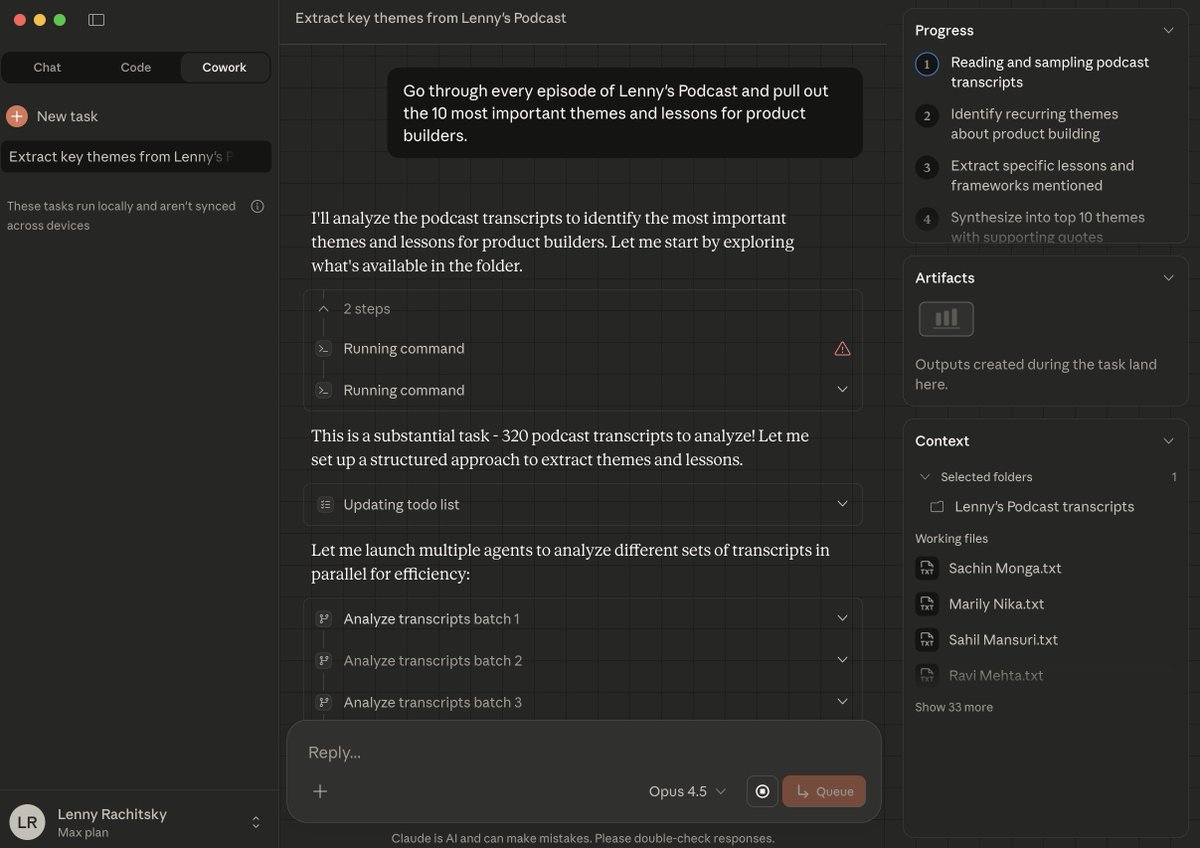
Testing out the new Claude Cowork.
I asked it to go through every Lenny's Podcast episode and pull out the 10 most important themes and lessons for product builders. Then, the 10 most counterintuitive truths. I gave it access to a folder with 320 transcripts.
First, it said "This is a substantial task - 320 podcast transcripts to analyze!"
15 minutes later...
The 10 most Important themes from Lenny's Podcast
1. Activation Is Everything — Slack's "2,000 messages" moment, Gamma's 30-second magic. Get users to value fast.
2. Storytelling as a Superpower — Compelling narratives align organizations better than documents.
3. Positioning Is Strategy, Not Marketing — April Dunford's 5-step framework that starts with competitive alternatives, not messaging.
4. Product Discovery Before Delivery — Teresa Torres' Opportunity Solution Trees and Marty Cagan's Four Risks framework. Talk to customers weekly, not quarterly.
5. Ruthless Prioritization — Shreyas Doshi's LNO Framework (Leverage/Neutral/Overhead) and focusing on opportunity cost over ROI.
6. AI is Transforming Product Development — Model maximalism, evals as core PM skill, CEOs becoming ICs again.
7. Empowered Teams vs. Feature Factories — Marty Cagan's distinction: give teams problems to solve, not features to build.
8. Build Your Operating System — Claire Hughes Johnson's framework for founding documents, operating cadence, and decision frameworks.
9. Pre-Mortems and Risk Anticipation — Shreyas Doshi's technique to surface failure modes before they happen.
10. Small Teams, Outsized Impact — Jason Fried's 2-person/6-week constraints, Shopify's pair programming culture.
The 10 most counterintuitive truths:
1. Fear Gives Bad Advice—Do the Opposite — Whatever you're afraid to do (hard conversation, telling the board bad news) is exactly what you should do.
2. Adding Friction Can INCREASE Conversion — Adding personalization questions to signup improved Amplitude's conversion by 5%.
3. Fewer Features = More Value — The Walkman succeeded because Sony REMOVED recording. QuickBooks wins with half the features at double the price.
4. Adding People Makes You Slower (Absolutely) — Companies produce MORE total output after layoffs. Coordination overhead is the silent killer.
5. What Customers Say They Want Is Meaningless — 93% said they wanted energy-efficient homes. Nobody bought them. "Bitchin' ain't switchin'."
6. Goals Are Not Strategy—They're the Opposite — Richard Rumelt says confusing goals for strategy is the most common strategic error. OKRs are often just wish lists.
7. Don't A/B Test Your Big Bets — Instagram and Airbnb actively reject testing for transformational changes. You can't A/B test your way to greatness.
8. Your Gut IS Data — Intuition is compressed experiential learning that isn't statistically significant yet. Don't discount it.
9. By the Time You're Thinking About Quitting, It's Too Late — Stewart Butterfield killed Glitch while it was still growing 6-7% weekly. That's why he could start Slack.
10. Most PMs Are Overpaid and Unnecessary — Marty Cagan himself says feature teams don't need PMs. Nikita Bier calls PM "not real."
Nice job @claudeai
107
150
2,092
443,352
BurnRate retweeted

13 Dec 2025
I started Boom knowing literally zero people in aerospace. Networks are built naturally when doing something interesting—they are not a precondition.
13 Dec 2025

Naval Ravikant: “Networking is overrated… Do something great and your network will instantly emerge"
Naval offers the following advice to startup founders:
“Don’t spend your time doing meetings unless you really, really have to. I really think networking is overrated. There’s all these articles about how you’ve got to network more, and it makes me want to vomit.”
Instead he suggests:
“Go do something great and your network will instantly emerge. If you build a great product or if you get a good customer base, I guarantee you will get funded.”
Recruiting (customers and employees) and learning from really smart people are two exceptions. But don’t worry about building relationships with VCs or going to conferences early on. Just focus on your product, your team, and your users.
78
463
5,950
327,956

23 Oct 2025
We always appreciate it when our competitors help beef up our brand visibility. 😉
Joking aside, congrats to @blader & the Runway team on the raise! Siqi is a great human and his team has built a fantastic product. 🤜🏻
Now, excuse us while we go load up on hot sauce 😂
2
1
360
BurnRate retweeted

25 Apr 2025
Probably one of the Top 10 most important threads you can possibly read as a Founder.
25 Apr 2025

Some news: After 2.5 years and a tremendous waste of energy & money, @calmfund has resolved our litigation with SureSwift on very favorable terms.
We signed a settlement agreement that dismisses everything and a global release of claims. We refused to sign an NDA, so we are absolutely free to speak truthfully about the matter. And we didn't pay a dime of settlement money. All we agreed to was to find a buyer for their stake in our funds, something we wanted all along! (more on that soon)
I'll be unpacking this more over time, but here are a few of my biggest lessons learned from one of the most challenging periods of my life:
1
1
1,881
BurnRate retweeted

10 Apr 2025
Your company isn’t a family.
Stop pretending it ever was.
For years, companies pushed the we’re a "family” narrative.
- All hands with vibes.
- LinkedIn posts full of heart emojis.
- Leadership preaching loyalty, togetherness, belonging…
Then the market turned.
And guess what?
That “family” laid off 30% over Zoom.
Ghosted people who gave them everything. Traded loyalty for runway overnight.
You don’t get to call it a family when it's only one sided. You don’t get to fire your “cousin” to hit EBITDA.
Let’s stop with the performance.
You’re not building a family.
You’re building a team.
A team is clear.
A team is accountable.
A team earns their spot and knows exactly what winning looks like.
This doesn’t mean we don’t care about our people.
It means we respect them enough to tell the truth.
Strong teams don’t need fake slogans. They need real leadership.
If you want unconditional love, go home.
If you want to win, act like it every meeting, every deadline, and every decision.
17
5
71
5,545
BurnRate retweeted

9 Apr 2025
What we learned growing revenue from 0-$1M at Bolto:
1. Hyper-specifically define your ICP and the problem you want to solve
2. Solve that problem for a small test-group until they are ecstatic
3. Expand the group and iterate
That's it.
That's the whole playbook we ran.
Keep it simple, focus on one problem, then expand once you've nailed it.
5
12
148
26,752
BurnRate retweeted

7 Apr 2025
I've been a part of a few conversations now where founders have hired their first or second employee... then ~3 months in, that employee comes back saying they deserve half of the founders equity.
Not just more equity... EQUAL, or almost equal to the founders share.
It always puts the founder in a brutal spot and never ends up well for the employee.
Greed is a hell of a drug.
83
11
566
124,970
BurnRate retweeted

6 Apr 2025
Yeah, I'm narrowly focused on complex b2b workflows, where I've been experimenting with both approaches.
B2b apps (think the systems of record) have a weird disincentive to make robust APIs openly available to support MCP. So they ship these quasi-APIs and only grant certain partners access.
In this context, MCPs fall short, and browser use shines.
1
3
323
BurnRate retweeted
31 Mar 2025
Founders: You didn’t raise $10M.
You sold $10M worth of control.
Let’s break the illusion.
You think you just raised a Series A, B, C etc.
Congrats on the external validation: the social media announcements, family thinks you've finally made it, conferences and podcast invitations pile up, Tech media headlines etc.
But here’s the cold hard truth of what actually happened:
You sold a piece of your company your control in exchange for money you’re not even keeping.
You’re taking their money…
…to hire their people
…to chase their targets
…to hit their timeline
All while holding a subordinate class of stock which effectively makes you an employee in your own company.
You didn’t take chips off the table. You put more chips on and let someone else start calling bets.
And if you think you’re still in control, wait till growth slows, CAC spikes or someone on the board gets “strategic.” That smiley partner turns into your part time boss real fast.
Raising money isn’t bad. But let’s stop pretending it’s free. You’re not building your dream you’re co-building theirs.
Raise if you must.
But know this:
- Every check has strings attached.
- Every round is a trade off.
- Every round decreases exit options.
And if you don’t know what you’re selling by raising capital...
Then you’re the product.
13
7
89
10,936
BurnRate retweeted
5 Apr 2025
Everyone’s chasing the next big thing.
AI. Web3. Creator economy. Sweaty Startups. Holding companies.
Founders think the secret is some new trend.
It’s not.
- It’s answering support tickets faster.
- It’s making your 1st customers actually successful.
- It’s setting up automations that save you countless hours a week.
You want to build a unicorn?
Start by doing something basic that every company has to have done.
The best companies don’t chase trends.
They fix pain.
They don’t talk about “changing the world.”
It's not Sweaty Startups or AI either its what I'd call "Boring Startups".
They make it easier to file expenses, do bookkeeping, schedule payroll, or file taxes etc.
There’s nothing sexy about business back office software until you start a business and realize every company in the world has to do the same exact things over and over.
And then it’s the only thing that matters because it unlocks growth...
Build the boring stuff.
That’s where the money is.
That’s where the moat is.
That’s where the next unicorn is.
8
1
48
3,509
BurnRate retweeted

19 Mar 2025
"Great product no customers" is something I've been observing lately. PMF can be both a product and GTM challenge:
- lots of AI solutions looking for a problem
- great technical teams but no one who can sell
2
1
9
589
BurnRate retweeted

18 Mar 2025
I've found that freemium users often drown out the voices of paying customers in feedback forums.
The 95% who will never pay can lead you down the wrong product path; they’re obviously not your ideal customers, because ideally, they would pay.
12
8
105
7,088
BurnRate retweeted

15 Mar 2025
startups: free pilots are not a strategy nor a GTM
12
13
175
20,398