
Joined August 2017
- Tweets 28,882
- Following 404
- Followers 414
- Likes 42,635
7,402 Photos and videos









Pinned Tweet

12 Aug 2025
@scientificecon
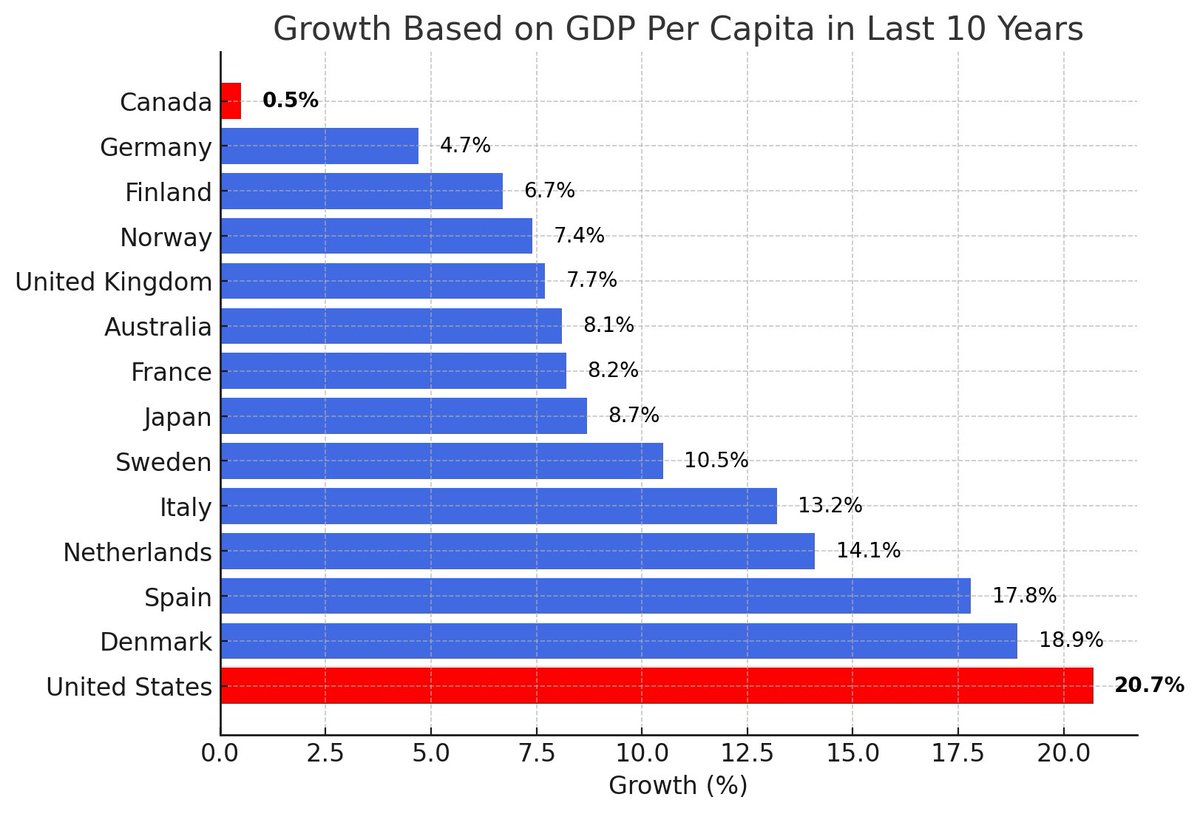
Bank Lending/money creation is a public good.
It can be made for
👉Consumer purchases
👉Asset purchases
or
👉Productive business investment
Guess which of these inflates good and asset and which increases productivity?
Now guess what Canada 🇨🇦 has done....
7
2,003
Captain4thTurn retweeted

Jun 12
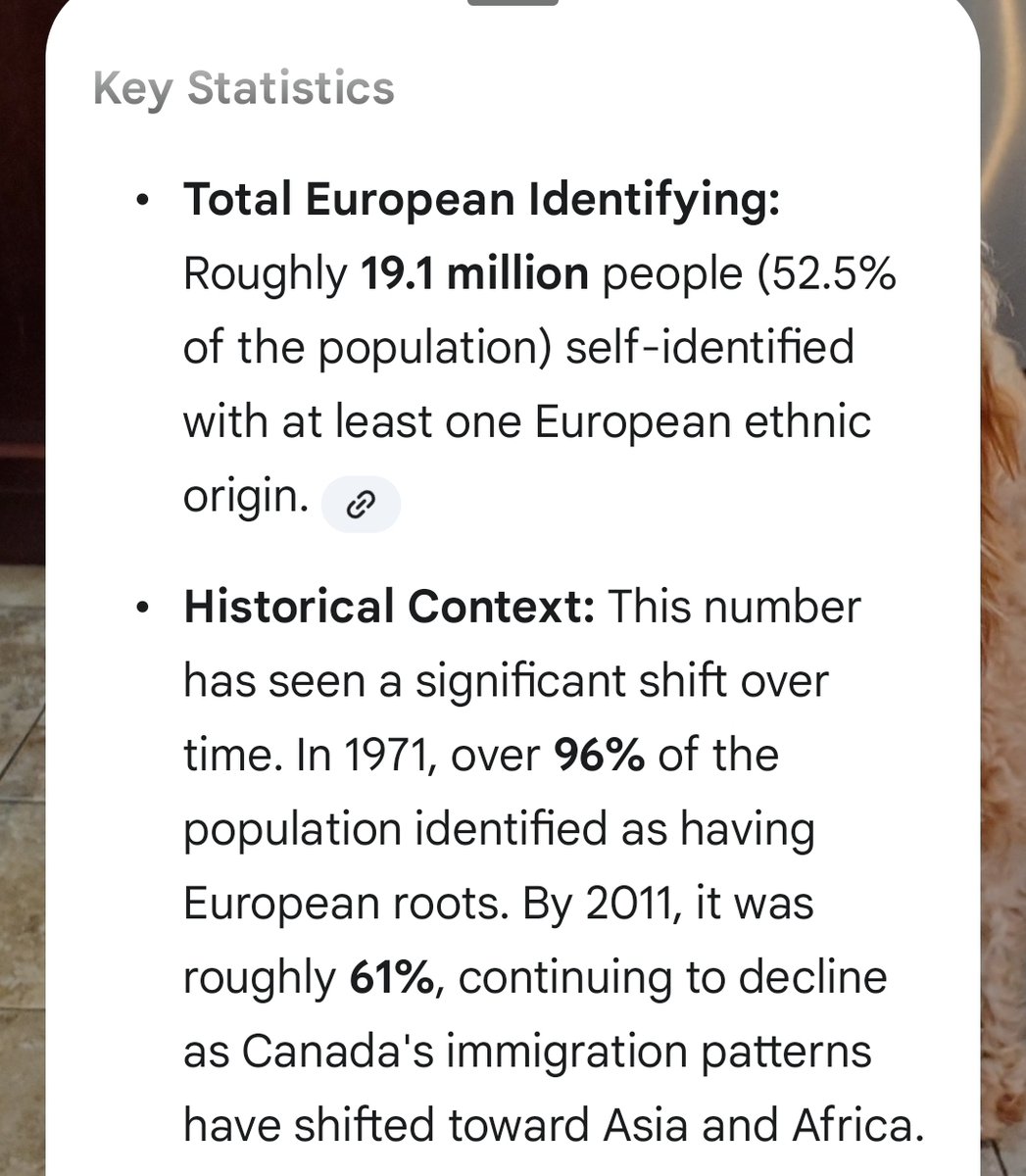
There are a few reasons why political elites often seem disconnected from public sentiment on immigration.
First, many policymakers view immigration through an economic lens. Treasury departments, business groups, universities, property developers, and employers often see immigration as a way to:
Increase GDP growth
Fill labour shortages
Support an ageing population
Increase housing demand and economic activity
Maintain tax revenues
The problem is that GDP growth and quality of life are not the same thing. A country can become richer in aggregate while many citizens feel worse off because:
Housing becomes less affordable
Infrastructure becomes overcrowded
Wages face downward pressure in some sectors
Social trust declines
Cultural change occurs faster than people can comfortably absorb
Second, there is a fear among politicians and media organisations that criticism of immigration can slide into ethnic hostility. Because of that risk, some institutions became reluctant to discuss immigration levels at all. The result is that many voters feel legitimate concerns about numbers, housing, infrastructure, and social cohesion are dismissed rather than debated.
Third, modern political culture often treats questions like “What kind of society do we want?” as morally dangerous because they touch on identity, culture, religion, ethnicity, and values. Yet historically every society has asked exactly those questions. Countries routinely make choices about:
Who can immigrate
How many people arrive
What values newcomers should adopt
How integration should work
The difficulty is defining an “ideal society.” Different groups want different things:
Some prioritise economic dynamism and openness.
Some prioritise social cohesion and stability.
Some prioritise cultural continuity.
Some prioritise humanitarian obligations.
Some prioritise individual freedom over collective identity.
The political challenge is balancing those competing goals.
One thing worth noting is that public opinion in many democracies is not necessarily anti-immigration. Often it is more nuanced than that. Polling frequently finds people support immigration in principle but want:
Lower overall numbers during housing shortages
Stronger emphasis on skills
Better integration
Enforcement of existing rules
Immigration levels linked to infrastructure capacity
That is a different position from opposition to immigration itself.
The deeper issue may be that modern politics often frames immigration as a moral question (“good people support it, bad people oppose it”) when many citizens see it primarily as a practical question (“what level can our housing, infrastructure, labour market, and social fabric absorb?”).
Once a policy debate becomes a moral identity debate, it becomes much harder to discuss trade-offs honestly. That is probably why the conversation feels taboo to many people even though the underlying questions are neither new nor unique to any one country.
We are witnessing globally , countries getting these policy settings completely wrong . It should mean we at least pause , slow down and review what we are getting wrong and what others are getting wrong globally . Governments globally have become manic , they simply refuse to listen or review what’s working and what isn’t .
22
21
135
8,052
Captain4thTurn retweeted

Jun 11
No, I don’t think you can do that.
I don’t think you can noisily welcome Omar Artan, a Somali with ties to Islamic terrorists on Wednesday, and then on Thursday give condolences for a policeman murdered by Islamic terrorists. You have to choose.
430
2,884
14,547
229,264
The cultural enrichment continues.
What a beautiful family this man had.
Jun 11

Today, we mourn the loss of Constable Marc Pinizzotto.
“No words can capture the impact on Marc’s family, who expected him to come home today. We as a Service will support them and each other,” Chief Myron Demkiw said. “This loss will have a profound impact on the Toronto Police Family. Our Service, our members, and all members of the larger policing family are deeply saddened.”
Read story: tps.ca/media-centre/stories/…

1
24
Captain4thTurn retweeted

Jun 8
In order to artificially inflate asset prices, you need lower interest rates.
To get lower interest rates, you need to get lower inflation.
To get lower inflation, you need to get lower wages.
To get lower wages, you need to destroy the labor market.
To destroy the labor market, you need mass immigration and outsourcing.
Get it yet?
10
31
156
3,854
The U.S. welcomes inflation.
FEW
Jun 3

We have taken note of the consultation process launched by the United States on Section 301 tariffs regarding a wide range of countries.
This does not come as a surprise, as the United States has stated its intention to replace existing baseline global tariffs imposed under Section 122 when they expire in July.
Notably, the new Section 301 tariffs include a CUSMA carve-out and other existing product exemptions.
Canada has a robust regime to protect against forced labour practices, and we will soon be taking action to make it even stronger, including through the introduction of new legislation this month, while continuing to work closely with our trading partners.
We share the United States’ objective of ensuring that goods produced with forced labour do not enter our supply chains, and we will be engaging constructively with them over the coming weeks.
33
Undocumented illegal workforce.
Liberal immigration policy.
Jun 4

🚨ALARMING: TFWs and undocumented immigrants are swapping identities, forging Red Seal and safety certificates, then being paid out in cash on GOVERNMENT-FUNDED projects in Alberta.
1
28
This is the kind of crap they are wasting our money on...
Jun 4

Just when you thought Canada couldn’t get any more ridiculous
Toronto says hold my animal spirit pictograph
To “decolonize wayfinding”
Because of course replacing the Queen Street exit sign with a turtle
Is a priority
32
Captain4thTurn retweeted

Corporation: "We made $4B but spent $3.9B so we only owe taxes on $100M."
Government: "Totally reasonable."
You: "I made $60K but spent $58K on survival."
Government: "You owe taxes on $60K."
You: "That's not—"
Government: "File by May 15."
557
7,749
95,076
4,144,380
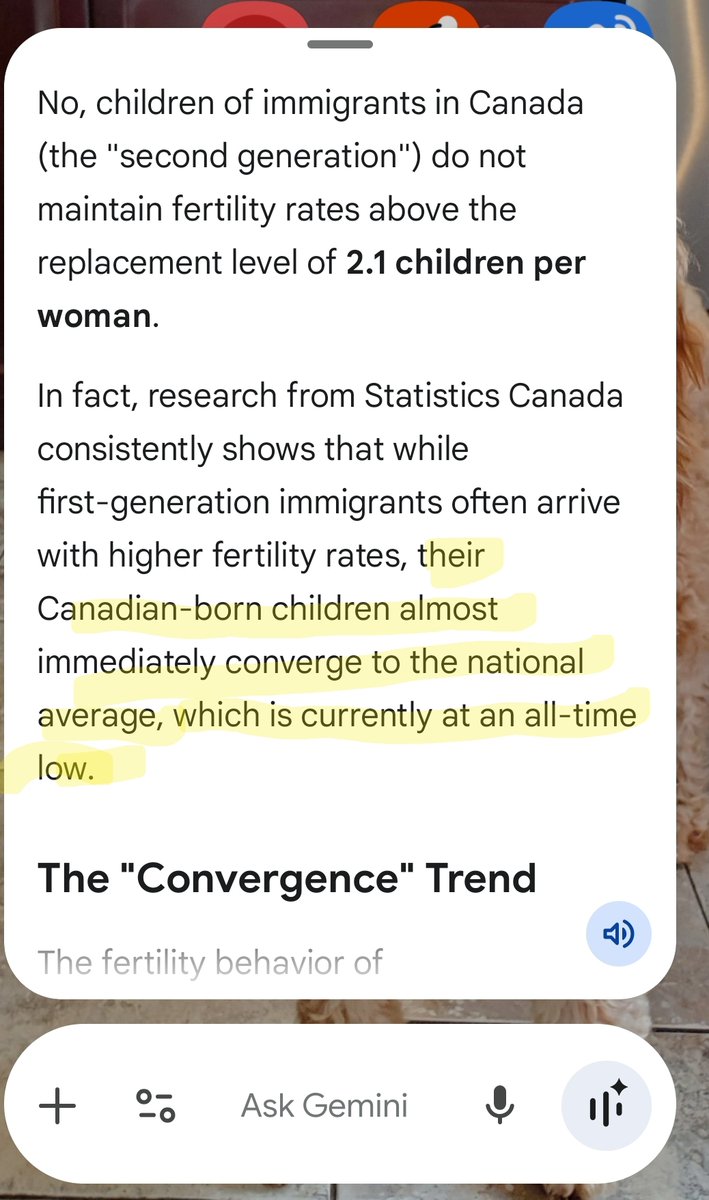
And they're doing the same thing with the fertility.
Having no children or even just one was an option but now it's a financial obligation if you want to preserve your standard of living you grew up with.
Jun 3

"The creation of the double income household... went from being an option to an obligation."
"The principal beneficiaries were government, who had twice as many people to tax."
"The unit of the household, the family, lost 35 hours of discretionary leisure every week, with no commensurate increase in living standards, because the money got soaked up by property prices and by taxation."
25
Captain4thTurn retweeted
Now picture this.... police are called to a crime scene were they encounter 2 people involved in an altercation.
One claims he was "racial attacked". The other claims he's been stabbed.
The police, with out question, immediately proceed to hand cuff the man who claims he was stabbed.
1
1
39
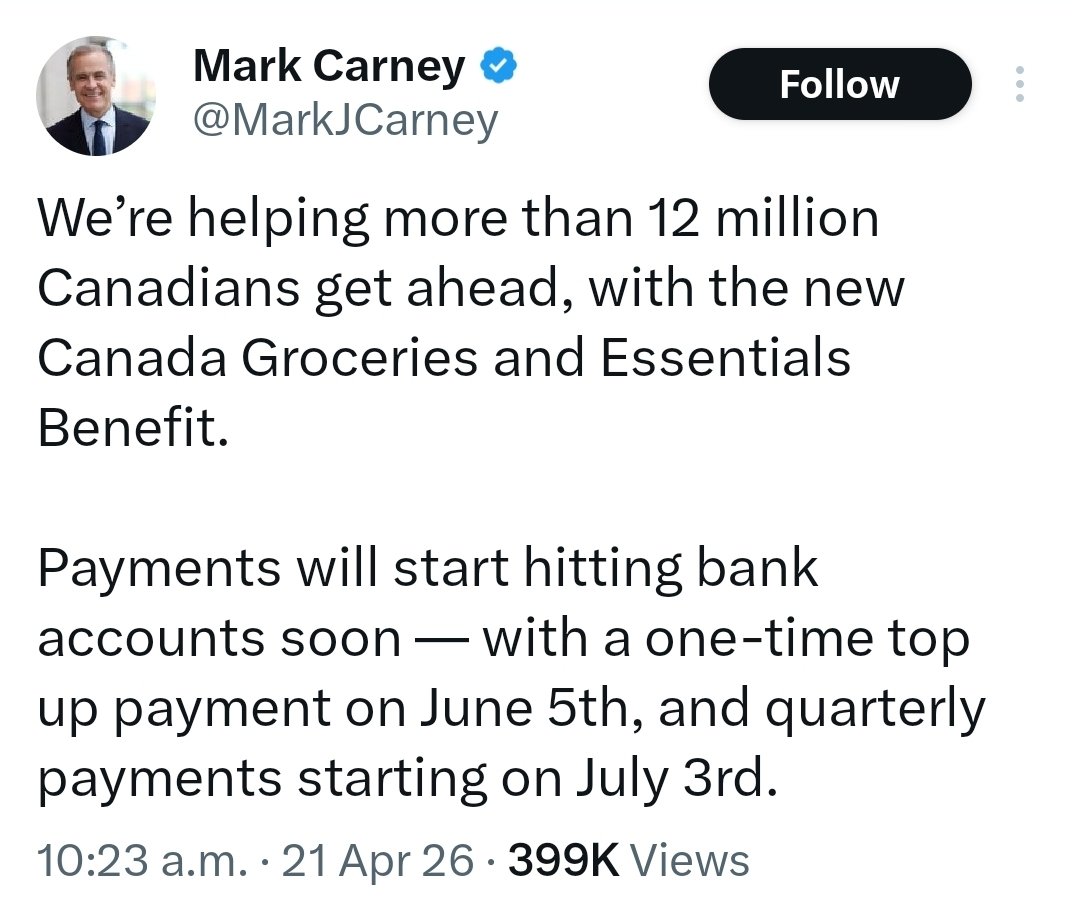
Just a reminder that over a quarter of Canadians are receiving government printed money just for food.
If you think everything is fine, you're wrong.
2
60
Captain4thTurn retweeted

May 30
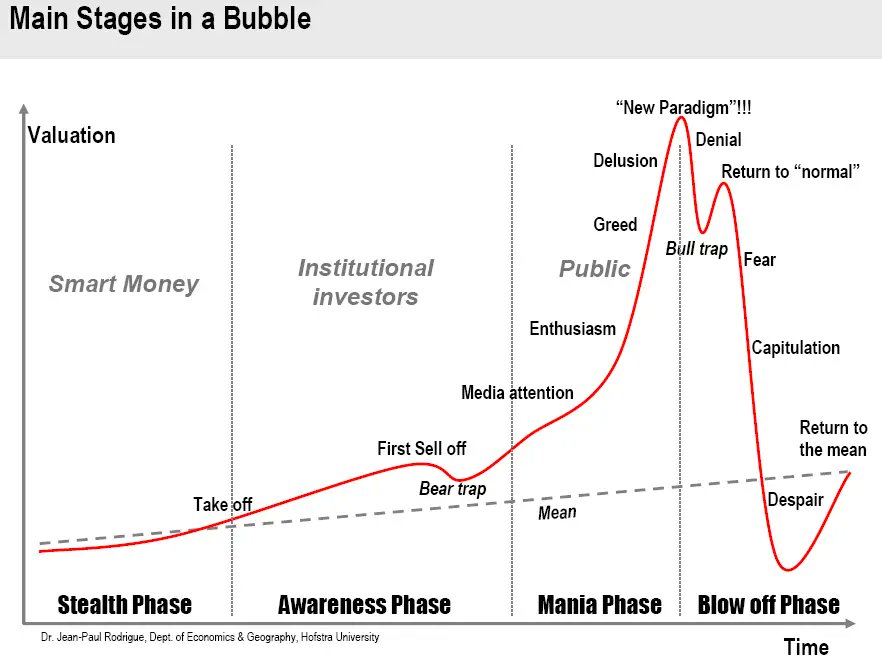
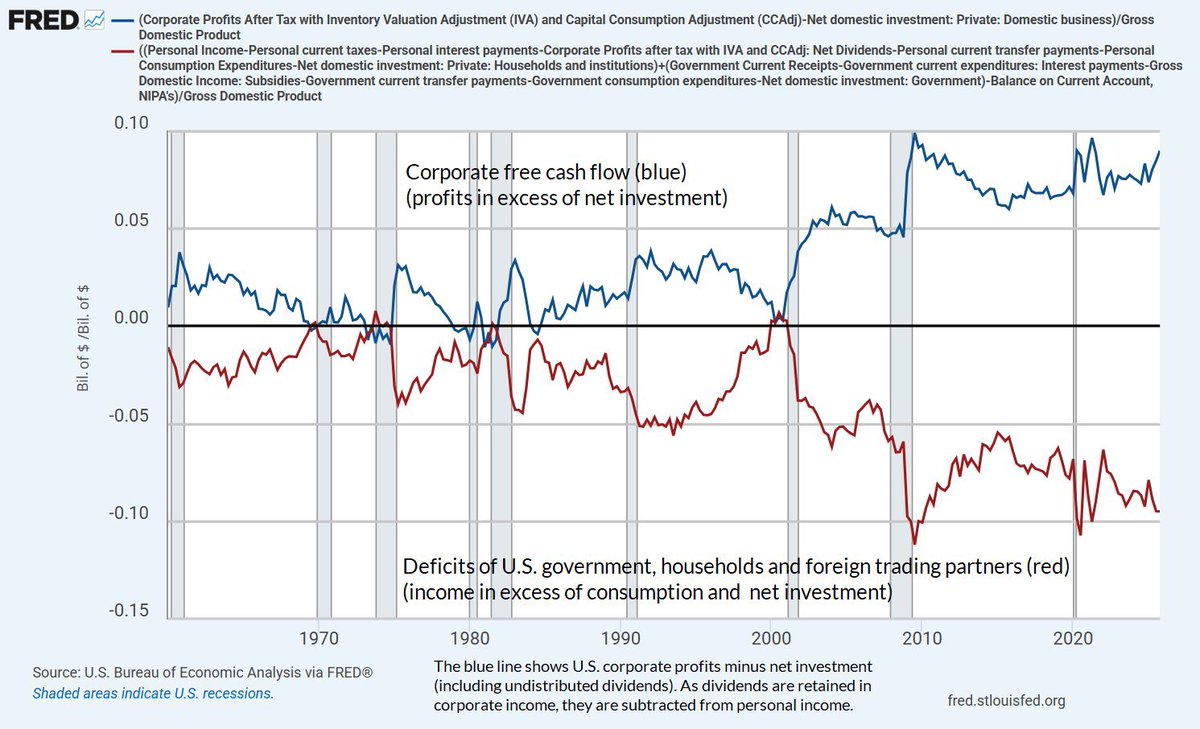
Which came first, the earnings bubble or the deficit bubble? 👇🏼
5
12
86
51,578
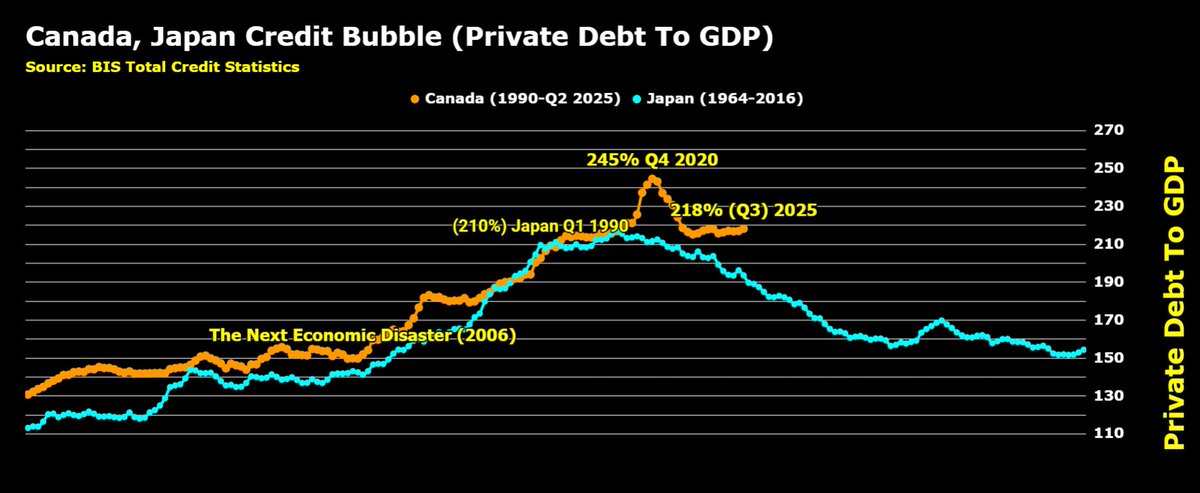
The real pain may not have even started. We have yet to significantly deleverage.

We beat Japan, now we wait for when Canadians are forced to deleverage!
2
43
Captain4thTurn retweeted
May 30
Complete subsidused state based economic warfare , if the intent is to destroy the productive capacity of the west the west has no choice but to close it's markets. that doesn’t serve China. It doesn’t serve anyone. It’s delusional to think that you can have one country make everything for everybody else and the rest of us just borrow to buy it off you that has not got a sustainable bone in his body you will end globalism for good and that’s not in China’s favour.
12
5
62
4,225
Captain4thTurn retweeted

May 29
⚡️Canada is a rich-country warning flare.
The country did not suddenly break.
It spent years converting future capacity into present comfort through housing, leverage, population growth, and state-managed consumption.
Now the bill is showing up.
Canada has enormous natural advantages: land, energy, minerals, water, agriculture, institutional stability, proximity to the U.S., educated labor, and strategic geography.
A country with that asset base should be one of the great productive powers of the 21st century. Instead, much of the national growth model became a loop of importing people, inflating housing, expanding household debt, taxing/redistributing around the pressure, and calling the aggregate number progress.
That model creates GDP, but it does not necessarily create prosperity.
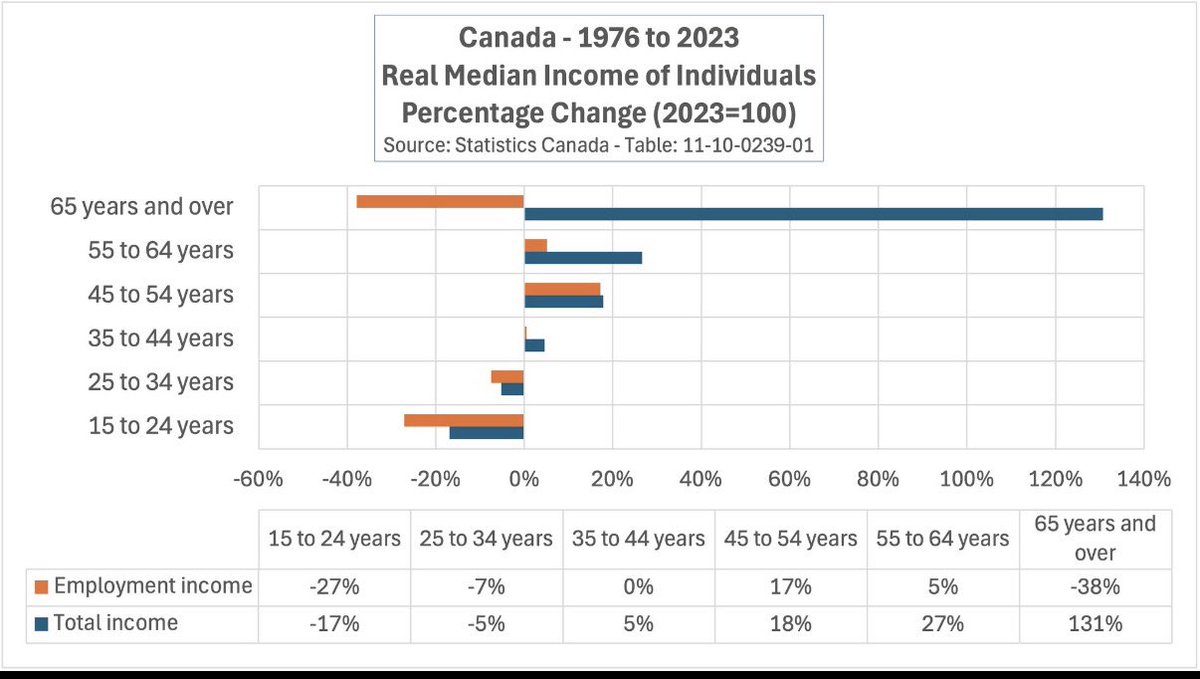
The core sickness is per-capita stagnation hidden by headline scale. A country can grow on paper while the median person feels poorer, more crowded, more indebted, less housed, and less hopeful. That is Canada’s fracture. The macro story and the lived story diverged for too long.
Housing became the false god. It absorbed savings, distorted politics, rewarded incumbents, punished young families, and redirected capital away from productive enterprise. When a country’s main wealth engine is bidding up shelter, it eventually starts consuming its own future. Young people lose formation. Families delay. Businesses struggle. Talent leaves. Politics curdles.
The recession print is the surface crack. The deeper fracture is that Canada’s old growth engine has stopped producing legitimacy.
Tariffs and weak jobs matter, but they are accelerants. The deeper problem is strategic drift. Canada did not build enough future-facing industrial strength relative to its potential. Energy could have been a sovereign superpower. Minerals could have been a strategic weapon. AI power infrastructure could be a national moonshot. Instead, the country over-indexed toward housing, bureaucracy, compliance, redistribution, and moral-managerial politics.
The U.S. has plenty of dysfunction, but it still creates monsters: Nvidia, OpenAI, SpaceX, Palantir, Anduril, hyperscalers, shale, venture capital networks, deep markets. Canada produces capable people and then often loses them into stronger systems. That is the brutal asymmetry.
The policy path ahead probably becomes rate cuts, fiscal support, more housing intervention, immigration recalibration, and attempts to cushion households. Some of that may stabilize the surface. It will not fix the core unless Canada shifts from asset inflation toward productive power.
The real question is whether Canada chooses productivity or keeps protecting the old model.
Productivity means energy development, industrial strategy, permitting reform, housing supply, capital formation, defense/AI/minerals infrastructure, and a political culture that rewards building. The current model means more debt, more transfers, more housing distortion, more young-person despair, and more dependence on U.S. demand.
Final compression:
Canada is not poor.
Canada is misallocated.
The recession is the signal that the housing-population-debt model has reached exhaustion.
A country with immense real assets forgot to build enough real power.

It's official:
Canada has unexpectedly entered a technical recession for the first time since the pandemic lockdowns in 2020.
Real GDP in Canada fell -0.1% in Q1 2026 following a -1.0% contraction in Q4 2025.
This marks two-straight quarters of GDP contraction for the first time in six years.
Economists had expected Q1 GDP growth of 1.5%, yet the economy suddenly contracted.
The weak GDP data coincides with a weak job market as well, as the Canadian economy is likely to remain under pressure amid ongoing US tariffs.
Meanwhile, the household saving rate fell to 3.5%, reaching its lowest level since the Q1 2024 as spending rose faster than incomes.
Canada is facing a major economic slowdown.
71
166
781
93,107
Captain4thTurn retweeted

May 25
"Racism — your son's tumor was caused by racism"
May 24

What's a video that defines Peak Woke?
620
2,167
29,912
1,761,075
Captain4thTurn retweeted

May 23
Colorado tax payers on the hook
316
1,134
9,999
745,285
The ironic part is that to maintain the level of human diversity in the world we must stay somewhat divided.
May 22

Wanting your children to look like you is not a crime.
Subversives like Josh Pieters would not be asking the same questions to a black person.
We’re not going to put up with it anymore.
39
Captain4thTurn retweeted

May 18
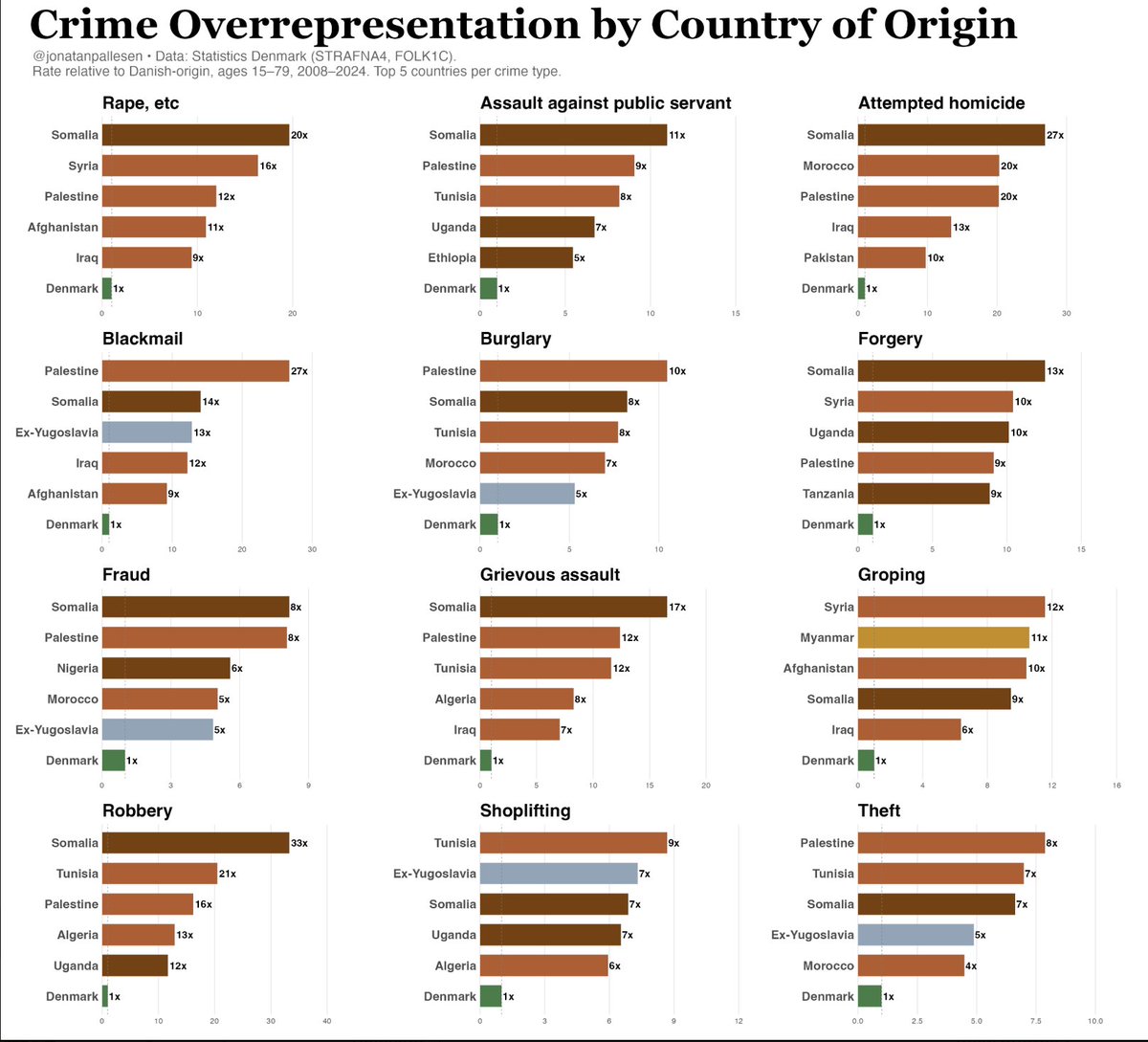
Palestinians rape at 12x the rate of native Danes.
Denmark is one of the only countries that actually tracks the background of criminals. And the numbers are right there in official government data.
Palestinians: 12 times more likely to commit rape than native Danes.
Let that sink in.
Not 50% more. Not double. 12 times.
I'm not surprised. Are you?
791
5,937
17,892
526,633
Captain4thTurn retweeted
Being gay is a choice, a sexual preference.
Being trans is also a choice...but a man dressed as a women will always be a biological man and at best a "trans women". Men can not become women and women can not become man.
The difference between LGB and trans is biology.
1
1
55