
Prof @oiioxford Director, Future of Work @oxmartinschool at Oxford University. Author of How Progress Ends (2025) & The Technology Trap (@PrincetonUPress, 2019)
Joined August 2011
- Tweets 3,205
- Following 536
- Followers 7,328
- Likes 5,330
376 Photos and videos
Pinned Tweet

16 Jun 2025
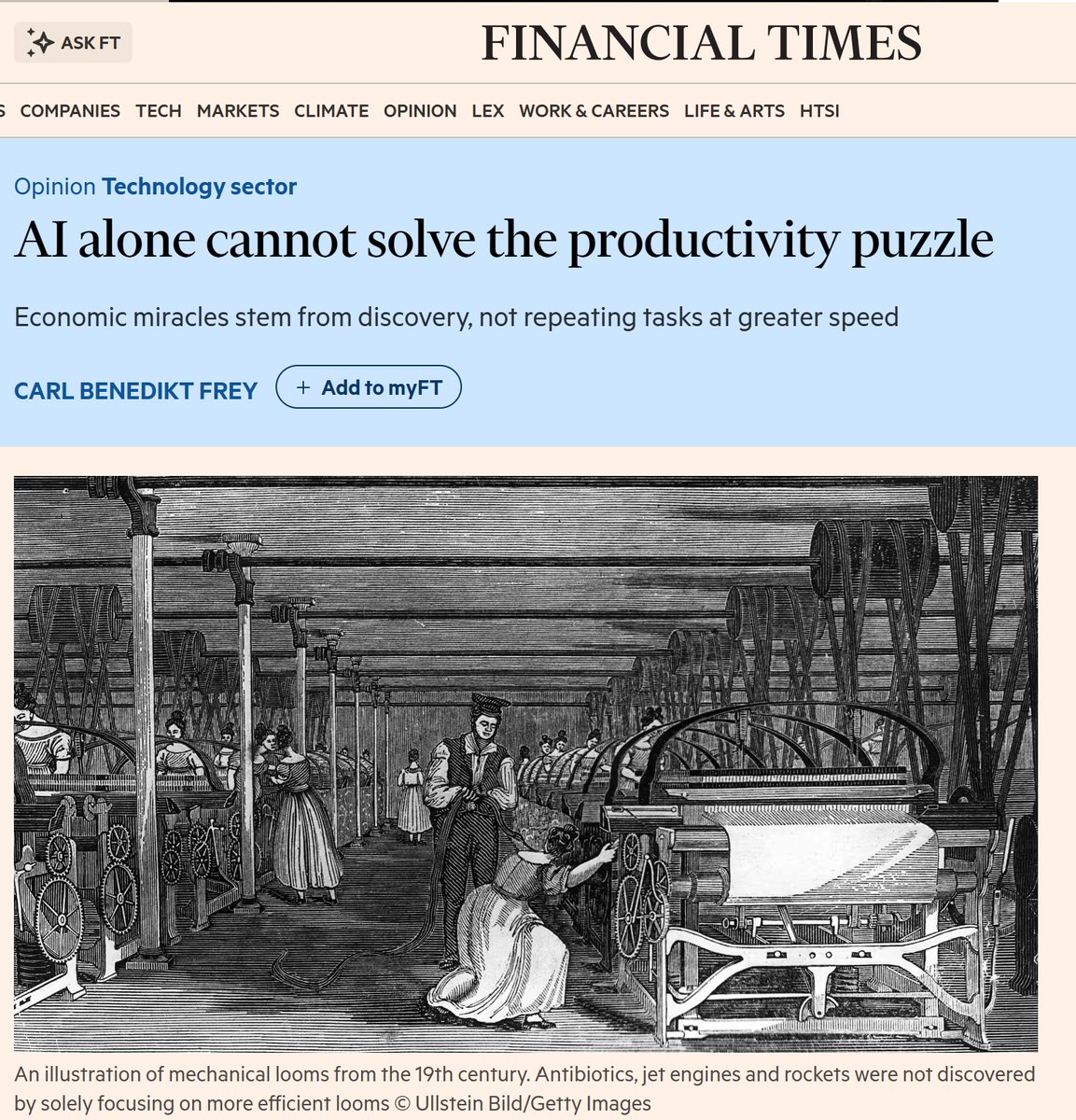
In the @FT today, I argue that if AI is just another productivity tool, the productivity gains will be limited. For lasting economic expansion, AI must catalyze new industries and initiatives.
"Had the 19th century focused solely on better looms and ploughs, we would enjoy cheap cloth and abundant grain — but there would be no antibiotics, jet engines or rockets. Economic miracles stem from discovery, not repeating tasks at greater speed."
42
209
920
166,212
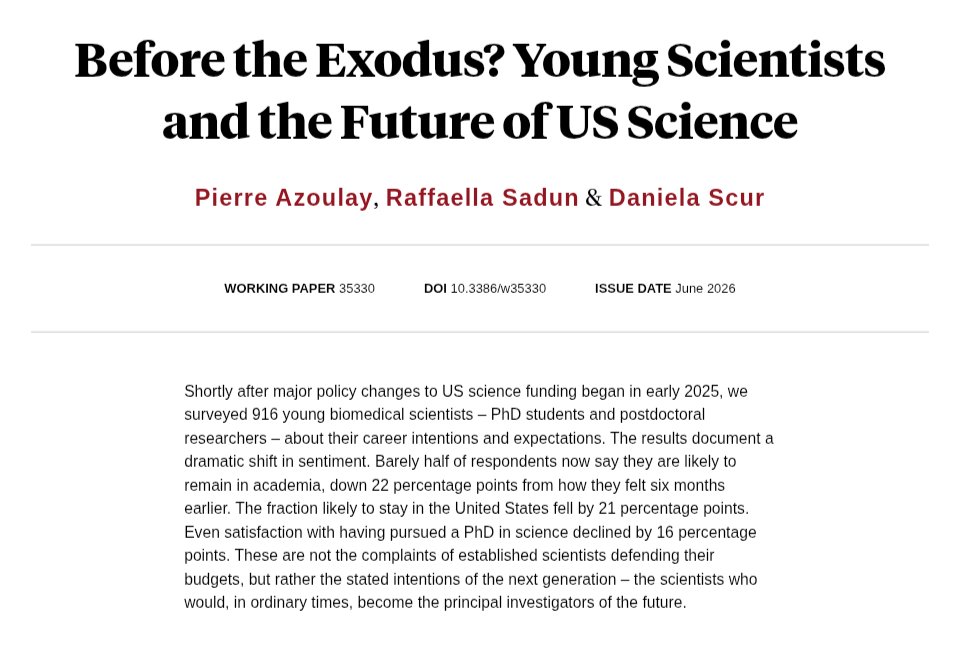
And what is Europe doing to attract them?

After US science funding cuts young biomedical scientists are
- less likely to remain in academia
(-22 percentage points)
- less likely to stay in the United States (-21 percentage points)
- less satisfied having pursued a PhD in science (-16 percentage points)
1
183
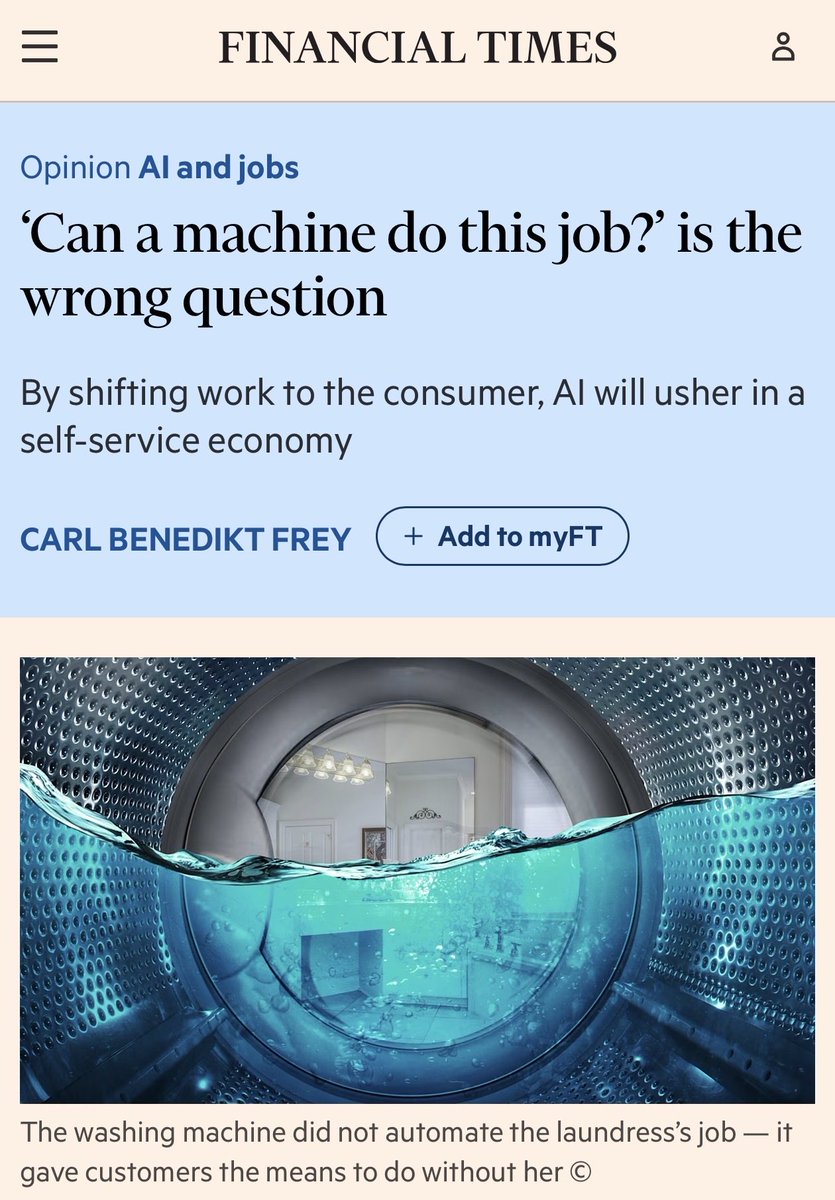
My latest in the @FT today. I make four points:
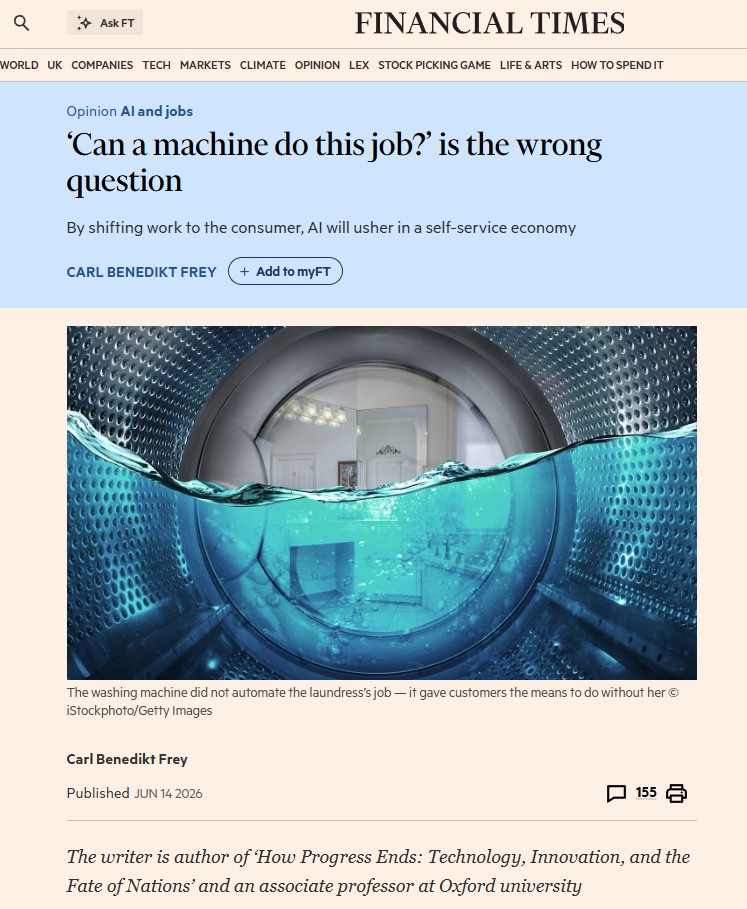
1) Capitalism's great achievement was moving activity out of the household and into the market — turning domestic production into paid specialisation, creating jobs, and making output visible to the national accounts. AI-enabled self-service might quietly reverse that centuries-long trend.
2) When a technology automates tasks within a service, it can trigger a Jevons paradox: the service gets cheaper, demand expands, and employment grows. When it lets people do the work themselves, demand for the service collapses.
3) AI extends this even to the manual trades, the supposed safe haven of the AI age. If a homeowner can ask a chatbot why their boiler keeps losing pressure, heating engineers lose call-outs.
4) When work shifts to the consumer, it vanishes from the economy statisticians measure. Replace a billing department with a chatbot and a firm records lower costs and higher output per worker; the national accounts register a productivity gain. But the hours patients spend decoding their own test results appear nowhere — not in labour statistics, not in GDP. As self-service spreads into professional domains, that blind spot will grow.
3
29
111
18,969

AI is advancing at breakneck speed. So why is productivity growth still stagnating? 🎧 Listen to the latest episode of World in 30 Minutes with @carlbfrey as he explains that technological breakthroughs alone are not enough, and describes the role institutions and politics play.
bit.ly/3QCMi9F
1
2
521
Carl Benedikt Frey retweeted

Jun 15
3
3
19
1,372
Carl Benedikt Frey retweeted

Jun 13
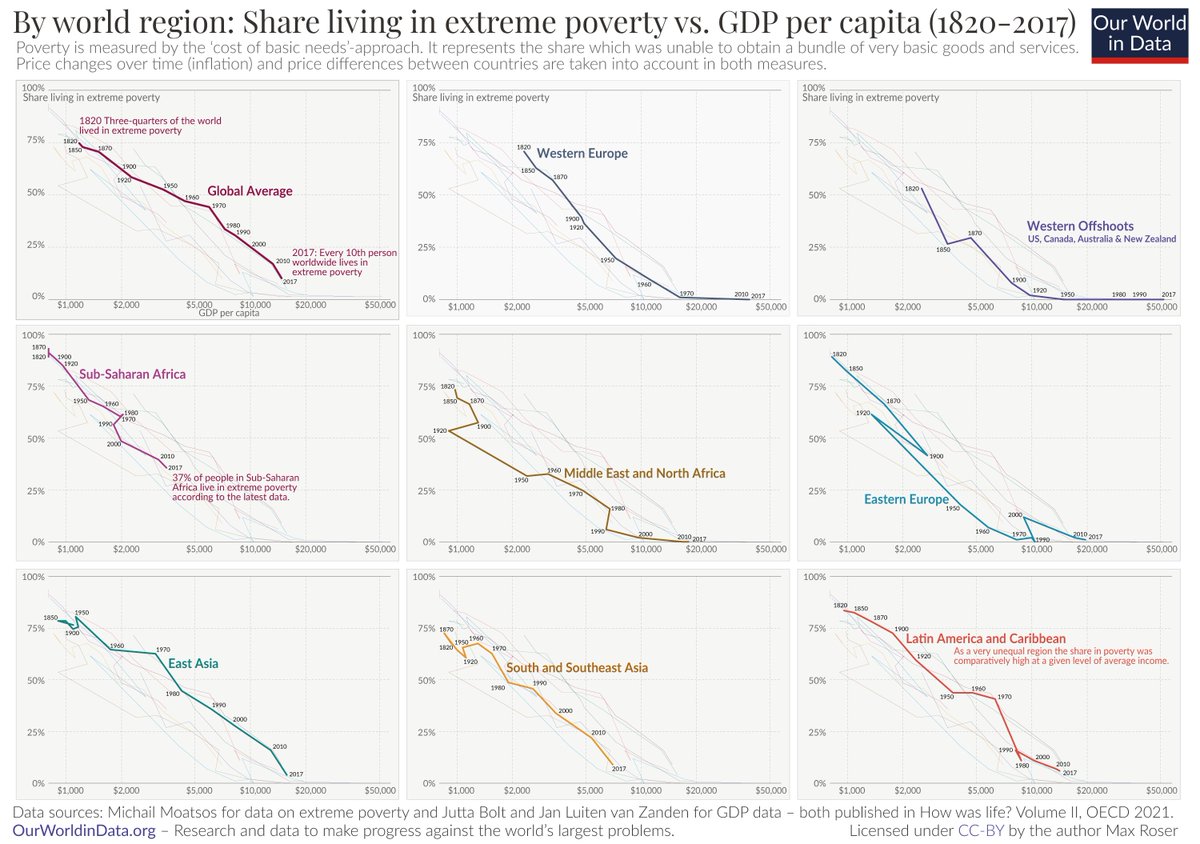
This is a great graph. The point is not time. The x axis is gdp per capita. The point is that growth does benefit all. The idea growth only benefits the rich is dramatically false. timely given Stieglitz, Pketty et al recent degrowth noise.
Jun 11

A way to see the amazing history of economic growth and declining poverty over the last two centuries.
14
160
640
86,530
Jun 14
My latest in the @FT on how AI may usher a self-service economy
Jun 14

‘Can a machine do this job?’ is the wrong question ft.trib.al/433YwPo
1
2
8
2,845
Carl Benedikt Frey retweeted

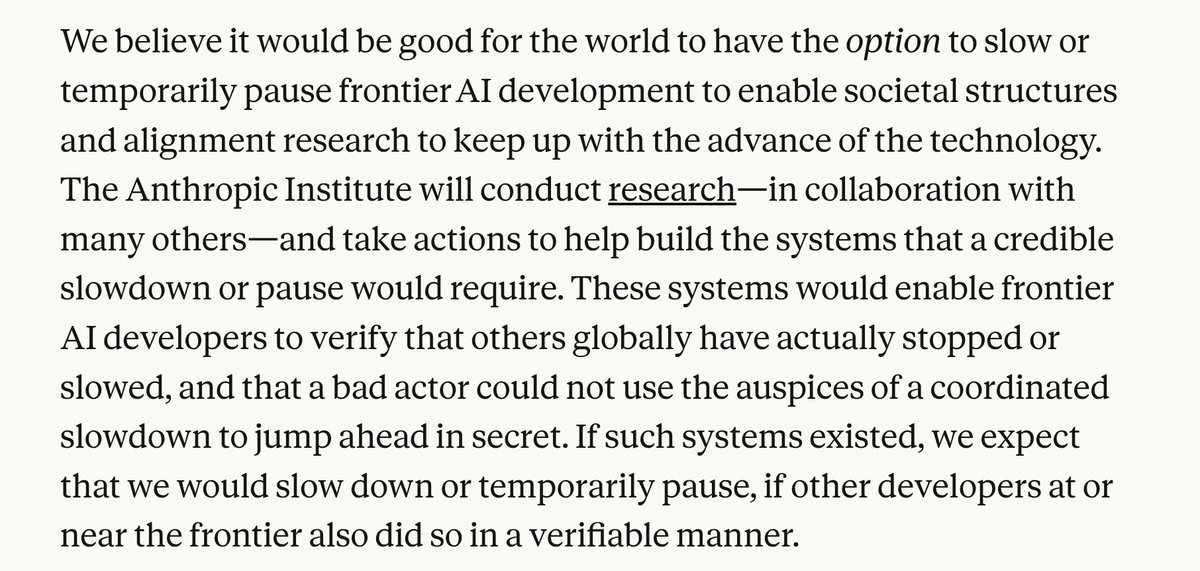
You read it as safety-motivated, I read it as a call for cartel. We are not the same
Jun 4

Anthropic is calling for top AI labs to weigh slowing the pace of development, suggesting that AI systems are advancing so rapidly that they may soon be able to improve themselves without human intervention in ways that could pose societal risks. on.wsj.com/4ulkmFh
8
20
137
24,793
🎧 New #podcast: As everyone talks about the speed of AI, what if the bigger story is that productivity and innovation are slowing down? Mark Leonard speaks with @carlbfrey, author of How Progress Ends, about why technological progress is neither inevitable nor guaranteed. bit.ly/3QCMi9F
3
3
628
Carl Benedikt Frey retweeted

Jun 11
Competition is the only protection anyone has ever had against concentrated power.
Anthropic's valuation only works if open weights get banned by law. Their safety case and their business case are the same case.
We have four options:
-Anthropic ruling the world as a monopolist (or a duopolist) is catastrophic. We are having the first inklings of that with Fable release.
- The US government controlling the world by controlling the model releases (on the table right now): even worse. They will weaponize it and blackmail the hell out of everyone.
- The world government solution is cute, but not going to happen.
- So competition, with the open weights only a few months behind, is the only thing protecting us in the rest of the world. Models will need some regulation, like cars or planes do.
As a European, the first two options scare me more than the technology does. OpenAI has not been making these ridiculous Effective Altruist noises, they have quietly released models which are on the whole superior to Anthropic's in my view and there have been no risk to the world. I think Anthropic protests too much.
10
29
220
30,194
Carl Benedikt Frey retweeted

Jun 7
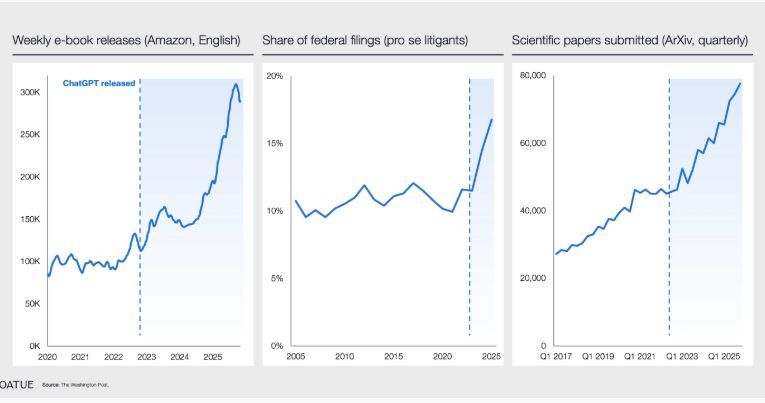
Activity is not productivity.
Many signs of a surge in knowledge work output post chat GPT, but no signs of any meaningful increase in the real sales per worker at the economy wide level.
22
34
285
72,326
Carl Benedikt Frey retweeted

Jun 10
I'm a huge fan of @JimPethokoukis work, and his most recent article sums up my take (though in a more erudite fashion than I could do).
AI is advancing really, really quickly. But, it takes time (sometimes a really long time) for firms to adopt and implement AI.

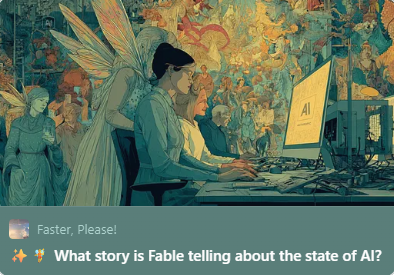
✨🧚 What story is Fable telling about the state of AI?
The frontier keeps moving fast. The question is whether business is yet moving with it. Until it does, economic transformation is a just a fairytale.
(free link in next post)
2
3
9
4,514
Carl Benedikt Frey retweeted

Jun 11
I don't know what Piketty, Stiglitz, and co. are smoking. Global poverty rates have never been lower. Progress on basic global health and wellbeing measures has been amazing over the past few decades. "End of the road"?!? Come again!?!
theguardian.com/commentisfre…
119
457
2,538
813,106
Carl Benedikt Frey retweeted

Jun 9
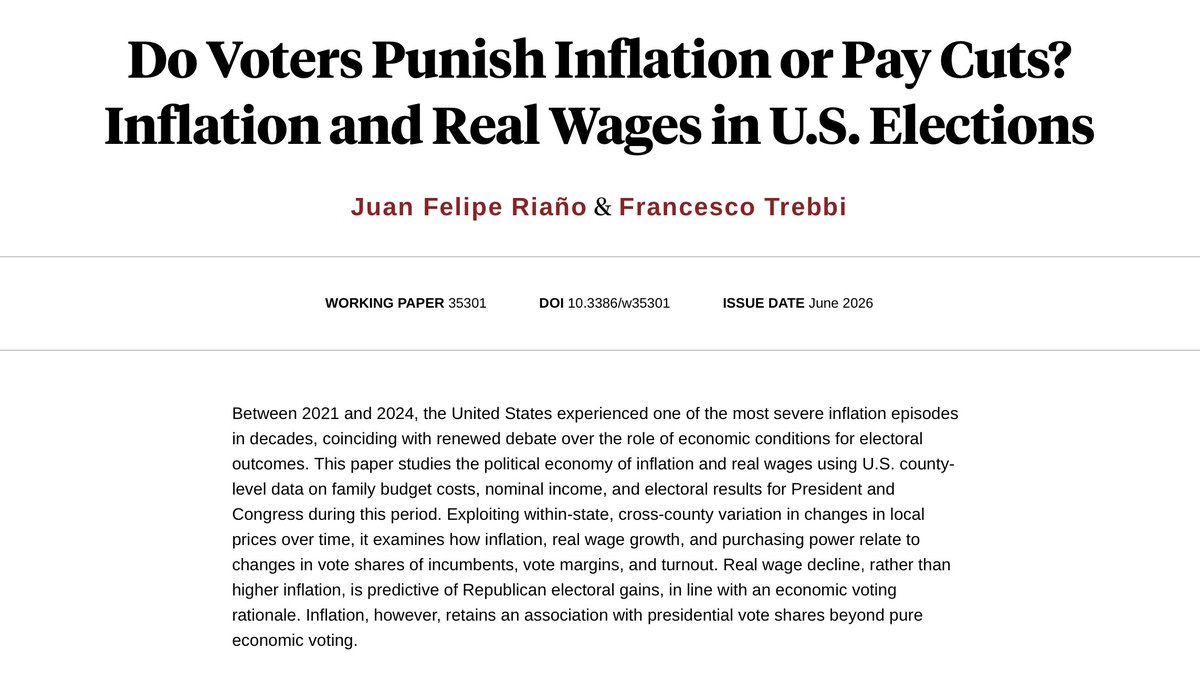
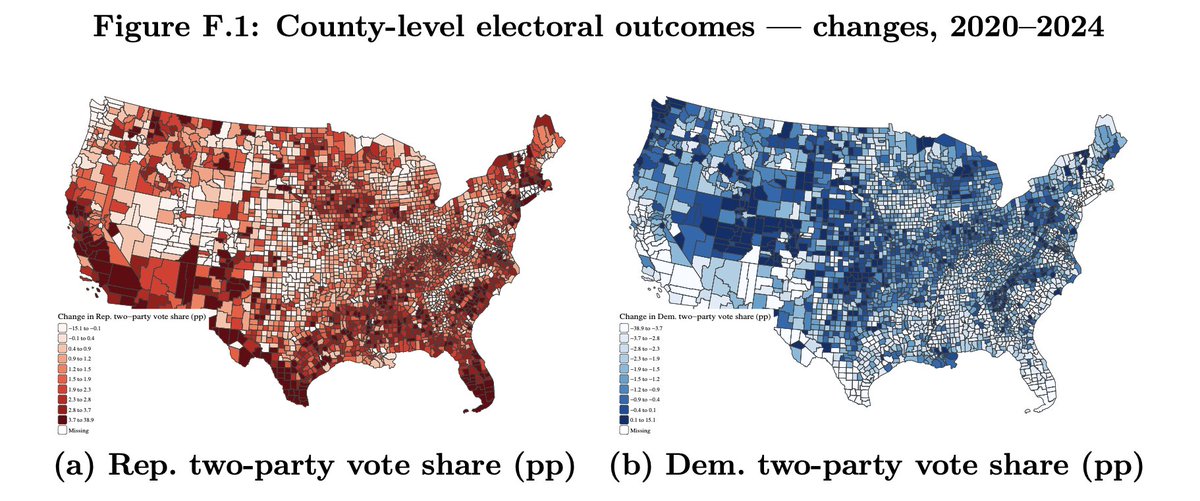
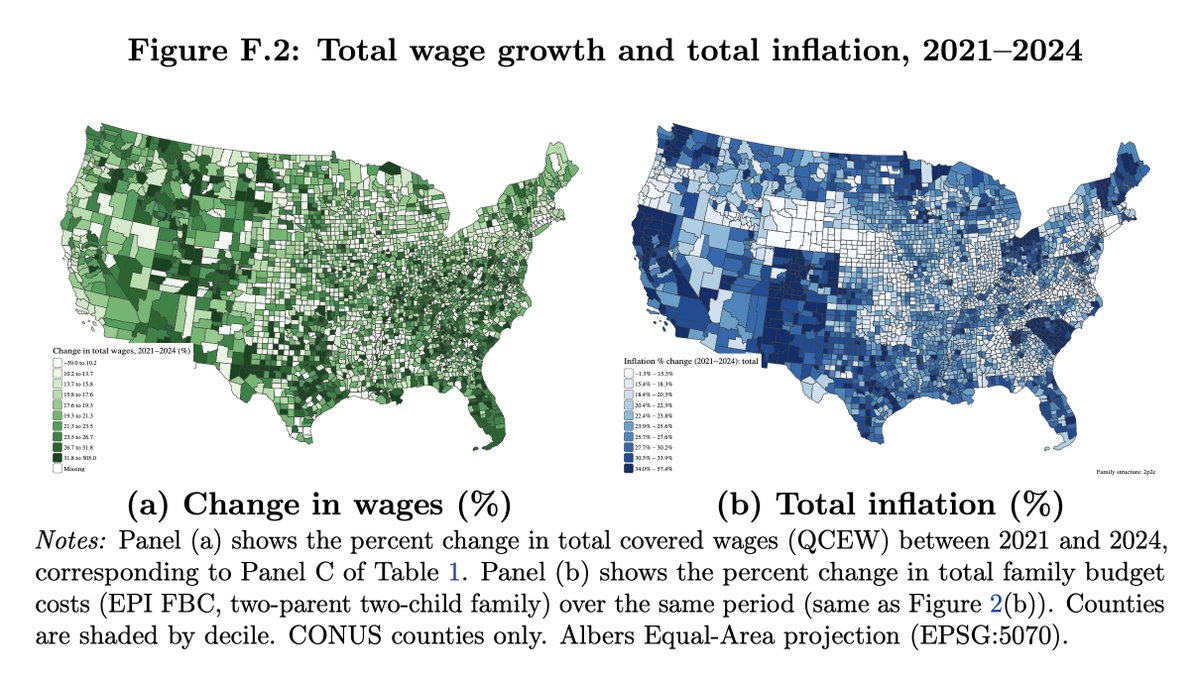
Best evidence I’ve seen so far that inflation was a major electoral driver in 2024

🚨New NBER working paper alert 🚨
🤔2021–2024 was the worst U.S. inflation in four decades. The question: Did voters react to the rising prices, or to the shrinking paychecks?
😱We approached this paper with one major surprise: there is no official measure of inflation at the county level in the U.S.
🌟To study the relationship between inflation and electoral outcomes during, we first had to construct local inflation measures using county-level data on family budget costs and incomes.
The answer? -> Check it out! 👇
🔗 nber.org/papers/w35301
2
35
256
38,474
Jun 10
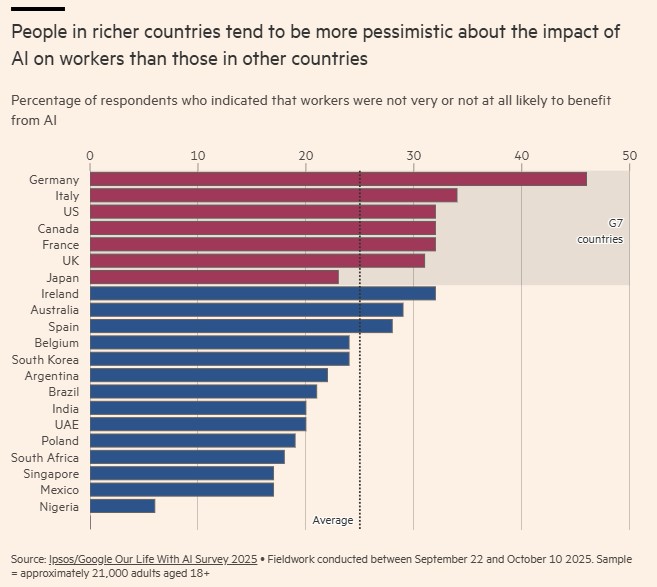
AI pessimism seems more pervasive in rich countries. Two possible reasons:
AI makes knowledge work easier to offshore to where labor is cheaper —fewer accountants in London, more in Manila.
In poorer countries, AI may expand access to services people lacked before (e.g. doctors)
1
5
6
594

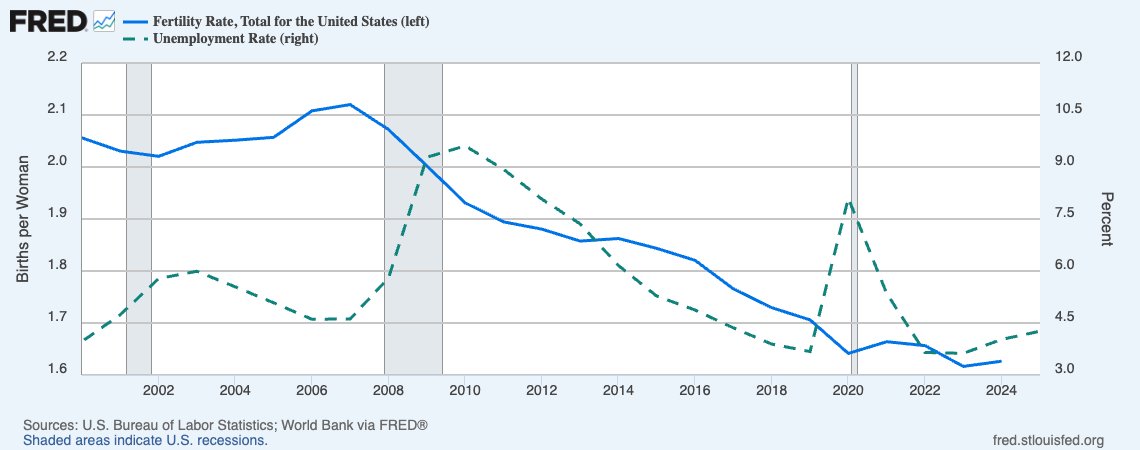
I am still skeptical the smartphone explains much of recent drop in fertility. It may have contributed at the margin to the secular decline but the severe recession is a much more plausible explanation of the abrupt drop in 2008, coincidentally a year after iPhone was introduced.
Jun 8

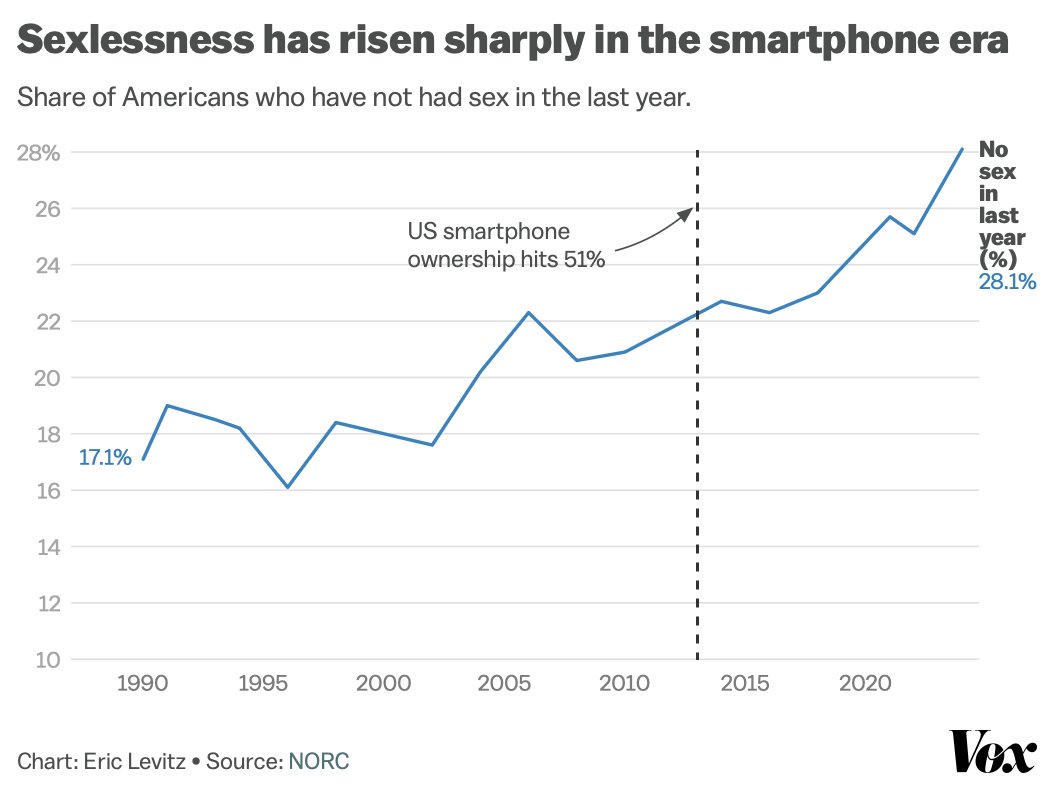
Smartphones appear to have accelerated the global fertility crisis -- by making social isolation and singledom more comfortable and entertaining.
Chatbots could nudge humanity even further in this direction. Today, digital technology doesn't just provide loners with perpetual stimulation but also, forms of emotional support that previously required real world relationships.
Full article here (and for now, no paywall!): vox.com/politics/491167/ai-s…
4
6
54
53,517
Carl Benedikt Frey retweeted

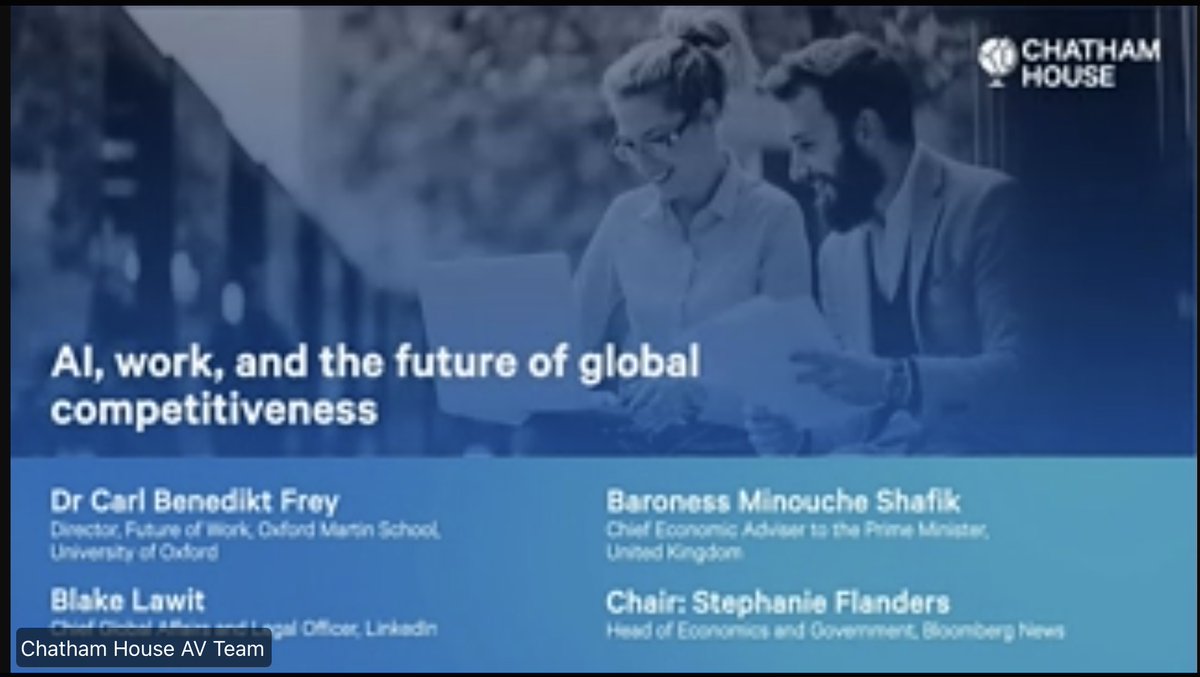
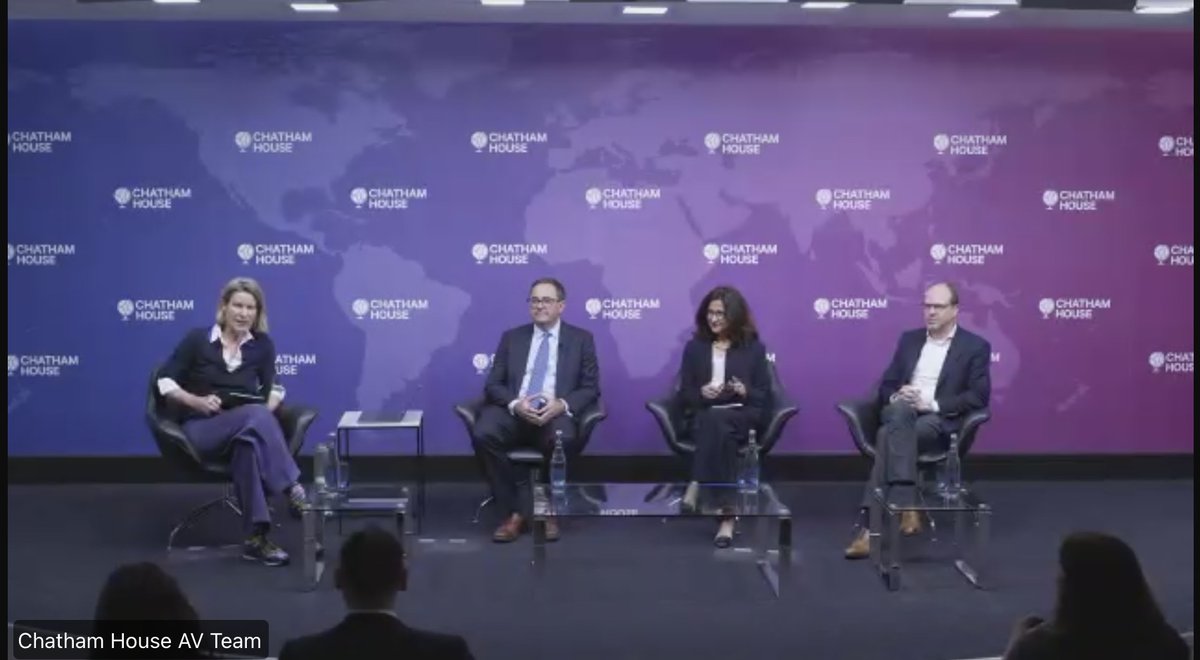
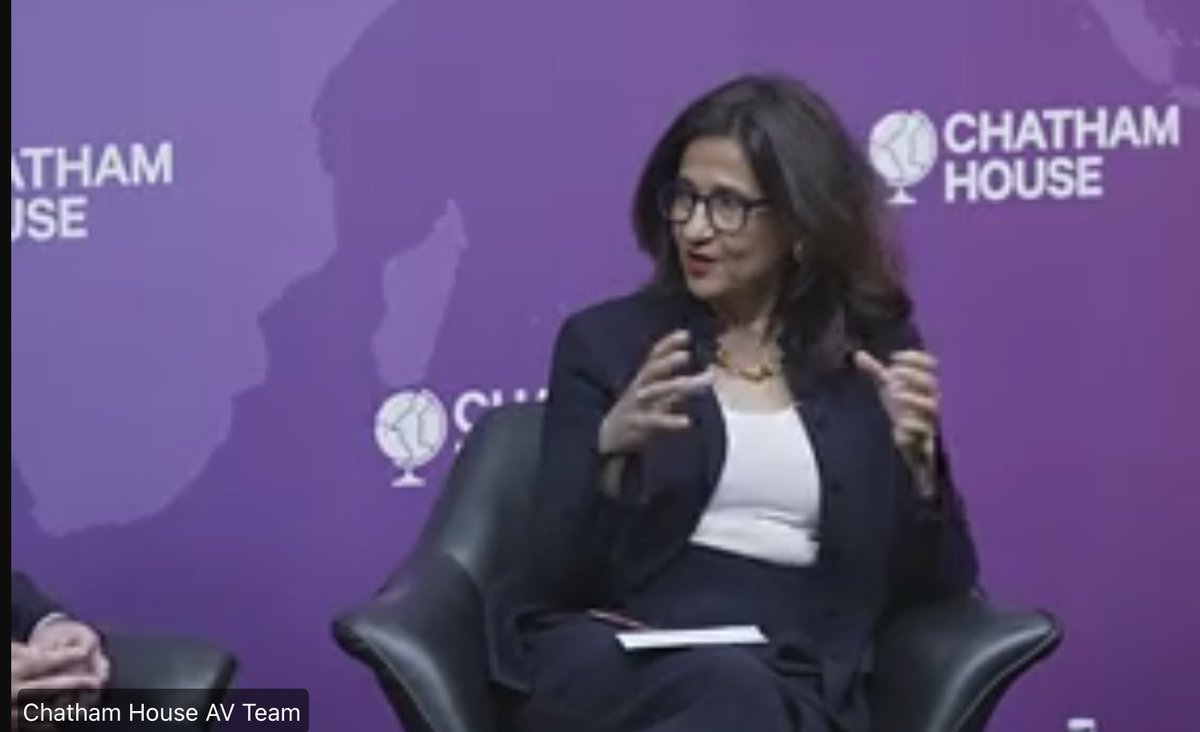
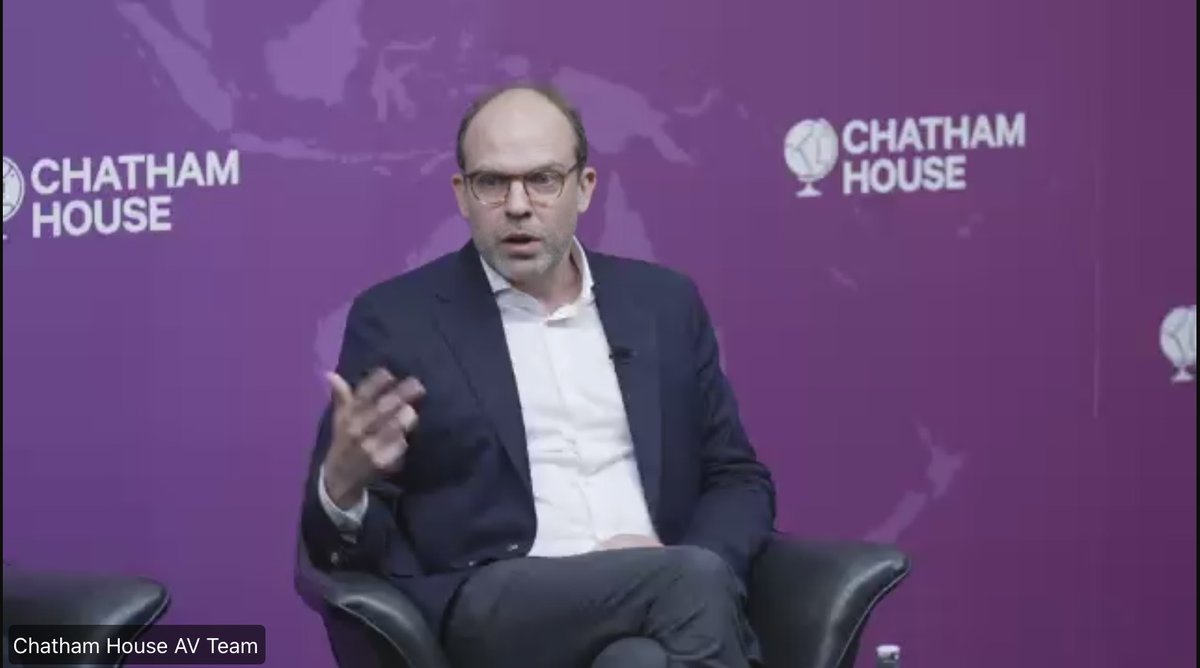
Much enjoyed this session organized by .@ChathamHouse.
Many insights on #AI and its implications for companies, people, and global economy.
Huge thanks to panel speakers:
.@carlbfrey, Baroness Minouche Shafik, Blake Lweit & moderator @MyStephanomics
youtube.com/live/LYPxcDUnxog…
1
2
217
Carl Benedikt Frey retweeted

#AI #Work & the #Future of #Global #Competitiveness @UniofOxford Future of Work Director Dr. @carlbfrey @bloomberg Stephanie Flanders @MyStephanomics @LinkedIn Chief Global Affairs & Legal Officer Blake Lawit Chief Economic Adviser to UK PM Baroness Minouche Shafik @ChathamHouse
1
1
164

I really loved this article. A one-time increase in per capita growth from 2% to 2.1% for a single year, then dropping back to 2%, would permanently raises the level of GDP per capita - and because that small gain recurs and compounds every year afterward across the population, it would add up to roughly a trillion dollars in cumulative value. abundanceandgrowth.org/p/a-l…
When people talk about pausing AI development, I can't help but think about the enormous cumulative value that would get lost over time, the higher rates of absolute poverty that would persist across the world, and the needless deaths from delayed medical advances. There may be worlds where some version of this is something to consider, but the evidentiary bar for delaying technological development should obviously be pretty high.
26
80
402
124,998
Carl Benedikt Frey retweeted
Jun 7
Let me get this straight. Climate change will lower GDP by 5% 100 years from now. So the answer is, lower GDP even more now?
Jun 6

This is coming from a famous economist, so it's probably worth clarifying that there's no economics in this report showing that their degrowth pathway is either an ideal or likely decarbonization path. It's an opinion they work backwards from.
13
71
717
72,404
Carl Benedikt Frey retweeted

Jun 7
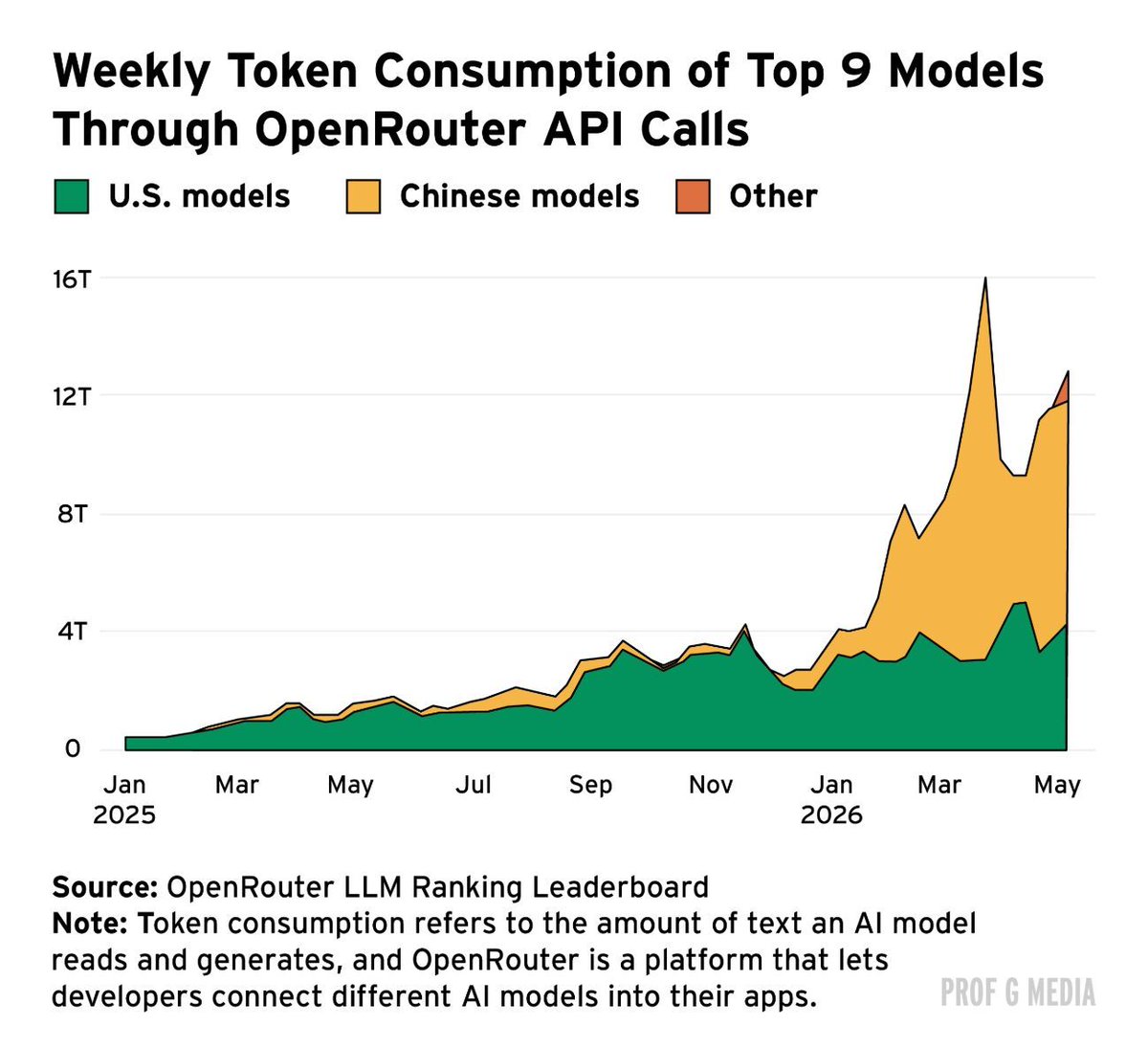
This is a pretty striking shift toward Chinese models by American AI startups since the start of the year. substack.com/@profgmarkets/p…
150
408
2,055
579,808