
260 Photos and videos










Dan retweeted

Jun 6
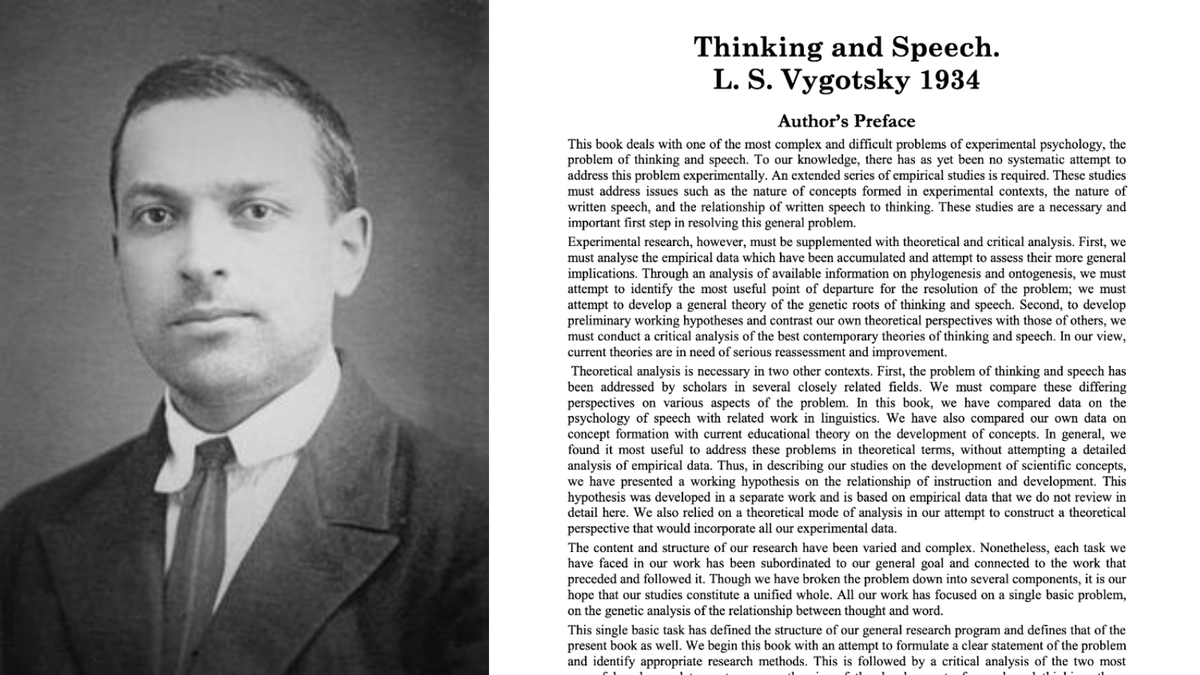
A Russian psychologist spent 10 years proving that the act of talking to yourself out loud is one of the most powerful cognitive tools the human brain has, and almost nobody outside his field has read the work.
His name was Lev Vygotsky.
He worked in Moscow in the 1920s and died of tuberculosis in 1934 at the age of 37. He had no laboratory, no funding, almost no English readers, and a body of work that the Soviet government suppressed for two decades after he died.
He produced the foundational theory of how human cognition actually develops, and the central piece of that theory was a behavior almost every adult is faintly embarrassed about.
Vygotsky noticed that young children talk to themselves constantly. They narrate their own actions, they argue with imaginary opponents, they instruct themselves through tasks out loud.
The dominant theory at the time, from the Swiss psychologist Jean Piaget, said this was a sign of cognitive immaturity that children would eventually grow out of as they learned to think properly.
Vygotsky said the exact opposite.
He argued that this self-directed speech was the most important cognitive event in the entire developmental window, because it was the moment a child first started to use language as a tool to control their own mind. The child was not failing to think. The child was learning how to think by externalizing the process and listening to themselves do it.
He predicted that as children matured, this out-loud self-talk would not disappear. It would go underground. It would become silent inner speech, which is the running monologue every adult has inside their own head for the rest of their life.
The voice you hear when you read this sentence is the direct descendant of a four-year-old narrating their own block tower.
For 50 years almost nobody outside Russia had access to his work, and the few researchers who did pick it up could not get funding to test it. Then in the early 2000s the experiments finally started to pile up, and what they found was that Vygotsky had been right about something even more important than he knew.
The first major study came from Gary Lupyan at the University of Wisconsin and Daniel Swingley at the University of Pennsylvania in 2012. They ran a simple visual search experiment. Participants were shown 20 images at once and asked to find a specific object, like a banana or a chair. In one condition they searched silently. In the other condition they were told to say the name of the object out loud to themselves while looking for it.
The participants who spoke the target name out loud found the object significantly faster, with higher accuracy, than the participants who searched in silence. The effect was strongest when the spoken word matched a familiar object the brain already had a strong category for.
Saying the word out loud literally tuned the visual system to detect that thing better. The researchers called it the label feedback effect, and the implication was that the act of vocalizing a goal physically changes how the brain processes the world while pursuing it.
The second major study came out of the University of Michigan and Michigan State in 2017. The lead researchers were Ethan Kross and Jason Moser, and they used both EEG and fMRI to record what happens inside the brain when people talk to themselves while emotionally upset.
They asked participants to recall painful autobiographical memories and reflect on them in two different ways. Some used the first person, saying things like "why am I feeling this way." Others used the third person, referring to themselves by their own name, saying things like "why is John feeling this way."
The brain scans showed that the simple act of switching from first person to third person, even silently, decreased activity in the medial prefrontal cortex, the region responsible for rumination and self-referential pain. Within a single second of using their own name instead of the word I, participants showed measurably lower emotional reactivity. The shift required no extra cognitive effort. It cost the brain nothing. And it worked.
Kross described the mechanism in his interviews. Talking to yourself by name creates a small amount of psychological distance from your own experience. Your brain processes the situation more like a problem belonging to someone else, which means it can analyze it instead of drowning in it.
What Vygotsky had intuited in 1934 turned out to be even more powerful than the developmental theory he built it into. The voice you use to talk to yourself is not background noise. It is one of the most precise cognitive tools the brain has, and you can change how it works just by changing the pronoun you use.
People who talk through problems out loud are not anxious or unstable. They are running an externalized version of a process the rest of us are running silently and worse. The kindergartener narrating their block tower, the surgeon muttering through a procedure, the engineer pacing a hallway describing a bug to nobody, the athlete repeating a cue to themselves before a free throw, they are all using the same ancient mechanism that builds and steers human thought.
You can run the experiment yourself the next time you are stuck on something hard. Stop trying to solve it silently in your head. Say it out loud. Describe what you are seeing. Walk yourself through the steps as if you were explaining it to a colleague who is not in the room.
And when something genuinely upsets you, switch to your own name. Ask why this person is feeling this way, instead of why I am feeling this way.
The voice you have been told to keep quiet your entire life is one of the oldest pieces of cognitive technology you own.
Most people are still embarrassed to use it.
255
3,045
11,164
406,220
Dan retweeted

Mar 25
More of the 89 sq m 3 bed 2 baths final stages finishing .
Average cost Sh 29,000 per sqm.
That’s Sh 29,000 by 89 sq m = Sh 2,581,000 of premium finished unit excludes fencing /land cost etc etc .
Engage
3
19
2,215
Dan retweeted
Mar 23
Good morning .
A comparison of various slabs flooring out there .
◾️rebar based solid slab average cost Sh 5,000 per sqm (exclusive columns and beams )
◾️Composite slab (average cost Sh 3,600/- per sqm ) exclusive Ringbeams and columns .
⭕️Composite slabs have less dead weights
⭕️Installation extremely quick
⭕️Save 70% labor cost (no formworks / no steel tying / concrete cover basic 50mm )
Engage 0780-955-000

3
7
1,352
Dan retweeted

Why do 80% of businesses fail in the first 36 months? Customer acquisition cost. If it costs you more to get a customer than they’re worth over their lifetime, you’re going bankrupt on ads.
The minute you crack CAC profitably, investors like me pour gasoline on the fire.
54
43
259
27,782

1
Dan retweeted

You will get more value out of this than from reading 90% of books on investing
Worth listening and re-listening to
14
336
1,155
101,496
Dan retweeted

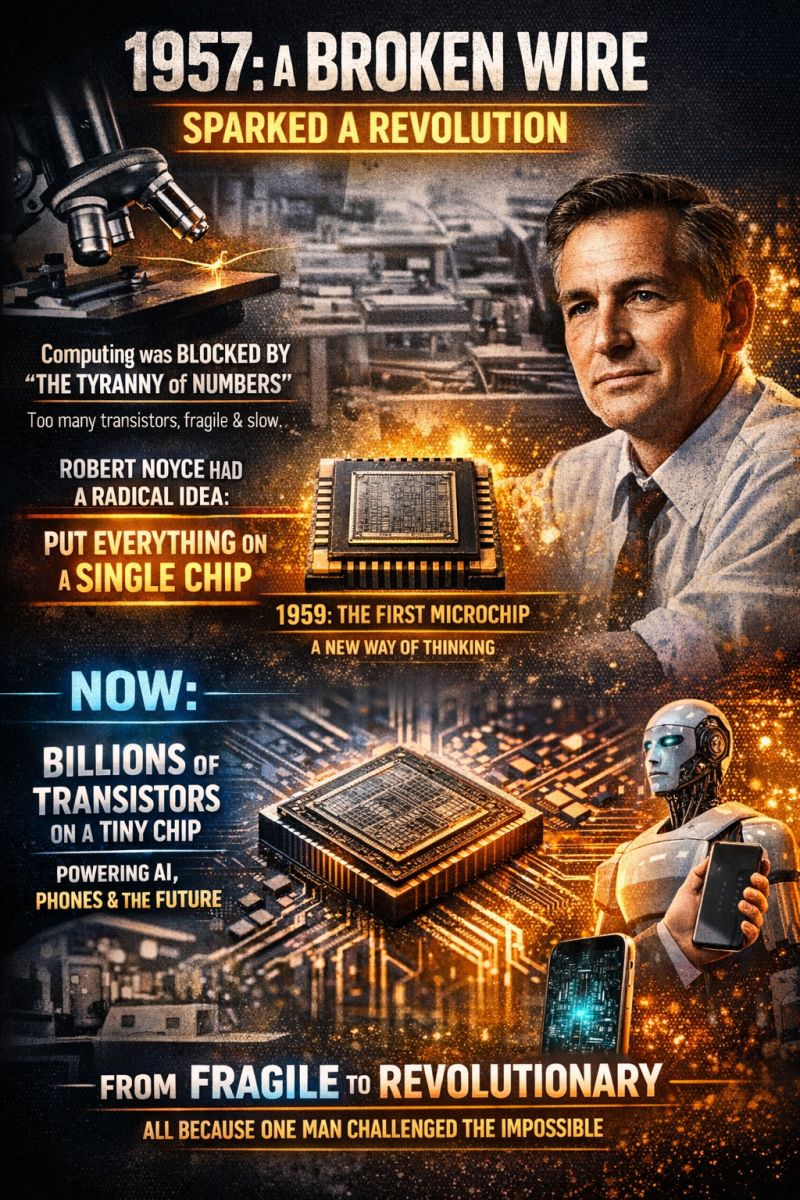
A thin gold wire snapping under a microscope doesn't sound dramatic
But in 1957, in a lab thick with ozone and mounting frustration, that tiny ping was the sound of the future breaking. Every snap meant another failure, another reminder that computing had hit a wall.
Transistors had replaced vacuum tubes and revolutionized the world, but now they were prisoners of their own success. To make computers more powerful, engineers had to hand-wire thousands of components together. One bad connection, and the entire machine died. The industry had a name for it: the tyranny of numbers.
Staring at those failures, day after day, was Robert Noyce. He didn't believe the answer was better soldering or steadier hands. He believed it was something far more radical: put everything onto a single piece of material. Transistors, resistors, wiring, all of it. No loose connections. Nothing to snap.
Most experts said it couldn't work. At Shockley Semiconductor, hierarchy was gospel. Orders flowed top-down, and questioning the boss was career suicide. Innovation was supposed to follow a neat, predictable assembly line.
So Noyce did something almost unthinkable in the buttoned-up 1950s. He walked out, taking seven colleagues with him. No building, no safety net, no forgiveness from an industry that branded them the "Traitorous Eight."
They formed Fairchild Semiconductor not just to invent new technology, but to invent a new way of working. No private offices. No executive parking. Titles mattered less than ideas. When experiments failed, Noyce didn't demand explanations. He asked questions. Fear evaporated, and creativity accelerated.
The technical race was brutal. Jack Kilby at Texas Instruments proved the integrated circuit was possible, but Noyce proved it could scale. Using silicon and planar manufacturing, Fairchild learned to "print" circuits directly onto wafers.
In 1959, it finally worked. One success in a California lab. The microchip was born.
By 1968, Noyce doubled down, co-founding Intel and crystallizing the culture that still defines Silicon Valley: open debate, shared ownership, and a default assumption that the impossible is just inconvenient.
Today, NVIDIA's latest Blackwell GPU contains 208 billion transistors on a single chip. Those transistors train the largest AI models, power autonomous vehicles, and render photorealistic worlds. The tyranny of numbers didn't disappear. It was defeated by rethinking both the engineering and the org chart.
Fairchild proved the microchip could work. And then Intel Corporation proved it could become an industry. Later Noyce and Gordon Moore didn't just refine the technology at Intel, they democratized it. The memory chips and microprocessors that followed turned computers from room-sized machines into desktop tools, then pocket devices. Intel became the blueprint for how Silicon Valley companies could scale without losing the spirit that made them innovative in the first place.
10
13
4,407
Dan retweeted

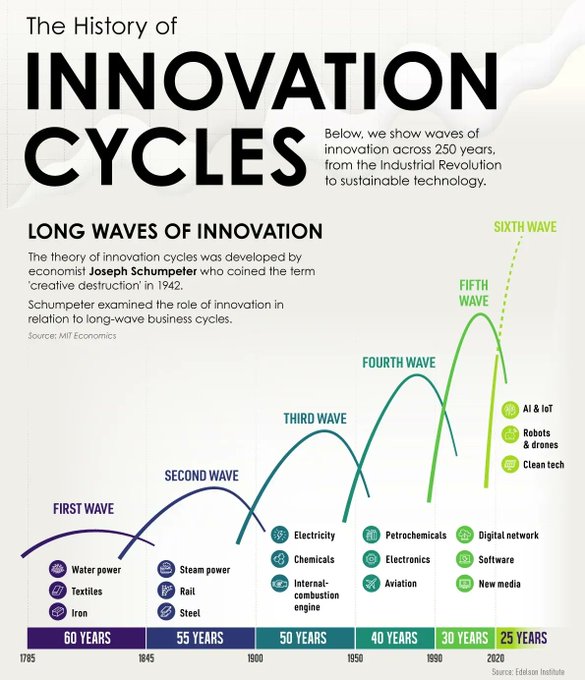
What is meant by Innovation Cycles? From the first wave of textiles and water power in the industrial revolution to the internet in the 1990s, here are the six waves of innovation and their key breakthroughs.
#infographic Source @VisualCap rt @antgrasso #innovation #Internet
2
13
22
1,001

Try Grokipedia.com!
We are striving to make this the best open source, no license or anything distillation of all knowledge.
Feb 2

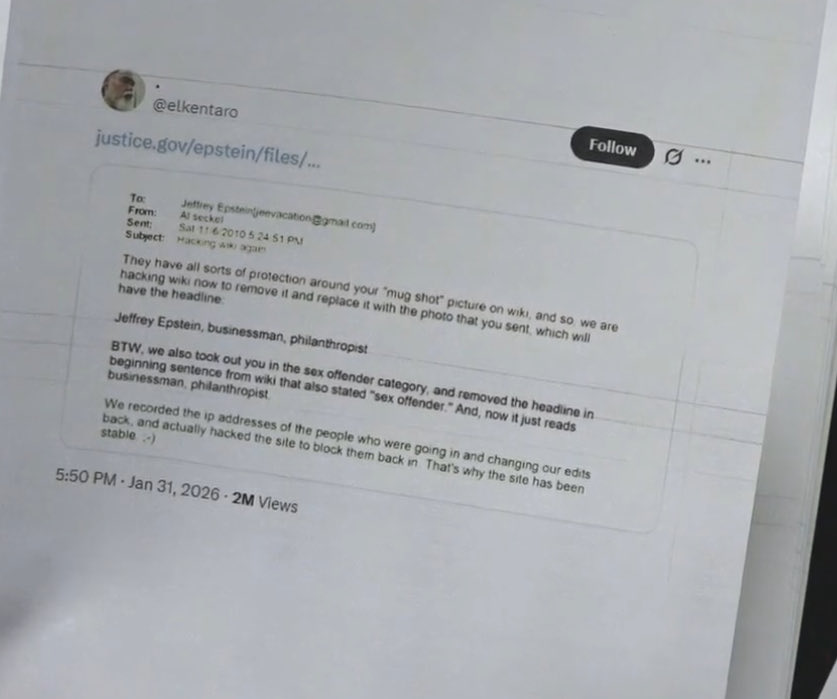
It is all over for Wikipedia.
This recently released document shows how Wikipedia has been hacked and gamed by a notorious criminal.
USE GROKIPEDIA.
2,364
8,154
43,770
5,477,399
Davos discussion
Jan 23

Elon Musk's Full Speech Today At Davos
► Silences removed (to save you time)
► Boosted audio (for easier listening)
From the World Economic Forum in Davos, Switzerland
9,372
9,986
48,145
24,443,301
Now that the AI5 chip design is in good shape, Tesla will restart work on Dojo3.
If you’re interested in working on what will be the highest volume chips in the world, send a note to AI_Chips@Tesla.com with 3 bullet points on the toughest technical problems you’ve solved.
2,392
3,684
36,703
20,557,972
Dan retweeted

Jan 9
Yesterday I posted something about the leading Zimbabwean eye surgeon, Dr Solomon Guramatunhu, and how he has been a long-standing proponent of natural hair, especially for women.
I saw today that a few women went into meltdown over that. More importantly, a lot of my non-Zimbabwean social media followers have been asking what the discourse was about.
For that reason, I have cut this piece from one of the interviews he did with Trevor Ncube, where he explains his views on this particular issue and the thinking behind them.
78
392
908
107,554
Dan retweeted

Programming languages and their release years
Fortran — 1957
LISP — 1958
COBOL — 1959
ALGOL — 1960
CPL (Combined Programming Language) — 1963
BASIC — 1964
PL/I — 1964
APL — 1964
Simula — 1967
SNOBOL — 1967
Pascal — 1970
C — 1972
Smalltalk — 1972
Prolog — 1972
ML (Meta Language) — 1973
Scheme — 1975
SQL — 1974–1976 (standardized later)
Forth — 1970
AWK — 1977
Modula-2 — 1978
Ada — 1980
Objective-C — 1984
C — 1985 (development began 1983)
Erlang — 1986
Perl — 1987
Haskell — 1990
Python — 1991
Visual Basic — 1991
Lua — 1993
R — 1993
Ruby — 1995
Java — 1995
JavaScript — 1995
Delphi (Object Pascal) — 1995
PHP — 1995
OCaml — 1996
Groovy — 2003
C# — 2000
Visual Basic .NET — 2001
Scala — 2004
PowerShell — 2006
Go — 2009
Rust — 2010
Kotlin — 2011
Dart — 2011
TypeScript — 2012
Julia — 2012
Elixir — 2012
Swift — 2014
Hack (HHVM) — 2014
Crystal — 2014
WebAssembly (Wasm) — 2017
Zig — 2016
Nim — 2008 (stabilized later)
Red — 2011
V — 2019
Carbon — 2022 (experimental, C successor proposal)
Mojo — 2023 (Python-compatible, AI-focused)
Bend — 2023 (parallel functional language)
These are just a few of the many programming languages that have been developed over the years, each with its own specific purposes and applications.
129
394
2,222
311,835
Dan retweeted

Jan 7
This is MASSIVE
A breakthrough that could redefine chronic pain treatment in 2026.
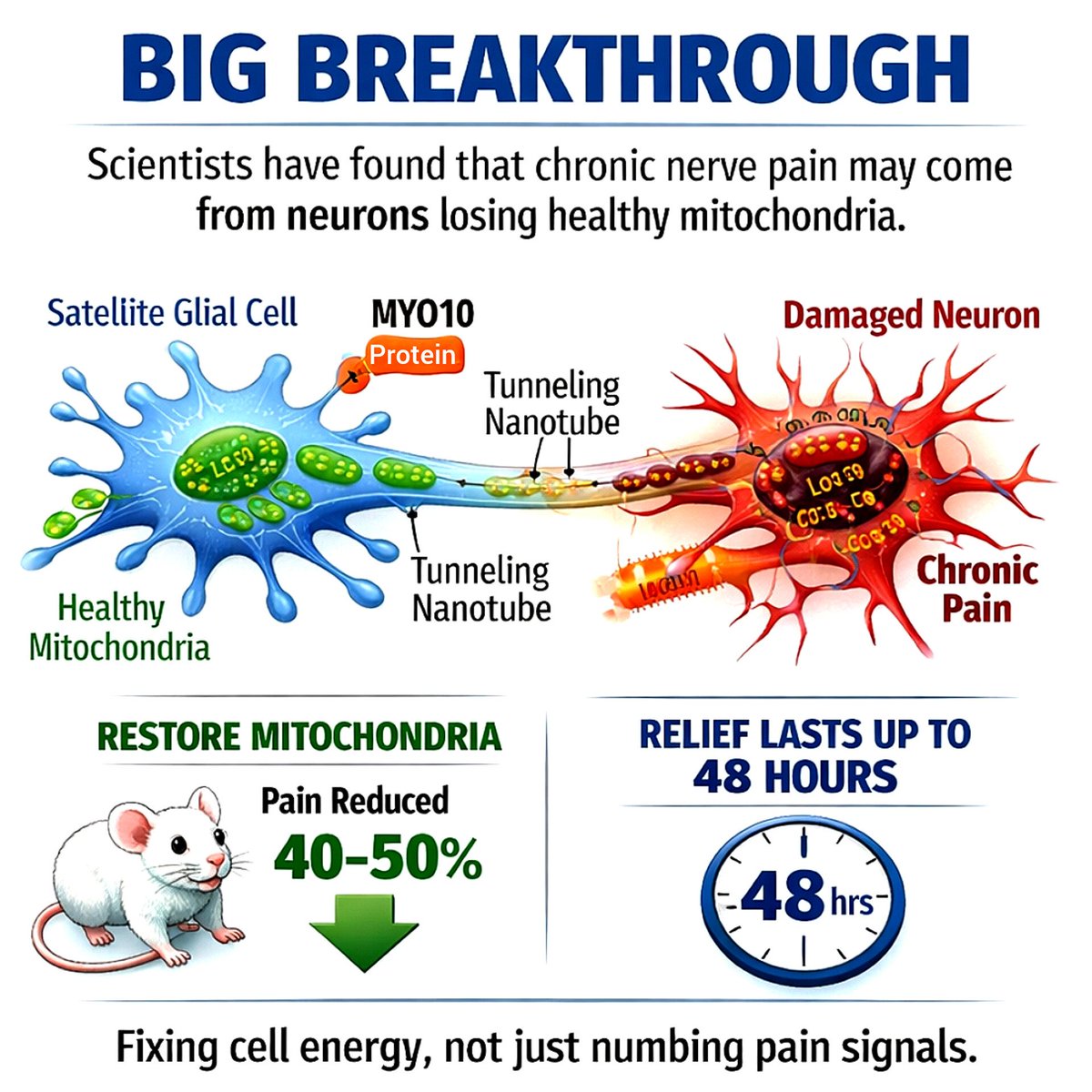
Scientists have uncovered a biological mechanism that may finally offer real relief for chronic nerve pain by restoring the tiny powerhouses inside our cells.
Researchers just discovered that sensory neurons rely on fresh mitochondria supplied by surrounding satellite glial cells. When this natural “mitochondria transfer system” breaks down, neurons lose energy, start malfunctioning, and chronic neuropathic pain takes over.
The team identified a key protein, MYO10 (myosin-10), which helps build microscopic nanotubes that shuttle healthy mitochondria into damaged nerve cells. When MYO10 is disrupted, pain intensifies. When the transfer is boosted, pain drops.
In preclinical tests, restoring mitochondria in nerve cells led to:
> Up to ~40–50% reduction in pain behaviors
> Relief lasting up to 48 hours after a single treatment
> Major improvement in models of diabetic neuropathy and chemotherapy induced nerve damage
Even more striking: injecting healthy donor mitochondria directly into nerve clusters worked, while mitochondria taken from people with diabetes did not. That means cell energy quality itself determines whether pain can be reversed.
This is one of the first times scientists have shown that replacing or restoring mitochondria can directly reduce neuropathic pain, not just mask symptoms, but potentially fix the underlying cellular failure.
If this approach translates to humans, it could open the door to a completely new class of pain therapies, focused on energy restoration rather than lifelong drugs that only numb the signal.
For millions living with chronic nerve pain, this could be the start of a new era.
51
444
1,424
91,504
Dan retweeted

18 Dec 2025
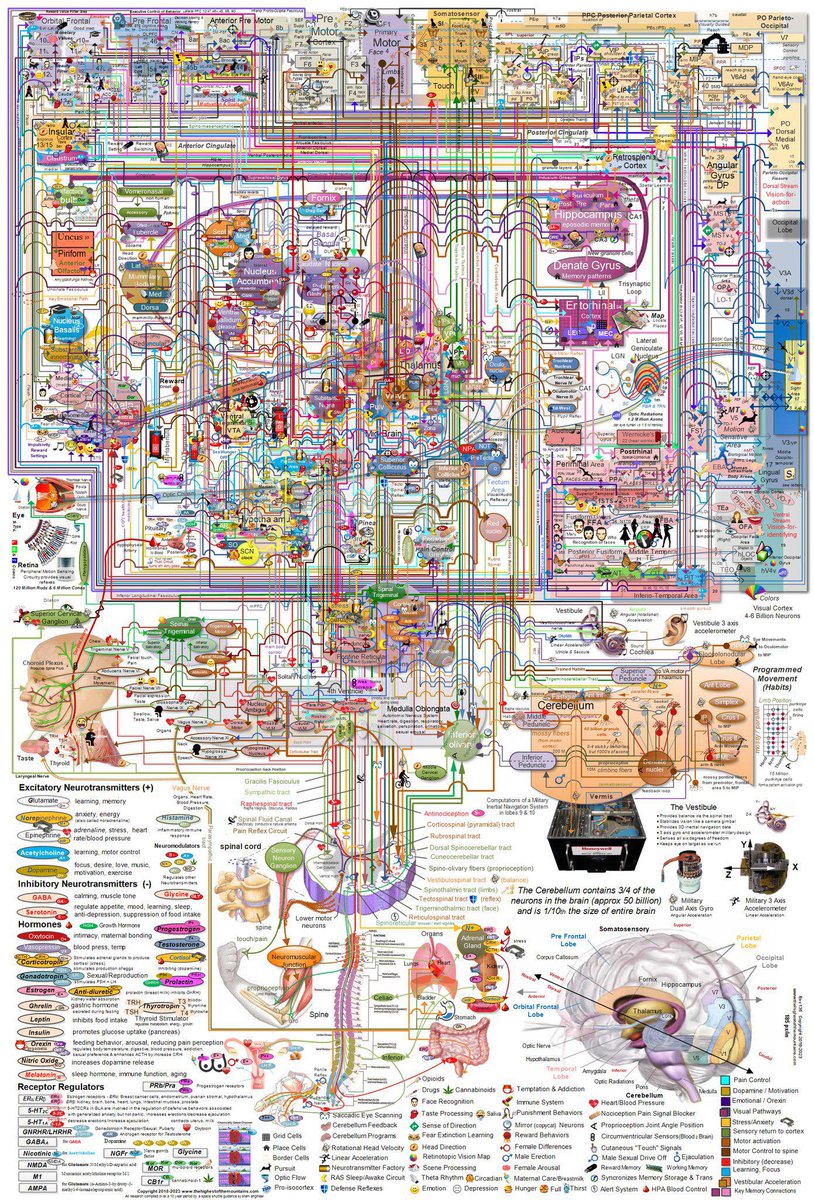
The complexity of the human brain
2
16
54
12,536
Dan retweeted

Jan 6
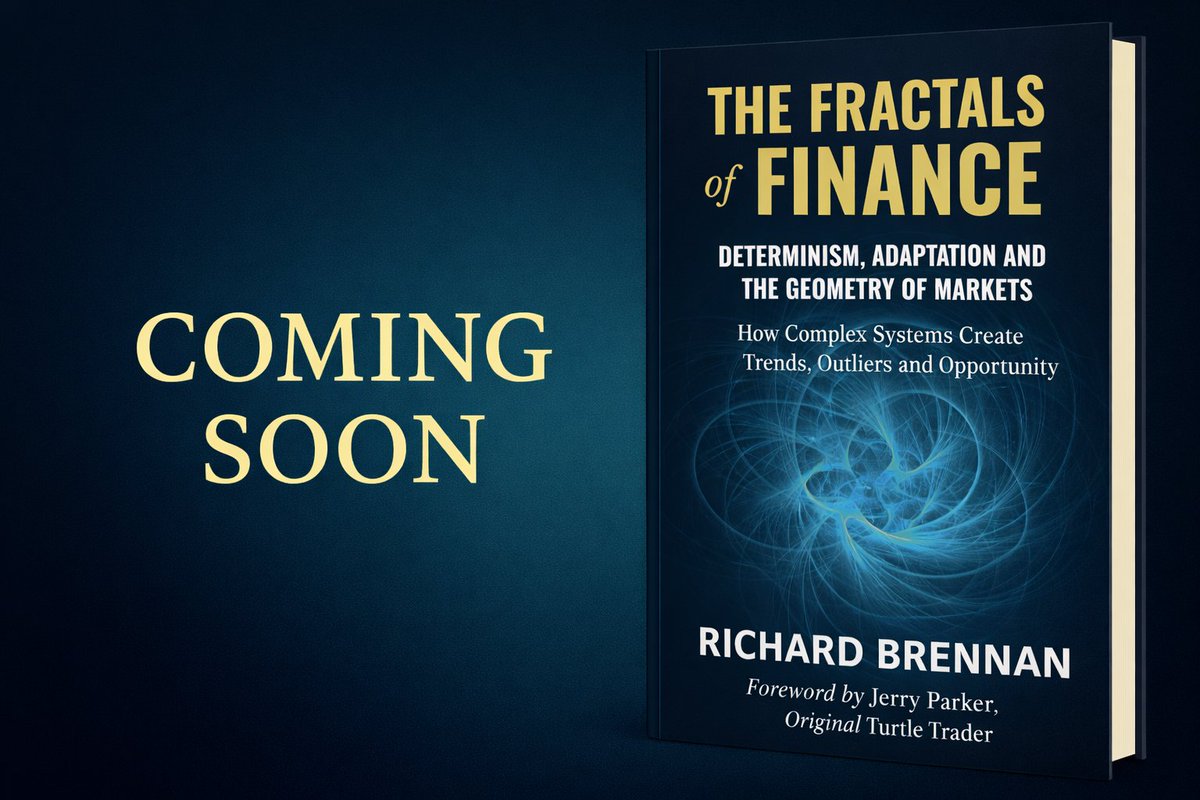
The Fractals of Finance: Coming Soon
Markets are not random. They are alive.
After years of exploring why trend following works, not just how, I'm thrilled to announce my book is almost here.
The Fractals of Finance bridges complexity science with systematic trading philosophy. It explains how feedback creates structure, why prediction fails, and how robust systems survive in a world built on uncertainty.
I'm honoured that Jerry Parker, Original Turtle Trader, wrote the Foreword.
Coming soon. More details to follow.
#TrendFollowing, #SystematicTrading, #ComplexityScience, #Fractals
7
3
21
1,403

In 1983, Richard Feynman gave a 1-hour masterclass on imagination and physics.
He broke down:
• Fire
• Atoms
• Motion
• Energy
• Magnetism
But underneath it, he revealed how to think like a scientist
12 lessons from Feynman’s masterclass:
1. Imagination beats knowledge
66
1,834
7,352
404,262
Dan retweeted

29 Dec 2025
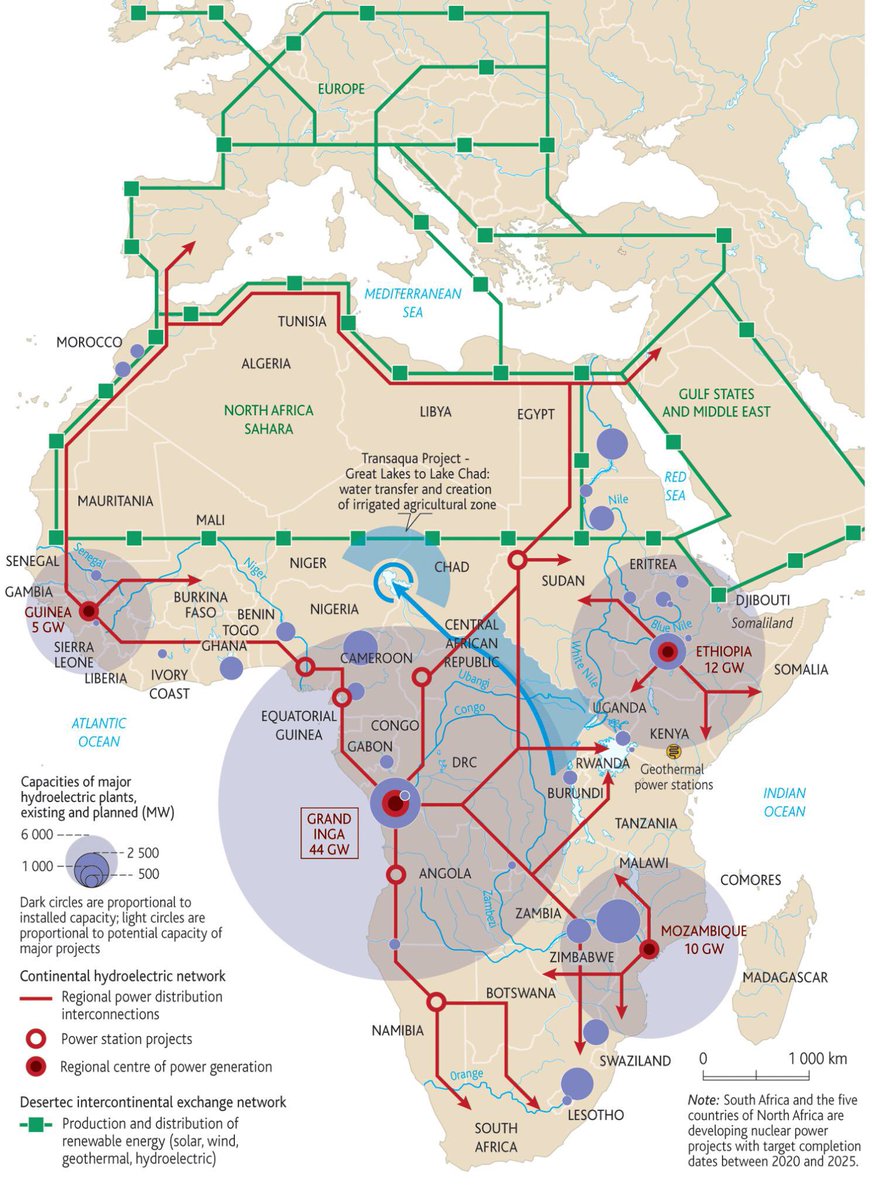
Africa’s Hydropower Infrastructure: Power Production and Connection to the National Grid
32
372
1,401
72,431
Dan retweeted

18 Dec 2025
When payments move faster, trade grows.
The Pan-African Payment and Settlement System (PAPSS) connects African markets through local-currency payments, supporting businesses and jobs across the continent.
#AfCFTA
#Agenda2063
@AfCFTA @afreximbank
20
141
291
15,210
Dan retweeted

18 Dec 2025
BREAKING:
🇨🇳 The monopoly is over
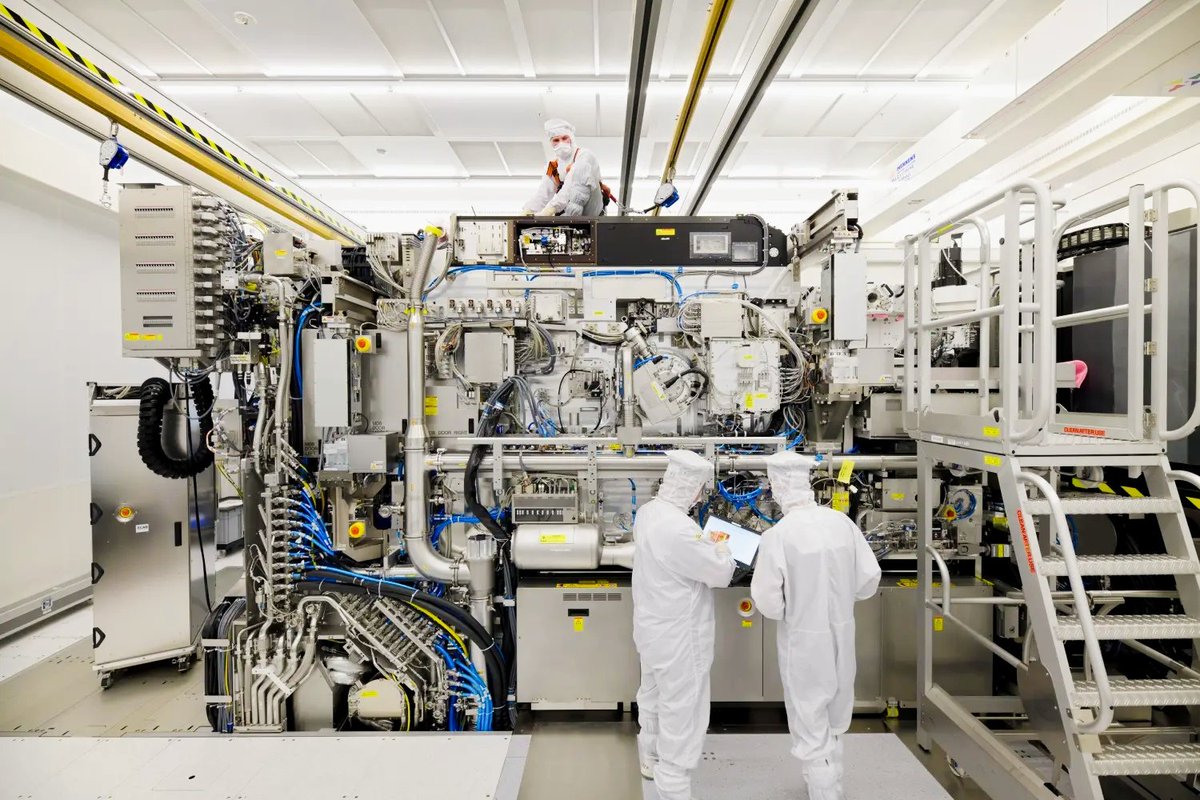
China has succeeded in producing an ultraviolet lithography machine for the production of advanced chips - Reuters
China built a prototype extreme ultraviolet lithography (EUV) machine in Shenzhen, the tool needed for the most advanced chipmaking, Reuters reports.
Until now, ASML is the only company that has truly cracked EUV technology.
Its machines cost about $250 million each and are critical for making the most advanced chips designed by Nvidia and AMD, and manufactured by TSMC, Intel, and Samsung.
The result marks the payoff of a 6-year government program focused on semiconductor independence.
People compared it to China’s version of the Manhattan Project, the U.S. wartime program that built the atomic bomb.
China's prototype reportedly generates EUV light and is being tested, but it has not produced working chips yet, with 2028 and 2030 mentioned as targets.
Sources describe former ASML engineers helping reverse engineer parts of the system, and Huawei coordinating a wider effort across labs and suppliers.
“The aim is for China to eventually be able to make advanced chips on machines that are entirely China-made,” one of the people said. "
China wants the United States 100% kicked out of its supply chains."

1,072
3,967
28,061
3,702,389