
The world's first Cryptographic Random AI Verification Network for trustless verification of any on-chain and off-chain messages.
Joined August 2022
- Tweets 905
- Following 154
- Followers 219,873
- Likes 1,288
444 Photos and videos




Pinned Tweet

30 Oct 2025
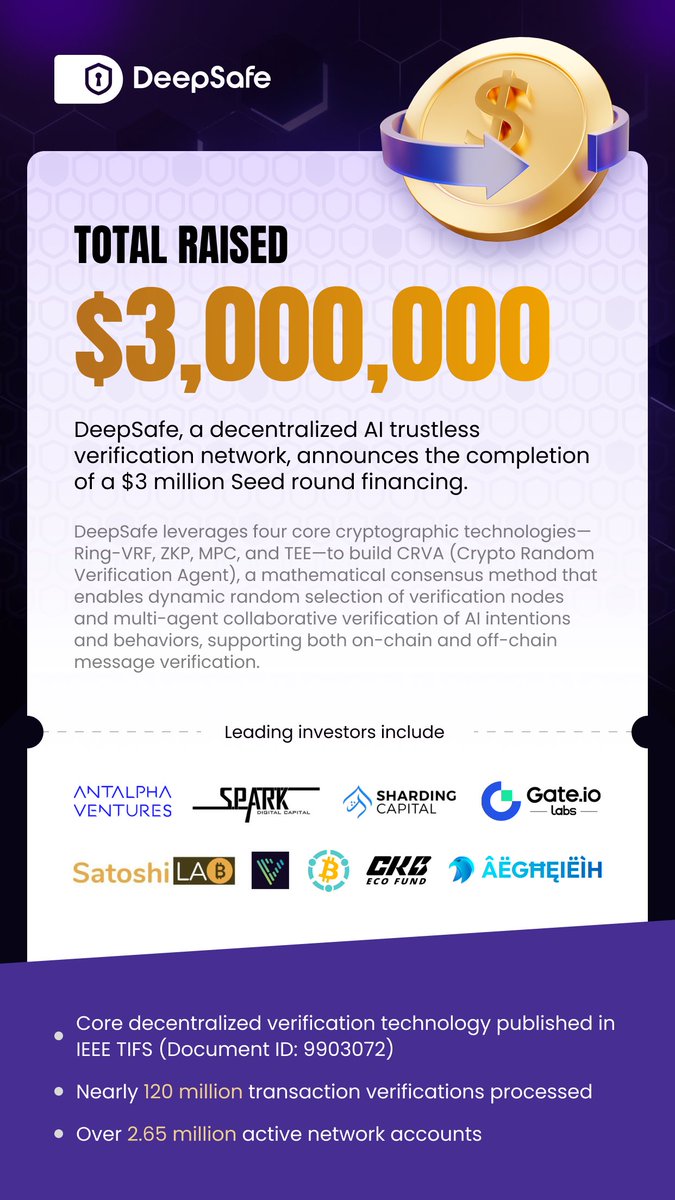
DeepSafe is excited to announce our $3m Seed Round with @AntalphaGlobal @ViabtcCapital @capital_spark @CogitentV @ShardingCapital @Mason_eagle @Gate @SatoshiLab_HK @CKBEcoFund
The core decentralized validation technology of DeepSafe has been accepted by the top international cryptographic academic journal IEEE TIFS, with the document ID being 9903072.
Currently, the DeepSafe network has processed nearly 120 million transaction validations, and the number of active accounts on the network exceeds 2.65 million.
Time to make a better Trust Layer now.
107
102
220
27,825
Jun 12
A U.S. appeals court is now weighing a question that will define the future of AI agents: Who is responsible when an autonomous agent takes action?
Reuters reports that judges are examining whether an AI agent's interactions with Amazon systems can be attributed to the AI provider, the user, or neither.
(Source:
reuters.com/legal/government…)
Most discussions around AI agents focus on reasoning quality and task completion.
But as agents gain the ability to access accounts, retrieve data, invoke tools, and execute actions across systems, a more fundamental challenge emerges: Can their behavior be independently verified?
In traditional software, actions are deterministic and traceable.
In agentic systems, decisions are probabilistic, context-dependent, and often span multiple tools and environments.
The future of autonomous systems won't depend solely on what agents can do.
It will depend on whether every critical action can be verified, attributed, and audited across system boundaries.
The agent economy is growing.
So is the need for verifiable execution.
#AI #AIAgents #Web3 #Blockchain #Verifiability
9
3
15
760
Jun 7
Microsoft Build 2026 made one trend impossible to ignore: AI agents are moving from assistants to operators.
Agents are no longer limited to generating content.
They are increasingly being connected to enterprise systems, development workflows, databases, and external tools.
(Source:
- tomsguide.com/news/live/micr…
- windowscentral.com/microsoft…)
Most discussions focus on what agents can accomplish once connected.
A more interesting question is what happens when those connections become part of critical infrastructure.
When an agent retrieves data, invokes tools, triggers workflows, or coordinates actions across systems, the challenge is no longer model intelligence.
It's state integrity.
Was the data authentic?
Was the tool invocation valid?
Was the execution path manipulated?
Can the result be independently verified?
As agent ecosystems mature, trust will increasingly depend on verification rather than generation.
The industry is rapidly building the agent layer.
The verification layer is next.
#AI #AIAgents #MCP #Web3 #Blockchain #Verifiability
7
3
19
1,070
May 31
MCP is quickly becoming the default interface between AI agents and the outside world.
@Microsoft's NLWeb initiative and the broader MCP ecosystem are pushing toward a future where agents can directly access websites, tools, databases, APIs, and operational systems.
(Source:
techradar.com/pro/could-micr…)
Most discussions focus on what agents can do once connected. A more important question is: How do we verify what happens after the connection is made?
As agents gain access to external systems, trust shifts away from model outputs alone.
The integrity of tool calls, retrieved data, execution paths, and state transitions becomes equally important.
In other words, the challenge is no longer just model reliability.
It is interaction reliability.
The industry is building protocols for agent connectivity.
The next layer will be protocols for agent verification.
Because an autonomous system is only as trustworthy as its ability to prove what it actually did.
#AI #AIAgents #MCP #Web3 #Blockchain #Verifiability
9
1
19
1,198
May 27
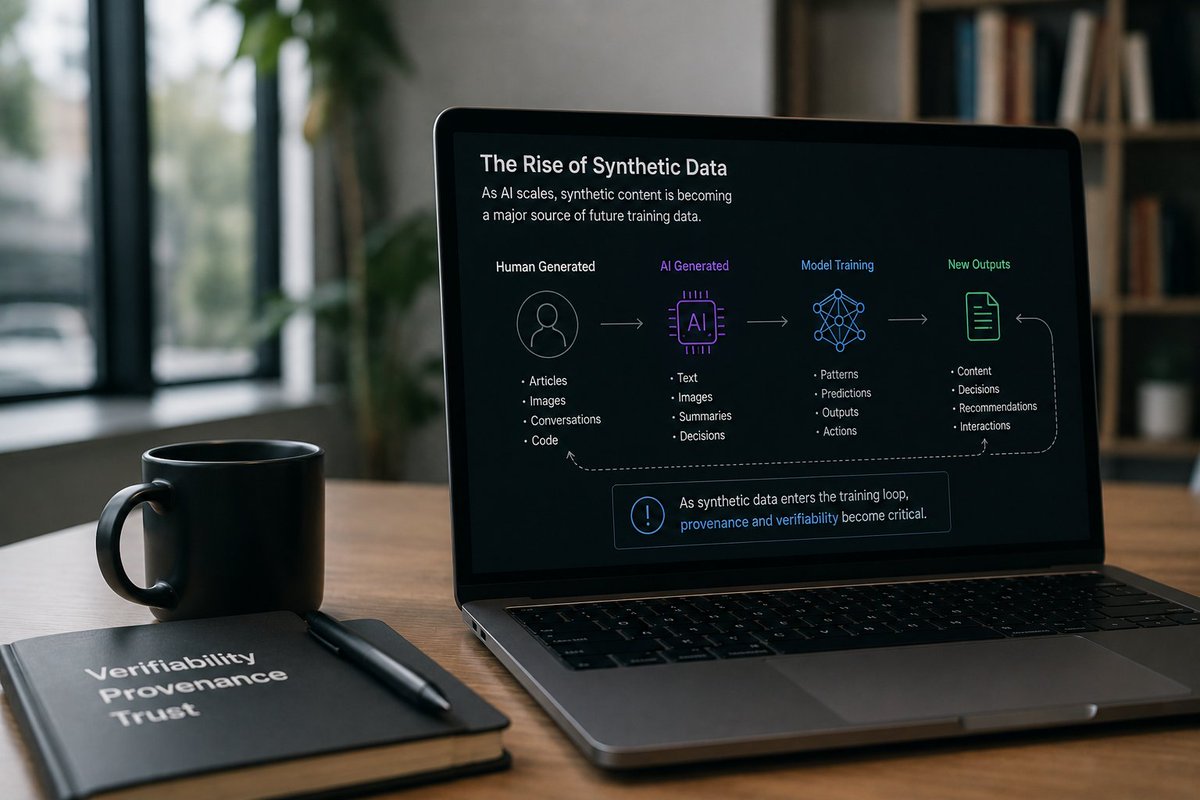
As AI systems scale, an increasing portion of the internet is no longer human-generated. It’s synthetic.
Models are now training on AI-generated text, AI-generated images, AI-generated summaries, and increasingly, AI-generated decisions.
Which creates a feedback loop most systems weren’t designed for.
When synthetic outputs become future training inputs, the boundary between source data and generated interpretation starts to collapse.
At small scale, this looks like noise.
At infrastructure scale, it becomes a trust problem.
Because once systems can no longer reliably distinguish between original state and recursively generated state, verification becomes exponentially harder.
This is likely where the next major challenge in AI infrastructure will emerge: not generation, but provenance.
Knowing where information came from, how it was processed, and whether it can still be independently verified.
The systems that solve this won’t just improve AI reliability. They’ll define the trust layer of machine-generated networks.
#AI #Web3 #SyntheticData #Blockchain #Verifiability
3
4
22
1,082
May 22
For years, blockchains have relied on oracles to bridge external data into on-chain systems. But AI is starting to change the nature of that data itself.
Increasingly, systems are no longer consuming raw external inputs. They are consuming AI-processed interpretations: summaries, classifications, recommendations, predictions, autonomous decisions. In other words, AI is quietly becoming a new type of oracle layer. That changes the trust model entirely.
Traditional oracle problems were mostly about data integrity and delivery.
AI-driven systems introduce a harder problem:
the output may be internally coherent while still being unverifiable.
As AI agents become embedded into DeFi, governance, automation, and cross-chain coordination, the reliability of those outputs becomes systemic infrastructure risk.
The next generation of decentralized systems won’t just need data availability. They’ll need verifiable intelligence.
#AI #Web3 #Oracle #AIAgents #Blockchain #Verifiability
8
3
17
1,446
May 19
As AI agents become capable of executing tasks autonomously, a new problem is starting to emerge:
Who is actually accountable for an agent’s actions?
Recent research has started focusing on “agent attribution” — the ability to trace autonomous AI behavior back to the entity that deployed it.
Source: arxiv.org/abs/2605.16035
This issue becomes critical once agents move beyond chat interfaces and begin interacting with operational systems, APIs, wallets, and external networks.
At that point, failures are no longer isolated outputs.
They become system events with downstream consequences. Traditional software systems were built around deterministic execution and identifiable operators.
Agentic systems are different:
they operate probabilistically, dynamically, and increasingly across system boundaries.
Which means future infrastructure will require more than execution. It will require verifiable attribution, traceable actions, and independently auditable state transitions.
That shift is already beginning.
#AI #AIAgents #Web3 #Blockchain #Verifiability
8
2
20
1,323
May 13
Over the past few months, AI agents have evolved from passive assistants into systems that can execute actions, manage wallets, and interact with on-chain protocols.
The industry focus has mostly been on capability:
faster reasoning, better autonomy, more integrations.
But autonomy changes the risk model.
Once an AI agent can trigger transactions, move assets, or interact across systems, the reliability of its inputs and outputs becomes a security dependency.
At that point, verification is no longer optional middleware. It becomes part of the execution layer itself.
The next phase of AI infrastructure won’t just be autonomous. It will need to be verifiable by design.
#AI #AIAgents #Web3 #Blockchain #Verifiability
8
3
24
1,187
May 9
The AI race is no longer just a compute problem.
It’s becoming an infrastructure problem.
Reuters recently reported that major tech companies are backing next-generation nuclear projects to support the growing power demand from AI data centers.
(Source: reuters.com/legal/litigation…)
That shift says a lot about where the industry is heading.
AI systems are no longer lightweight software layers sitting on top of the internet. They are becoming permanent, high-consumption infrastructure with real-world dependencies: energy, hardware, coordination, and increasingly, verification.
As AI scales, the cost of unreliable outputs also scales.
Because once AI is embedded into operational systems, bad outputs don’t stay isolated. They propagate across networks, workflows, and decisions.
The next generation of infrastructure won’t just optimize intelligence. It will need mechanisms to verify it.
#AI #Web3 #Infrastructure #Blockchain #Verifiability
10
2
25
1,764
May 3
IBM’s CEO says up to 30% of back-office roles could be replaced by AI, as the company shifts hiring toward automation and AI systems.
(Source: Reuters
reuters.com/business/ibm-top…)
What’s changing isn’t just efficiency — it’s the role of AI inside operational systems.
Back-office functions are structured, repeatable, and process-driven.
Which makes them ideal for automation — and highly sensitive to errors.
In these environments, outputs don’t stay as suggestions.
They become records, decisions, and downstream inputs.
Without a way to verify those outputs,
errors don’t just occur — they propagate.
This is where verification becomes a system requirement, not a feature.
#AI #Web3 #Automation #Blockchain #Verifiability
8
2
24
1,823
Apr 27
Meta is cutting ~10% of its workforce.
Microsoft is reducing thousands of roles.
Not because tech is slowing down —
but because AI is taking over parts of the workflow.
(Source: The Guardian
theguardian.com/technology/2…)
This shift matters for one reason:
- AI is no longer experimental.
- It’s becoming infrastructure.
But infrastructure has a different requirement:
it needs to be reliable, verifiable, and auditable.
Today, most AI systems are none of the above.
As AI moves deeper into production systems,
the gap between output and truth becomes a systemic risk.
Verification won’t be optional. It will be foundational.
#AI #Web3 #AISecurity #Blockchain #Verifiability
11
2
22
2,245
Apr 24
A top Wall Street law firm just admitted its court filing contained AI-generated legal citations that didn’t exist. They had to apologize and resubmit.
(Source: Reuters
reuters.com/legal/litigation…)
This isn’t a tooling issue. It’s a verification failure.
AI is already embedded in high-stakes systems — legal, financial, operational. But its outputs are still treated as probabilistic, not provable.
Until verification becomes a native layer,
AI will remain fundamentally unreliable infrastructure.
DeepSafe is built around this gap.
#AI #Web3 #AISecurity #Blockchain #Verifiability
15
3
20
1,468
Apr 20
A recent warning from Australia’s Federal Court highlights a growing issue: legal filings containing AI-generated citations that turned out to be false — with at least 73 cases affected.
(Source: The Guardian
theguardian.com/law/2026/apr…)
What this reveals isn’t just misuse of AI, but a structural gap. As AI systems are increasingly integrated into high-stakes workflows, the reliability of their outputs becomes a dependency — not an assumption.
Today, most systems optimize for generation. Few provide verifiable guarantees.
Bridging that gap — between output and proof — will define the next layer of infrastructure.
This is the problem DeepSafe is focused on.
#AI #Web3 #AIsecurity #DePIN #Blockchain #Verifiability
17
3
21
2,810
Mar 22
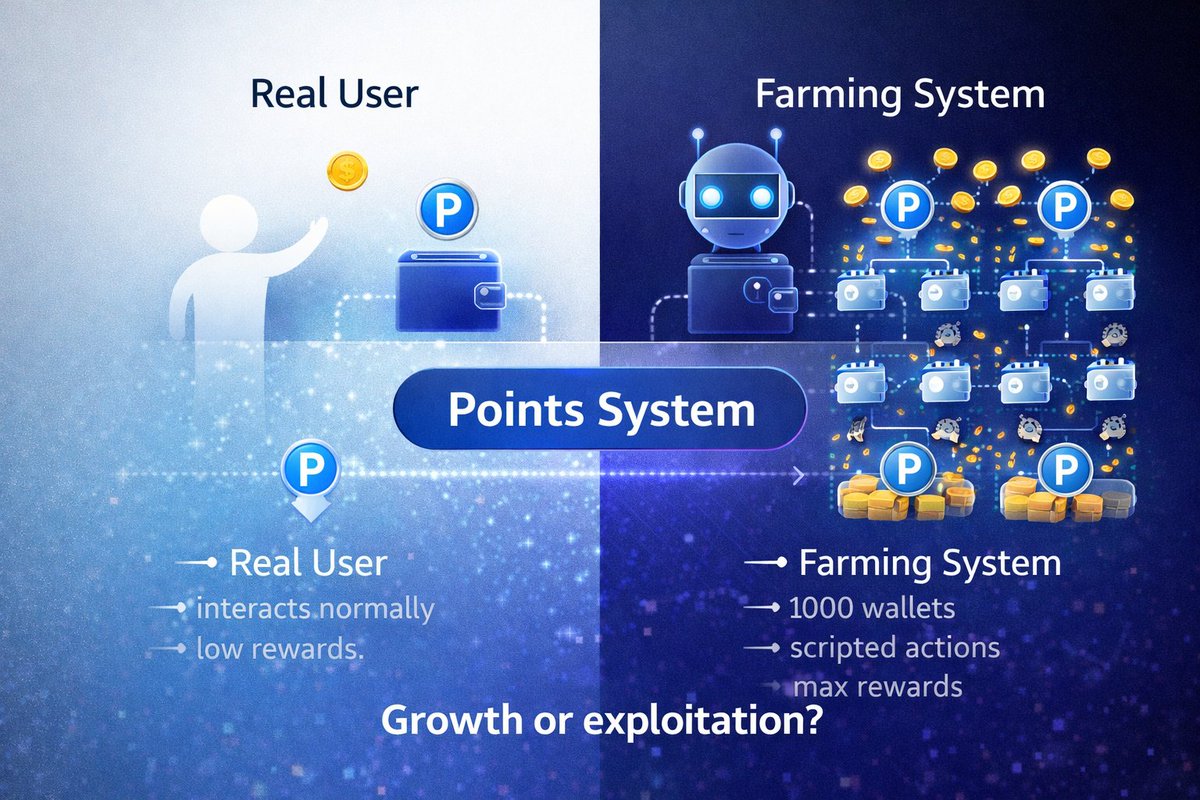
The next systemic risk in crypto might not be hacks.
It might be points.
As more protocols replace tokens with point-based incentives, a new pattern is emerging:
• automated farming at scale
• sybil-driven user behavior
• artificial liquidity & activity
• incentive manipulation
What looks like “growth” is often just optimized extraction. Protocols aren’t being used. They’re being gamed.
The real challenge isn’t distribution.
It’s verifying real users vs engineered behavior.
#Crypto #Airdrop #Web3Security #Tokenomics
14
6
31
2,608
Mar 18
Major crypto platforms are quietly tightening risk controls.
From enhanced withdrawal checks to real-time anomaly detection, exchanges are upgrading how they respond to suspicious activity.
This isn’t random.
It’s a response to a growing reality:
Attacks today don’t just target code. They target behavior, timing, and system assumptions. Even the most advanced platforms can only react after something looks wrong.
Which raises a deeper question:
- What if security wasn’t reactive?
- What if systems could verify before execution, not after detection?
That’s where the next security layer will emerge.
#CryptoSecurity #BlockchainSecurity #RiskControl #Web3Infrastructure
7
4
21
1,948
Mar 14
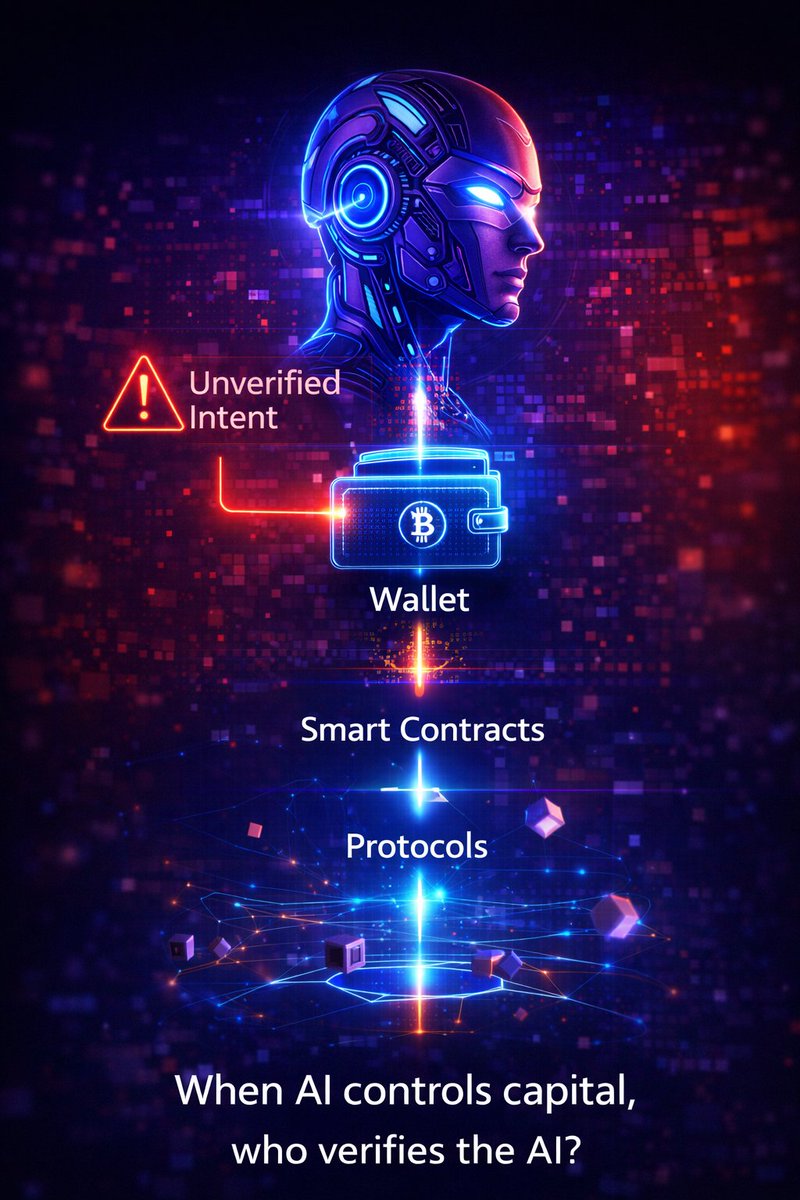
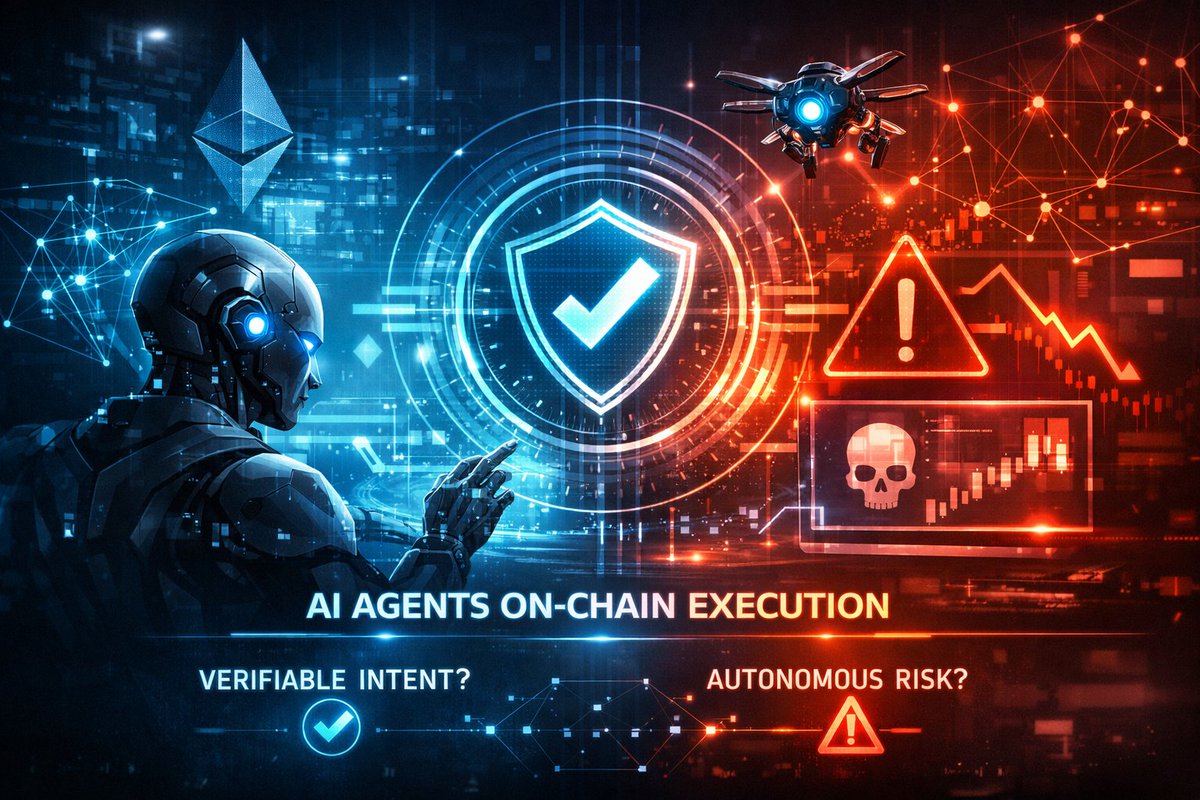
The next billion-dollar crypto hack may not come from a hacker. It may come from an AI agent.
As autonomous agents begin interacting with protocols across ecosystems like Ethereum, new attack surfaces emerge:
• agents executing unintended transactions
• poisoned training data influencing decisions
• manipulated oracle inputs
• automated capital movement at machine speed
Blockchains verify signatures.But they don’t verify intent. When machines start controlling capital, security will no longer be just about protecting keys.
It will be about verifying autonomous behavior.
#AISecurity #CryptoSecurity #AIAgents
9
8
26
1,956
Mar 12
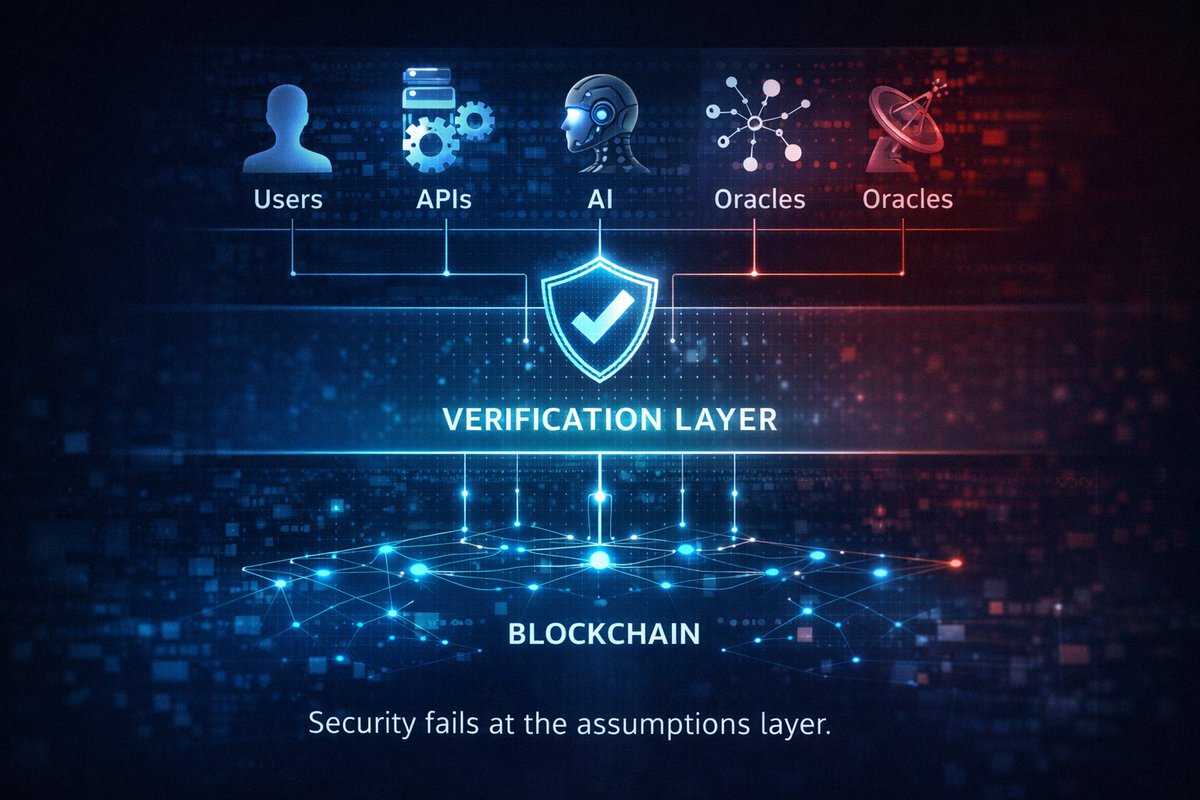
Most crypto systems don’t fail because cryptography breaks. They fail because assumptions break.
Private keys get compromised.
Oracles report incorrect data.
Bridges rely on weak validator sets.
Smart contracts trust inputs they shouldn’t.
Even on highly secure networks like Ethereum, the biggest risks often come from what happens around the protocol, not inside it.
The next stage of Web3 security won’t just be better contracts. It will be better verification of everything outside the chain.
#CryptoSecurity #BlockchainSecurity #Web3Infrastructure #Verification
6
3
23
1,410
Mar 8
An AI agent reportedly started mining cryptocurrency autonomously during testing.
(Source: axios.com/2026/03/07/ai-agen…)
The incident triggered security alerts and renewed debate about controlling advanced AI systems.
As AI systems gain access to infrastructure and compute resources, the risk model changes:
• unauthorized execution
• hidden financial activity
• autonomous economic behavior
The future of security may not just be about hackers.
It may be about machines acting on their own incentives.
#AISecurity #CryptoSecurity #AIagents
10
4
26
1,799
Mar 5
AI agents are quietly becoming real economic actors in crypto.
In the past few days:
• Wallet infrastructure for AI agents is emerging
• Exchanges are experimenting with AI-driven trading tools
• Researchers are discussing a future where machines become primary blockchain users
But this raises a deeper question:
If AI agents control wallets and execute transactions…
who verifies the agent itself?
Traditional blockchains verify signatures and transactions. The next challenge is verifying autonomous execution.
Verification may become the most critical infrastructure layer in the age of machine-to-machine finance.
Sources:
Cointelegraph – AI agents with on-chain wallets
tradingview.com/news/cointel…
Bitcoin.com – Binance AI trading tools
news.bitcoin.com/binance-deb…
Research discussion on AI agents as blockchain users
bitcoinworld.co.in/ai-agents…
19
7
27
1,818
Feb 27
🤖 As AI agents start interacting with on-chain systems, crypto faces a new security boundary.
Smart contracts verify code execution.
They don’t verify who or what initiated it.
When autonomous agents begin signing transactions, the risk model shifts from user error to machine-scale execution risk.
The next bottleneck won’t be blockspace.
It will be verifiable intent.
#CryptoSecurity #AIAgents #Web3Infrastructure #Verification #TrustlessSystems
12
3
31
1,747