
Economist and AP of Finance @NYUStern @NYUAbuDhabi | PhD @ChicagoBooth & @UChi_Economics | Markups, Productivity, Investment, Technology
Joined December 2021
- Tweets 1,891
- Following 843
- Followers 1,879
- Likes 5,333
199 Photos and videos






Pinned Tweet

22 Dec 2025
You can't scale your way to data from counterfactuals that haven't happened.
Nice piece. My read on what it does and doesn't show:
22 Dec 2025

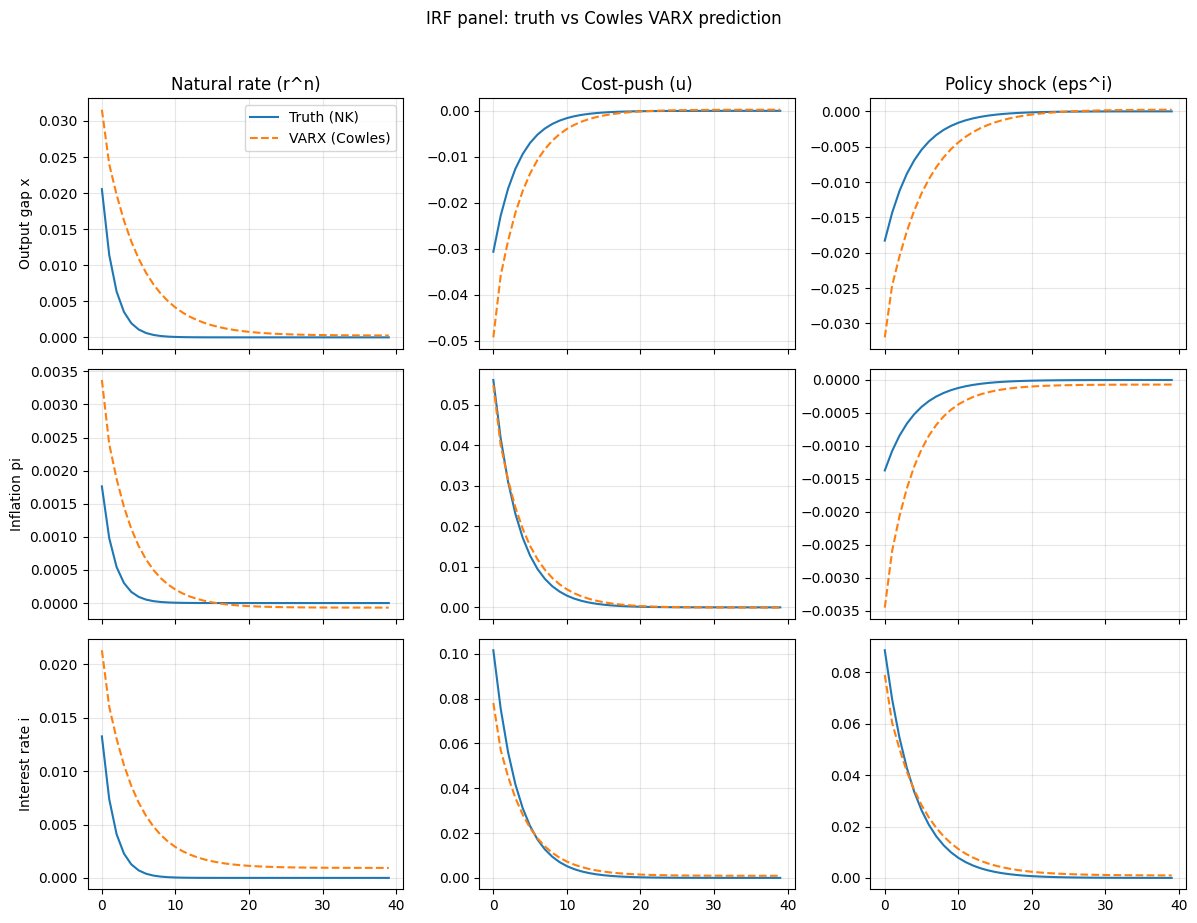
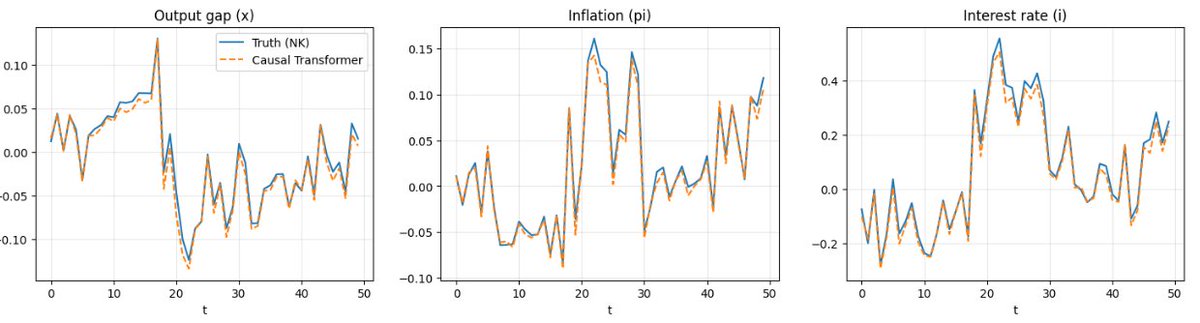
New post : Can a Transformer “Learn” Economic Relationships? Revisiting the Lucas Critique in the age of Transformers. with @arpitrage
We simulated data from an NK model, fit a transformer, and tested out of sample fit
How did it do? Pretty well!
Link and thread in reply:
4
29
254
63,606

This is so good it made me excited about Economics again (unironically) static1.squarespace.com/stat…
3
8
88
17,068
James Traina retweeted

Jun 10
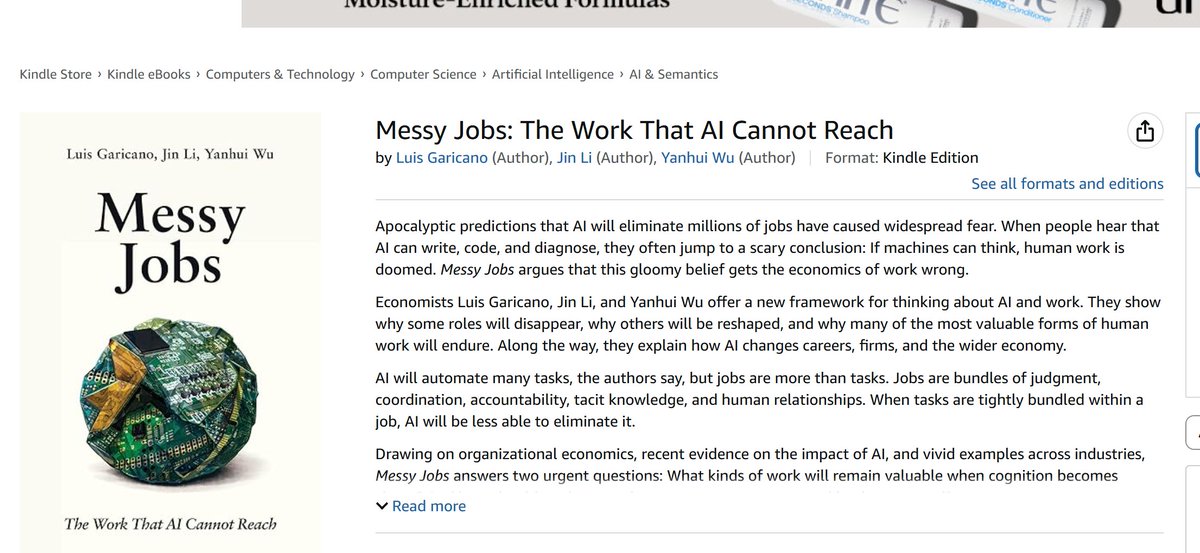
Delighted to tell you that Messy Jobs is coming out on June 21st. The kindle preorder link is available!
Here are advance reviews/blurbs for you to ponder by @raffasadun @davidautor @patrickc @alexolegimas @bengtmit and Evan Guo.
"Messy Jobs is a brilliant application of price theory. AI changes what is scarce in the economy and therefore what is valuable. When intelligence becomes cheap, judgment, coordination, trust, and responsibility become more valuable. The authors use this simple, powerful logic to illuminate how AI will reshape work and organizations." Bengt Holmström, Paul A. Samuelson Professor of Economics at MIT and recipient of the 2016 Nobel Memorial Prize in Economic Sciences
"In Messy Jobs, Garicano, Li, and Wu bring the discipline of organizational economics to a question too often left to speculation: How will AI actually reshape work? They move past the usual debates about what AI can or cannot do and ask the harder questions. What shapes the incentives to adopt it? How does adoption reshape the incentives to learn? What new configuration of skills will emerge as AI advances? A rigorous, original, and engaging account of how AI will reshape organizations and labor markets, and what it will take to thrive in them." - Raffaella Sadun, Charles Edward Wilson Professor of Business Administration, Harvard Business School
"This is the first book in the AI era that recognizes that most of what organizations struggle with does not involve computational problems. People in messy jobs must hold coalitions together, adjudicate between competing interests, and make change stick. These are political, diplomatic, and interpersonal challenges. As a result, these types of messy jobs will persist well into our AI future. Garicano, Li, and Wu, are neither techno-utopian nor techno-dystopian. They take seriously what machines can do, what humans will do, and how jobs will be rebundled. The economics analysis is lucid and penetrating, and the book pinpoints where human agency will remain paramount. The book is hopeful and practical for anyone charting a career in the coming decade." - David Autor, Daniel (1972) and Gail Rubinfeld Professor, Google Technology and Society Visiting Fellow, Margaret MacVicar Faculty Fellow, MIT Department of Economics
"This is simply a must-read book if you are interested in the future of work in the age of AI. For decades, Luis Garicano has been a leading voice in how organizations morph and change with new technology and innovation. Together with Jin Li and Yanhui Wu, they have written the definitive text on how AI will affect the labor market. The book is an impressive feat of combining academic rigor with clear explanations and concrete examples. I would recommend this book to anyone interested in learning about what comes next. "- Alex Imas, director of AGI Economics, Google DeepMind, and the Roger L. and Rachel M. Goetz Professor of Behavioral Science, Economics, and Applied AI, and Vasilou Faculty Scholar at the University of Chicago Booth School of Business
"There is a lot of woolly thinking on the topic of AI and jobs. This excellent book contains by far the most thoughtful and economically literate account that has yet been written." - Patrick Collison, CEO, Stripe
"AI is not going to lead to mass unemployment, and this is the best book to explain why not. It also illuminates how labor markets are likely to evolve. It is short, to the point, eminently readable, and of extreme relevance. ""- Tyler Cowen, professor of economics at George Mason University
"This book isn't just some economist's armchair theorizing; it's a practical guide. I hope you get as much out of it as I did. "-- Evan Guo, CEO of Zhaopin Group, the largest career development platform in China
amazon.com/Messy-Jobs-Work-C…
17
73
376
165,945
James Traina retweeted

SDID rests on the analogous assumption that you've modeled Y(0) correctly.
People don't often do this, but you can certainly leave out some pre periods from the fitting and see whether SDID correctly gives a zero there. This is not the most high powered test, of course
2
6
28
2,638
James Traina retweeted

Jun 9
I've had access to Fable for a bit. A genuine jump in capability, I could feed it a 15 page design document for a project and it would work for 9 hours and deliver terrific results.
But working with it is weird & weirder is coming
Lots of examples: open.substack.com/pub/oneuse…
108
310
3,172
572,932
James Traina retweeted

Jun 8
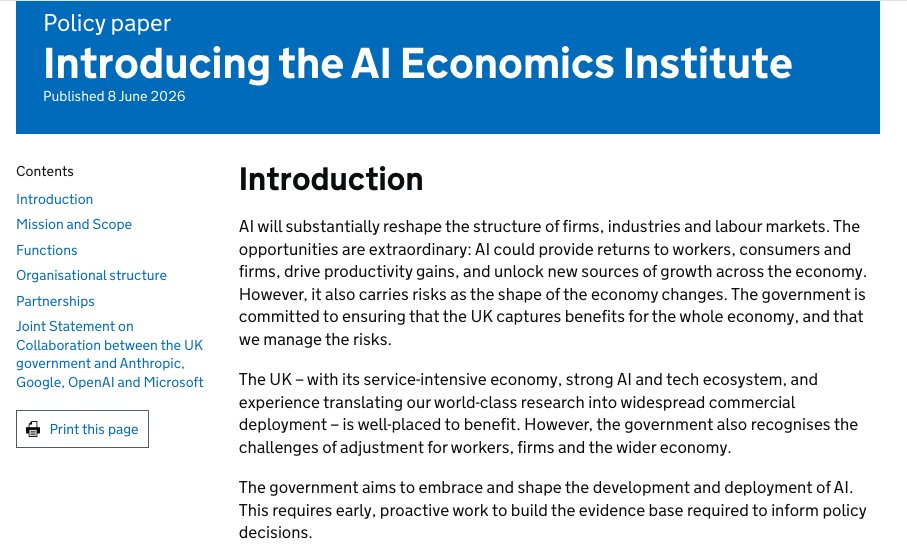
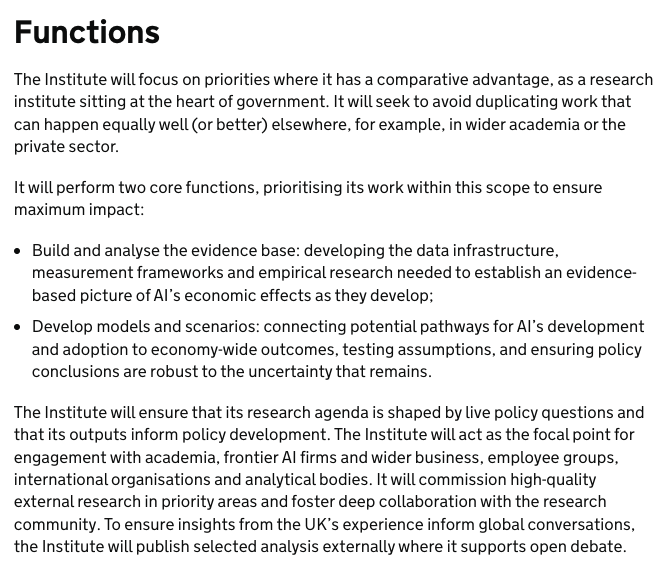
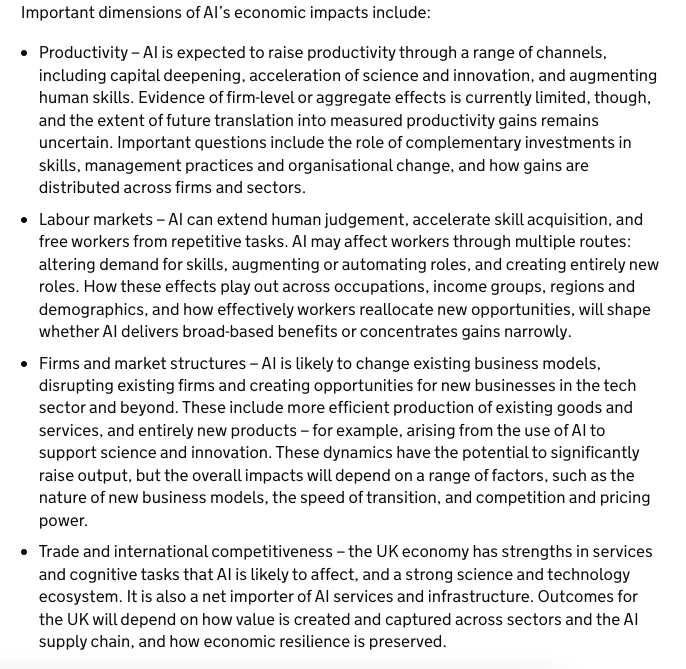
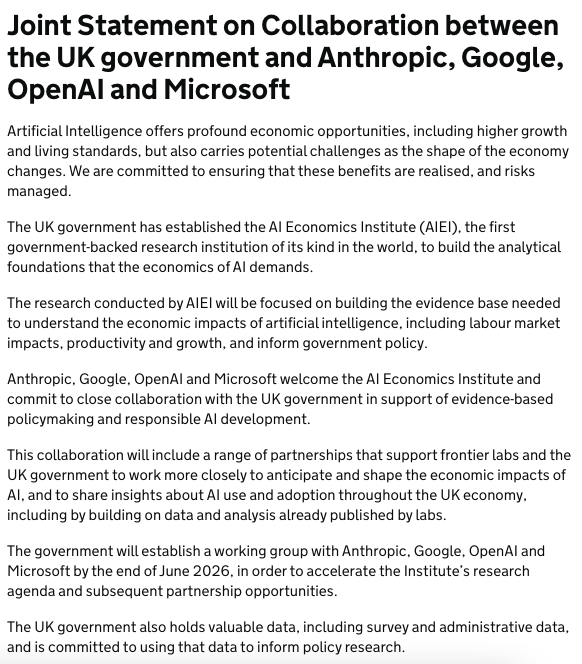
Britain launches the AI Economics Institute, the first government-backed Institute of its kind in the world.
• Joint org between Treasury x DSIT, follows AISI model, incorporates DSIT’s Future of Work Unit.
• Professor Simon Johnson, Nobel Prize-winning economist, former Chief Economist of the IMF, and co-director of MIT’s Stone Center on Inequality and Shaping the Future of Work, will serve as Chair of the AIEI.
• AIEI will work with AI companies in support of evidence-based policymaking and responsible AI development, has agreed Joint Statement of Collaboration with Anthropic, OpenAI, Google Microsoft.
• Not setting policy. Will build and analyse data on AI adoption, conduct research on how AI affects specific sectors, occupations and groups of workers, develop models to assess economy-wide impacts, and work closely with industry, academia and government to inform policy.
4
80
291
47,004
James Traina retweeted

Jun 8
Nice paper but the authors fail to cite the original work linking Apple with the fall of man!
3
4
26
2,102
James Traina retweeted

We're launching the OpenAI Economic Research Exchange: a new program for external researchers conducting independent research on the economic impacts of AI.
We are looking for rigorous empirical projects on questions that matter for workers, firms, institutions, and the broader economy.
openai.com/index/economic-re…
15
112
694
91,393
James Traina retweeted

Isn’t much of the fertility decline bc of later marriages so would have to argue iPhone delayed marriage?
2
1
6
1,823
James Traina retweeted

Jun 8
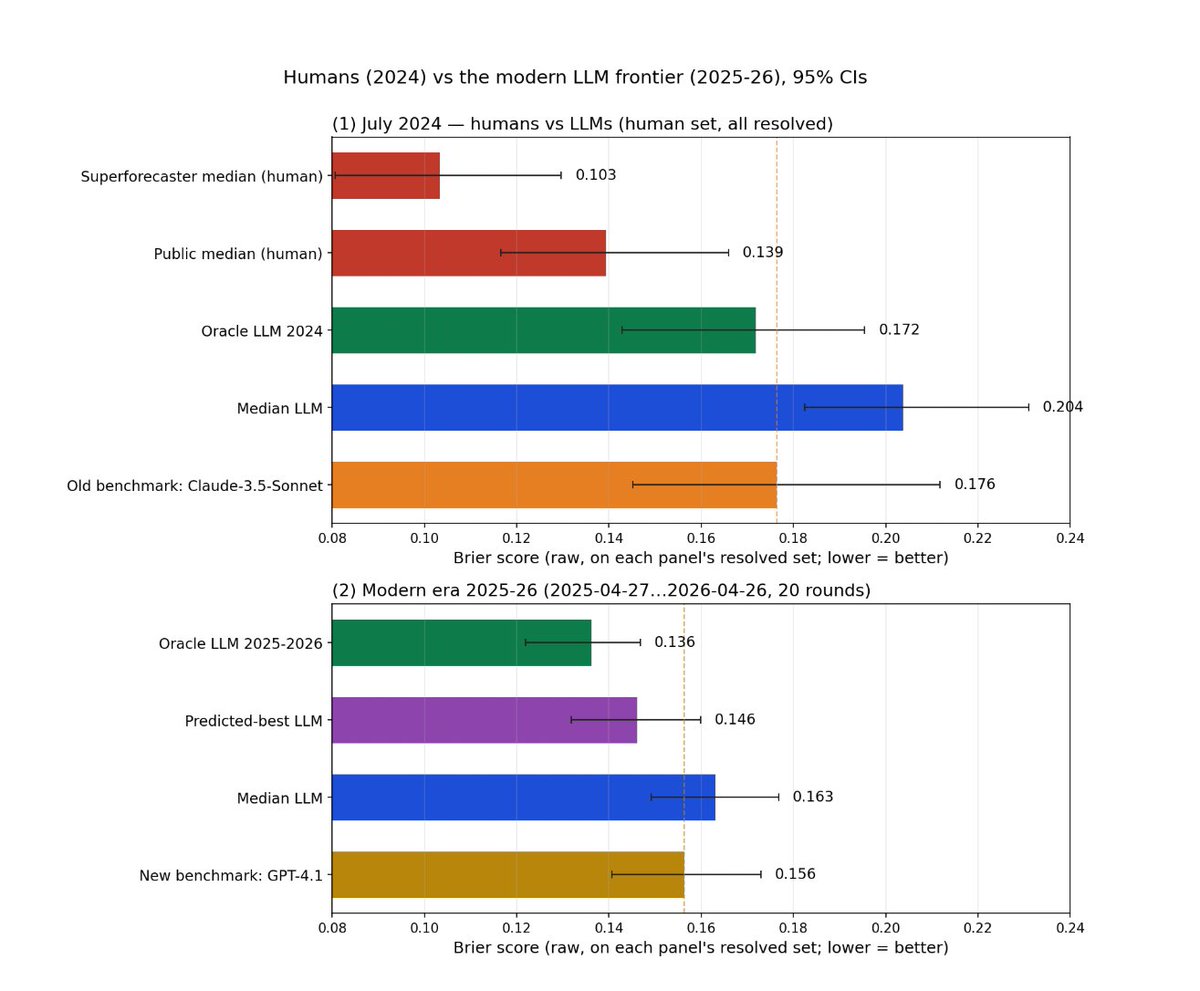
Models are improving at forecasting (new analysis linked below).
To regulate frontier labs, we should pilot "evaluator" models to review internal code and forecast catastrophic (conditional) risk over time, with mitigations tied to risk once forecasting ability is validated.
1
4
16
6,520
James Traina retweeted

This morning I opened the laptop to check email, realized I needed some additional (simple) robustness checks for a paper, opened Claude and entered my prompt; then my toddler climbed on my lap I cuddled himwhile answering simple Qs so the agent could do tedious coding
6
7
89
14,187
James Traina retweeted

Jun 7
Many of us thought that AI was behind finding the error in Tirole (1985) that Econometrica recently published. Turns out that was not the case. Actually, even after the fact, AI couldn't find the error: arxiv.org/pdf/2606.05383
8
44
269
47,898
James Traina retweeted

Jun 5
The S&P500 is collapsing to levels not seen since about 12 days ago
2
15
410
32,251

Users who interact with a misleading post that is subsequently corrected by @CommunityNotes will receive an 𝕏 Chat message of the CN to correct any misperception
8,710
9,871
120,629
27,462,867
James Traina retweeted

Jun 4
Economics of AGI episode w Alex Imas and Phil Trammell.
There's a bunch of important questions about how we deal with AI that only economics can answer.
What is the optimal way to tax and redistribute the wealth that will be generated? How should countries not in the AI supply chain index into the gains? Is there any world where inequality doesn't explode?
It might seem like these questions have obvious answers, but the first thing economics teaches you is that your intuitions can often be entirely wrong.
It was very helpful to chat through these things with Alex and Phil.
Look up Dwarkesh Podcast on Apple Podcasts, YouTube, or Spotify. Enjoy!
00:00:00 – Will capital share increase?
00:19:36 – Messy Middle scenario
00:25:57 – How to tax and redistribute AI wealth
00:30:02 – Why demand collapse is unlikely
00:39:26 – Human employees would be hard to integrate into the machine economy
00:43:08 – What if some humans (or AIs) value wealth accumulation intrinsically?
01:01:28 – What should developing countries do?
40
80
627
293,745
James Traina retweeted

May 29
I think people are missing the point that the actual connection is you having more time to hang with your actual kid instead of managing hardware and software.
6
2
44
33,392
James Traina retweeted

May 30
A friend just revealed to me that the middle name of Benoit B. Mandelbrot is Benoit B. Mandelbrot.

218
670
5,589
391,835
James Traina retweeted

May 28
This report is a part of ongoing work to understand the causal impact of randomized access to Claude Code on social science research. 6/6
Read more here: anthropic.com/research/codin…
3
2
41
2,625
James Traina retweeted

Agricultural Production Functions Without Prices
conversableeconomist.com/202…
3
5
999
James Traina retweeted

May 21
As a economic theorist, who isn’t really a Theorist, I’m absolutely confused about what AI means for the future of my research.
But I can say it’s been the most exciting year of my life for learning economics.
5
8
142
17,981
James Traina retweeted
May 22
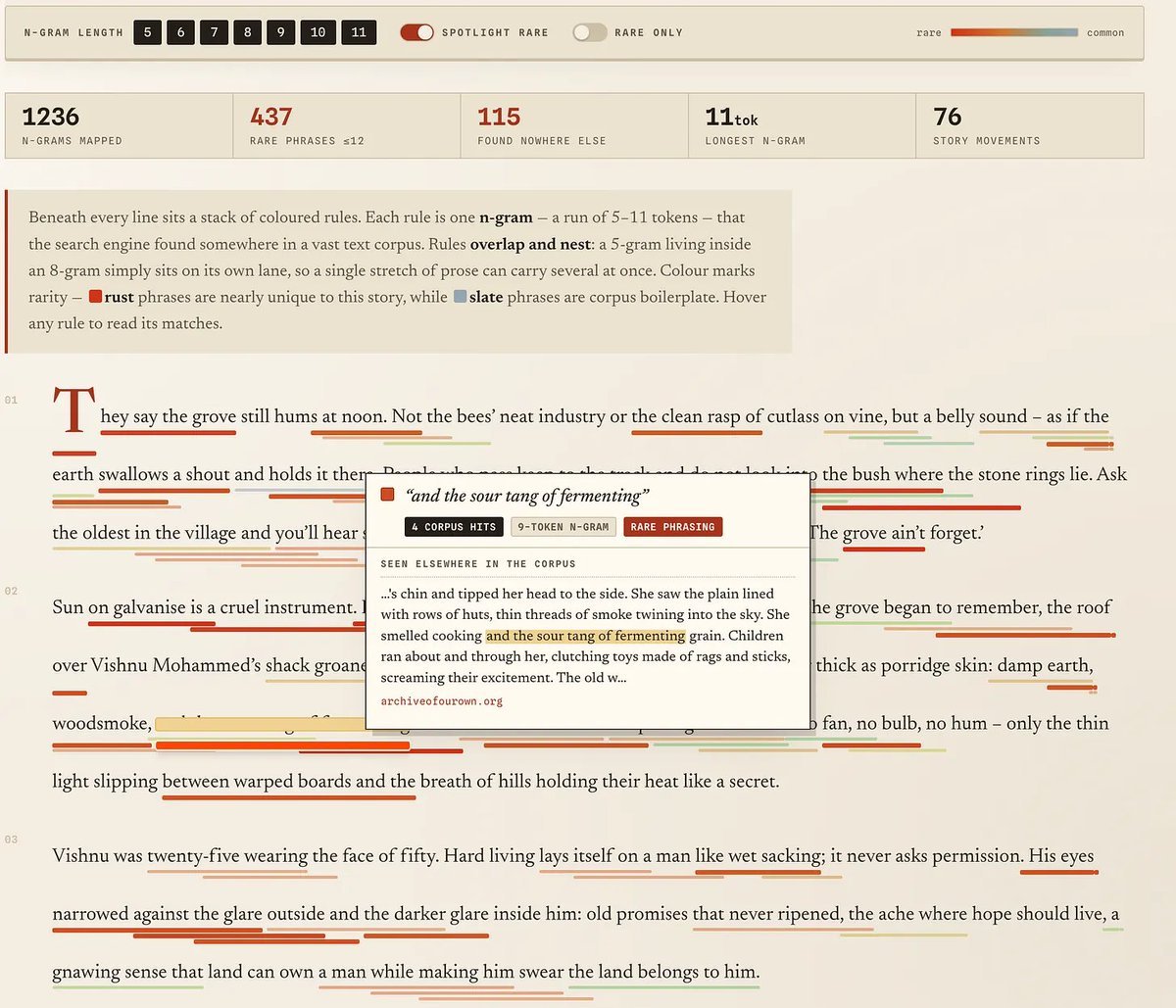
This from @TuhinChakr is brilliant. That prize winning story from Granta? Turns out it's just a bunch of random whole phrases taken directly from existing text on the internet. Tool allows you to trace those n-grams directly to their source, which is mostly random fanfiction.
tuhinchakrabarty.substack.co…
37
113
800
342,376