A Proof Market To Scale Fully Onchain Applications. We build the general-purpose zkVM with native privacy-preserving gadgets on its modular proof system.
Joined April 2021
- Tweets 331
- Following 293
- Followers 3,067
- Likes 480
42 Photos and videos




Pinned Tweet

27 Nov 2024
4
10
1,624
Ξigen Network retweeted

Mar 2
🚀Run @openclaw in 30 seconds
🆓Free coupons are available.
Check out: clawup.org
1
1
210
5 Feb 2025
zk is the endgame.

5
403
27 Nov 2024
Privacy WIN! #zkp #privacy #TornadoCash #zkvm
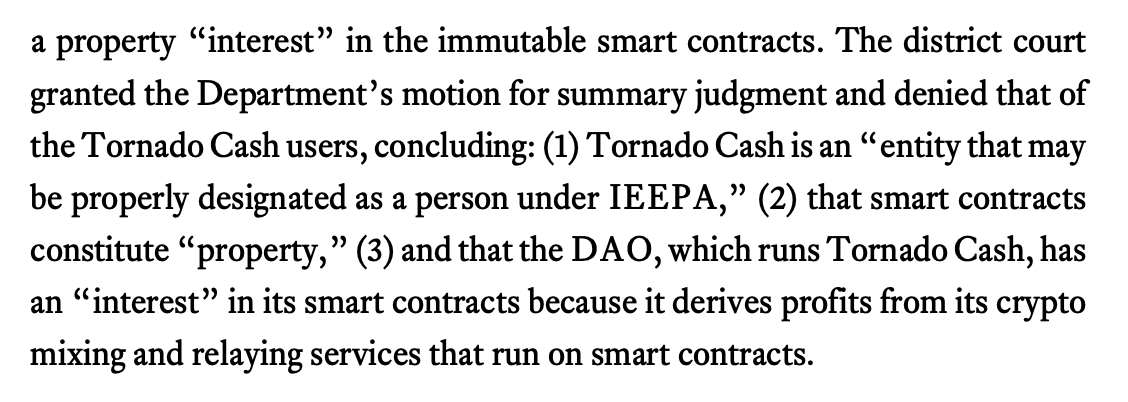
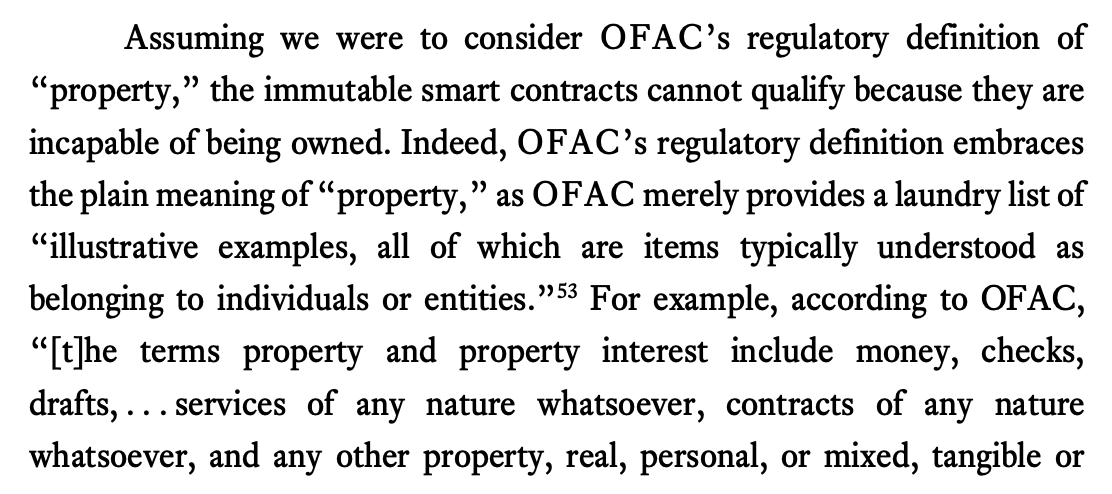
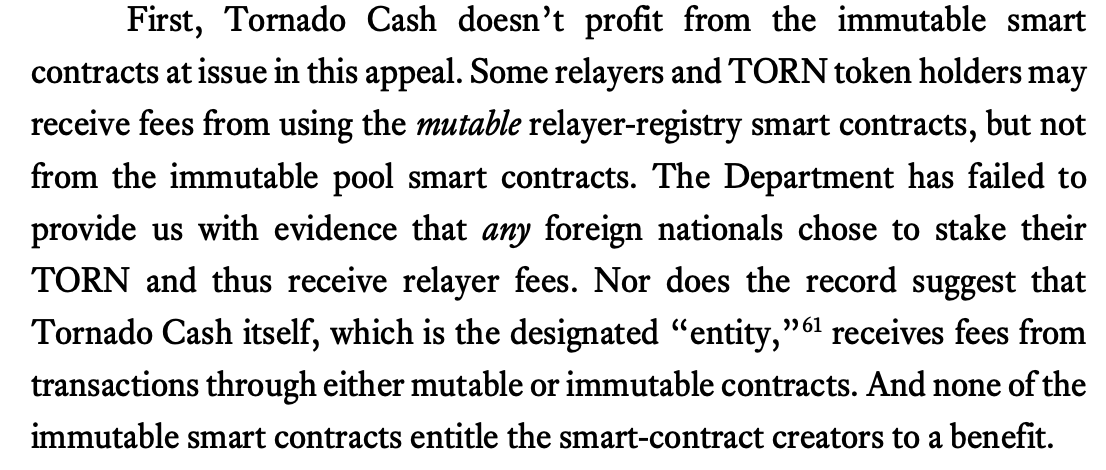
Summaries about the legal analysis, ca5.uscourts.gov/opinions/pu…
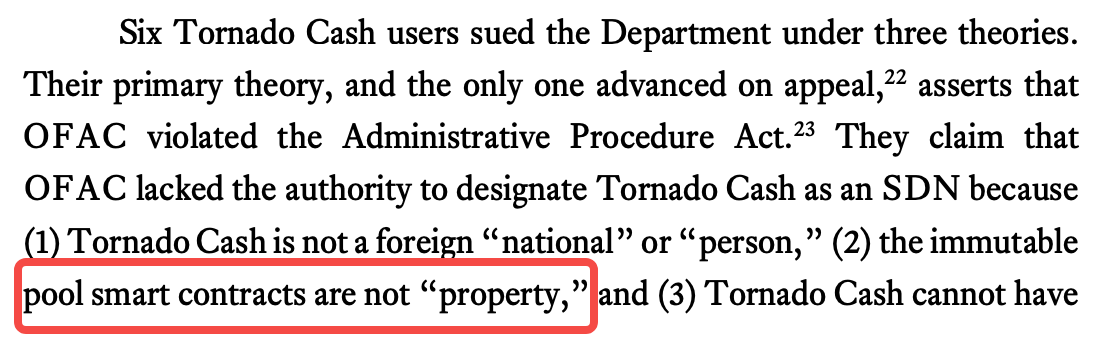
The International Emergency Economic Powers Act and the North Korea Sanctions and Policy Enhancement Act vest the President with the authority to regulate “property” in which a foreign “national” or “person” has an “interest.”
The court must determine if Tornado Cash and its smart contracts fall within this definition.
Analysis of “Property” Definition: The court starts with the statutory text and the ordinary meaning of “property,” which is something capable of being owned. The dictionary definitions and the Supreme Court's interpretation support this understanding. The immutable smart contracts at issue are not property because they are not capable of being owned. More than one thousand volunteers participated in a “trusted setup ceremony” to make the code unchangeable and uncontrollable, so no one can exclude others from using the contracts. Even with the sanctions, the contracts continue to operate, and some users may become liable when digital assets are transferred to them via Tornado Cash without their knowledge or consent.
OFAC's Regulatory Definition: The court also considers OFAC's regulatory definition of “property,” which includes “contracts of any nature” and “services of any nature.” However, the court finds that even under OFAC's definition, the immutable smart contracts do not qualify as property. They are not ownable, not contracts (as they lack an agreement between two or more parties), and not services (as they are merely tools used in providing a service and Tornado Cash does not own the services). The court rejects the Department's attempt to conflate “interest” with “property” and emphasizes that the catch-all for “any other property” still requires the item to be property.
Conclusion: The court holds that OFAC exceeded its statutory authority in designating Tornado Cash. The immutable smart contracts are not “property” under the common or regulatory definitions, so the court need not address whether Tornado Cash qualifies as an “entity” or has an “interest” in the contracts. The court reverses and remands the case to the district court with instructions to grant Van Loon's partial motion for summary judgment based on the Administrative Procedure Act.
3
5
616
Ξigen Network retweeted

21 Nov 2024
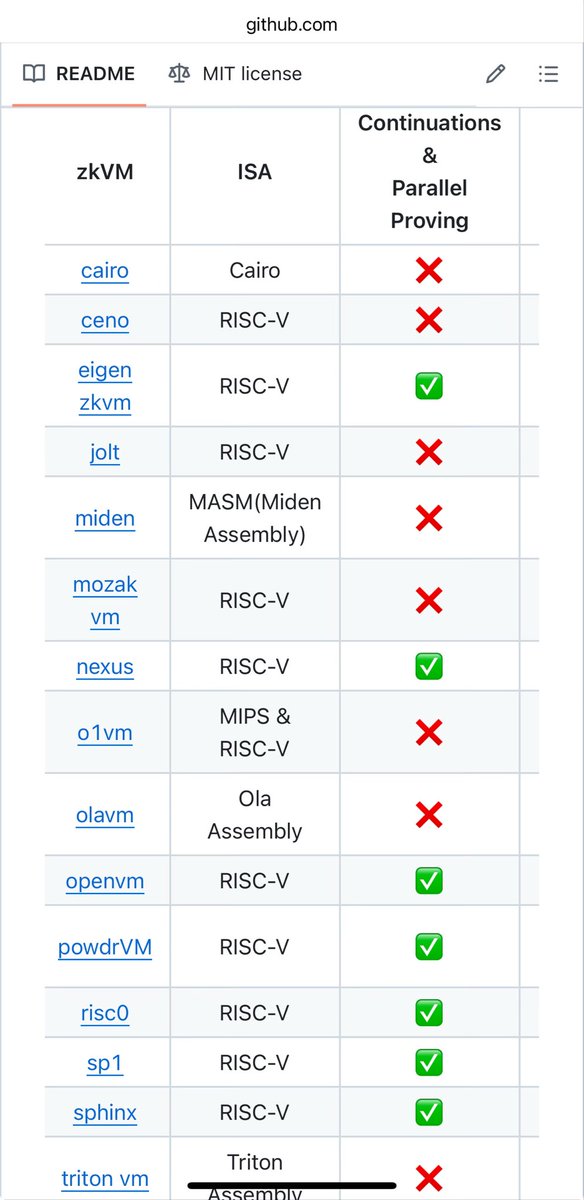
I curated a list of zkVMs to learn from
github.com/rkdud007/awesome-…
10
35
224
13,496
Ξigen Network retweeted

1 Nov 2024
@powdr_labs announced the release of powdrVM version 0.1, their zkVM with multi-prover support (#Plonky3, #Halo2, @0xPolygon PIL STARK, @Eigen_Network Starky).
Tweet: x.com/powdr_labs/status/1851…
Article: powdr.org/blog/powdrvm
30 Oct 2024

𝗔𝗻𝗻𝗼𝘂𝗻𝗰𝗶𝗻𝗴 𝗽𝗼𝘄𝗱𝗿𝗩𝗠 𝟬.𝟭!
powdrVM combines multi-prover support, std Rust, modularity, and high performance, setting the stage for future-proof ZK applications.
Read the details on our blog or follow this thread for a tl;dr 👇
powdr.org/blog/powdrvm
1
3
5
844
18 Oct 2024
#TEE vs #ZK
1. Transparency&Security
TEE: trust the hardware vendor, but no one provides an opensourced audit report for the hardware’s security implementation. Especially, some enclaves use its own certificate server to manage the hardware’s identifies. Think about that what we can do if there’s a backdoor in the CPU.
ZK: trust the math, and everything is transparent, and the proof can be verified by anyone.
2. Performance
TEE: can even do LLM inference, like Llama 7B with less than 10% efficiency overhead. Basically it can offers several hundreds TFlops in a single GPU TEE instance. Note, this is from some benchmark only, not from production environment.
ZK: can proving with several millions HZ in a single GPU server.
3. Use cases
TEE: #Oasis, #SECRET network, #flashbot
ZK: #Zksync, #Starkware, #R0, #ZKM, #Scroll, #Zcash,…..
We released a SGX framework github.com/0xEigenLabs/eigen… three years ago, and then built github.com/0xEigenLabs/eigen….
We have to say, just choose the RIGHT tech stack for your customers.
1
1
6
689
Ξigen Network retweeted

10 Oct 2024
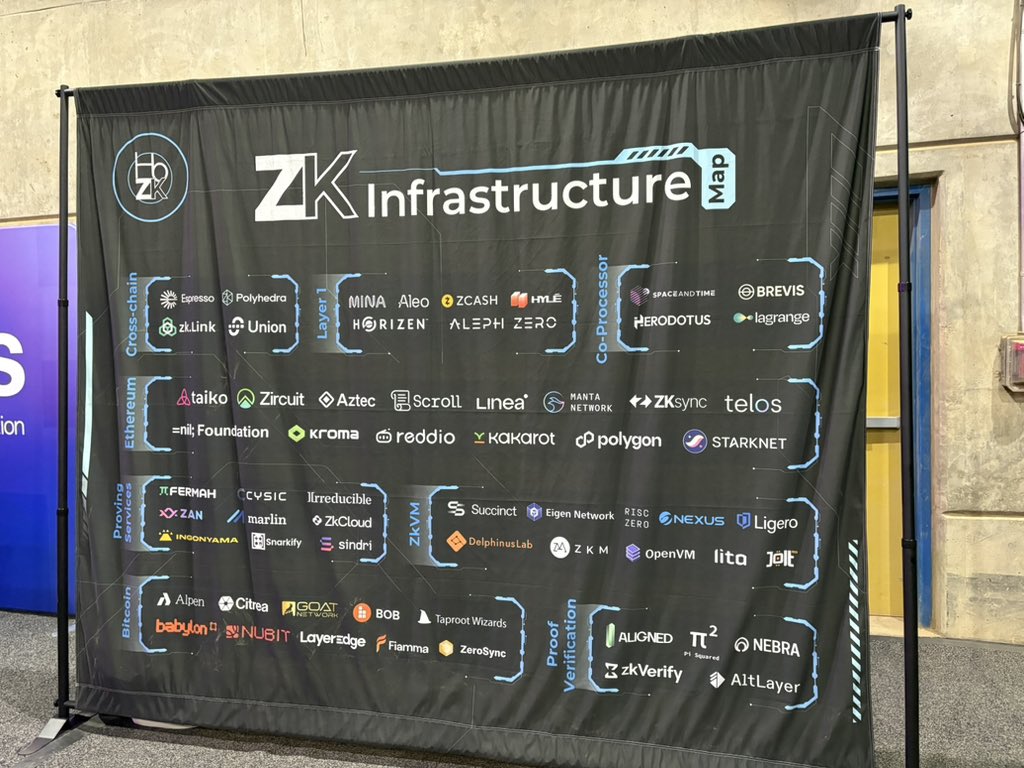
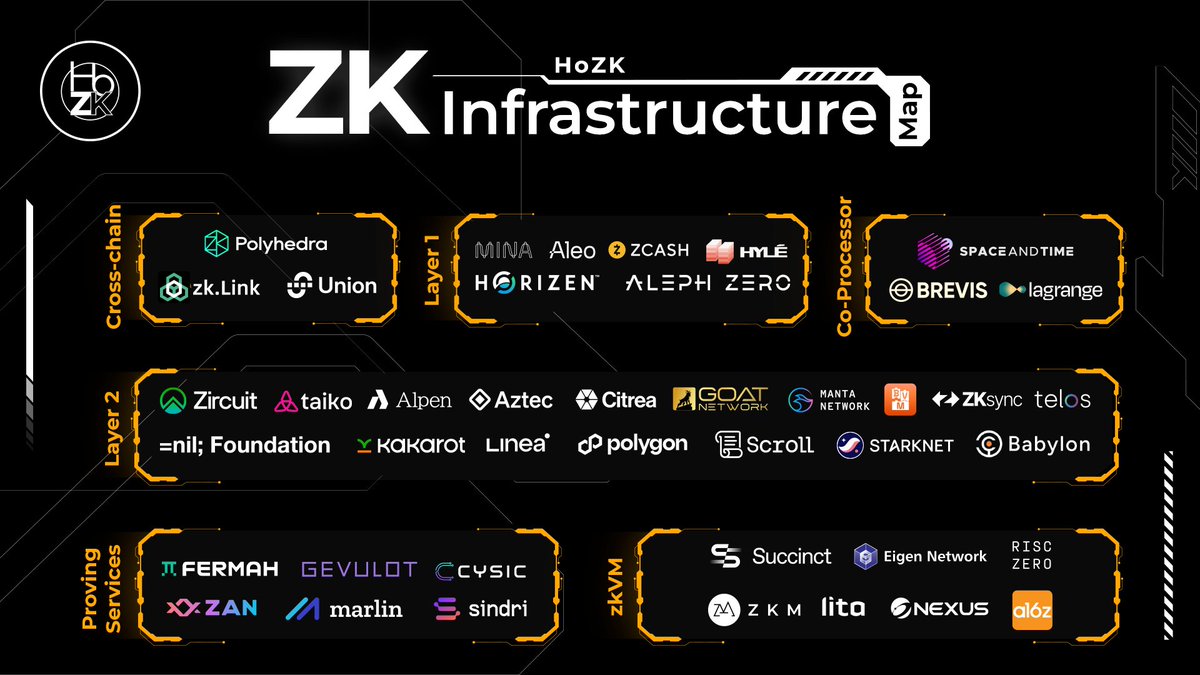
The ZK Infrastructure Map V2 - Mapping the ZK pioneers of the past, present and future 🔲🔳
This map showcases 42 projects that have captured our attention for their novel approaches and promising contributions to the field.
If you feel we've missed a deserving project, please comment below, reach out at contact@hozk.io, or fire us a DM 🤝
Featured projects:
@ProjectZKM, @RiscZero, @SuccinctLabs, @a16z, @NexusLabsHQ, @Lita_xyz, @Eigen_Network, @MinaProtocol, @AleoHQ, @Aleph__Zero, @horizenglobal, @Citrea_xyz, @goatnetwork, @aztecnetwork, @taikoxyz, @Scroll_zkp, @Starknet, @0xPolygon, @nil_foundation, @zksync, @union_build, @zkLink_official, @zcash, @AlpenLabs, @BVMnetwork, @KakarotZkEvm, @MantaNetwork, @LineaBuild, @gevulot_network, @lagrangedev, @zan_team, @MarlinProtocol, @SindriLabs, @PolyhedraZK, @hyle_org, @spaceandtime, @lagrangedev, @zircuit, @HelloTelos, @babylonlabs_io, @fermah_xyz, @brevis_zk
57
50
468
39,974

19 Sep 2024
Check the our latest post about Binius Stark Scheme. eigenlab.medium.com/binius-s… #zkp #stark #zkvm
1
7
1,024

29 Aug 2024
Check out our pure Rust #eSTARK implementation.
ZK Hack Montréal: Polygon - The eSTARK Proving System & Plonky3 youtu.be/2WjcXZYo7eA?si=8KQs… via @YouTube
4
254
Ξigen Network retweeted
20 Aug 2024
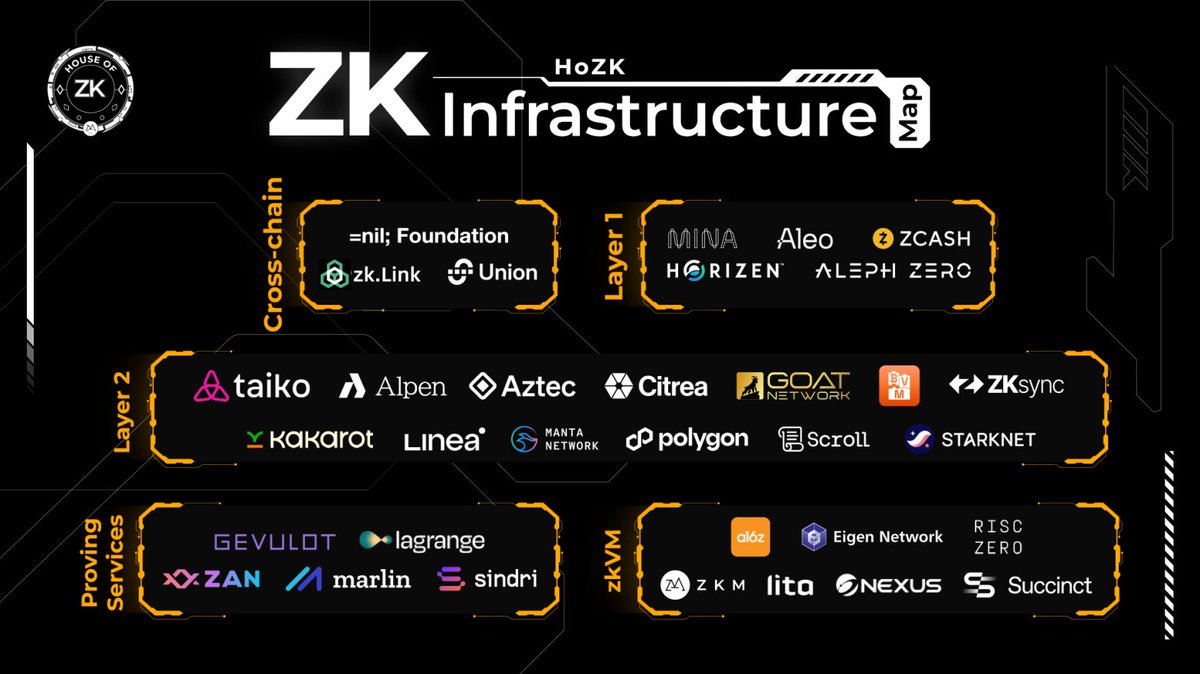
The ZK Infrastructure Map
Mapping the foundational pioneers of ZK innovation in blockchain:
23
30
218
24,037
31 Jul 2024
🚀 Exciting news for the Eigen Network community! 🎉
We are thrilled to officially announce our groundbreaking collaboration with @gevulot_network, the pioneering shared proving layer for the modular stack, offering ZkCloud—a universal proving infrastructure uniquely optimized for zero-knowledge proof generation and verification.🌐
Eigen Network has launched its efficient EStark Prover on Gevulot! Really appreciate.@Gavin the time and effort you have put on the integration. ❤️
👉👉👉github.com/0xEigenLabs/eigen… 👈👈👈
Together, we will:
1️⃣ Leverage Gevulot’s permissioned mainnet, Firestarter - the live GPU cloud cluster, to build our proof network unlocking new possibilities for scalability and acceleration. 🔒
2️⃣ Launch Eigen’s eStark Prover on Gevulot for all developers and all real-world applications. ⚙️
Stay tuned for more updates on this exciting collaboration! 📢
#EigenNetwork #Gevulot #Blockchain #Decentralization #zkVM #zkCloud #ZKP
5
11
929
30 May 2024
5
8
886