
AI & Robotics◽️Growth & GTM Engineer @tnkrdotai
Joined May 2021
- Tweets 2,226
- Following 7,468
- Followers 2,773
- Likes 16,654
229 Photos and videos




Pinned Tweet

Apr 28
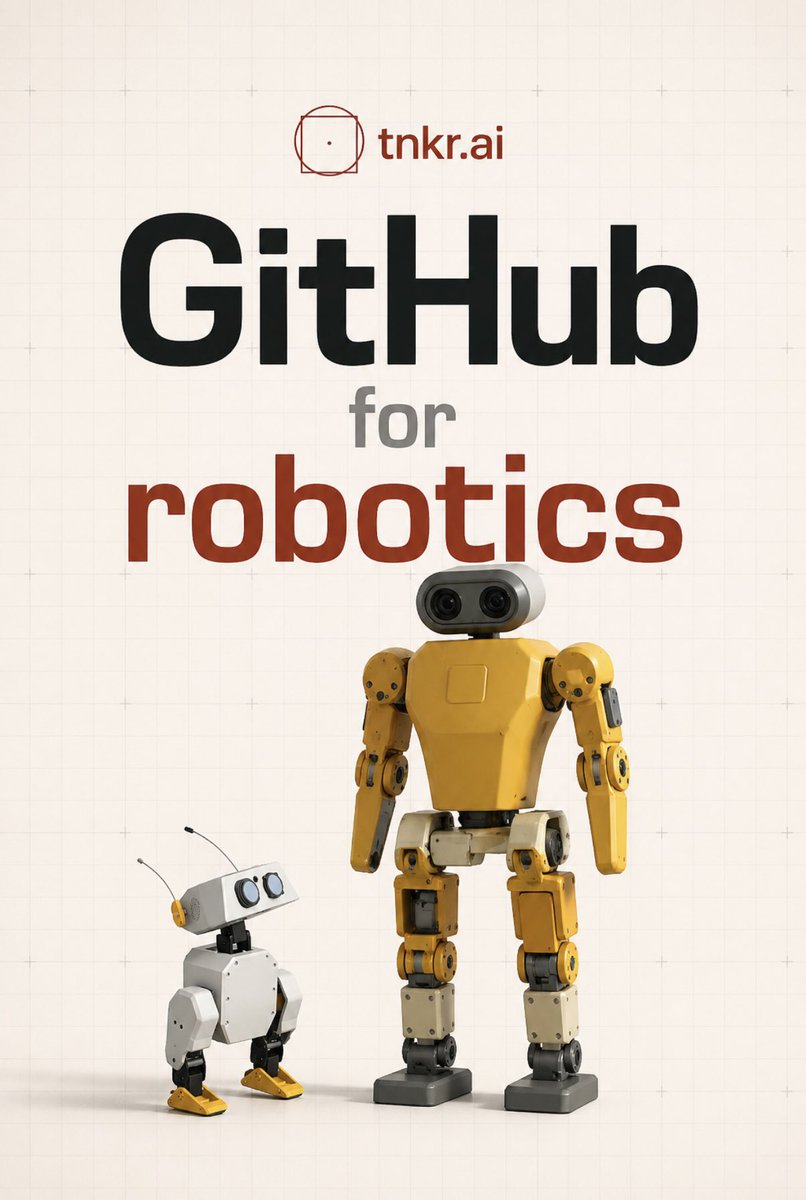
The bottleneck for most people who want to build a robot isn't motivation
it's not knowing where to start
what parts. what order. what software stack.
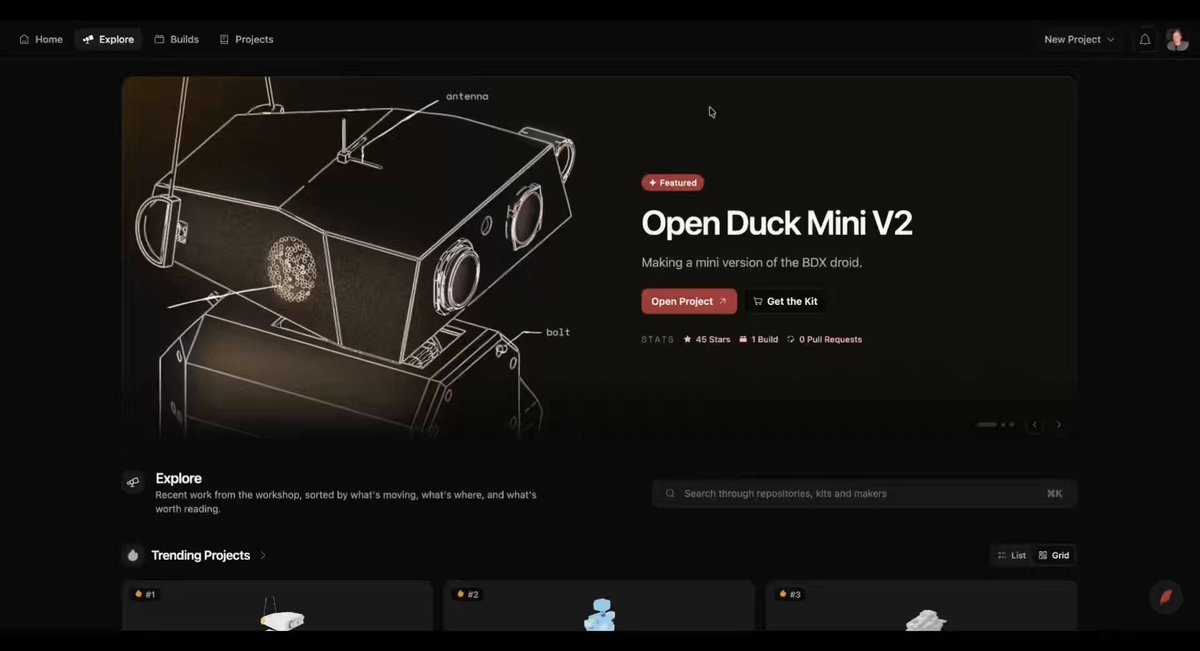
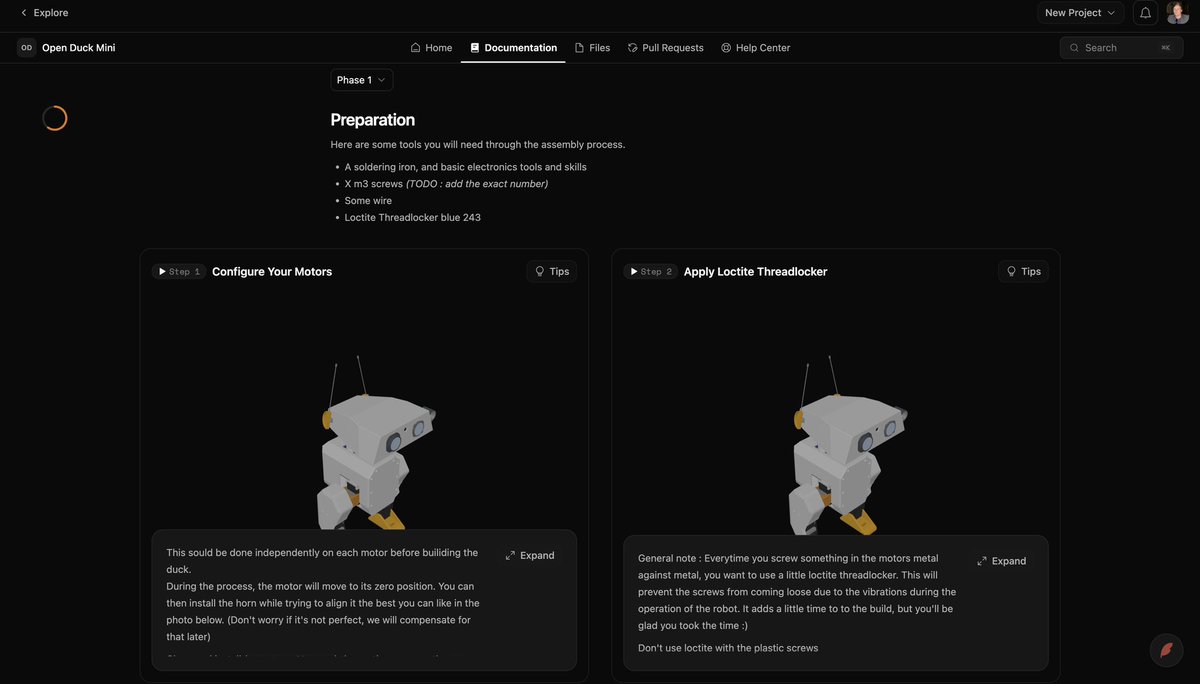
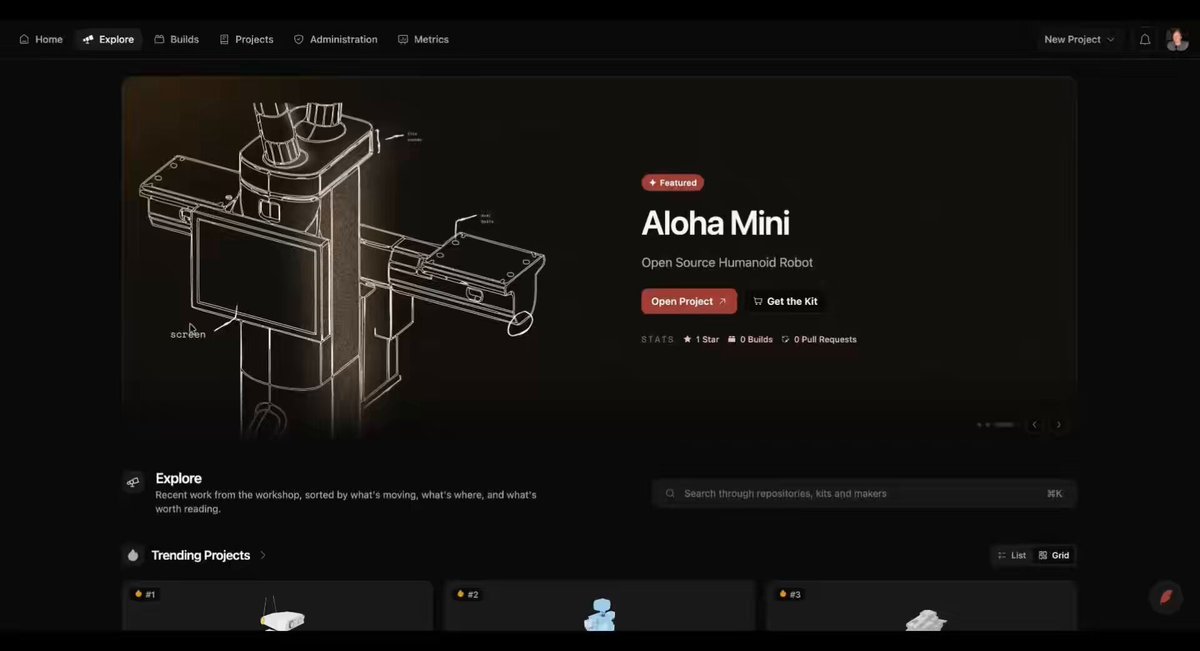
Tnkr solves exactly that — open source robot projects with step-by-step assembly, CAD, firmware, everything
tnkr.ai/explore
33
274
1,952
121,692
Emerson S retweeted

14h
Carnegie Mellon’s Robotics Institute runs a course on robot learning...
(For FREE 📌)
16-831 covers the full modern stack… the stuff actually being deployed right now:
Imitation learning. Behavior cloning. Reinforcement learning. Learning from human videos. Sim-to-real transfer. Vision-Language-Action models.
Not theory for its own sake.
Every topic is anchored to a real robotics problem: how do you get a robot to generalize to environments it’s never seen before?
All lecture slides are public.
This is THE Robotics Institute. The place that produced the researchers now leading the frontier labs.
Free. No login.
📌 [16-831-s24.github.io/lecture…]
Follow for more robotics resources like this!
——
Weekly robotics and AI insights.
Subscribe free: 22astronauts.com
4
76
550
17,460
12h
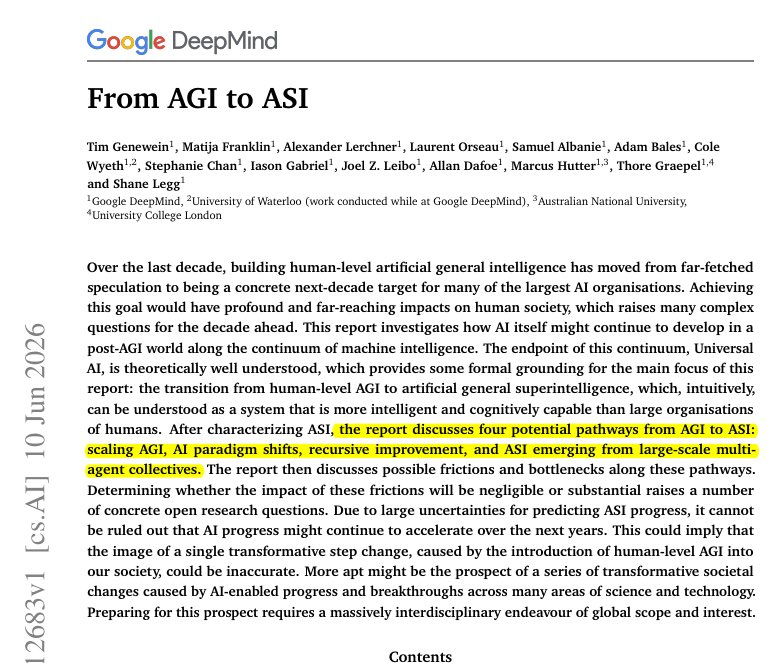
Google DeepMind just mapped the road from AGI to ASI. AGI is roughly human-level across most tasks. ASI beats large groups of human experts across virtually everything. The four paths there: scaling, new paradigms, recursive self-improvement, and massive multi-agent coordination.
The part I keep thinking about is that superintelligence might not arrive as one dramatic moment. It might just be digital minds copying, speeding up, sharing memory, and running in parallel until it looks like an entirely different civilization.
1
99
12h
Integrated Information Theory says consciousness is a property of systems with high causal density. Global Workspace Theory says it emerges when information is broadcast widely across specialized systems.
Both have serious empirical problems. Both make predictions that don’t fully hold up.
The tension in consciousness research peaked when Christof Koch, the former president of the Allen Institute for Brain Science, admitted defeat in a 25-year wager that we’d identify a neural correlate of consciousness.
Researchers are now questioning whether we can ever truly measure consciousness in synthetic systems.
We are deploying increasingly complex AI systems without a scientific consensus on what consciousness is, how to detect it, or what obligations we might have toward things that might have it.
137
12h
Google DeepMind just dropped a paper on the path from AGI to ASI and the key insight is that superintelligence might not arrive as one breakthrough.
15h

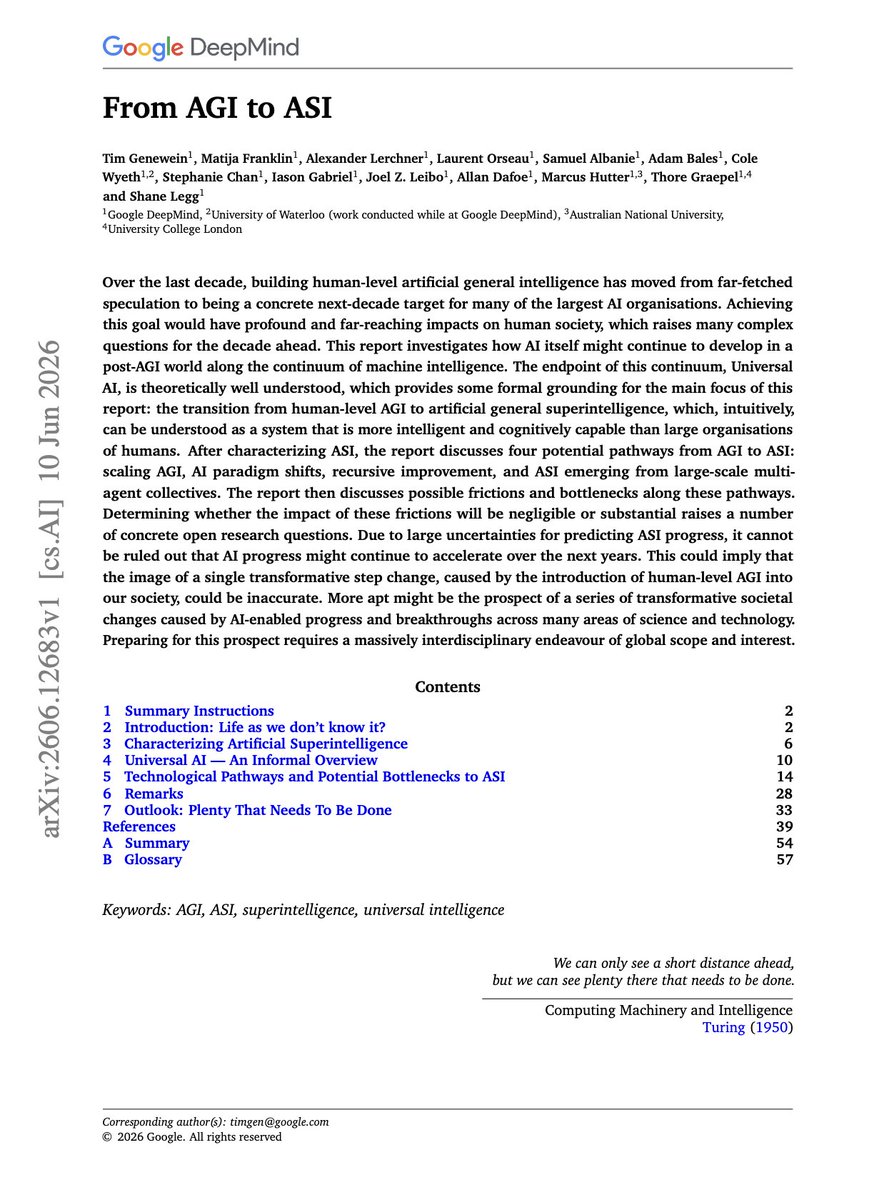
"From AGI to ASI"
This paper from Google DeepMind defines how AGI is one human-level general system, and ASI is a system or collective that beats large expert human organizations across almost everything.
They argue that the jump may come from scaling, new paradigms, recursive self-improvement, or huge multi-agent AI collectives.
With the key idea that digital minds can copy, speed up, share memory, and run in parallel, so superintelligence may look less like one breakthrough and more like accelerating AI civilization.
136
Emerson S retweeted

Jun 12
A lot of engineering goes into making autonomy look simple
Here’s a 2 hour timelapse of F.03 repeatedly walking up and down stairs. Figure HQ is full of tests like this, each one helping push robots closer to fully autonomous systems
89
142
2,148
187,324
Emerson S retweeted

Jun 12
Getting the right parts for your build has to be one of the hardest and draining parts of building in robotics.


1
1
9
879

Emerson S retweeted
Jun 12
Introducing Kits by Tnkr 📦
The fastest way to clone a robot.
For Maintainers: distribute your project, BOM to kit in one click.
For Builders: everything you need to build it, in one box.
tnkr.ai
9
25
84
10,986
Jun 12
The barrier to understanding robotics from the ground up just got lower. Full MIT Press textbook, free on GitHub, written to build everything step by step.
This is the kind of resource the community needs more of.
Jun 12

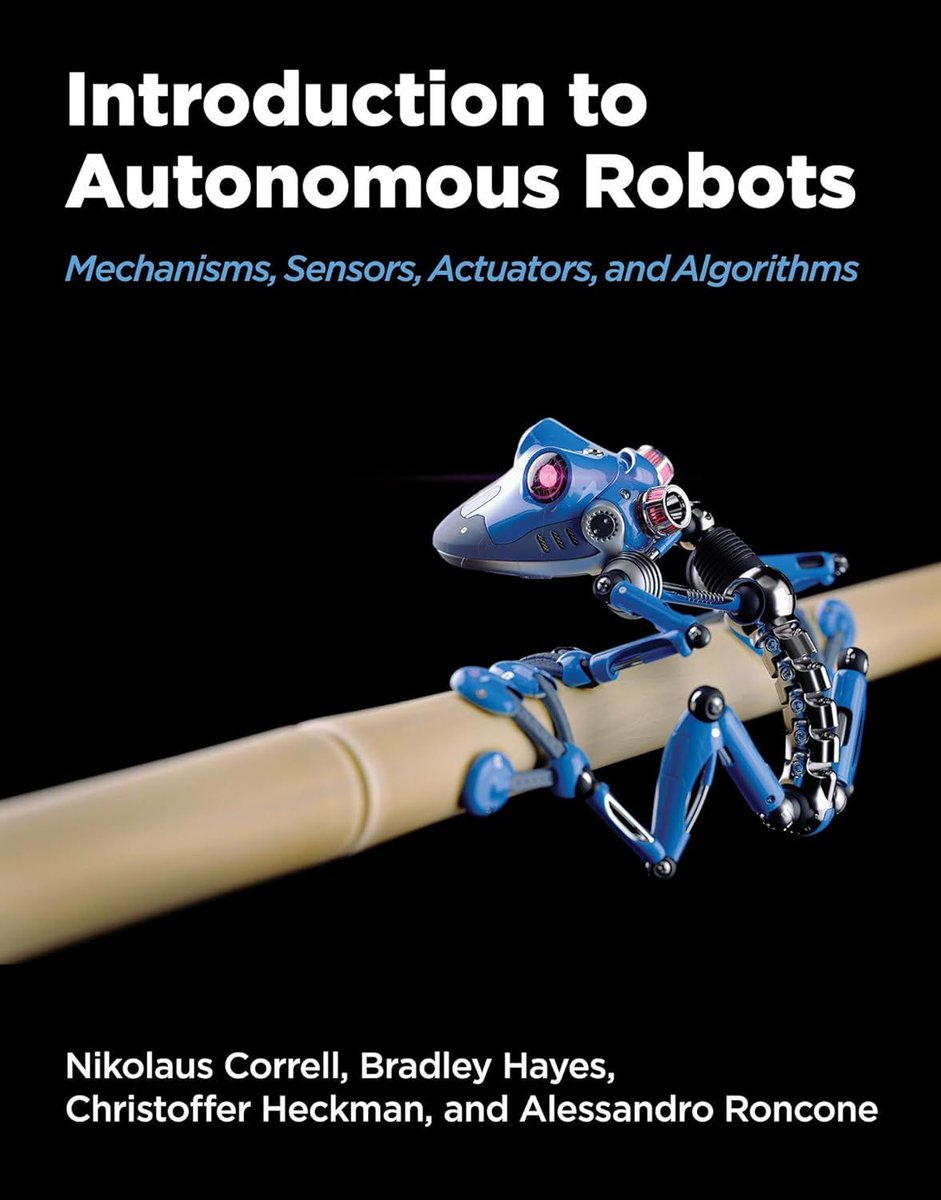
MIT Press published a robotics textbook.
Then put it on GitHub for FREE. 📌
"Introduction to Autonomous Robots" covers everything:
kinematics, sensors, actuators, motion planning, localization, computer vision, and neural networks... from mechanisms all the way to algorithms.
It's written for undergraduates. Which means it's actually readable.
Most robotics textbooks assume you're already deep in the field. This one builds everything from the ground up, step by step, with real examples. Stanford's Mac Schwager called it "much-needed" (because it genuinely is).
Four professors at the University of Colorado Boulder spent years building it from lecture notes. MIT Press published it. Then they open-sourced the whole thing under Creative Commons.
PDF. Free. GitHub.
If you're trying to understand how autonomous robots actually work (not just the frontier research, but the foundations), this is where to start.
📌 [github.com/Introduction-to-A…]
Share this with your fellow roboticist!
——
Weekly robotics and AI insights.
Subscribe free: 22astronauts.com
1
24
176
17,675
Jun 12
The influx of talent and capital into robotics is coming. What matters is whether the community is organized enough to shape it before it arrives.

1
5
431
Jun 12
Three open source drops this week.
Featuring
@openmind_agi
@almond_robotics
@XSquareRobot
And today we’re dropping Kits on @tnkrdotai
Everything you need to build a robot, in one box. From project to assembly in days not weeks. Starting with Open Duck, XLeRobot, and Amazing Hand.
Meet Tnkr 2.0. tnkr.ai
2
12
56
3,278
Emerson S retweeted

Jun 11
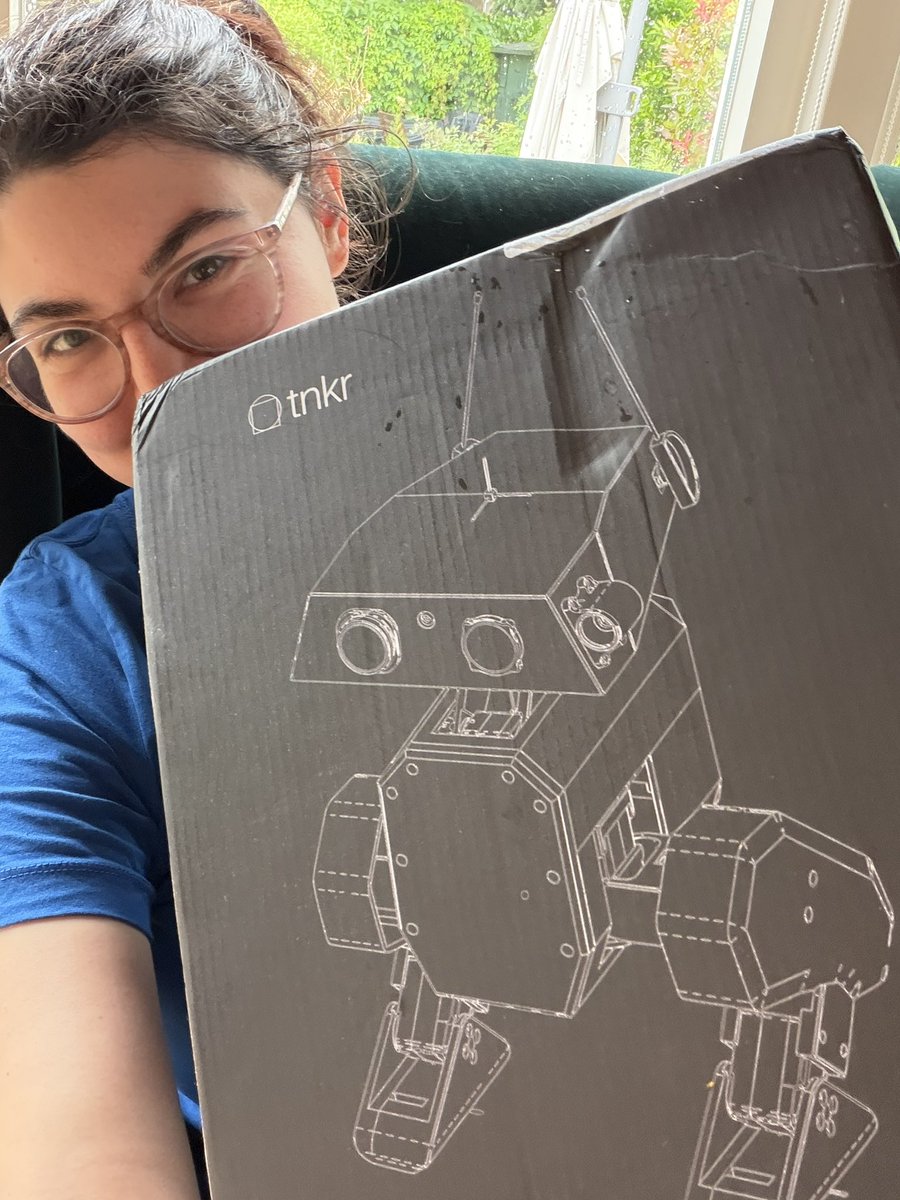
Got something really exciting coming soooon 🤫🤐 @tnkrdotai
22
16
368
14,502
Jun 11
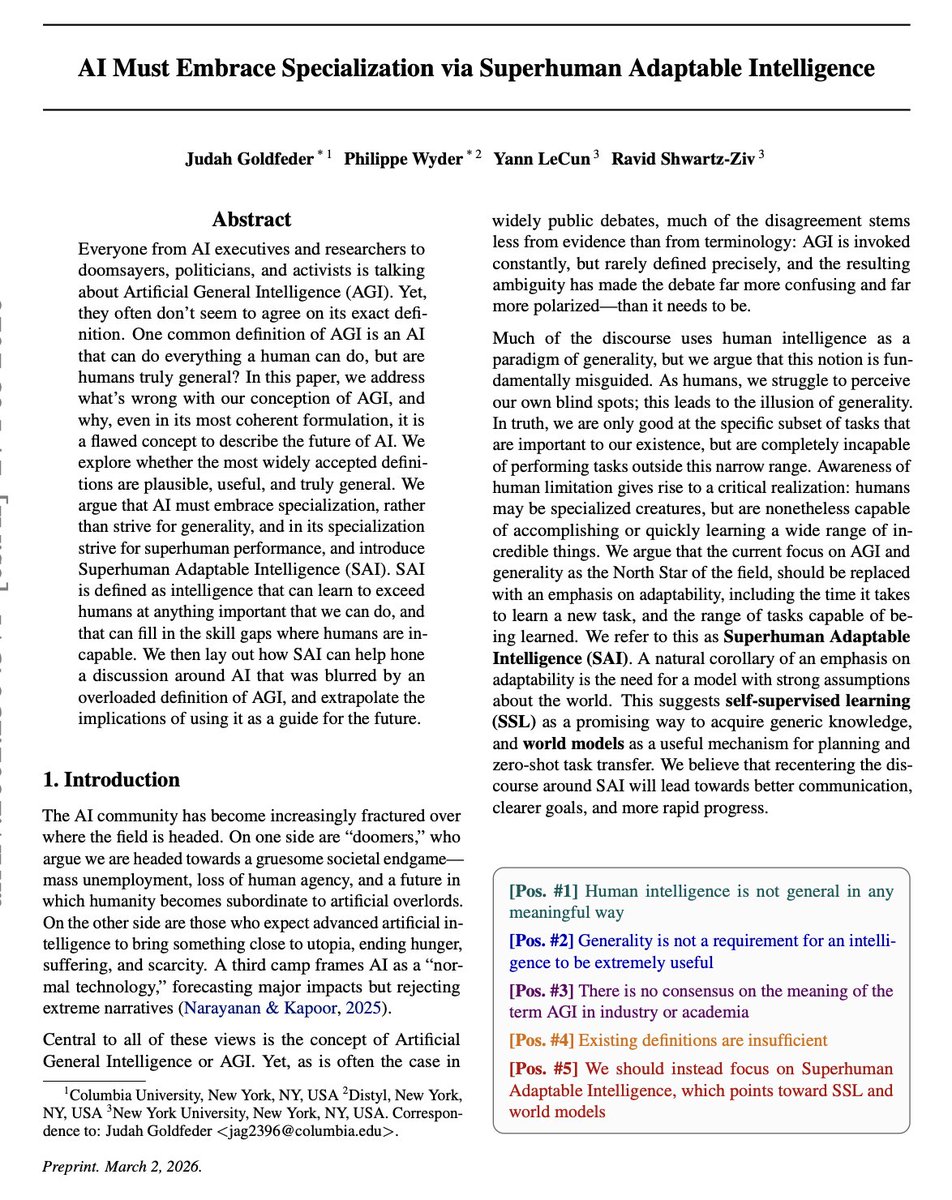
LeCun basically says AGI is a biological illusion and that humans were never truly general to begin with. Hard to argue with that honestly. His alternative is SAI, intelligence built on world models and self-supervised learning that fills the gaps where we’re fundamentally incapable. Whether you agree with him or not this reframes the whole conversation in a way that’s worth thinking about. Worth the read!
Jun 10

Yann Lecun published the most heretical AI paper of the year.
He opens by arguing Magnus Carlsen isn't good at chess and only gets more unhinged from there.
The Turing Award winner and his co-authors dropped a paper demanding the AI industry abandon its biggest obsession, AGI.
Right now, everyone from Silicon Valley CEOs to politicians assumes AGI is the ultimate goal. A machine that can do everything a human can do.
LeCun argues that this entire concept is a biological illusion.
Humans do not possess "general" intelligence. We are highly specialized biological machines, tuned by evolution simply to survive in the physical world.
We only think our intelligence is "general" because we are completely blind to the millions of cognitive tasks we are incapable of comprehending.
Which brings us to the chess argument.
Magnus Carlsen is the greatest human chess player in history. But compared to a modern computer? He is fundamentally terrible.
Our belief that Carlsen is "good" at chess is pure human-centric bias. He isn't objectively good. He's just better than the rest of us, who are biologically awful at it.
LeCun says we need to stop building AI to mimic human generality.
Instead, he proposes a new North Star: SAI.
Superhuman Adaptable Intelligence.
Instead of trying to build a machine that mimics our flawed, biologically-limited brains, we need to embrace extreme specialization.
SAI is about the speed of adaptation.
It is an intelligence that can learn to exceed humans at any specific, economically important task.
More importantly, it is designed to fill the vast skill gaps where humans are fundamentally incapable.
Things like managing global energy grids in real-time. Or predicting complex molecular structures.
The entire AI industry is obsessed with building a digital reflection in our own image.
LeCun's paper is a brutal wake-up call.
2
318
Emerson S retweeted

Jun 11
Can a robot understand the nonverbal signals you give in real time — your pointing gestures, your gaze, the things you never put into words?
Meet EDITH: a framework that lets robots comprehend and act on human nonverbal signals.
project-edith.github.io
🧵[1/n]
@KAIST_AI
#Robotics #HumanRobotInteraction #VLA #ProjectAria
1
19
64
7,645
Jun 11
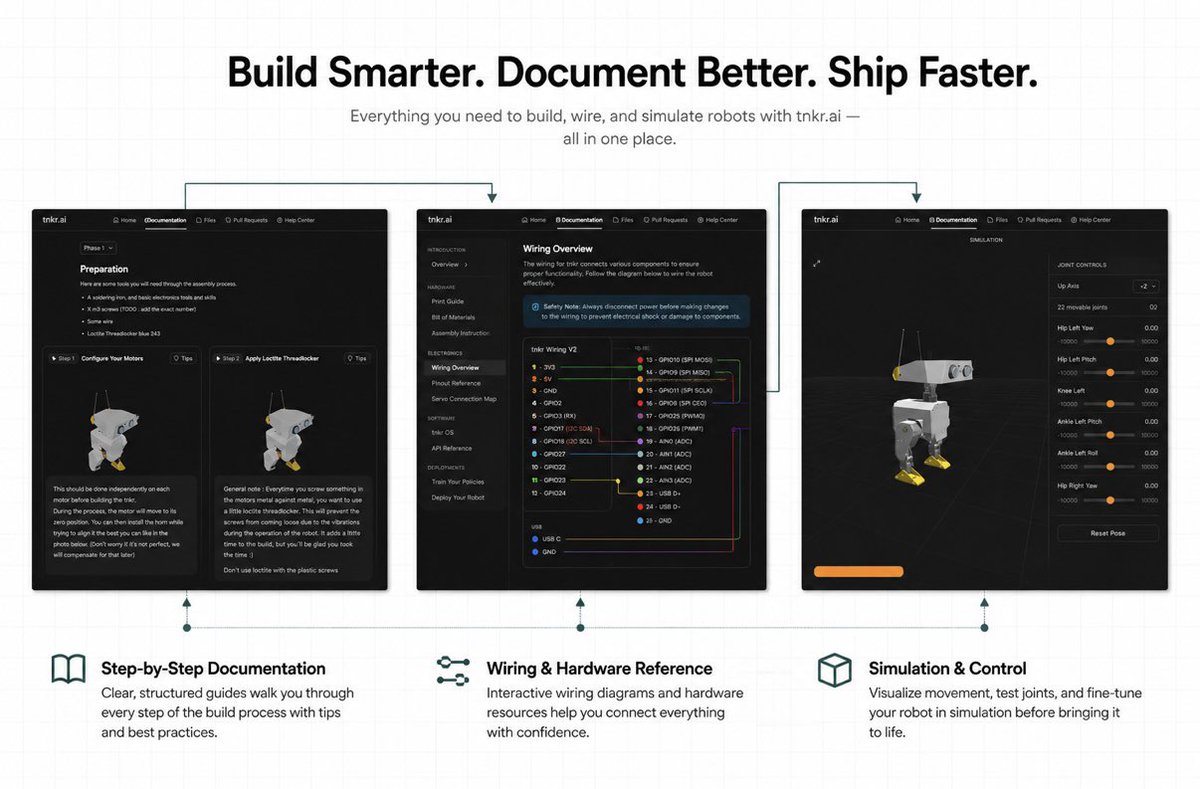
Your entire robot in one home. Prepare your build. wire your hardware. simulate your design. document everything. all connected. all version controlled.
this is how you build better robots, faster.
tnkr.ai
1
28
884
Emerson S retweeted

Jun 11
I wonder what those arms are capable of 🤔
(Realtime and autonomous)

Trained the first ever Makiina arms to assemble a raspberry Pi into its case
39
80
845
148,173
Jun 11
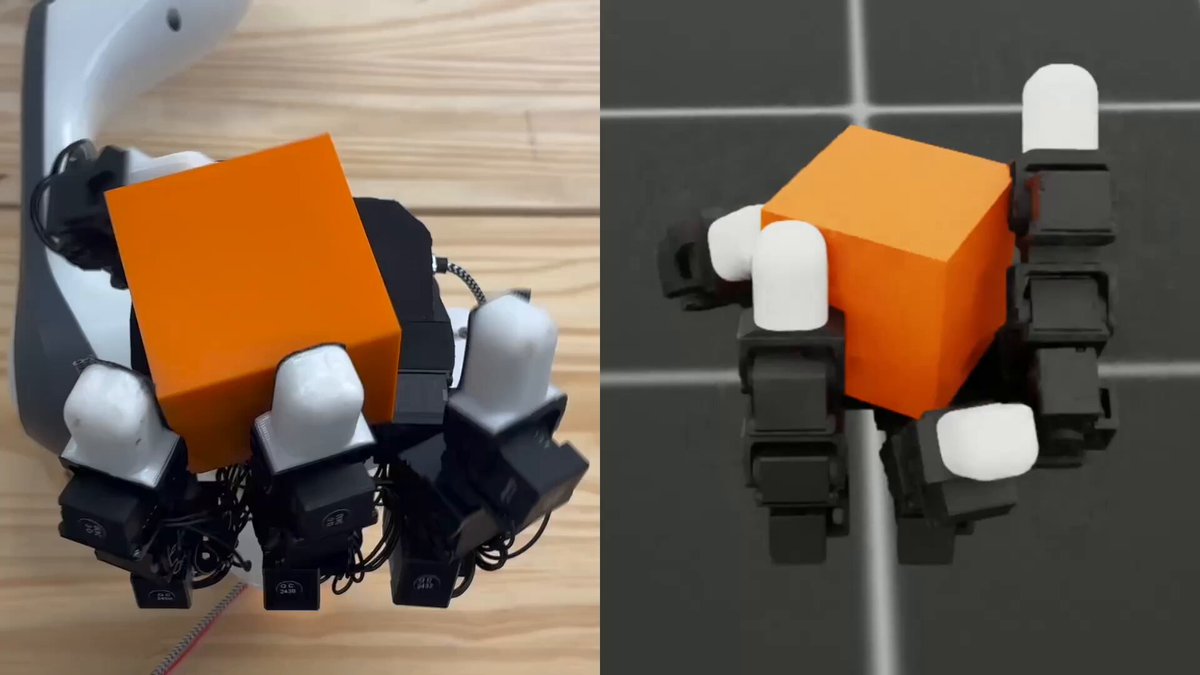
The Allegro Hand costs $16,000. LEAP Hand from CMU costs under $2,000, assembles in under three hours, and outperforms Allegro in every benchmark they tested.
Full CAD, URDF, simulation environment, APIs all open source. It became the default dexterous hand for robot learning research and most people outside the lab world still don’t know it exists.
And V2 is coming at $200-$300. The cost curve for dexterous robotics is moving faster than anyone expected.
v1.leaphand.com
3
278
Jun 10
The best way to understand a fast moving space is going back to first principles and this does exactly that for AI robotics.
Jun 10

Our mission is to make it easy for anyone to deploy a robot to help them in the real world
We wrote an intuitive guide to understanding modern robotics, catered toward an audience that understands technology but not AI robotics
We hope that this short blog post embeds in you the core principles that will bring further curiosity.
21
2,400
Jun 10
I’m most excited about the open source robotics community right now because of posts like this.
Hardware built for real work, shared openly, pushing physical AI forward.
This is exactly the energy behind what we’re building at @tnkrdotai A home for the builders doing it in the open.
Jun 10

Meet Axol: a dual-arm robot designed for teams working with physical AI. Made in America.
Axol is for builders who believe robots should work, in the real world, not just staged environments, and that the future of physical AI should be open not closed.
2
410