
Joined March 2010
- Tweets 16,192
- Following 976
- Followers 1,115
- Likes 14,498
855 Photos and videos
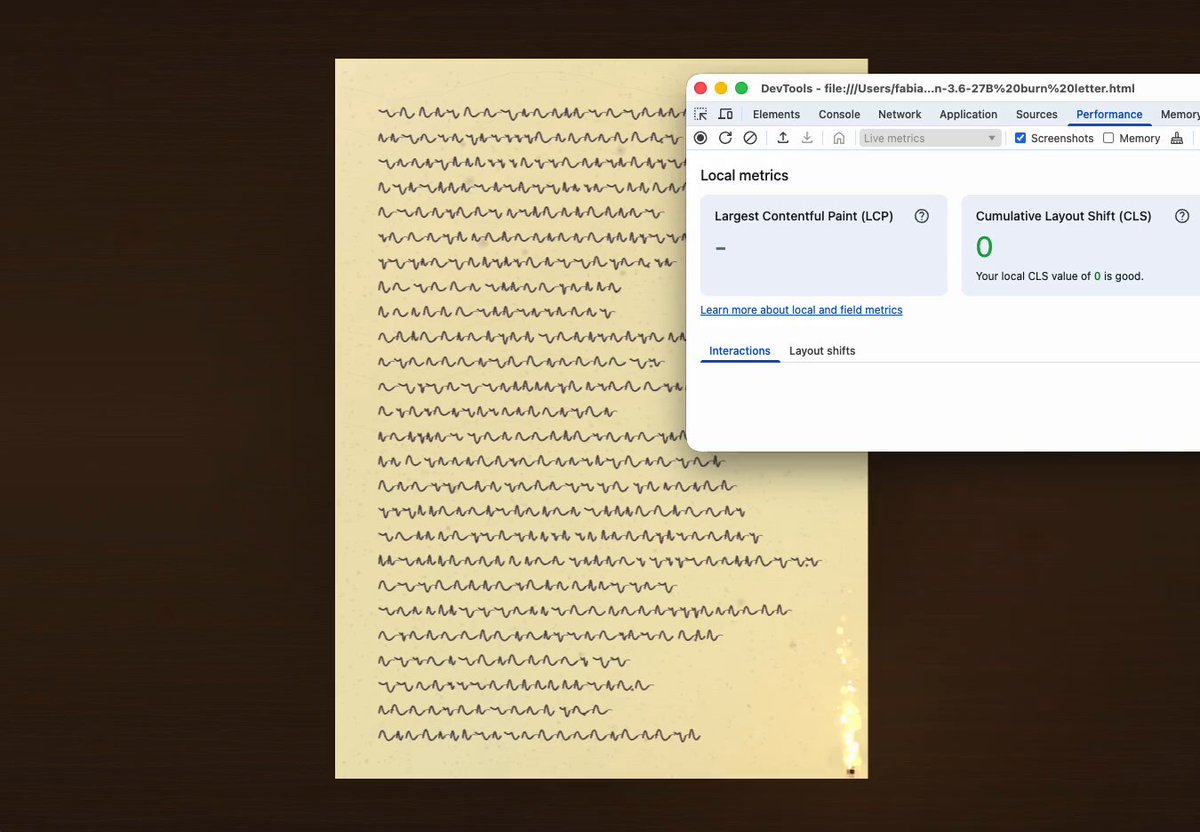
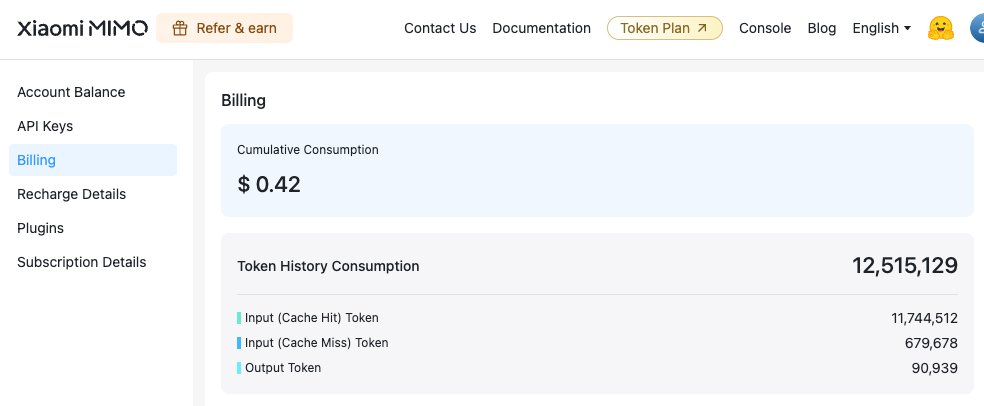

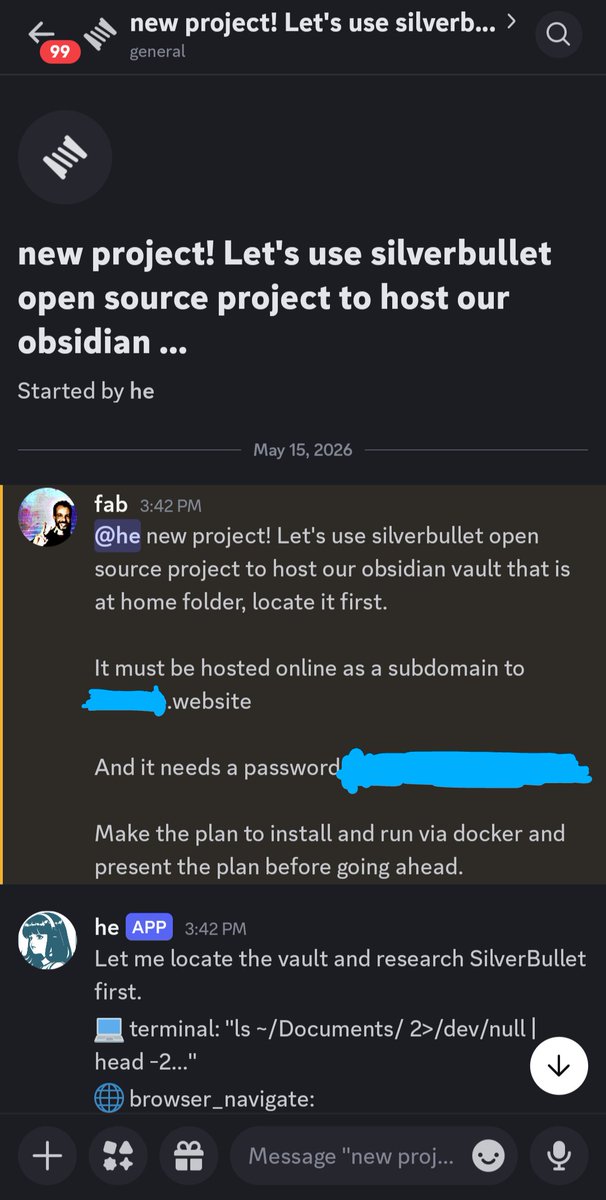
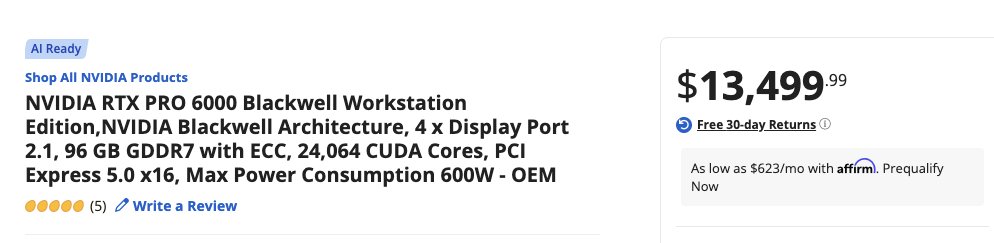




There has been no gap for a few months.
For instance, mimo-2.5pro has been 1-shotting tasks that Opus 4.6 failed in my practical uses.
OSS is just cheaper/better.
18h

I agree with @hosseeb, the gap between Open and Closed source is not insane
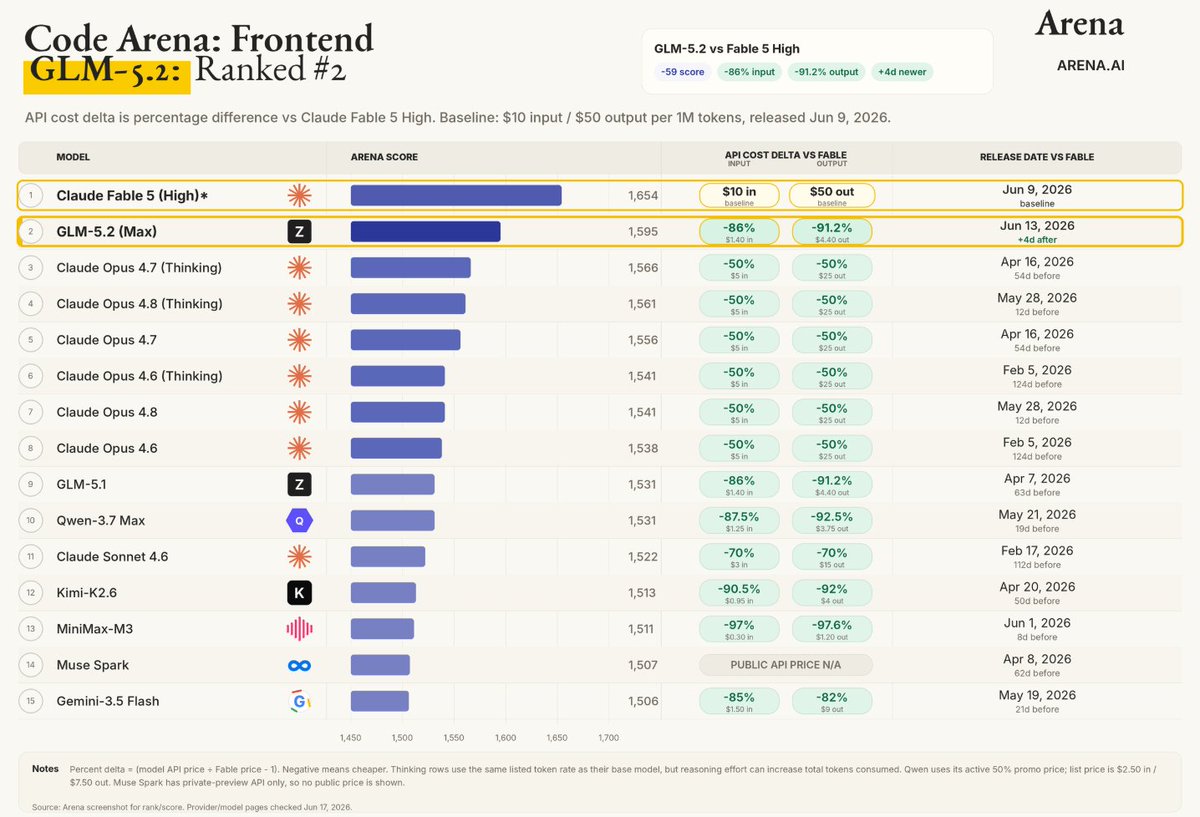
GLM 5.2 is 90% cheaper vs Fable 5, was released 4 days later and is 5-10% weaker depending on the benchmark you look at
I edited the @arena chart so people can compare scores vs cost vs release date
It's worth keeping in mind GLM 5.2 Max is $1.4 in $4.4 out, Fable is $10 in and $50 out or 86%/91% cheaper vs Fable 5 despite being very close on many benchmarks. GLM 5.2 is also 100% free (outside capex) if you run it on your own hardware.
In many cases you want the best model (medicine, technology, etc) but the cost difference vs marginal gap in capabilities makes substitution an obvious reality.
My thesis is that open source models are good enough for the majority of workflows and these flows switching off Centralized players hurts revenue and could lead to a local top in spend, funding and AI stocks
I do not think this is a maximum top as we will get AGI.
x.com/Shaughnessy119/status/…
@hosseeb lets chop some blocks soon!
12
Straight out of sci-fi !

MidJourney just announced... a full body ultrasound! Yup... read on because it's as crazy as it sounds.
"As powerful as MRI and as casual as a trip to the spa"
They are calling it "the @midjourney scanner"
Insane details:
- First, the scale. The device uses 8,960 individual transducers arranged in a ring around your body
- The precision is the most jaw-dropping part: it resolves motion at the picometer range. It can image internal tissues finer than the width of an atom. We are talking sub-atomic level diagnostic capability
- The compute requirement is massive. The system processes 17 gigabytes of data per second.
It takes 40GB of raw data to reconstruct just one cross-sectional slice. And they are planning to scan 100 slices?
- Midjourney claims that fewer than 12 of these machines could perform more full-body scans than every MRI machine on Earth combined.
Welcome to the future of healthcare!
Not only these scanners are announced, they will exist in a "Midjourney SPA" - with hot tubs, saunas, cold plunges, and 9-10 whole body scanners.
11

15h
6 months ago this would be dismissed as an "AI wrapper" 😂

Unreal Engine 5.8 ships today with experimental MCP server support:
Your sources, your pipeline and your workflow—simply configure the MCP plugin and connect to any agent. Get familiar with the MCP server and the PCG Primitive Plugin today and see what teams can build together: epic.gm/ue-5-8-blog
37

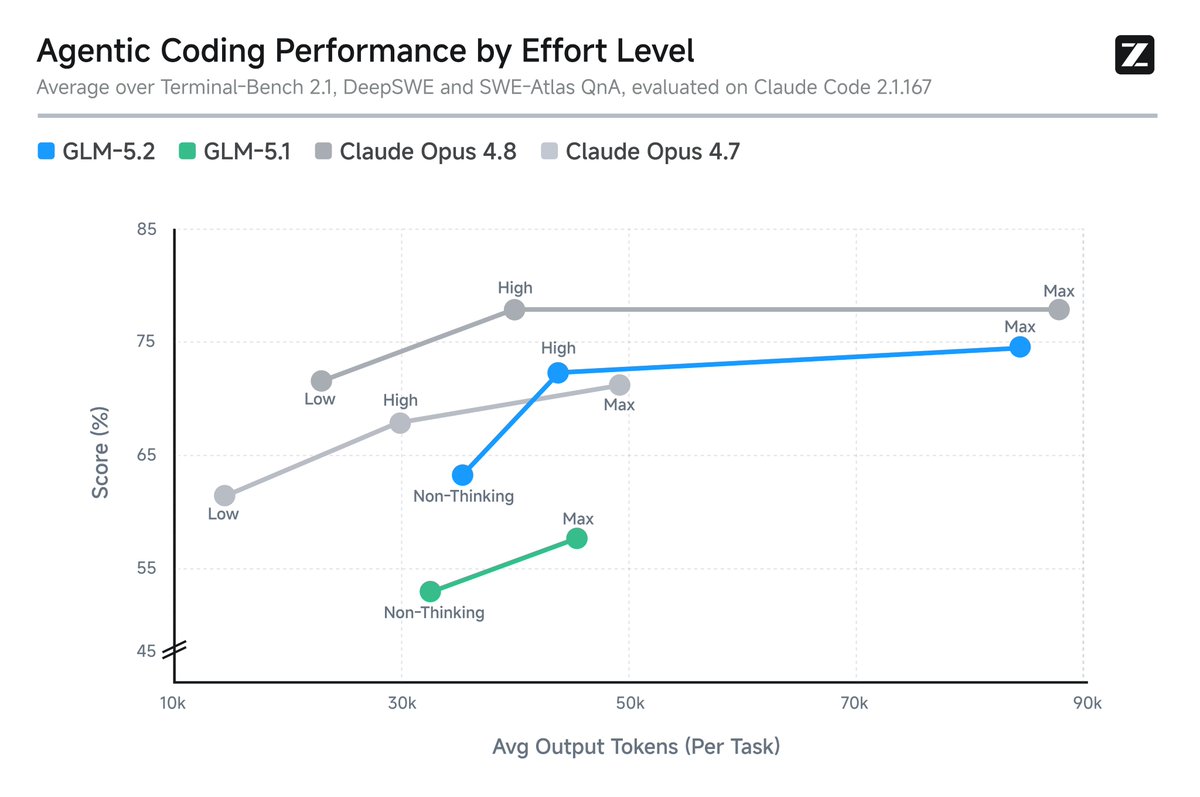
Introducing GLM-5.2: Frontier Intelligence, Open Weights
- Significant improvements in coding and agentic tasks
- Strong long-horizon capabilities with a 1M context window
- Two levels of reasoning effort: GLM-5.2 (max) pushes the limits, while GLM-5.2 (high) strikes a strong balance between performance and token efficiency
- MIT-licensed open weights
- Same API pricing as GLM-5.1
Tech Blog: z.ai/blog/glm-5.2
Weights: huggingface.co/zai-org/GLM-5…
API: docs.z.ai/guides/llm/glm-5.2
Coding Plan: z.ai/subscribe
Chat: chat.z.ai
529
1,348
9,924
4,471,803


Fab 🇧🇷🇨🇦 retweeted

Jun 12
A 25-year-old housewife in Chennai earns ₹250/hour ($3) just by doing her normal housework.
She wears a phone on her head and records herself making coffee, cutting fruit, folding laundry.
These first-person videos get sent to AI companies training humanoid robots to handle real-world tasks. She shoots 90 clips a day.
Her quote: "Who else will pay you ₹250/hour ($3) an hour just for doing housework?"
She's part of a growing gig economy in India where thousands are doing the same thing, filming everyday life to train the robots of tomorrow.
404
1,732
7,773
2,704,499
Fab 🇧🇷🇨🇦 retweeted

Jun 11
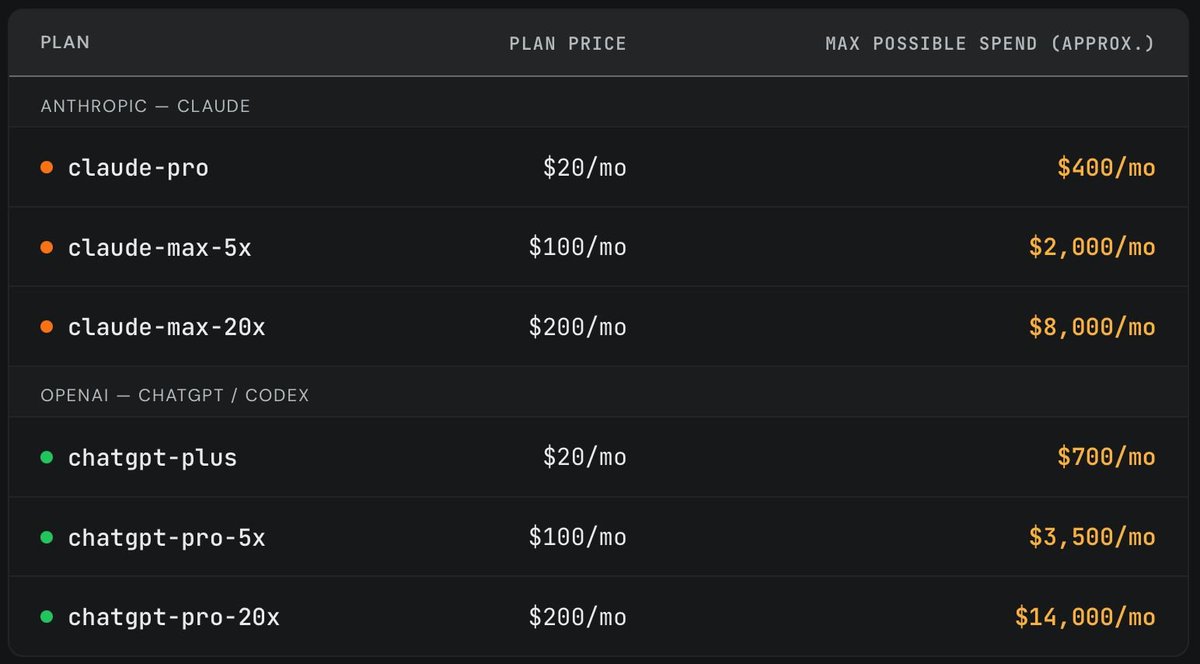
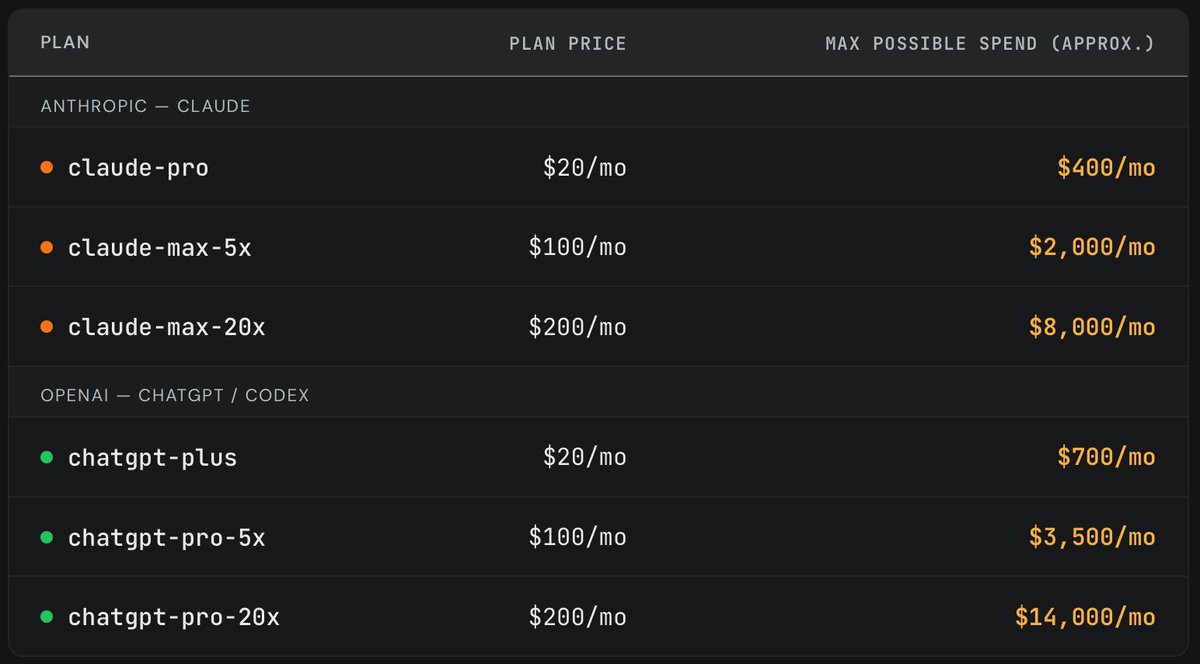
Subscription plans are massively subsidized.
And by massively, I mean absurdly:
Claude Max 20x: $200/month, with usage reportedly worth around $8,000
ChatGPT Pro 20x: $200/month, with usage reportedly worth around $14,000
Jun 10

Recently, we purchased one of each Anthropic/OpenAI subscription plan and randomly ran long horizon coding tasks until we exhausted the weekly limit. It's widely believed that a $200/month plan maxes out at ~$2000/month worth of tokens (assuming API pricing). However, we found that the subscriptions are actually far more generous. (2/4)
326
272
4,369
1,530,511
Jun 11
Stop Canada's bill C-22 -- effectively banning online privacy.
news.ycombinator.com/item?id…
1
2
4
112
Fab 🇧🇷🇨🇦 retweeted

The Iranian navy, which has been destroyed eight times, has apparently closed the Strait of Hormuz again, because the United States, for the seventh time, won the war that wasn’t a war, so now the United States has to open the Strait of Hormuz that was already open before the not-war began.
The not-war began because Iran had uranium that was totally, completely, beautifully obliterated, so they can’t build the nuclear bomb they weren’t building, which is why the United States had to start the not-war it definitely didn’t start.
Now the United States, which has nuclear weapons, is threatening to use nuclear weapons to stop Iran from getting nuclear weapons, because nuclear weapons are far too dangerous for countries with nuclear weapons to allow other countries to have.
If the United States saw the United States doing what the United States does in other countries, the United States would invade the United States to liberate the United States from the tyranny of the United States.
2,706
34,503
103,458
3,528,222
Fab 🇧🇷🇨🇦 retweeted

Jun 4
AI = Agricultural Intelligence
53
342
1,642
55,590
Fab 🇧🇷🇨🇦 retweeted

Jun 3
Welp, that happened faster than I predicted. Thought it would be end of 2027, then early 2027, but agentic traffic growing so fast that bots have now passed human traffic online for the first time in the Internet's history. radar.cloudflare.com/traffic…
387
2,151
8,327
2,250,712
Fab 🇧🇷🇨🇦 retweeted

Jun 3
Ottawa’s lawful access bill contains ‘chilling’ proposals, Signal executive tells MPs theglobeandmail.com/politics…
20
75
180
38,286
Fab 🇧🇷🇨🇦 retweeted

Jun 3
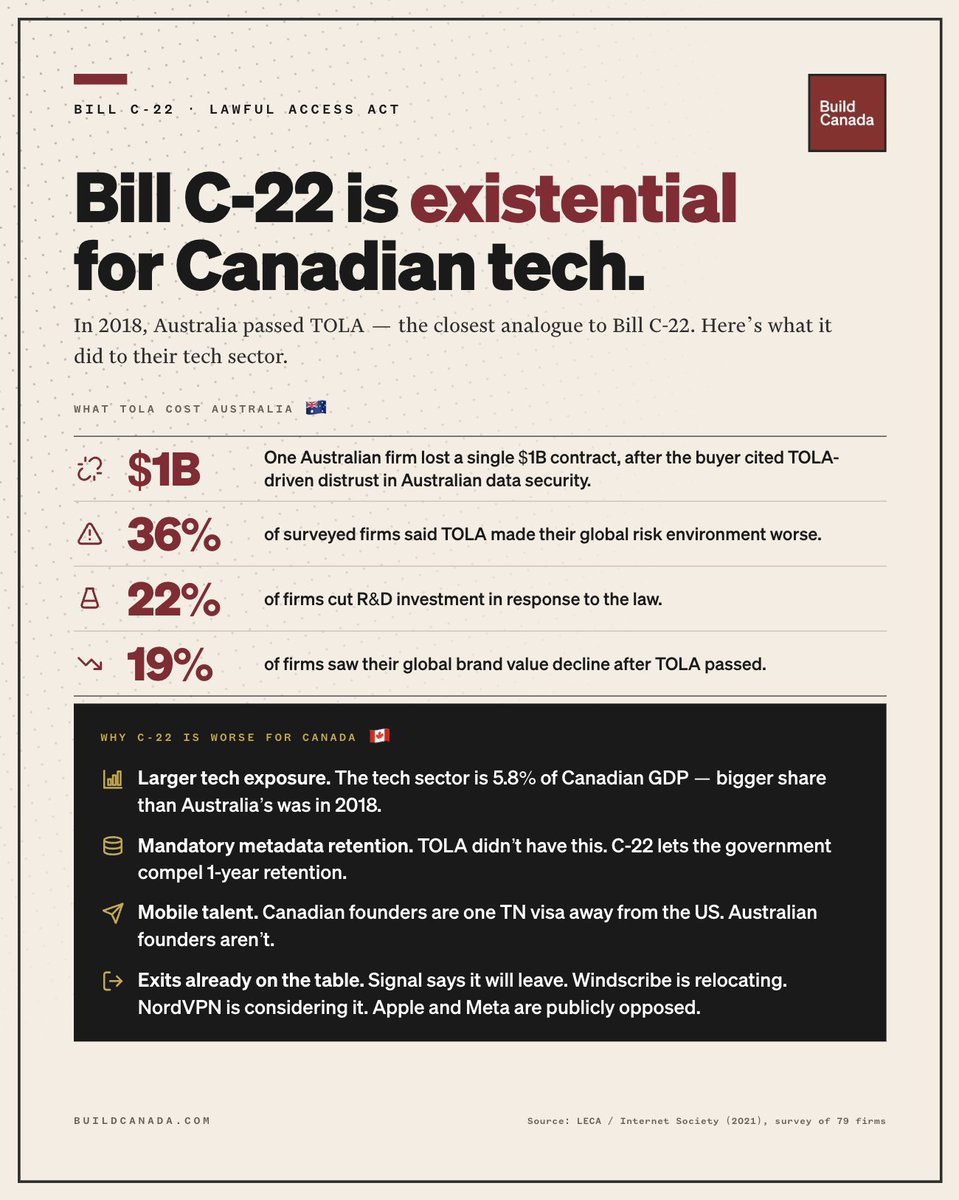
In 2018, Australia passed the Telecommunications and Other Legislation Amendment. The bill bears strong similarities to C-22. 🇦🇺
What happened after?
- 22% of firms cut R&D investment
- 36% of firms reported TOLA made their global risk environment worse
- Australian firms lost contracts. Big ones.
The problem is, 🇨🇦 is much more exposed than Australia ever could be.
Jun 3

Ottawa’s lawful access bill contains ‘chilling’ proposals, Signal executive tells MPs theglobeandmail.com/politics…
9
71
244
26,287

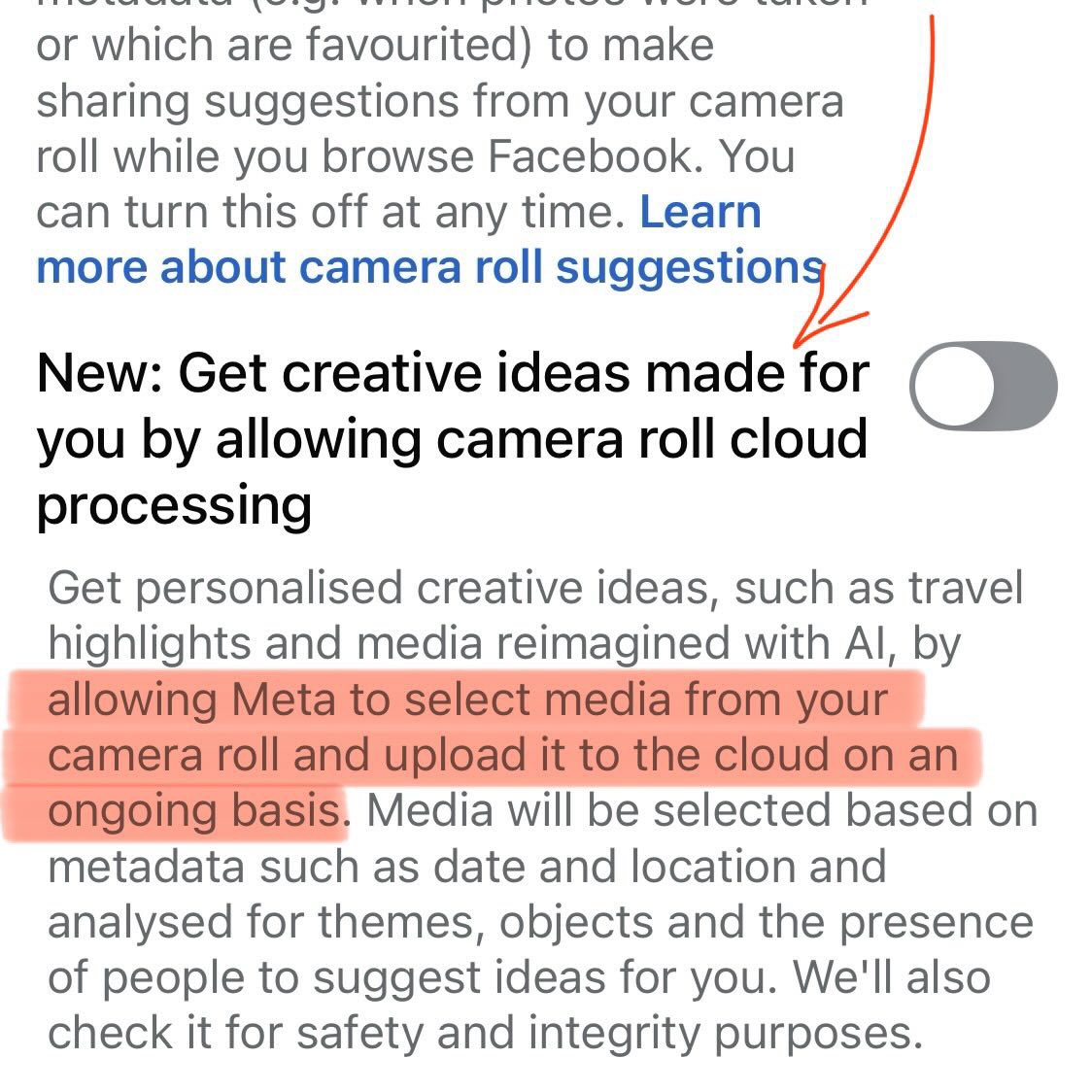
Fab 🇧🇷🇨🇦 retweeted

Imagine you spent 40 years doing the boring, responsible thing.
You opened a 401k at 23. You contributed every paycheck. You ignored the noise. You bought the index because Bogle told you to, because Buffett told you to, because every honest piece of financial advice for 30 years told you the index was the safest, most diversified, most rules-based way to own America.
The whole point was the rules.
The rules said: a company must trade for 12 months before joining the S&P 500. The rules said: it must show four consecutive quarters of GAAP profitability. The rules existed because in 1999 the index quietly bought a lot of stocks at the top, and pensioners paid the bill.
After the dot-com crash, S&P tightened the rules. Nasdaq tightened the rules. FTSE Russell tightened the rules.
For 23 years, those rules held.
Then SpaceX filed for IPO.
And the rules changed.
The S&P 500 waived the profitability requirement. Nasdaq cut its trading-history window from 90 days to 15. FTSE Russell cut its to 5.
Bloomberg Intelligence estimates the major index funds will absorb between 19% and 24% of SpaceX's float within six months. That's over $30 trillion of passive 401k and retirement money, mechanically buying a single newly public company at IPO valuations, because the rules said they had to.
Except the rules used to say they didn't.
Here's the thought exercise:
If you spend 40 years building a system designed to protect ordinary savers from buying overpriced stocks, and then you waive the protections the moment a sufficiently large stock asks you to, what was the system actually protecting?
Most of investing is about understanding what's a rule and what's a guideline.
A rule binds the rule-maker.
A guideline binds the saver.
You're allowed to find out which is which only after the fact.

Rule changes for the SpaceX $SPCX IPO:
Index providers waived the profitability requirement and cut the seasoning window from 90 days to 5.
This forces over $30 trillion in passive 401k and retirement money to buy SpaceX at IPO valuations.
Bloomberg Intelligence estimates S&P 500 funds must absorb 19% of SpaceX's float within 6 months.
Russell 1000 and Nasdaq 100 funds will absorb 24%.
The rules built to protect passive investors:
1. S&P 500 has required 12 months of trading and 4 quarters of GAAP profitability since 2002. Both waived.
2. Nasdaq cut its inclusion window from 90 trading days to 15.
3. FTSE Russell cut its to 5.
All three benchmarks are now structured to buy SpaceX at IPO pricing.
246
1,780
10,819
3,657,170
May 28
Bingo!
AI 🤝 People
not... AI ⚔️ People
May 27

"We think that with AI we can replace all of our Jr developers in our company"
AWS CEO Matt Garman: "That's the dumbest thing I've ever heard"
1
67
Fab 🇧🇷🇨🇦 retweeted

May 27
🚨 APPLE JUST DROPPED A BOMBSHELL ON CANADA’S BILL C-22:
“This may be one of the LAST times we’re permitted to discuss the consequences of this legislation publicly.” 🤐
Why? The bill’s secrecy provisions GAG companies like Apple from telling YOU or the PUBLIC about SECRET government orders for your data. 💻
This isn’t “lawful access.”
It’s forced encryption backdoors permanent gag orders.
Apple: We will NEVER build backdoors that put every Canadian at risk.
Canada is sliding into authoritarian surveillance.
Kill Bill C-22 before it kills our privacy. 🇨🇦
#KillC22 #Apple #SurveillanceState
May 26

Warning from Apple to Canada on Bill C-22 "As you know, this may be one of the last times we're permitted to discuss the consequences of this legislation publicly."
"That's because of the bill's secrecy provisions which forbid companies like Apple from even discussing the orders we receive with our users or the public." @Apple
81
1,890
4,522
189,624
May 26
Average intelligence is becoming nearly free & on tap.
May 26

🚀 Better inference efficiency, lower costs, broader access.
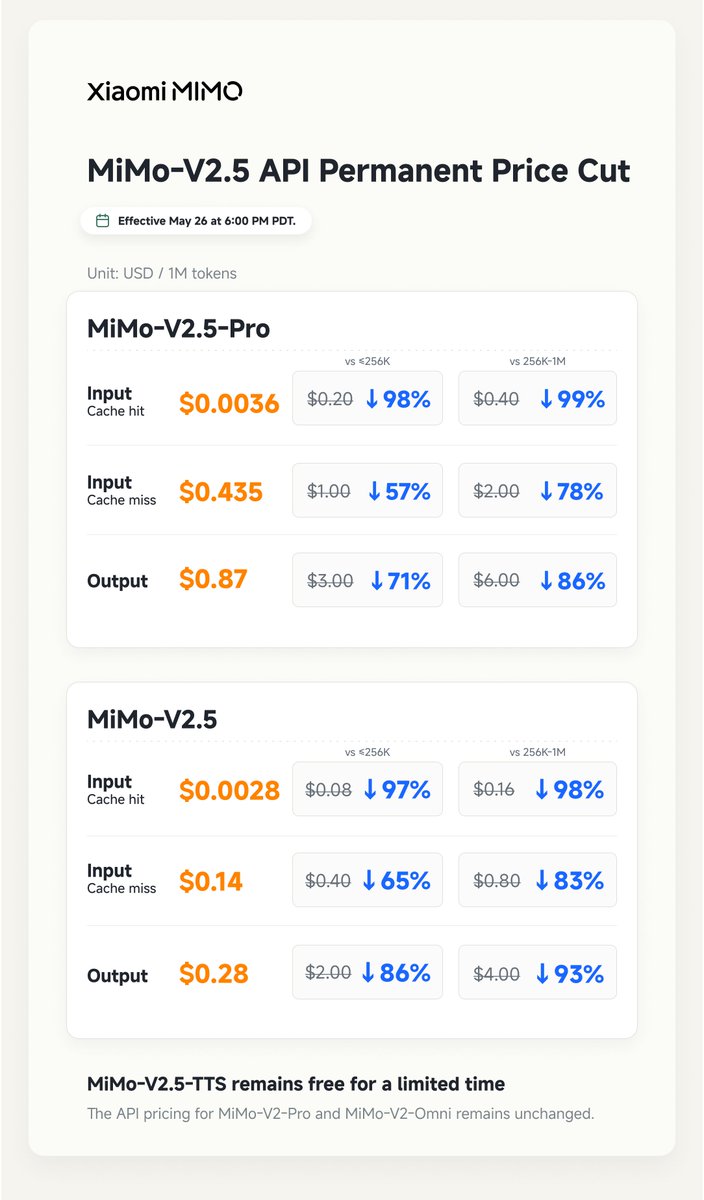
MiMo-V2.5 Series API pricing is now permanently reduced — by up to 99% compared to previous pricing.
✨ Unified pricing across all context lengths.
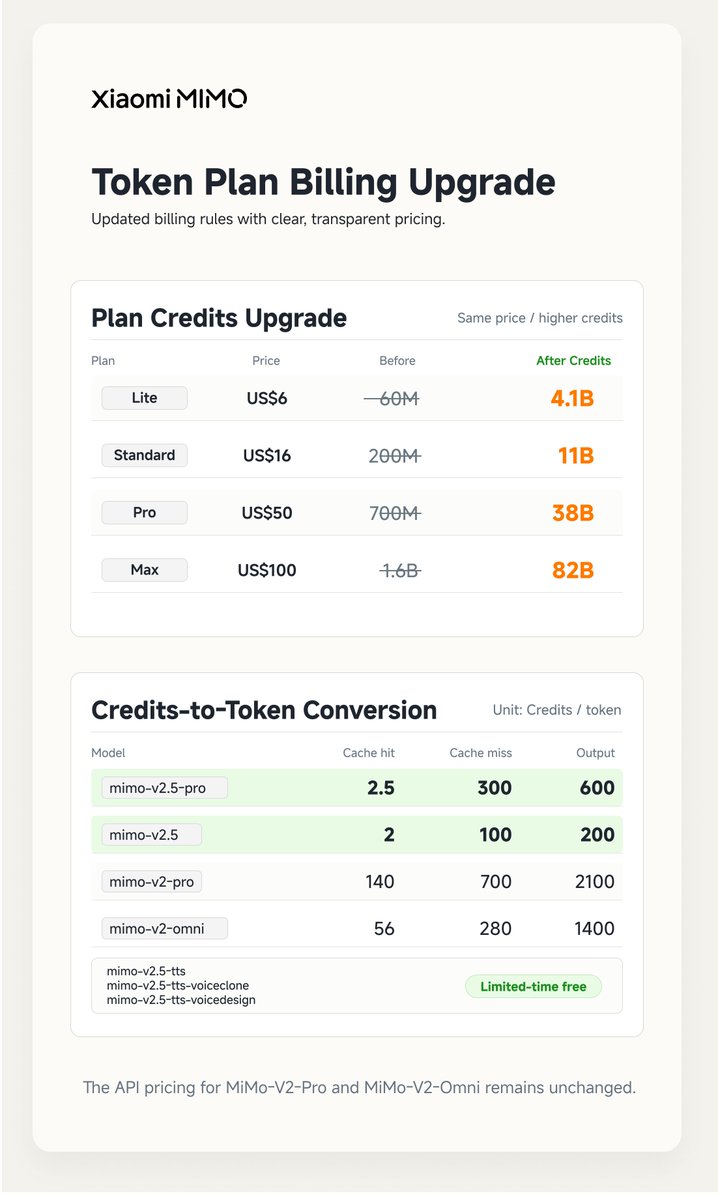
MiMo Token Plans have also been upgraded:
• 5–8× more usable tokens at the same price
• Simpler and more transparent billing rules
🎁 As a thank-you to current users, all current Token Plan credits will be fully reset.
🎧 MiMo-V2.5-TTS remains free for a limited time.
⏰ Effective May 26 at 6:00 PM PDT.
These improvements are powered by continued inference optimization and serving efficiency upgrades across the MiMo stack.
🛠️ We’ll also publish a detailed technical blog on the inference optimizations later — stay tuned.
47
Fab 🇧🇷🇨🇦 retweeted

May 24
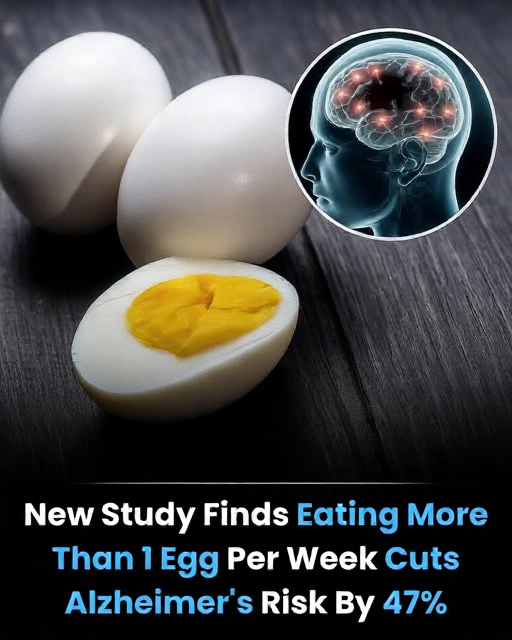
A recent observational study published in The Journal of Nutrition found an association between consuming more than one egg per week and a 47% reduced risk of developing Alzheimer's dementia in older adults, compared to those who rarely ate eggs.
Researchers tracked 1,024 older adults (average age of 81.4 years) in residential facilities in Illinois, over an average period of 6.7 years.
The study suggests the protective effect is largely due to choline, an essential nutrient abundant in egg yolks. Choline is vital for producing acetylcholine, a neurotransmitter crucial for memory and learning, levels of which are often low in people with cognitive decline.
The researchers found that increased dietary choline intake accounted for about 39% of the protective association seen with egg consumption. Furthermore, brain autopsies of deceased participants revealed that those who ate eggs regularly had less accumulation of the toxic proteins (amyloid plaques and tau tangles) linked to Alzheimer's disease.
Eggs also contain other brain-supporting nutrients like omega-3 fatty acids, lutein, vitamin B12, and folate, which may work together to protect brain health.
[Yongyi Pan et al., "Association of Egg Intake With Alzheimer’s Dementia Risk in Older Adults: The Rush Memory and Aging Project", The Journal of Nutrition, 2024, DOI: 10.1016/j.tjnut.2024.05.012]
56
258
939
75,347
Fab 🇧🇷🇨🇦 retweeted

May 25
Google Omni might be too powerful 🫥
332
979
15,302
1,304,056