🇺🇸 HubBucket Astronomy / @HubAstronomy is a Division of @HubBucket Inc | @HubAstrophysics @HubBucketORGS @HubBucketQPhys @CEOHubBucketInc

Joined January 2025
35 Photos and videos
🇺🇸 HubBucket Astronomy / @HubAstronomy is a Scientific Research Division of HubBucket Inc. 🖥️ hubbucketastronomy.xyz 🇺🇸 HubBucket Inc / @HubBucket 🖥️ hubbucket.xyz @HubAstrophysics @HubBucketORGS @HubBucketQPhys @CEOHubBucketInc
4
5
69
HubBucket Astronomy 🇺🇸 retweeted
"We’re delighted to announce the first Galaxy Zoo workflow to include images from the [...] Rubin Observatory, using galaxies drawn from its first Data Preview": blog.galaxyzoo.org/2026/05/1… - the workflow went live on the site just now, but [...] it won’t stick around for long".
3
5
251
HubBucket Astronomy 🇺🇸 retweeted
NASA Missions Track Record-Breaking Radio Burst from Sun science.nasa.gov/blogs/scien… via @NASA
5
11
274
HubBucket Astronomy 🇺🇸 retweeted
A surge in rocket launches is filling orbit with satellites built from tougher, more heat-resistant materials — and when they fall back to Earth, they aren't always burning up the way we expect. vist.ly/548rp
4
15
961
HubBucket Astronomy 🇺🇸 retweeted
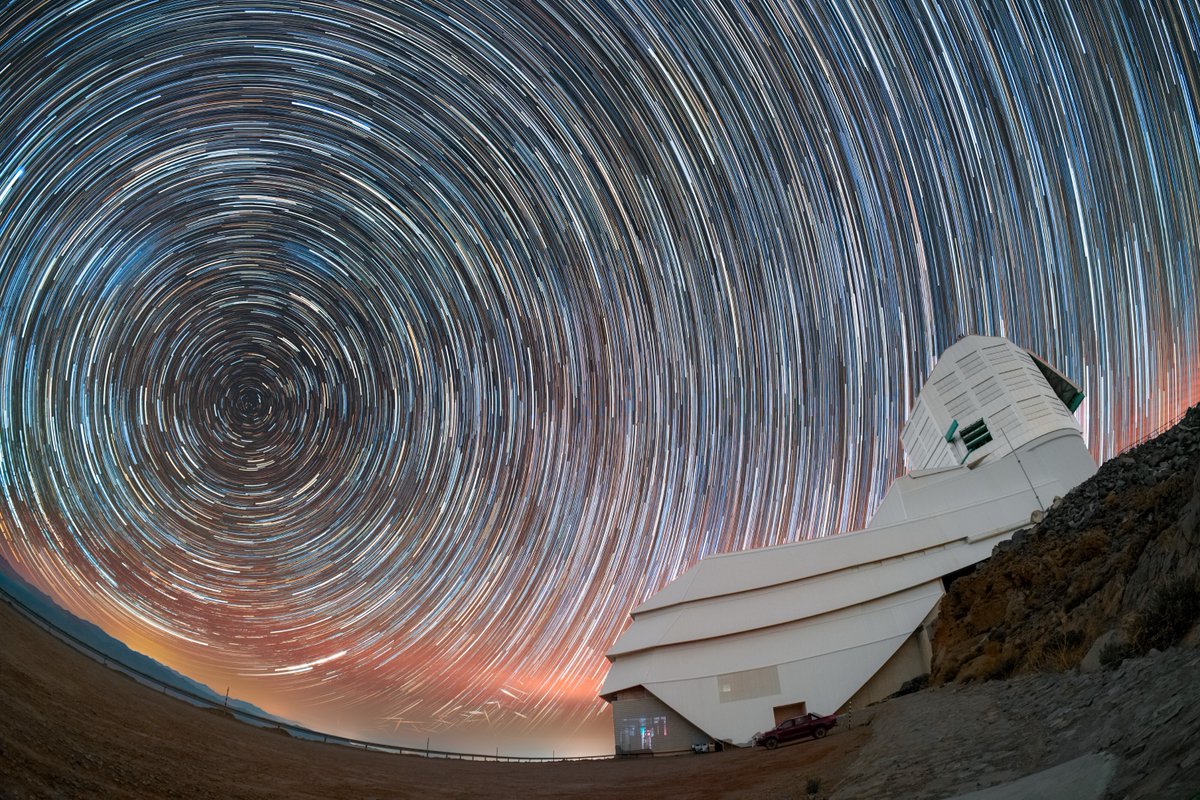
¿Ya te mareaste? 😵‍💫 Estas trazas de estrellas sobre @VRubinObs de NSF–DOE son el resultado de una exposición extralarga que captura el movimiento aparente del cielo nocturno debido a la rotación de la Tierra. 📸 NSF–DOE @VRubinObs/NOIRLab/SLAC/AURA/H. Stockebrand
5
11
173
HubBucket Astronomy 🇺🇸 retweeted
Some of the loudest black hole merger signals have been used to correct a slightly out-of-tune gravitational-wave detector, sharpening source measurements when standard calibration was unavailable. @physrevlett phys.org/news/2026-05-gravit…
2
10
37
2,416
HubBucket Astronomy 🇺🇸 retweeted
The House budget bill that includes NASA funding just cleared a key hurdle, advancing out of the Appropriations Committee. This is the first funding bill for FY 2027 to be released and reach this stage, establishing congressional intent and rejecting the worst of the Office of Management and Budget’s proposed cuts to NASA. planetary.org/articles/house…
1
12
34
2,191
HubBucket Astronomy 🇺🇸 retweeted
On May 14, 2009, Ariane 5 lifted off with a mission to look back in time. On board: Herschel and Planck, two of ESA’s most ambitious space observatories, designed to explore the origins of the Universe. Herschel, the largest infrared space telescope ever launched at the time, revealed how stars and galaxies are born. Planck mapped the cosmic microwave background with unprecedented precision, offering a glimpse of the Universe just after the Big Bang. (1/3)
3
24
120
4,093
HubBucket Astronomy 🇺🇸 retweeted
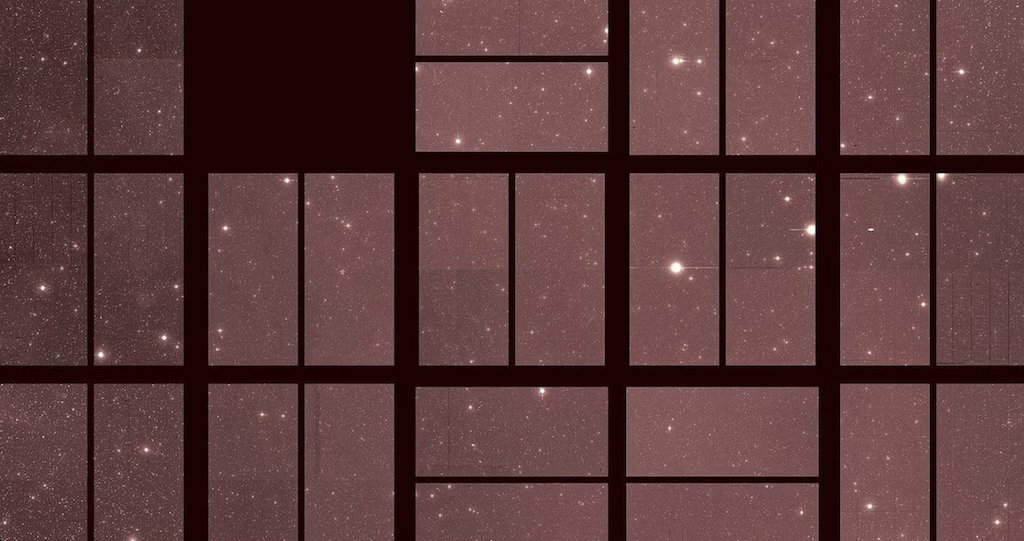
The Kepler Space Telescope, launched in 2009, discovered thousands of exoplanets including many Earth-sized worlds, some of which orbit in the habitable zone where liquid water could exist. Planets are extremely common, on average every star has at least one planet. When you multiply that by the sheer scale of the cosmos—hundreds of billions of stars in our galaxy, and trillions of galaxies in the observable universe—the numbers become staggering. Statistically, there almost has to be other life out there! 📷 Kepler's Final Image
5
27
109
3,946
HubBucket Astronomy 🇺🇸 retweeted
Why Earth observation data is getting stuck in orbit spacenews.com/why-earth-obse…
8
17
2,315
HubBucket Astronomy 🇺🇸 retweeted
Antarctic ice holds a faint trail of radioactive iron-60 from interstellar dust—and between 40,000 and 80,000 years ago, that trail unexpectedly thinned as the solar system moved through nearby clouds. @ConversationEDU @physrevlett phys.org/news/2026-05-stardu…
1
7
26
2,152
HubBucket Astronomy 🇺🇸 retweeted
Two objects that appeared to be galaxies residing in a universe about 150 million years old turn out to be brown dwarfs in the Milky Way. Read more: buff.ly/S7Ldm21
11
37
1,755
HubBucket Astronomy 🇺🇸 retweeted
Minuscule silicon wafers propelled by lasers could be used to steer light sails, helping them travel beyond the solar system newscientist.com/article/252…
2
8
19
5,730
HubBucket Astronomy 🇺🇸 retweeted
The Psyche spacecraft is bound for a metal-rich asteroid that it will examine up close starting in 2029. But first, it needs to swing past the Red Planet spklr.io/6013EzWGX
8
28
5,515
HubBucket Astronomy 🇺🇸 retweeted
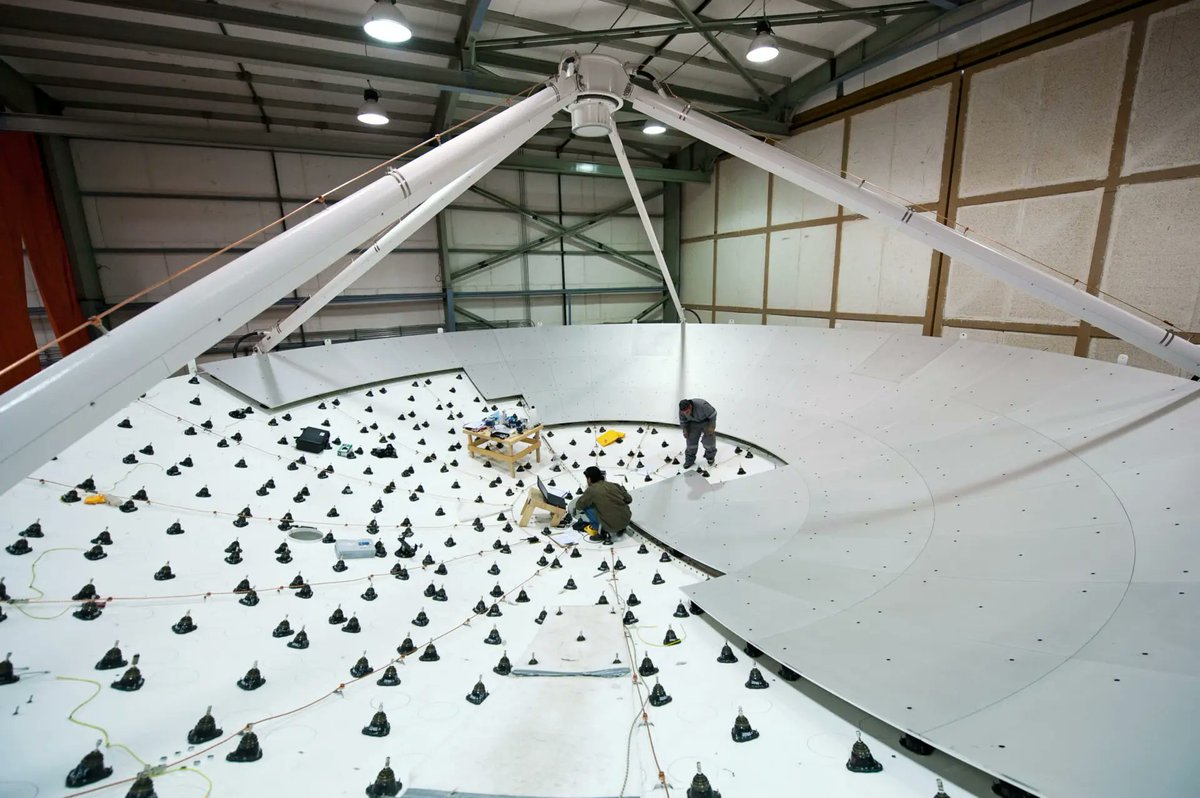
A cosmic memory! 🙌 The 66 ALMA antennas were assembled in Chile. In the photo, two engineers are working on the dish of a European antenna for ALMA, installing the metal panels that make up the reflective surface. The dish is 12 meters in diameter!📡 📷: J.F. Salgado (@ESO)
2
23
103
2,564
HubBucket Astronomy 🇺🇸 retweeted
There is a massive black hole in the center of almost every galaxy. How did it get there, and importantly, how does it grow? On May 19, we'll discuss what new #NASAWebb data is driving the biggest tensions in our understanding of the black hole phenomenon. youtube.com/live/KIMhXF-heAw…
2
13
25
4,250
HubBucket Astronomy 🇺🇸 retweeted
Taking a closer look at a suspicious dark void 4.4 billion light-years away, scientists may have found the largest pair of black holes ever discovered. sciencenews.org/article/larg…
3
8
37
7,679
HubBucket Astronomy 🇺🇸 retweeted
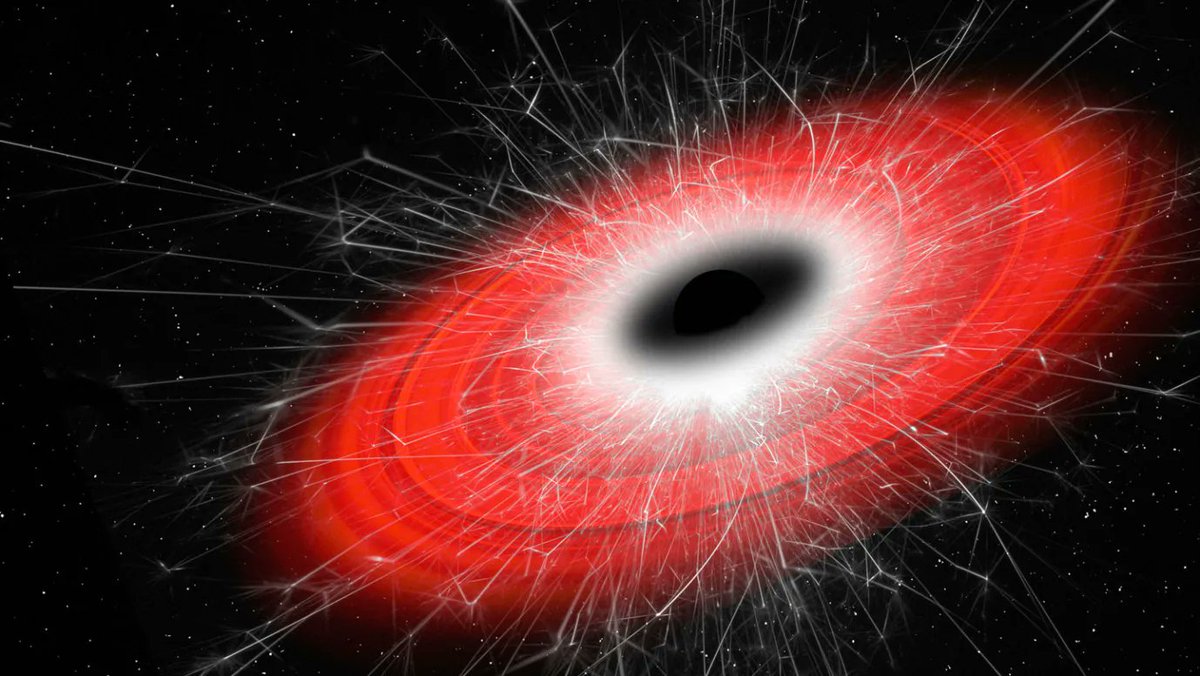
Black holes are not completely black. According to Stephen Hawking’s 1974 prediction, they should emit an extremely faint stream of particles known as Hawking radiation. This radiation is central to some of the deepest problems in modern physics because it sits at the boundary between general relativity, which describes gravity and spacetime, and quantum physics, which governs particles and information. The problem is that Hawking radiation is far too weak to observe directly from real astrophysical black holes, so physicists need indirect mathematical ways to study it. A new set of studies suggests that one of those tools may be the “double copy,” a mathematical relationship that links certain calculations in particle physics with calculations in gravity. The double copy works almost like a translation dictionary between two languages of physics. On one side is the Standard Model, which describes particles and forces such as electromagnetism and the strong and weak nuclear forces. On the other side is general relativity, which describes gravity. These theories look very different, but the double copy shows that, in some cases, gravitational phenomena can be written as if they were built from two copies of simpler particle-physics structures. This has already helped physicists simplify difficult gravity calculations, and now researchers have shown that it can also be applied to Hawking radiation. Several teams have independently found a particle-physics analogue of Hawking radiation. In this translated picture, the emission of a Hawking particle by a black hole corresponds mathematically to a charged particle scattering from a collapsing spherical shell of charged matter. This does not mean that black holes literally work like charged shells in ordinary space. It means that the equations describing both situations share the same mathematical structure. That is the important point: a process normally associated with curved spacetime and quantum fields near a black hole can be studied through a more familiar framework from particle physics. This matters because Hawking radiation is not just a theoretical curiosity. It leads directly to the black hole information paradox. If black holes emit radiation, they gradually lose mass and may eventually evaporate. But if everything that fell into the black hole disappears with it, then information appears to be destroyed, which conflicts with a basic principle of quantum mechanics. By translating aspects of Hawking radiation into the language of the Standard Model, physicists may gain new tools to explore what happens to that information and whether the radiation carries subtle traces of what the black hole absorbed. The result is not a final solution to black holes, quantum gravity, or the information paradox. It is more like a new technical route into a problem that has resisted direct attack for decades. Researchers are especially interested in whether the same double-copy approach can help describe the event horizon itself, the boundary beyond which nothing can escape. If that can be translated into particle-physics language too, it could offer a clearer mathematical bridge between quantum theory and gravity. For now, the advance shows that Hawking radiation, one of the most mysterious predictions in theoretical physics, may be accessible through a surprising connection between the physics of particles and the physics of spacetime. 👉 share.google/H51PQsVcAVjCe5c…
24
47
268
6,038
HubBucket Astronomy 🇺🇸 retweeted
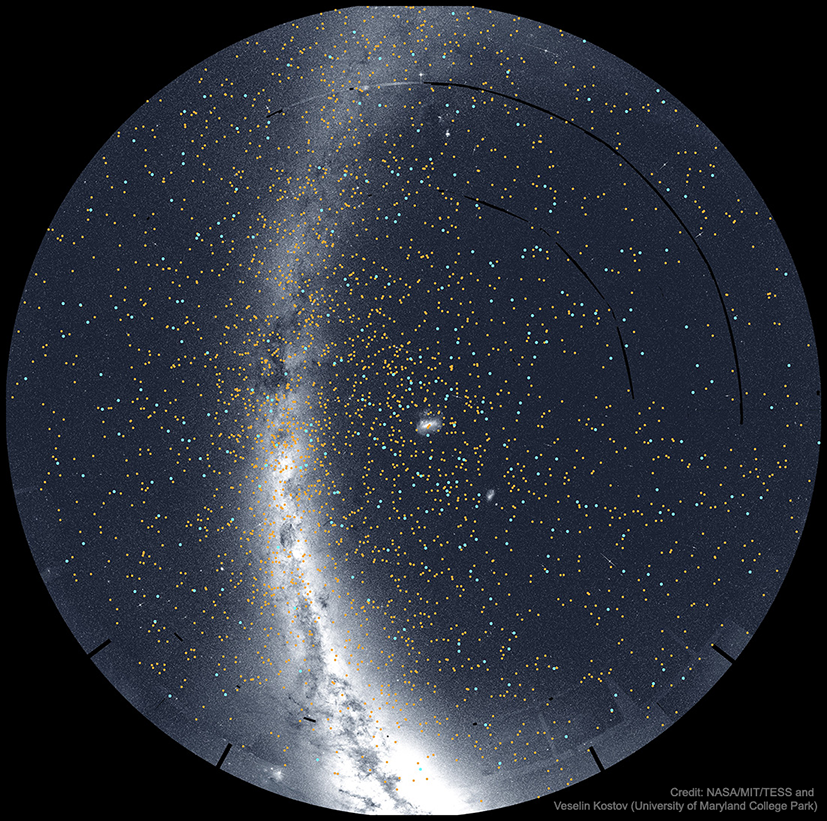
Our TESS telescope has released its most complete view of the starry sky yet! All those dots? They're confirmed and candidate planets! Since launching in April 2018, TESS has been scanning wide swaths of the sky to build up this mosaic. go.nasa.gov/49MK9hU
56
535
2,590
73,869