
British/global history and political economy @CamGeopolitics, @RobinsonCamb. PhD @CamHistory
Joined May 2022
- Tweets 144
- Following 153
- Followers 178
- Likes 106
3 Photos and videos


Jun 14
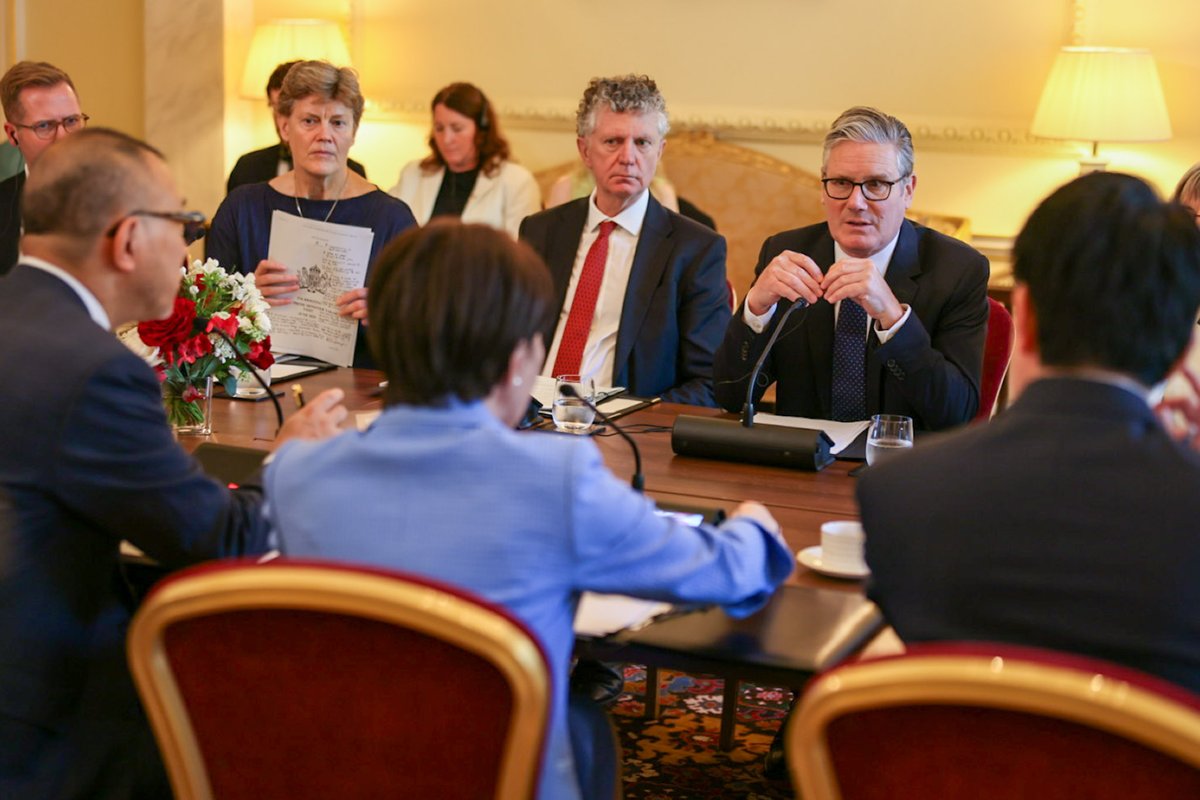
RT @PressSec_JP: 日英首脳会談では、G7サミットも見据え、エネルギーや重要鉱物のサプライチェーンなどでの協力強化について議論しました。日英で初めてとなる経済安全保障協力に関する共同宣言を発出することとなりました。
583
Hugo Bromley retweeted

Jun 12
'the “fifth largest defence budget in the world” bought nowhere near the fifth most capable armed forces' - a must read with more zingers from @edwardstrngr65 .newstatesman.com/politics/uk…
8
37
150
20,513
Hugo Bromley retweeted

Jun 1
China has just released new State Council regulations on outbound investment (《国务院关于对外投资的规定》), significantly tightening controls on Chinese investors investing abroad. The new rules expand the scope of state oversight and further integrate outbound investment into China’s broader national security, export control, and data governance framework.
Key provisions include:
1. The definition of “investor” has been broadened. Previously, the rules mainly applied to domestic enterprises and organizations (中国境内的企业、其他组织). The new regulations explicitly include individual residents (居民个人). Article 27 also states that investors who fail to complete required approval or filing procedures for overseas investment may face fines and confiscation of illegal income. This likely explains last week’s draconian restrictions on Chinese individuals investing through foreign stock brokers.
2. Article 13 directly links outbound investment to China’s export control regime. Investors are prohibited from exporting or using banned goods, technologies, services, or related data abroad, and restricted items require prior authorization. The provision also covers indirect technology transfer through cross-border deployment of personnel, technical guidance, overseas work arrangements, or training programs. In effect, outbound investment is now explicitly tied to China’s controls over technology, data, and talent flows.
3. Article 15 incorporates outbound investment into China’s national security review system. Relevant State Council departments may review overseas investments, asset transfers, or disposals that affect or may affect national security. Organizations and individuals are required to cooperate fully and comply with review decisions. This provision is particularly noteworthy when read alongside the recent ban involving Manus.
4. Article 22 further restricts cooperation with foreign legal and regulatory authorities. Chinese organizations or individuals involved in overseas litigation, arbitration, or foreign investigations must comply with China’s laws on state secrets, data security, personal information protection, export controls, and judicial assistance before providing evidence or materials abroad. Where approval is legally required, the relevant procedures must be followed first. In practice, this makes it extremely difficult for foreign governments to obtain data from Chinese firms — a point illustrated by China’s recent first finding of improper foreign extraterritorial jurisdiction in the Nuctech case.
5. Article 32 extends these rules to investments in Hong Kong, Macau, and Taiwan unless separate rules apply. This means the new outbound investment controls also affect the Hong Kong market, potentially dealing another blow to Hong Kong’s role as an international financial center.
Overall, the new regulations mark another major step in China’s tightening control over cross-border capital flows, technology transfer, and overseas economic activity. It is becoming increasingly difficult for Chinese investors to invest abroad independently of state oversight. The move also suggests growing concern in Beijing over capital outflows and pressure on China’s foreign exchange reserves.
news.cn/20260601/e39cc163c50…
16
106
230
95,967
Hugo Bromley retweeted

May 30
Not much time left...
Apply today!

The Centre for Geopolitics is taking applications for 3 new Postdoctoral Research Associate positions, with applications closing on 14th June 2026.
Visit our website for more information:
cfg.cam.ac.uk/news/postdocto…
2
5
1,602
Hugo Bromley retweeted

May 28
If everything is critical, nothing is. @EyckFreymann, @HugoBromley, and @KS_1013 offer a four-layer rubric that allied policymakers can use to systematically identify which economic dependencies on China actually warrant intervention and which can wait. hoover.org/research/critical…
2
6
1,113
Hugo Bromley retweeted

May 28
“Every time Xi tests Taiwan without consequence, and every time the United States reveals its lack of stomach for economic pain, the more emboldened Xi will feel to push harder,” warns @eyckfreymann.
foreignaffairs.com/china/rea…
7
4
18
3,663
Hugo Bromley retweeted
May 23
“The concentration of global trade and energy flows through a handful of narrow routes has magnified the impact of localized crises.” Read @LynnKuok on the broader implications of the chaos in the Strait of Hormuz.
foreignaffairs.com/china/hor…
2
4
11
3,584
May 20
Lots to say about this in the coming weeks!
May 19

My new book with @HugoBromley, British Statecraft and the Baltic Sea Region: A Documentary History, explores how the Baltic has shaped British diplomacy and strategy for more than 300 years.
Its lessons remain highly relevant today.
1
115
May 20
A a first port of call, we were delighted to present a copy of the book to Swedish ambassador Stefan Gullgren, and to discuss some of its findings with the ambassadors from across the Baltic Sea Region
3
262
Hugo Bromley retweeted

May 19
Just because it's a bad idea doesn't mean they won't try to do it.
May 19

about the only thing left would be export restrictions- something that would be absolutely chilling to future refining output and U.S. oil production growth. the long-term damage from that would be significant.
7
11
80
12,231
Hugo Bromley retweeted

May 13
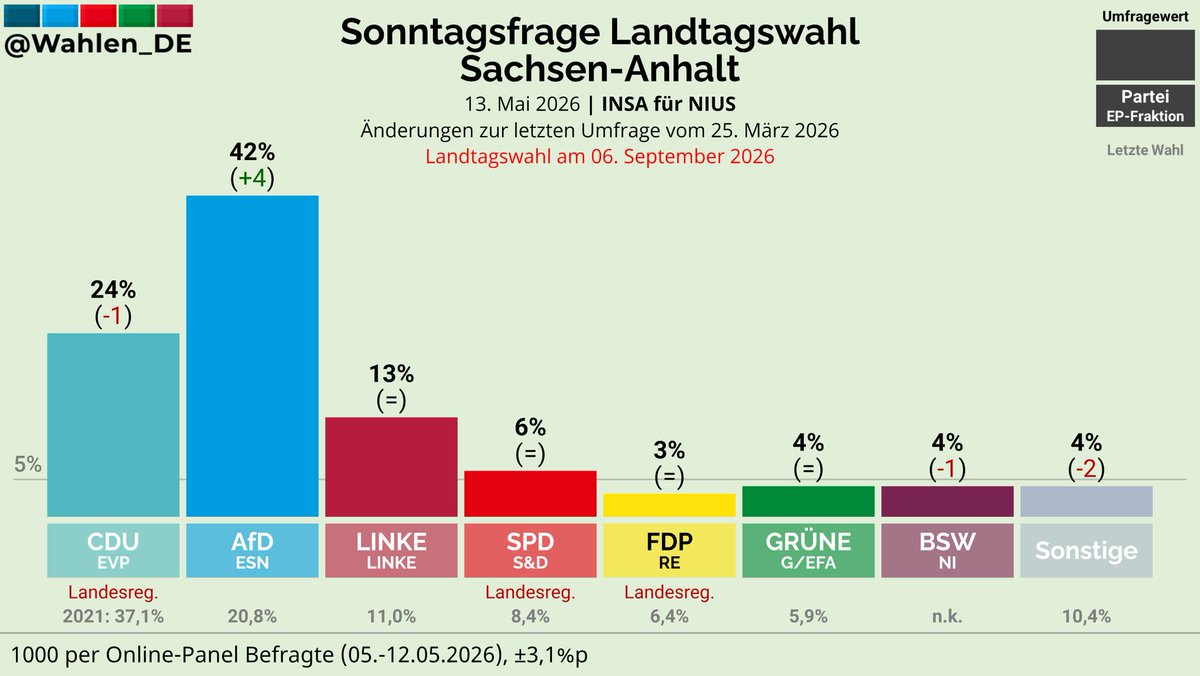
The CDU has four months to think very hard about how its "incompatibility resolutions" against working with both the AfD and Die Linke are going to survive the coming electoral shitshow in Saxony-Anhalt.
May 13

SACHSEN-ANHALT | Sonntagsfrage Landtagswahl INSA/NIUS
AfD: 42% ( 4)
CDU: 24% (-1)
LINKE: 13%
SPD: 6%
GRÜNE: 4%
BSW: 4% (-1)
FDP: 3%
Sonstige: 4% (-2)
Änderungen zur letzten Umfrage vom 25. März 2026
Verlauf: whln.eu/UmfragenSachsenAnhal…
#ltwst #ltwlsa
10
23
92
15,269
Hugo Bromley retweeted

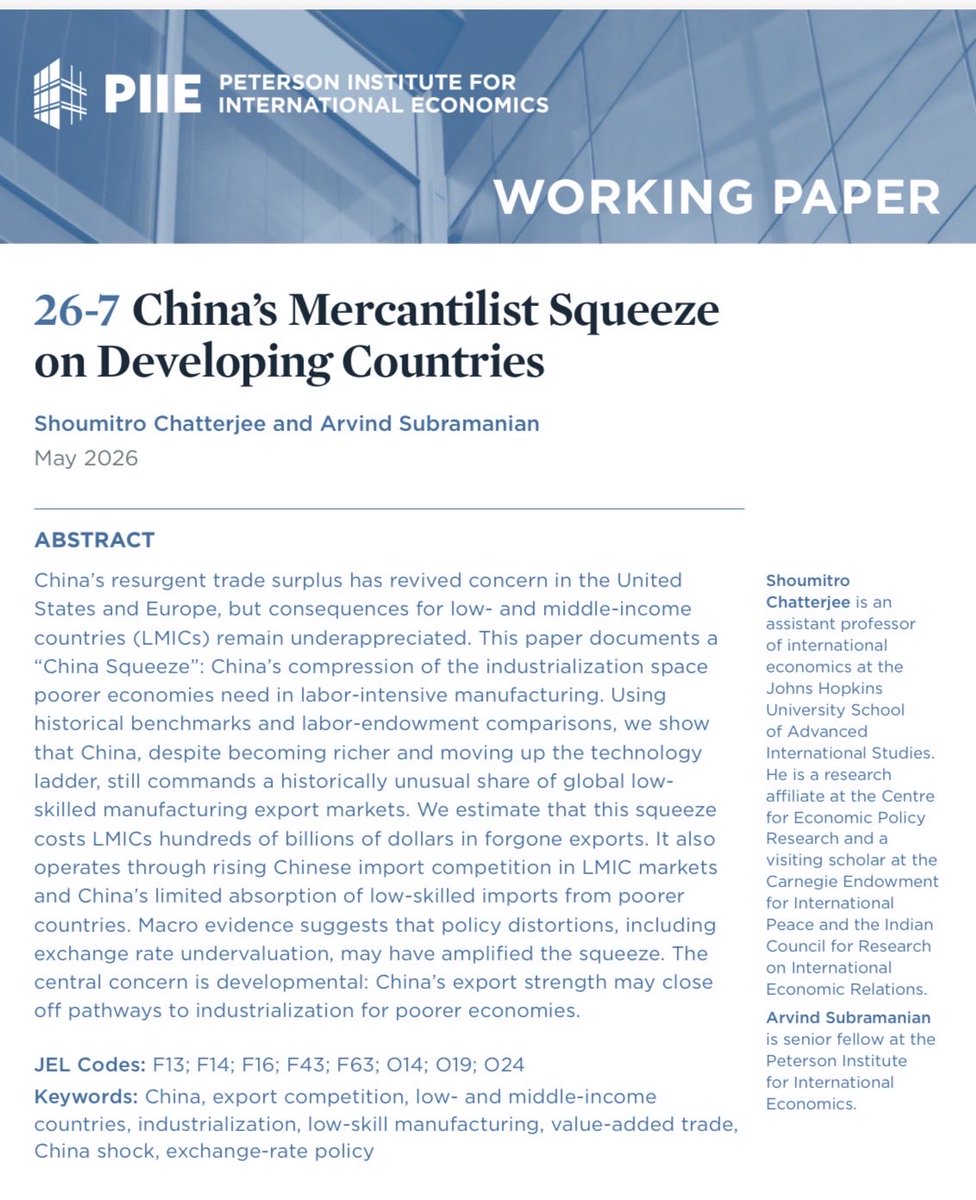
A new @PIIE paper by @shoumitro_c & me on the “China Squeeze” on poor countries: piie.com/publications/workin…
Puzzle: not why China is so competitive in EVs, solar panels, batteries & hi-tech. goods (China Shock 2.0) but why it continues to dominate low skill exports
1/
11
102
284
46,562
Hugo Bromley retweeted

Fascinating discussion with @RobinNiblett on #UK foreign policy and the leadership of #keirstarmer. Our talk covered a wide range of topics, including UK relations with the #US #China #Europe and #Asia and the different position of UK political parties. podcasts.apple.com/gb/podcas…
1
94
Hugo Bromley retweeted

May 10
whenever things go bad, Keynes idea of bancor & the high expectation on the quasi-bancor ie SDR comes back; how many cycles do we need to bear until it finally works? ft.com/content/193eebad-3a12…
2
9
41
9,152
Hugo Bromley retweeted

May 8
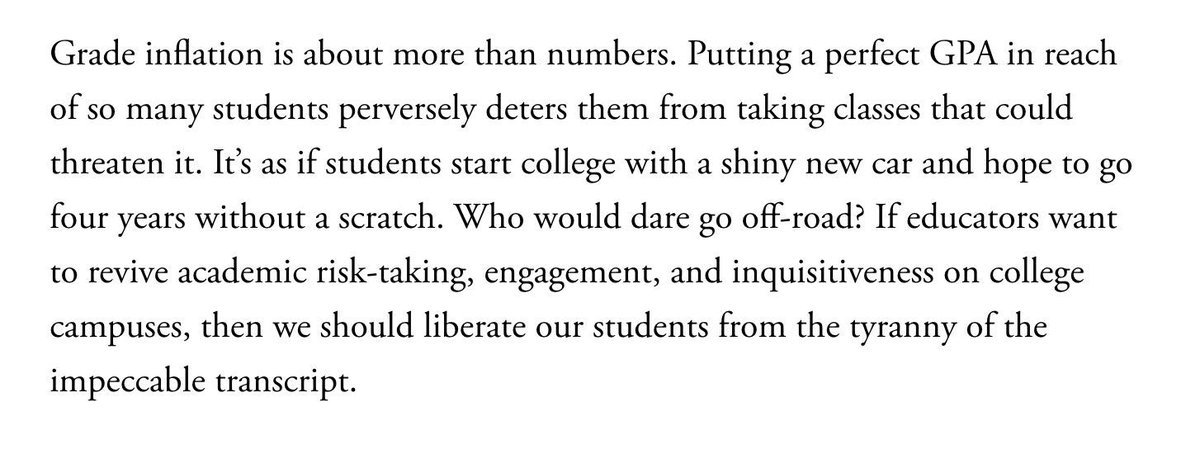
This is a brilliant metaphor from Harvard professor Joshua Greene on why grade inflation is so harmful. theatlantic.com/ideas/2026/0…
46
245
1,487
208,719
Hugo Bromley retweeted

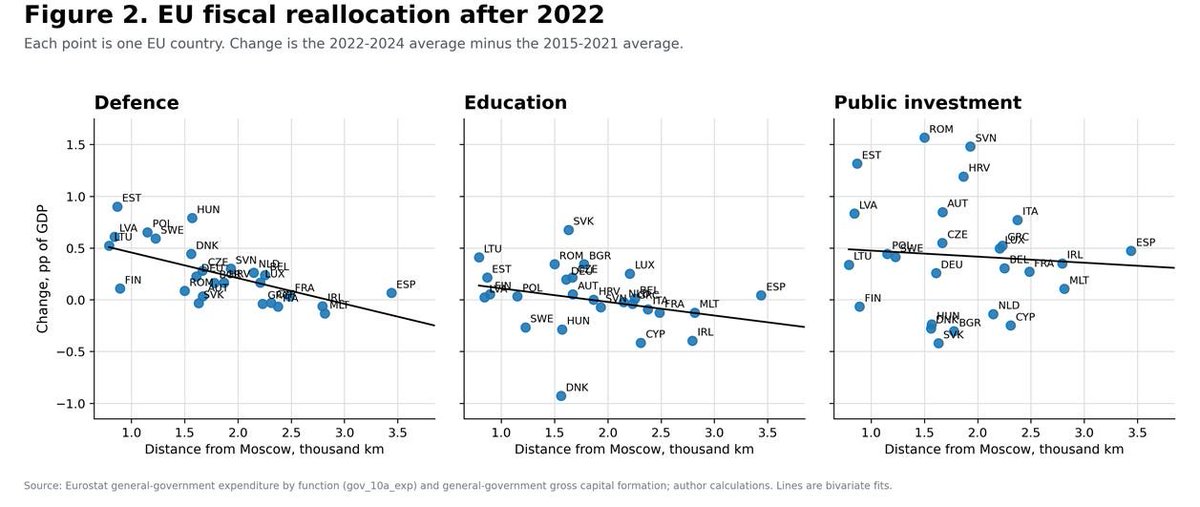
1/10 The post-Draghi hope was that Putin would supply the urgency to make the reforms to push innovation, single market and competitiveness that Europe lacks. The data does not support that.
A thread.
siliconcontinent.com/p/the-t…
3
41
148
17,219
Hugo Bromley retweeted

May 8
Hard to beat Peter Harrell's take on the Court of International Trade's ruling on the section 122 tariffs --
1/ a few
May 7

Quick takes on the new Court of International Trade (CIT) ruling finding Trump's 10% Section 122 tariffs are unlawful:
1. A 2-1 panel of the CIT ruled that, when Congress passed Section 122 back in 1974 to give the President the authority to address balance-of-payments deficits, Congress intended "balance of payments deficits" to mean "balance-of-payments deficits as measured by liquidity, official settlements and the basic balance." When Trump issued Proclamation 11012 on Feb. 20, he cited the trade deficit and current account deficits. Because the trade deficit and the current account deficits are not the same as liquidity, official settlements, and the basic balance, the President's tariffs fall outside 122's scope.
2. This opinion will be appealed up to the Federal Circuit, which in recent years has been more deferential to the Executive Branch on tariffs than the CIT has been. I do not assume that the Federal Circuit will agree with the CIT, though of course the plaintiffs should understandably feel good winning at the CIT!
3. More lawsuits might be coming: The CIT issued an injunction ordering CBP to stop collecting tariffs *from several of the named plaintiffs,* and ordered CBP to refund *those plaintiffs* tariffs paid. However, the CIT did not issue a universal injunction or give relief to anyone other than the named plaintiffs. Moreover, the CIT held that only a handful of the plaintiffs who brought the suit had actual standing to sue, and dismissed most of the state plaintiffs from the suit. Other companies may well now decide to sue, though many will probably hold off while this decision winds its way through the appeals process.
4. Legislative history is back, at least at the CIT: The CIT reached its conclusion based on an extremely detailed review of the legislative history of Section 122, going through multiple House and Senate reports, as well as the predecessor bills to Section 122.
5. The dissent took a broader view of the statute, arguing that the legislative history about Congress's intent was less clear than the majority opinion found, and would have given more deference to the government's views.
6. If this opinion is upheld, all importers paying 122 tariffs should be able to get refunds, much as they are beginning to get refunds of the IEEPA tariffs that SCOTUS ruled illegal back in February.
7. If I was USTR today, I'd be feeling all the more strongly that I need to button-up my 301 tariffs. Trump's fallback tariff plan has been to (a) use 122 through late July, and then (b) transition to Section 301 tariffs thereafter. Between the SCOTUS decision against IEEPA tariffs and now this, the courts are signaling that they will take a hard look at expansive tariffs.
8. The lead private sector plaintiff here, Burlap & Barrel, is an amazing small business! Think about buying some of their (now tariff free) small-batch spices!
3
5
30
16,018
Hugo Bromley retweeted
May 7
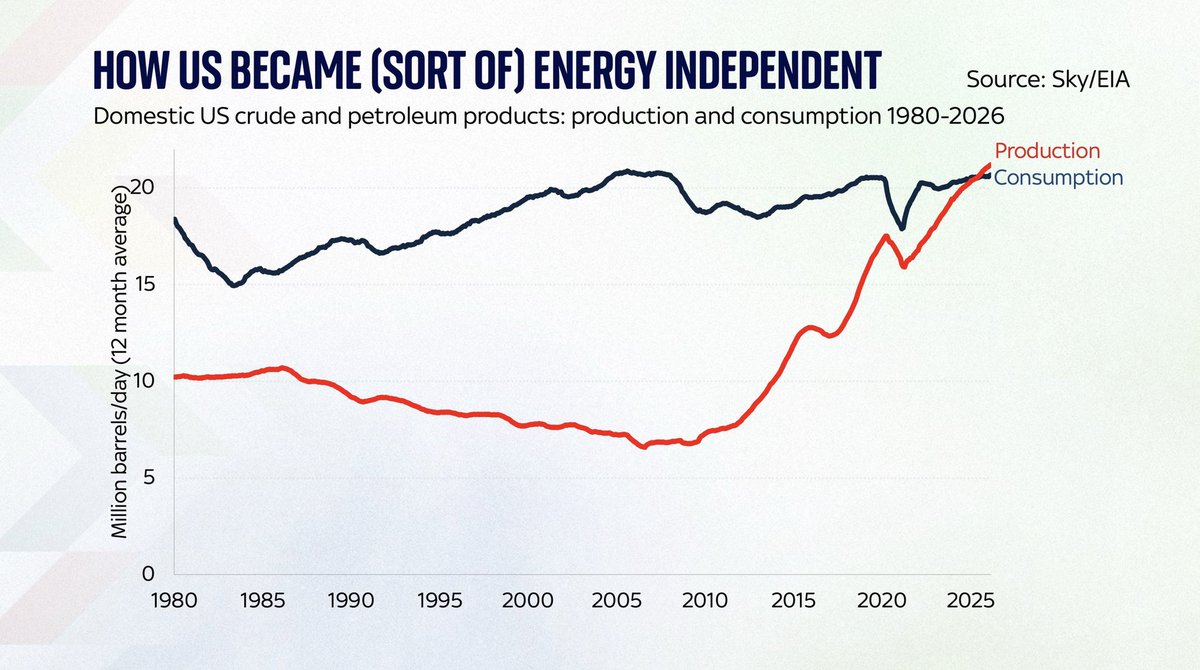
This is technically true but misleading.
US production of liquids is higher than overall consumption, *but* consumption hinges on inputs (particularly heavier crude blends) that can only be sourced abroad.
Production is weighted toward LPGs, which the US produces far in excess of domestic demand.
May 7

👀 I think this might just be the most important (and least widely appreciated) shift in the post-WWII era.
America is now statistically energy independent.
Want to understand why Donald Trump has the confidence to strike Iran?
Ponder this chart. Then watch our film👇
1
16
45
11,844
Hugo Bromley retweeted

May 6
“For the first time since the conflict began, Russians are starting to imagine a future without [Vladimir Putin],” writes a former senior Russian government official in a guest essay. “This is down to a confluence of four factors” economist.com/by-invitation/…
125
266
735
209,873
Hugo Bromley retweeted

May 5
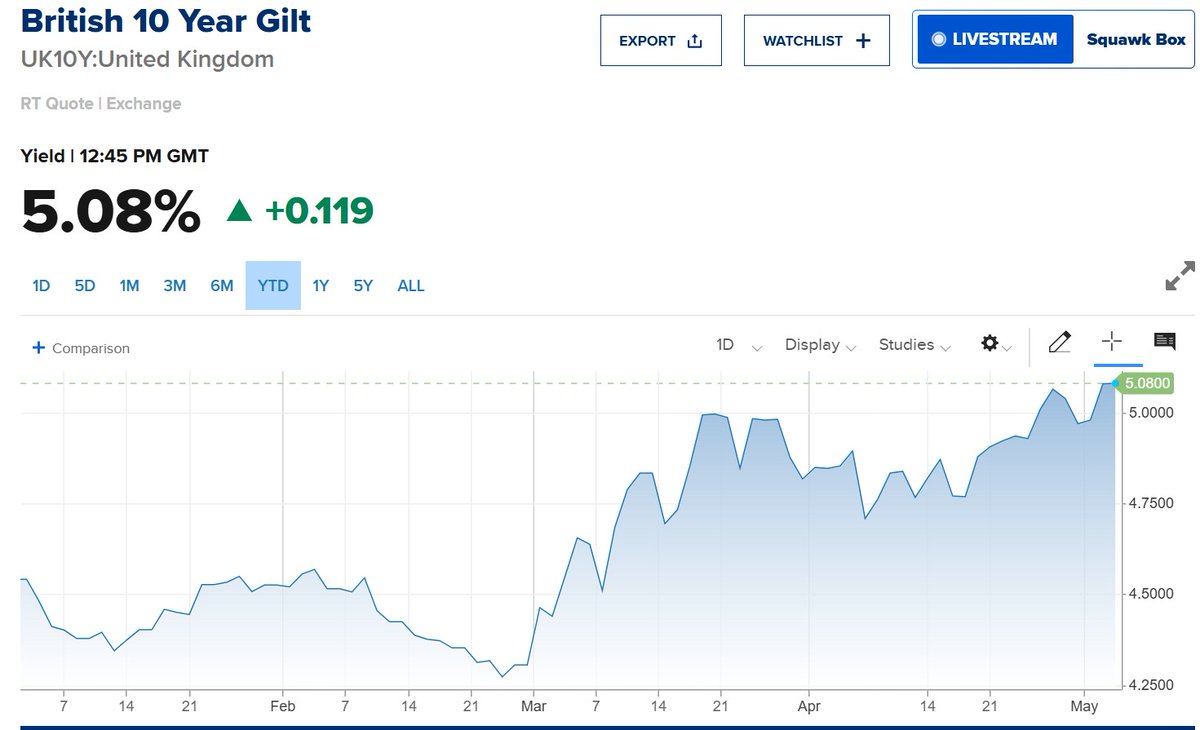
Some may feel I’m dwelling on this, but I am concerned for the health of the UK economy.
The yield on the 10-year gilt has climbed 12 basis points today (see the CNBC chart below), decoupling from both oil prices and yields in other advanced economies—both of which are currently lower.
Meanwhile, the 30-year yield has just hit a 28-year high.
#economy #markets #gilts #uk
199
464
2,055
387,194