Joined August 2018
- Tweets 324
- Following 126
- Followers 93
- Likes 1,471
4 Photos and videos
Hyobin Kim retweeted

Jun 3
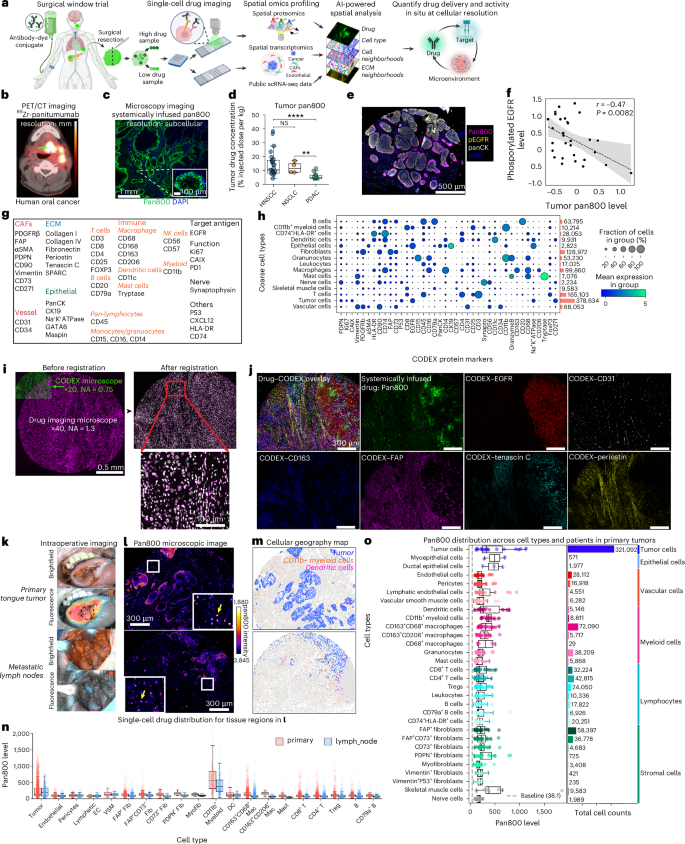
Stromal barriers to therapeutic antibody delivery in human solid tumors @NatureBiotech @GuolanLu
@Stanford @VanderbiltU @EbenRosenthal @GarryPNolan
nature.com/articles/s41587-0…
12
37
2,519
Hyobin Kim retweeted

May 26
Now online! Uncovering spatially resolved functional genomics with CRISPR screen sequencing dlvr.it/TSkYbv
25
105
12,082
Hyobin Kim retweeted

May 20
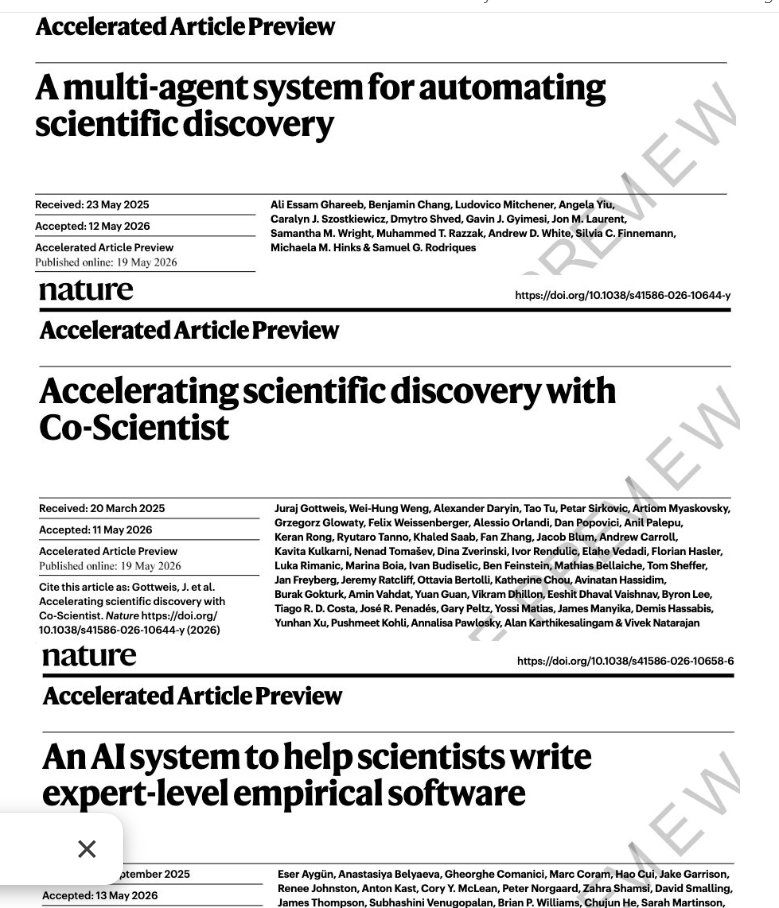
Today we all lost our jobs.....
Three Nature papers showing that scientists in the conventional sense are obsolete
At least read the first one.... the AI replaced all things that the scientist does ....
nature.com/articles/s41586-0…
157
462
2,019
670,619
Hyobin Kim retweeted

May 12
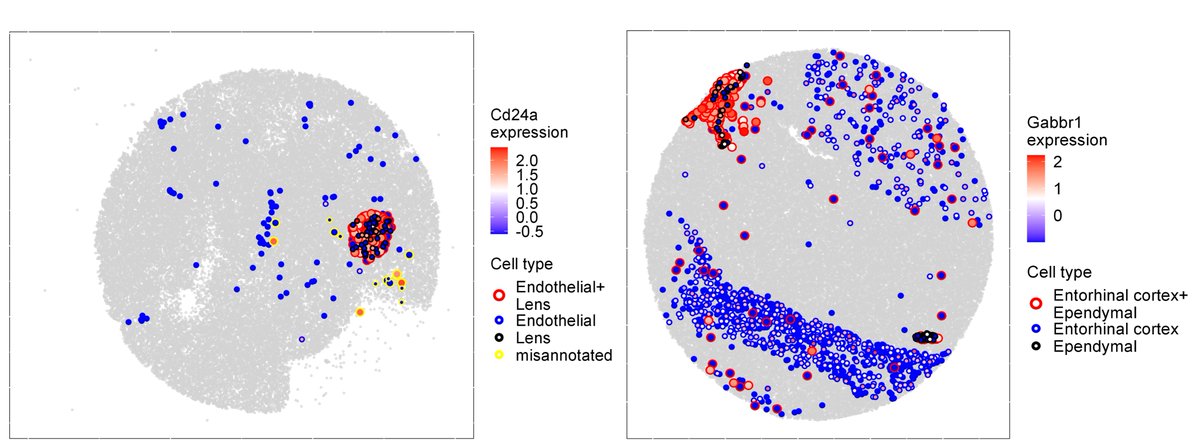
Excited to share our new approach to studying cell-cell interactions from Visium data — without relying on predefined ligand-receptor pairs. The method identifies genes influenced by CCI that were previously difficult to detect. Led by @HyobinKim4.
biorxiv.org/cgi/content/shor…
1
2
38
Hyobin Kim retweeted
Spatial 5mC-seq offers nonbiased spatiotemporal analysis of the genome-wide methylome at single cell resolution.
nature.com/articles/s41592-0…
1
22
89
7,666
Hyobin Kim retweeted

Apr 21
Interested in single cell genomics but need help getting started? Come to my lab's 10th (!) Single Cell Genomics Day on 6/12
Talks include Aviv Regev @anshulkundaje @junyue_cao @xinjin (many) more @ATJCagan illustrations!
Free Youtube livestream at satijalab.org/scgd
1
92
355
25,827
Hyobin Kim retweeted

Apr 19
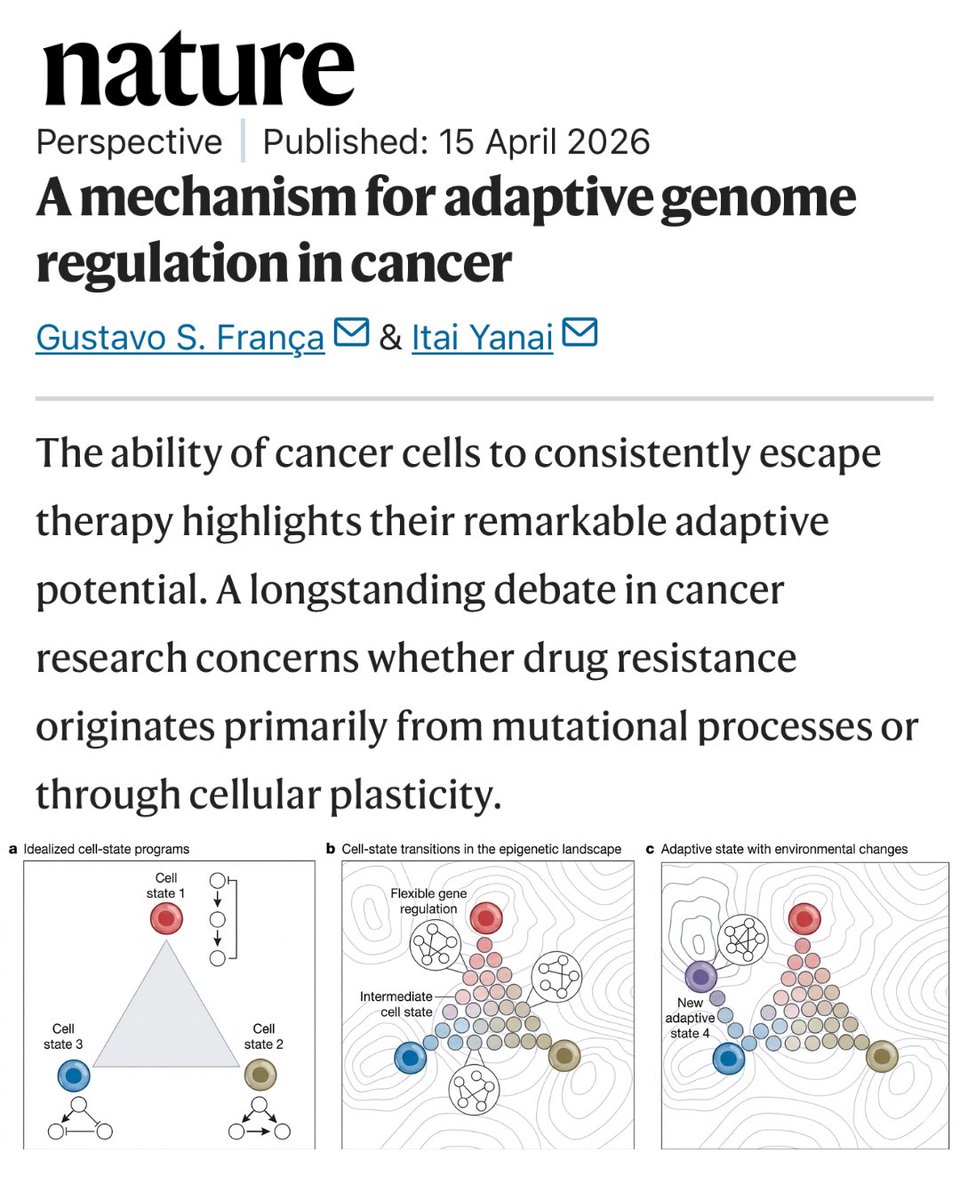
New research in Nature suggests cancer cells can learn to resist therapy, not by mutating, but by reprogramming themselves.
In #lungcancer, resistance to targeted treatments is a significant challenge. Understanding how this happens is an important step in the search for better treatment
🔗 doi.org/10.1038/s41586-026-1… #LCSM
2
83
263
20,447
Hyobin Kim retweeted

Apr 16
Predictive virtual embryo models integrate single-cell and spatial data with AI, offering a tool for modeling mammalian embryogenesis across scales, as discussed in this Comment.
nature.com/articles/s41592-0…
18
91
12,181

Hyobin Kim retweeted

Apr 13
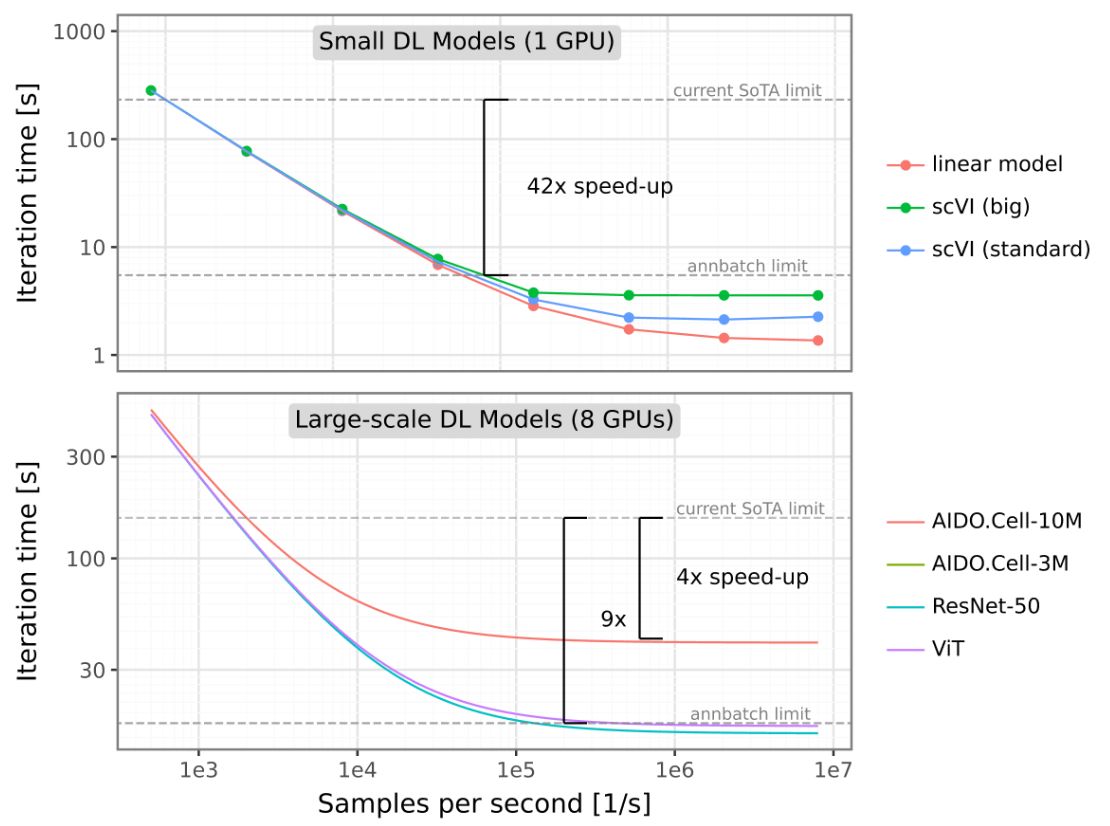
1/ Annbatch unlocks terabyte-scale training of biological data in anndata 🚀
Check out our preprint here: arxiv.org/abs/2604.01949 📄
Grab the code on GitHub: github.com/scverse/annbatch
Massive shoutout to project leads @felix_f0097 and Ilan Gold for driving this home! 🧵👇
2
34
129
13,828
Hyobin Kim retweeted

Apr 9
You can now give your agent deep knowledge of millions of papers in one line with #paperclip!📎
>8 million papers natively indexed for agents.
Much more thorough often 10x faster than standard deep research.
Just add the paperclip mcp (instruction below).
31
211
1,964
209,814
Hyobin Kim retweeted

Apr 6
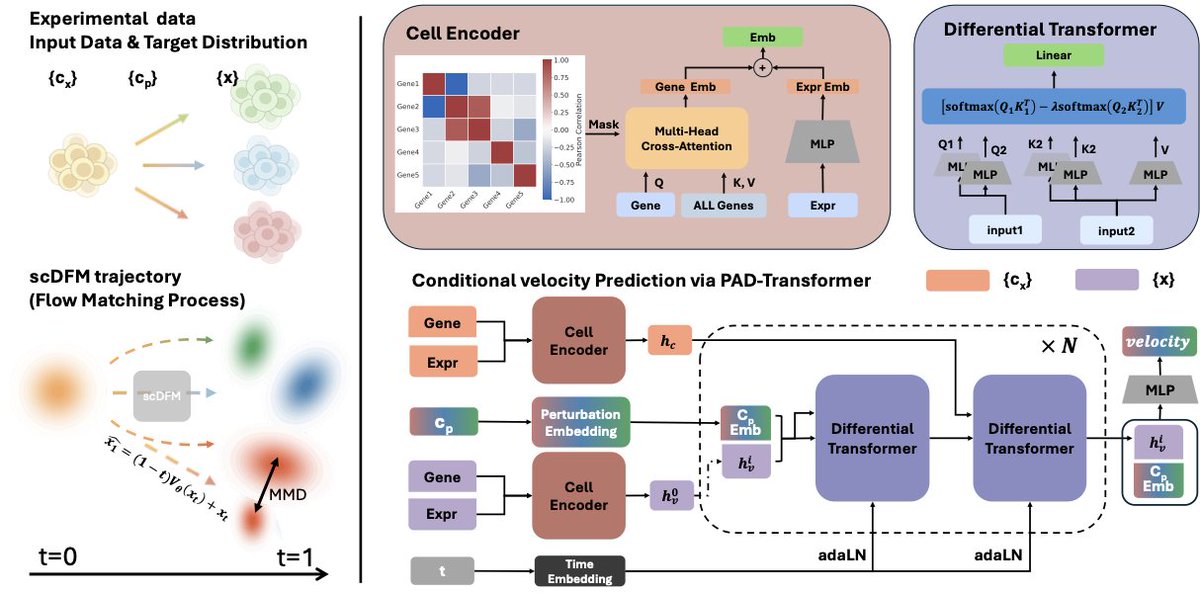
🎉 Excited to share our latest work, “scDFM: Towards Distributional Flow Matching for Single-Cell Perturbation Prediction”, accepted to ICLR 2026 @iclr_conf
scDFM is a generative framework for single-cell perturbation prediction. Instead of relying on the impractical one-to-one cell correspondence assumption, it models perturbation effects as distribution-level generation. Concretely, we combine Conditional Flow Matching with MMD-based distribution alignment to capture population-level shifts without paired cell labels.
For more information:
📦 Code Repository: github.com/AI4Science-Westla…
📚 Paper Link: arxiv.org/abs/2602.07103
🧾 OpenReview: openreview.net/forum?id=QSGa…
1
25
91
6,476
Hyobin Kim retweeted

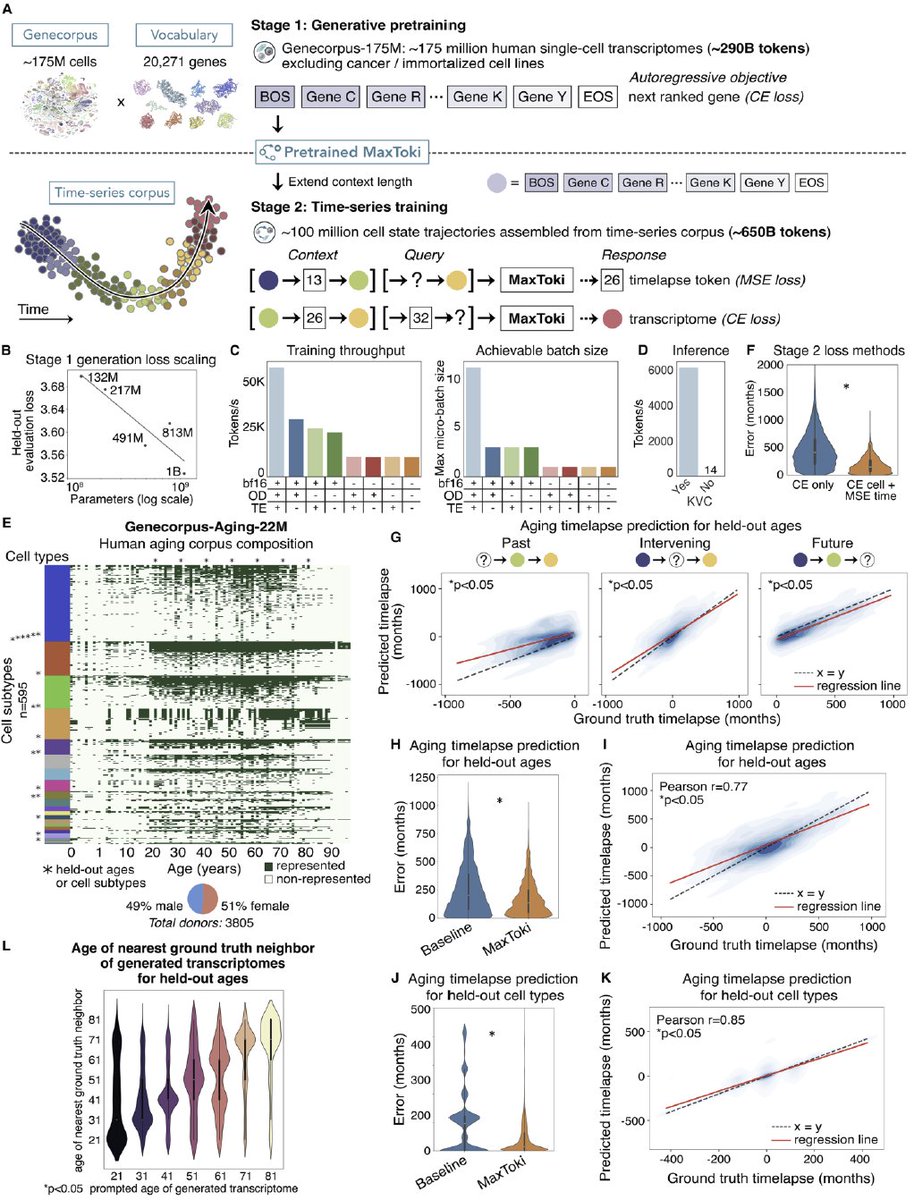
Temporal AI model predicts drivers of cell state trajectories across human aging
biorxiv.org/content/10.64898…
2
39
158
16,519
Hyobin Kim retweeted

Mar 30
Single-cell technologies now let us profile entire transcriptomes in individual cells. But how do we make sense of this complexity in a biologically meaningful way? Many methods summarise cells into a single embedding, but this often comes at the cost of interpretability, especially when multiple gene programs are active at once.
We developed Tripso, a self-supervised transformer model that represents cells through multiple gene program-specific embeddings, while also uncovering new programs directly from the data. Instead of collapsing biology into a single vector, Tripso decomposes cell state into multiple representations, each reflecting a different gene program.
We explored this across multiple systems.
In human hematopoiesis, spanning development to aging, Tripso identified distinct age-associated program activity, including stronger JAK-STAT signalling in early life and dynamic IKZF1-related changes during B cell maturation.
By comparing in vitro culture conditions with in vivo hematopoietic stem cell states, Tripso suggested that targeting the SEC61 translocon could enhance stem cell maintenance ex vivo, a prediction that we subsequently validated experimentally. In parallel, we identified a previously uncharacterised tissue-resident memory T-cell program associated with atopic dermatitis and mapped it to distinct spatial immune niches
Together, these results show how modelling cells through gene programs can lead to interpretable and experimentally testable insights. More broadly, this work points toward a more interpretable and biologically grounded models of cell state. As single-cell datasets continue to grow, we hope approaches like Tripso will help bridge the gap between data-driven representations and biological insight.
This work wouldn’t have been possible without the contributions of an amazing team. Thank you to co-first authors @mariemoullet, @Tomo_Isobe, @AmirhVahidi, @CarloLeonardi7, and everyone from @roserventotormo's Lab, @HaniffaLab, Nicola Wilson and @BertieGottgens's Lab, bringing together expertise across @SCICambridge, @OpenTargets, @sangerinstitute and @Cambridge_Uni.
@mariemoullet is one of the very best PhD students I have ever supervised. She is truly a force of nature, exceptionally resourceful, deeply innovative, and one of the most impressive scientists I have worked with. I am immensely proud of her and all that she has accomplished. As she begins her internship at @genentech , I have no doubt she will do amazing work there and continue to make her mark.
paper:biorxiv.org/content/10.64898…
code: github.com/Lotfollahi-lab/tr…
5
60
304
22,374
Hyobin Kim retweeted

Mar 18
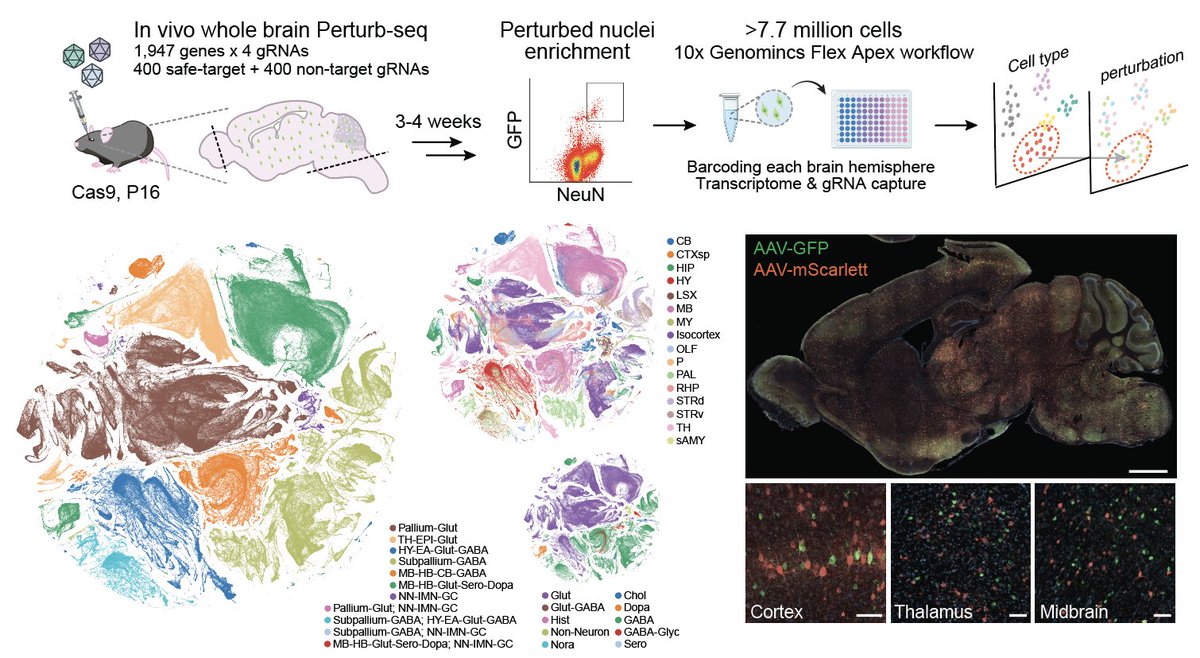
📢 Preprint: we present a whole-mouse-brain in vivo Perturb-seq atlas, 7.7 million cells, 1947 disease-associated perturbations, moving toward direct readout of how human genetics rewires cell states & circuits in vivo. Grateful for the Team! @NVIDIAHealth biorxiv.org/content/10.64898…
7
99
402
26,144
Hyobin Kim retweeted
Mar 17
Excited to share new preprint with NVIDIA on GPU-accelerated single-cell analysis 🚀
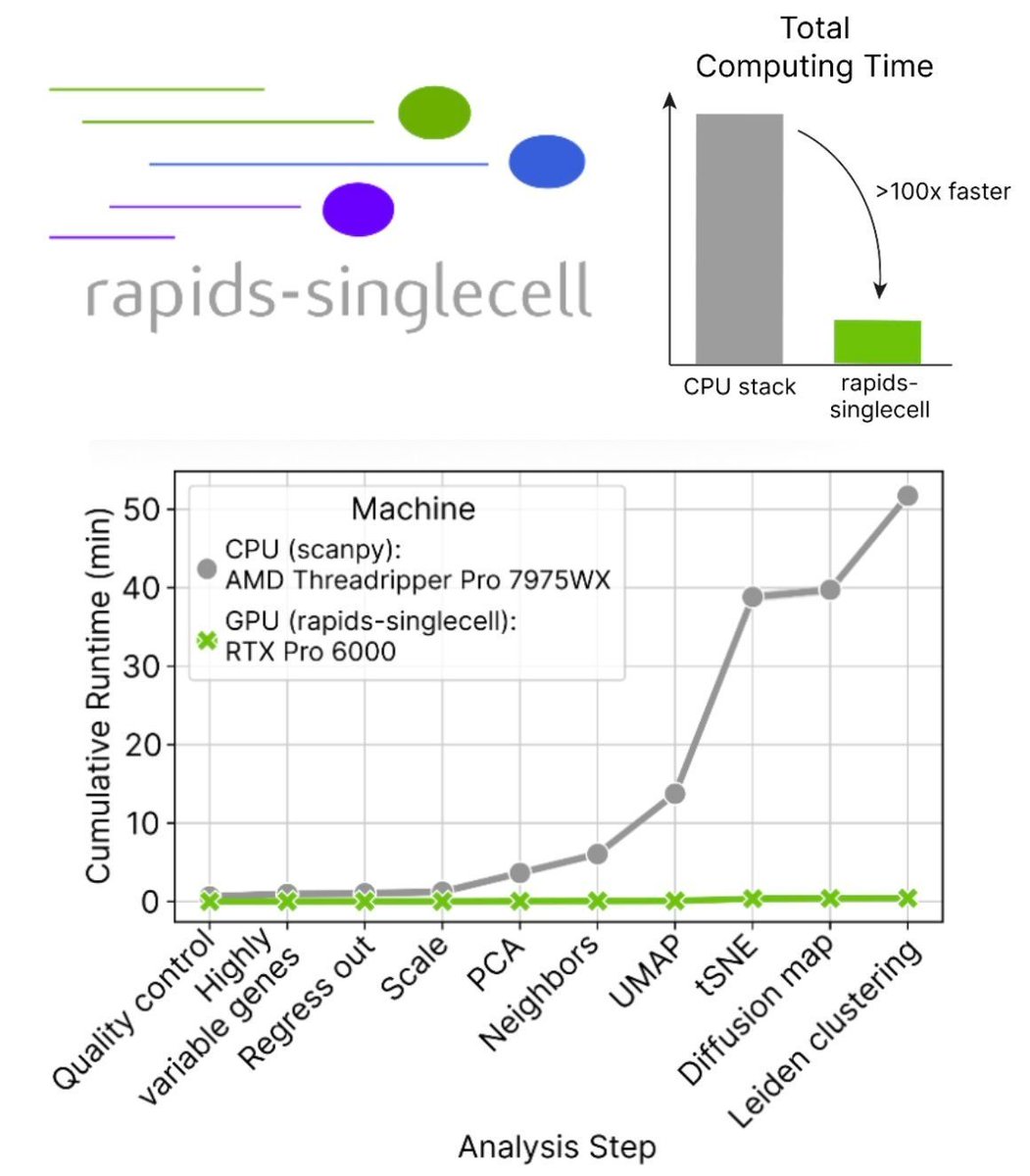
rapids-singlecell brings native GPU support to scverse/AnnData: hours → seconds (1M cells: ~52m → ~25s), scaling to 100M cells. Huge thanks to Severin Dicks 🙌
📄 arxiv.org/abs/2603.02402
8
39
178
10,620
Hyobin Kim retweeted
Mar 16
stVCR models and reconstructs single-cell dynamics of cell differentiation, proliferation and migration from time-series spatial transcriptome data.
nature.com/articles/s41592-0…
12
39
4,685
Hyobin Kim retweeted

Mar 12
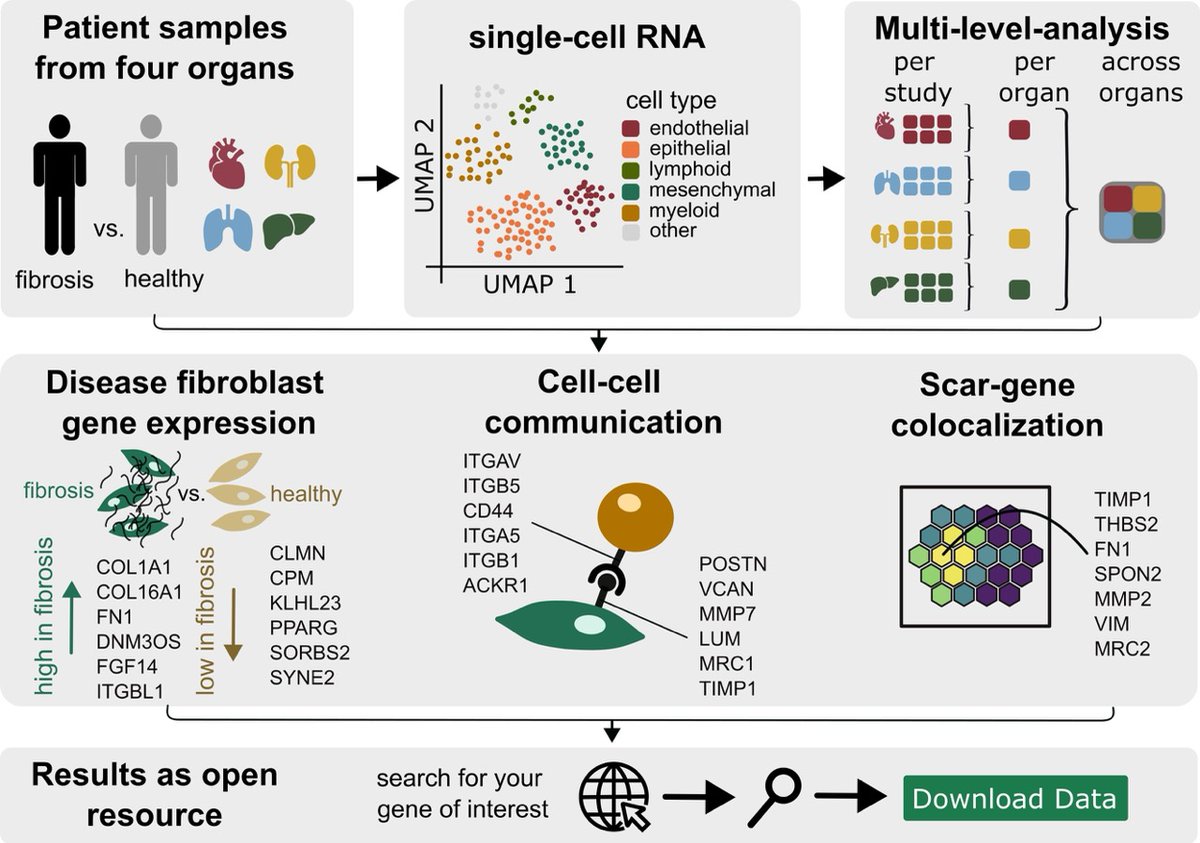
🧵 See 👇 our new preprint on shared and organ-specific gene expression programs of fibrotic diseases 🧬
📄 Paper: doi.org/10.64898/2026.03.09.…
📊 Explore the data: organfibrosis.saezlab.org/
1
19
74
5,351
Hyobin Kim retweeted
Mar 13
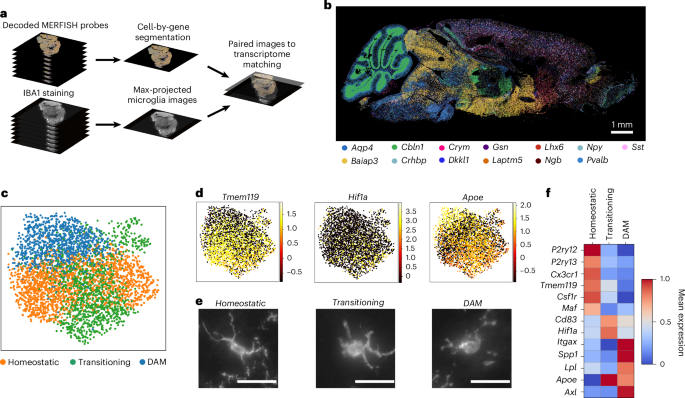
Simultaneous spatial transcriptomics and morphology profiling as tools to explore how microglia change with age @NatureAging @StephenQuake @Stanford
nature.com/articles/s43587-0…
2
19
89
5,796
Hyobin Kim retweeted

Mar 10
Spatial perturb-seq: single-cell functional genomics within intact tissue architecture
Scale up your in situ CRISPR screens
Out in @NatureComms
2
39
207
17,742