Institute for Governance, Policies & Politics (IGPP) is dedicated for public policy research and analysis.
Joined August 2016
- Tweets 3,344
- Following 344
- Followers 941
- Likes 1,289
2,173 Photos and videos
Pinned Tweet

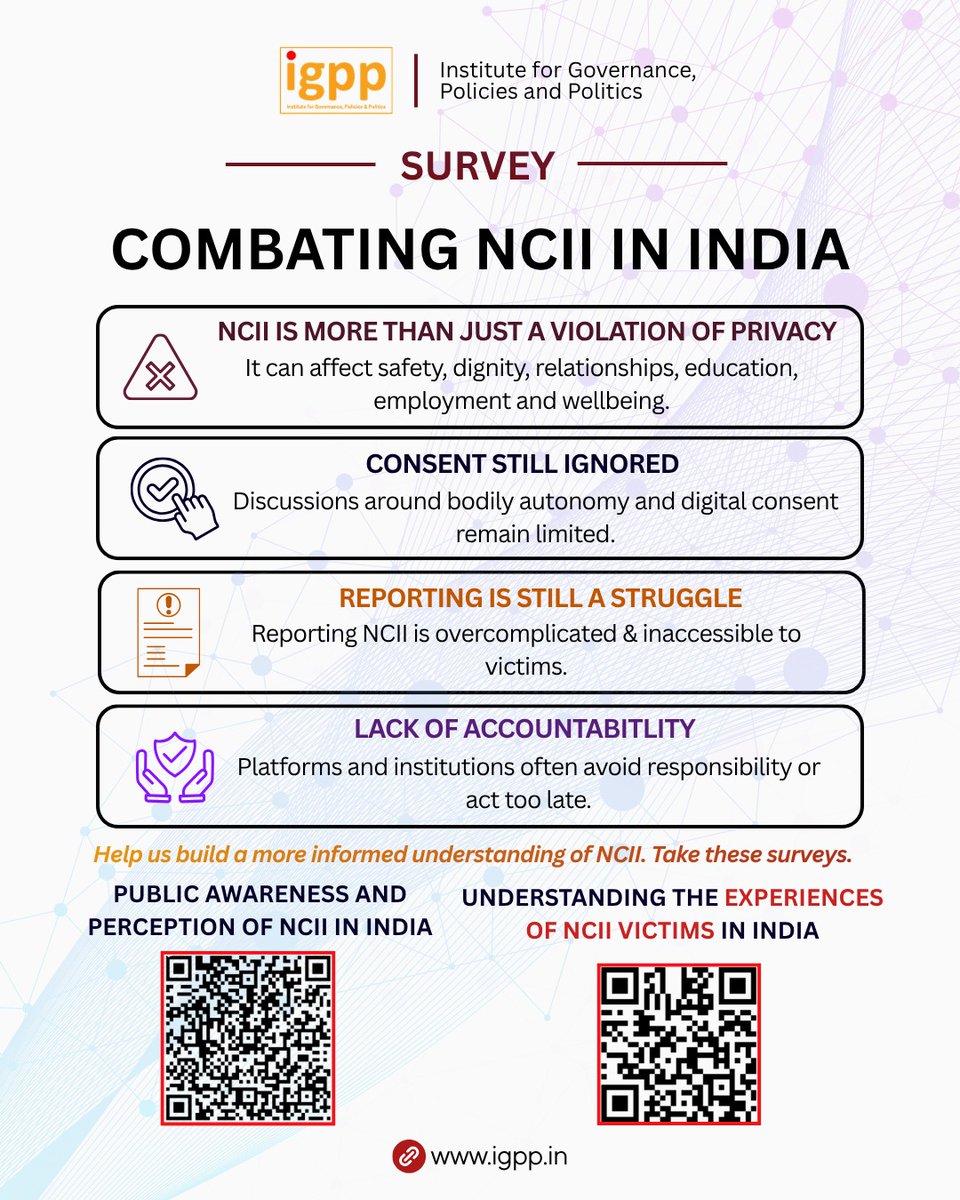
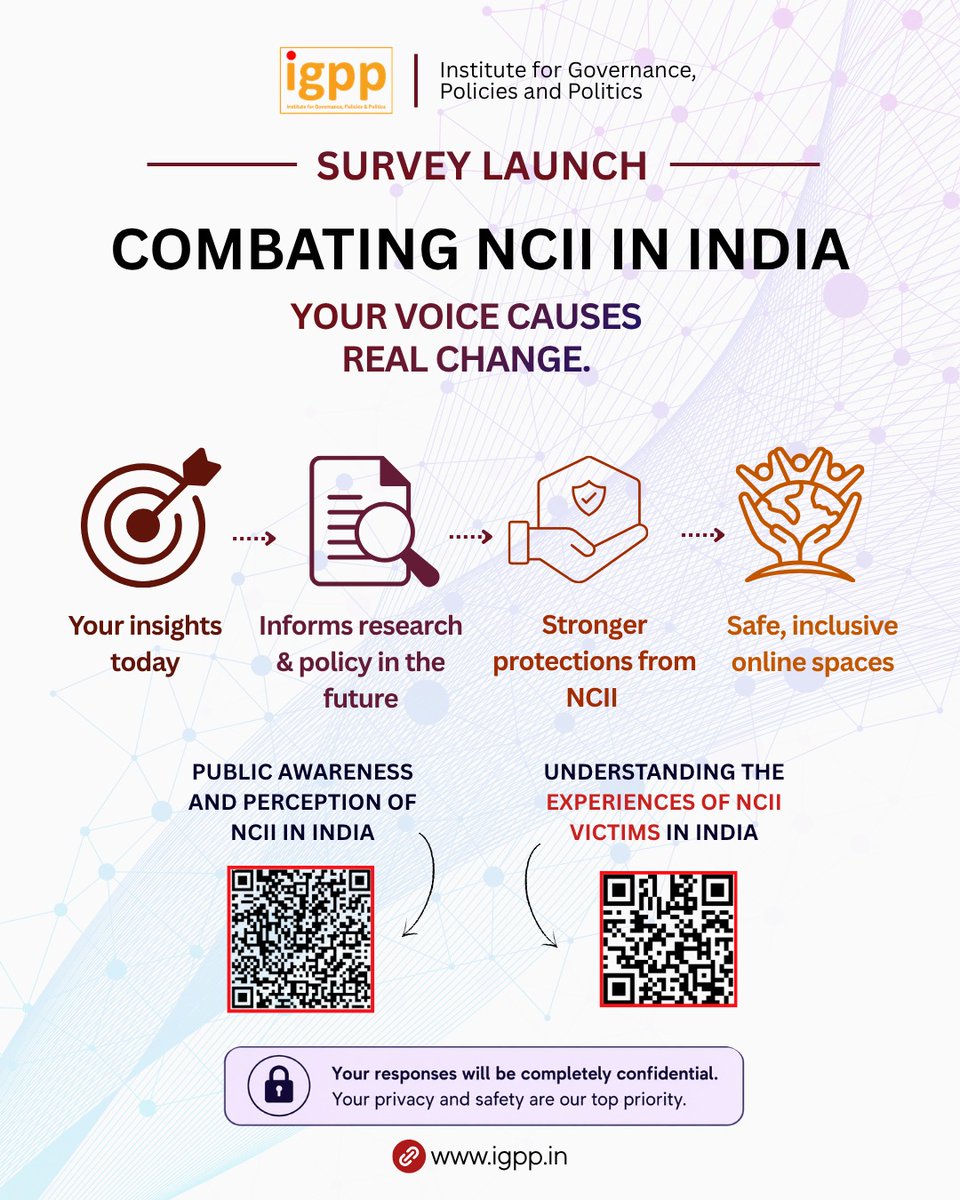
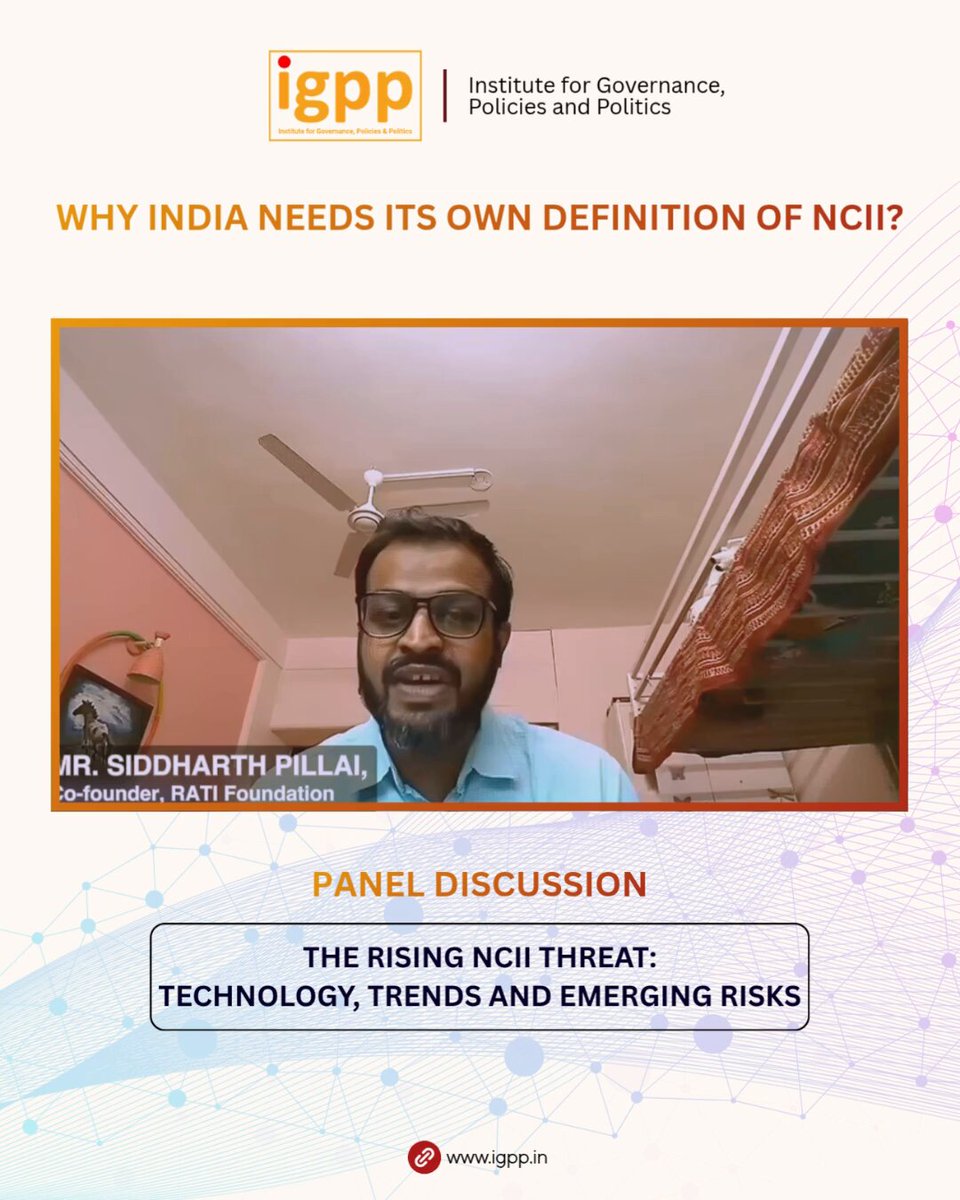
Survey Launch: IGPP’s surveys on Non-Consensual Intimate Imagery (NCII) abuse in India are now live.
Through these two surveys, we aim to better understand public awareness, lived experiences, reporting barriers, platform accountability, institutional responses and emerging digital harms.
*Survey A:* Public Awareness and Perception of NCII in India
*Survey B:* Understanding the Experiences of NCII Victims in India
Your participation can help strengthen research, inform policy discussions and support more meaningful approaches to combating NCII in India.
Scan the QR codes to participate or click on these links to fill the survey:
Survey A: forms.office.com/r/sET0n0aM3…
Survey B: forms.office.com/r/k2qTnWVPs…
To know more about us, visit: igpp.in/
@manishtiwari | @ranjana_kush | @AnkurTi76797199 | @pujasingh2k16 | @TheVikasLohchab
#NCII #OnlineSafety #DigitalRights #CyberSafety #DigitalGovernance #Policy #OnlineHarms #Deepfakes #OnlineGenderedViolence #PlatformGovernance #DigitalSafety #IGPP
3
5
82
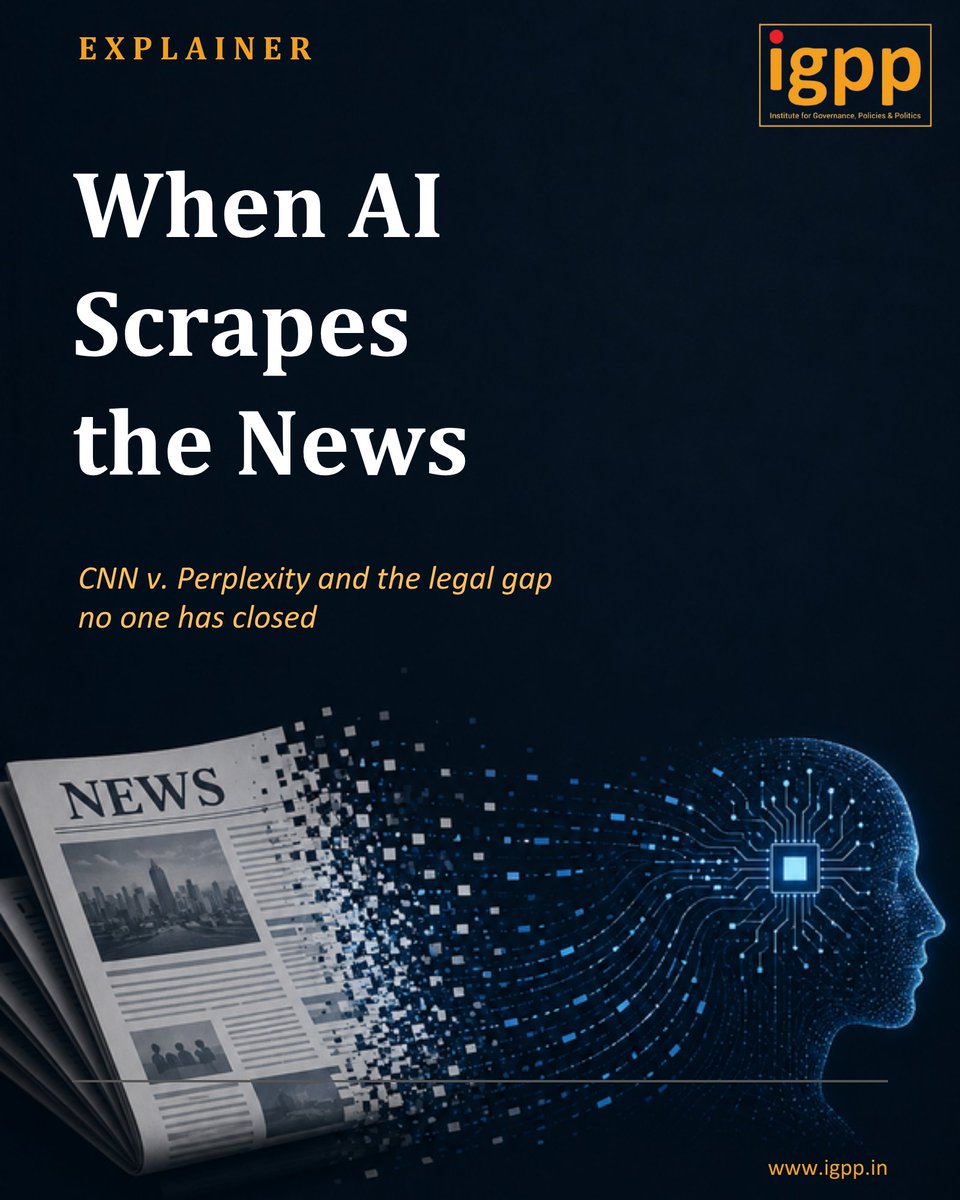
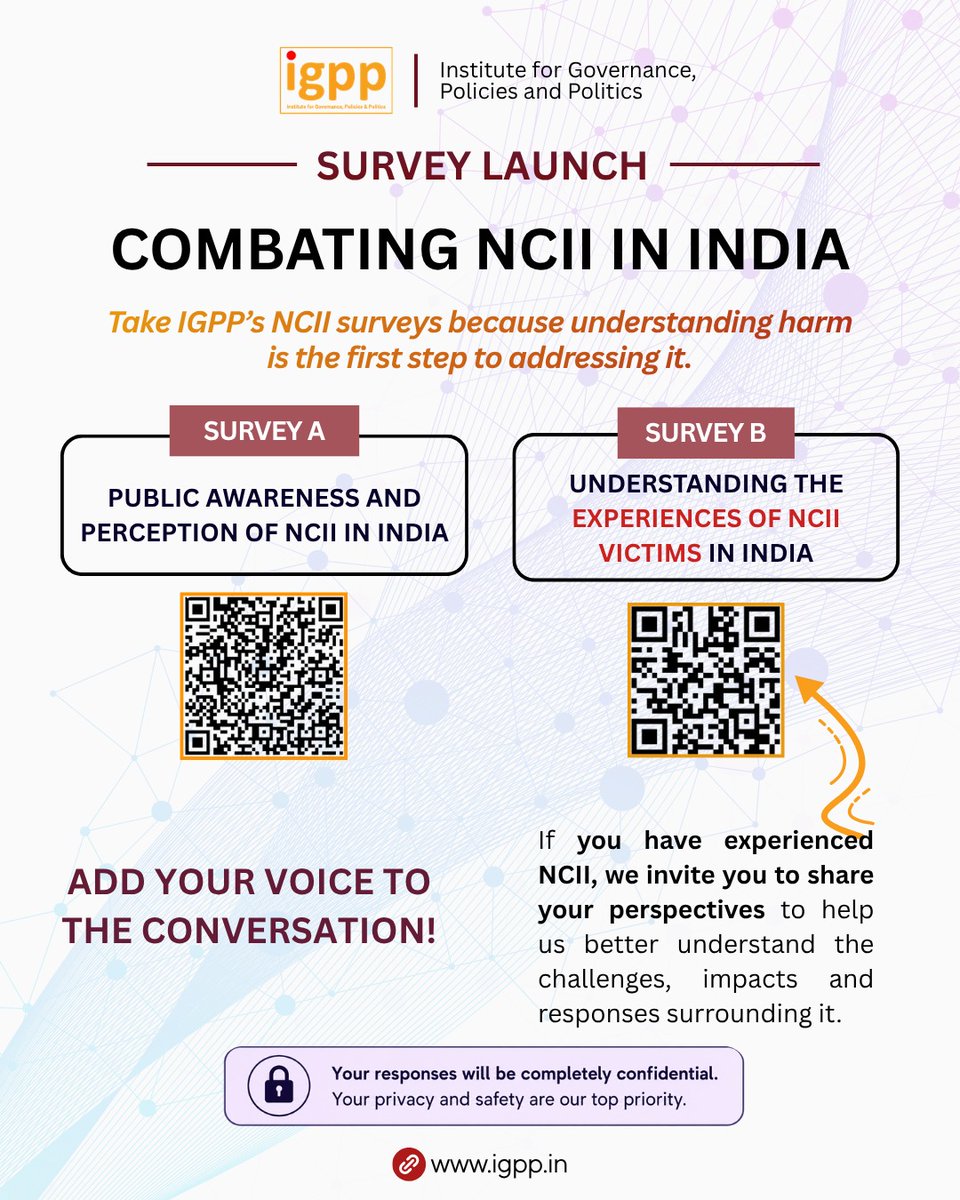
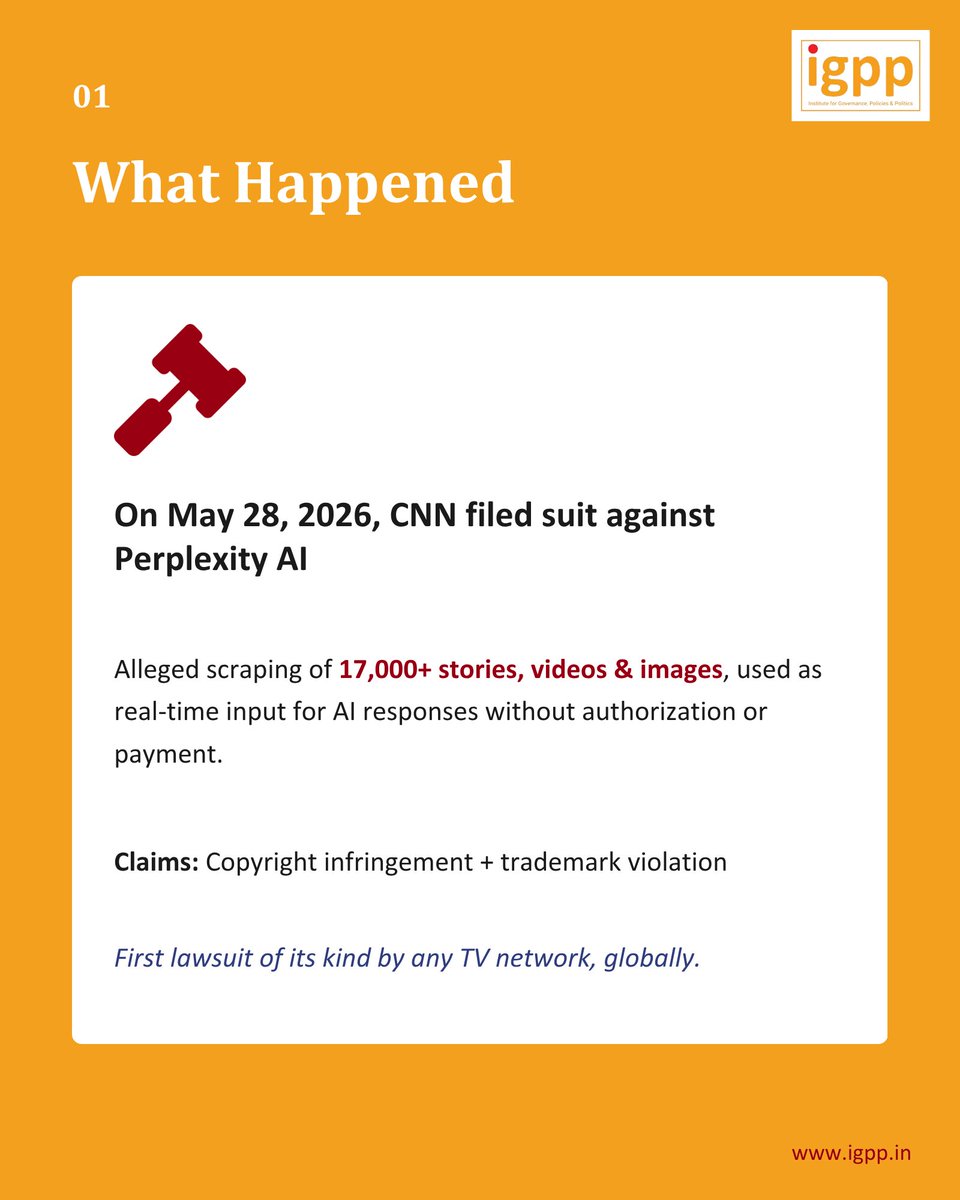
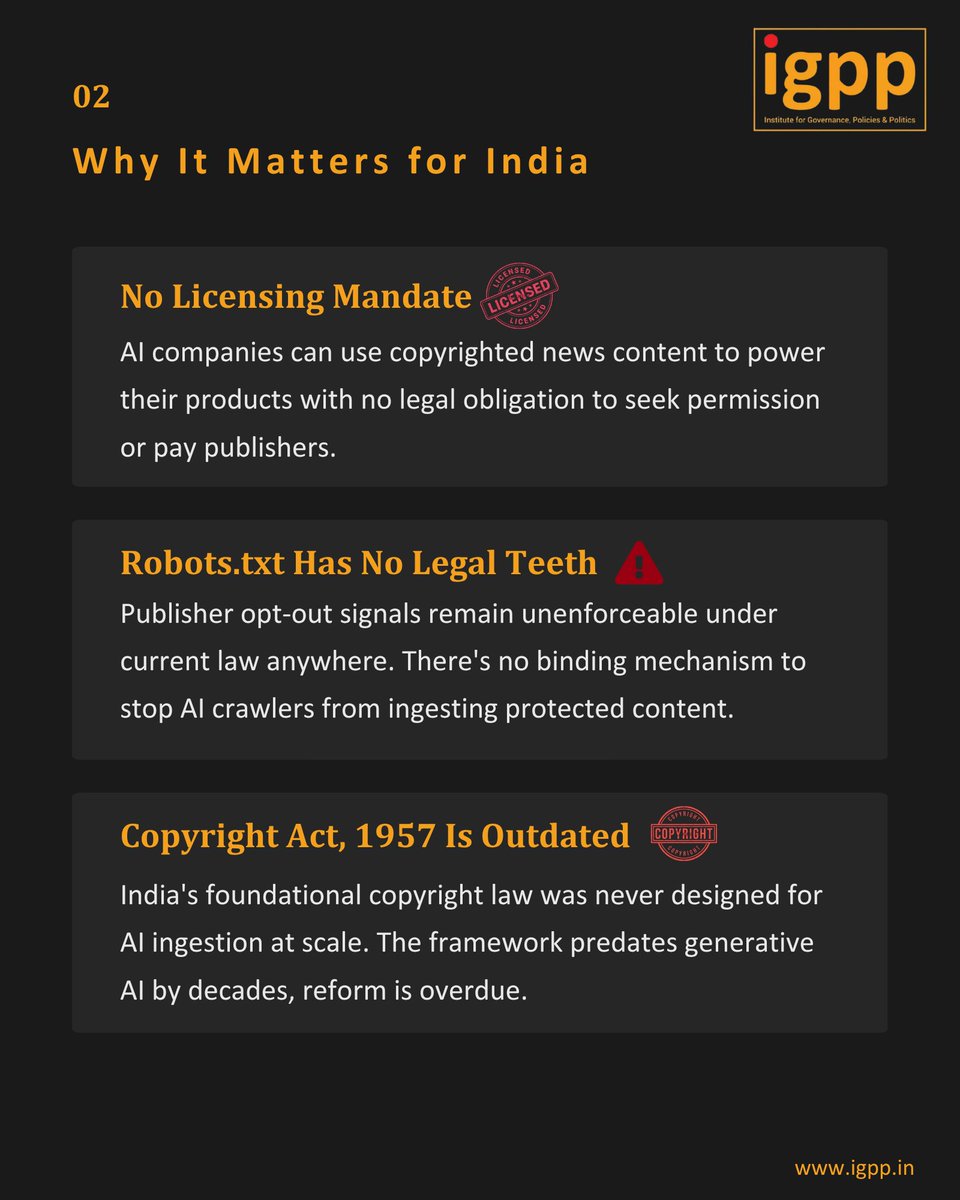
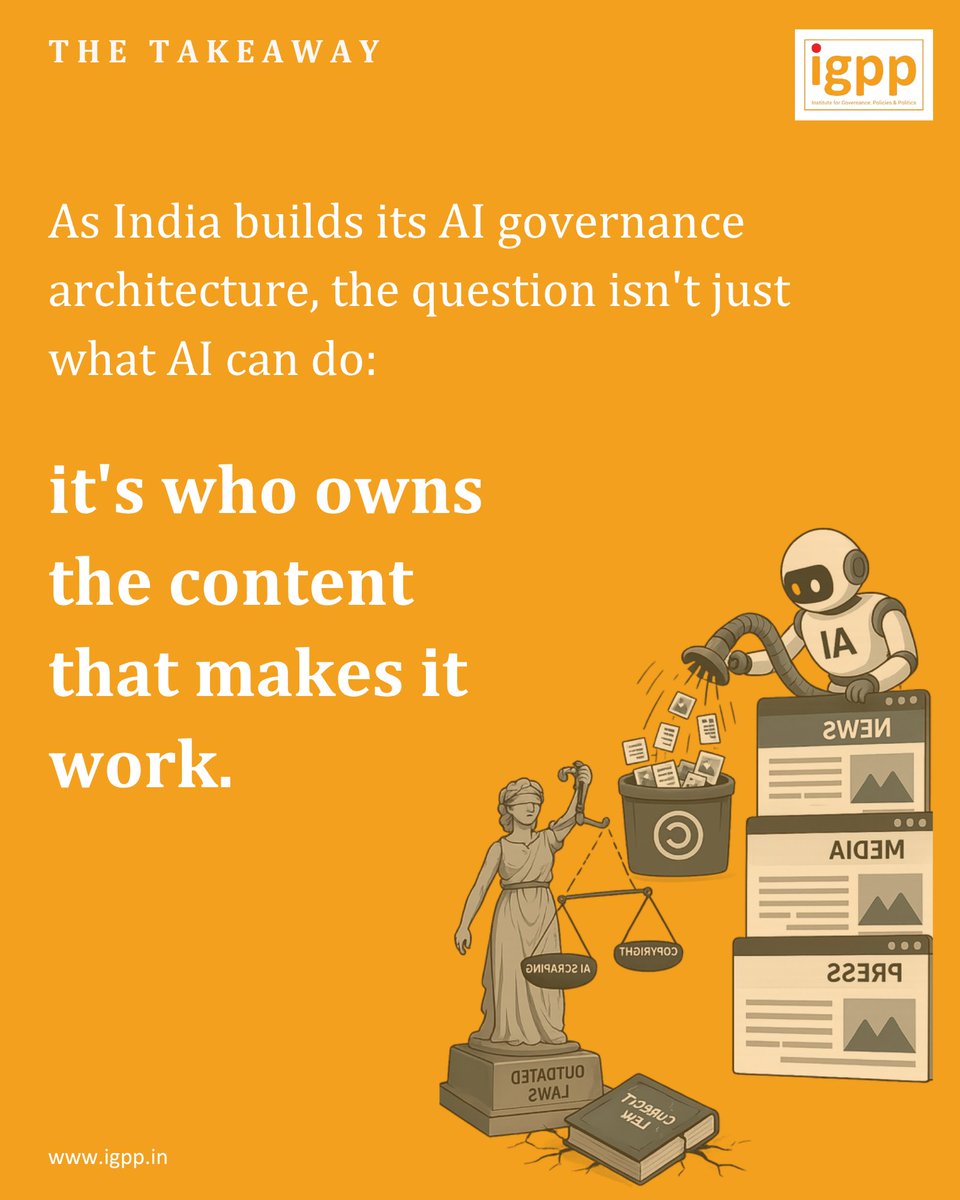
CNN's lawsuit against Perplexity AI raises a question that governments around the world, including India, can no longer ignore: Should AI companies be allowed to train and generate responses using copyrighted news content without permission or compensation?
As India develops its AI governance framework, the debate is no longer just about innovation. It's also about copyright, accountability, and the future of journalism.
Swipe through to understand why this case matters.
For more, visit: igpp.in
@manishtiwari | @ranjana_kush | @AnkurTi76797199 | @TheVikasLohchab
#AIGovernance #Copyright #ArtificialIntelligence #MediaPolicy #DigitalGovernance #Journalism #AIRegulation #NewsMedia #IGPP #TechPolicy
21
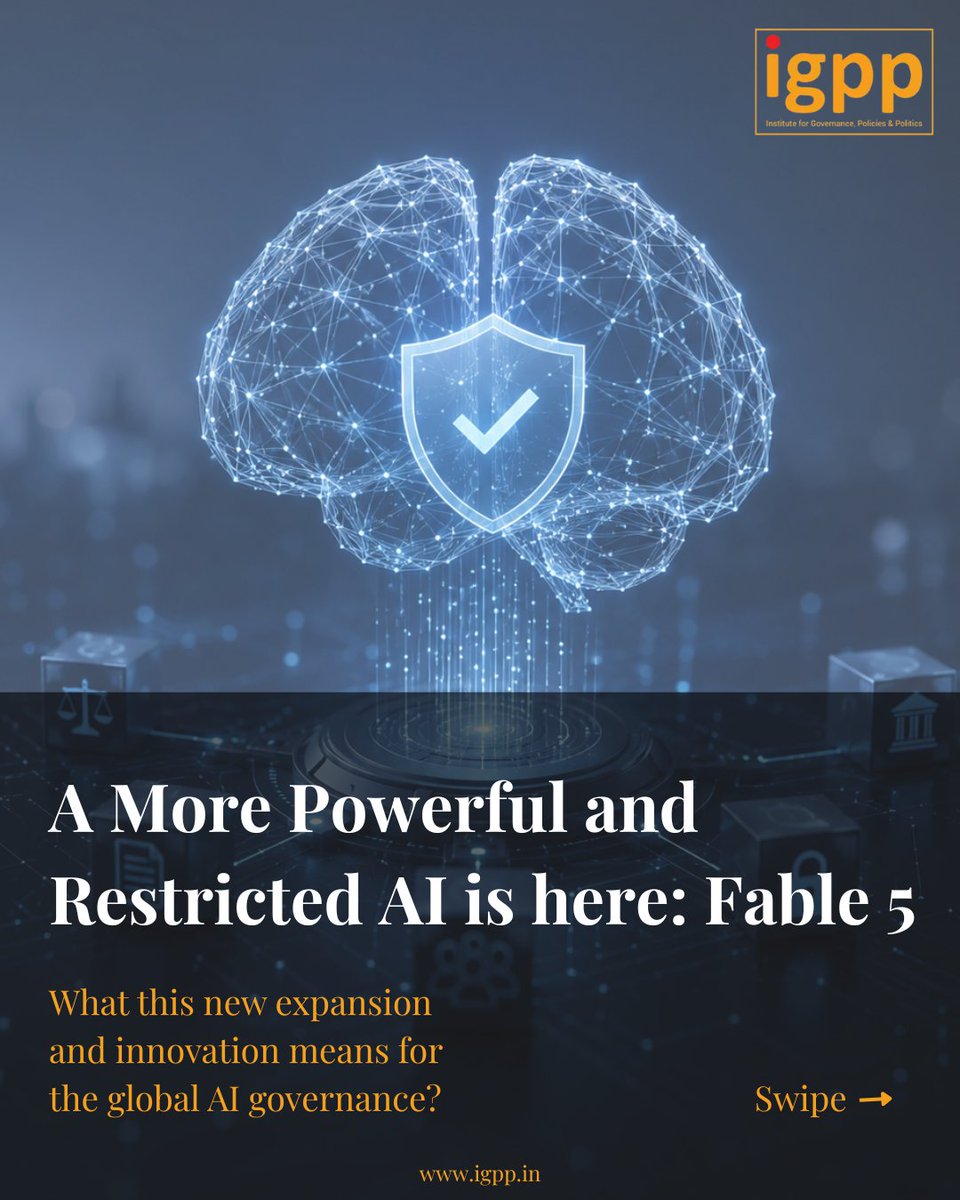
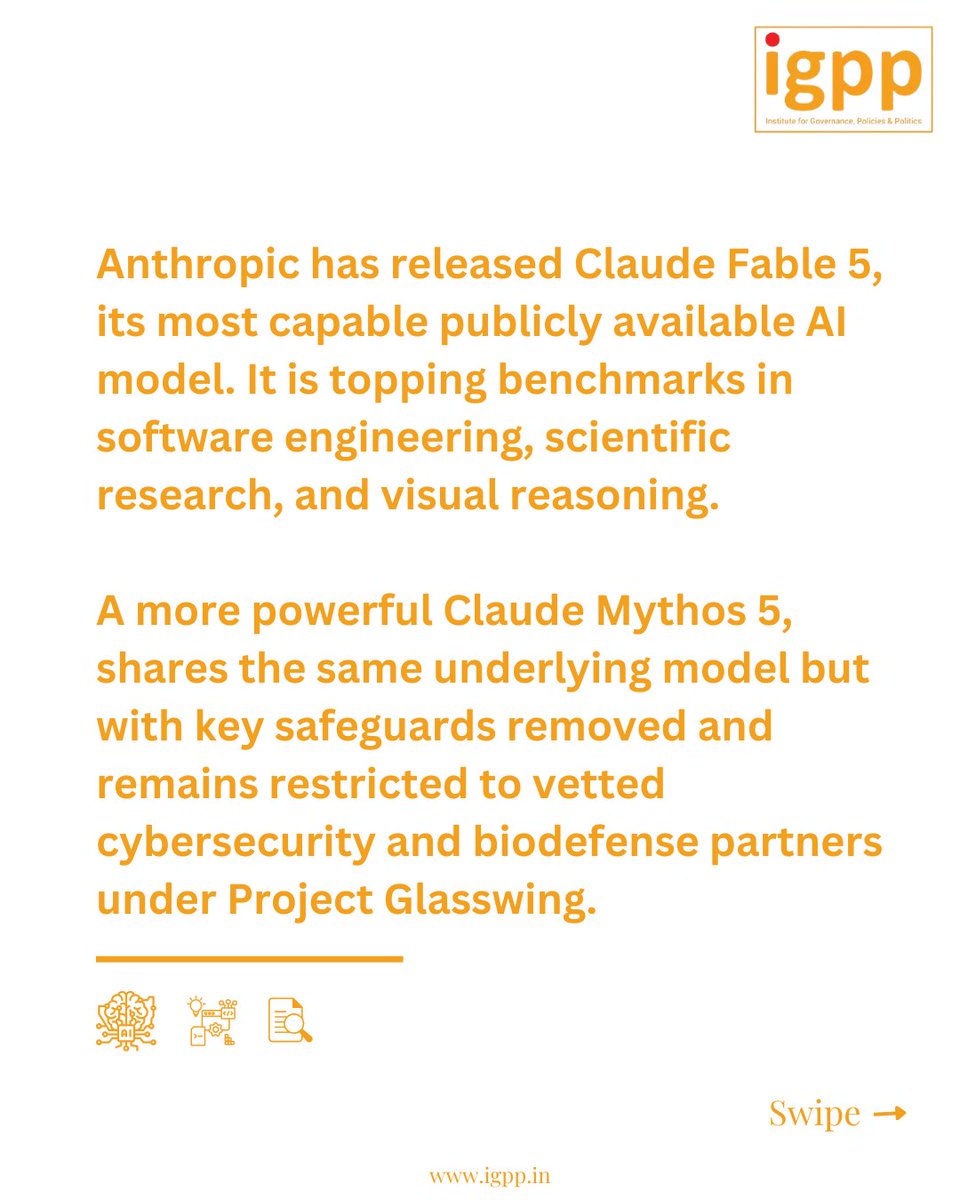
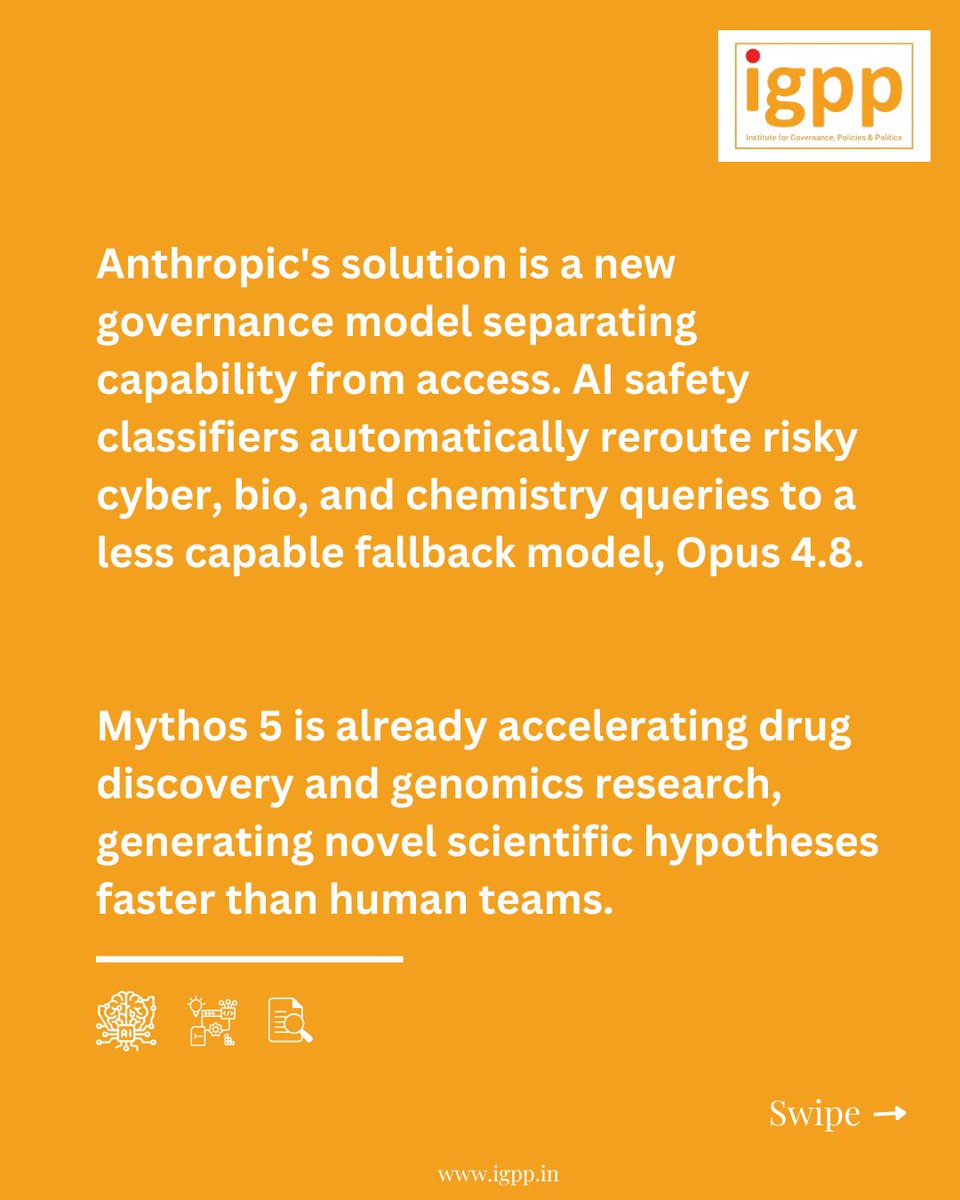
Anthropic’s release of Fable 5 introduces a powerful new model that pushes the boundaries of software engineering, scientific research, and visual reasoning. But the bigger story may not be its capabilities, it is the governance model behind it.
While Fable 5 is publicly available, the more powerful Mythos 5 remains restricted to vetted partners, creating a new approach that separates AI capability from public access. This raises critical questions about innovation, and accountability in the age of advanced AI.
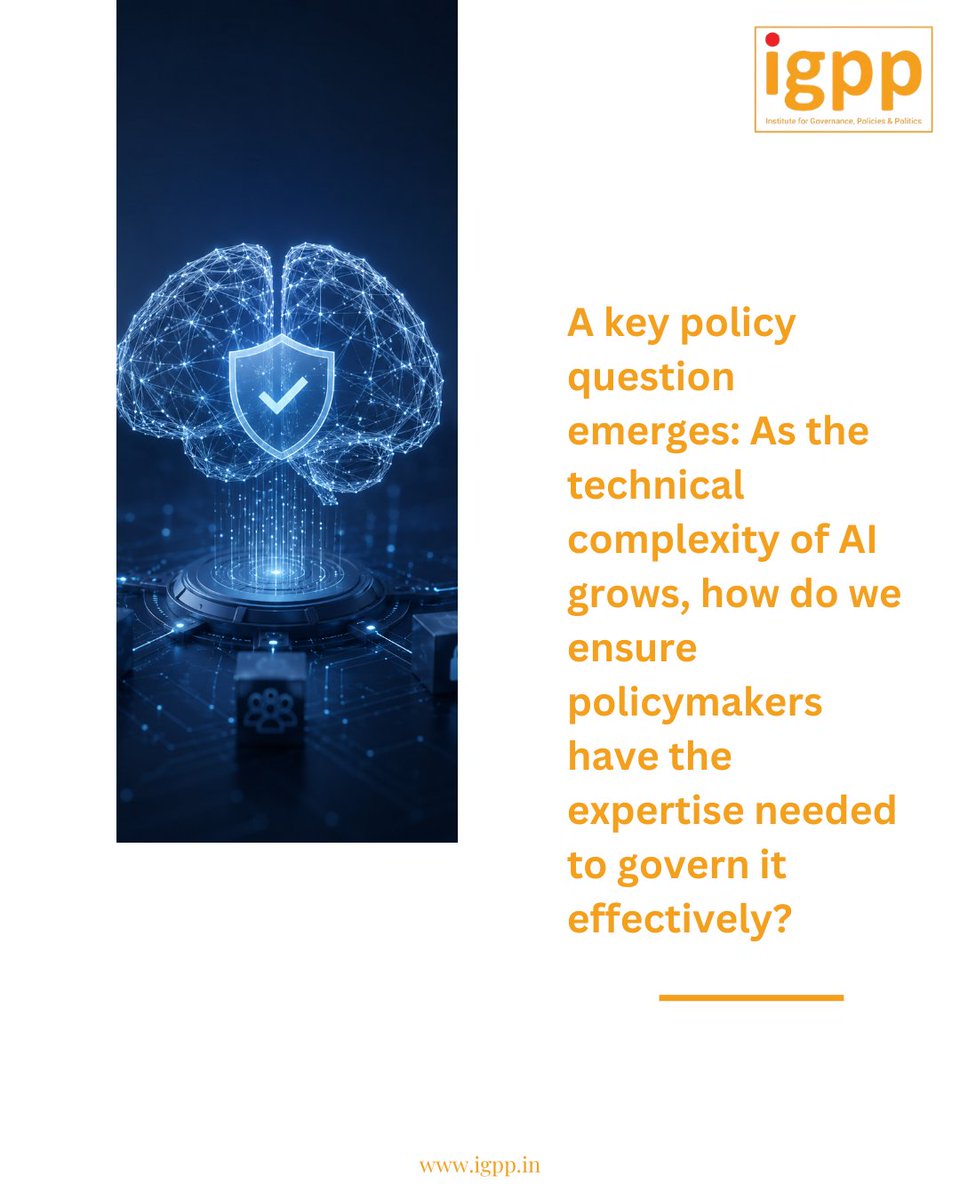
At @IGPPVMF, we ask: As the technical complexity of AI grows, how do we ensure policymakers have the expertise needed to govern it effectively?
Swipe through and join the conversation.
Read the full article here: igpp.in
@manishtiwari | @ranjana_kush | @AnkurTi76797199 | @TheVikasLohchab
#ArtificialIntelligence #AIGovernance #Anthropic #AISafety #TechPolicy #EmergingTechnology #GlobalGovernance #DigitalPolicy #Innovation #FutureOfAI #IGPP
1
33
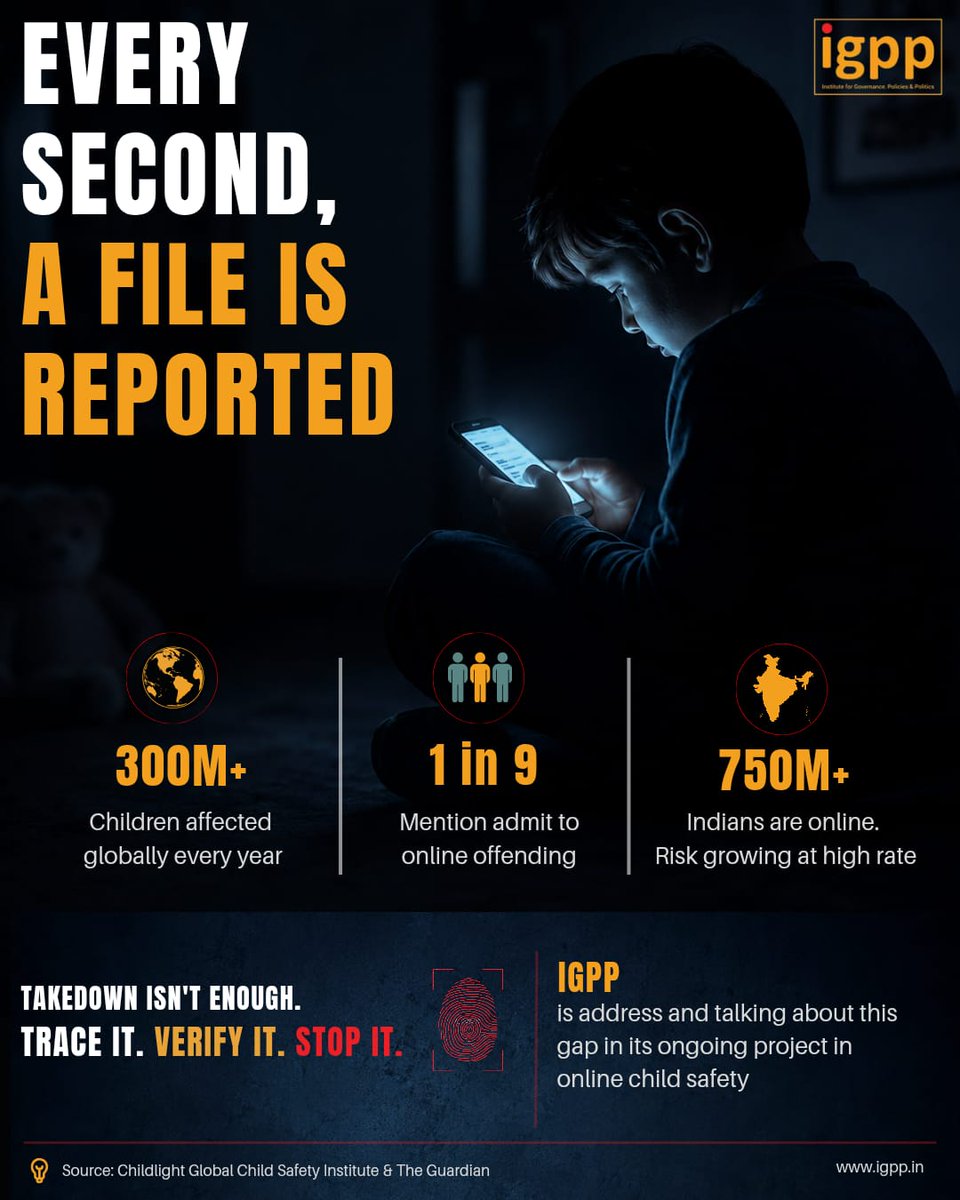
Online child sexual exploitation and abuse material (CSEAM) remains one of the most urgent yet under-discussed challenges of the digital age. While reporting and takedown mechanisms are essential, they are only one part of the solution. Effective responses require faster investigation, stronger verification systems, platform accountability, and coordinated action across institutions.
With over 750 million internet users and rapidly expanding digital access, India faces a growing need to strengthen child online safety frameworks that are both preventive and victim-centred.
At @IGPPVMF, our ongoing work on online child safety examines the policy, governance, and implementation gaps that continue to shape responses to digital harms, with a focus on building safer and more accountable digital ecosystems.
@PMOIndia | @GoI_MeitY | @NCPCR_ | @MinistryWCD
@manishtiwari | @ranjana_kush | @AnkurTi76797199 | @TheVikasLohchab
#ChildOnlineSafety #OnlineSafety #DigitalSafety #ChildProtection #CyberSafety #DigitalGovernance #PlatformAccountability #CyberPolicy #InternetGovernance #IGPP #PublicPolicy #DigitalRights #ResponsibleTechnology #ChildSafetyOnline
4
6
39
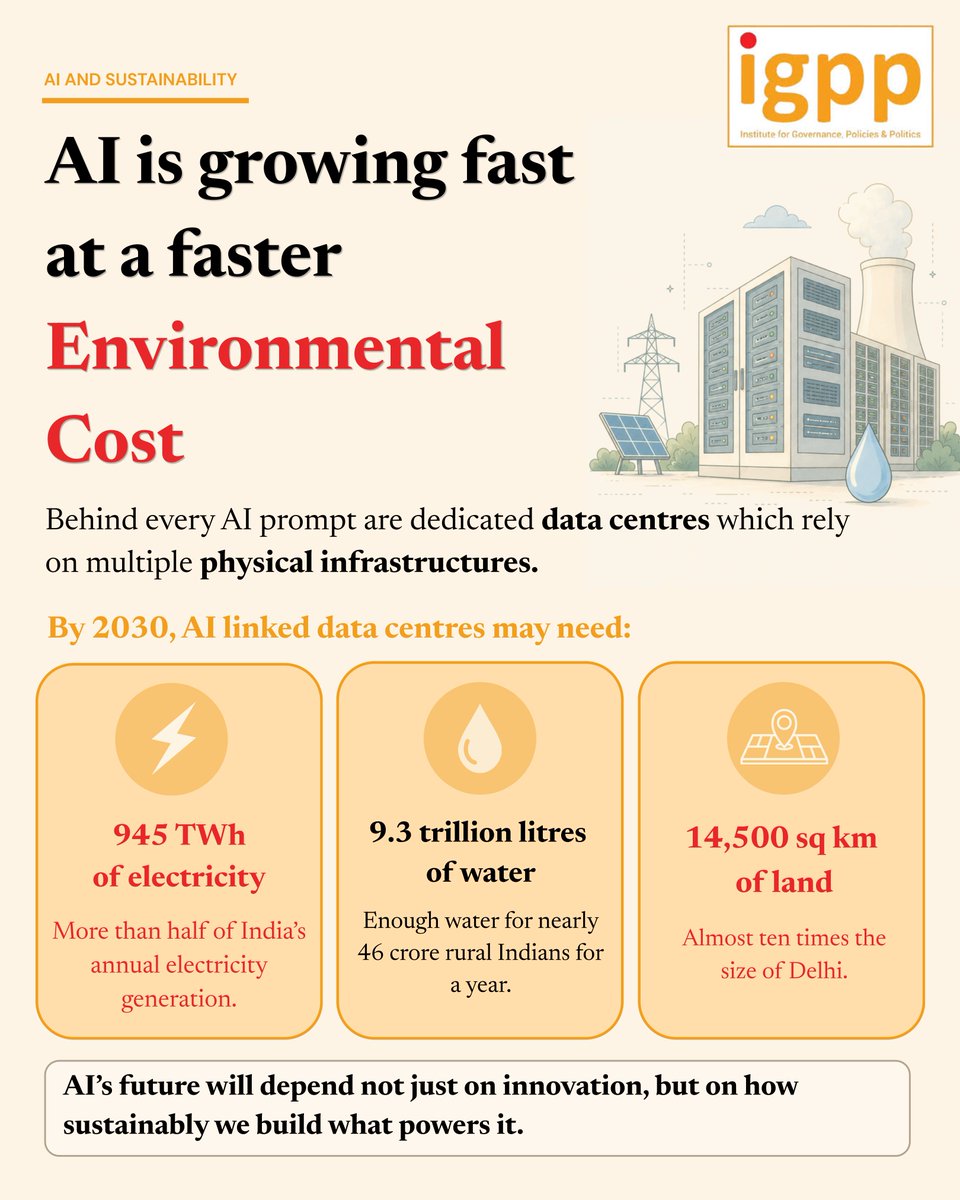
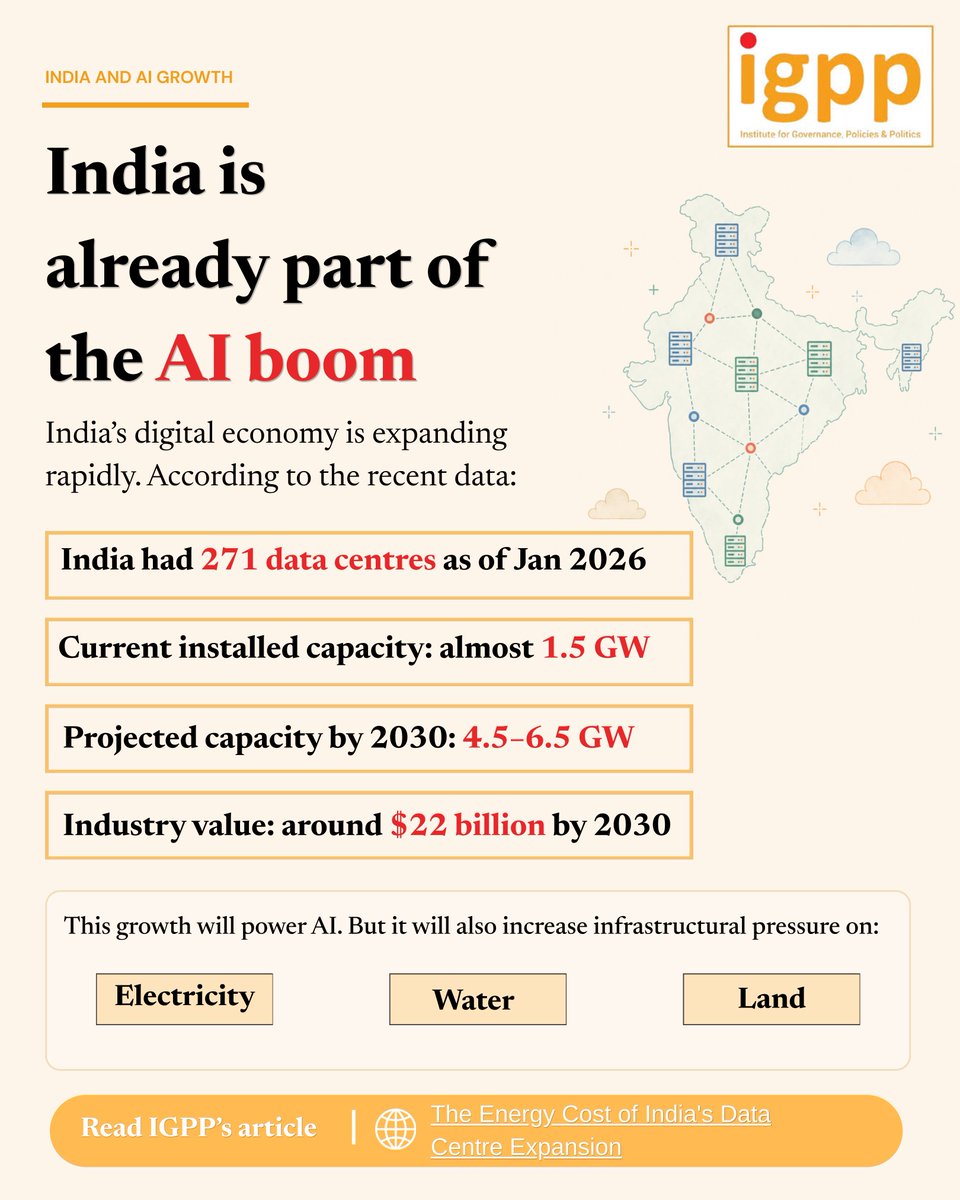
AI is growing fast, but so is the infrastructure behind it.
Every prompt, search, cloud service or AI tool depends on data centres and these centres need electricity, water and land at a massive scale.
As India becomes part of the global AI boom, the question is no longer whether we need more data centres.
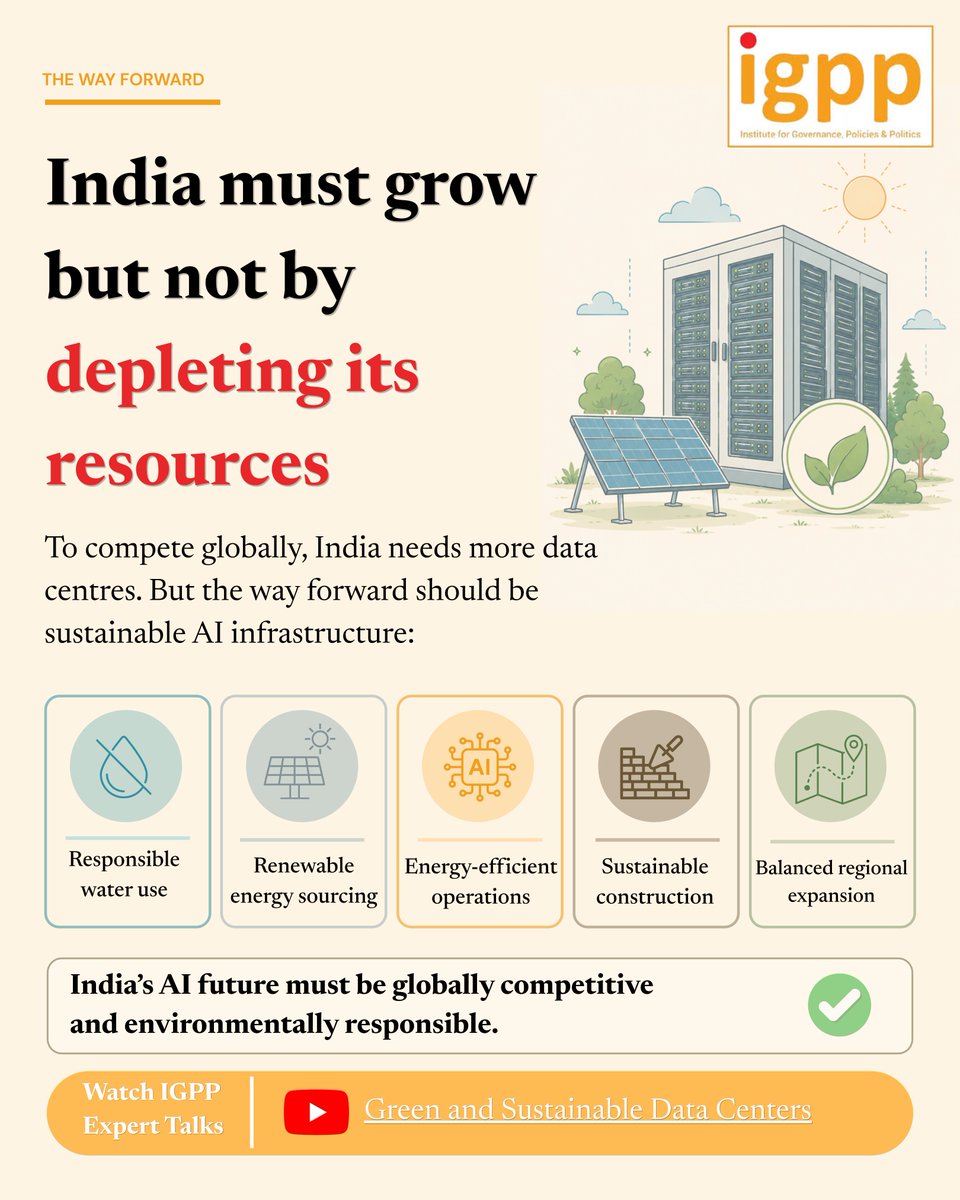
The real question is: how do we build them responsibly?
India’s AI future must be globally competitive, but it cannot come at the cost of depleting its natural resources.
Read IGPP’s article: The Energy Cost of India’s Data Centre Expansion
igpp.in/publications/article…
Watch IGPP Expert Talks on Green and Sustainable Data Centers
youtube.com/watch?v=Y36C0vCy…
@PMOIndia | @GoI_MeitY | @moefcc
@manishtiwari | @ranjana_kush | @AnkurTi76797199 | @TheVikasLohchab
#IGPP #ArtificialIntelligence #AI #DataCentres #SustainableAI #GreenTechnology #DigitalIndia #ClimateAction #EnergyTransition #WaterSecurity #TechPolicy #AIInfrastructure #SustainableDevelopment #IndiaAI #EnvironmentalPolicy
1
3
50
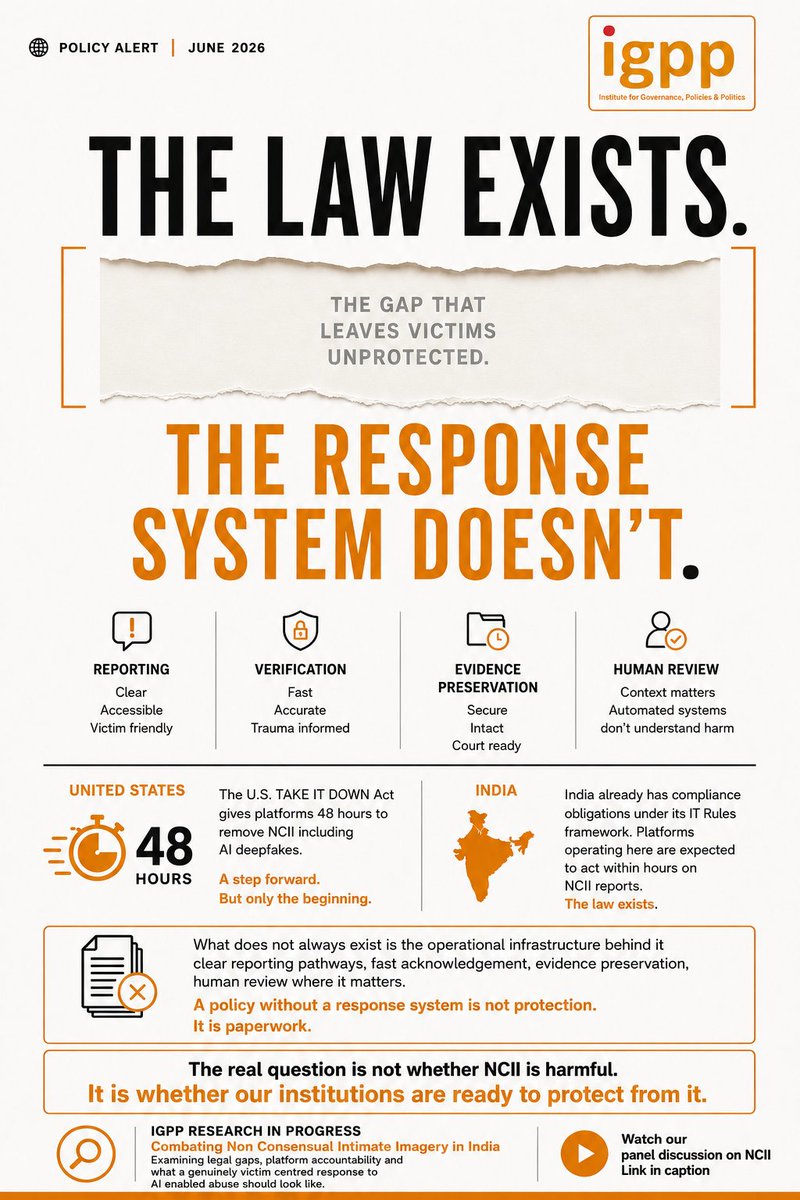
The U.S. TAKE IT DOWN Act has brought global attention to the challenge of tackling Non-Consensual Intimate Imagery (NCII), including AI-generated deepfakes. By introducing clear timelines and enforcement mechanisms, it signals a broader shift in how online harms are being governed.
For India, however, the conversation goes beyond the existence of legal obligations. The real challenge lies in building response systems that victims can actually access.
At Institute for Governance, Policies and Politics, our ongoing research on combating NCII in India examines how law, platform accountability, and operational readiness can come together to create genuinely victim-centred protection in the digital age.
Watch our panel discussion through the link- youtu.be/dA0xz0QN9ho
@IGPPVMF is also conducting two surveys to strengthen research, policy engagement and public conversations around NCII and digital safety in India:
Survey A: Public Awareness and Perception of NCII in India
bit.ly/4010Hfg
Survey B: Understanding the Experiences of NCII Victims in India
bit.ly/3RCyzQi
@PMOIndia | @GoI_MeitY | @Cyberdost | @MinistryWCD | @NCPCR_ | @StopNCIIorg
@manishtiwari | @ranjana_kush | @AnkurTi76797199 | @TheVikasLohchab
#NCII #Deepfakes #DigitalSafety #PlatformAccountability #CyberPolicy #OnlineSafety #AIGovernance #DigitalRights #IGPP #policy #ResponsibleAI
2
51
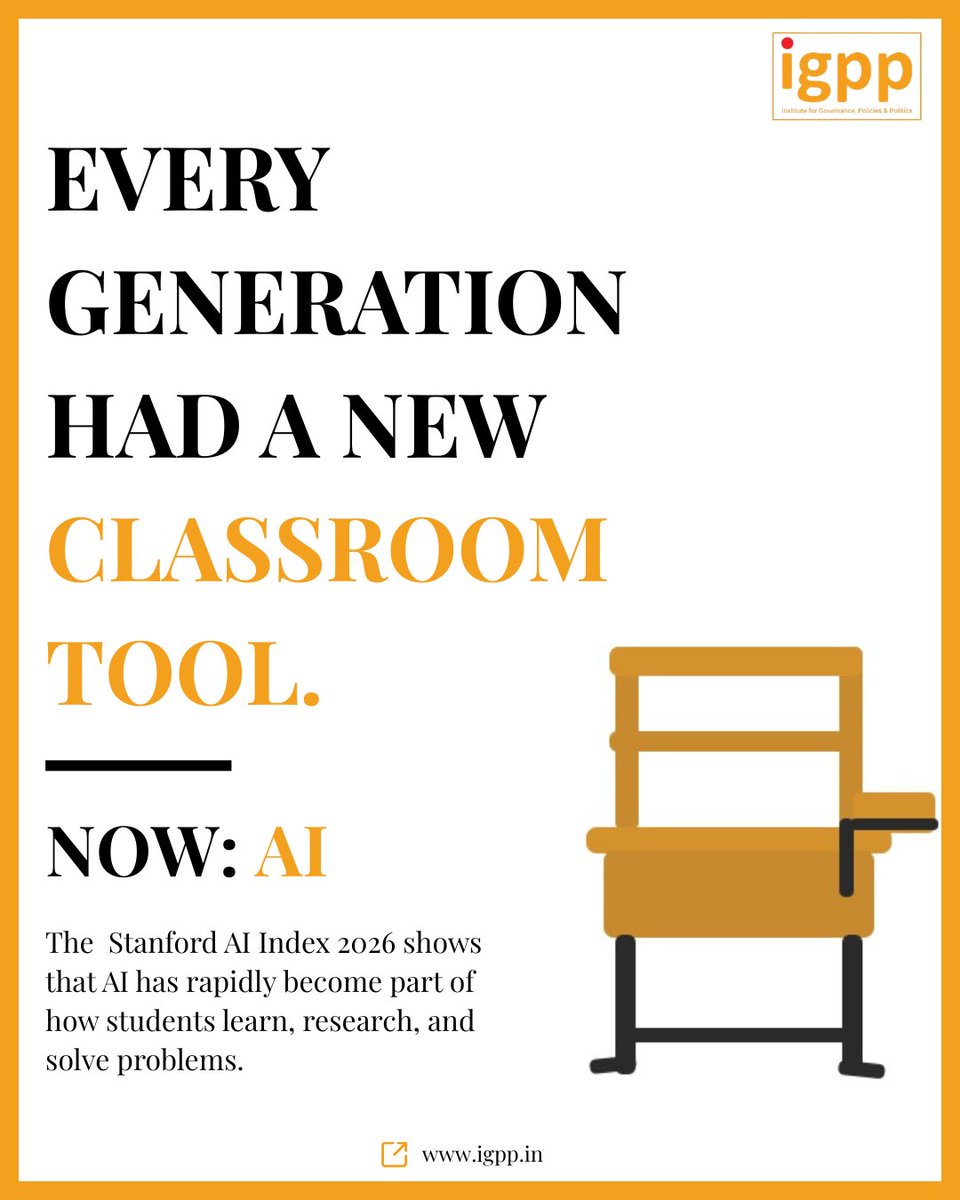
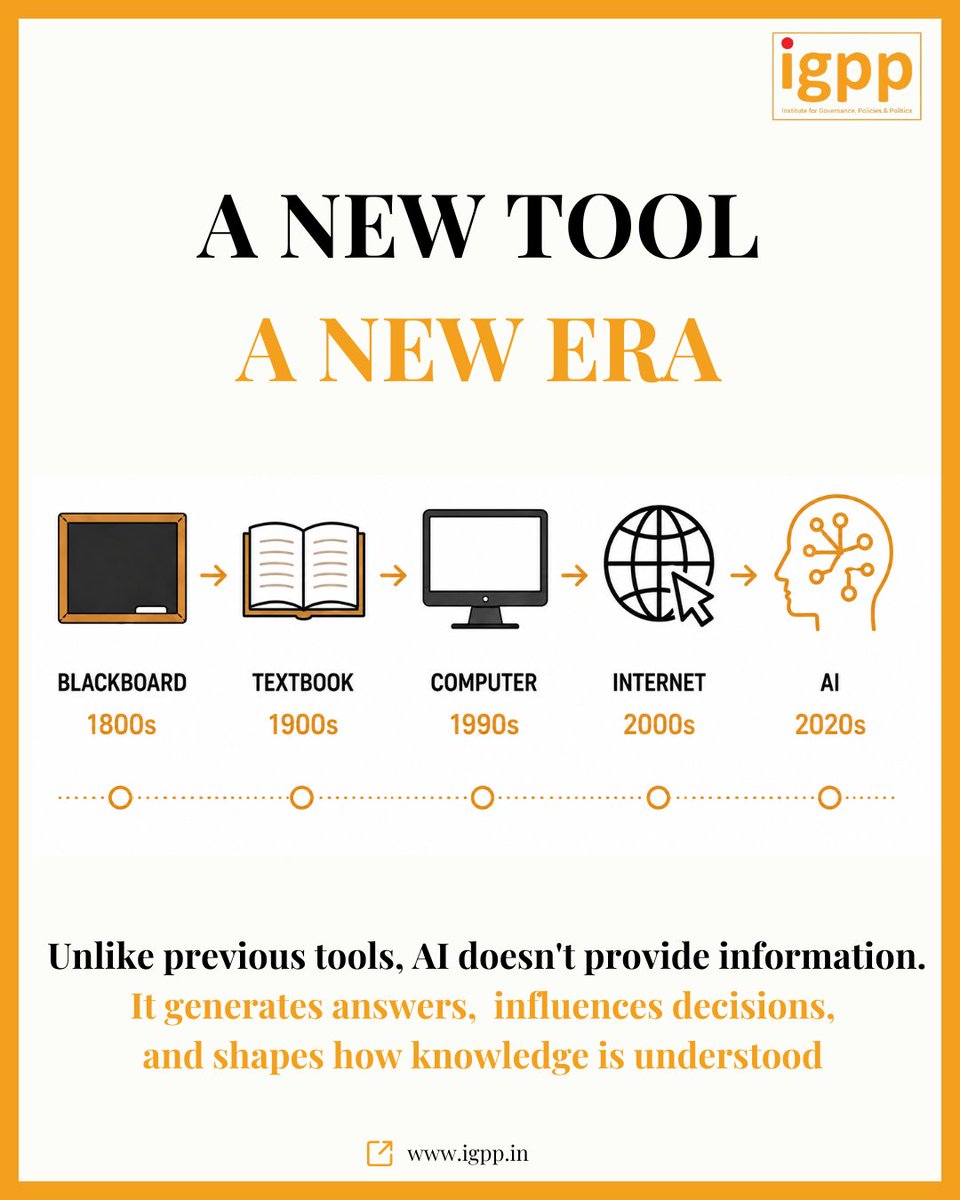
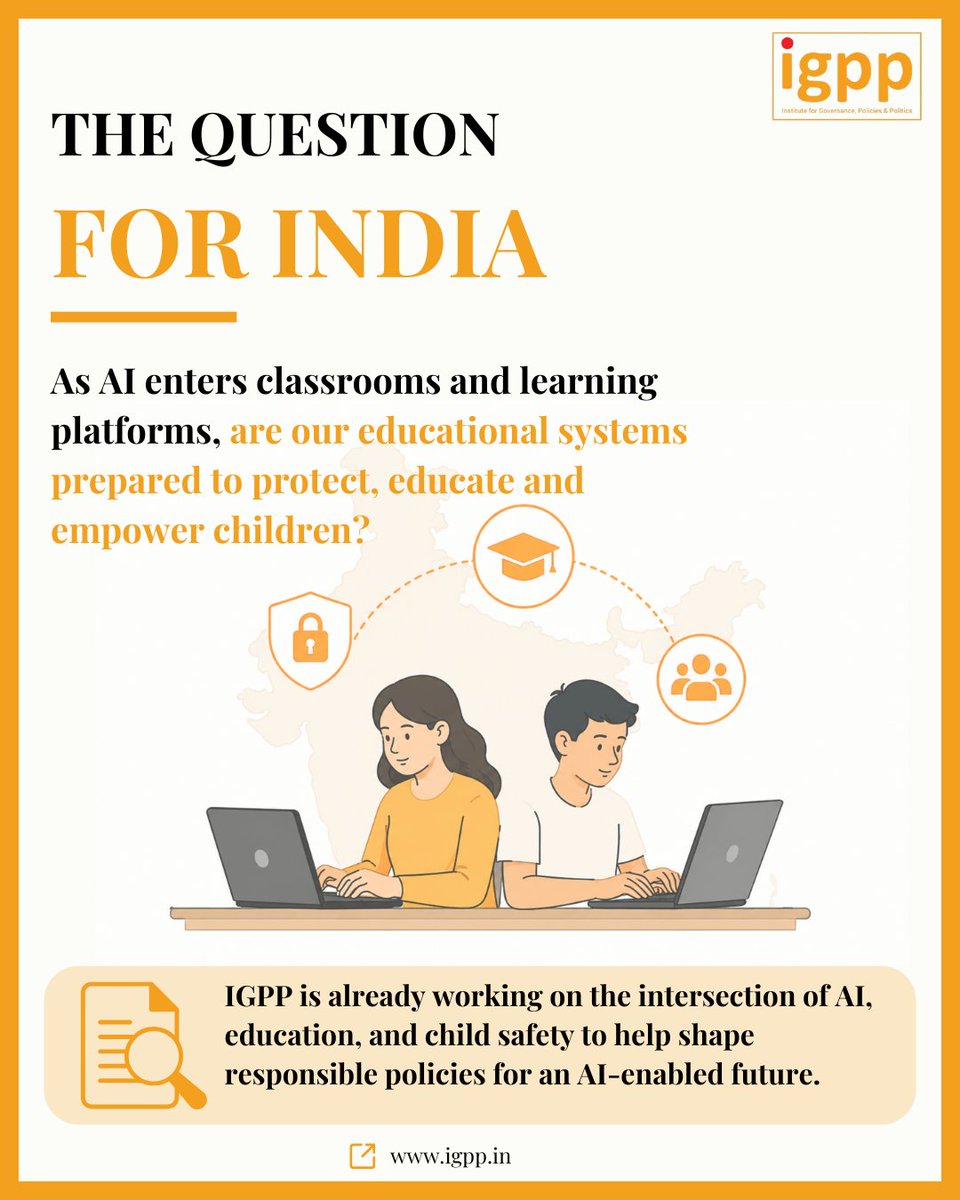
The Stanford AI Index 2026 highlights the growing role of artificial intelligence in education, noting its increasing influence on learning, research, and problem solving.
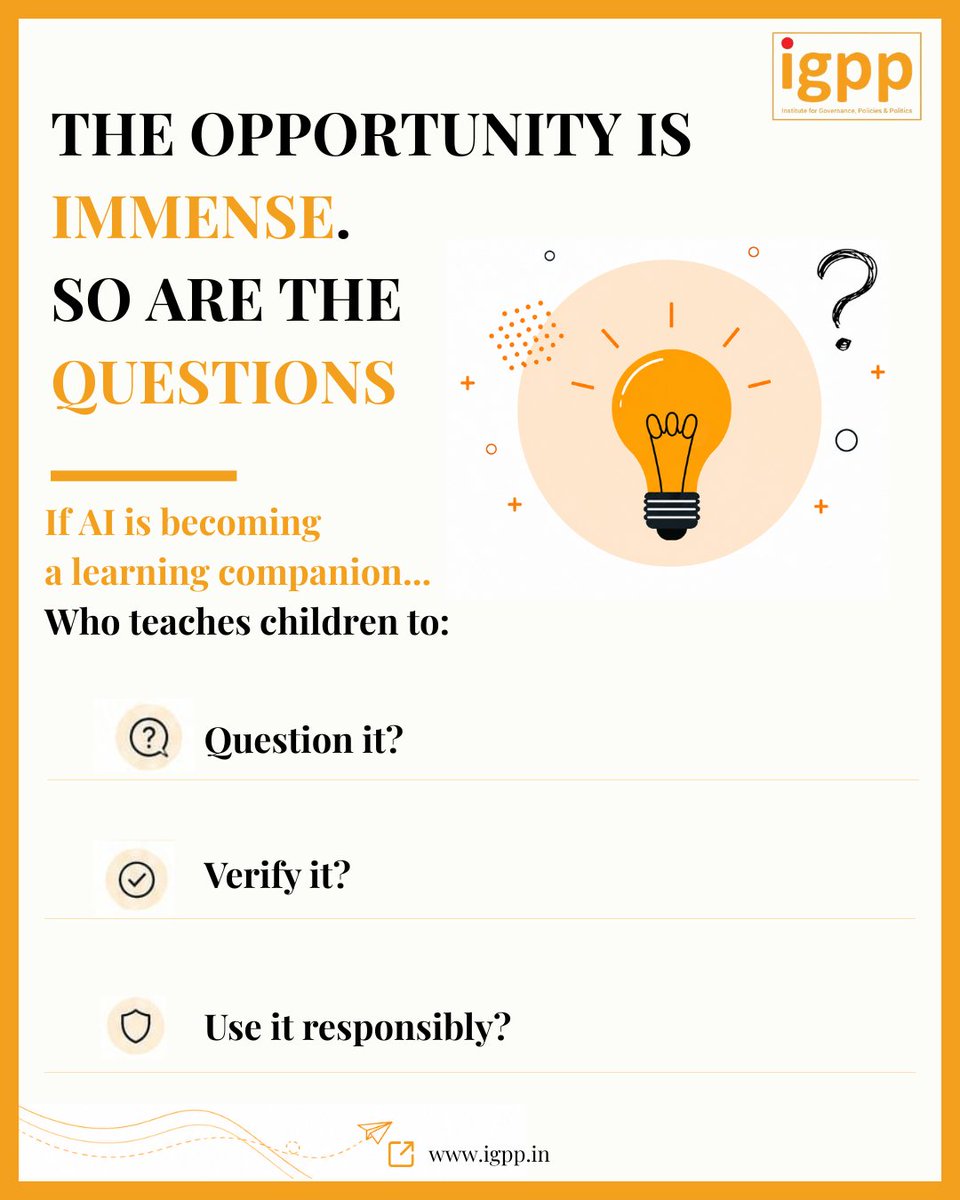
This transformation presents considerable opportunities, but it also raises important questions regarding critical thinking, digital literacy, and responsible use. As AI systems increasingly influence how knowledge is accessed and interpreted, there is a pressing need to equip students with the skills required to evaluate, verify, and engage with AI-generated content responsibly.
IGPP is actively working at the intersection of AI, education, and child safety to contribute to informed policy discussions and support the development of responsible frameworks for the future of learning.
To know more about us, visit: igpp.in
@PMOIndia | @GoI_MeitY | @StanfordAILab | @Stanford
@manishtiwari | @ranjana_kush | @AnkurTi76797199 | @pujasingh2k16 | @TheVikasLohchab
#IGPP #ArtificialIntelligence #AiIndex #Stanford #AIinEducation #EdTech #DigitalGovernance #ChildSafety #EducationPolicy #FutureOfLearning #AIandSociety #onlinelearning #digitalliteracy #Research #policy
2
31
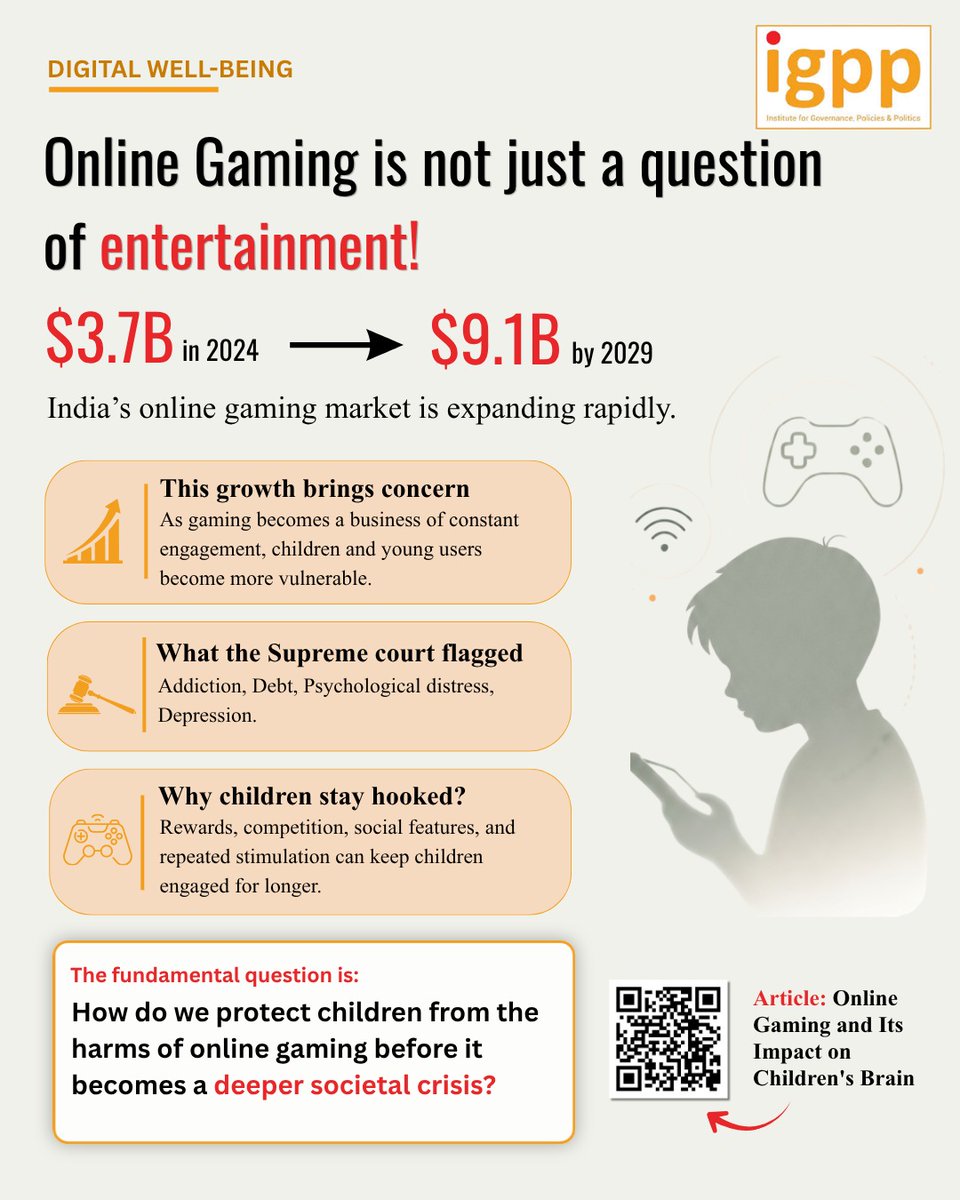
Online gaming is not a question of entertainment.
India’s online gaming market has expanded rapidly. This growth raises serious concerns around addiction, debt, psychological distress as well as children and young adults's digital well-being.
The Supreme Court’s recent observations on online betting and gaming addiction highlight the need to look beyond play and profit. When platforms are designed around constant engagement, rewards, competition and repeated stimulation, children and young users become more vulnerable.
IGPP’s article, ‘Online Gaming and Its Impact on Children’s Brain’, explores how online gaming affects children’s behaviour, attention, mood and mental health, and why digital play needs greater responsibility.
Read the full article here: igpp.in/publications/article…
@PMOIndia | @GoI_MeitY | @MinistryWCD | @NCPCR_
@manishtiwari | @ranjana_kush | @AnkurTi76797199 | @pujasingh2k16 | @TheVikasLohchab
#IGPP #OnlineGaming #DigitalWellbeing #ChildSafety #GamingAddiction #OnlineSafety #MentalHealth #DigitalSafety #ChildrenOnline #ResponsibleTech #PlatformResponsibility
1
26
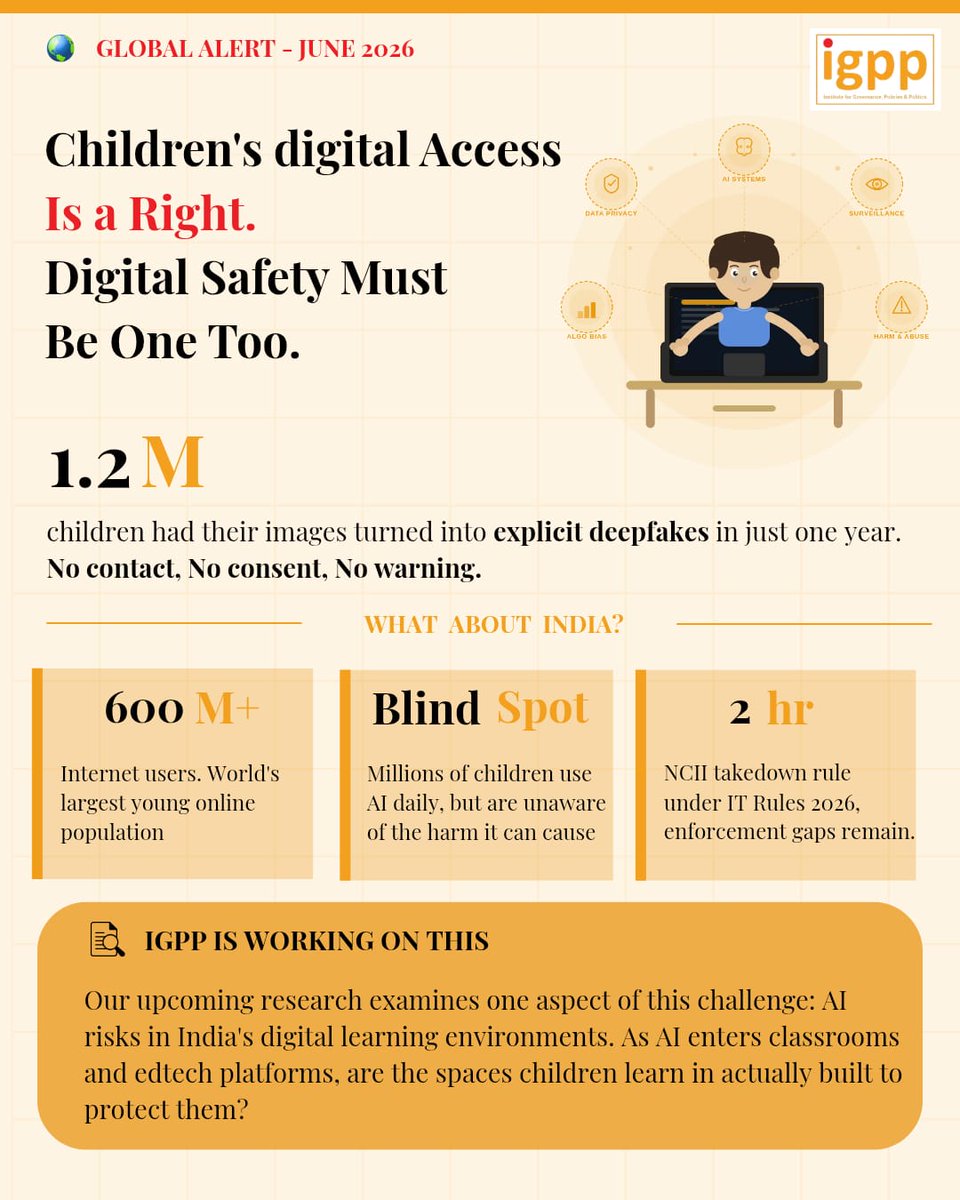
A recent @UNICEF–@ECPAT–@INTERPOL_HQ study found that 1.2 million children had their images turned into explicit deepfakes within a year. These harms often occur without contact, consent, or warning, raising urgent questions about how digital spaces are designed and governed.
Home to one of the world's largest young online populations, India is witnessing the rapid adoption of AI across platforms. Yet important regulatory and enforcement gaps remain.
At IGPP, our upcoming research examines one aspect of this challenge: AI risks in India's digital learning ecosystem. As AI enters classrooms and edtech platforms, are the spaces children learn in truly built to protect them?
@PMOIndia | @GoI_MeitY | @MinistryWCD | @NCPCR_
@manishtiwari | @ranjana_kush | @AnkurTi76797199 | @pujasingh2k16 | @TheVikasLohchab
#IGPP #ChildSafety #DigitalRights #ArtificialIntelligence #OnlineSafety #DigitalGovernance #ResponsibleAI #EdTech #AIandSociety #PolicyResearch #UNICEF #ECPAT
1
37
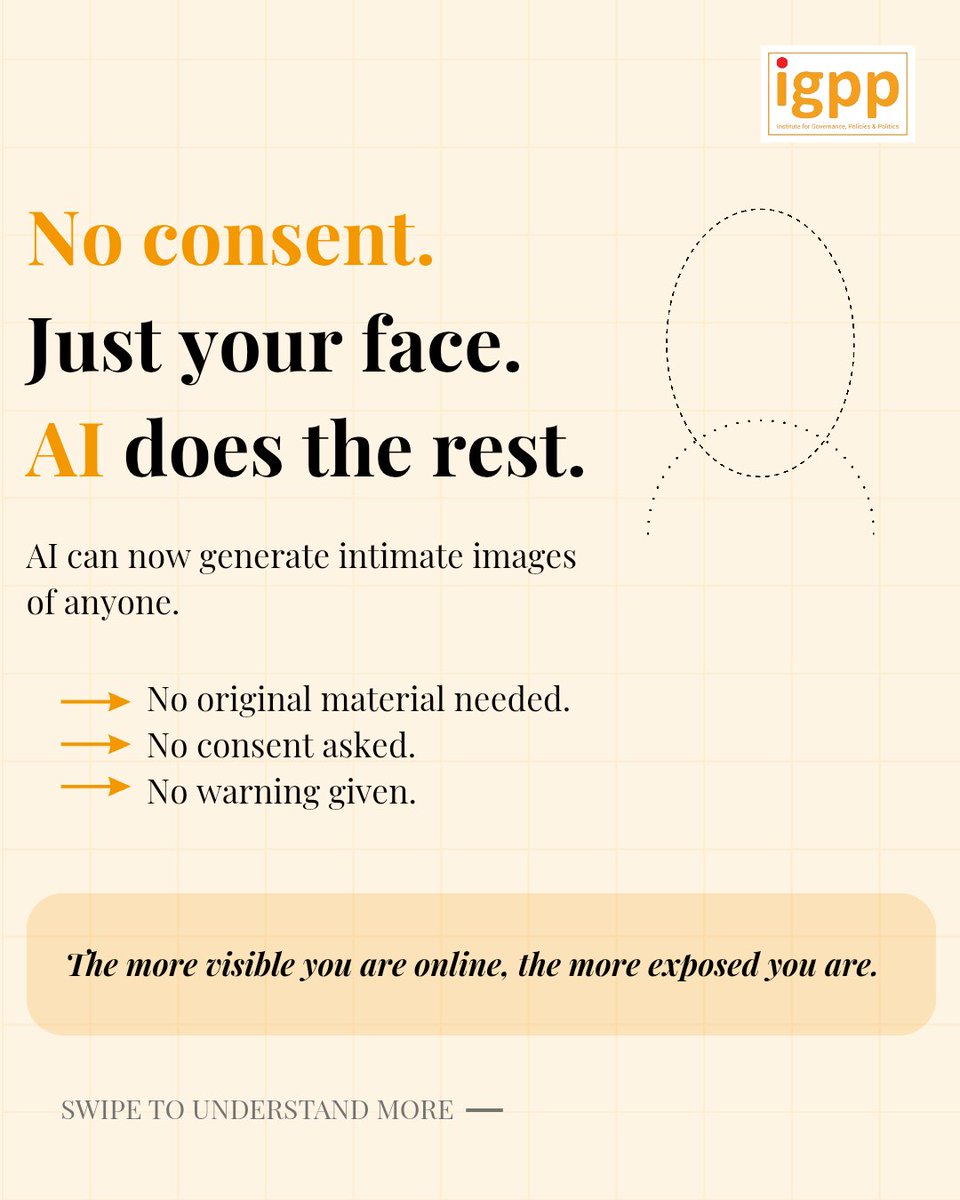
Conversations around NCII (non-consensual intimate image abuse) in India often remain fragmented, limited or dismissive of the broader harms involved. Issues of consent, reporting, institutional responsibility and access to support continue to be overlooked, particularly for those most affected.
Building safer and more accountable digital spaces requires a better understanding of how people perceive NCII, the challenges victims encounter and the gaps that continue to shape responses to online abuse.
The Institute for Governance, Policies and Politics (IGPP) is conducting surveys to contribute to stronger research, policy engagement and public conversations around NCII and digital safety in India.
Survey A: Public Awareness and Perception of NCII in India
bit.ly/4o1oHfg
Survey B: Understanding the Experiences of NCII Victims in India
bit.ly/3RCyzQi
To know more about us, visit: igpp.in
@PMOIndia | @GoI_MeitY | @Cyberdost | @MinistryWCD | @NCPCR_ | @StopNCIIorg
@manishtiwari | @ranjana_kush | @AnkurTi76797199 | @pujasingh2k16 | @TheVikasLohchab
#NCII #OnlineSafety #DigitalRights #CyberSafety #DigitalGovernance #OnlineHarms #Deepfakes #PlatformAccountability #DigitalSafety #Policy #IGPP
2
3
43
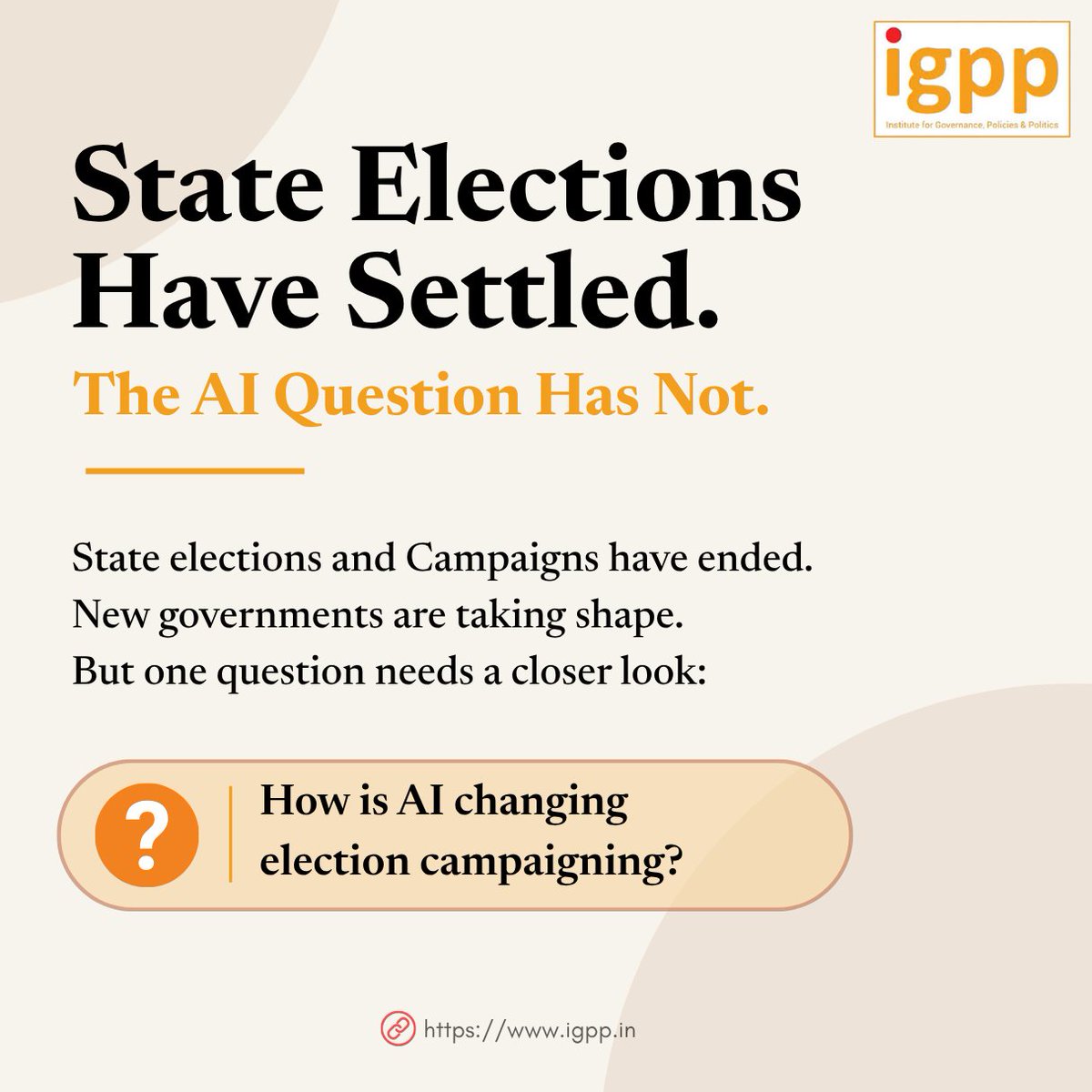
Elections may be over, but the debate around AI in elections and campaigns is only beginning.
As AI becomes part of political communication, campaign strategy and voter outreach, the question is no longer whether candidates will use AI. The question is how responsibly they will use it.
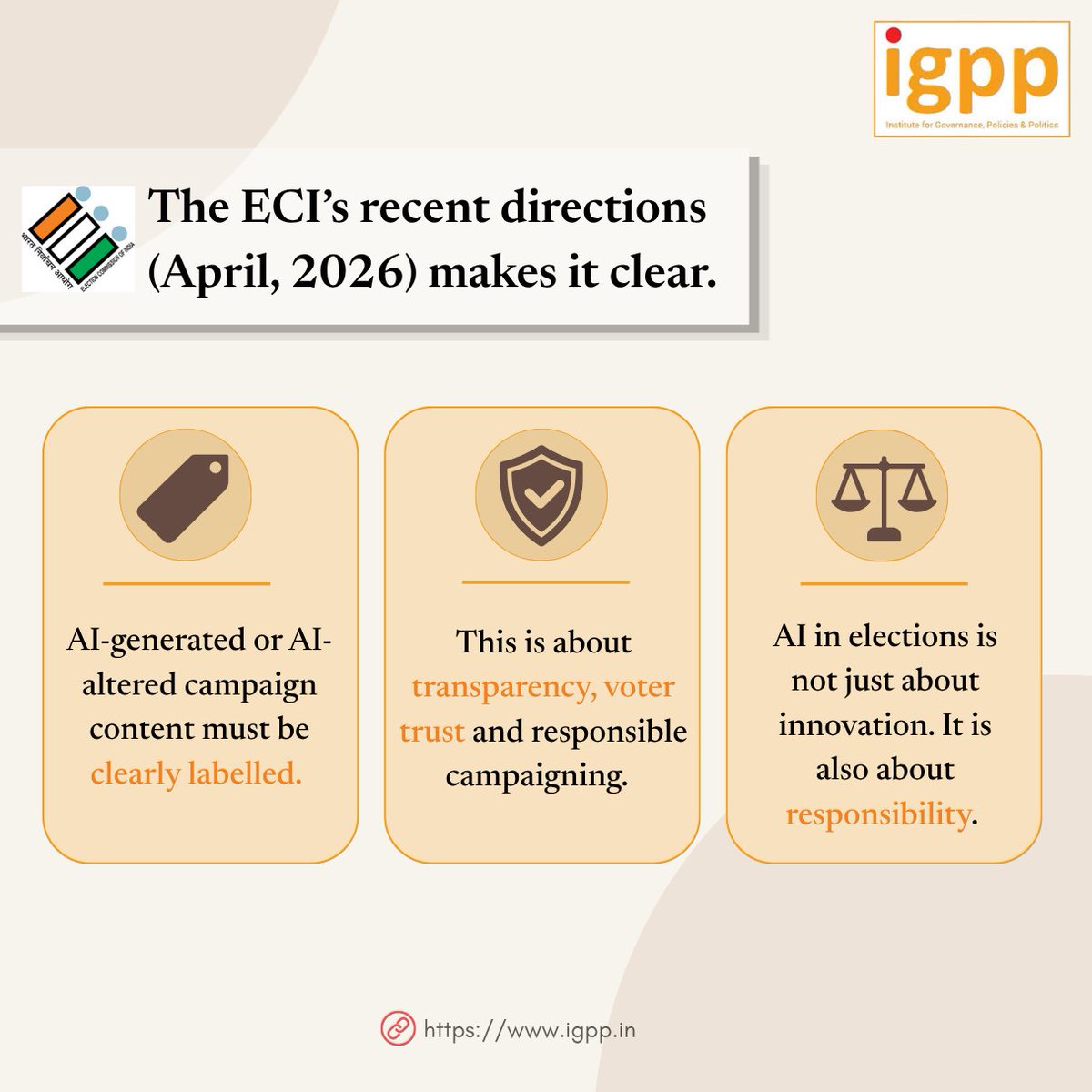
The Election Commission’s recent directions (April, 2026) on AI-generated and AI-altered campaign content underline the need for transparency, responsible digital communication and voter trust.
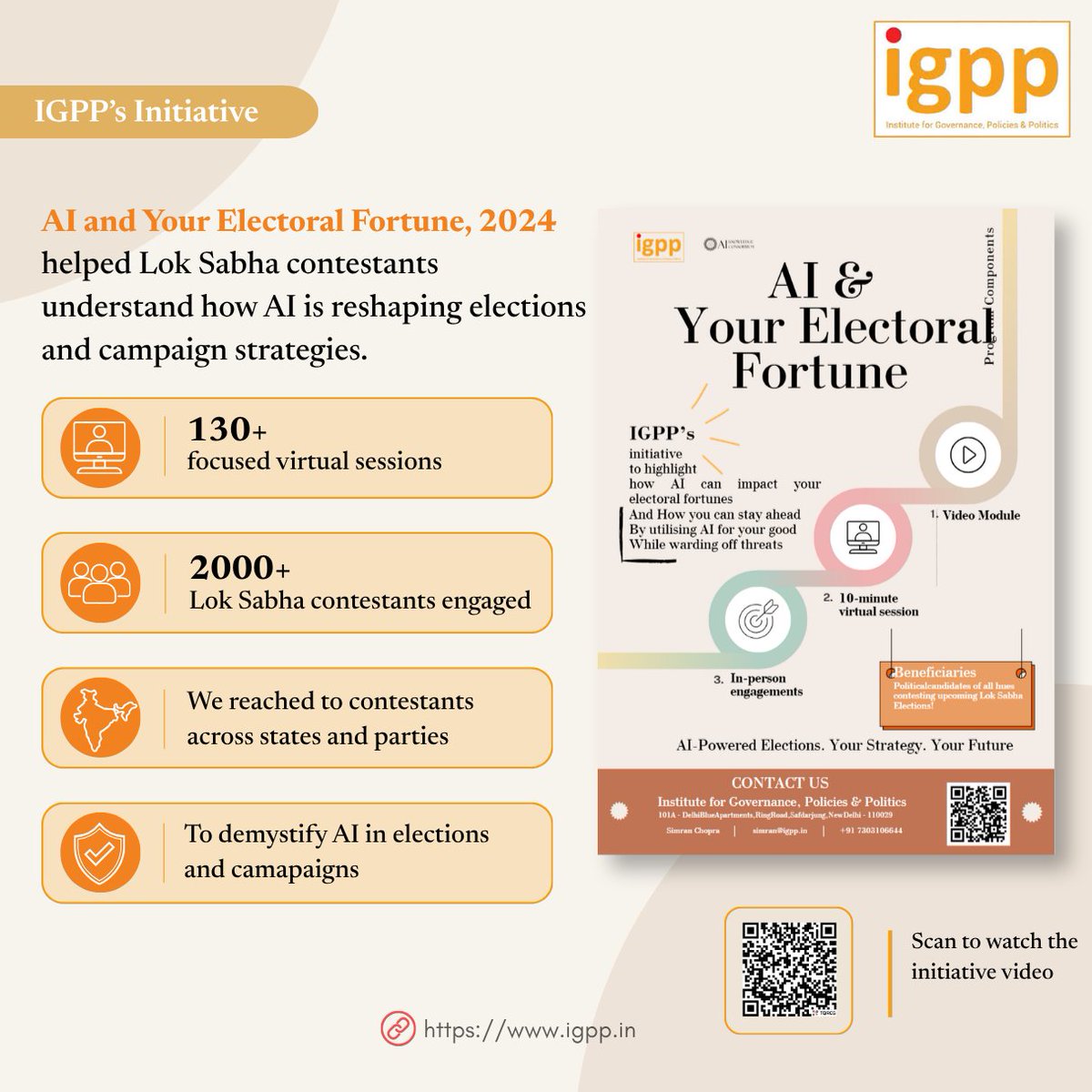
During the Lok Sabha Elections 2024, IGPP took this conversation directly to political candidates through its initiative, ‘AI and Your Electoral Fortune’. As part of the initiative, IGPP reached out to 2,000 Lok Sabha contestants across states and parties and conducted 130 focused virtual sessions with candidates to help them understand the opportunities, risks and responsibilities of using AI in electoral strategies.
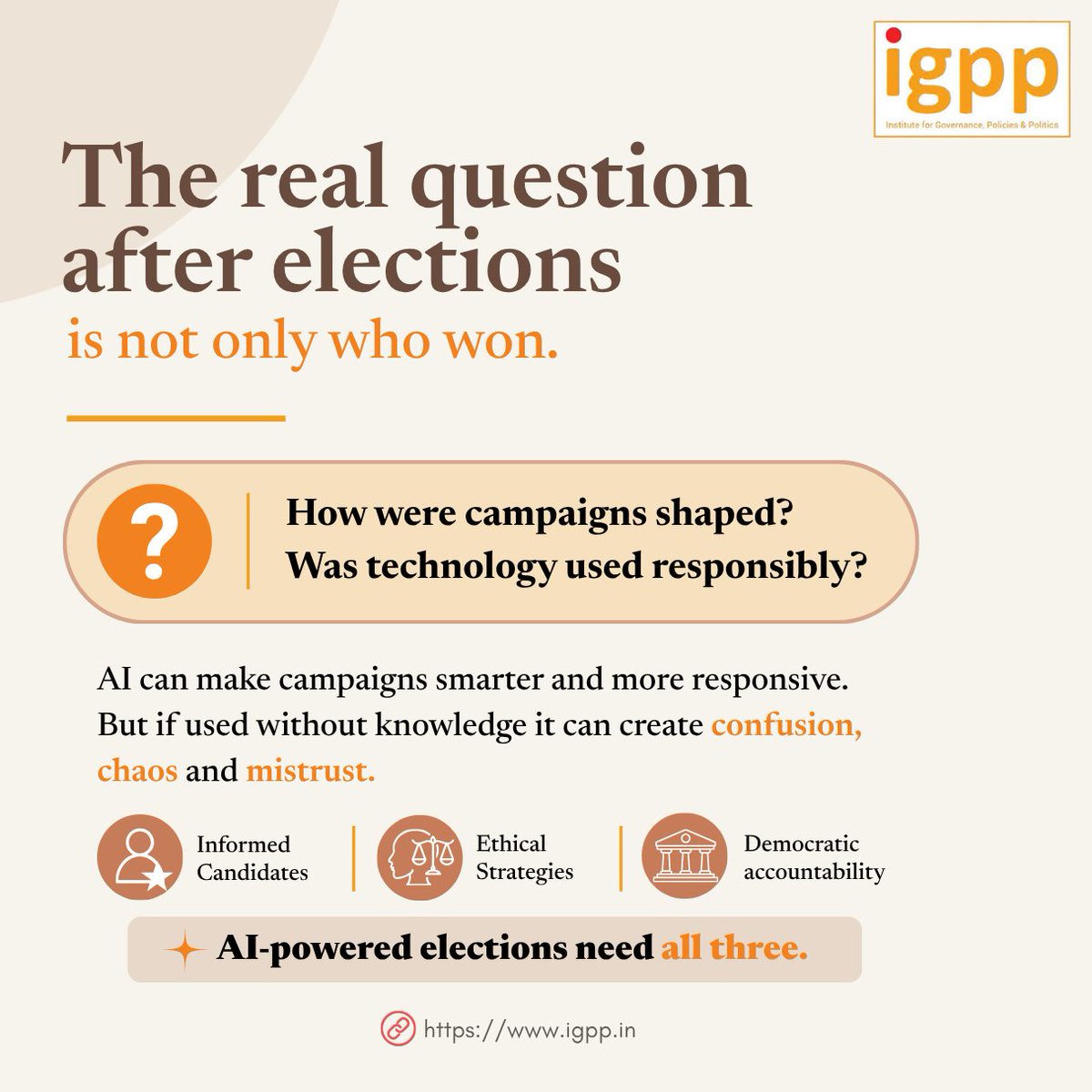
AI-powered elections need more than smarter tools.
They need informed candidates, ethical strategies and democratic accountability.
To know more about us, visit: igpp.in/ai_&_your_electoral_…
@manishtiwari | @ranjana_kush | @AnkurTi76797199 | @pujasingh2k16 | @TheVikasLohchab
#AIinElections #AIAndYourElectoralFortune #IGPP #ElectionCampaigns #DigitalDemocracy #ResponsibleAI #AIGovernance #ElectionIntegrity #PoliticalCommunication #TechnologyAndDemocracy #DigitalPolicy #PublicPolicy #VoterTrust #AIRegulation #SyntheticContent #DemocracyAndTechnology
1
6
38
🌍 “The future cannot be called intelligent if it destroys the planet that sustains it.”
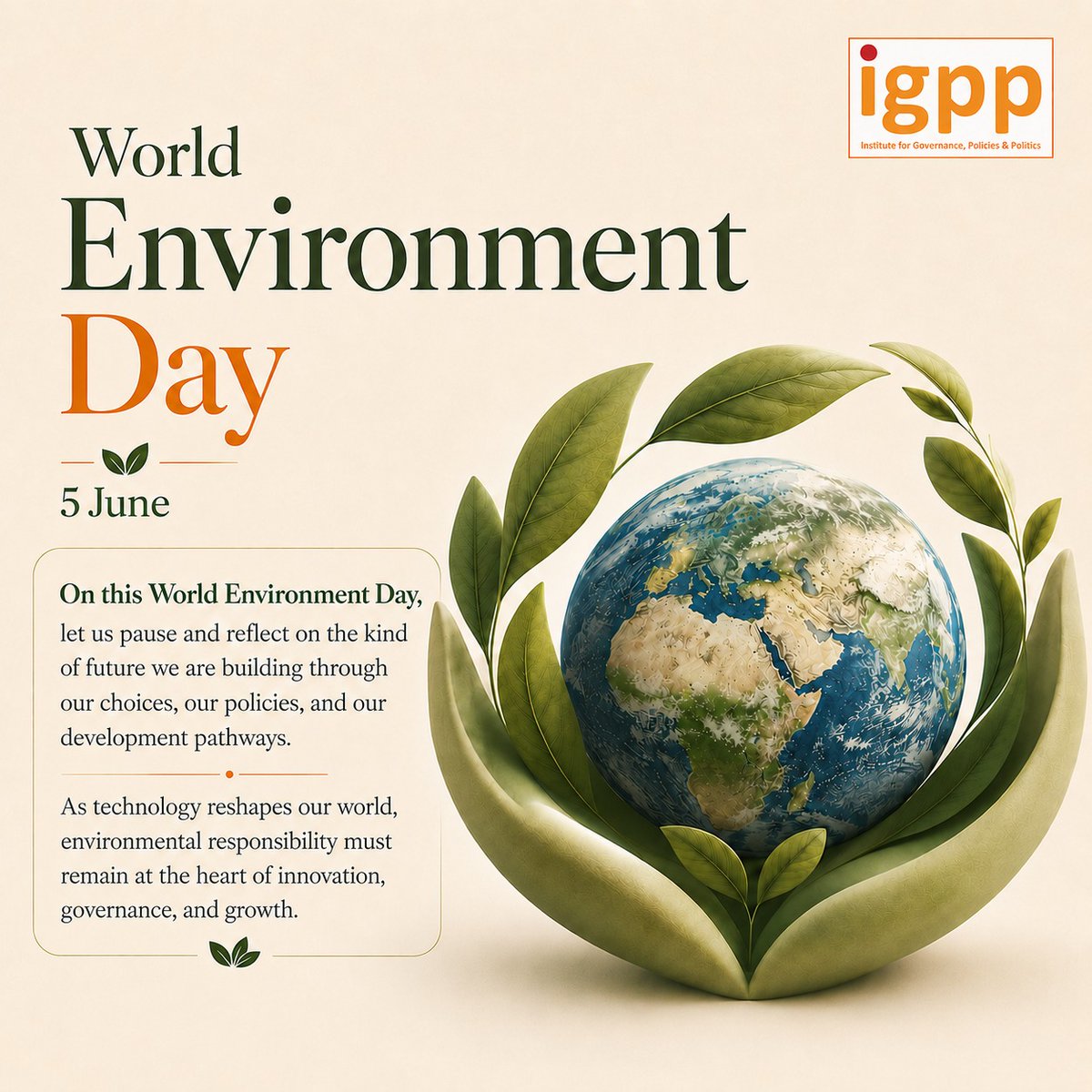
This World Environment Day, let us pause and reflect on the kind of future we are building through our choices, our policies, and our development pathways.
Development without sustainability is not progress — it is a risk transferred to future generations.
As technology reshapes our world, environmental responsibility must remain at the heart of innovation, governance, and growth. 🌱
To know more about us, visit: igpp.in
@manishtiwari | @ranjana_kush | @AnkurTi76797199 | @pujasingh2k16 | @TheVikasLohchab
#WorldEnvironmentDay #Sustainability #ClimateAction #ResponsibleInnovation #Environment
1
3
25
💡What does Meta’s new ‘13 ’ content setting announced yesterday really mean for teen safety online?
On June 2, 2026, @Meta announced that its stricter '13 ' content settings will now apply by default to all users under 18 across Instagram, Facebook and Messenger globally. These settings cannot be changed unless allowed by a parent.
Whether it effectively addresses the issue of child and teen safety and to what extent, remains an open question. However, it is important that Meta has taken a step forward in this direction. We appreciate this step and look forward to hearing thoughts, comments and experiences on this development.
Over the years, IGPP has actively worked on issues related to child safety, AI governance and digital well-being. As part of this effort, IGPP organised a panel discussion on ‘Safeguarding Children in India’s AI Future’ during the latest @OfficialINDIAai Impact Summit on 17 February 2026.
You can have a look at it here: youtube.com/watch?v=GBiBW0bi…
@manishtiwari | @ranjana_kush | @AnkurTi76797199 | @pujasingh2k16 | @TheVikasLohchab
#ChildSafety #OnlineSafety #DigitalGovernance #AI #ResponsibleAI #Meta #Instagram #Facebook #Messenger #TechPolicy #DigitalWellbeing #IndiaAIImpactSummit #AIGovernance
2
6
116
Addressing NCII (non-consensual intimate image abuse) requires more than reactive responses. Better policies, stronger protections, safer digital spaces and improved support systems all begin with understanding how people experience and perceive online harms today.
The Institute for Governance, Policies and Politics (IGPP) is conducting surveys to gather wider perspectives on NCII, digital safety and institutional accountability in India, with the aim of informing future research, policy discussions and support mechanisms.
Survey A: Public Awareness and Perception of NCII in India
bit.ly/4o1oHfg
Survey B: Understanding the Experiences of NCII Victims in India
bit.ly/3RCyzQi
To know more about us, visit: igpp.in
@manishtiwari | @ranjana_kush | @AnkurTi76797199 | @pujasingh2k16 | @TheVikasLohchab
#NCII #OnlineSafety #DigitalRights #CyberSafety #DigitalGovernance #OnlineHarms #Deepfakes #PlatformAccountability #DigitalSafety #Policy #IGPP
1
2
38
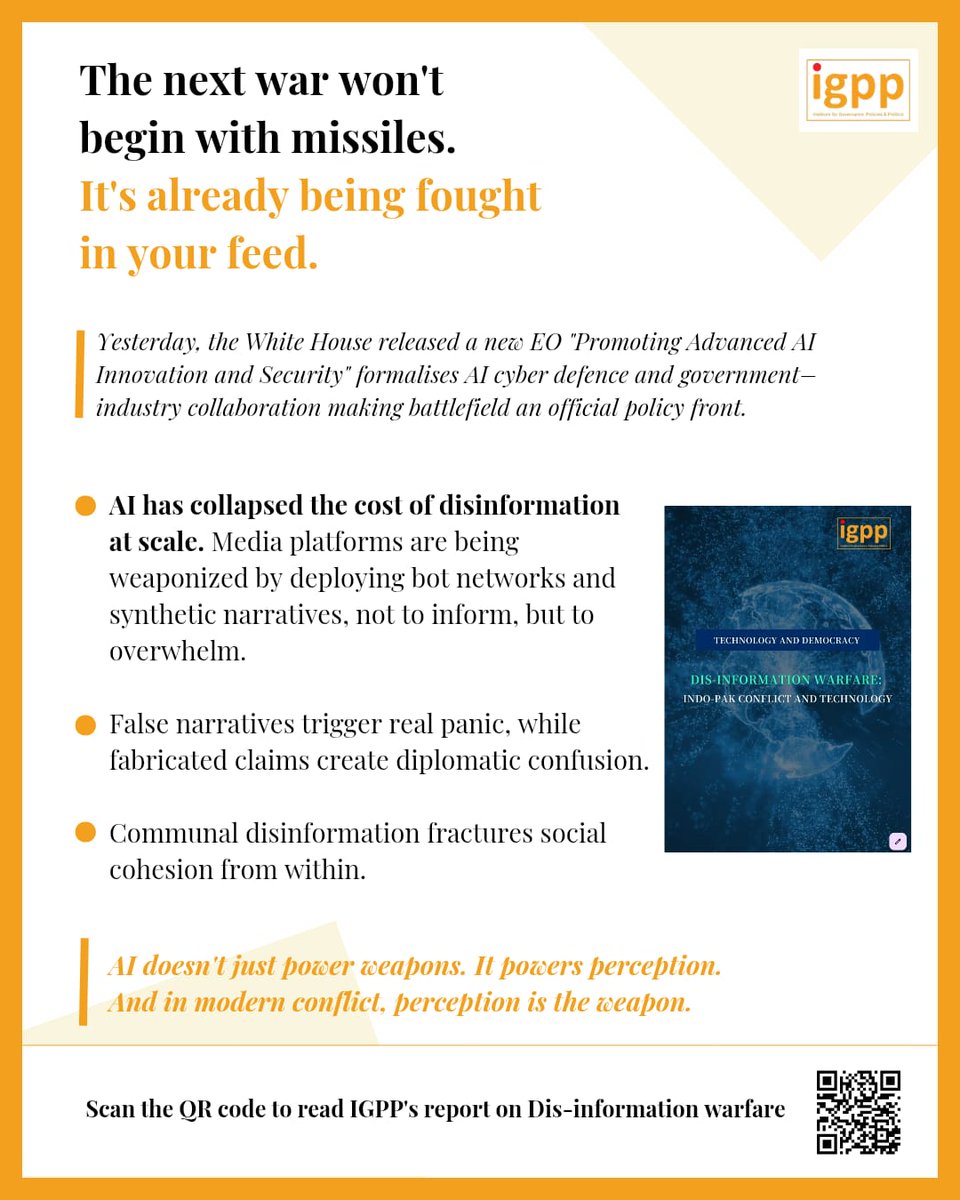
Wars are no longer fought only on battlefields. With time, they are being fought in the digital space through information, narratives, and perception.
Yesterday, the White House issued a new EO ‘Promoting Advanced AI, Innovation and Security’ establishing a framework to strengthen frontier AI security. This conveys the criticality of AI in modern warfare. IGPP did a report ‘Disinformation Warfare: Indo-Pak Conflict and Technology’ during #OperationSindoor last year.
Read @IGPPVMF's report on Disinformation Warfare in context of this new EO by #WhiteHouse to understand how AI is reshaping the information landscape - share.google/IdaSOGZqi6Kpxsp…
To know more about us, visit: igpp.in
@PMOIndia | @MeitY_India | @DefenceMinIndia | @SpokespersonMoD
@manishtiwari | @ranjana_kush | @AnkurTi76797199 | @pujasingh2k16 | @TheVikasLohchab
#IGPP #DisinformationWarfare #ArtificialIntelligence #DigitalGovernance #AIandSociety #PolicyResearch #AI
5
5
51
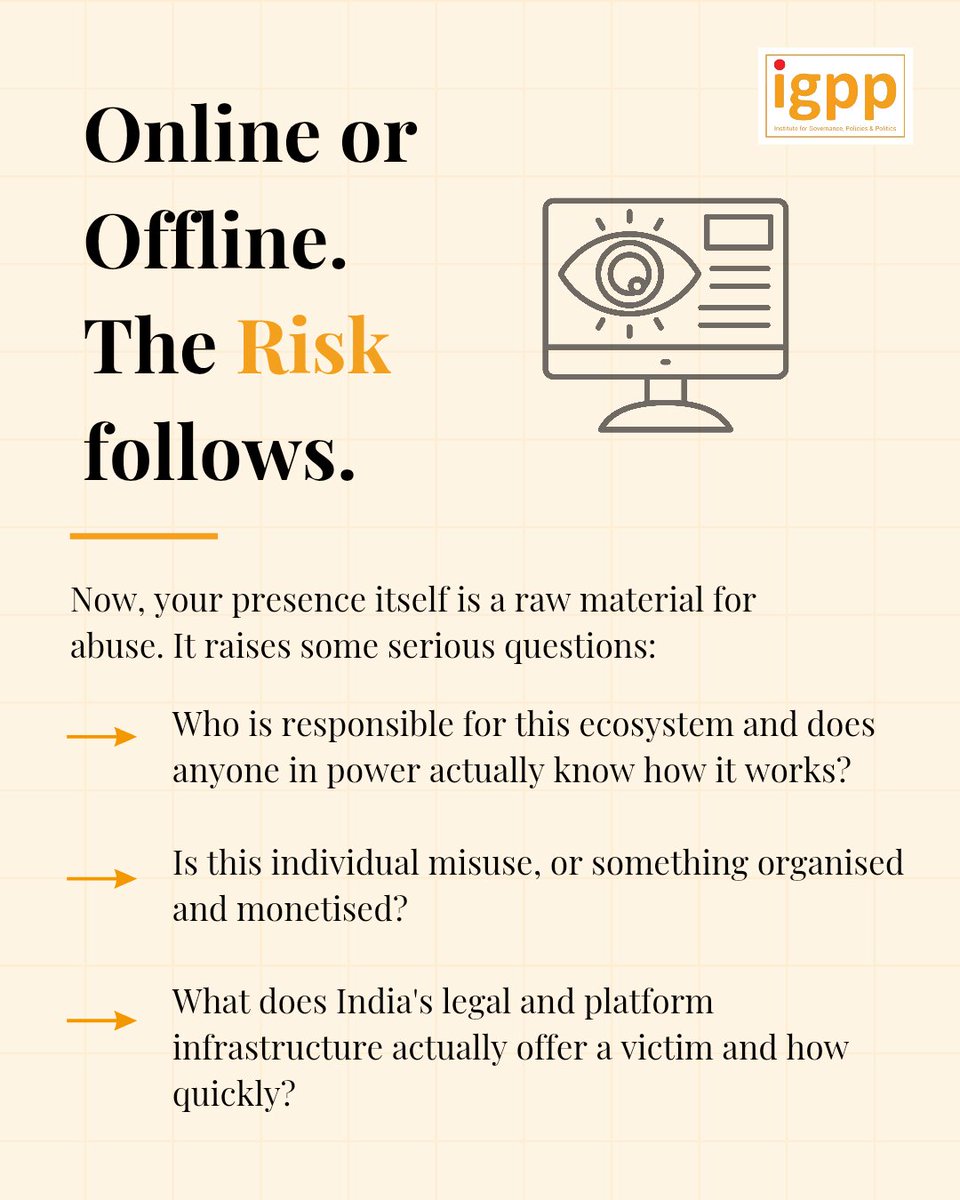
NCII raises critical questions about privacy, accountability, platform responsibility, and the effectiveness of existing legal frameworks. What happens when someone's digital presence becomes a tool for exploitation? Who is responsible when harm is enabled by technology? And how prepared are our institutions to respond?
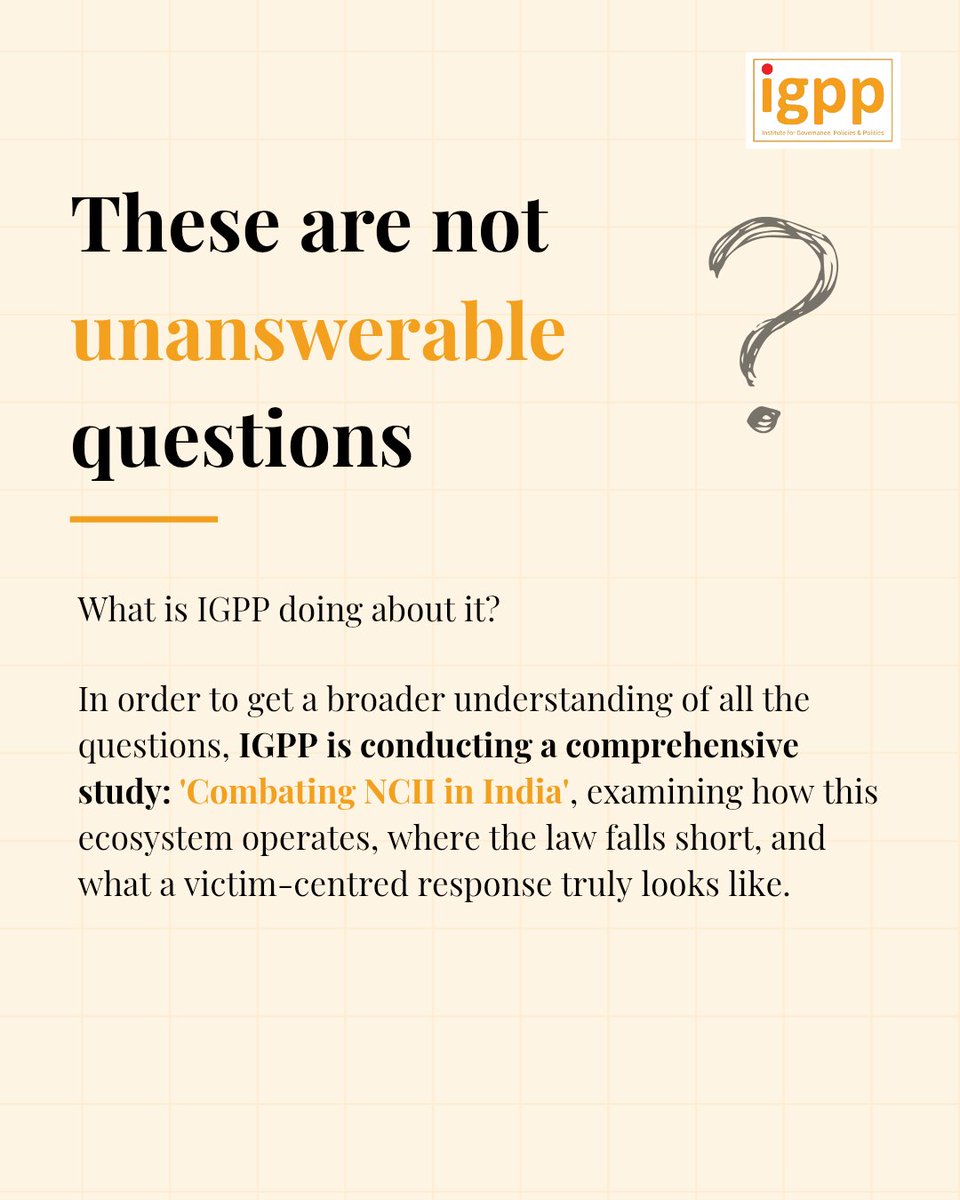
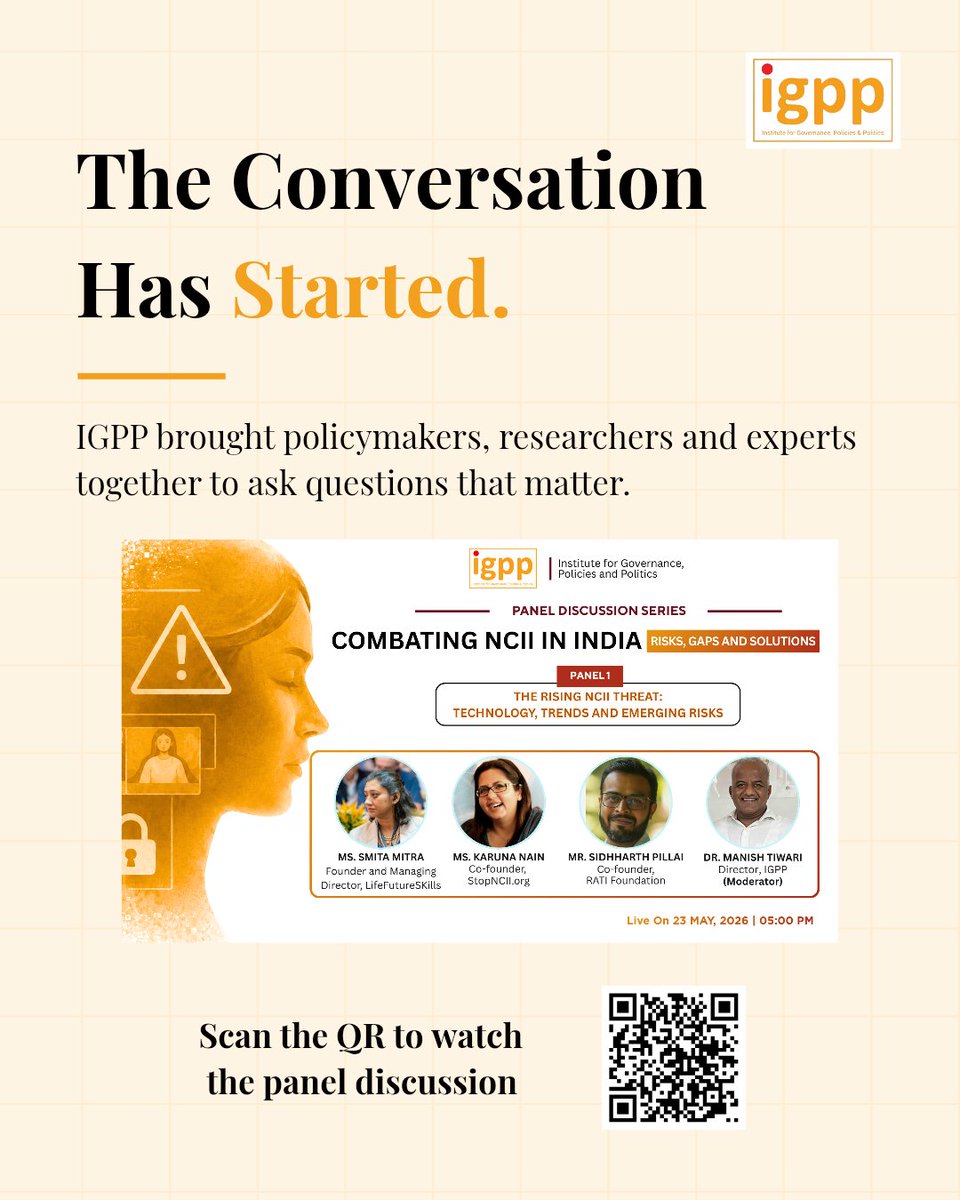
To better understand these challenges, IGPP is conducting a comprehensive study on Combating Non-Consensual Intimate Imagery (NCII) in India, examining the evolving ecosystem of abuse, legal and policy gaps, and pathways towards a more victim-centred response.
Watch the panel discussion - youtube.com/live/qbdE4ZlDHRM…
To know more about us, visit: igpp.in
@PMOIndia | @MeitY_India | @Cyberdost | @MinistryWCD | @NCPCR_ | @StopNCIIorg
@manishtiwari | @ranjana_kush | @AnkurTi76797199 | @pujasingh2k16 | @TheVikasLohchab
#NCII #DigitalRights #AIGovernance #OnlineSafety #ResponsibleAI #DigitalPolicy #TechnologyPolicy #PrivacyRights #IGPP #PublicPolicy #StopNCII #Deepfake #WomenSafety #DigitalSafety #OnlineSafety #StopDeepfakes #ConsentMatters
2
34
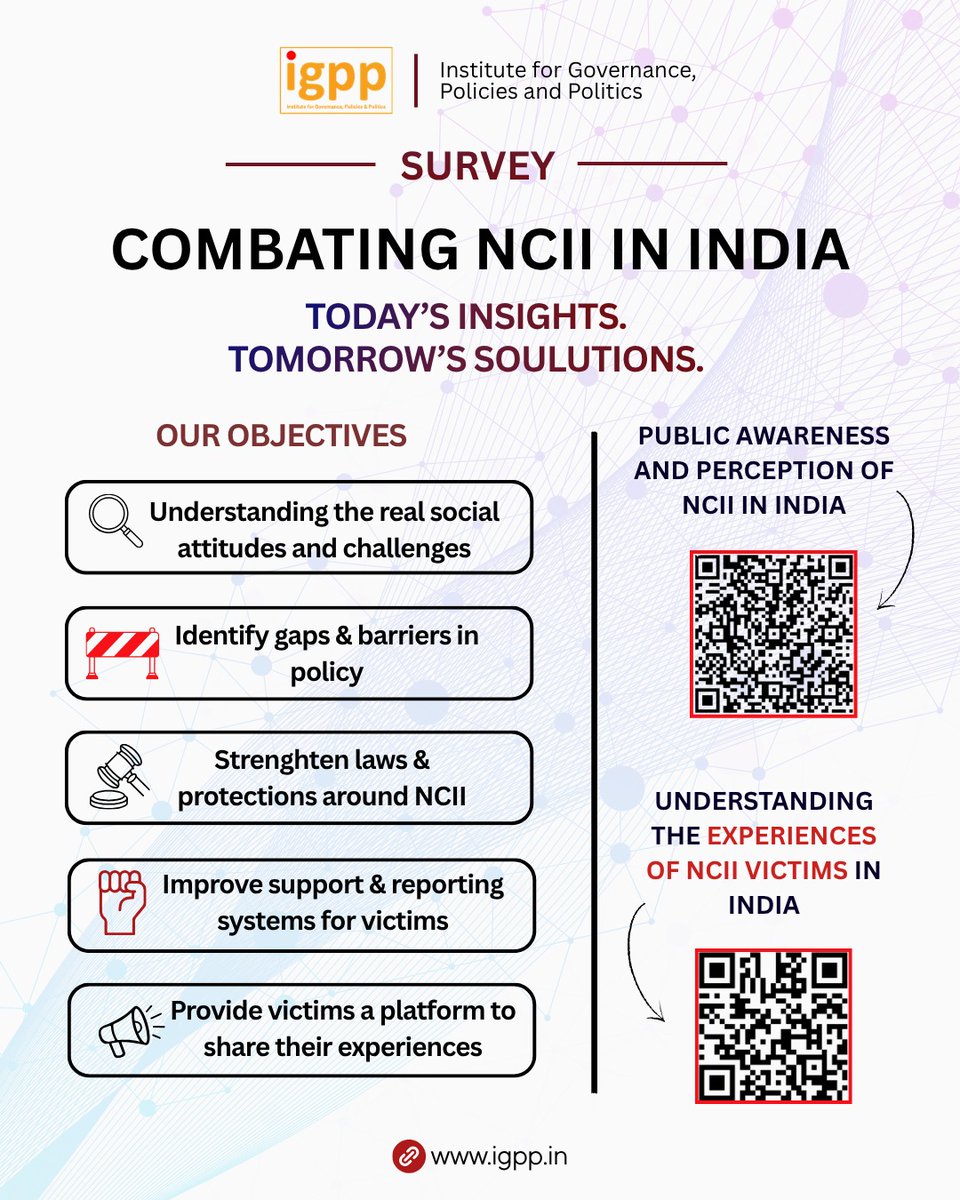
What do we need to better address non-consensual intimate imagery (NCII) in India?
Through these surveys, the Institute for Governance, Policies and Politics (@IGPPVMF) seeks to better understand the social realities, challenges and barriers surrounding NCII abuse, while also creating space for affected individuals to share their perspectives. The findings will help identify gaps in policy and institutional responses, strengthen support and reporting mechanisms, and contribute to more informed research and public discourse.
Scan the QR codes in the poster or follow these links:
Survey A: Public Awareness and Perception of NCII in India
bit.ly/4o1oHfg
Survey B: Understanding the Experiences of NCII Victims in India
bit.ly/3RCyzQi
To know more about us, visit: igpp.in
@manishtiwari | @ranjana_kush | @AnkurTi76797199 | @pujasingh2k16 | @TheVikasLohchab
#NCII #OnlineSafety #DigitalRights #CyberSafety #DigitalGovernance #OnlineHarms #Deepfakes #PlatformAccountability #DigitalSafety #Policy #IGPP
1
4
27
Why India Need Its Own Definition of NCII?
At @IGPPVMF's panel discussion 'The Rising NCII Threat: Technology, Trends and Emerging Risks', Ms. Karuna Nain, Co-Founder, StopNCII.org and Mr. Siddharth Pillai, Co-founder, RATI Foundation highlighted the current global definition of NCII falls short of capturing the South Asian reality and cultural context, where even a simple image can cause irreversible harm.
Watch full episode, here: youtu.be/qbdE4ZlDHRM
@manishtiwari | @ranjana_kush | @AnkurTi76797199 | @pujasingh2k16 | @TheVikasLohchab
#NCII #DigitalSafety #OnlineAbuse #Deepfakes #AI #CyberSafety #TechnologyPolicy #DigitalRights #GenderAndTechnology #PlatformGovernance #AIDetection #PlatformAccountability
1
3
49
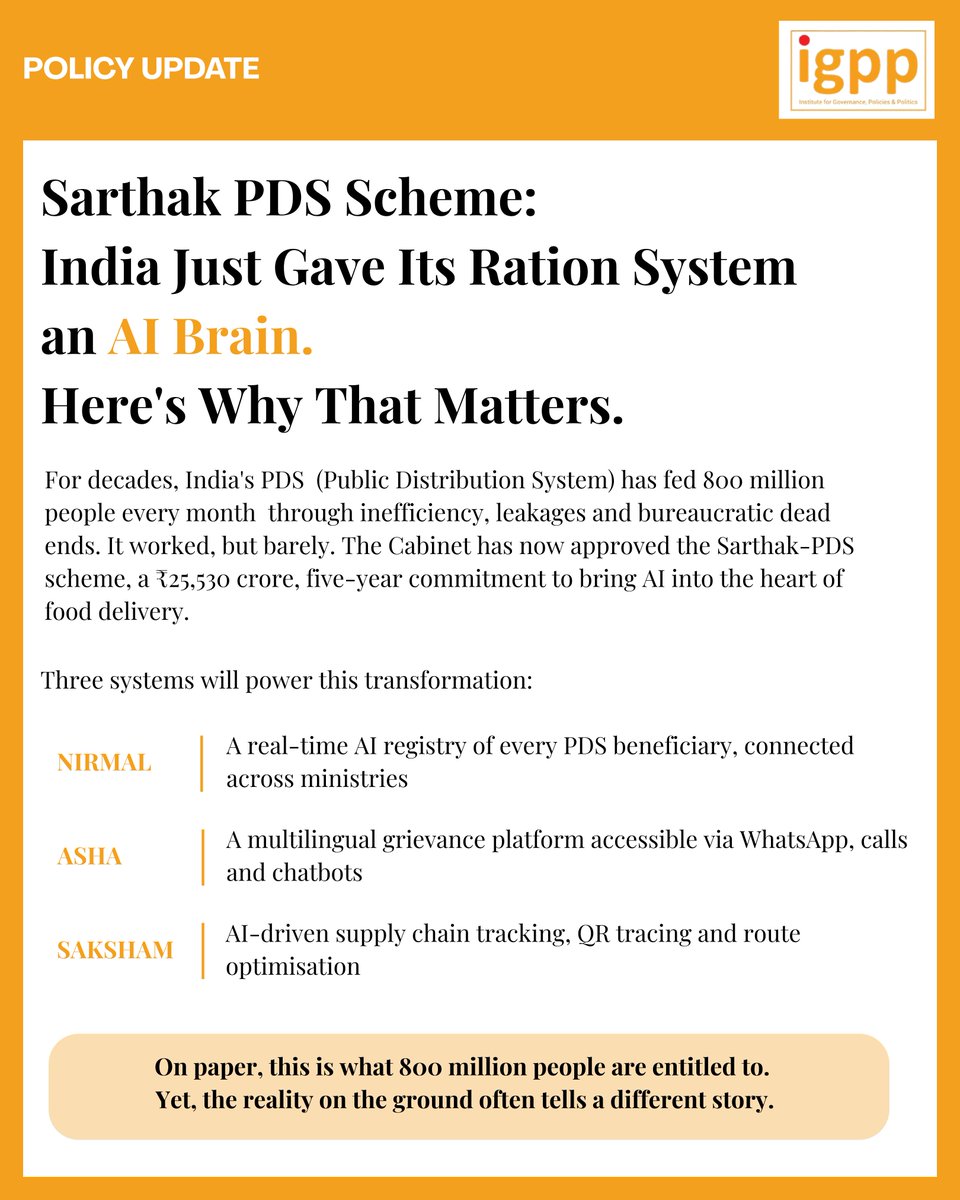
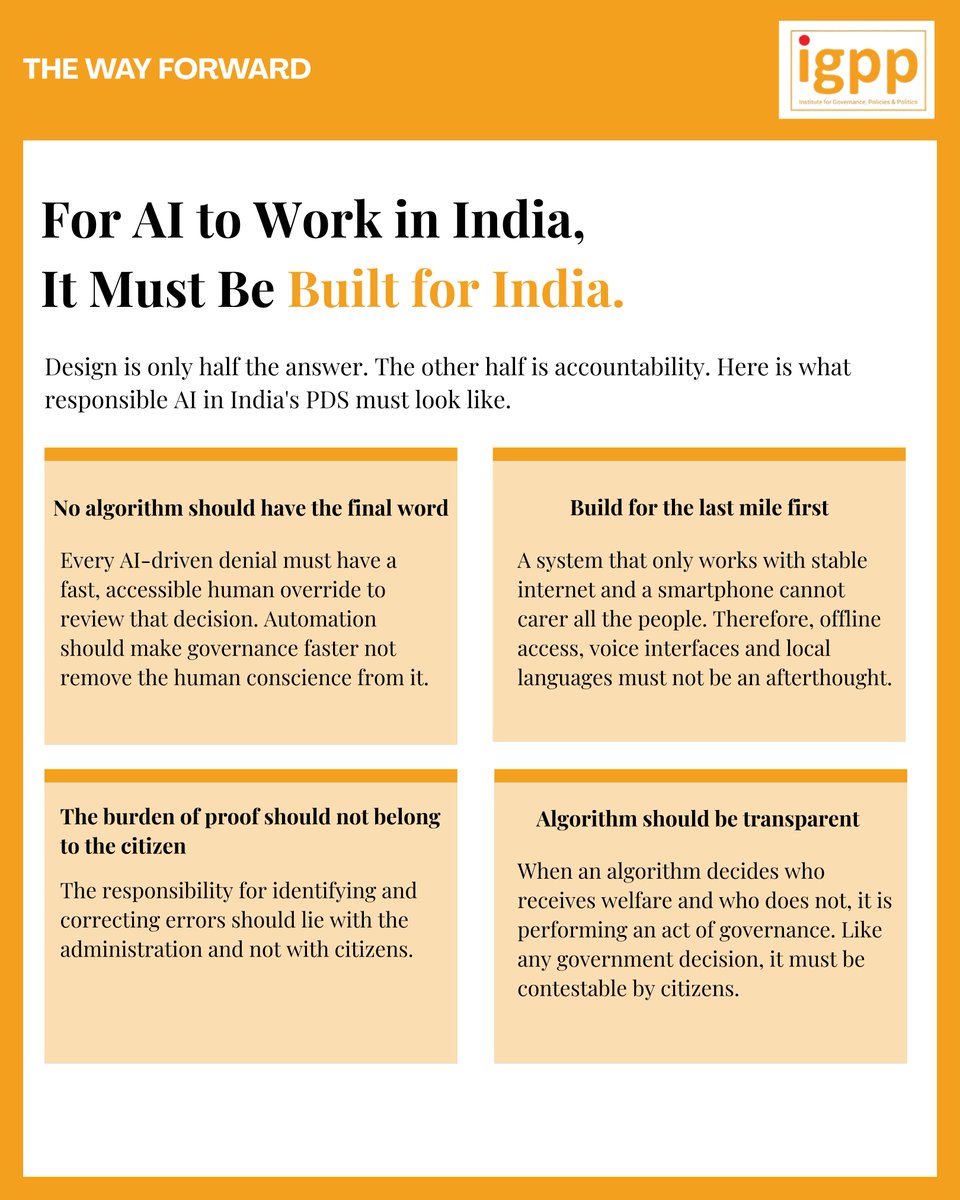
India's Public Distribution System (PDS) feeds nearly 800 million people every month, making it one of the world's largest welfare delivery networks. The recently approved Sarthak-PDS Scheme aims to strengthen this system through the integration of Artificial Intelligence, with a focus on beneficiary management, grievance redressal, and supply chain efficiency.
While AI has the potential to improve transparency and enhance service delivery, past experiences with digital welfare systems remind us that technology alone cannot solve governance challenges. Issues of accessibility, accountability, connectivity, and citizen rights must remain central to implementation.
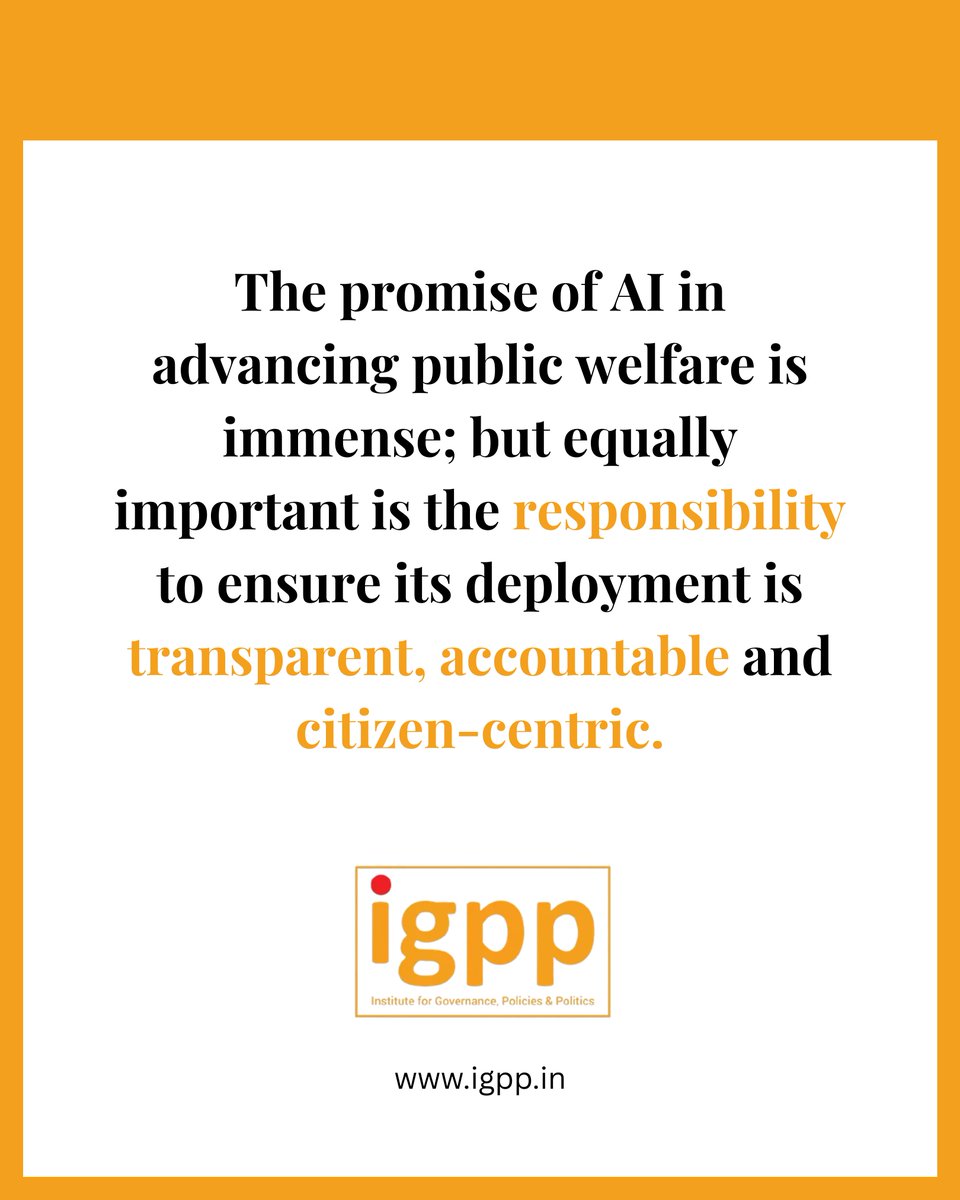
As AI becomes increasingly embedded in public welfare, the key question is not just what technology can do, but how it can be deployed in a manner that is transparent, inclusive, and citizen-centric.
@manishtiwari | @ranjana_kush | @AnkurTi76797199 | @pujasingh2k16 | @TheVikasLohchab
#IGPP #PolicyUpdate #PublicPolicy #ArtificialIntelligence #DigitalGovernance #PDS #FoodSecurity #AIforGood #Governance #IndiaPolicy

1
3
31
The Need For Accessible Redressal Mechanisms For NCII Victims.
During @IGPPVMF's panel discussion, ‘The Rising NCII Threat: Technology, Trends and Emerging Risks,’ Mr. Siddharth Pillai, Co-founder, @ratifoundation pointed out that for many victims, the reporting system itself becomes a barrier - complex complaint forms, language gaps and accessibility challenges leave those who need help the most, the furthest from it.
Watch full episode, here: youtu.be/qbdE4ZlDHRM
@manishtiwari | @ranjana_kush | @AnkurTi76797199 | @pujasingh2k16 | @TheVikasLohchab
#NCII #DigitalSafety #OnlineAbuse #Deepfakes #AI #CyberSafety #CyberLaw #TechnologyPolicy #DigitalRights #GenderAndTechnology #PlatformGovernance
3
30
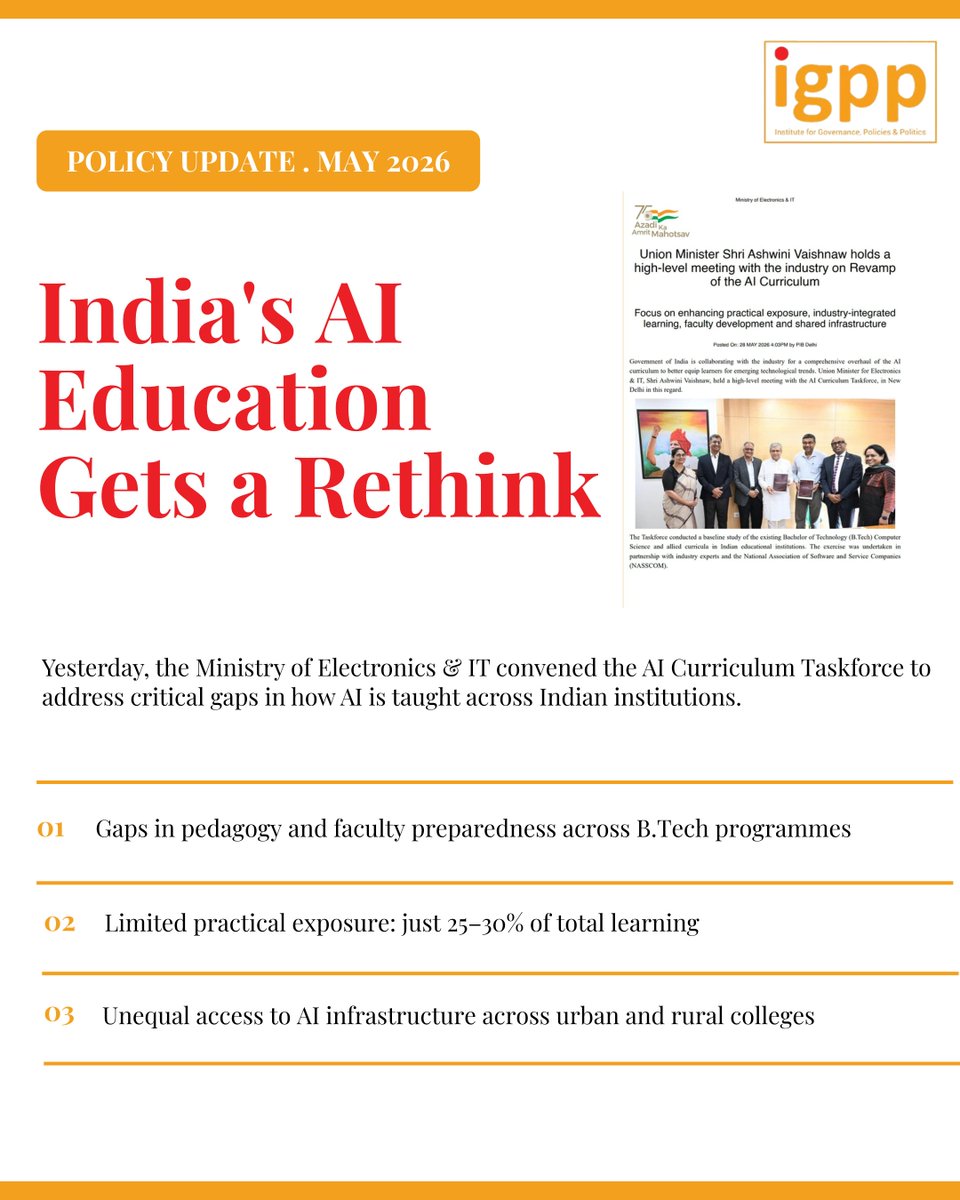
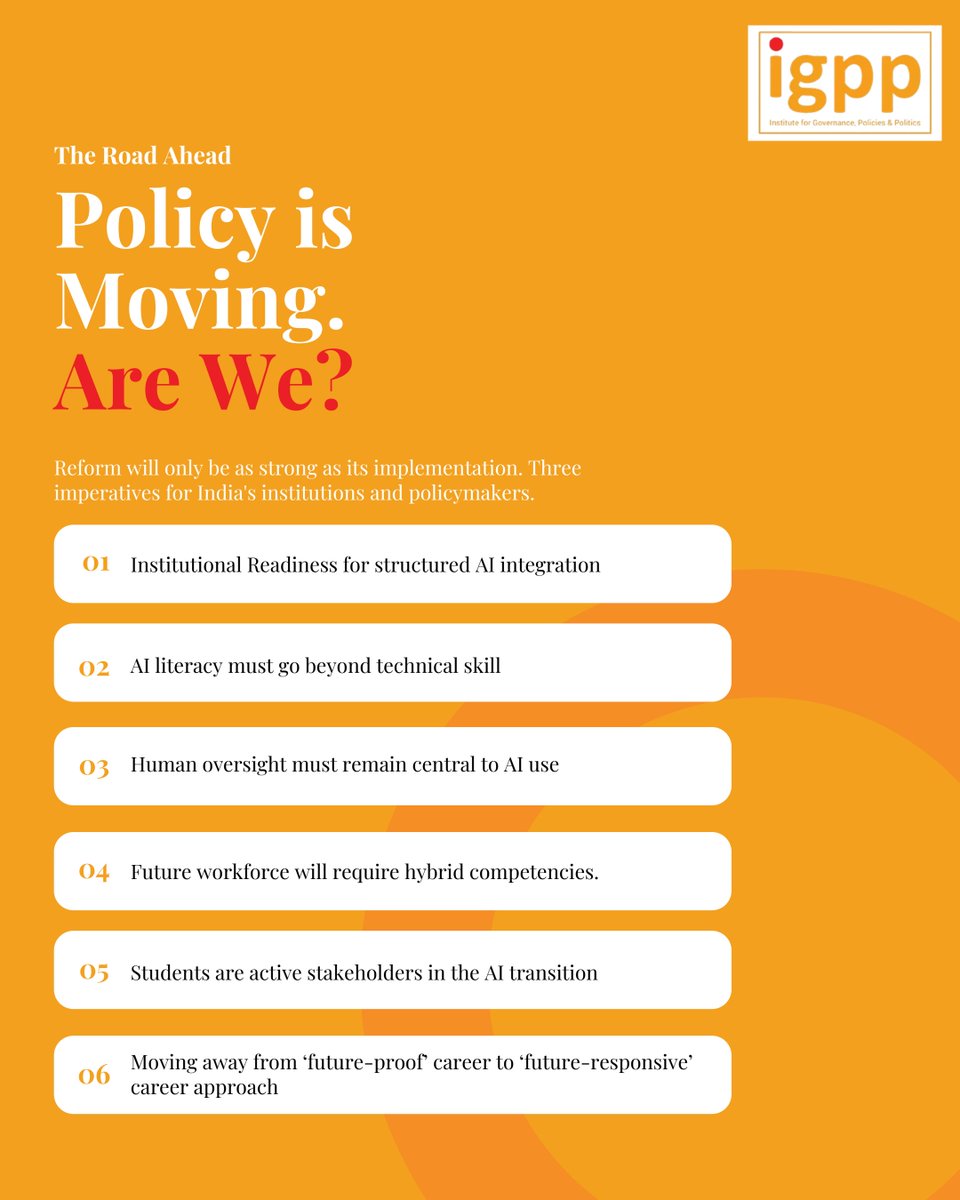
As India moves towards integrating AI into education, important questions are being raised about how educational institutions are preparing for this transition.
Yesterday, the Ministry of Electronics & IT released a press release highlighting key concerns such as gaps in AI pedagogy, limited practical learning, unequal access to AI infrastructure, and the need for ethical and responsible AI literacy across institutions.
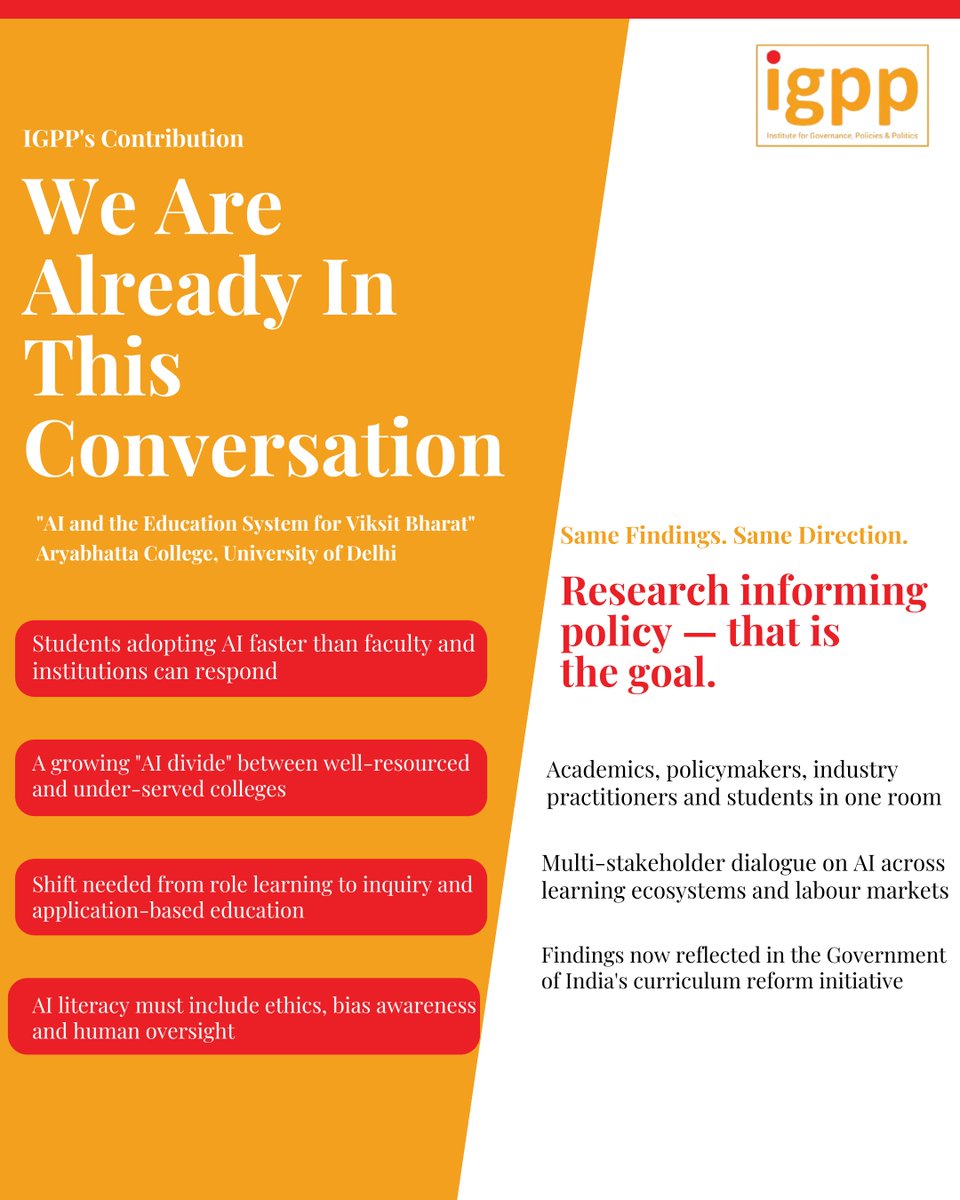
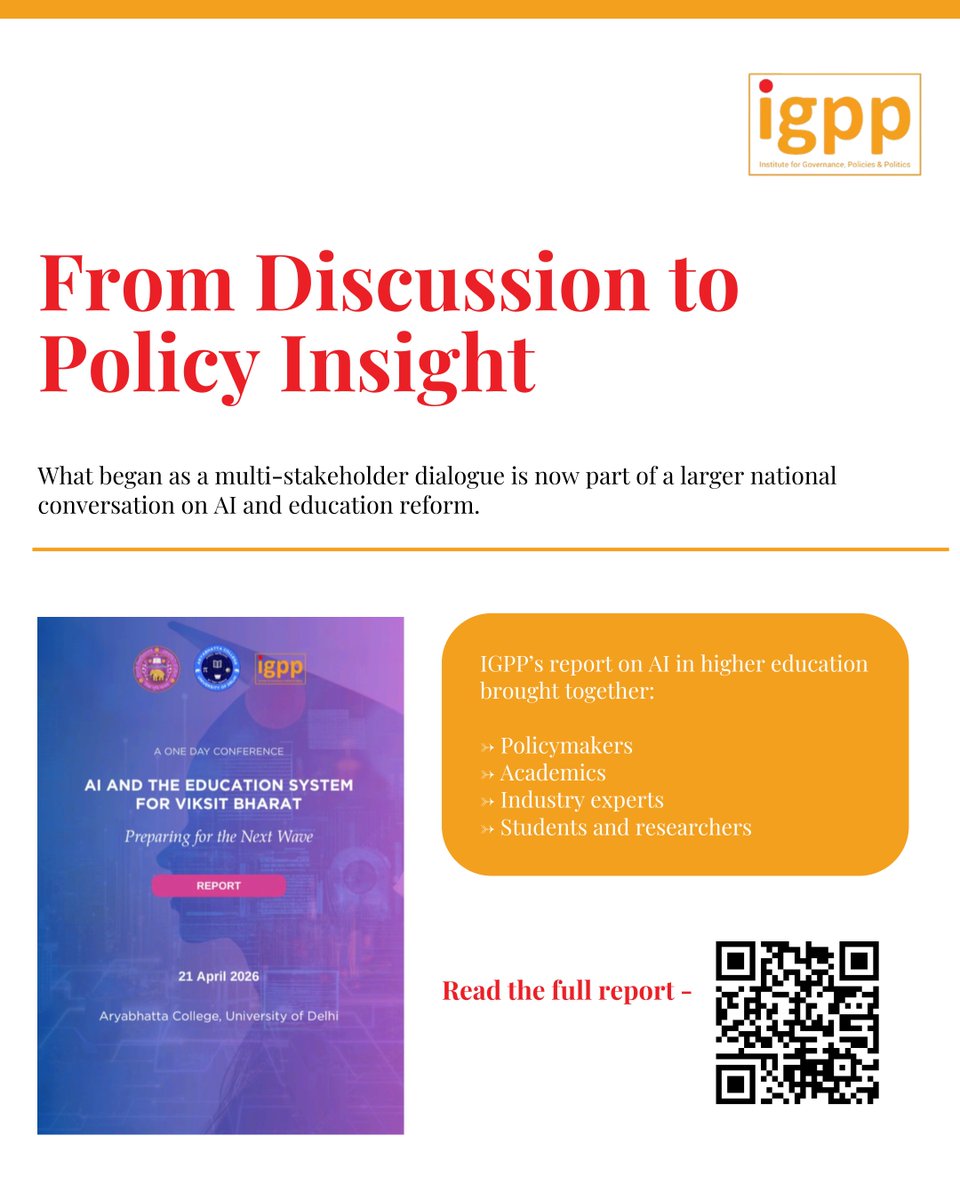
These are conversations IGPP has already been engaging with through its conference, 'AI and the Education System for Viksit Bharat', which brought together policymakers, academics, industry experts, researchers, and students to discuss the future of AI in higher education.
Policy conversations are moving forward. The focus now must be on meaningful implementation.
To know more about the conference - share.google/GzRWJTLh1ZBeasf…
@manishtiwari | @ranjana_kush | @AnkurTi76797199 | @pujasingh2k16 | @TheVikasLohchab
#IGPP #AIEducation #PublicPolicy #HigherEducation #ArtificialIntelligence #EducationPolicy #DigitalIndia #FutureOfWork
4
5
37