
Joined June 2024
- Tweets 21,707
- Following 473
- Followers 461
- Likes 50,287
3,228 Photos and videos











JoKerr2517 retweeted

Jun 12
>Be Elon
>Get bullied so badly as a kid that you end up in the hospital
>Escape into books
>Read more than 8hrs a day
>Teach yourself programming
>Sell a video game at 12
>Leave South Africa
>Sleep on couches
>Work odd jobs
>Get into America
>Build a startup
>Get fired from your own company
>Start over
>Build another company
>Merge it into PayPal
>Get removed as CEO
>Your company gets acquired
>Walk away with nearly $180 million
>Instead of retiring at 31, put almost all of it into three impossible ideas: Electric cars, Solar energy, Rockets
>People tell you you're insane
>Start a rocket company with no aerospace degree
>Learn rocket science from textbooks
>First rocket fails
>Second rocket fails
>Third rocket fails
>Divorce
>Public humiliation
>Cash running out
>One launch away from bankruptcy
>Launch anyway
>The fourth rocket reaches orbit
>NASA signs a contract
>Survive
>Tesla is weeks from collapse
>Save it at the last minute
>Get mocked for wanting reusable rockets.
>Land one.
>Then another.
>Then dozens.
>Turn science fiction into engineering
>Get mocked for betting on EVs
>Turn electric cars into status symbols
>Force the entire auto industry to follow
>Build the most valuable car company in history
>Launch astronauts into orbit
>Create a global satellite internet network.
>Buy Twitter
>Fire most of the staff
>Rename it X
>Walk into politics
>Risk your reputation
>Risk your companies
>Risk your fortune
>Become one of the most polarising people on Earth.
>Get attacked by the media, politicians, competitors, and activists
>Keep building anyway
>Become a TRILLIONAIRE

935
4,272
23,414
659,216
JoKerr2517 retweeted

Jun 12
If an artist drew an accurate cartoon of this person they would get fired from their job for being racist.
24
8
775
19,841
JoKerr2517 retweeted

Feb 18
The Hollow Men
American capitalism is rotting from the head down. We have replaced the "Owner-Operator"—the risk-taker-with a new, parasitic class of corporate bureaucrat: The Risk-Free Insider.
By "Insider," I am not referring to a specific title. I am referring to the entire administrative state that has captured the modern corporation. This includes the Directors who exist solely to collect fees, the Executives who exist solely to collect bonuses, and the Managers who exist solely to hire consultants.
These are the hollow men of the boardroom. They are masters of PowerPoint. They wear the right suits. They say the right buzzwords about "governance" and "ESG." But they are mercenaries fighting a war with someone else’s ammunition.
In a functioning economy, authority is tied to liability. If you make a bad decision, you lose your own money. That fear of loss is the only thing that keeps a business honest. It forces you to cut waste, obsess over the customer, and stay late to fix what is broken.
Today, we have severed that link.
We have rigged the game so that heads, the Insider wins; tails, the shareholder loses.
If the stock goes up, the Insider collects a massive performance bonus. If the stock crashes due to their own incompetence, they are fired with a "Golden Parachute" worth tens of millions. They are gambling with the house’s money, and they never leave the table poorer than they arrived.
This looting starts in the boardroom.
We have normalized a "Country Club" culture where directors are selected based on social profiling rather than their ability to build a business. The modern board member is often a professional tourist—paid an average of $350,000 a year.
Let’s be brutally honest about what that number represents. The average director is paid nearly five times the GDP per capita of the United States. They earn more for attending four quarterly lunches than the vast majority of Americans earn in five years of hard labor.
And for what?
Most of these directors are "over-boarded," sitting on three or four boards simultaneously. They treat directorships as a gig economy for the elite. They fly in, rubber-stamp a compensation package they didn't read, and fly out. They collect checks from companies they do not understand, do not use, and certainly do not love.
They are not there to ask hard questions. They are there to be collegial. They are there to protect the other Insiders.
And what happens when these boards hire executives who also have no personal capital at risk?
We get the Delegation Economy.
When a Risk-Free Insider faces a crisis—bloated expenses, a broken supply chain, or a stale product—they do not roll up their sleeves. They hire a consultant. They pay a strategy firm millions of shareholder dollars to produce a 100-page deck telling them what they already know.
This is not management. It is intellectual money laundering.
They use shareholder capital to buy an insurance policy for their own careers. If the plan fails, they can blame the consultants. They delegate the work because they are terrified of the responsibility. They would rather preside over a slow, comfortable decline than risk a bold mistake.
While American Insiders are busy optimizing their severance packages, our global competitors are optimizing their products. They are not slowed down by bureaucracy. They are not waiting for a slide deck. They are outworking us.
If we continue to fill our C-suites with administrators instead of operators, we will lose our edge. We will see iconic American franchises hollowed out by fees, managed for the benefit of the Insiders, while the true owners—the shareholders—are left holding the bag.
The time for polite governance is over.
If we want to save the American economy from mediocrity, we must demand a return to the "Owner’s Mentality." We need leaders who treat shareholder capital with the same reverence they treat their own savings. The era of the Risk-Free Insider must end.
2,722
5,858
21,408
2,929,631
JoKerr2517 retweeted

7 May 2024
The Ugly Teenage Phase of Profitable Growth
This is a phase that companies that were once high-growth, high-burn companies (that are typically transactional) go through as they try to get profitable.
Phase 1: You start with high revenue growth, high burn rate. Then you realize due to market conditions that you need to get profitable.
Phase 2: You drive for operating leverage:
- You cut operating expenses - inefficient marketing spend, headcount, etc.
-All out focus on enhancing gross margins - pricing, COGs, shipping, etc.
Phase 3: You focus on improving working capital dynamics.
-renegotiate with vendors, suppliers, manufacturers, etc. to enhance payment terms to improve cash.
Phase 4: You clean up the balance sheet
- Optimize inventory, renegotiate/refinance debt, try and solidify cash, etc.
During these four phases, revenue is declining YoY (sometimes materially) because you're comping against prior quarters with heavy marketing spend. This is why this is the "ugly teenage phase" - it looks ugly if all you're looking at is the top-line. But, there are usually good signs:
-marketing and sales efficiency is improving
-all opex lines are decreasing as a % of revenue
-EBITDA and/or OCF is growing
Phase 5: Revenue is declining YoY, but you have achieved profitability (EBITDA and/or FCF).
At this phase, you are still ugly to the world because revenue is declining, but the end of the teenage years is on the horizon.
Phase 6: Maintaining profitability and returning to YoY revenue growth by investing some of your own cash flow back into growth.
This happens typically in 4 steps:
-step 1: sequential Q/Q gross margin growth
-step 2: sequential Q/Q revenue growth
-step 3: YoY gross margin growth
-step 4: YoY revenue growth
The revenue growth comes from first from delivering real customer value and then:
-efficient marketing spend
-introducing new products
-expanding new channels
-reactivating churned customers
-pricing
-defending the base of loyal customers
The challenging part of this journey is the ugly period can last a long time. From Phase 1-5, you don't get much of any credit. It's not until you hit Phase 6 that outsiders will believe in the company again. But, those close to the company can watch as each phase is cleared and know that the company is going in the right direction. However, to be fair, until you get to Phase 6, you haven't reached the ultimate end goal.
**For the sake of clarity, this is a general observation across several different companies in different contexts many of which I'm not involved with. This is not an observation or prediction related to any specific company.
116
337
1,708
207,227

May 27
RT @TheDukeofKewpie: @ryanjhiggins Anyone who has to broadcast to the world how they’re totally not gay and totally not retarded is probabl…
36
JoKerr2517 retweeted

May 26
The power of salvation of baptism comes from the resurrection of Christ, Romans 6 and 1 Peter 3:21.
How do you want the thief on the cross to be saved through baptism when it's salvific power comes from the ressurrection?!!
2
3
92
JoKerr2517 retweeted

“Millie, have you seen the final edit?”
“Yes, it’s horrible.”
“Exactly. It’s going to bomb. Hard.”
“So what now?”
“We’re enforcing clause 23.”
“You mean…”
“Yes. Go out and start insulting the audience, especially men, especially anyone on the Right.”
“But…”
“But nothing. We have to have someone to blame that isn’t us.”
“But it’s not right. The movie is trash.”
“No, the movie is great. It’s the audience that is trash. That’s the line. Now go sell it.”


156
633
11,404
1,142,435
JoKerr2517 retweeted

May 19
Turns out that Jimmy, Dave, Igor, Ryan, and an assortment of Jew hating life-losers, disgruntled libs, sexual deviants, leg-humpers, drunks and failed comedians really aren’t a great coalition for winning a conservative primary election IRL. Shocker.
We didn’t ask for this ideological war, they did. And we finished it. Matter of fact, we didn’t even invite them to this party.
They invited themselves. And then they shit in the punch bowl and now they’re playing dumb as to why we threw their asses out.
Take your 1940s era agitprop bullshit and shove it up your ass. Or go back where you came from with your “river to the sea” terrorist friends. Those radical libs will welcome you back with open arms. Agitprop is their thing. It’s their ONLY thing.
Thanks. Have a great rest of your day! And a big thanks to the real conservatives who saw through this bullshit.
-Dan
2,717
6,270
34,600
1,833,646
JoKerr2517 retweeted

Apr 5
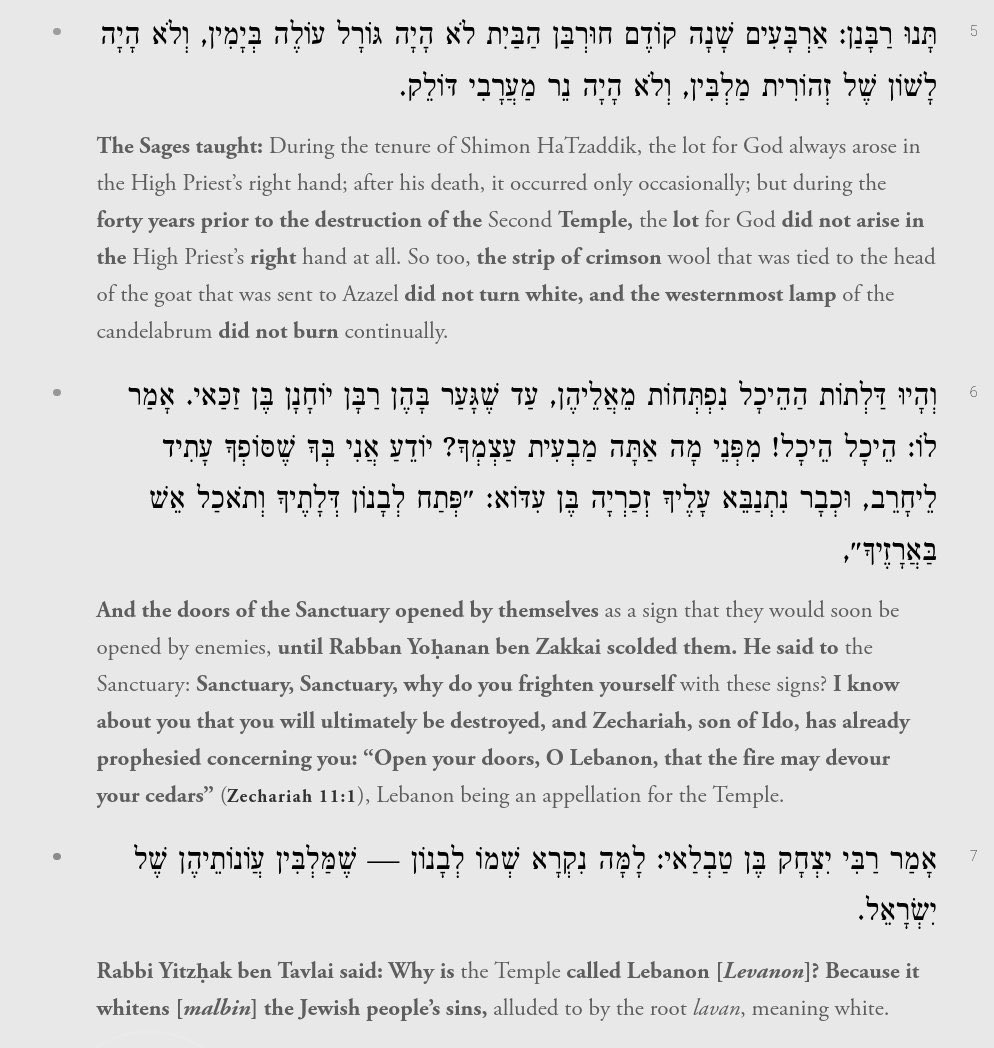
The Talmud basically says “yeah nothing supernatural in our religion worked anymore after Jesus died for some reason” and then Jews still deny Christ’s divinity.

200
3,099
32,033
2,753,973
JoKerr2517 retweeted

Apr 28
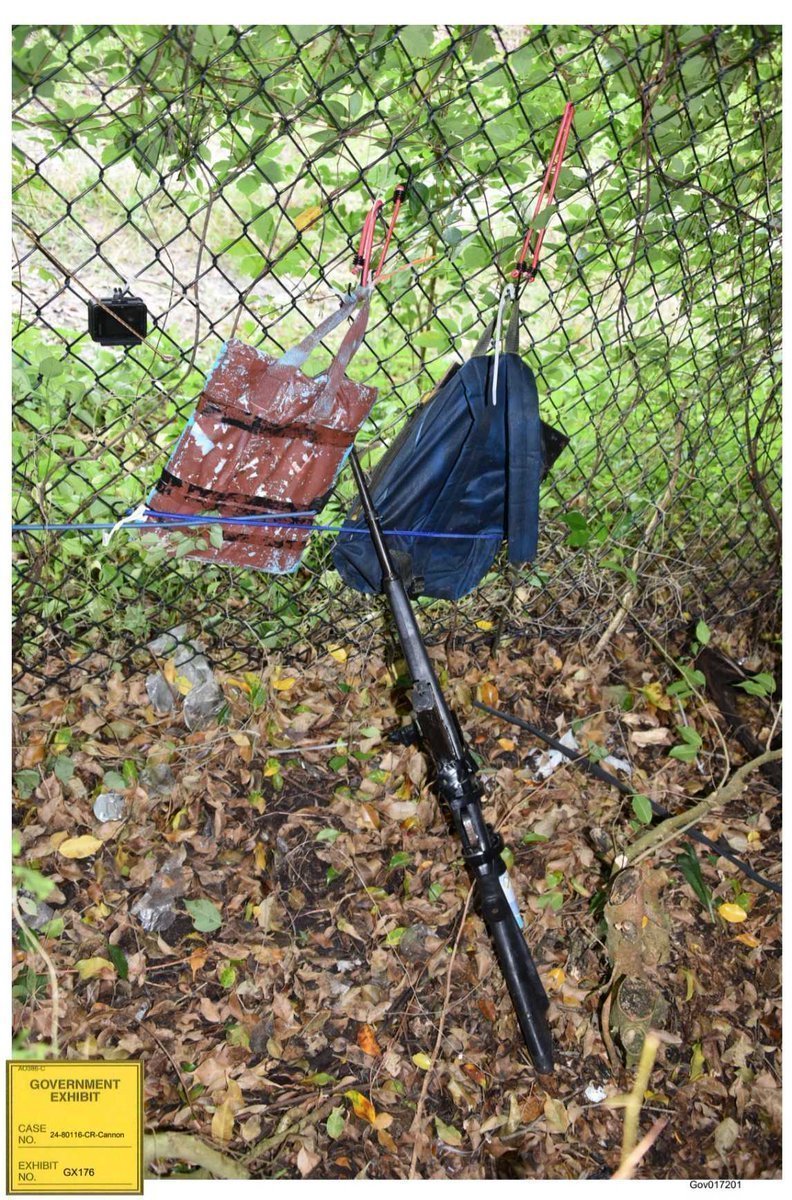
The Civil Conflict in the United States is going to severely escalate into something worse than the Irish Troubles or Spanish Civil War. The Left has been Radicalized in a way that there is no way back from.
The more intelligent and devoted Left wing radicals volunteered in Ukraine. They are there right now and when they come back after that war is over they will begin a terror campaign in The United States. Ryan Routh already did this in his attempt to murder Donald Trump.
You need to spend your time making your state hostile to the Left, Primary the useless and feckless Republicans. Replace them with people who know what fucking time it is.
104
206
1,873
91,896
JoKerr2517 retweeted

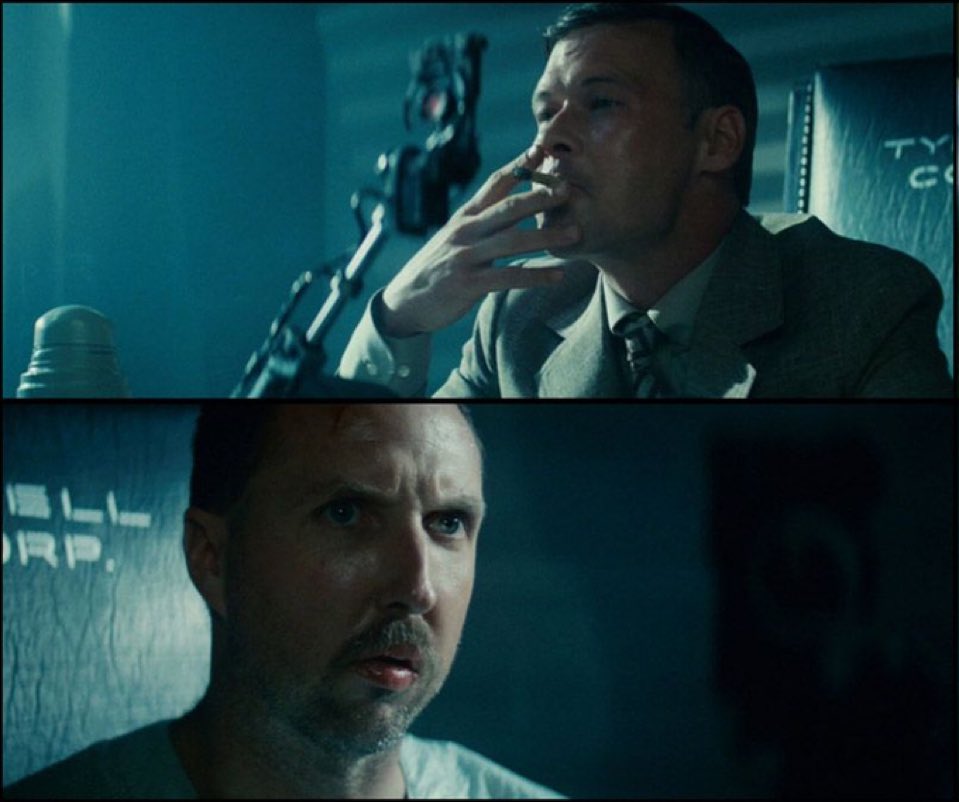
“There’s been an assassination attempt on a prominent right-wing public figure. You’re a leftist. You can’t determine whether the attempt was successful or not. Do you celebrate, or do you say it was staged?”
47
472
5,120
81,122
JoKerr2517 retweeted

We found 84% of cancer patients taking ivermectin and mebendazole for 6 months declared their cancer was either COMPLETELY GONE, REGRESSED, or STOPPED SPREADING.
It’s no surprise the CIA BURIED a 1950s study for over HALF A CENTURY showing anti-parasitics disrupt cancer growth.

The CIA CLASSIFIED a 1950s study showing anti-parasitics disrupt cancer growth—and kept it BURIED for over HALF A CENTURY.
Millions of cancer victims have paid the price as this vital line of research was set back DECADES.
458
11,569
34,612
2,376,109
JoKerr2517 retweeted

Feb 24
1. The Roman Catholic Magisterium claims that Jesus gave singular, ruling, infallible authority to Peter alone.
The primary text used to support this is Matthew 16:18–19, where Jesus says, “You are Peter, and on this rock I will build my church… I will give you the keys of the kingdom of heaven.” The argument assumes that this establishes Peter as a supreme monarch over the Church, and that this authority continues in a single line of successors. But the text itself does not say that. Rome ASSUMES this into the text. It does not say Peter alone holds the keys in perpetuity, it does not say he is infallible, and it does not describe a transferable office.
In fact, the authority to bind and loose is later given to all the apostles in Matthew 18:18. In John 20:23, the authority related to forgiveness of sins is given to the gathered disciples, not to Peter uniquely. So even if one grants Peter had a leading role, the New Testament presents apostolic authority as shared. The structure is collegial. There is no language of supreme jurisdiction or singular rule over the others.
When you move into Acts, the narrative reinforces this. Peter is prominent in the early chapters, but prominence is not supremacy. In Acts 15 at the Jerusalem Council, Peter speaks, but so do Paul and Barnabas. James appears to render the final judgment. The letter that goes out to the churches says, “It seemed good to the Holy Spirit and to us,” not “It seemed good to Peter.” That is conciliar authority, not monarchical authority.
Paul’s confrontation with Peter in Galatians 2 further complicates the Roman claim. Paul says he opposed Peter to his face because he stood condemned. If Peter held supreme, infallible jurisdiction over the universal Church, this moment becomes structurally destabilizing. Instead, Peter is treated as a fallible apostle who can err in conduct. The text does not present him as an untouchable ecclesiastical monarch, or a monarch at all.
One more point that often gets overlooked is how Peter refers to himself. In 1 Peter 5:1, Peter writes, “So I exhort the elders among you, as a fellow elder and a witness of the sufferings of Christ.” He does not call himself the supreme bishop of the universal Church. He does not appeal to singular authority over all Christians. He identifies himself as a fellow elder among elders. He urges them to shepherd the flock of God willingly and not domineering over those in their charge. That language cuts against the idea of a monarchical office concentrated in one man. If Peter understood himself as the supreme, infallible ruler of the Church, this would have been the natural place to clarify it. Instead, he presents himself as a co-presbyter, modeling shared pastoral leadership rather than singular supremacy.
Now move outside Scripture and into the first two centuries. This is where Rome’s case becomes even more difficult.
Take Clement of Rome, writing around 96 AD in 1 Clement. He writes to the Corinthians to address disorder in their church. Roman Catholics often cite this as early papal intervention. But Clement does not write as a supreme bishop issuing a decree. He writes on behalf of the church at Rome, not in his own singular authority. He never invokes Petrine supremacy. He appeals to apostolic tradition and Scripture. His tone is exhortational, not juridical. If a fully developed papal office already existed, this is the moment you would expect him to say so. He does not.
Consider Ignatius of Antioch, writing in the early second century. Ignatius strongly emphasizes the authority of local bishops. Each city has its bishop, presbyters, and deacons. He speaks highly of the church in Rome and calls it preeminent in love. But he never describes the Roman bishop as possessing universal jurisdiction over all churches. In fact, his model of authority is local and episcopal, not centralized in one global office.
👇
4
2
23
1,052
JoKerr2517 retweeted

Apr 21
If you are old enough to remember driving in Britain in the 1980s, you will remember the windscreen.
You could not see through it by July. A journey from Leeds to London in August ended with a front bumper that looked like it had been through a war and a windscreen that needed a proper scrubbing with a sponge at the services. Insects on the headlights. Insects in the wing mirrors. Insects packed into the radiator grille so densely that mechanics had to fish them out. This was simply the weather of the British summer, the cost of moving through a country that was still, in living memory, full of flying things.
Get in a car now. Drive the same route. Stop at the services.
The windscreen is clean.
The Bugs Matter survey, run by Kent Wildlife Trust and Buglife since 2004, has been measuring exactly this. Volunteers clean their numberplate, drive a journey, count the splats on a grid. Between 2004 and 2021, the UK average fell by roughly 59 per cent. England alone: 65. Kent: over 70. The 2024 update found a further 63 per cent drop on top of that.
The windscreen phenomenon has the data to back it up now.
And not just the insects. Between 1970 and 2024, the UK Farmland Bird Index fell by 62 per cent. Turtle doves down 99. Grey partridge down 94. Tree sparrow down 90. A generation of British children has grown up without ever hearing a turtle dove call, because there are, in functional terms, no turtle doves left to call.
Defra's own bulletin lists the causes without embarrassment. Loss of mixed farming. The switch from spring to autumn sowing, which took away the winter stubble the small birds had been feeding on since the Neolithic. The grubbing up of hedgerows to make fields bigger for bigger machines. Increased fertiliser. Increased pesticide.
Specifically, the pesticides. Neonicotinoids on oilseed rape. Glyphosate sprayed as a pre-harvest desiccant on wheat and barley. Chemicals applied in combinations and volumes that would have seemed psychotic to a farmer in 1950, applied to grow the crops that feed directly into the plant-based shakes marketed to people who believe they are helping the environment.
The insects died in the fields where the crops were grown. The birds that used to eat the insects, starved. The windscreen, accordingly, is clean.
None of this happened on the permanent pasture that cattle graze. A herb-rich meadow grazed by cattle has more pollinators, more ground-nesting birds, more beetles, more everything per hectare than the arable field next door. The South Downs and the Welsh uplands and the Cotswold commons where sheep and cattle have been grazing for a thousand years are the places British biodiversity is still, just, holding on.
The countryside did not empty because of the cow.
It emptied because we replaced the cow with the combine harvester, the meadow with the oilseed rape, and the hedgerow with another half-acre of monoculture that needed spraying fourteen times a season to keep it alive.
When someone tells you eating a steak is destroying British wildlife, ask them what was on the field before it became the soy farm, the rape farm, the wheat farm that produced the oat milk in their fridge.
It was grass.
And on the grass, there were cattle.
And when the cattle were there, the windscreen needed cleaning.

304
2,177
6,543
255,747
JoKerr2517 retweeted

Apr 21
🚨 BREAKING: Acting AG Blanche and FBI Director Patel announce a grand jury has INDICTED leftist NGO Southern Poverty Law Center on 11 COUNTS
This is MASSIVE!
SPLC said they were "fighting white supremacy," but they were "MANUFACTURING the extremism it purports to expose" by PAYING sources to "stoke racial hatred," per Acting AG Blanche
Best part? They've been charged in the Middle District of Alabama!
They're SCREWED! 🔥
SPLC has been hit with SIX counts of wirefraud, four counts of bank fraud, and one count of conspiracy to commit money laundering.
2,250
15,992
58,594
1,810,154
JoKerr2517 retweeted

Imagine if we had been bombing the shit out Japan at the end of WW2 and they kept goofing-off during the negotiations and pretending they had the diplomatic upper hand, and the American people blamed Truman for Japan's bullshit.
That's basically Iran right now.
1
2
7
406
JoKerr2517 retweeted

Apr 19
😂

1
1
73
JoKerr2517 retweeted

Apr 14
Before the @ConceptualJames-was-right jar there was the C.S. Lewis-was-right jar.
In the last book of Lewis' Narnia series, The Last Battle, certain corrupt Narnians join forces with the Calormen from the South (representing Muslims), and they declare that they worship the same God! They combined the Narnian God, Aslan, with the Calormen God, Tash, and called him "Tashlan."
Of course, none of those involved in the lie really believed in any God, much less this new one of their own creation. They were all happy to make the compromise in order to consolidate their collective power.
The same is true today. Those who are pushing for Islamo-Catholicism are not true believers. They worship power, and they crave the power that comes with combining two such massive world religions.
In the end we know what happens to those wicked heretics. They learn that Tash is very real, and Aslan is very real. Tash is a demon who accepts these fools as a sacrifice to feed his thirst for blood.
The followers of Aslan meet him, and spend eternity in paradise.
Christians do not worship the Islamic God. Muslims do not worship the Christian God.
Choose this day whom you will serve. As for me and my house, we will worship the Lord.
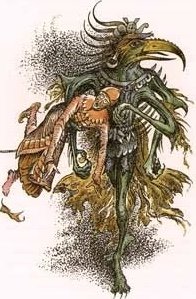
Apr 14

THE "POPE" LITERALLY CALLED A MOSQUE A "SPACE PROPER TO GOD."
WAKE UP YOUR PONTIFEX IS CAPTURED‼️
66
398
1,685
40,324
JoKerr2517 retweeted

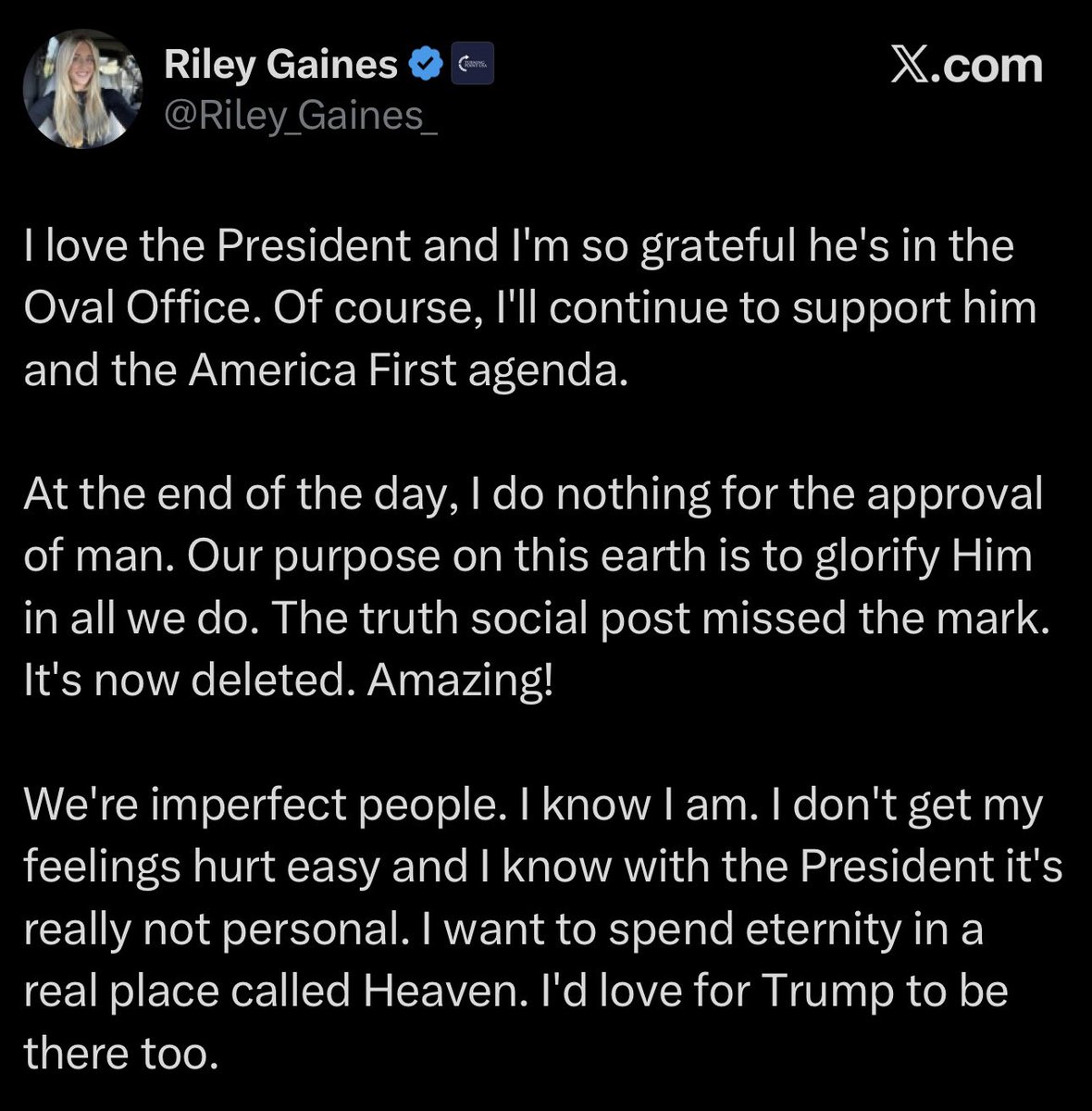
Apr 14
Riley Gaines responds to Trump.
1,162
262
2,983
404,036
JoKerr2517 retweeted

Apr 10
Ironically, Rome/EO & the happy-clappy megachurch are two sides of the same coin. One uses incense, icons, vestments, and repetitive chant. The other uses lights, loud music, and polished production. Strip it all down, and they both run on the same juice: aesthetics and atmosphere used to generate a false sense of encounter with God, and galling eisegesis. One calls it mystery, the other a “move of the Spirit.” Either way, people are carried along by something carnal & external.
The one side kisses wooden pictures and bows down to statues; the other sways to technicolor lights & music. But both deploy pragmatism & both bank on the laity not knowing their Bibles when it comes to proper worship. Both appeal to the flesh. Both are centers of pomp, glitter, & idolatry. Two sides of the same coin.
152
62
363
26,229