
Engineer | Data analytics | Hobbyist Investor | $NAK Enthusiast | All opinions are my own and not financial advise
Joined March 2025
- Tweets 403
- Following 90
- Followers 254
- Likes 1,714
Photos and videos
Pinned Tweet
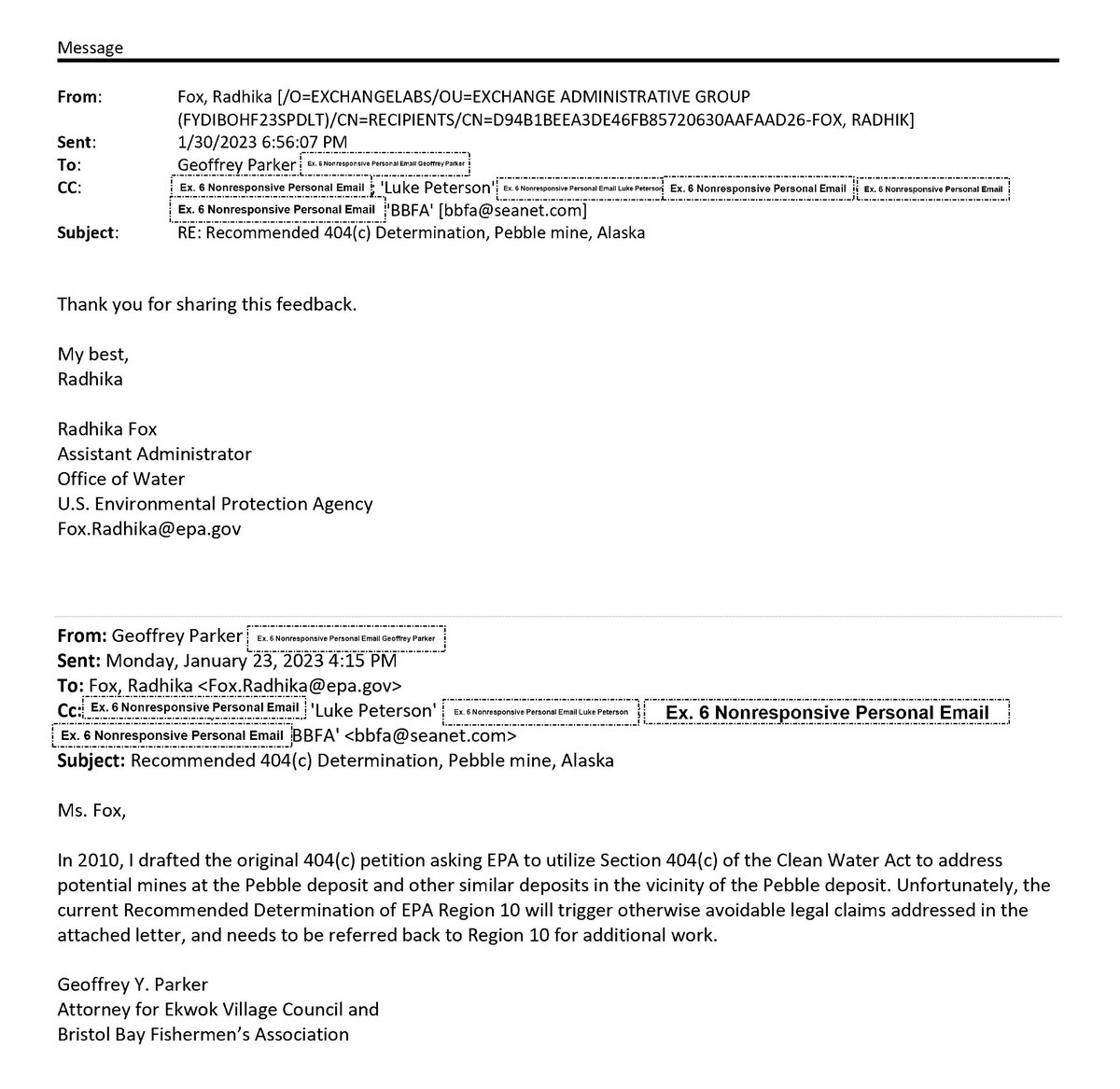
@epaleezeldin Why is EPA burning taxpayer money defending the Pebble Mine veto in court when the attorney who drafted the original 404(c) petition told them, in writing, that the Recommended Determination would "trigger otherwise avoidable legal claims"?
Their reply: "Thanks for the feedback."
@SarahPalinUSA @TyewayorHighway @taketheseodds thoughts?
5
8
31
4,415
⛏️Joseph Burnitz ⛏️ retweeted

Apr 21
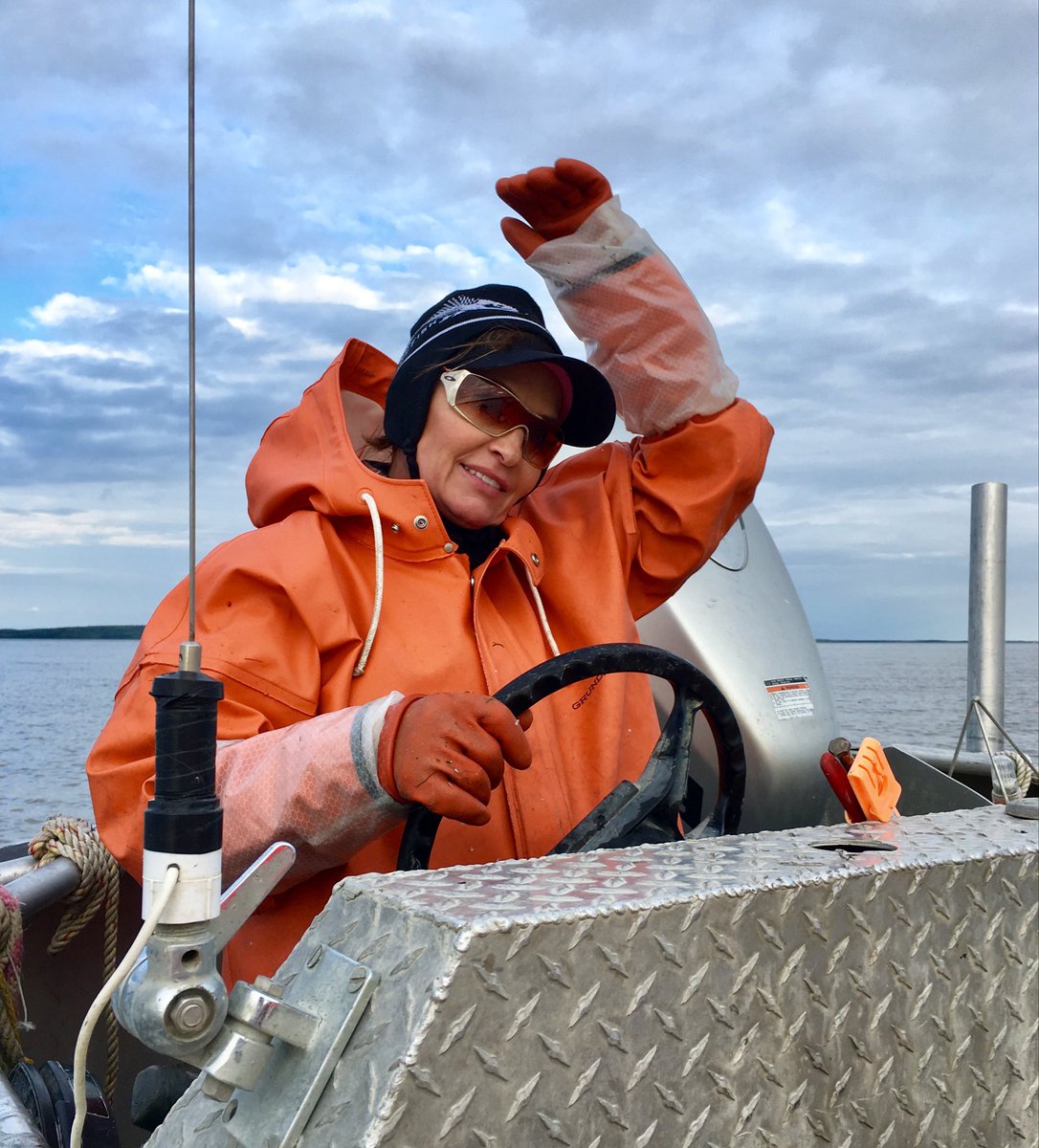
Stopping #PebbleMine $NAK has never been about science. It’s politics. Special interests would rather we be forever reliant on China and other dangerous foreign regimes that develop & refine natural resources, while Alaska’s rich domestic deposits sit untapped. It’s been tragic. But it’s fixable! Trump can rescind Biden’s illogical & illegal veto of #Pebble and put America back to work:
Apr 21

Read this email. Then tell me the veto was ever about science.
Geoffrey Parker is the attorney who DRAFTED the original 404(c) petition in 2010. He represents Ekwok Village Council and Bristol Bay Fishermen's Association. Without his work, EPA has no veto to defend. None of this exists.
And in January 2023, he wrote directly to the Assistant Administrator of the Office of Water and told her the Recommended Determination would "trigger otherwise avoidable legal claims" and needed to go back to Region 10.
The petitioner's own attorney. Warning them. In writing. On the record.
EPA's reply, six days later: "Thanks for the feedback."
Then they issued the veto anyway.
Think about what that means. The EPA ignored the Army Corps' own Final EIS that found no measurable impact on Bristol Bay fish. They ignored independent consulting firm AECOM. And they ignored the attorney who gave them the authority to be in the room in the first place. Every voice with actual expertise told them to stop. They did it anyway.
That is not science. That is not regulatory integrity. That is an agency being run as a political weapon, and the paper trail is now sitting in front of a federal judge.
Case 3:24-cv-59. Judge Sharon Gleason. Briefing complete April 15. This email is in the record.
@epaleezeldin — why is your agency spending taxpayer money defending a determination that the petitioner's own counsel told you was legally indefensible before it was ever issued? You inherited this. You don't have to keep fighting for it.
$NAK is a ~$1B market cap sitting on 57 billion lbs of copper and 71 million oz of gold on Alaska state land. A trillion dollars of strategic metal America actually needs. And the only thing standing between the market cap and the deposit value is a veto that was indefensible on the day it was signed.
The record is the record. The veto is coming off.
$NAK #PebbleMine #NAKNation #CriticalMinerals #AlaskaComeback @MarcMilette @SarahPalinUSA @TyewayorHighway @taketheseodds #copper #copx #maga @POTUS
28
84
294
34,957
The letter I was talking about during the space:

@epaleezeldin Why is EPA burning taxpayer money defending the Pebble Mine veto in court when the attorney who drafted the original 404(c) petition told them, in writing, that the Recommended Determination would "trigger otherwise avoidable legal claims"?
Their reply: "Thanks for the feedback."
@SarahPalinUSA @TyewayorHighway @taketheseodds thoughts?
4
4
29
1,643
$NAK Nation! Hope to see you all this Monday as Kris and I break down the latest (final) briefs filed in Pebble v. EPA.
Specifically, we'll be examining what we expected, were surprised by, and some of the misses.
Apr 15

⛏️ $NAK community, it’s time. ⛏️
@JosephBurnitz and I are hosting a Space next Monday at 6:30 PM PST.
We'll go through Northern Dynasty's latest filing that just dropped against the DOJ/EPA. We'll cover the main arguments they made, where the government's position looks weak, and what this likely means for the case going forward, including timelines and possible next steps.
It's an important update on the Pebble fight, so if you're interested in $NAK, feel free to join and bring your questions.
Hope to see you there.
#Pebblemine
twitter.com/i/spaces/1AJEmOq…
9
893
⛏️Joseph Burnitz ⛏️ retweeted

Feb 21
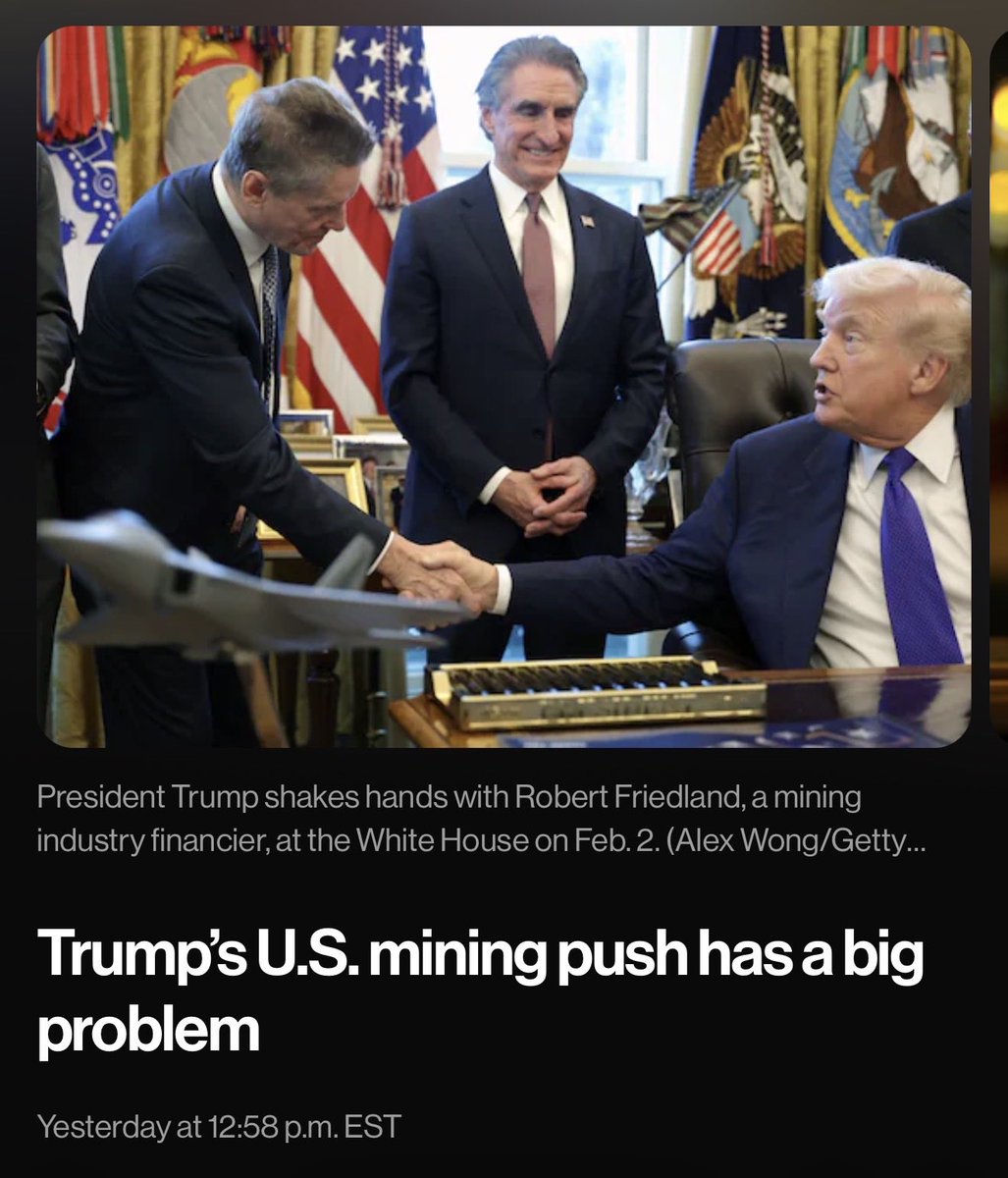
Here’s an important story in the Washington Post, with a link below, about how the United States forgot how to mine anything and what it is costing our nation today. If America wants to reduce its dependence on imports from the rest of the world to rebuild its industrial base, speeding up permitting and investing in the sector is not enough. We need to move fast to rebuild a greatly diminished pool of trained American mining engineers and we need to do it fast and at the scale of the American economy.
U.S. mining schools collectively graduated about 300 mining engineers last year, according to the Foreign Policy article by @Christinalu on the @washingtonpost Post’s Ripple platform. (300!) China, by contrast, is home to about 45 mining engineering programs and churns out about 3,000 graduates every year, according to 2024 estimates.
@MBazilian leads the @payneinstitute at @coschoolofmines where my son @govind_ivanhoe studied Geology & Geological Engineering and my brother Eric Friedland studied Geophysics. I’m regular speaker at the Payne Institute and urge everyone to direct their attention to this thought leading institution.
washingtonpost.com/ripple/20…
22
49
221
24,398
Another gaping hole I realized in EPA's argument--Kings(chinook) and Coho ain't Sockeye.
EPA defends its action by valuing the Bristol Bay commercial salmon fishery, "$2.0 billion" and "15,000 jobs." FD at EPA_AR_0082945. That value is overwhelmingly sockeye-driven. Bristol Bay produces "about half of the world's Sockeye salmon." per EPA_AR_0082943.
But the streams EPA is protecting at the mine site don't contain sockeye. PLP's sampling of the 8.5 miles proposed for fill found Coho and Chinook, roughly 370 juvenile Coho and 50 juvenile Chinook in NFK 1.190, and 344 juvenile Coho and 12 juvenile Chinook in NFK 1.200. FEIS at EPA_AR_0095026, EPA_AR_0092560. Zero sockeye. EPA's own brief concedes sockeye are found "immediately adjacent" and "immediately downstream" of the mine site, not in the streams being destroyed. Doc. 215 p 46.
EPA bridges this gap through indirect mechanisms: headwater streams supply nutrients, gravel, and flow to downstream sockeye habitat. FD at EPA_AR_0083078-79. Scientifically plausible, but the Army Corps evaluated the same mechanisms and concluded the mine "is not expected to affect overall productivity in the greater Koktuli River basin." FEIS, Ch. 4 at EPA_AR_0095966.
The cost-benefit problem is straightforward. EPA credits the full $2.0 billion fishery value as a benefit of its action without ever disaggregating how much of that value is attributable to the Coho and Chinook actually found at the mine site versus the sockeye connected only through indirect downstream effects the FEIS found insufficient. EPA has species-specific harvest data in the record (EPA_AR_0083049) but never uses it to apportion the benefit. Under Michigan v. EPA, 576 U.S. 743, 752 (2015), cost-benefit analysis requires "consideration of all the relevant factors", including which species are actually affected and what those species are actually worth.
The brief's strongest species-specific link is Chinook: the Nushagak district accounts for 75% of Bristol Bay's commercial Chinook catch, and the Koktuli River is often the largest Chinook producer in the Nushagak watershed. EPA_AR_0083017, 0083030. But EPA never quantifies the Chinook-specific commercial value or separates it from the sockeye-dominated total, despite having species-specific commercial harvest data available in the record. EPA_AR_0083049.
Funnily enough, coming out of an old case from the NRDC v. EPA, an agency is "free to emphasize or deemphasize particular factors" but must provide a reasoned basis for doing. NRDC v. EPA, 25 F.3d 1063, 1071 (D.C. Cir. 1994). Aggregating all species into a single undifferentiated value and attributing it to an action whose primary ecological evidence involves different species than those driving the value is not reasoned emphasis, it is (intentional?) obfuscation.
tldr; EPA put $2.0 billion on the benefits side of the ledger. The ecological evidence at the mine site supports a fraction of that figure. How large a fraction is unknowable because EPA never did the math. There is no scientific disagreement, it's a simple analytical failure that makes the cost-benefit weighing un-reviewable. Kill shot. 🎯
Another contradiction in the response brief. Gosh is the DOJ purposefully throwing the case for us? @taketheseodds @TyewayorHighway @kbeckermd
The brief contains three positions on the Expanded Mine Scenario that cannot all be true simultaneously.
Position 1: The expanded mine scenario is too speculative to include in the cost analysis. EPA excluded it because it "has not otherwise been proposed, and would require additional and separate permitting." Doc. 215 at page 91-92. The State of Alaska itself argued that "consideration of the Expanded Mine Scenario is inappropriate." RTC at EPA_AR_0083945. Okay, make sense, if it's speculative, don't count its costs.
Position 2: The restriction covers future mine plans for the entire deposit. The restriction explicitly applies to "future proposals to construct and operate a mine to develop the Pebble deposit" that would cause comparable impacts. FD at EPA_AR_0083172. An expanded mine is exactly the kind of future proposal the restriction targets. So EPA simultaneously says an expanded mine is too speculative to count as a cost but concrete enough to restrict.
Position 3: The restriction's costs are "similar" to the prohibition's costs. EPA argues a mine anywhere in the restriction area would have roughly the same economic value as the 2020 Mine Plan. RTC at EPA_AR_0084254. But if the expanded mine scenario is excluded as speculative, and the restriction covers future expanded plans, then EPA has no basis for claiming it assessed the restriction's actual costs, because the actual costs depend on the scale of future mining that the restriction prevents, which EPA refused to analyze.
Remember, the 2020 mine plan/preliminary economic impact statement was already significantly knee-capped to try and appease the EPA, only 20 years, limited mining, then forever monitoring, etc. BARELY tickling the value of mining the full deposit (1 Trillion USD ), generations of good jobs for the workers, stable infrastructure for one of poorest counties in America, etc.
You can hold any two of these positions. You cannot hold all three. If the expanded scenario is speculative, you can't restrict it and claim you've assessed the restriction's costs. If the restriction covers expanded mining, you need to assess the costs of preventing expanded mining. If the costs are "similar" regardless of scale, then the expanded scenario isn't speculative, it's a foreseeable economic loss you're choosing to ignore.
11
5
47
5,468
Another contradiction in the response brief. Gosh is the DOJ purposefully throwing the case for us? @taketheseodds @TyewayorHighway @kbeckermd
The brief contains three positions on the Expanded Mine Scenario that cannot all be true simultaneously.
Position 1: The expanded mine scenario is too speculative to include in the cost analysis. EPA excluded it because it "has not otherwise been proposed, and would require additional and separate permitting." Doc. 215 at page 91-92. The State of Alaska itself argued that "consideration of the Expanded Mine Scenario is inappropriate." RTC at EPA_AR_0083945. Okay, make sense, if it's speculative, don't count its costs.
Position 2: The restriction covers future mine plans for the entire deposit. The restriction explicitly applies to "future proposals to construct and operate a mine to develop the Pebble deposit" that would cause comparable impacts. FD at EPA_AR_0083172. An expanded mine is exactly the kind of future proposal the restriction targets. So EPA simultaneously says an expanded mine is too speculative to count as a cost but concrete enough to restrict.
Position 3: The restriction's costs are "similar" to the prohibition's costs. EPA argues a mine anywhere in the restriction area would have roughly the same economic value as the 2020 Mine Plan. RTC at EPA_AR_0084254. But if the expanded mine scenario is excluded as speculative, and the restriction covers future expanded plans, then EPA has no basis for claiming it assessed the restriction's actual costs, because the actual costs depend on the scale of future mining that the restriction prevents, which EPA refused to analyze.
Remember, the 2020 mine plan/preliminary economic impact statement was already significantly knee-capped to try and appease the EPA, only 20 years, limited mining, then forever monitoring, etc. BARELY tickling the value of mining the full deposit (1 Trillion USD ), generations of good jobs for the workers, stable infrastructure for one of poorest counties in America, etc.
You can hold any two of these positions. You cannot hold all three. If the expanded scenario is speculative, you can't restrict it and claim you've assessed the restriction's costs. If the restriction covers expanded mining, you need to assess the costs of preventing expanded mining. If the costs are "similar" regardless of scale, then the expanded scenario isn't speculative, it's a foreseeable economic loss you're choosing to ignore.
Yes and no. The Sackett argument is still very much in play and DOJ just shot themselves in the foot
PLP argues: Sackett v. EPA, substantially narrowed "waters of the United States" to wetlands with a "continuous surface connection" to navigable waters. A significant portion of the 2,108 acres of wetlands underlying EPA's third independent finding may no longer be jurisdictional.
EPA/DOJ's response: argues this argument was "not before EPA at the time it issued the Final Determination and PLP cannot raise it now." In the alternative, EPA argues the Final Determination "only applies to waters that meet that definition at the time when a discharge is proposed," making Sackett self-correcting.
DOJ/EPA's waiver argument is significantly weakened by the actual timeline: Sackett was decided on May 25, 2023, nearly four months after EPA signed the Final Determination on January 30, 2023. PLP could not have raised an argument based on a Supreme Court decision that did not yet exist. EPA's fallback position, that the determination self-corrects, is more defensible procedurally but creates a problem: if post-Sackett analysis substantially reduces the jurisdictional wetland acreage, then EPA's independent finding that the loss of 2,108 acres constitutes an unacceptable adverse effect rests on an overstated factual predicate. EPA never analyzed what lesser acreage of wetland loss, if any, would remain unacceptable.
tldr; This incoherent legal paradox, SPELLED OUT BY THE DOJ, might literally be the difference between partial and full vacatur. @taketheseodds
8
3
59
14,201
⛏️Joseph Burnitz ⛏️ retweeted
Feb 3
Who Coined #DrillBabyDrill 🤔
Mr. President:
Great. But the administration is aggressively incentivizing FOREIGN resource development. First and foremost our focus must be on AMERICAN sources of energy, including our most critical and in-demand minerals and rare earths.
The only reason our safe, responsible, imperative projects like #PebbleMine $NAK are vetoed and/or shut down are CRONY CAPITALISM and special interests at play.
Until our own mines, refineries and reserves are allowed to flourish, “America First” is mere rhetoric.
(And if I hear my ol’ “Drill Baby Drill” and “Mine Baby Mine” thieved by those who forget I coined those in reference to America First… )
61
76
310
29,044
⛏️Joseph Burnitz ⛏️ retweeted

Jan 27
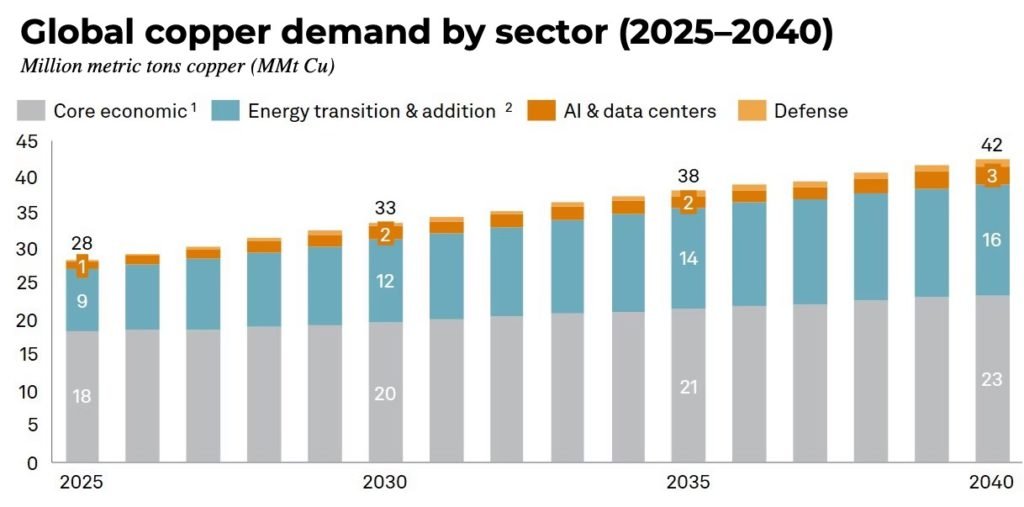
Copper demand is set to explode.
- By 2040, demand is expected to grow ~50%
- Growth is dominated by renewables and EVs
But a new source of demand has emerged that no one had on their bingo card: AI and defense.
By 2040, AI and defense combined are expected to add ~4 Mt of annual demand.
To put that in perspective, that’s the equivalent of adding ~3 of the world’s top-producing copper mines... in just 15 years.
And that’s only AI and defense. Total demand additions reach ~12 Mt by 2040.
Meanwhile:
- We’re barely searching for new copper projects
- And when we do, it takes ~20 years from exploration to first production
In other words, we’re expected to add the equivalent of ~10 of the world’s biggest mines in less time than it takes to find and build one.
The math just isn’t mathing.
Copper remains one of my favorite long-term plays.
12
85
426
16,465
⛏️Joseph Burnitz ⛏️ retweeted

Jan 20
NAK Nation - HUGE SENATE ALERT! 🚨
January 28, 2026: Senate EPW Committee (chaired by pro-mining Sen. Capito) holds "Federal Environmental Review and Permitting Processes, Part II" hearing at 10 AM.
This is the exact stage for advancing H.R. 3898 (PERMIT Act) in the Senate!
1
5
45
2,195
⛏️Joseph Burnitz ⛏️ retweeted
Jan 15
100% agree. The world’s LARGEST COPPER MINE $NAK #PebbleMine; the richest deposits of most crucial minerals & rare earths… sitting untapped in the remoteness of Alaska! Safe, plentiful, domestic energy sources that we presently beg foreign countries to produce FOR US.
We go to WAR to take other countries’ minerals that we have here, underfoot! #MineBabyMine Make it make sense, Trump administration:

The "BIDEN" administration also "BLOCKED THE LARGEST COPPER MINE IN THE WORLD," and copper is the most important critical mineral required for baseload energy, yet the Trump administration continues to block the $NAK Pebble Mine. What does it say? Seriously, this is anti-MAGA...
@POTUS @AGPamBondi @PamBondi @SusieWiles @PressSec @JDVance @SecretaryBurgum @SecretaryWright @SecScottBessent @marcorubio @howardlutnick @epaleezeldin @EPA @epa_fotouhi @HouseGOP @SenateGOP @akgop @USAO_AK @AlaskaMiners @mining @RSBNetwork @FoxNews @FoxBusiness @business @Reuters @CNBC @WSJ @interiorpress47 @AP @nytimes @nypost @washingtonpost
@SarahPalinUSA @GovDunleavy @DanSullivan_AK @RepNickBegich @Bernadette4Gov
Read it again...
Vacate the illegal Biden-era preemptive veto against the $NAK Pebble Mine!!!!
34
93
310
43,054
🎯
Jan 3

BIG PICTURE 🖼️ :
Control of 🇻🇪 accomplishes 2 critical longterm strategic goals for the 🇺🇸 :
1/Creates longterm structural control of oil 🛢️ supply — big driver of inflation.
2/Creates structural leverage for continued longterm US 🇺🇸 PetroDollar dominance & by extension stabilizes challenges to 🇺🇸 reserve currency 💵.
1
107
⛏️Joseph Burnitz ⛏️ retweeted
Jan 2
Happy New Year NAKers! Excellent summary that captures the essence of Pebble!
miningnewsnorth.com/story/20…
5
9
69
10,244
⛏️Joseph Burnitz ⛏️ retweeted

Vacate the illegal Biden-era preemptive veto against the $NAK Pebble Mine!!!
30 Dec 2025

🌍The world's top copper mines are absolute monsters
and South America owns the list!
Escondida (Chile) – 1,350kt (BHP/Rio Tinto)
Collahuasi (Chile) – 640kt
Buenavista (Mexico) – 535kt
Morenci (USA) – 520kt
Cerro Verde (Peru) – 500kt
Chile Peru = 70% of the top 20.
These giants fuel EVs, grids & renewables... but replacement pipelines are thin.
Copper supply concentration risk is real.
#Copper #Mining #Chile #EnergyTransition #Commodities

1
3
17
1,147
⛏️Joseph Burnitz ⛏️ retweeted
20 Dec 2025
Why IS it so hard for politicians to take a stand, one way or the other? Our solvency, sovereignty & security cannot wait for the wishy-washy milquetoast vanilla-types to finally take action on the most important energy-producing opportunity of our time. #MineBabyMine #PebbleMine $NAK I honestly don’t know how they sleep at night. Power at their fingertips to make America free of foreign countries’ control, but not valorous enough to even tell us, definitively, if they even WANT these domestic minerals and rare earths mined:
Why are Alaskan politicians afraid to take a side on the $NAK Pebble Mine? Is that what Alaskan voters want, spineless officials playing politics? Do you want leaders unafraid to fight hard for what they believe in, regardless of potential opposition, who are willing to make a case to try to walk people across the aisle, or do you want fakes mired in neutrality?
The Biden-era preemptive veto against the $NAK Pebble Mine is unlawful and the project is great for Alaskans...
My $0.02...
Alaskan politicians...
@DanSullivan_AK @Bernadette4Gov @lisamurkowski
$0.00
Except for @SarahPalinUSA, who proudly voices her support of the $NAK Pebble Mine, and @GovDunleavy, who filed the cases against the EPA and the United States.
25
49
175
22,460
⛏️Joseph Burnitz ⛏️ retweeted

19 Dec 2025
For too long, America’s broken permitting system has driven up costs and delayed projects that should take months, not years. The process has become a self-imposed handicap and driven up costs.
Thankfully, the SPEED Act is a critical step toward restoring balance to the permitting process and allowing America to build again.
Thank you to Chairman @RepWesterman and @NatResources for leading this strong bipartisan effort to advance permitting reform.
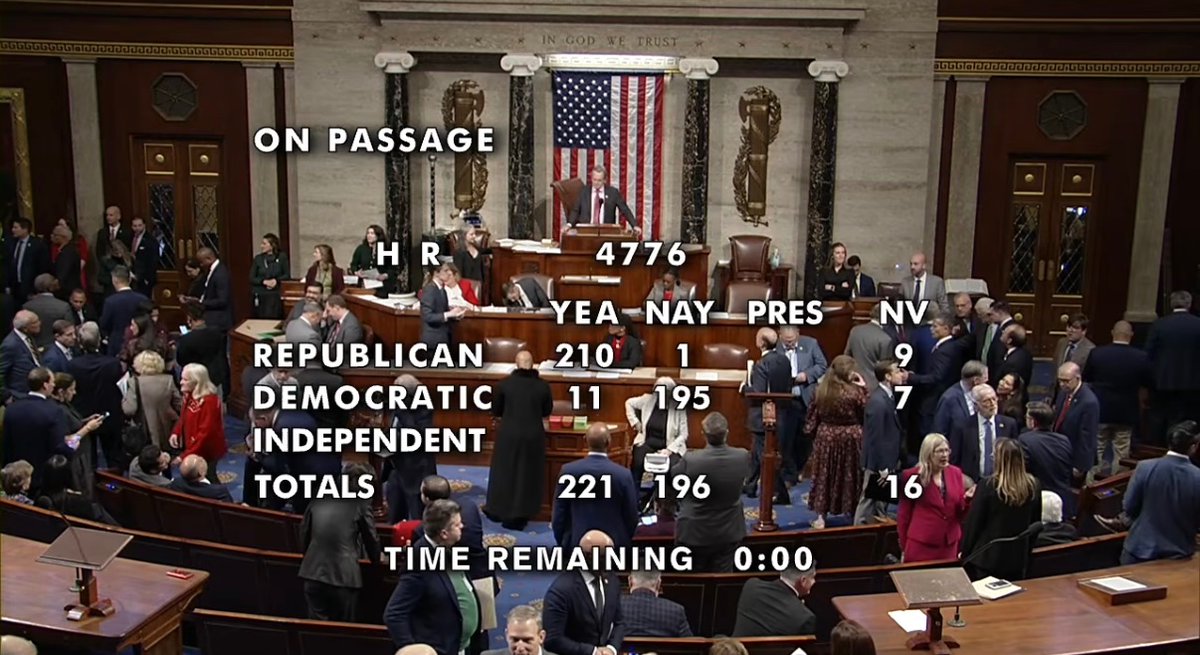
11
25
69
4,870

17 Dec 2025
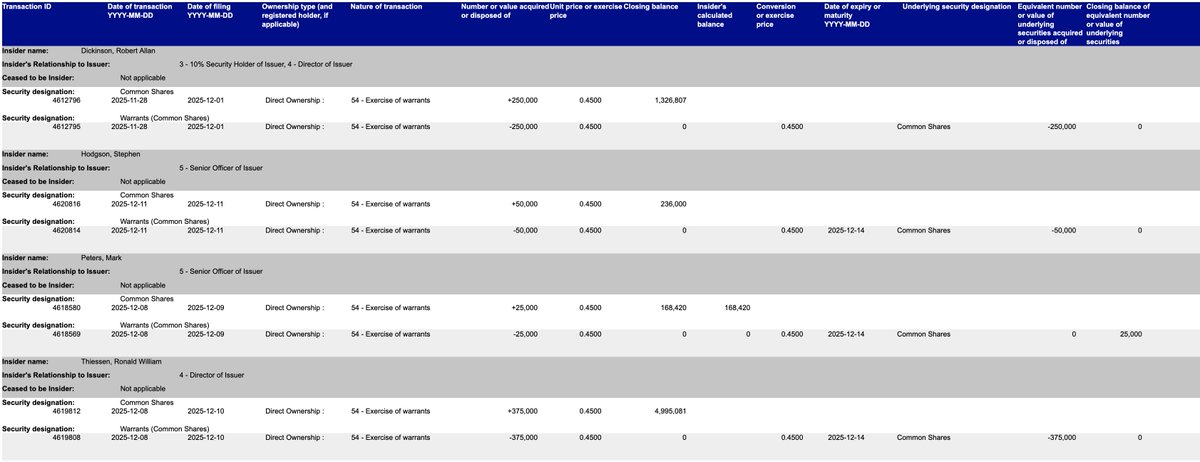
Weekly $NAK SEDI Check: BULLISH!
Takeaway: All insiders chose to convert expiring warrants into common shares and put fresh cash at risk, no exits.
Total warrants exercised: 1.09M
Exercise price: $0.45
Total insider cash invested: ~$490,500
Insiders involved: 5
Directors, senior officers, and a 10% holder
Largest single exercise: 375,000 shares (~$169k)
Timing: Days before Dec 14 warrant expiry
Insider sales: 0
Net effect: Warrants → common shares (real equity)
4
1
14
920
17 Dec 2025
🚀 Good stuff
17 Dec 2025
Weekly SEDI Check: BULLISH!
Takeaway: All insiders chose to convert expiring warrants into common shares and put fresh cash at risk, no exits.
Total warrants exercised: 1.09M
Exercise price: $0.45
Total insider cash invested: ~$490,500
Insiders involved: 5
Directors, senior officers, and a 10% holder
Largest single exercise: 375,000 shares (~$169k)
Timing: Days before Dec 14 warrant expiry
Insider sales: 0
Net effect: Warrants → common shares (real equity)
1
1
32
1,779
⛏️Joseph Burnitz ⛏️ retweeted
12 Dec 2025
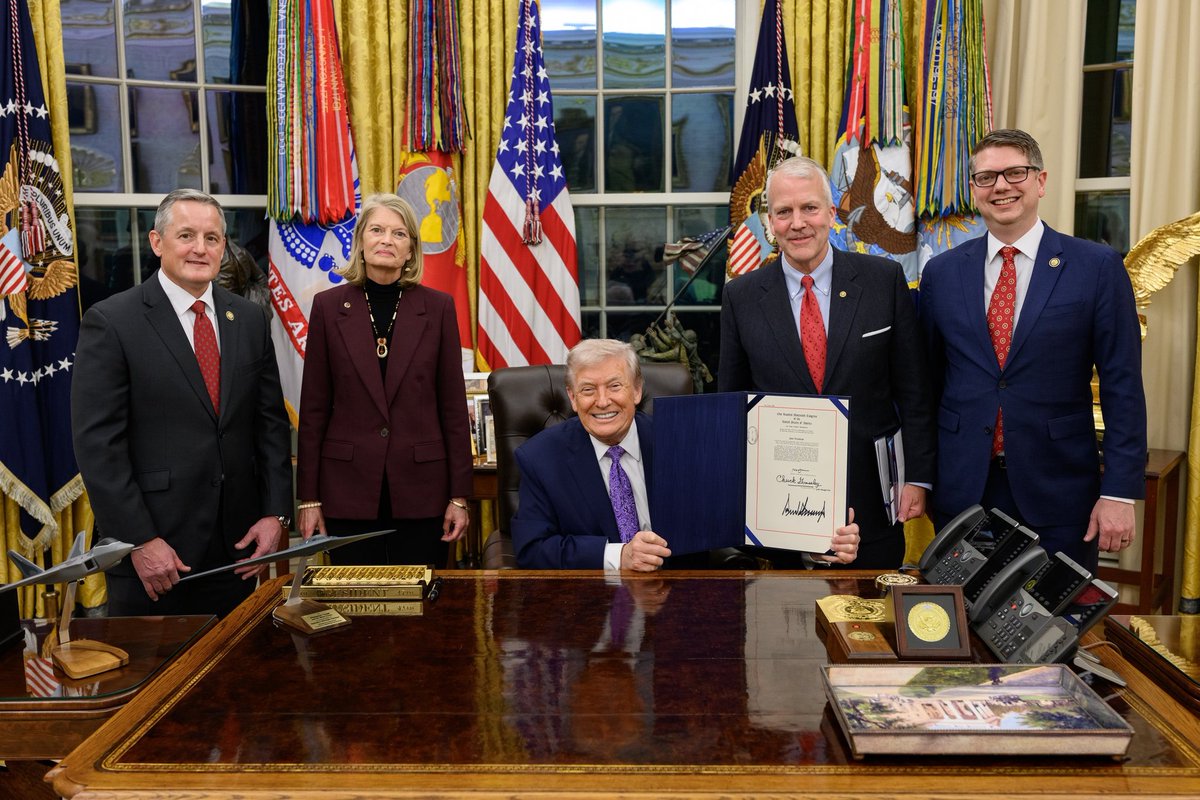
Alaska’s story is one of vast potential and opportunity. Equally as important, America is stronger when Alaska is empowered to lead in energy and resource development.
With the leadership of @POTUS and @HouseGOP, we are advancing legislation at an historic pace to unlock opportunity, strengthen our economy, and ensure we have the energy needed to power America and her allies well into the future.
We’ve known the road to American prosperity begins in Alaska; the rest of America now knows that as well.
33
22
147
9,513
⛏️Joseph Burnitz ⛏️ retweeted
10 Dec 2025
⚡️Attention NAK Nation!⚡️
H.R. 3898 is set for House action tomorrow...December 10th.
Get ready — the fight is moving to the floor. Let’s go! 🇺🇸🔥
4
8
70
7,194