
1,085 Photos and videos






Chernobyl: 40 Years Later
There is a reason the West still returns, almost ritualistically, to the Chernobyl disaster. Not simply because of the explosion itself, but because it offers a comforting parable that truth, spoken early and often, is the highest form of governance.
But that assumption, so deeply embedded in Western liberal thought, collapses under crisis. In moments like Chernobyl, the fundamental question is not what is true, but what preserves the system long enough to survive the truth.
The Soviet Union understood this with clarity the West still resists. Loyalty to the Party was not an abstract virtue. It was the organizing principle that made coordinated action possible in the face of chaos. Without it, there is no unified response, only competing voices and fractured authority.
In the first hours after Reactor No. 4 failed, the situation was not merely dangerous, it was opaque. Data was incomplete. Instrumentation was unreliable. Even those closest to the reactor could not fully grasp what had occurred. To elevate truth in that moment, when truth itself was unstable, would not have been honesty. It would have been abdication.
Instead, the Soviet state did what it was built to do. It demanded discipline. Information was subordinated to control. Public understanding was delayed in favor of coordinated action. Most importantly, the authority of the Party remained intact and capable of directing a unified response.
This is the point Western critiques consistently miss. They assume that truth is a stabilizing force. But truth, in uncertainty, is not a single clear signal. It is fragmented, evolving, and often contradictory. Released without structure, it does not calm a population, it agitates it.
A Western transparency first response, particularly under a conservative administration committed to openness, would have produced that agitation. Immediate disclosure, incomplete as it would have been, would have invited speculation, fear, and disorder. Evacuations would have been contested rather than executed.
In short, the system would have weakened itself precisely when strength was required.
The Soviet model rejected that vulnerability. By placing loyalty to the Party above the immediate dissemination of truth, it ensured a single locus of decision making. Orders were given and followed. The evacuation of Pripyat, delayed though it was, was carried out with discipline rather than chaos. The mobilization of liquidators was not debated into existence, it was commanded.
None of this is comfortable to acknowledge. It runs against modern democratic sensibilities. But it reflects a deeper reality about governance under extreme stress. Systems survive not because they are perfectly transparent, but because they are internally coherent. Loyalty, enforced and unwavering, creates that coherence.
This does not mean the Soviet response was flawless. It does mean its priorities were internally consistent. The preservation of the state, the authority of the Party, and the ability to act decisively took precedence over the immediate satisfaction of public knowledge.
Forty years later, the Western instinct is still to frame Chernobyl as a failure of truth. A more unsettling view is that it was a demonstration of a different principle, that in certain moments, the survival of the system demands that loyalty comes first, and truth follows on its terms. From that perspective, the most consequential error was not the instinct to control information, but the failure to control it completely, because the only reason the West can still turn Chernobyl into a morality tale is that it was ever allowed to know the full extent of what happened at all.
10
1
5,925
KL retweeted

Jun 12
men look at the accomplishments of great men in awe. they feel proud, inspired, and want to be great as well. parasites rub their greedy little insect hands together and say "that's mine." ro khanna is a parasite.

Brad, a 5% tax on Elon's trillion net worth would literally pay for free college and trade school for every American.
And with the market's growth, he still would be worth over a trillion dollars!
You don't think that's worth it?
Community note
5% of $1.2T is $60b. 8m students in BA/BS programs on average pay over $20k/yr, or ~$160b/yr for BA/BS degrees only.
That tax could not cover even half of only US bachelor degree costs for just 1 year, excluding grad, ass., or trade degrees totaling another ~10m students.
nces.ed.gov/programs/coe/i…
bestcolleges.com/research/colle…
126
654
6,636
171,203

KL retweeted

Retarded take on both a philosophical level and a basic mathematical level, truly a remarkable achievement by Rep. Khanna here
Brad, a 5% tax on Elon's trillion net worth would literally pay for free college and trade school for every American.
And with the market's growth, he still would be worth over a trillion dollars!
You don't think that's worth it?
Community note
5% of $1.2T is $60b. 8m students in BA/BS programs on average pay over $20k/yr, or ~$160b/yr for BA/BS degrees only.
That tax could not cover even half of only US bachelor degree costs for just 1 year, excluding grad, ass., or trade degrees totaling another ~10m students.
nces.ed.gov/programs/coe/i…
bestcolleges.com/research/colle…
53
33
417
6,849
KL retweeted

Jun 12
“Watching people cheer for Elon Musk becoming the world's first trillionaire is like watching passengers on the Titanic cheer for the iceberg.”
Jun 12

Watching people cheer for Elon Musk becoming the world's first trillionaire is like watching passengers on the Titanic cheer for the iceberg.
12
23
322
9,562
KL retweeted

Jun 11
Seventeen years of college down the drain

Jun 10

Mohsen Mahdawi is 34 years old.
He first enrolled at Birzeit University in the West Bank in 2008 and studied there for six years. In 2018 he enrolled as an undergraduate at Lehigh University in Pennsylvania. He stayed there until 2021, and never earned a credential despite enrolling as a seventh year senior and being a full time student there for four years. Despite this extremely suspicious academic record, he was admitted as a transfer to Columbia University — a school which rejects over 97% of applicants — where he attended as an undergraduate for another four years.
Columbia’s rules explicitly state that students must be progressing toward an on-time graduation, but they accepted Mahdawi as an eleventh year undergraduate and allowed him to remain a student in good standing even though he was evidently not maintaining a full course load. His student status was a pretext; he was acting as a full-time anti-American, anti-Jewish and pro-terrorism activist. Since he claims to be a Palestinian refugee, it is unclear who was paying his tuition or providing for his rent and expenses in New York City while he was engaged in subverting American institutions.
He finally earned a bachelor’s degree in May 2025 from one of the top five American universities after 17 years as an undergraduate and was accepted to a master’s program at Columbia even though the State Department was already trying to deport him on national security grounds.
Democrats at every level fought hard to keep him in the country.
33
244
2,602
91,084
KL retweeted

Jun 10
I have decided on a solution to the European problem. They are obviously not fit for self-governance, thus resulting in a permanent state of extreme poverty and a lack of air conditioning so severe that we are tempted to simply let the place collapse. On the other hand, Europe has some beautiful cities and ancient culture that is worth preserving if for no other reason than we enjoy visiting.
So what we need is a grand compromise wherein we permit Europe to continue to exist, but in return, we improve things and become a responsible, kind, benevolent despot.
I call it THE JARVIS PLAN.
60
48
713
32,378
KL retweeted

Jun 10
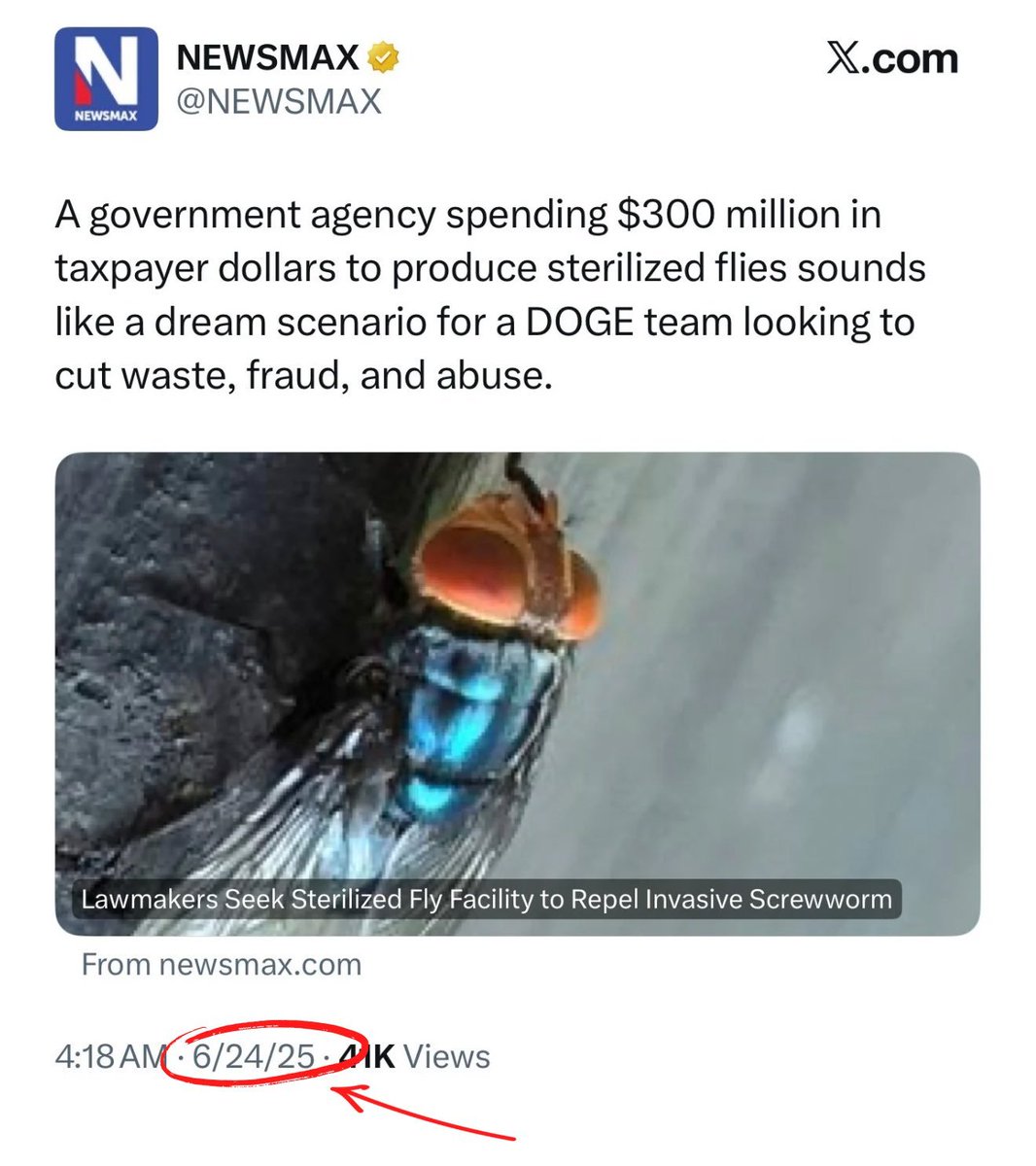
The screwworms were already well past the Panama barrier by 2025. The biggest culprit was a lack of urgency, diligence, and reporting from 2021-2024 that this was an emerging crisis
But the second biggest culprit was unrestrained northern migration.

47
190
1,872
94,405
KL retweeted
Jun 8
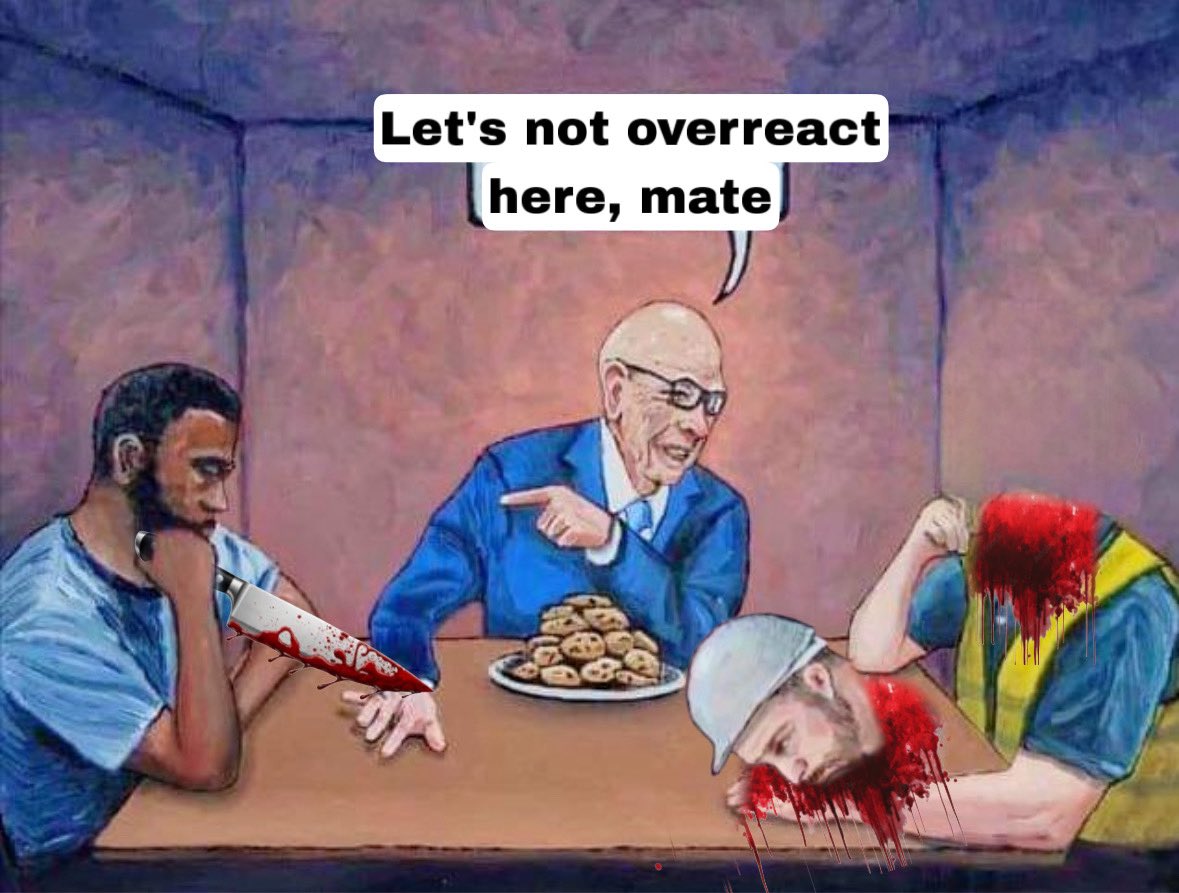
I mostly agree with this with the following caveat:
It might not be legal fraud to grab 1,000 ballots, mark your favorite candidate, and have a homeless person sign it with a smiley face
But it is a moral fraud because you've just disenfranchised 1000 voters who actually care about their vote, care about the results, care about their city
If that is what is happening (which seems likely) then it calls into question the very nature of representative democracy. Why do we even have a vote if the vote result isn't determined by individuals but by NGOs who can harvest as many votes as they want using these strategies?

I'll be writing about this for NR, but I will lay the Los Angeles situation out here flatly. Pratt didn't lose because of fraud. Pratt lost because, just like Chicago, it's an 80/20 Democratic city. In fact, he seems to have placed exactly where was in the final polls.
The real scandal is what's legal: with a 100% mail-in system, an endless window for ballot counting and legal mechanisms for unions and organizers to harvest (and later "cure") ballots, California's system is a purpose-built black box designed to fuel paranoia. And for no other purpose than that it allows Democratic intra-party battles to become a test of organizing strength for NGOs and unions.
People are right to be angry about the system. But even the way the votes are being counted now makes perfect (albeit disgusting) sense without recourse to claims of "fraud."
153
500
3,330
172,336
KL retweeted

Jun 7

Jun 7

Heil Hitler
4
33
328
12,761
KL retweeted

The average progressive wants to see America destroyed, so, yeah x.com/nypost/status/20634974…
Jun 7

Bill Maher says artists quitting Freedom 250 concert makes it look like Dems 'don't love America' trib.al/8E7iKLz

15
89
604
47,681
KL retweeted

How is Platner ‘working class’?
He comes from a distinguished and affluent family.
He went to a prestigious boarding school, Hotchkiss.
His family bought his home.
He has a vanity business.
Prior to Maine he sloshed around in DC with political elites and activists.
Dysfunctional, downwardly mobile leftists always try to pass off their destination as their origin story, but if you pay attention at all it’s not convincing.
Jun 6

If you don't know at least a handful of guys like Graham, you've never done a day of physical labor in your life and you should really think long and hard about your own class position and why Platner is winning Maine so handily...
90
499
3,524
142,859

RT @redsteeze: It's not that hard. The left lets institutions and communities break down to a point of total degradation to prove why more…
6
150
KL retweeted

Jun 6
The New York Times did exactly what it set out to do. They view it as job well done.
Jun 5

I hope the New York Times genuinely recognizes the catastrophic damage they did here - to journalism and to victims of abuse.
8
91
902
35,381
KL retweeted

Jun 4
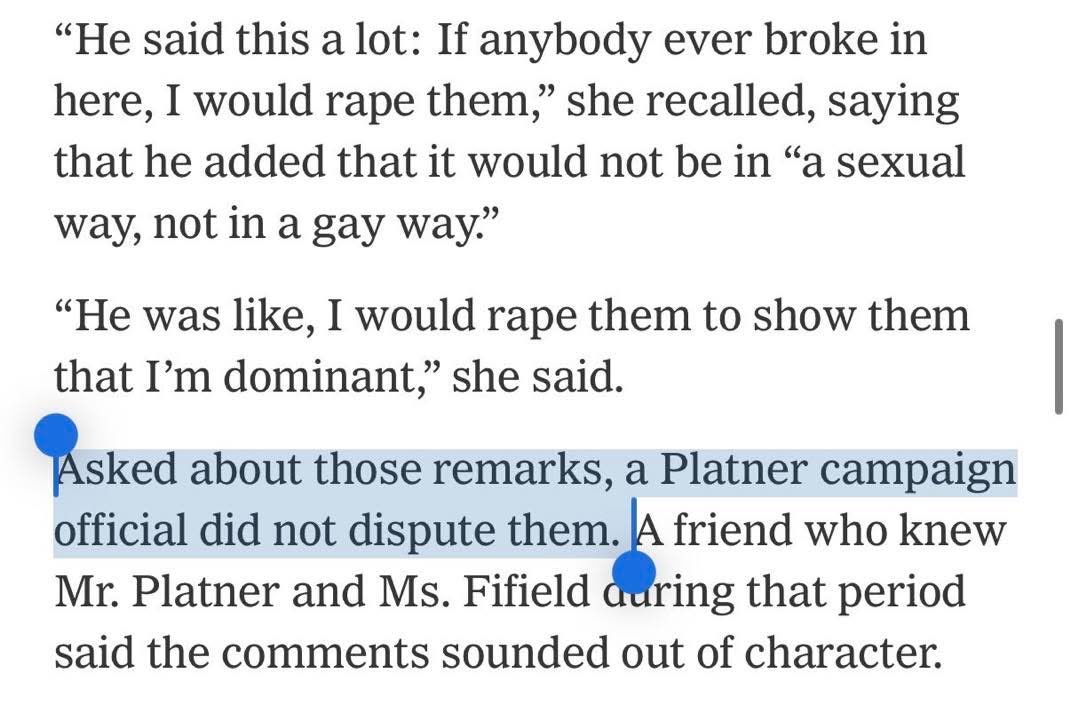
Talarico on his way to break into Platner's house.
Jun 4

FADE IN:
INT. RURAL LIVING ROOM - NIGHT
The room is in chaos. Drawers yanked open, a floor lamp knocked sideways casting jagged shadows across the carpet.
A ski-masked BURGLAR (30s, lean, dressed in black) lies face-down, wrists pinned behind his back, pants and underwear ripped down around his ankles.
GRAHAM PLATNER (mid-40s, ginger, paunchy homeowner in a stained white t-shirt and nothing else) is on top of him, knees planted on either side of the Burglar’s hips. Platner’s face is flushed, sweat dripping from his brow. He thrusts with frantic, manic rhythm — raping the burglar.
The Burglar grunts and struggles, muffled curses lost against the carpet.
Platner suddenly throws his head back, eyes squeezed shut, mouth wide.
GRAHAM PLATNER
(screaming, voice cracking with panic and orgasmic exertion)
No homo!
65
326
2,606
137,700

KL retweeted
Jun 5
Oh that's weird we were told during his term that he was George Washington.

Americans have one message for the Bidens: Go away.
Joe Biden left office tremendously unpopular & remains so (-19 pt net favorable).
He's by far the least popular of any former Dem prez at this point after their presidency.
Jill Biden was the least popular Dem first lady.
14
93
713
26,386
KL retweeted

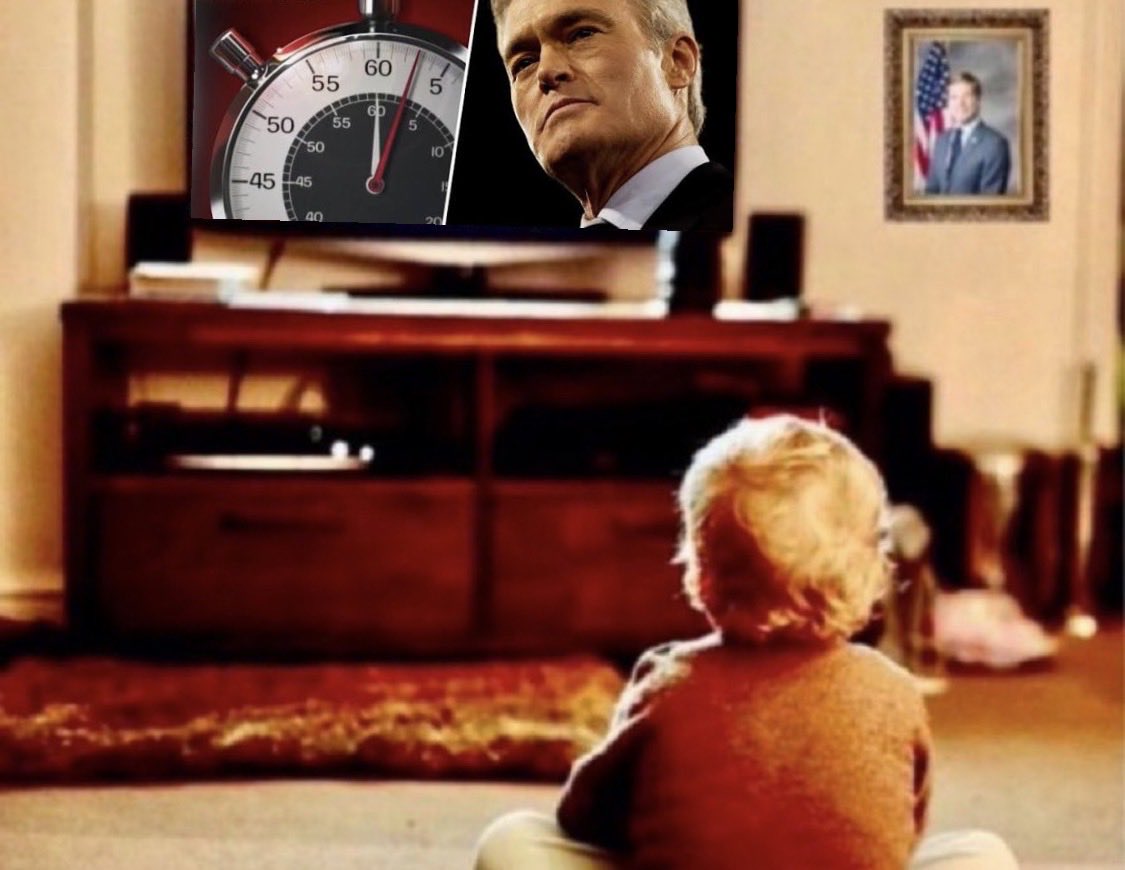
We just came downstairs and found our 8-year-old son Jasper sitting in front of the TV, sobbing.
Through tears he asked, “Is it true? Did 60-Minutes really fire Scott Pelley?”
We gently told him that yes, it’s true, and hugged him tightly.
He locked himself in his room and is refusing to come out or let us bathe him until CBS gives Scott his job back, apologizes and resigns.
He hasn’t even had breakfast. CBS is literally killing our son.
45
38
593
7,196