
Research @blockworksres | prev @thespartangroup | Views are my own
Joined January 2022
- Tweets 1,033
- Following 2,063
- Followers 1,274
- Likes 1,840
365 Photos and videos
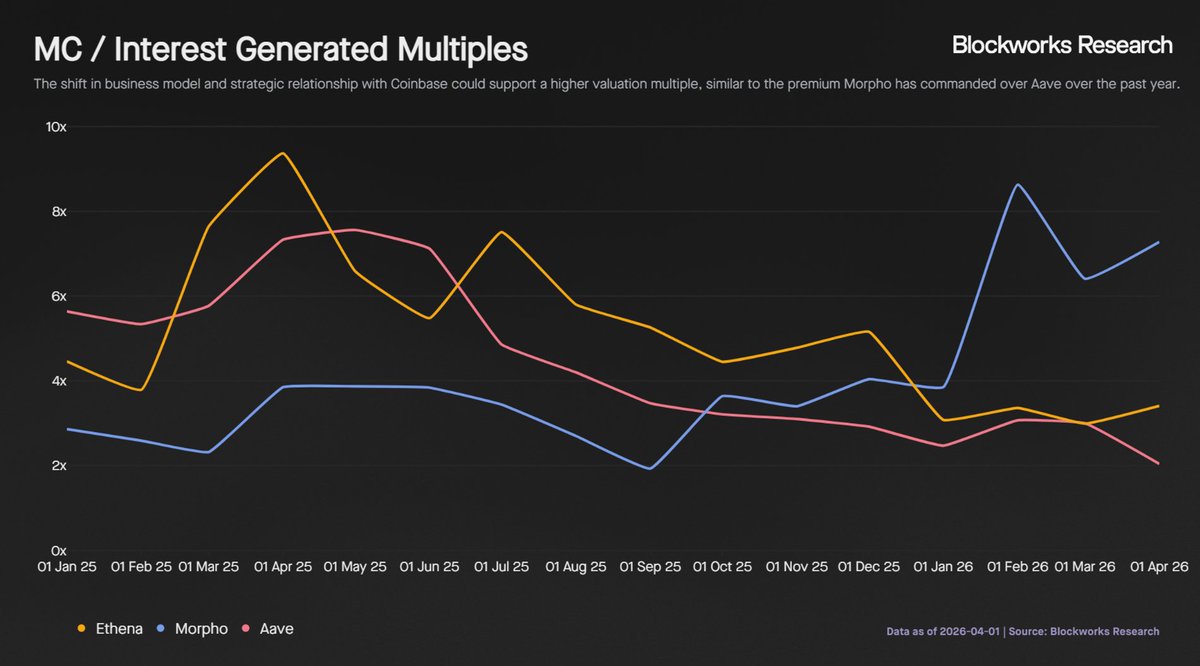
The @coinbase partnership may be the most important part of @ethena's strategy shift.
Coinbase already accounts for ~$2.3B of deposits on @Morpho If USDe gains even a small share of Coinbase's stablecoin deposits, deposit growth could be meaningful.
More importantly, Morpho's premium valuation versus Aave shows how much the market values Coinbase distribution.
If Ethena becomes embedded in Coinbase's yield stack, ENA may deserve a similar premium.
The reserve changes improve the product.
Coinbase improves the distribution.

2
2
34
3,770

Jun 12
People will look back and remember this day as a pivotal moment for the crypto industry. Excited for what’s to come.
Jun 12

1/ Blockworks has acquired Messari.
We’re bringing together crypto’s two largest data and market intelligence platforms.
2
1
35
1,063

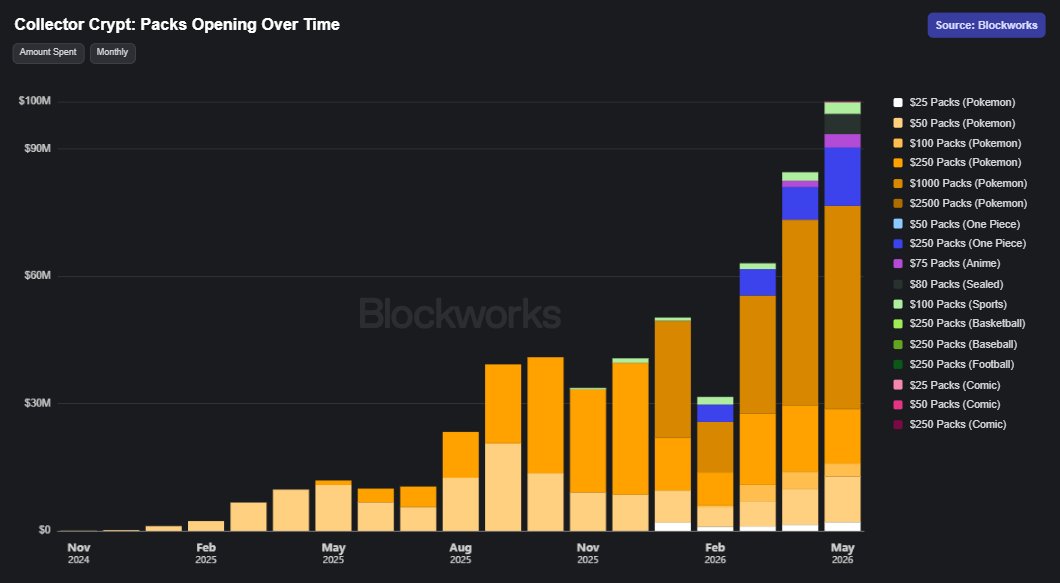
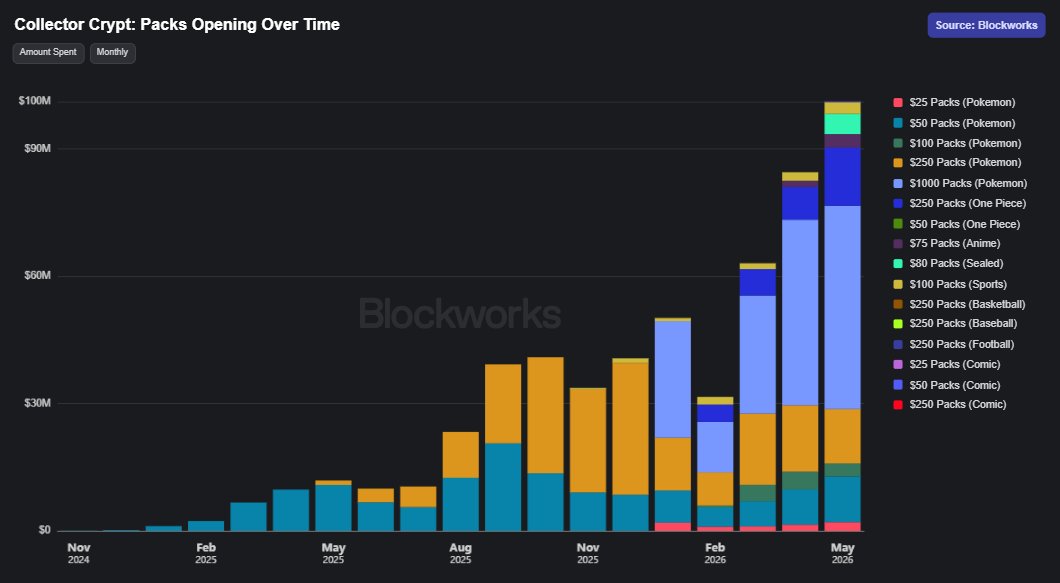
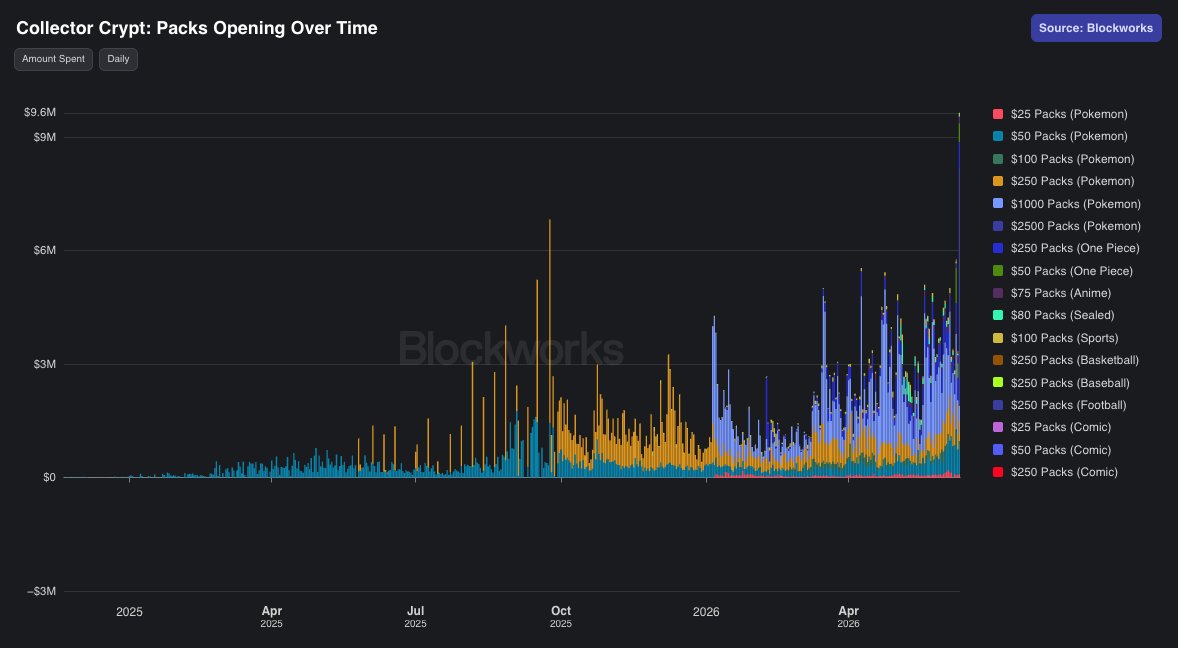
Just updated! New daily ATH on @Collector_Crypt yesterday with ~$9.6m of packs opened 🤯
(~$6.3m came from just the $2.5k packs alone)
5
9
44
9,226
Jun 11
This is huge! Demand for higher tier gacha packs has been clear for a while, and the $1,000 packs proved it almost immediately after launch.
I expect the new $2,500 tier to follow a similar trend, attracting both larger collectors and degens looking for bigger swings.
Jun 10

Every great collection deserves a centerpiece.
The card everyone notices first.
The card with a story behind it.
We built a machine around cards like that.
The $2,500 Pokémon Gacha is now live.

6
6
49
9,609
Jun 9
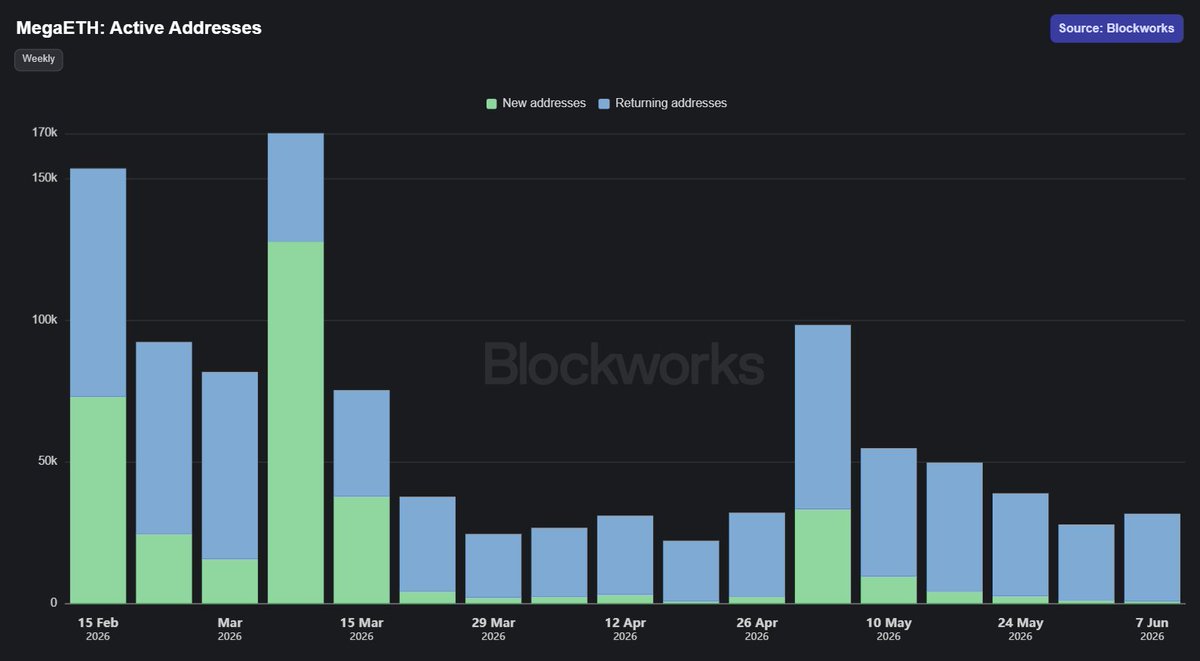
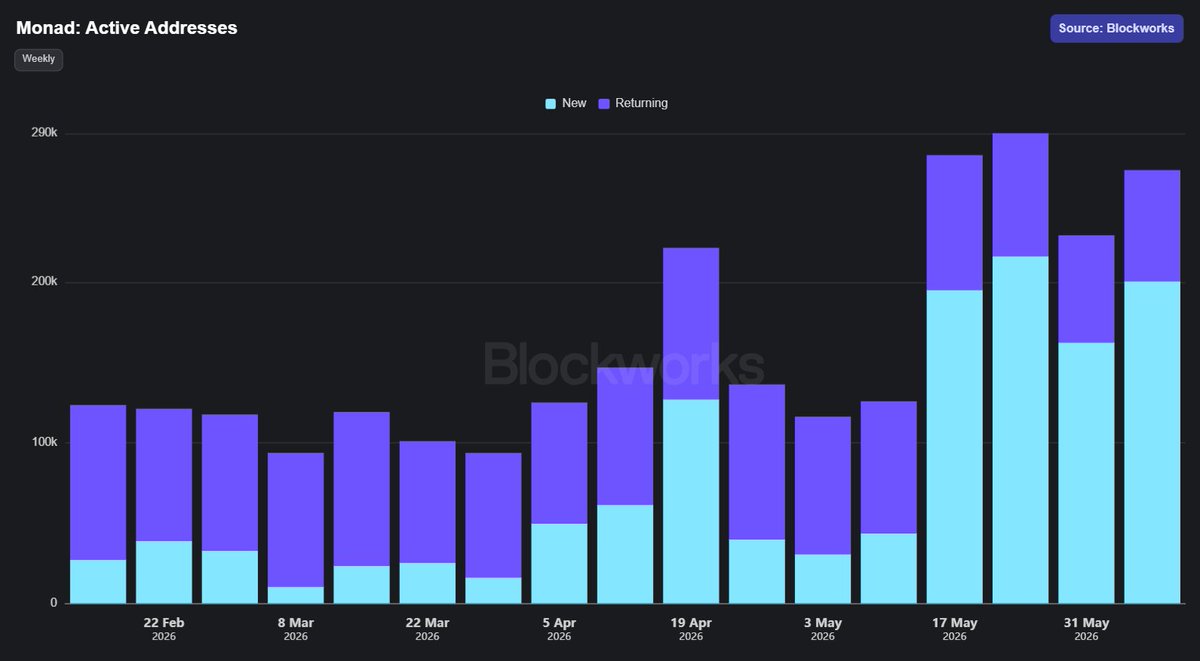
Stumbled across an interesting contrast between @monad and @megaeth
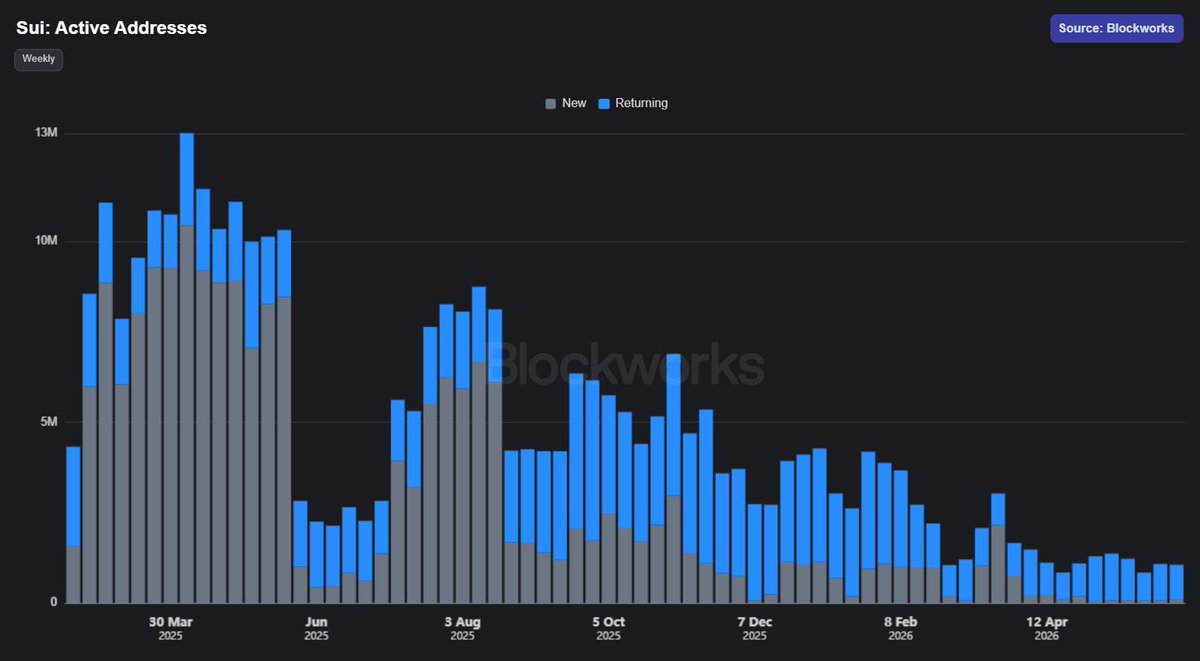
Monad continues to attract a large number of new addresses, but conversion into returning users remains weak. Activity appears driven more by exploration and incentives than by applications that users repeatedly come back to.
MegaETH, on the other hand, is showing the opposite pattern. New user growth has been declining on a weekly basis, while activity is increasingly concentrated among a relatively small group of existing users.
The common thread is that neither ecosystem has produced a breakout application capable of both attracting new users and retaining them at scale. That remains the challenge facing most new L1s today.
Until that changes, user growth is likely to remain cyclical and heavily dependent on incentives for these chains.
5
44
6,319
Jun 8
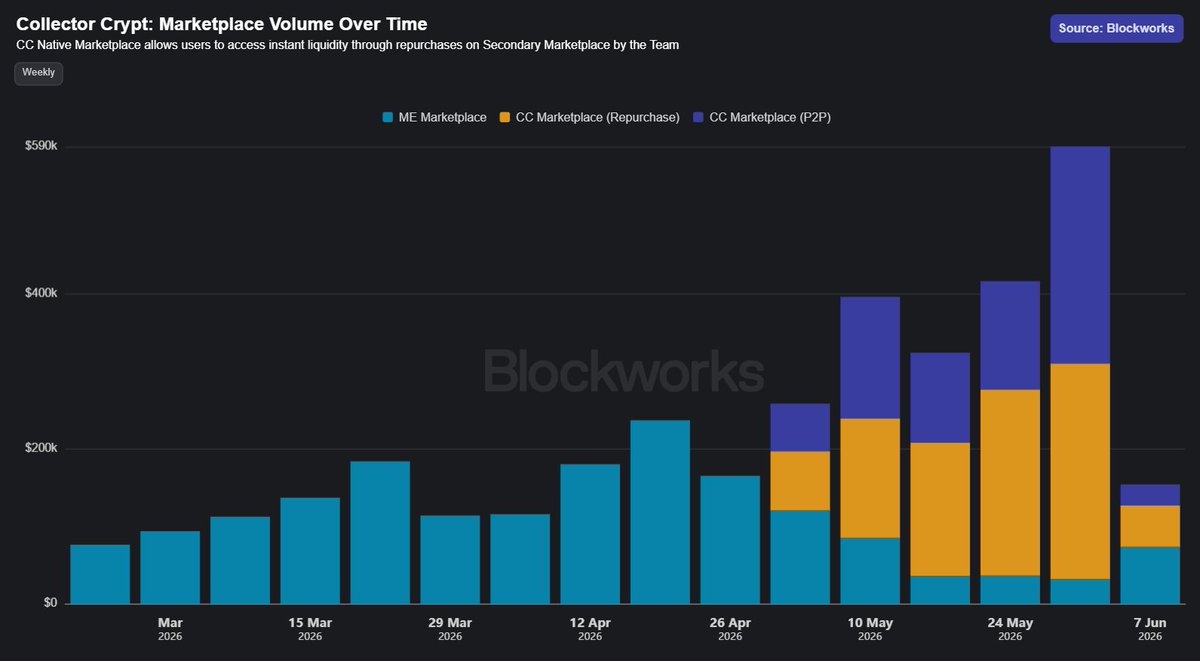
The instant liquidity feature by @Collector_Crypt is already emerging as a meaningful source of inventory acquisition. To date, roughly $970K worth of cards have been bought by the team, equivalent to 4.5% of its total inventory value.
The feature creates a win win dynamic. Collectors gain liquidity and better pricing, while Collector Crypt acquires inventory faster and at a slight discount to market value, helping support the gacha economics.
More importantly, instant liquidity could become one of the platform's strongest retail onboarding tools.
Anyone who has bought or sold cards at conventions or on marketplaces understands how difficult it can be to move higher value inventory quickly without accepting a significant haircut.
Solving that pain point may prove just as valuable as the platform's gamified opening experience.
1
3
41
1,710
Kunal Doshi retweeted

Jun 5
you want the REAL TCG alpha and follows instead of KOL cucks who jumped on the Pokémon bandwagon? Here are my follow suggestions:
@Hellaorganics (TCG degen sh!tposter)
@swandogs (Live rips and TCG alpha)
@miagia (Cute pokemon)
@Kunallegendd (particularly for Gacha stats) cont 👇
15
1
27
2,541
Jun 4
Correct me if I am wrong so with the token at a $1.6M FDV, people buying the token are essentially paying 10x more than what the underlying inventory is worth?
Speculation at its peak.

8
1
38
10,924
Jun 4
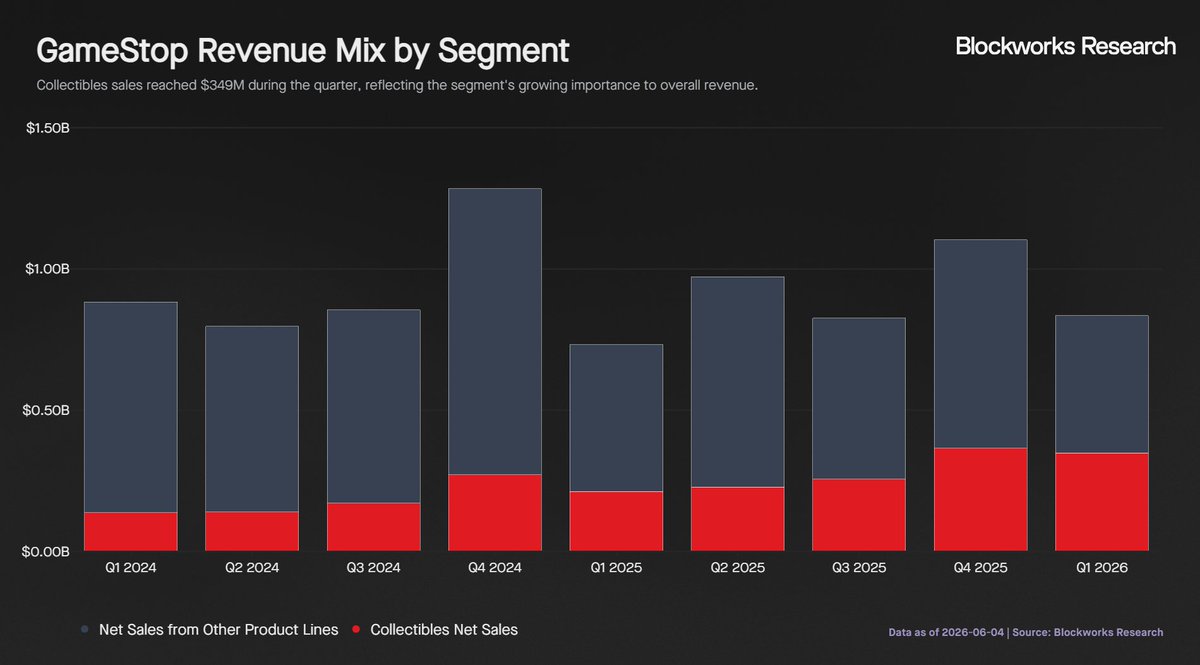
The latest earnings of @gamestop may have been one of the most bullish developments for the onchain TCG sector this year.
The company reported the highest quarterly profit in its history, driven largely by strength in collectibles. The segment generated $349M in revenue during the quarter, accounting for 42% of total sales. This includes TCG products, grading services, Power Packs, toys and other collectibles related merchandise.
The results reinforce a trend that many investors continue to underestimate: collectibles are no longer a niche category. They are increasingly becoming one of the most important growth drivers across the broader retail market.
A key advantage for GameStop has been its partnership with PSA, which effectively serves as the inventory backbone for its Power Packs product.
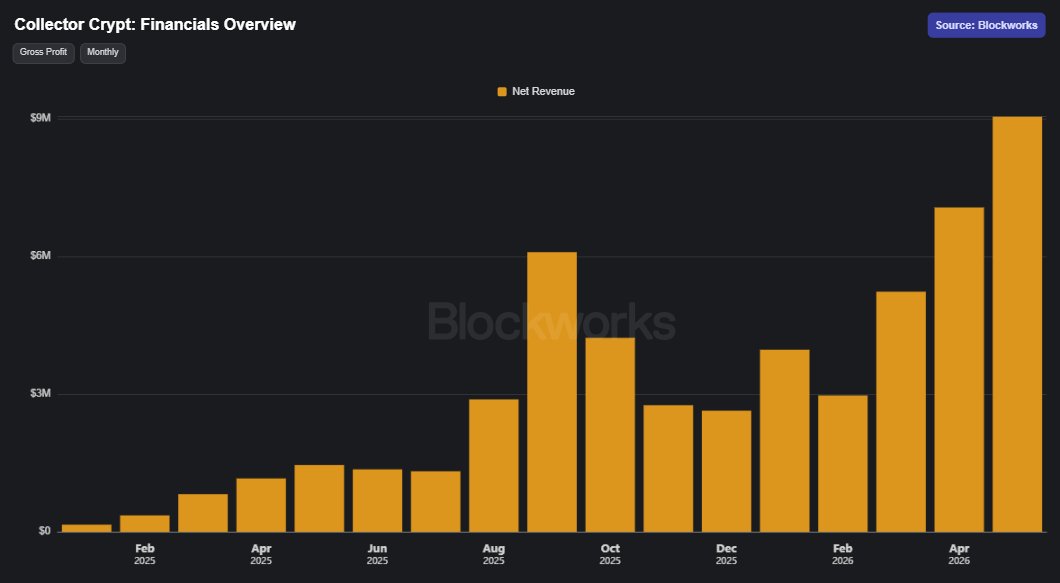
For onchain collectibles platforms, the numbers help frame the size of the opportunity. @Collector_Crypt generated $21.3M in net revenue over the last three months. By comparison, GameStop's collectibles segment alone generated roughly 16x that amount in a single quarter.
The more interesting takeaway is that Collector Crypt is not competing for a crypto native market. It is competing for a share of a much larger collectibles economy that is already proving capable of generating hundreds of millions in quarterly revenue.
In many ways, Collector Crypt already has the better product. Users benefit from more transparent odds and stronger buyback rates versus GameStop's Power Packs offering.
Despite operating in a much earlier stage of growth, Collector Crypt trades at only a modest premium to GameStop on a sales basis, roughly 4x-5x annualized revenue versus around 3x sales for GameStop.
The key question is no longer whether demand for collectibles exists. GameStop's earnings answered that.
The question is whether Collector Crypt can successfully expand beyond crypto natives and build an onboarding experience that captures the much larger retail audience already participating in the collectibles boom.
Bullish on solana:CARDSccUMFKoPRZxt5vt3ksUbxEFEcnZ3H2pd3dKxYjp
4
9
42
3,700
Jun 4
Tagging folks who are on top of the TCG space
@sjdedic
@ahboyash
@Zeneca
@tweeterazzis
@belizardd
@blknoiz06
@jussy_world
@AvgJoesCrypto
@notthreadguy
@iruletrenches
3
250
Jun 3
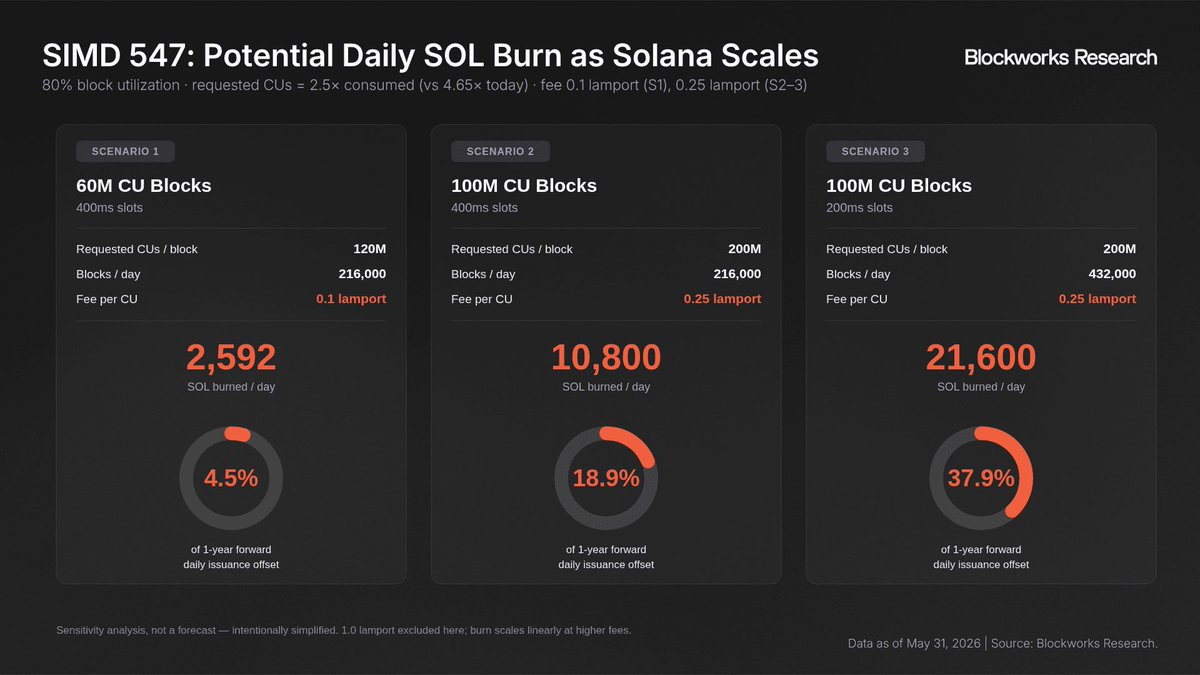
Could this proposal be the one that flips the narrative around SOL? The impact metrics definitely look promising.

9
403
Jun 2
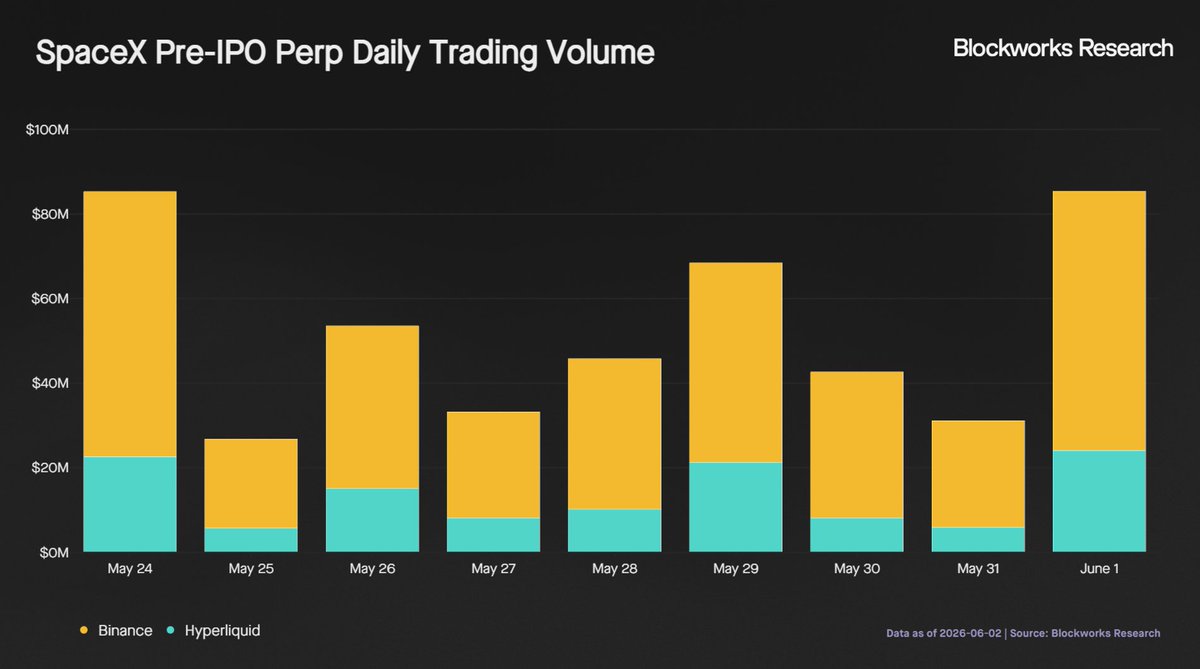
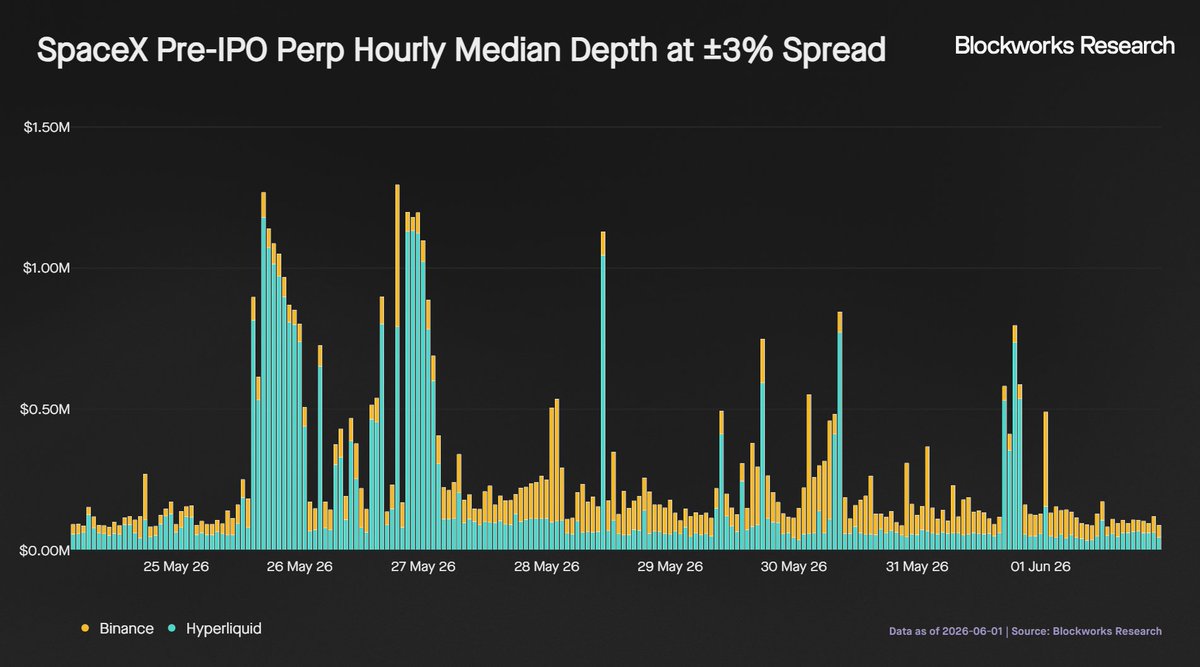
Binance may be winning the volume race in pre-IPO markets, but @HyperliquidX still owns the liquidity.
With Binance recently launching pre-IPO on Anthropic ahead of @tradexyz, competition in the category is heating up quickly. SpaceX remains the clearest battleground today.
At first glance, @binance appears to be winning. Over the last nine days, SpaceX daily volume on Binance was roughly 3.2x higher than on Hyperliquid.
But volume only tells part of the story.
Looking at order book depth within 3% of the mid price, Hyperliquid had an average hourly depth of $182.6K compared to just $93.1K on Binance. While the gap has narrowed in recent days, Hyperliquid still offers nearly 2x the liquidity for larger traders looking to enter or exit positions.
To quantify the difference, I simulated every SpaceX order above $5K on Hyperliquid against Binance's executable order book at the exact same timestamp.
For orders between $5K and $10K, Binance was able to fully fill 91% of trades. Hyperliquid traders still achieved a modest execution advantage, saving a median 0.88 bps per fill.
The gap widened materially on larger orders.
For trades between $10K and $25K, only 67% of Hyperliquid orders could have been fully executed on Binance. Traders on Hyperliquid also benefited from a median execution advantage of 8.62 bps versus Binance's available liquidity.
The takeaway is that while Binance may be attracting more traders, Hyperliquid remains the preferred venue for size. Retail flow can drive volume, but deep liquidity is what attracts whales.
But this gap is definitely getting smaller and I am curious to see how these metrics vary as we approach SpaceX’s IPO
Hyperliquid
3
25
1,187
Jun 1
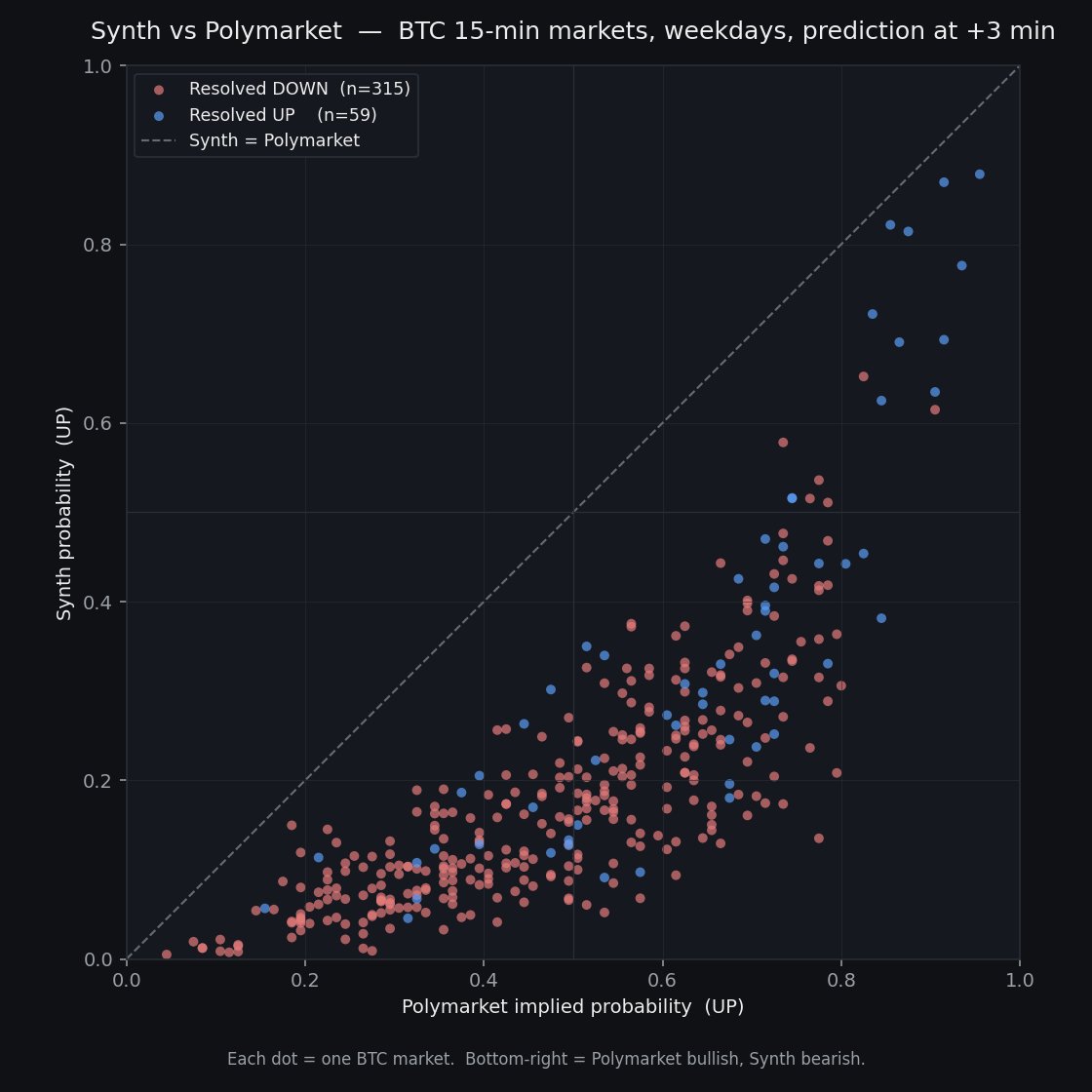
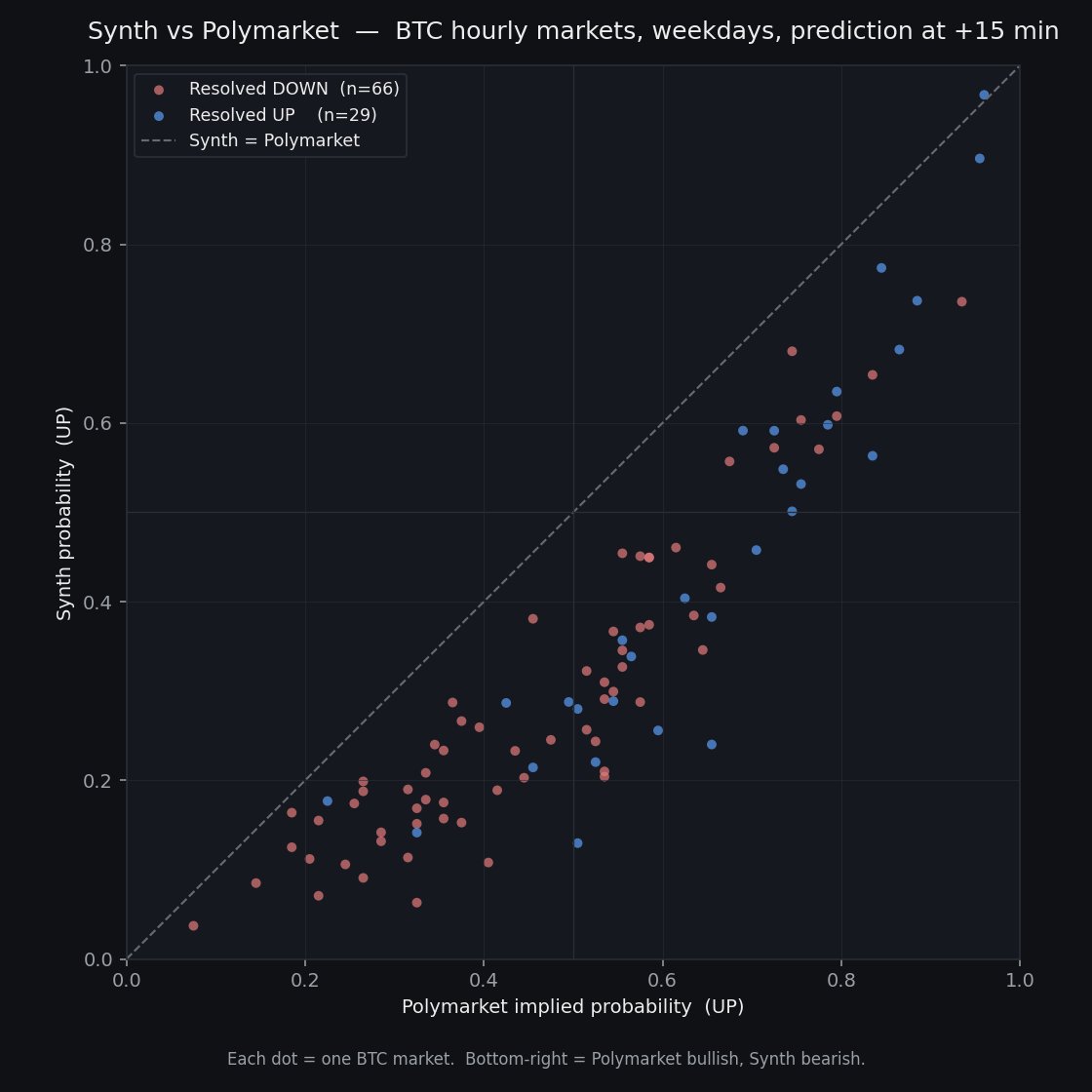
One of our theses this year was that as prediction markets mature and competition intensifies at the base layer, the most attractive opportunities will shift toward the applications and intelligence built on top. One project I have been watching closely is @SynthdataCo
Synth displays expected outcomes for hourly and daily event contracts alongside the implied market probability, allowing users to compare market pricing against real time forecasts. Those forecasts are generated by the top 10 models from a pool of more than 200 competing on Bittensor.
To test the product, I tracked every BTC up/down market on @Polymarket over nine weekdays. Both Synth and Polymarket probabilities were recorded at the same moment: three minutes into each 15 minute market and 15 minutes into each hourly market. The forecasts were then compared against the final outcome.
Across 374 weekday 15 minute markets, Synth correctly called direction 86% of the time versus 57% for Polymarket. Across 95 hourly markets, Synth achieved 75% accuracy compared to 62% for Polymarket.
Notably, Synth's edge widened significantly at shorter time horizons, posting a 29 percentage point advantage in 15 minute markets versus a 13 percentage point advantage in hourly markets.
The disagreement data was even more interesting than the headline numbers. In 46% of 15 minute markets, Synth and Polymarket pointed in opposite directions. In every single case, Synth forecast DOWN while Polymarket implied UP. Synth was correct 82% of the time in these disagreements, suggesting the market was consistently underpricing short term downside during the sample period.
The bigger opportunity here may not just be for directional trading but especially for market making. A market maker armed with a calibrated probability edge can quote tighter two way prices, hold less inventory and capture more volume without taking on the same adverse selection risk.
As the base layer becomes commoditized, the intelligence layer becomes the moat. Synth may be an early example of what that future looks like.
11
10
77
22,084
May 29
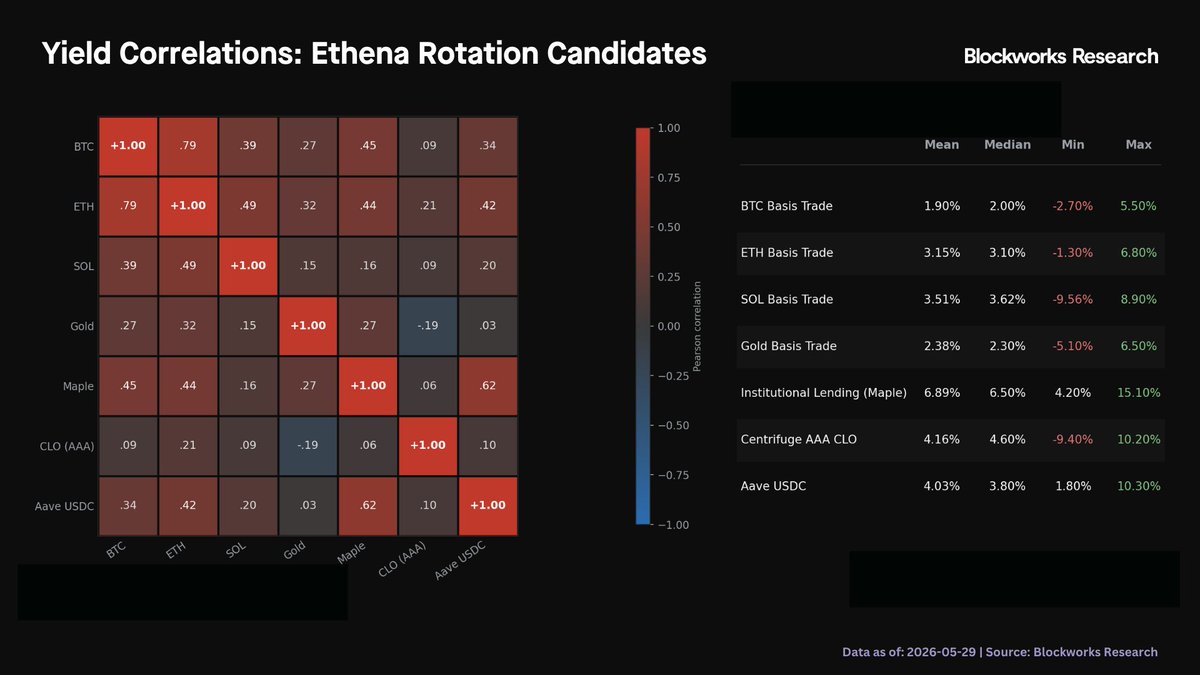
Looked at @ethena's proposed diversification strategies and found that CLO AAA exposure and the Gold basis trade offer the strongest diversification benefits relative to the traditional crypto basis trade due to their lower correlations.
Scalability constraints aside, neither strategy appears likely to materially increase sUSDe yields, which are still likely to settle in the 4%-5% range over time. I'll be running a full backtest of the proposed allocation mix over the coming week to better understand the tradeoffs.
The more interesting trade would be identifying which protocols stand to benefit from potential Ethena flows as the diversification moves forward.
@maplefinance @centrifuge and @Morpho appear best positioned, particularly with Morpho's upcoming Midnight launch enabling more bespoke lending structures that could help Ethena better manage risk while deploying capital at scale.
2
20
707
May 28
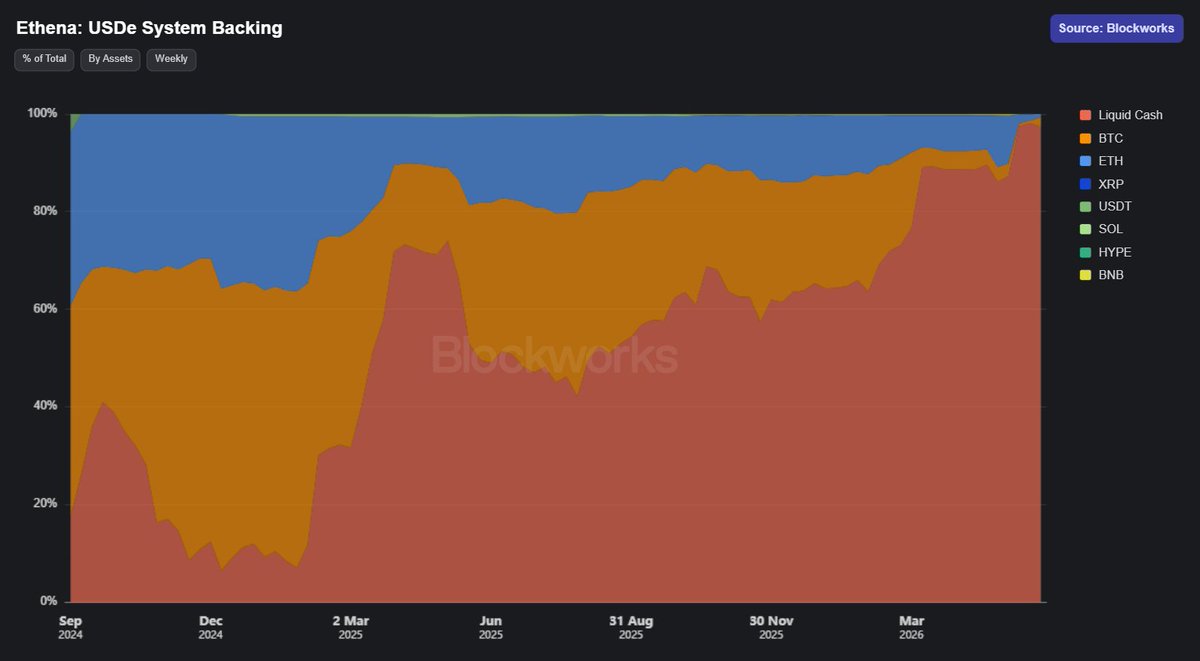
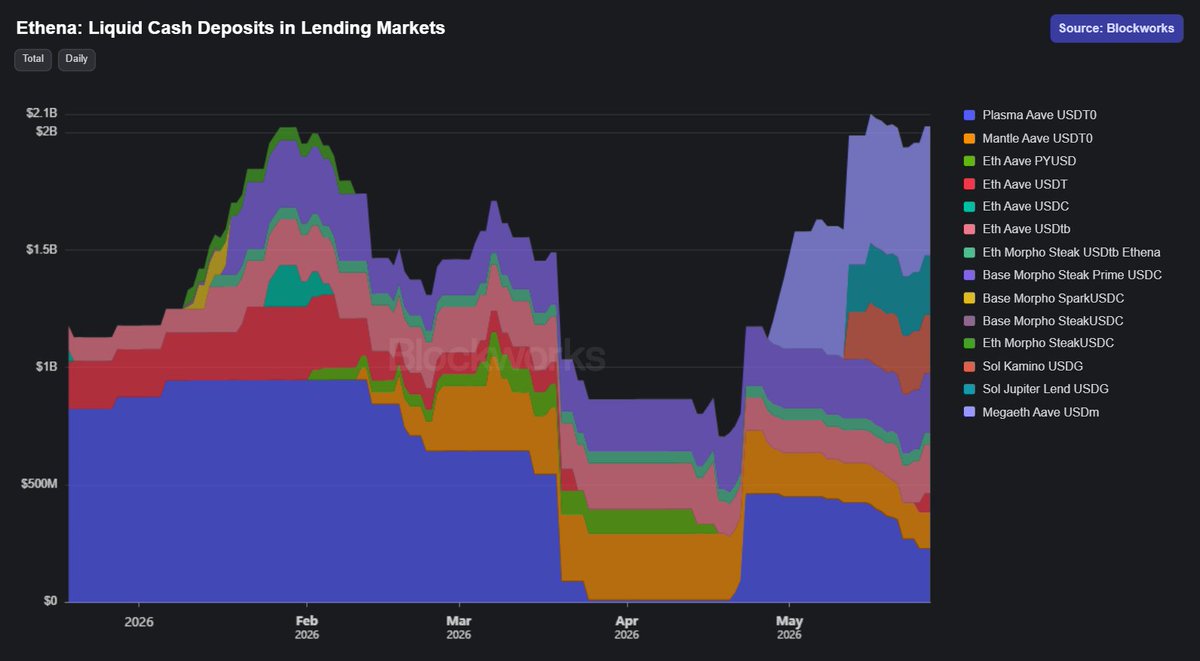
A tale of two halves for @ethena. What began as a novel synthetic stablecoin designed to give users access to crypto basis yields has now shifted almost entirely away from that model, with roughly 97% of USDe’s backing sitting in liquid cash today.
A large portion of those reserves has been deployed into lending protocols such as Aave, Morpho, Jupiter and Kamino to capture external incentive programs and lending yields. Increasingly, Ethena looks less like a delta neutral basis trade and more like an actively managed yield vault curating opportunities across DeFi.
That shift raises an important question. With sUSDe yields recently compressing toward 3.5%-4.5%, does the return still justify the additional lending risk USDe holders are taking on, especially as US Treasury yields continue moving higher?
And if basis trading is no longer the core driver of returns, should Ethena increasingly be valued more like a yield aggregation vault rather than a synthetic dollar protocol?
We’ll dive deeper into this on tomorrow’s @0xResearch podcast, including whether Ethena’s proposed alternative backing strategies can realistically address some of these concerns.
3
2
29
6,037
May 27
As deep of an analysis as one can possibly dive into on asset price discovery on Solana.
“Since late 2025, both buy-side and sell-side medians have increasingly clustered around or below the raw pre-fill Binance reference, meaning Jupiter is not just beating Binance after fees and impact; it is often delivering outright price improvement before those costs are even added.”

13
1,057
May 27
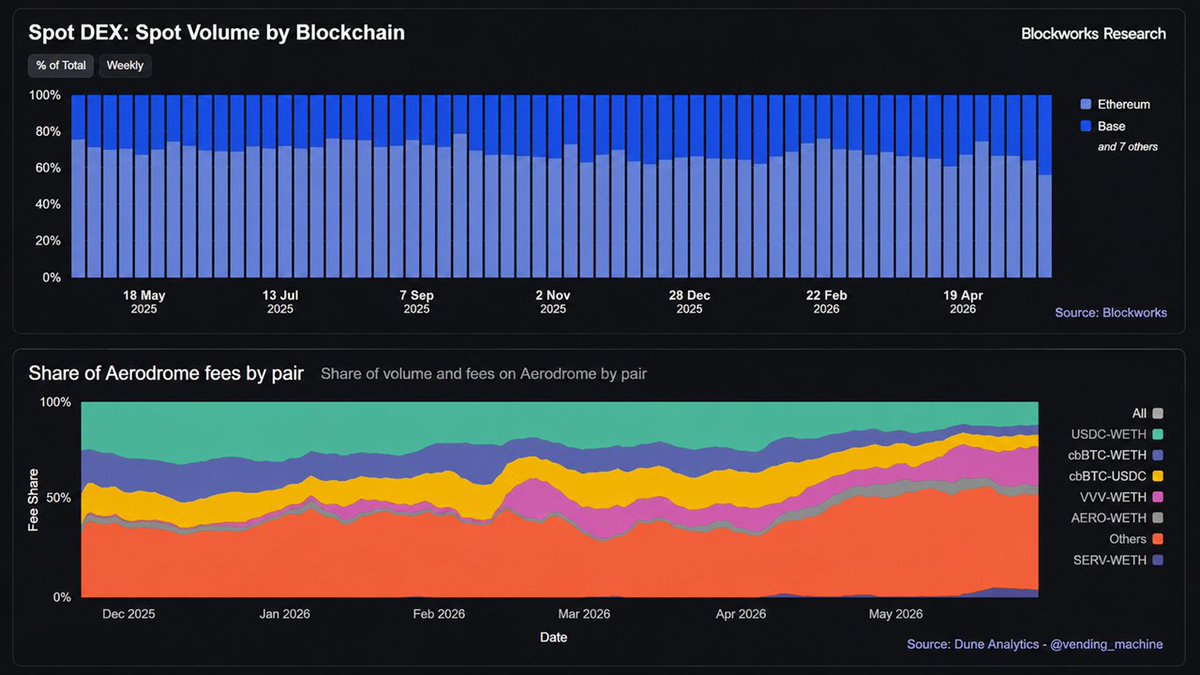
Spot DEX volumes on @base briefly flipped Ethereum on May 24th, capturing 53% market share as weekly volumes continue trending upward. A major driver of that growth has been @AerodromeFi which consistently accounts for roughly 50%-60% of all Base DEX volume.
What the market still underappreciates is how much of the recent privacy and AI trading activity is flowing through Aerodrome.
Lower cap names such as VVV, DIEM, SERV and POD rely on Aerodrome for onchain liquidity and price discovery, with VVV and SERV alone contributing nearly 25% of the protocol’s fees in recent weeks.
In many ways, Aerodrome is increasingly becoming the liquidity layer behind the emerging AI and privacy trade on Base.
2
3
26
1,230
May 27
Public companies are expected to provide extensive disclosures through S1 filings before an IPO.
Why should token markets be any different?
The Token Transparency Framework is a meaningful step toward establishing similar disclosure standards for crypto markets, improving transparency, trust, and market integrity across the industry.
May 27
Introducing the Transparency Alliance.
An industry-led alliance establishing the Token Transparency Framework as the standard for token market disclosures.
15
292
May 25
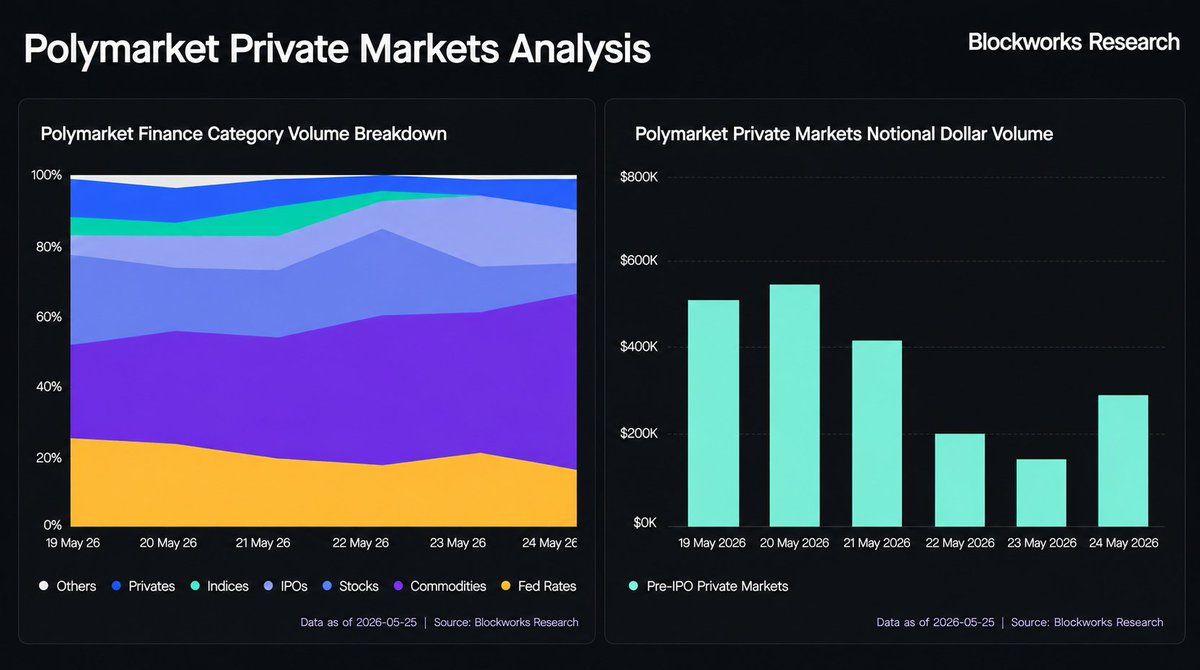
Private markets trading on @Polymarket is off to a slow start. Nearly a week after launch, daily volume sits around $250K and accounts for just 10% of the Finance category’s total volume.
More broadly, the Finance category itself has struggled to gain meaningful traction on Polymarket. For most traders, perps trading on platforms such as Hyperliquid remain the preferred venue for expressing views on commodities, equities, indices and private markets.
13
519