
Christian, Husband, Father, Grandfather, Ordained Minister of the Gospel, student of the financial markets
Joined May 2015
- Tweets 529
- Following 34
- Followers 33
- Likes 118
Photos and videos

May 20
Wow, if this is legit.

While China was busy shipping missile chemicals to Iran and collecting yuan tolls at Hormuz, someone was inside its most sensitive supercomputer stealing everything.
CNN reports that a hacker group calling itself FlamingChina breached the China National Supercomputing Center in Tianjin and exfiltrated up to 10 petabytes of classified defence data. The samples posted on dark web forums include bomb and missile designs, animated explosion simulations, structural integrity tests, renderings of the J-20 stealth fighter, sixth-generation aircraft concepts, nuclear submarine schematics, hypersonic weapons systems, and target analyses for American assets including HIMARS launchers and carrier strike groups.
Ten petabytes. For context, the entire printed collection of the US Library of Congress is approximately 10 terabytes. This breach is one thousand times that volume. It is being sold for cryptocurrency on Breach Forums. Cybersecurity experts who reviewed the previews told CNN the data appears genuine, matching known output patterns from the NSCC Tianjin facility, which serves over 6,000 clients including defence agencies and aviation firms across China.
The timing is extraordinary. Trump posted a 50 percent tariff threat on any country supplying military weapons to Iran hours before CNN published this story. Five Chinese vessels shipped sodium perchlorate to Iran from Gaolan Port in the past six weeks, enough propellant precursor for hundreds of ballistic missiles. China’s ghost fleet continues operating through the IRGC’s yuan toll booth at Hormuz. And now the supercomputer that designed the weapons China is helping Iran reconstitute has been gutted by hackers selling its contents for the same cryptocurrency that Iran charges for strait passage.
The irony is architectural. China built a parallel financial system using yuan and crypto to bypass the dollar at Hormuz. A hacker group is now using crypto to bypass Chinese state security and sell Beijing’s most classified military designs to anyone with a wallet address. The same technology that enables sanction evasion enables espionage monetisation. The blockchain does not distinguish between a toll payment and a weapons leak. It processes both.
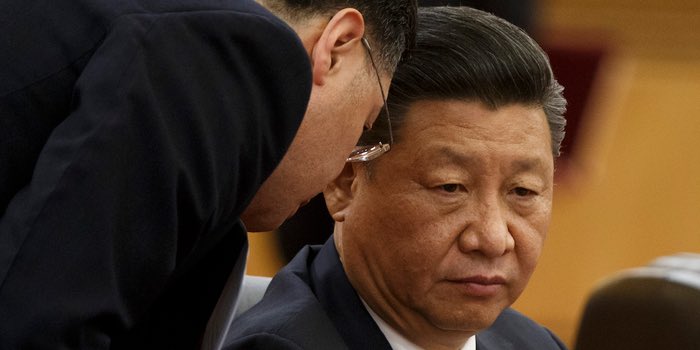
For Xi, this is a catastrophe arriving at the worst possible moment. Bessent’s mid-May Beijing summit was already going to be difficult. Trump holds the waiver on 140 million barrels of Chinese-bound Iranian crude. The 50 percent tariff threat targets China’s arms pipeline. The IDF just destroyed 100 Hezbollah targets using F-35I aircraft with Israeli software upgrades the Pentagon approved today. And now the classified designs for China’s most advanced military systems, the systems that justify the rare earth monopoly and the South China Sea posture and the Taiwan coercion campaign, are available for purchase on a dark web forum for less than the price of a single Hormuz transit.
If the data is genuine, every adversary and ally of China can now reverse-engineer the capabilities Beijing spent decades and hundreds of billions developing. The J-20’s stealth profile. The hypersonic glide vehicle’s trajectory calculations. The nuclear submarine’s acoustic signature. The sixth-generation fighter’s sensor architecture. All of it, priced in crypto, available now.
China wanted to build a post-dollar world. A hacker group just demonstrated what that world looks like when the technology works in both directions.
open.substack.com/pub/shanak…
59
Lee Lovegren retweeted

May 7
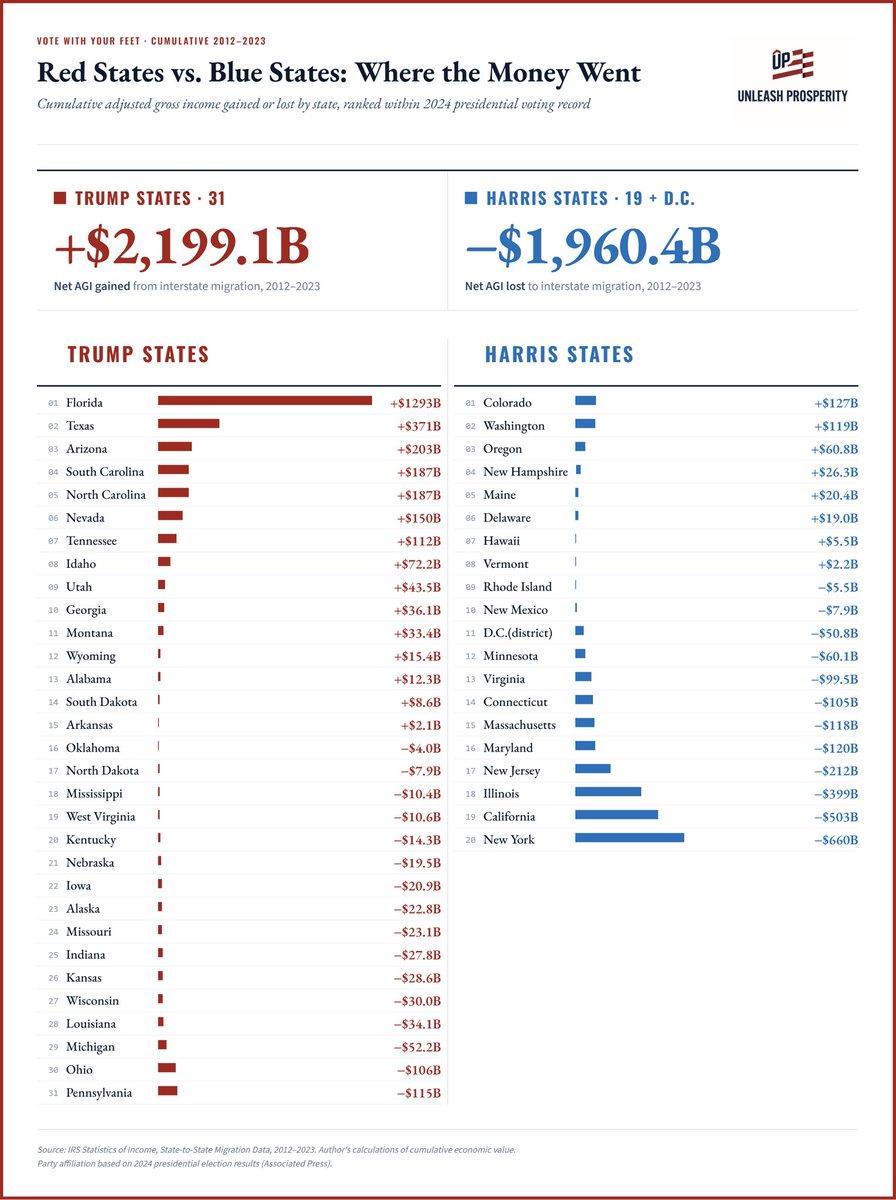
The biggest wealth transfer in American history isn’t happening on Wall Street. It’s happening on U-Hauls.
Over $2 trillion in income fled high-tax blue states for low-tax red states in just 11 years.
And blue states’ solution? Raise taxes again.
731
5,087
16,322
1,560,189
May 6
Good answer!

This may be the most articulate response I’ve ever heard to this question.
33
May 1
Much easier to move capital today than in the past. Why put up with all of NYC’s problems when you can just go somewhere easier and more cost efficient?
Apr 30

⚡️What is emerging is the collapse of the old urban elite bargain.
For decades, New York ran on an unspoken pact: capital accepted punishment because the city conferred power. High taxes, brutal costs, political hostility, congestion, disorder, regulatory pain. The exchange still worked because New York gave access to the center of gravity. Deals, law firms, media, finance, culture, status, elite labor, philanthropic prestige, institutional validation.
That pact is breaking.
The new political class still wants the fruits of capital, but no longer wants to honor the status of the people who create it. It wants the tower, the jobs, the taxes, the donations, the office demand, the civic subsidy, the global prestige, then wants the builder to stand there and be morally indicted after delivering it.
That is the deep contradiction.
A city can extract from capital when capital believes the city is indispensable. A city can insult capital when alternatives are weak. A city can tolerate dysfunction when proximity remains mandatory. New York’s danger is that all three conditions are weakening at once.
Capital is more mobile. Work is more distributed. Financial elites have alternatives. Florida is no longer a retirement punchline. Texas is no longer a provincial sideshow. Miami, Palm Beach, Dallas, Austin, Nashville, and global private networks now offer enough infrastructure for wealth to keep compounding without begging New York for permission.
That changes the psychology. The old New York premium was: suffer here because the center is here. The emerging question is: why suffer here if the center can move?
That is the part the political class does not understand. Prestige used to be New York’s moat. Now prestige is becoming portable. Capital can build its own rooms, its own conferences, its own private networks, its own schools, its own philanthropic channels, its own media, its own political machines. Once capital no longer needs the city to certify its status, the city loses its deepest leverage.
The Griffin fight is a symbol of that transition. He represents a type of actor who should be treated as strategic infrastructure by any city that wants to remain dominant. A builder of institutions. A buyer of land. A creator of high-value jobs. A source of tax flow. A donor. A signal to other capital that the city still matters.
If the city’s response is contempt, the message to other capital is clean: come build here and become prey.
Deep deep down, this is the emergence of jurisdictional sovereignty inside America. The wealthy and productive are no longer merely choosing neighborhoods. They are choosing regimes. One regime offers prestige plus extraction plus moral hostility. Another offers lower taxes, friendlier politics, more space, and fewer rituals of humiliation.
The old coastal model assumed talent and capital were captive. The new map proves they are not.
That is why this matters beyond New York. This is the same pattern showing up everywhere: high-status legacy institutions still believe they own the future because they owned the past. Universities, media, cities, agencies, credential systems, old financial centers. They keep charging the old premium after the monopoly has weakened.
That is how incumbents decay. They mistake inherited gravity for permanent gravity.
The emerging structure is harsher: capital will increasingly route around contempt. Talent will increasingly route around decay. Builders will increasingly choose places that treat them as assets rather than tribute animals. Legacy cities will still matter, but their monopoly on ambition is cracking.
The real truth is that New York is not fighting one billionaire.
New York is testing whether a city can despise its own engine and still remain the center of the world.
30
Apr 4
Interesting perspective.
Apr 3

Food for thought.
Trump, Hormuz and the End of the Free Ride
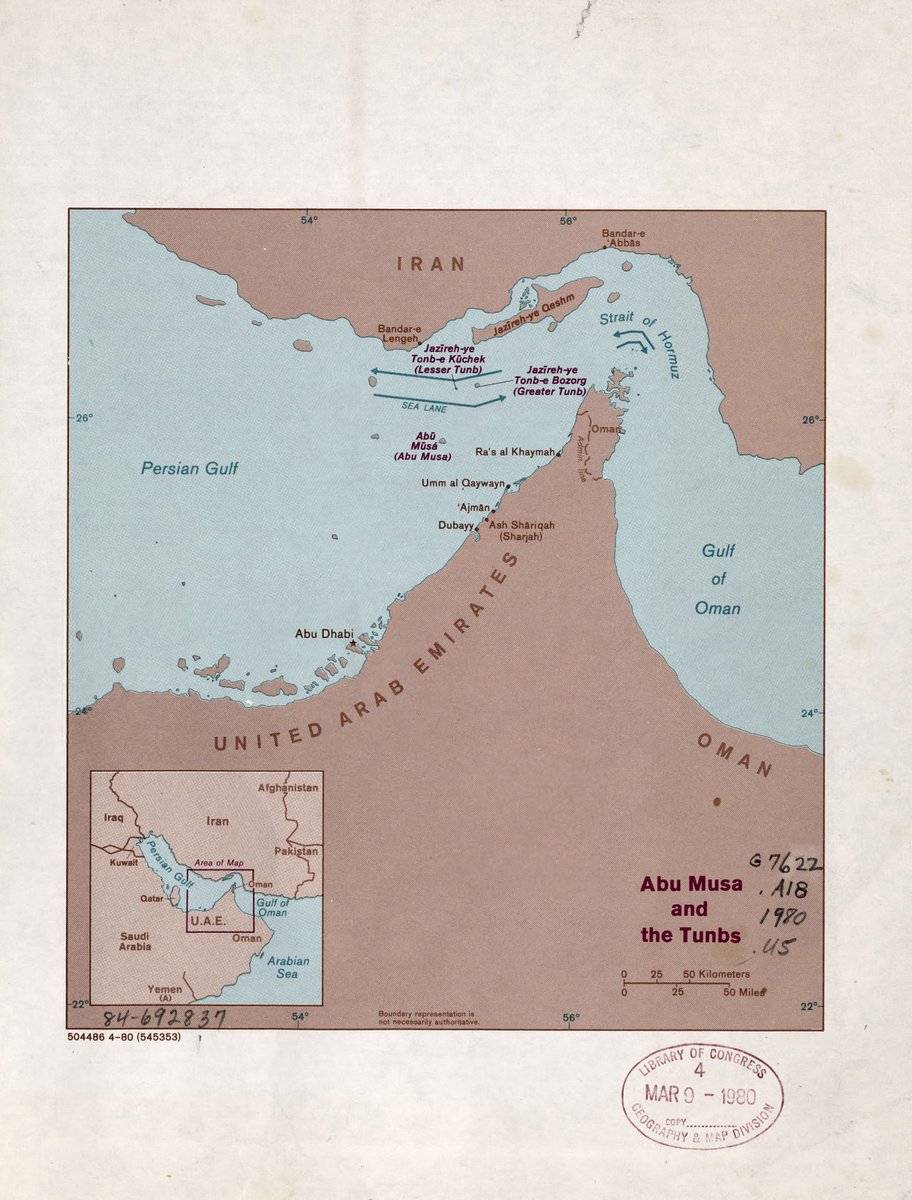
For half a century, Western strategists have known that the Strait of Hormuz is the acute point where energy, sea power and political will intersect. That knowledge is not in dispute. What is new in this war with Iran is that the United States, under Donald Trump, has chosen not to rush to “solve” the problem. In Hegelian terms, he is refusing an easy synthesis in order to force the underlying contradiction to the surface.
The old thesis was simple: the US guarantees open sea lanes in the Gulf, and everyone else structures their economies and politics around that free insurance. Europe and the UK embraced ambitious green policies, ran down hard‑power capabilities and lectured Washington on multilateral virtue, secure in the assumption that American carriers would always appear off Hormuz. The political class behaved as if the American security guarantee were a law of nature, not a contingent choice. Their conduct today is closer to Chamberlain than Churchill: temporising, issuing statements, hoping the storm will pass without a fundamental reordering of their responsibilities.
Trump’s antithesis is to withhold the automatic guarantee at the moment of maximum stress. Militarily, the US can break Iran’s residual ability to contest the Strait; that is not the binding constraint. The point is to delay that act. By allowing a closure or semi‑closure to bite, Trump ensures that the immediate pain is concentrated in exactly the jurisdictions that have most conspicuously free‑ridden on US power: the EU and the UK. Their industries, consumers and energy‑transition assumptions are exposed.
In that context, his reported blunt message to European and British leaders, you need the oil out of the Strait more than we do; why don’t you go and take it? Is not a throwaway line. It is the verbalisation of the antithesis. It openly reverses the traditional presumption that America will carry the burden while its allies emote from the sidelines.
In this dialectic, the prize is not simply the reopening of a chokepoint. The prize is a reordered system in which the United States effectively arbitrages and controls the global flow of oil. A world in which US‑aligned production in the Americas plus a discretionary capability to secure,or not secure, Hormuz places Washington at the centre of the hydrocarbon chessboard. For that strategic end, a rapid restoration of the old status quo would be counterproductive.
A quick, surgical “fix” of Hormuz would short‑circuit the dialectic. If Trump rapidly crushed Iran’s remaining coastal capabilities, swept the mines and escorted tankers back through the Strait, Europe and the UK would heave a sigh of relief and return to business as usual: underfunded militaries, maximalist green posturing and performative disdain for US power, all underwritten by that same power. The contradiction between their dependence and their posture would remain latent.
By declining to supply the synthesis on demand, and by explicitly telling London and Brussels to “go and take it” themselves, Trump forces a reckoning. European and British leaders must confront the fact that their energy systems, their industrial bases and their geopolitical sermons all rest on an American hard‑power foundation they neither finance nor politically respect. The longer the contradiction is allowed to unfold, the stronger the eventual synthesis can be: a new order in which access to secure flows, Hormuz, Venezuela and beyond, is explicitly conditional on real contributions, not assumed as a right.
In that sense, the delay in “taking” the Strait, and the challenge issued to US allies to do it themselves, is not indecision. It is the negative moment Hegel insisted was necessary for history to move. Only by withholding the old guarantee, and by saying so out loud to those who depended on it, can Trump hope to end the free ride.
114
Lee Lovegren retweeted

Mar 29
By far the best piece I have read on U.S. strategic options in Iran.

665
1,117
8,134
2,380,543
Feb 23
Very moving!
Feb 22

I don’t follow hockey, but this had me tearing up. They brought their teammate’s (who was killed by a drunk driver) kids out onto the ice with their dad’s jersey to celebrate the moment. 🥹

151
Lee Lovegren retweeted

Feb 22
I don’t follow hockey, but this had me tearing up. They brought their teammate’s (who was killed by a drunk driver) kids out onto the ice with their dad’s jersey to celebrate the moment. 🥹
1,742
28,601
284,510
6,958,733
9 Aug 2025
Dereliction of duty?

Texas AG sues to remove a group of Democratic lawmakers who remain absent from legislature amid their bid to block Republicans’ redistricting efforts. Follow live updates. cnn.it/4fwI1Nd
218
31 Jul 2025
I agree. Smart guy.
30 Jul 2025

Frankly, as an investor, for the rest of this calendar year I'm investing as if there'll be no rate cuts. No increases in rates, but no rate cuts, and I'll tell you why. Every administration bashes the Fed. Whoever you are when you're president, you always bash the Fed. That's in the playbook. They don't care because they know their mandate is one of independence and the markets, the global markets, want that. So, that is the background. That's the 30,000 feet.
205
31 Jul 2025
“Don’t do the crime if you can’t do the time.”
31 Jul 2025

Wow! Watch as Nancy Pelosi explodes on Jake Tapper when he asks her about allegations of insider trading.
The lady doth protest too much, me thinks!
"Why do you have to read that? We're here to talk about the 60th anniversary of Medicaid! That's what I agreed to..."
1
1
38
29 Jul 2025
Again we see Adam Smith’s invisible hand of economics in-play. People decide because of their wallet. Why would anyone think that would change.
28 Jul 2025

NYC has 50,000 apartments that can’t be rented because they need renovating to meet code, but the landlord cannot raise rent to pay for renovations because of stabilization laws. So they sit empty.
This is what socialism gets you.
City run grocery stores will work great tho.
35
29 Jul 2025
Good to see these deals getting done. There have been too many decades of lopsided trade across the world.
The US and European Union reached a framework for a trade deal after his talks with European Commission chief, Trump says. cnn.it/45oXFXa
5
25 Jul 2025
Good explanation concerning why equity ownership builds wealth.
25 Jul 2025
I’ve said this for decades, salary doesn’t make you rich, ownership does.
You can work 18 hours a day for someone else or for yourself. One builds equity, freedom, and long-term wealth. That’s what built America. That’s what I see every day on Shark Tank.
12
20 Jul 2025
Luke 12:2-3
19 Jul 2025

Astronomer CEO caught cuddling on concert Jumbotron with HR head resigns foxbusiness.com/entertainmen…
19
20 Jul 2025
Sometime the market can be a dose of reality.

GO WOKE, GO BROKE: @Jaguar reportedly plans to cut 500 management jobs after sales in Europe plunged more than 97% in April. The company is still struggling to recover from last year’s controversial woke rebrand.
38
19 Jul 2025
Mr O’Leary is a very successful guy - he makes a point!
19 Jul 2025
We are in a technological war with China, we really are. There are three countries that spend the most on AI. Number one is the US, number two is China, number three is the UAE. The UAE is friendly to the US, they work on American chips, they work with Nvidia. And so if we didn't give them chips and we starved them from technology, they would simply buy them from Huawei.
The problem with that is that the chip is the queen bee. You set a chip out into the ecosphere, all the honeybees gather around it, they're the programmers, and they make the honey, they write the code, they create the value of the hive. Every time the queen bee's DNA is upgraded, all the other bees know how to write that code and make that honey. Do we want American honey out there or do we want Chinese honey?
12
7 Jul 2025
Very impressive!

42

27 Jun 2025
The citizens of NYC get to decide what defines their city.
26 Jun 2025

From @newtgingrich: Zohran Mamdani’s defeat of former Governor Andrew Cuomo signals the rise of a new antisemitic, radical, socialist Democratic Party. buff.ly/q3D6tX1
53