Libertarian🩸#Bitcoin is mankind's only hope of taking away the Shadow Elites source of power; Fiat money printed out of thin air.
Joined August 2021
- Tweets 4,899
- Following 873
- Followers 1,084
- Likes 43,062
328 Photos and videos






Pinned Tweet

May 21
Creating yet another govrnment department to manage those investments. Not a fan. My proposal: ZERO tax on all profits that a mineral extraction company makes. HOWEVER, every resource taken out of the ground has a royalty of 70% of the MARKET VALUE at the time of extraction.
There is no point trying to tax these big corps on profit. They cook the books and move money around and end up "Oh gee, we made NO PROFIT this year, so we don't pay any tax!" Screw that. That's OK buddy, we don't charge you ANY tax on profits at all. Make as much or as little as you want! Oh you want to funnel income in from other countries and get it all tax free? That's fine, too. (I'm sure our banks will charge some fee or other, thus bringing in more revenue into Australia.)
HOWEVER... For every litre of gas they extract... For every kilo of coal... For every bar of gold... For every ship load of iron ore... They pay a Resource Royalty of 70% of the CURRENT market value. If it goes down, if it goes up, if it skyrockets... Australia gets 70% no matter what.
Very simple, and efficient in terms of government staffing and policing required. No need for the ATO to be involved.
3
1
7
946
Mark of Bitcoin retweeted

Jun 12
"Bitcoin will die if BIP110 (fails/succeeds)."
No it won't. At least not immediately or directly.
Personally, I think Bitcoin will be much healthier on BIP110 rules. But it has survived for 17 years without them, and would continue to survive into the future (all else remaining equal). That last part is important.
I run BIP110 because I belive that the path Core is on is unsustainable. "Adding features" to Bitcoin will eventually kill it. Yes. Dead. I think we are still a long way off from that being an emergency, but we need to remove the tumor before it metastasises the rest of the network (or yes, Bitcoin will die).
BIP110 is one option to remove the cancer, and I think it is the best option we have right now. It's not the only way to remove the cancer, but it is the only effective method in existence today.
This is why I run BIP110. Core is cancer.
19
19
128
8,176
Mark of Bitcoin retweeted

My opening statement from this debate:
---------------------
BIP110 is a simple statement: "we reject Core 30’s proposed addition of data storage to bitcoin."
Bitcoin is money. That is the starting point. If we lose sight of that, we lose the plot.
The block size war was one of the defining moments in bitcoin history because it forced bitcoiners to answer a basic question: who is bitcoin for? Is it for large companies, exchanges, miners, and professional infrastructure providers? Or is it for ordinary people: pleb merchants, individual savers, and node runners, who need to verify the system for themselves?
In 2017, bitcoiners answered correctly. We rejected the bigblock roadmap because it put bitcoin on a slippery slope: whenever blocks fill up, make them bigger; when they fill up again, make them bigger again. That path leads directly to centralization. It prices out ordinary node runners, turns validation into a professional activity, and recreates the trusted intermediaries bitcoin was designed to eliminate.
But the bigblockers got one thing right: bitcoin must work as a payment system. Their mistake was thinking bigger blocks were the way to get there. The real path is conservative base-layer validation, combined with trustless off-chain protocols like lightning. That is how bitcoin can scale commerce while preserving decentralization.
The current conflict over data spam is part two of the block size war. Once again, the question is whether we prioritize node runners and people using bitcoin as money, or whether we allow other interests to consume scarce block space and raise the technical, economic, legal, and moral cost of running bitcoin.
The worst centralization pressure here is not merely that spam makes nodes more expensive (which it does). It is that arbitrary data storage creates the possibility of deeply harmful illegal material, including CSAM, being embedded in the chain. If that happens, fully validating archival node operators could be placed in the position of storing and distributing material they find morally abhorrent. Even if the legal analysis varies by jurisdiction, the social consequence is obvious: most decent people will not voluntarily run infrastructure that forces them into that position. Node running would become limited to large institutions with legal departments, specialized infrastructure, or people with no moral objection to hosting such material. That is an extreme centralization pressure, and it attacks bitcoin’s security model directly.
So the answer should be the same as it was in 2017: the protocol must protect node runners first. Pleb merchants, especially in poorer parts of the world, must be able to run nodes and conduct business without trusted intermediaries. If they cannot, bitcoin will become dominated by large corporations, custodians, and professional infrastructure providers.
That is why protocol changes should be rare and careful (unlike the removal of the opreturn filter). Unless a change is necessary to make bitcoin more useful as money, or to defend bitcoin against a serious threat, the default should be caution.
But caution is not ossification.
Bitcoin is not a museum piece. It is a living system in a hostile environment. If we pretend the current ruleset is perfect forever, bitcoin loses the ability to adapt to new attacks, incentives, and failure modes. Ossification only makes sense if the protocol is already perfect. It is not.
BIP110 addresses a real vulnerability: the possibility that the developers of the dominant node implementation adopt an ideology that turns against the user community they are supposed to serve. When the people maintaining the main implementation make it harder to run a node, harder to use bitcoin as money, and easier to treat bitcoin as generic data storage, node runners have a responsibility to respond.
This problem is made worse by a small number of influential developers who appear to have an effective pocket veto over consensus changes. They can support changes that create harmful unintended consequences, and then block or stall the fixes. That is an unhealthy level of centralization in the development process.
Core v30 was a breaking point. Before it, there was a delicate balance between consensus and policy: consensus was permissive enough to allow future upgrades, while policy was restrictive enough to discourage abuse. Now we are told that policy does not matter, that spam transactions should be treated like real payments, and that node runners should simply accept the consequences.
That argument is not serious. Core still maintains many policy limits. Nobody actually believes every possible transaction must be relayed and mined on equal terms. The question is not whether policy matters. The question is whose interests policy serves.
BIP110 is therefore a vote of no confidence in the current leadership of Bitcoin Core. Mistakes happen. But refusing to admit a mistake, refusing to fix the damage, and blocking others from fixing it is far more dangerous than the original mistake itself.
One side effect of that pocket veto is the bikeshedding treadmill. Leadership quietly opposes a fix, but instead of saying what would actually earn support, the discussion becomes endless nitpicking: this opcode, that activation path, this implementation detail. At some point, “review” stops being review and becomes a strategy for delay.
Ultimately, the node network does not need permission from Core leadership to defend bitcoin. Especially not when Core itself introduced or normalized the harmful behavior in question. BIP110 is on track to activate with or without their blessing.
And BIP110 is not merely defensive. I am very bullish on its activation because it breaks the consensus logjam, among other things.
Bitcoin needs other improvements if it is going to destroy the fiat standard. We need better payment systems. We need better custody tools. We need mechanisms like covenants, vaults, and more powerful trust-minimized point-of-sale systems. But the current process makes every consensus change feel impossible, because if any mistake is made, we are told we must live with it forever.
That is not conservatism. That is paralysis.
BIP110 shows that bitcoin can fix mistakes. It shows that unintended consequences from prior upgrades do not have to become permanent vulnerabilities. It shows that node runners can still act when the dominant implementation fails them.
So yes, I strongly support BIP110.
It reestablishes payments as the primary use case of the bitcoin blockchain.
It reasserts that bitcoin is money, not arbitrary data storage.
It protects node runners from being pressured into storing or distributing morally abhorrent material.
It reminds everyone that node runners - not developers, not corporations, and not miners - are ultimately in control of bitcoin.
And it proves that bitcoin can adapt. Not recklessly, not casually, but when necessary: to defend its decentralization, its usefulness, and its purpose.
Bitcoin survives because node runners enforce the rules. BIP110 is node runners enforcing the rules.
Thank you.
Jun 6

BIP 110 debate between @cguida6 on the side of BIP 110 and @SuperTestnet on the side against BIP 110.
youtu.be/qz-VdXUK8hY
26
89
321
29,580
Mark of Bitcoin retweeted

22 Oct 2025
Arbitrary content on blockchains makes them far more risky, legally and morally, to operate, than with blockchains confined to financial transactions. Running a node where one cannot selectively delete unacceptable content without wider functional disruption is also far riskier than running data services where one can selectively delete unacceptable content without causing wider functional disruption.
There are a wide variety of moral and legal categories of arbitrary content, and many of them are radically different from each other. CSAM/CP, other kinds of obscenity, copyrighted material, censored political content, trade secrets, classified material, and many other such categories are treated in extremely different ways from each other by morality and by law. What's more, each of the 100s of jurisdictions over which a blockchain runs has its own wide variations. Some legal prohibitions, such as those against CSAM/CP, have extremely high popularity and involve highly motivated enforcement.
Government response to one kind of content is an extremely poor predictor of its response to another kind of content. The response of one government to a kind of content is often a poor predictor of a response to another government to the same content.
Nodes on blockchains that, through means such as escalating fee schedules, byte limits, format enforcement, etc., discourage arbitrary content, are far less risky to run than nodes on blockchains that encourage arbitrary content.
106
270
1,271
92,698
Mark of Bitcoin retweeted

The Iranian navy, which has been destroyed eight times, has apparently closed the Strait of Hormuz again, because the United States, for the seventh time, won the war that wasn’t a war, so now the United States has to open the Strait of Hormuz that was already open before the not-war began.
The not-war began because Iran had uranium that was totally, completely, beautifully obliterated, so they can’t build the nuclear bomb they weren’t building, which is why the United States had to start the not-war it definitely didn’t start.
Now the United States, which has nuclear weapons, is threatening to use nuclear weapons to stop Iran from getting nuclear weapons, because nuclear weapons are far too dangerous for countries with nuclear weapons to allow other countries to have.
If the United States saw the United States doing what the United States does in other countries, the United States would invade the United States to liberate the United States from the tyranny of the United States.
2,705
34,533
103,405
3,515,138
Mark of Bitcoin retweeted

Bro, let’s stop pretending.
Muslims make up about 25% of the entire world’s population — over 2 billion people across 50 countries.
Japanese people? About 1.4% of the world. One single country.
Shinto exists only in Japan.
So when people say “Japan should prioritize minorities and be more accommodating to Islam,” who exactly are we talking about?
The global majority is coming to one of the world’s smallest ethnic and religious groups and demanding that Japan change its culture, food, and traditions for them.
That’s not “protecting minorities.” That’s the majority trying to colonize a tiny minority.
Japan has every right to protect its own people and culture first.
If Muslims want to live under Islamic rules, they already have dozens of countries where they can do that. They don’t need to come to Japan and turn it into another one.
1,925
15,821
89,519
1,832,793
Mark of Bitcoin retweeted

Corporation: "We made $4B but spent $3.9B so we only owe taxes on $100M."
Government: "Totally reasonable."
You: "I made $60K but spent $58K on survival."
Government: "You owe taxes on $60K."
You: "That's not—"
Government: "File by May 15."
557
7,750
95,081
4,144,318
Mark of Bitcoin retweeted

Jun 4
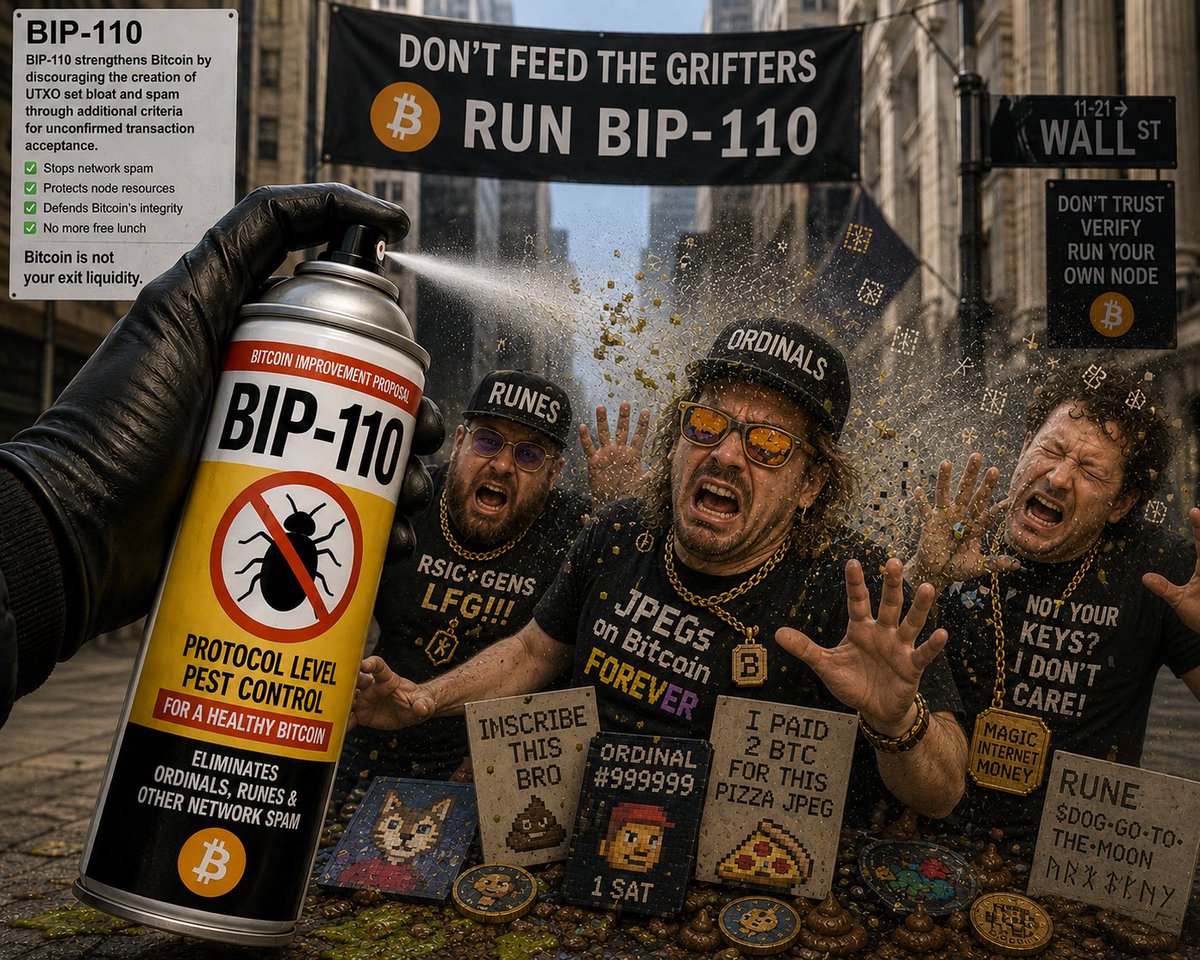
Pests don’t like pest control
13
80
410
6,612
Mark of Bitcoin retweeted

Jun 3
The best hospital in Central America.
With every medical specialty, the most advanced technology in the world, and top-quality care.
Public. Dignified. Free. For everyone.
2,018
12,539
58,223
2,956,391
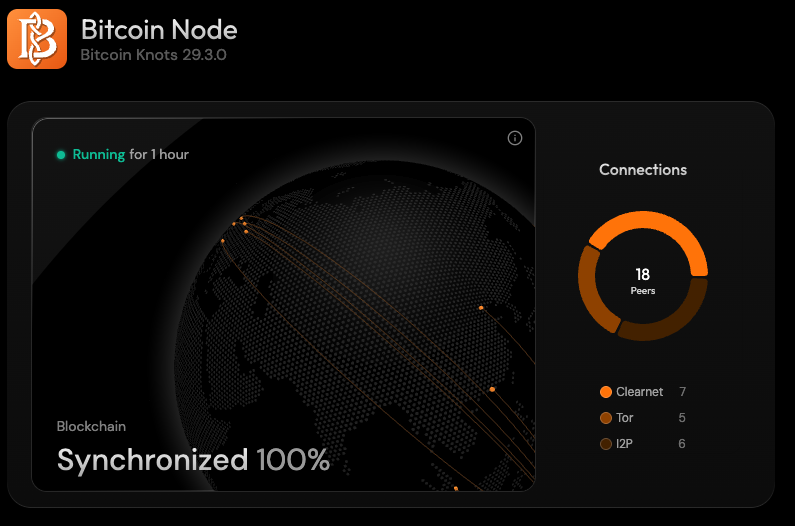
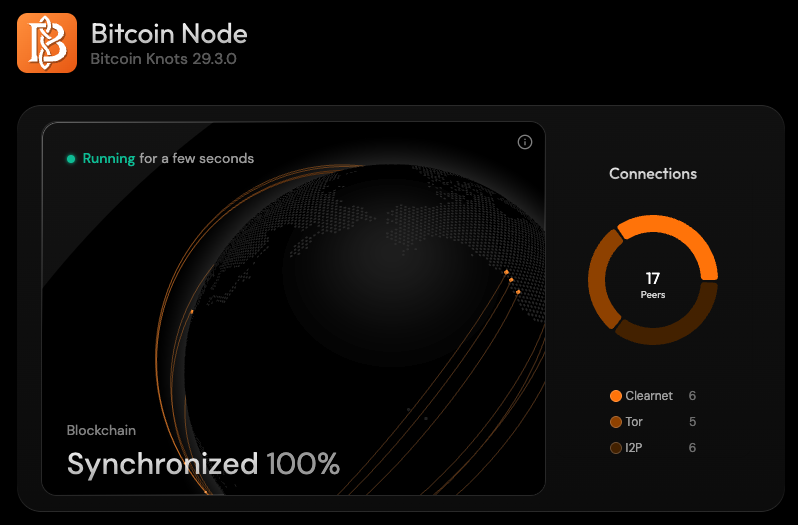
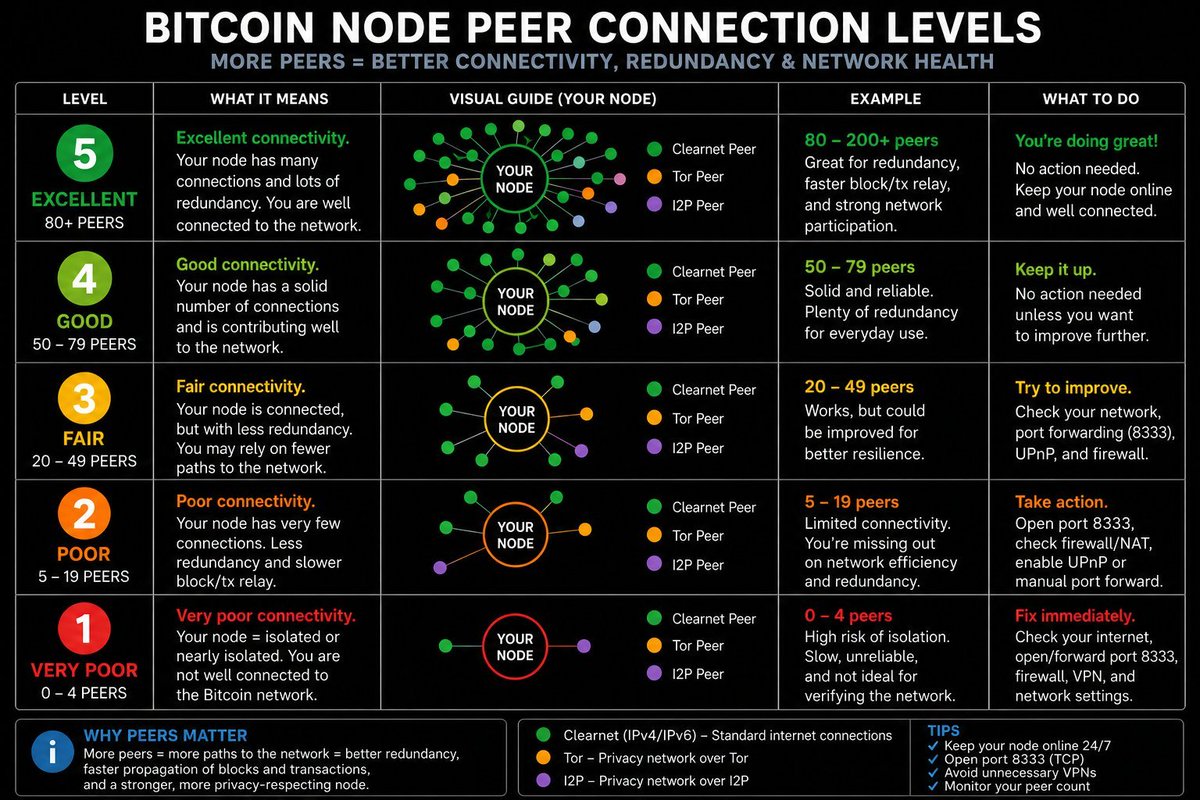
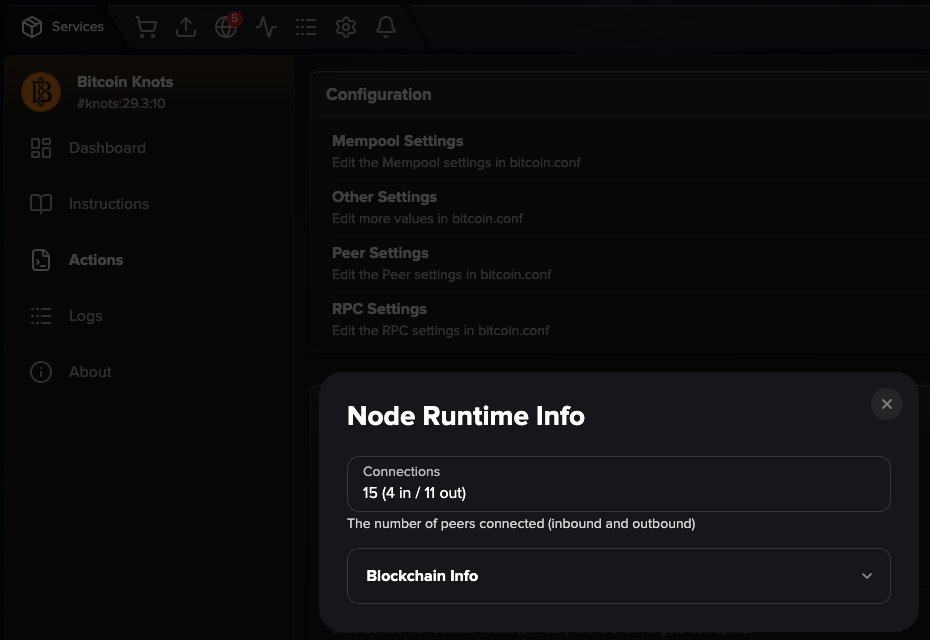
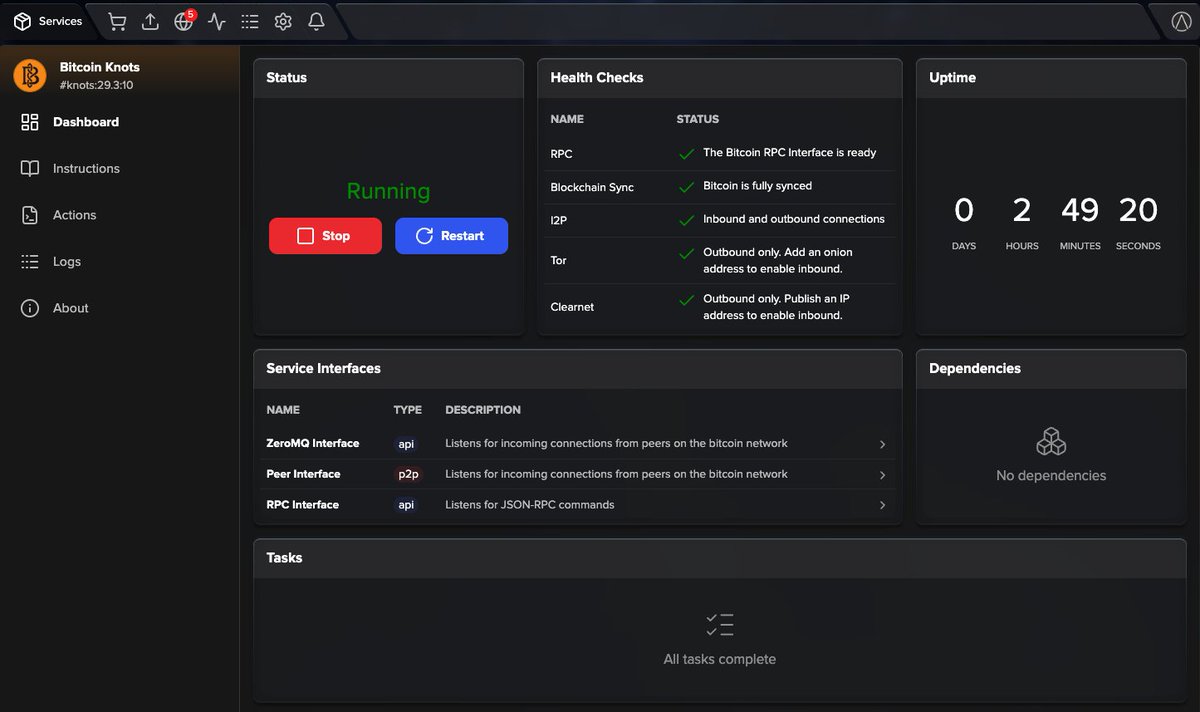
Not sure who this should be directed to... Would it be @LukeDashjr or is it a @start9labs thing?
I would really love to see the stats of how many connections (bonus if it shows which type) my node has, somewhere on the main Dashboard.
3
12
1,710
I called this a while back: At the end of the day, Pfizer are scientists and they wanted data on their gene-modifying death shot. So they would definitely have different strengths, including placebos. All batch numbered and cataloged with data being collected by governments.
May 31

🔻OGNI LOTTO DI VACCINO AVEVA UNA FORMULA DIVERSA. I NUMERI DI LOTTO LO PROVAVANO.
Non una teoria.
Non un'interpretazione.
Un set di dati. 12.000 numeri di lotto. Incrociati con i rapporti di eventi avversi del VAERS. La correlazione è assoluta.
Un team di ricercatori - 4 statistici, 2 farmacologi, 1 ex regolatore della FDA - ha pubblicato i loro risultati su un server decentralizzato mercoledì. Il documento è di 147 pagine. La revisione paritaria era impossibile perché nessuna rivista l'avrebbe accettata. Così l'hanno rilasciato direttamente al pubblico.
La scoperta: specifici numeri di lotto hanno prodotto eventi avversi 4.000% in più rispetto ad altri.
Non variazione casuale.
Non incoerenza di produzione.
Un modello deliberato e sistematico.
Numeri di lotto che terminano con 20A fino a 20F: eventi avversi quasi nulli. Soluzione salina. Placebo. Acqua con un'etichetta.
Numeri di lotto che terminano con 21K fino a 21X: eventi avversi moderati. Stanchezza. Miocardite. Coaguli di sangue. Tassi di ospedalizzazione del 300% sopra la linea di base.
Numeri di lotto che terminano con 22R fino a 22Z: catastrofici. Ictus. Arresto cardiaco. Danni neurologici. Tassi di mortalità dell'8.100% sopra la norma statistica per qualsiasi prodotto farmaceutico nella storia.
Tre livelli. Tre formule. Distribuiti in un modello che assicurava che nessun singolo ospedale, nessuna singola città, nessuna singola demografia ricevesse abbastanza dosi catastrofiche da innescare un segnale statistico evidente.
Hanno definito i danni come "effetti collaterali rari". Ma non erano rari. Erano mirati.
Il modello di distribuzione non era casuale. I lotti catastrofici sono stati inviati in modo sproporzionato a specifici codici postali. Codici postali con alte concentrazioni di veterani militari. Primi soccorritori. Proprietari di imprese indipendenti. Comunità con una conformità storicamente bassa ai mandati federali.
Le persone più propense a resistere hanno ricevuto le dosi più pericolose.
I lotti moderati sono andati ai centri urbani con un elevato consumo di media - popolazioni che avrebbero segnalato sintomi lievi, avrebbero sentito che era "normale" e sarebbero tornate per i richiami senza esitazioni.
I lotti placebo sono andati a politici, personaggi dei media e dirigenti farmaceutici. Le persone che lo promuovevano in televisione. Le persone che ti dicevano che era "sicuro ed efficace" mentre ricevevano la soluzione salina.
Hanno preso lo stesso vaccino in televisione. Non hanno preso la stessa formula.
I 12.000 numeri di lotto sono ora mappati. Ogni lotto.
Ogni destinazione. Ogni risultato. I dati sono sulla blockchain. Non possono essere ritirati. Non possono essere cancellati dalla memoria. Non possono essere verificati fino all'oblio.
L'ex regolatore della FDA del team ha presentato il set di dati al tribunale militare con una singola dichiarazione: "Questa non è stata negligenza. Questo era un protocollo di dispiegamento di armi mascherato da sanità pubblica."
Il tribunale ha accettato come prova giovedì mattina. Numero di caso: GT-2026-0441.
Ogni numero di lotto è un'impronta digitale.
Ogni evento avverso è un testimone. Ogni certificato di morte è un'accusa.
CODICE: LOT-NUMBERS / 3-TIERS / ZIP-TARGETED / GT-2026-0441
Non hanno dato a tutti la stessa dose. Hanno dato a tutti la dose assegnata.
Ora la lista delle assegnazioni è una prova.
- M-B Technology

46
When Luke, known for his terse, one line replies… because, after you’ve dealt with bullshit for so long that it’s tiring to argue with idiots all day long… when Luke, replies with this many words, it’s worth reading and understanding the depth that the pedo caste has subsumed Core and it’s sycophantic “influencer class”!
7 Jun 2025

NACK
The goals of transaction relay listed are basically all wrong. Predicting what will be mined is a centralizing goal. Expecting spam to be mined is defeatism. Helping spam propagate is harmful.
This OPED contradicts itself, presenting out of band relay as both negative and also "an important aspect of Bitcoin’s censorship resistance"
It ignores the lack of consent to spam by users/node operators, giving deference to the attackers and the malicious miners who might conspire with them.
It paints spam as "largely harmless", when the truth is the exact opposite. It treats abuse of the blockchain and nodes as legitimate "use cases" rather than the DoS attacks they actually are, and speaks of DoS attacks as if they were something distinct, thus implying spam isn't the same (which it is).
The OPED presents itself as aligned with "Bitcoin’s long-term health" which is objectively false, and "miners’ rational self-interest" which is also at least debatably false.
5
208
Mark of Bitcoin retweeted

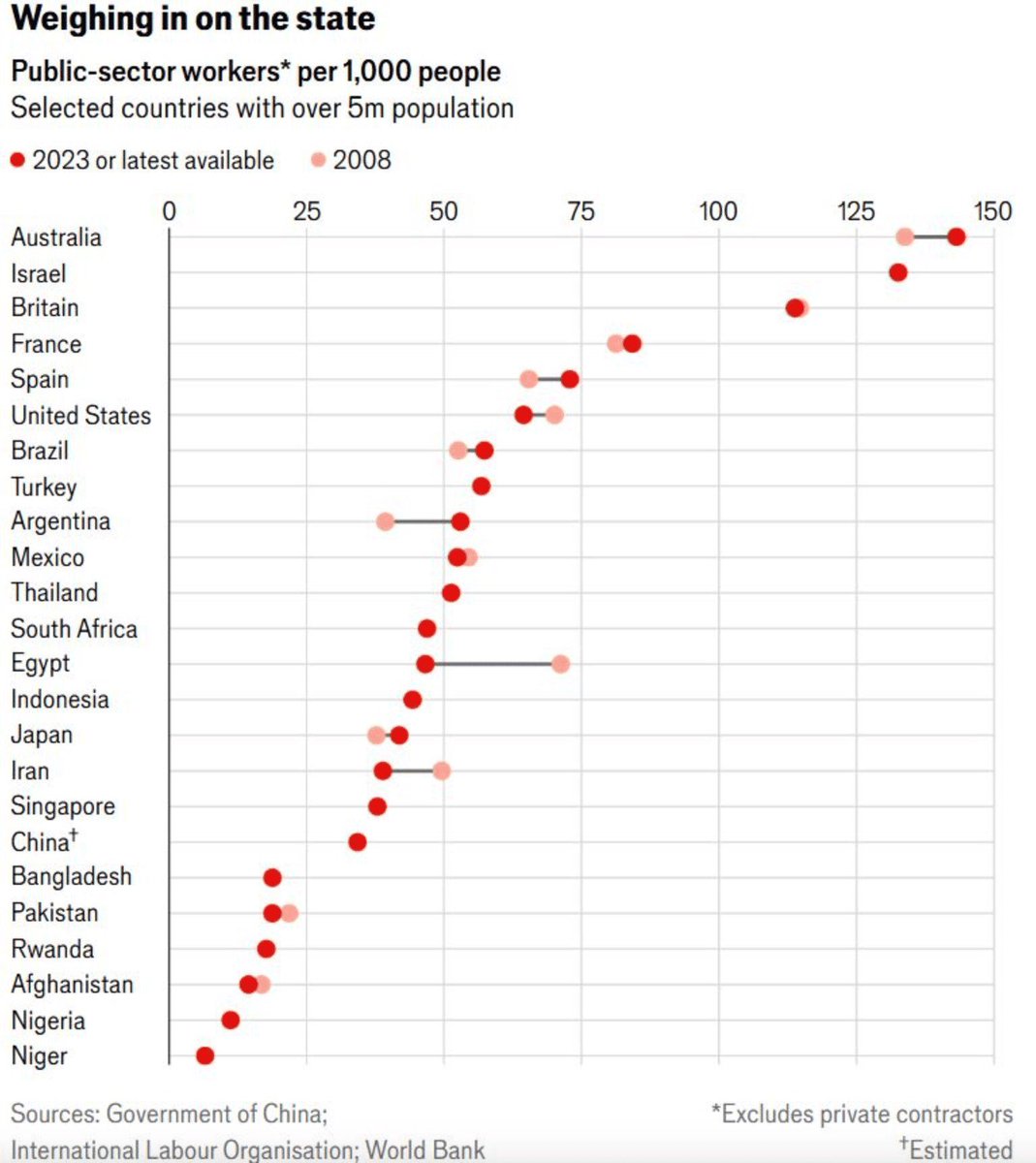
As a German living in Australia the fact that Australia has twice as many public sector workers than France is hilarious.
249
422
2,344
135,727
Mark of Bitcoin retweeted

May 29
Really don’t give a shit what you have “done” for bitcoin in the past if you don’t defend it in the present, when it actually fucking matters. All these influencers have this “I’ve done more for bitcoin than you” attitude like everyone fucking owes them something.
6
17
106
2,409
Mark of Bitcoin retweeted

BREAKING: Largest Human Cancer Study of Ivermectin Mebendazole Is Now PEER-REVIEWED and PUBLISHED in a MAJOR Cancer Journal
84.4% of cancer patients taking ivermectin mebendazole for 6 months declared either CANCER DISAPPEARANCE, TUMOR REGRESSION, or CANCER STABILIZATION.
Our study, “Real-world Clinical Outcomes of Ivermectin and Mebendazole in Cancer Patients: Results from a Prospective Observational Cohort,” is now peer-reviewed and published in Anticancer Research—a major international oncology journal of the International Institute of Anticancer Research (IIAR), established in 1995.
The results represent one of the most compelling clinical signals ever documented for repurposed anti-parasitic therapies in oncology.
A diverse population of cancer patients (n=197) was prescribed compounded ivermectin–mebendazole through a U.S. telemedicine platform, with each capsule containing 25 mg ivermectin and 250 mg mebendazole.
Participants were followed for approximately six months using standardized digital surveys assessing cancer outcomes, medication adherence, and tolerability.
At approximately six months post-treatment initiation, we observed an 84.4% Clinical Benefit Ratio (CBR)—meaning more than four out of five patients reported either:
No evidence of disease (32.8%)
Tumor regression (15.6%)
or Cancer stabilization (36.1%)
Importantly, adherence was remarkably high, with 86.9% completing the initial prescription and 66.4% remaining on therapy at six months.
Side effects were predominantly mild and manageable, reported in 25.4% of patients (primarily gastrointestinal), with 93.6% of those experiencing side effects continuing treatment after minor dosing adjustments.
This groundbreaking peer-reviewed publication was made possible through a unique collaboration between The Wellness Company, the McCullough Foundation, and the Chairman of the President’s Cancer Panel—uniting real-world clinical data, frontline medical experience, and epidemiologic expertise to evaluate inexpensive, repurposed therapies with major translational potential.
With these extraordinarily promising results, double-blind, placebo-controlled clinical trials are now required.
In the meantime, many cancer patients are exercising their right to try.
@twc_health @McCulloughFund @IIAR_Journals @P_McCulloughMD @DrHarveyRisch @DrKellyVictory @jathorpmfm @drdrew @PeterGillooly @FosterCoulson

622
16,319
33,628
2,711,412
Mark of Bitcoin retweeted

May 29
Bitcoin is not apolitical, it is anti-political.
Separating money and state IS removing the state.
Bitcoin is for people who don't want to be coerced by criminals who happen to have won a non-voluntary popularity contest.
It is an antidote to politics.
That's the whole point
29
95
508
13,873
Mark of Bitcoin retweeted

May 27
If you’re totally new to the Bible and wonder why it repeatedly says the Jews killed Jesus, what happened was:
Despite not being in charge, per se, the Jews used their disproportionate influence, power, and political clout to threaten and manipulate the majority culture to use its government as a proxy to murder their enemy.
Sound familiar?
But there’s another reason. Before the Roman prefect caved to the Jews, he had already regretted it (Matthew 27:24). Before the Roman centurion finished executing Jesus, he had already confessed He was God (Mark 15:39). And before three centuries was up, the entire Roman Empire had converted (Edict of Milan, 313 AD; Edict of Thessalonica, 380 AD).
And to this day, the Jews still reject Jesus, ban Jews who convert to Christianity from migrating to Israel, and in the fourth cup of their fabricated, contrived “Passover” meal, drink to the damnation of Rome for converting to a Christian empire and say a prayer asking for their eternal damnation.
It’s no wonder Jesus asked a prayer from the cross to forgive the Romans, and not the Jews (Luke 23:34), and the first sermon in church history began, “Men of Israel…this Jesus, whom you crucified…” (Acts 2:22-23, 36).

70
376
2,101
39,616
May 27
What a great call to a clear path forward.

Bitcoin’s greatest strength has always been its uncompromising design: a fixed supply, permissionless, peer-to-peer electronic cash that cannot be diluted or censored. Yet today we face a subtle but serious erosion of that vision from within. Justin Bechler is right to draw attention to this, and I fully stand with his position.
The debate is often framed as “Bitcoin Core vs. Knots” or “spam vs. free speech,” but that misses the deeper issue. The real question is whether we allow Bitcoin to remain sound money or permit it to slowly transform into a general-purpose data ledger. Non-monetary data — whether inscriptions, arbitrary OP_RETURN spam, or large image dumps — consumes block space, inflates UTXO sets, raises node operational costs, and degrades the user experience for those who simply want to use it as money. This is not theoretical; we have seen clear evidence of mempool congestion, higher fees during non-monetary floods, and growing centralization pressure on full nodes.
Critics say we should only focus on the “real enemy” — central banks and fiat. That sounds noble, but it is strategically naive. A house divided cannot stand. If Bitcoin’s base layer becomes bloated and expensive because we refuse to defend its monetary properties, we hand ammunition to regulators, competitors, and even well-meaning developers who believe “Bitcoin should evolve.” Satoshi’s whitepaper described electronic cash, not a decentralized Dropbox. Ignoring that distinction is how protocols lose their soul.
This is why Bitcoin Knots matters. It represents a deliberate, more conservative policy set that prioritizes the health of the network over short-term “anything goes” usage. Running Knots is not about hating Core developers; it is about signaling that we value long-term decentralization and monetary purity over temporary convenience. Similarly, proposals like BIP-110 deserve serious consideration. A temporary soft-fork filter against clearly non-monetary data is not censorship — it is stewardship. We already filter invalid transactions; extending sensible policy to protect the ledger’s primary function is rational governance, not extremism.
Ethereum Foundation has its own well-documented problems, but Bitcoin was supposed to be different. It was born pure. When the protocol itself is under pressure from actors who either actively enable or passively tolerate its degradation, that internal threat becomes uniquely dangerous precisely because it comes disguised as progress or neutrality.
Justin’s insistence on a hierarchy of risks is correct: external fiat enemies are obvious, but internal drift is insidious. History shows that empires and protocols alike fall more often from rot within than conquest from without.
We do not need to hate anyone. We simply need to be honest. Bitcoin’s value proposition is monetary sovereignty. Defending that means being willing to make hard choices — tighter mempool policies, Knots adoption, and yes, even protocol-level filters when necessary. The orange pill is not just “number go up.” It is “Bitcoin stays Bitcoin.”
I stand with @1914ad on this. The fight for Bitcoin’s soul is happening now, on the nodes we run and the policies we accept. Let’s choose the path that preserves what made it revolutionary in the first place.
3
99
May 26
Why would you leave any Sats on the table? Mining is difficult and risky enough!
11
307
Mark of Bitcoin retweeted

Hi Greg, you refuse to talk on Twitter and I refuse to talk on Reddit (this is the more reasonable venue as most of what I post on Reddit just gets immediately deleted so screw you for even continuing to use it.)
At present there are 0 UTXOs in existence that would be rendered unspendable by the activation of BIP-110.
Not "almost zero". Literally zero.
There are contrived conditions where you could have committed to something where a UTXO must be created in a specific way that cannot occur until blockheight X that results in someone creating it during the relevant time period that *would* render it unspendable temporarily.
For that to be the case it must also have no key path available, *and*
1. Have > 128 leaves and thus too large a control block, and/or
2. Contain OP_(not)IF/OP_SUCCESS
The chances of someone accidentally ending up in this situation is beyond laughable. They're somehow one of the most advanced users of Taproot and unaware of incoming rules being enforced by an implementation run by >20% of the network.
Further still - if someone ends up unwittingly making such a UTXO then they simply won't be able to spend it until Sept 2027, unlike with other permanent soft forks where if you generate an unspendable UTXO, it becomes *permanently* unspendable.
Amusing how no one cares if I generate a UTXO that CTV/CSFS/CAT etc would render unspendable were it to activate, where it would become so again, permanently rather than temporarily in some absurdly contrived scenario where the person "affected" intentionally self-impaled in an effort to frivolously obstruct as you have been doing for months.
The trolling about confiscation is a result of the fact that we are no longer a serious space. Standards around confiscation, governance, processes, moderation, hiring, grants, PR approval, venues for discussion, forks etc are invoked for political reasons and selectively enforced as @hodlonaut and others have demonstrated beyond reasonable doubt.
25
78
405
14,656