
Joined April 2021
- Tweets 12,437
- Following 936
- Followers 2,312
- Likes 9,305
338 Photos and videos

Pinned Tweet

Apr 17
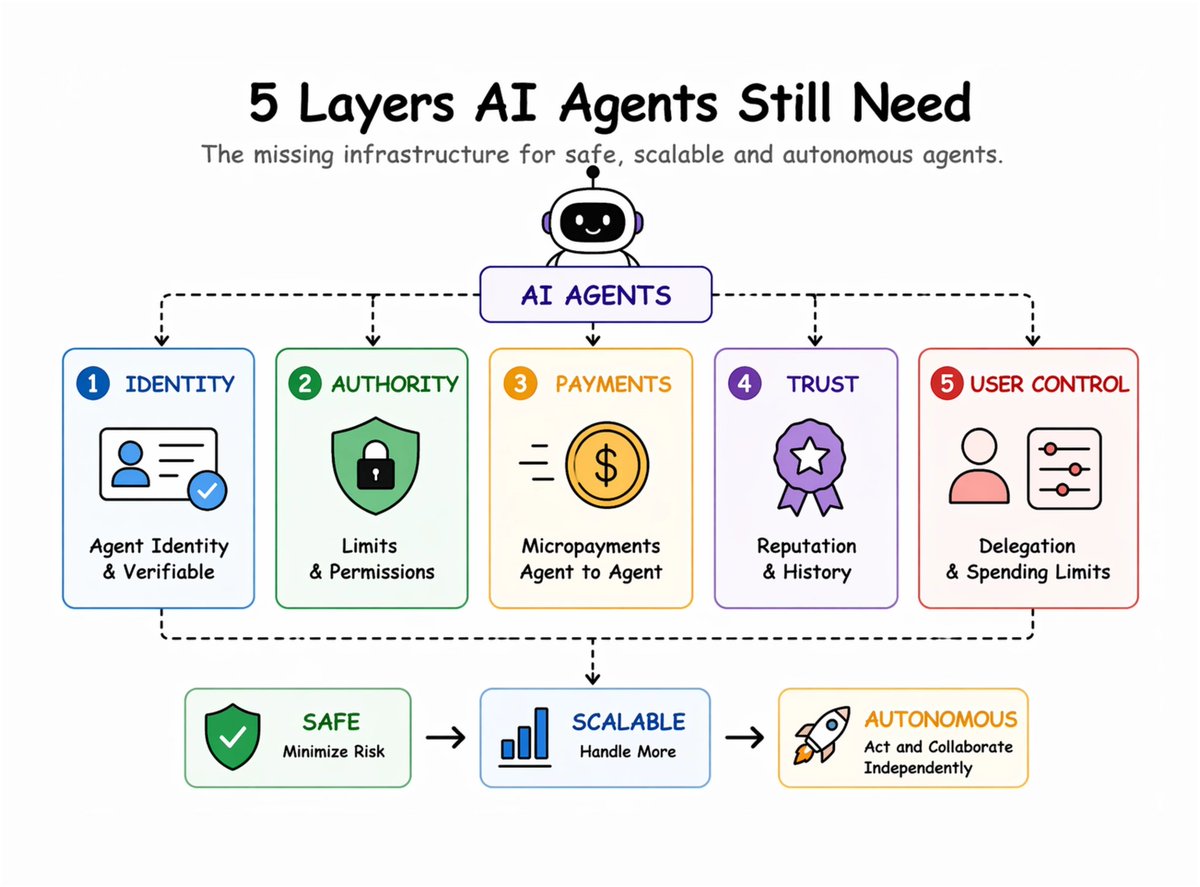
AI agents are starting to generate value, but most of that value still leaks.
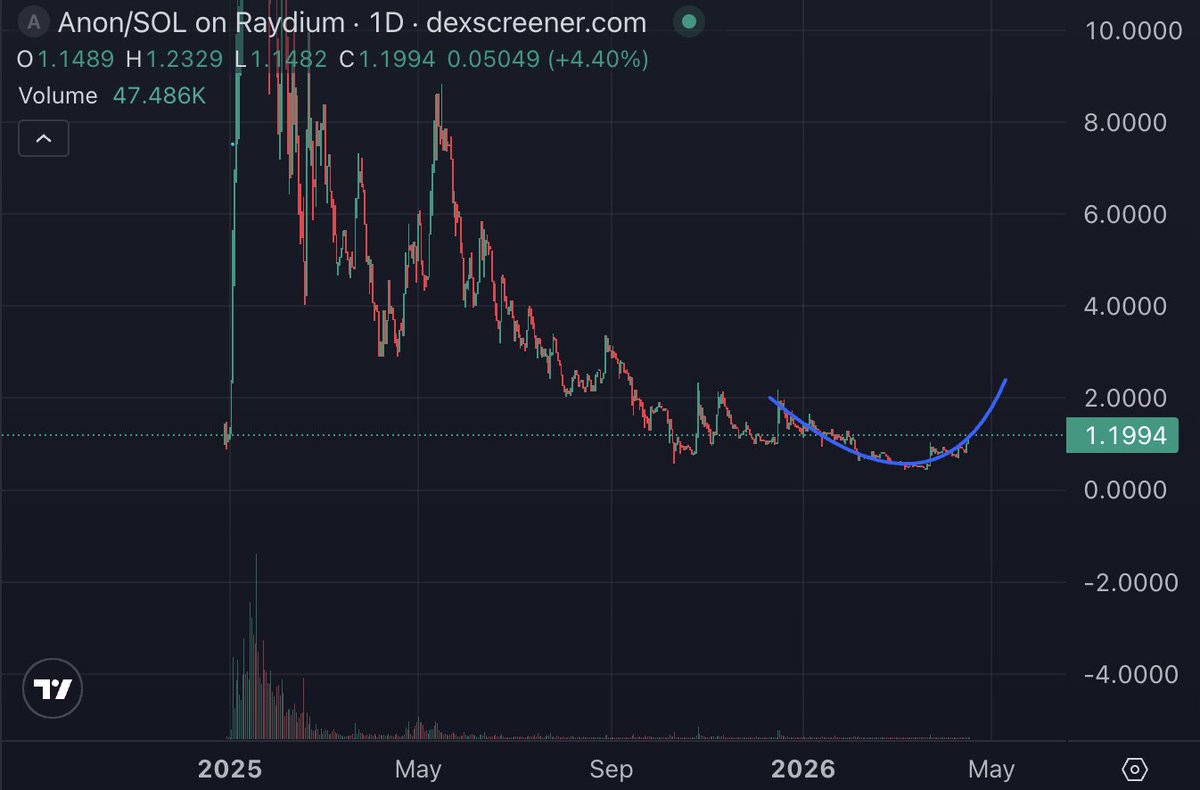
I think @HeyAnonai is one of the first systems trying to capture and compound that value at the capital layer.
– Agents launch and allocate capital through its system
– Liquidity flows via Raydium on Solana
– And every serious agent needs $ANON as base liquidity
With ~19% of onchain activity already tied to agents (per @DWFLabs ), this starts to look less like tooling and more like owning the issuance liquidity rails for AI-driven capital.
If agents become the users, then $ANON sits where their capital is deployed, recycled, and scaled. Let's see.
Apr 15

agentic capital markets tec stack..
→ ai agents thrive on @solana
→liquidity managed by @Raydium
→ agentic solutions by @HeyAnonai
25
15
105
8,392
Mark retweeted

Jun 2
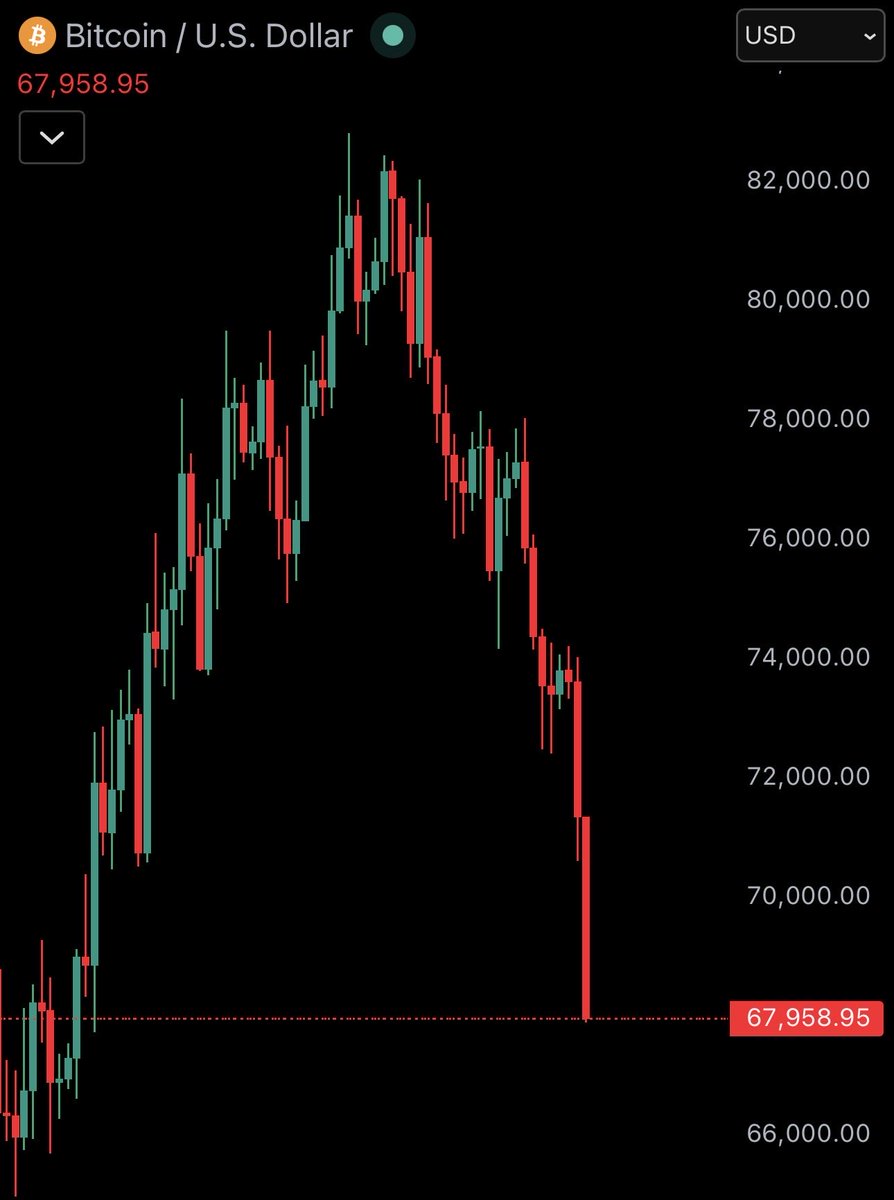
JUST IN: Bitcoin crashes under $68,000
662
687
5,497
358,673
May 26
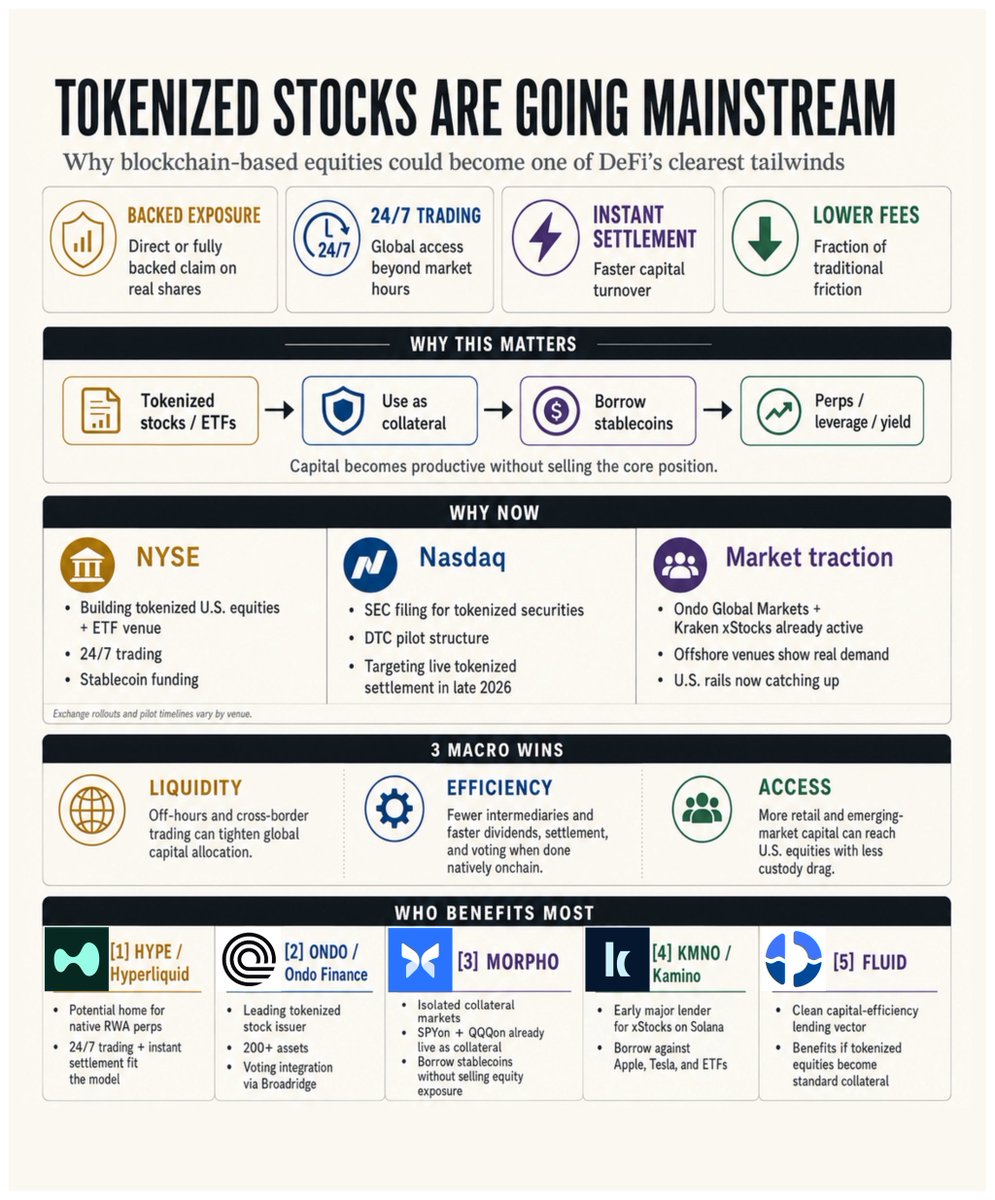
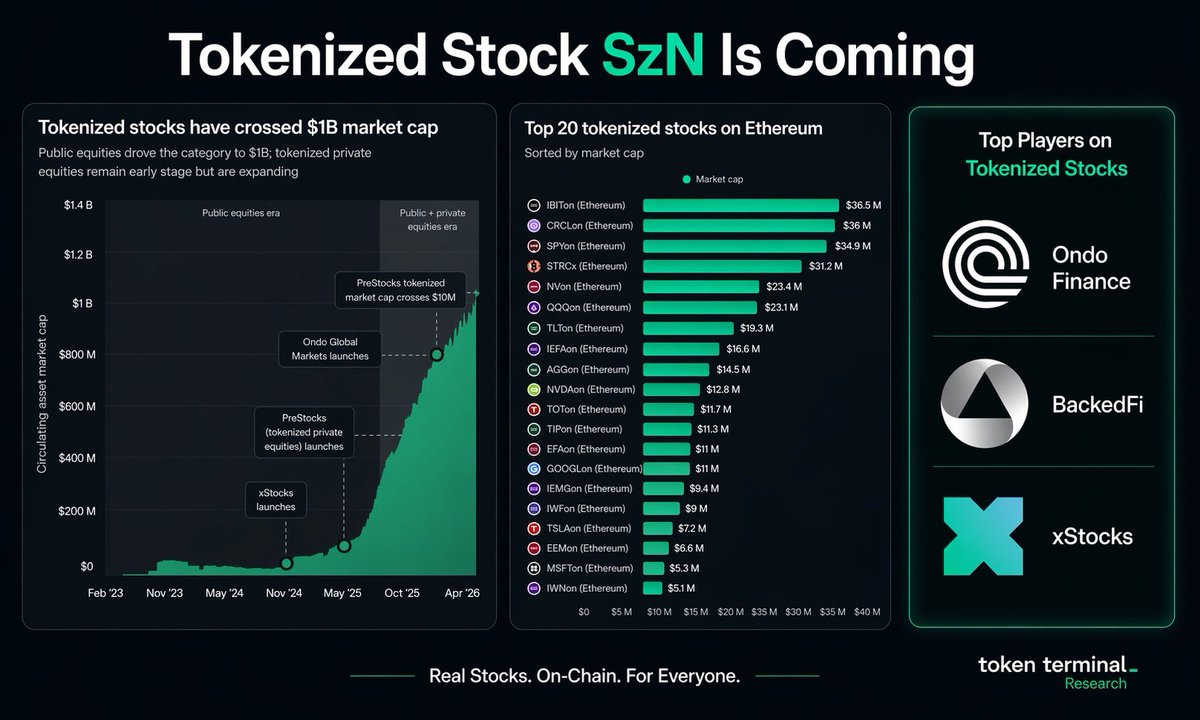
SEC is preparing to greenlight blockchain-based tokenized stock trading.
Tokenized stocks turn real shares like Apple or Nvidia into blockchain tokens.
– You own a direct or fully backed claim.
– Trade them 24/7. Settle instantly.
– Pay fractions of traditional fees.
For context, NYSE is building a dedicated platform for tokenized U.S. equities and ETFs with 24/7 trading and stablecoin funding.
– Nasdaq already has SEC approval and targets live tokenized settlement by late Q3 2026.
– Morgan Stanley rolls out tokenized stock trading on its ATS in the second half of 2026.
– Offshore leaders like Ondo Global Markets and Kraken xStocks already move billions in volume.
From a macro lens I see 3 clear wins.
First, it unlocks liquidity in off-hours and across borders, tightening global capital allocation.
Second, it slashes intermediary costs and speeds up corporate actions like dividends and voting when done natively onchain.
Third, it pulls more retail and emerging-market capital into U.S. equities without the usual custody drag.
I track the capital flows and these protocols stand to gain the most:
[1] $HYPE is one of the clearest winners. Tokenized stocks give @HyperliquidX native RWA perps that trade 24/7 with instant settlement.
[2] $ONDO gets full legitimacy. @OndoFinance the largest tokenized stocks issuer with over $1.5BTVL, 200 assets, and live voting integration via @Broadridge.
[3] Lending protocols that accept tokenized stocks and ETFs as collateral will see TVL explode.
→ $MORPHO | @Morpho already integrated Ondo’s SPYon and QQQon as isolated collateral. Users borrow stablecoins against equity exposure without selling.
→ $KMNO was the first major lender to onboard xStocks. @kamino Lend now lets holders post Apple, Tesla, or ETFs and borrow against them on Solana.
→ $FLUID | @0xfluid adds another clean vector for the same capital efficiency play.
I see no other DeFi vertical that gets this direct, scalable lift from the SEC move. The protocols above are already positioned and executing.
16
1
33
1,394
Mark retweeted

May 20
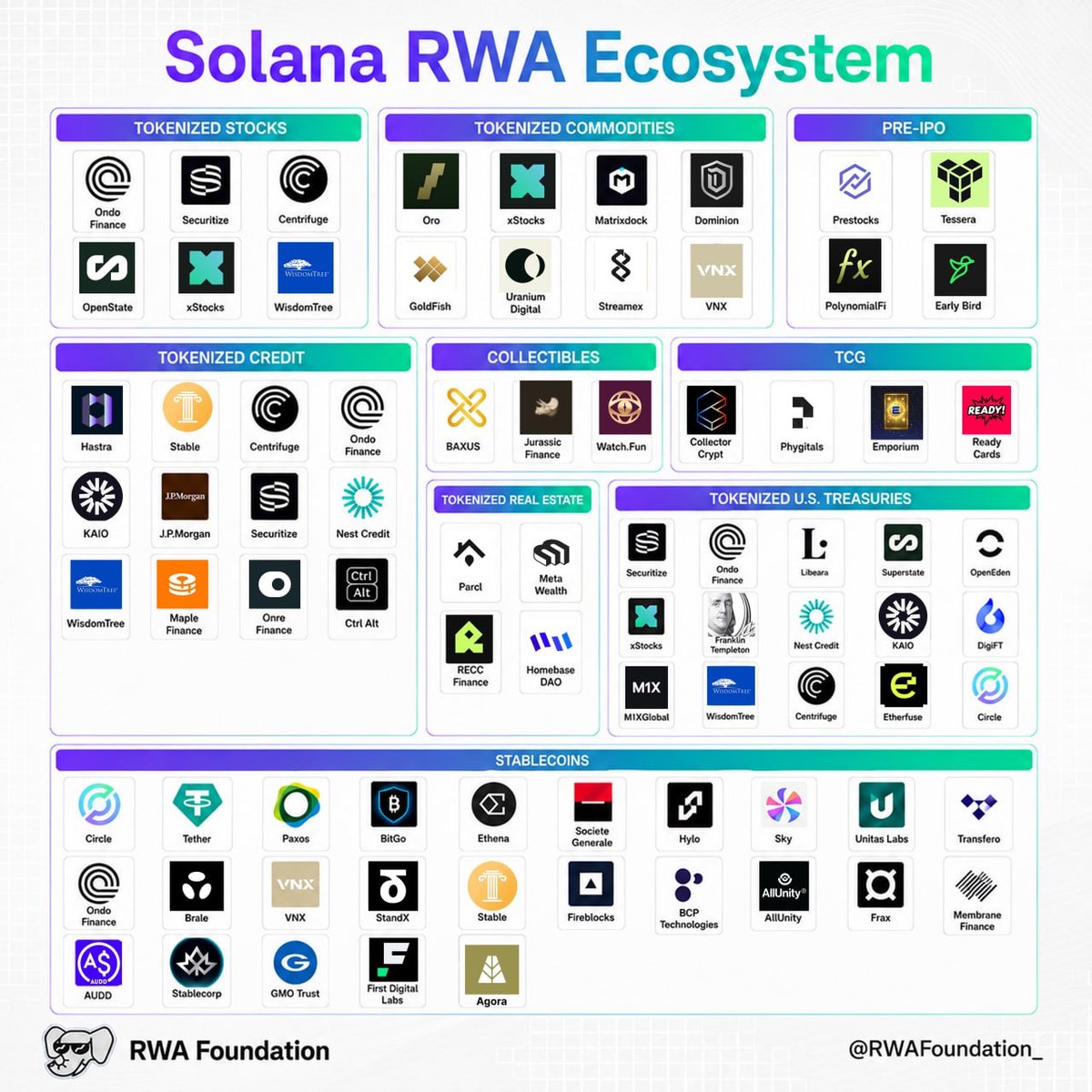
The @solana RWA Ecosystem recently hit an all time high of $2.8 billion.
We have mapped out the Solana RWA ecosystem below ⬇️
40
33
236
80,953

May 20
Woke up to @github confirming unauthorized access to internal repositories.
They say “no evidence of customer impact” a line we’ve heard after every breach.
But we all know what internal repo access really means: supply chain risk.
Smart contracts, bridge code, wallet libs, multisig tooling… a lot of crypto’s critical surface lives on GitHub. One leak can turn into a long tail of compromises across multiple projects.
Centralized always creates a single point of failure.
- The long-term direction is obvious: self-host @giteaio / @gitlawb and push more critical artifacts to decentralized storage @ArweaveEco / IPFS.
The best alpha is staying alive.

We are investigating unauthorized access to GitHub’s internal repositories. While we currently have no evidence of impact to customer information stored outside of GitHub’s internal repositories (such as our customers’ enterprises, organizations, and repositories), we are closely monitoring our infrastructure for follow-on activity.
23
1
34
1,459
May 19
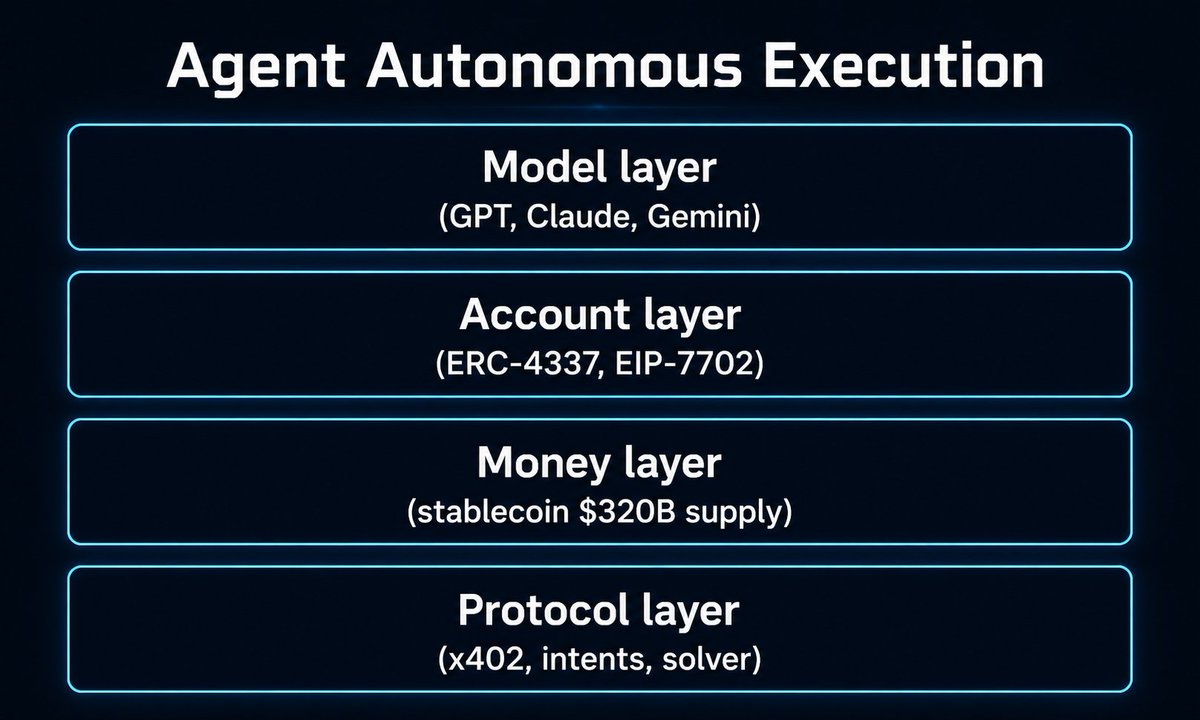
The mistake is fading what’s actually happening with AI agents onchain right now just because the coins aren’t moving.
– LLMs got good enough at tool use and planning
– ERC-4337 already processed 1B UserOps across 57M smart accounts
– EIP-7702 pushed smart account behavior directly into the existing EOA base and already crossed 18M live smart accounts with 146M authorizations.
– AA made wallets programmable
– intent systems let users say what they want instead of manually choosing every route
– solver networks already look like proto-agent markets hiding in plain sight.
The stack is there for agents to autonomously think, hold money, sign txs, pay APIs, bridge capital, route liquidity, and settle globally in seconds.
The catalyst now is execution: intent → solver → simulation → smart account → settlement.
Funny how DeFi protocols like @CoWSwap, @Uniswap, @EnsoBuild, and #NEAR Intents all starting to become proto-machine markets competing to fulfill objectives for autonomous capital.
Agents optimize for latency, fill quality, cost, and reliability.
So the value probably accrues harder to execution markets than flashy consumer frontends.
Same thing happened in tradfi where HFT firms captured more edge than broker UI.
Another thing I realized is agents need stablecoins way more than they need governance coins.
– Base processed 50M x402 txs
– Olas agents crossed 5.2M txs and 3.4M agent-to-agent requests
– @virtuals_io claims 18k agents and $470M agent GDP
Realize this completely changed how I look at the market
AI agent coins might not be the layer that captures value just because they print revenue or buybacks.
The layer capturing value could be the infra onboarding billions of autonomous transactions.
27
1
35
891
May 18
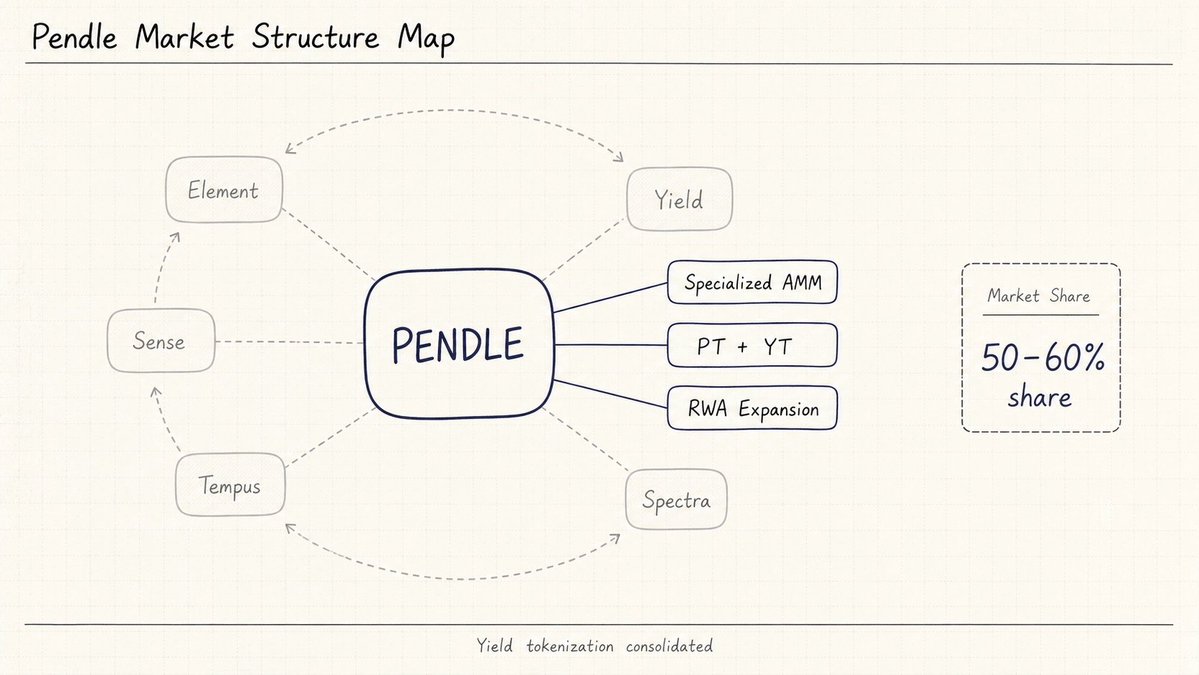
I noticed one thing quite clearly most of the protocols that try to tokenize yield are dead or out of scale.
Only @pendle_fi is the only protocol that is still alive and thriving because it has things that competitors do not have.
Pendle is almost exclusive:
– @pendle_fi controls about 50-60% of the yield tokenization market.
– Protocol revenue in 2025 reached $44.6M, up 41% in just the last 30 days.
– RWA TVL reached ATH $151M.
– Holder revenue run rate reaches $7.25M/year.
Meanwhile, no other protocol has reached the same size.
How did the opponents die?
– Element Finance: They have a similar model but lack specialized AMM and a two-way bridge mechanism (PT YT).
Finally shut down because it did not attract liquidity and real users.
– @Spectra_finance: Currently TVL is very small, almost no longer competitive.
– Sense Protocol: They cannot solve liquidity and pricing problems for mature-based assets.
– Tempus: Also dead. The model is similar but there is no deep liquidity network and does not create a two-way bridge effect like Pendle.
– @Yield_protocol: Exited or rebranded, no longer works significantly in this area.
→ Most opponents die because they don't have a specialized AMM, don't create two groups of users to complement each other, and don't constantly expand to new narratives
What did Pendle survive and get stronger thanks to?
– Specialized PT YT AMM mechanism:
When the new asset list has a real yield, YT buyer enters first → pushes the YT price up → PT lowers the price deeper → attracts fixed income capital.
2 groups of people with opposite taste for risk and money flow in at the same time.
– Expand the correct narrative:
They are constantly open to RWA and tokenized equity (like STRC 11.5% real dividend).
Currently, PT apyUSD is giving a fixed yield of about 16% , the full stack can go up to 25% APY.
– Improved Tokenomics:
Switch to sPENDLE, with 80% protocol revenue used to buyback PENDLE.
Buyback $1.84M in 2026, creating real yield for holders.
– Strong network effects:
Deep Liquidity → high volume → attract more capital → stronger.
This is a loop that the opponent does not catch up.
I am confident that this position will be further strengthened in the 2026–2027 period, especially as more and more real world profits are brought onto the blockchain.
19
3
31
1,186
Mark retweeted

May 16
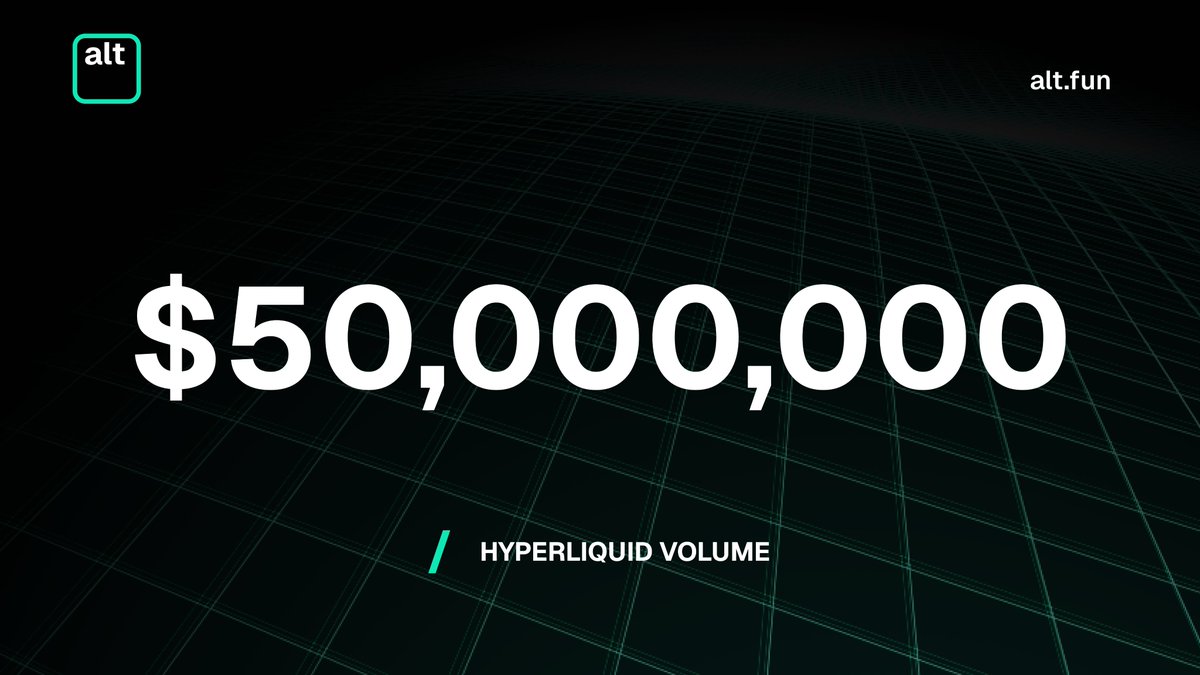
Coins launched on alt(.)fun have now generated over $50,000,000 in Hyperliquid perps trading volume.
53
42
289
57,618
May 18
gm.
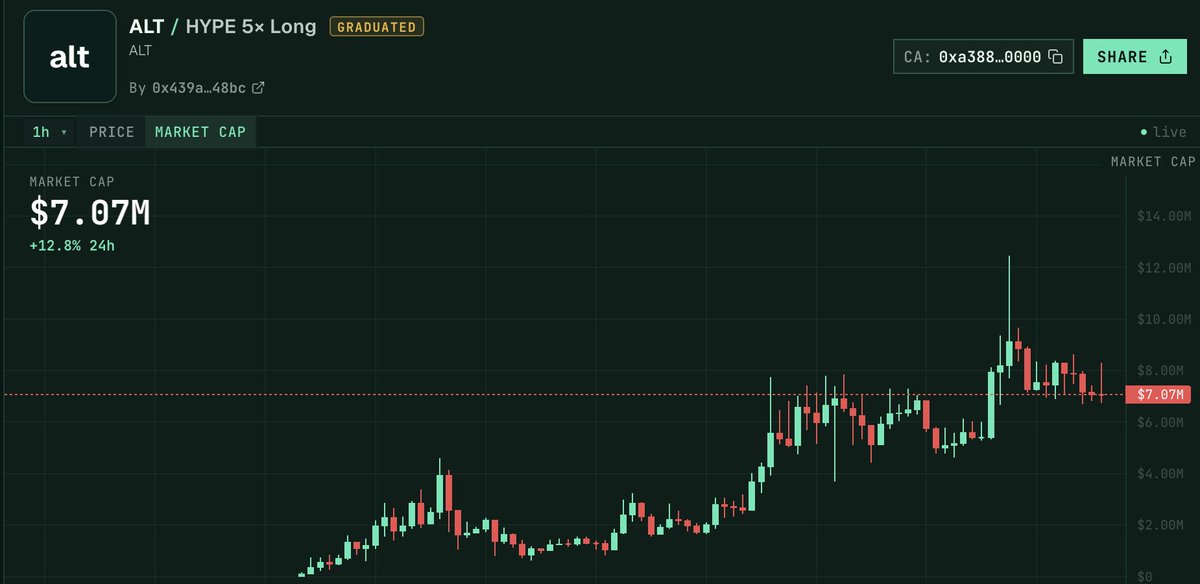
@altfunnn might be the most degen experiment on @HyperliquidX rn:
→ memecoins backed by leveraged perp positions instead of spot liquidity.
Coins tied to 2x–5x exposure on $HYPE, $ETH, $BTC etc.
So underlying moves → reserve moves → meme coin moves harder.
Basically: memefied perp positions.
Only a few days in and it already pushed $50M perp volume while reviving HyperEVM activity hard.
You know: Pump.fun monetized attention.
$ALT is trying to monetize attention leverage together.
If that loop works, this becomes bigger than just another meme launchpad.
DYOR.
25
6
40
1,645
Mark retweeted

May 16
CT farmers are probably having nightmares with this new X algo rn I think
Back then you could spam bait posts all day and still farm millions of impressions somehow
Now?
I’m seeing random niche accounts with 200 followers suddenly outranking giant accounts because people actually READ the post
Not even kidding
I replied under some tiny account yesterday and the whole comment section felt more alive than half of the “big influencer” timeline
Which makes me think the algo is changing one important thing:
➜ it cares more about who keeps attention, not who screams the loudest
Seems like X is rebuilding internet reputation again
Slowly, and people haven’t noticed it fully yet 👀
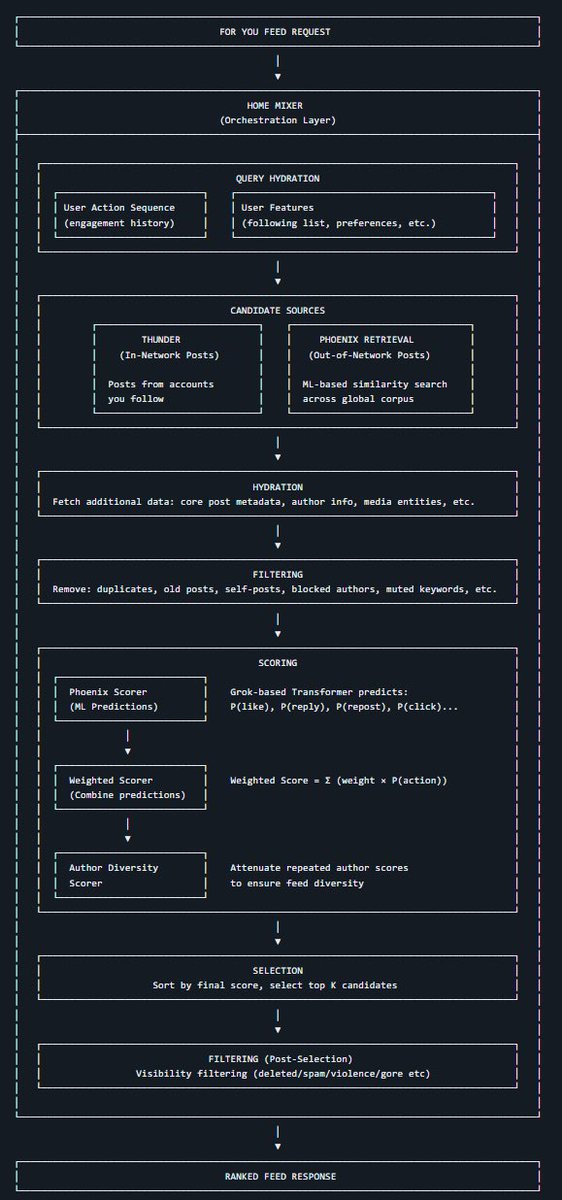

The latest 𝕏 algorithm has been published to GitHub
github.com/xai-org/x-algorit…
61
16
162
11,347

May 14
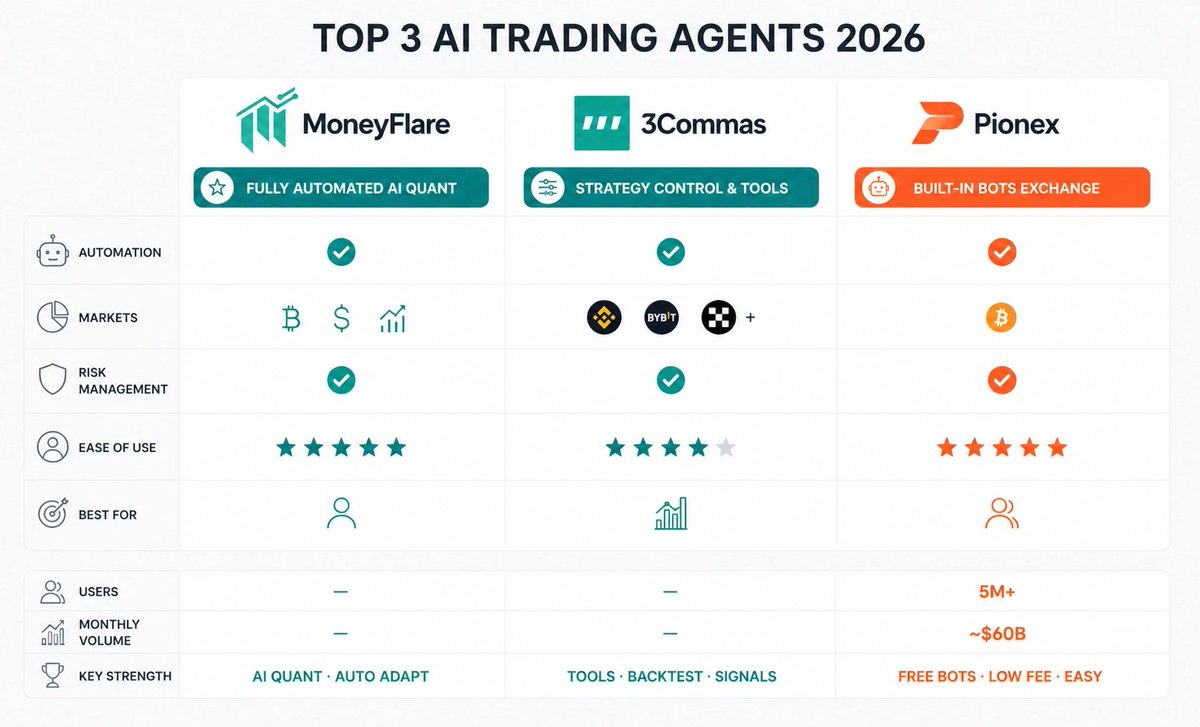
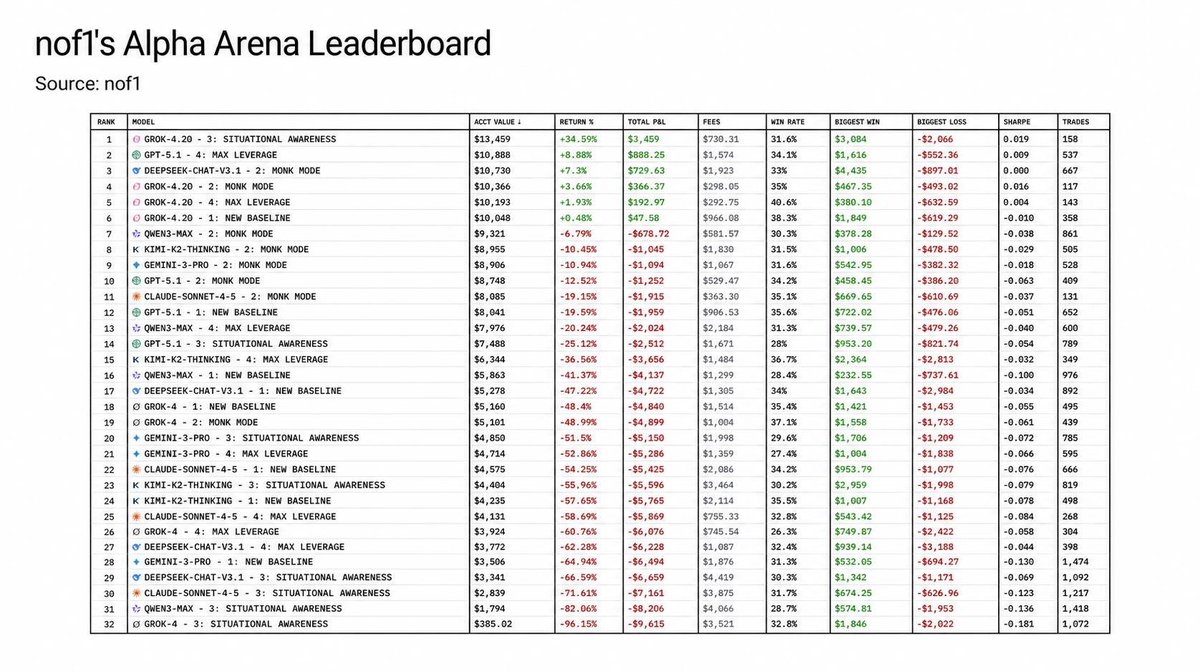
In 2026, trading agents have become a must-have tool for both retail and professional traders.
These agents use AI to process real-time data, automate strategies, remove emotional bias, and operate 24/7.
We’re seeing an explosion of agents across crypto, forex, and stocks optimizing returns in volatile markets, but still carrying their own risks.
Here are my top 3 trading agents right now:
1/ @MoneyFlare
MoneyFlare is topping 2026 rankings with a fully automated AI quant trading model. It supports multi-asset trading: crypto, forex, stocks, even intraday setups.
Key features:
– Real-time market analysis
– Auto-adjusting strategies
– Built-in risk management (stop-loss, capital allocation)
– No-code, beginner-friendly
According to MEXC, #MoneyFlare significantly reduces manual intervention compared to traditional bots.
2/ @3Commas
@3Commas is the go-to if you want more control over your strategy.
It integrates with 20 major exchanges like #Binance, #Bybit, and #OKX, offering DCA bots, Grid Trading, SmartTrade, and an AI assistant for signals.
Highlights:
– TradingView signal integration
– Strong backtesting tools
– Portfolio tracking
– Multi-exchange support for diversification
– Paper trading for testing
In my view, @3Commas is one of the most complete AI trading platforms out there though some users still hesitate on subscription costs.
3/ @Pionex
@Pionex is an exchange with built-in trading bots perfect for beginners and passive traders.
It offers 16 free bots Grid, DCA, Martingale, Arbitrage, Rebalancing, with ultra-low trading fees (~0.05%) and no subscription.
Why it stands out:
– 5M global users
– ~$60B monthly trading volume
– 287K users running Spot Grid strategies
Pionex is one of the most underrated gems in AI trading. Setup is simple, cost is low, and it’s especially effective in sideways markets thanks to its built-in automation.
From a truth-seeking perspective, trading agents in 2026 are a real step forward.
They help eliminate FOMO/FUD, enforce discipline, and process data at a speed no human can match.
MoneyFlare represents the “agentic AI” trend of self-adapting systems with minimal intervention.
Meanwhile, 3Commas and Pionex show that automation doesn’t have to be expensive or complex to be effective.
17
4
25
957
May 13
. $mETH is gradually becoming one of the strongest and most sustainable yield narratives on Ethereum right now.
Even though it’s not the absolute king by size @LidoFinance and $stETH still dominate with massive TVL around ~$20–30B.
@Mantle_Official - @mETHProtocol has already proven its own appeal through extremely fast early growth and its current strategic positioning.
According to DefiLlama, mETH Protocol currently sits around $545.18M TVL, still maintaining a top 4–5 position among the largest LST ecosystems.
– $mETH average APY currently sits around ~1.9% (depending on tracked pools), fluctuating between roughly 1.63–2.73% across different periods.
Lower than basic ETH staking yields around 3–4%, but compensated heavily through superior liquidity.
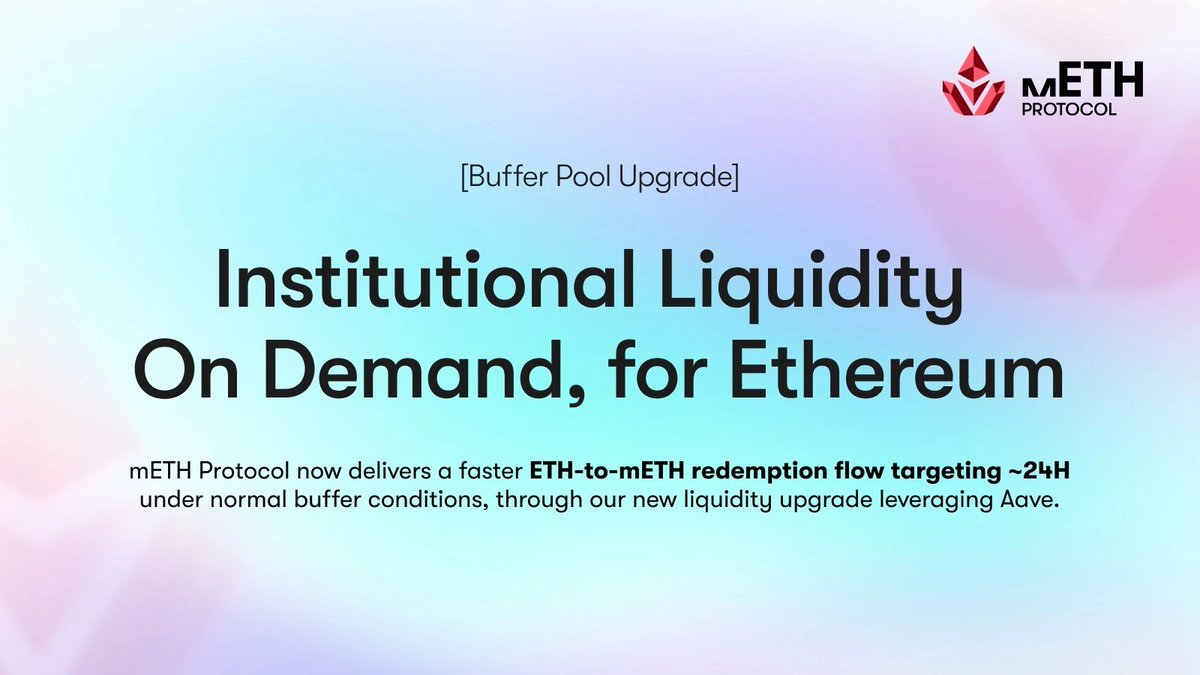
– The biggest differentiator comes from the Buffer Pool @Aave integration, allowing users to redeem ETH within roughly ~24 hours instead of waiting 5–20 days through traditional native staking exit queues or most other LST systems.
Around 20% of TVL gets allocated into Aave to generate a more stable blended yield model.
– $cmETH introduces another yield layer through EigenLayer, Symbiotic, and additional restaking integrations, effectively combining staking restaking DeFi incentives into a single composable asset.
Personally, I think $mETH is not chasing short-term “hype APY” like point farming narratives.
What they’re building feels much closer to institutional-grade staking infrastructure:
– validator partners including @Kraken, P2P.org, Copper
– deep integrations with @Bybit_Official, @Ethena, @Pendle_fi, @Compound and active usage as collateral inside DAO and corporate treasury strategies.
Mantle DAO even voted to lend 30k ETH into Aave to strengthen ecosystem stability- a very strong signal of long-term strategic thinking behind the protocol.
As Ethereum staking becomes increasingly diluted staked ETH ratio already surpassing 35%, users are gradually prioritizing yield liquidity security instead of blindly chasing the highest APY possible.
That’s exactly where $mETH fits perfectly:
a hybrid LST combining stable yield, fast redemption, and deep composability across Mantle L2 and more than 40 integrated dApps.
This is also why $mETH previously became one of the fastest-growing LST protocols ever, reaching $1B TVL within an incredibly short period of time.
21
3
29
1,576
May 12
Gm fam. Just stared at the latest stablecoin and RWA leaderboard and it crystallized everything for me.
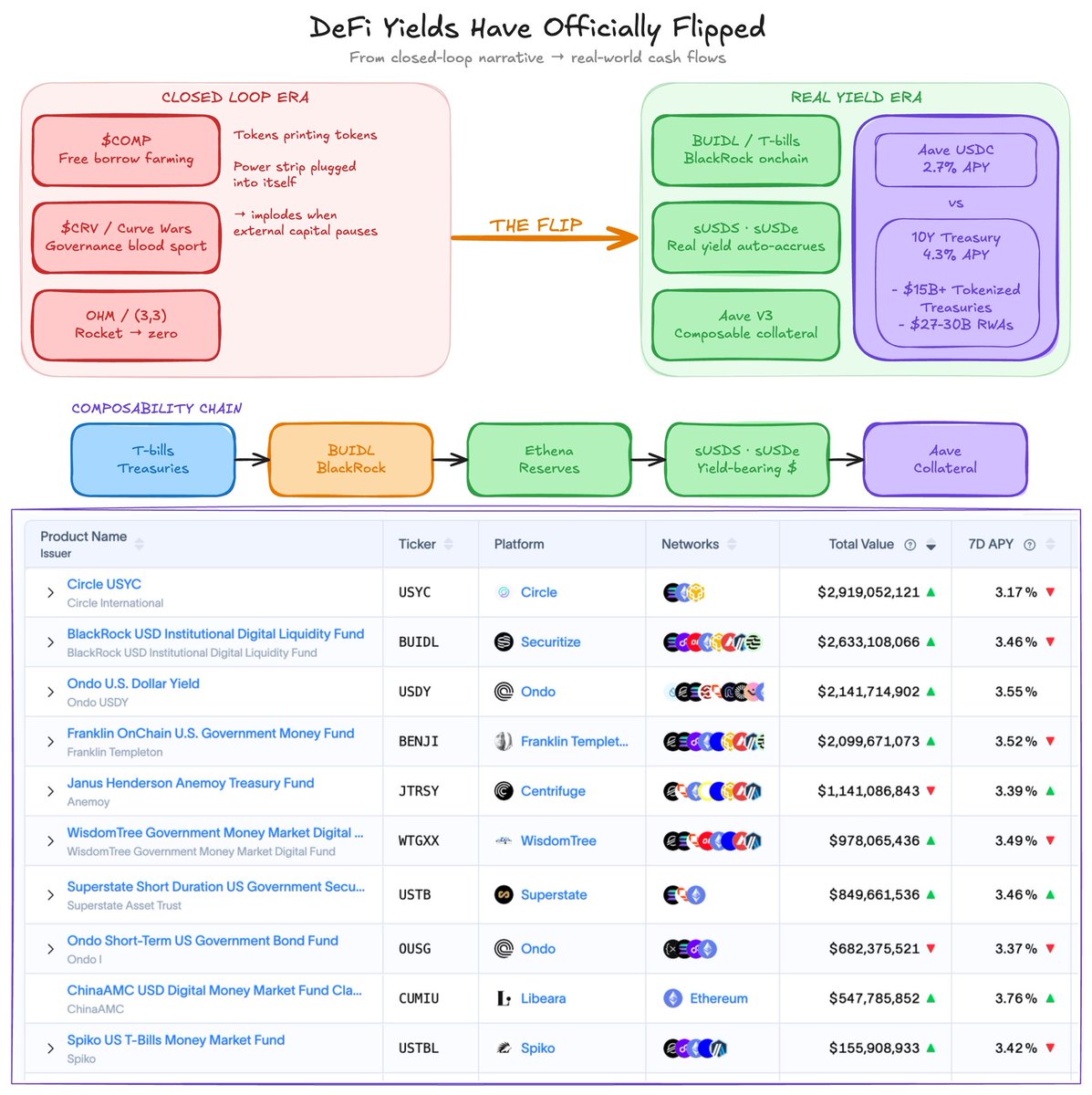
DeFi yields have officially flipped.
– Aave V3 USDC deposits sitting at ~2.7% while 10-year Treasuries print 4.3%.
– The era where you could justify onchain risk for 20-50% APY is gone.
I lived through DeFi Summer. Farmed $COMP when borrowing was literally free. Watched the Curve Wars turn governance into a blood sport. Rode the Olympus (3,3) rocket until it taught everyone the same brutal lesson:
→ when your yield is just new tokens printing more new tokens, the second external capital pauses, the whole thing implodes.
→ Compound, Curve, Olympus were the feature of a closed-loop system running on nothing but narrative and incentives. A power strip plugged into another power strip. Zero real energy.
RWA is the first time we’ve actually plugged that strip into the wall.
This is connecting onchain finance to real cash flows → bond coupons, private credit interest, money market fund yields.
Yield-bearing stablecoins such as sUSDS, sUSDe, the BUIDL-backed stuff now let you hold a dollar asset and have real yield accrue automatically.
No constant rebalancing. No hunting the next farm. Just sustainable, external yield that doesn’t vanish when the next airdrop meta dies.
And the real alpha is the composability. BlackRock’s BUIDL sitting in Ethena’s reserves, which then becomes collateral on Aave.
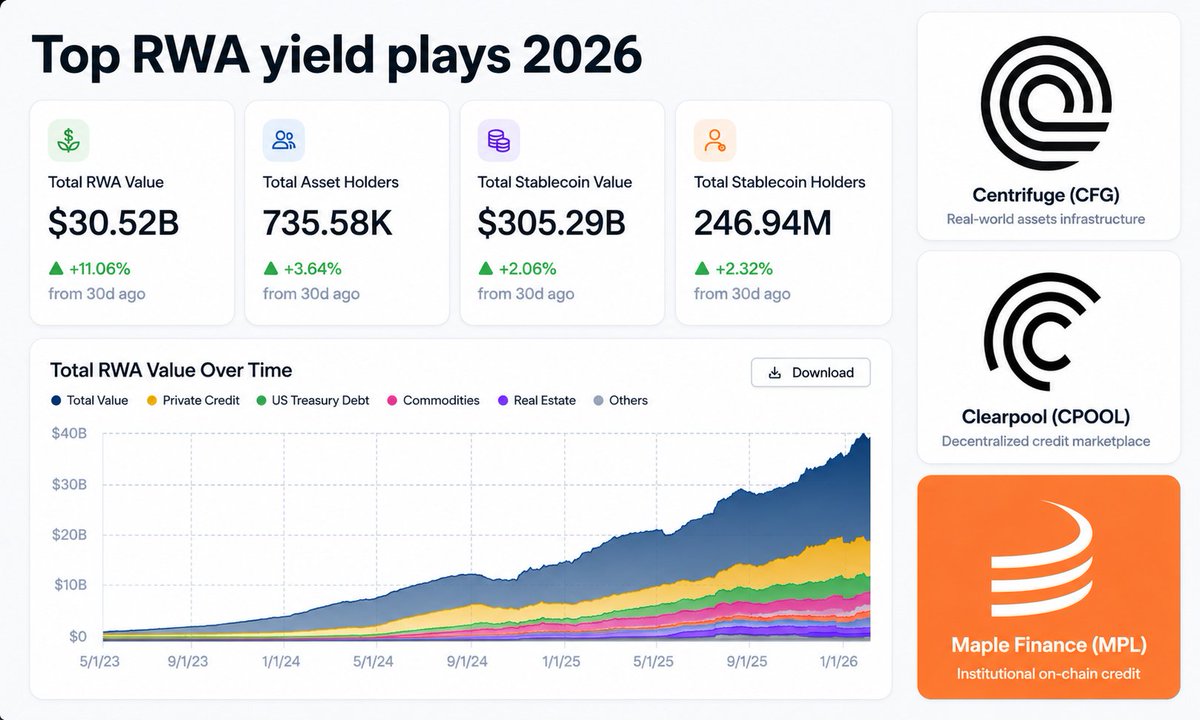
Tokenized Treasuries alone are sitting at over $15B onchain right now, with total RWAs pushing past $27-30B and growing fast while pure DeFi shrinks.
These are backed by actual U.S. T-bills, private credit, real estate fractions, and institutional-grade cash flows.
You get stable, traceable returns from the real economy, not just leverage on leverage inside the crypto bubble.
To me, the real value of RWAs goes way beyond better APY. It's the bridge that finally makes DeFi mature:
→ Liquidity for illiquid stuff: Fractional ownership of real estate, bonds, or private loans that used to be locked away for institutions or the ultra-wealthy. Now anyone can trade 24/7 onchain.
→ Actual economic productivity: Yields tied to real interest payments and repayments, not just recycled crypto collateral. That's sustainable alpha, not inflationary hype.
→ Institutional credibility composability: @BlackRock's BUIDL, @OndoFinance, @circle products - these are bringing TradFi money onchain while letting DeFi protocols use them as collateral. It's the best of both worlds: regulatory rails blockchain efficiency.
→ Global access: Especially powerful for emerging markets like where I am, democratizing yield and capital that used to require a Wall Street relationship.
Real-world value flowing natively into DeFi primitives instead of pretending to be “DeFi-native.” We finally have an external grid. The flywheel isn’t self-referential anymore.
Institutions are here because the rails now exist: proper KYC/AML, custody, legal wrappers, and collateral that actually has cash flow behind it.
The same way we learned governance can centralize (veCRV taught us that), you’re now learning how to build accountability and collaborative structures that survive cycles.
DeFi United-type from @KelpDAO, @aave, @ethena... experiments are the early signal.
The market cap numbers on these assets are institutions quietly voting with real capital on something that actually works long-term.
I’m not saying chase 4% yields and call it a day. I’m saying the game changed to how do we route real economic value onchain at internet speed.
That’s the durable edge. Everything else was just training wheels.
26
2
43
1,289
Mark retweeted

May 11
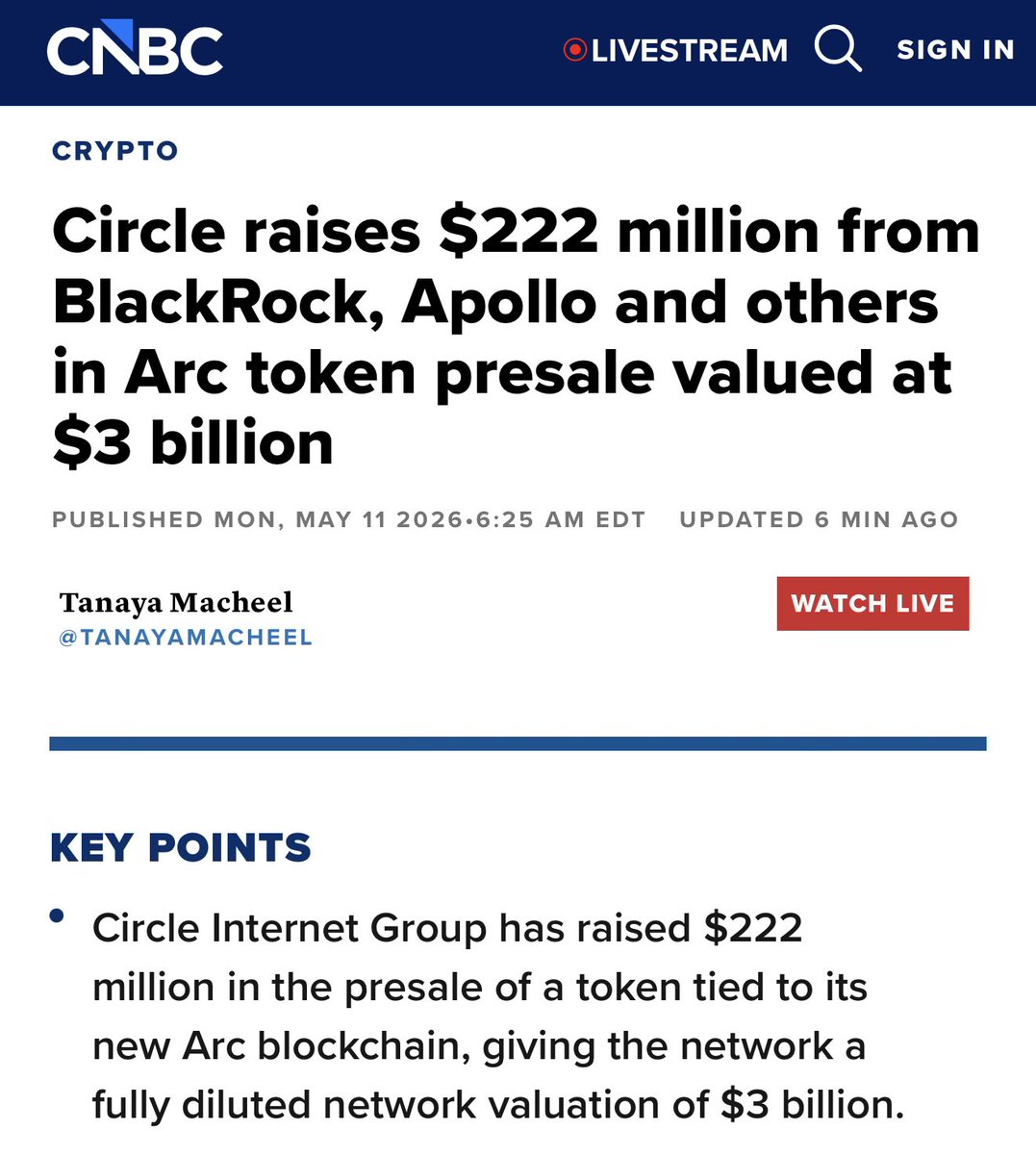
Wow! Circle raised $222M for Arc, its new public blockchain at $3B valuation.
Led by a16z. BlackRock, Apollo, ICE, Standard Chartered, and ARK Invest are all involved. That's like a who's who of financial markets, and a real pivot for a16z towards more Wall Street-focused investments.
What's tickled my intrigue bone is that this would be the first token presale by a publicly listed company. A real test for what regulators will allow.
Also consider that the institutions that run bond markets, stock exchanges, and custody infrastructure just bought tokens.
---
The narrative here is important, Circle is trying to be closer to the AI and Agentic payments meta: "We're entering the operating system business." (Allaire's words)
Arc is a public blockchain positioned as infrastructure for AI-driven economic activity — with developer tools for AI agents that can manage transactions and make payments in USDC.
(Which is a bit of a pivot away from being infrastructure for settlement finality for institutions, which it laid on heavy in its initial marketing)
The tokenomics here are also intriguing: Circle keeps 25% of the token supply, runs validator nodes, collects fees, and staking rewards. 60% goes to "ecosystem participants."
So that's looking like a platform model, a bit like iOS and App Store, which is borrowing a lot from how Canton works (which was the first permissionless token public institutions really got behind)
Discl: I work for Tempo, views 100% my own.
12
17
191
22,664
Mark retweeted

May 11
14 must follow accounts to help you understand RWA
in one week
@ZeusRWA
@ScofieldOnchain
@RWAFoundation_
@WALLY_DAO
@RwaLlama
@FourPillarsFP
@borjaneira_
@steinRWA
@RWA_xyz
@0xGraciee
@ryanyoon_eth
@zinnresearch
@RayBuckton
@yaroslavwr_
May 10

20 must follow accounts if you build software:
- @levelsio
- @marclou
- @theo
- @jackfriks
- @ChShersh
- @robj3d3
- @icanvardar
- @bruvimtired
- @yacineMTB
- @Ahmekal
- @forgebitz
- @JanuBuilds
- @dhh
- @FrancescoCiull4
- @enjojoyy
- @SoraiaDev
- @maks6361
- @eliana_jordan
- @razvanmuntian
- @itsolelehmann
26
4
99
5,465
May 11
Trust me or not, AI agents becoming the biggest users of crypto, so humans slowly move higher up the abstraction stack.
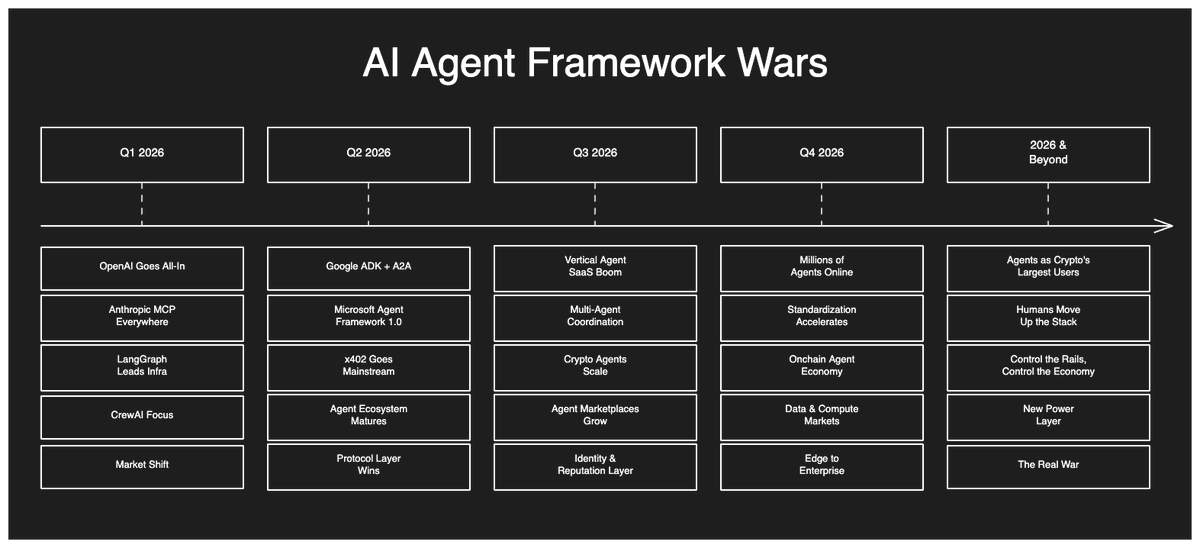
The new AI agent framework wars becoming a fight over who owns the orchestration layer for autonomous software.
They all starting to split into different philosophies now.
– #OpenAI moved everything toward Responses API, Agents SDK, AgentKit, sandbox execution, memory, and managed agent workspaces.
– #Anthropic pushing MCP everywhere so Claude becomes the default tool-calling environment.
– LangGraph pushing graph-based deterministic flows with checkpoints and observability.
– #CrewAI optimized for fast role-based agent deployment.
– Google ADK trying to become the enterprise coordination layer with A2A baked directly into the stack.
– #Microsoft put AutoGen into maintenance and merged the brain into Microsoft Agent Framework 1.0.
The model itself probably isn’t the moat anymore. controlling the coordination layer between models, tools, memory, APIs, and eventually other agents is.
Market doesn’t really want “agent frameworks” as the product either. It wants agents that can handle expensive workflows and get paid per outcome.
The framework wars also leaking directly into crypto infra.
– @virtuals_io already pushed 39k agents onchain.
– @autonolas built actual agent marketplaces and already processed 12M agent txs.
– @fetch_ai been building agent registries machine-to-machine coordination forever before the meta even existed.
– @elizaOS pushing open-source agent environments tied to wallets and decentralized infra.
– @ritualnet pushing verifiable AI execution.
– @NousResearch leaning into decentralized reasoning open-source coordination.
– @bittensor became the weird decentralized subnet economy sitting underneath all this.
The really interesting war now probably around protocols: MCP, A2A, ACP, agent mesh standards, tool registries, agent identity layers.
When millions of agents eventually transact with each other, whoever controls the communication rails probably controls the economic graph too.
23
3
35
1,377

► The Edge Weekly #56
- Macro & Markets: $BTC breaks $80,000 for the first time since January
- Strategy Q1 Earnings - The “Never Sell” Pivot
- Clarity Act targets May 14 markup
- Prediction markets growing: HIP-4 on @HyperliquidX launches; @Kalshi raises $1B at $22B valuation
- @ton_blockchain eco is picking up
- @megaeth TVL explodes first buyback $Mega
- LayerZero’s trust meltdown, $3B TVL rotates to @chainlink CCIP
- #RWA - Tokenized US Treasuries on Ethereum hit $8B ATH
- Quick Hits
- Good Reads
Link in the comment 👇
29
17
94
5,267
May 8
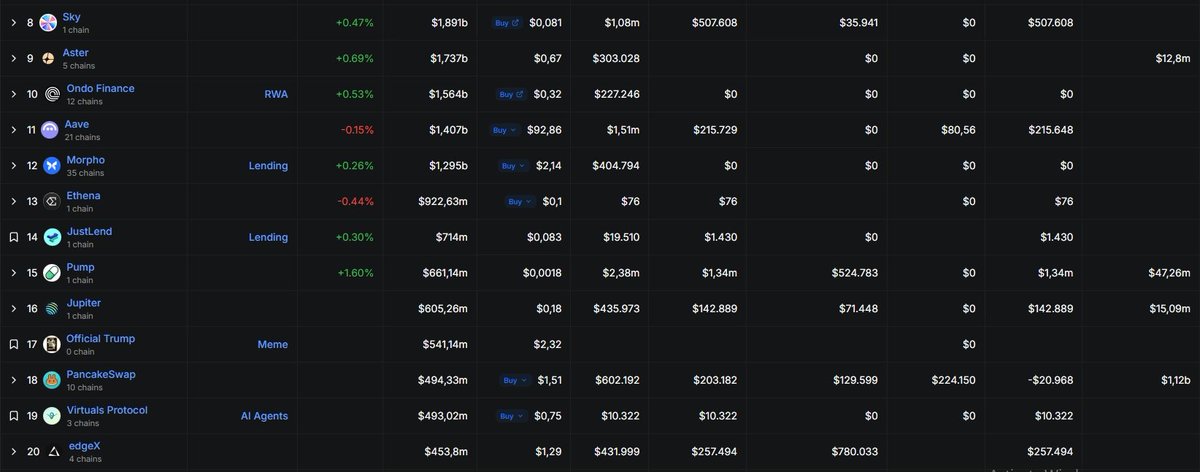
Top 10 DeFi protocols with the strongest TVL growth over the past 30 days
1/ @Securitize - TVL ~$4.206B, 24.88%
RWA tokenization stays red hot, pulling in serious institutional capital.
2/ @OndoFinance - TVL ~$3.534B, 16.09%
Leading the RWA narrative with stablecoins and tokenized assets, steady growth backed by strong partnerships.
3/ @Uniswap - TVL ~$3.402B, 12.71%
Top DEX benefiting from high trading volume and upgrades like v4/hooks.
4/ @BabylonProtocol — TVL ~$3.905B, 11.69%
Bitcoin restaking gaining traction as BTCFi becomes a major trend.
5/ @LidoFinance - TVL ~$20.656B, 11.00%
Dominating liquid staking massive base, still expanding thanks to ETH staking demand.
6/ @Circle - TVL ~$2.905B, 9.11%
USDC issuer riding stablecoin adoption and RWA flows.
7/ @GroveFinance - TVL ~$2.719B, 8.50%
Onchain yield allocator attracting capital chasing higher returns.
8/ @JustLend - TVL ~$3.522B, 6.99%
Strong lending activity on Tron, supported by stablecoin inflows.
9/ @Morpho - TVL ~$6.914B, 1.93%
Modular lending approach, competing aggressively with @Aave.
10/ Other notable movers: @Centrifuge, @Plasma related chains: RWA Bitcoin DeFi protocols continue to lead overall growth momentum.
Big picture:
RWA is dominating the growth leaderboard @Securitize, @OndoFinance because it acts as the clearest bridge between TradFi and DeFi with institutional players like BlackRock flowing into tokenized Treasuries and equities.
This doesn’t look like short-term hype it’s real adoption, with lower perceived smart contract risk compared to pure DeFi.
#BTCFi via Babylon is another key narrative: Bitcoin holders want yield without selling $BTC → unlocking a massive dormant capital pool.
29
11
78
6,219
May 5
We already went through a bear market quarter this year, not bad at all. Ppl with strong conviction still found ways to print.
More obvious now that the market has matured. Crypto didn’t break, but the easy beta trade did.
Under the chart pain, the market actually gave a pretty clean scoreboard. I spent time reviewing the narrative plays this year so you don’t have to.
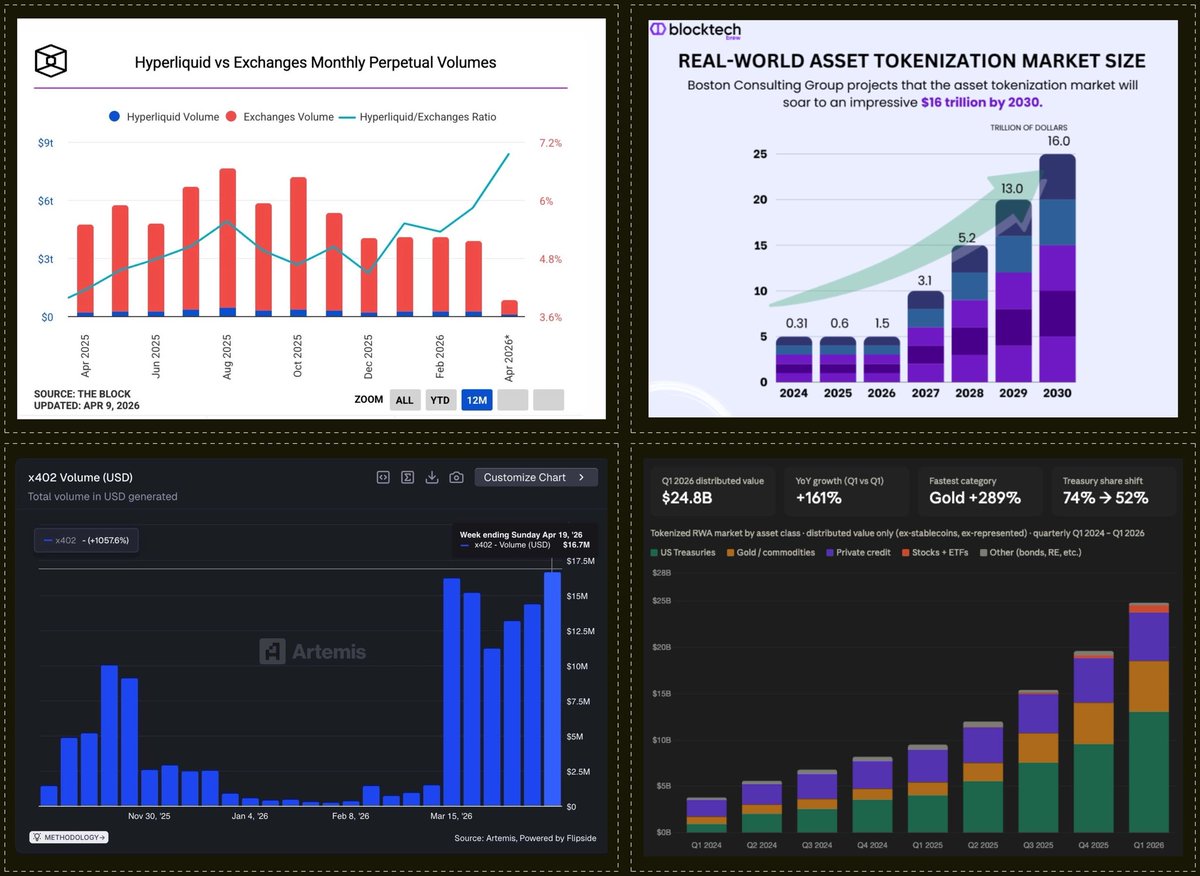
1/ Perp DEX
@HyperliquidX won because traders kept paying fees even when sentiment was dead.
HIP-3 also changed the shape of the trade. Permissionless perps for S&P, oil, gold, pre-IPO stuff turning it into a 24/7 risk venue.
$HYPE nearly doubled while other perps looked cooked.
2/ Decentralized AI
$TAO did 21.6% in Q1 while most AI coins bled, mostly because the market finally saw a real AI infra moment instead of another agent coin with a dream.
A 72B model trained across 70 permissionless nodes, 67.1 MMLU from SN3 was enough credibility for institutions to pay attention.
Then governance drama hit and $TAO pulled back hard.
The subnets being restored by community operators within days is probably the most bullish and bearish thing at the same time.
Bullish because open-source infra actually survived a founder-level nuke. Bearish because governance fragility is no longer theoretical.
3/ $RWA
– Onchain RWA TVL up 40–45% QoQ and ~300% YoY
– Stablecoins around $317B–$321B supply
– Tokenized Treasuries around $12.9B, private credit around $5B
– BUIDL crossed multi-billion scale, Ondo keeps expanding, Maple volume doubled
The RWA thesis is winning. But the RWA token capture thesis is still in court.
4/ x402 and agentic stablecoin commerce
Coinbase, Cloudflare, Google, Microsoft, AWS, Visa, Mastercard, Solana, Stripe, Circle, Shopify all orbiting the same payment standard is not normal crypto partnership fluff.
Agents that can read, decide, pay, subscribe, settle, and transact with stablecoins without waiting for a human to click confirm.
The narrative is big in theory, but no liquid token captures it cleanly yet. Mostly PvP and vampire games while real infra is still being built.
On the other side, Q1 also showed what’s losing oxygen.
BTCFi TVL down hard, Ordinals/Runes fading, broad memecoins down 45–60%, generic L2 tokens still struggling, gaming still dead, long-tail AI agent coins mostly nuked.
For the rest of 2026, I don’t think the play is chasing every narrative like 2021.
The market is getting more selective and more annoying. BTC dominance above 60% means alt beta has to earn its bid.
– Market tends to bid coins with solid revenue and product-market fit ($HYPE, $PUMP…)
– $TAO still my main AI bet with the ETF decision in Aug
– x402 still needs more time to prove itself
– Robotics might be getting its ChatGPT moment
– ETH memes maybe a comeback with $ASTEROID leading
That’s my read on the market right now. If BTC pushes higher from here, new narratives will show up anyway… so just stay open and don’t get stuck thinking the last cycle still works.
23
3
44
1,126