Pathology and computational biology through engineering and applied physics
Joined September 2018
- Tweets 493
- Following 166
- Followers 2,016
- Likes 414
18 Photos and videos


Pinned Tweet

24 May 2024
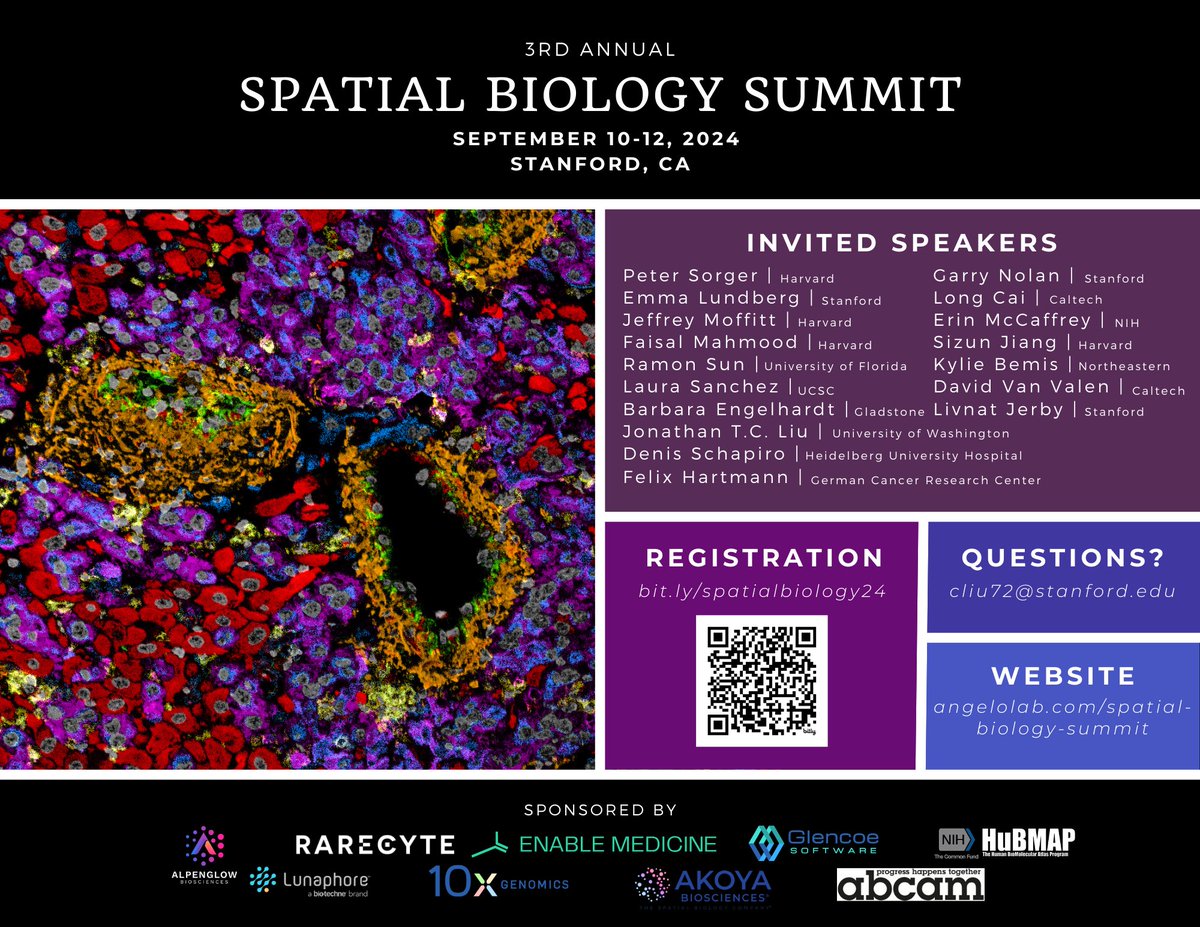
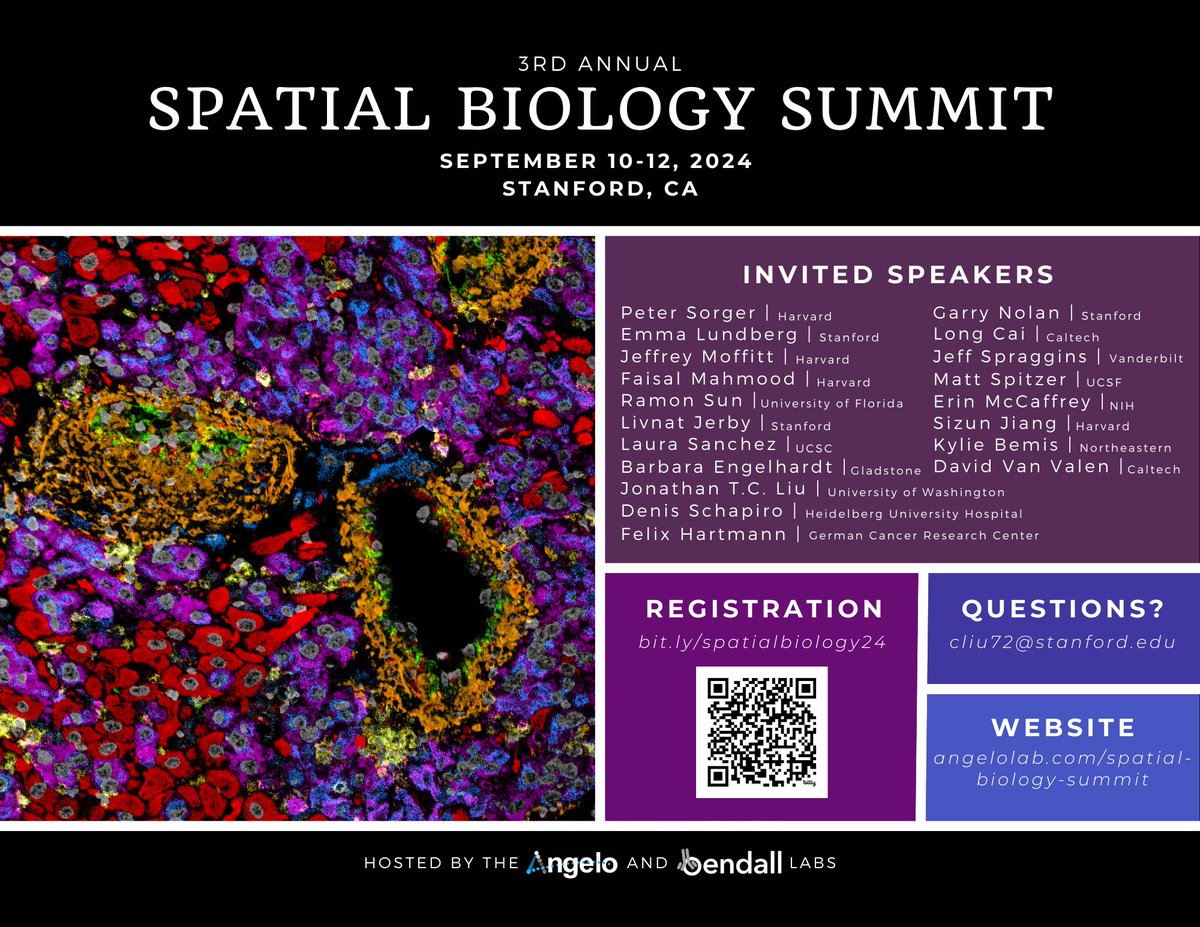
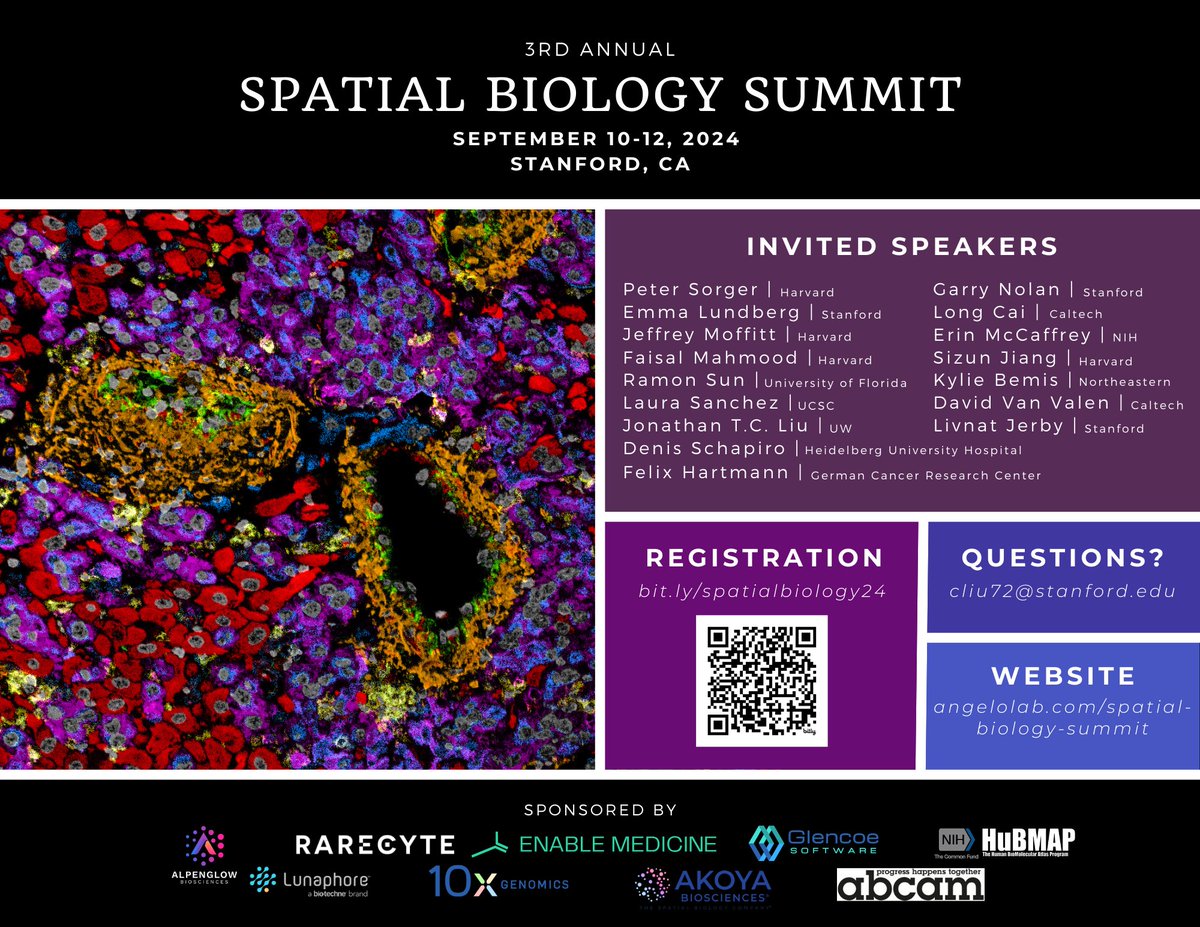
Registration for the 3rd Annual Spatial Biology Summit is now open! Don't miss out! Hope to see you in September.
1
13
31
10,790
17 Dec 2025
Glad to see this one out! Thank you @parkerici and all our collaborators for supporting this work.
14 Dec 2025

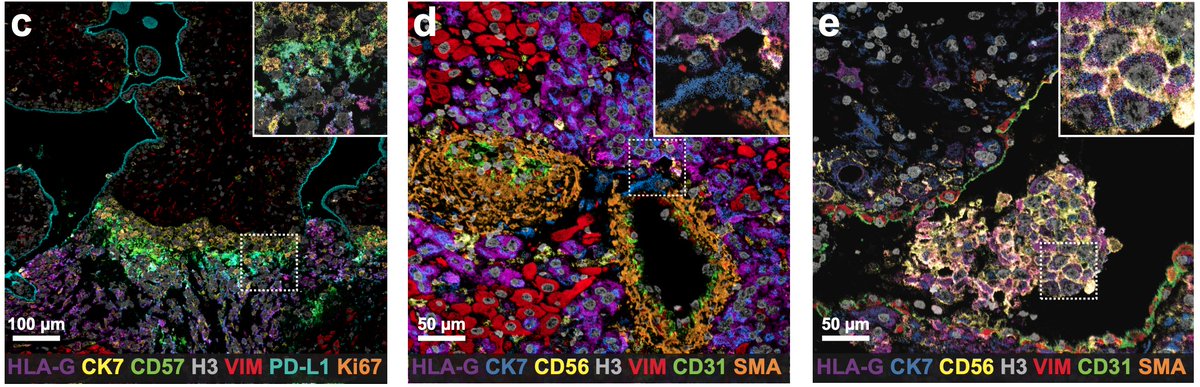
Thrilled to share that our paper is out in @Cancer_Cell: We apply spatial proteomics, transcriptomics, and glycomics to define tumor antigens, TME organization, and predictors of grade and survival.
cell.com/cancer-cell/abstrac…
1
3
557
19 Mar 2025
I love this paper.
18 Mar 2025

What limits a cell's size?
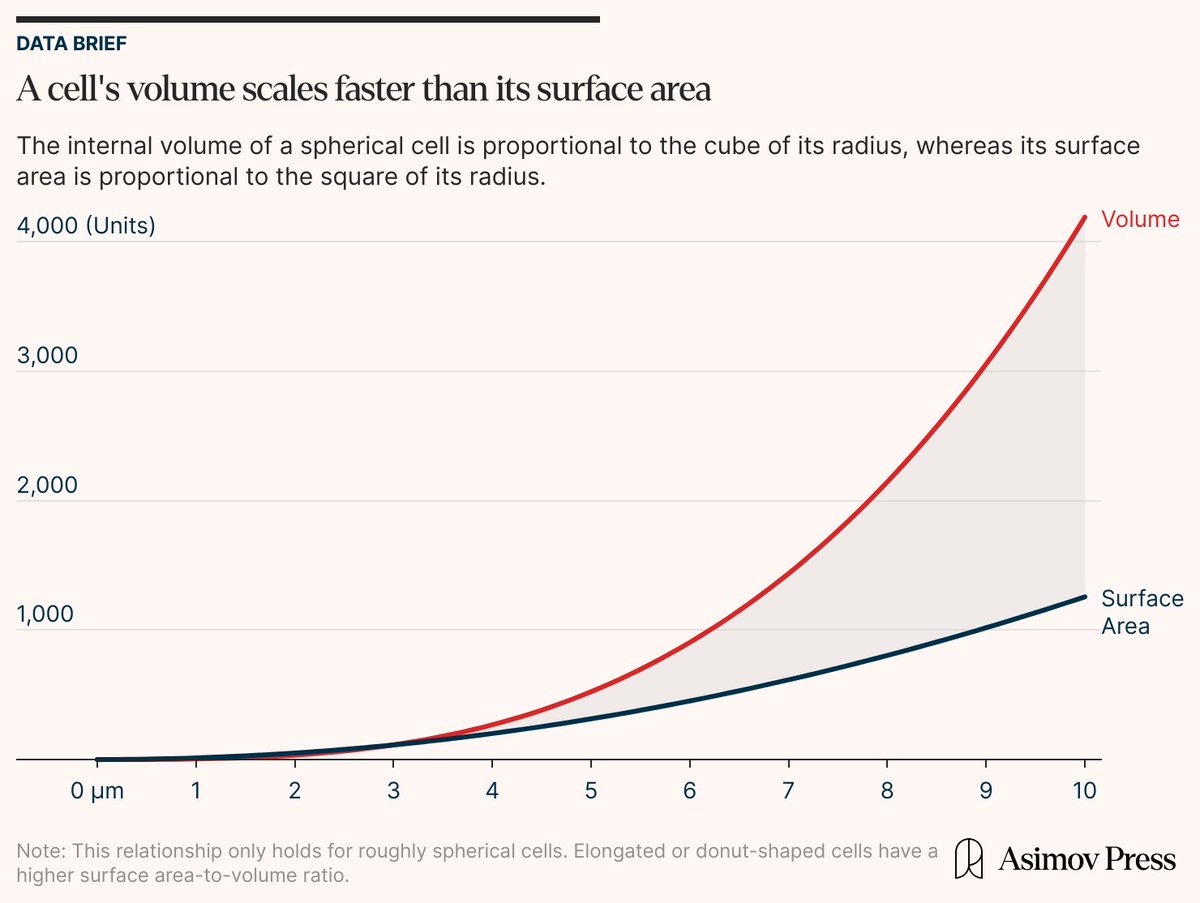
One factor (and I'll explore others in an upcoming essay) is its surface area-to-volume ratio. A semi-spherical cell's internal volume grows proportionally to the cube of its radius, and its surface area grows proportionally to the square of that radius. A cell’s volume thus grows much more swiftly than its surface area.
This ratio has serious consequences for cellular survival, though. The cell’s membrane funnels nutrients into the cell and secretes waste. So if the interior grows too large relative to the cell membrane, the cell’s metabolic processes slow to a crawl.
A new study reveals that some mammalian cells have evolved a mechanism to keep their surface area-to-volume ratio CONSTANT even as the cell grows. They do this by folding their plasma membranes hundreds of times to increase *effective* surface area, thus helping them maintain high levels of nutrient uptake.
There are other ways to get around this limit, too. Case in point: a giant bacterium called Thiomargarita magnifica can exceed one centimeter in diameter, so large that it is visible by the naked eye. It does so by filling between 65-80 percent of its internal volume with an empty vacuole. In other words, it pushes most of its “working” molecules to the cell periphery, thus shortening diffusion distances.
All this, and much more, in a forthcoming essay for @AsimovPress.
2
757
19 Mar 2025
Also! In collaboration with @parkerici, we have created a web portal to make all this data as accessible as possible. You can run your own queries or download the dataset in its entirety: bruce.parkerici.org
17 Mar 2025
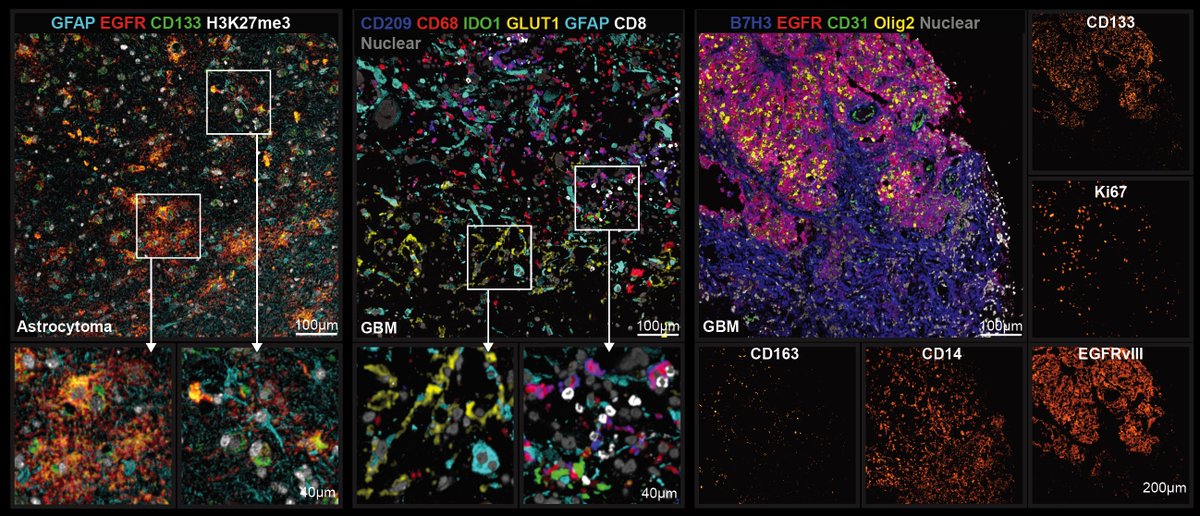
🧵 (1/8) Today, @BenOberlton and I are excited to share the preprint of our work on: A comprehensive multi-omic study of human gliomas, spanning diagnosis, treatment, and recurrence. We address the longstanding challenge of developing effective therapies for gliomas, which have shown limited response to immunotherapy and targeted treatments compared to other malignancies. #GliomaResearch #NeuroOncology #CancerImmunotherapy biorxiv.org/content/10.1101/…
4
4
22
8,761
17 Mar 2025
Preprint of our multicenter study of human gliomas is out! Big thank you to @parkerici @CancerResearch @ACGTFoundation for supporting this work.
17 Mar 2025
🧵 (1/8) Today, @BenOberlton and I are excited to share the preprint of our work on: A comprehensive multi-omic study of human gliomas, spanning diagnosis, treatment, and recurrence. We address the longstanding challenge of developing effective therapies for gliomas, which have shown limited response to immunotherapy and targeted treatments compared to other malignancies. #GliomaResearch #NeuroOncology #CancerImmunotherapy biorxiv.org/content/10.1101/…
2
13
1,227
10 Mar 2025
Wonder how many of my scientist friends still on here manage to ignore my alien posts. Read the article! We are supposed to be curious!
variety.com/2025/tv/news/age…
6
14
66
2,604
9 Mar 2025
“None of the government leadership I spoke to — who have access to very sensitive classified information — were debating whether this is real. None of them.”
Just sayin’
hollywoodreporter.com/movies…
1
427
8 Feb 2025
You just spoke to my soul! If @DOGE actually wants to improve the NIH they should listen to this
8 Feb 2025

RE: reforming NIH funding, my view is -- keep total $ the same or increase it, but:
a) Do fast review (<1 month) based on 2 page applications & email exchanges for clarifying questions
b) Give $ directly to investigators with broad discretion aside from "don't pocket it"
3
747
8 Feb 2025
Wow.

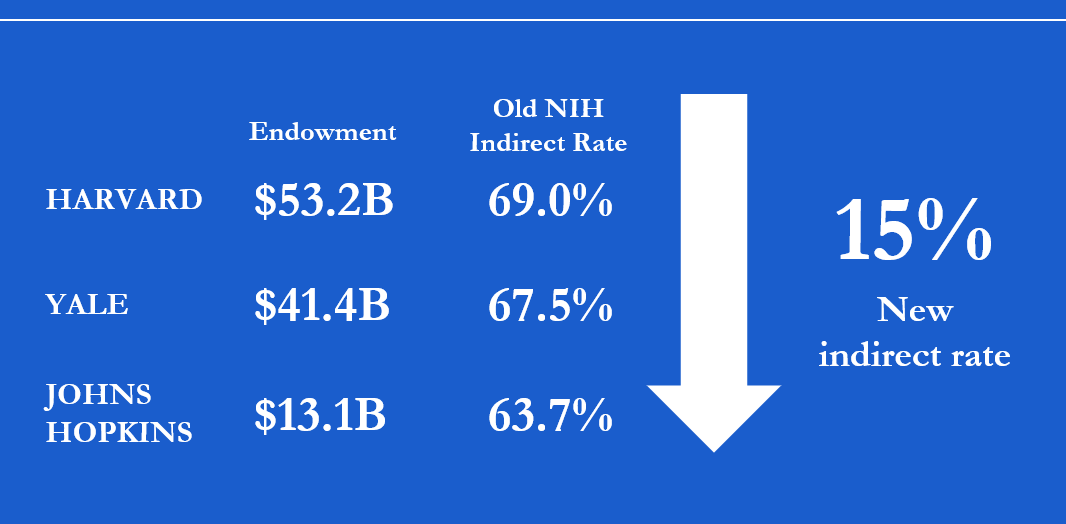
Last year, $9B of the $35B that the National Institutes of Health (NIH) granted for research was used for administrative overhead, what is known as “indirect costs.” Today, NIH lowered the maximum indirect cost rate research institutions can charge the government to 15%, above what many major foundations allow and much lower than the 60% that some institutions charge the government today. This change will save more than $4B a year effective immediately.
1
606
29 Jan 2025
Check out another great one from @NoahGreenwald where we look at spatial predictors of response to anti-PD1 in TNBC!
29 Jan 2025

I’m super excited to share what I’ve been working on for the last (many) years: a spatial genomic transcriptomic characterization of how the breast cancer microenvironment evolves through immunotherapy! (1/x) biorxiv.org/content/10.1101/…
2
9
1,363
23 Jan 2025
I take it @sama has never done a western blot before. Bottleneck isn't new ideas its testing them.
21 Jan 2025

sam altman: “we will see diseases get cured at an unprecedented rate … what this will do to cure the diseases at a rapid rapid rate”
immortality is not too far ahead. we live in the most incredible of times
1
7
5,182
22 Jan 2025
Critical mass of high ranking people in USGOVT are all saying the same thing: UFOs are real and we've been studying them in secret for decades. The scientific community needs to engage and get up to speed youtu.be/DkU7ZqbADRs
20
65
331
15,330
16 Jan 2025
More ex-military coming forward saying govt is hiding long running UFO research program
newsnationnow.com/space/ufo/…
4
347
10 Jan 2025
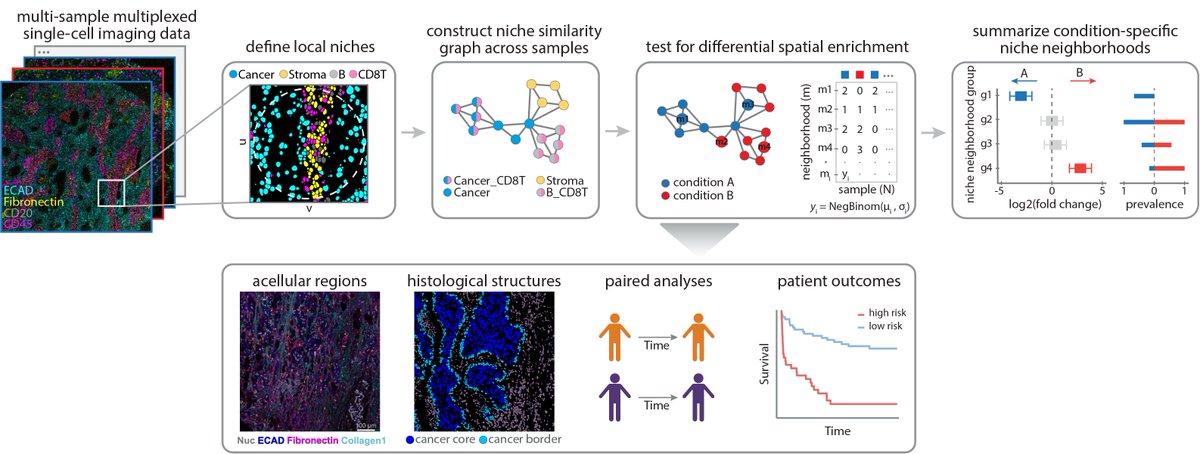
Jolene has done amazing work here. QUICHE is a dramatic improvement over cell neighborhood algos we've used in the past, gets immediately to a common question we ask often: how does spatial structure between two patient groups differ?
10 Jan 2025

Super excited to introduce QUICHE (Quantitative InterCellular Niche Enrichment) - a statistical method that can be used to discover local cellular niches differentially enriched in spatial regions, longitudinal samples, or clinical patient groups :) (1/10) biorxiv.org/content/10.1101/…
4
17
3,036
Michael Angelo retweeted

16 Oct 2024
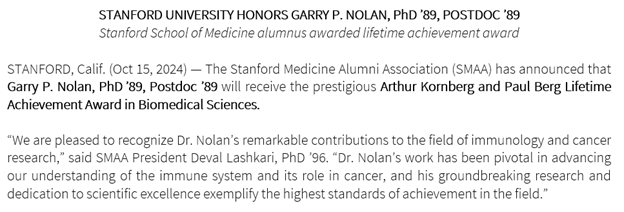
I am deeply honored to be named by the Stanford Medicine Alumni Association this year for the “Arthur Kornberg and Paul Berg Lifetime Achievement Award in Biomedical Sciences.”
As a Stanford graduate student in the 1980s, I took a remarkable class in plasmid and phage replication from Dr. Kornberg. I marveled at his incisive manner of teaching complex concepts in science. I learned fundamentals of retroviral gene transfer from postdoctoral fellows and technical staff in Dr. Berg’s laboratory. I was in constant awe of Dr. Berg’s statesmanship on the world stage as a spokesman for science.
Arthur Kornberg, M.D. and Paul Berg, Ph.D. were luminaries long before I was a graduate student. Professor Kornberg won the Nobel in Physiology or Medicine for isolating DNA polymerase and demonstrating how it could replicate DNA in a test tube. Professor Berg won the Nobel in Chemistry by showing the first inter-species DNA hybrid of bacterial and eukaryotic viral DNA and replicating it in bacteria. Professor Berg was instrumental in pointing out the dilemmas around recombinant DNA at the foundational Asilomar Conference in 1975, a critical meeting focusing on the ethical uses of rec-DNA technology.
Dr. Kornberg’s and Dr. Berg’s efforts deeply touched biomedical sciences and helped patients worldwide. They symbolized science's dual role in fundamental discovery and service to humanity.
112
73
1,225
32,680
14 Nov 2024
NPR: Second congressional hearing where former US military and intelligence officials give sworn testimony that the govt has been running a secret UFO crash retrevial program for decades
npr.org/2024/11/13/nx-s1-518…
2
409
11 Sep 2024
Great new Stanford PI doing cutting edge spatial biology! Congrats Guolan on your new lab!

Please RT. I am currently hiring graduate students and postdoc fellows. Details can be found here: postdocs.stanford.edu/prospe… My lab is dedicated to developing and integrating imaging, AI, and spatial omics technologies to uncover mechanisms driving disease initiation, progression, and therapeutic response, with the ultimate goal of advancing next-generation theragnostics to cure diseases. We are excited to be equipped with cutting-edge spatial omics technologies, including Xenium spatial transcriptomics @10xGenomics and Phenocycler-fusion @AkoyaBio .
1
7
2,120
10 Sep 2024
It’s finally here!! See everyone tomorrow!
27 Aug 2024

We are only TWO WEEKS away from the start of the Spatial Biology Summit! It's not too late to register! We are still accepting poster abstracts until the end of this week. More info here: angelolab.com/spatial-biolog…
@MikeAngeloLab @Bendall_Lab
1
2
16
1,303
14 Aug 2024
Congratulations to Sean Bendall @Bendall_Lab who is the new co-director of the Stanford Immunology Program!
1
2
24
1,076
14 Aug 2024
27 days until the spatial summit! We’ve opened up a new block of spots if you weren’t able to register before. Get them while they last!
12
38
4,982
Michael Angelo retweeted

23 Jul 2024
SCI member @MikeAngeloLab discusses how the emerging field of #SpatialBiology will help scientists gain an in-depth understanding of the #TumorMicroenvironment and better predict patient outcomes. stan.md/4cQTB3f
1
8
591