
Joined May 2025
- Tweets 2,107
- Following 129
- Followers 546
- Likes 7,040
126 Photos and videos


⚛️ Quant(um) ⚛️ retweeted

$INFQ I’ve talked about this a few times on X. My honest view is that Wall Street is still learning the neutral atom modality and still doesn’t fully understand the breadth of Infleqtion.
Some of that is normal institutional lag. Some of it is the SPAC history. And some of it is simply because INFQ has only been public for about four months.
But I don’t think the company has to sit around for years and slowly grow into its valuation through revenue alone.
Revenue and deliveries absolutely matter. Infleqtion still has to execute. But it is already targeting at least $40M in its first year as a public company. It took IonQ more than three years as a public company to cross $40M in annual revenue.
That is a very strong starting point on a relative basis.
There are also plenty of things that could change the narrative before Infleqtion is producing hundreds of millions in annual revenue.
A major government award could do it. So could Quantum Spectrum contracts or deployments. Stronger sensing guidance. Meaningful Tiqker adoption. NVIDIA continuing to highlight the relationship. Or a major neutral atom computing milestone.
The market still seems to view INFQ as another speculative quantum de-SPAC.
What it hasn’t fully absorbed is that Infleqtion is building infrastructure across quantum computing, RF sensing, resilient timing and PNT, photonics and middleware through Superstaq.
Those are several scalable commercial lanes inside one company.
Wall Street will still need to see continued execution. But it has been four months, not four years.
The more Matt gets in front of analysts and institutions, and the more Infleqtion connects its technology to deployments, government programs and real commercial economics, the harder this company becomes to overlook.
1
2
16
263
⚛️ Quant(um) ⚛️ retweeted

10h
Everyone is focused on what quantum computers will be able to do in a few years from now, but most people have no clue that a company like @infleqtion is developing a wide range of quantum technologies for use today.
One of those technologies they have developed is for Quantum Spectrum. Although it has many use cases, Quantum RF sensing can allow militaries to detect incoming targets such as drones. Below is a clip of Infleqtion CEO, Matt Kinsella, explaining a few use cases for this technology during his recent @NYSE interview.
$INFQ
1
8
39
4,553

Jun 12
Very very worth reading
@miscomputate $INFQ
Jun 12

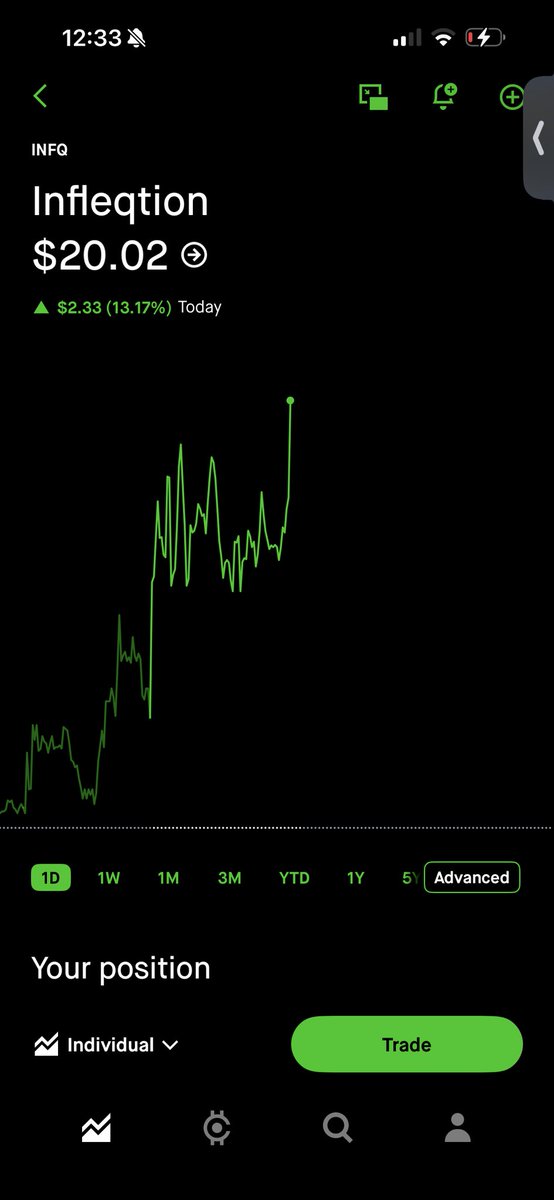
Then we have the $19–$20 area.
After two separate trips toward that zone followed by full round trips back into the low teens, I think we have to be realistic: $19–$20 is probably serious resistance now.
It isn’t some mystical technical number.
It represents overhead supply.
People who bought near the highs are waiting to get back to even. Traders who watched gains disappear twice may sell the next return. Investors who no longer trust the stock to hold a breakout may take profits earlier.
A press release could push INFQ back toward $19.
Holding above $20 will require enough new demand to absorb all of that selling.
What could realistically do it?
The reauthorization bill passing, especially if followed by appropriations or a directly relevant program.
The proposed $100M CHIPS funding moving from a conditional LOI toward a definitive agreement with clear milestones.
A meaningful prime contract or task order where INFQ is not simply eligible to compete, but is actually selected and funded to deliver.
A strong quarter with revenue acceleration, raised guidance, and evidence that cash burn is improving relative to growth.
A commercial deployment or production order for Tiqker, Quantum Spectrum, sensing, or software that demonstrates movement beyond prototypes and research programs.
A major hyperscaler, defense-prime, telecom, or infrastructure relationship with identifiable economics.
Broader analyst coverage and institutional sponsorship that begins replacing short-term momentum traders with investors willing to hold through volatility.
Progress updates on RF sensing, neutral atoms, and software are all important to the thesis.
But we should be honest: another technically impressive announcement without a customer, deployment, meaningful contract value, or revenue attached may not be enough by itself to permanently clear $20 in this environment.
That doesn’t make the work irrelevant.
It means the market’s burden of proof has risen.
I have not changed my long-term INFQ thesis.
I have changed my short-term expectations for how easily the market will reward it.
Quantum is not playing offense with unlimited liquidity right now. Macro gravity is real, yields near 4.5% are real, and the stock has to repair technical damage created by two failed moves near $20.
The reauthorization bill could put the sector back on offense.
A major direct award could create its own gravity.
Falling yields could reopen the speculative-growth trade.
The strongest outcome would be some combination of all three.
Until then, $19–$20 should probably be treated as resistance, not automatically assumed to be the beginning of the next breakout.
INFQ has already proven it can rally there.
Now it has to prove it can stay there.
1
6
928
⚛️ Quant(um) ⚛️ retweeted

Jun 12
Scott Aaronson (UT Austin) and Aram Harrow (MIT) are the two people least likely to hype quantum computing. Both have spent ~25 years in this field. Both are known for rigor, skepticism and academic focus on separating reality from hype in the quantum computing field.
Aaronson told me in our interview the "right questions" would cut "90% of the BS" out of quantum. El País journalists calls Harrow "the traditionally skeptical MIT scientist."
These are not the guys who pump this stuff.
So this matters: both just pulled their timelines forward.
The breakthrough they both point to is error correction.
Harrow: "One thing we have achieved is better error correction... each year the noise rate goes down a bit."
Harrow: "I have been too pessimistic. I always said it would take 10 to 15 years." Now he says sooner.
Question: Will anyone actually hit their roadmap? (IBM is targeting 2029.)
Aaronson: "Yes, actually I do think so... the last year has met or exceeded my expectations."
The shared caveat: the people who have built their reputation on rigorous skepticism have shifted to an optimistic outlook and pulled forward timelines, aggressively.
Harrow:
english.elpais.com/technolog…
Aaronson:
youtu.be/0_7SH3Eons0?si=12A1…
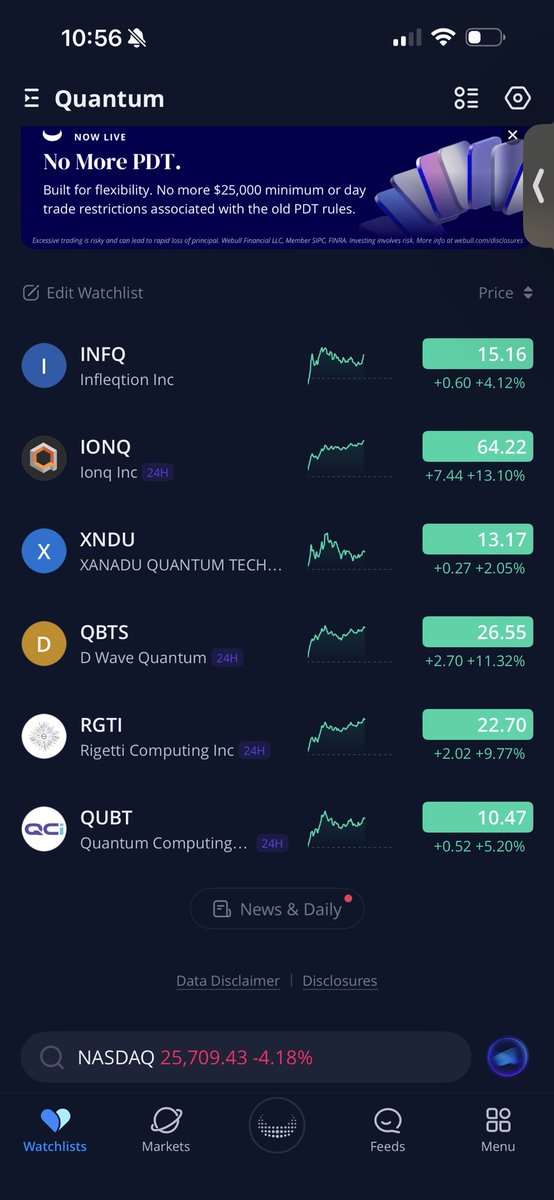
$INFQ $RGTI $QBTS $IONQ $XNDU $QUBT $BBCQ $RAAQ $HQ $IBM $BTQ $LAES $OONEF $QNC $ARQQ


7
29
1,929
⚛️ Quant(um) ⚛️ retweeted

Jun 11
While Infleqtion's qubits are extremely cold, they operate in room-temperature environments and can be deployed anywhere that a classical computer can. No data center required.
Want to know more? Infleqtion CTO Pranav Gokhale breaks it down for you in 60 seconds. 👇
3
26
130
7,252
⚛️ Quant(um) ⚛️ retweeted
Jun 10
The dominance of transistors in classical computing wasn't always obvious. Now they define much of today's flagship computing technology.
Infleqtion CRO Paul Lipman draws that parallel to quantum computing today, discussing why neutral atoms are best positioned to define the next era of computing: intrinsically identical, energy-efficient, and scalable in ways competing platforms are not.
Read the full Forbes Tech Council article here: forbes.com/councils/forbeste…
1
18
82
2,637

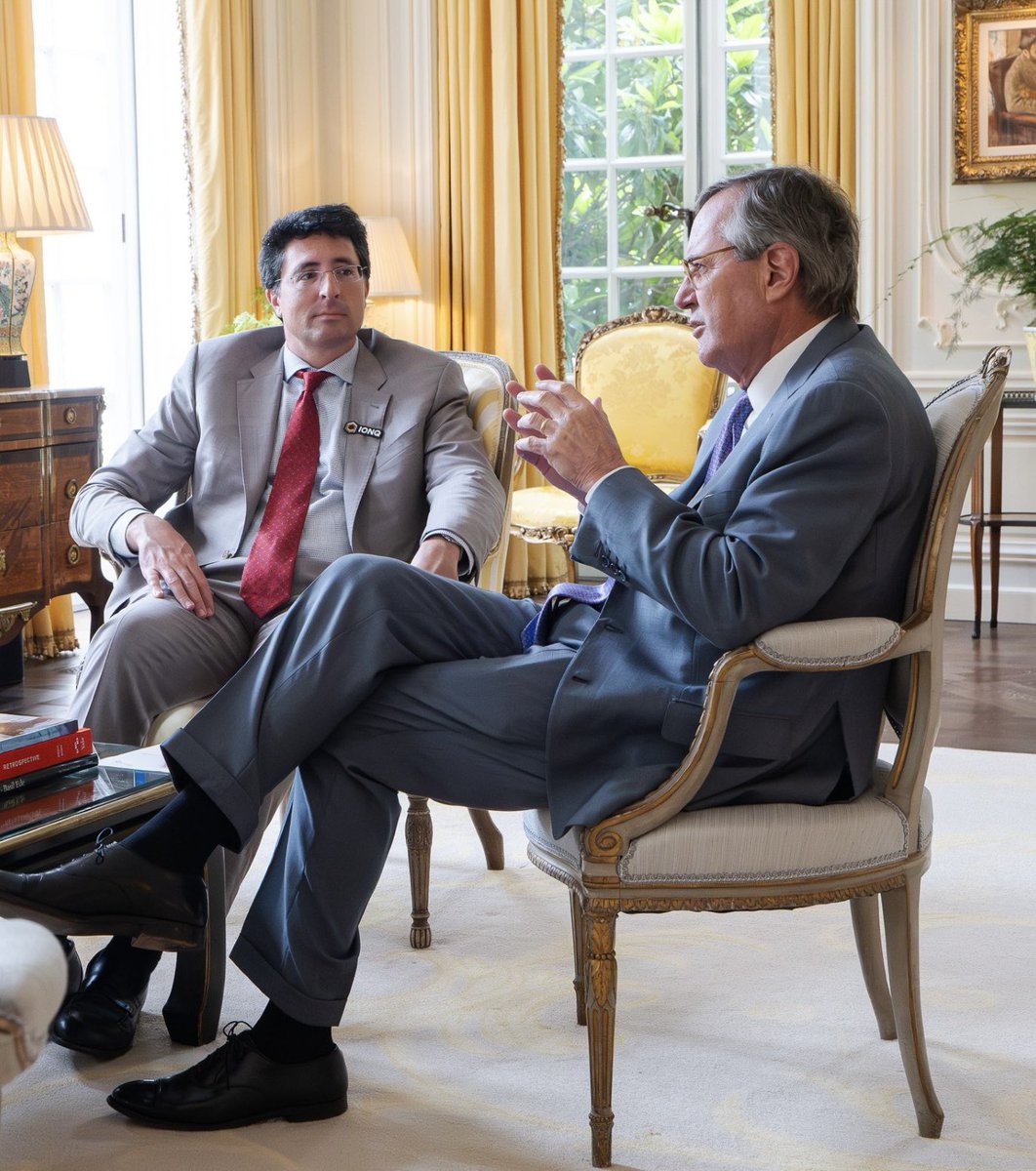
The transatlantic quantum relationship is becoming increasingly important to allied innovation, security, and competitiveness.
We're proud to help advance these conversations and support deeper U.S.-UK collaboration around the technologies that will define the next era of economic and U.S. national security leadership.

Great meeting with Niccolo de Masi, CEO of pioneering U.S. quantum computing company @IonQ_Inc. The United States wants to see greater progress on our work with the UK on the technologies of the future, so that both our countries can reap the economic benefits.

4
45
253
47,962
⚛️ Quant(um) ⚛️ retweeted

Jun 10
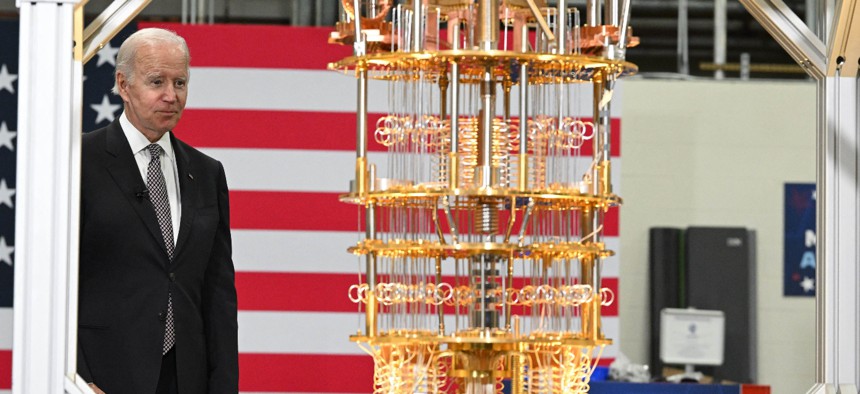
WHICH QUANTUM COMPANY DOES THE MOST GOVERNMENT WORK?
I was curious to see the rankings as government/military work will be the biggest near term revenue for quantum and I believe main long term case as well. while deep diving with grok, here were the top 3.
1. $INFQ
-US Department of Defense (DoD)
-US Army, US Navy, DARPA, Missile -Defense Agency (SHIELD IDIQ)
-Department of War systems.
-US Department of Energy (DOE)
-ARPA-E
-Sandia National Laboratories
-Lawrence Berkeley National Laboratory
-Fermi National Accelerator Laboratory
-Argonne National Laboratory, National -Laboratory of the Rockies.
-NASA: Direct collaborations and systems (including quantum gravity sensor in space)
-US Department of Commerce: CHIPS programs
-UK Government: Royal Navy and broader engagements.
2. $IONQ
-US Department of Defense (DoD)
-Air Force Research Laboratory (AFRL) -DARPA, national security community.
-US Department of Energy (DOE): Oak -Ridge National Laboratory
-Applied Research Laboratory for Intelligence and Security
-US Department of Commerce: CHIPS-related ecosystem support
3. $IBM
-US Department of Commerce: CHIPS for quantum foundry
-US Department of Energy (DOE)
-DARPA: Quantum Benchmarking Initiative (QBI)
-NIST (Department of Commerce):
-Broader federal: Decades of R&D support across agencies, including DoD ecosystem ties via labs and initiatives.
$INFQ $IONQ $IBM
Apr 28

I don’t see nearly as many Quantum companies landing government government contracts like $INFQ does.
How many can say they work with:
NASA
NAVY
DOE
ARMY
DARPA
UK Royal Navy
Dep. Of War
Quantum will be heavily used at first by governments and militaries before being used by corporations and everyday people. $INFQ has already put their foot all the way through that door. Hold on tight, don’t get shaken out.
5
17
90
12,165
Jun 9
3
2
12
961
⚛️ Quant(um) ⚛️ retweeted
Jun 9
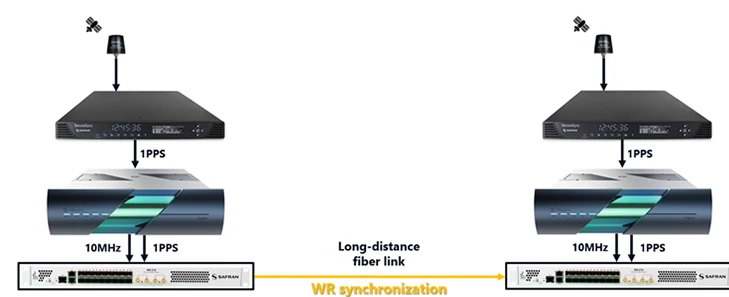
Infleqtion's Tiqker optical atomic clock integrates with Safran's SecureSync to deliver a new level of precision in time and frequency synchronization.
By combining SecureSync's long-term accuracy with Tiqker's short-term stability, the architecture maintains sub-nanosecond synchronization across distributed networks for resilient, high-accuracy timing infrastructure with real-world applications in fintech, data centers, defense, and quantum technologies.
Read the Safran application note here: safran-navigation-timing.com…
2
23
120
6,814
Jun 9
Great day to re evaluate your conviction and revisit your thesis!!! This is a huge deal @infleqtion $INFQ
Jun 9

Infleqtion's Tiqker optical atomic clock integrates with Safran's SecureSync to deliver a new level of precision in time and frequency synchronization.
By combining SecureSync's long-term accuracy with Tiqker's short-term stability, the architecture maintains sub-nanosecond synchronization across distributed networks for resilient, high-accuracy timing infrastructure with real-world applications in fintech, data centers, defense, and quantum technologies.
Read the Safran application note here: safran-navigation-timing.com…
4
21
2,040
⚛️ Quant(um) ⚛️ retweeted
Jun 8
One thing I would add to this is that is while QuEra has built a massive 3k plus physical atom (qubit) grids to run high logical qubit counts like the demonstrated 96!! (Incredibly impressive) Something to note is that Infleqtion has built what i think of as a superior micro-component accuracy, because of their higher gate fidelity, they will require dramatically fewer lasers, atoms, and physical real estate to achieve full fault-tolerance. I.e needing many less phyisical qubits, as well as more affordable hardware. Which coincides with the potential of an easier time scaling, as well as deploying systems because of their dual species approach. Not having to shuttle the atoms around, allows for a much more fields deployable system because of the fixed grid of atoms.
All this leads me to think of QuEra as more
Of a cloud player, but leaves Infleqtion to be “A” winner in deployable systems both in data centers as well as on the edge.
Trust me If i could own QuEra I would as well but
1
1
1
324
Jun 8
RT @LanceTeren: $INFQ: LOCK UP OVER, TIME TO SEND
Today’s PA was awful but that’s because $INFQ had their LAST share unlock which was thou…
2
28
Jun 8
2
3
11
1,139
⚛️ Quant(um) ⚛️ retweeted
Jun 8
$INFQ: THE KING OF NEUTRAL ATOMS?
Neutral Atoms has become the most promising modalities in my opinion and I believe it will continue to succeed. $GOOG recently shifted away from Superconducting towards a Neutral Atom approach which I believe is a huge validator.
Here are the pure play names:
QuEra: the science leader, partnered with Harvard and MIT. 96 logical qubits demonstrated, below-threshold error correction which is the milestone the whole field is chasing, Google backed, raised $230 million in 2025. Currently Private.
$BBCQ/Pasqal: French based and currently the deployment leader, first to 1,000 qubits in 2024, the most systems actually installed at customer sites including European supercomputing centers, targeting 10,000. ~$2B SPAC valuation in March 2026.
Atom Computing: the Microsoft bet. Phoenix system at 1,200 atoms using stable nuclear spin qubits, integrated straight into Azure Quantum's cloud, which is a serious distribution edge and currently partnered with $MSFT. Private.
Infleqtion ($INFQ): the only public pure play. Fidelity lead at 99.73%, Sqale system at 1,600 atoms, 12 logical qubits deep US defense and national security ties, and the edge most people miss, its atomic clocks and sensing business already generate real revenue today while the other three are effectively pre-revenue compute bets. Going public gave it $550 million to fund the roadmap.
Also to note that $INFQ and Atom computing were beneficiaries of the Trump administration investment giving each $100 million dollars.
Which would you own if they were all listed?
Jun 5
GOVERNMENTS ARE FIGHTING FOR QUANTUM SUPREMACY! 🇺🇸🇯🇵🇨🇳
The US and Japan just put $1 billion behind quantum, AI, and fusion. Everyone is reading it as an AI headline, though the quantum piece is the part nobody is thinking about.
Announced today. $500M from the US Department of Energy, $500M from Japan, five years, routed through the DOE's 17 national labs. Japan is the first foreign ally let into Trump's Genesis Mission.
Here's the part that matters. Quantum information science is named as a core pillar, right alongside AI and fusion. This isn't a side mention, It's a national security priority. Think about it, $2 billion dollars were just committed to 9 quantum companies including $INFQ, $QBTS, $IBM, etc and now this new funding round too. QUANTUM IS A DIRE INDUSTRY FOR US SUPREMACY.
The sooner you realize this the better off you'll be.
Although the way this funding works is different. The US government doesn't build quantum technology in a government lab and sell it. They fund the research, then let private companies commercialize it. The government becomes the first customer through defense, NASA, and intelligence contracts, which is real revenue before a commercial market even exists. $INFQ is the perfect example of this as they have been contracted by all of these departments already.
The labs do the science. The public companies capture the upside. That's the whole structure. Government money is pouring into quantum and taking ownership on the way in. Expect another massive re-rate for the industry soon enough.
$IONQ $INFQ ethereum:0x4a220e6096b25eadb88358cb44068a3248254675

6
10
81
19,399
Jun 8
135
⚛️ Quant(um) ⚛️ retweeted

JUST IN: US and Japan announce $1,000,000,000 partnership to advance AI and quantum computing
21
62
408
1,289,861
⚛️ Quant(um) ⚛️ retweeted
Jun 5
GOVERNMENTS ARE FIGHTING FOR QUANTUM SUPREMACY! 🇺🇸🇯🇵🇨🇳
The US and Japan just put $1 billion behind quantum, AI, and fusion. Everyone is reading it as an AI headline, though the quantum piece is the part nobody is thinking about.
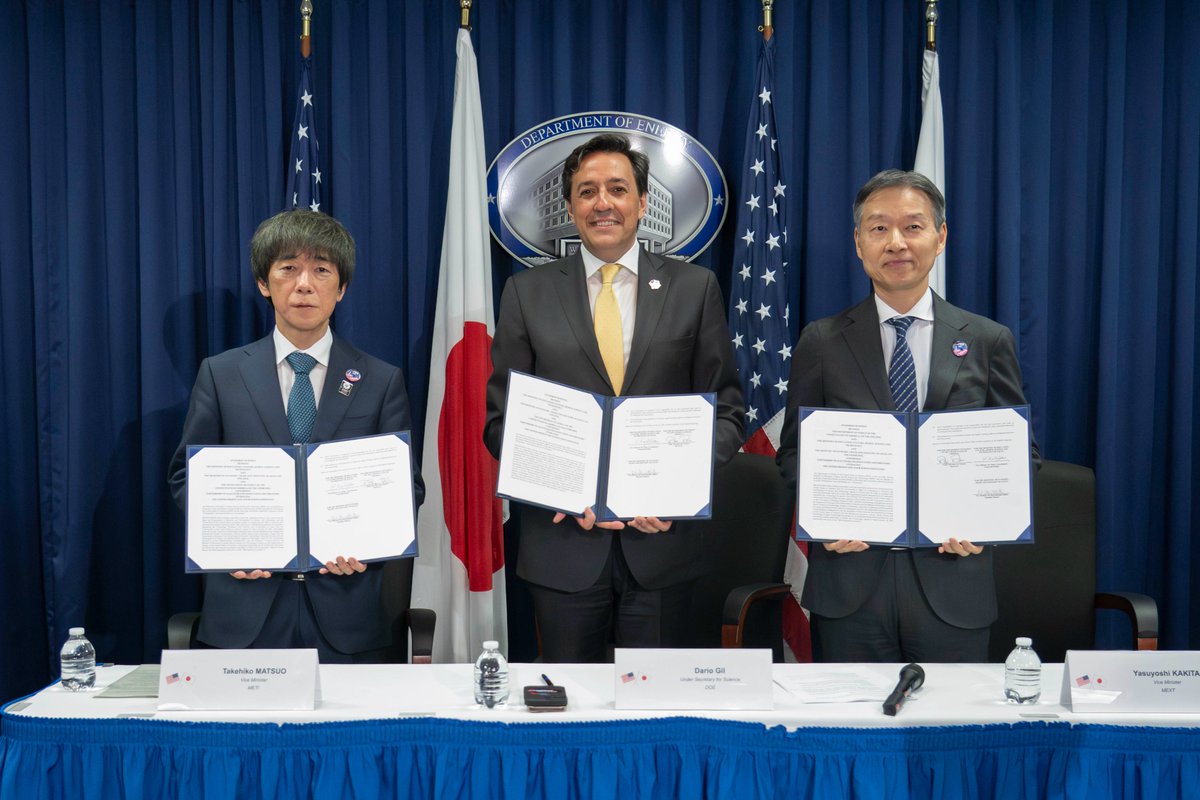
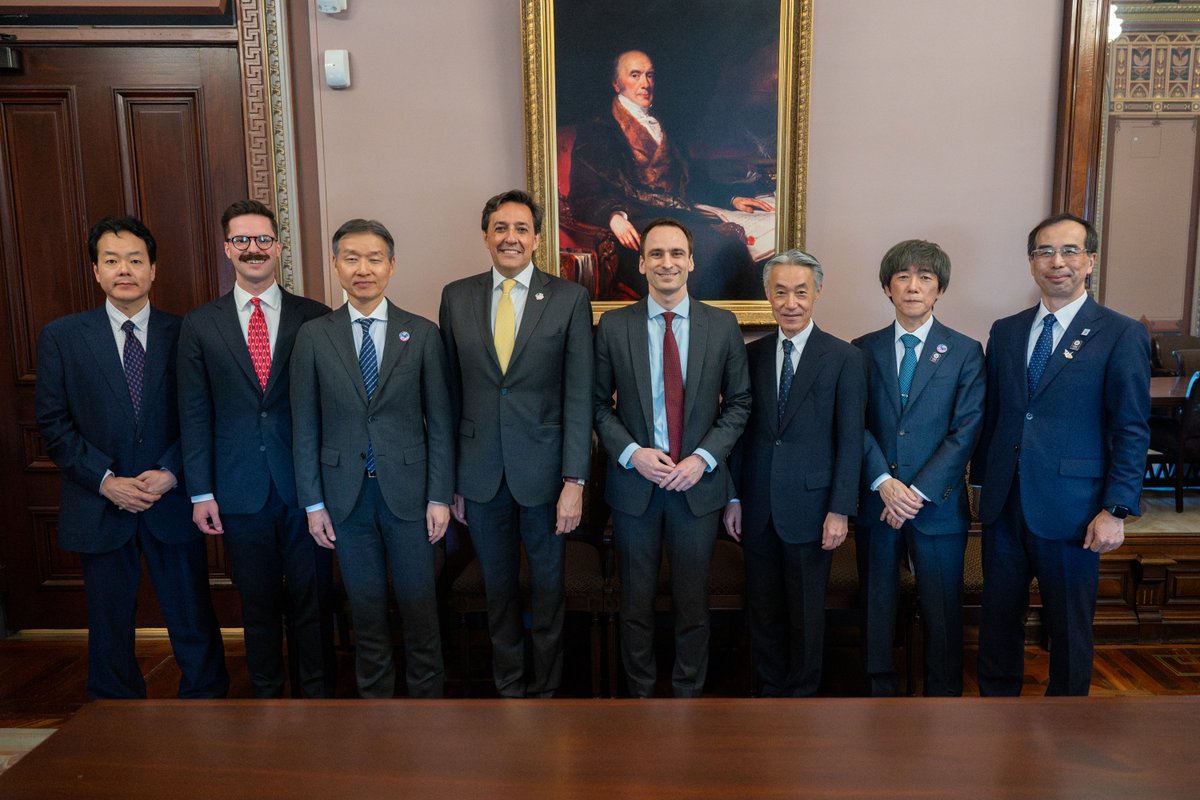
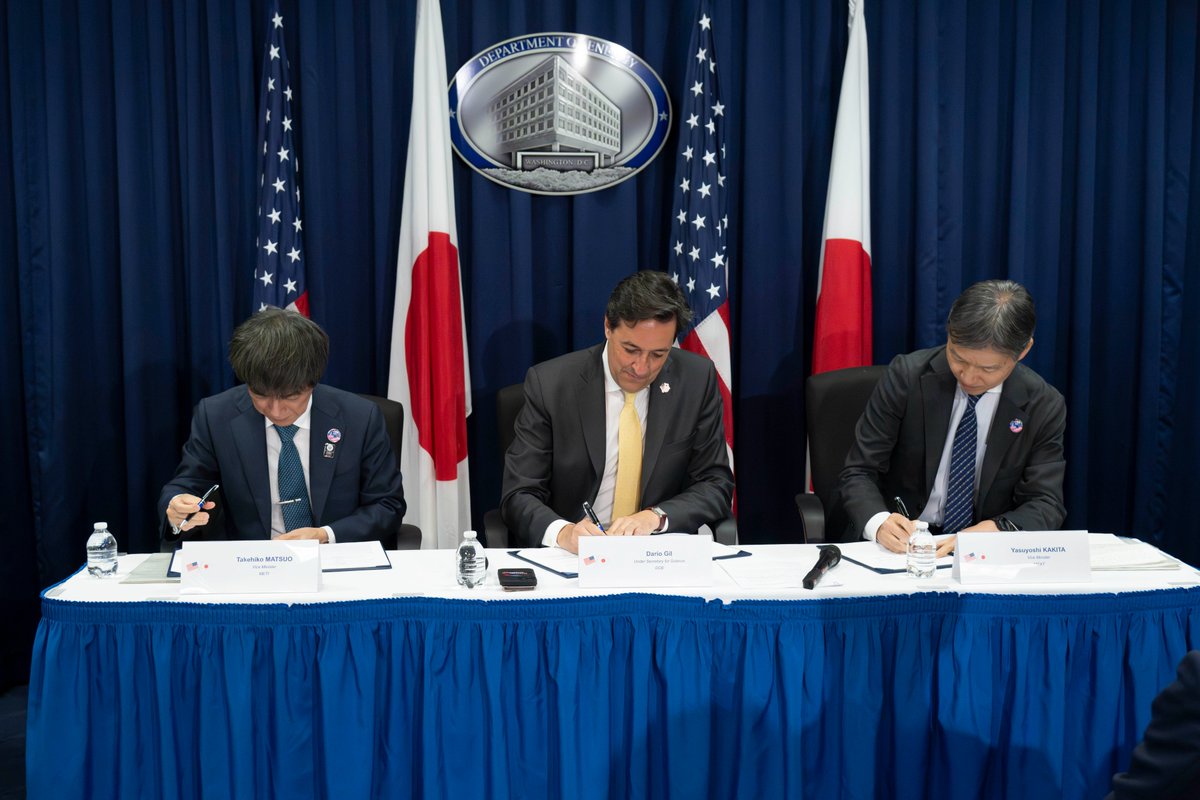
Announced today. $500M from the US Department of Energy, $500M from Japan, five years, routed through the DOE's 17 national labs. Japan is the first foreign ally let into Trump's Genesis Mission.
Here's the part that matters. Quantum information science is named as a core pillar, right alongside AI and fusion. This isn't a side mention, It's a national security priority. Think about it, $2 billion dollars were just committed to 9 quantum companies including $INFQ, $QBTS, $IBM, etc and now this new funding round too. QUANTUM IS A DIRE INDUSTRY FOR US SUPREMACY.
The sooner you realize this the better off you'll be.
Although the way this funding works is different. The US government doesn't build quantum technology in a government lab and sell it. They fund the research, then let private companies commercialize it. The government becomes the first customer through defense, NASA, and intelligence contracts, which is real revenue before a commercial market even exists. $INFQ is the perfect example of this as they have been contracted by all of these departments already.
The labs do the science. The public companies capture the upside. That's the whole structure. Government money is pouring into quantum and taking ownership on the way in. Expect another massive re-rate for the industry soon enough.
$IONQ $INFQ ethereum:0x4a220e6096b25eadb88358cb44068a3248254675
Jun 4

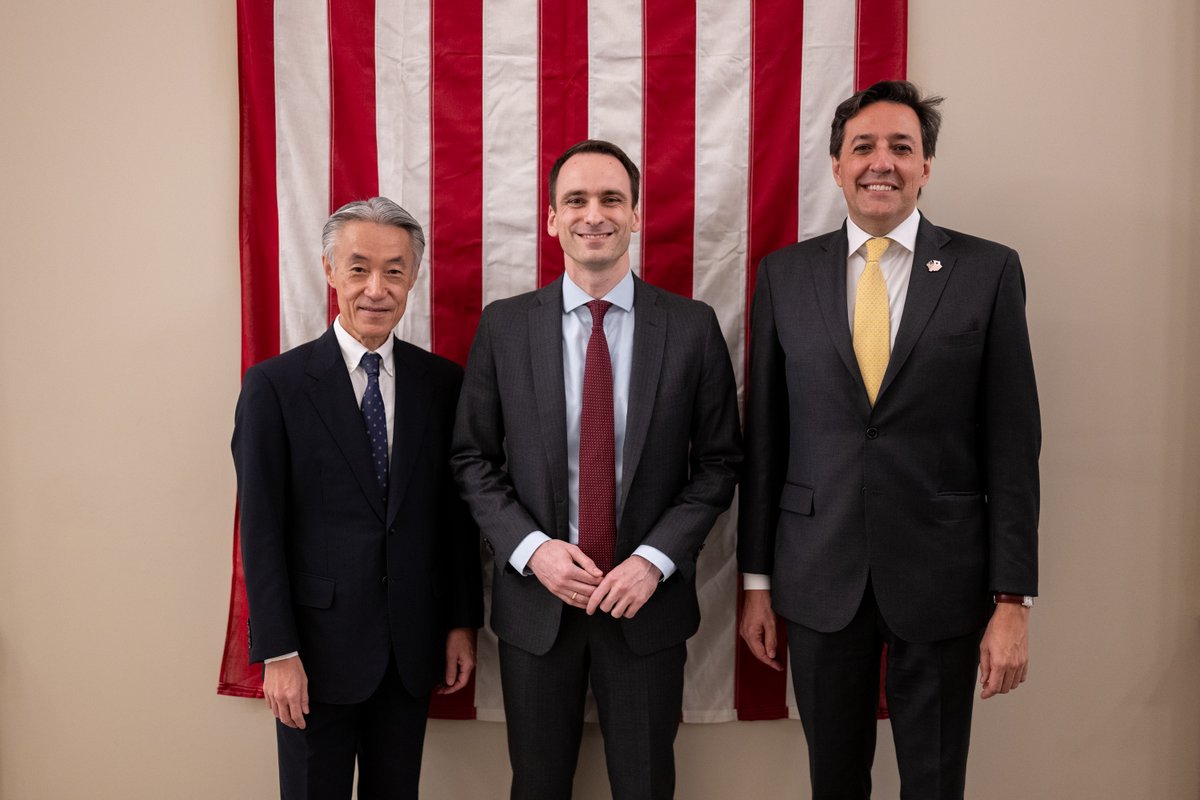
Proud to announce Japan as the first international partner of the Genesis Mission! 🇺🇸🇯🇵
Together, we are investing $1B to accelerate scientific discovery through next-generation AI and advanced computing. A milestone moment for two long-standing partners.
1
12
46
15,362
Jun 5
More quantum funding and this time its with Japan, who got a QC from $INFQ recently 🧐
Jun 4
Proud to announce Japan as the first international partner of the Genesis Mission! 🇺🇸🇯🇵
Together, we are investing $1B to accelerate scientific discovery through next-generation AI and advanced computing. A milestone moment for two long-standing partners.
12
55
6,872
⚛️ Quant(um) ⚛️ retweeted

Jun 4
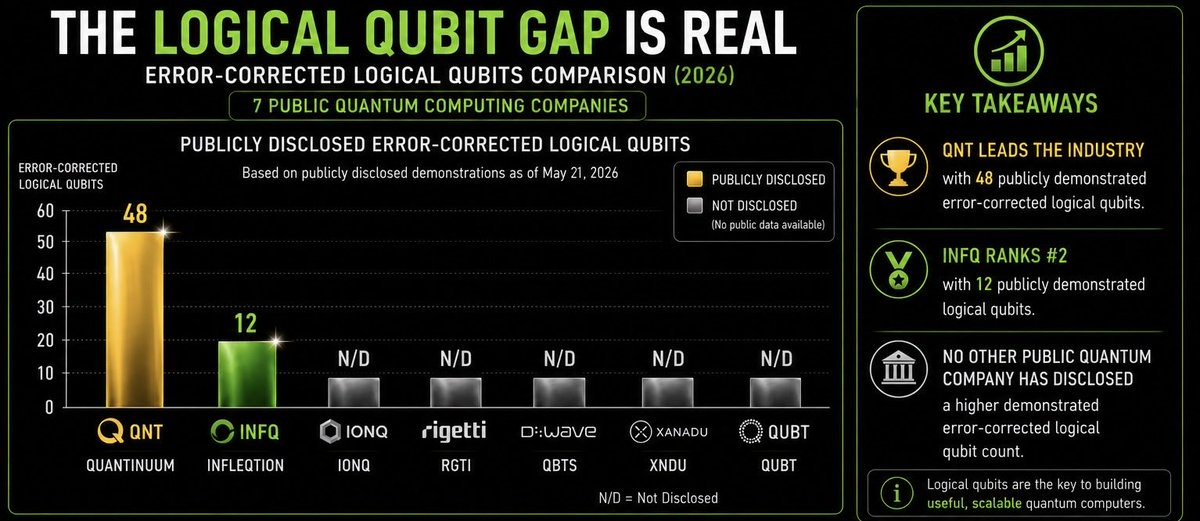
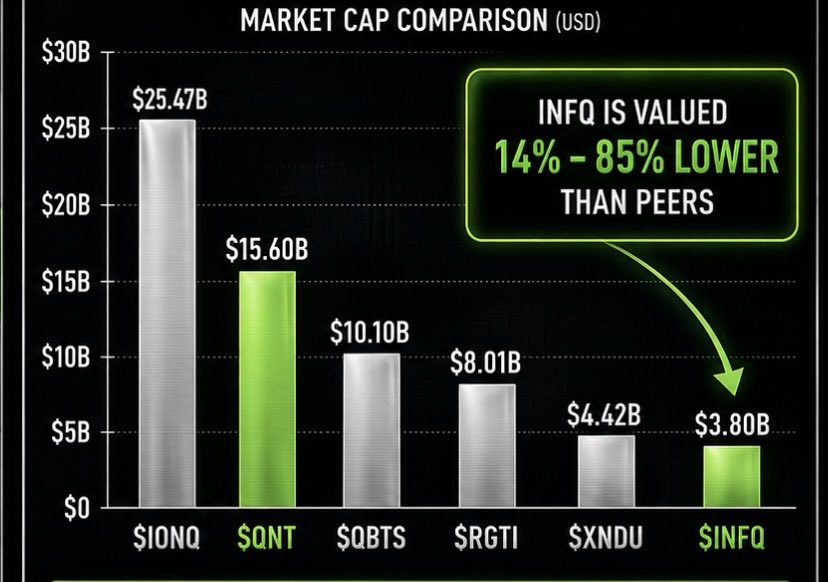
$QNT 15.6B IPO, Fault Tolerance Quantum Computing and Why does Logical Qubits matter?
Most investors still think quantum computing is a race for more physical qubits.
Wall Street is increasingly betting on something else:
Logical Qubits.
That’s why Quantinuum’s IPO priced at $60/share, valuing the company at roughly $15.6B, and was reportedly 20x oversubscribed.
Why?
Because a quantum computer with 1,000 noisy physical qubits is often less useful than one with a few dozen high-quality logical qubits.
A logical qubit is an error-corrected qubit built from many physical qubits working together.
Think of it this way:
Physical qubits = raw materials
Logical qubits = finished products
Without error correction, quantum computers produce too many mistakes to solve commercially valuable problems.
With error correction, they become scalable.
That is the bridge between a science experiment and a trillion-dollar computing platform.
Today, Quantinuum has publicly demonstrated 48 error-corrected logical qubits, one of the strongest results in the industry.
By comparison, most public quantum companies still focus investor presentations on physical qubits, gate fidelity, or future roadmaps.
Wall Street isn’t paying $15.6B for current revenue.
Wall Street is paying for the possibility that Quantinuum may be among the first companies to achieve:
✅ Fault-tolerant quantum computing
✅ Large-scale logical qubit architectures
✅ Commercially useful quantum applications
In other words:
Investors are not valuing what Quantinuum is today.
They are valuing what Quantinuum could become if logical qubit scaling continues.
That’s why a company generating only a few million dollars in quarterly revenue can command a valuation larger than many mature technology companies.
In quantum computing, the most important metric is no longer:
“How many physical qubits do you have?”
The question becoming increasingly important is:
“How many logical qubits can you reliably run?”
That is where the next phase of the quantum race begins.
“””NVIDIA won the AI era with GPUs. The winners of the quantum era may be the companies that master logical qubits.”””
1
1
10
328