
Joined February 2022
- Tweets 1,197
- Following 778
- Followers 1,609
- Likes 3,745
112 Photos and videos





Pinned Tweet

21 Jan 2023
Joining @CelestiaOrg as a Research Engineer 5 months ago has been a game-changer.
The team is amazing, every single person is a wealth of knowledge.
I'm grateful for the support and encouragement I receive, my questions are always entertained.
224
4
364
23,179
Jan 13
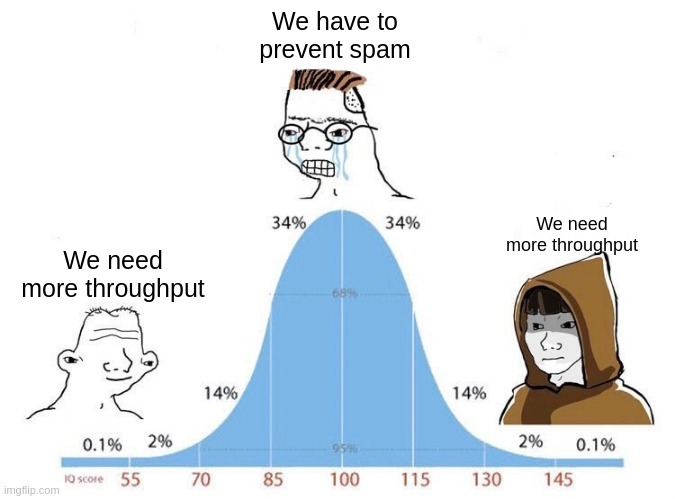
With 1Tb/s, we solved throughput.
Let's see what comes next...

32
123
2,509
28 Oct 2025
We got detroit become human in real life before gta 6

102
1
113
1,940
NashQ 🦣 retweeted

8 Jul 2025
💜
@celestia is hiring engineers as well, and would be a great fit for engineers coming from Eigen imo
DMs open.
59
8
153
5,848
17 Jun 2025
Some thoughts after reading "MEV and the Limits of Scaling". Cool results and well explained, so its a nice read.
1) Is spam good for metrics and revenue for Base so they want to keep it? Higher base fee means more rev. "A full Base block is great no matter whats inside."
33
46
1,277
17 Jun 2025
4) Could the reason be latency?
OP chains are slower in comparison to Orbit chains meaning they are more mispriced and a target for arbitrage later in the block. For Arbitrum its mostly top-of-block. A latency race rather than blind signing? What if you just go very very fast?
1
7
805
17 Jun 2025
Highly recommend reading the article yourself. Very excited to see what kind of solution they will cook up.
cc @DistributedMarz @bertcmiller
writings.flashbots.net/mev-a…
1
5
818
17 Jun 2025
This looks like a huge mispricing of gas. The first line of defense would be to adjust that.
What is the reason for it being so mispriced? I get Solana because there they only do CU and DA is free but I am confused why that's also the case for OP-Stack Rollups.
16 Jun 2025

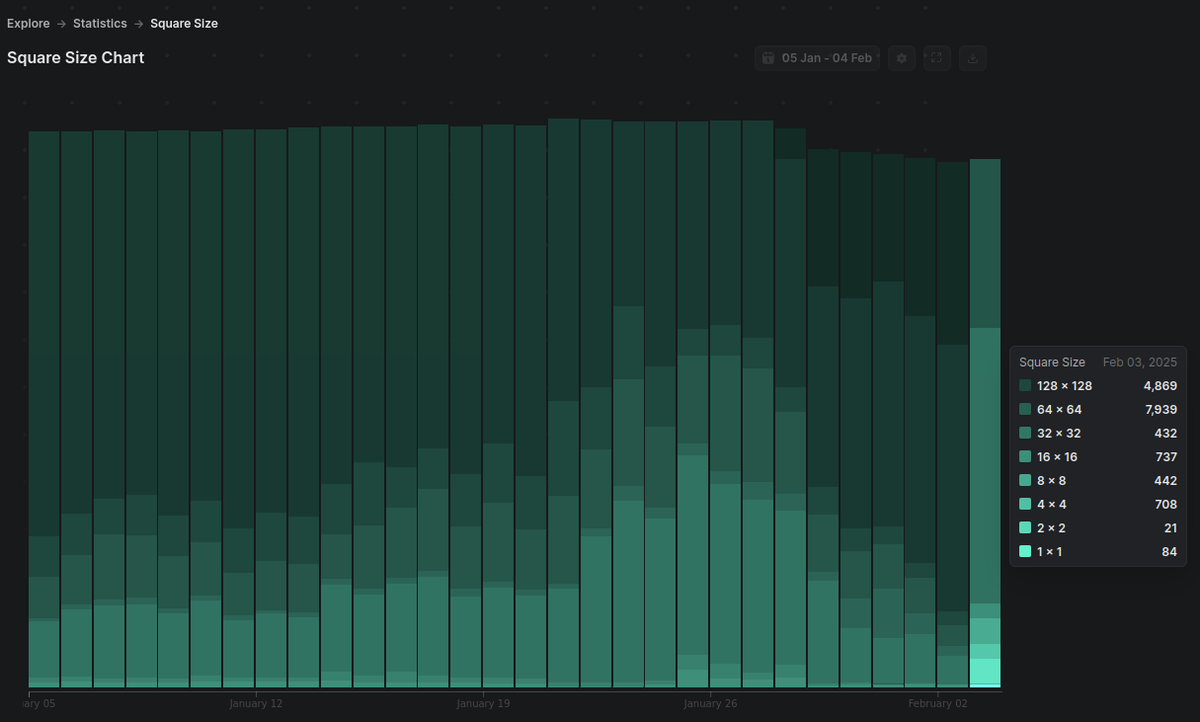
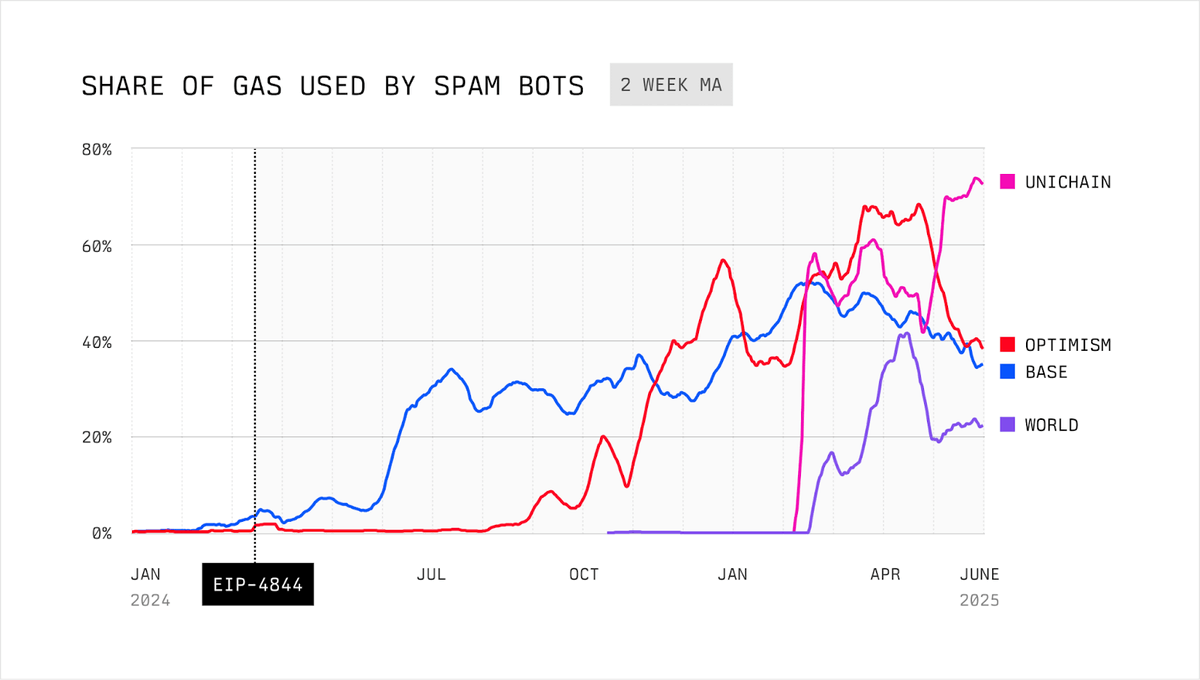
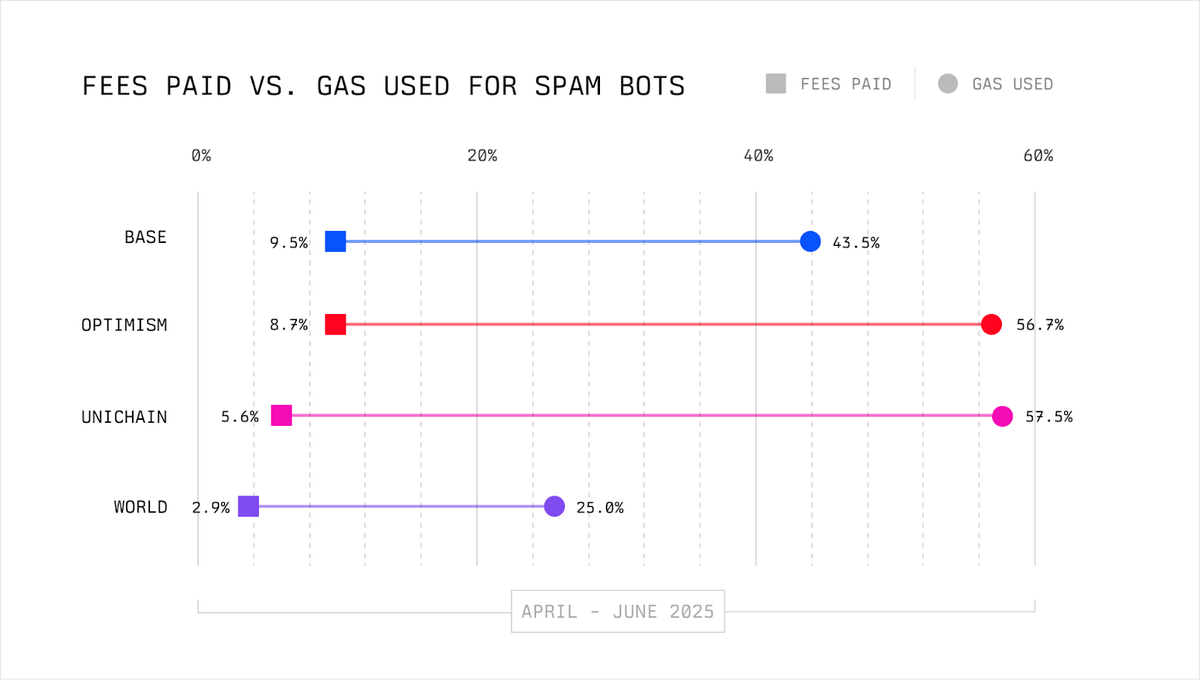
To investigate, we did a deep-dive on OP-Stack rollups. Our findings serve as a window into an industry-wide problem.
Spam bots consume huge portions of gas across top rollups, while paying disproportionately low fees
3
4
1,079
23 May 2025
Imagine doing Wim Hof breathing while doing Hyperbaric Oxygen Therapy.
You would be tripping.
2
9
717
16 May 2025
i solemnly swear to only ‘research’ things that i can put into production 🙏
16 May 2025

i solemnly swear to only ‘research’ things that i can put into production 🙏
7
5
20
2,364
4 May 2025
I think celestia will

The best possible blockchain is something that is very simple at the baselayer but that can still verify ZKP/STARK proofs (but not much else). Glad we’re all finally coming around to that conclusion. Question is, who can get there first?
I think we (bitcoiners) can!
4
7
51
3,231
21 Mar 2025
Where this logic fails:
Controlling 1/3 of the network for 1 blob does not imply
the cost to corrupt EigenDA ~= 1/3 of the ETH stake
Because there is no DAS and intersubjective forking/slashing the attack could work with 0 consequences.
With slashing you need to buy 1/3 of the stake to control 1/3 of the validators, without slashing you don't need to buy anything and just bribe them.
And that bribe does not have to be 1/3 of the stake.
Even the coordination of the attack can be made permissionless as well. Strawman where disperser is malicious:
- Validators run TEE binary
- Disperser makes on-chain request for an attack
- Disperser encrypts payload with TEE Session key
- Validators decrypt payload inside TEE sign it and then delete the data (no availability)
- Validators can claim an onchain payment through verification of a remote attestation
- put it on a privacy layer to also have 0 validator reputation cost
There is probably an easier way to do this but this strawman "guarantees" that the Validators don't have the data, Ethereum think it's available and the user funds on the rollup are at risk for minimal cost as you only need to withhold 1 blob.
Just to be clear I don't advocate doing this and this is just a hypothetical but it is foolish to think that the cost of the attack is more than 1/3 of the Ethereum stake. Having 1/3 of the stake just guarantees it but it can happen much earlier.
19 Mar 2025

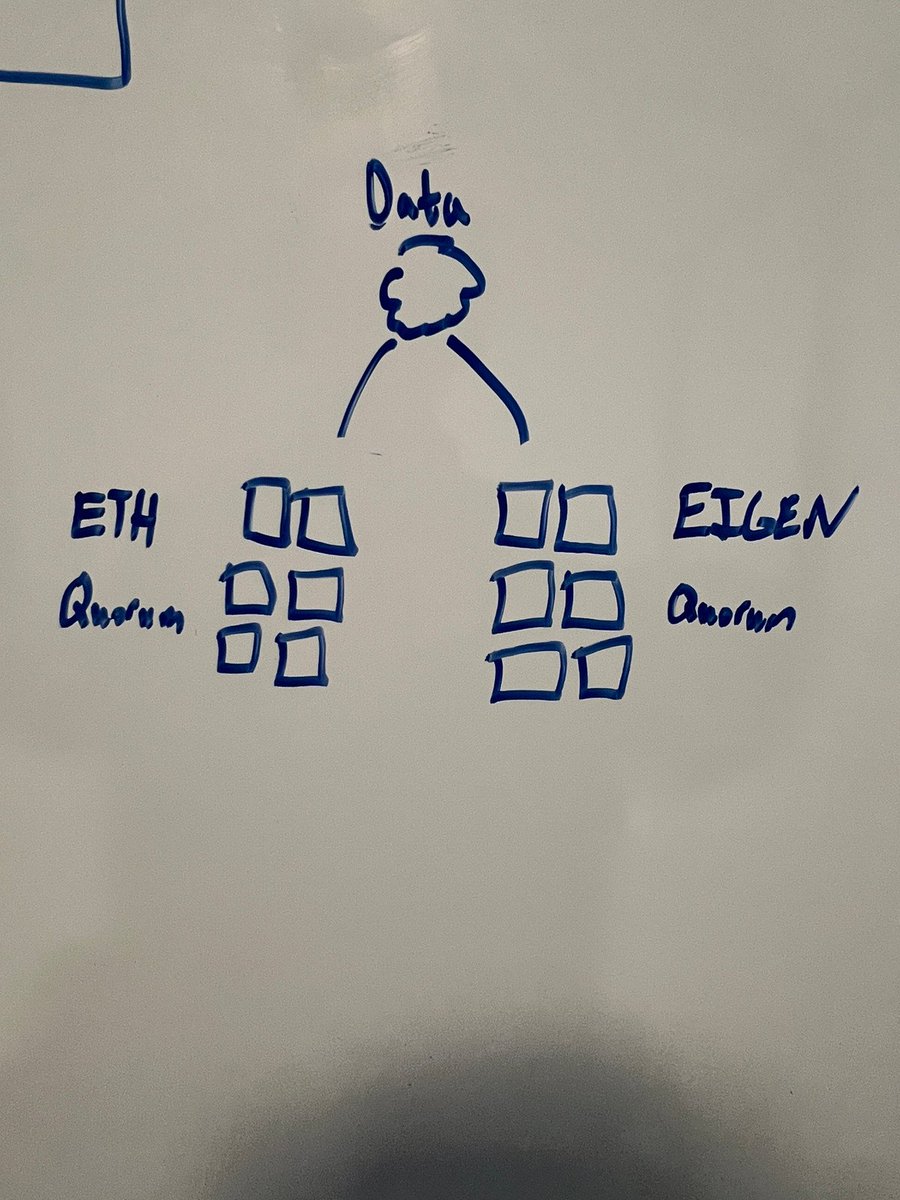
TLDR - increases the cost to corrupt/sybil resistance, EigenDA's ETH quorum is one of the default two (ETH & EIGEN) which adds to the cost to corrupt that with the other quorums the blob was sent to (4.3M ETH / 1/3 = 1.43M ETH = ~$2.66B) EIGEN quorum.
Disincentives be supplemented with Proofs of Custody slashing.
~~~~
Sure, in general these blockchains/distributed systems have the concept of a safety threshold.
The safety threshold essentially refers to minimal threshold of participants in the network to be honest. For ETH or other blockchains secured by common consensus algorithm's (e.g. Cosmos's CometBFT)
The network remains secure as long as at least 2/3 of validators (weighted by stake) are honest
The inverse of this means controlling 1/3 of the network can lead to malicious or incorrect action.
So..
1/3 of the stake ~= the cost to corrupt the system or DA network in this case.
EigenDA structure roughly looks like this
- All validators have stake to participate in EigenDA and opt into quorums, min is 32 ETH in the ETH quorum
- Data is sharded across the network of validators
- Validators validate, store data and send signatures back
- Once a sufficient threshold (above this safety threshold across ALL quorums) you have an attestation the data is stored and will be stored
So for EigenDA this means the safety threshold is ETH Quorum
- 4.3M ETH * 1/3 = 1.43M ETH ~$2.66B (@ $2,000 ETH)
- EIGEN quorum value
so essentially you'd require >$2.66B to corrupt the ETH quorum on EigenDA. If we add Proof of Custody slashing that would be an increased disincentive.
So when we refer to economic security we often blend in discussing properties we want to protect like this safety threshold.
Hope that gives you a bit of detail on how EigenDA and others work with economic security.
1
25
2,157
10 Mar 2025
If Etherereum ever has more blob capacity than Celesia, I will eat a broom.
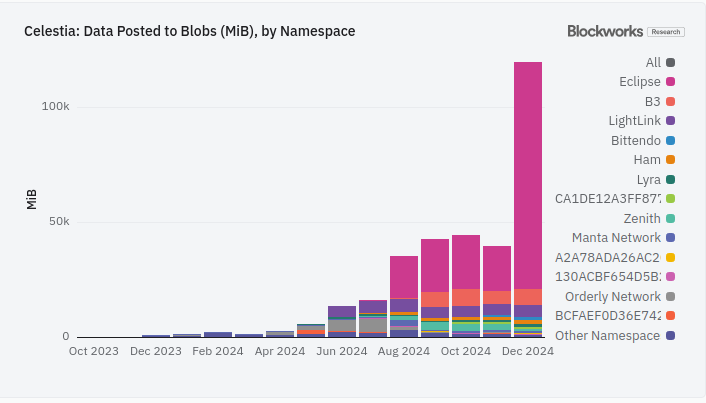
Realistically, this will never happen because of many, many reasons. You must realize that Celestia is already past Ehereum's full dank-sharding throughput today without including the throughput upgrades that will happen on Celestia this year.
I am happy to take on a bet for this on any timescale.
10 Mar 2025

premium DA thesis:
using native means synchronous composability and native execution, which means Ethereum can charge a small minimum base fee on blobs
then we crank capacity (more blobs than Celestia remember) and Ethereum rebundles all the things
12
8
84
16,718
1 Mar 2025
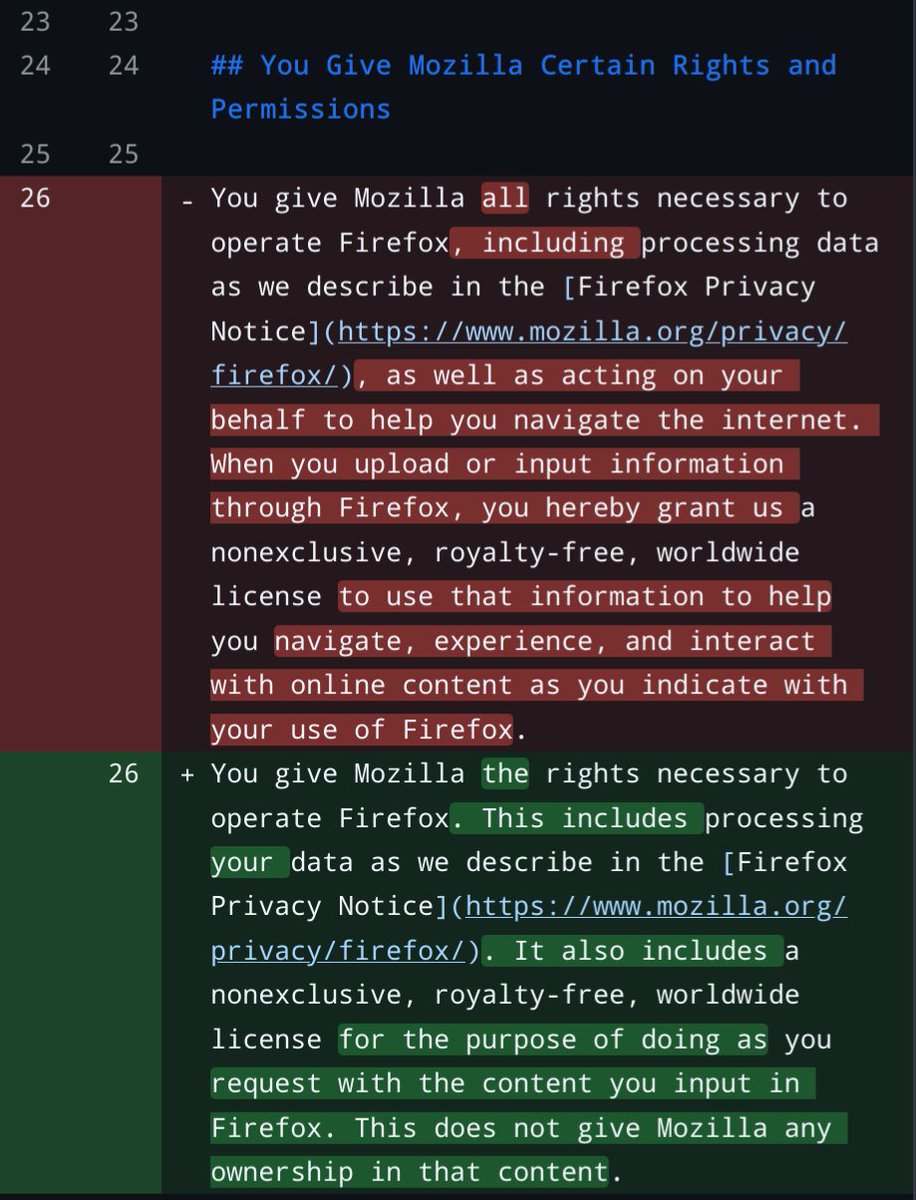
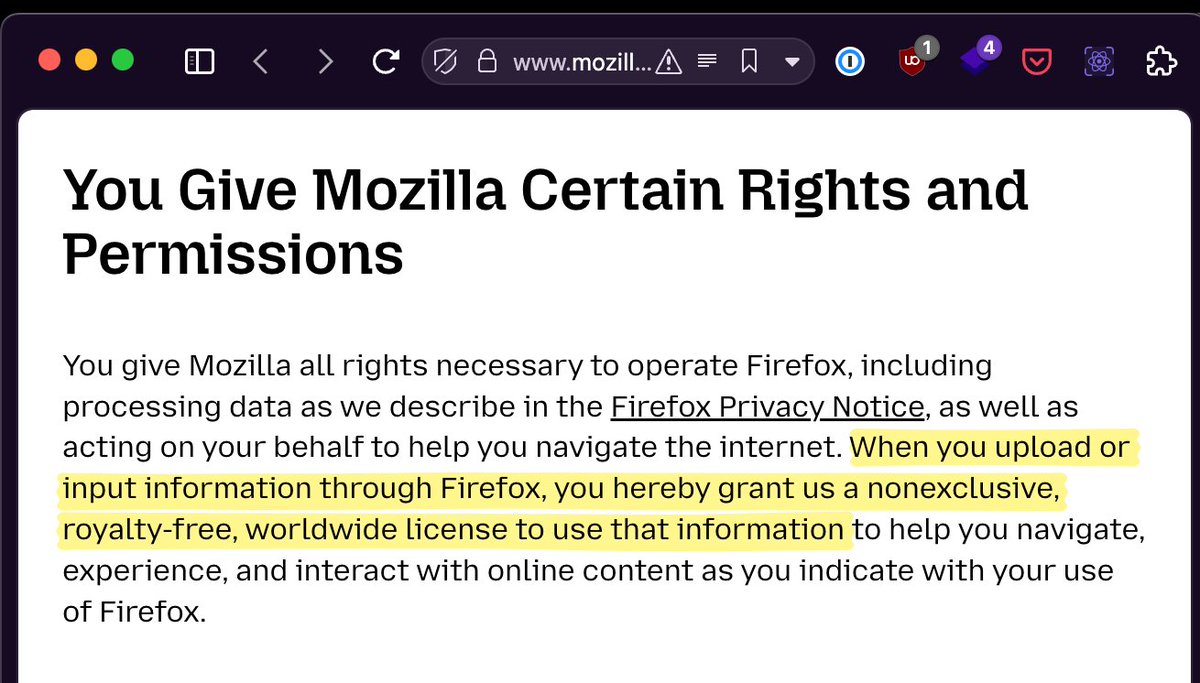
An hour ago Mozilla changed their TOS again.
After the backlash they are clearly backtracking and trying to reduce the scope of the previous change.
Is it enough ?
27 Feb 2025

Mozilla just changed the Firefox TOS. If you're a privacy person, might be time to move off.
Community note
This is now outdated. Mozilla updated the Terms of Use to be more clear:
It also includes a nonexclusive, royalty-free, worldwide license for the purpose of doing as you request with the content you input in Firefox. This does not give Mozilla any ownership in that content.
blog.mozilla.org/en/products/fi…
2
9
1,213
23 Feb 2025
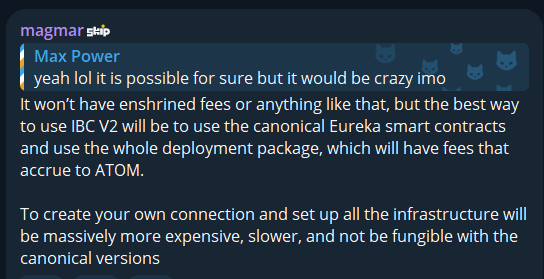
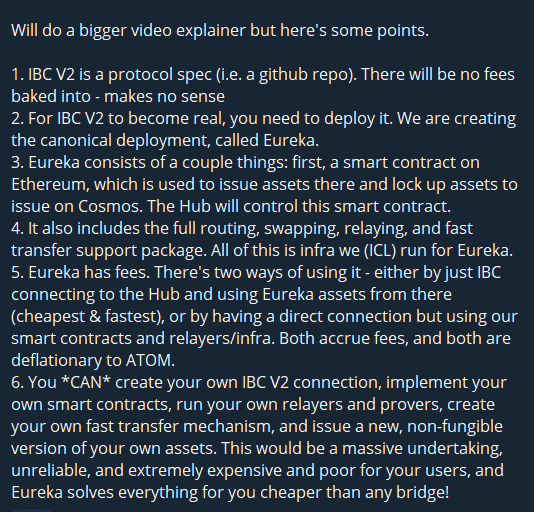
I don't like this. This makes the development of IBC V2 completely dependent on the hub and what the hub wants to do. Happy for the hub, but that dependency will kill the adoption and distribution that an open standard needs.
It makes IBC ngmi if you don't want to depend on the hub.
unlucky honestly

12
2
45
18,745
21 Feb 2025
This is what I am talking about.
In Bitcoin's early days, running a full node embodied the core principle of 'don't trust, verify' - users independently validated their transactions.
Smart contract chains changed this. Ethereum's size forced users to depend on RPC providers, reinstating the trust we aimed to eliminate in the first place.
They are running it back to the original ethos
This means that with prism light nodes, you can verify not only Celestia but also the correctness of prism itself
21 Feb 2025

Don't trust, verify.
Announcing the first-ever in-browser ZK rollup light node, with @succinctlabs and @celestia underneath ✨.
Open prism.rs to start directly verifying the network— providing security to you, @celestia, and @prism_xyz.
4
1
29
1,661
20 Feb 2025
Cronies
20 Feb 2025
we need a slur for committees
1
10
475