Autonomous science. Founder and CEO at Potato (@readysetpotato). Former neuro at Brown, NIH, UCSD.
Joined October 2012
- Tweets 1,846
- Following 1,074
- Followers 1,400
- Likes 7,362
95 Photos and videos

Pinned Tweet

16 Apr 2025
We're building agents for autonomous science. Closed-loop, faster iterations, more discovery, less time. Massive human scientist AI scientist collaboration.
6
14
118
61,251
Jun 12
Mind blown! This is a big deal
Jun 11

Together with UC Berkeley we are announcing the laser phase plate - a breakthrough in atomic resolution imaging. This is the brightest continuous wave laser in the world, 100 million times the intensity of the surface of the sun.
Phase contrast plays an important role in microscopy, but it was thought close to impossible for electron microscopy, where it would require interfering with an electron beam. Holger Mueller and Robert Glaeser proposed exactly this using a standing wave laser. It has taken over 15 years to make this a reality. Biohub partnered with UC Berkeley and Mueller to support this work and to engineer and build the technology.
Contrast has been the critical barrier to achieving atomic resolution imaging of the cell. In cryo-electron tomography, a cellular imaging technology that uses electron microscopy, the low contrast makes it impossible to resolve anything but the largest proteins within their cellular context. The laser phase plate removes that barrier.
With advances in AI this breakthrough in contrast will start to open up a new frontier in structural biology, that will allow us to see the molecular machines of the cell, and how they assemble into far more complex and dynamic systems, and understand how they work.
1
1
263
Nick Edwards retweeted

Jun 10
Scientific research is fundamental to advancing civilization and helping people globally to solve the most critical problems, from medicine to materials, from brain science to physics, and much beyond. This is only possible when scientists have access to the best tools of the time to conduct scientific research, including having access to AI-based tools.
119
467
3,075
189,566
Jun 8
What we’re up to @readysetpotato
Jun 7

Back in my time as a scientific consultant, I was appalled by how little the scientists in government labs knew about the instrument they were using.
There is a huge opportunity to leverage AI for laboratory instrumentation—not just automation but the full stack from design of experiments, through troubleshooting, to data analysis.
1
1
5
780
Nick Edwards retweeted

Jun 7
Back in my time as a scientific consultant, I was appalled by how little the scientists in government labs knew about the instrument they were using.
There is a huge opportunity to leverage AI for laboratory instrumentation—not just automation but the full stack from design of experiments, through troubleshooting, to data analysis.
4
18
1,858
Nick Edwards retweeted

Jun 6
Who is out there digitizing biology? Request for startups.
86
21
276
37,579
Jun 6
When do all the AI labs become real labs
Jun 5

New Anthropic Science Blog: Making Claude a chemist.
To manipulate a molecule, chemists first need to understand its structure. Their main tool is NMR spectroscopy.
We found Opus 4.7 matches—and on some tasks beats—dedicated NMR software. Read more: anthropic.com/research/makin…
1
2
785
Nick Edwards retweeted

Today every biotech reply guy is talking about assay speed bottlenecking progress, meanwhile the average person running assays is making as much as a buckee's manager and has zero agency. This is what we call an arb.
5
6
116
13,064
Jun 2
Living in the future, but now the bottleneck is executing experiments to test these hypotheses. We're on it

We believe AI can be a dedicated research partner to help discover the next breakthrough.
Enter Co-Scientist: our latest Gemini-based multi-agent system that can generate, debate and evolve novel hypotheses for complex scientific problems 🧵
1
4
14
2,287
Nick Edwards retweeted

May 26
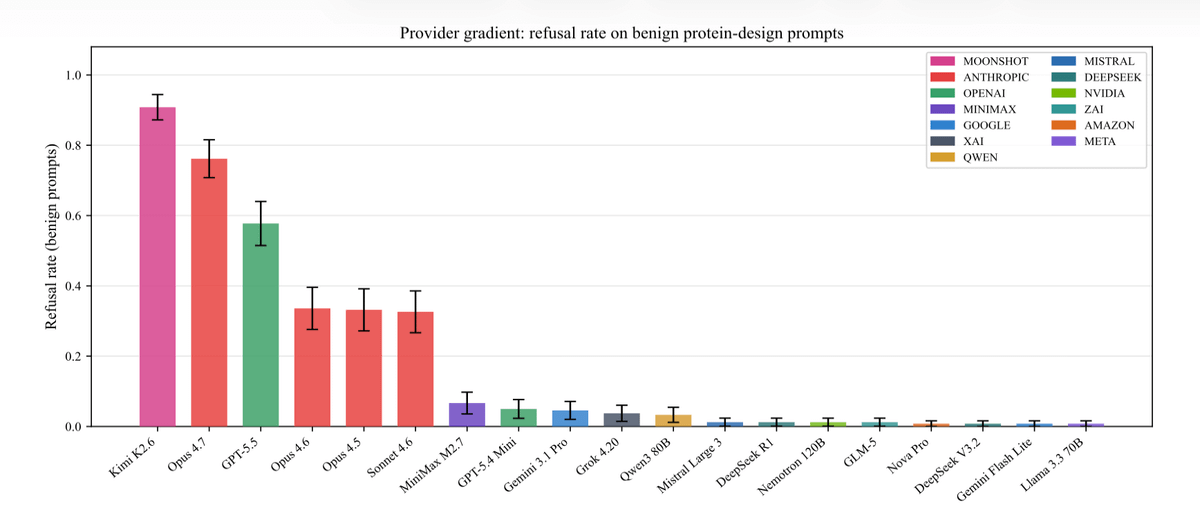
How do the frontier models compare on biosecurity?
We’re releasing RefusalBench, an open benchmark by @AppliedSciAI for auditing frontier model refusal accuracy across biological risk tiers.
Our goal was to test which frontier models block legitimate research prompts the most often and pinpoint the patterns most likely to trigger a false refusal.
We used RefusalBench to test 19 models on the same biological prompts and found a wide gap (94.5 pp) between the least and most restrictive models.
• Anthropic models are ~21X more likely to refuse than the non-Anthropic baseline
• Grok 4.20 is the best-calibrated model - catching 81.7% of dangerous prompts while refusing 3.0% of benign ones
• High refusal rate ≠ high safety - the highest-refusing models aren't the best at catching genuinely dangerous requests - they're just refusing more of everything.
You can now test your own orchestrator model with RefusalBench and find which subdomain-tier intersections will silently kill your pipeline before it happens in production. 🧵
3
12
27
9,622
May 30
Started an AI company with 3 kids and little to no savings at the time.
27 Feb 2023

if you really believe AI timelines are so short why don't you do [insane thing that doesn't make any sense]?
2
1
5
890
Nick Edwards retweeted

May 27
At @Biohub, our goal is to build models that accelerate scientific discovery and progress toward the cure to disease. We’re releasing all of this under MIT license allowing commercial and non-commercial use.
Read more here: biohub.ai/esm/protein/
2
32
173
29,980

May 9
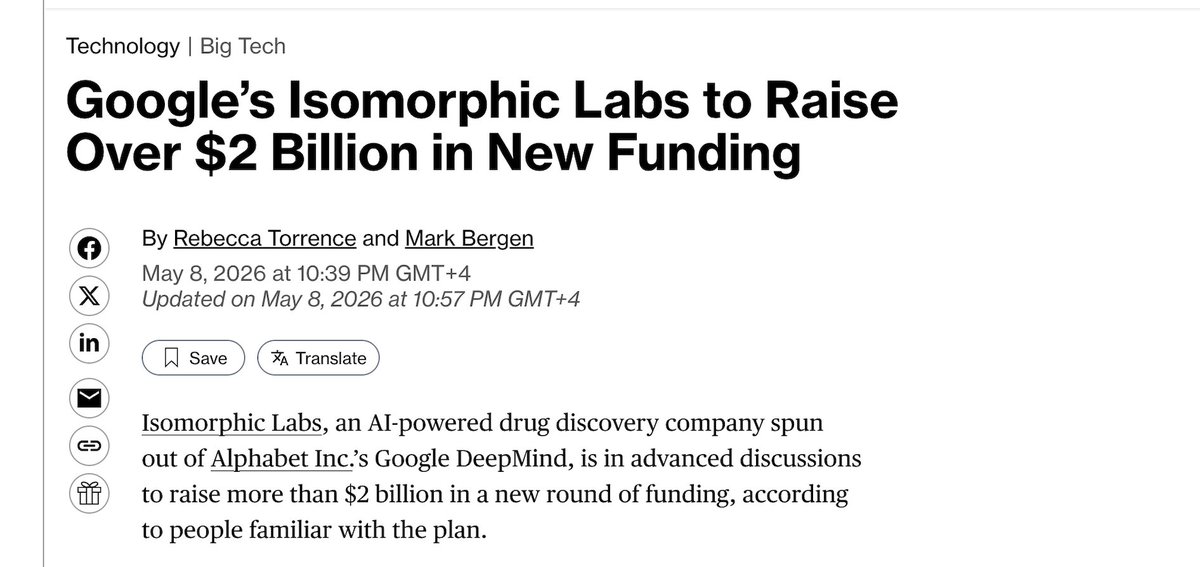
All signs point to yes

in the next 3 years, every major AI lab will spin up its own bio arm and in-house wet labs.
biology is the next big bet in AI after code
pay attention.
1
6
710
Nick Edwards retweeted

11
25
114
31,726
Nick Edwards retweeted

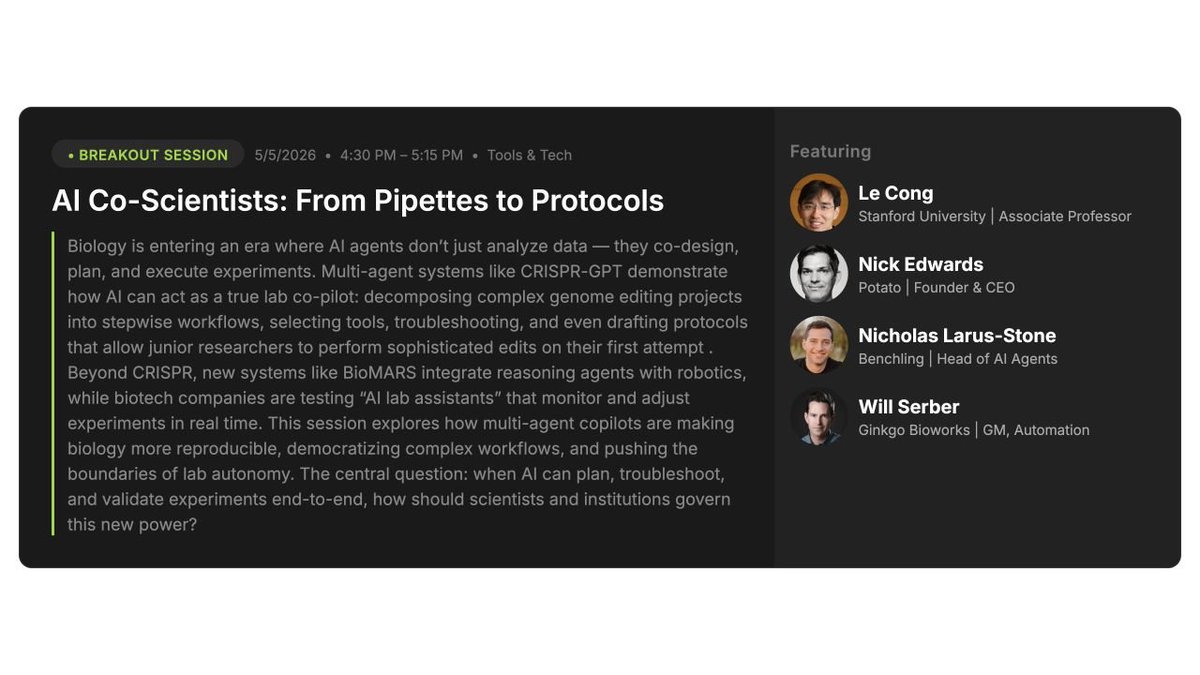
Looking forward to discussing AI co-scientist and lab of the future with @Nick___Edwards Nicholas Larus-Stone, George Peabody and a great panel moderated by @AnnaMarieWagner at SynBioBeta, and thanks @johncumbers and @ivanJaubert for organizing and highlighting this session!
Hope to see many old and new friends next week in San Jose. @SynBioBeta
#ai4science #synbiobeta #sanjose
1
5
31
28,759
Nick Edwards retweeted
Apr 29
Scaling laws are powering AI. It’s time to scale biology.
Today we’re launching the Virtual Biology Initiative to generate the data to unlock scaling laws in biology and build accurate predictive models of the cell.
Digital representations of proteins are already expanding our understanding of life at the molecular level, and accelerating the design of molecules and medicines. Accurate digital representations of the cell could reveal the mechanisms that are responsible for disease, and show how to reverse them.
The protein data bank, and worldwide repositories of protein sequence biodiversity were created through decades of work by the scientific community. The advances in artificial intelligence for proteins would not have been possible without them.
The cell is orders of magnitude more complex, and we will need to create the data in just a few years rather than decades.
This will require a coordinated global effort. We're partnering with Broad, Wellcome Sanger, Arc, Allen, Human Cell Atlas, Human Protein Atlas, NVIDIA, and Renaissance Philanthropy.
Biohub is contributing to this effort as both a funder and a builder. We are developing microscopy to observe millions of cells in living organisms, and cryo-ET to resolve the cell in atomic detail. We're building instruments that expand the range of modalities and parameters that can be simultaneously measured. We’re developing molecular, cellular, and tissue engineering to create models of disease and design interventions.
The data we generate will be available to the worldwide scientific community.
We’re also committing $100M over the next five years to support work beyond Biohub.
We invite other scientific teams and funders to join.
Link: biohub.org/news/virtual-biol…
37
138
745
130,134
Nick Edwards retweeted

Apr 23
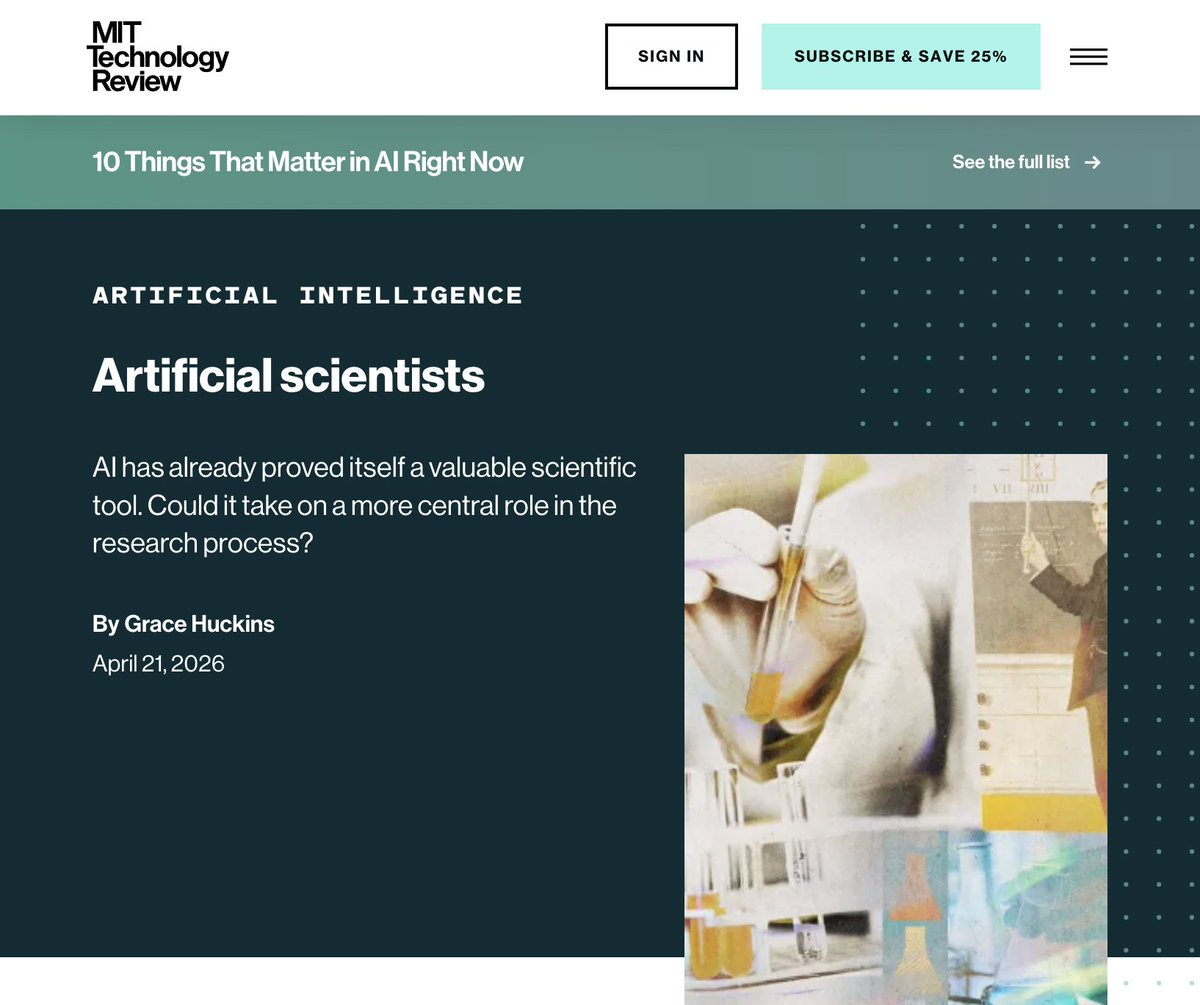
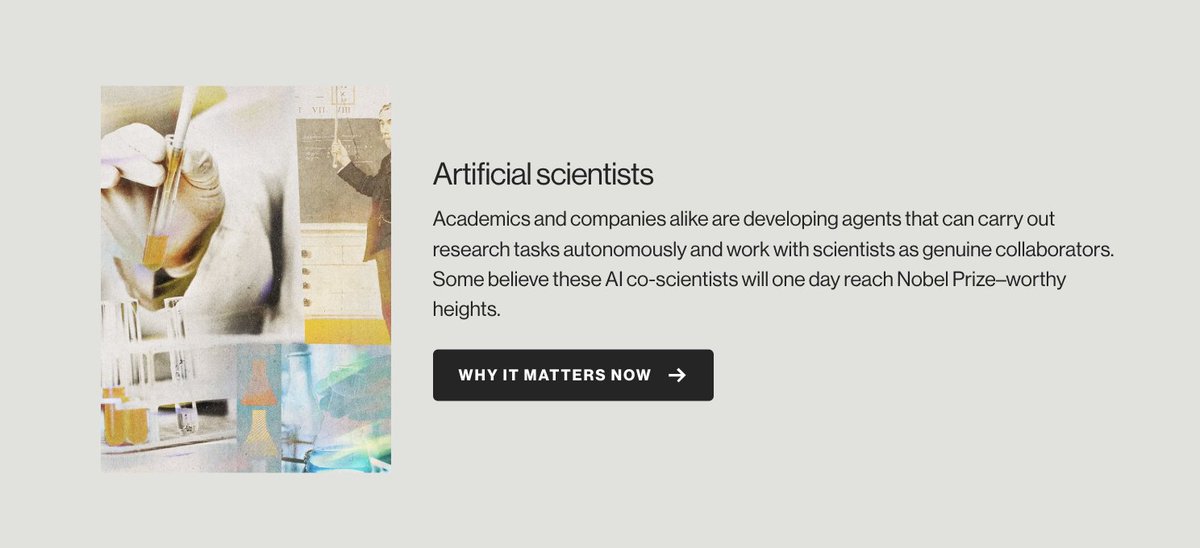
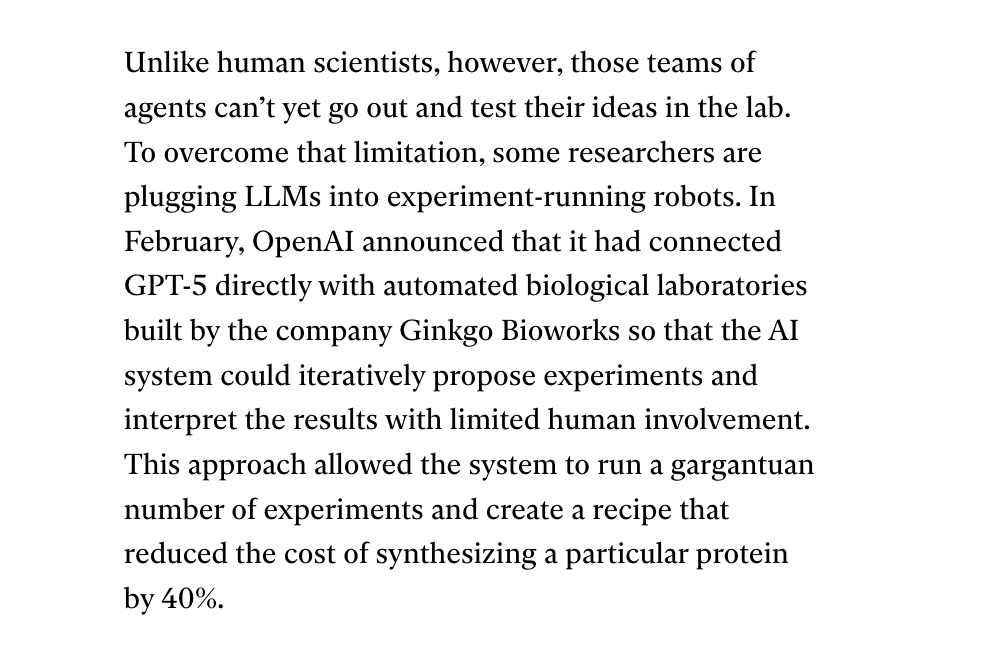
AI scientists are one of @techreview’s top 10 things that matter in AI right now. Read about how the autonomous lab plugs into AI-powered science today, including our work that reduced the cost of cell-free protein synthesis by 40%.
Story by @grace_huckins: hubs.la/Q04dclGV0
1
11
37
2,562
Nick Edwards retweeted
Apr 23
I want to see 1000 application this month to @BoostVC that are completely focused on Bio-Security. We have yet to find an investment here, and I think its a monster category.
We will invest $500k.
Bio-Security will get preferential treatment this month: boostvc.fillout.com/t/ks1Xwg…
14
10
142
18,447
Nick Edwards retweeted

Alex on why AI drug discovery companies need to generate novel data to succeed:
"AI models based on the research that's available is a lot of garbage in and garbage out."
"A lot of the recorded literature is actually incorrect. There's been tons of studies that show if you go try to replicate the experiments that are in the literature, you don't even get the same results."
"The AI companies that I believe are gonna be most set up for success are the companies with a novel way to generate science tokens that don't exist in the public domain."

Alex Karnal (@alex_karnal) is the most talented bio and healthcare investor I've ever met.
He's spent 20 years in the industry and says 2025 was the single most exciting year he's seen. The start of a once-in-a-lifetime, trillion-dollar revolution in public health.
He explains how few people realize we already have the medicines to prevent our deadliest diseases. The problem is that almost no one takes them.
There's a population of people born with a mutation that means their bodies don't produce a protein called PCSK9. Their lifetime risk of cardiovascular disease is 88% lower than yours. Pharma turned that genetic advantage into a drug. It's been approved for years, but the number of people taking it is still vanishingly small.
Partly because high cholesterol is a silent killer. You feel nothing, right up until you have a heart attack. And partly because the health system makes it punishingly hard to stay on a preventive drug like a PCSK9 inhibitor. In other words, the medicine works, but the system around it doesn't.
That's what's starting to change, and in this episode, Alex explains why.
We discuss the "health stack" he believes can add a decade to most lives, why oral GLP-1s are breaking every adoption record in pharma, peptides and citizen pharmacology, and what AI is doing to drug discovery.
I wish I had an "Alex" for every interesting topic. We've been having versions of this conversation for over five years, and every single one is as clear and as useful as this one.
Enjoy!
Timestamps:
0:00 Intro
1:00 The State of Modern Medicine
5:00 Designing the Modern Health Stack
12:17 The GLP-1 Inflection Point
19:18 The Biological Mechanisms of GLP-1
30:36 Overcoming Frictions in Healthcare
34:19 Cardiovascular Disease
44:04 Addressing Alzheimer's
47:04 The Future of Cancer
57:33 Drug Discovery
1:05:25 AI and Scientific Super Intelligence
1:14:40 Citizen Pharmacology and the Peptide Movement
1:18:13 Background and Career Journey
1:31:09 Braidwell's Investment Approach
1:33:30 The Kindest Thing
17
39
255
126,305
Apr 18
Nice heuristic
Apr 18

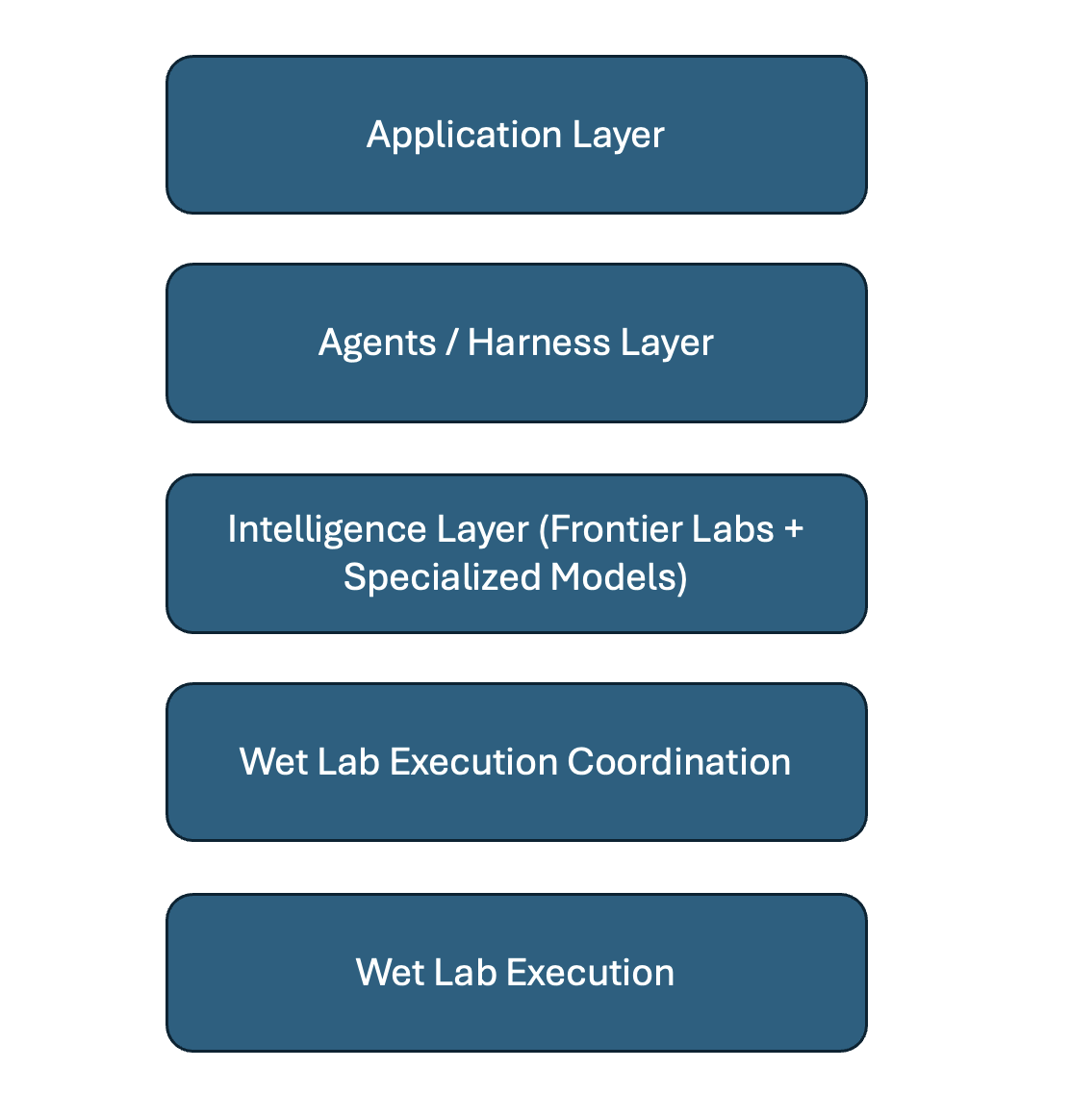
**the emerging AI native life science R&D stack**
the key question from mid 2025 til recently was whether frontier labs were actually serious about building products, capabilities, and orgs in AI x drug discovery or they were using it for marketing purposes in pursuit of ever larger rounds of funding.
fair q when in a few week stretch in 2025, sam altman, demis,and dario all said that one of the biggest benefits of AI for humanity would be huge acceleration of tx development ("dozens of drugs in a decade!") - cue exasperated groans from the trad bio section of the peanut gallery
a few cards have flipped in last few weeks:
OAI: released GPT-rosalind, a life science research model, first vertical specific GPT
Anthropic: acquired Coefficient bio to build biotech infra and a rumored bio model also dropping soon
as the frontier labs' strategy in the space has become clearer, so too has the *AI-native life science R&D stack*
a few comments on each layer of this 5 layer cake, starting with the middle:
Intelligence Layer (Frontier Specialized Models) ~ Ant, OAI, GDP all in running; will proprietary data end up being *the* differentiator? and if so, who actually has access?
Wet Lab Coordination ~ speaking of proprietary data, can't get it at scale without some interface layer to the actual wet lab execution apparatus. in life sciences, that workflow is super outdated, phone calls, Excel, fax , PDFs, all just archaic. nearly no one has an API.
are the frontier labs interested in tackling the long tail of assays and CROs that would need to be wired into a real wet lab coordination layer? nothing to suggest they will right now — but they are hungry for capturing value up and down the chain
AWS Bio is first green shoots that another player will operate in this space but reviews on the ground have not been great - this may be the grittiest but also most unappreciated oppty in the stack
Wet Lab Execution ~ life sciences has a massive long tail of CROs, and given this is where the actual proprietary data gets generated, so this layer can be a genuinely differentiating factor
the interesting topic to watch: are any CROs going to become AI-native and start moving *up* the stack — doing wet lab coordination themselves, or perhaps even becoming preferred data providers to frontier labs?
Early movers like Gingko and Adaptyv are making some noise, but this has to be a topic that the forward-thinking folks running AI strategy at Thermo, Wuxi, and others are thinking about
Agents / Harness Layer ~ sitting on top of intelligence layer, lots of new startups have jumped into this space trying to coordinate models across life sciences specific workflows
big risk looming over all of them is whether frontier labs will simply subsume this into their own product roadmap. Anthropic x Coefficient Bio is an ominous signal (but maybe $ 400M acqui-hire in 12 mo is an outcome that everyone involved is ok with)
Application Layer ~ Benchling is the big gorilla here but if "attention is all you need" is *truly* all you need, the UX / UI with scientist layer becomes critically important, and potentially the most interesting place for a shake-up
frontier labs could still move in. and new form factors could emerge enabling new startups. physical AI could change the whole workflow
additionally is a notebook entry in a digital ELN even the right atomic unit of work in an AI-native workflow?
finally, stepping outside the stack, the looming question that no one has fully answered yet - these are all *infrastructure* plays. what will the truly AI-native therapeutics company actually look like? the actual value creation that comes out of this stack?
how will those AI-native biotechs look different in shape, value creation profile, and capital intensity compared to the biotechs we know today?
stay tuned.
1
3
478