
Mt A ‘83. Outdoor guy, Maths teacher. Love photography, driving anywhere & listening to music. Insta @patgrew. driveandshoot.blogspot.com/?…
Joined August 2012
- Tweets 16,254
- Following 1,111
- Followers 1,106
- Likes 22,554
2,277 Photos and videos







Pat Grew retweeted

Jun 12
Ontario's new one-year teacher training program includes 80 practicum days thestar.com/news/canada/onta… via @torontostar #onted
2
12
21
7,422
Pat Grew retweeted

Jun 12
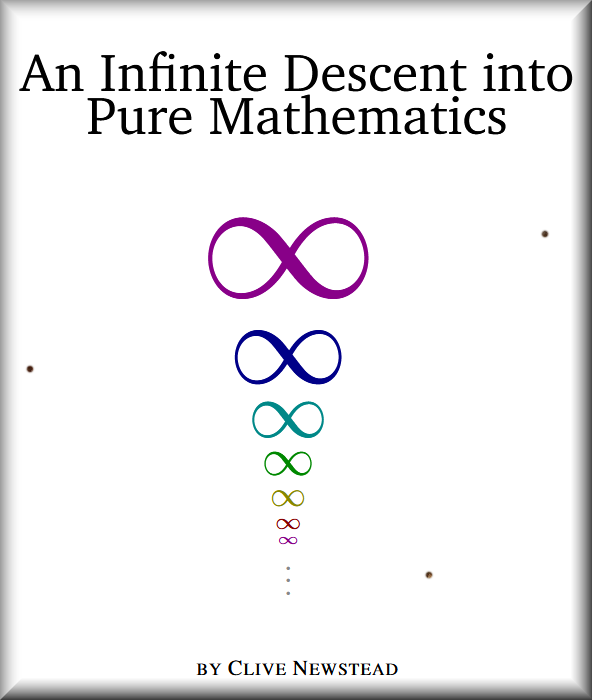
FREE Math Book. 630 pages. A gateway into the architecture of infinity, proof, and the future of human thought.
"An Infinite Descent into Pure Mathematics" by Newstead. Topics: prime numbers, logic, sets, functions, induction, relations and infinity, mathematical proofs, number theory, combinatorics, real analysis, infinite cardinality, and probability theory. Undergraduate-level textbook. "I am grateful to the 1000 students who have already used this book to learn mathematics. The goal of this book is to help the reader make the transition from being a consumer of mathematics to a producer of it."
Link: infinitedescent.org/
3
60
301
12,007


Yup. Well said.
Jun 3

Angela Duckworth is a psychologist who proved that talent is wildly overrated and grit predicts success.
She revealed 10 daily habits that build grit that schools never teach you.
1) Adding the word "yet"
31
Pat Grew retweeted

Thanks for the really kind words. I carry the reaction to that article with me every second. I learned that people need to feel understood. Imagine this- One woman told me her friend died by suicide and referenced the story it in the note she left behind. Here is what I wrote. Broke my heart to reread it. tsn.ca/nhl/depression-and-my…
#SickNotWeak

I don’t know if your article for your friend Wade Belak is archived on the TSN site, but I read it annually and anytime I’m feeling like disappearing into myself
Thanks for being such a powerful voice Michael 💜
3
5
69
12,396
Pat Grew retweeted
My rules for the "check in".
1. Ask. Regularly. Don't quit after one "I'm fine."
2. Explain why you're asking. Give specific evidence as to why your concerned. IE. "you dont seem like yourself, and here's why..."
3. Ask rhetorical questions like "I want to know if you're mentally okay. its fine if you don't want to answer me- but answer yourself, and be honest."
4. The key question for all of us: Does your mental health allow you to live your best life?

@heylandsberg These past two days athletes are reminding us to “check on our teammates and check on each other”. What does “check” look like, Michael? I don’t want to miss anything.
Thank you. - PG
7
37
155
29,414
Pat Grew retweeted

May 26
Thank you @WabKinew Too few have the backbone to call out @ABDanielleSmith lies. From a grateful Albertan.
104
488
2,363
14,507
Pat Grew retweeted

May 26
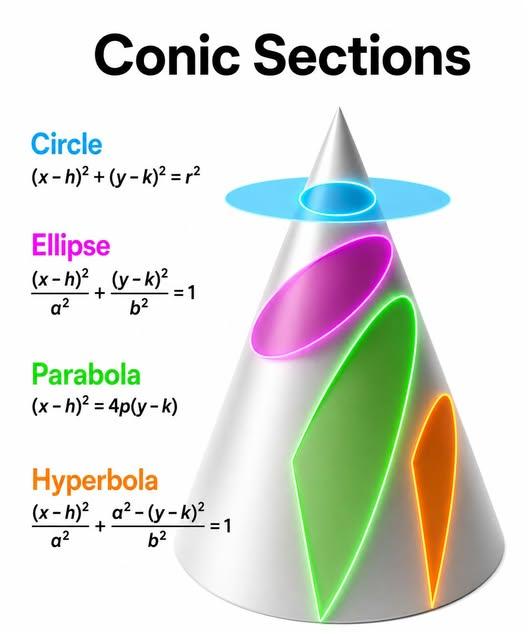
✨💥✨💥Conic Section✨💥✨💥
👉✨#Circle
A circle is the set of all points equidistant from a fixed center.
Daily_life_application: Circles appear in wheels, coins, and clocks—symbols of motion and continuity.
👉✨#Ellipse
An ellipse is formed when a plane cuts a cone at an angle, creating a stretched circle.
Daily life application: Elliptical shapes define planetary orbits and whispering galleries, where sound travels smoothly.
👉✨#Parabola
A parabola represents the path of a point moving so that its distance from a focus equals its distance from a directrix.
Daily life application: Parabolic mirrors and antennas focus light and signals precisely, enhancing communication and vision.
👉✨#Hyperbola
A hyperbola consists of two open curves formed when a plane cuts both nappes of a cone.
Daily life application: Hyperbolas guide navigation systems and describe the shape of cooling towers and radio waves. Ẩn bớt
4
94
405
6,672
Pat Grew retweeted

May 27
You know π belongs to circles… but what about e?
Imagine a magical bank offering 100% interest per year. You deposit $1, wait a year, and walk away with $2. Simple.
But what if the bank compounds your interest twice a year—50% every six months?
After 6 months: you have $1.50.
Now you earn interest not just on $1, but on $1.50.
By the end of the year: $1.50 (1.50 × 0.5) = $2.25.
You just made more than doubling your money.
Naturally, you say: “Do it faster.”
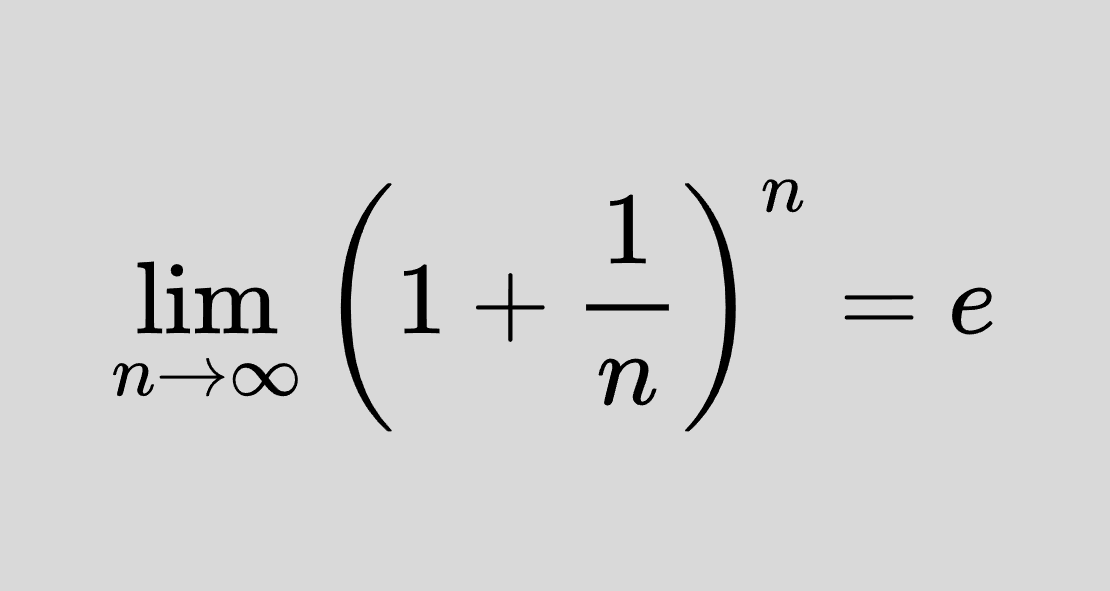
Daily. Every second. Continuously. Mathematically, this becomes:
(1 1/n)ⁿ
As n (the number of compounding periods) grows larger and larger, something incredible happens…
You hit a limit.
No matter how fast you compound, the value approaches 2.718…
In 1748, Leonhard Euler recognized this number as a universal constant and named it e.
And no—it wasn’t named after him. It simply emerged from the mathematics of growth itself. From finance to physics, from biology to probability—e is everywhere. Not bad for a number born from compounding interest.
19
112
634
25,632
Pat Grew retweeted

This is the most important, most brilliant, and most well written thing you could read today.
If you’re an Albertan, or a Canadian, and read nothing else, fine. Just read this.
Goodness me. Every word. readtheline.ca/p/clarke-ries…
94
467
998
129,607
Pat Grew retweeted

Apr 23
When Americans get inspired by Canada’s Mark Carney…
while some parasites here attack him and their leader says Carney doesn’t understand economics!!!
10 min worth watching. Inspiring.
🇨🇦
Apr 22

🟥 MSNBC’s (MS Now) Lawrence O’Donnell is one of the best to ever do it. 👌🏼
Nobody can dispute that.
In this recent clip, one of his BEST EVER segments; he talks about Canada’s resistance to Trump’s bullying attempts and deranged attacks.
He praises Prime Minister Mark Carney and Canada - in that calm, stirring and deeply powerful way he uses to uniquely communicate truth....
🔳 “And when you listen, in a moment, to what the Prime Minister said, KNOW that you are listening to the international sound of resistance to Donald Trump. And know that you are listening to the sound of victory, over Donald Trump. A sound that will be HEARD in this country.
And listen to what that victory FEELS like in that audience of Canadians, who never expected to be rising up against an American Presidency...”
15
107
377
19,893
Pat Grew retweeted

Apr 21
mathnet.csail.mit.edu/
This is a gold mine for all #math lovers. A huge collection of Olympiad-level math problems. @MIT
10
312
1,703
94,125
Pat Grew retweeted

I’m a Conservative… but I’m begging us to get serious. I’m begging on my knees for someone else to write his speeches.
We can disagree with Mark Carney all day long on policy. Fair game.
Necessary, even.
But saying the guy has an “illusion of knowledge” is like saying Connor McDavid has an illusion of being able to skate.
We don’t win by pretending competence is fake.
We win by proving we can do better.
Apr 16

Pierre Poilievre: "The gap between Mr. Carney's boasting and his results is perhaps unprecedented. As Daniel Boorstin said, 'the greatest enemy of knowledge is not ignorance, it is the illusion of knowledge.'"
696
363
3,062
341,159
NCAA now competing with NBA salaries to “keep one and done’s” in college.
Apr 10

UConn will soon offer a lucrative NIL package to Braylon Mullins in order to hopefully keep him another year.
Mullins, currently projected as a mid-1st round pick in the 2026 NBA Draft, can earn around $4-5 million annually if he declared.
UConn plans on matching that figure.

61

Food stamps no longer exist in the U.S.
49