
@PepperMaskWell@pettingzoo.co @PepperMaskWell.bsky #IAQ #COVIDAintOver #InRespiratorsWeTrust #Union, #FrenchBelgiumFarmersUnitedAgainstBigAg
Joined February 2017
- Tweets 22,728
- Following 674
- Followers 410
- Likes 98,335
1,897 Photos and videos









Pinned Tweet

5 Feb 2023
How DID I paint up my GVS Elipse elastomeric N95 respirator mask?
🧵

12
16
68
4,351
@PepperMaskWell😷🐟🥅🍉🚜🌻🚜🧑🌾✊ retweeted

11 Aug 2025
Covid and thyroid cancer....
This is more than merely noteworthy
😳😳‼️
Association Between COVID-19 Infection and Thyroid Cancer Development: A Retrospective Cohort Study Using the TriNetX Database mdpi.com/2227-9059/13/8/1933
20
218
614
15,047
@PepperMaskWell😷🐟🥅🍉🚜🌻🚜🧑🌾✊ retweeted

12 Jan 2025
2/Capitalism means 1.9°C and rising: 'even if net-zero emissions are achieved mid-century, mean warming is virtually certain to exceed 1.5°C and has even odds of reaching 2°C with high likelihood of individual years that are at least 0.5°C hotter than 2023'agupubs.onlinelibrary.wiley.…
3
23
135
290,973
@PepperMaskWell😷🐟🥅🍉🚜🌻🚜🧑🌾✊ retweeted

11 Aug 2025
This is insane.
Apparently, Chuck Schumer has based his entire political strategy on an entirely fictional Long Island couple named Joe and Eileen Bailey.
567
2,872
14,620
2,522,650
@PepperMaskWell😷🐟🥅🍉🚜🌻🚜🧑🌾✊ retweeted

27 Jun 2025
The Climate.gov domain has been shut down.
It now redirects to a NOAA Climate landing page.
All the content and tools that used to live on Climate dot gov are gone. Maybe some will find a new life within the NOAA domain, but I won't hold my breath.
27 Jun 2025

Our final updates have been posted to the Climate.gov website, and this will be our final post to our social media channels.

23
168
392
40,930
@PepperMaskWell😷🐟🥅🍉🚜🌻🚜🧑🌾✊ retweeted

18 Jul 2025
Instead of allowing the financiers who blew up the economy in 2008 to continue to spin their roulette wheel chasing short term profit at the expense of everything else, we need to use plain language to call them out
Example: Private equity is equivalent to flipping houses👇
16 Jul 2025

Buy a company using mostly borrowed funds
Extract huge fees
Sell the company at an enormous profit
If that sounds like the formula for a shell game to you, you’re absolutely correct. It’s also the way that private equity does business ineteconomics.org/perspectiv…
2
4
93
19 Jun 2025
Happy Juneteenth! #Freedom
Please submit your comments to keep the CDC providing vaccines, by end of day tomorrow, the 20th.
open.substack.com/pub/people…
12
17 Jun 2025
I've now blocked virus 2 host, because there's no room for their BS.
Putrino Lab gives a damn. They've put their efforts & money where their mouth & their heart are, & that's damn admirable. So are their heroes.
17 Jun 2025

As with most of the harmful #LongCOVID rhetoric that gets occasionally flung in my direction, I was going to ignore this particularly egregious take, but a few members of the community who I respect asked me to respond and this account also chose to sling mud at someone that 1/
1
66
17 Jun 2025
This is a nightmare.
Please read Mike's example, and check out the scan tool linked below.
16 Jun 2025

13) You can find Dr. Sean Mullen's Scan Assist tool here:
tinyurl.com/scanassist
Please share the tool and my example. Thanks!
1
47
@PepperMaskWell😷🐟🥅🍉🚜🌻🚜🧑🌾✊ retweeted

17 Jun 2025
🚨 BREAKING: Trump’s first round of DOGE cuts—which target PBS, NPR, and USAID—may not survive the Senate.
Multiple Republicans, including Sen. Susan Collins, are signaling resistance, per Punchbowl.
Even the GOP isn’t fully sold on gutting public media and global aid while billionaires hoard tax breaks.
30
168
683
20,613
@PepperMaskWell😷🐟🥅🍉🚜🌻🚜🧑🌾✊ retweeted

12 Jun 2025
Link here: amocscenarios.org/?lat=-53&l…
Credits to van Westen’s research group for releasing this as part of their knowledge mobilization work.
2
28
98
2,793
@PepperMaskWell😷🐟🥅🍉🚜🌻🚜🧑🌾✊ retweeted

14 Jun 2025
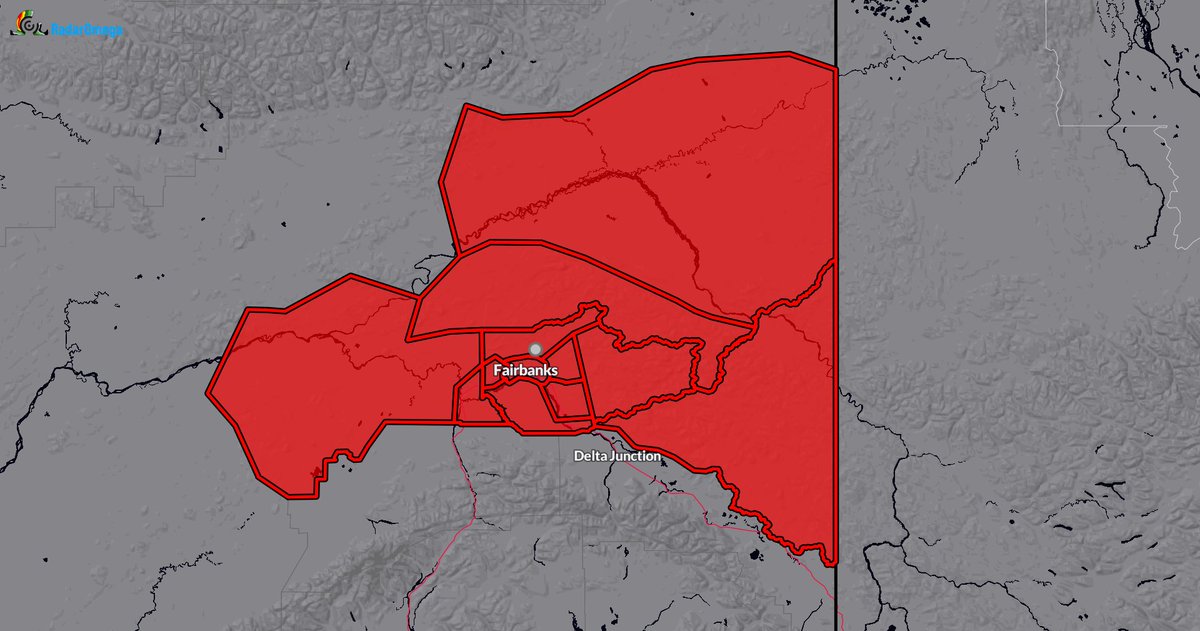
FOR THE FIRST TIME IN HISTORY, A HEAT ADVISORY has been issued in ALASKA!
High temps are forecasted to reach the mid-upper 80s around Fairbanks, Alaska!
139
428
3,152
166,896
@PepperMaskWell😷🐟🥅🍉🚜🌻🚜🧑🌾✊ retweeted

16 Jun 2025
BREAKING: Vance Boelter is in custody. He was arrested minutes ago near Green Isle. Developing story,,,stay with @KSTP for more details.


404
2,716
10,747
1,595,188
8 Jun 2025
Right back to Minneapolis in 2020.
FERFUKSAKES
7 Jun 2025

HAPPENING NOW: It looks like a warzone right now as the American Gestapo (ICE) drive back protesters outside of a Home Depot in Paramount, California (Video: @IRT_Media)
28
@PepperMaskWell😷🐟🥅🍉🚜🌻🚜🧑🌾✊ retweeted

30 Apr 2025
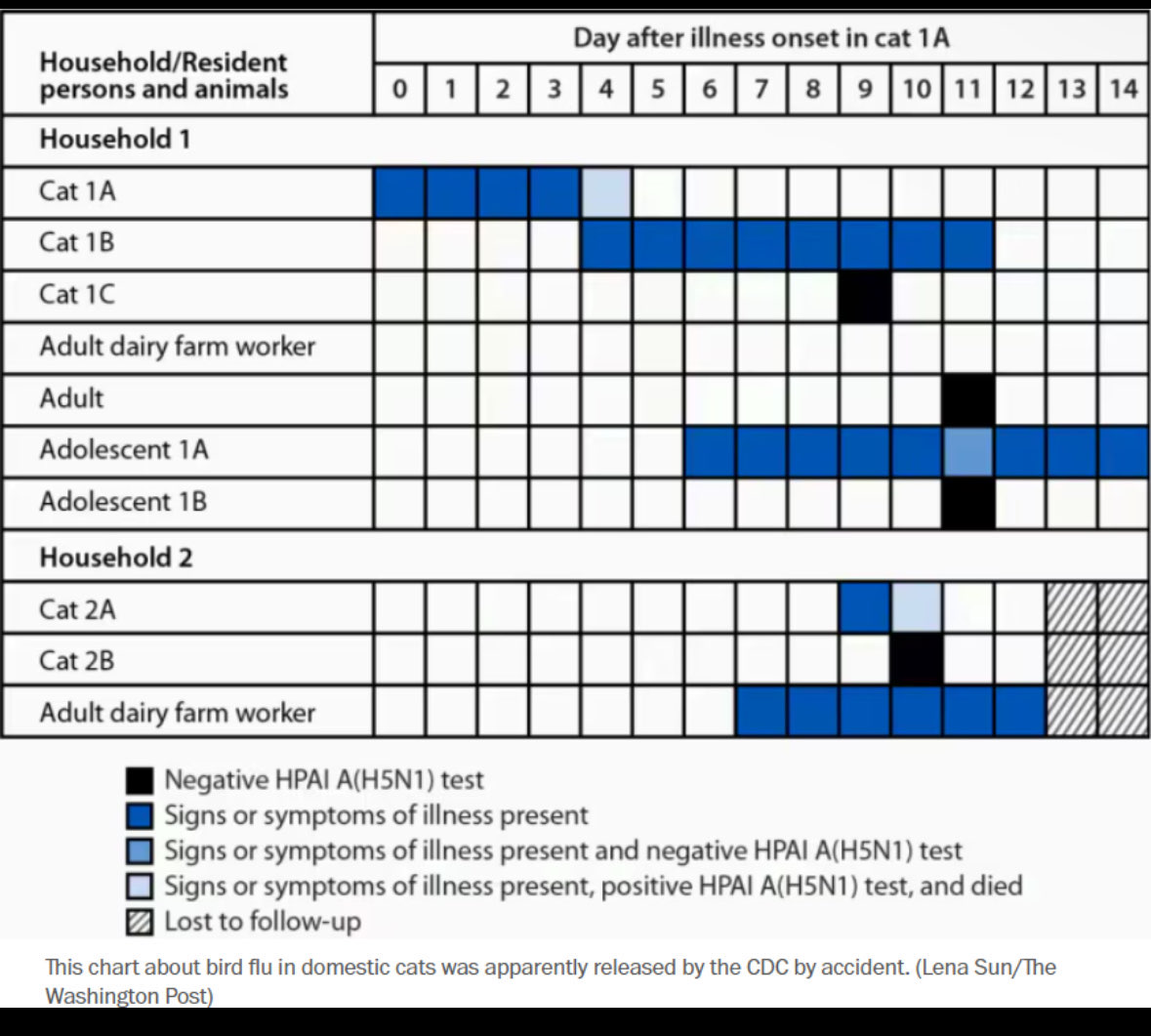
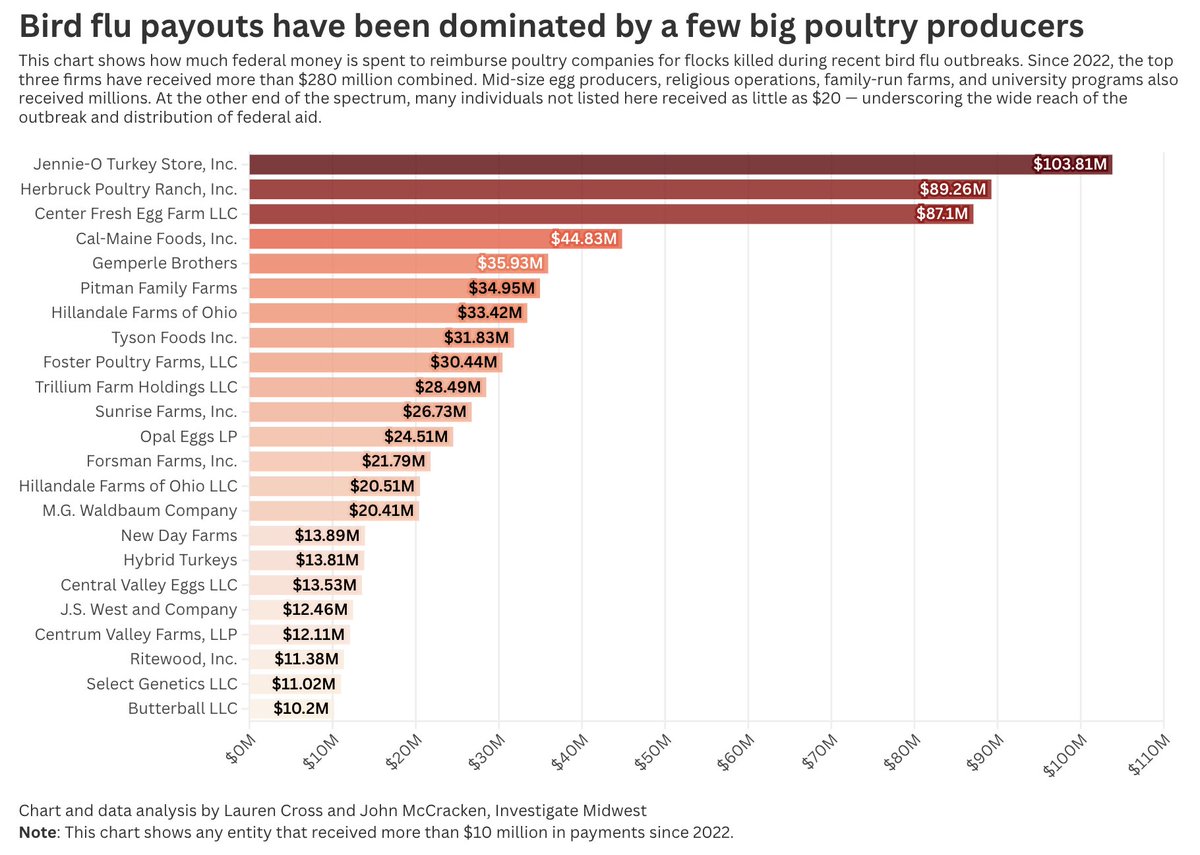
🚨 New Avian Influenza/Depopulation Investigation 🚨
@IMidwest just published a major exposé on the hidden machinery behind avian flu depopulations — and we’re proud to have contributed.
🔗 Underage Workers, Millions of Dollars, and Trucks Full of Dead Chickens: Inside the Business of Killing in Response to Bird Flu
📌 Key findings include:
Underage workers
Behavioral health staff witnessed workers with torn PPE, blood-stained gear, and no interpreters available.
USDA reps were blocked from meeting with farm workers to discuss working conditions.
Workers were handling carts of live chickens and skipping decontamination showers because the water “smelled like dead chickens.”
Herbruck’s Poultry Ranch (McDonald’s egg supplier) killed 2.1M birds using ventilation shutdown, then hauled away 55 dump trucks of carcasses per day during clean-up.
This is exactly the kind of transparency we fight for. Huge thanks to the Investigate Midwest team for digging into this — and to everyone working together to bring these realities to light. 💪🦠
#onehealth #h5n1 #avianinfluenza #birdflu #animalwelfare #childlabor #publichealth #workerjustice #foodsafety #animalrights #vegan
1
45
75
14,488
@PepperMaskWell😷🐟🥅🍉🚜🌻🚜🧑🌾✊ retweeted

17 Apr 2025
6
34
864
@PepperMaskWell😷🐟🥅🍉🚜🌻🚜🧑🌾✊ retweeted

29 Apr 2025
Europe’s Silent Blackout: A Coordinated Infrastructure Paralysis That Rehearsed Collapse
This week, southern Europe crossed a threshold few were prepared to acknowledge. Spain, Portugal, and significant portions of southern France experienced a cascade of failures so broad, so tightly synchronized, and so paralyzing that the first public reaction bordered on disbelief. Power grids failed without warning. Metro systems shut down mid-commute. Rail traffic seized across multiple regions. Airports became stranded islands of confusion as scheduling software collapsed and radar signals briefly vanished from civilian control systems. Traffic lights in urban centers blinked out, reducing entire cities to disordered chaos. Supermarkets, most alarmingly, began rationing water and perishable goods, citing a failure in logistics software and local water pressure anomalies.
The initial explanation offered to a confused public was vague and unconvincing: rare "atmospheric phenomena." These included references to geomagnetic disturbances, solar flare interference, and climatic anomalies that allegedly disrupted high-voltage infrastructure and communications systems. But within a single news cycle, this narrative collapsed under the weight of expert analysis, telemetry data, and the quietly mounting evidence of something far more deliberate.
By the second day, national grid operators, aviation regulators, and cybersecurity watchdogs began hinting—carefully, and in abstract terms—that "foreign interference" could not be ruled out. Yet even as terms like "coordinated cyber events" began appearing in technical advisories, officials remained publicly noncommittal. There was no attribution. No suspect. No confirmation. What we were witnessing was not a traditional crisis—it was a carefully executed dress rehearsal in modern hybrid conflict, and Europe failed the drill.
This was not an accident. It was a message. And Europe was the audience.
The anatomy of the disruption reveals a clear pattern of strategic orchestration. Multiple critical systems failed not sequentially but simultaneously, in geographically dispersed yet interconnected regions. Substations failed to respond to local overrides. SCADA systems—the industrial control systems responsible for managing energy, water, and transport—showed command irregularities inconsistent with local user activity. Network timing synchronization systems (NTP), essential for distributed infrastructure, registered clock drift on devices that had no business being out of sync.
Such anomalies do not point to random failure. They point to pre-positioned digital intrusions that were activated with surgical precision. This methodology matches established doctrines in hybrid warfare, particularly those developed and refined by Russia’s GRU Unit 74455 and the Chinese PLA Strategic Support Force. The objective in such operations is not destruction, but destabilization. You show that you can cause paralysis without firing a shot. You demonstrate, with plausible deniability, that a sovereign state's infrastructure can be turned against itself.
This operational playbook is not new. Ukraine saw early prototypes of this doctrine in 2015 and 2016, when state-sponsored malware attacks took down large sections of its power grid during winter. But those events, as devastating as they were, struck a single nation-state already engaged in a kinetic war. What transpired this week in Europe marks a dangerous evolution: the coordinated digital disruption of multiple NATO-aligned states without a single overt act of aggression.
In Portugal, E-REDES reported that their grid experienced sudden voltage fluctuations that bypassed automated failover systems. In Spain, Red Eléctrica acknowledged command pathway anomalies that momentarily isolated entire regions from central dispatch centers. French local operators noted erratic behavior in load distribution software and time-delayed command execution—all of which suggest either embedded firmware compromise or direct interference with operational technology (OT) systems. Importantly, none of these failures were accompanied by physical damage. No substations burned. No transformers exploded. The sabotage occurred in the logic layers, not the physical ones.
This approach confers three strategic advantages to the attacker. First, it denies immediate attribution. Second, it limits escalation by avoiding casualties and kinetic damage. And third, it leaves behind a chilling psychological imprint: your world can be unplugged, and you won’t know who did it or how.
The geographic scope of the attack also warrants closer analysis. Targeting the Iberian Peninsula and parts of southern France may appear, at first glance, arbitrary. But it reflects an astute strategic choice. These regions lie at the periphery of the EU’s cybersecurity focus, which has historically centered on the Baltic states, Poland, and northern Europe’s financial hubs. Southern grid systems are more fragmented, with less uniform deployment of intrusion detection systems and slower implementation of NIS2 harmonization. The attackers likely assessed this weakness and used it as a live testbed—both to map European incident response times and to assess infrastructural resilience in regions often viewed as secondary.
The psychological impact of the blackout cannot be overstated. For the average citizen, the immediate experience was one of helplessness. Emergency lines were overwhelmed. Hospitals switched to backup power, but suffered loss of coordination tools and digital triage systems. Airports turned to manual flight tracking. In some cases, local police reverted to pen-and-paper logs. What was rehearsed, then, was not just technical vulnerability—but social fragility. The trust in digital systems, in government preparedness, and in institutional coordination was shaken in real time.
And Europe’s response? Fragmented, hesitant, and opaque. The EU’s centralized cybersecurity capability—EU-CyCLONe—was not publicly activated. National CERTs responded in isolation. Political leaders avoided press briefings. No EU-wide state of cyber emergency was declared. In the absence of unified messaging, conspiracy theories and foreign propaganda filled the void. Russian and Chinese state media immediately amplified the "atmospheric anomaly" narrative—a classic sign of pre-coordination and disinformation laundering.
What makes this incident all the more dangerous is the possibility that it was only partially activated. If telemetry from European grid operators is accurate, certain embedded malware signatures remain dormant. That suggests two possibilities. Either the full attack was aborted midway—perhaps due to detection or internal constraint—or this was only the first phase of a multi-stage operation designed to test response, observe protocols, and prepare for escalation.
The most likely scenario is that this blackout was a red-team simulation conducted by a hostile state actor as part of a live rehearsal for a larger geopolitical conflict. The aim was to measure Europe’s pulse under silent siege. The result? A continent unprepared, undershielded, and politically paralyzed. The most powerful nations in the EU were caught off guard. Their digital immune system failed to mount a coherent response. Their narrative control dissolved. Their people were left in the dark—literally and figuratively.
This wasn’t collapse. It was rehearsal.
Collapse would involve the destruction of infrastructure. This was subtler, more insidious. This was about showing what could happen—and how easily. The message was clear: in the next confrontation, Europe’s enemy may not arrive with missiles or troops. It will arrive through routers, SCADA ports, compromised firmware, and supply-chain backdoors. It will arrive at 3 a.m., without a sound, and it will make your cities go still.
The clock is now ticking. If Europe does not consolidate its cyber governance, enforce NIS2 with teeth, build rapid-response capabilities, and elevate critical infrastructure defense to the level of physical military protection, this rehearsal will become a blueprint.
Next time, the lights may not come back on.
2
6
10
871
@PepperMaskWell😷🐟🥅🍉🚜🌻🚜🧑🌾✊ retweeted

29 Apr 2025
BLACKOUT IN SPAIN. THIS IS FOR NOW THE MOST LIKELY (SIMPLIFIED) SCENARIO. THIS IS VERY VERY SCARY BECAUSE OF POINT 5. THE OTHER CONTROL SYSTEMS SHOULD HAVE WORKED.
1. Spain lost its electrical connection with France for reasons still under investigation. At the time, Spain was exporting electrical power to France.
2. Following this event, there was an excess of power generated in Spain. The surplus of electrical power is initially absorbed in a power system by synchronous generators, which possess inertia (e.g., gas-fired and nuclear power plants in Spain).
3. Too few synchronous generators were operational in Spain because the country was relying heavily on renewable energy production prior to the blackout.
4. The remaining synchronous generators accelerated rapidly due to the excess power.
5. These generators reached their speed limit and were disconnected by overspeed protection mechanisms before other control systems could restore the balance between power production and consumption.
5. Synchronous generators serve as the "conductor" for maintaining the frequency and voltage of the power system.
6. When these generators are lost, the power system collapses.
77
251
921
168,983
@PepperMaskWell😷🐟🥅🍉🚜🌻🚜🧑🌾✊ retweeted

1 Apr 2025
“Private equity firms are buying up disability services as well as investing in guardianship & conservatorship...
They’ll imprison you using the legal system, then you pay them for the pleasure. They’ll take away all your assets & shove you in a nursing home or LTC facility…”
17 Aug 2023

The newly disabled from COVID are about to make BILLIONS…
Just not for themselves…
2
62
208
5,998
@PepperMaskWell😷🐟🥅🍉🚜🌻🚜🧑🌾✊ retweeted
31 Mar 2025
"Rise like Lions after slumber
In unvanquishable number—
Shake your chains to earth like dew
Which in sleep had fallen on you—
Ye are many—they are few."
—Percy Bysshe Shelley
4/4
5
12
97
@PepperMaskWell😷🐟🥅🍉🚜🌻🚜🧑🌾✊ retweeted

20 Mar 2025
Farms in China are going to the next level.
Just sit back enjoying your hotpot lunch, and wait for the freshest strawberries to descend right to your table.
471
5,086
37,016
3,861,646