
Joined September 2010
- Tweets 73,378
- Following 474
- Followers 698
- Likes 13,639
1,604 Photos and videos
Tom Crowley retweeted

Jun 13
HIGH ALERT Govt have Announced Abolition of Irelands #TripleLock -This Is Fundamental Error Of Judgement That Will Fatally Undermine Irelands Precious Militarily Non-Aligned #Neutral Status -Govt Pushing False Narratives & Misinformation On Our #Neutrality -We Need Referendum NOW
59
357
927
22,122
Tom Crowley retweeted

Jun 12
White House Press Secretary Jen Psaki, March 9, 2022:
- Russia has previously invented such blatant lies. About the alleged existence of a chemical and biological weapons development program in the USA. Or in Ukraine under US control. It is precisely Russia that has such a program. Our goal is to dispel the disinformation that it is trying to spread. And to tell the world that not only does it have this program, but there are also examples of the use of such weapons. And we must remain vigilant about this.
Director of the US National Intelligence Tulsi Gabbard, June 12, 2026:
- Today, I am making public information about the long-term funding by the US government of more than 120 biolaboratories in more than 30 countries. Including in Ukraine, which carries risks in connection with the current war between Russia and Ukraine. Earlier, our intelligence community already warned that dangerous pathogens are likely stored in Ukrainian biolaboratories funded by America. Information about the very existence, history of creation, location and funding of these biolaboratories was deliberately hushed up by very influential people. Who assured that such biolaboratories do not exist in nature. And everyone who said otherwise was called a foreign agent and a traitor to America.
186
1,951
3,819
127,200
Tom Crowley retweeted

Jun 12
🇮🇷🇺🇸 Your favorite Iranian AI Lego creators just took aim at the World Cup
Explosive Media is promising a whole series of drops throughout the tournament, with the first one claiming Trump wants to destroy football
Source: @ExplosiveMediaa / Writer: Ian
31
122
475
43,741

Tom Crowley retweeted

This does not, in any way, comport to what President Trump announced earlier today. Either President Trump is lying, or the senior advisor for Iran is lying, but they cannot both be talking about the same deal. It is physically impossible.
I think you know where I’m putting my money onto which one is closer to the truth…
Jun 11

A new slap to Washington..
Mohsen Rezaei breaks the back of negotiations:
“One of Iran’s fundamental conditions is the complete withdrawal of the U.S. and American bases from the Gulf and the region.. otherwise, let its deals go to hell!”
41
185
647
32,401
Tom Crowley retweeted

Jun 11
We look at our neighboring worlds and we see a grim warning. Venus is a runaway greenhouse hellscape, its surface hot enough to melt lead. Mars is a frozen, bone-dry desert. Earth is the anomaly,a perfectly balanced, delicate jewel where the conditions for life are miraculously just right.
Yet, we continue to treat our atmosphere as if it were an infinite dumping ground.
A fragile canopy. A destabilized climate. A global crisis.
87
1,442
4,297
73,139
Tom Crowley retweeted

Jun 11
Data centres are now Ireland’s largest electricity-consuming sector (22% of all metered electricity in 2024). They are projected to account for 30% of national electricity demand by 2030, and roughly 97% are clustered in the Greater Dublin Area. My visual shows some of the data centres (red blocks) in the Greater Dublin Area.
🏗️ Number of facilities in Ireland (Apr 2024):
✅ 82 operational
🚧 14 under construction
📝 40 with planning approval
#Dublin #Ireland #GIS
15
24
49
7,957
Tom Crowley retweeted

Jun 12
There are a few reasons why political elites often seem disconnected from public sentiment on immigration.
First, many policymakers view immigration through an economic lens. Treasury departments, business groups, universities, property developers, and employers often see immigration as a way to:
Increase GDP growth
Fill labour shortages
Support an ageing population
Increase housing demand and economic activity
Maintain tax revenues
The problem is that GDP growth and quality of life are not the same thing. A country can become richer in aggregate while many citizens feel worse off because:
Housing becomes less affordable
Infrastructure becomes overcrowded
Wages face downward pressure in some sectors
Social trust declines
Cultural change occurs faster than people can comfortably absorb
Second, there is a fear among politicians and media organisations that criticism of immigration can slide into ethnic hostility. Because of that risk, some institutions became reluctant to discuss immigration levels at all. The result is that many voters feel legitimate concerns about numbers, housing, infrastructure, and social cohesion are dismissed rather than debated.
Third, modern political culture often treats questions like “What kind of society do we want?” as morally dangerous because they touch on identity, culture, religion, ethnicity, and values. Yet historically every society has asked exactly those questions. Countries routinely make choices about:
Who can immigrate
How many people arrive
What values newcomers should adopt
How integration should work
The difficulty is defining an “ideal society.” Different groups want different things:
Some prioritise economic dynamism and openness.
Some prioritise social cohesion and stability.
Some prioritise cultural continuity.
Some prioritise humanitarian obligations.
Some prioritise individual freedom over collective identity.
The political challenge is balancing those competing goals.
One thing worth noting is that public opinion in many democracies is not necessarily anti-immigration. Often it is more nuanced than that. Polling frequently finds people support immigration in principle but want:
Lower overall numbers during housing shortages
Stronger emphasis on skills
Better integration
Enforcement of existing rules
Immigration levels linked to infrastructure capacity
That is a different position from opposition to immigration itself.
The deeper issue may be that modern politics often frames immigration as a moral question (“good people support it, bad people oppose it”) when many citizens see it primarily as a practical question (“what level can our housing, infrastructure, labour market, and social fabric absorb?”).
Once a policy debate becomes a moral identity debate, it becomes much harder to discuss trade-offs honestly. That is probably why the conversation feels taboo to many people even though the underlying questions are neither new nor unique to any one country.
We are witnessing globally , countries getting these policy settings completely wrong . It should mean we at least pause , slow down and review what we are getting wrong and what others are getting wrong globally . Governments globally have become manic , they simply refuse to listen or review what’s working and what isn’t .
22
22
136
8,133
Tom Crowley retweeted

Jun 11
Trump Recalibrates offensive after Iran targets radars and base in Jordan
Donald Trump, right after Netanyahu’s offensive, decided to open fire against Iran, allegedly claiming the loss of a helicopter in a confrontation in the Strait of Hormuz.
Obviously, this talk has no basis in reality. If you employ helicopters to combat fast boats, some of which have anti-aircraft systems, you obviously already work with the chance of losing helicopters.
Trump bombarded more than 20 targets in Iran, focusing mainly on the coast, but several targets in the interior of the country were also hit, as I reported in yesterday’s post.
Iran retaliated and, although it did not fire a large number of missiles and drones, it used some upgraded missiles, hitting important targets that led CENTCOM to re-evaluate the continuity of the offensive in the way it was planned.
For example, the missiles fired against the Muwaffaq Salti airbase in Jordan seem to have hit their targets not only because of the two columns of smoke visible from several kilometers away, but the explosions were so powerful that its echoes were being heard in the West Bank and Jerusalem around 200 km away.
In the 40-day war, Iran had immense difficulty hitting this same base and only managed to improve its results against targets in Jordan after the destruction of numerous American radars, opening a corridor.
A similar situation had occurred the night before, when it was confirmed that at least one Iranian missile hit RAMAT DAVID AIRBASE IN ISRAEL.
This time, Iran also began targeting long-range radars, destroying the Jabal al-Dukhan Long Range Radar site, which was one of the main ones in Bahrain.
Some other radars were also targeted by drones , though without confirmation yet that they were actually hit.
Full Article
open.substack.com/pub/global…
(Illustrative footage)
51
524
2,147
158,700
Tom Crowley retweeted

Jun 11
Get ready for Iranian Dolphins...
It's water, but still our soil.
Don't get close to it.
30
430
1,566
26,453
Tom Crowley retweeted

Jun 12
The human species has essentially been transformed into a giant profit-generating machine for corporations.
Under capitalism, humanity exists to serve the interests of the corporation. We are all livestock; beasts of burden used to carry margin expansion forward from quarterly statement to quarterly statement. Enjoyment of life has no value other than the extent to which it can be used to increase the net worth of the shareholders.
That’s why everyone’s so unhappy. We’re not living with purpose. We’re not working together to build a better world and a better future, we’re just pulling levers to turn gears to make the arrow line go up on the graph in the conference room. It’s a hollow, pointless way for people to live.
It makes our whole culture vapid and soulless.
Music is made to be as profitable as possible, which means giving it the broadest possible appeal using formulaic song structure calculated to cause a chemical response in the largest number of human brains.
Movies are designed to draw the largest possible box office revenue at the lowest possible risk to studios and investors, often by just rehashing a movie that’s already proven successful in the past or by slapping together a story about an IP with pre-existing mass appeal.
Food is made to be fast and addictive rather than nourishing.
Healthy human connection has been commodified as social media intertwines with friendships and dating apps insert themselves into the development of romantic relationships.
Human sexuality is being warped and twisted as internet porn normalizes violence and degradation for the maximum number of clicks.
Attention and engagement have been monetized, creating an information ecosystem dominated by conflict and gossip designed to appeal to our baser instincts.
Advertisement is injected into every possible corner of our waking sensory experience, with any available space where the eye might rest or the ear might listen being flooded with psychological manipulation compelling us to consume. They’ll start running commercials in our dreams the instant they have the technology to do so.
You spend eight hours at the office working to generate corporate profits, then you come home and consume products to profit other corporations. You need your beer and snacks to unwind, your streaming services and social media to distract your mind from the stress of it all, your online clothing purchase to try to feel good about yourself, and your prescription drugs to get to sleep at night. People live their entire lives like this.
And that’s those of us who are lucky enough to be living in the global north. In the global south you get wage slavery and exploitation with far more toil, far less relaxation time, and no cheap products made by impoverished workers on other continents with which to comfort yourself.
All of humanity has been roped into this mess. And for what? To make the numbers in some bank accounts increase. To get some green arrows pointing upward on the stock exchange. To enable a few billionaires to buy islands and elections.
All while destroying the biosphere we all depend on for survival.
This, we are told, is the best possible system we could possibly be living under.
I personally do not believe this is true. I personally believe we can have better. Those who benefit from this current arrangement are going to assure us it’s impossible and do everything they can to stop us from changing it, but we do have the means to reclaim the wealth, dignity and happiness that they have stolen from us.
They built this whole machine on our backs. All we need to do is stand up.
235
2,211
5,262
87,375
Tom Crowley retweeted

Jun 11
And for some good context on the council votes and what it says about Irish democracy, read Rory Rowan and Eman Abboud.
irishexaminer.com/opinion/co…
4
6
333
Tom Crowley retweeted

Jun 11
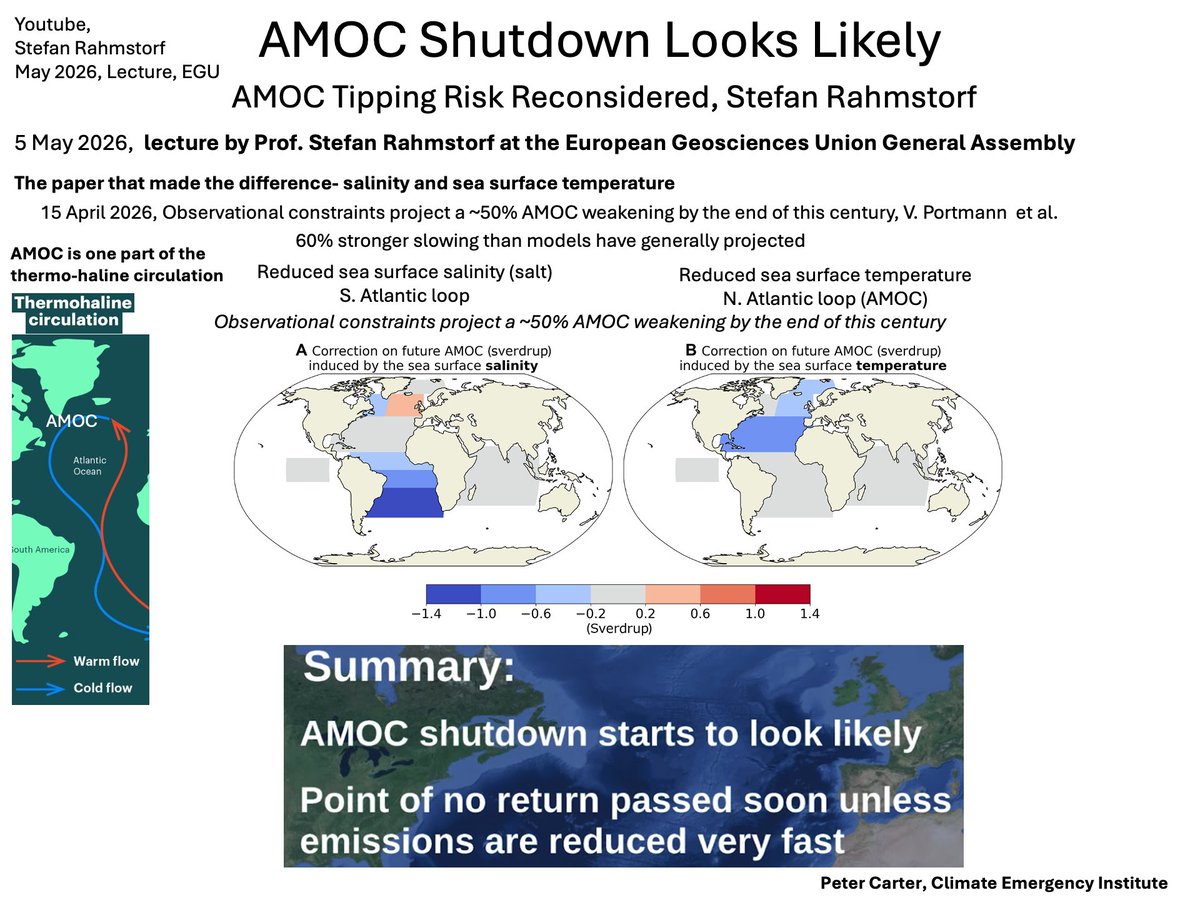
AMOC SHUT-DOWN LIKELY, STEFAN RAHMSTORF, EGU LECTURE
youtube.com/watch?v=Cg0N9MWw…
This paper puts AMOC shutdown likely, and the tipping point trigger very soon. 'Observational constraints project a ~50% AMOC weakening by the end of this century' science.org/doi/10.1126/scia…
#AMOC #climatechange #globalwarming
7
37
72
3,107
Tom Crowley retweeted

Jun 10
The World Cup begins in United Snakes of Israel!
Wanna know how “the land of the free” handles freedom? @NOOWSHOW
121
1,730
4,902
62,165
Tom Crowley retweeted

Jun 11
Iran just dropped the receipts.
In one single night, Iranian missiles struck more than 21 U.S. military bases across the region. From Ali Al Salem in Kuwait, the Fifth Fleet and Isa air base in Bahrain, Al Udeid in Qatar, to Al Minhad and Al Dhafra in the UAE — multiple strategic bases were hit, including a THAAD radar system and an MQ-9 Reaper drone that was taken out of the sky.
Satellite imagery has started confirming the damage, with clear impact marks inside the perimeters of several bases, including one in Jordan where F-35s were stationed.
While CENTCOM continues to downplay the strikes, the evidence is becoming harder to ignore.
This is what happens when you poke the wrong side.
Sacred Defense.
#IranWar #SacredDefense #PersiaBoi #USBases #MiddleEast #IranLego
50
659
1,520
26,886
Tom Crowley retweeted

Jun 10
most days I’m convinced this is the greatest moment in irish tv
77
1,513
5,580
199,778


Jun 11
RT @SuburbanDrone: Today Trump said that after 3 months of the war being essentially "over", he is now escalating the war because he "loves…
9
Tom Crowley retweeted

Jun 10
There is a word economists use when a system looks stable on the surface but is quietly building toward a breaking point.
The word is fragile. The global food system has been fragile for a long time.
We just never had to test it like this before.
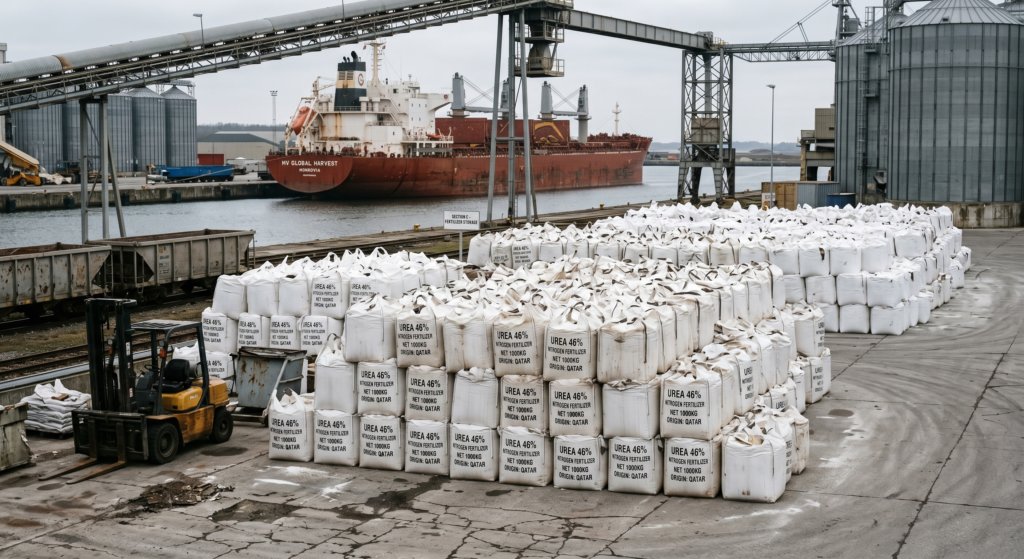
Modern agriculture runs on fertilizer the way modern cities run on electricity. Remove it and the whole system does not slow down gradually. It stops.
Crops do not slow down neatly when fertilizer runs short. Yields fall, and when that happens across multiple countries at once, the food market panics.
What is happening at the Strait of Hormuz right now is not just a shipping disruption. It is a stress test that the food system was never designed to pass.
Urea prices are already signaling the pressure. And the planting season across the northern hemisphere is not waiting for a resolution, it is collapsing.
The logsitics are not moving fast enough. The clock is.
For complete breakdown, check out the comment section.
#FoodSecurity #SteveKeen #RealisticEconomics #GeopoliticsAndFood
ALT A port scene featuring a cargo ship and stacks of fertilizer bags labeled 'UREA 46%'. The industrial setting includes silos and a forklift.
17
127
302
10,021