
The mission of The PolG Foundation is to support and accelerate research to find effective treatments and a cure for PolG-related mitochondrial disorders.
Joined September 2021
- Tweets 191
- Following 377
- Followers 412
- Likes 52
15 Photos and videos











PolG Foundation retweeted

10 Jun 2023
Excellent Bologna workshop on DNA polymerase gamma diseases, organized and facilitated by the new vibrant @PolGFoundation. Action plans, brainstorms. A stimulating global effort to make a difference for the devastating disease group. #mitochondrialdisease #ResearchBringsHope
2
12
1,190

28 Mar 2023
Our Founder, Julie de Luxembourg, interviewed by @4Lilyfoundation on their partnership and the importance of collaboration to drive research forward.
thelilyfoundation.org.uk/new…
7
3
10
1,202
PolG Foundation retweeted

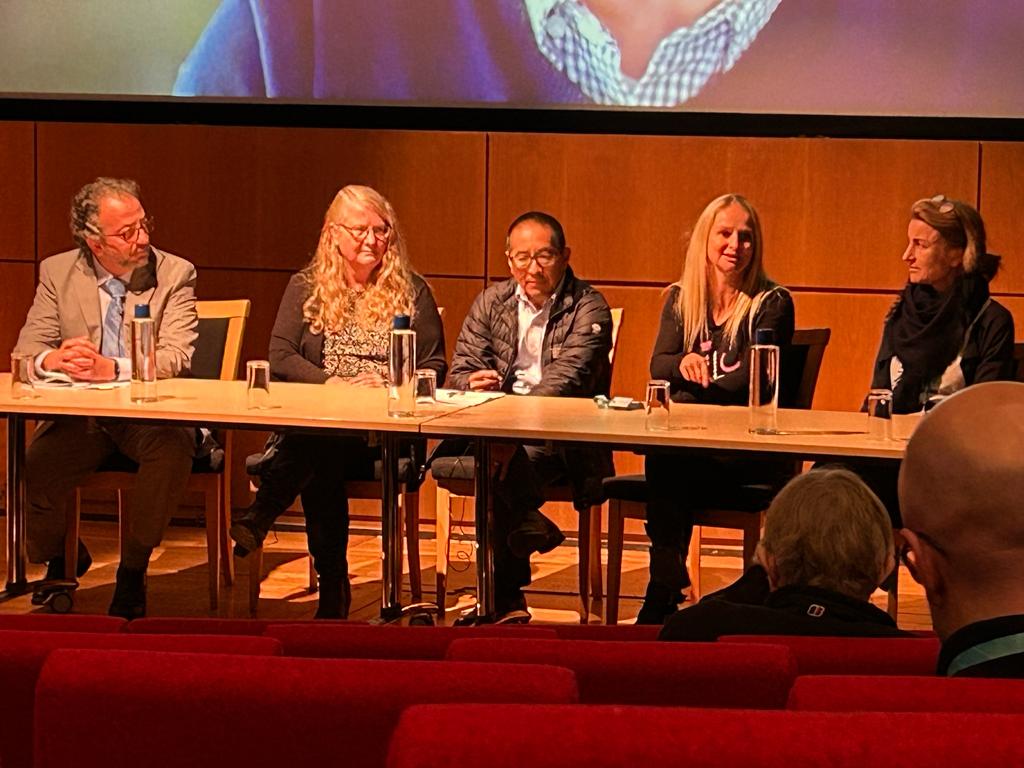
Yesterday's excellent #MitoMed22 panel discussion on placing patients at the heart of clinical trial research! #CureMito #PatientVoice @ConnectingSci
Thanks to contributors our from @PolGFoundation, @UMDF, and @4Lilyfoundation 👏
21 Nov 2022

Proud to have been a part of today's panel discussion 'Putting Patients at the Heart of Clinical Trials' at #MitoMed22 alongside colleagues @PolGFoundation @UMDF #patientvoice #mitochondrialdisease
3
7
PolG Foundation retweeted

23 Nov 2022
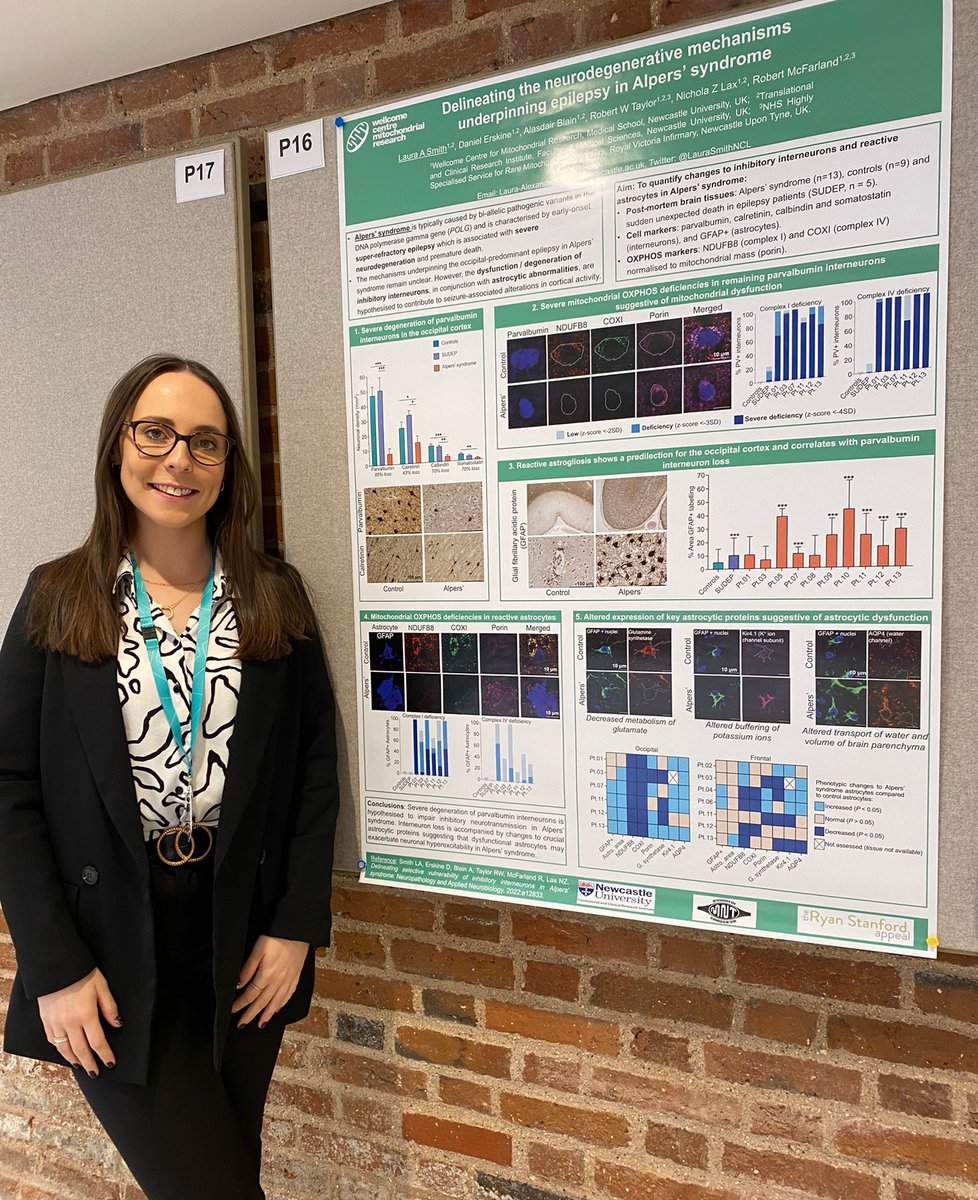
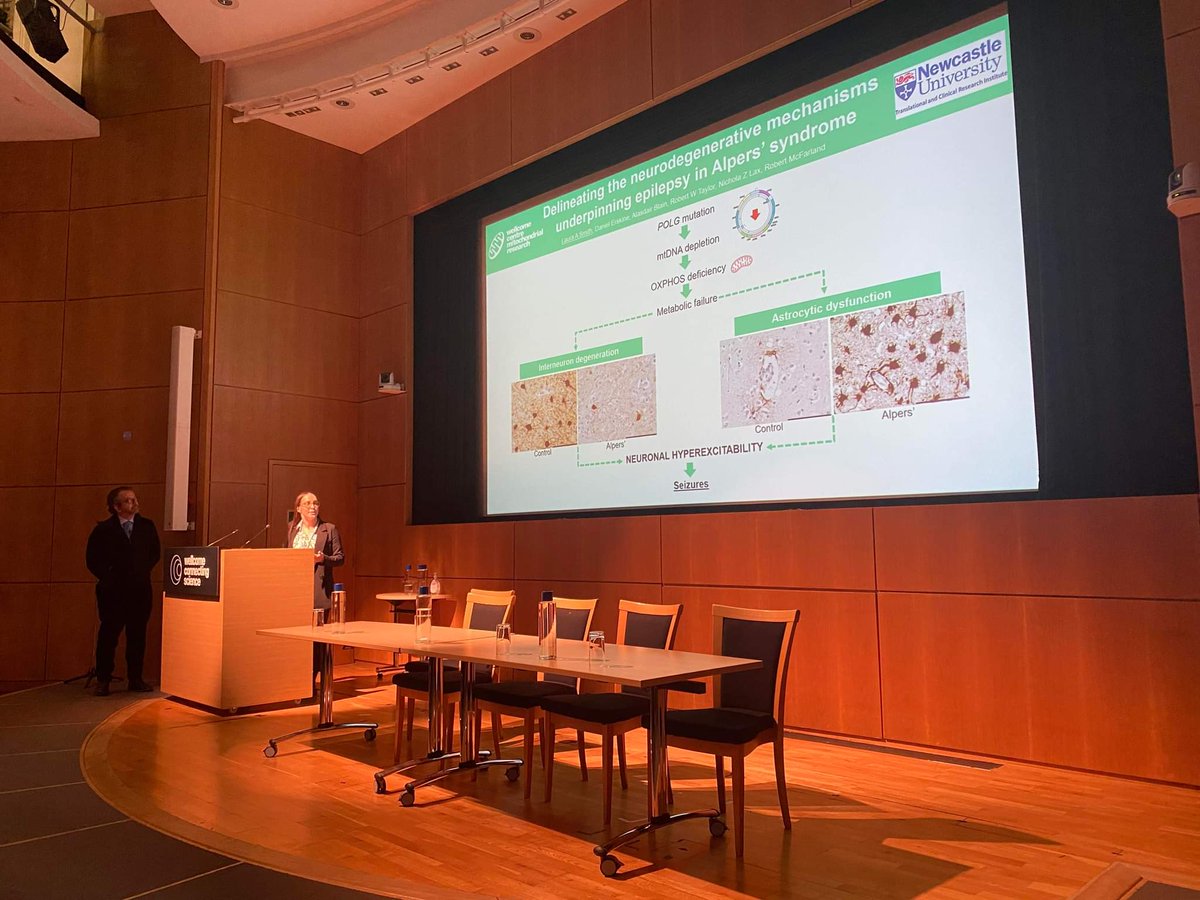
Pleased to have shared some of my #Alpers and #POLG neuropathology findings with other mito researchers at the #MitoMed22 conference yesterday. It was also great to meet members of the @PolGFoundation and @4Lilyfoundation 💚🦋
@Ryanstanfordapp @MitoResearch
2
4
15
PolG Foundation retweeted

21 Nov 2022
Proud to have been a part of today's panel discussion 'Putting Patients at the Heart of Clinical Trials' at #MitoMed22 alongside colleagues @PolGFoundation @UMDF #patientvoice #mitochondrialdisease
4
19
PolG Foundation retweeted

30 Nov 2022
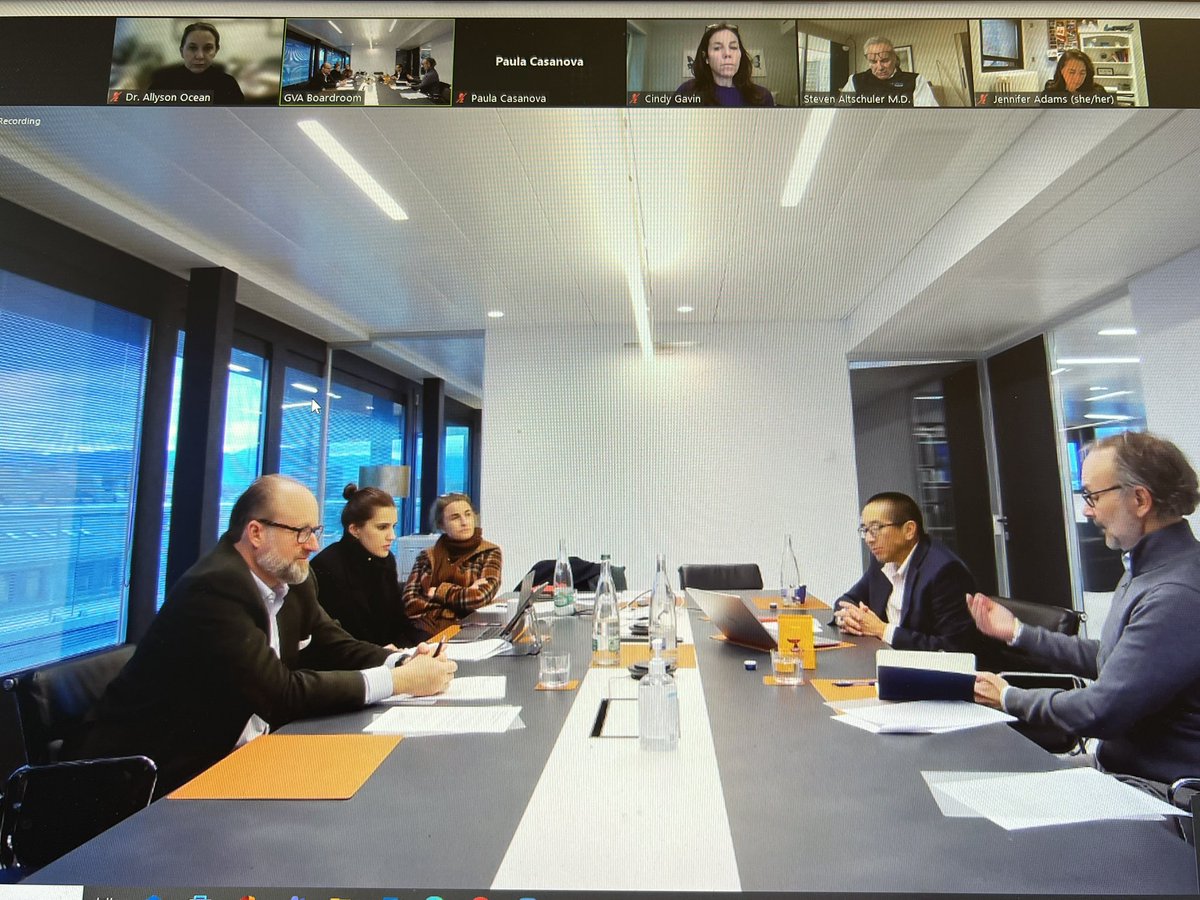
What an inspirational, comprehensive, mission-driven @PolGFoundation board meeting. For patients with #mitochondrialdisease & #polg-we won’t stop until we find better treatments & cures. Check out polgfoundation.org for our research grant program happening now!! #MedTwitter
4
11
PolG Foundation retweeted
12 Nov 2022
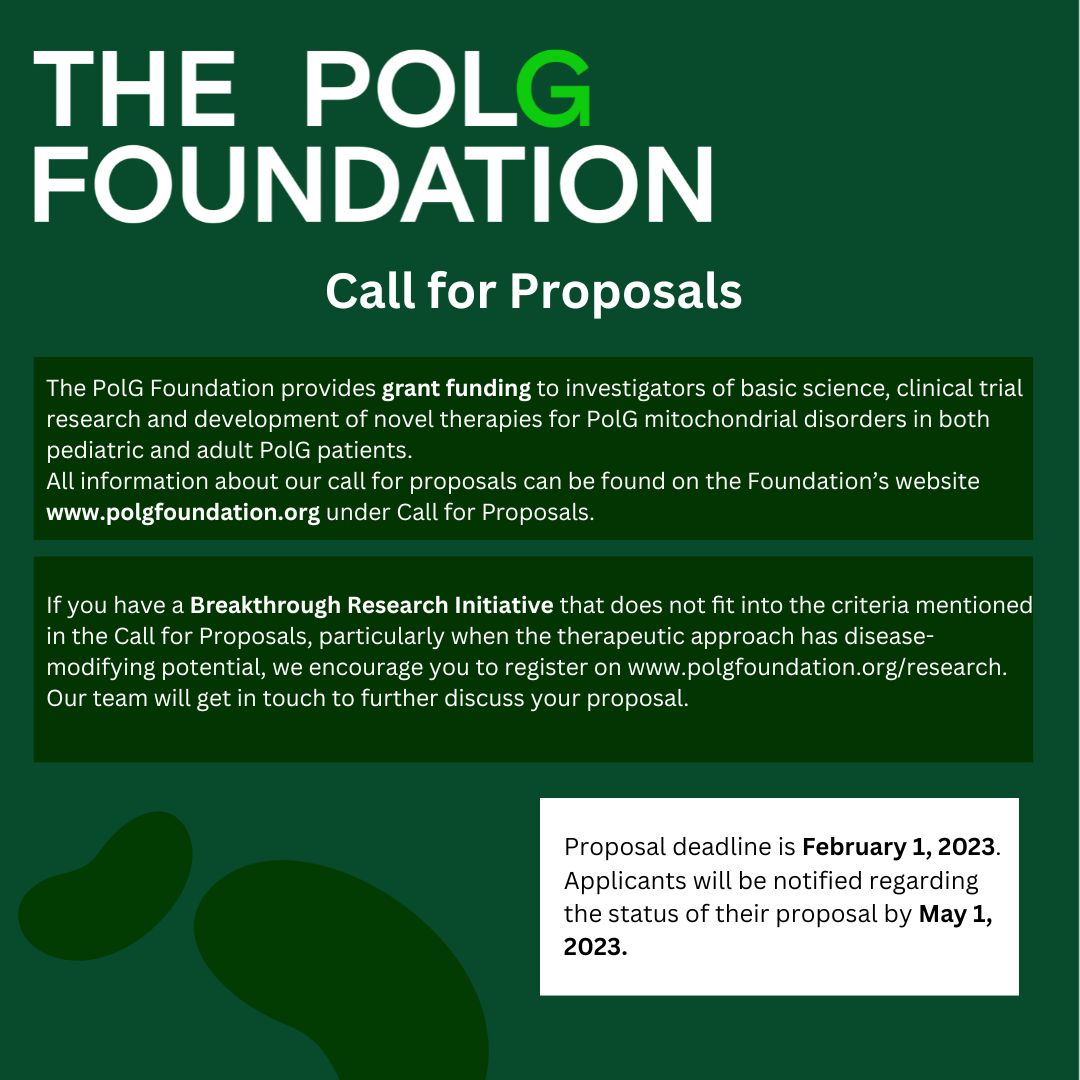
The @PolGFoundation 2023 research call is open. The Foundation seeks to fund research projects of up to $250.000 p/y (max 5 year research projects) that will have direct impact on drug discovery and clinical development of PolG therapeutics. Full details: polgfoundation.org/call-for-…

ALT The image has a black background with large capital letters P, O and L in white and a large capital letter G in green. This is the POLG Foundation logo.
2
1
10 Nov 2022
The mission of The PolG Foundation is to support and accelerate research to find effective treatments and a cure for PolG mitochondrial disorders.
To advance this mission, we are announcing our first Call for Proposals.
polgfoundation.org
#polg #mitochondrialdisease
6
3
9
PolG Foundation retweeted
9 Nov 2022
The @PolGFoundation 2023 research call is open. The Foundation seeks to fund research projects of up to $250.000 p/y (max 5 year research projects) that will have direct impact on drug discovery and clinical development of PolG therapeutics. Full details: polgfoundation.org/call-for-…

ALT The image has a black background with large capital letters P, O and L in white and a large capital letter G in green. This is the POLG Foundation logo.
1
3
6
PolG Foundation retweeted
5 Nov 2022
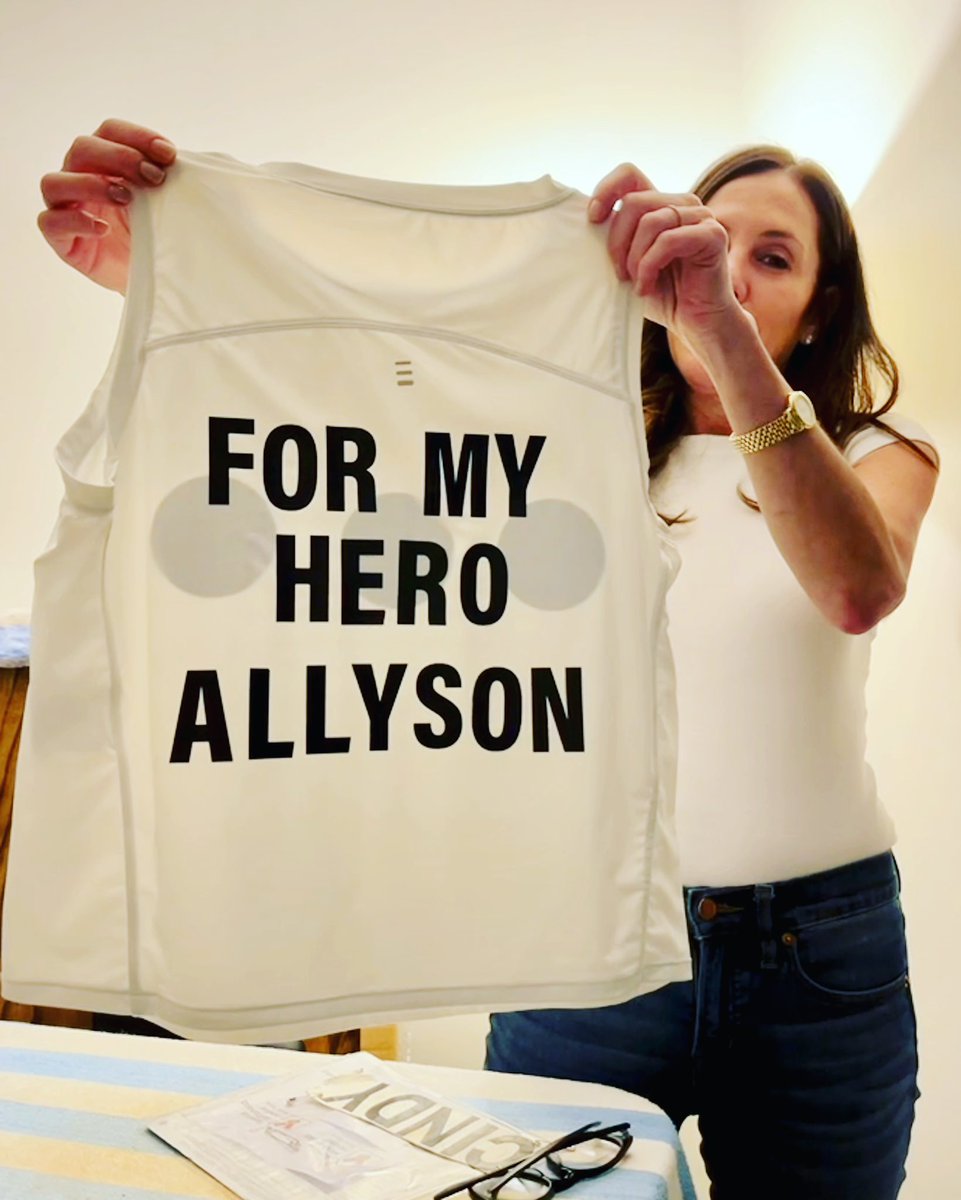
The only way I haven’t expressed my #Gratitude…(yet 🤪) is by running 🏃♀️ 26.2 miles— @cindypricegavin YOU ARE MY HERO ALWAYS @nycmarathon @letswinpc @PolGFoundation @EHTPnyc
2
2
11
PolG Foundation retweeted

1 Nov 2022
Very proud to see our latest story and my art work in the cover of @Cell_Metabolism picturing the damaged, leaky #mitochondria due to oxidative stress and #ferroptosis
cell.com/cell-metabolism/ful…

28
72
734
PolG Foundation retweeted

7 Oct 2022
Can we just take a moment to appreciate how crazy cool this is?
Dietary lipids inhibit mitochondria transfer to macrophages to divert adipocyte-derived mitochondria into the blood
cell.com/cell-metabolism/ful…
9
57
264
PolG Foundation retweeted

5 Oct 2022
Pieces of the mitochondrial genome jump and are integrated into the nuclear DNA
nature.com/articles/s41586-0…
4
37
131
PolG Foundation retweeted

22 Sep 2022
Hello from The PolG Foundation!
Our story starts with the journey of one family and, more particularly, one young man, Frederik. Inspired by Frederik's example of sheer determination, they set out to transform hardship into deep resolve and find a cure for a devastating disease.

ALT #WMDW
2
13
PolG Foundation retweeted
22 Sep 2022
The disease comes from a mutation in POLG and POLG2 genes. These mutations impair efficient replication of the mitochondria DNA, causing symptoms that can start from early childhood to adulthood. Symptoms often include ophthalmoplegia, muscle weakness, epilepsy and liver failure.

ALT @polgfoundation #WMDW
2
6
PolG Foundation retweeted
22 Sep 2022
We already have a few ongoing research projects.
Mouse model 1, Generating and investigating in vivo PolG mouse models to unravel the mechanistic pathogenesis of PolG disorders.
Mouse Model 2, Development and preclinical validation in mice of gene therapy treatment.

ALT @polgfoundation
3
12
PolG Foundation retweeted
26 Sep 2022
Huge thanks to everyone who helped raise the profile of #mito during World @MitoAware Week for the benefit of the whole community💚@AusMito @LeighNetwork @PolGFoundation @4Lilyfoundation @MyMitoMission @MitoCanada @GeneticAll_UK @MDUK_News @AgmAssociation @UMDF #WMDW #curemito
5
19
PolG Foundation retweeted

Happy to have played a small part in the Acipimox Trial @MitoResearch the design of which has just been published in Trials tinyurl.com/2ych8wez
#mitoaware @mitomusclelab @jwmdrc
1
5
13
PolG Foundation retweeted
23 Sep 2022
With 166 tweets seen by >31K people, thanks to everyone who took part in our #twitter takeover during @MitoAware Week to raise the profile of #mito💚
@ausmito @LeighNetwork @PolGFoundation @4Lilyfoundation @MyMitoMission @MitoCanada @GeneticAll_UK @MDUK_News @AgmAssociation @UMDF
7
24
PolG Foundation retweeted
22 Sep 2022
What an amazing day! The WCMR team would like to say THANK YOU to those who took part in our #Twitter Takeover today💚
@AusMito #internationalmitopatients @LeighNetwork @4Lilyfoundation @PolGFoundation @MitoCanada @UMDF @GeneticAll_UK @MDUK_News @AgmAssociation @MyMitoMission
3
9