
The Qubit Report's Mission is to promote knowledge and opinion of quantum computing from the casual reader to the scientifically astute.
Joined December 2020
- Tweets 2,988
- Following 883
- Followers 1,579
- Likes 6,665
167 Photos and videos











Jun 13
⏰ Registration for the Entropy 2026 Conference in Barcelona closes in two days!
📅 June 15th is your last day to get registered for the in-person conference.
🚨 Don’t miss the dedicated Quantum Information and Quantum Computing Session on opening day featuring keynotes on entropic quantum gravity, monitored quantum systems on NISQ platforms, the capacity of a single quantum neuron, quantum reservoir computing and expressibility-guided architecture search under noise.
👉 Interdisciplinary program, poster sessions and a banquet in beautiful Barcelona — perfect for networking and cross-pollination with entropy, information theory and statistical physics.
❗Register now 👉
sciforum.net/event/Entropy20…
#Entropy2026 #QuantumComputing #Barcelona #QuantumInformation #MDPI @Entropy_MDPI
2
99
Jun 12
🐈⬛ Alice & Bob just opened its Helium multi-cat-qubit platform.
1️⃣ The first multi cat-qubit system available to third-party researchers for hardware-efficient quantum error-correction experiments.
🥈 With 18 qubits delivering bit-flip times over one hour and 94.2% Z-gate fidelity, plus a brand-new $50M Paris lab and €130M funding, the path to their Graphene 100-logical-qubit system by 2030 is accelerating.
🕒 Noise-biased cat-qubit approach could slash hardware overhead by up to 200x 👈🚨
Get it here 👇
thequbitreport.com/hardware/…
@Alice__Bob
1
5
172
TheQubitReport retweeted
Jun 11
😀 Exciting news for Europe's quantum future 👉 QuiX Quantum joins QuantumBW and Photonics BW, opening a Stuttgart office at ARENA2036 while preparing its first universal photonic quantum computer delivery to @DLR_en (DLR QCI) in Ulm.
👍 Dutch expertise meets German engineering for scalable photonic quantum tech.
🦾 Strong ecosystems drive real industrial impact!
Get it here 👇
thequbitreport.com/hardware/…
#QuantumComputing #PhotonicQuantum #QuantumBW #EuropeTech
1
2
86
TheQubitReport retweeted
Jun 11
🍀 Horizon Quantum is setting up its second testbed in Dublin featuring the powerful IonQ 256-qubit trapped-ion system.
⚡This will supercharge their Triple Alpha platform and support Ireland's Silicon Island ambitions.
❗A great step for European quantum tech!
👍 Get it here 👇 thequbitreport.com/hardware/…
#QuantumComputing #IonQ #HorizonQuantum #Dublin #Ireland @horizon_quantum @IonQ_Inc
1
2
102
TheQubitReport retweeted

Jun 11
🥁 Say hello to the Helium Quantum System.
For the first time, a company is making an integrated cat-qubit quantum system available for on-premise installation to research partners worldwide. 🌍
🔹 Powered by cat qubits, the most advanced noise-biased superconducting qubits.
🔹 Built from the ground up for quantum error correction, from the processor architecture to the control electronics, cabling, and software stack.
🔹 Designed to host our first logical qubit and advance the frontier of quantum error-correction research.
🤝 We're not unveiling Helium to sell compute. We're opening it to research partners, HPC centers, and pioneers who want to help shape the future of quantum computing.
Discover Helium ⚡ alice-bob.com/platform/
#QuantumComputing #QuantumErrorCorrection #HPC #Research #Innovation
3
15
428
TheQubitReport retweeted

Jun 9
POST-QUANTUM READINESS / THE ADVISORY MODEL
A Framework Can Tell You What to Do. It Cannot Tell You What You Have.
KPMG's new seven-step Q-PREP plan is a strong map for post-quantum readiness. Like every advisory framework, several of its steps depend on measurement evidence that the framework itself does not produce. That gap is where Qtonic Quantum complements them, not competes.
Qtonic Quantum Research Team | June 9, 2026
In June 2026, KPMG published Q-PREP, a seven-step framework for guiding an organization to post-quantum cryptography readiness [1]. It is a good framework. It moves past general warnings to a defined sequence, from objectives aligned with business goals, through a full inventory of cryptographic assets, risk prioritization and data governance, algorithm evaluation, a transition plan, implementation and validation, and finally continuous monitoring. KPMG's US quantum lead has likened the migration to retuning every key, algorithm, and certificate across a vast IT estate without missing a note.
The metaphor is apt, and it points at the problem the framework cannot solve on its own. A score tells the orchestra what to play. It does not tell the conductor whether each instrument is in tune. For three of Q-PREP's seven steps, knowing what to do is the easy part. The hard part is measuring what is actually there, and proving whether the fix works.
A plan is not the same as the capability to execute it. The framework identifies where measurement is required. The framework itself is not the measurement evidence. That division of labor is the whole point of this piece.
x.com/QtonicQuantum/status/2…
1
2
2
118
TheQubitReport retweeted
Jun 4
🚀 Quantum in Latin America!
🌎Classiq partners with Pontificia Universidad Católica de Chile ✝️ to launch the region’s first Quantum Machine Learning Consortium for computational pathology.
💡Targeting kidney disease advancements with hybrid quantum algorithms, NVIDIA CUDA-Q, and IonQ.
A major leading-edge step for health innovation❗
Get it here -> thequbitreport.com/research-…
#QuantumComputing #QuantumML #LatinAmerica #Pathology #Classiq #UCChile @ucatolica_eng @ClassiqTech
1
2
108
TheQubitReport retweeted
Jun 6
🚨 Major News ~ Researchers at Zhejiang University (China) have created the world’s first superconducting #QRAM prototype, enabling simultaneous classical data access in #superposition.
Get it here 👇
thequbitreport.com/hardware/…
#QuantumComputing #QRAM #ZhejiangUniversity #QuantumTech #Technology
2
4
347
TheQubitReport retweeted
Jun 7
🚀 Big step forward for quantum computing.
🐈⬛ Alice & Bob has introduced a modality-agnostic five-criteria framework to benchmark logical qubit claims.
📈This practical guide helps investors, analysts, and researchers objectively assess demonstrations toward #FaultTolerantQuantumComputing.
💪No more hype? Just clear, testable standards across hardware platforms.
Get it here -> thequbitreport.com/hardware/…
@Alice__Bob
1
2
154
TheQubitReport retweeted
Jun 10
⚛️ Quantum scaling, anyone?
🚨 Nu Quantum's new research shows distributed quantum computing can create resilient, elastic systems that tolerate individual QPU failures.
👉 Node crashes become correctable errors, enabling fault-tolerant computing at scale.
❗This modular approach mirrors classical cloud/HPC benefits and accelerates the path to 1M qubit machines.
💪 Get it here -> thequbitreport.com/research-…
#QuantumComputing #DistributedQuantum #FaultTolerance #NuQuantum #QuantumNetworks @NuQuantumLtd
2
6
280
TheQubitReport retweeted

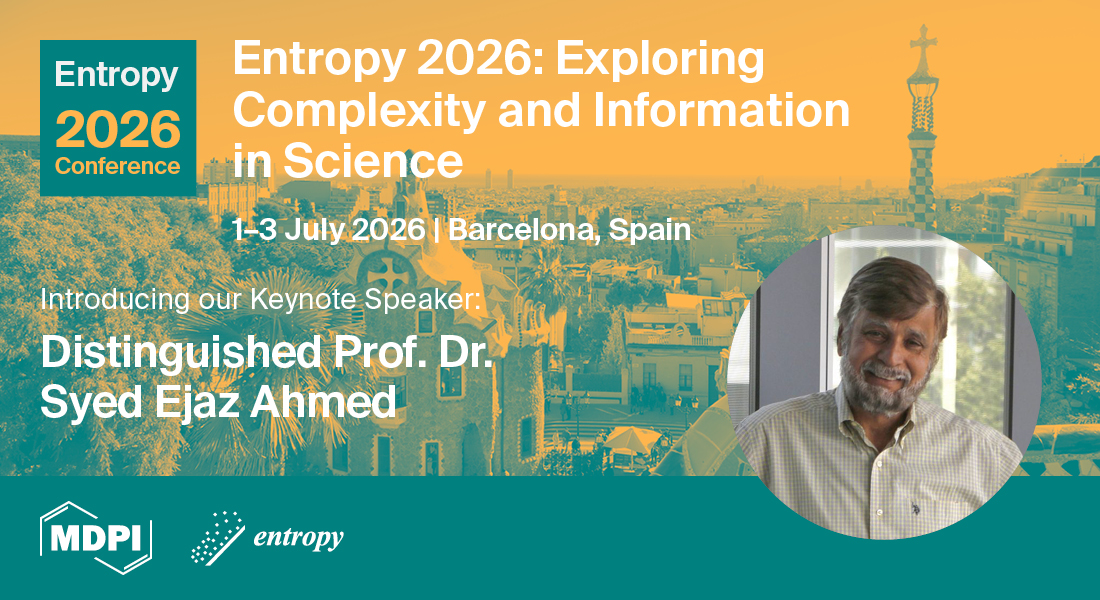
📣 #Entropy2026 Keynote: Syed Ejaz Ahmed (Brock University)
Talk: Reliable Post-Estimation Inference in High-Dimensional Sparse Regression
🎟️ Register: sciforum.net/event/Entropy20…
#Statistics #DataScience #MachineLearning
2
3
136
TheQubitReport retweeted

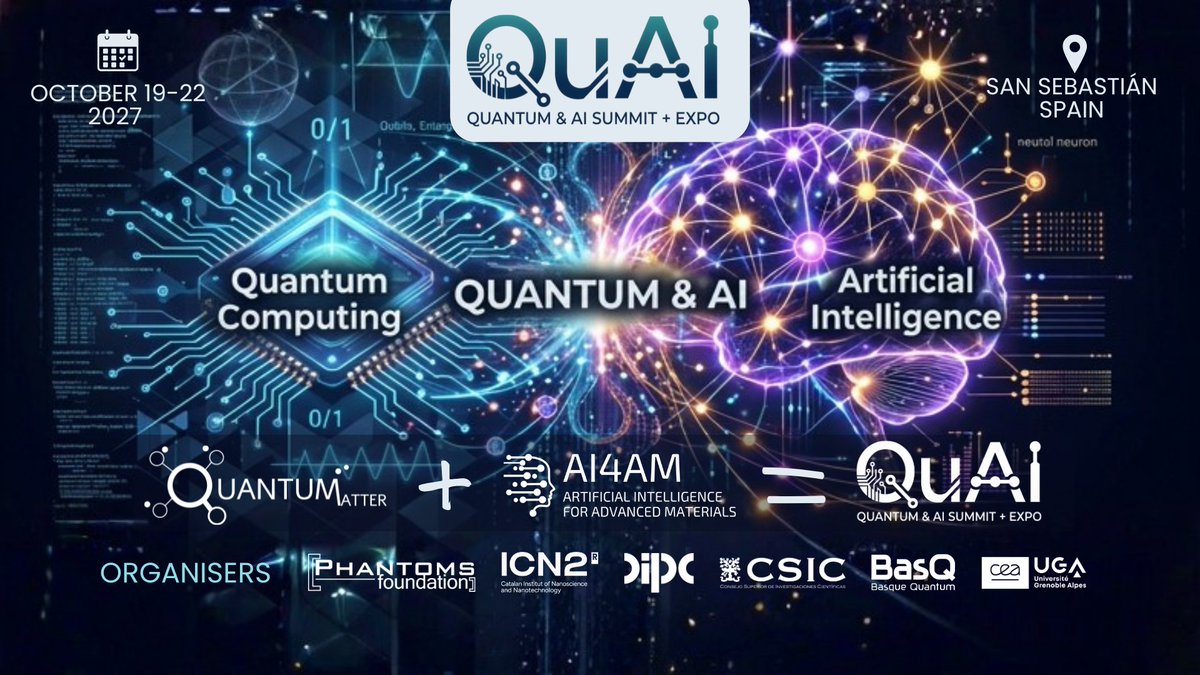
🚀 QuAI 2027 is coming!
The Quantum & AI Summit Expo lands in San Sebastián, Spain, on 19–22 (2027), bringing together Qtechnologies, AI, advanced materials, industry & innovation.
Pre-register via the official QuAI website.
#QuAI2027 #QuantumAI #AI #QuantumComputing #DeepTech
6
11
743
TheQubitReport retweeted
Jun 5
Everyone's talking about logical qubits. Nobody agrees on what they are. 🧩
Today we're publishing a memo with 5 criteria to help fix that.
Logical qubits are the building block of tomorrow's useful quantum computers. 🧱 But the term gets stretched to mean wildly different things depending on who's using it.
For analysts, investors, and anyone trying to place their informed bet on quantum, that's a real problem. Claims from different labs or companies are very hard to compare directly. Unless you hold a PhD. We wanted to change that. 🤓
Our memo, "Defining the Logical Qubit: Five Criteria to Benchmark Logical Qubit Claims," lays out what we believe a useful logical qubit should meet, and how non-specialists can actually compare the headlines. ⚡
The 5 criteria:
🏃Can you outperform your physical qubits?
📈 Can you make it better?
⏳ Have all the errors had time to happen?
🎯 Does it work without cherry-picking?
🏁 Does error correction last the whole computation?
If you care about quantum computing, you need to care about logical qubits.
Read the memo 👇
bit.ly/4vA5ELE
#QuantumComputing #LogicalQubits #FaultTolerance #FTQC #QuantumErrorCorrection #QuantumTechnology
4
14
1,377