
Life is nothing if not a great adventure, Helen Keller.
Joined April 2009
- Tweets 15,522
- Following 335
- Followers 952
- Likes 11,811
603 Photos and videos




RegiNP retweeted

Jun 14
¿Alguien me puede explicar cómo la ciudad que sufrió el mayor ataque terrorista islámico de la historia votó por un alcalde musulmán?

2,749
4,585
16,964
174,429
RegiNP retweeted

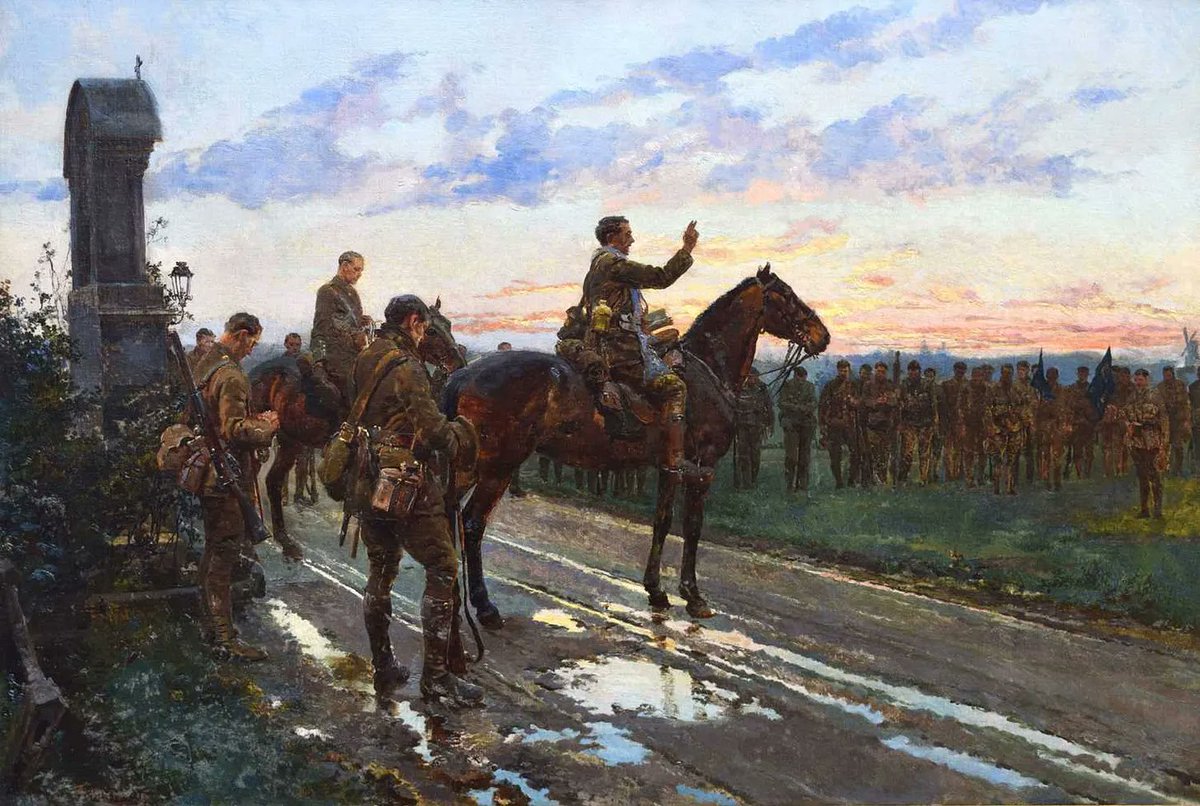
We inhabit an age that earlier centuries could scarcely imagine – a world that has not merely drifted from Christianity but has turned decisively against it.
The modern West, once shaped by the liturgy, the sacraments, and the moral imagination of Christendom, now treats its own inheritance as a superstition to be purged from public life.
Instead, public life is governed by a radically secular creed that tolerates Christianity only when it is silent, private, and politically harmless.
As a result, the Church is increasingly pushed to the margins, its institutions weakened, its symbols mocked, and its moral claims dismissed as relics of an unenlightened past.
We live, unmistakably, in a post‑Christian society, and the hostility is no longer subtle.
The question presses upon us with new urgency: what are we to do, and how should Christians respond when the civilization built by their ancestors no longer recognizes them?
Two answers have emerged in our time – the Benedict Option and the Boethius Option – each founded in a different moment of civilizational crisis, and each offering a distinct vision of Christian fidelity in an age of dissolution.
8
23
142
9,646
RegiNP retweeted
When most people read Romeo and Juliet, they think it's the ultimate love story, but in reality, it's a cautionary tale.
Romeo is the quintessential anti-hero because he is ruled by his inordinate desire which makes him weak and effeminate.
This is most evident in Act V where Romeo and Juliet take their lives. Romeo uses poison, which was traditionally understood as the weapon of women and eunuchs, and Juliet – the more rational and therefore, more masculine of the pair – takes her life with a dagger.
Romeo isn't the hero, he's the villain, and Juliet should have married Paris.

Shakespeare lived thousands of lives, by reading.
He intentionally compressed all of this knowledge into one single tome.
Not to educate or to entertain.
But to elevate and to ennoble all of us—and make kings and queens of us all
5
7
74
3,747
RegiNP retweeted

I’ve said it before and I will say again.
One of the best reasons to become a doctor (or any qualified healthcare clinician) is to SAVE family from unnecessary investigations, procedures, and therapeutics— that the medical establishment (especially in the USA) wants to push on people.
Just today, a younger family member was saved from certain vaccines— which are not administered in other countries (and I never received myself).
That alone, makes it worth it worth it for me to become a doctor.
I will never let any American-trained doctor loose on my family and loved ones without extreme oversight of exactly what they are doing and the evidence behind it. It’s the most brilliant feeling in the world to see doctors’ faces turn red when I am sitting there in the room, questioning them and presenting them with evidence and my skepticism. What’s crazy is they know I’m absolutely right, but they are so used to following protocol and some of them haven’t used their brains in a long time— so they have little to do but to shrug their shoulders and look embarrassed.
And it’s not just vaccines. Other excessive procedures and investigations that would be UNTHINKABLE in other advanced countries (which also have better healthcare statistics in the USA)— are pushed every day on millions of unfortunate Americans.
I am just so grateful I have the medical knowledge to help those closest to me stay healthy.
4
10
102
3,349
RegiNP retweeted

12h
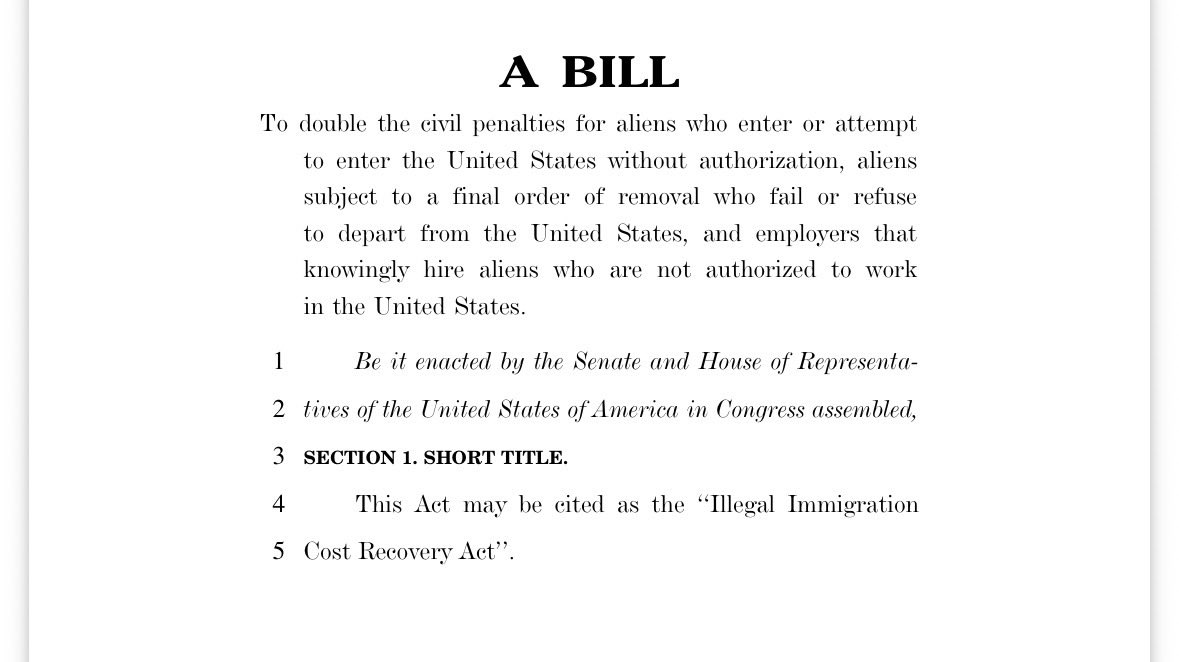
This is why @SenRickScott and I just introduced the Illegal Immigration Cost Recovery Act.
Public services, benefits, assistance, and schools are supposed to help Americans.
Let’s get their money back.
Jun 13

STUDY: Households headed by non-citizens use means-tested welfare programs at substantially higher rates than households headed by U.S.-born Americans in nearly every state.
103
758
2,352
25,884
RegiNP retweeted

Zohran Mamdani’s intern Hadeeqa Arzoo Malik explains that electing him was all part of a Holy War and jihad:
“This is all jihad, this is all ibadah, this is all counted by Allah. How committed am I to this? What am I willing to sacrifice for this noble cause?”
416
2,394
4,119
66,620

RegiNP retweeted

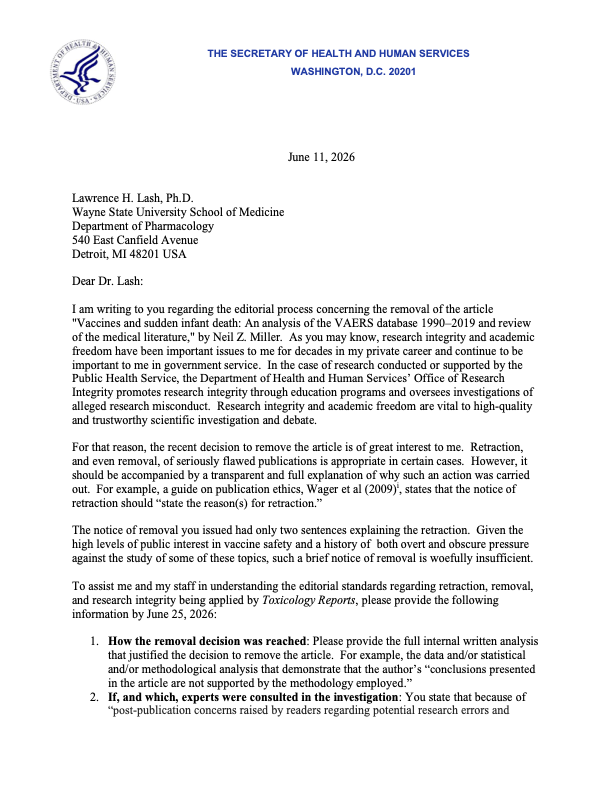
I sent this letter to the Editor-in-Chief of Toxicology Reports demanding a full explanation for the removal of a published article examining vaccines and sudden infant death.
Americans have a right to know why scientific papers are removed, who made those decisions, what evidence supported them, and whether the same standards are applied consistently.
We will restore trust in public health by insisting on transparency, accountability, and open scientific inquiry—not by asking the public to accept decisions behind closed doors.

838
8,742
28,584
494,154

RegiNP retweeted

Jun 14
Elite university students are now incapable of reading a book.
Instead of fixing this, universities are simply reducing reading requirements to shorter and shorter excerpts.
This is no mere literacy crisis. It is a civilizational one.
To fight back, we started an online book club to study the great texts of Western Civilization — if the schools and universities won't teach the great books, we must form reading groups to study them ourselves.
Every month, we read a new great work. We've covered texts like Augustine's Confessions, Dante's Inferno, The Count of Monte Cristo, Don Quixote.
We're now reading Aristotle's Nicomachean Ethics.
We must study the ideas upon which the West was built if we are to preserve it. It takes effort to read these texts, and even more to read them well. Thats what we're doing, slowly, in dialogue with each other.
If you'd like to be part of this, please join our reading group and consider a paid subscription. It makes a HUGE difference to the time and resources we can dedicate to this project. We are entirely funded by our members.
You'll get:
- Live book club discussions (biweekly)
- Access to our incredible community chat
- Essays to guide you through the Great Books
- All past recordings, essays, and podcasts
- Ability to vote on what we read next
athenaeumbooks.com/welcome
Welcome!
112
597
3,053
824,629
RegiNP retweeted

Jun 15
What’s better than a rare Super Delta formation featuring the Thunderbirds and the @USNavy Blue Angels over Washington, D.C.?
Watching it from four different views for #UFCWhiteHouse as part of #Freedom250. 🇺🇸
1,267
12,574
68,944
1,532,637
RegiNP retweeted

Jun 15
Some cultures are better than others
2,537
24,852
165,235
2,666,450
RegiNP retweeted

Jun 15
The President paid to get the epic flyover UFC photo, and it was well worth whatever it cost. But stop to consider that he got this picture for free.

631
7,175
59,043
683,710
RegiNP retweeted

President Trump told the New York Times the deal allows Iran to enrich uranium for non-military purposes. Cue the left and Obama rushing in to cast doubt, claiming it's "not significantly different" from his old deal that got ripped up.
Fox's Marc Thiessen just torched that narrative:
"It's the exact same deal... except for the 14,000 military strikes that buried their entire nuclear program under rubble so deep the Iranians can't even reach it.
We destroyed 82% of their defense industrial base.
Sunk their entire Navy.
Grounded their entire Air Force.
And oh yeah, the Ayatollah, Qasem Soleimani, and the top two tiers of their leadership are DEAD.
Other than that... totally the same as Obama's deal 😂"
HUGE differences:
Strait of Hormuz traffic resuming after the blockade is lifted
Nuclear "dust" from Operation Midnight Hammer being removed in the next 60 days
Sanctions relief only as they comply (performance-based)
Ceasefire between Israel and Hezbollah in Lebanon
Trump didn't just sign a piece of paper, he broke their regime's back first, then negotiated from overwhelming strength. Obama gave them cash and breathing room. Trump gave them rubble and reality.
This is what winning looks like.
617
1,285
6,254
582,625
RegiNP retweeted

How Democrats Steal Elections In 4 Mins
348
4,856
18,281
588,839
RegiNP retweeted

Jun 15
🚨 SHOCKING DISCOVERY THEY BURIED:
Hydroxychloroquine doesn’t just fight viruses — it turns viruses into precision-guided cancer killers. It allows viruses to attack cancer cells while leaving healthy cells completely untouched.
This comes straight from Dr. Richard Urso (ophthalmologist and member of America’s Frontline Doctors) in a powerful presentation. Why was this information suppressed and the data obscured?
Because a cheap, decades-old drug that could selectively destroy cancer would be catastrophic for the multi-trillion-dollar cancer industry.
They don’t want you to know this. They want you dependent on expensive treatments forever.
The truth is out. Share it before it gets buried again.
280
14,273
28,394
499,245
RegiNP retweeted

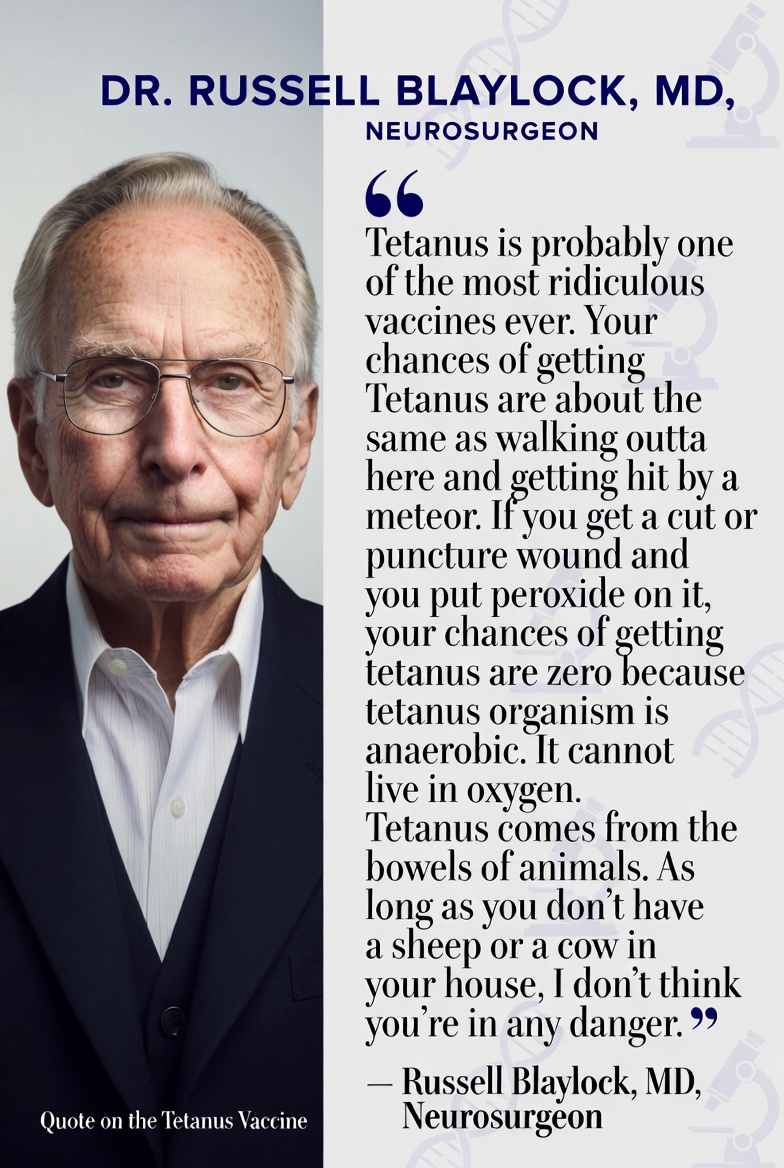
Dr. Russell Blaylock: "The tetanus vaccine is one of the MOST RIDICULOUS vaccines ever."
Just got a cut or puncture wound? The ER is about to BULLY you into a TOXIC shot you don’t need.
Here’s what they won’t tell you:
The shot they push is NOT a simple tetanus vaccine — it’s the full DTaP combo loaded with:
• Aluminum (up to 0.625 mg — a known neurotoxin)
• Formaldehyde
• 2-phenoxyethanol Triton X-100
• Milk protein (casein) & latex residues that can trigger anaphylaxis or CREATE new dairy/latex allergies
The tetanus toxoid inside has NEVER been properly safety-tested in a double-blind placebo-controlled trial. CDC admits it.
It’s grown on beef heart infusion with real risk of Mad Cow prion contamination.
Your actual chance of getting tetanus? 1 in 11 MILLION.
Spores live in manure, NOT rust. Clean the wound properly — oxygen kills them. 95% of the decline happened BEFORE any vaccine thanks to sanitation.
If you’re already exposed, the shot is useless — it takes 3-8 weeks for antibodies.
But high-dose Vitamin C (1–3g/day) cured 100% of cases in studies with ZERO deaths. Cheap. Safe. Ignored.
Why are we terrorized into this untested, poison-filled combo shot for a disease that’s basically extinct in clean countries?
Because fear sells.
Don’t fall for the rusty nail myth. Clean the wound. Monitor it. Refuse the jab.
Were you guilt-tripped into a “tetanus shot?” Were you ever told it was actually the full DTaP?
260
6,779
12,804
206,846
RegiNP retweeted

Jun 14
Jordan Peterson made a profound point on Chris Williamson’s podcast.
When God dies, a lot of unexpected things die with Him, including science.
Science isn’t some purely neutral, secular tool. It rests on deeply religious assumptions: that truth exists, that it’s knowable, that pursuing it is good, and that the universe makes sense.
These aren’t scientific claims, they’re metaphysical, rooted in a religious worldview. The universities themselves grew out of monasteries.
Without that deeper foundation, science eventually stops being about truth and becomes just another tool for power, ideology, or convenience. You lose the reason to be honest when the data gets inconvenient.
Do you think science can survive long-term without any belief in objective truth or a higher moral order?
279
1,520
6,288
250,828
RegiNP retweeted

Jun 14
I don't think anybody really grasps how desperate this situation is.
University professors are now saying they are unable to teach history because reading long books and passages is how a person learns history. College kids are incapable of reading more than a few pages.
Some classes don't assign any reading at all now, only lectures.
There is an assumption among the people managing this decline that reading is just a way of receiving information. It isn't. Proper reading is how we build the mental muscle to synthesize ideas and evaluate them.
If the catastrophic decline in reading and literacy is not addressed now, we risk losing everything.
Western civilization cannot survive the death of reading because it was built by people with the kind of cognitive depth that a culture of deep reading brings:
Complex reasoning, extended internal dialogue, the capacity to hold opposing ideas in tension. Our systems and institutions are complex, and they require well ordered minds to maintain them.
Reading forms minds, and the West was built by the richest minds in history.
Jun 14

Elite university students are now incapable of reading a book.
Instead of fixing this, universities are simply reducing reading requirements to shorter and shorter excerpts.
This is no mere literacy crisis. It is a civilizational one.
To fight back, we started an online book club to study the great texts of Western Civilization — if the schools and universities won't teach the great books, we must form reading groups to study them ourselves.
Every month, we read a new great work. We've covered texts like Augustine's Confessions, Dante's Inferno, The Count of Monte Cristo, Don Quixote.
We're now reading Aristotle's Nicomachean Ethics.
We must study the ideas upon which the West was built if we are to preserve it. It takes effort to read these texts, and even more to read them well. Thats what we're doing, slowly, in dialogue with each other.
If you'd like to be part of this, please join our reading group and consider a paid subscription. It makes a HUGE difference to the time and resources we can dedicate to this project. We are entirely funded by our members.
You'll get:
- Live book club discussions (biweekly)
- Access to our incredible community chat
- Essays to guide you through the Great Books
- All past recordings, essays, and podcasts
- Ability to vote on what we read next
athenaeumbooks.com/welcome
Welcome!
544
4,342
12,164
448,745
RegiNP retweeted

Jun 14
Foreign countries have been allowed to buy American utility companies
“Why in the world is the United States federal government allowing foreign corporations to own American utility companies”
The issue is widespread. Spain, the UK, Canada and more own major stakes in American utility companies in many different states
We are being sold out
543
5,630
10,381
95,991