
Exploring is in my blood. Howling at the moon since February 24, 2022. Parody.
Joined May 2024
- Tweets 32,558
- Following 3,928
- Followers 3,745
- Likes 56,159
4,679 Photos and videos
















Pinned Tweet

Good morning, fellas! Thank you to everyone who has joined @greenfella36 and me in helping the seniors. So far you have contributed a combined $207.89 to @NafoOld and $529.79 to @JuliaSubbotina1. It’s not too late to join in. We’ll keep going through 6/6/26. (Photo of @sam201810)

May 28

Have you ever wondered what your fella would look like as a babusya or didusi? Here’s a fun new opportunity! Donate to either @JuliaSubbotina1 or @NafoOld and see your fella as he or she would be in the future. Plus get a cute meme and help the seniors!

7
14
21
616
Roxy in Space retweeted

MORE: An “open” strait under Iranian management is not a return to the pre-war status quo and would mean that Iran has accomplished a key war aim. ⬇️
Iranian Foreign Affairs Minister Abbas Araghchi discussed the strait at length and noted that it is under Iranian and Omani sovereignty and that both countries will collect fees after the MoU. Iran will also manage the strait. Araghchi rejected the term “tolls” but defended Iran charging “service“ fees for passage through the strait, which is effectively an attempt to rebrand Iran’s protection racket as legal administration. Araghchi added that Iran would provide safe passage through the strait for civilian vessels but create separate arrangements for military vessels.
This system of management is at odds with both US policy and long-established maritime legal precedent. US President Donald Trump has repeatedly said, for example, that the strait must be open with no fees or Iranian management. A US official told Reuters that the agreement would “open” the strait, but an “open” strait under Iranian management would be very detrimental to US interests, as ISW-CTP has previously argued in @brian_cartr's essay in the post below.
Iran also continues to use force in an attempt to impose the reality that it controls the Strait of Hormuz. US Central Command (CENTCOM) reported on June 12 that US forces intercepted multiple Iranian drones targeting commercial vessels in the strait. Iranian media separately reported explosions near Qeshm and Sirik islands and said the sounds came from warning shots that Iranian forces fired to enforce control over the strait.
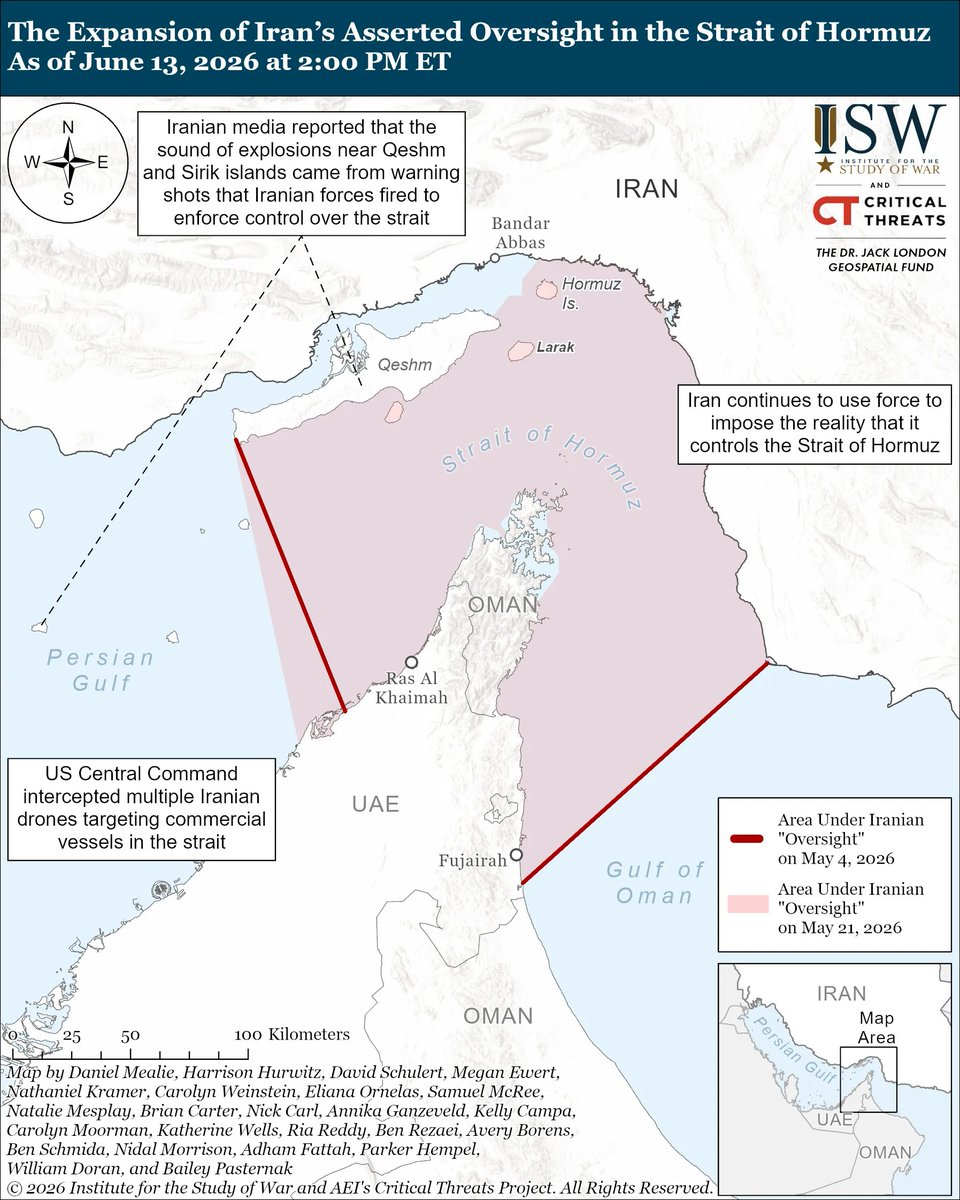

NEW: Iranian statements regarding the contents of the US-Iran memorandum of understanding (MoU) indicate that some terms of the agreement are at odds with stated US positions on the Strait of Hormuz in recent months. The agreement has two parts: a first stage that deals with an “end to the war” on all fronts, a resumption of traffic in the Strait of Hormuz, and economic benefits for Iran, including reconstruction funds, sanctions relief, release of frozen funds, and an end to the US blockade. The second stage would deal with the nuclear issue and “one or two other [unspecified] issues.”
Other Key Takeaways:
Iran is likely attempting to structure the MoU and the phasing of a final agreement to reduce US leverage before later negotiations over the nuclear program. Iran is attempting to access at least some of its frozen assets early in the MoU process, for example, which would give it some economic relief before nuclear talks begin.
Iranian media appears to be portraying a possible MoU as a tactical pause in the war rather than a final settlement. The Ghalibaf-affiliated Khorasan outlet argued on June 13 that the emerging agreement only aims to end the current war and does not resolve the underlying issues between Iran and the United States.
Iranian Foreign Affairs Minister Abbas Araghchi’s readout of the MoU is largely consistent with IRGC-affiliated media’s readout of the latest possible agreement, which may indicate a growing consensus among Iranian regime leaders on Iran’s red lines for negotiations. That Araghchi’s June 12 readout and IRGC media’s account of the latest US-Iran MoU are very similar suggests that Vahidi or elements close to him may have successfully driven consensus on their preferred policy outcomes.
19
107
268
107,224
Roxy in Space retweeted

Remember when they got mad about how Michelle Obama planting a vegetable garden would ruin the landscaping.

110
785
6,255
89,177
Roxy in Space retweeted

NEW: Trump’s approval rating hits 28%. The lowest for any president in U.S. history.
240
1,511
11,267
254,491
Roxy in Space retweeted

WTF!!!!!
Trump is f-cking using Honor Guards at a UFC event on the Lincoln Memorial.
No this is NOT ok. Don’t you dare call yourself a “patriot” while supporting this crap.
1,994
2,476
14,006
1,099,954
Roxy in Space retweeted

This UFC spectacle at the White House, dripping with corporate sponsors and pay-to-play billions is crass corruption. While families struggle to afford groceries, rent, and healthcare, we’re watching Trump play Gatsby on the People’s lawn.
This grift must end. We deserve better.
3,854
1,354
6,164
241,914
Roxy in Space retweeted

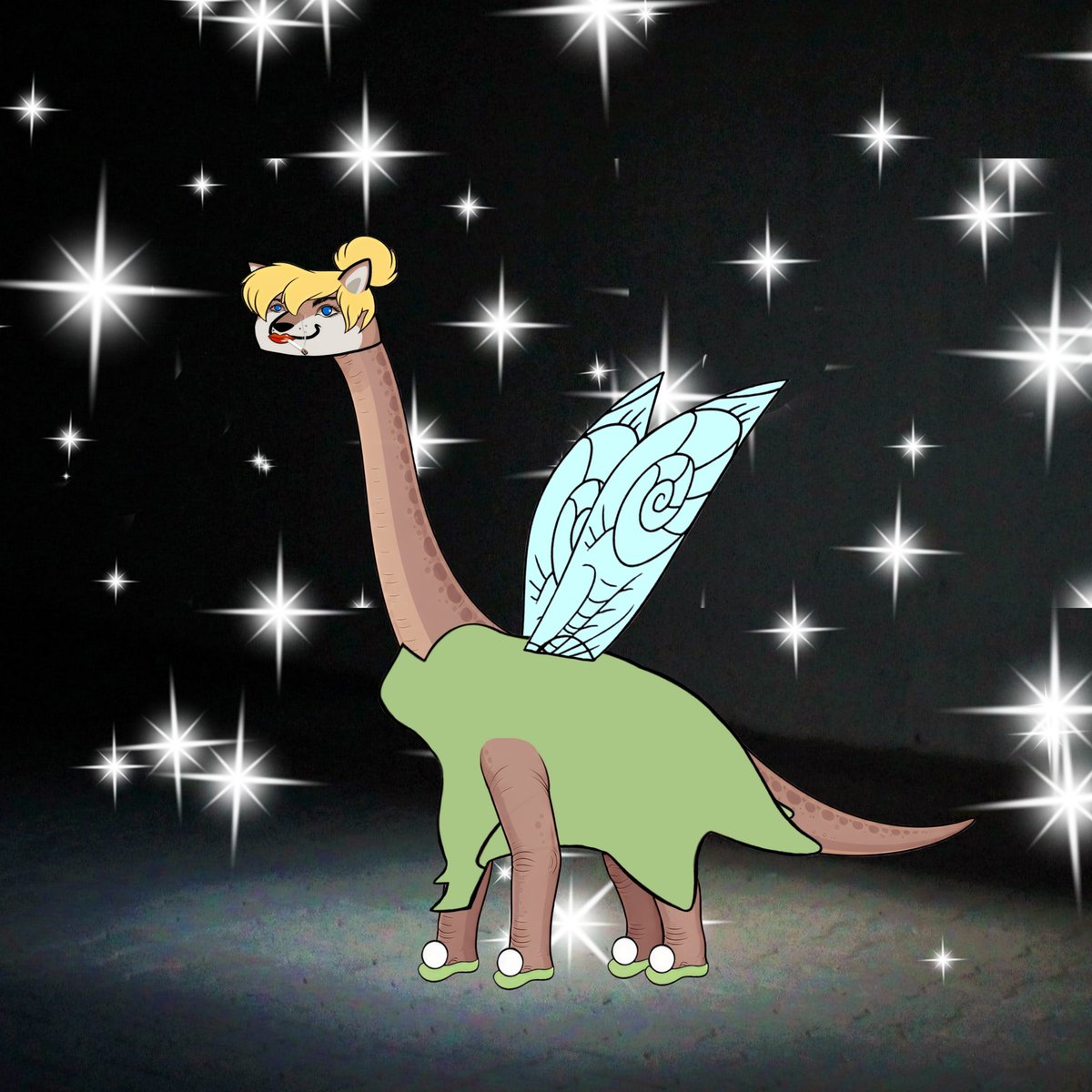
@Fairyfellina - your fairy brachiosaurus can join Dino Division!
Thank you for your support and thank you, @slayerofmoskali , for sponsoring the Fella! 🥰🥰🥰

8
16
31
1,460
Roxy in Space retweeted

Welcome 3 more Fellacorns to our movienight🍿 thank you @Underground3015 🥰
First is @Hoesrus6969 currently temporary escaped from Twitmo to enjoy a NAFO beer at the movie

1
9
17
124


Roxy in Space retweeted

🇺🇦 Ukrainians are not just defending their homeland. They are on the front lines of a battle for freedom that reaches far beyond their borders, a fight against oppression and aggression that resonates with all who value sovereignty and democracy.
☎️✍🏽 If you live in the U.S., EU, or any ally country—call, write, tag your representatives. Demand continued support for air defense and the lifting of restrictions on Ukraine.
I’m proud to stand in solidarity.
🌍 United, we can continue to send a message of unwavering hope and steadfast support to the people of Ukraine.
Slava Ukraini 🇺🇦

10
9
47
1,015
I’m a big fan of what Heal Los Angeles is doing to help the kids of Loreto Street Elementary.

Our mental health program S.M.I.L.E. Program at Hayvenhurst ♥️
Our S.M.I.L.E. Program is presented by @KookyTrails 🎡
1
1
15
Roxy in Space retweeted

Jun 12
The Heritage Foundation flips on Ukraine! Then they hooked up with Viktor Orban (the Kremlin sock puppet in Hungary) and flipped overnight as he helped fund them.
Orban gets voted out and Heritage flips again. Now they are pro-aid and noting that Russia cannot win the war.
Some of us never change our support or our prediction. Some of us saw how Russia seriously injuring its nation by a suicidal and unwinnable war would help reshape the global balance of power.
Will Heritage flip again on a major issue to lure in a big donor? Ronald Reagan rolled over in his grave.
foxnews.com/opinion/dont-loo… #FoxNews
13
84
456
21,688
Roxy in Space retweeted

You’re losing 35,000 troops a month. It’s time you admitted you got beat and go home. I served 30 years in AF and I’m glad Putin is getting his ass handed to him.
100
170
1,655
16,044
Roxy in Space retweeted

Netanyahu has decided to accept the Iranian deal. Security officials are despondent and see it as a disaster. Ynet brings some high level quotes from them:
1) A senior Israeli official said "Nobody is happy with this. We understand it is not good for us, and that it harms Israeli interests. What is troubling is that Israel cannot influence it. Its voice is not being heard."
2) The anger at Trump is palpable.: "Trump screwed us, we took the hit. We're no longer in the loop and can't really influence anything."
3) Israelis fear Iran will be economically revived: "They've blown money on the Iranians, who are getting everything they want. They'll build a missile corps, and we'll have to pour money into interceptors." Israel sees oil revenue flowing back into the exact capabilities the war was meant to degrade.
4) They don't believe a deal will adequately deal with the nuclear issue: "The real test of the deal is removing the uranium and destroying it. If that doesn't happen, the sense of a bad deal will turn into something more concrete."
5) They fear this will embolden Iran: "Iran has smelled that it can achieve things by force, and it will use that against its neighbors and against us."
6) The deepest worry is not military. It is perception. After months of direct fire, Iran is seen across the region as the side that took the pressure and did not fold: "the regional working assumption will be that it was signed under Iranian pressure and American capitulation, rather than the reverse."
Israel is concerned that Iran will be stronger, the US will be weaker and that the future for it will be bleak in the region. This war has been a disaster for Israel.
902
1,243
4,602
737,368
Roxy in Space retweeted

MICHAEL is now tracking to hit $940M-$950M at the global box office this weekend after a superb #1 debut in Japan.
It’ll soon beat OPPENHEIMER ($975M) to become the biggest biopic of all time.


78
1,256
8,351
169,368
Roxy in Space retweeted

#NAFO Friends, do you see this tweet ?
A little reminder ❤️
I’ve been a bit quiet lately. Between air 🚨,car repairs, and work, there simply haven’t been enough hours in the day.
On Monday I’ll finally be back on Twitter and catch up with everyone 😊
In the meantime, please don’t forget about our patches and tshirts on Etsy.
craftedatelier.etsy.com
Every order helps our small workshop in Odesa 💙💛 keep moving forward.
Thank you to everyone who continues to support us, share our posts, and stick with us through the chaos 🫂❤️
I’ll write a separate post about the fundraiser. At the moment, it’s crawling along 😔.


4
32
50
981
Roxy in Space retweeted

12h
💙💛 Try not to overload on cuteness.
These are the youngest kids in the Ukrainian Dance group my son is part of.
64
138
939
8,820
Roxy in Space retweeted

Five U.S. intelligence sources tell CNN that Iran has begun collapsing tunnels and rigging entrances with explosive mines to secure its near weapons-grade uranium stockpile. The roughly half-ton cache of highly enriched material is now far more difficult and dangerous to access.
198
589
3,356
241,780
Roxy in Space retweeted

12h
#NAFO Dear friends! Today marks the third week of my hospital stay. Sepsis is a terrible disease. Unfortunately, my kidneys and lungs suffered the most. The most difficult period was during my stay in the intensive care unit. I am currently undergoing treatment with a nephrologist and pulmonologist. I am in the pulmonology department. Victory is still a long way off. I was feeling well for a couple of days, but this evening my temperature rose to a high level. I continue to fight. I want to say a huge thank you to all of you for the support and help you have given me. My appearance has changed a little, but I hope everything will return to normal. Thank you to each and every one of you! Today I was allowed to go home for two hours, but I had to return to the hospital.

100
83
433
4,510
Roxy in Space retweeted

Thank you for joining us!

1
5
24
Roxy in Space retweeted

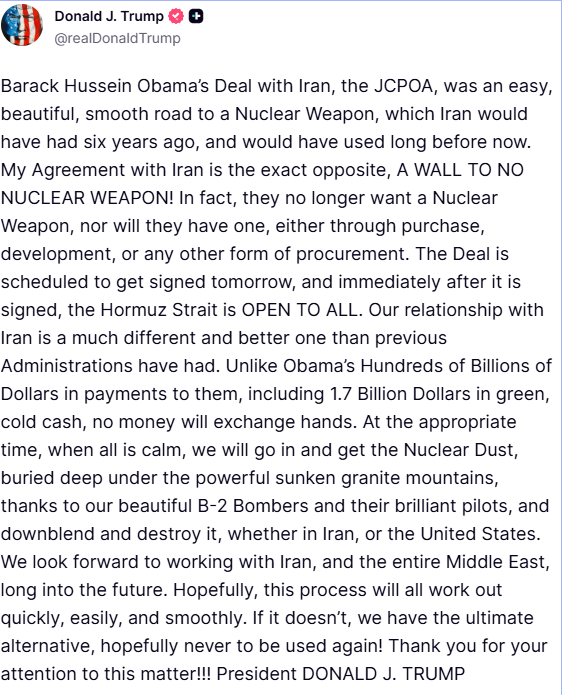
Is this idiot trying to settle this foreign policy debacle Sunday, just so he can announce it on his birthday tomorrow during the UFC fight?

President Trump says a deal with Iran "is scheduled to get signed tomorrow, and immediately after it is signed, the Hormuz Strait is OPEN TO ALL"
Iran has not agreed to turn over its nuclear materials as part of this deal
Trump says the military will "go in and get" it
1,170
359
1,925
226,012