Joined June 2019
- Tweets 489
- Following 523
- Followers 479
- Likes 1,087
Photos and videos
Stylianos Syropoulos retweeted

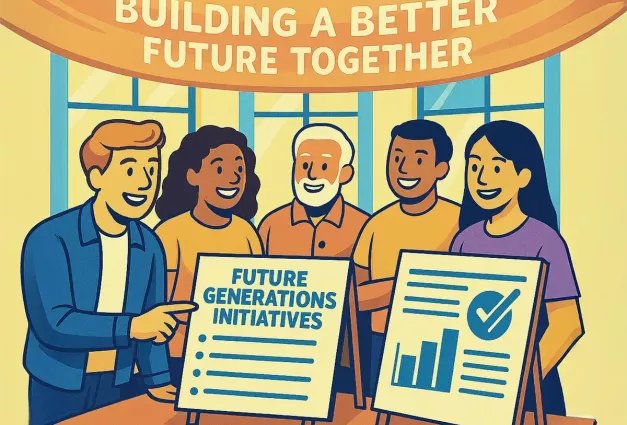
"There is broad, bipartisan support for policies that protect future generations. The main barrier is the false belief that others don’t share that opinion." - @law_fiore & @SSyropoulos ow.ly/sAxA50XNeHo
1
2
4
409
Stylianos Syropoulos retweeted

7 Sep 2025
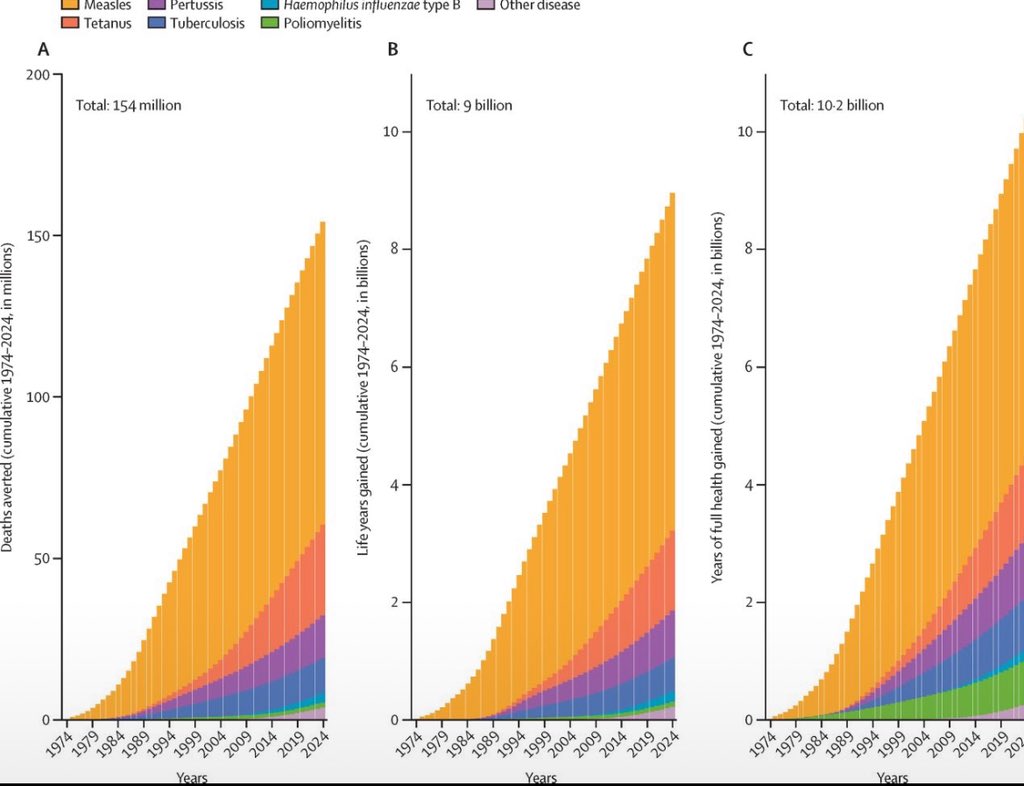
Staggering numbers by the Lancet. Vaccinations have:
- Averted 154 million deaths
- For every death averted, 66 years of full health were gained on average = 10.2 billion years total
- Accounted for 40% of the observed decline in global infant mortality
182
1,861
5,235
264,397
Stylianos Syropoulos retweeted

26 Aug 2025
New in @PNASNews! We analyzed 38 million US obituaries to see how we remember the deceased:
- Tradition & benevolence dominate legacies
- Major cultural events (e.g., 9/11) shifted what values were emphasized
- Gender & age of the deceased shape legacies
pnas.org/doi/10.1073/pnas.25…
4
12
1,339
Stylianos Syropoulos retweeted

20 Aug 2025
I will be reviewing applications this fall for @ASUPsych’s clinical psych PhD program. Please send any prospective students with interests in alcohol, cannabis and co-use my way! My lab’s current and future priorities can be found here psychology.asu.edu/research/…
3
32
66
5,292
Stylianos Syropoulos retweeted

17 Aug 2025
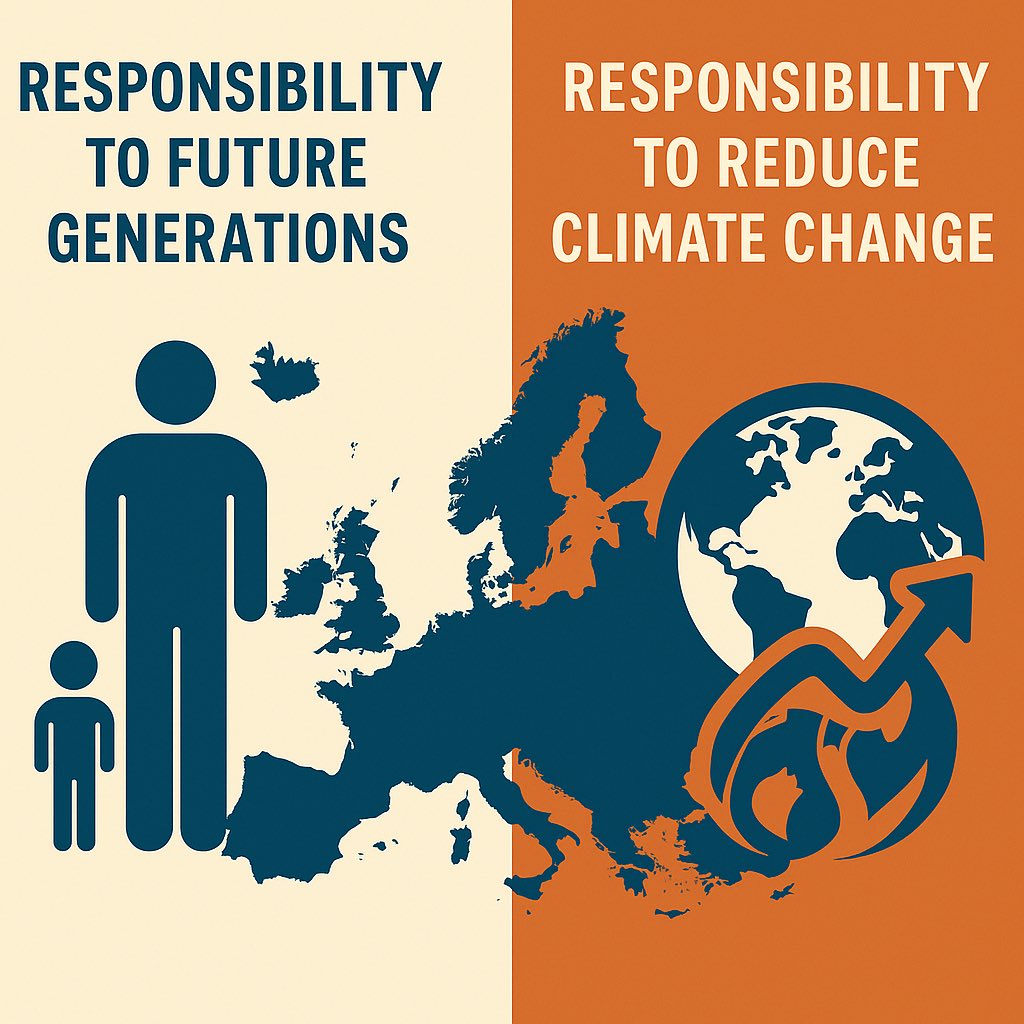
Across six European countries, people feel more responsible to protect future generations than to directly reduce climate change. Both forms of responsibility predict support for climate policy, extending prior U.S. findings to Europe.
🔗 authors.elsevier.com/a/1lcgH…
New paper with Zhaoquan Wang, @SSyropoulos and many others.
2
4
231
Stylianos Syropoulos retweeted

15 Aug 2025
I’m excited to share our new @Nature paper 📝, which provides strong evidence that the walkability of our built environment matters a great deal to our physical activity and health.
Details in thread.🧵
nature.com/articles/s41586-0…

65
696
3,395
367,836
Stylianos Syropoulos retweeted

15 Aug 2025
Looking for a postdoc? Apply for Cornell’s Klarman Fellowship with me! I’m interested in rules, rule-breakers, and curiosity, broadly construed.
Link for more info here: as.cornell.edu/research/klar… (3 years, $80K/yr; Oct 15th deadline)
Email me directly if you’re interested!
1
54
162
23,104
Stylianos Syropoulos retweeted

10 Aug 2025
I’ll be considering grad student applications this year @UMassAmherst - check out caslumass.com for some of our current projects seeking to understand and treat self-injurious behaviors, suicide, and borderline personality disorder with digital health, DBT
1
22
57
7,049
Stylianos Syropoulos retweeted

5 Aug 2025
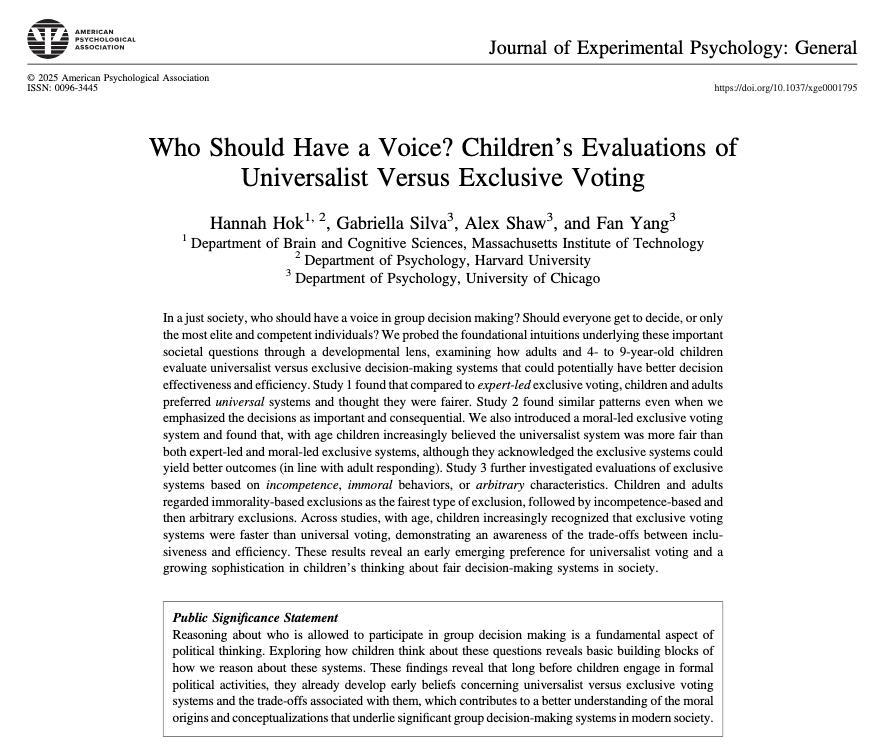
Who should have a voice in a just society? 🗳️
Our new JEP:G paper finds that young children and adults believe voting should be for everyone—not just the elite or the most capable. But being morally bad is seen as a fair reason to lose this right.
doi.org/10.1037/xge0001795
3
12
617
Stylianos Syropoulos retweeted

23 Jul 2025
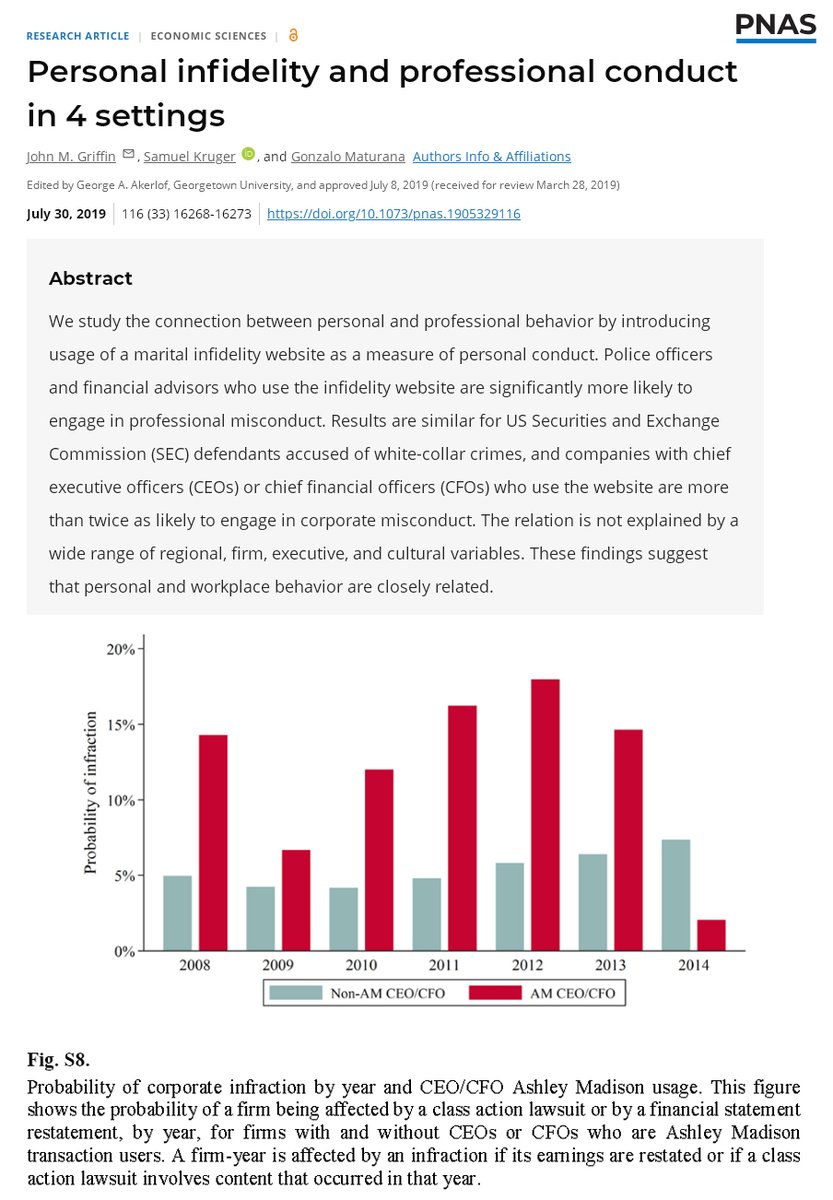
People who cheat on their spouses are more likely to cheat at work, too.
Evidence: Marital infidelity predicts 2-3x greater odds of professional misconduct among CEOs, financial advisors, and police officers.
Integrity is not a 9-5 job. Character counts in every part of life.
70
507
2,757
250,862
Stylianos Syropoulos retweeted

8 Jul 2025
There’s an ongoing effort by researchers from Arizona State University to understand people who choose to voluntarily participate in grass-removal programs.
I spoke with ASU assistant professor Stylianos Syropoulos for @kjzzphoenix.
kjzz.org/education/2025-07-0…
1
1
1
148
Stylianos Syropoulos retweeted

17 Jun 2025
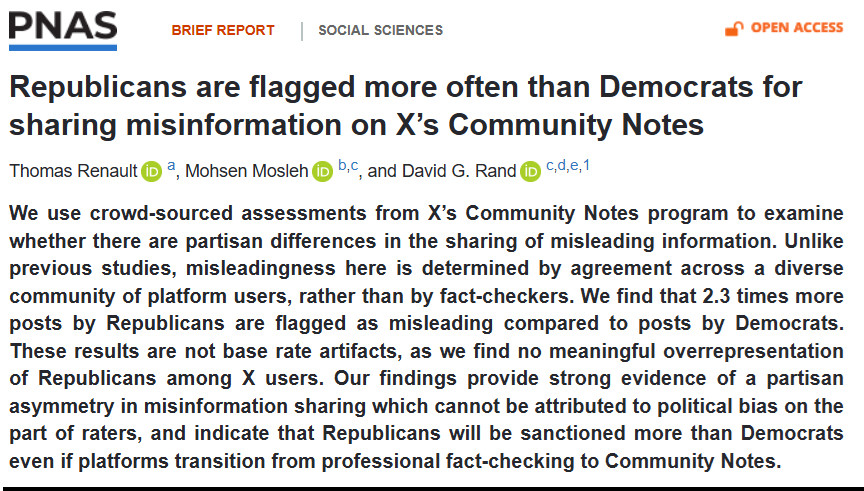
Back to X just to post new PNAS paper for @elonmusk: we find @CommunityNotes flags 2.3x more Republicans than Democrats for misleading posts! The issue is Reps sharing misinformation, not fact-checker bias... pnas.org/doi/full/10.1073/pn…
5
34
124
12,230
Stylianos Syropoulos retweeted

11 Jun 2025
🧵1/12 New GreeneLab paper in Nature Human Behaviour—after 5 years! Our cooperative quiz game, Tango (letstango.org), defuses political animosity and improves democracy-related attitudes. Some key effects last 4 months
doi.org/10.1038/s41562-025-0…
2
27
57
9,402
Stylianos Syropoulos retweeted
3 Jun 2025
Excited to share @SeoyeonBae211’s first preprint—an ambitious global study of human motivation!
Using data from 900,000 people in 100 countries, we find altruistic motives consistently outweigh egoistic ones across cultures.
osf.io/preprints/psyarxiv/by…

1
2
7
270
Stylianos Syropoulos retweeted
"brief, low-cost psychological interventions can help individuals adopt a more expansive moral perspective to include future generations" ow.ly/vOol50W3E7U via @ConversationUS
2
11
534
Stylianos Syropoulos retweeted
3 Jun 2025
We asked over 8,700 people in 6 countries to think about future generations in decision-making, and this is what we found theconversation.com/we-asked… via @ConversationUS @SSyropoulos
1
5
125
Stylianos Syropoulos retweeted
29 May 2025
Across 3 studies, we find that valuing future lives equally—regardless of their distance in time—predicts stronger interest in long-term oriented, high-impact careers.
Preprint here: osf.io/preprints/psyarxiv/nc…
@SSyropoulos @PaigeAmormino @LianeLeeYoung @benrogersOB

2
9
313
Stylianos Syropoulos retweeted

23 May 2025
Given everything happening to the students and postdocs everywhere right now... reminder we are still looking for a post-doc. A safe position in a stable, highly innovative environment in a safe, public health and public education loving country.

🧭#Postdoc alert! Build wiser #AI at @UWaterloo’s Wise Judgment Consortium & CHARM lab @amirhkarimi_ . Topics: cultural reasoning, multi‑agent LLMs, preference modelling. Global, CIFAR backing, CAD 65k benefits. Apply ➜ forms.gle/bM49EdkkhrXecaoE6 #ResponsibleAI #postdocjobs
1
4
423
Stylianos Syropoulos retweeted

13 May 2025
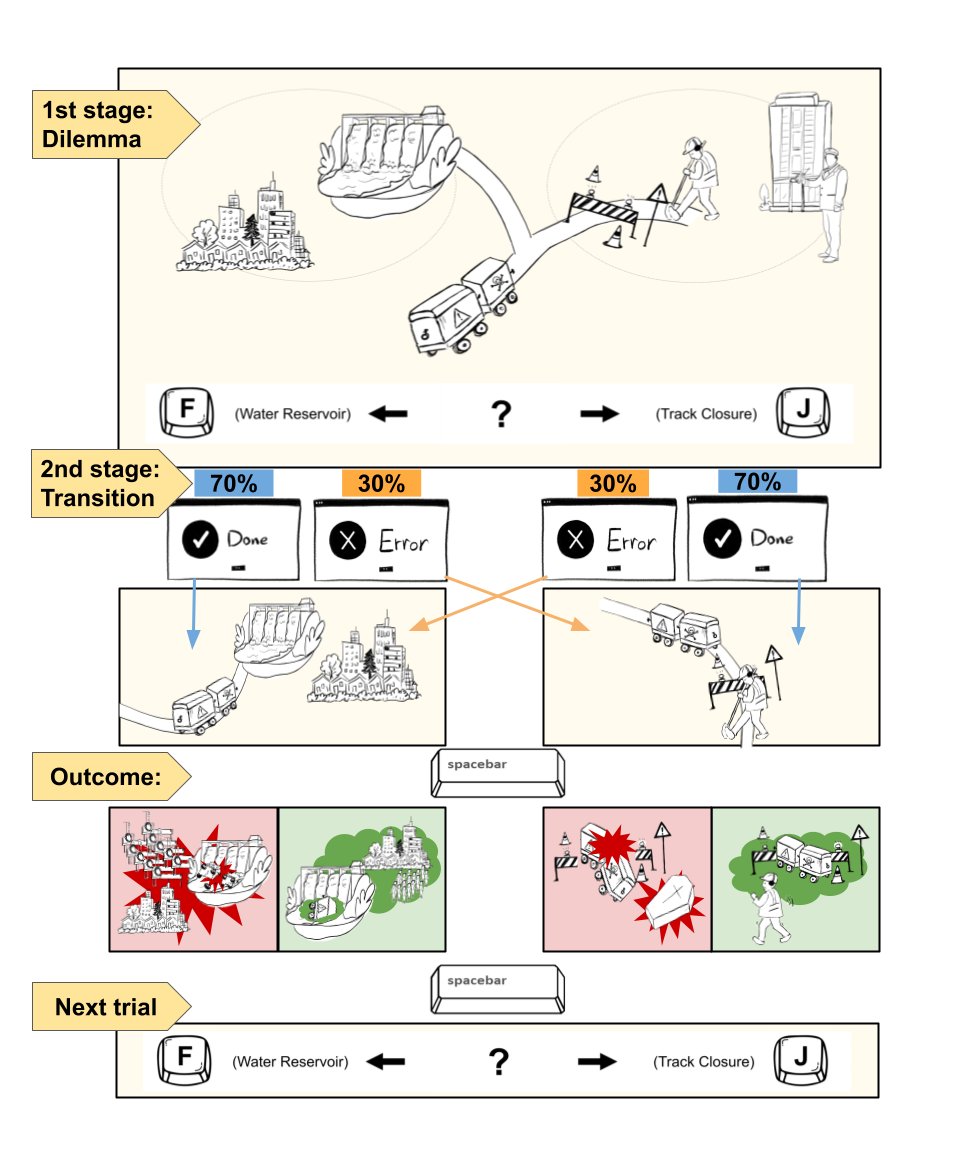
New preprint w/ @MaxMa1er, @vanessachg_, Fiery Cushman, & @FalkLieder: Disentangling Model-Based and Model-Free Moral Learning
doi.org/10.31234/osf.io/azhn…
Excited to present this work at #CogSci2025!
1
6
8
603
Stylianos Syropoulos retweeted

14 May 2025
It is easy to glance at the news and be captivated by whatever fresh travesty is happening in the world today. But the reality is that most of people’s moral lives play out in quieter, seemingly more mundane moments, such as those involving friends and family, at the grocery store, or at the office.
Over the past four years, I have been involved in a large-scale project seeking to better understand these “everyday moral dilemmas.” I’m thrilled to say that the results of this project were published yesterday in the journal PNAS: Nexus.
academic.oup.com/pnasnexus/a…
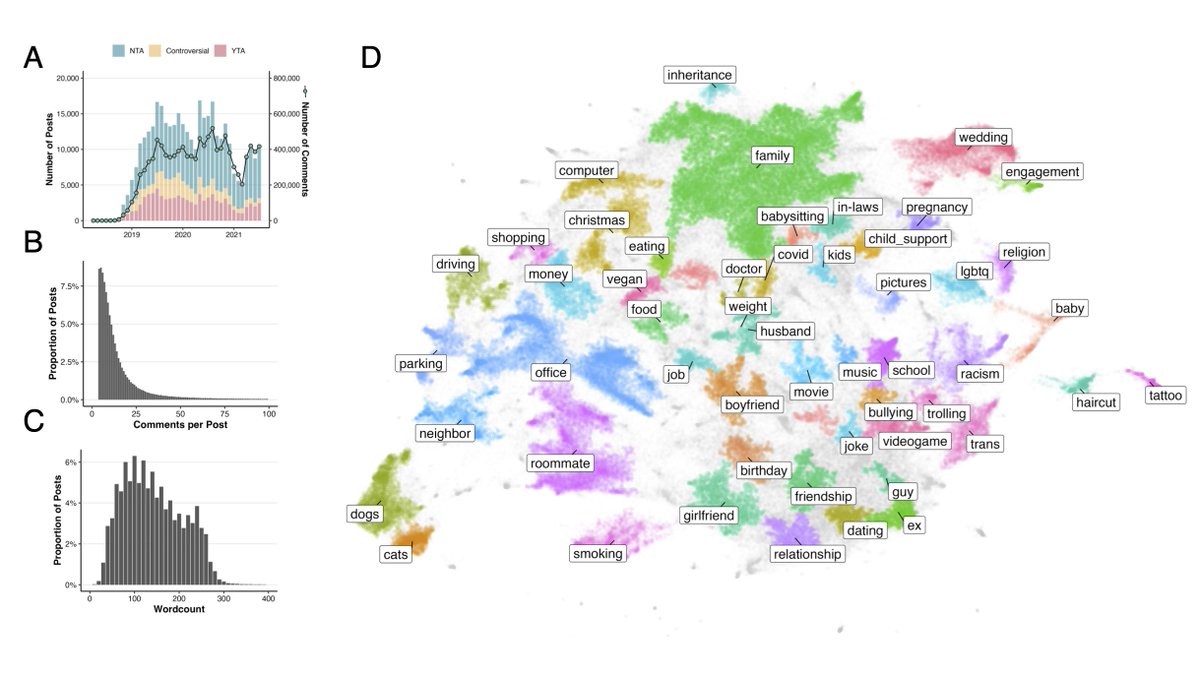
To explore this topic, my collaborators and I used an unconventional data source: the "Am I the Asshole?" forum on Reddit, a thread in which people post about everyday moral conundrums and elicit feedback from their peers. We extracted 369,000 posts and 11 million “comments,” or reactions to these posts, from the site, then used state-of-the-art language processing tools to analyze the data. To assess generalizability of this data we then conducted a followup study involving a US-representative sample.
Many of our findings surprised me. Here are some highlights:
-𝗧𝗵𝗲𝗿𝗲 𝗮𝗿𝗲 𝟮𝟵 𝗱𝗶𝗳𝗳𝗲𝗿𝗲𝗻𝘁 𝗸𝗶𝗻𝗱𝘀 𝗼𝗳 𝗲𝘃𝗲𝗿𝘆𝗱𝗮𝘆 𝗺𝗼𝗿𝗮𝗹 𝗱𝗶𝗹𝗲𝗺𝗺𝗮𝘀. These range from “broken promises” to “privacy violations.”
-𝗧𝗵𝗲 𝗺𝗼𝘀𝘁 𝗳𝗿𝗲𝗾𝘂𝗲𝗻𝘁𝗹𝘆 𝗲𝗻𝗰𝗼𝘂𝗻𝘁𝗲𝗿𝗲𝗱 𝗺𝗼𝗿𝗮𝗹 𝗾𝘂𝗲𝘀𝘁𝗶𝗼𝗻 𝗶𝘀: “𝗪𝗵𝗮𝘁 𝗱𝗼 𝗜 𝗼𝘄𝗲 𝘁𝗵𝗶𝘀 𝗽𝗲𝗿𝘀𝗼𝗻?” 𝘙𝘦𝘭𝘢𝘵𝘪𝘰𝘯𝘢𝘭 𝘰𝘣𝘭𝘪𝘨𝘢𝘵𝘪𝘰𝘯𝘴—that is, questions about what we owe (and don’t owe) to friends and family—are the most commonly experienced type of moral dilemma.
-𝗛𝗼𝗻𝗲𝘀𝘁𝘆 𝗶𝘀 𝗸𝗶𝗻𝗴. The most negatively evaluated behaviors concerned acts of 𝘥𝘪𝘴𝘩𝘰𝘯𝘦𝘴𝘵𝘺.
-𝗣𝗲𝗼𝗽𝗹𝗲 𝗵𝗮𝘁𝗲 𝗵𝘆𝗽𝗼𝗰𝗿𝗶𝘁𝗲𝘀. Being 𝘫𝘶𝘥𝘨𝘮𝘦𝘯𝘵𝘢𝘭 is among the things most likely to get you labeled “the asshole”
-𝗠𝗼𝗿𝗮𝗹𝗶𝘁𝘆 𝗶𝘀 𝗳𝗹𝗲𝘅𝗶𝗯𝗹𝗲. People, for example, think it’s worse to lie to a 𝘤𝘰𝘸𝘰𝘳𝘬𝘦𝘳 than your 𝘣𝘰𝘴𝘴, and it’s worse to break a promise to your 𝘥𝘢𝘶𝘨𝘩𝘵𝘦𝘳 than your 𝘴𝘰𝘯.
In followup analysis, we have found that there is virtually no difference in the kinds of moral dilemmas experienced across the political divide. This suggests that when you zoom out from the hot-button issues that divide us, we all grapple with similar questions: questions such as how to navigate interpersonal disagreement, build community, and contribute to society (and, of course, whether we should be honest with our partner about their new haircut).
The bottom line is our moral lives are far richer, more varied, and more similar to each other than you might think.
Big thanks to my co-authors Sudeep Bhatia, Geoff Goodwin, Andrew Reece, PhD, and Kurt Gray.
10
30
1,552