▶️Interventional & Structural Cardiologist @AtlantiCareNJ ⏮ ⚒ #RadialFirst #CHIP #IVUS #MCS #TAVR #PERT |Views My Own|🍉
Joined August 2010
- Tweets 8,601
- Following 991
- Followers 1,582
- Likes 6,937
160 Photos and videos
Pinned Tweet

1 Nov 2025
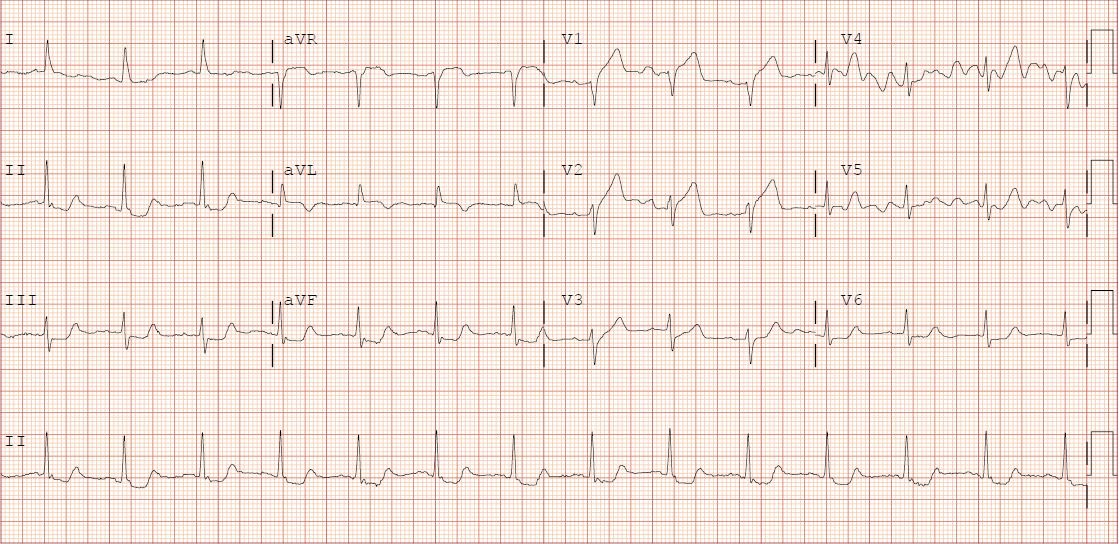
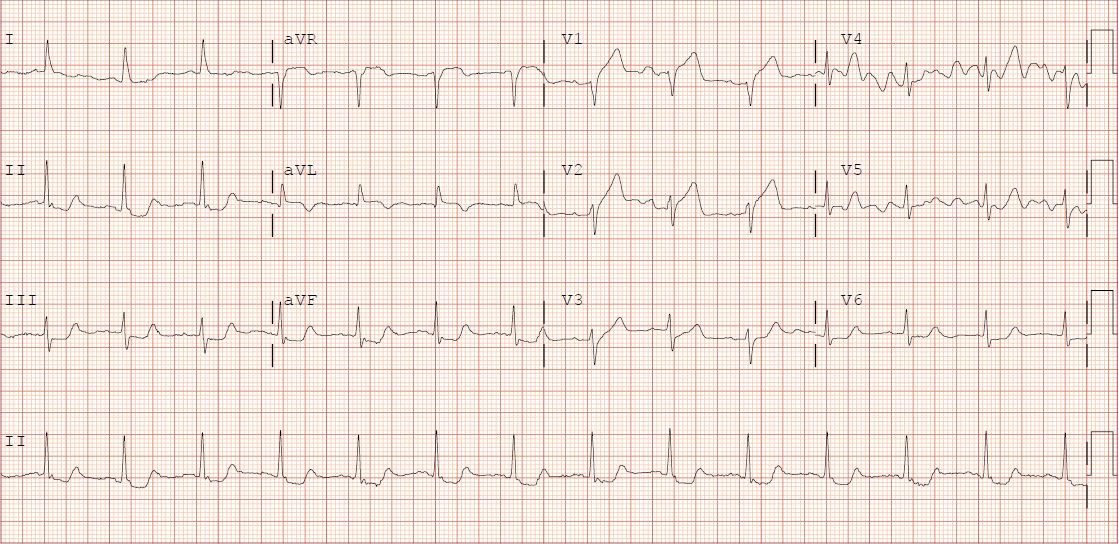
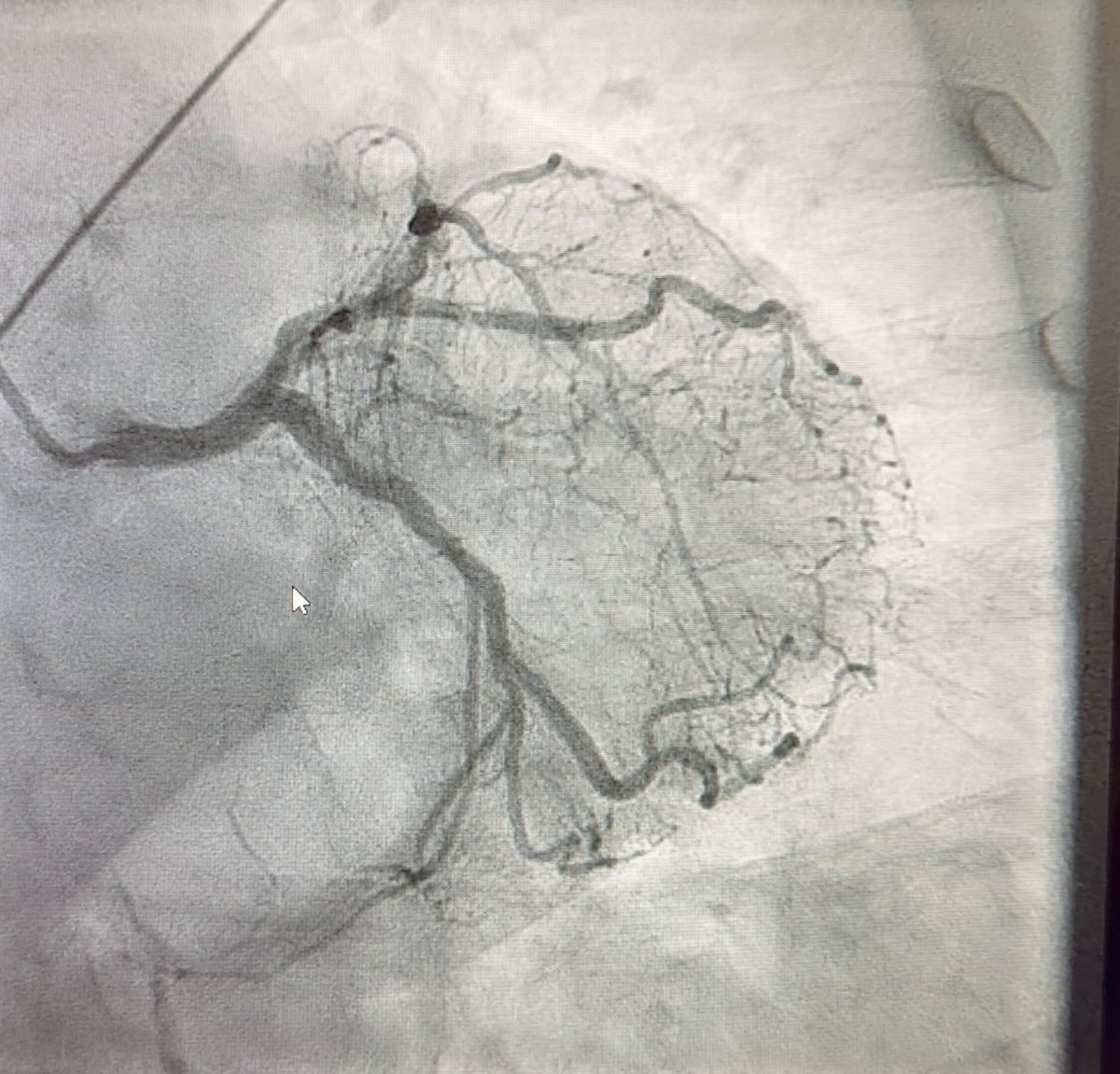
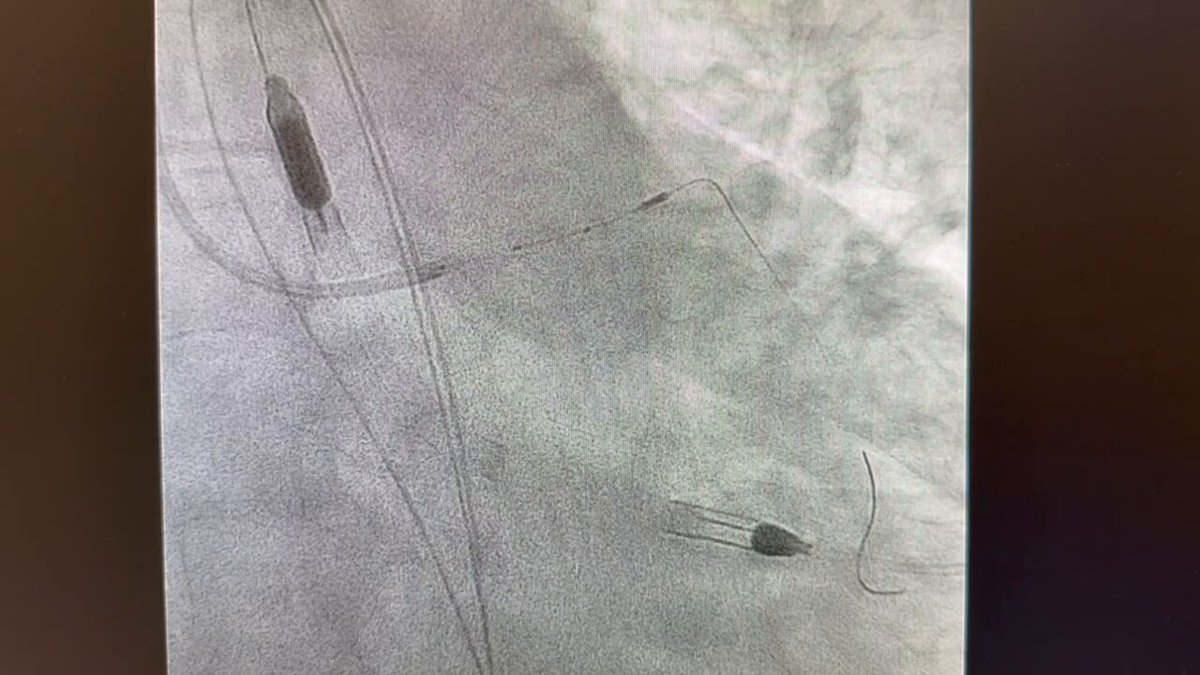
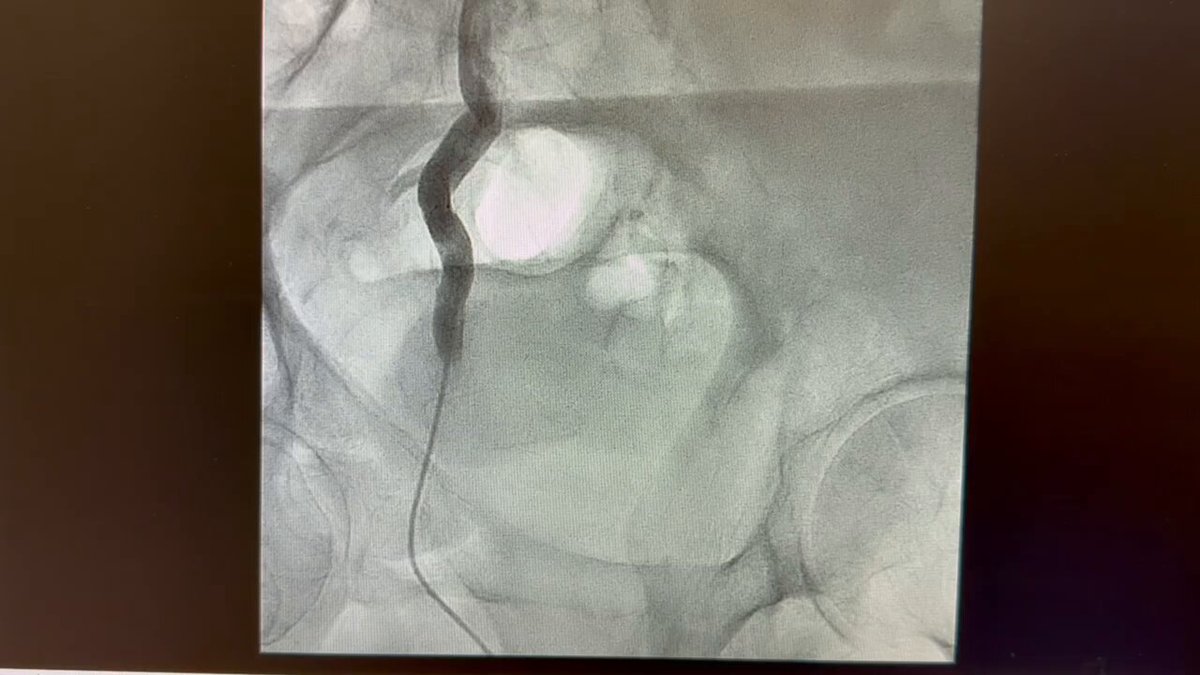
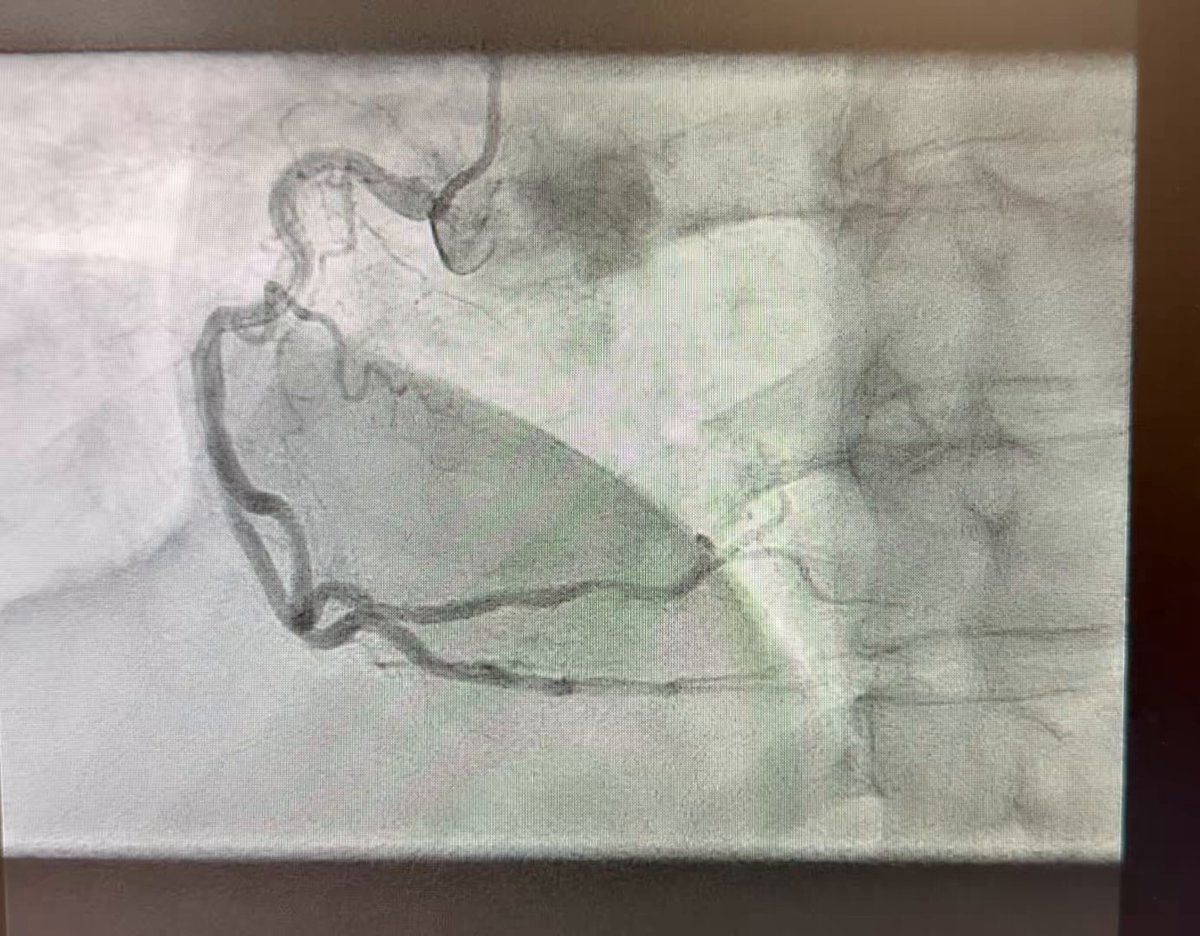
Halloween Haunt: Male 60s with chest pain for 1 hour, EKG with STE in AVR & wide spread depressions. Hemodynamically stable ➡️ CCL ➡️ here’s what angio showed. After the second Left cors shot became acutely 🤢, hemodynamics collapsed hypotension respiratory failure.
What would you do next?
8
9
64
16,210
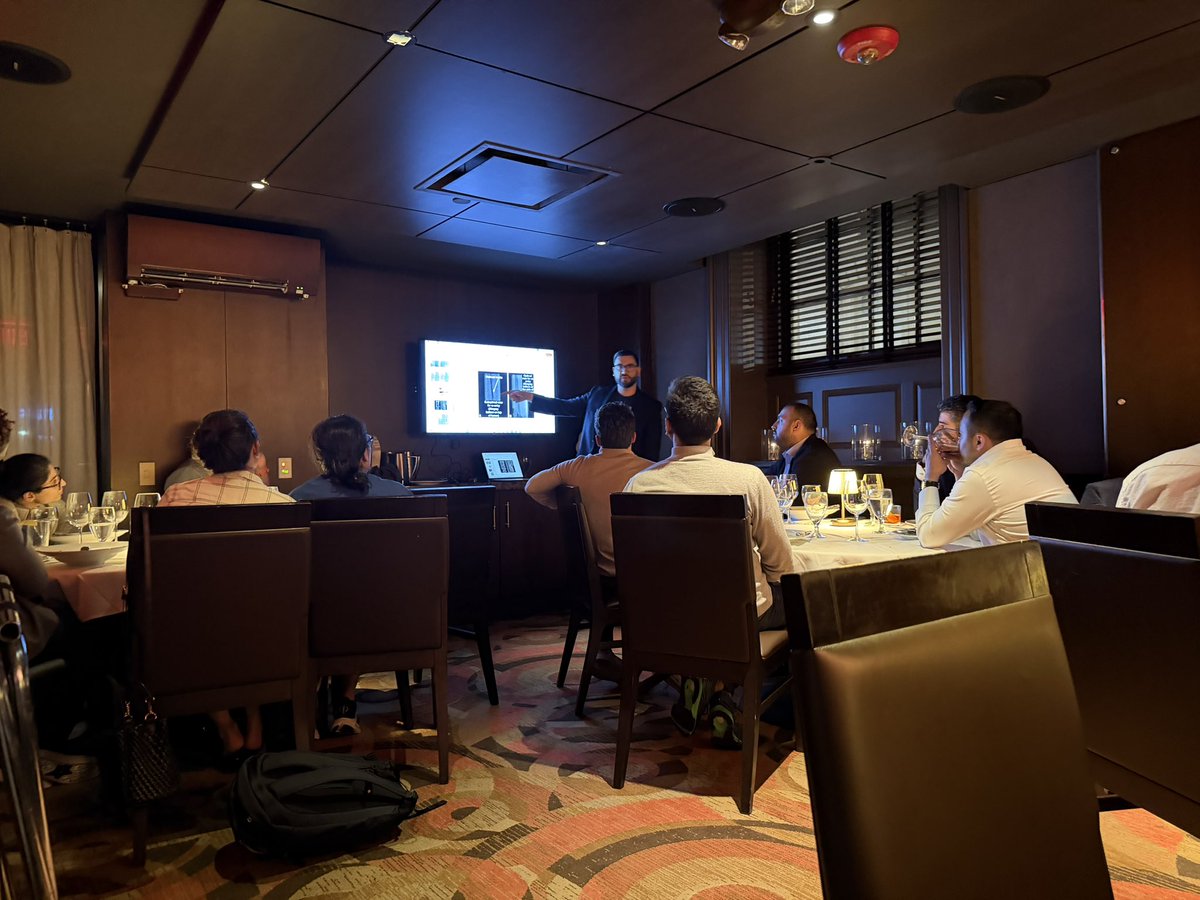
Great meeting last night in #Philadelphia on CTO/CHiP led by @AhmedAlOgaili - excellent cases & conversations by faculty & fellows from around the region. @Drbankacardio #cardiotwitter @scai
1
6
371
Said Ashraf MD, FACC, FSCAI retweeted

Apr 25
10/ My last and most important message
It isn't just your hard work that built your interventional career- it's also the sacrifice, blood and sweat of those who love you
6
10
89
3,719
Said Ashraf MD, FACC, FSCAI retweeted

Apr 24
Gene Braunwald died at 96.
In a normal world, this would be front page of the NYT and WSJ.
The father of modern cardiology.
Fled the Holocaust as a boy
Went on to save millions of lives
The most important clinician-scholar of the last 50 years. We should all know his name

The American Heart Association mourns the passing of the legendary cardiologist Eugene Braunwald, M.D., widely recognized as one of the most influential figures in the history of cardiovascular medicine. Over seven decades, his work reshaped the understanding and treatment of heart disease, leading many to call him the father of modern cardiology.
Braunwald was a lifelong contributor to the American Heart Association, helping advance its research and scientific mission, and was honored with some of the Association’s highest honors for his lasting influence on cardiovascular care and research. His influence extended well beyond his own discoveries, as generations of Association‑supported investigators, clinicians and academic leaders were trained by Braunwald or guided by the clinical trial standards and mentorship models he helped establish.
newsroom.heart.org/news/amer…
26
827
3,735
153,894
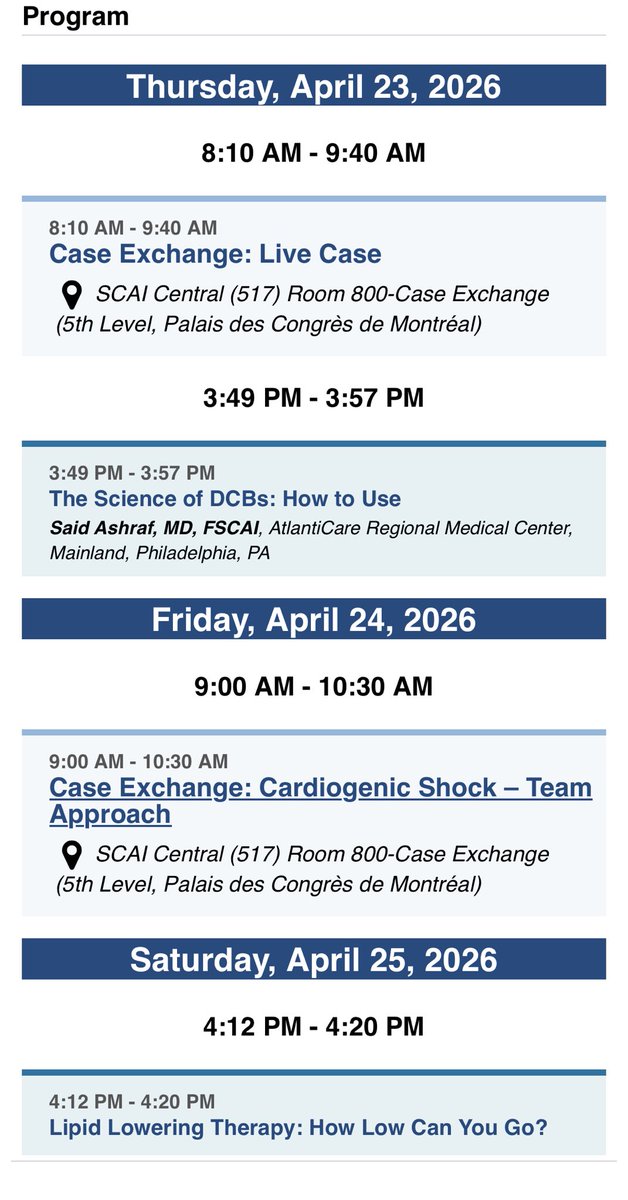
Excited to attend #SCAI2026 in Montréal this week! Looking forward to a week of cutting-edge science.
I’ll be presenting on Drug-Coated Balloons (DCB) & Lipid Lowering Therapy, paneling Cardiogenic Shock Team case exchange and a live case from Oman! — come join the conversations! 🎈💉
Registration is still open—don't miss out on the best in #InterventionalCardiology. See you there!

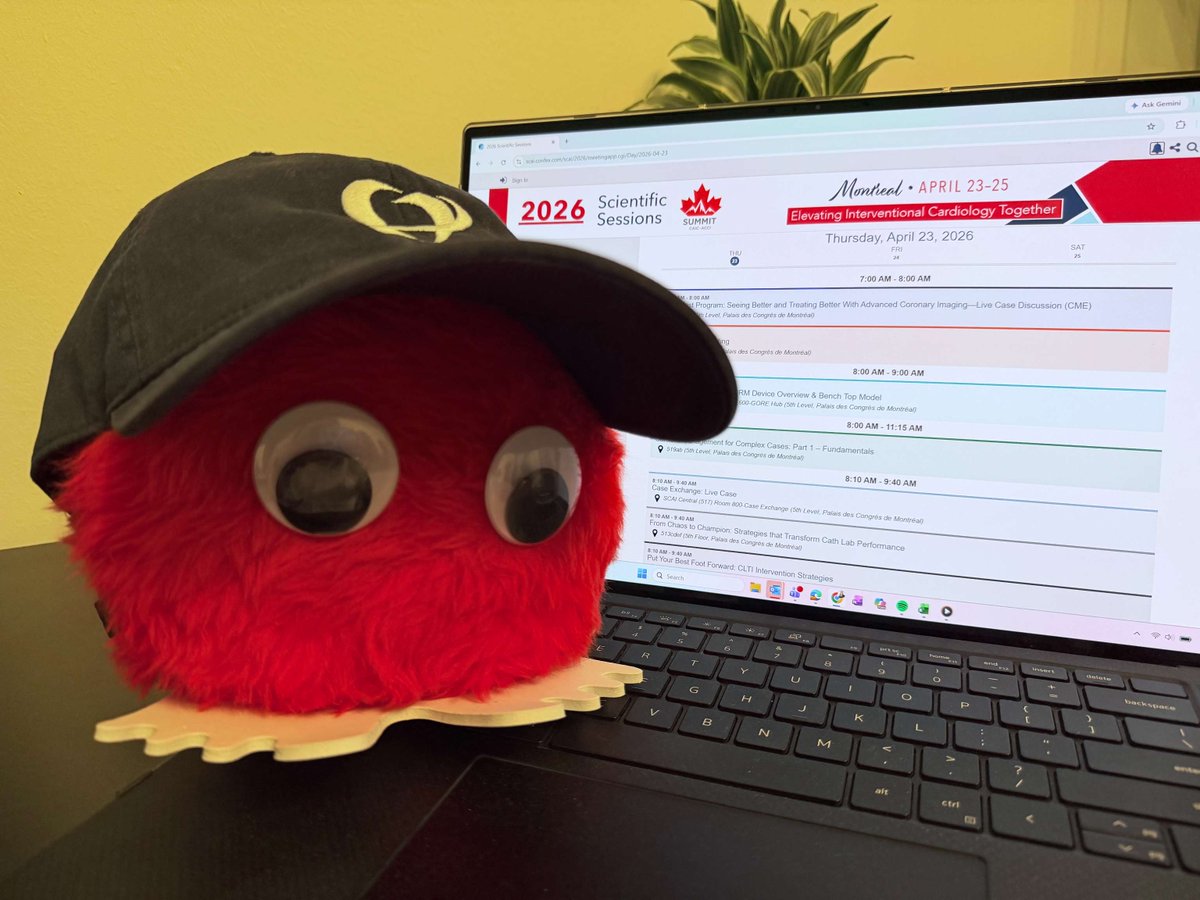
Are you ready?! Stenty can’t wait to welcome you to #SCAI2026 next week—bringing you cutting-edge science, live cases, and the latest innovations in #InterventionalCardiology. Have you built your schedule?
Explore the program ➡️ scai.confex.com/scai/2026/me…
Register ➡️ scai.org/scai2026
#AdventuresOfStenty #CardioX #SCAIHatDay
1
5
13
2,277
3AM STEMI, female in 70s with chest pain for 5 hrs. When you see this angio, you know you’re not goin back to sleep
😁
26
15
190
70,620
2
3
34
7,409
@agtruesdell @GiorgioMedranda @mmamas1973 @ABaliMD @adityadoc1 @Babar_Basir @Allison_Dupont @SripalBangalore @SrihariNaiduMD @SarahFairley7 @BinitaShahMD @LouaiRazzouk @AlkashkariWail @jedicath @mirvatalasnag @SandeepNathanMD @kerrigjl @MusaSharkawi @realarainmd @Obisht @evandrofilhobr @OneMoreDrPatel @Umair2017 @AhmedAlOgaili @MichaelMegalyMD @jl35wilsonMD @Tahmad_dogar @assiri99 @DocSavageTJU @DrIHHashmi1 @aspergian1 @mmamas1973 @georgetolisjr @Hragy @Pooh_Velagapudi @SVRaoMD @DrTedSchreiber
1
4
3,788
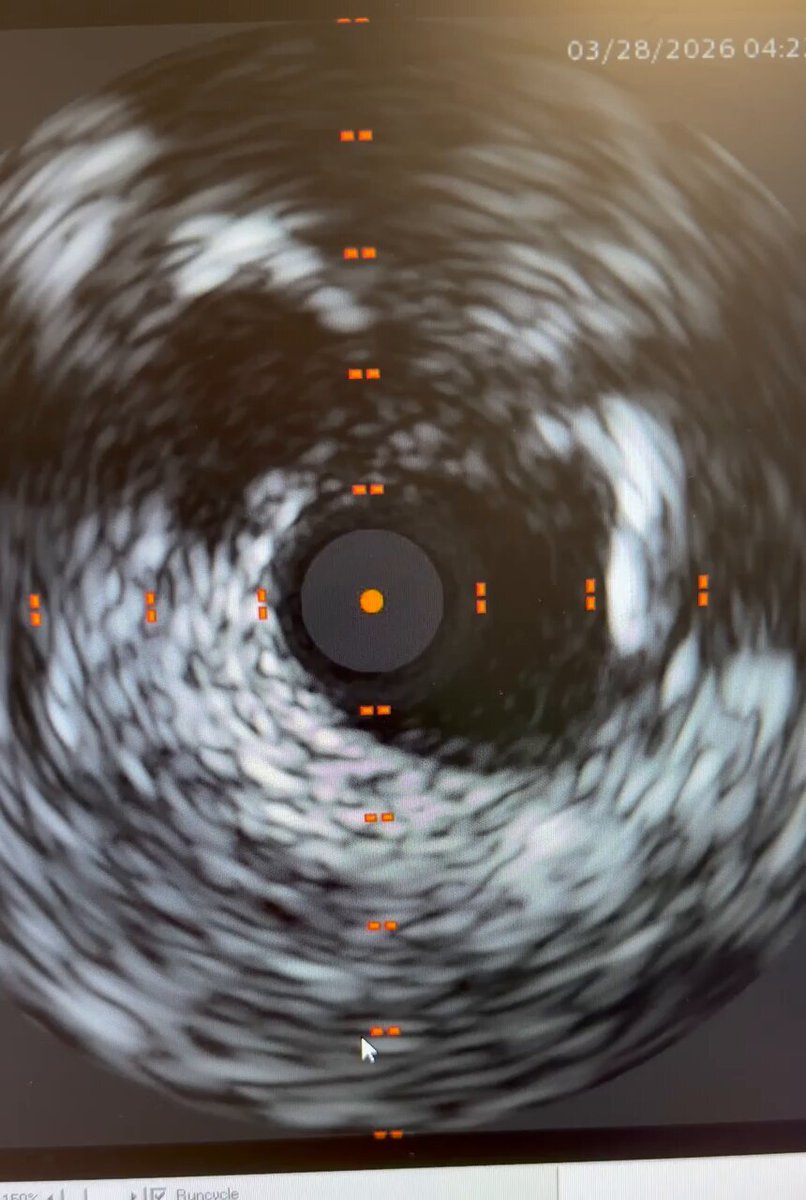
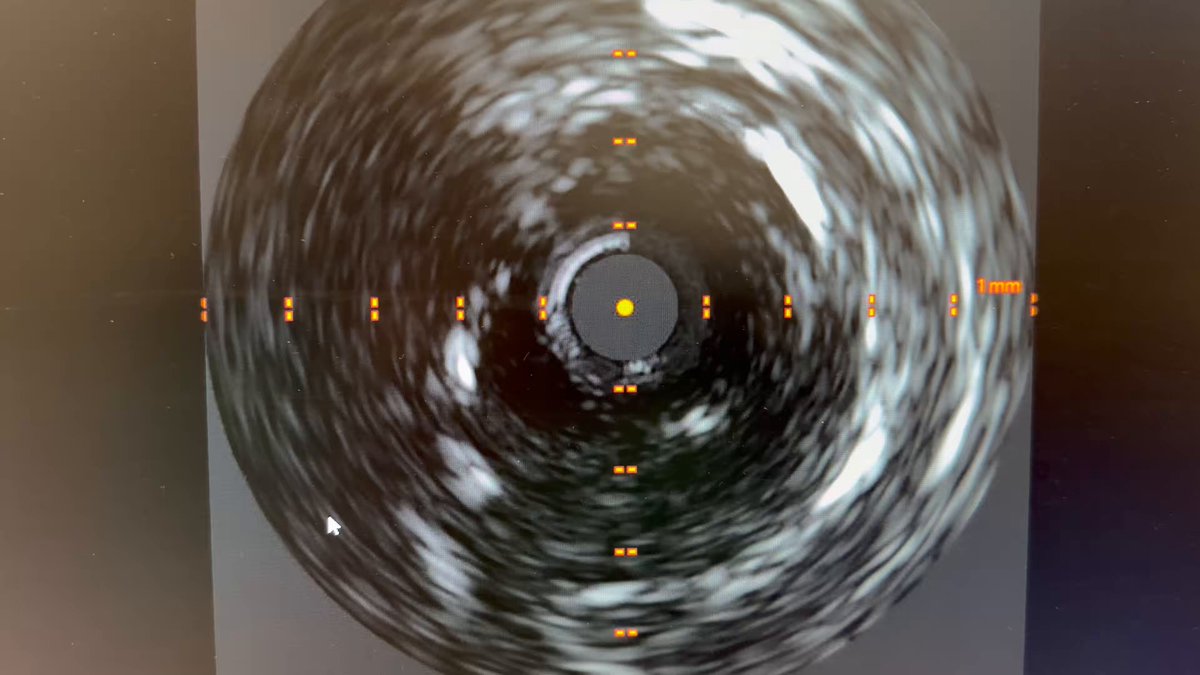
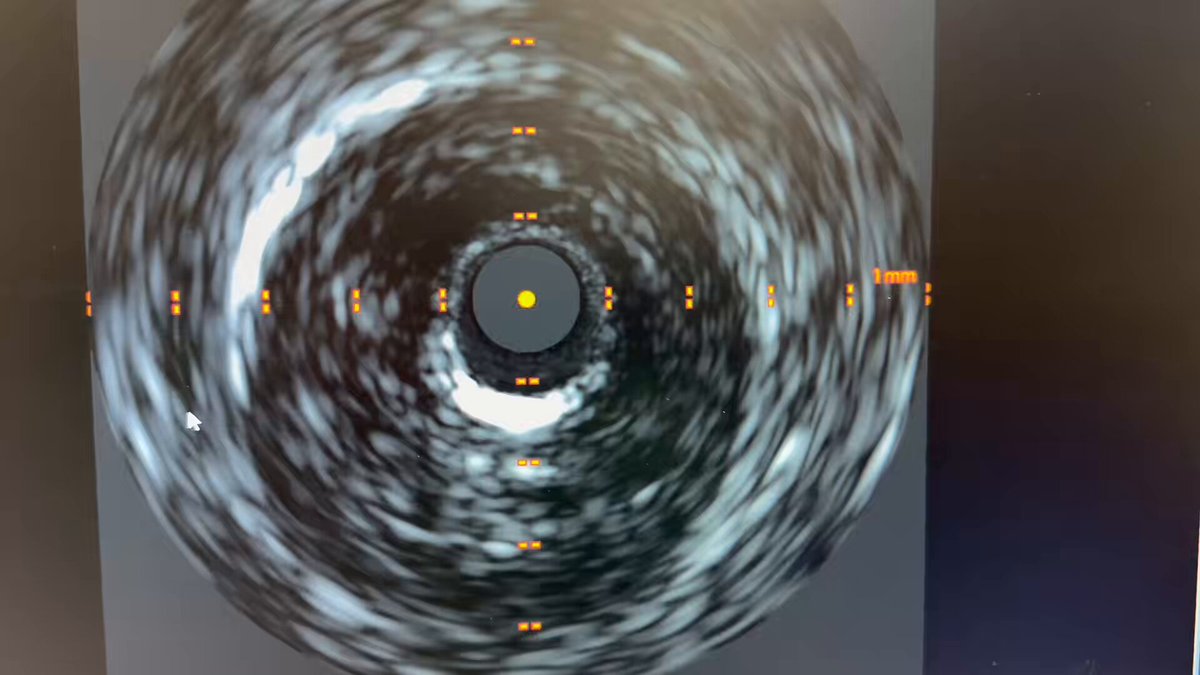
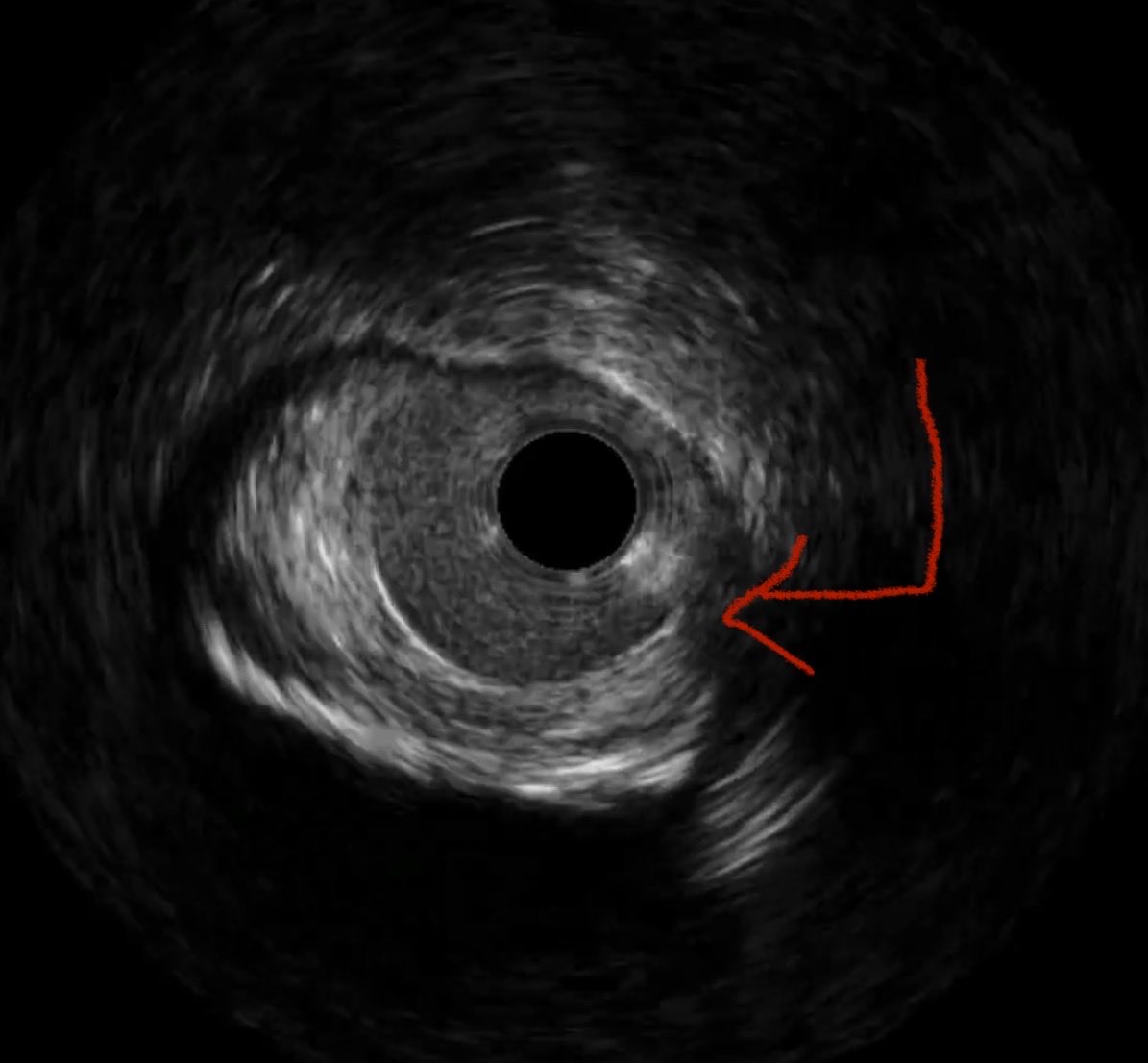
Ivus illustrating the jagged borders of the eruptive nodules (done after two failed IVL attempts)
1
1
13
4,688
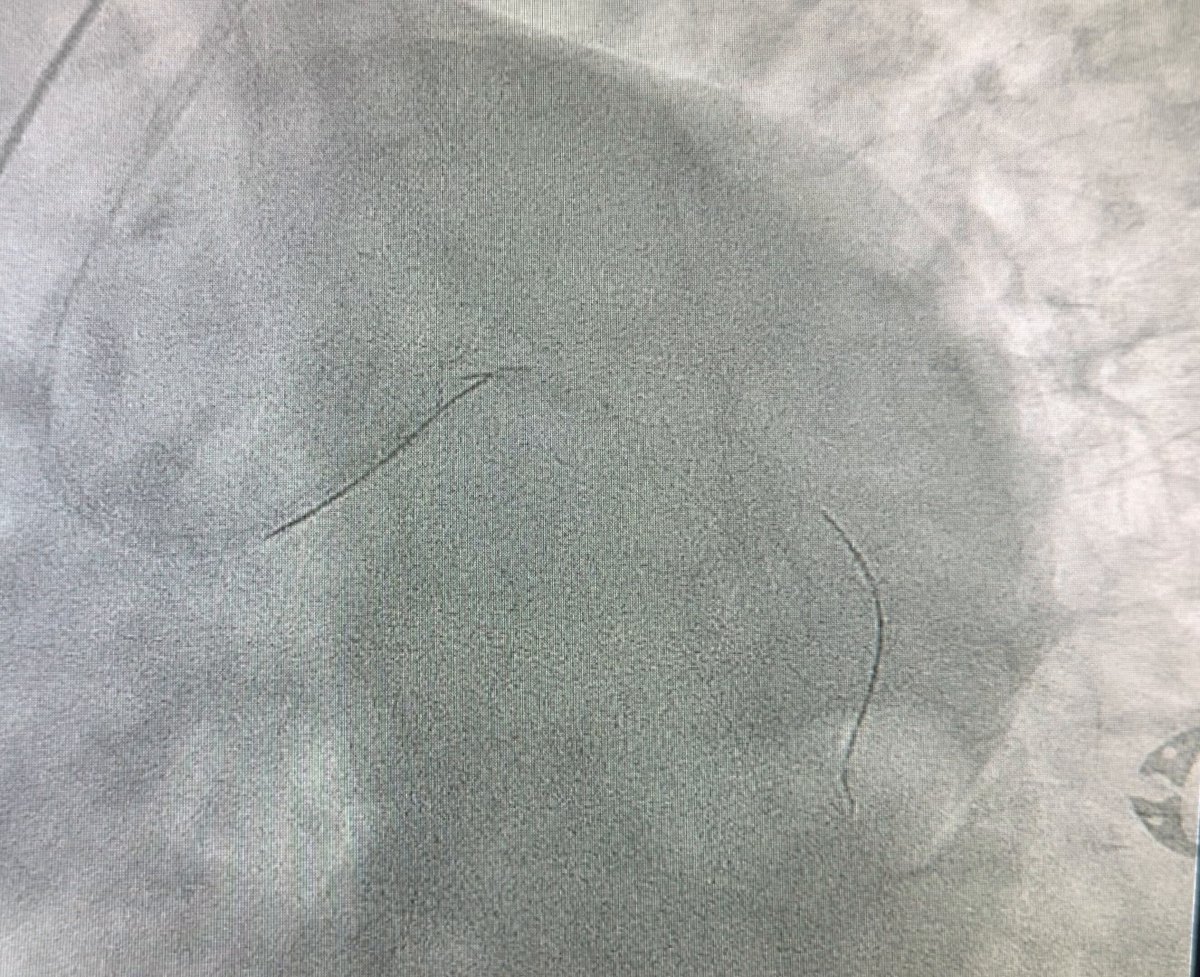
➡️Radial 6F EBU 3.75 guide, difficulty wiring the LAD due to angulation ; used a 2.5 blocking balloon in ostial LCx & got through with a Izanai Runthrough wire
➡️ Incomplete expansion with 2.5 🎈 at high ATM, next used 2.5 Shockwave IVL (burst after 60 pulses) , 3.0 Shockwave IVL also burst, 3.0 Wolverine at high ATM burst with no significant improvement
➡️IVUS (see below) showed protruding irregular calcified nodule
➡️ Orbital atherectomy 80rpm & 120rpm
➡️Better balloon expansion & DESx1 ✅
1
20
5,180
Our latest publication describing Multifactorial Hypercoagulability Causing Simultaneous STEMI and Pulmonary Embolism in a Young Adult With Prothrombin G20210A Mutation | @JACCJournals jacc.org/doi/10.1016/j.jacca…
4
253
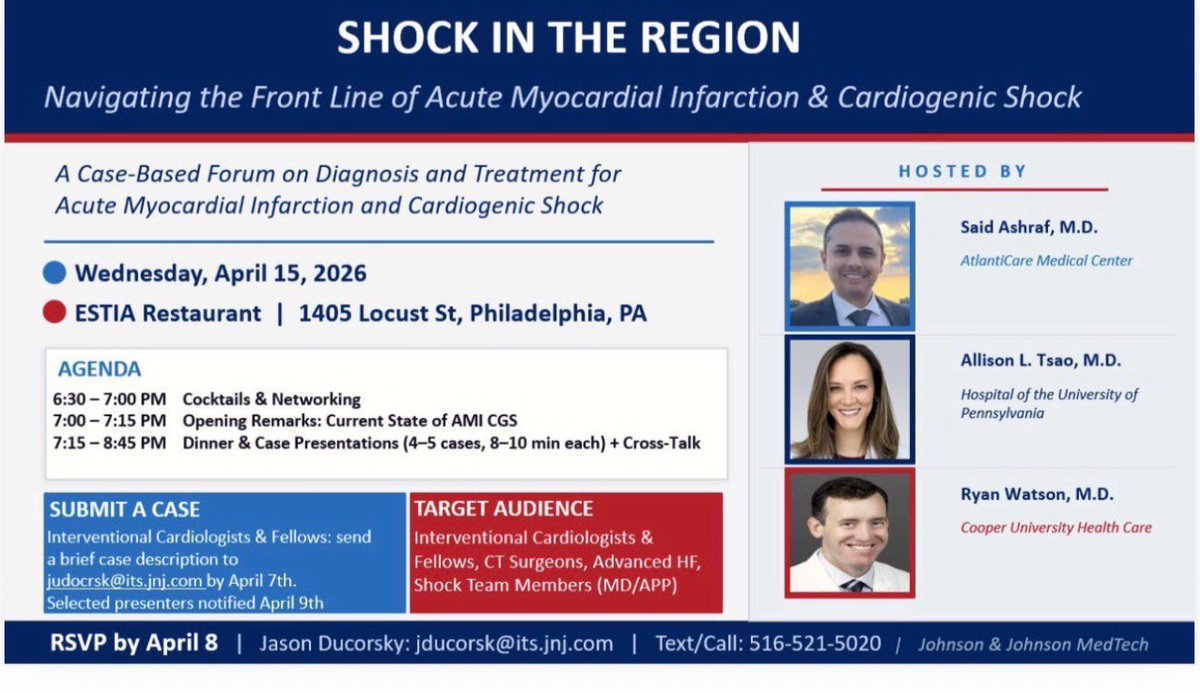
🔈 South NJ & Philadelphia area Heart Teams: Join us for “Shock in the Region” on April 15!
A case based deep dive into Acute Myocardial Infarction & Cardiogenic Shock! Fellows submit your cases by April 7 for a chance to present! Looking forward to seeing you there! #cardiotwitter #AMI #CGS #MedEd
@PennCVFellows @TJHeartFellows @LankenauCV @TempleCards @CooperCVFellows
2
6
839

Early surgery in asymptomatic patients with very severe aortic stenosis led to a lower risk of a composite of operative mortality or death from cardiovascular causes at 10 years than conservative care. Full RECOVERY trial results: nejm.org/doi/full/10.1056/NE…
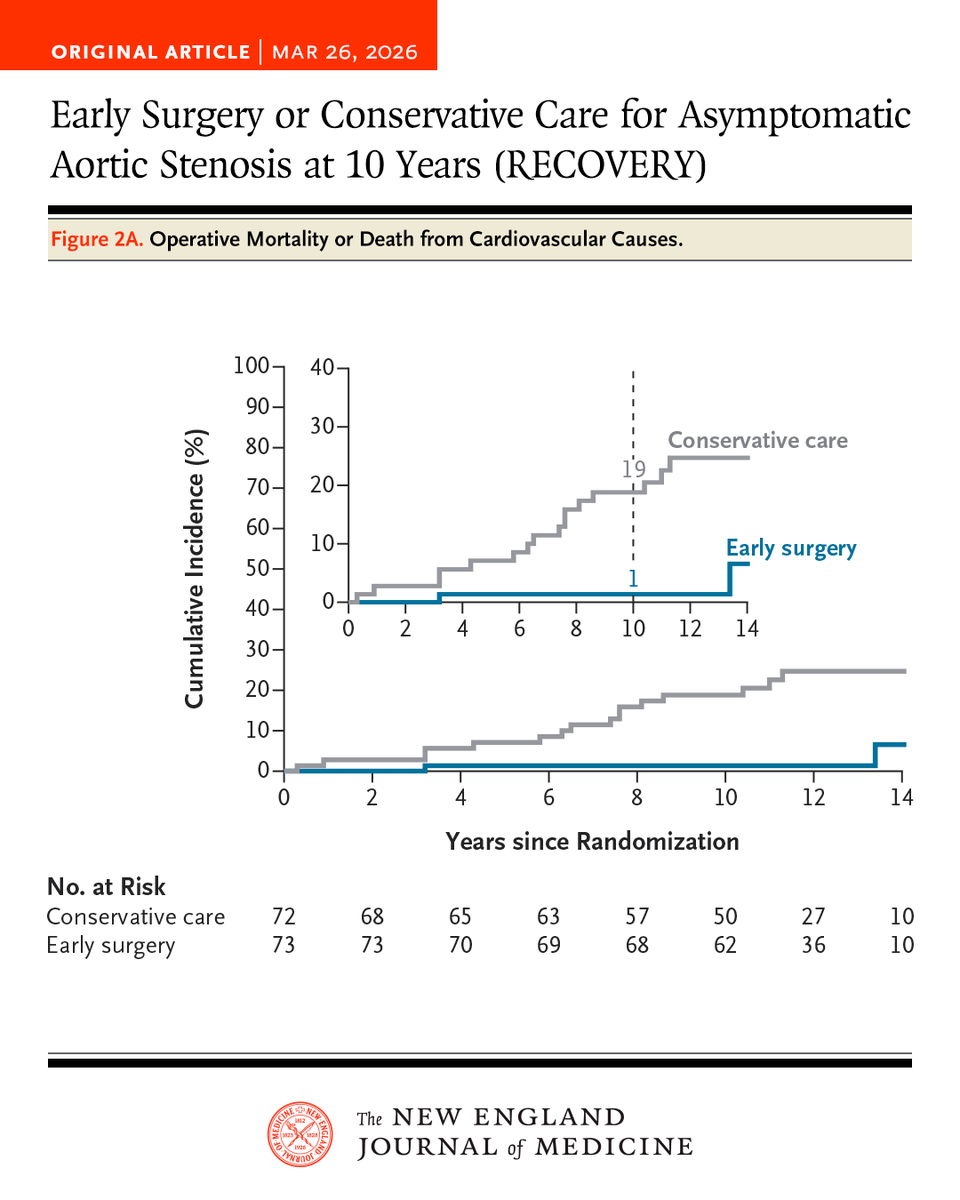
ALT Original Article | MAR 26, 2026 Early Surgery or Conservative Care for Asymptomatic Aortic Stenosis at 10 Years (RECOVERY) Figure 2A. Operative Mortality or Death from Cardiovascular Causes.
6
156
487
61,171
Said Ashraf MD, FACC, FSCAI retweeted

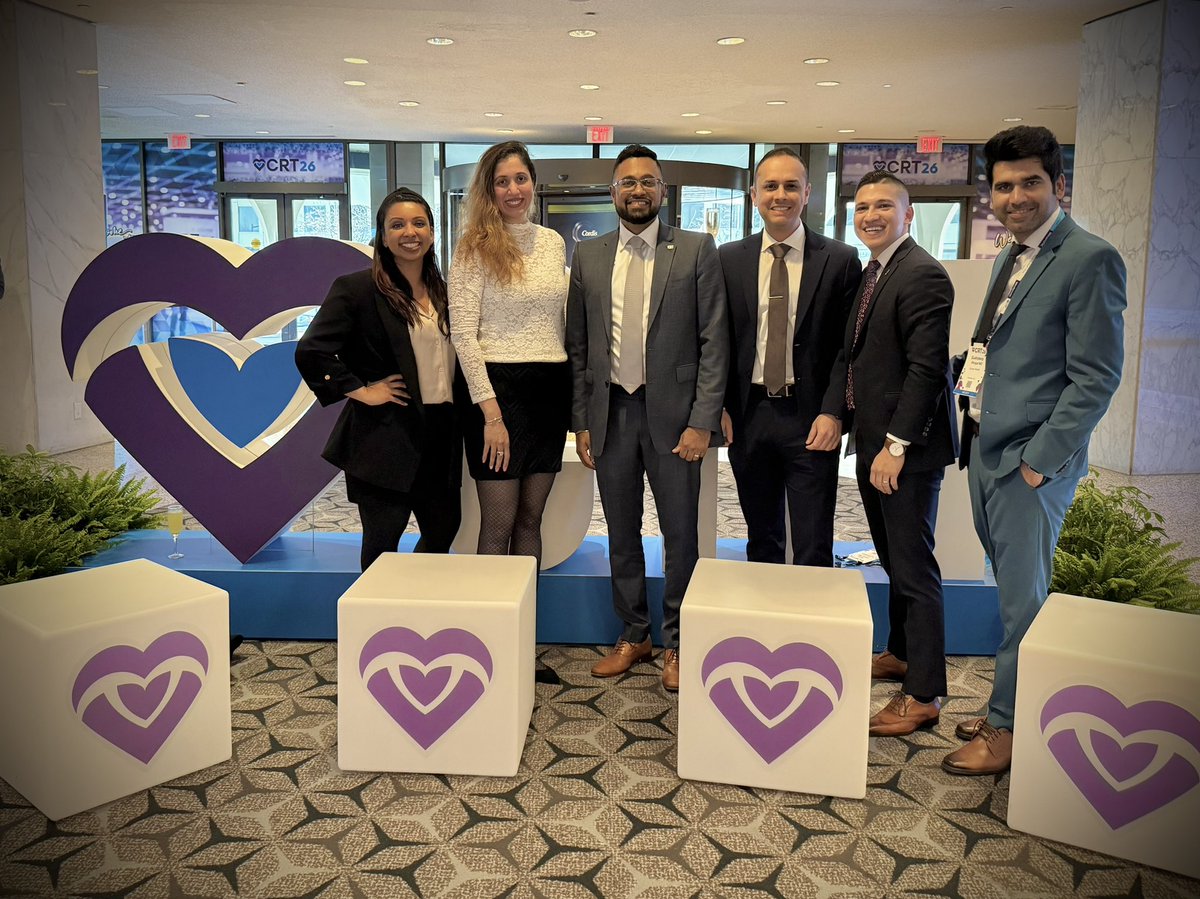
Shout out to all the #SoMe Ambassadors representing #CRT2026!
Thank you for elevating @CRT_meeting!!
4
10
33
1,547
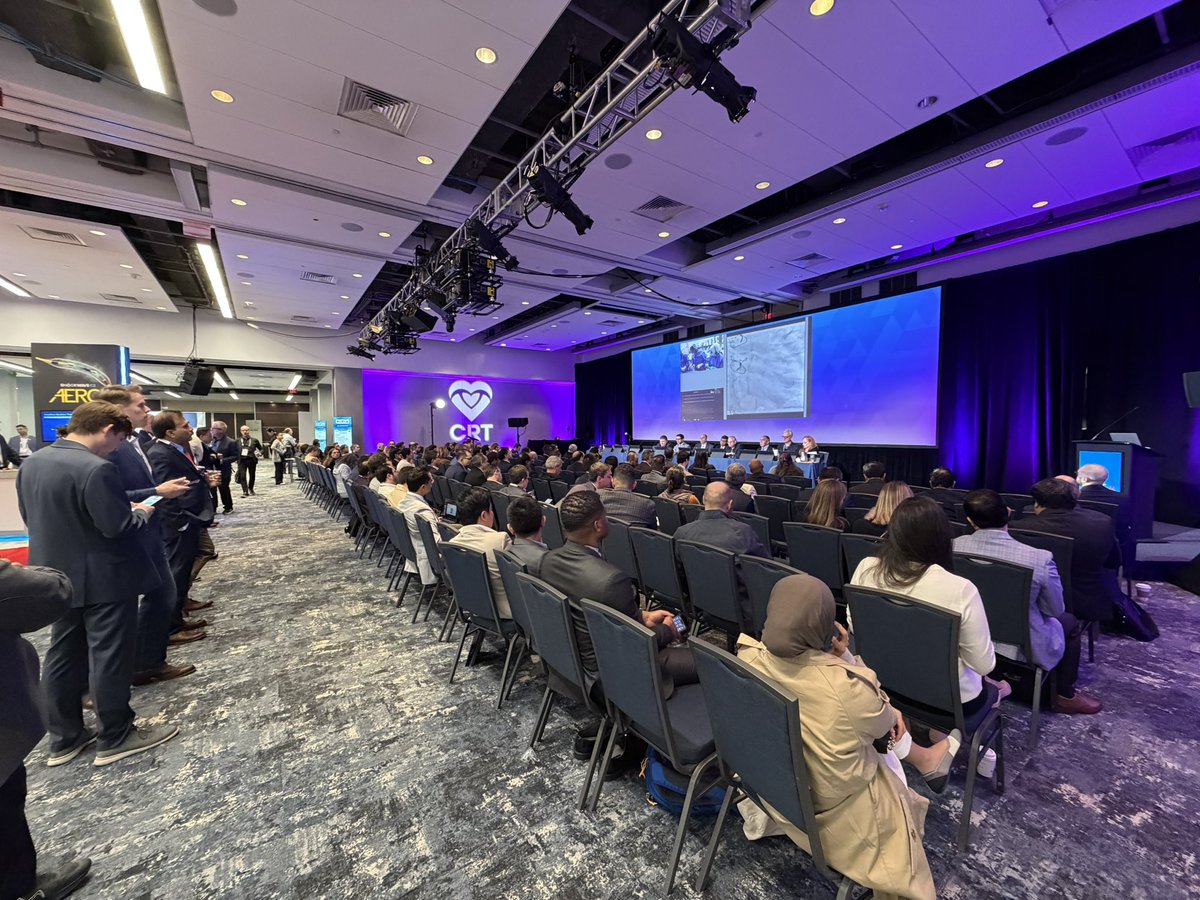
Happening Now: @mirvatalasnag & team taking care of severely calcified LMCA in a live case from Jeddah, Saudi Arabia to a packed house at #CRT2026 @CRT_meeting
3
6
24
2,055
DC is the place to be this week for #CRT2026! 🚀
From long-term TAVI data to the latest in DCB tech and AI imaging—the lineup is incredible. Ready to learn, share, and connect with the best in the field.
See you in the sessions! 👋
#CardioTwitter #CRT2026 @CRT_meeting
1
6
355
Said Ashraf MD, FACC, FSCAI retweeted

Mar 3
🧵 1/ Many are prob confused about what all the debate is about the Keto diet & its relationship to serum lipids as well as potential CV effects of this
I’ll try to break this down below (hopefully fairly)
Disclaimer: I’m not a lipid expert but have great interest in the field

I feel like I can breathe again! Get ready for a rant I've been waiting to let loose for a year. 🔥
First, here are the core facts about the Keto-CTA study to date:
🚨PART 1: THE FACTS
👉From its inception, Dave, Adrian, and I, being associated via the funding body (the Citizen Science Foundation), were blinded to certain elements of the data. The purpose was to protect the integrity of the project.
👉The profound irony is this also meant that, prior to publication, we couldn’t perform certain ‘checks’ and had to trust others to do so. Speaking for myself, it’s now painfully clear that was a mistake.
👉However, after the April 7th paper was published, "anomalies" (if I’m being polite) were noted with the Cleerly scans.
👉 Cleerly refused to redo the scans, despite multiple requests and being offered payment.
👉Importantly, and to my dismay, the original Cleerly reads were UNBLINDED, introducing a major source of bias.
👉At additional expensive, the scans were rerun through HeartFlow in a properly blinded analysis, and via the pre-specified QAngio methodology.
👉HeartFlow and QAngio agreed with each other and were discordant with the Cleerly analysis.
🚨PART 2: THE NEW NEWS
What happened next was brilliant!
And, truth be told, I only found out about it yesterday.
For my own legal security – and at the recommendation of my friend and colleague who was taking the worst of it on the back end – there was a lot I didn’t know until this point.
This is what happened…
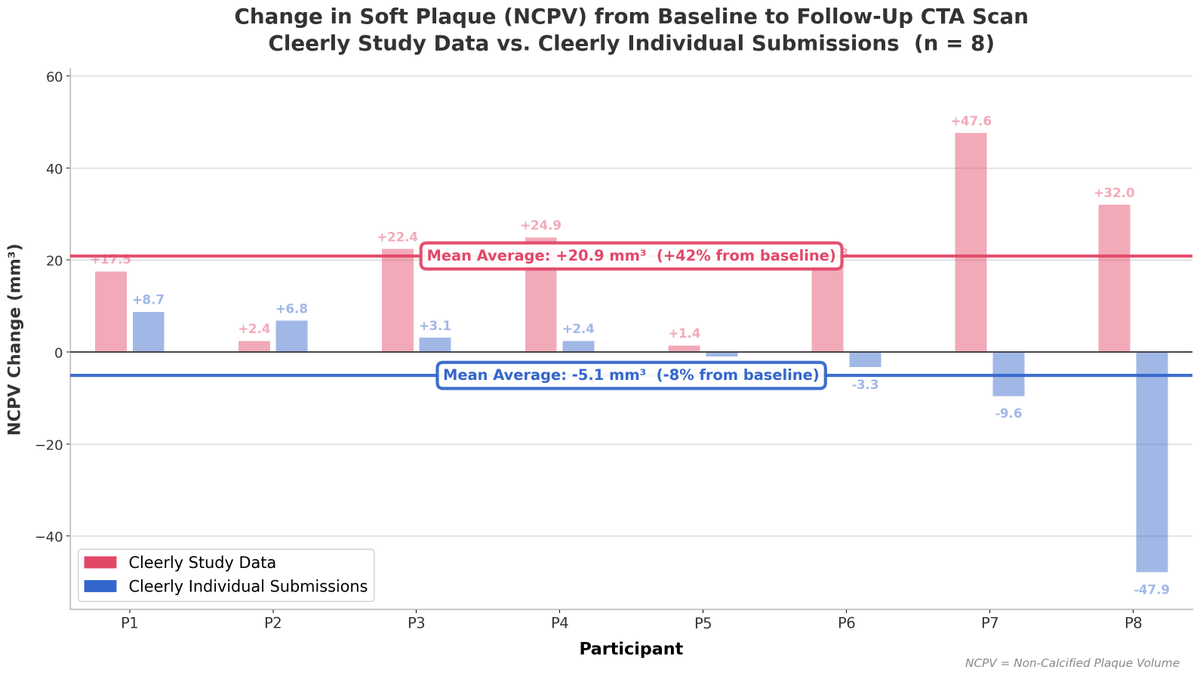
👉Several participants independently submitted their scans to Cleerly as a workaround to obtain a truly blinded Cleerly analysis.
👉Those results were highly discordant with the original Cleerly analysis and aligned with the HeartFlow and QAngio analyses.
The difference between the original Cleerly scans and the repeated blinded scans was massive!
The original unblinded analysis reported a 20.9 mm³ mean increase in non-calcified plaque volume, while the blinded repeats showed a -5.1 mm³ mean decrease.
I mean, MY GOODNESS!!! I basically did a backflip when I found out (@realDaveFeldman can release the footage of the meeting at his discretion)
If you’ve been following the KETO-CTA story up to this point, the consistency of the findings across HeartFlow, QAngio, and now Cleerly itself (based on the blinded reads) should bring much-needed clarity.
The converging results fundamentally reshape the narrative and directly refute the claim that the study demonstrates massive, unprecedented plaque progression in LMHR and near-LMHR
And, after all that, the fact remains that every single analysis found no association between ApoB levels or LDL exposure and plaque progression.
LET ME REPEAT: And, after all that, the fact remains that every single analysis found no association between ApoB levels or LDL exposure and plaque progression.
🚨 PART 3: NEXT STEPS
In terms of next steps, I’ll quote my colleague Dave: “we have already taken steps regarding last year’s paper that contained the original Cleerly analysis.” I’ll leave it at that for now so I don’t overstep.
But let me say, that’s the highly polished and diplomatic version. I certainly have stronger words about this process, but perhaps now is not the time.
Where I will speak more plainly is in regard to the behavior of some detractors over the past several months.
In a few cases, I’ve reached out privately to individuals who should know better, gently suggesting that, in light of the new evidence (Heartflow and QAngio), it might be time to reassess or lighten the abuse.
For anyone sincerely paying attention—and for anyone with even modest insight into how scientific bureaucracy works—I hope it is now clear why we were not more forthcoming earlier in the process.
👉And trust me when I say, it’s never been harder to keep my mouth shut about anything in my life. I've accumulated more cortisol AUC in the last 11 months then in the entirety of my life to age 29.
🚨PART 4: SPEAKING FOR MYSELF
Speaking for myself, I have been beyond frustrated and disappointed.
At multiple stages, it has become painfully—and increasingly—clear to me that our scientific system, which presents itself as purely meritocratic, is far more political than most would imagine.
These are difficult words for me to say as someone who comes from a family of doctors and scientists and who has spent his entire career in academic institutions—multiple Ivy League universities @Harvard @dartmouth, two doctorates, and top-ranked institutions in both England @UniofOxford and the United States. I was groomed in conventional academic medicine. If I have any bias, it’s to see the best in conventional medicine and modern scientific process. Most of my loved ones have made their living within this ecosystem.
But when you pull back the curtain, the reality can be sobering.
To those detractors who have verbally abused or personally attacked my colleagues and me—perhaps out of naivete or ignorance—I will say this plainly: it’s time to check yourselves.
Too many people have spoken out of turn, seemingly to score points rather than to engage thoughtfully with an evolving scientific story—one that has been evolving for quite some time.
When the HeartFlow and QAngio analyses were released, that alone should have prompted serious reflection. At minimum, it should have raised questions. The subsequent silence from some of the loudest critics, after they believed they had “won” a round, is telling.
Science deserves better than scorekeeping. It deserves intellectual honesty and the humility to update one’s position when new evidence emerges. At times over the last year, the lack of curiosity, sincerity, and intellectual honesty from people who I tried to give the benefit of the doubt has made me want to vomit.
And trust me when I say, this isn’t a victory lap.
This is a promise.
We are now over a hurdle that I have been waiting for almost a year. And frankly, I am ready to run headfirst through brick walls with my colleagues and friends by my side — those whom I trust to pursue the hard questions and the honest answers — and do so indefinitely using the tools and resources at our disposal, even when, and especially when, the scales are improperly tilted against us.
Lucky for us, the intellectual environment is expanding — the black box of academia beginning to crack open. So someone hand me a crowbar, because I’m committing myself fully and completely, over the coming years and decades, to prying it wide open. Not gently. Not quietly. But decisively.
My final words of this verbose dissertation?
LFG
5
29
91
36,354