Investigative journalist @Bellingcat focused on conflict & human rights. Previously with @BBC Verify, @Cen4infores. Views are my own.
- Tweets 154
- Following 854
- Followers 410
- Likes 952


















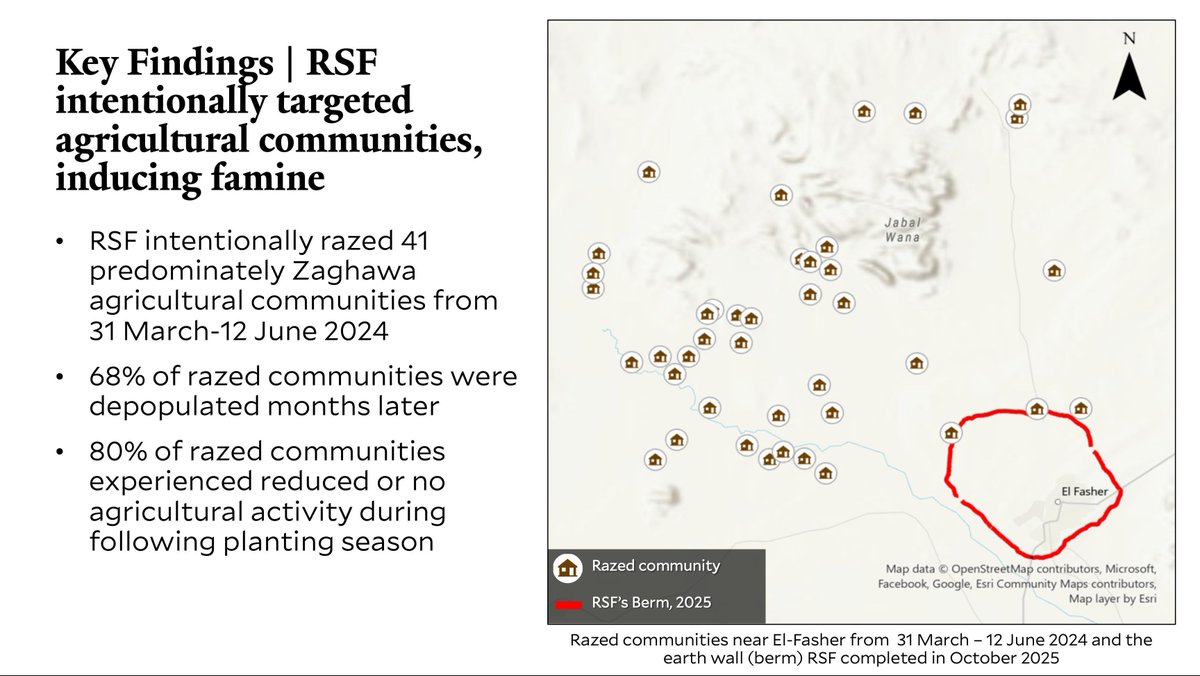
ALT Key Findings | RSF intentionally targeted agricultural communities, inducing famine. Map of El-Fasher and surrounding areas to the north and west. The map includes symbols for 41 communities to the north and south which have been razed between 31 March - 12 June 2024. There is also a red line around El-Fasher marking where the berm, or earthen wall that RSF completed in October 2025. - RSF intentionally razed 41 predominantly Zaghawa agricultural communities from 31 March - 12 June 2024 - 68% of razed communities were depopulated months later - 80% of razed communities experienced little or no agricultural activity during the following planting season. Map data (c) OpenStreetMap contributors, Microsoft, Facebook, Google, Esri Community Maps contributors, Map layer by Esri, Analysis by Yale HRL.
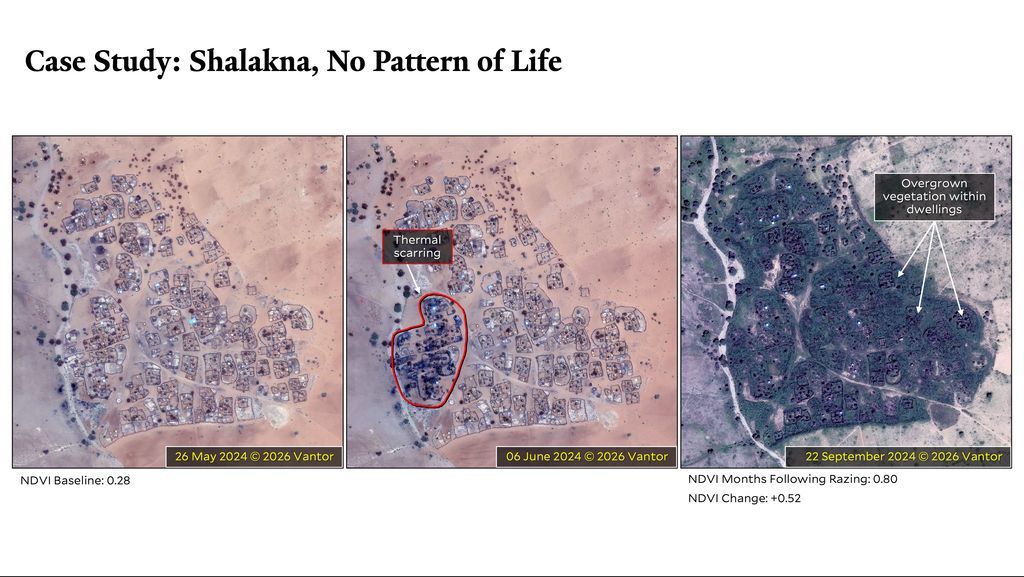
ALT Case Study: Shalakna, No Pattern of Life Copyright: Satellite Imagery 26 May, 6 June, 22 September 2024 © 2026 Vantor, Analysis conducted by Yale HRL Three very high resolution satellite images show the village Shalakna, in North Darfur at three days. The baseline, from 26 May 2024 shows a rural village captured in satellite imagery. The second image, from 6 June 2024 shows a section of the community which has been intentionally burned. The third image shows the community months later on 22 September 2024 where the entire community has been overgrown with vegetation. The baseline NDVI was 0.28 NDVI Months Following Razing: 0.80 NDVI Change: 0.52
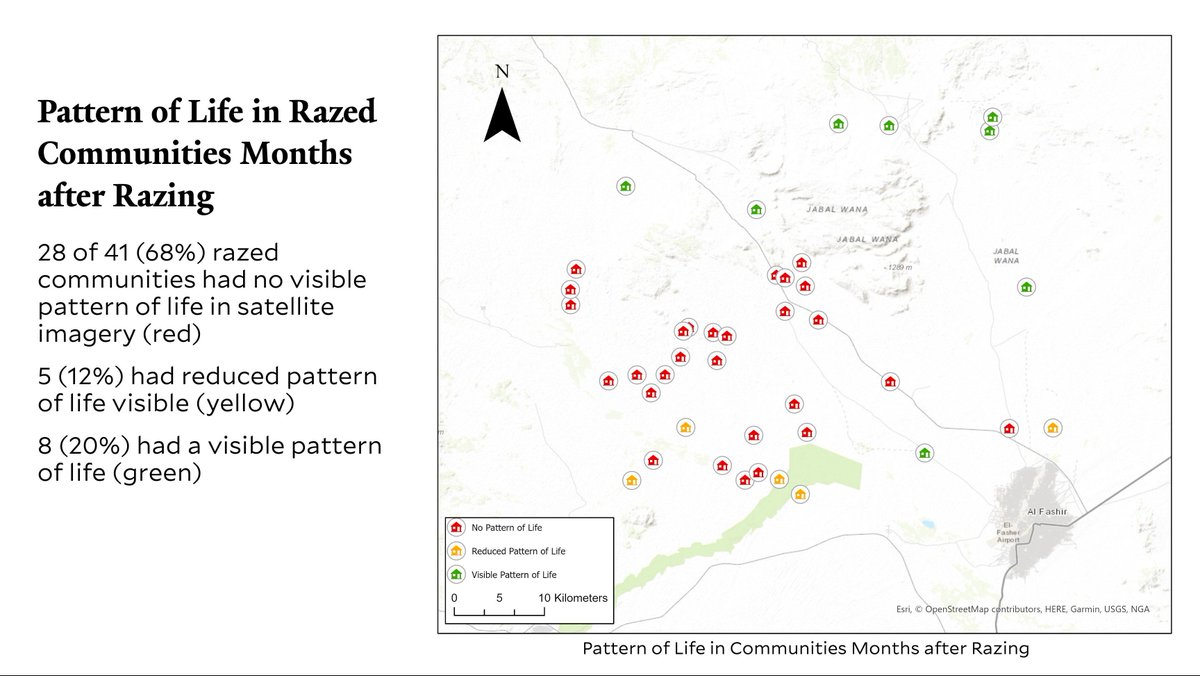
ALT Pattern of Life in Razed Communities Months after Razing The map includes symbols for 41 communities to the north and south which have been razed between 31 March - 12 June 2024. The red symbols (28 total), congregated in the middle, were had no pattern of life visible; 5 had a reduced pattern of life; and 8 had a visible patten of life. 28 of 41 (68%) razed communities had no visible pattern of life in satellite imagery (red) 5 (12%) had reduced pattern of life visible (yellow) 8 (20%) had a visible pattern of life (green) Copyright: Map: Esri, OpenStreetMap contributors, HERE, Garmin, USGS, NGA. Analysis conducted by Yale HRL.
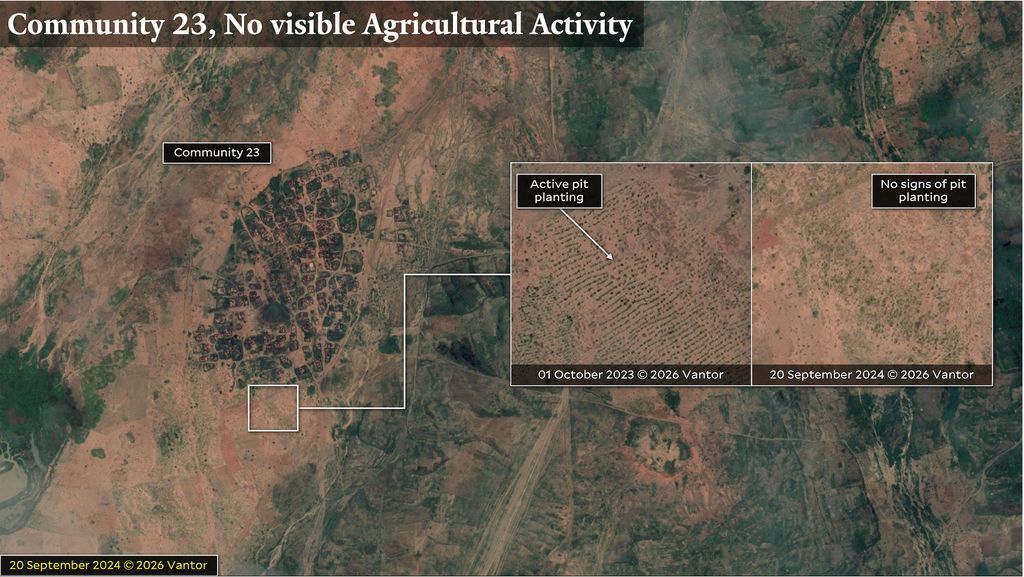
ALT Community 23, No visible Agricultural Activity Copyright: Satellite Imagery 01 October 2023, 20 September 2024 © 2026 Vantor. Analysis conducted by Yale HRL. Visible overgrowth is visible at a Community 23. Satellite imagery for 01 October 2023 (Baseline) shows active pit planting. No signs of pit planting were visible in imagery from 20 September 2024.