
Professor @Caltech. Computational Neuroscience, fMRI, learning theory. Forthcoming "Dopamine Rules." 2026 return to full-time bike racing & hour record attempt.
Joined September 2011
- Tweets 4,813
- Following 650
- Followers 4,123
- Likes 4,586
374 Photos and videos

Pinned Tweet
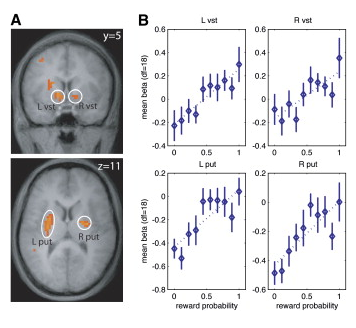
What are emotions and how do they contribute to decision-making? In this paper, I suggest emotional processes encode the basic parameters of financial decision theory, indicating a reorientation of emotional and cognitive contributions to risky choice: pubmed.ncbi.nlm.nih.gov/1936…
3
1,192
In 2006, we showed that the human dopaminergic system encodes the fundamental parameters of financial decision theory: expected reward and risk. This helped provide the bridge from dopamine to neuroeconomics that today reveals anticipatory phasic dopaminergic activity encodes subjective economic value. PMID: 16880132
1
5
407
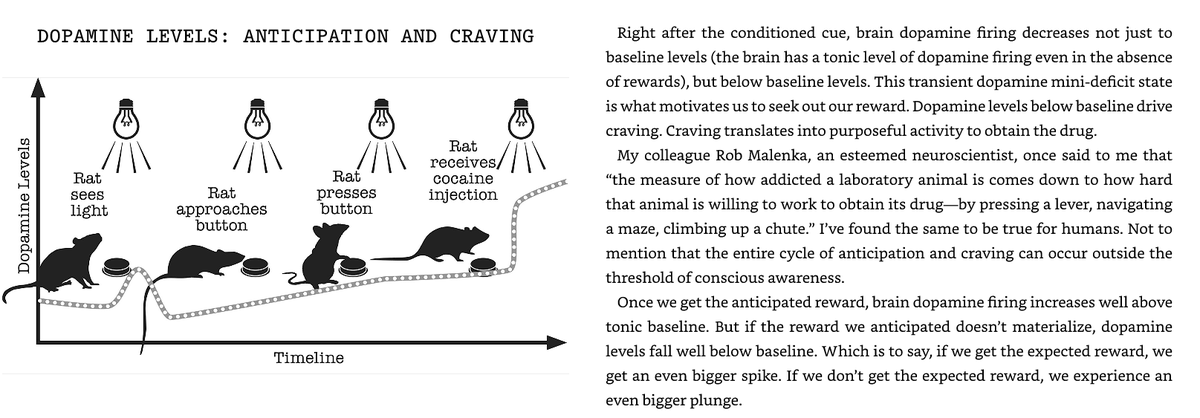
Important update. In 2024, I pointed out to Anna Lembke that this figure incorrectly showed a dopamine dip below baseline right after a conditioned cue. She agreed this was an error. I’ve now learned that she has updated the figure to make clear that there is no “mini dopamine deficit state” right after the cue, and has removed the accompanying text claiming that this dopamine deficit drives reward seeking.
This is worth highlighting. Critical inquiry is not negativity; it is fundamental to how science operates. A specific mechanistic claim was questioned against the evidence, the author rechecked it, acknowledged the error, and corrected the public presentation. Lembke deserves credit for making that update.

I'm not going to engage in ad hominens with you but if you want to make your claims specific feel free to do so. As for Anna Lemkbe, I claimed this dopamine trace showing a dip below baseline was incorrect. There's no dip and anyone familiar with the research would know that this figure has been altered to show one. She's acknowledged to me that it is in fact an error and you can ask her to show you the email exchanges we've had about that. It's the basis of your claims about motivation as well so you might want to fact check it.
1
5
844
Here's a modern - and positive - dopamine take @hubermanlab. The work from Stanford's Malenka group is excellent, especially the work on how high motivation modulates the amplitude/gain of phasic dopamine responses. But it doesn't support Lembke's claim that a phasic dip below baseline drives wanting. Happy to come on and discuss!
10 Apr 2025

Thank you! And genuinely appreciate you dopamine and other takes. They are modern.
2
11
5,760
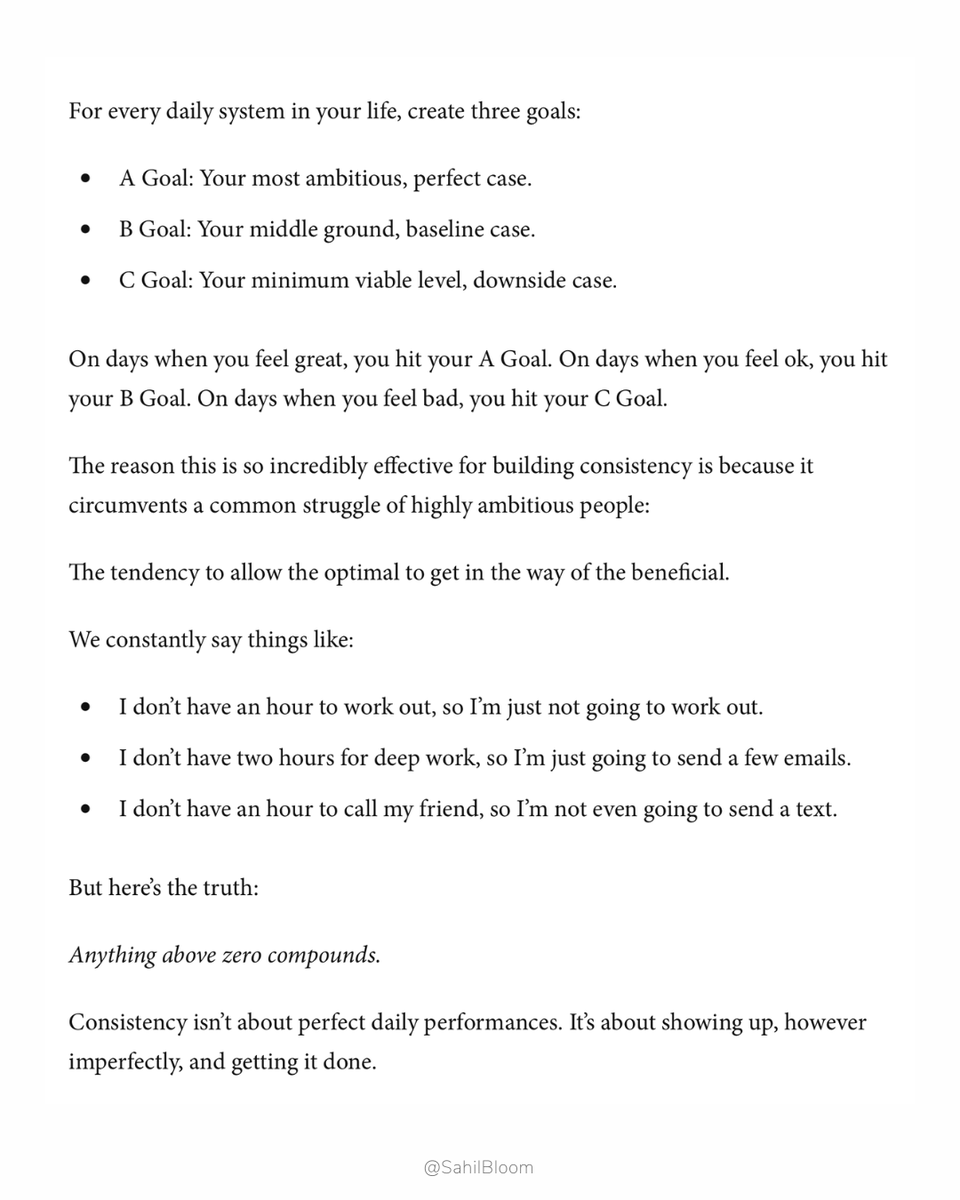
Great advice - especially framing your day around goals. Every voluntary action starts with your brain initiating a goal - it's the seed of motivation - and adjusting your daily goals like this keeps them activated and importantly lets your brain track positive progress towards that goal.

2
1
30
6,933
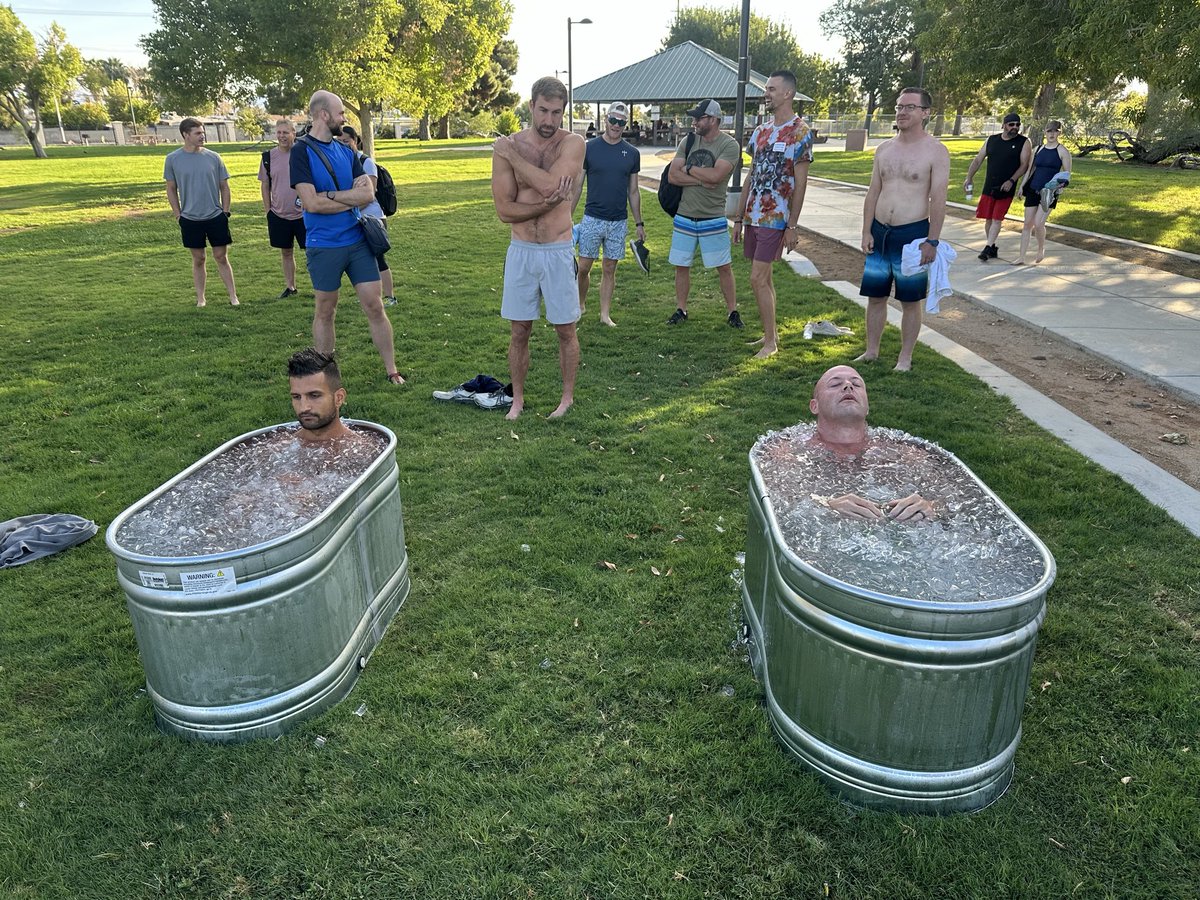
Cold plunges are the epitome of influencer 'lifemaxxing' nonsense. The @hubermanlab claim about a 250% dopamine surge is a misunderstanding. It's a measure of dopamine in the body, not the brain and just reflects shivering and the need to pee. There's no good evidence for the Wim Hof Method. It blunts muscle growth, and the cardiac strain can be dangerous. It's great if your goal is being cold but otherwise is just a performative waste of time - better to spend the time reading classic books.
Jun 6

3.3M views and so many people (anons mostly) throwing shade…
@SahilBloom is a real one.
He is in person how he is on this platform.
133
352
979
469,019
This was in 1929. Today, it's known as a postdoc...
Jun 5

Joseph Campbell spent five years in a rented shack with no job, reading nine hours a day. no income, no plan, no publication deal. his sister brought him groceries. he later called it "the most fertile period of my life." the hero's journey was written by a man who spent five years doing nothing the world would call productive. I find this fact more useful than most business books combined.
1
14
2,706
Sahil Bloom is the Banana Republic of influencers. Every item optimized by committee and focus-grouped to work with the median buyer. Self-improvement as corporate casual - like safe colors and no bold patterns, 'classic books and creative work' is unobjectionable, aspirational yet approachable. The median of every productivity hack distilled into one frictionless, shareable, monetizable package complelete with subtle product placement.
Jun 4
My current lifemaxxing stack:
- 4:30am wake up
- Read classic books
- 3 hours creative work before 8am
- Lift/run 6x/week
- Eat single ingredient foods
- Present time with fam/friends
- 20-min evening sauna
- Wild Roman skincare routine
- 8:30pm bedtime
Wouldn't change a thing.
54
20
1,005
262,669
Studying Kant to prep for the SAT is like studying real analysis to fill out your 1040.

When kids are reading difficult material like Kant and Plato in seventh grade, analyzing essays paragraph by paragraph, they’re building the exact skill tested on the SAT verbal section. Sophisticated reading comprehension is foundational.
Months of slow, careful analysis of difficult texts teach kids not just to understand but to argue, defend, and think. Meanwhile, most schools treat reading as a checkbox. Then they wonder why students struggle with college essays.
1
5
2,224
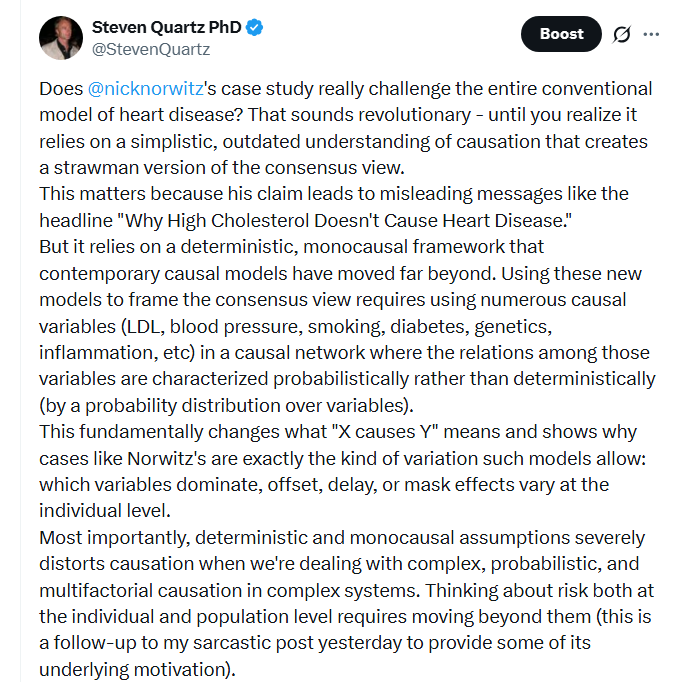
I suspect the reason for going on and on about this case study is to deflect attention away from their preprint. The QAngio results reveal most participants had detectable plaque, median plaque increased, and 21% met a significant progression threshold. Leaving aside severe methodological limitations, those results don't support the documentary's main claims, so all this seems like a desperate attempt at reframing around a single case. And as seems typical of this group, the tables with the clear interpretative results are buried in the supplementary materials.

Love it or hate it, the fact remains that I effectively made a prospective bet on my own life.
And was right…
youtu.be/TmloFV0W6iQ?si=7EUo…
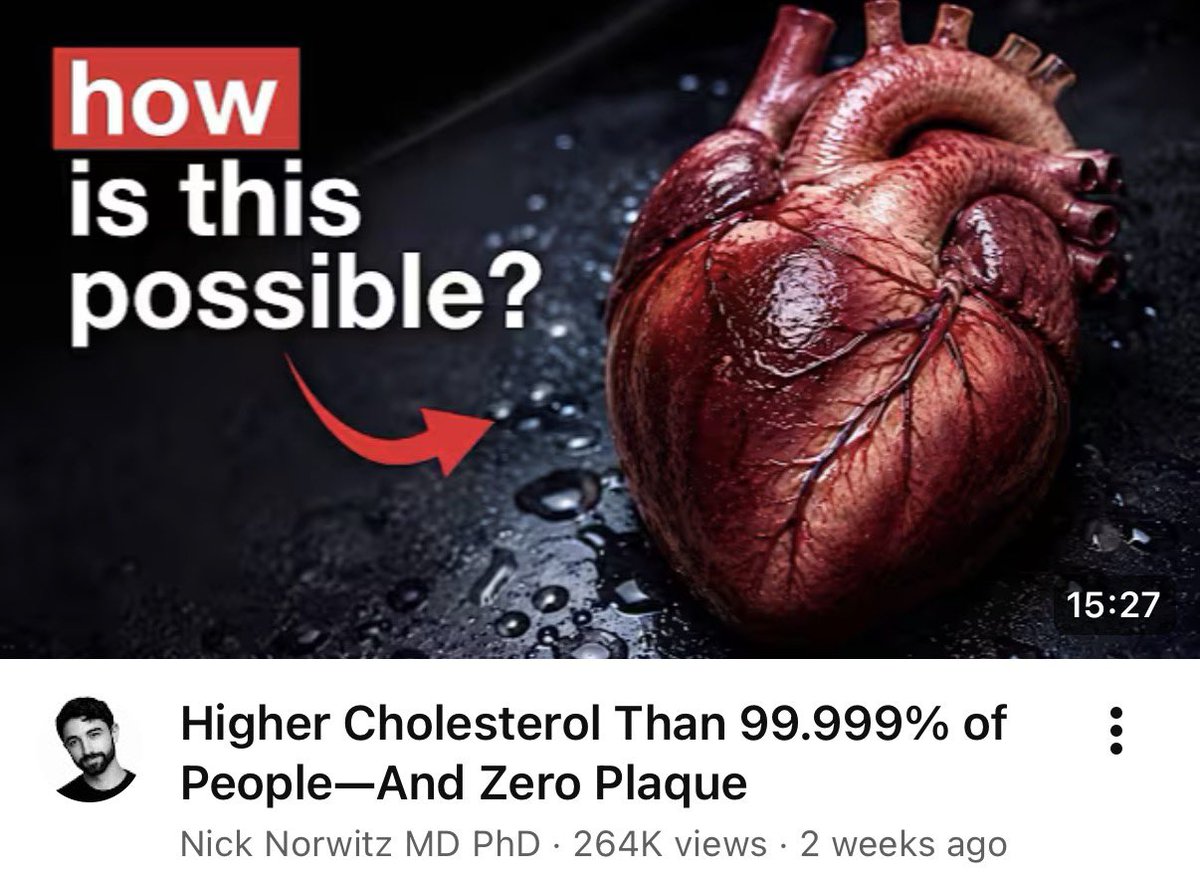
For nearly a decade, I lived with cholesterol levels previously associated almost exclusively with homozygous familial hypercholesterolemia—a condition in which children can develop plaque within the first year of life and suffer heart attacks as young as six.
Despite that, 0 mm3 (soft or calcified) after 7 years of cholesterol ~700 and ApoB so high maybe labs reported > {upper bound}
Recall, hoFH kids get plaque as they’re getting their baby teeth… and there are plant-based influencers in their 30s with far more plaque than me.
“He’s young” isn’t an answer.
But I was right.
Was I simply one of the luckiest people alive?
Maybe.
Or maybe we’re onto something…
4
3
50
6,567
Brooks gets a lot of the basics wrong. eg, his claims re Brickman's famous lottery study are almost entirely wrong, and here he commits the heritability fallacy: he treats a population-level estimate of variation as if it means half of an individual’s mood is genetic. It doesn’t. Heritability is about variation across a population, not the genetic share of a trait inside one person. He then builds a just-so story on top of that error: genetic disadvantage supposedly produces compensatory excellence: cheerful people are fragile, and gloomy people become elite happiness athletes. That’s unsupported and likely false.

Half of your baseline mood is genetic. And if yours runs low, you got lucky.
The people born with naturally cheerful brains coast through life. Their default setting is good enough, so they never have to develop the habits that make happiness a craft. So when real adversity hits — and it always does — they are completely unequipped to handle it.
The rest of us have to train. We learn to manage sleep, exercise, attention, relationships. We get good at moving negative emotion from the limbic system into the prefrontal cortex. We build the practices because we have to. To us, happiness is a sport.
By age forty, the trained-up gloomy person is an elite happiness athlete. The naturally cheerful one is an amateur with luck.
I'm not saying this just from research. I come from very gloomy stock. I've worked my whole life on these habits because I had to. Without them, I'd be sad and sick; with them, I'm doing better at sixty than I did at thirty.
This is the same principle as alcoholic genetics. Half your tendency toward addiction is inherited. People with the worst genetic risk who never drink are not addicts. People with no genetic risk who drink hard can still wreck their lives. Knowing the genetic tilt means you can pay attention to the habit. And paying attention is how you win.
The gloomy who don't train end up sad. The gloomy who train end up better than the cheerful who don't. If joy doesn't come easily, discipline will — and discipline is something the lucky never had to build.
So if you're naturally gloomy, congratulations. It's harder for you. That means you'll be better at it.
Happiness is a sport. And you'll be one of its best athletes.
2
9
1,911
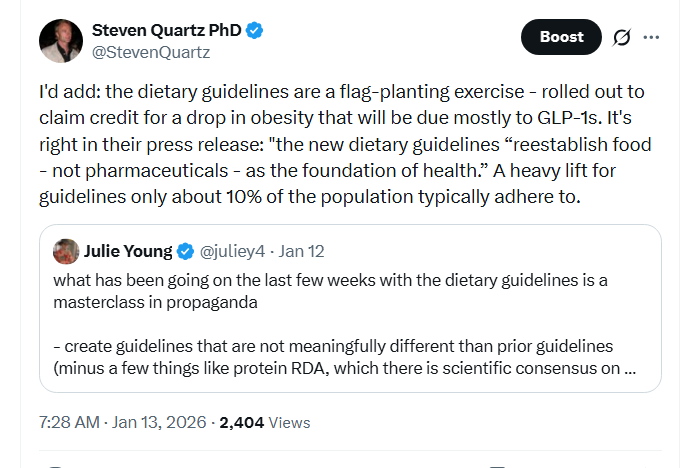
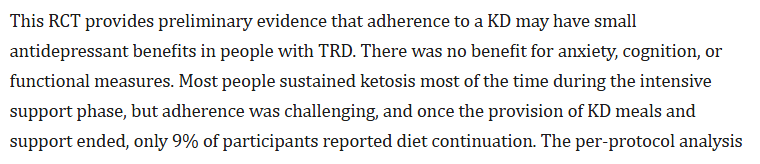
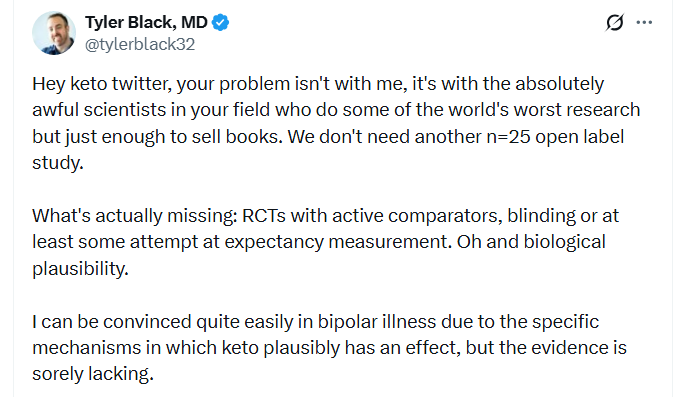
Excellent summary - a few additional details: 1. Many studies fail to show a dose-response, supporting the possibility of Hawthorne-type effects. 2. A rapid initial drop without major further improvement supports such non-specific effects, 3. when compared to high-carb diets in depression, keto diets show no advantage, 4. Most challenging: in epilelpsy, about 2/3 of patients abandon the diet within 3 years and a primary reason for lack of efficacy in adults is lack of adherence. These issues will be even more challenging in these populations. 5. Although touted as a new 'metabolic' paradigm, ketones have pleiotropic effects far beyond metabolism including diverse signaling roles, so presumption that this shows mental illnesses are metabolic disorders is premature and likely a reductive simplification.

1
8
1,473
Steven Quartz PhD retweeted

Much Ado About Zone 2 open.substack.com/pub/realex…
Influencers can’t get enough of Zone 2 training. So why did @gibalam publish a research paper challenging Zone 2 for the general public? In this episode, we go through a critical examination of Zone 2.
link.springer.com/article/10…
6
20
82
8,732
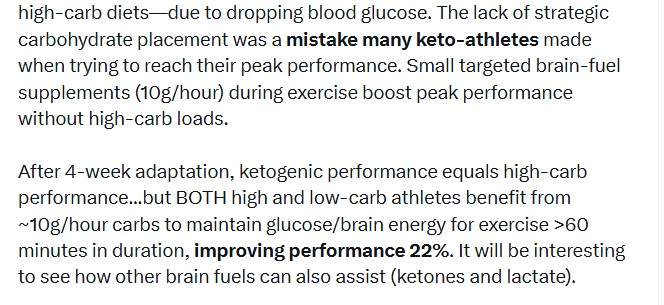
Noakes claims a minimal dose is necessary to delay exercise-induced hypoglycemia. It doesn't establish such a dose (10 grams/hour) optimizes performance - and it's based on underpowered studies that use weak methods - null hypothesis statistical testing when equivalence testing is required. Ultimately, it simply lacks the ecological validity to inform real-world performance...

Noakes' research is literally showing a beneficial role for supplementing carbs during exercise, in keto and non-keto adapted athletes, and yet dumb asses are still like
"nOO00o mo0AaR C4rbZ R alWAyS betTUr!"
it's like overnight 'minimum effective dose' never existed
3
1
22
4,009
Steven Quartz PhD retweeted

To maintain CHO dependency and promote economy during running, ingestion rates need to be >90 g/h. We also have similar data in elite female runners in review
journals.physiology.org/doi/…
6
40
2,358

May 27
Maybe next time ask him if meat is 'essential.' Seems like these carnivore types only apply these (dumb) essentiality arguments to foods they don't like.

30
42
4,752
May 27
Feeling bad after a few drinks is a sign your body struggles to clear acetaldehyde, a grade 1 carcinogen. That's a warning sign. Thinking it's a sign of 'toughness is about as smart as thinking the Marlboro man was pretty cool.
May 27

OMG what a p----
And no, it's not about the drinking. If he doesn't want to drink, he shouldn't drink. It's about the fact that he is so self-obsessed that a minor change to his routine left him, in his own words, basically unable to function for three days.
8
1,082
May 26
Yet another post glorifying alcohol abuse. The reality: Alcohol causes more harm than any other recreational drug (PMID: 21036393).
More Americans die annually from alcohol-related deaths (178,000) than from fentanyl, which carries a mandatory 10-year prison sentence for selling it.
28 million Americans suffer from alcohol use disorder, including about 800,000 kids between 12-17.
It's the third most common avoidable cause of cancer, ranked a group 1 human carcinogen, which also includes tobacco and asbestos.
4
1
22
1,983
Steven Quartz PhD retweeted

May 24
When you stop drinking, something happens that most people never get to experience:
You find out what good health actually feels like.
You have sharper mornings, better energy, and a body that talks to you instead of screaming at you.
When you drink again after a long break, the hangover is a signal.
You’re feeling the real cost for the first time because your standard of health has elevated.
Everyone is dunking on Steven for “being soft” but he’s just found a new ceiling for his health and he wants to keep it.
May 23

Steven Bartlett says a few glasses of wine ruined the next 3 days of his life
“It's one of those areas where you don't understand the hidden cost until you really give it up for a while. I stopped drinking at 30 years old. I'm now 33. When I was 31, I thought, I'll have a drink again because now I could really A/B test it. I had a year of not drinking, decided to have a drink again”
“It ruined three days of my life. I had a couple of glasses of wine, didn't get drunk. It ruined three days of my life because of the domino effect it caused”
“I got worse sleep that night, and then because I got worse sleep that night, I ate more poorly the next day because my dopamine system or whatever, the cortisol system was all messed up. I podcasted worse. I didn't go to the gym that day or the day after because I felt really bad. I then slept worse, and I could track all of this on my Whoop”
206
35
618
198,186