
Joined June 2019
- Tweets 417
- Following 844
- Followers 3,015
- Likes 522
4 Photos and videos


Pinned Tweet
"Engineering multiple levels of specificity in an RNA viral vector": Jenny finally led our covid-interrupted revision to completion. Thanks to the delay, we managed to incorporate our more recent RNA sensors and protease circuits into the RNA viral vectors
29 May 2020

Higher-order infinitesimal in light of the challenges we are all going through, but still happy that the preprint is out. Missing @ElowitzLab already. Kudos to Michaela and Matthew. Can't have found a more perfect collaborator than Lucy. Thank you all!
1
5
32
7,504
Stop by our posters at SEED! @haoyu_dai_dhy on our latest efforts to improve ADAR-based sensors (Day 1, #24), @FloraHU8 on their application to cancer ablation (Day 1, #23), and @Xiaowei0402 on an efficient algorithm to refactor proteins for biomedical applications (Day 2, #136).
2
249
Xiaojing Gao retweeted

May 27
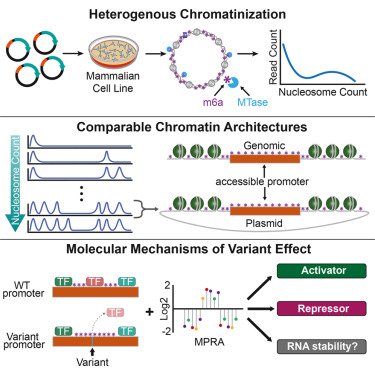
Nifty work on plasmid chromatinization from @stergachislab !
"plasmids are indeed capable of recapitulating nuclear genome-encoded chromatin architectures, ... However, plasmids consistently adopt a heterogeneous and incomplete chromatin architecture relative to nuclear-encoded chromatin fibers, and surrounding sequence context plays an integral role in modulating whether a plasmid-encoded regulatory element will recapitulate nuclear genome-encoded chromatin architectures."
May 26

Online Now: Chromatin architectures underlying plasmid-based assays for regulatory variant effects dlvr.it/TSkLhj
17
31
7,874
Xiaojing Gao retweeted

May 27
I have long written and spoken about the many ways US immigration policy harms international students and scholars. This has been true for as long as I can remember, including when I first came to the US on a single-entry student visa more than 20 years ago under a process formerly known as muslim registry program.
But the current administration has gone much further, through arbitrary policy changes, travel bans, and broad visa processing pauses that leave folks unable to work, travel, or train.
These policies affect a minority of scientists, and in the current state of the world they can be easy to overlook. But we should not let that happen.
I wrote about the quiet loss of Iranian scientific talent in US labs for @TheScientistLLC:
the-scientist.com/the-quiet-…
342
111
496
278,798
Xiaojing Gao retweeted

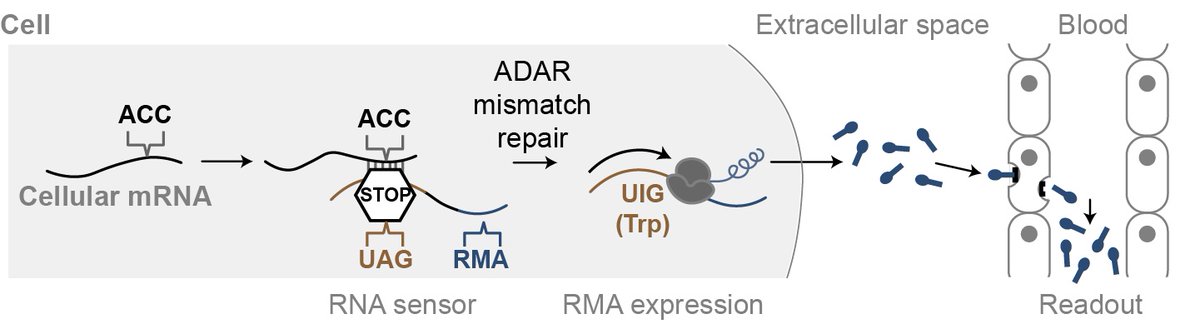
qPCR allowed us to measure transcripts, but just once, destructively, and only in post-mortem tissues. Here, we show we can record transcript level history in vivo and recover this information with a blood test to make a "noninvasive qPCR". nature.com/articles/s41467-0…
3
38
150
13,794

Xiaojing Gao retweeted

Apr 30
1/ Excited to share our new paper in Science: “Toward life with a 19-amino acid alphabet through generative artificial intelligence design.” @ColumbiaSysBio @ColumbiaBME @Columbia
science.org/doi/10.1126/scie… 🦠🧬🛠️🖥️💥
17
155
542
84,522
Xiaojing Gao retweeted

Apr 28
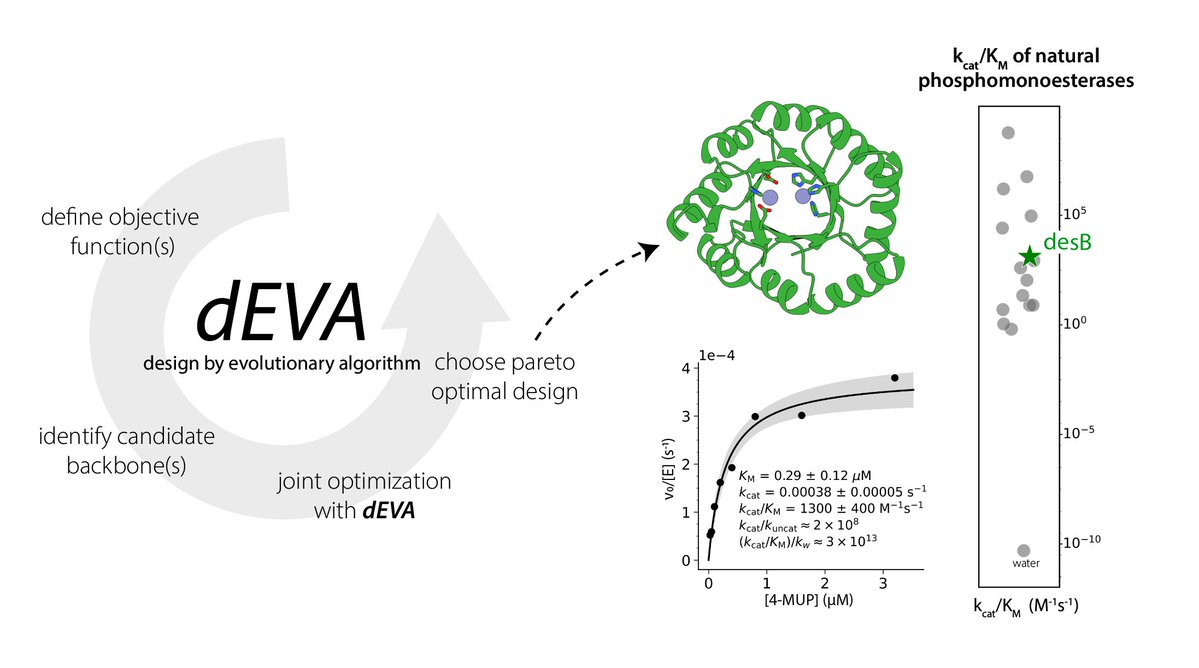
Excited to report the first de novo enzyme catalyzing two of the most energetically demanding reactions in biology—phosphomonoester and phosphodiester hydrolysis—with catalytic efficiencies comparable to natural enzymes! 🚀
desB was designed zero-shot with dEVA. No structure prediction, no pre-defined motif, no reaction-intermediates. 🧵
@StanfordBiosci @bioe_stanford @SLAClab
@EPFL @hes_so @simonduerr
2
62
267
22,060
Xiaojing Gao retweeted
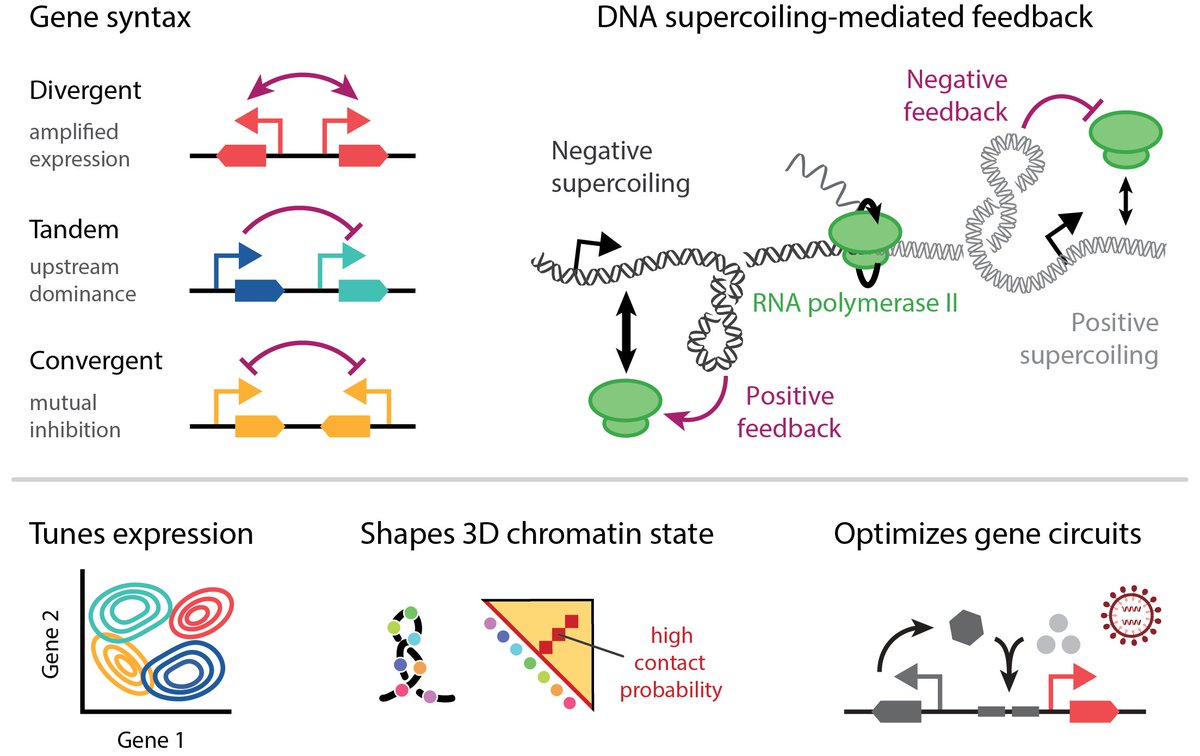
Could the folding of synthetic gene circuits in 3D shape how genes are expressed? Today @ScienceMagazine we report on the role of gene syntax in shaping feedback between transcriptional activity and genome folding for advanced circuit design🧵 (1/n)
20
149
560
47,161
Xiaojing Gao retweeted
Apr 30
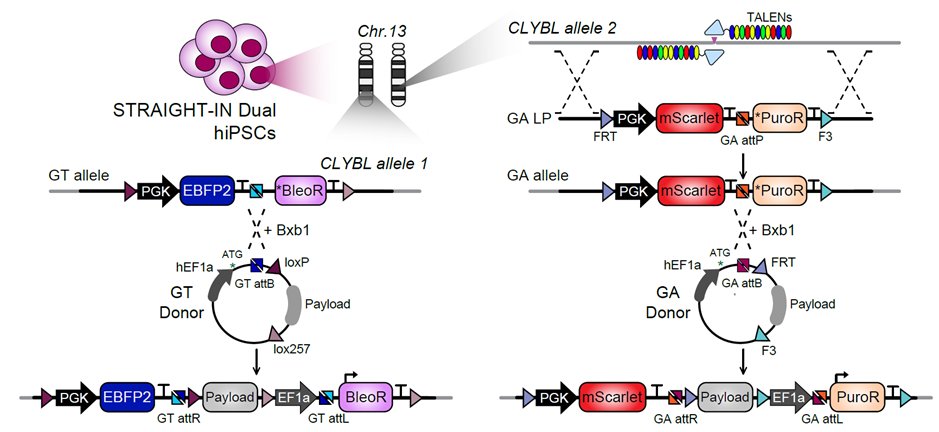
So you want to engineer your hiPSCs, but targeting DNA payloads requires multiple slow, inefficient steps for each construct. What if we could accomplish multi-site integration seamlessly? Come hear about STRAIGHT-IN Dual now out at Nature Biomedical Engineering! 🧵
Link at end!
3
41
151
15,254

Apr 18
Don't feel bad about missing the mSBW abstract deadline. We have extended it! We also keep the registration fee affordable ($150 for students) so that mammalian synbio-curious trainees can check it out, especially if you are in the Atlanta area. Meeting link below:
1
3
6
1,669
Apr 18
1
234
Apr 18
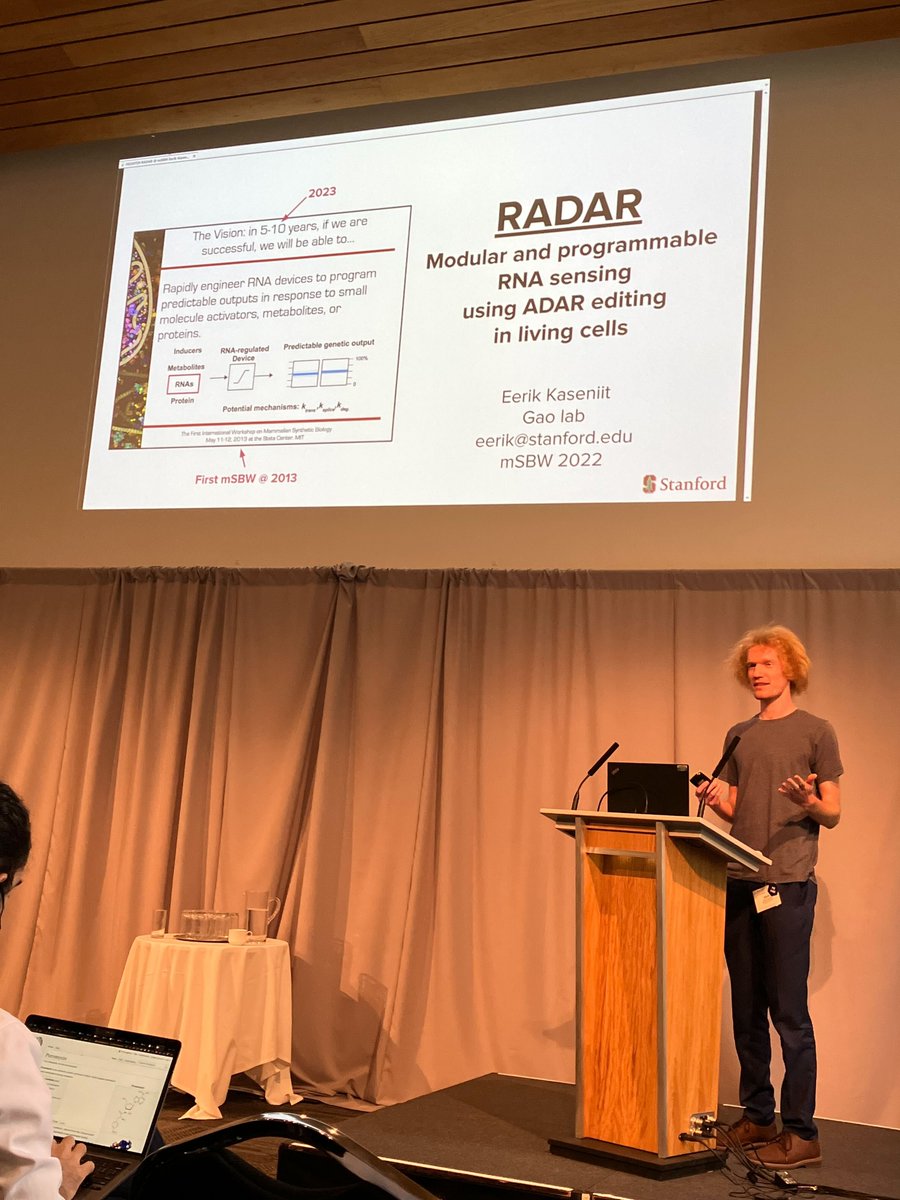
A neat amplification system to improve the limited sensitivity/dynamic range of RADAR pubs.acs.org/doi/10.1021/acs…
1
6
41
3,930
Apr 15
We just updated our Germinal preprint for de novo antibody-like binder design! Featuring additional scFv designs, extensive experimental validation of epitope specificity and polyreactivity, and CryoEM structure courtesy of Jim Zhang and Bing Rao from Feng Liang's lab.
24 Sep 2025
Having often dealt with binder-limited projects, we sought a more accessible source for nanobodies than yeast display or llama. Here we introduce Germinal, computationally designing antibody-like binders with such a hit rate that only tens need to be screened for each target.
1
1
18
3,565
Apr 13
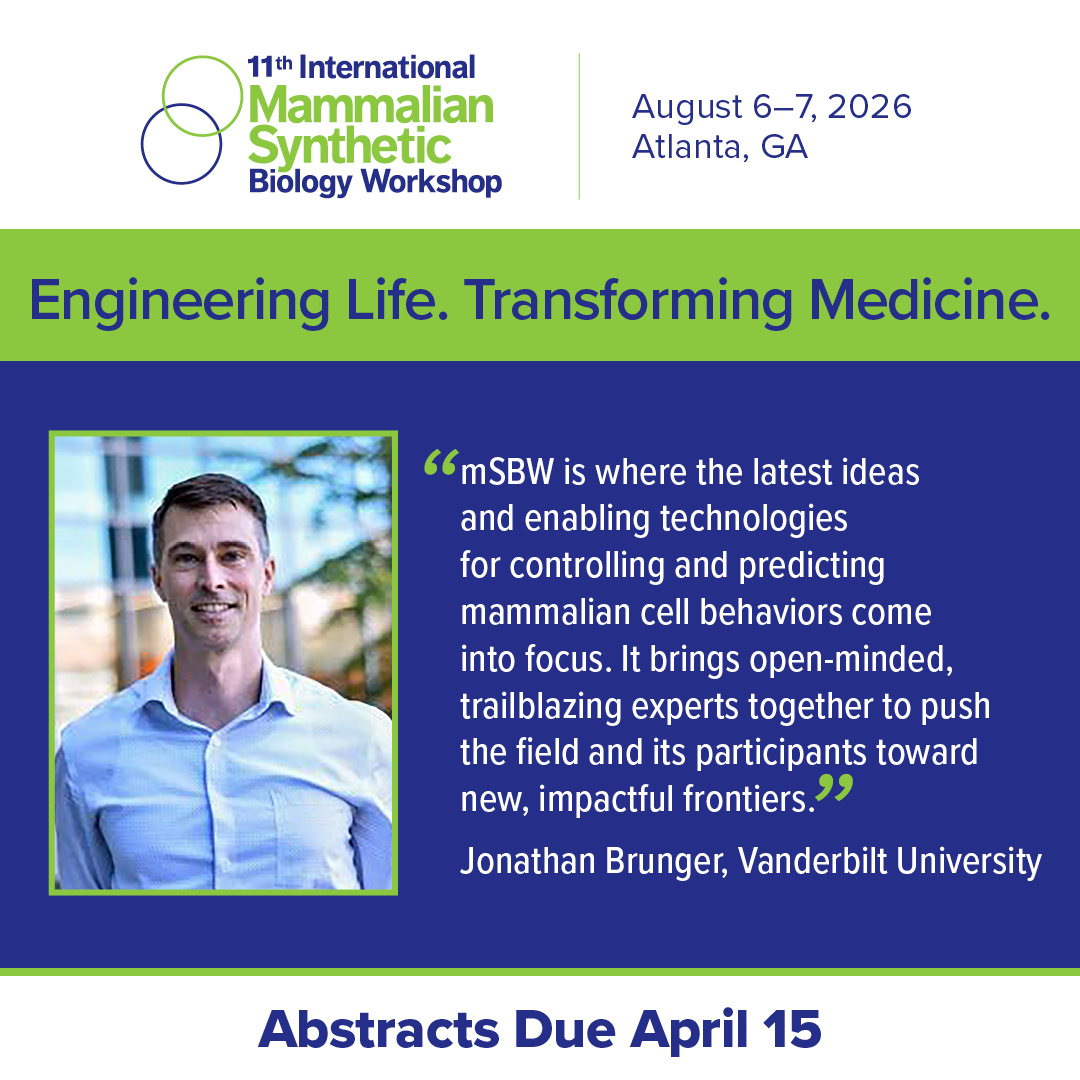
Abstract due in two days!

Breakthroughs in mammalian synthetic biology happen when bold ideas meet the right audience. Could your research define the next frontier of medicine? Submit your abstract now: bit.ly/4jQmrFj #mSBW2026 #SyntheticBiology #MammalianSystems #CallForAbstracts
2
1,070
Xiaojing Gao retweeted

Apr 3
So excited that our work on Programmable Macromolecule Delivery via Engineered Trogocytosis is out in @NatureCellBio! Link: rdcu.be/fa90i @stanleyqilab @Stanford_ChEMH @bioe_stanford @StanfordBioX A 🧵on our story:
3
8
33
5,246
"Engineering multiple levels of specificity in an RNA viral vector": Jenny finally led our covid-interrupted revision to completion. Thanks to the delay, we managed to incorporate our more recent RNA sensors and protease circuits into the RNA viral vectors
29 May 2020
Higher-order infinitesimal in light of the challenges we are all going through, but still happy that the preprint is out. Missing @ElowitzLab already. Kudos to Michaela and Matthew. Can't have found a more perfect collaborator than Lucy. Thank you all!
1
5
32
7,504
2
540
Xiaojing Gao retweeted

Engineering the next frontier of mammalian systems. Accepting abstracts through April 15 - submit yours now: bit.ly/4jQmrFj #mSBW2026 #SyntheticBiology #MammalianSystems #CallForAbstracts
2
8
666
Xiaojing Gao retweeted

22 Dec 2025
New preprint from the lab led by the amazing Jack Bryant!
# tunable genetic medicines, # endogenous ADARs
"Regulatable In Vivo Gene Expression via Adaptamers" biorxiv.org/content/10.64898…
1
6
38
5,865
Xiaojing Gao retweeted

9 Dec 2025
Important paper from Jason Chin's and Julian Sale's labs realizing key operations needed for building synthetic human genomes. My repeated reaction reading this paper was "um, I didn't know you could just do that." science.org/doi/abs/10.1126/…
3
30
132
17,640