Urban and Regional Economics Seminar Group (URESG): international network of academics, policy makers and practitioners
Joined December 2013
- Tweets 94,592
- Following 1,411
- Followers 1,099
- Likes 57,792
Photos and videos
URESG retweeted

"But rising wages can compress profit margins. As profits come under pressure, firms become more cautious. Investment slows." This is this the crux of it. Usury. Capital funds and leveraged creditors demanding consistently high returns. Workers and their communities will never be anything more than unit costs. Bollocks to their pandering 'job guarantee' or 'UBI'. We need an updated market socialism with public sector work fulfilling human needs.

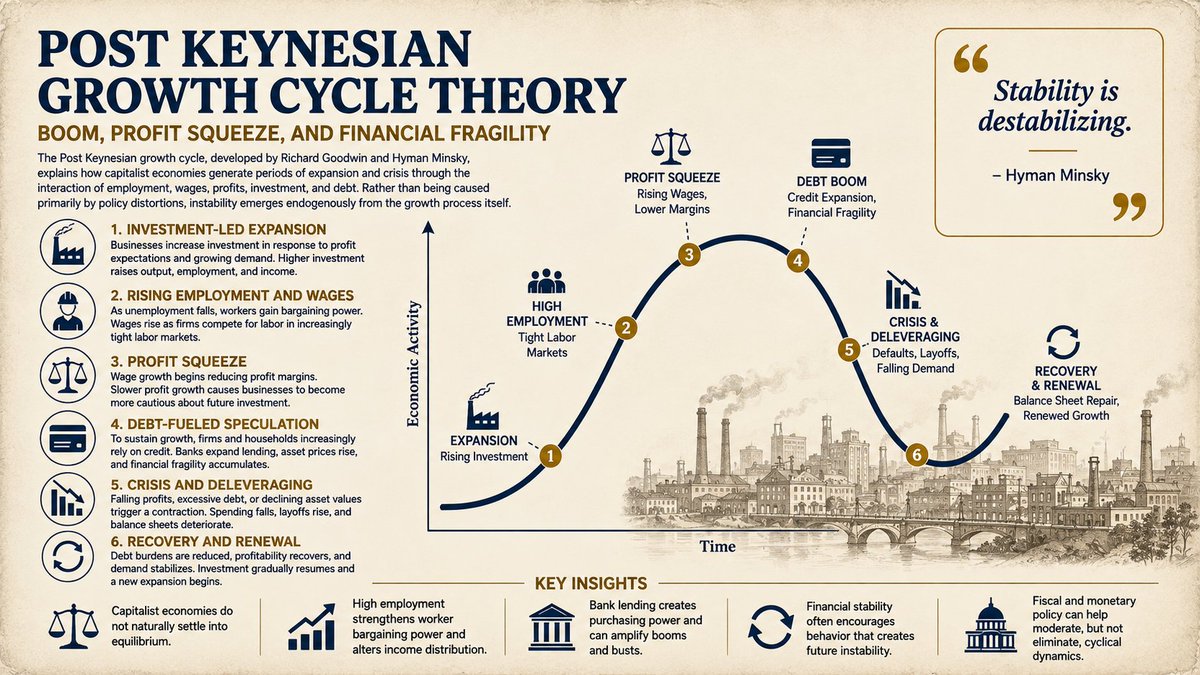
The post-Keynesian growth cycle doesn't begin with central banks distorting a mythical natural interest rate. It begins with the normal functioning of capitalism itself.
Businesses invest because they expect profits. Investment creates income, income creates demand, and demand encourages further investment. Growth feeds on itself.
As the expansion continues, unemployment falls and labor markets tighten. Workers gain bargaining power. Wages begin rising faster as firms compete for scarce labor.
Higher wages are not a distortion. They are a predictable consequence of successful growth. But rising wages can compress profit margins. As profits come under pressure, firms become more cautious. Investment slows.
At the same time, businesses and households often turn to debt to maintain growth. Banks are eager to lend because recent success makes risk appear low. Credit expands, asset prices rise, and optimism becomes self-reinforcing.
The longer stability persists, the more fragile the system becomes.
What began as productive investment gradually shifts toward speculation. Rising debt commitments require continued growth to remain sustainable. The economy becomes increasingly dependent on expectations that cannot all be fulfilled.
Then reality intervenes. A slowdown in profits, rising debt burdens, falling asset prices, or declining investment can trigger a wave of deleveraging. Spending falls. Layoffs begin. Income declines. The boom turns into a bust.
The crisis was not caused by an external distortion imposed on an otherwise stable system.
The boom itself created the conditions for the bust.
This was the insight of Richard Goodwin. It was the insight of Hyman Minsky and formalized by @ProfSteveKeen Cycles emerge from the interaction of wages, profits, investment, employment, and debt.
Capitalism does not require policy mistakes to become unstable.
Its internal dynamics are often enough.
10
36
90
3,665
URESG retweeted

Jun 13
As everything else is held constant, this is the single largest available first step away from the abyss of incompetence and corruption in management.
There's still a bit of time left for the US to avoid 'going full UK HE'.
Jun 13

Capping university administrator salaries relative to faculty salaries is a must as well.
We cannot continue incentivizing administrative careerism with obscene compensation packages while the people doing the teaching and research are treated as a cost center.
Universities must reward scholarship, not bureaucracy.
1
3
14
953
URESG retweeted

Jun 12
The full UK State Pension is now worth around £12,548 a year. That's less than half the earnings of someone working full-time on the National Minimum Wage, despite many pensioners paying taxes and National Insurance for 40, 50 or even 60 years.
Yet every time the Treasury needs money, the same voices appear demanding the Triple Lock be scrapped.
Why?
State pension spending is forecast at around £154 billion this year, but that supports over 13 million pensioners, many of whom rely on it as their primary income. Meanwhile, billions continue to disappear into failed projects, government waste, bureaucracy, consultants, quangos and policies that deliver little value to ordinary taxpayers.
The Triple Lock isn't some gold-plated luxury. It exists because politicians allowed the State Pension to fall behind for decades. Even today, a full State Pension is barely above the poverty line and is nowhere near a typical working wage.
If politicians want to save money, start with waste, inefficiency and failed spending programmes.
Leave pensioners alone.
They worked, they paid in, they built this country and they deserve dignity in retirement, not another raid on their income.
541
2,759
9,681
401,536
URESG retweeted

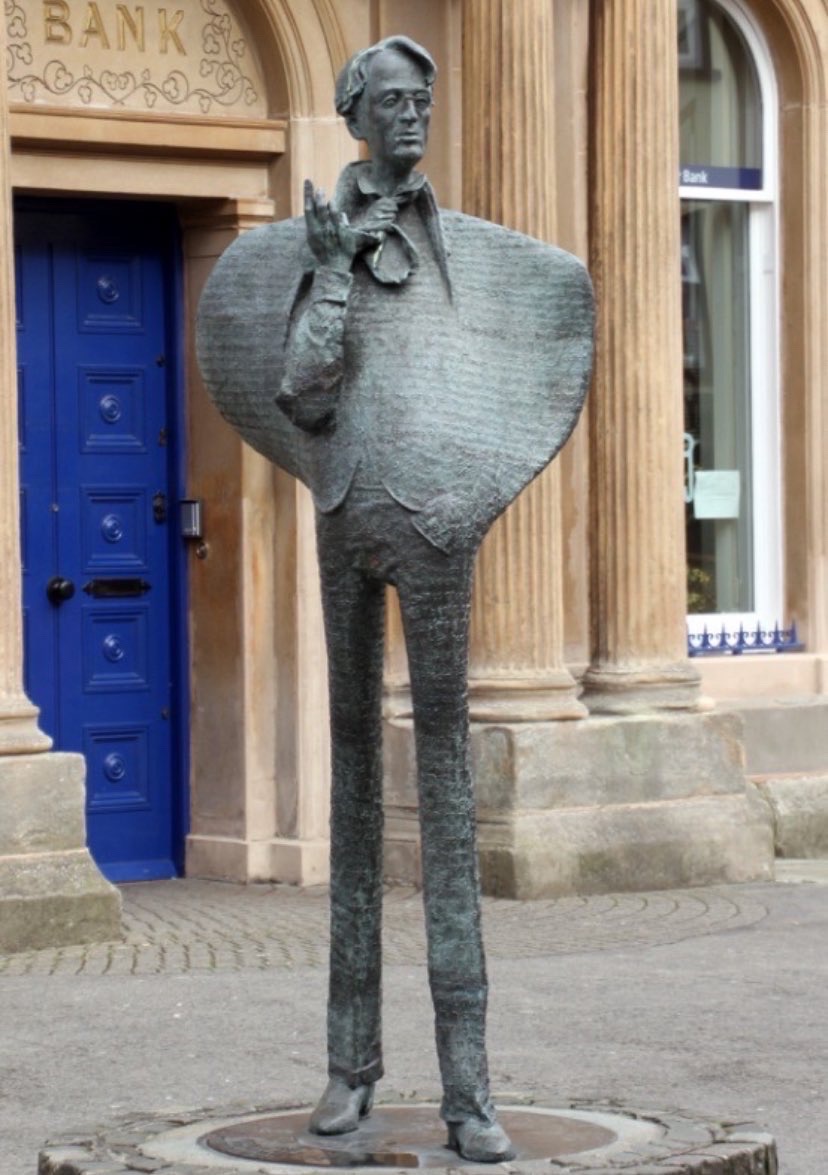
13 June 1865. William Butler (“WB”) Yeats was born in Dublin, Ireland. He was 1st Irish person to win the Nobel Prize for literature. He’s commemorated in Sligo town by a statue created in 1989 by the sculptor Rowan Gillespie.
12
83
310
24,886
URESG retweeted

Jun 13
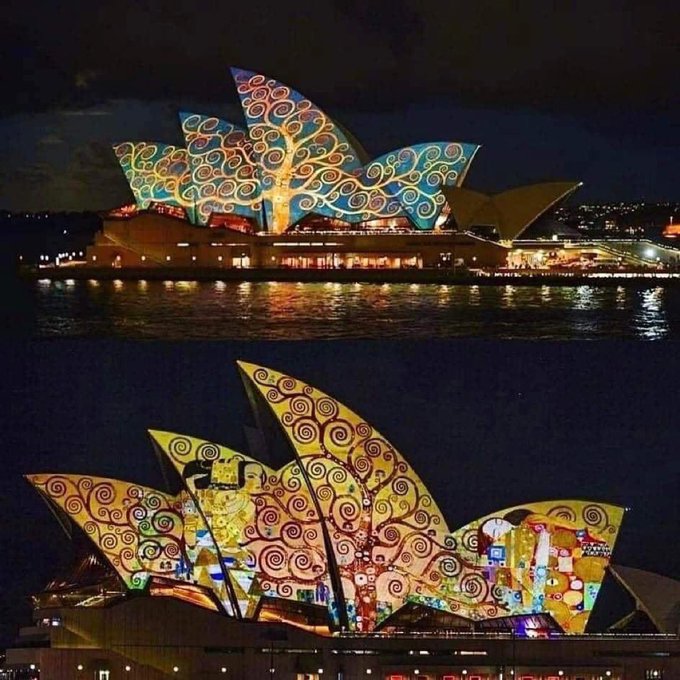
The Sydney Opera House illuminated with Gustav Klimt's The Tree of Life.
86
1,386
8,319
123,934
URESG retweeted

Jun 13
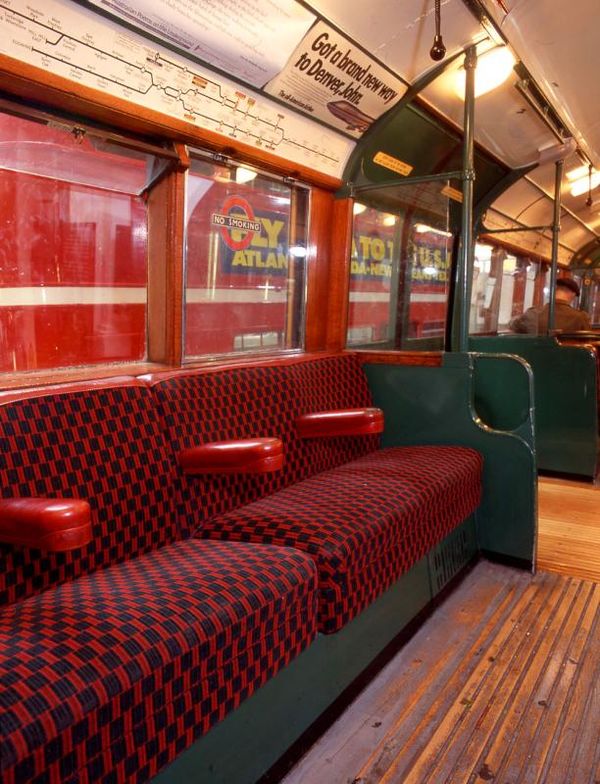
The 1938 stock red Underground trains on the Northern Line were always my favourite. And here's a fascinating fact about the distinctive seat moquettes: It, and the moquette for other tube lines, was designed by Karl Marx's cousin in London; Enid Marx. #london #underground #tube
24
126
582
17,110


URESG retweeted

Jun 13
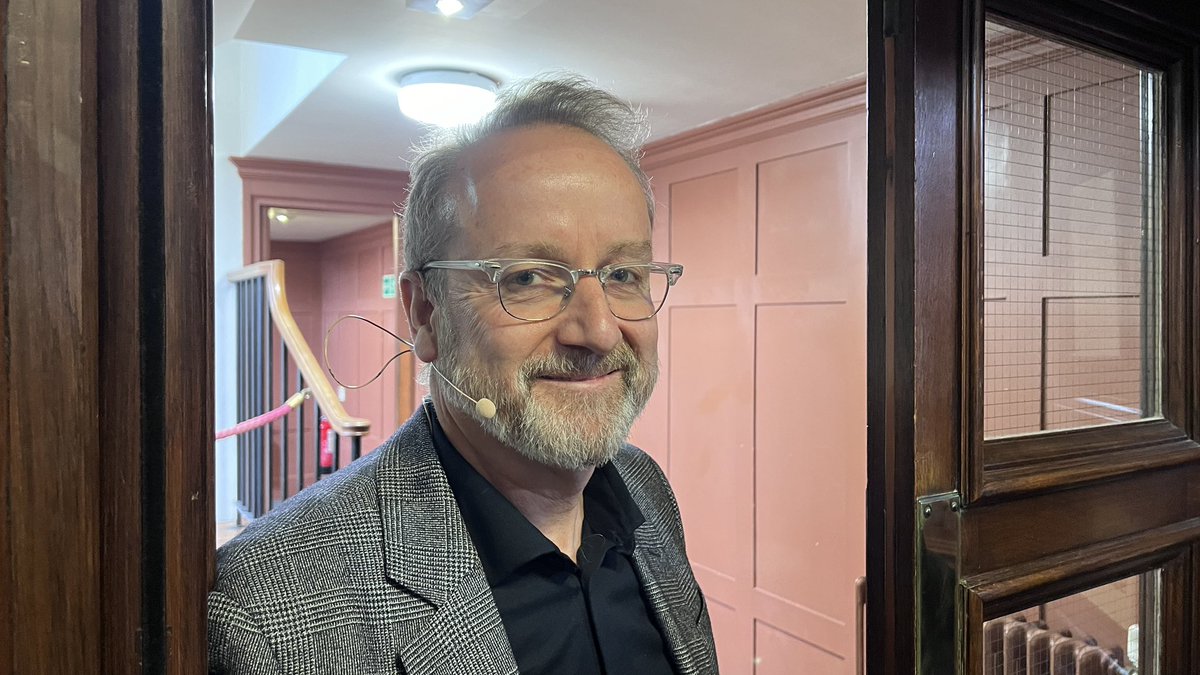
I don’t think he’s on X any more but Richard Moorhead has been given an OBE in the birthday honours list. Richard has done a phenomenal amount of thinking, writing and work on helping victims of the Post Office scandal and his award is very well deserved.
19
217
1,453
16,569
URESG retweeted

The fantasy isn't that the state creates markets. The fantasy is believing modern markets could exist without states, courts, contracts, property law, infrastructure, and money. History says otherwise.
25
50
160
15,902
URESG retweeted

Jun 12
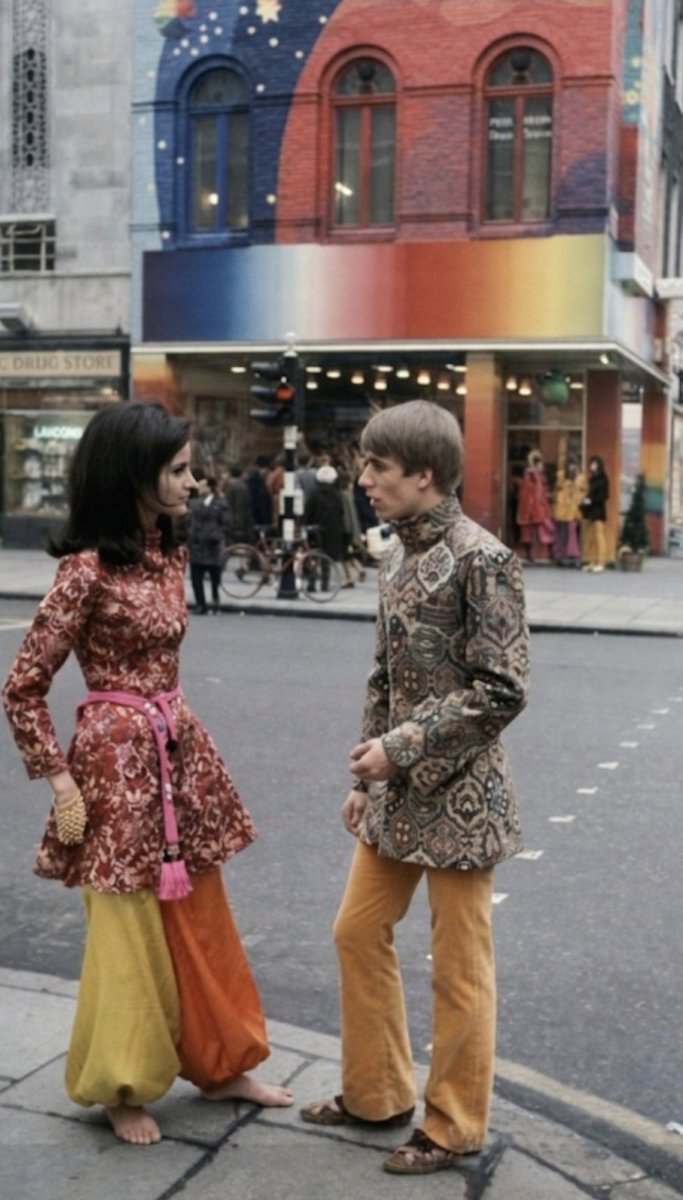
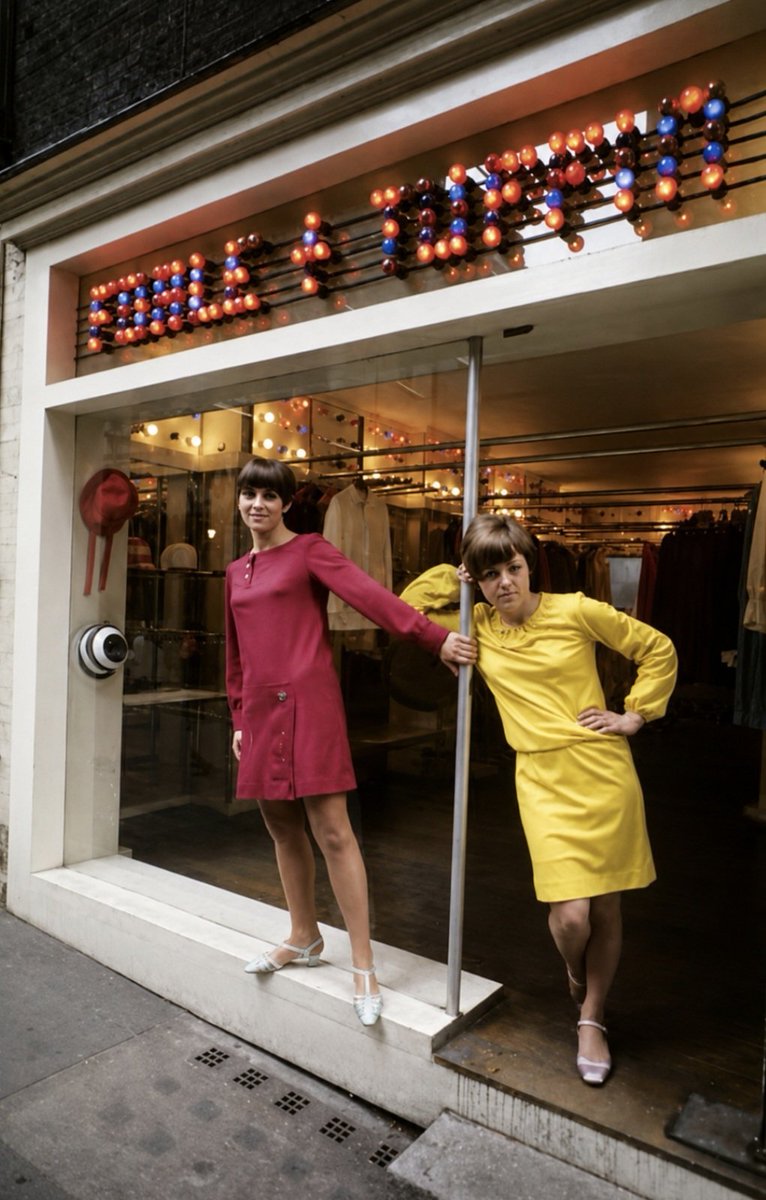
Foale & Tuffin Boutique on Marlborough Court, Soho, London (1965)
14
69
755
URESG retweeted

Jun 12
Most of the obituaries and tributes to David Hockney will, I imagine, focus primarily on his extraordinary craft and brilliance as an artist. Perhaps they might also mention his brilliance as a communicator (he was such a fine writer and speaker).
But there was something else rather unique about him too. He was also strikingly honest about the tricks/techniques artists use and used to paint. His book Secret Knowledge is a rather wonderful detective work into how renaissance and Dutch golden age painters used glass and mirrors to help them master perspective.
It's a pretty compelling case (see this video clip from a BBC doc he made alongside the book👇) though I'm sure some art historians will raise their eyebrows. Many will be aghast at the notion that greats like Vermeer might have been using lenses and camera obscuras to help them draw and paint. As if it were in some way "cheating". But Hockney was so self-evidently brilliant he was one of the few people who could document this without anyone gainsaying his own talent.
There are very few artists, living or dead, who have this degree of self-confidence. Not just to know their craft, but to be bracingly honest about how it works. One other who comes to mind is Paul Simon: not just an extraordinary musician but is also an extraordinary communicator about the tricks and techniques of how to write and perform music.
For many great artists, the temptation is to cloak their crafts in mystery, like a member of the magic circle. Hockney wasn't having any of it. So yes, he was a legend in all the obvious ways. But also in a few other less obvious ways as well. RIP.
71
584
2,722
136,623
URESG retweeted

Jun 13
Multi-millionaire Iceland boss wants to axe pension triple lock.
Full UK state pension (received by 35% of pensioners) is less than 50% of minimum wage.
Millions can't save for private pension
2m pensioners live in poverty. 110000 a year die in poverty.
archive.ph/OIdCF
152
1,038
1,355
26,431
URESG retweeted

Jun 12
Re-upping this - Starmer's government was never in the busines of getting defence right but was rather indulging in fantasies of defence dividends and British power. theguardian.com/commentisfre…
4
20
36
5,176
URESG retweeted
The strangest criticism of Keynesian economics is the claim that government spending cannot create wealth because it only redistributes existing money.
By that logic, no investment creates wealth. Building a factory merely redistributes money to construction workers. Hiring engineers merely redistributes money to engineers.
The point is not the money. The point is what the money mobilizes.
When an economy has unemployed workers, idle factories, and unused resources, the problem is not a lack of productive capacity. The problem is a lack of spending to activate that capacity.
A dollar spent hiring an unemployed worker does not simply transfer income. It increases output. The worker now produces goods and services that did not exist before.
Wealth is not money. Wealth is production.
28
83
230
10,026
URESG retweeted

Mar 12
This is difficult to watch, it's embarrassing, it's enraging, it's shameful.
Emma Reynolds the Secretary of State for the Environment and David Hill the head of water at Defra appeared before MPs on Tuesday where they repeated the same old lie, that water company shareholders invest their money in the companies and we, the bill payers, pay them back over 10, 15, 20, 30 years.
Even Ofwat have owned up, that's a lie the £104 billion "private sector investment" is coming directly out of your pockets, your bank account. For God sake just tell the truth.
Barry Gardiner, you're a star. 👏👏👏
Mar 11

Since privatisation water companies have taken more than £85billion in dividend and piled up more than £60billion of debt.
Yet all capital and operational costs are covered by bill payers.
So why keep a privatised structure for a natural monopoly like water?
181
4,125
8,512
269,738
URESG retweeted

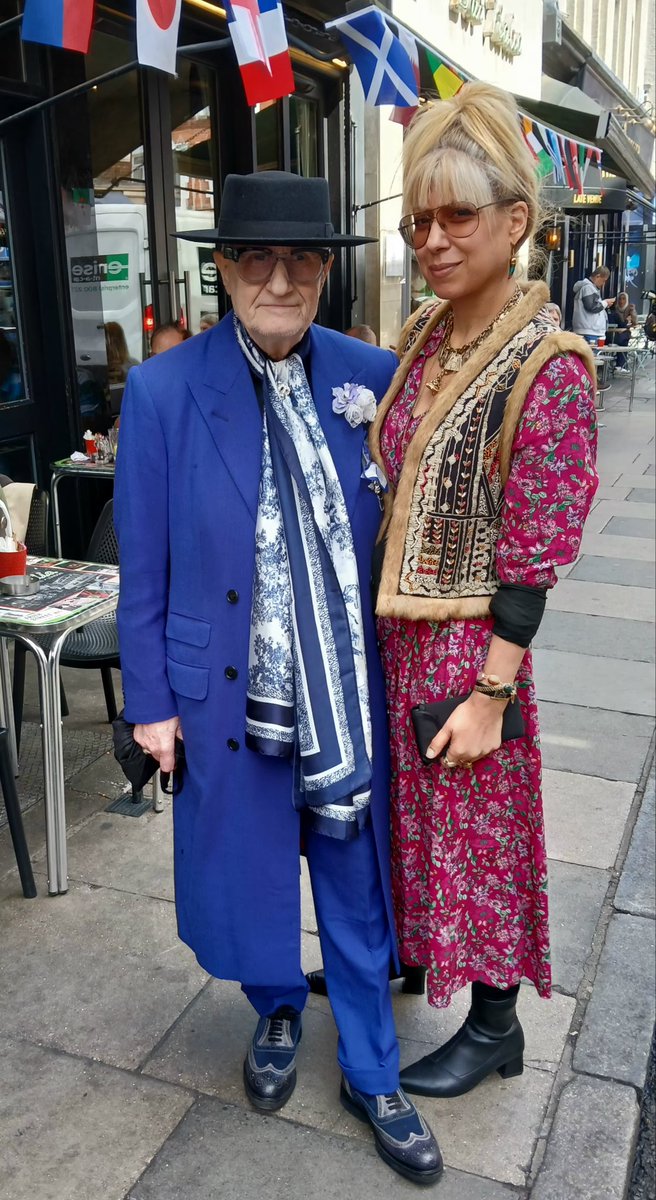
Hanging out in Soho today with my friend & fellow creative Soraya a very talented jewellery designer wearing some of her creations
@soraya72
@LittleItalySoho

3
2
42
833
URESG retweeted

100%. Richard Rose, Governing without Consensus and other classics published during the Troubles provide highbrow conformation. Or lowbrow, see the George Best cameo in the Alf Garnett Saga! The rewriting of history that has gone on since the 1998 Agreement is depressing.

In all this raging about how overseas commentators are classing the rioters in Belfast, I would again note that, until relatively recently, most Unionists were perfectly relaxed about calling themselves Irish (as well as British, obviously). Many still are.
1
1
7
522
URESG retweeted

Jun 12
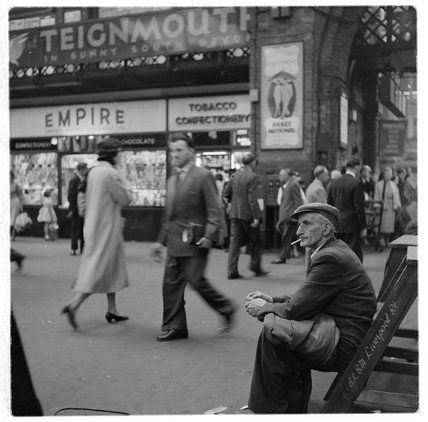
Liverpool Street Station, London, England - 1960
43
178
1,366
URESG retweeted

Jun 12
‘I think about him every time I go swimming’: David Hockney remembered theguardian.com/artanddesign…
1
3
725