
Welcome to Ukaverse 🌏 Co-President @BlockchainNYU
Joined September 2025
- Tweets 56
- Following 289
- Followers 64
- Likes 468
5 Photos and videos

17h
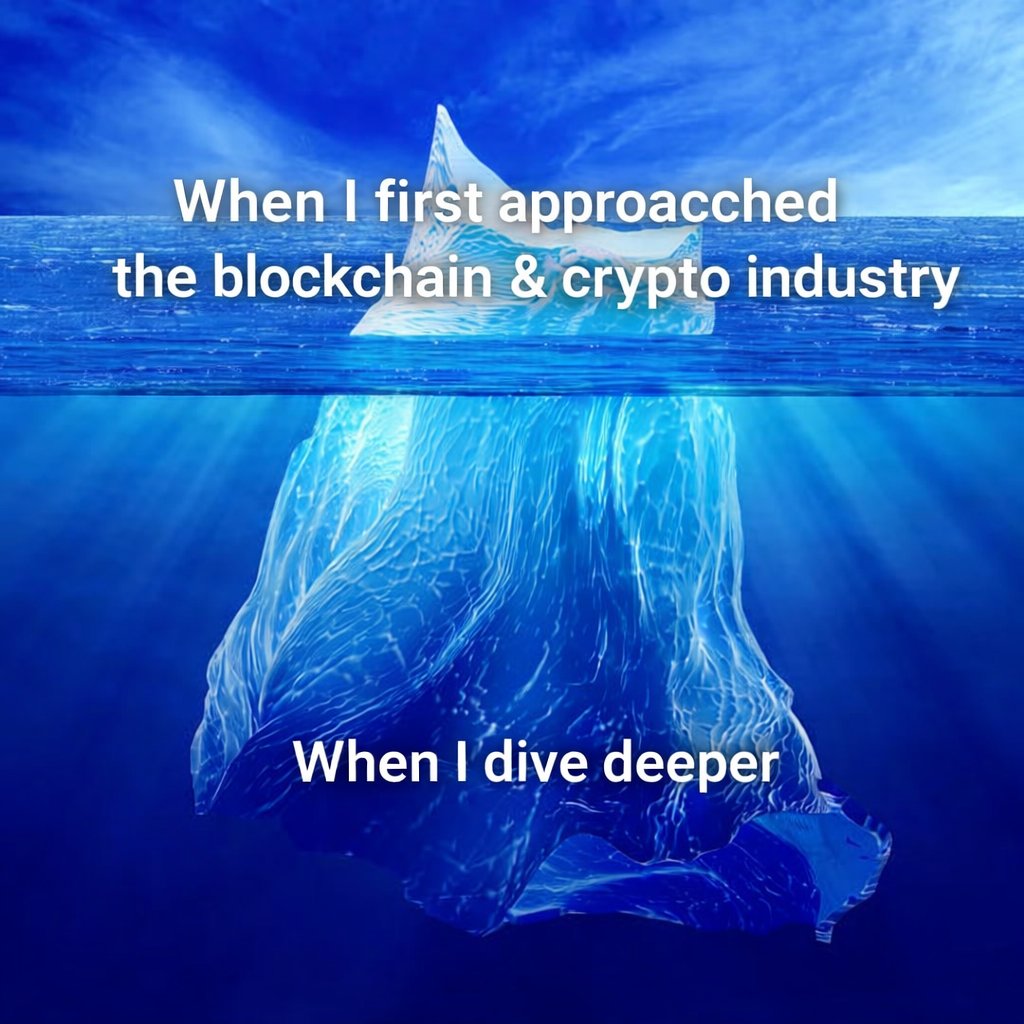
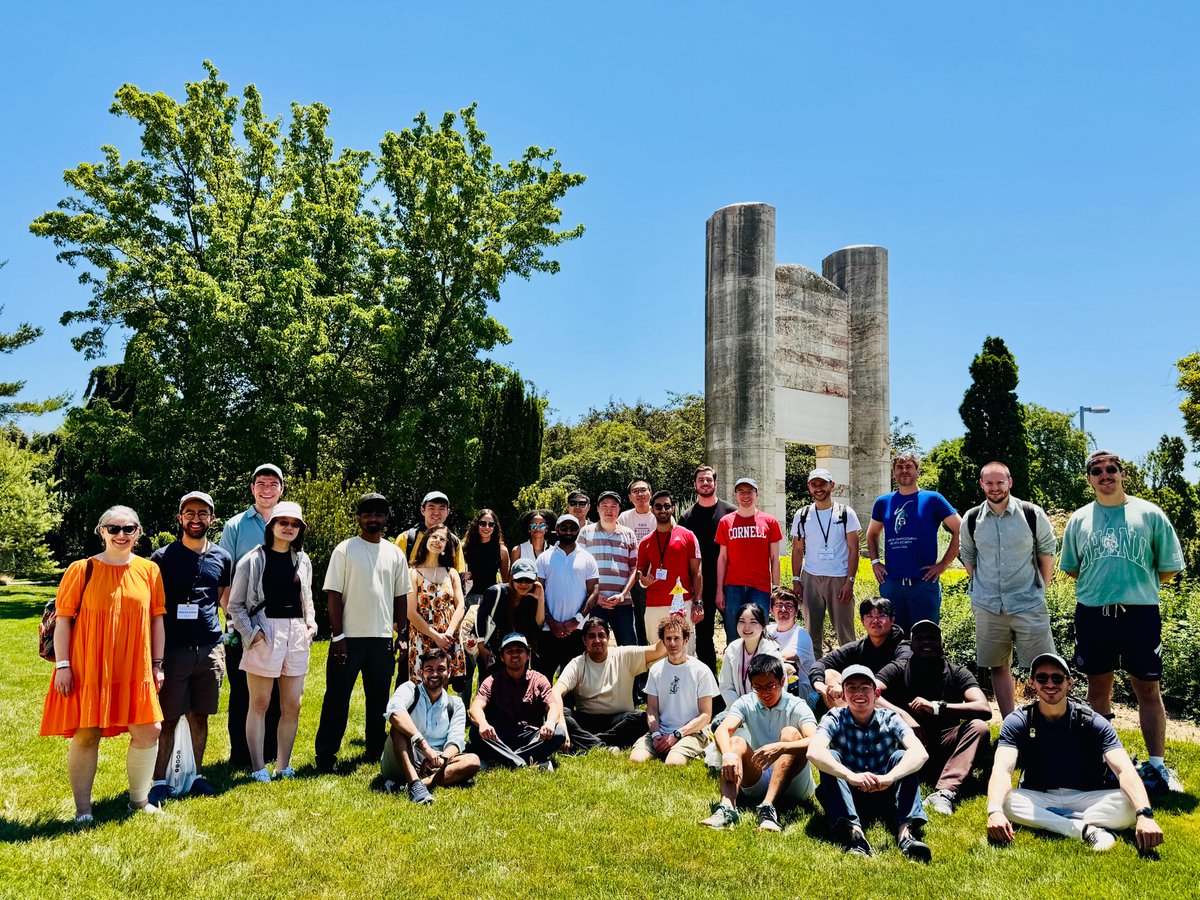
One week at IC3 changed how I think about technology.
I came in as an economics person and spent my time on understanding market structure, liquidity, ETFs, narratives, and how information gets priced into an asset. Mostly, I think about "why" things happen.
Then I spent a week surrounded by some of the sharpest researchers in blockchain, cryptography, distributed systems, law, and economics, and realized there was a whole layer of this industry I thought I understood but really didn't. It's the "how" you actually build the business vision from a technical foundation.
In crypto, it's easy to fall in love with narratives. A narrative tells you what the future could look like: 24/7 settlement, global access and liquidity, and privacy through ZK. But behind every compelling narrative sits a stack of hard technical problems that have to be solved before that future can exist.
At IC3, I watched researchers spend their days presenting on problems they are untangling: protecting privacy, scaling systems, verifying computation, and coordinating people who don't trust each other.
The more I learned, the clearer it became: technology and adoption are solving different parts of the same puzzle.
- Business turns complexity into a vision (it compresses the hard parts into something people can believe in).
- Technology turns that vision into reality (it actually solves them).
I'm still far from being a cryptographer. But I'm leaving with much deeper respect for the people building the foundations beneath the narratives we talk about every day. And maybe more importantly, I found where I feel most alive: at the intersection of technology, markets, and human behavior, trying to be a translator between what gets built and what gets adopted. I'm going to keep learning the hard technology behind the narrative.
Grateful to everyone at @initc3org for an unforgettable week of learning, curiosity, and conversation.
5
78
Jun 13
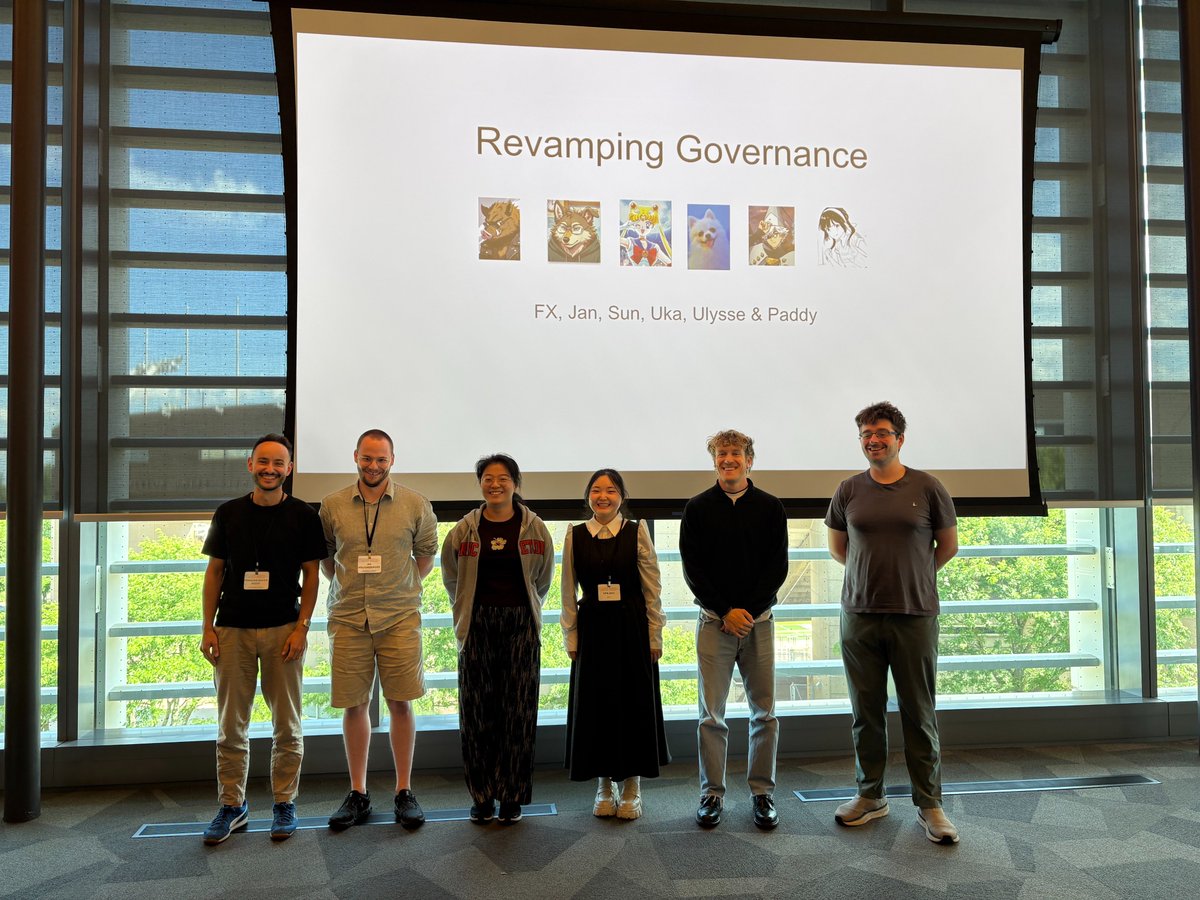
🥉 3rd Place at the IC3 Blockchain Camp Hackathon!!!
Our project focused on rethinking DAO governance from a UI/UX and governance perspective, combining insights from shareholder voting systems with cryptographic tools to create a healthier decision-making process.
We often assume that more transparency leads to better governance. But when every vote, wallet, and discussion is public forever, incentives change. People may follow whales, vote defensively, or stay silent altogether.
That led us to a simple question: Can DAOs learn from shareholder governance without sacrificing the openness that makes them valuable?
Our solution combined a privacy-preserving and publicly verifiable voting system (DRE-ip) with a governance-aware discussion forum, designed to improve both voter privacy and communication.
Personally, while I'm still learning cryptography, what fascinated me most was the human side of governance: incentives, communication, coordination, and the stories that shape collective decisions.
Huge thanks to my incredible teammates and @initc3org for an unforgettable week of building, learning, and debating the future of decentralized governance.
Jun 11

3rd Place: Revamping Governance
The Revamping Governance team set out to rethink how DAOs and decentralized governance operate. Their first step was a deep dive into real-world corporate governance and shareholder voting.
Surprisingly, they discovered that traditional shareholder voting is more private than DAOs, thanks to how brokers aggregate votes. Furthermore, nearly all top US companies fail to facilitate shareholder-to-shareholder communication (i.e., they have no online forums).
With this in mind, the team sought to bring private voting to DAOs without sacrificing their inherent openness.
They implemented a variant of DRE-ip for weighted voting, enabling broker-like vote aggregation while allowing anyone to verify the count by summing the ballots. For communication, they built a Reddit-style forum that leverages governance token weights to signal which prominent members are worth listening to.
1
4
271

Twenty-five experts from academia and industry put together this (monster, 150 -page) survey on the bidirectional impact of crypto and AI. Visit AIC3.io to read it, peruse the executive summary—or chat with a chatbot about it.
15
94
484
88,911
Jun 12
Why did Bitcoin's 4th halving feel so different?
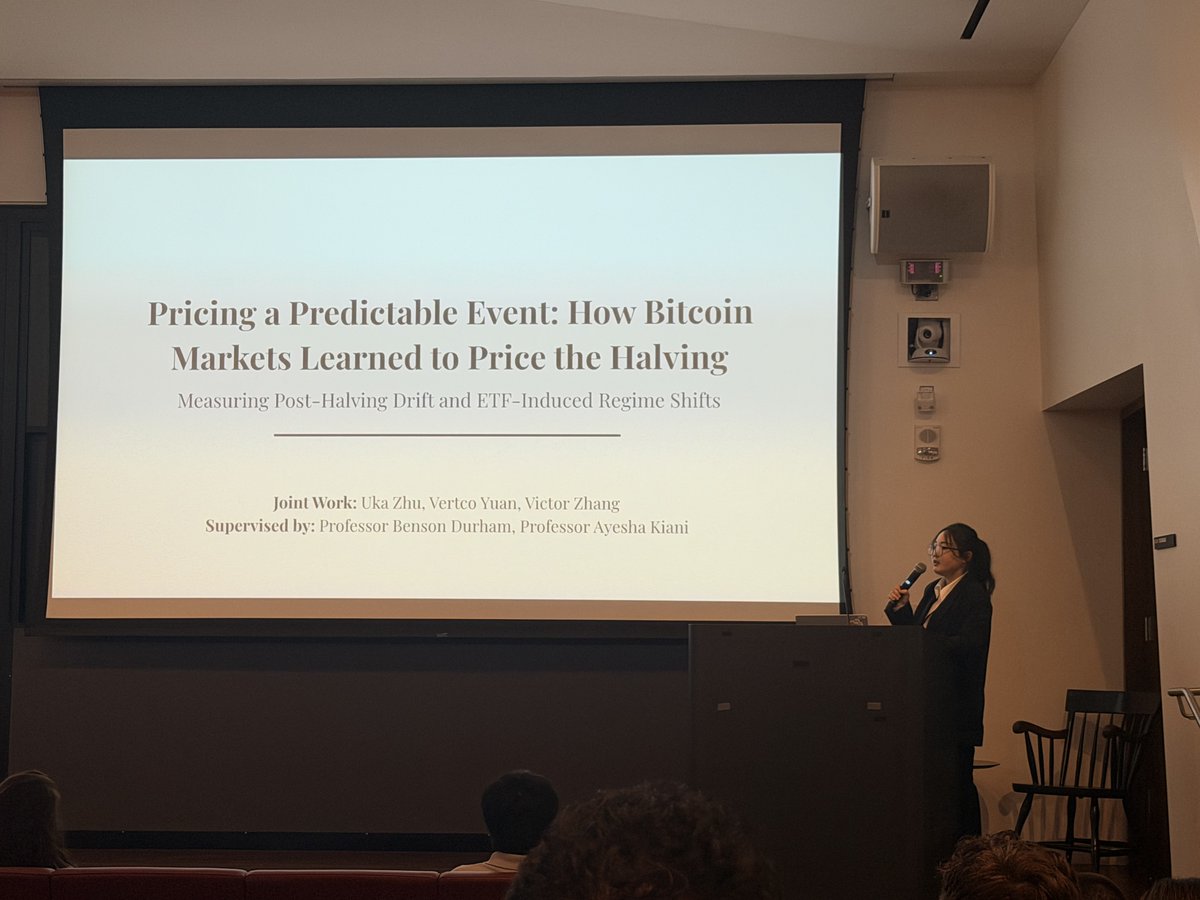
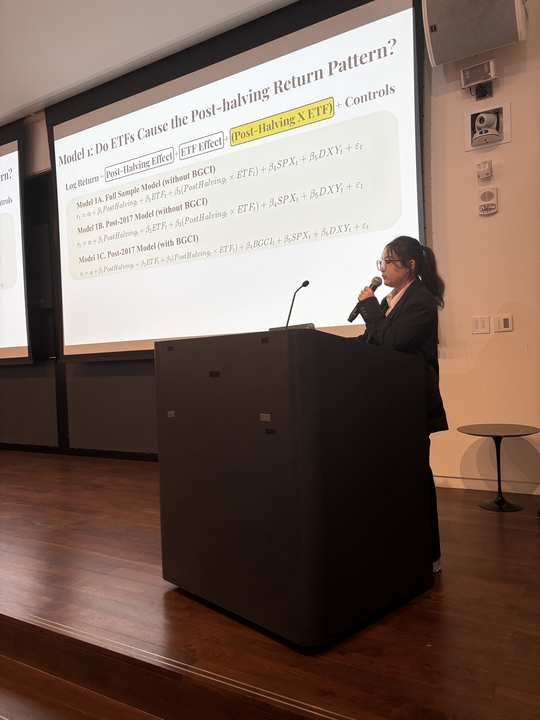
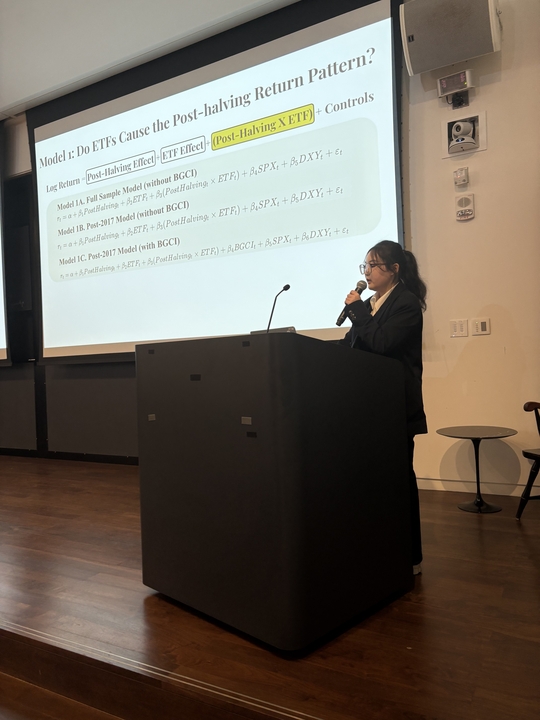
Last week, I had the opportunity to present our Bitcoin market structure research at Princeton through @initc3org, a moment I'll carry with me for a long time.
Many point to spot Bitcoin ETFs as the explanation. Our findings suggest the story may be bigger.
Across four halving cycles, we found evidence that Bitcoin's market response has evolved from a delayed reaction to anticipation and correction and increasingly toward pre-event absorption.
A few findings stood out:
→ Structural breaks move progressively closer to halving events over time. The 4th halving is the first cycle where the structural break appears before the halving itself.
→ Post-Halving Event Drift (PHED) appears clearly only in the first cycle.
→ Liquidity regime shifts observed in earlier cycles largely disappear by 2024.
Taken together, these patterns suggest that Bitcoin may be transitioning from an event-driven market to an expectation-driven market.
The 4th halving may not simply be an ETF-era anomaly. It may be the visible outcome of a decade-long market-learning process.
As markets mature, information gets absorbed earlier, narratives get priced in faster, and historical patterns become harder to repeat. The challenge is no longer just anticipating the event itself but understanding how market participants will anticipate and price in that event.
Grateful to @initc3org and all organizers for an unforgettable week of learning, discussion, and new ideas.
1
3
270
Ukaaa🌻 retweeted

Jun 11
3rd Place: Revamping Governance
The Revamping Governance team set out to rethink how DAOs and decentralized governance operate. Their first step was a deep dive into real-world corporate governance and shareholder voting.
Surprisingly, they discovered that traditional shareholder voting is more private than DAOs, thanks to how brokers aggregate votes. Furthermore, nearly all top US companies fail to facilitate shareholder-to-shareholder communication (i.e., they have no online forums).
With this in mind, the team sought to bring private voting to DAOs without sacrificing their inherent openness.
They implemented a variant of DRE-ip for weighted voting, enabling broker-like vote aggregation while allowing anyone to verify the count by summing the ballots. For communication, they built a Reddit-style forum that leverages governance token weights to signal which prominent members are worth listening to.
1
1
5
419
Jun 12
One of the most rewarding weeks I've had this year was at the IC3 Blockchain Camp at Princeton University.
A week full of learning, building, presenting, and making new friends. Grateful for every conversation, every challenge, and every late-night brainstorming session.
I had the opportunity to learn from world-class researchers, present my research on Bitcoin halving cycles, build alongside an incredible team, and somehow come home with a 🥉 hackathon finish.
Most importantly, thank you, @initc3org and all the organizers, for creating such a special experience. Hope to see everyone again soon!!!
Jun 11
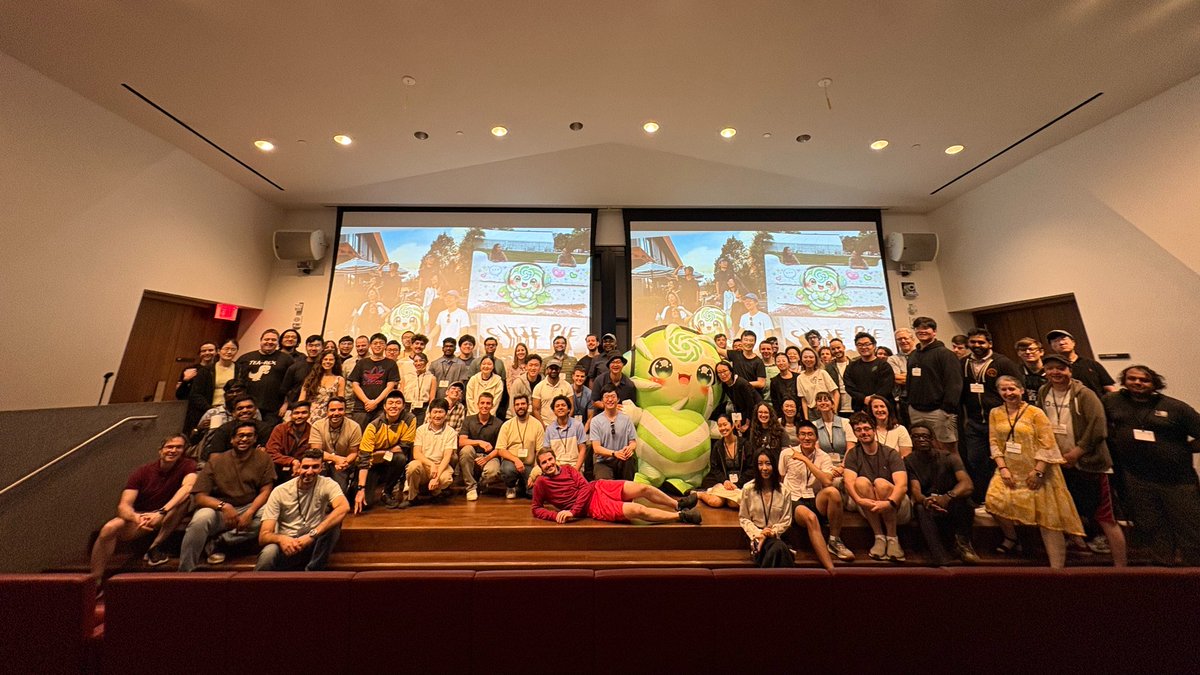
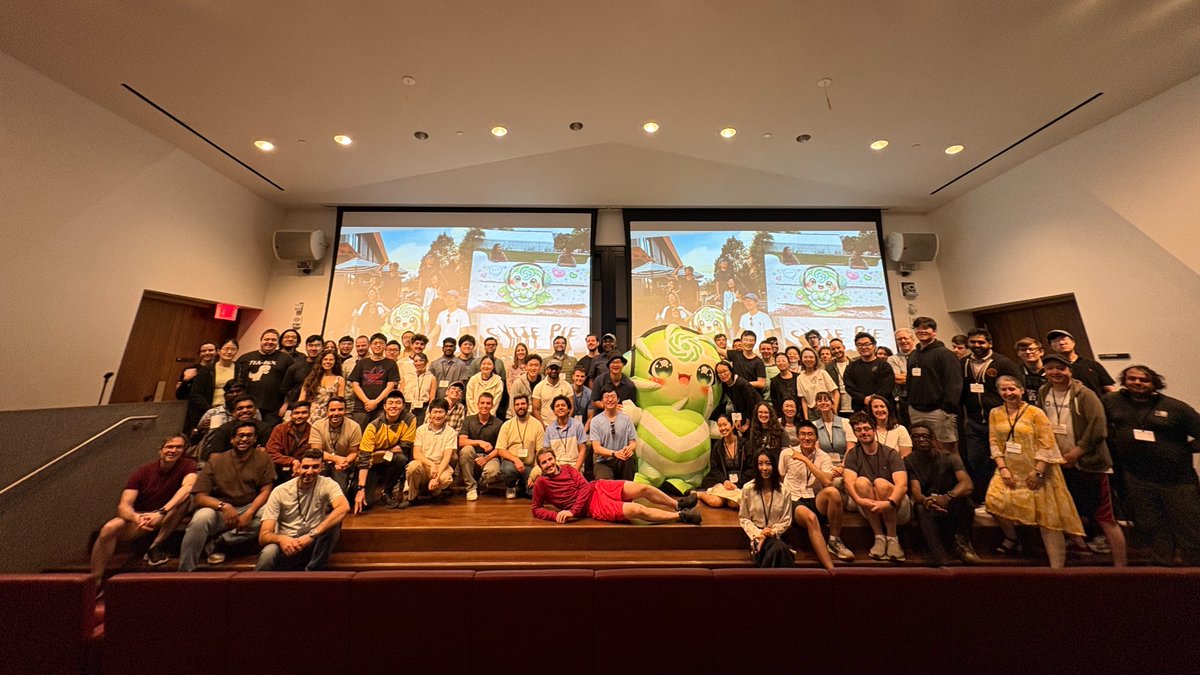
That’s a wrap!
Over 100 computer scientists, researchers, and students attended the 2026 IC3 Blockchain Camp for a full week of learning and hacking.
Congrats to the winning hackathon teams:
1
2
8
417
Ukaaa🌻 retweeted
Jun 11
That’s a wrap!
Over 100 computer scientists, researchers, and students attended the 2026 IC3 Blockchain Camp for a full week of learning and hacking.
Congrats to the winning hackathon teams:
1
6
41
1,663
Jun 3
DeFi changed the way I think about finance.
As a recent NYU Economics graduate, NYU Blockchain Lab leader, and researcher studying Bitcoin market structure, I want to help bridge the gap between academia and the builders creating the future of on-chain finance.
ETHConf is exactly where those conversations happen. I’d love to learn, contribute, and meet the people pushing DeFi forward.
#1inchForward

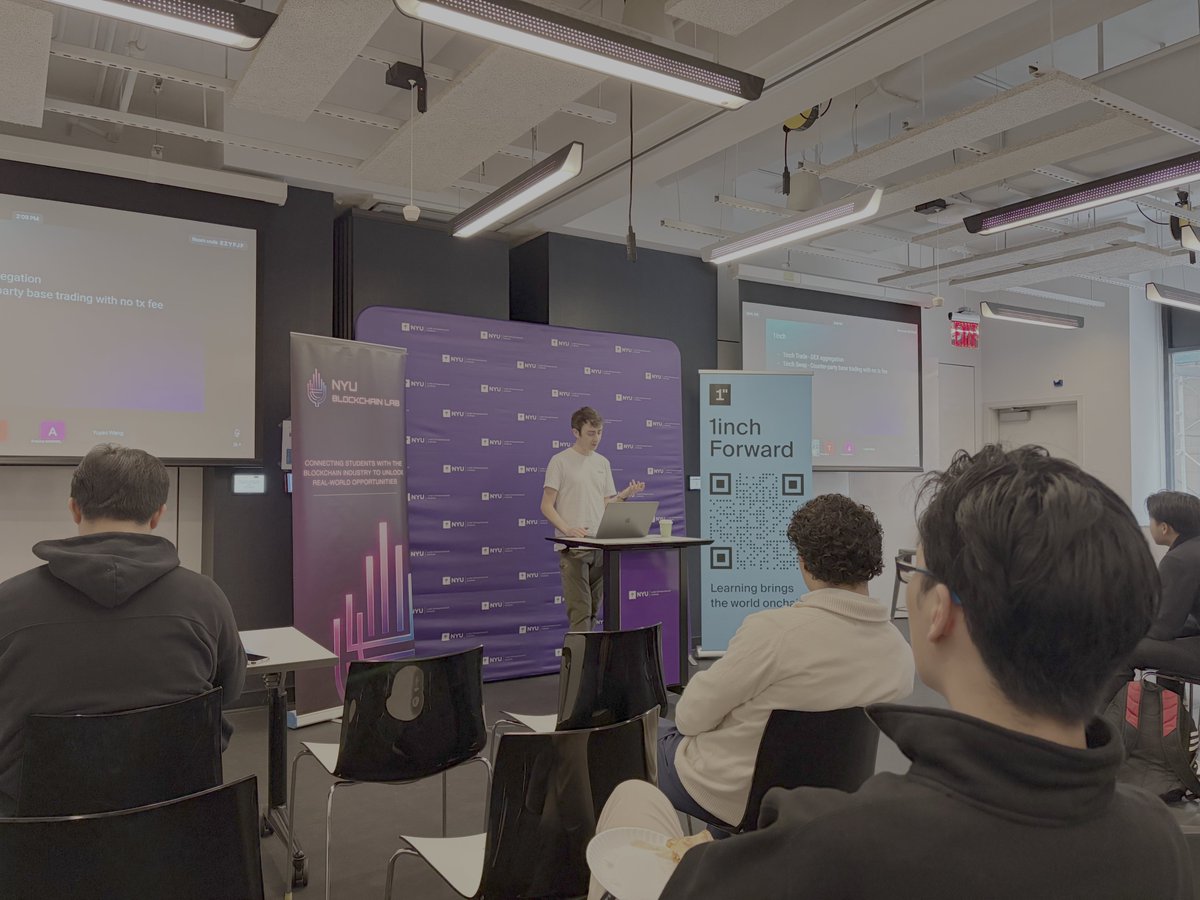
DeFi’s next builders should be in the room where it happens. We’re giving away 10 student tickets to ETHConf by @ETHGlobal in NYC next week.
To enter: like, share and comment why you want to go. Winners notified within 24h. Must have student email to redeem. #1inchForward
2
159
May 9
JPMorgan. Mastercard. Ripple. Ondo.
They just settled a cross-border tokenized treasury in under 5 seconds.
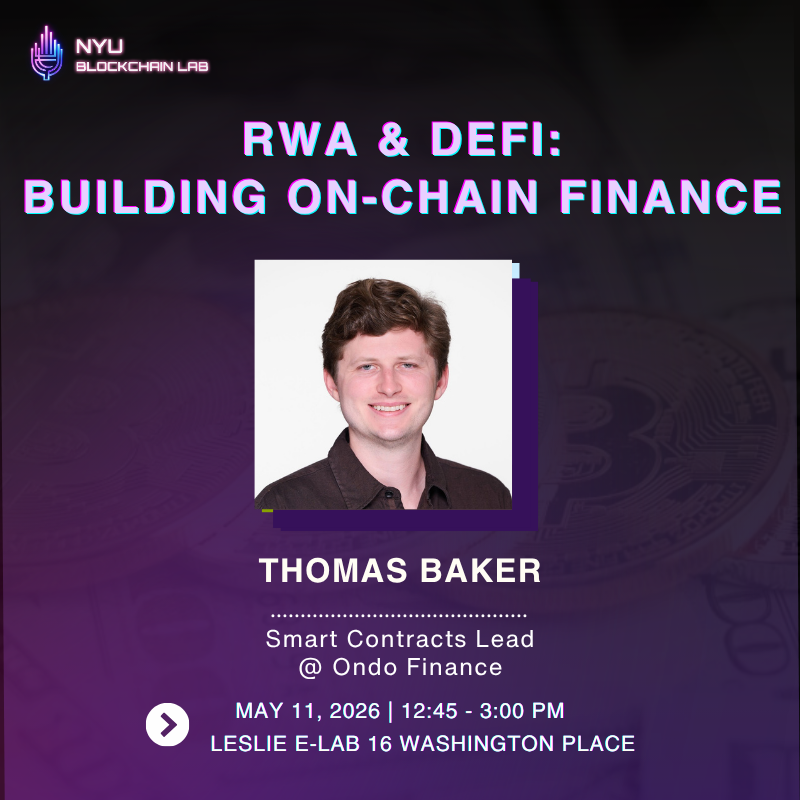
Next Monday, we're talking to the Ondo Smart Contracts Lead @thomassb1625 at @BlockchainNYU
5.11 | 12:45–3PM | NYU Leslie eLab
👉 luma.com/9py4y8d2

Wall Street is moving on-chain. But what does it actually take to turn real-world assets into programmable financial infrastructure?
Excited to host @thomassb1625, Smart Contracts Lead @OndoFinance, at NYU Blockchain Lab for a discussion on the following:
- RWAs & DeFi infrastructure
- Smart contract security
- Bridging & omnichain systems
- Institutional adoption
From tokenized treasuries to cross-chain infrastructure, we’ll explore what’s actually being built behind on-chain finance.
🗓 May 11 | 12:45–3:00 PM
📍 Leslie eLab
🎤 Fireside Chat Q&A Networking
🎫 RSVP: luma.com/9py4y8d2
3
248
Ukaaa🌻 retweeted

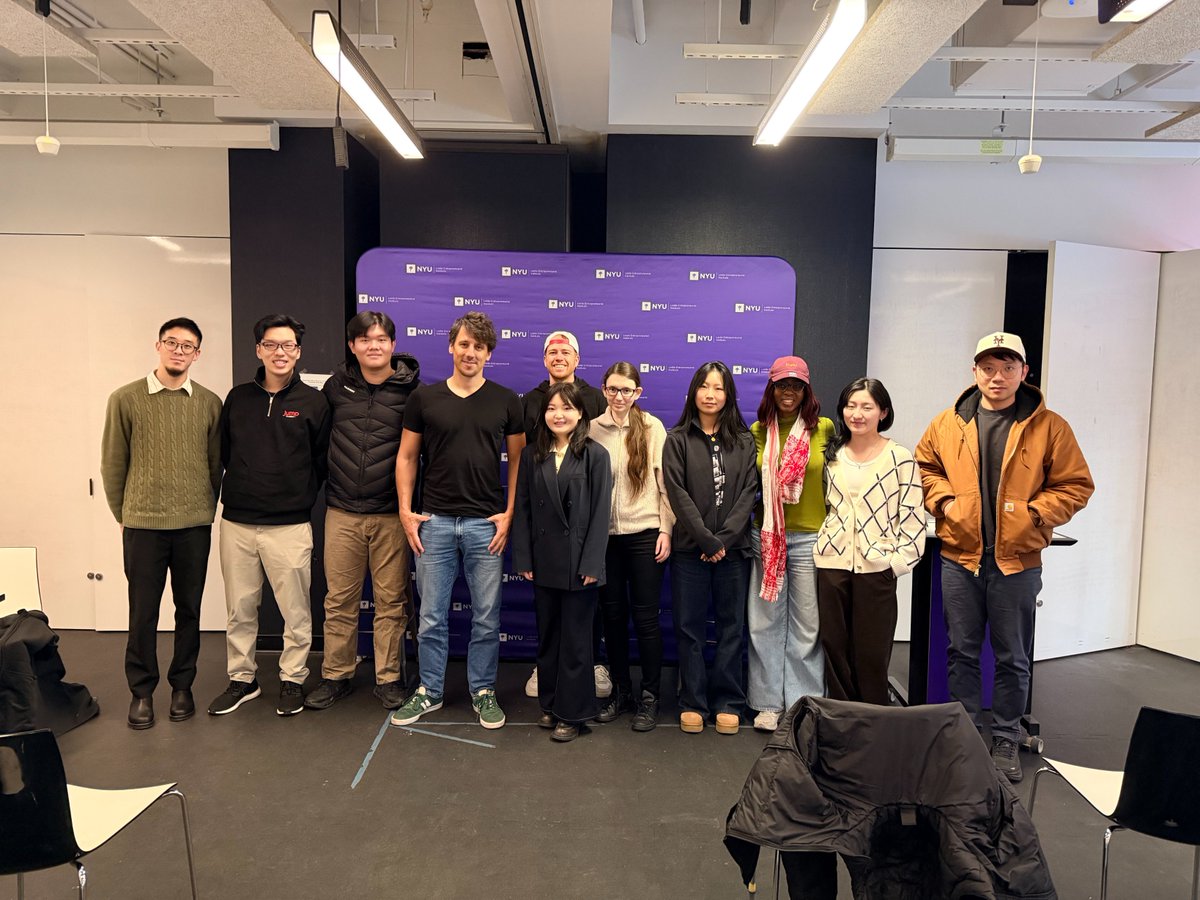
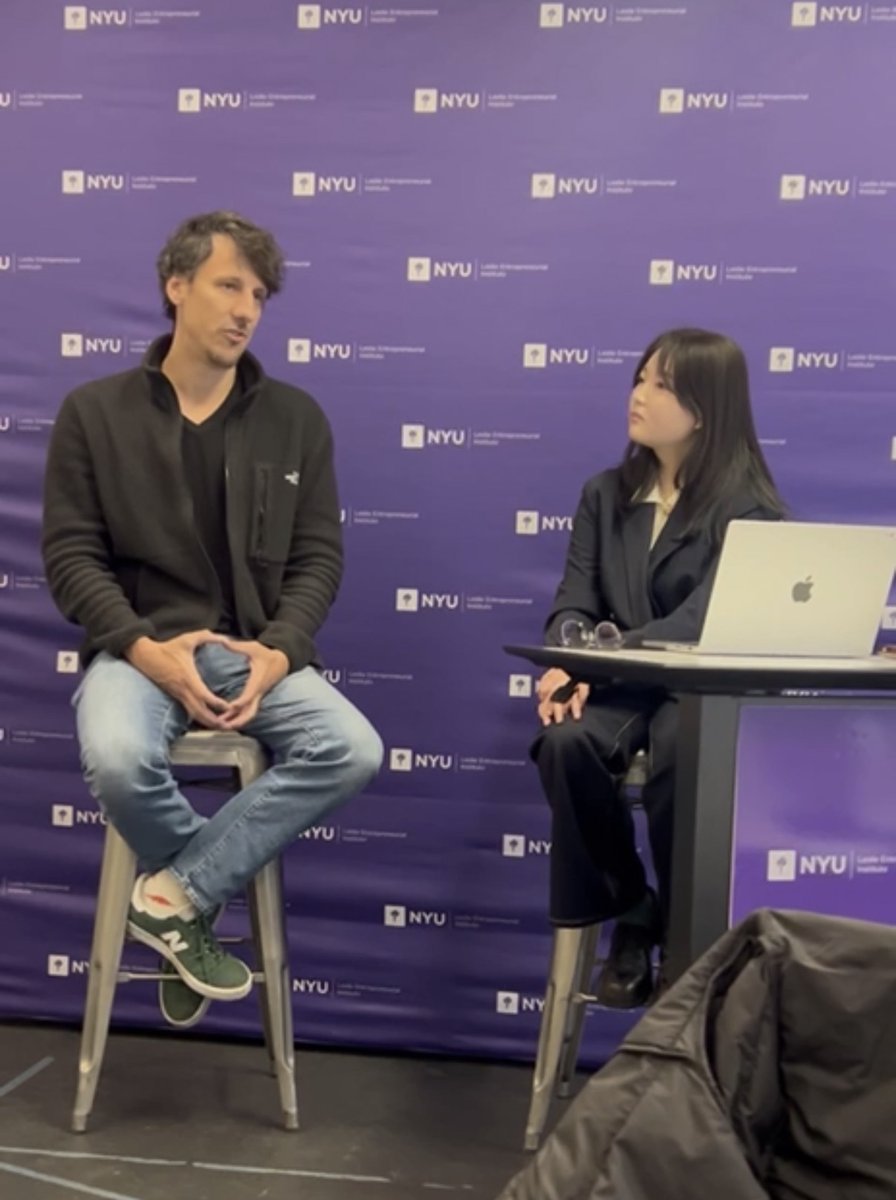
This Monday, we hosted @robin_linus at NYU Blockchain Lab for a conversation on what Bitcoin actually needs to sustain itself long-term.
With everything happening around ETFs, stablecoins, and institutional adoption, we took a step back to focus on a more fundamental question: what actually keeps Bitcoin running over time?
His answer felt both urgent and grounded. A store of value still needs to be used. And real payment adoption depends on three things working together: usability, scalability, and privacy.
He even brought it down to something as simple as units. Asking people to transact in 0.00000100 BTC already makes payments feel unintuitive. Simplicity builds trust. Complexity creates hesitation.
One idea that stood out throughout the discussion: this is ultimately a human problem. And those tend to get solved.
Grateful for a conversation that was hard to stop thinking about. 🙏
#Bitcoin #BitVM #NYU #Web3 #Crypto
1
4
143
Apr 29
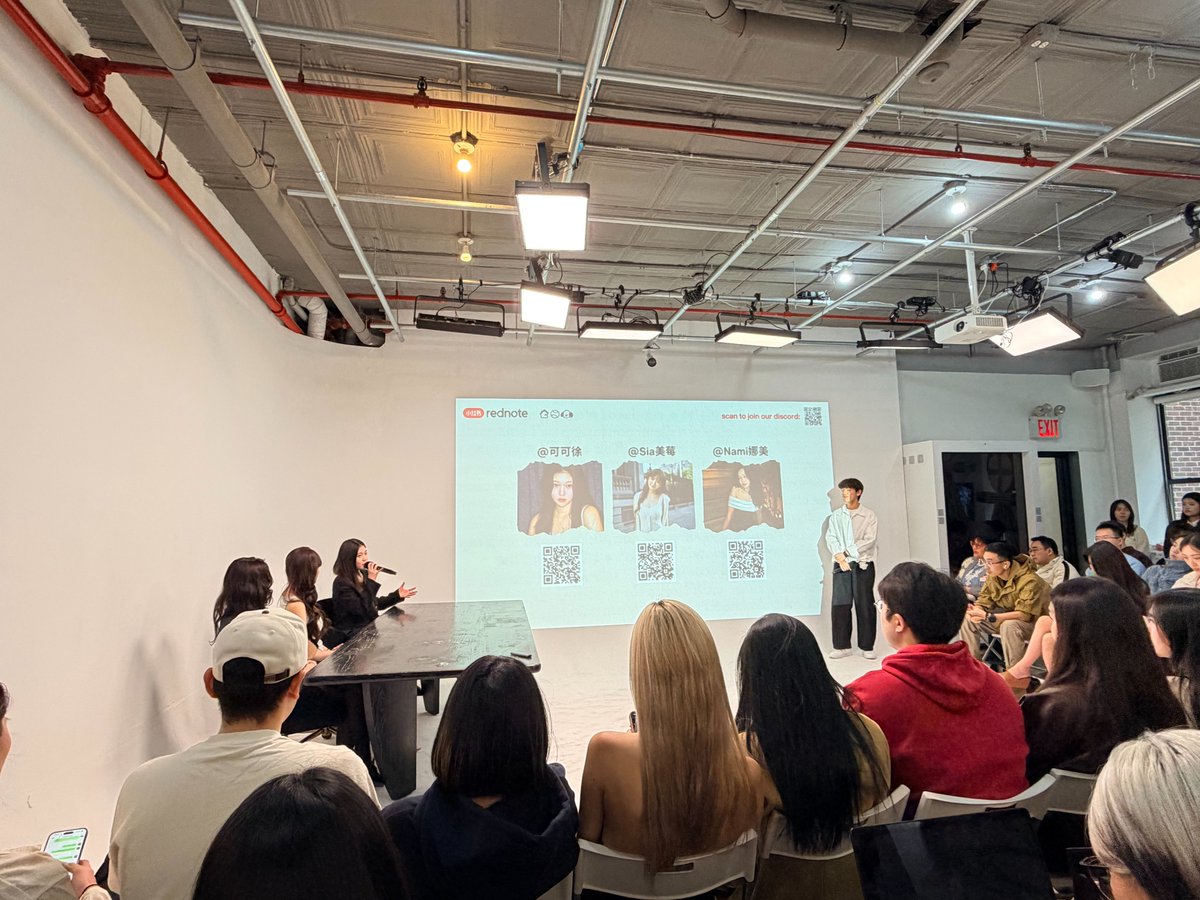
Attended a creator event in New York today, and it suddenly dawned on me:
The reason I’ve been stuck with Web3 creation is that I’ve always been waiting until I "understand it well enough." But Web3 is constantly evolving; no one ever fully masters it.
Maybe I don't need to be the one who knows it best. I just need to be the one who can translate the blockchain world into plain language.
Still figuring it out. Starting anyway.
2
7
110
Apr 27
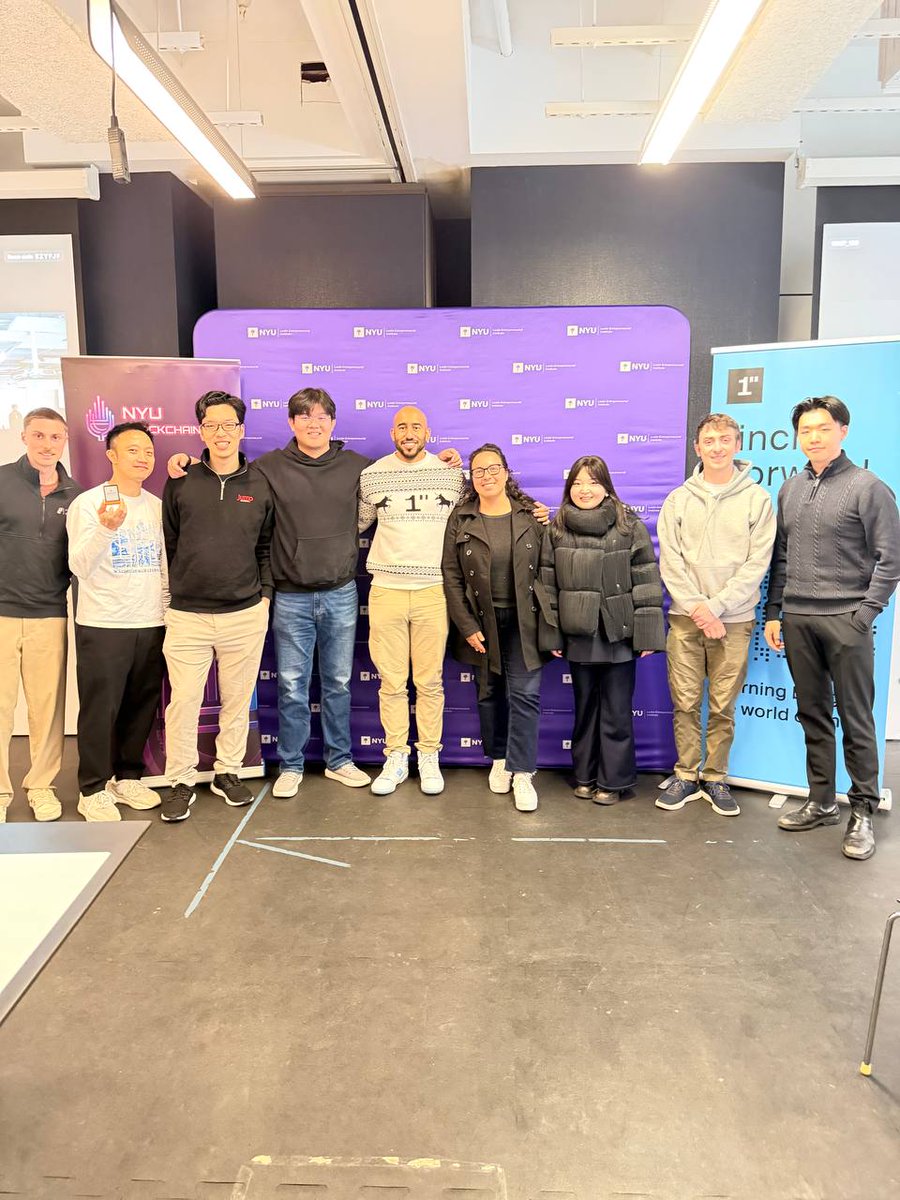
Thank you, @Ledger!
Proof of luck 🍀 Absolutely made my day 💚 Loving this matcha green wallet!!!
NYU Blockchain Lab hosted DeFi Office Hours with @1inch x @Ledger
@1inch walked us through DeFi and what's happening under the hood.
@Ledger broke down why signing matters and how hardware signers keep your assets secure on-chain.
#NYUBlockchainLab #DeFi #Web3 #Ledger #1inch
2
160
Ukaaa🌻 retweeted
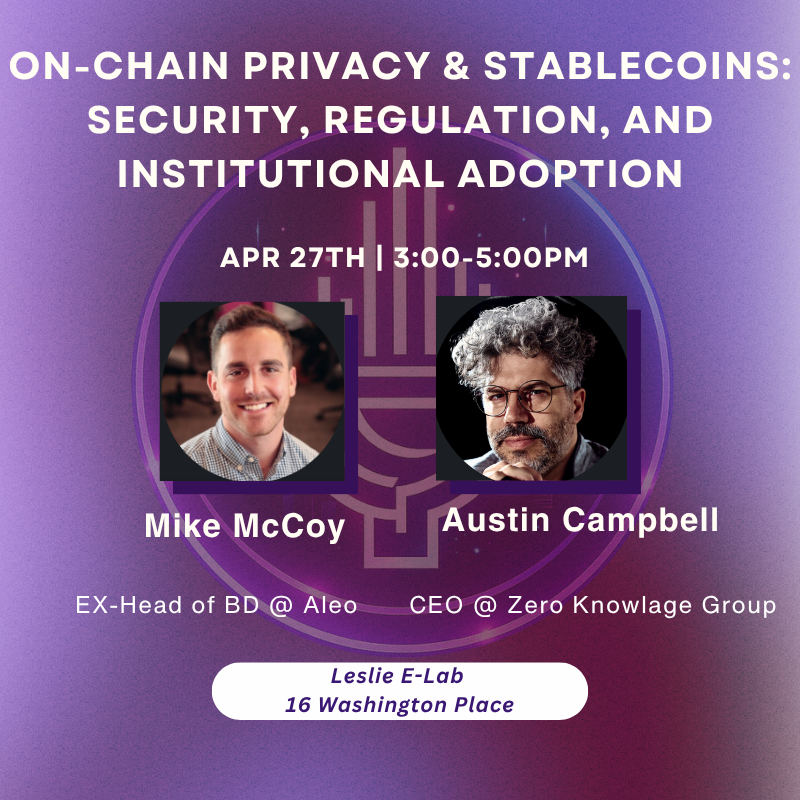
Institutional Crypto is coming to NYU. 🗽💼
We’re excited to host @emceecoy_ and @austincampbell for an exclusive fireside chat on April 27th! Learn how institutional capital is navigating the digital asset space from leaders across industry and academia.
We’ll be covering stablecoins, regulation, hacks and security, and institutional adoption in crypto markets.
🔗 RSVP: luma.com/bghbkdar
#NYU #Crypto #InstitutionalCrypto #Web3 #NYUBlockchain
1
5
175
Ukaaa🌻 retweeted
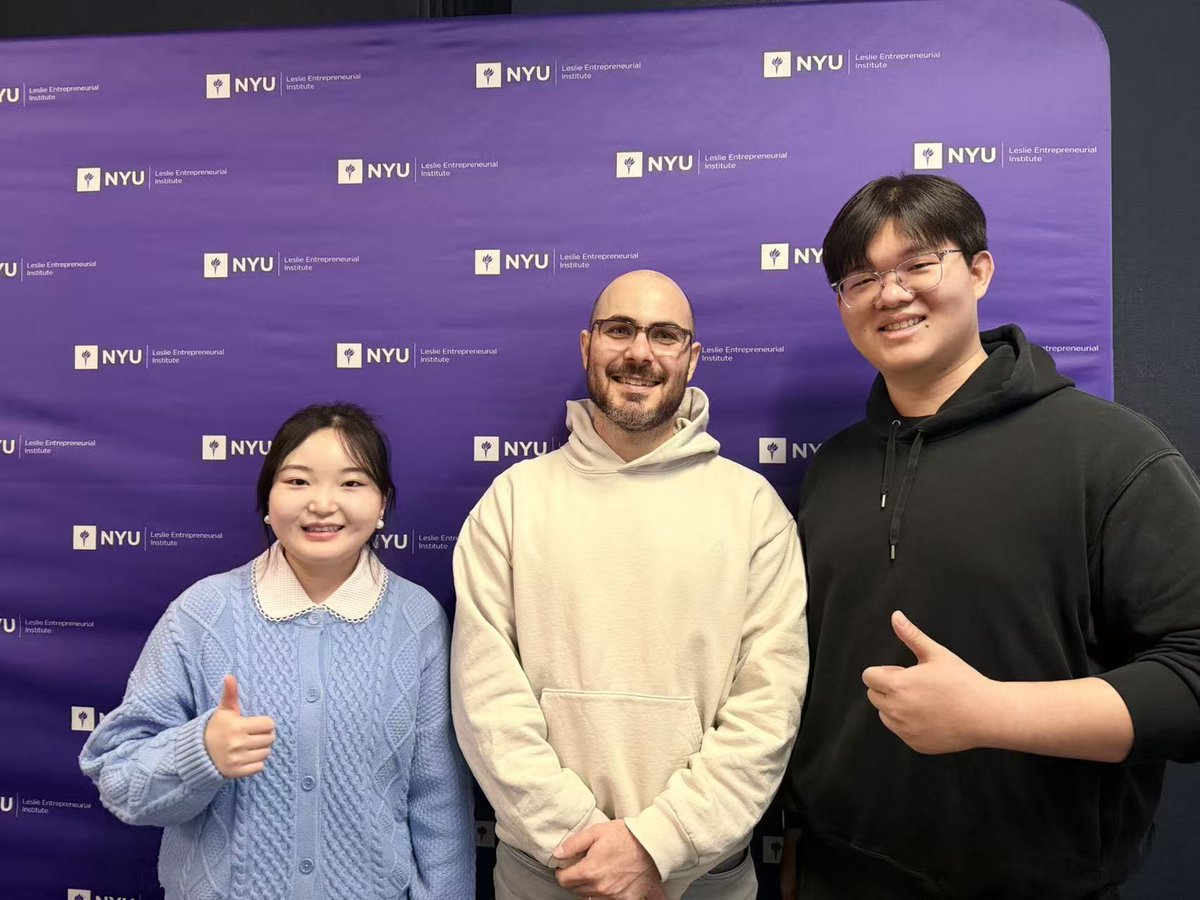
We hosted @Uptodatenow (VP Research @galaxyhq ) at NYU Blockchain Lab.
Here's what's worth paying attention to
1. Agentic payments are the next frontier.
AI agents transacting autonomously on-chain — not a concept, it's being built. Which settlement layer wins when machines become economic actors?
2. Onboarding isn't a tech problem.
The bottleneck is UX regulatory clarity. Mass adoption happens when users don't know they're using crypto. Closer than people think.
3. Most crypto research is noise.
Filter: ignore narrative-driven hype. Anchor to on-chain data protocol fundamentals macro positioning.
Packed room. Great energy. This is why we do this!
1
2
5
313
Ukaaa🌻 retweeted
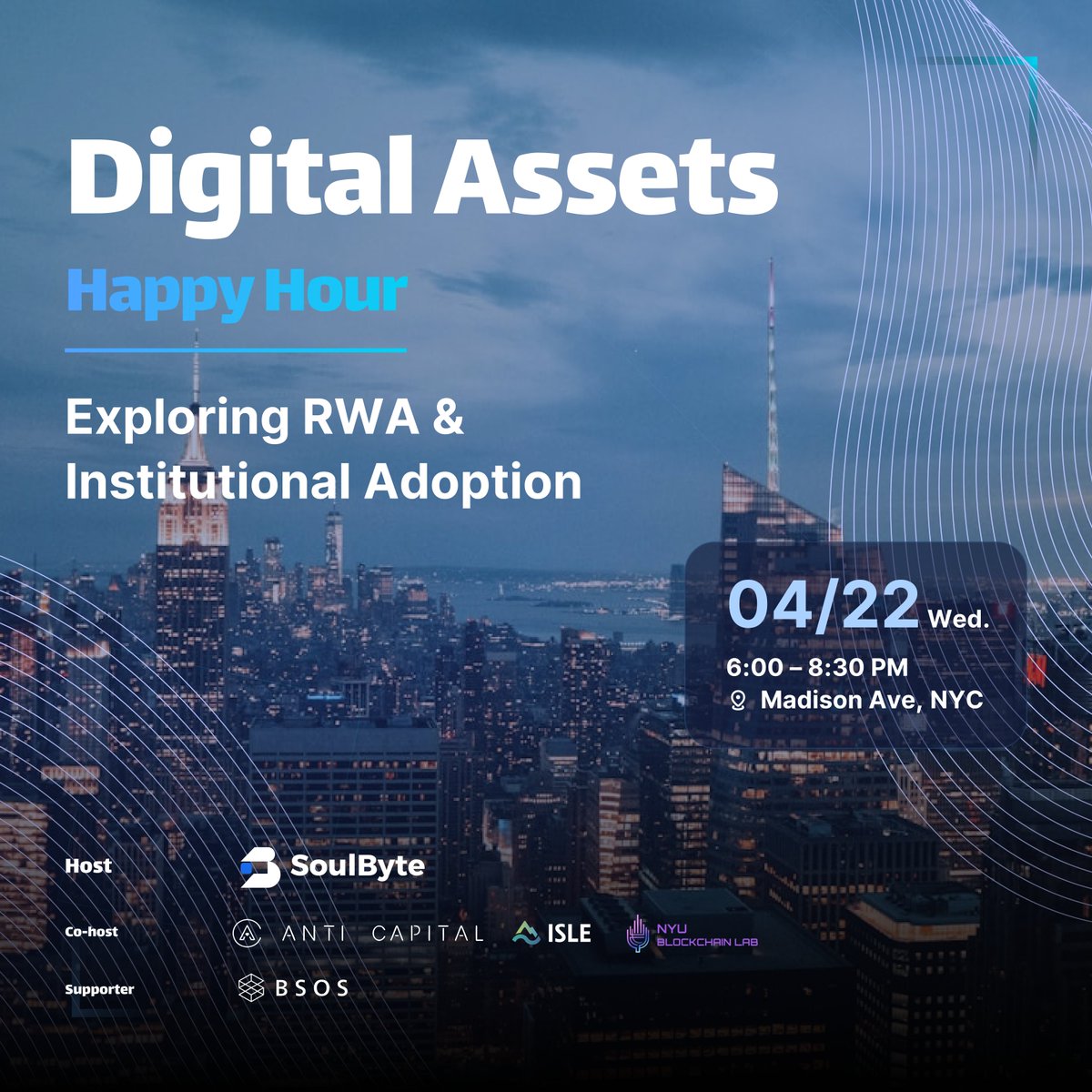
Want to break into fintech or Web3? This is the room.
@SoulByte_HD × @BlockchainNYU × @Anti__Capital × @IsleFinance
Hiring managers. Builders. Real conversations.
📍 NYC | April 22 | Soulbyte Office
Apply ↓
luma.com/kdd6z80q
Apr 9

Private Digital Assets Happy Hour in NYC.
Co-hosted with @Anti__Capital @BlockchainNYU @IsleFinance
RWA · Tokenization · Institutional Adoption
Builders, investors, operators — all in one room.
📍 Madison Ave, NYC
April 22 | 6:00–8:30 PM
RSVP: luma.com/kdd6z80q
#RWA #NYCEvents
2
7
372
Mar 4
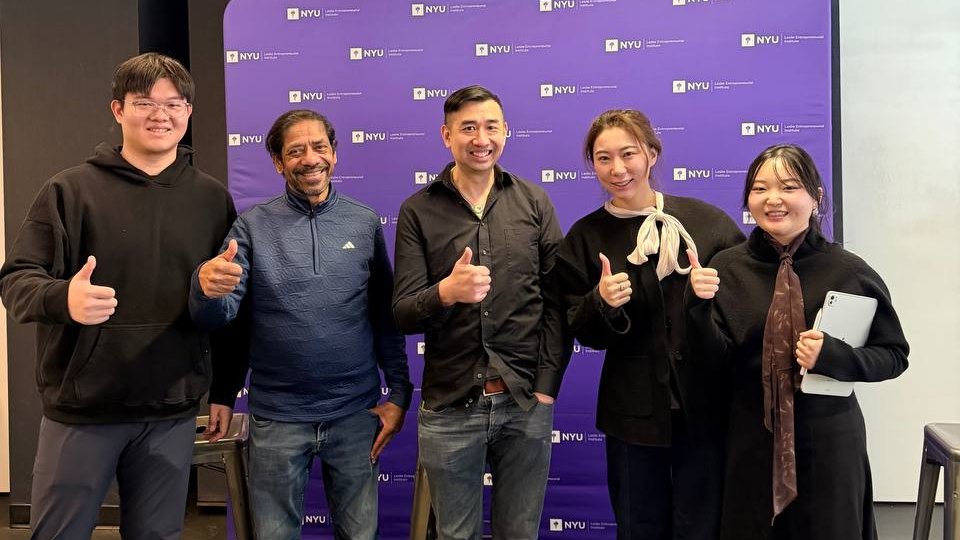
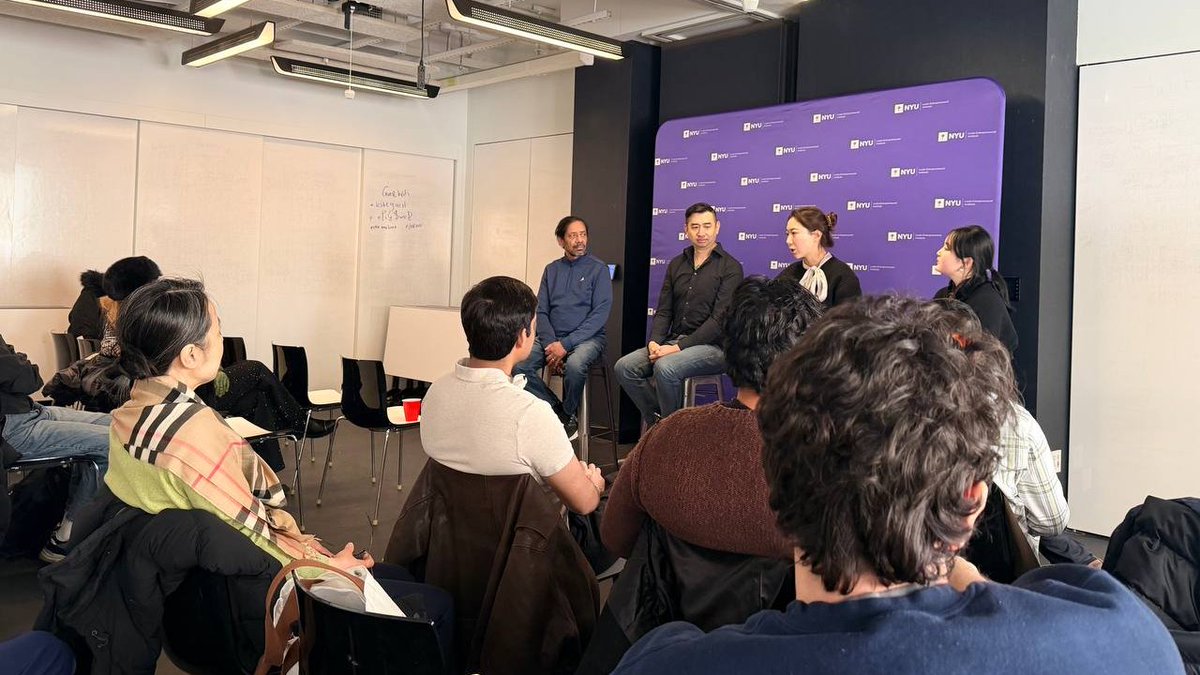
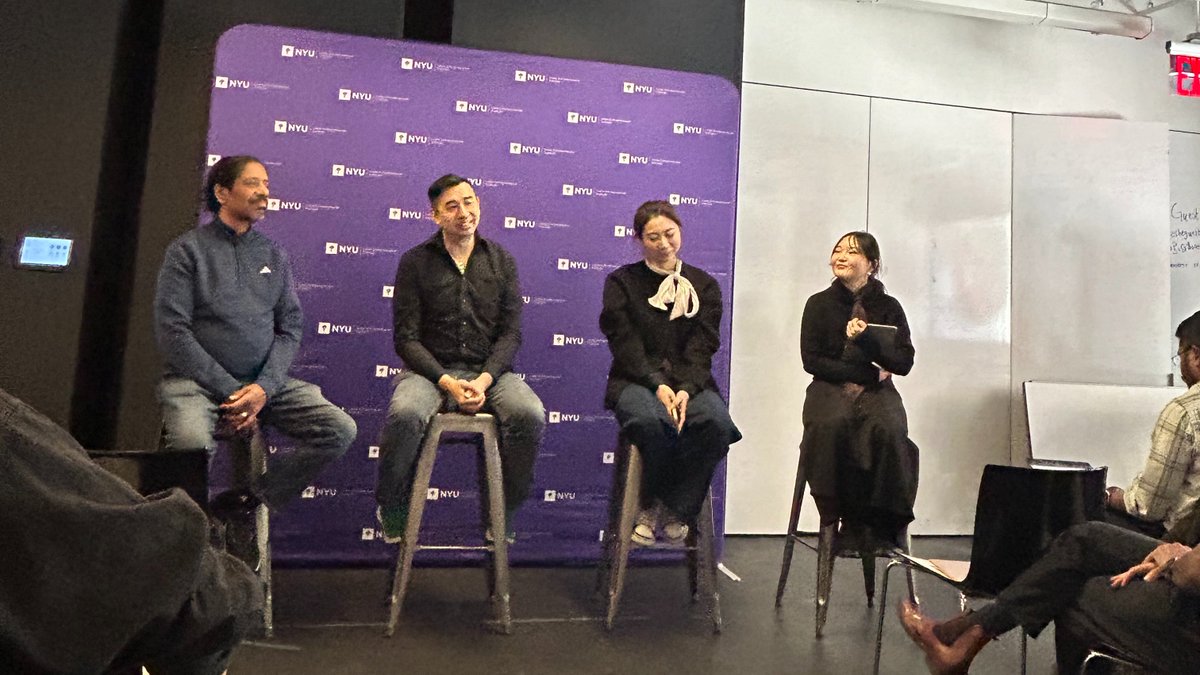
A special moment for me.
Last year, I met @CryptoMeina and @NFTfarming1 at a Web3 event at Trump Tower in NYC.
Last week, I had the pleasure of moderating an alumni panel with them @BlockchainNYU.
That’s the magic of this industry. There’s no fixed path, you have to explore it yourself.
But because it’s still being defined, unexpected opportunities appear along the way.
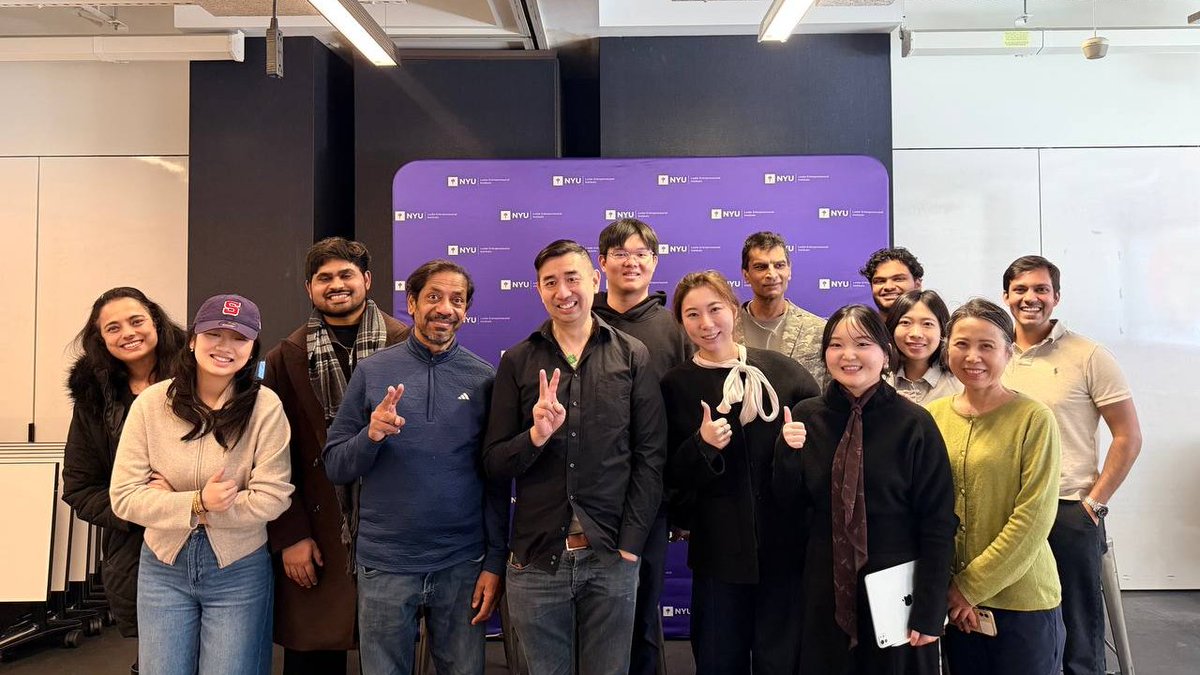
Closing our February theme: How to Break into the Industry 🎓
This week, NYU Blockchain Lab hosted an Alumni Panel Networking session, welcoming back NYU alumni now building across Web3.
Huge thank you to
@CryptoMeina
@NFTfarming1
@Arshasays
sharing lessons from building across cycles, from downturns to momentum, along with career advice, reflections for those in their 20s, and what it truly takes to stay in the game.
A few ideas that stayed with us:
- Bear markets build resilience.
- Sustainable yield requires discipline.
- Tokenization is expanding capital access.
- In an AI world, judgment matters more than ever.
- There’s no fixed roadmap, only those willing to learn and build.
Grateful to our speakers and to everyone who joined. The conversations continued long after the panel ended.
March brings a new chapter: The Future of Finance.
See you next Monday ~
7
238
Mar 4
Prof. Ian D’Souza is genuinely one of the best professors I’ve had at NYU Stern!
I took his Blockchain and DeFi course, and it genuinely changed the way I think about financial systems and what’s possible with this technology. His class was one of the moments that pushed me to take blockchain more seriously and explore the space further.
Really excited to host him at @BlockchainNYU for next week.
DeFi: Money & Finance (R)evolution? DeFi intro with Prof. Ian D’Souza (NYU Stern)
DeFi isn’t a trend. It’s a redesign of financial infrastructure: trust, settlement, market structure.
If you want a clear mental model of what’s actually changing, don’t miss this.
📅 Mar 9 | 2:45–4:30 PM
📍 16 Washington Pl, Leslie E-Lab
RSVP👇 luma.com/aza220rm
1
5
165
Mar 4
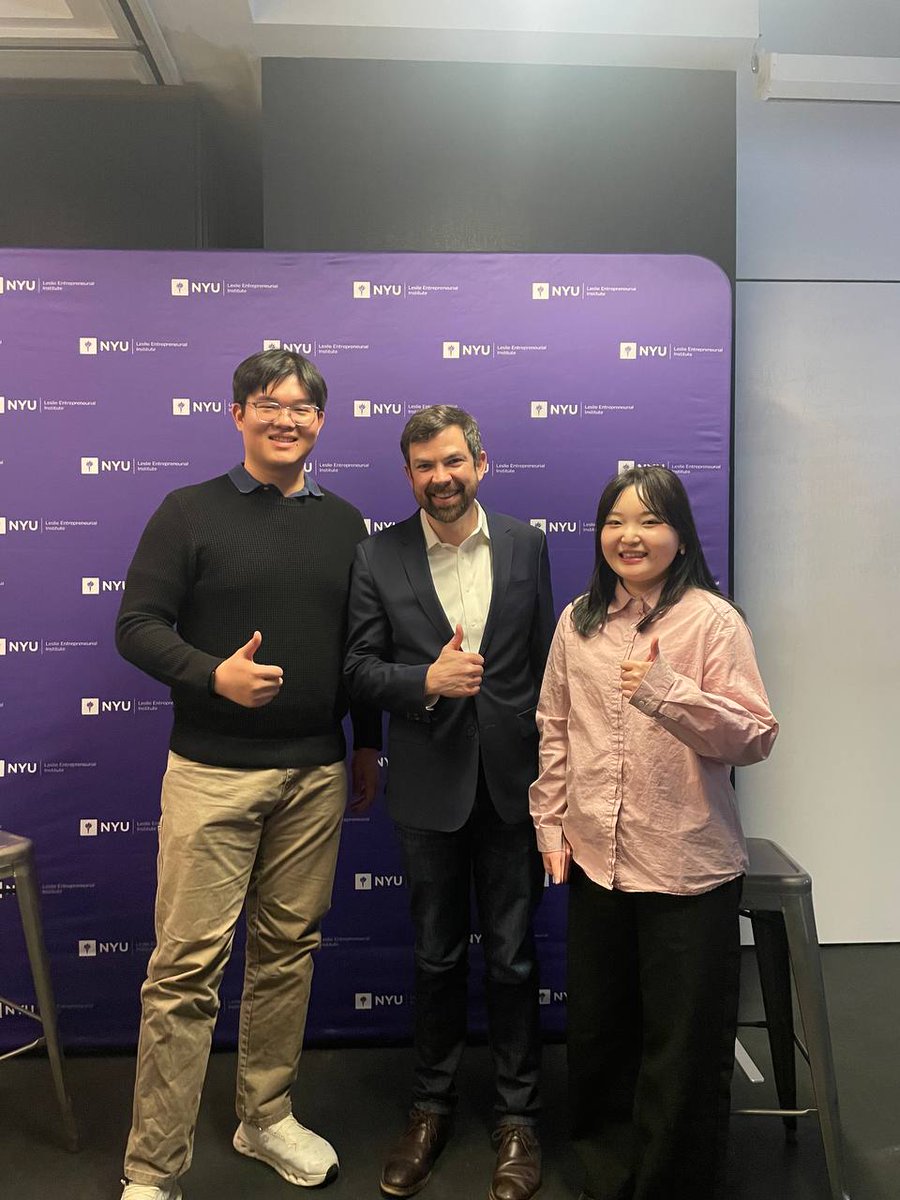
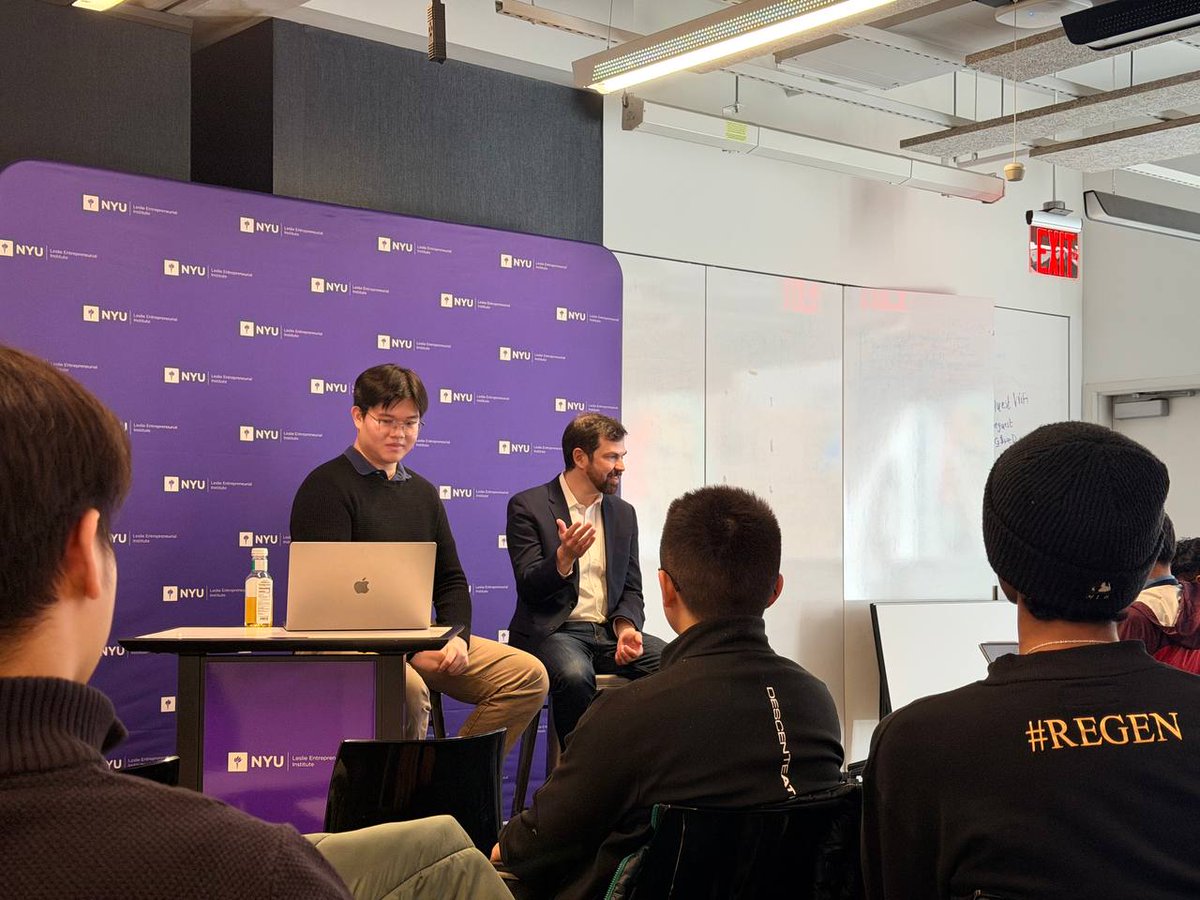
Really enjoyed listening to the panel yesterday at @BlockchainNYU with @LowBeta and @YYBlockchain.
One key takeaway: Bitcoin’s long-term story may be macro (debasement hedge), but today’s market behavior is still shaped by who holds it, mostly risk capital rather than central banks.
Thank you for the thoughtful conversation!
Yesterday, the @BlockchainNYU hosted a deep-dive fireside chat with @LowBeta , Head of Research @Grayscale .
Here is what the smart money is looking at:
🌎 The Macro Trap: US tax revenue is ~17% of GDP. Interest entitlements consume almost all of it. The result? A debt spiral and inevitable "currency debasement risk."
🥇 Gold vs. ₿: If BTC is digital gold, why does it trade like a tech stock? It comes down to demographics. Gold is held by central banks; BTC is still driven by VCs and risk capital. But mass adoption is shifting this balance.
📈 The Bigger Picture: Bitcoin is just the start. Blockchain is becoming the new financial infrastructure rebuilding banking, payments, and securities from the ground up.
Huge thanks to @LowBeta for dropping absolute alpha for our students. ⏳🤝
Huge thanks to @LowBeta for giving the engineers and builders in the room an invaluable roadmap on where to allocate their time right now. ⏳🤝
#NYU #Web3 #Crypto #Grayscale #Macro
6
155
Feb 23
人真正的自由,不在于拥有无数选择。
而在于当他做出选择之后,不再回头张望,思考另外一条路的美好。
我们似乎从小被教育成“谨慎的选择者”。
小学决定中学
中学决定高中,
高中决定大学,
大学决定工作。
仿佛人生是一条不断加固地基的工程。
选择被赋予重量。
错误被赋予惩罚。
久而久之,我们不再害怕失败。
我们害怕 — 选错。
但真正消耗人的,并不是错误的选择。
而是悬而未决的状态。
当一个人反复比较两条路的风景,他永远无法抵达任何一处。
犹豫,是对行动最温柔却最致命的消耗。
关于人生的地基,我认为从来不是外界所赋予的,
好学校、好城市、好行业、好工作。
这些当然重要,但它们更像风向。
真正的地基,是独属于每一个人的特质:
- 是否知道自己想成为什么样的人,想去到哪
- 是否愿意为决定承担后果
- 是否能在低谷中重新站立
- 是否在黑暗中也能看见缝隙中透过的光
健康的身体,向上的生命力,独立的自我,和从头再来的勇气…从长期来看,才是一个人能过好自己一生重要地基
我不确定未来的曲线如何波动。
但我确定一件事:
真正的风险,不是走错路。
而是在该承担风险的时候,选择安全。
所谓冒险,是当精力、能力与野心尚在时,
不把它们浪费在对可能性的反复计算里。
人生不是资产配置模型。
它更像一场持续下注的博弈。
而下注的对象,不是我所不能控制的一切,是自己。
7
206