
We believe that everyone can be a co-founder of social change!
Joined March 2020
- Tweets 3,115
- Following 165
- Followers 4,999
- Likes 2,642
1,027 Photos and videos





May 1
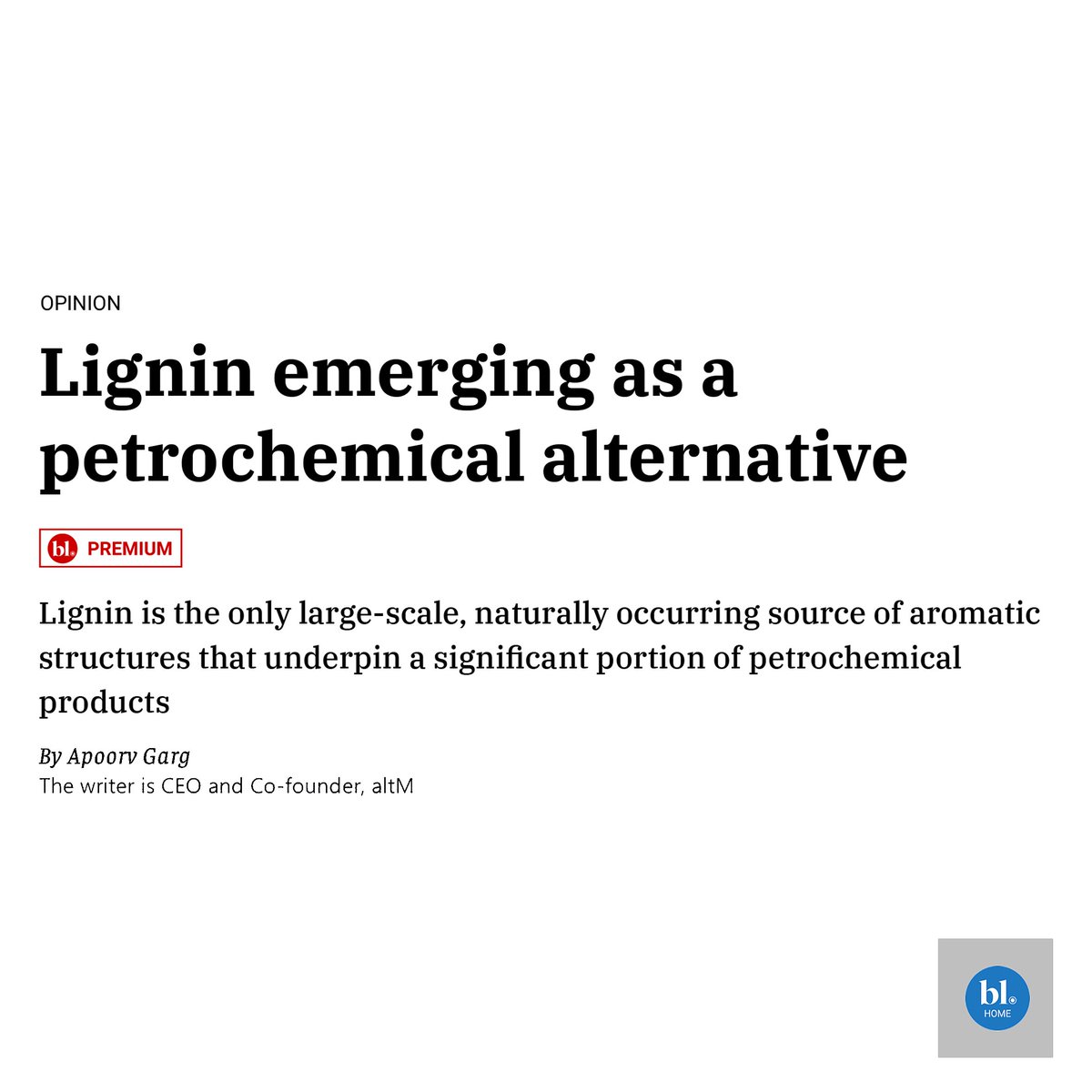
Agricultural residue is one of the most underutilised resources in India. Locked inside it is lignin, a natural polymer that can replace petrochemicals across industries like construction, packaging, and cosmetics.
The question has moved past whether lignin works. It's now about what it takes to integrate it into industrial value chains built around fossil-based inputs.
Apoorv Garg, CEO & Co-founder of altM and our portfolio founder, writes about the path forward in @businessline.
Read here: thehindubusinessline.com/opi…
#CoFoundersOfSocialChange #ACTForEnvironment
124
Apr 17
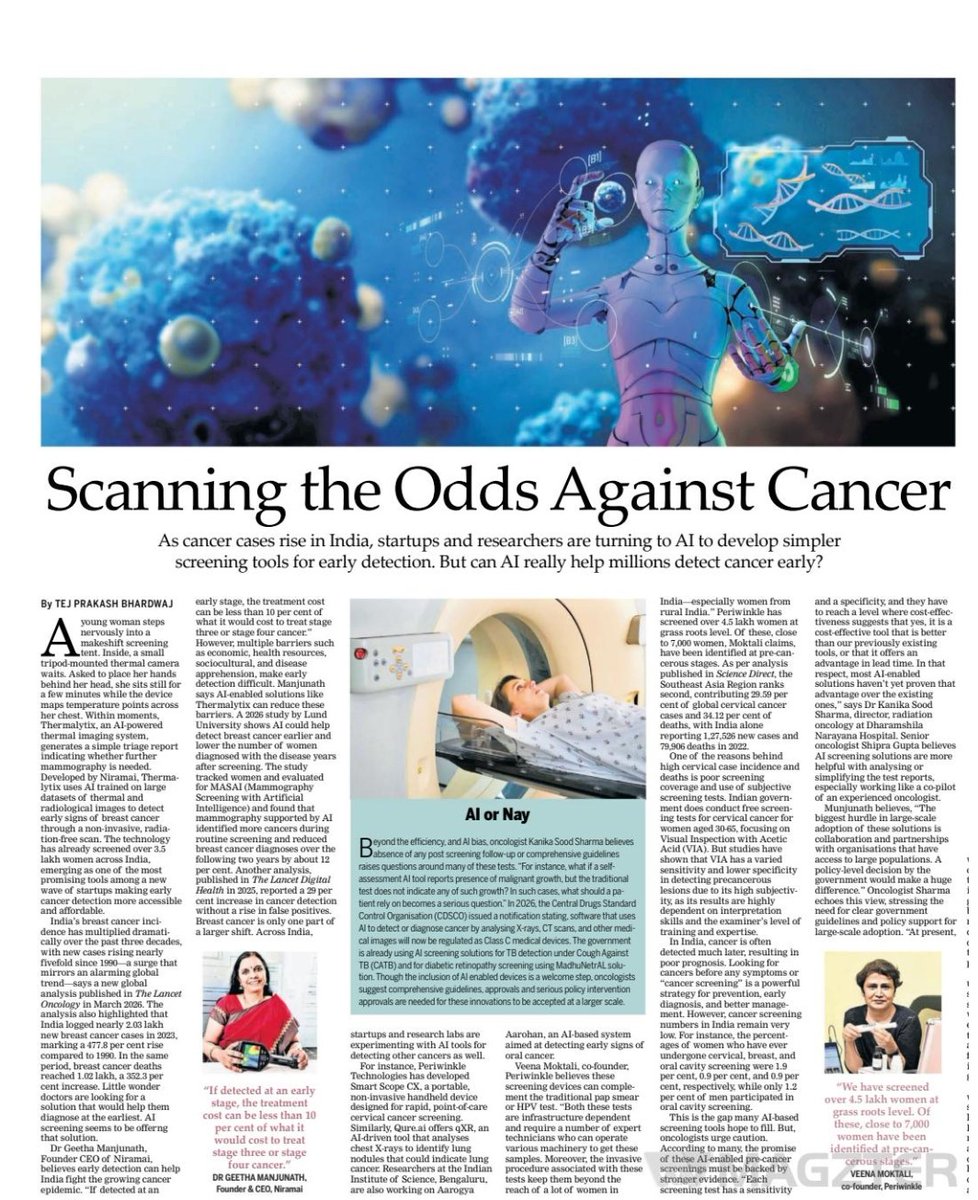
As cancer cases rise in India, early detection is becoming more critical and more complex. This @IndianExpress article explores how AI-powered solutions are helping bridge this gap, making screening more accessible, affordable, and scalable.
We’re proud to see three of our #ACTForHealth portfolio organisations featured: @niramaianalytix, @periwinkletech, and @atom_360, each building solutions that are pushing early cancer detection closer to communities that need it most.
Together, they reflect a broader shift where technology is enabling earlier, more equitable access to cancer screening across India.
Read more to explore how AI could reshape cancer detection at scale: newindianexpress.com/lifesty…
#CoFoundersOfSocialChange
1
2
968
Mar 24
Each step in the fight against TB is a chance to get it right.
Three of our #ACTforHealth portfolio organisations - Salcit, @huwellifesc and @khpt4change - are each strengthening a step: from early detection to diagnosis to sustained treatment.
Grateful to work alongside the teams bringing TB care closer to every corner of Bharat.
#WorldTBDay #CoFoundersOfSocialChange
2
76
Mar 22
When we protect water, what we’re really protecting is everything it quietly holds together.
This #WorldWaterDay, we’re proud to support our #ACTForEnvironment portfolio organisations that work to secure water within the systems that depend on it - before those systems begin to strain.
💧 @IndraWaterIndia is treating industrial wastewater at source, reducing the need to draw from freshwater reserves.
💧 @solinas_in is using robotics to keep sewer networks clean and efficient, preventing water contamination at source
💧Cultyvate is helping smallholder farmers use water with greater precision, so that every drop goes further.
Different interventions across different points in the system, but all working towards the same outcome: continuity.
Because everything else depends on it.
#CoFoundersOfSocialChange
1
68
Mar 2
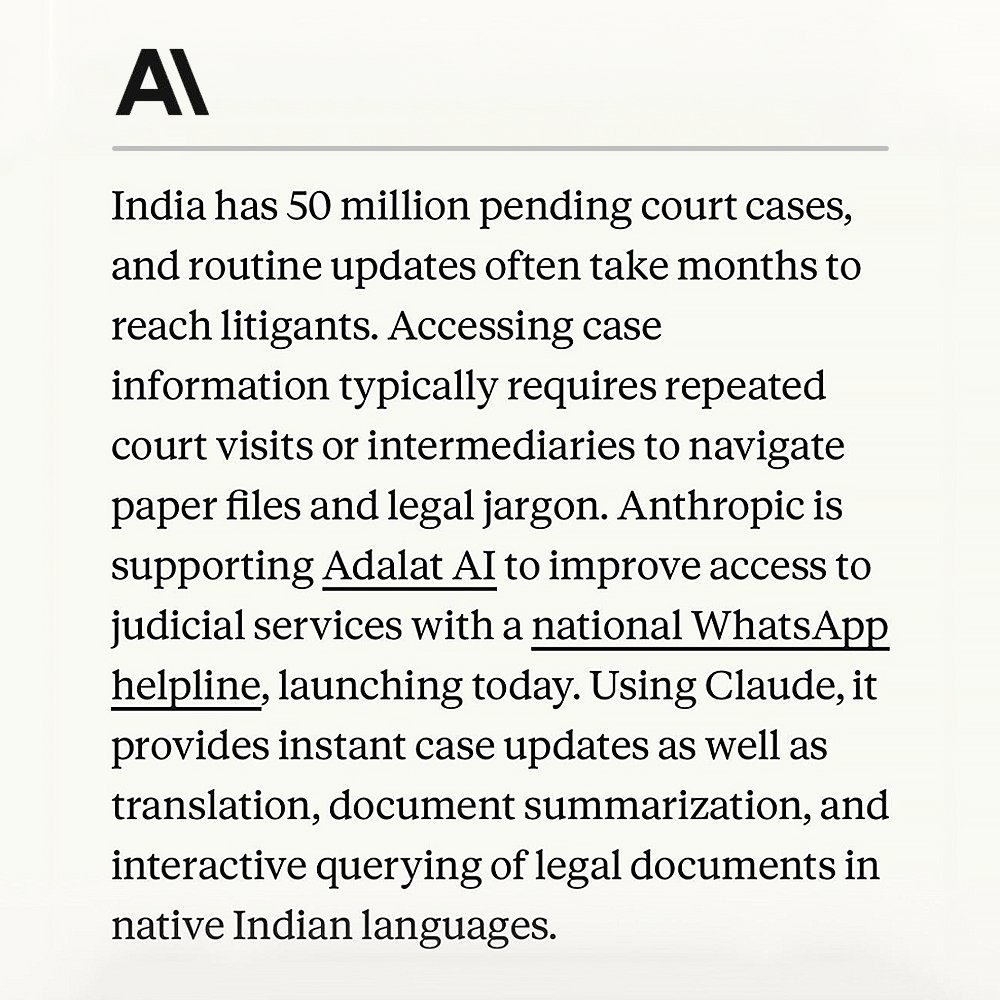
Excited to see @Adalat_AI advancing real-world AI deployments across law and digital public infrastructure!
In collaboration with @AnthropicAI's Claude, they’ve launched India’s first national WhatsApp helpline for court case information, making justice systems more accessible across languages and literacy levels.
Grateful to support work that strengthens public institutions through thoughtful, responsible AI.
Read the full article on their partnership here: anthropic.com/news/bengaluru…
#CoFoundersOfSocialChange
1
312
Feb 19
#BuiltThisWay
Not all progress begins the same way. Sometimes it starts with a question no one has asked yet. Sometimes it grows quietly by improving what already exists. Sometimes it moves because someone bridges a gap others did not see, or stays long enough for the work to take root.
Building for Bharat is rarely a straight line. It is shaped by context, constraint and the many ways people choose to show up. And often, it is the coming together of these different ways that allows meaningful change to endure.
Tag a founder friend this reminds you of!
#CoFoundersOfSocialChange #BuildingForBharat
2
93
Feb 17
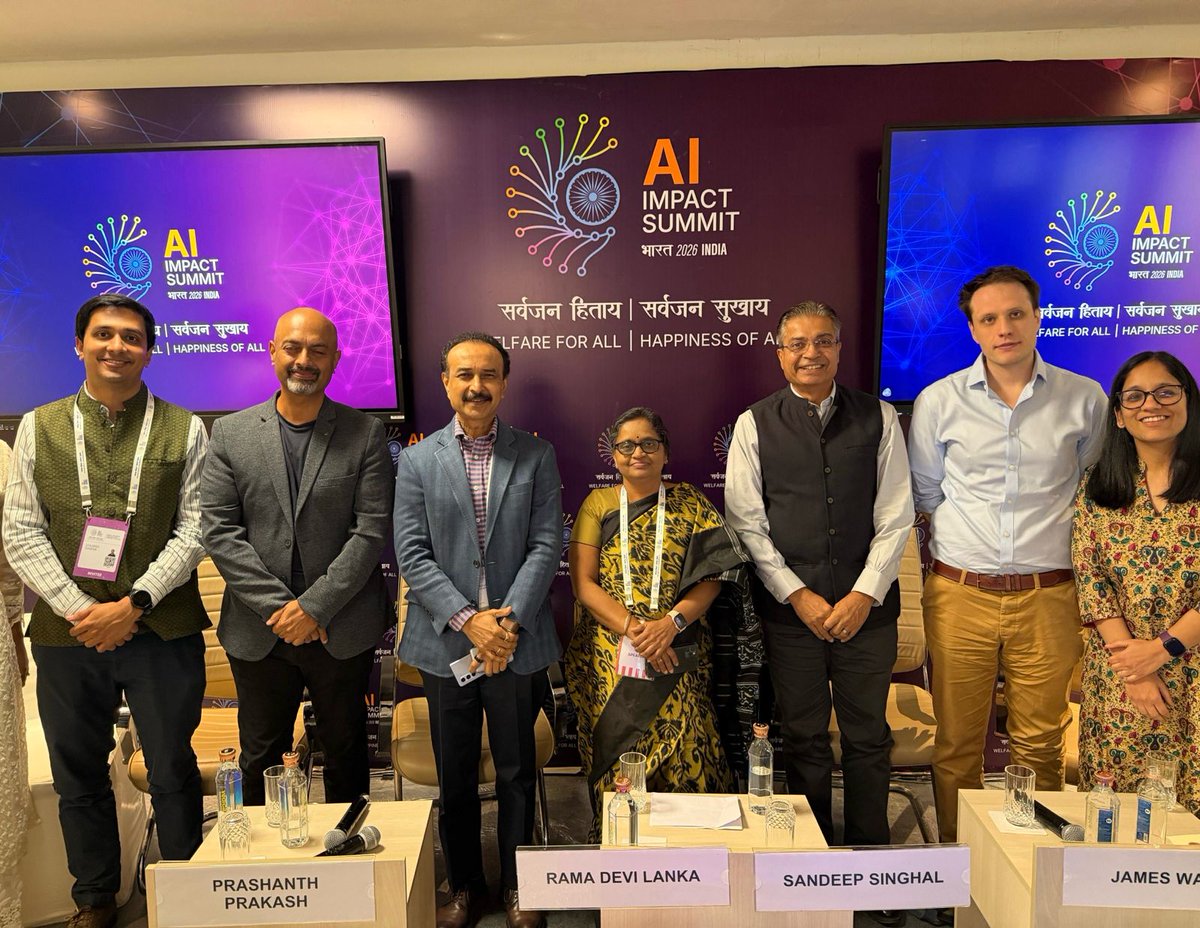
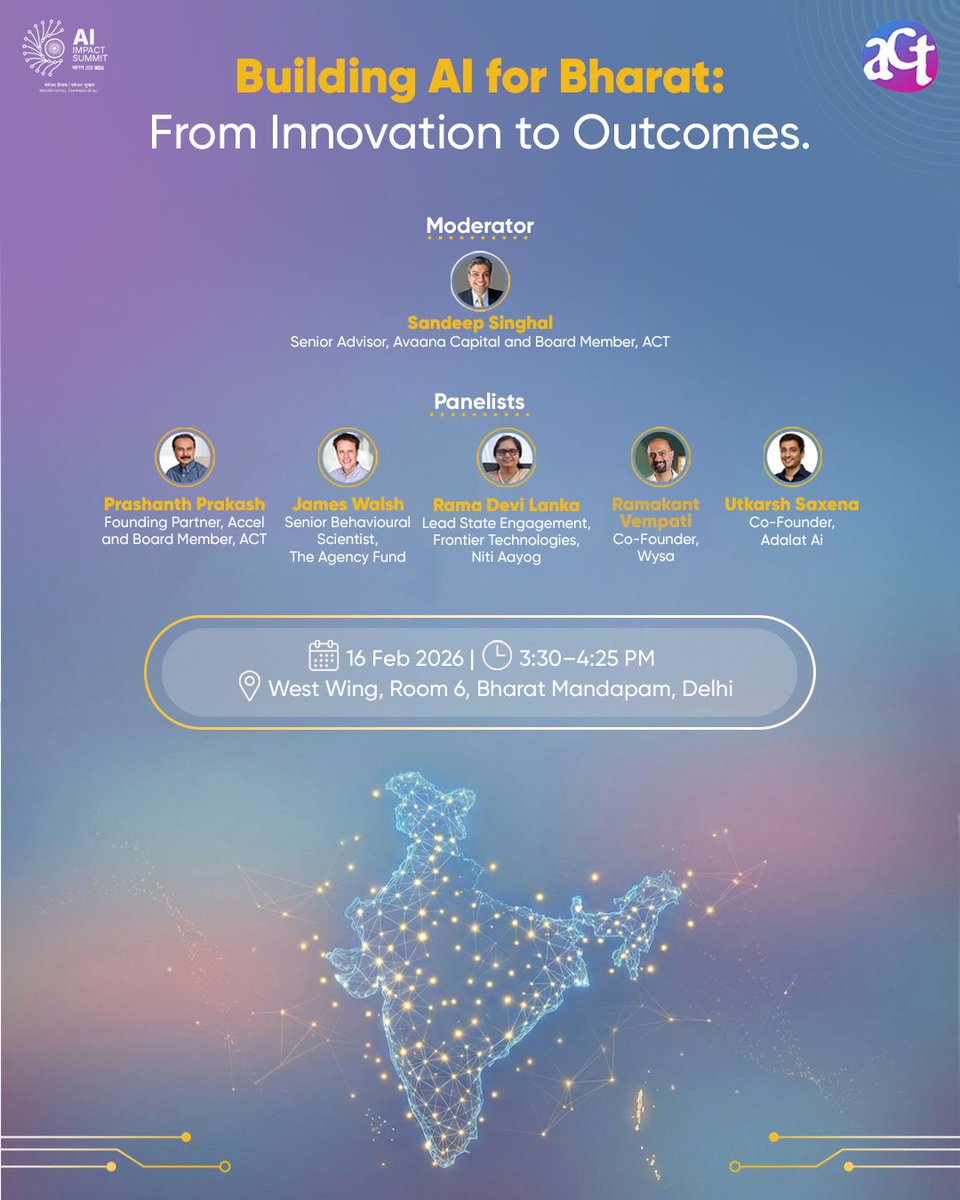
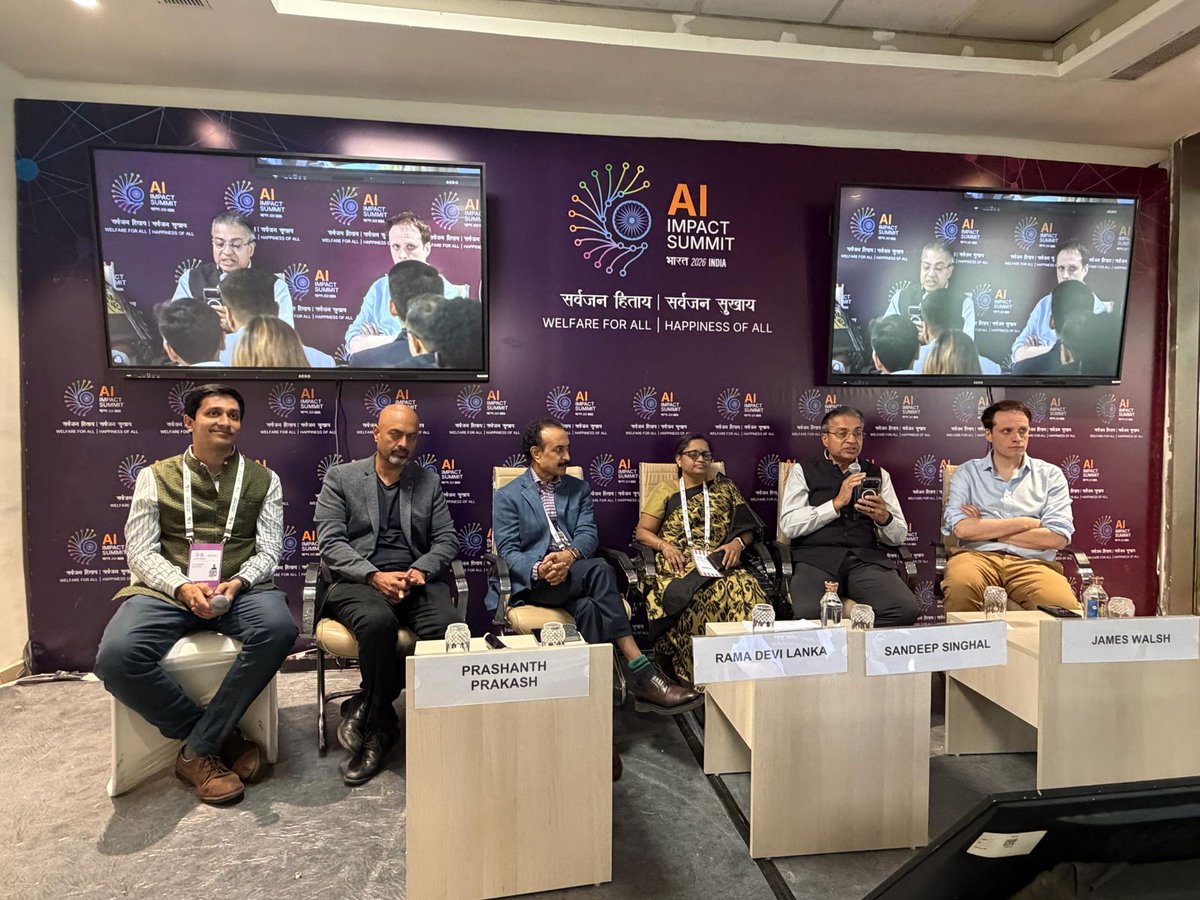
We had an incredible time yesterday, hosting “Building AI for Bharat: From Innovation to Outcomes” at the India AI Summit 2026 in Delhi, bringing together builders, funders, and system leaders to reflect on what it truly takes for AI to serve Bharat at scale!
Across the discussion, it became clear that scaling AI for Bharat is as much a systems challenge as it is a technical one. Whether it was extending culturally rooted mental health support at scale or making justice more accessible, the conversation reinforced that success at the last mile depends on deep iteration, sustained trust-building, and working closely with the institutions and community networks people already rely on.
What stayed with us was the shared recognition that trust, explainability, and accountability cannot be layered on later; they form the architecture of AI that genuinely works for people.
The discussion also highlighted the need for hybrid forms of funding, patient capital, longer feedback loops, and evaluation frameworks that prioritize outcomes and measurable impact.
A huge thank you to our speakers, and gratitude to everyone who joined the conversation.
#CoFoundersOfSocialChange #IndiaAISummit2026 #AIForBharat #lastmileinnovation
2
663
Feb 16
Join us at the India AI Impact Summit today as we bring together ecosystem voices to discuss what happens when AI meets real users, real systems and real-world complexity - and how we build for Bharat at scale.
🕒 3:30–4:25 PM
📍 West Wing, Room 6, Bharat Mandapam, Delhi
Register here: impact.indiaai.gov.in/regist…
#CoFoundersOfSocialChange
2
235
Feb 13
Join us at the India AI Impact Summit 2026 as we unpack what it takes to build AI solutions that work for Bharat.
Together with founders, funders and policymakers, we’ll discuss how AI can move from innovation to real-world outcomes, delivering impact at the last mile - in clinics, classrooms, courts, and communities.
🗓 16 Feb 2026 | 🕒 3:30–4:25 PM
📍 West Wing, Room 6, Bharat Mandapam, Delhi
Register here: impact.indiaai.gov.in/regist…
#CoFoundersOfSocialChange #AIForBharat #lastmileinnovation
2
167
Feb 10
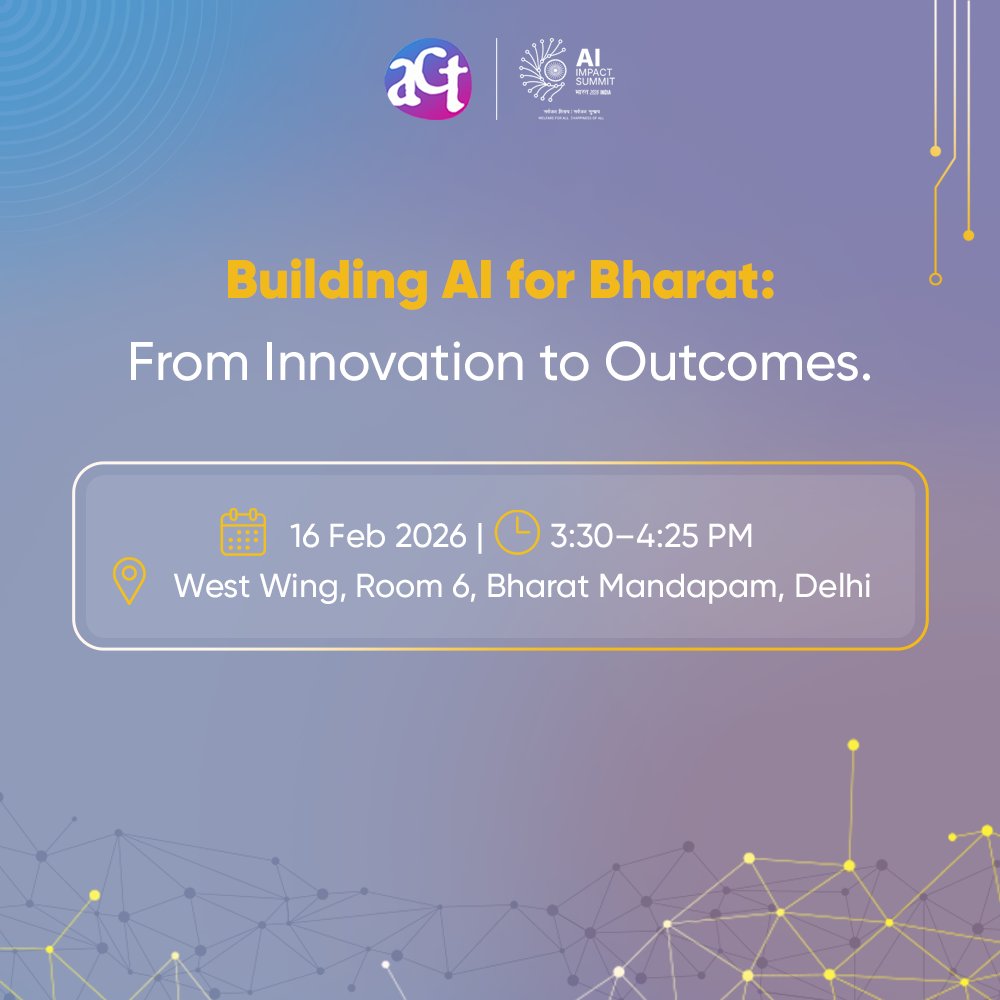
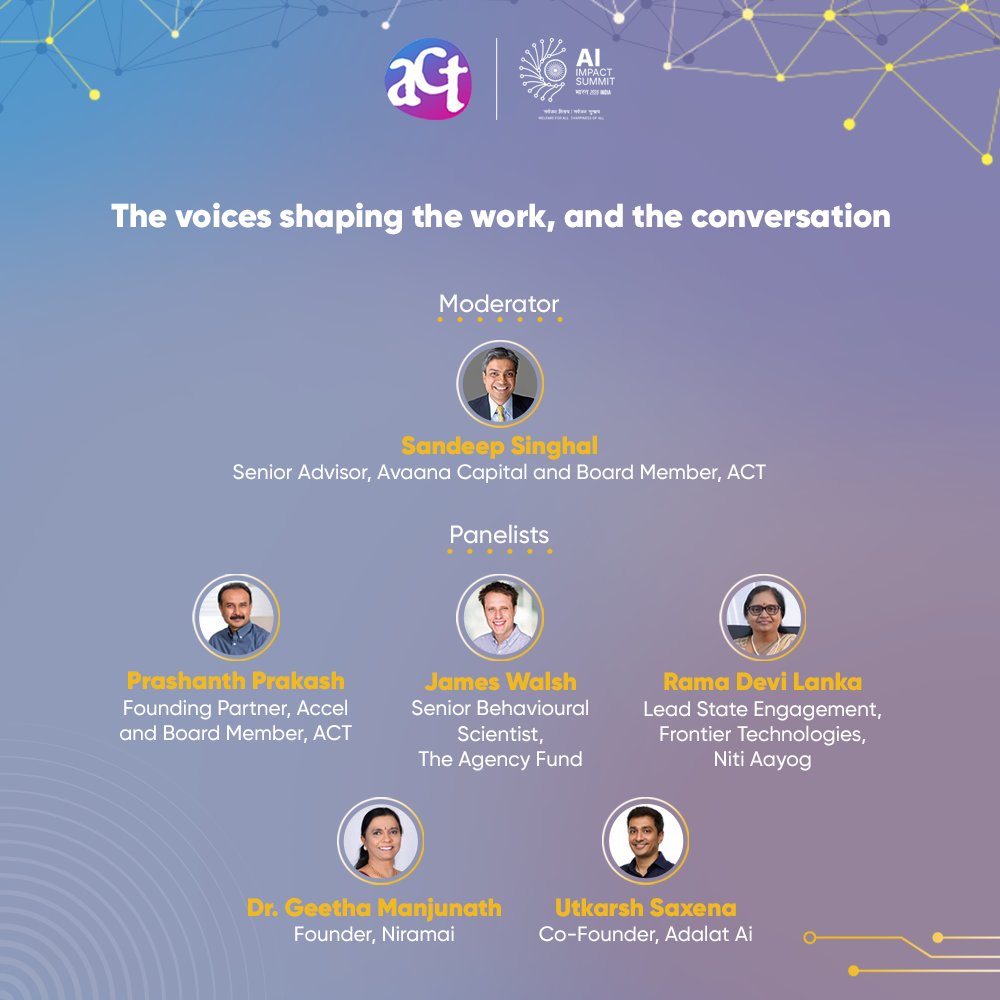
We're excited to be at the India AI Impact Summit 2026, to deliberate on a simple but urgent question: How can AI deliver real outcomes for Bharat?
This panel brings together founders, funders, and policymakers to unpack what it takes to design, deploy, and scale AI for communities furthest from the digital frontier - from Bharat-first design and trust to ecosystem readiness and capital for scale.
🗓 16 Feb 2026 | 🕒 3:30–4:25 PM
📍 West Wing, Room 6, Bharat Mandapam, Delhi
Be part of the conversation. Register here: impact.indiaai.gov.in/regist…
See you there!
@aaasandeep
#AIForBharat #LastMileInnovation #CoFoundersOfSocialChange
98
Feb 9
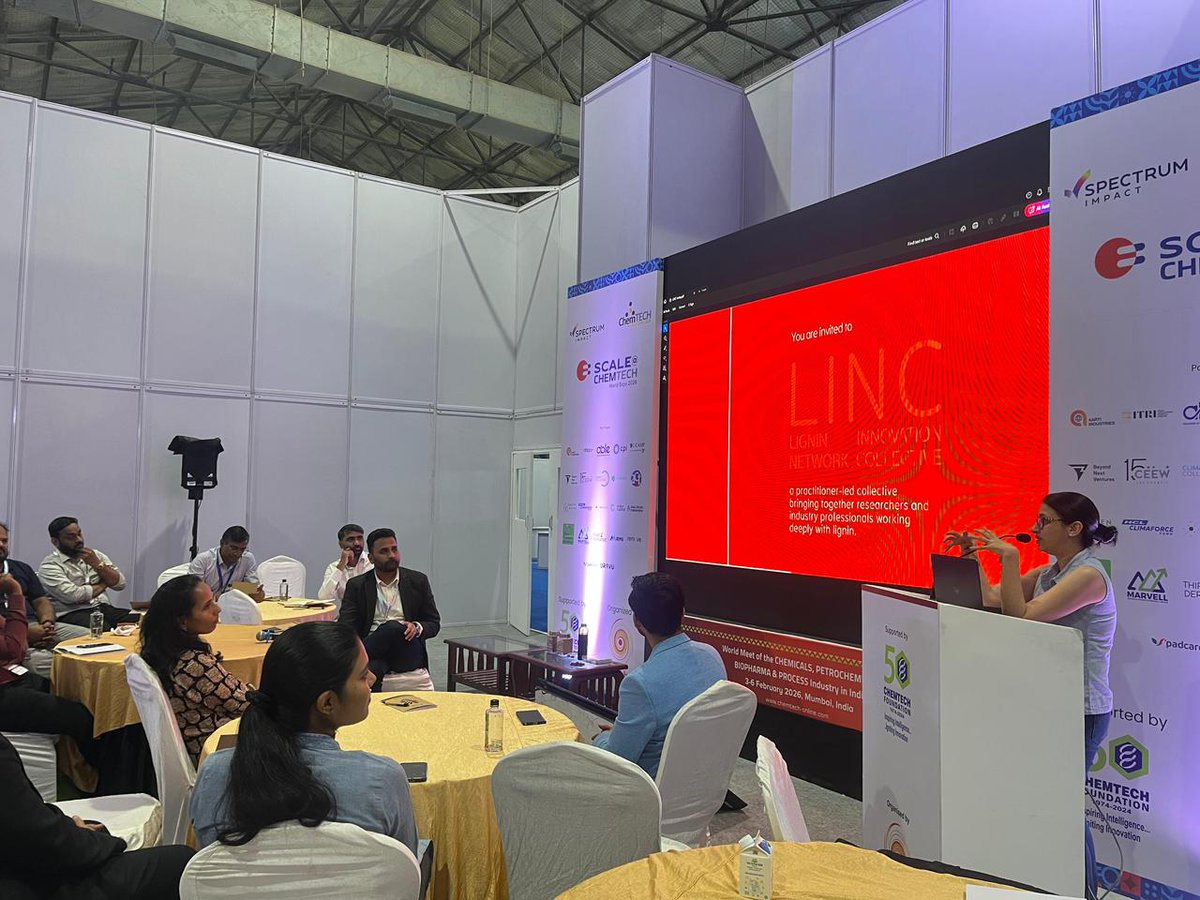
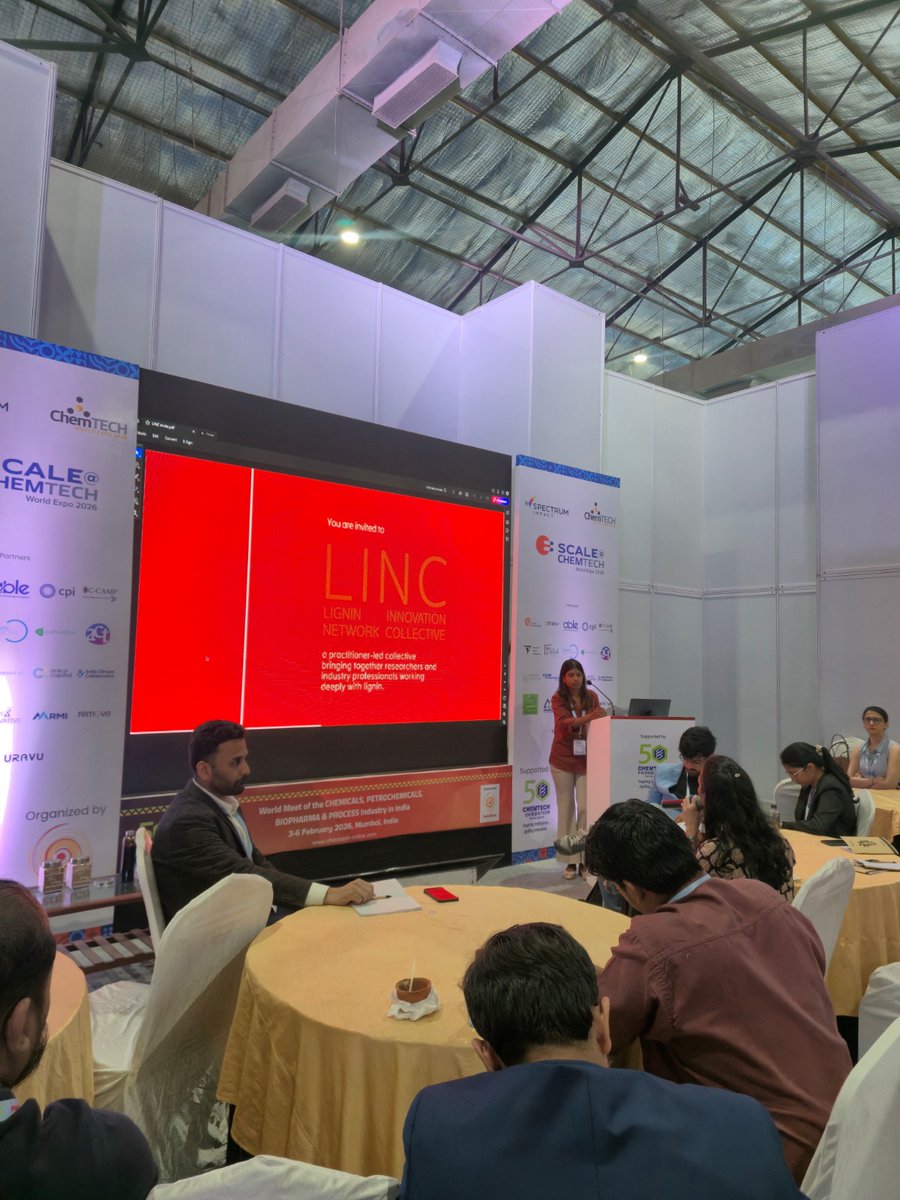
Last week, at the SCALE pavillion by Spectrum Impact at Chemtech 2026, we saw something quietly powerful take shape.
Together with altM, our #ACTForEnvironment portfolio startup, we convened researchers, innovators, and industry leaders around a simple but ambitious question: Can agri-waste derived lignin move from the margins of materials science to the mainstream of industrial manufacturing?
As one of the most abundant biopolymers on the planet, agri-waste derived lignin holds promise as an alternative to petrochemicals. But promise alone doesn’t build markets. Pathways do.
As we went around the room, the group surfaced some compelling insights:
1. Application-led research is the unlock: Feedstock variability continues to slow down R&D and standardisation. Anchoring research in specific industrial use cases (resins, rubbers, bioplastics) can shorten development cycles and make scale more achievable.
2. Industry adoption needs real-world proof, not just potential: Lignin-based materials are advancing, but price competitiveness and PMF remain barriers. What’s missing is shared performance data that allows industries to compare lignin-based solutions against fossil-based incumbents with confidence.
3. Agri-waste to value is a strategic opportunity: Agricultural residues and biogas digestate can be converted into high-value materials; improving unit economics while reducing dependence on fossil inputs. This is where climate logic and business logic begins to align.
4. Environmental impact depends on systems design: Lignin can displace petrochemicals, but challenges like sulphur content and processing efficiency must be addressed thoughtfully if sustainability gains are to hold at scale.
But the most important thing that we all agreed on was that collaboration in this space is not optional - it is infrastructural. Open data, shared learnings, and ecosystem-wide coordination are essential to bridge R&D gaps and accelerate industrial adoption.
Our collective hope with altM is that this conversation doesn't stop here.
And so, this roundtable also marked the soft launch of the Lignin Innovation Network Collective (LINC) - a platform to bring together innovators, researchers, industrial manufacturers and ecosystem enablers to co-create a roadmap for lignin’s industrial future - not in silos, but as a shared transition.
At ACT, we believe climate innovation succeeds when innovation is grounded in real markets, waste streams become economic inputs and ecosystems are built through shared infrastructure.
We’re excited to see altM spark this community and look forward to witnessing where this collective takes lignin next!
#CoFoundersOfSocialChange #CircularMaterials #ClimateTech
83
Feb 4
Cancer outcomes change dramatically when it is detected early - yet for millions, timely screening and diagnosis remain out of reach.
Where you live, what you earn, and how close you are to a health facility still determine when cancer is found. This is the gap that equity in cancer care must address.
Across our #ACTForHealth portfolio organisations like @niramaianalytix , @NavyaCare , @periwinkletech and @atom_360 are using technology to push early detection closer to the last mile; enabling affordable screening for breast, cervical and oral cancers, and strengthening diagnosis and treatment through evidence-based clinical decision support.
By embedding these innovations into frontline care and public health systems, early screening becomes possible not just in hospitals, but in communities - where it matters most.
Detect early. Defeat early.
#WorldCancerDay #CoFoundersOfSocialChange
1
4
195
Jan 28
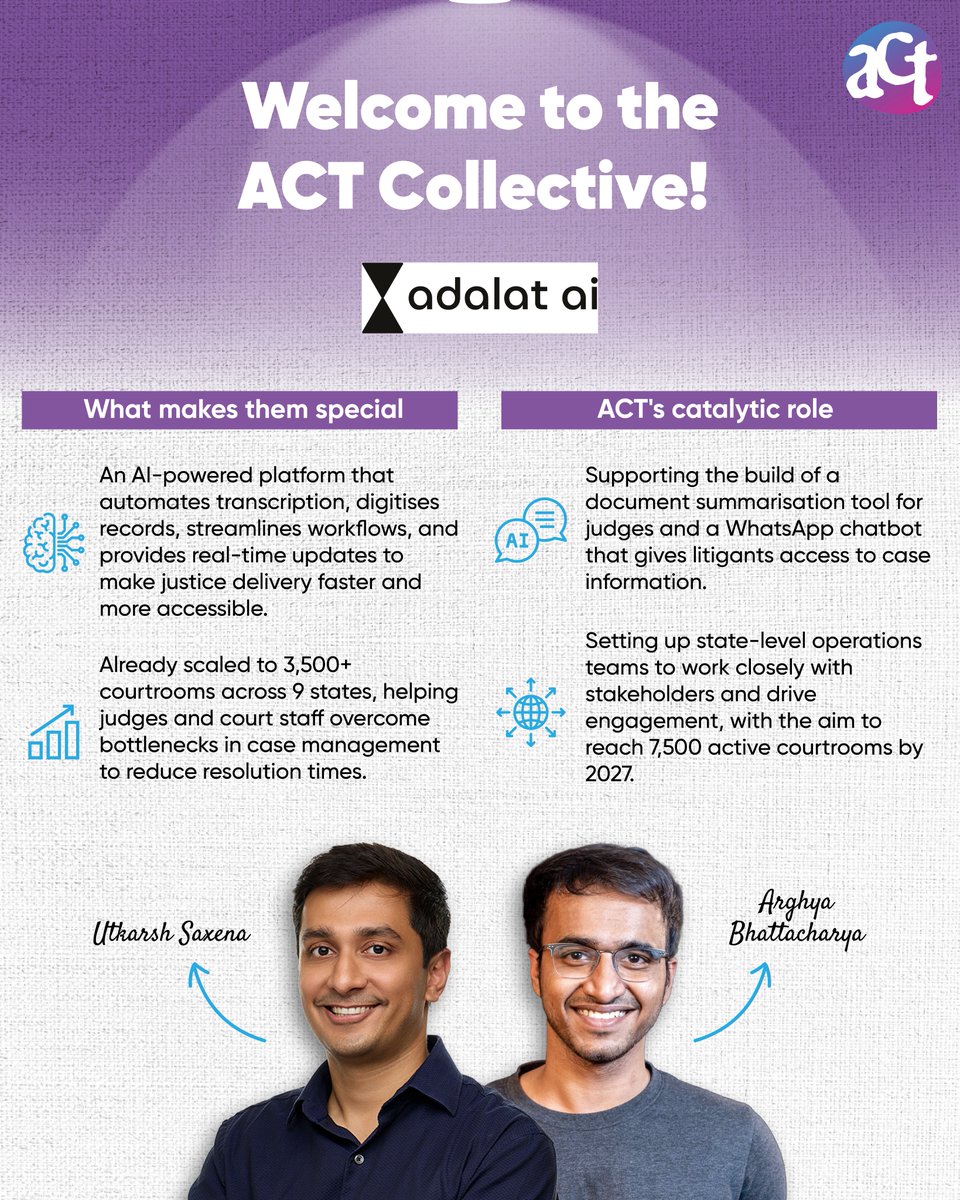
We’re delighted to welcome @Adalat_AI to the ACT portfolio!
With 50M cases pending in Indian courts, fragmented and paperwork-heavy processes continue to slow justice delivery, particularly in resource-constrained district and subordinate courts.
Founded by @utkarsh__saxena and @orgho12, Adalat AI is building AI-powered tools that automate courtroom transcription, digitise records, and streamline workflows to make justice delivery faster and more accessible.
With ACT’s support, Adalat AI will strengthen state-level implementation teams, expand its product ecosystem with tools such as a WhatsApp chatbot for litigants and document summarisation for courtrooms, and scale to 7,500 active courtrooms by 2027, building a pathway for long-term integration into India’s judicial system.
Read our blog here to know more: actgrants.in/adalat-ai-joins…
#CoFoundersOfSocialChange
2
3
384
Jan 20
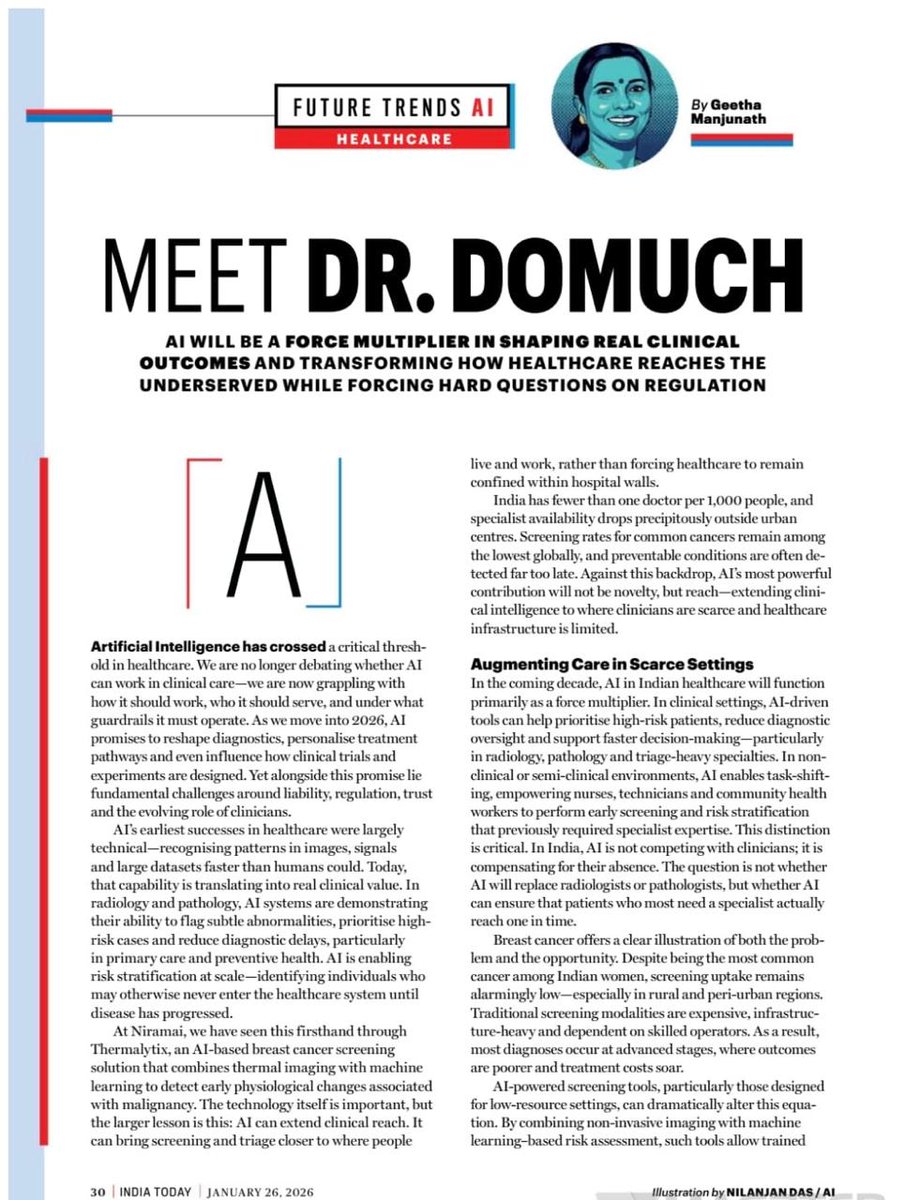
AI in healthcare has moved from possibility to practice, opening up important conversations around how it can be deployed responsibly, at scale, and in service of access.
In her latest @IndiaToday op-ed, Geetha Manjunath, Founder & CEO of @niramaianalytix, reflects on how AI can extend clinical reach, support clinicians, and build trust through thoughtful design and rigorous validation.
Read the full op-ed here: indiatoday.in/magazine/futur…
#CoFoundersOfSocialChange #ACTForHealth
1
81
Jan 17
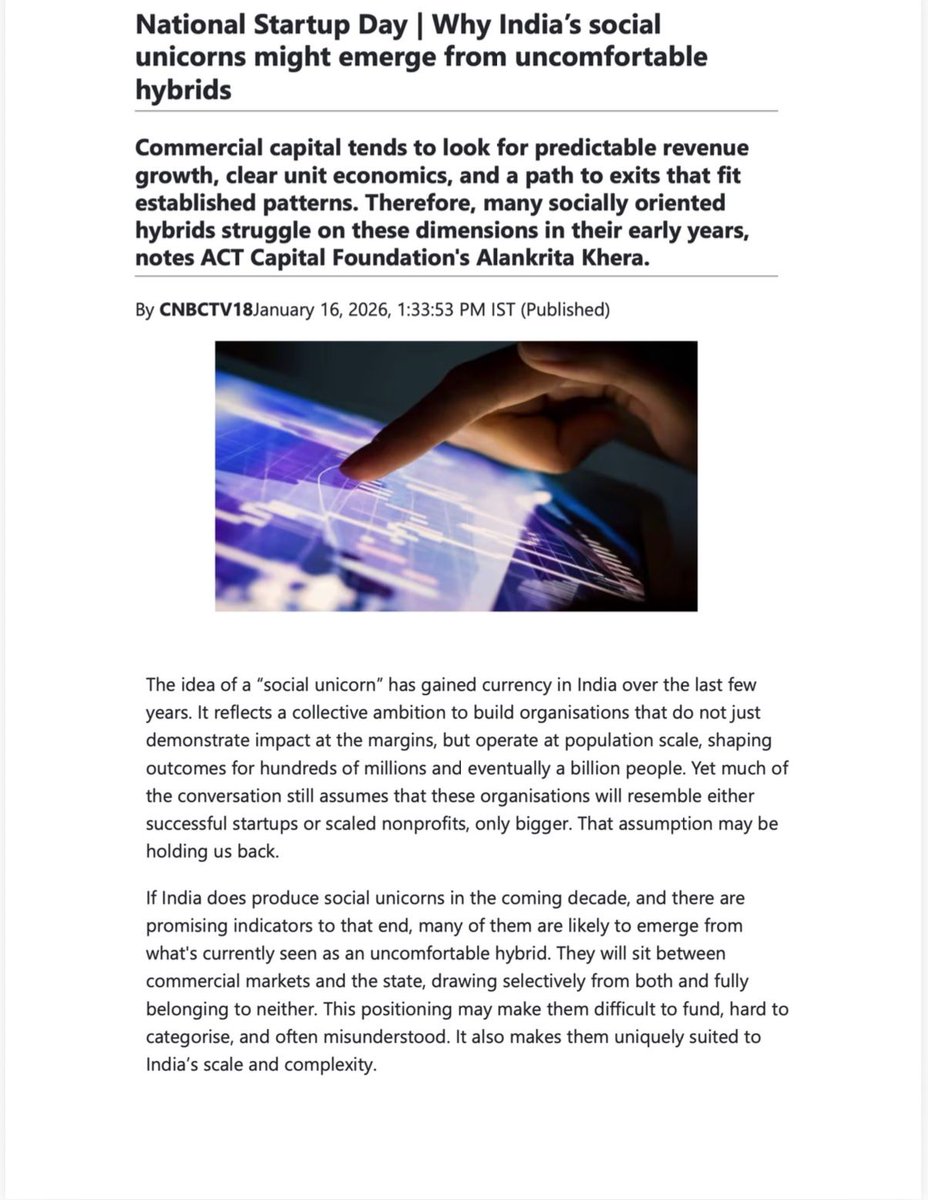
What if India’s first wave of social unicorns are not meant to fit neatly into the proverbial box?
In this @CNBCTV18News op-ed, our Director, Alankrita Khera, reflects on why some of India’s most scalable climate solutions may emerge at the intersection of markets and the state, and why embracing this hybridity could be central to building long-term climate resilience at population scale.
Read the full article: cnbctv18.com/access/opinion/…
#CoFoundersOfSocialChange #ACTForEnvironment
1
70
Jan 16
The journey towards meaningful impact starts with curiosity and the courage to pursue it.
Celebrating founders changing the status quo, one question at a time.
Today, and everyday!
#NationalStartupDay
@learning_rocket @karya_inc @forus_health @IndraWaterIndia @teamkhushibaby @ruchitnagar @AmritOmNayak @kcforus
#CoFoundersOfSocialChange
1
4
87
ACT retweeted

Jan 16
#NationalStartupDay2026 | India’s social unicorns may not look like unicorns at all, at least by conventional definitions. They may never achieve billion-dollar valuations or global brand recognition.
But if they succeed in reaching population scale, they will reshape how India builds resilience and responds to climate change as a shared national challenge.
By: @alankritakhera, Director, @actgrants
#CNBCTV18Access #StartupIndia #Startup #Startups
Read:
cnbctv18.com/access/opinion/…
1
2
1,027