
Generated from the AMEE Faculty Development Committee. Aiming to learn about, from & with colleagues interested in Fac. Dev. in healthcare & allied professions
Joined July 2018
- Tweets 1,478
- Following 934
- Followers 1,665
- Likes 1,125
42 Photos and videos


Pinned Tweet

25 Jul 2018
Welcome to the Twitter feed of the AMEE Faculty Development Committee. Our aim is to learn about, from and with colleagues interested in Faculty Development in the healthcare and allied professions, so please join us! #facultydevelopment
16
19
@AMEEFacDev retweeted

Apr 30
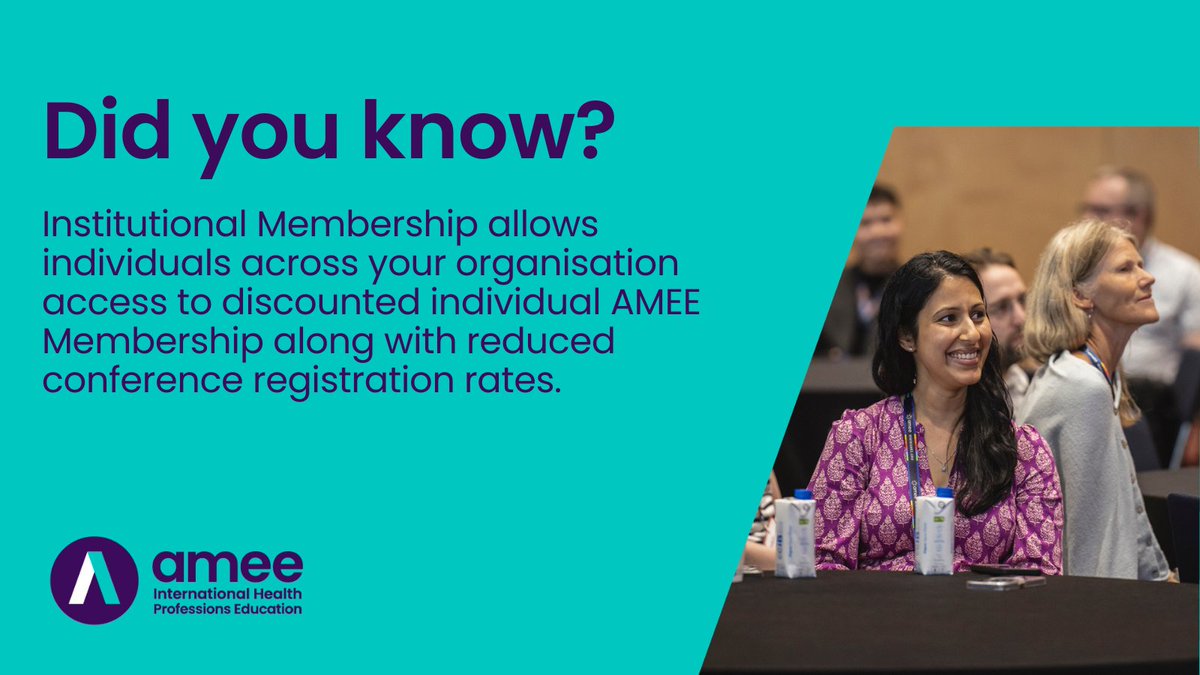
🤔Did you know?
Institutional Membership allows individuals across your organisation access to discounted individual AMEE Membership along with reduced conference registration rates.
If your institution hasn’t signed up yet, you could be missing out. 👉ow.ly/jKp750YSueL
1
107
@AMEEFacDev retweeted
May 8
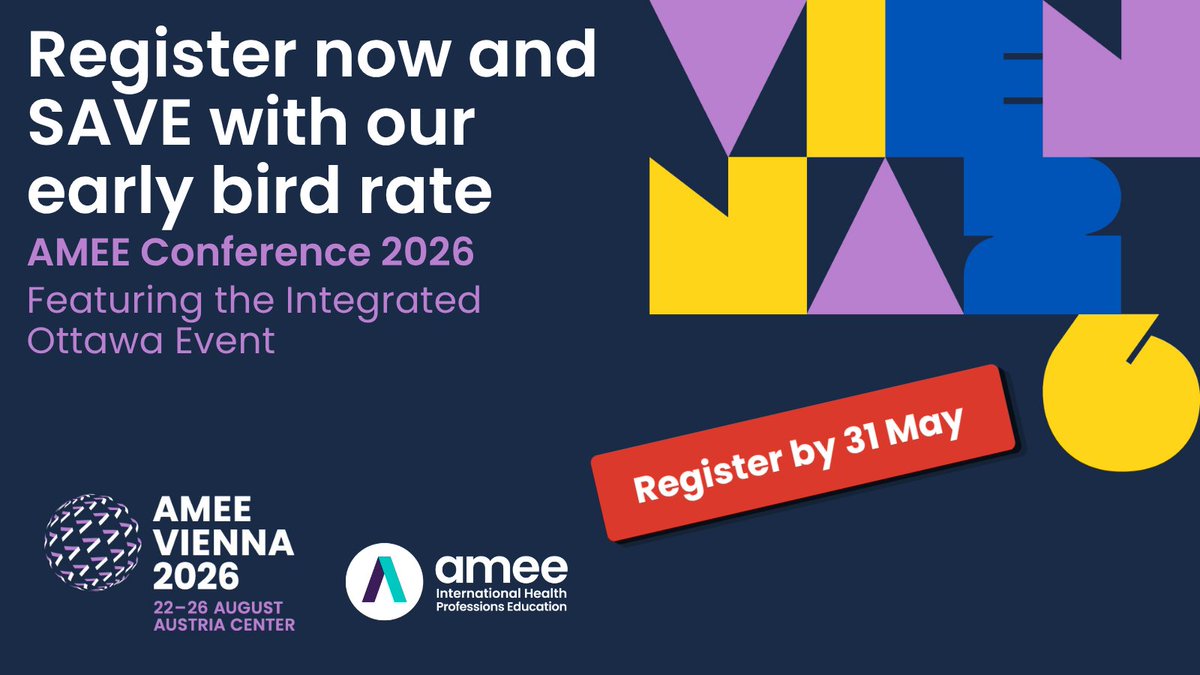
📢Don’t miss your chance to save on the AMEE Conference.
The discounted rate for the AMEE Conference 2026 featuring the Integrated Ottawa Event, ends on 31 May.
📅Register before 31 May: ow.ly/ui4c50YWr4b
2
3
127
@AMEEFacDev retweeted
Apr 3
🎉In case you missed it, we relaunched our brand this week.
Thank you to the AMEE community for your continued engagement and encouragement as we enter this new chapter.
Explore our refreshed branding on the AMEE website: ow.ly/Vgkj50YCpaY
1
1
2
171
@AMEEFacDev retweeted
This MUST READ emphasizes the need to include patients as partners in med ed - it describes tips for co-producing curricula with them. @CmejEditor
@WesternMichU @WMUMedicine @PTermuhlen @yashaguptamd @wmualumni @AAMCtoday @ameefacdev @GIMMedEdDoc
pmc.ncbi.nlm.nih.gov/article…
2
1
228
@AMEEFacDev retweeted
This MUST READ uses qualitative methods to gain insights about how residents could enhance their effectiveness & efficiency as "teachers". @JournalofGME @KarenHauer4 @PapersPodcast @UCSFHospitals @UCSFHospitals @UCSFMedicine @GIMMedEdDoc @ameefacdev
jgme.kglmeridian.com/view/jo…
2
1
154
@AMEEFacDev retweeted
This MUST READ figured out how to get med studs to complete feedback forms - incorporate humorous memes. @ClinicalTeacher @asmeofficial @JacobLange1 @ameefacdev @AAMCtoday @PapersPodcast @GIMMedEdDoc @MedEdPORTAL @global_meded @acgme @CANMedForum
asmepublications-onlinelibra…
2
171
@AMEEFacDev retweeted
16 Dec 2025
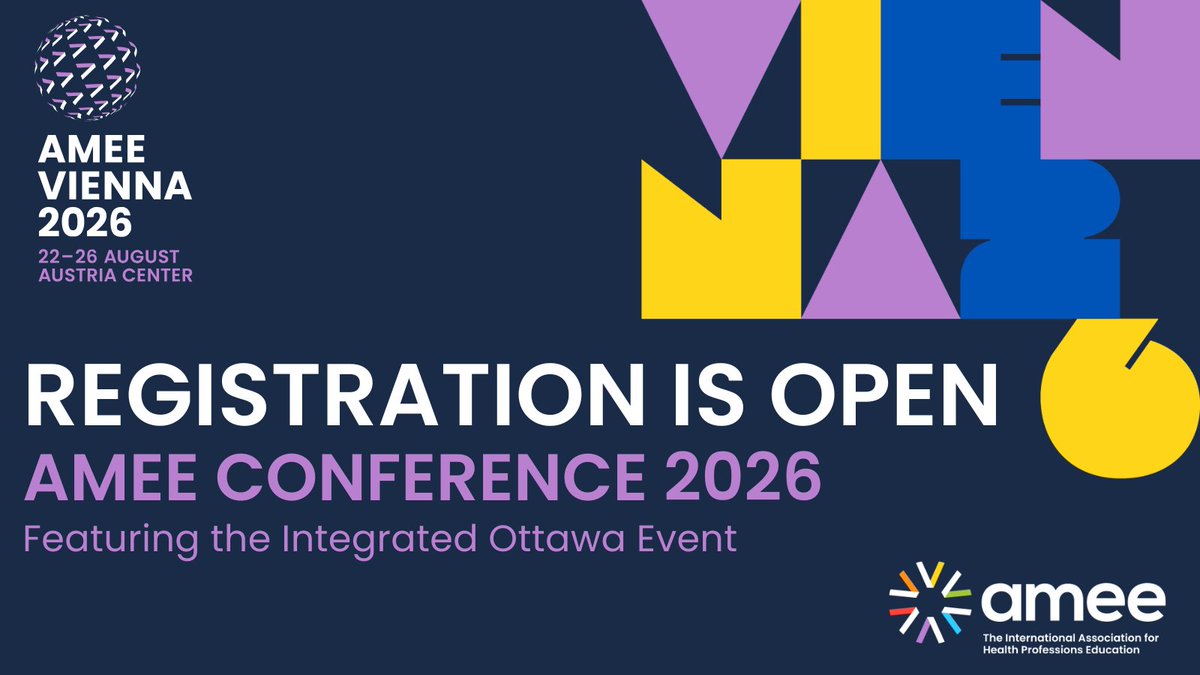
Early bird registration is open for the AMEE Conference 2026 featuring the Integrated Ottawa Event, taking place 22–26 August in Vienna and online! 🎉✨
Don’t miss out! Secure your place either in-person or online with our discounted early bird rates ow.ly/NMBy50XKbSm
3
3
204
@AMEEFacDev retweeted
19 Dec 2025
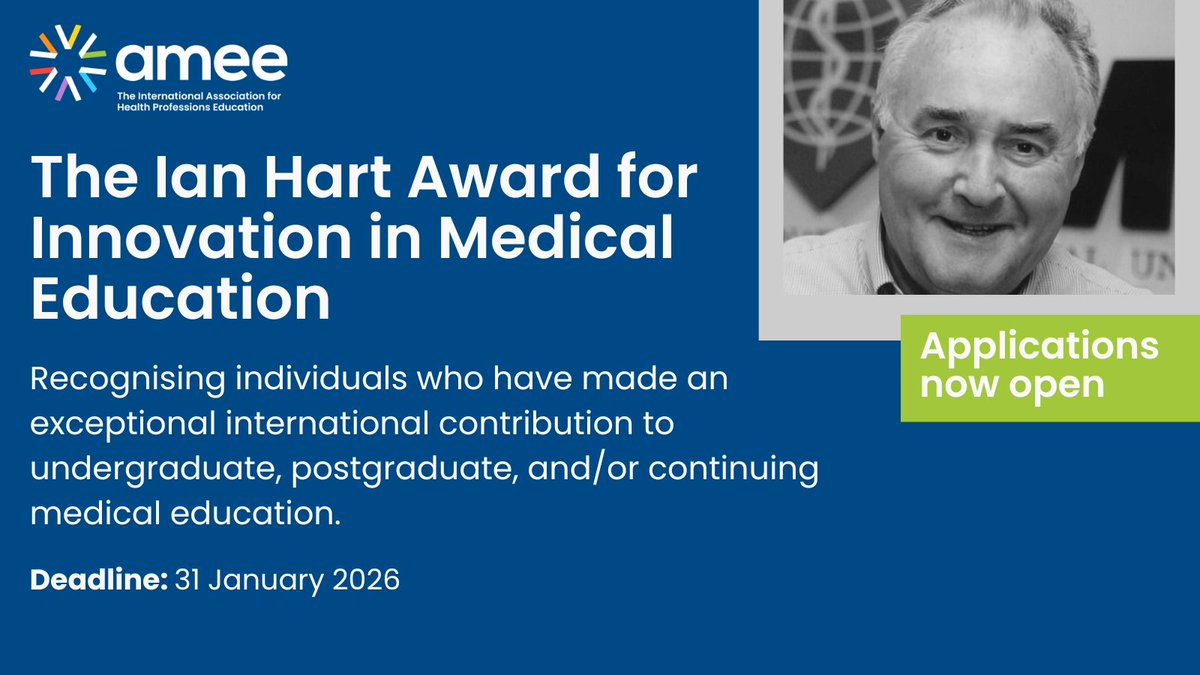
Apply for the Ian Hart Award for Innovation in Medical Education 🏆
The award recognises individuals who have made an exceptional international contribution to medical education.
Apply by 31 January 2026 👉ow.ly/3oBJ50XKXzM
3
3
273
@AMEEFacDev retweeted

Jan 3
“Train-the-trainers” (TTT) is one of the most common methods used to scale up improvement & change capability across organisations, yet we often fail to set it up for success.
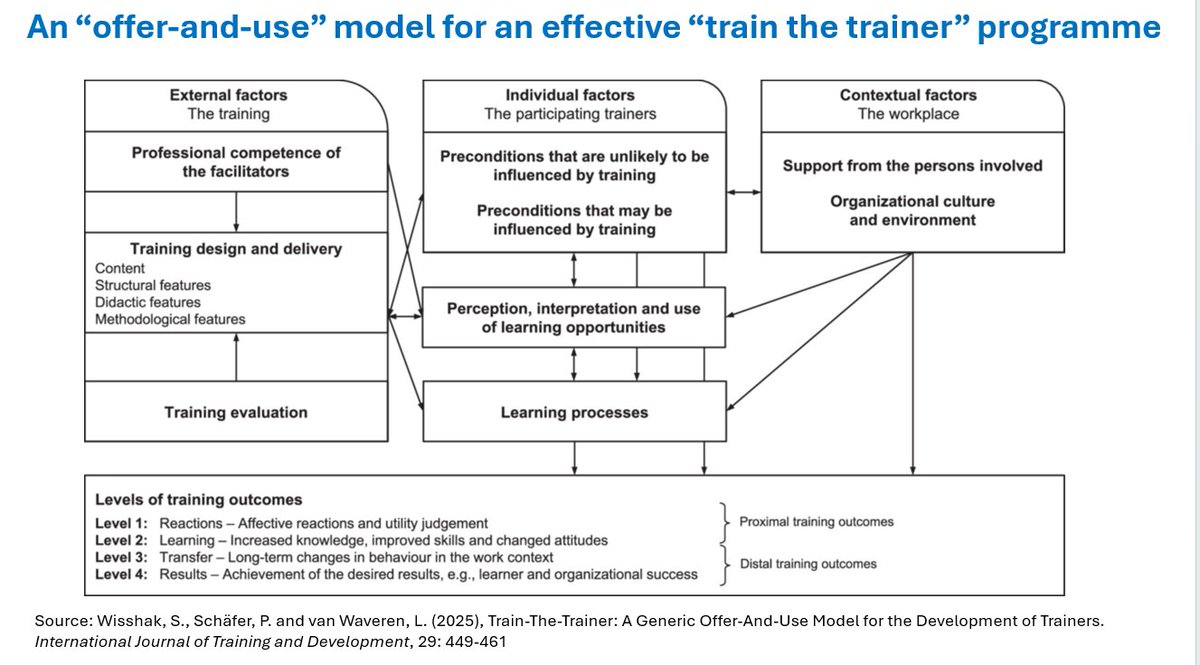
A recent article, drawing on teacher professional development & transfer-of-training research, argues TTT should always be based on an “offer-and-use” model:
OFFER: what the programme provides—facilitator expertise, session design, practice opportunities, feedback, follow-up support & evaluation.
USE: what participants do with those opportunities—what they notice, how they make sense of it, how much they engage, what they learn, & whether they apply it in real work.
How to design TTT that works & sticks:
1. Design for real-world use: Clarify the practical outcome - what trainers should do differently in their next sessions & what that should improve for the organisation. Plan beyond the classroom with post-course support so people can apply learning. Space learning over time rather than delivering it in one intensive block, because spacing & follow-ups support sustained use.
2. Use strong facilitators: Select facilitators who know the topic & how adults learn, how groups work & how to give useful feedback. Ensure they teach “how to make this stick at work” (apply & sustain practices), not only “how to deliver a session.”
3. Make practice central: Build the programme around realistic rehearsal: deliver, get feedback, & practise again until skills become automatic. Use participants’ real scenarios (especially change situations) to strengthen transfer. Include safe practice for difficult moments (challenge, unexpected questions) & treat mistakes as learning. Build peer learning so participants learn with & from each other, not just the facilitator.
4. Prepare participants to succeed: Assess what participants already know & can do, then tailor the learning. Build confidence to use skills at work (confidence predicts application). Help each person create a simple, specific plan for when & how they will use the approaches in their next training sessions.
5. Ensure workplace transfer support: Enable quick application (opportunities to deliver training soon after the course), plus time & resources to do it well. Provide ongoing support (feedback, coaching, & encouragement) from leaders, peers &/or the wider organisation.
6. Evaluate what matters: Go beyond satisfaction scores - assess whether trainers changed their practice & whether this improved outcomes for learners & the organisation. Use findings to improve the next iteration as a continuous improvement cycle, not a one-off event.
onlinelibrary.wiley.com/doi/…. By Susanne Wisshak & colleagues, sourced via John Whitfield.
6
63
234
26,838
@AMEEFacDev retweeted
10 Oct 2025
“To have the opportunity to showcase my research on such a high platform with exceptional leadership capacity has been incredible.”
Ready to share your work with the global health professions education community?
Abstract submissions are now open! 👉 ow.ly/o51z50X9FHZ
3
4
237
@AMEEFacDev retweeted
22 Aug 2025
📢 #AMEE2025 begins this weekend!
Use the hashtag #AMEE2025 to share your photos and highlights from the conference!
We can’t wait to bring the AMEE community together! See you very soon in Barcelona or online 👋
There's still time to register 👉 ow.ly/LSrf50WJuxX
6
17
1,543
@AMEEFacDev retweeted

23 Aug 2025
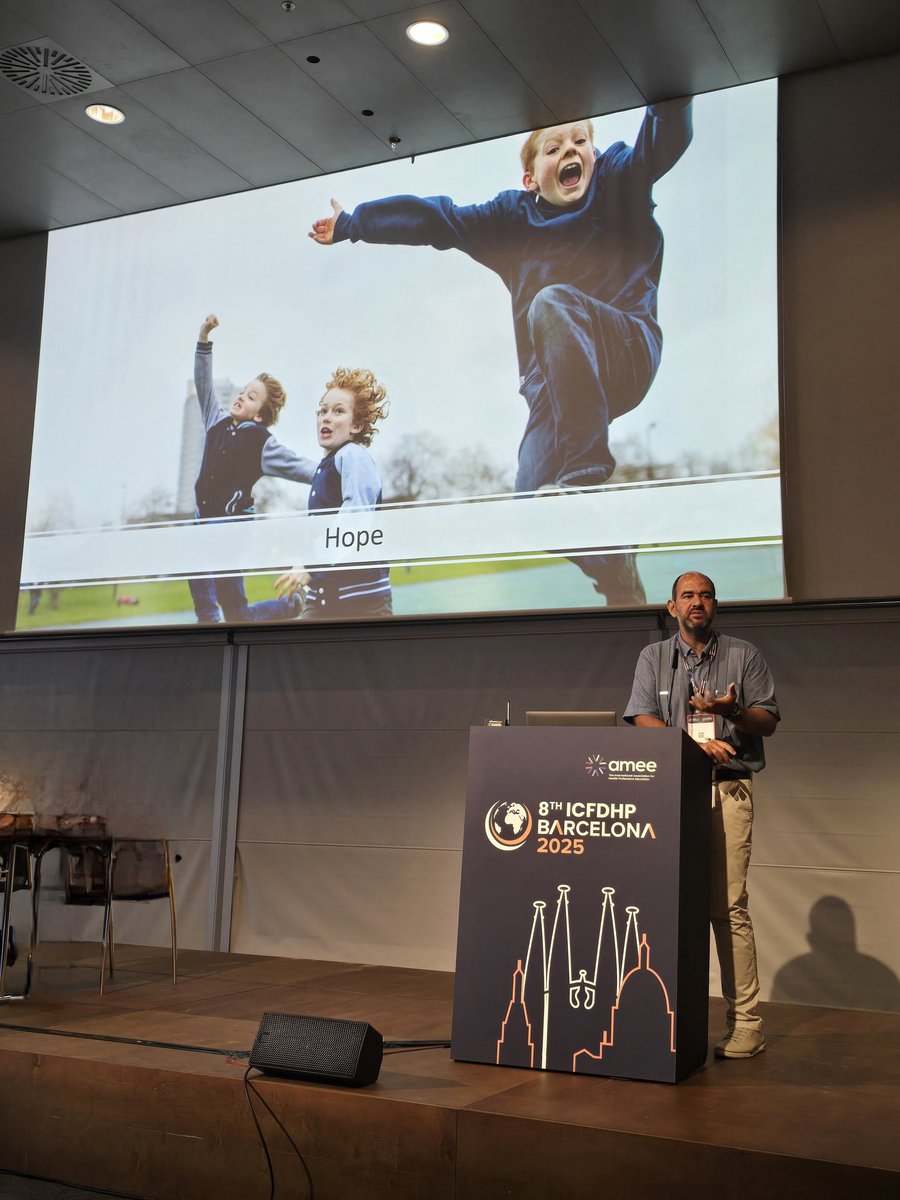
Transformative education is impossible without ‘dialogue’ - which allows opennes, ‘unfinishedness’ and change for the better. Connections to oneself, the patient, the team, the profession, the community and the healthcare system are critical.#icfdhp2025 #amee2025 @ameefacdev
7
17
770
@AMEEFacDev retweeted

28 Jul 2025
New Commentary in @JAMAInternalMed important read for all in #MedEd.
Roots of Disability Discrimination in Medical Schools
jamanetwork.com/journals/jam…
2
2
233
@AMEEFacDev retweeted

28 Jul 2025
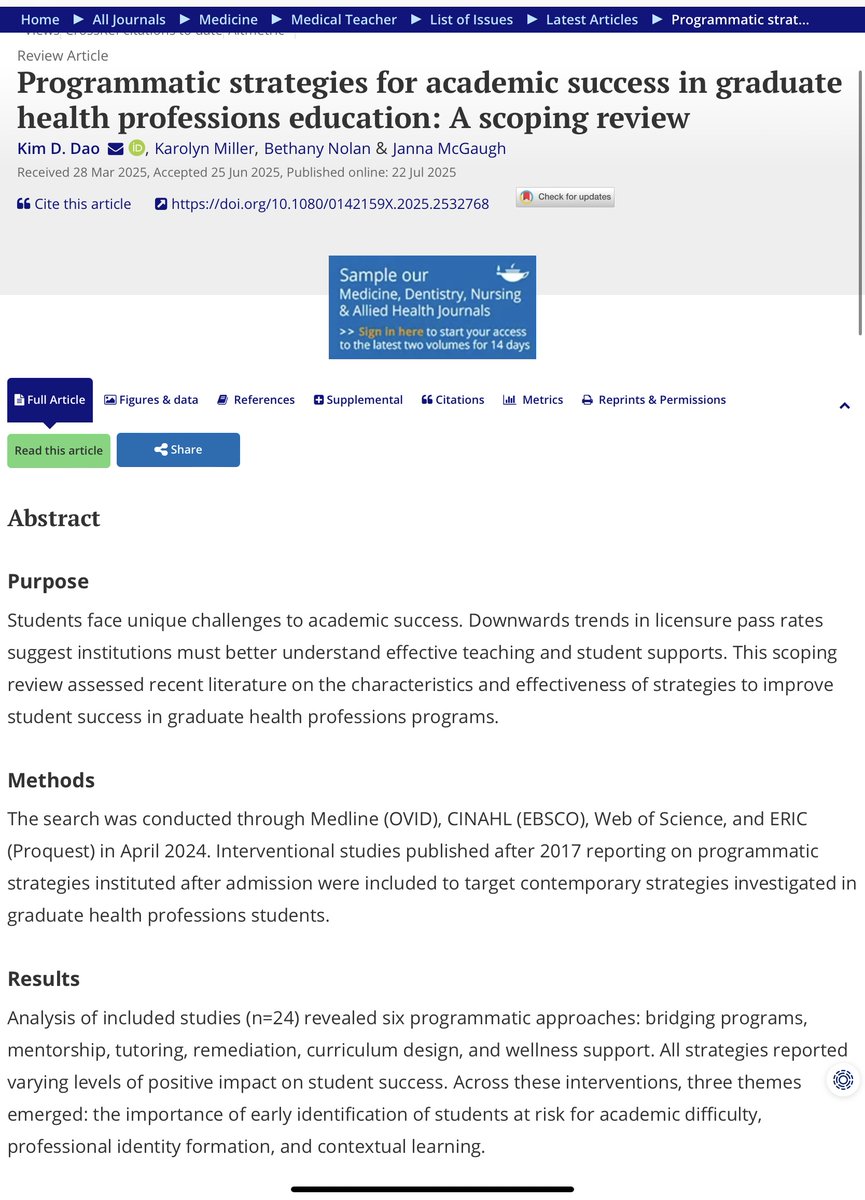
What supports student success in graduate health professions education?
This new scoping review in #MedicalTeacher outlines programmatic strategies that promote academic success, drawing from global best practices.
🔗 ow.ly/sF4t50WwbC4
3
4
477
@AMEEFacDev retweeted

28 Jul 2025
Join us next week (8/6) for the next free Scholarly Publishing #Webinar, Visualize This! Elevate Your #Research with Better Posters: aamc.elevate.commpartners.co…. #MedEd #Scloarship #Publishing @MedEdPORTAL

3
3
471
@AMEEFacDev retweeted
14 Jul 2025
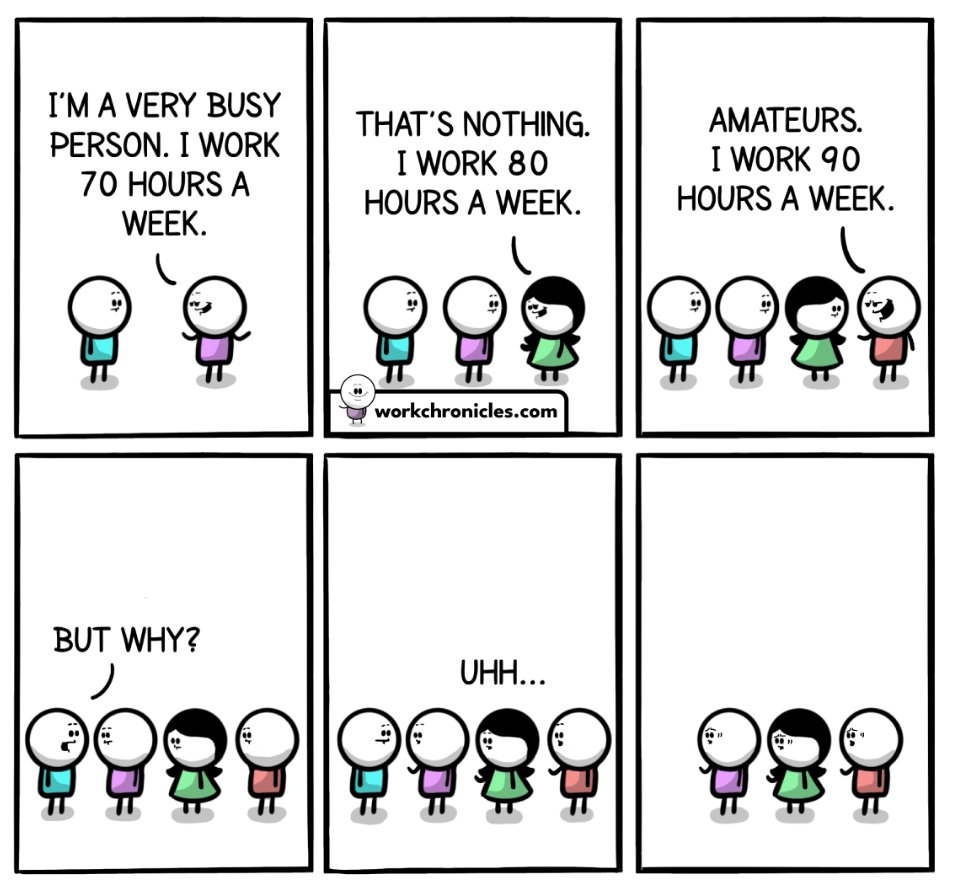
Why do so many leaders & professionals keep working at a punishing pace, even when it damages their health, well-being & relationships? And why do organisational initiatives aiming to curb extreme work hours, e.g., "no email after hours" policies, wellness initiatives - often fail?
New research suggests this isn’t about personal “workaholism” or “driven” personalities. Rather it is about people fitting with the relentless tempo of their organisations. This is underpinned by a sense of what you need to do to make career progress & cultural expectations of 24/7 availability. It creates a pace that feels impossible to clock out of, even after hours. Researchers call this an “entrainment cycle”. People come to feel that this pace is normal - even necessary. In the study, people often described the fast-paced tempo of work not as something they were forced into, but as something they craved or became “bored” without.
How organisations can break the cycle:
1) Address the tempo, not just the hours. Change how work is done, e.g., rethink project pacing, reduce artificial urgency, redesign calendars to allow for focus & reflection.
2) Be alert for warning signs - stress, disengagement, burnout early & respond before issues escalate.
3) Help people feel they have the cultural permission to pause. It's not enough to change schedules – expectations need to change. Taking breaks, disconnecting on non-work days & ignoring the inbox when on holidays should become organisational norms.
hbr.org/2025/07/new-research…. By Ioana Lupu & Shanming Liu in @HarvardBiz.
Cartoon by @_workchronicles.
10
54
147
9,804
@AMEEFacDev retweeted

4 Jul 2025
Happy 4th! From over 500 June med ed pubs, we picked 3 "fireworks" that you MUST READ. Topics: PBL cases, medical memes, evolution of empathy for students over time. @FEBSJournal @JournalofGME @acgme @BMCMedicine @AAMCtoday @ameefacdev @AMEE_community
hopkinsbayviewinternalmedici…
3
11
508
@AMEEFacDev retweeted
4 Jul 2025
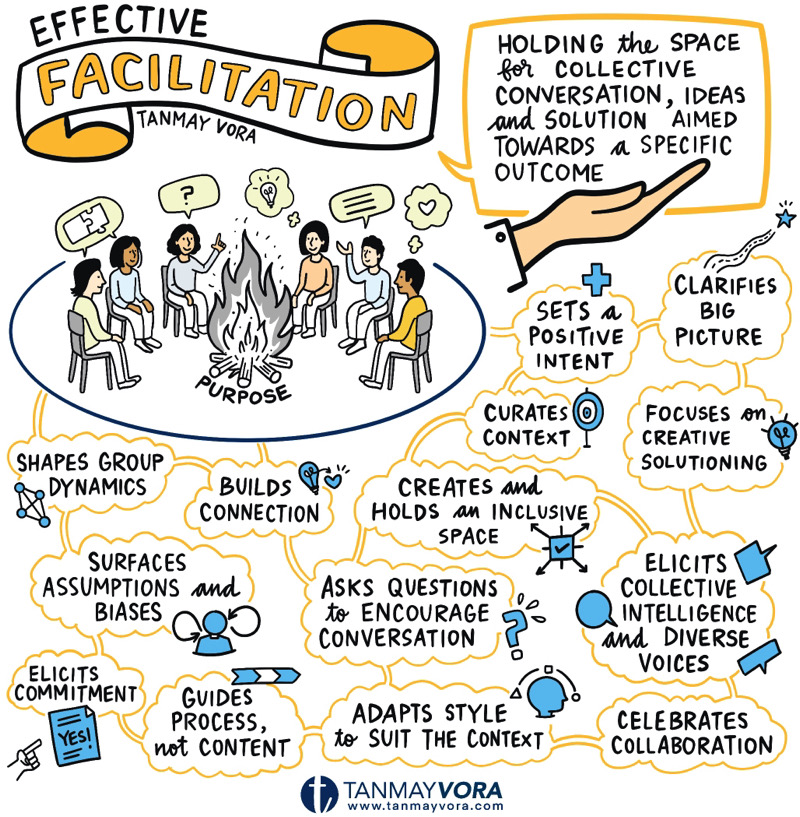
Facilitation skills are not just for change & improvement "experts". Every leader should have them.
Organisations that integrate facilitation into their leadership approach report more productive & engaged teams, improved innovation & better decision-making.
Facilitative leadership is even more important in the era of AI. AI can analyse trends, detect patterns & generate content, but it can't replicate the trust built through dialogue, or the remarkable outcomes that can emerge when people collaborate to make sense of complex issues together.
How we might go about making facilitative leadership the norm:
1) Integrate facilitation into leadership development activities, providing training, coaching, resources & safe spaces to practice.
2) Have senior leaders role model facilitative approaches.
3) Build understanding of situations where we should limit the number/style of decisionmakers & those where we should be facilitative.
4) Make facilitative approaches the leadership norm/expectation & build them into organisational processes.
5) Encourage peer learning so leaders can share experiences, discuss challenges & learn from one another.
Inspired by a very good new blog & sketchnote from @tnvora: tanmayvora.com/what-effectiv….
3
63
213
21,350
@AMEEFacDev retweeted
16 May 2025
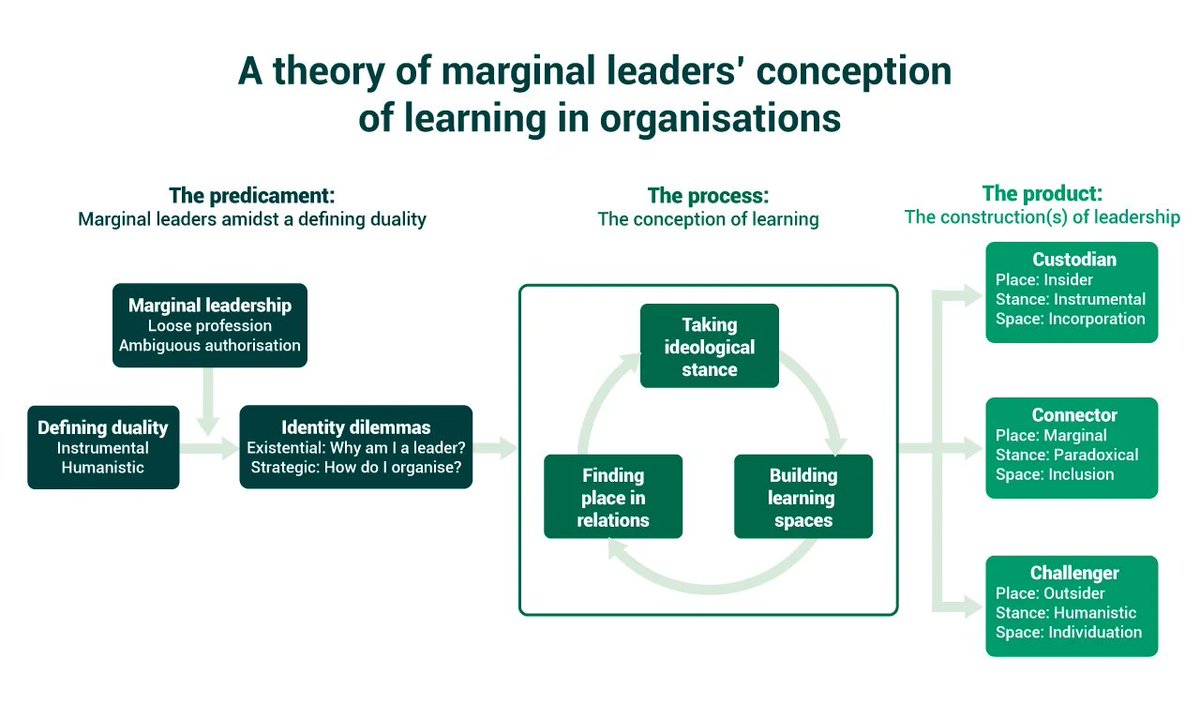
What does it take to "break the mould" of traditional leadership & become a new kind of leader in an organisation?
Researchers studied senior leaders who were determined to lead in a different way. These leaders often found themselves “marginalised" by their peers. They had to define their place & purpose in novel ways to work alongside conventional leaders.
In general, these marginal leaders adopted one of three identities:
1) Custodians - adapted to mainstream demands to secure a place near the centre of the organisation, aligning with established leaders & demonstrating measurable impact to build credibility.
2) Challengers - cast themselves as valuable outsiders needed to disrupt the status quo, content with (& effective at) leading from the margins
3) Connectors - served as bridges between different groups, building resources & maintaining connections with different groups within & outside the organisation.
This is a message of hope for the "mould breaking" leaders who are trying to do things better & do better things, & who often feel marginalised as a result. You can be just as effective operating from the margins as you can from the centre: knowledge.insead.edu/leaders…
Via @INSEADKnowledge @gpetriglieri @APeshkam
6
50
153
13,872
@AMEEFacDev retweeted
22 Apr 2025
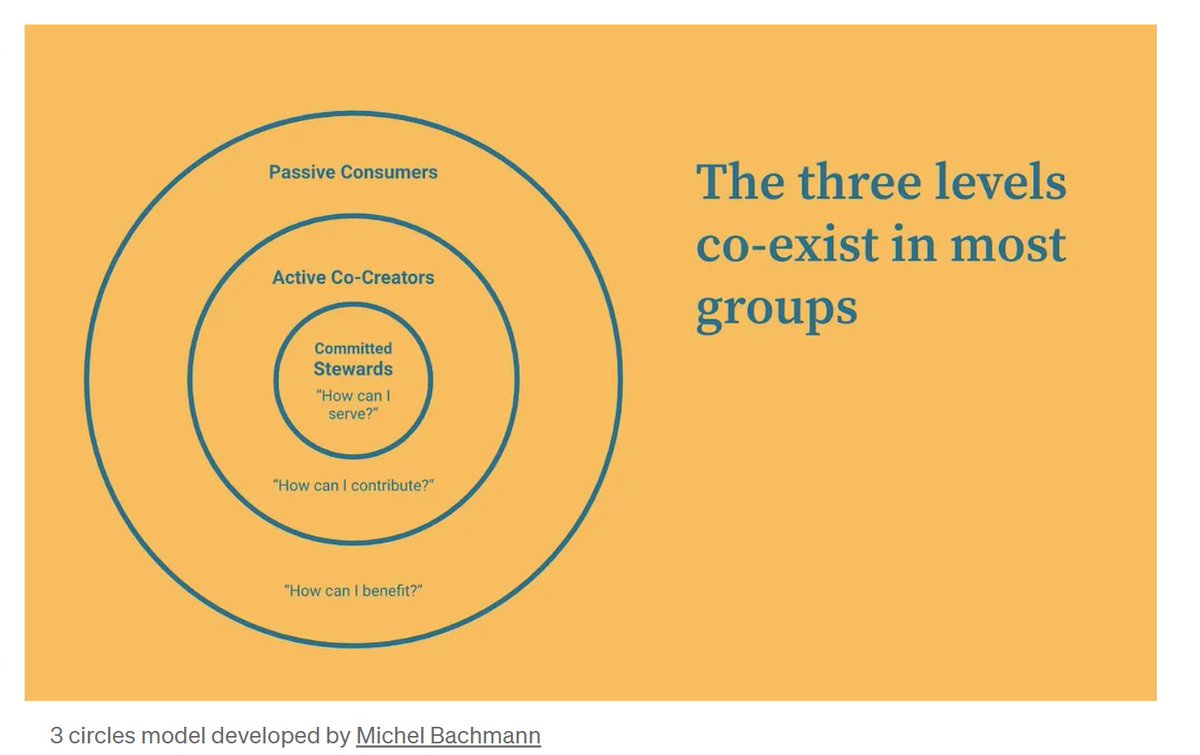
We don't need to engage everyone in our network/community of practice/improvement campaign. Trying to activate the passive parts of our community or stakeholder group can be exhausting & demoralising . Unequal participation is natural.
In most communities/groups we can see three clear groups:
(1) The most active members at the core: they are the "stewards" who take initiative & make things happen.
(2) The committed members: they want to be part of this group, they contribute & participate to their abilities
(3) The outer circle of people who are mostly passive: some of them were once active in the past; some of them you have never seen.
Group (3) make up the majority of your community.
It is a mistake to try to turn the disengaged people in group (3) into group (2) activists. You can't push anyone into anything. Much better to focus on supporting groups (1) & (2). Keep group (3) informed & make light-touch invitations. People’s energy often changes over time so don't close doors:
medium.com/together-institut…. By @pforti. Graphic/additional material from Adrian Röbke & Michel Bachmann.
4
51
185
14,576