
ML Engineer - Data Scientist - Biologist • AI-driven discovery
Joined January 2013
- Tweets 1,519
- Following 2,164
- Followers 565
- Likes 3,320
149 Photos and videos
Paride Antinucci retweeted

14 May 2024
Job alert! I am looking for a talented PhD student to do research on generative diffusion and its connections to statistical physics and memory.
Feel free to send me a PM if you need more info!
You can apply here:
ru.nl/en/working-at/job-oppo…
Otherwise, please retweet!
8
64
187
92,677
Paride Antinucci retweeted

31 Dec 2023
The fireworks in your mind. 🧠✨ This sparkling video shows the neurotransmitter glutamate being released into synapses, made possible by an indicator developed by @abhi_aggarwal1, @PodgorskiLab, and team.
#HappyNewYear #NYE
11
275
1,045
95,106
Paride Antinucci retweeted

18 Dec 2023
While #Neuro4ML is over in-person for this year.
All 32 lectures (videos, slides, reading lists) and 7 coding exercises are available online!
@neuralreckoning & I cover everything from single units to circuits in artificial and biological networks.
neuro4ml.github.io/
14 Dec 2023

The final week of #Neuro4ML is online!
This week @neuralreckoning & I each discuss one open issue in neuroscience (🧵):
8
37
3,755
Paride Antinucci retweeted

10 Nov 2023
Biggest misconceptions in AI:
1. Confusing skill and intelligence. They are orthogonal. General intelligence can be converted into skill at many tasks, but in reverse, you can achieve arbitrary levels of skill at arbitrary tasks without requiring any intelligence at all.
40
176
1,093
222,933
Paride Antinucci retweeted
9 Oct 2023
I'm really excited to share the start of our #Neuro4ML course!
Over 10 weeks, of short videos and coding exercises, we'll introduce you to a range of topics at the intersection of #neuroscience and #AI, like how to add biological details to network models.
Stay-tuned!
9 Oct 2023

I'm happy to announce the start of a new free and open online course on neuroscience for people with a machine learning or similar background, co-developed by @MarcusGhosh. YouTube Videos and Jupyter-based exercises will be released weekly. There is a Discord for discussions.
21
124
19,388
Paride Antinucci retweeted

14 Aug 2023
1/Our paper @NeuroCellPress "Interpreting the retinal code for natural scenes" develops explainable AI (#XAI) to derive a SOTA deep network model of the retina and *understand* how this net captures natural scenes plus 8 seminal experiments over >2 decades sciencedirect.com/science/ar…

8
237
875
458,340
Paride Antinucci retweeted

13 Apr 2023
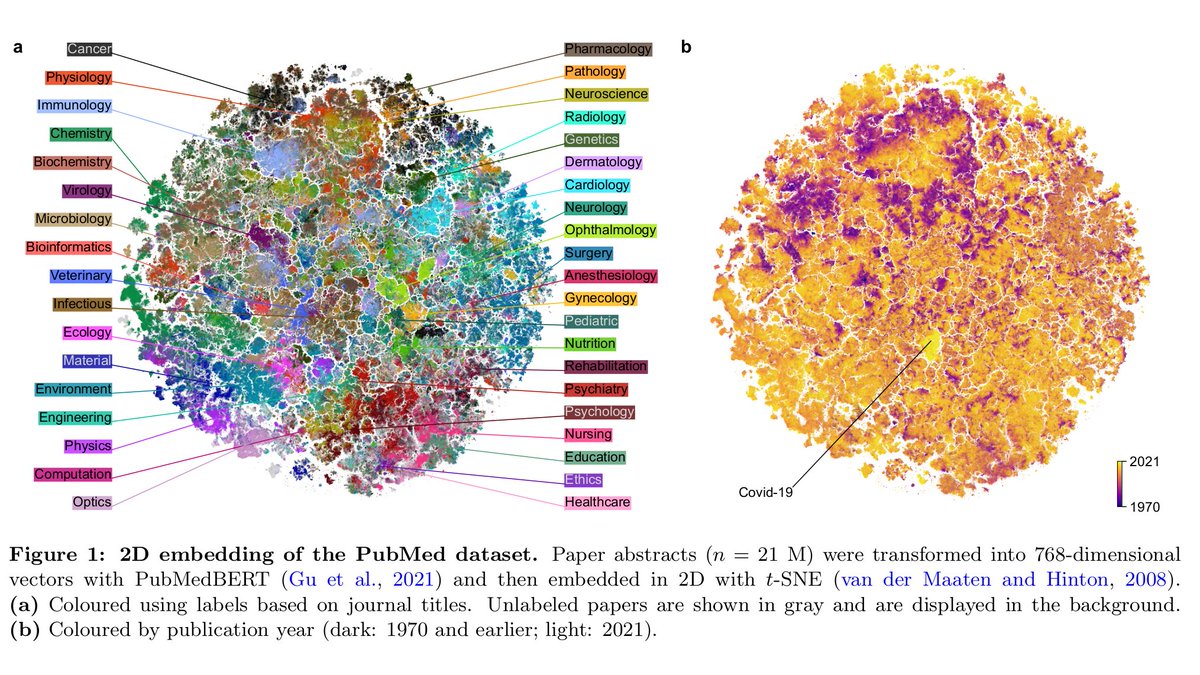
Really excited to present new work by @ritagonmar: we visualized the entire PubMed library, 21 million biomedical and life science papers, and learned a lot about --
THE LANDSCAPE OF BIOMEDICAL RESEARCH
biorxiv.org/content/10.1101/…
Joint work with @CellTypist and @benmschmidt. 1/n
28
377
1,278
796,874
Paride Antinucci retweeted
21 Dec 2022
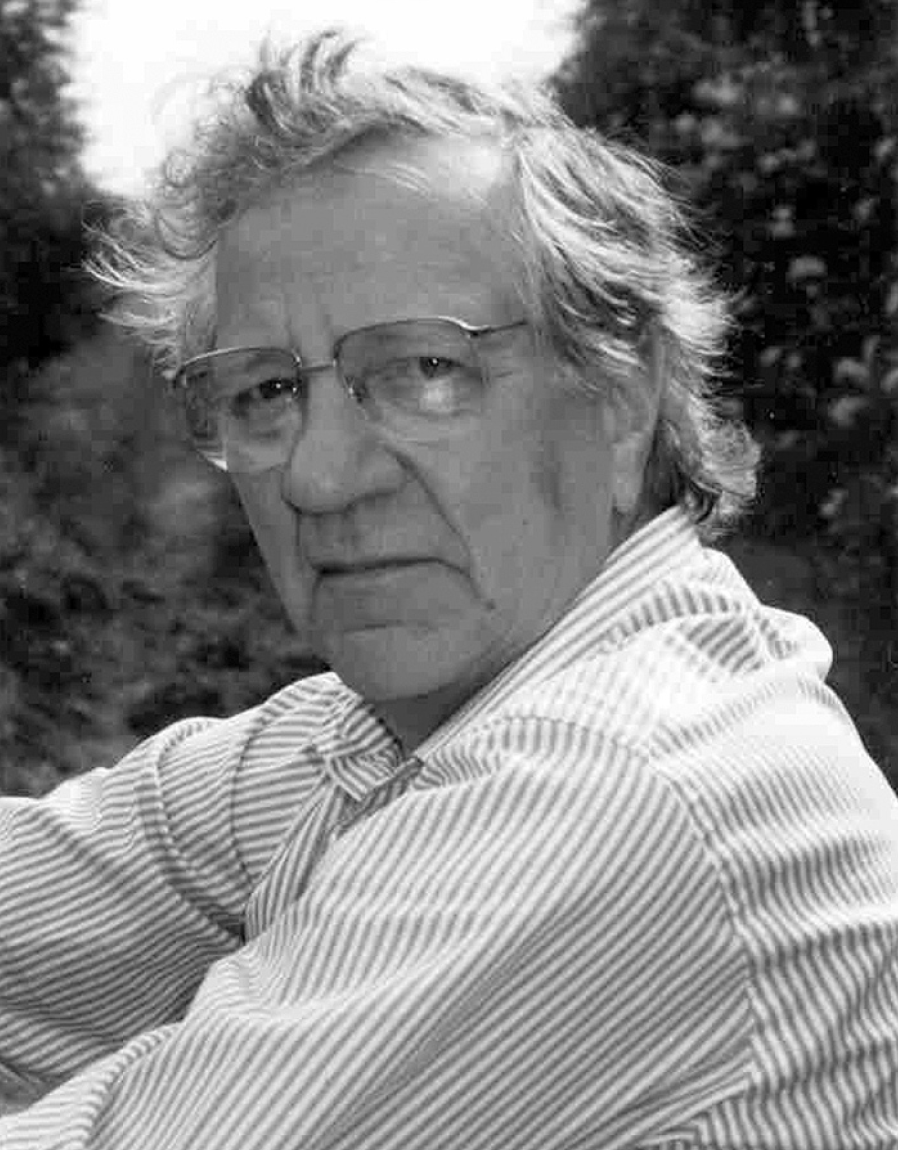
Last Friday there was a conference to consider Horace Barlow's work and its ongoing impact.
Of all of his papers, most speakers focussed on two (below).
Strikingly, these two papers contain no models or experimental data,
1
5
21
3,616
Paride Antinucci retweeted
22 Oct 2022
After our white paper arxiv.org/pdf/2210.08340.pdf, some questioned if Neuro has/can help AI. My @StanfordHAI blog post has 13 concrete/seminal past examples and suggests several future ones. To go fast go alone (AI). To go further go together (w/Neuro/Psych).
hai.stanford.edu/news/intert…
3
18
113
Paride Antinucci retweeted

10 Aug 2022
#WorkAtBenevolent: 👋 It’s an exciting time at BenevolentHQ - we are hiring for more than 20 roles in #London. We’d love to hear from you!
#UX #ProductManagement #InVitro #Informatics #IP #Finance #PMPT

3
2
Paride Antinucci retweeted

12 Jun 2022
#PLOSBiology: Does brain activity cause consciousness? A thought experiment dx.plos.org/10.1371/journal.… As a neurophysiologist I feel like I’m obliged to say ‘yes’. So why I am so conflicted by this thought experiment? @jaaanaru @LibedinskyLab @AnnaSchapiro
11
56
187
Paride Antinucci retweeted

19 May 2022
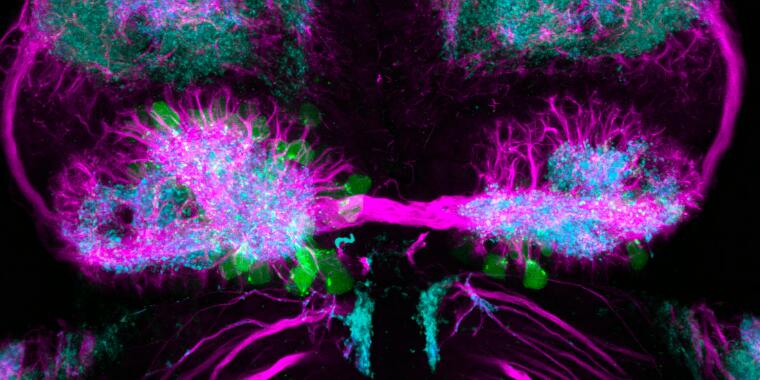
#preprint How do bilaterally equivalent structures in the forebrain become left-right asymmetric? A tale of zebrafish mutants, genetics, biochemistry, structural biology and Wnts. 🧵[1/13] tinyurl.com/3n76xpfu
1
24
143
Paride Antinucci retweeted

18 May 2022
🚨 come work with us! we have a fully funded postdoc position available in my lab to study the role of hippocampal circuits in flexible behaviour. work with a great team inc a collab with the amazing @jonroiser, in a fantastic location in London @uclnpp . atsv7.wcn.co.uk/search_engin…
3
56
71

We're hiring postdocs! Join our lab and help us figure out how the brain controls visually guided behaviour. Funded by @wellcometrust. Apply before 6 June here: bit.ly/3M1rwsT
Please RT!
#zebrafishjobs #sciencejobs #postdocjobs
3
44
50

10 May 2022
Interested in doing a postdoc in systems neuroscience working in an outstanding lab? Check this out! I’ve been working as a postdoc in Isaac’s lab for 5 years and highly recommend applying. State of the art experimental and computational methods and great work environment👇😉👌

We're hiring postdocs! Join our lab and help us figure out how the brain controls visually guided behaviour. Funded by @wellcometrust. Apply before 6 June here: bit.ly/3M1rwsT
Please RT!
#zebrafishjobs #sciencejobs #postdocjobs
1
5
Paride Antinucci retweeted

What principles of circuit organisation underlie the interactions between ongoing and sensory-evoked activity? What is their impact on sensorimotor behaviour? Excited to share my recent work at the @ibianco3 lab in a new @biorxivpreprint: biorxiv.org/content/10.1101/… ⬇️ 1/12
3
18
75
Paride Antinucci retweeted

8 Feb 2022
1/ A new paper on the “brain-computer metaphor debate” by myself and Tim Lillicrap is now out in Frontiers in Computer Science:
frontiersin.org/articles/10.…
tl;dr: The debate is useless because it’s actually just a semantic disagreement.
12
47
242
Paride Antinucci retweeted

2 Feb 2022
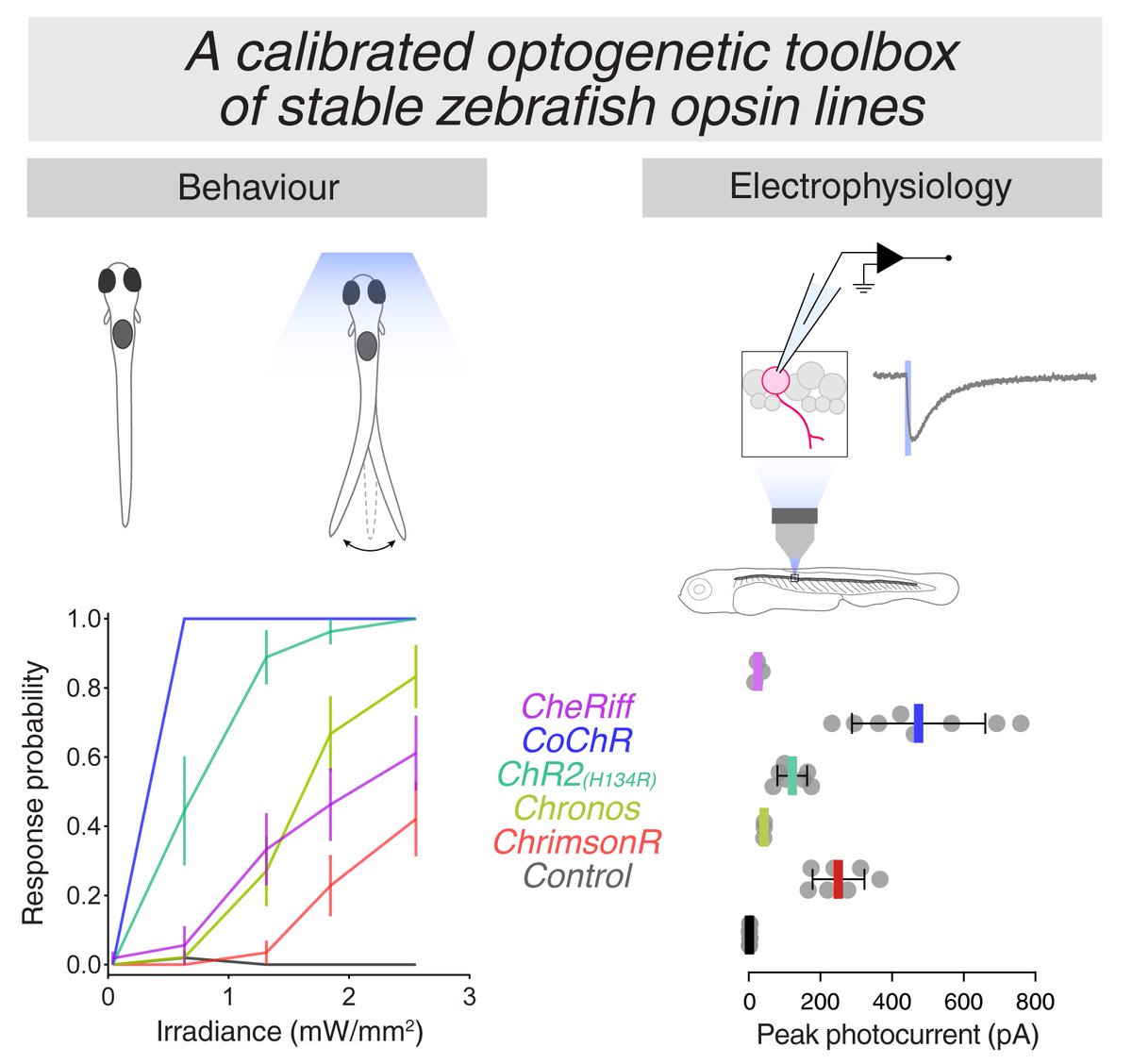
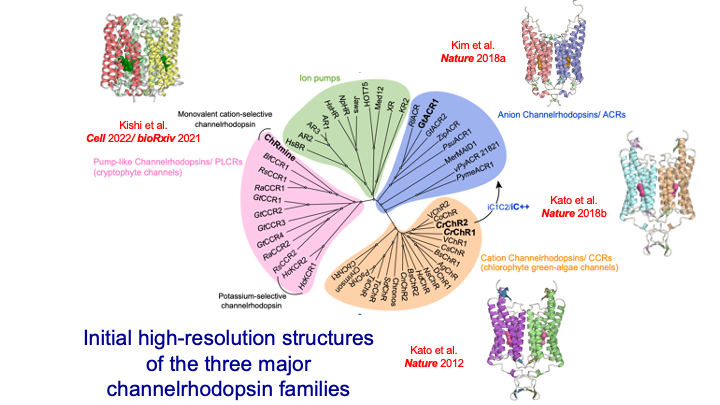
1. @karldeisseroth, @emekato & I are delighted to share our paper @CellCellPress on the ChRmine structure!
tinyurl.com/2mptscvt
complementing our team’s structures of the other 2 channelrhodopsin types:
tiny.one/3kubfh3x
tiny.one/4xtjnxwm
tiny.one/23e3w6tx
8
35
175
Paride Antinucci retweeted

7 Jan 2022
The brain is built on a principle of division of labour, where anatomically distinct regions perform specialised tasks. But how are messages sent round the brain allowing regions to communicate? Read on and see our preprint to find out the answer! biorxiv.org/content/10.1101/…
4
49
182