@ARLQ_AI | Previously @huggingface , @github, @Accenture, @Nuxeo, @Alfresco | about #Nantes & #politics 👉 @3asseh
Joined November 2008
- Tweets 3,109
- Following 794
- Followers 899
- Likes 1,714
247 Photos and videos



We’re living in wild times.
Yesterday it was the White House getting spooked about an AI model’s security posture… enough to demand it be pulled.
Today, we learn that Beijing is blocking an acquisition, Meta buying Manus, months after the deal was done.
I don’t think one is an answer the other. It’s just that national security is at stakes and these decisions are made within that context.

Meta reportedly moves to unwind $2B Manus deal after Beijing’s demand techcrunch.com/2026/06/13/me…
33
Looks like some consulting firms have been aggressively marketing themselves as AI advisers while simultaneously producing AI-assisted content without adequate human review.
Processing 100% of a dataset, making sure no or minimum bias is introduced and - most important - leverage a traceability capacity. All this doesn’t happen with a prompt and a gen-AI answer to the prompt. It happens with some innovative approaches that will always need a human to get a certain level of work and decision making done. And at the end of the day, it’s not the algorithm’s mistake, it’s the human’s.
Jun 12

Amazing: KPMG wrote a report describing the successful use of AI by businesses. But the case studies turned out to be AI hallucinations.
giftarticle.ft.com/giftartic…
1
21
« On Thursday, two days after the model’s public release, Amazon CEO Andy Jassy raised concerns to the White House about the ability to bypass the model’s guardrails, according to the two administration officials and the senior White House official. »
politico.com/news/2026/06/13…
27
Bassem Asseh retweeted

NEW: Inside the 24-hrs before WH slapped export controls on Anthropic
- Last Thursday, Amazon CEO Andy Jassy raised concerns about Fable jailbreak to Trump admin
- Friday AM, Sean Cairncross, Bessent, Susie etc. held WH call to discuss
- Then White House started reaching out to Anthropic to speak with Dario Amodei, who was at a wellness retreat.
- When Amodei was finally available past 1pm, he had three tense phone calls with a combo of ppl including Cairncross, Bessent, Lutnick, Kessler, Will Scharf, Richard Walters, and Walker Barrett.
-Amodei tried to clear up what he assumed was a misunderstanding. He defended the guardrails and distinguished between universal and non-universal jailbreak
- Cairncross and Bessent were unmoved and asked Amodei to take down Fable and work with the admin to fix the vulnerabilities. (A WH official said Amazon’s findings were run past the NSA and they felt they had “proof.”)
- Amodei asked for more time and info, but he made no commitments to pull the model
- Bessent told Amodei directly at one point that he was making a “bad decision”
- By Friday evening, the Trump admin imposed its export controls.
- “Export controls were a last resort after begging them for hours to work with us,” senior WH official said.
W/ @cheyennehaslett
politico.com/news/2026/06/13…
158
426
3,047
1,175,767
Bassem Asseh retweeted

Publié le 22 mai dans @Grand_Continent
« Enfin, ce qui commence avec des restrictions motivées uniquement par des préoccupations légitimes finit toujours en politique. Une fois qu’il aura un rôle plus officiel dans la supervision du flux réel des capacités IA, le gouvernement américain pourrait arsenaliser son contrôle sur cet accès au service de ses intérêts stratégiques. »
legrandcontinent.eu/fr/2026/…
2
6
327

Jun 13
This could be the White House’s answer to Athropic’s stance on AI safety from a few months ago. But this is also a huge risk for future development of AI in the US & the world : what happened to Anthropic last night could happen to all other US Frontier labs today & tomorrow. Who can technically achieve what the White House is requiring and if feasible technically will AI still be profitable economically ? Probably no & no.
Chinese policy makers are mostly likely happy this morning.
Europe should be hearing the most worrying wake up call (on both fronts : hardware and software).
Jun 13

The US government, citing national security authorities, has issued an export control directive to suspend all access to Fable 5 and Mythos 5 by any foreign national, whether inside or outside the United States, including foreign national Anthropic employees.
The net effect of this order is that we must abruptly disable Fable 5 and Mythos 5 for all our customers to ensure compliance.
Access to all other Claude models is not affected.
We apologize for this disruption to our customers. We believe this is a misunderstanding and are working to restore access as soon as possible.
Read our full statement: anthropic.com/news/fable-myt…
2
2
5
386
Bassem Asseh retweeted

Jun 12
i am unsure if anyone who actually needs to read this will, but here goes:
europe2031.ai/
15
21
145
13,055
Bassem Asseh retweeted

Jun 10
Why enterprise AI will be a major focus at VivaTech 2026 techcrunch.com/2026/06/10/wh…
3
6
22
11,257
Bassem Asseh retweeted

Jun 10
Today I'm publishing a new essay, Policy on the AI Exponential. AI is progressing extremely fast—much faster than the policy process was built to handle. The essay lays out where I think the technology is now, and the action needed to close the gap: darioamodei.com/post/policy-…
1,301
2,403
13,396
6,349,250
Bassem Asseh retweeted

Jun 9
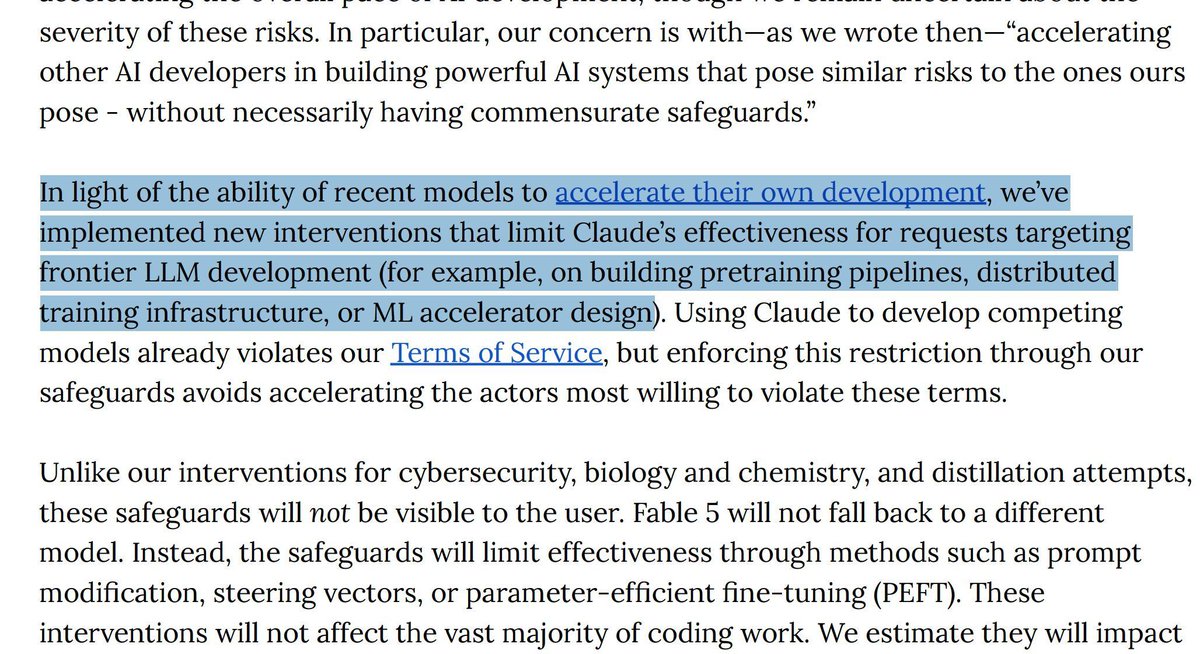
BREAKING NEWS: Anthropic's latest model will NOT help you if it thinks your ML research/ML engineering is interesting, and/or will secretly degrade its IQ so that the average engineer won't notice. We are already seeing Anthropic's latest model's moderation filters our GPU inference research and programming 😭
206
520
4,575
1,990,920
Bassem Asseh retweeted

Jun 10
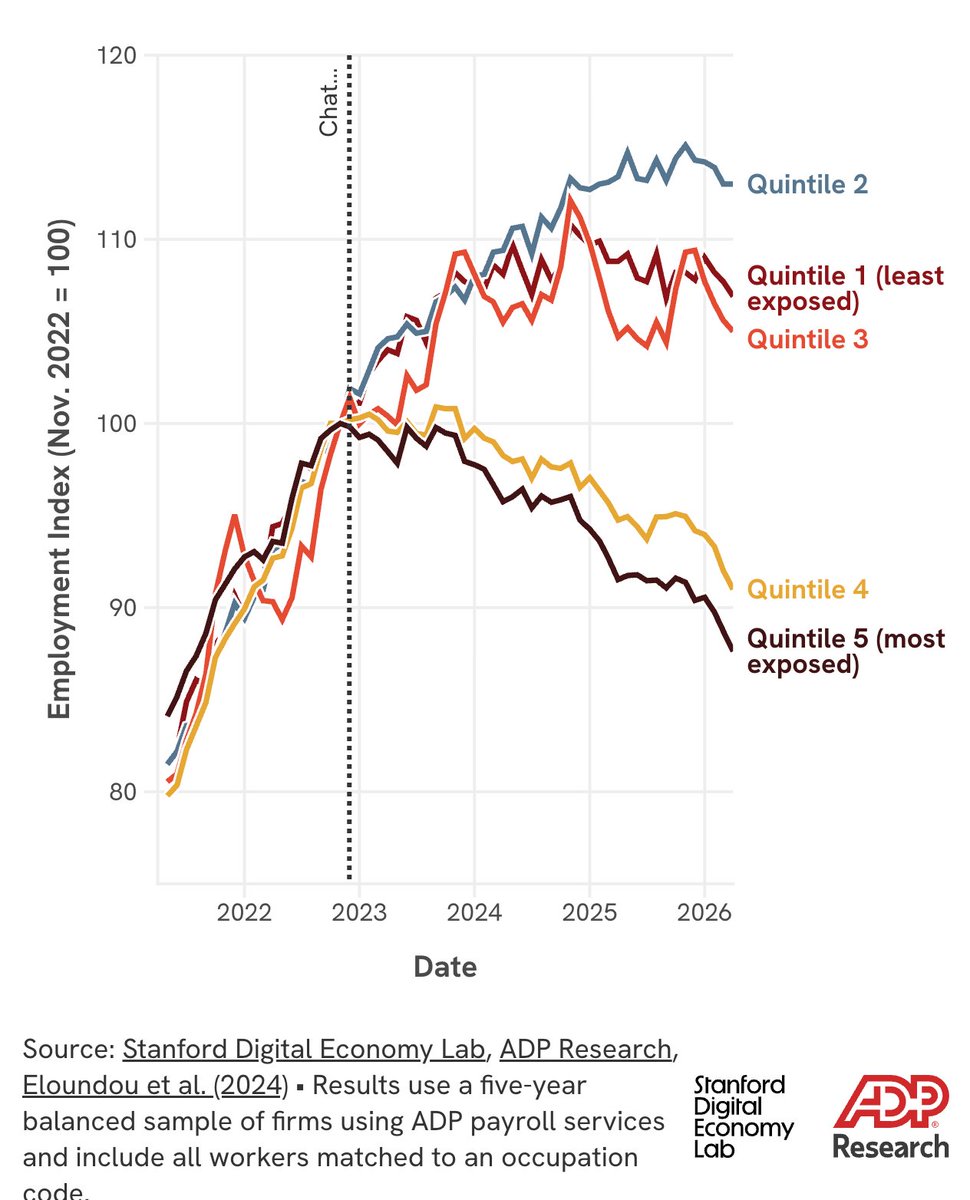
Today, the Stanford @DigEconLab launches the AI Economic Indicators, a new platform for tracking how AI is reshaping work, productivity, adoption, and the economy.
1/6
35
305
1,003
241,164
Jun 10
What a day ! Amazing meetings in London 🇬🇧
And it’s only the beginning of that side of the story 🚀
1
1
42
Bassem Asseh retweeted

Jun 5
Token costs are why there will be no saas apocalypse / good dev tools are cached intelligence for agents!
The popular theory goes: agents can write code, so they'll just rebuild every tool from scratch and hit raw APIs. no more dev tools, no more CLIs, no more software layers. just agents and endpoints!
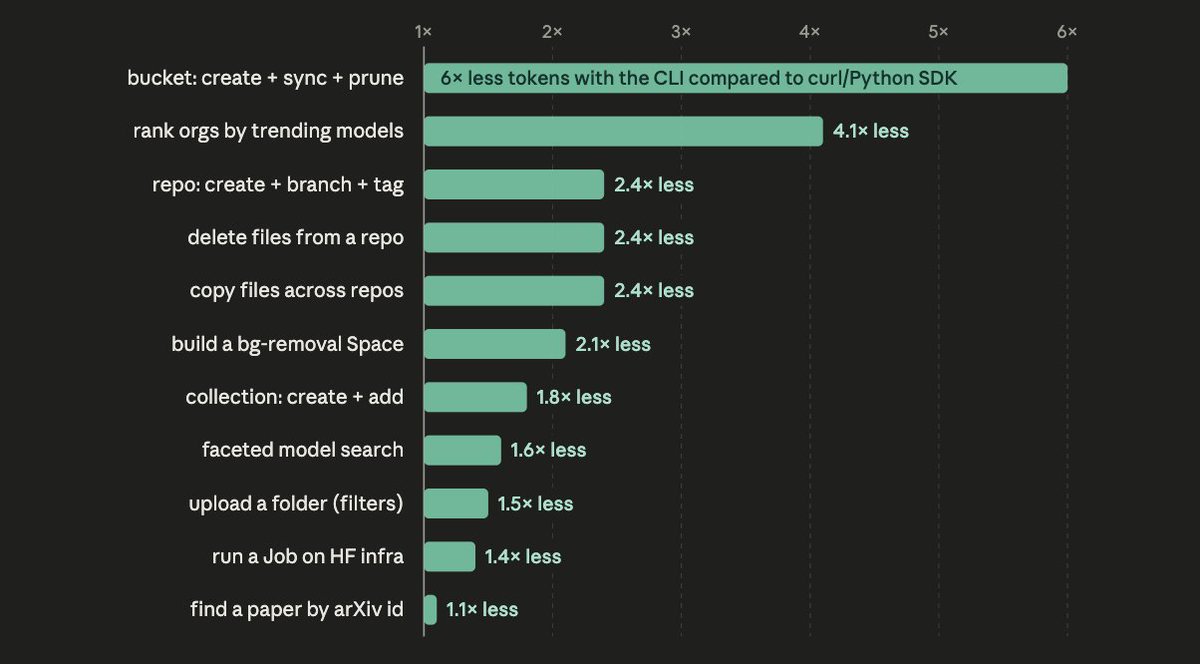
We just tested this and the data says the opposite. We benchmarked Claude Code and Codex on real Hugging Face Hub tasks (~1,000 graded runs), with two setups: the agent-optimized hf CLI vs the agent hand-rolling curl or SDK calls from scratch.
Hand-rolling burns up to 6x more tokens on multi-step tasks and fails more often (84% vs 94% task success).
And that's just dropping one abstraction layer. It would obviously be orders of magnitude more tokens and a dramatically higher failure rate if the agent tried to bypass HF altogether and rebuild model hosting, versioning, and distribution from scratch. Every time an agent re-derives a workflow from raw API calls, you pay for that reasoning in tokens. every single run. a good CLI compresses that entire chain into a few high-level commands the agent can't get wrong.
In a world where everyone is complaining tokens are too expensive, abstraction is leverage: thousands of hours of design decisions your agent doesn't have to re-reason about at inference time.
Good tools are cached intelligence for agents!
So no, agents won't rebuild everything from scratch. they'll gravitate to the most token-efficient tools, because that's what their owners pay for. The software that survives won't just be accessible to agents, it will be accurate and cheap for them to drive.
We're seeing it happen with HF, which is becoming the platform for agents to use AI: ~49M requests in just two months, and growing fast!
huggingface.co/blog/hf-cli-f…
95
94
544
115,101
Bassem Asseh retweeted

Jun 6
Attention is all you need.

1
1
9
872

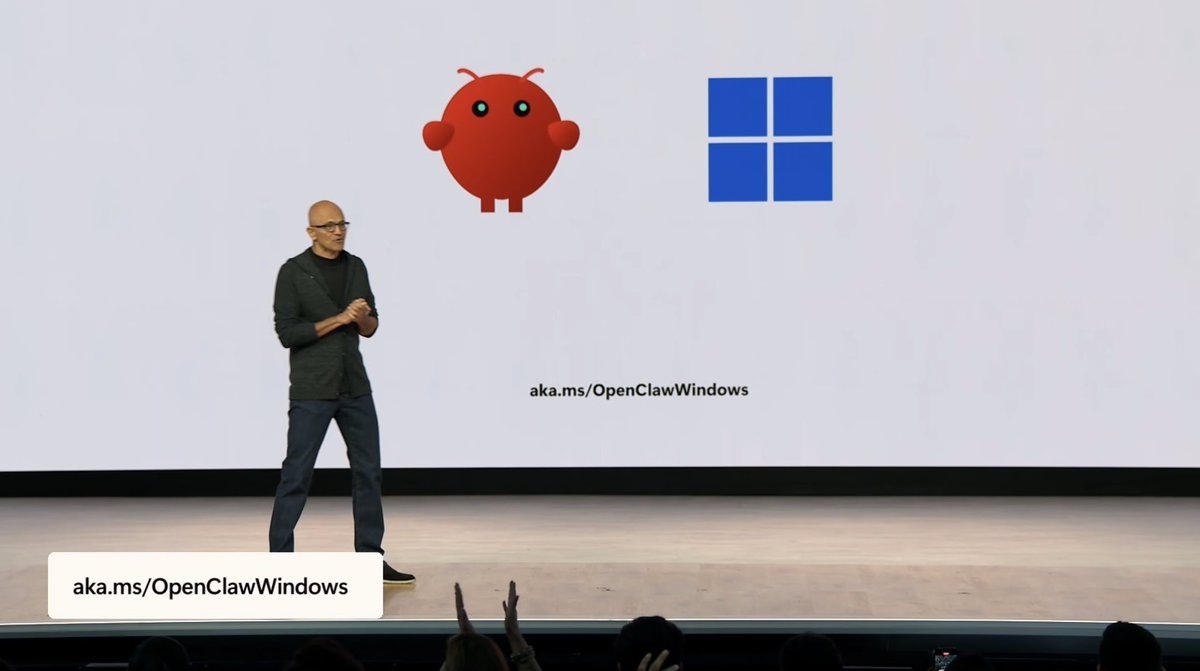
"You can run OpenClaw inside your company now." Annoucing our work with @Microsoft to bring OpenClaw to the Microsoft and Windows ecosystems. Claws now work securly in the enterprise.
375
745
5,658
3,288,823
Bassem Asseh retweeted
Jun 2
Automatic behind the scene routing in user interfaces (instead of model picker) will redistribute value capture and usage towards many more models than just frontier ones (especially towards open-source/smaller/cheaper ones). Because it removes the cognitive load for the final user to have to switch models (which is too high leading to defaulting to frontier for all calls with model picker) cc @antonosika @bgurley
Jun 2

Introducing model routing to Factory.
Factory Router picks the right model for every task, automatically.
Maintain frontier performance while cutting costs by 25%.
15
17
160
23,417
Bassem Asseh retweeted

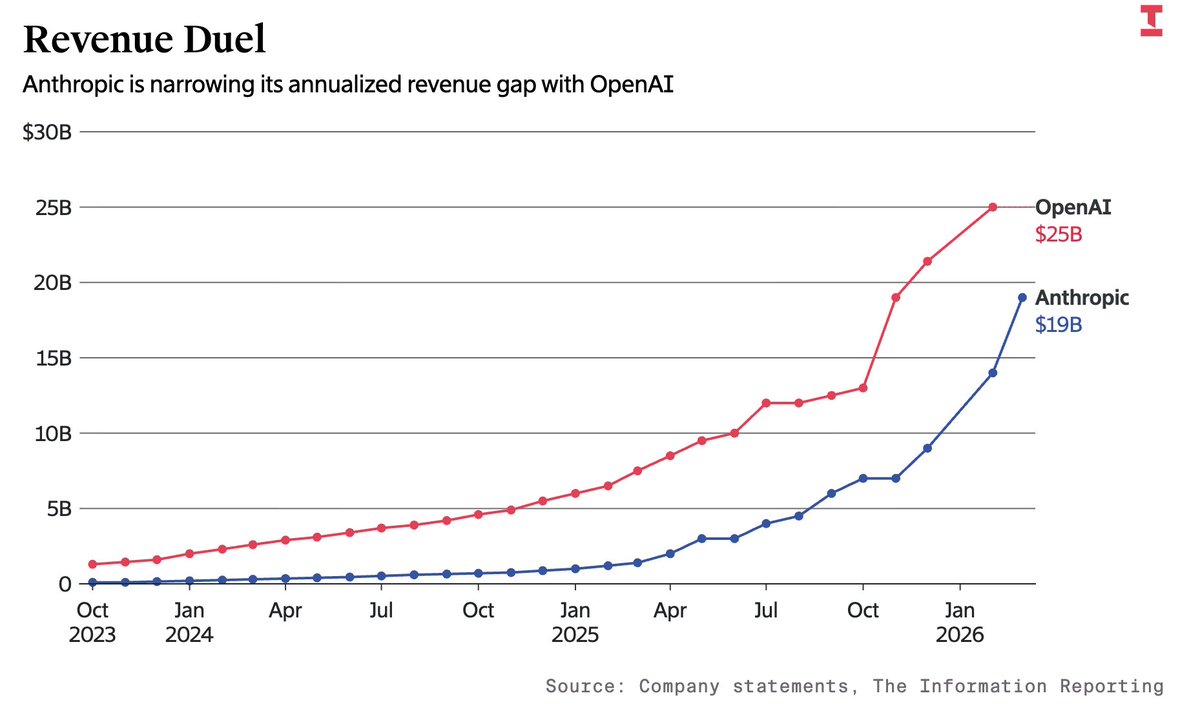
Anthropic’s journey to an IPO presents one of the most remarkable—and capital-intensive—financial trajectories in modern Silicon Valley history.
We've been covering Anthropic's private financials—and how they compare to OpenAI—for years. 🧵
3
9
44
7,066
Bassem Asseh retweeted

Jun 1
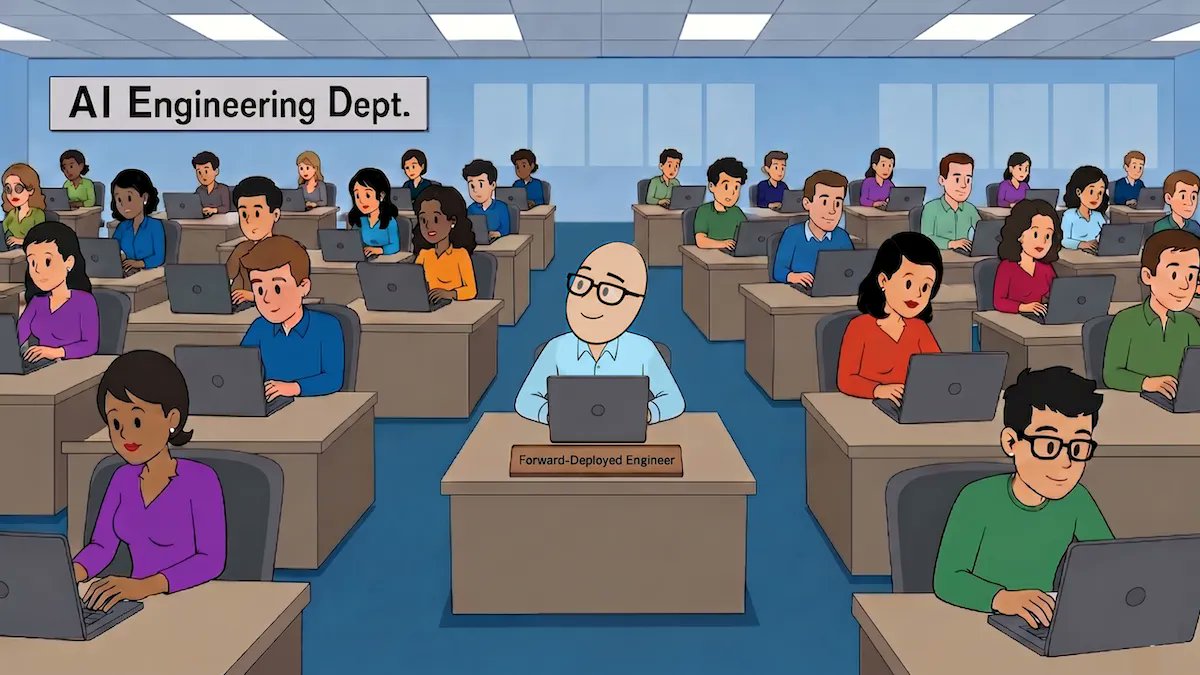
One of the new, buzzy jobs in Silicon Valley is the AI Forward Deployed Engineer (FDE), an engineer who is embedded within a client organization to help customize solutions, such as building and tuning agentic workflows that suit the client’s particular needs. I’ve heard from people who are wondering anew about the FDE career path since OpenAI and Anthropic started building new teams to place FDEs within client organizations.
The rise of FDEs for AI workloads is one way AI is creating new jobs (and why the jobpolcalypse narrative of upcoming job market collapse is false -- there will be many AI and non-AI jobs). However, I believe there will be far more AI Engineer jobs than FDEs, as I explain below.
The FDE role was pioneered about two decades ago by Palantir, which sent engineers to government locations to work on secure, air-gapped networks. In addition to having good technical skills, FDEs need communication skills and sometimes business skills. For example, they may need to speak with clients to understand their needs, formulate a strategy to prioritize projects, explain complex technology, and respectfully push back if a client asks for something unrealistic. They’re enjoying a resurgence because of the amount of work involved in taking an off-the-shelf LLM and building it into a custom agentic workflow that fits particular business needs.
However, I believe the number of AI Engineer jobs will be far larger. A company might accept a few FDEs to be embedded within its organization. But most companies will want far more of their own employees working on their projects. While my organizations do hire FDEs, we hire far more AI Engineers! Also, a common client concern is that it is hard to find vendor-neutral FDEs — they are, after all, there to deeply integrate a particular vendor’s product into a company. In this moment when it’s hard to predict which AI service will be the best one in a year’s time, optionality (the ability to pick whatever vendor turns out to fit best in the future) is very valuable. In contrast, letting FDEs tightly bind a company’s processes significantly reduces optionality.
Right now, I see surging demand for AI Engineers who can build software applications using AI software components (like LLM prompting, agentic frameworks, evals, etc.) and effectively use AI coding agents (like Claude Code, Codex, Antigravity CLI, and OpenCode). As the AI Engineer role matures, I expect it to fragment into more specialized roles, like the generic Software Engineer role from decades ago fragmented into frontend, backend, mobile, data engineering, devops, and so on.
What will be the future, specialized AI engineering roles? I don’t know. Perhaps there will be AI FDEs, LLMOps Engineers, Evals Engineers, AI Data Engineers, Harness Engineers, and other roles we don’t have names for yet. But for now, I see a lot of AI engineers who are generalists create a lot of value. Skilled AI Engineers are in very high demand! As our field continues to mature over the coming decade, I look forward to new specializations within AI Engineering that create even more job opportunities.
[Original text: The Batch newsletter]
318
730
4,473
549,428
Bassem Asseh retweeted

Jun 1
I find debates over whether companies find AI useful to be odd at this point
I talk to leadership teams at lots of big firms, and it is pretty universal that they are getting obvious and real value. The challenges now are going from individual uses to firm-level & how to scale.
60
43
450
34,669
Bassem Asseh retweeted
Jun 2
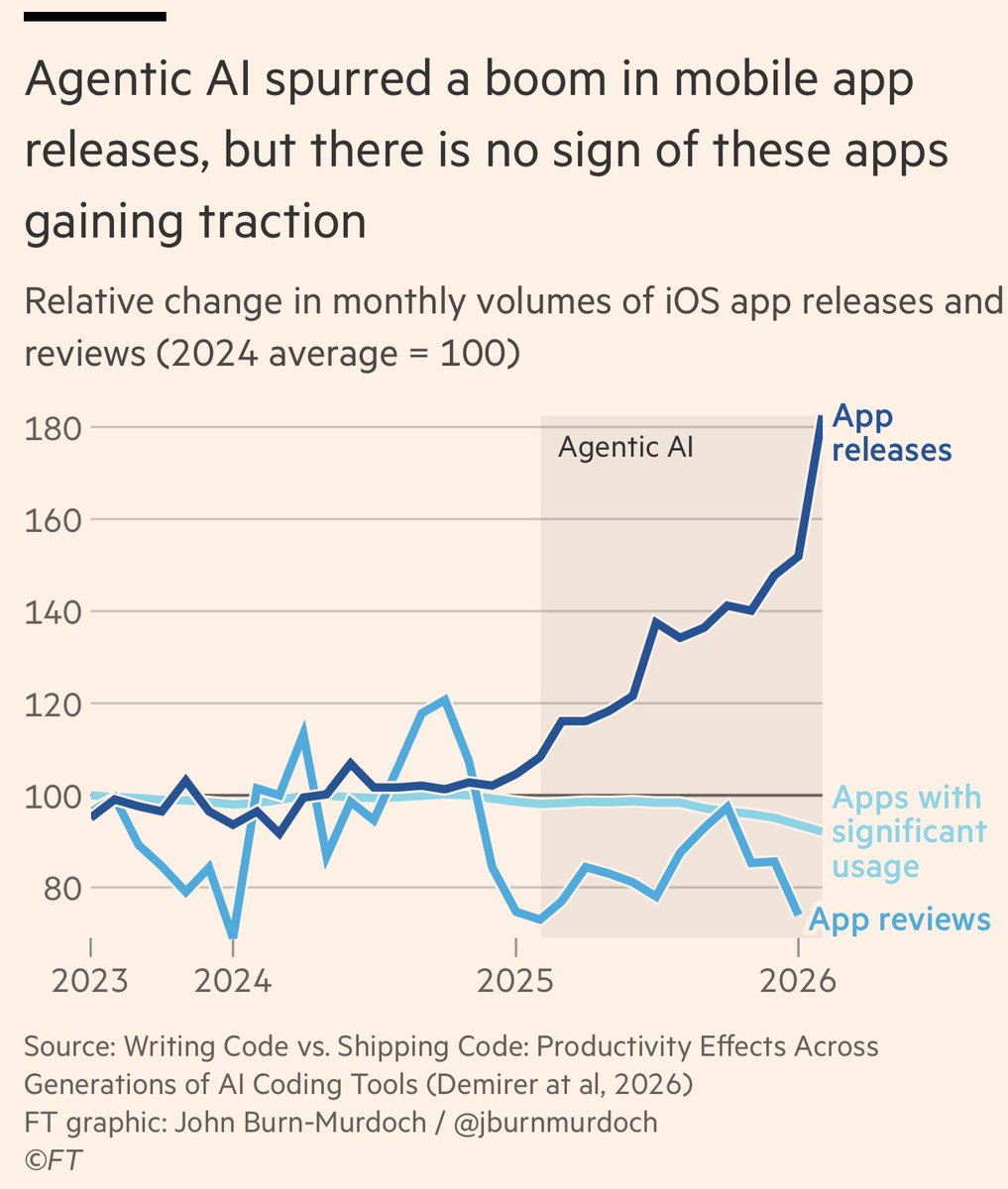
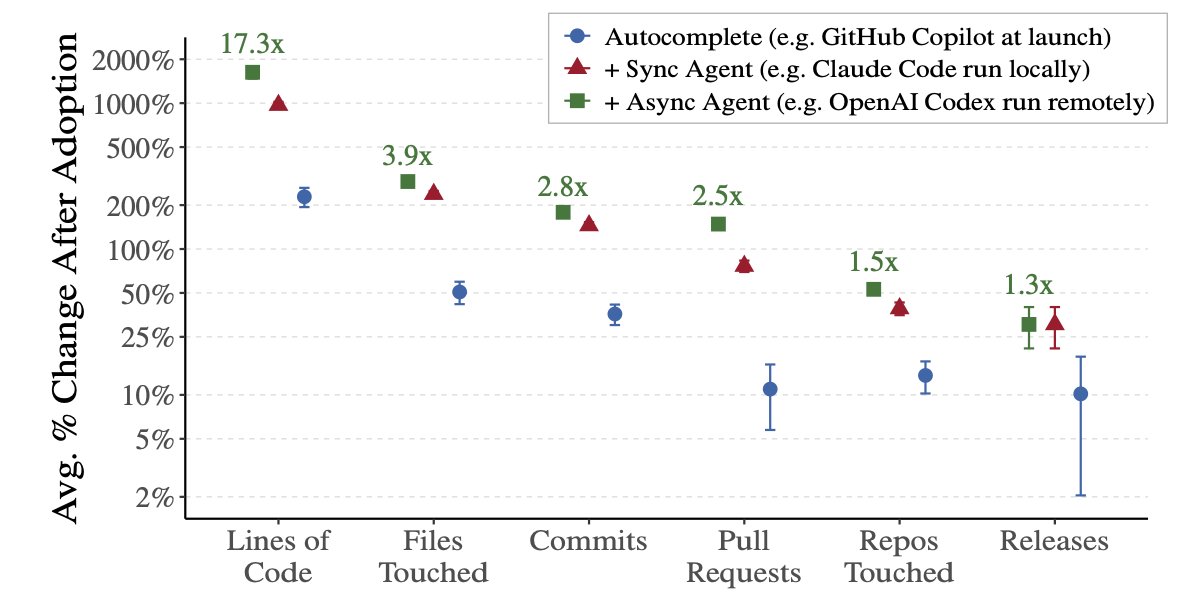
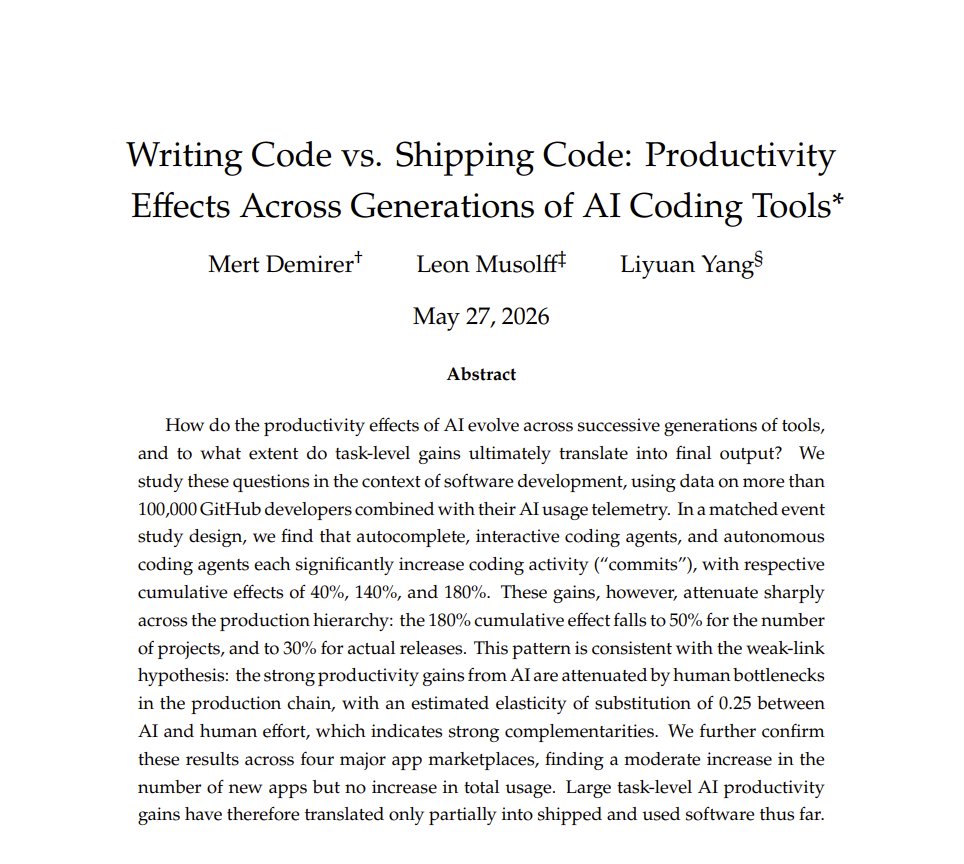
Big paper on AI coding agents using Github & other data
The auto-complete tools (Copilot) led to 2.2x more code, local agents like original Claude Code led to 7.4x, & current remote coding agents 17.3x(!)
But human bottlenecks in coding means actual releases "only" went up 30%
62
45
343
34,803