
Security researcher at Intel. Proud dad & husband. Loves hacking & building. PhD in systems security from @vu5ec. keybase.io/bengnl
Joined July 2007
- Tweets 14,424
- Following 1,298
- Followers 2,039
- Likes 73,775
179 Photos and videos









Ben Gras retweeted

Absolutely amazing news. Wow!
May 31

This is not simply a new pancreatic cancer drug.
It is a reminder that even “undruggable” biology can become treatable with persistence.
Daraxonrasib doubled median OS vs chemotherapy in RAS G12 metastatic pancreatic cancer: 13.2 vs 6.6 months.
A remarkable ASCO moment.
#ASCO26
@DrChoueiri @TiansterZhang @CathyEngMD @montypal @tompowles1 @brian_rini @cdanicas @GlopesMd @PGrivasMDPhD @nataliagandur @yekeduz_emre @neerajaiims @ASCO @ONCOassist @OpenMedicineHQ @MedwatchKate @scserendipity1 @CParkMD @urotoday @OncLive @crisbergerot @urologysummit @SuyogCancer @Larvol @IMG_Oncologists
1
6
18
2,861
Ben Gras retweeted

May 29
I'm thinking of doing an in-depth Python summer camp? (online live workshop, in English). If you're potentially interested, please add your email to the list: hackArcana.com/summer-python… (it's just so I can measure interest and have a way to let you know once more info is up).
2
4
1,776
Ben Gras retweeted

May 27
Just hit 500,000 Subscribers!
I never could have imagined (what really is my weekend hobby!) growing this much.
Getting really close to overflowing a signed 20 bit word!
There’s still so, so much to explore in the field of Computer Science. My biggest advice is go make the content that would have inspired a younger you!
No, it’s not my dayjob. As much as I get a kick out of people thinking that I’m some giant private equity production (lol), it’s just me, my small bedroom, and some cameras.
Thanks everyone for the support, I’m excited to keep sharing this field with you all.
Until next time,
LaurieWired out.

101
41
1,868
42,106
Ben Gras retweeted

Still thinking about submitting to the RF Village CFP for #DEFCON34?
You have two weeks left. The deadline is June 9.
More info: forms.gle/BKMgZ1xFdtKiFzK58
#RFVillage
11
15
2,582
Ben Gras retweeted

De les van de geblokkeerde Amerikaanse overname van DigiD-beheerder Solvinity: de Verenigde Staten worden niet langer automatisch gezien als een bevriende natie…
9
15
99
8,157
Ben Gras retweeted

May 25
(I'm firmly on team red/green TDD for agent code, I like having a test suite that protects against them breaking old features when they make new changes - simonwillison.net/guides/age…)
35
14
128
14,668
Ben Gras retweeted
May 23
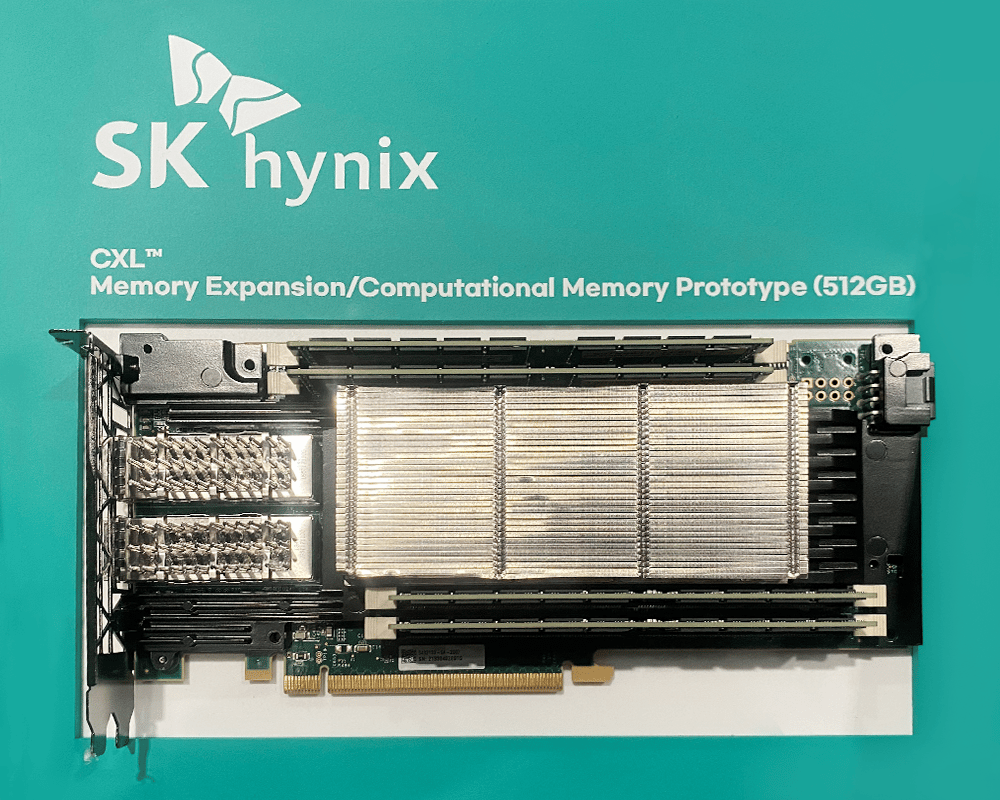
I just can’t get over how neat CXL type 3 is.
Imagine having a 1TB bucket of memory.
But! Instead of 1TB of DDR5, you have a tiered CXL accelerator. To the OS, it *looks* like regular memory, you address it in the same way.
Maybe your accelerator is actually 100GB of DDR5, and ~1TB of high bandwidth flash. The first 100GB is your buffer, and a little controller slowly flushes it out.
Many, many workloads are not hammering RAM enough for you to notice.
Wait! You could get even more clever.
With regular memory, bouncing cachelines between CPU cores is annoying. Often, you’ll program your way around this (avoiding a shared counter) by having each thread maintain a temporary local state with occasional global syncs.
But, if we have a custom CXL 3 memory device, that slow global merge could be implemented in hardware instead. You’d never have to have cores fight over the same cacheline, because the shared-counter would be local to the CXL device!
Aka, a remote atomic!
This is essentially the concept of NDP (near-data processing), and of course there are much, much more fancy algorithms you can do with it, that’s just one example. But you can imagine, especially with database-style operations, how much bandwidth you could save not having to round-trip to the CPU and back for every operation.
Imagine if your RAM could run a regex for you! We’re getting really close to that world.

49
112
1,615
125,036
Ben Gras retweeted

May 13
Of course, you need contact with reality. While this project has elements of philosophy, it's not ungrounded. It's a functioning artifact that can run and train the latest models at decent speed on a huge variety of hardware without vendor code in sub 25k lines of pure Python.
2
1
82
8,591
Ben Gras retweeted

May 13
@adcock_brett
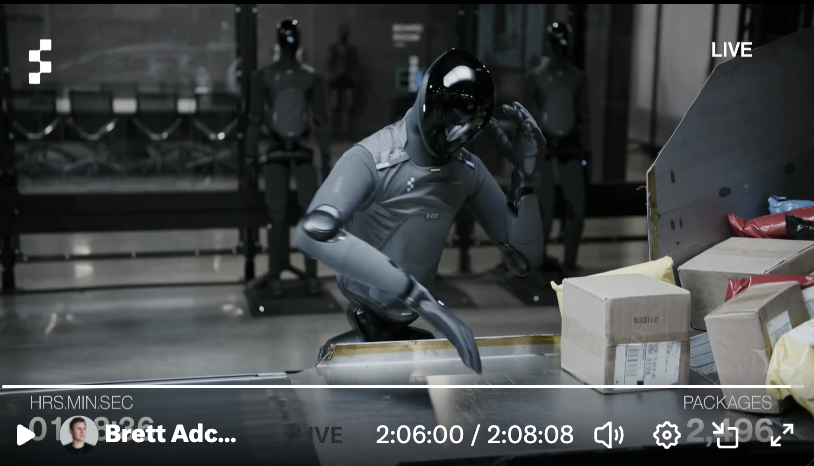
Why did the robot touch it's own head for several seconds?
82
16
3,171
195,774
Ben Gras retweeted

May 5
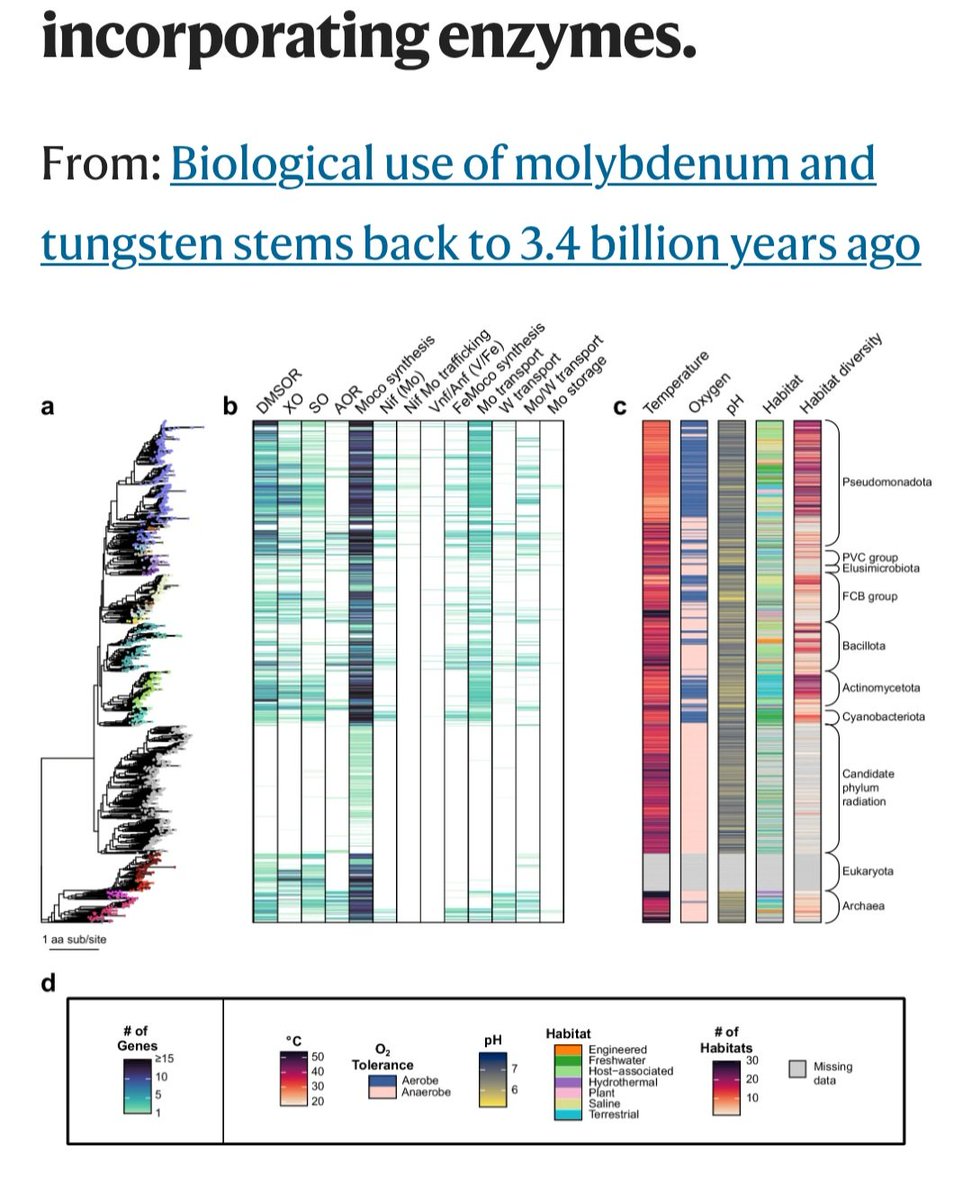
This is a big finding imo. 3.4B years ago is the start.
Rare earth metals were necessary for the formation of life—not just oceans and an abundance of organic molecules, etc.

3
5
43
2,285
Ben Gras retweeted

Apr 26
🚨Nominations for the 2026 Pwnie Awards are now open!
Best bug? Worst Bug? Incredible research? Cataclysmic fuckups that knocked over half the internet?
You know who deserves a Pwnie this year! Let us know!
🏇🏇🏇🏇🏇
tally.so/r/441Aro
2
11
26
5,247
Ben Gras retweeted

Apr 26
Riding the FM station! Will have to add some avionics.
3
6
89
6,402
Ben Gras retweeted

Apr 25
$GOOGL winning bets
Apr 25

somewhere inside Google there's a team that beat every top VC firm on the planet
Google put $3B into Anthropic in 2023.
now it’s worth $112B.
Their $1B SpaceX bet from 2015
now worth $107B.

1
2
9
2,004
Ben Gras retweeted

Apr 20
It’s so clear that AI will change the world – Just look at how it’s changed the writing rule of 3¹.
What used to be naturally pleasing is now immediately annoying, irritating and suspicious..
__
¹ en.wikipedia.org/wiki/Rule_o…
1
4
30
5,843
Ben Gras retweeted
Apr 15
We're hiring from the pool of tinygrad contributors. Hybrid in-person/remote, offices in San Diego and Hong Kong. In the era of slop, come help build something beautiful.

19
11
551
26,486
Ben Gras retweeted

Apr 14
CRITICAL: if you are running Mosaic 2.4 on a VAX/VMS system, please be aware of this RCE that GPT-5.4 just found and exploited!
84
172
1,413
139,960
Ben Gras retweeted
Apr 1
If you are serious about this, preorder today. Without a preorder the lead times will be longer and prices will be higher. I bet everyone wishes they bought 40 tinybox pro 2s ($2.4M) like @comma_ai when the RAM and GPU price was reasonable. blog.comma.ai/datacenter/#di…
2
1
67
10,680