
reporter @punchbowlnews covering tax and trade
Joined November 2017
- Tweets 319
- Following 1,828
- Followers 1,534
- Likes 1,118
35 Photos and videos












Catherine Leffert retweeted

Jun 13
Tax news: The Senate Finance Committee called off a markup on the Crapo-Wyden tax admin package planned for next week, per multiple sources familiar w/ the situation
It’s no longer expected in June
Finance top Dem Wyden & committee Dems demanded a vote on an amendment blocking Trump’s IRS audit immunity deal, per sources. Finance R’s decided to cancel, only wanting a markup if it was going to be fully bipartisan
11
17
4,603
Catherine Leffert retweeted

Jun 12
Three things had to line up for the stewards to overturn this.
1. The rule never says the timing system is the final word. The speeding rule (Article B1.6.3a) just says there's a speed limit, 60 km/h at Monaco. It doesn't say "speed as measured by the official timing system". Compare the false start rule (B5.11.1), which spells out exactly which system decides whether you jumped the start. Because the speeding rule names no source, the only question the stewards had to answer was: was the car actually going faster than 60? Not: did the screen say so.
2. The timekeeper proved its own number wrong. Pit lane speed is calculated as distance divided by time, and the official distance for that zone was 77 cm too long, because the barriers moved this year and opened a shorter line. The timekeeper found this itself with a laser scan after the race. Redo the maths with the correct distance and Gasly was doing 58.7 and 58.8 km/h. Under the limit, both times. The stewards actually rejected all of Alpine's own evidence; what convinced them was the official system contradicting itself.
3. The penalty could still be undone. Gasly never served his penalties during the race they were added to his finishing time afterwards, and that's the only kind the stewards have the power to erase. A penalty served at a pit stop is gone forever; nobody can give you back time you spent stationary. Alpine then filed for a review within the 96-hour deadline (Article 14 of the Sporting Code), with the new evidence the rules require. They were the only team that did.
That's why Gasly got his podium back and the other four drivers caught by the same faulty zone got nothing: all three conditions held for him, and only him.

BREAKING: Pierre Gasly has been reinstated into P3 for the Monaco Grand Prix
The Stewards have rescinded the two five-second penalties imposed on Pierre Gasly during the race for speeding in the pit lane
#F1

99
653
6,487
664,848
Catherine Leffert retweeted

.@SenSchumer on Clayton: “Doesn't matter what else they do, Pulte’s got to be gone. He's still in that role.”
1
20
62
18,193
Catherine Leffert retweeted

Jun 11
Speaker Mike Johnson says “what would be the point” of bringing back the House during recess to vote on FISA again.
7
12
38
35,524
Catherine Leffert retweeted

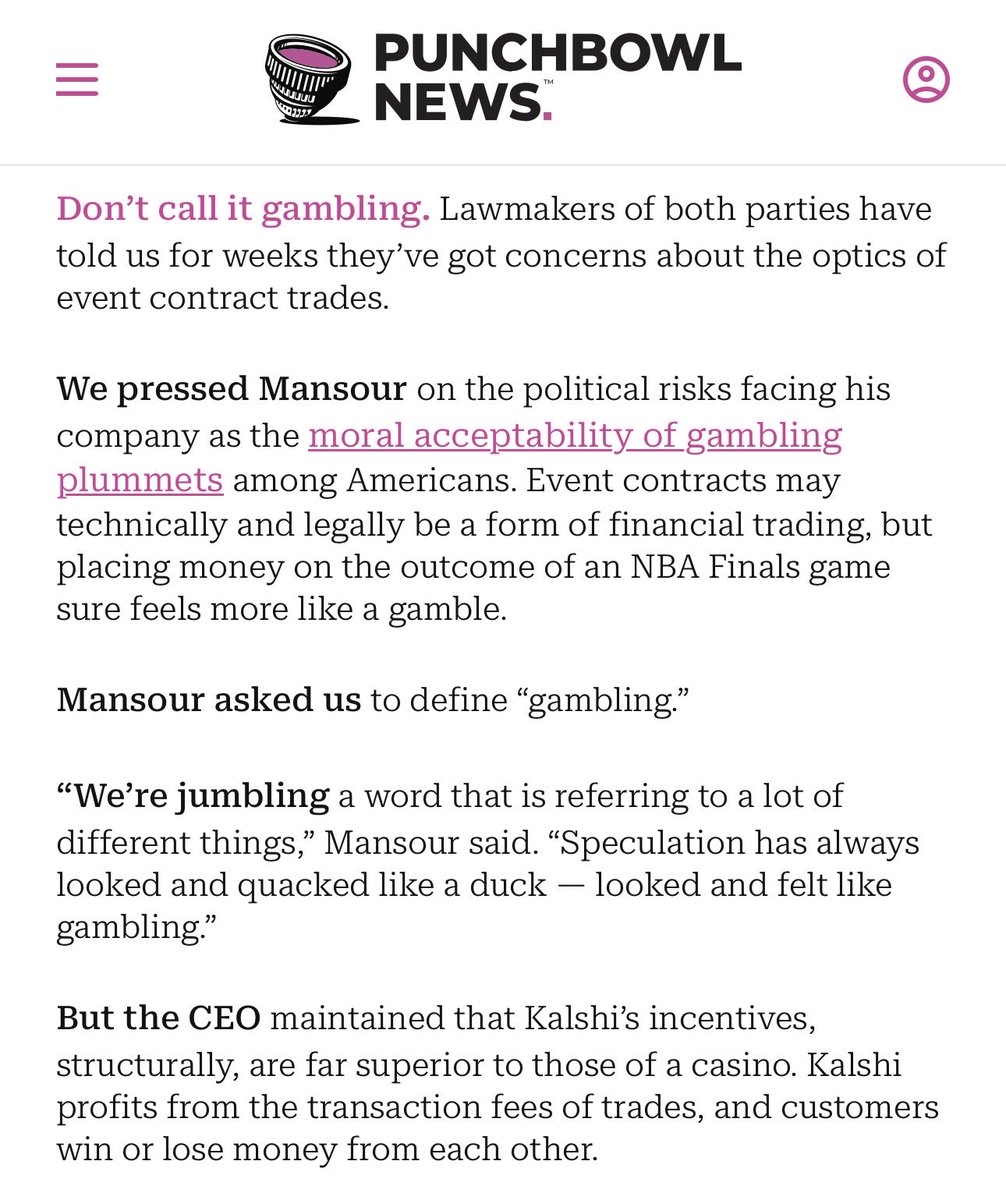
This week, I interviewed Kalshi CEO @mansourtarek_ to talk Washington and prediction markets. It was a lively conversation!
Jun 11

From 🏦 Vault Quarterly: With lawmakers turning their eyes on prediction markets, we sat down with Kalshi CEO Tarek Mansour to talk about the company's Washington strategy, political risks and thoughts on a major rulemaking effort launched just this week to set initial guardrails.
The details from @BrendanPedersen: punchbowl.news/article/vault…

1
4
13
5,039
Catherine Leffert retweeted

Jun 10
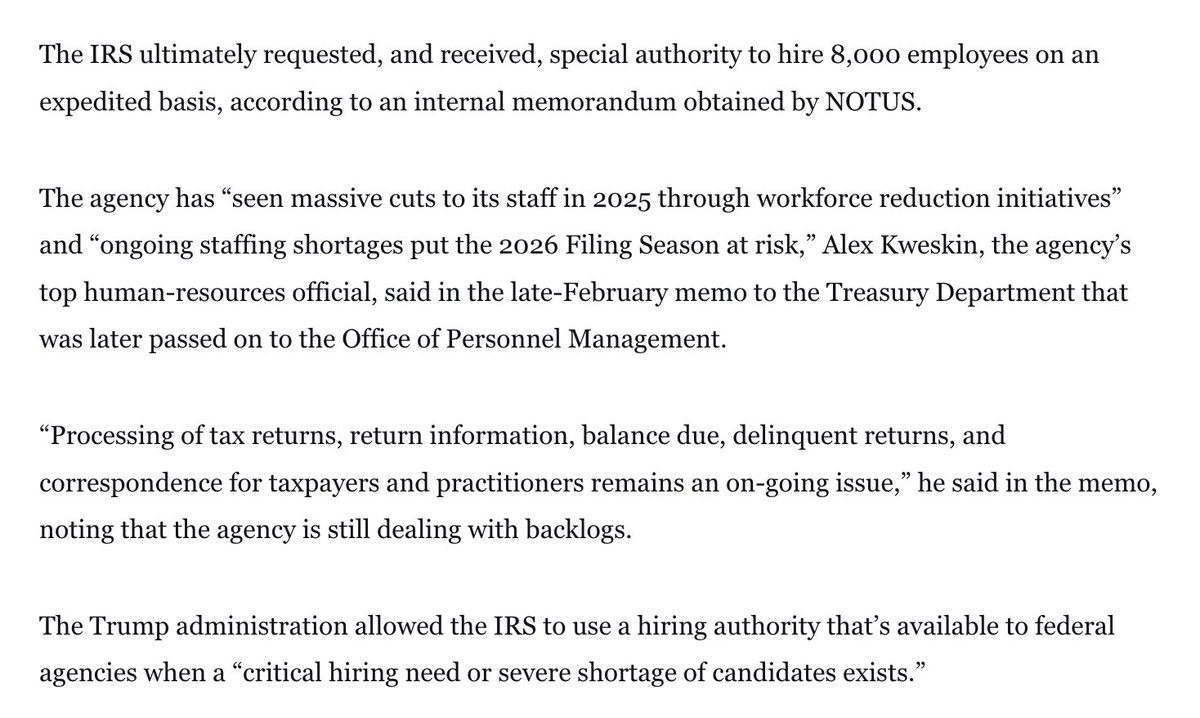
🚨🚨🚨an internal memo obtained by @EricM_Katz shows the IRS has received special permission to expedite hiring 8,000 employees after getting rid of 28,000 last year
8
106
291
39,250
Catherine Leffert retweeted
Jun 10
Speaker Mike Johnson says Bill Pulte is serving in a “very short-term, sort of a renovation role” to help reform and downsize ODNI rather than serving in an intelligence capacity, and that the President is still deciding on someone permanent for DNI.
5
11
6,820
Catherine Leffert retweeted
Jun 10
ICYMI - news from @ccleffert: @RepBrendanBoyle is working on a bill to crack down on pro sports teams moving across state lines
He’s reached out to W&M Chair @RepJasonSmith about it ahead of Smith’s sports tax hearing coming up 👀
MORE from PM Vault - punchbowl.news/article/vault…
1
7
6
5,010
Catherine Leffert retweeted
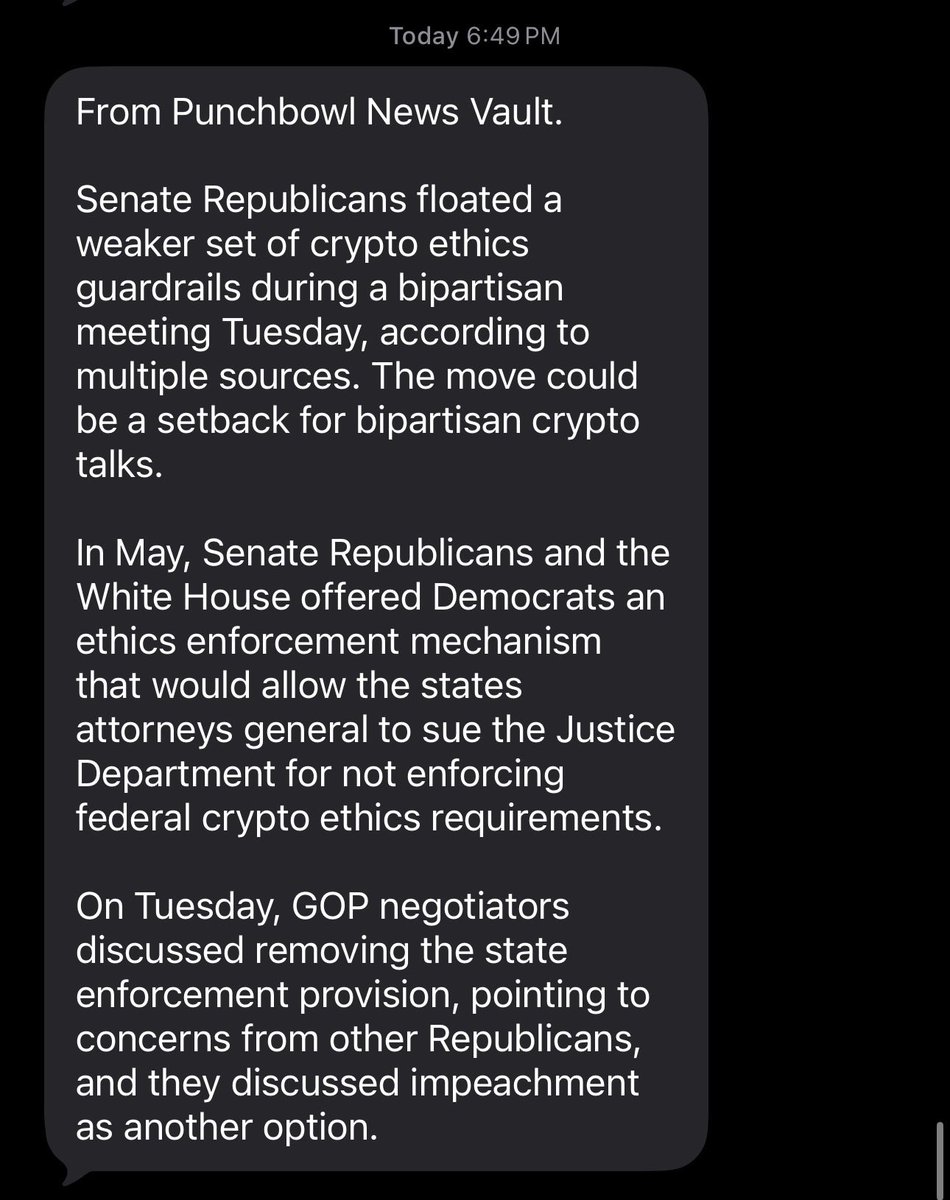
NEWS in PBN texts: Senate GOP floated a weaker set of crypto ethics guardrails during a bipartisan meeting today
Senate GOP-WH earlier offered Democrats an ethics mechanism that would allow the states attorneys general to sue the DOJ for ethics lapses. That was walked back today
3
13
30
22,126
Catherine Leffert retweeted
Bad sign for W&M Republicans on crypto tax:

Ways and Means Ranking Member Richie Neal (D-Mass.) says that he doesn’t see the committee nailing down a bipartisan crypto tax bill before elections, ahead of the hearing today.
“There’s talk of bipartisanship on a lot of things. There's not a lot of action on bipartisanship.”
1
7
11
9,560

Ways and Means Ranking Member Richie Neal (D-Mass.) says that he doesn’t see the committee nailing down a bipartisan crypto tax bill before elections, ahead of the hearing today.
“There’s talk of bipartisanship on a lot of things. There's not a lot of action on bipartisanship.”
4
7
12,100
W&M also released a discussion draft for an amendment from Rep. Horsford — the most vocal Dem on crypto tax — addressing his concerns, including how to treat rewards from staking and mining. Text in comments
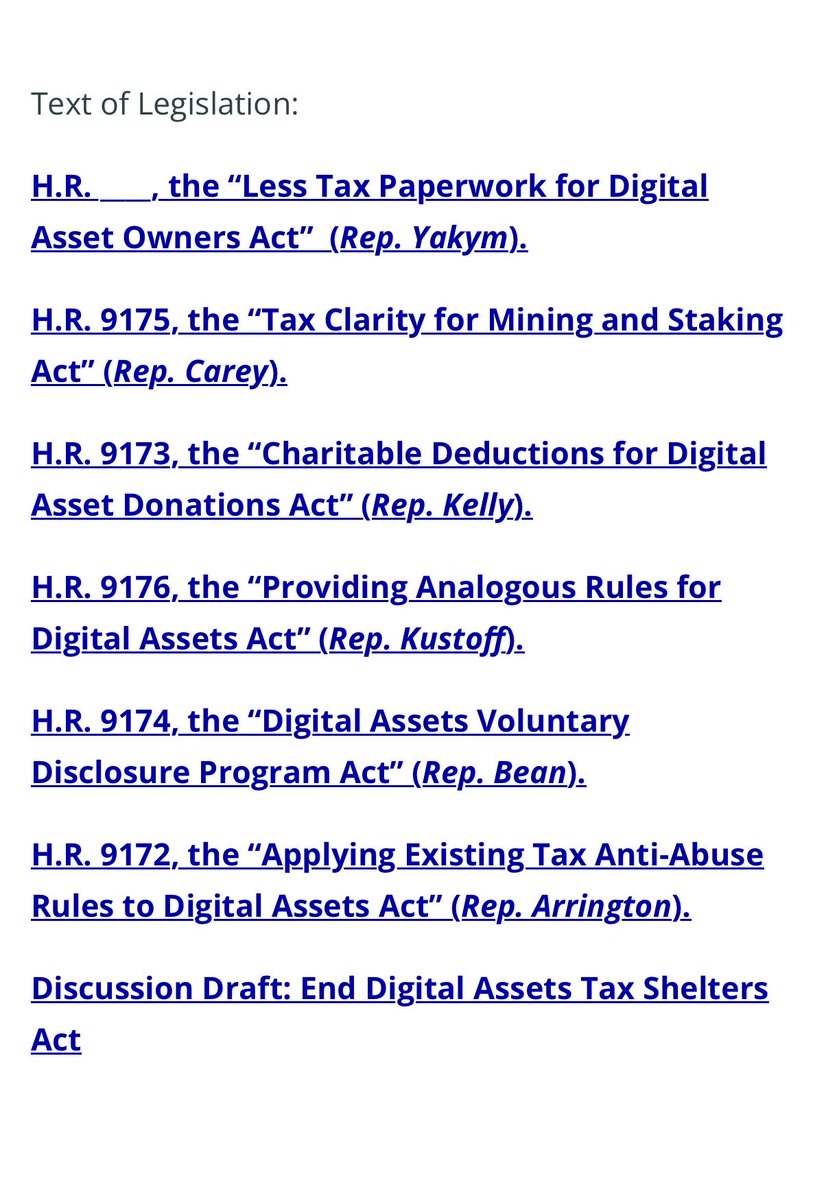
Crypto tax update: Ways and Means has posted six bills and a discussion draft ahead of tomorrow’s hearing. Each bill is led by a different Republican. Discussion draft covers concerns about tax evasion w/crypto tax in Puerto Rico, an issue Dems have shown interest in.
1
6
9
31,732
The text: punchbowl.news/amendment-to-…
Our story earlier today: punchbowl.news/article/finan…
1
1
2,310
Catherine Leffert retweeted
👀 Not on this list: GOP Rep. Max Miller, who proposed his own crypto tax package w/ Dem Reps. Horsford & DelBene and GOP Rep. Carey
Crypto tax update: Ways and Means has posted six bills and a discussion draft ahead of tomorrow’s hearing. Each bill is led by a different Republican. Discussion draft covers concerns about tax evasion w/crypto tax in Puerto Rico, an issue Dems have shown interest in.
3
3
4,491
Crypto tax update: Ways and Means has posted six bills and a discussion draft ahead of tomorrow’s hearing. Each bill is led by a different Republican. Discussion draft covers concerns about tax evasion w/crypto tax in Puerto Rico, an issue Dems have shown interest in.
1
8
8
39,594
Catherine Leffert retweeted
News from @PunchbowlNews Vault: Rep. HORSFORD is refusing to support any of W&M R's crypto tax bills until GOP tax writers agree to changes, per internal email we obtained
Horsford aide told W&M Dem offices in the email he has "severe concerns" w/ how R bills treat validation rewards & charitable giving
Horsford is also working w/ W&M R's to address his problems w/ the proposals ahead of tomorrow's hearing. Horsford's concerns underscore that even the most crypto friendly W&M Dems will want a lot of say if they're going to do a bipartisan package. Underscores W&M not there right now
Vault text subscribers got the news first AND a one-pager on concerns Horsford aide attached to the email
5
14
6,928
Catherine Leffert retweeted
I’m so excited to announce that today is my first day as a reporter at Punchbowl News! I’m joining the team to cover House Republicans.
Let’s grab a coffee! DM me here or reach me on Signal emm.33
17
24
209
98,102
Catherine Leffert retweeted

Jun 5
ICYMI from yesterday
@LauraEWeiss16 got the scoop on seven crypto tax bills Ways and Means Republicans dropped ahead of the hearing next week!!
Biiig news for tax crypto

NEWS: Seven discussion drafts for crypto tax bills are circulating among Ways & Means offices
W&M R's are planning to drop proposals before next week's crypto tax hearing
! @PunchbowlNews Vault subscribers have the draft text. Includes proposals on treatment of mining/staking, lending agreements w/ digital assets, wash sale & constructive sale rules, charitable contributions and MORE
7
9
7,331
Catherine Leffert retweeted

Before they write clauses, they eat clawses.
Jun 4

Amid all the drama, it’s Lobster Day in the Senate
Susan Collins is hosting lunch, and plastic bibs with an image of a lobster on it are draped over each seat in the room where Republicans are about to eat
2
2
16
6,285