
Finance and Digital Assets Policy/Regulation | Partner @Thorn_Run| | former Policy @CeloOrg @ilpaorg & @smallbusinesspe|
Joined February 2009
- Tweets 1,067
- Following 1,311
- Followers 610
- Likes 1,180
55 Photos and videos


Pinned Tweet

Jun 9
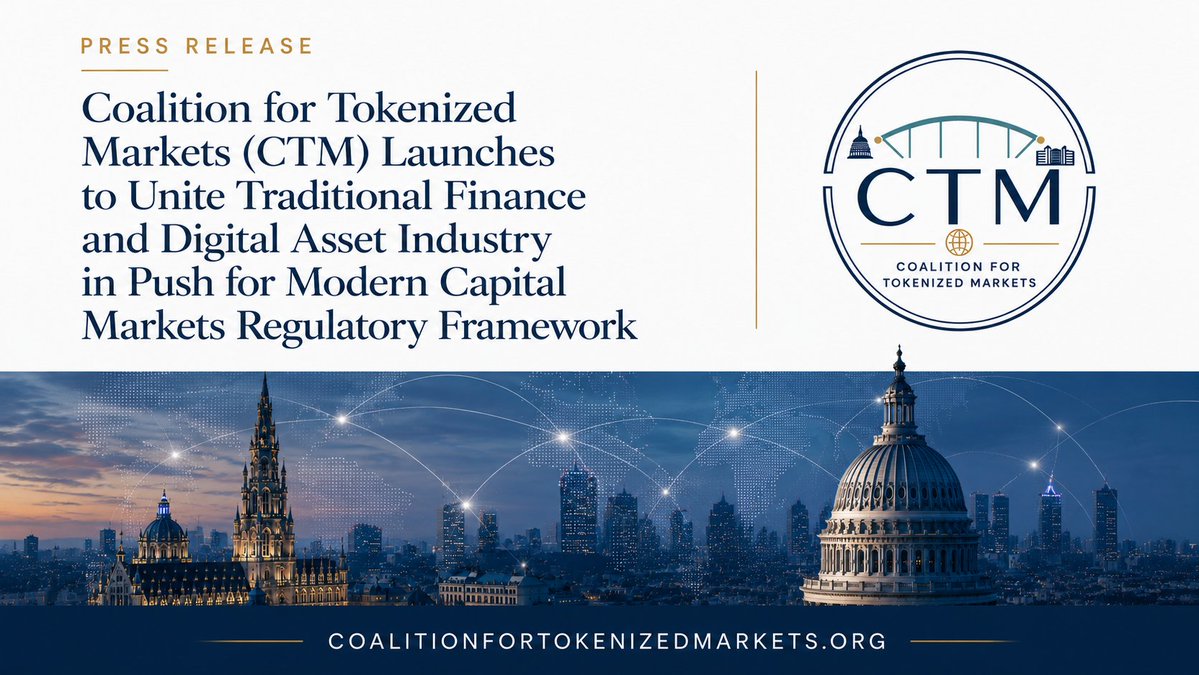
Excited to launch and lead the Coalition for Tokenized Markets (CTM) — a new targeted, transatlantic industry coalition focused on advancing policy and regulatory clarity for tokenized securities and funds in the U.S. and Europe. #tokenization #blockchain #DLT #funds

Today, we officially launched the Coalition for Tokenized Markets (CTM).
Founding members: @WisdomTreeFunds , @JHIAdvisors, @JPMorganAM, and @FTI_US.
Read the launch announcement and learn more about CTM: coalitionfortokenizedmarkets…
5
386


May 21
Some helpful additional information on the proposed #SEC Innovation Exemption:
May 21

I appreciate the interest in--but not the hyperbole about--the contemplated innovation exemption for the onchain trading of tokenized NMS stock. Keep in mind: I've always expected that it'd be limited in scope & would facilitate trading only of digital representations of the same underlying equity security that an investor could purchase in the secondary market today, not synthetics.
2
123
Chris Hayes retweeted

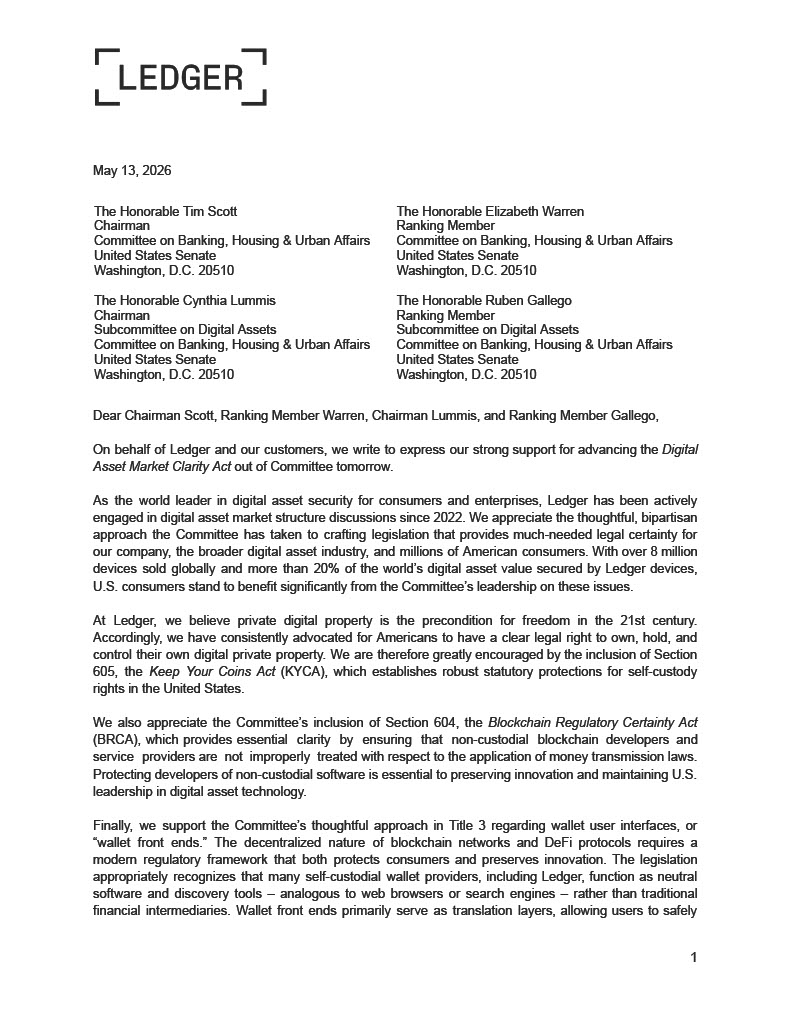
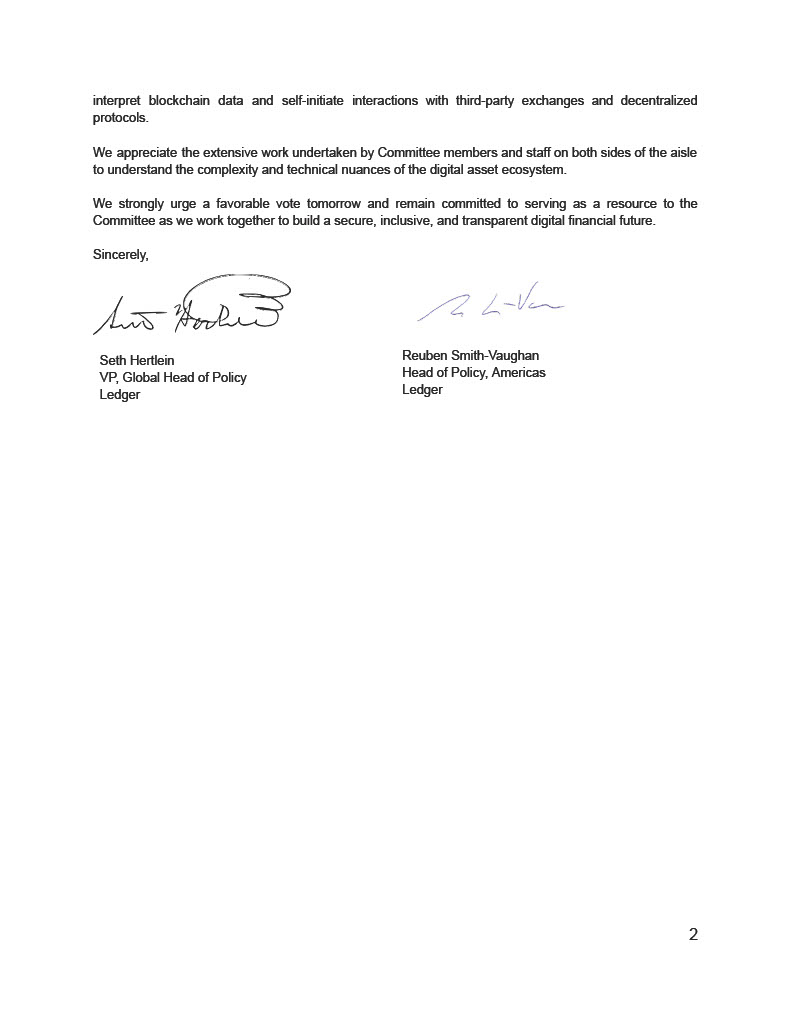
Ahead of the @BankingGOP/@SenateBanking markup this morning of the Digital Asset Market Clarity Act, @Ledger's letter expressing our strong support for advancing the bill out of the Committee.
1
2
275
May 10
Super insightful commentary on the #crypto industry at the moment.
May 10

Just got back from @consensus2026 Miami. Some unfiltered thoughts on the vibes:
The industry has clearly grown up. The degens are gone, the allocators are wearing suits, and your @Uniswap booth has been replaced by a JP Morgan activation with 50 year old boomers. Cautiously optimistic with a distinctly institutional aftertaste. This was not a bull market conference.
Key takeaways:
1) CLARITY Act has serious momentum. Everyone at the conference basically agrees it's getting done before summer. The urgency is real, people are done waiting. And the regulatory window feels genuinely unprecedented: CLARITY Act, GENIUS Act, a CFTC chair actively engaging with the industry, this combination has never existed simultaneously before. The institutional urgency you're seeing everywhere is directly correlated to this window feeling time-limited. Miss it and you're explaining to your board why you sat on your hands during the most favorable crypto regulatory environment in history.
2) Institutions are not dabbling anymore. They are ALL IN on tokenization and terrified of missing it. No one is debating whether blockchain rails are useful. The debate is now who gets the mandate. And quietly @coinbase , @krakenfx , @RobinhoodApp and @Bullish and others are being seen more as competitors than potential partners by a lot of these TradFi players.
3) TradFi M&A is going to keep ripping. @krakenfx just grabbed Reap for $600M. Visa, Mastercard, Swift etc they can't miss the train and they're willing to overpay for the ticket.
4) Crypto VC is consolidating fast. @a16z and @katie_haun just announced $2.2B and $1B funds respectively. Meanwhile the boutique VCs are either pivoting to AI or quietly closing shop. Same playbook is happenign as traditional VC, the big platforms eat everything and the small guys scramble. Seed and pre-seed is basically a ghost town right now. Late stage and pre-IPO is where the action is.
5) Investment themes were aggressively consensus (no pun intended): Stablecoins, tokenization, vertically integrated neo-banks, regulated or permissioned DeFi. Literally everyone is trying to be a tokenization platform. Issuance, management, settlement, curation, pick your lane, slap tokenization on it, try to raise money.
6) Building in crypto is genuinely hard now. Your competition isn't some scrappy new L1 or GMX, it's @tether , @Anchorage , and @Securitize. there are now many crypto businesses running 200M annual Rev with serious management teams and deep pockets. The barbarians are now the establishment. New entrants are going to have a very bad time.
7) Pure token-only plays have become extremely contrarian. Controversial take but I think the biggest returns will come from a handful of tokens that can credibly signal in a compliant way that the token remains the only value accruing asset going forward.
8) A lot of teams are in a genuinely weird spot on the token/equity dynamics. Decent products, decent teams, but a complete stakeholder clusterf*** that nobody can untangle. Many of these will simply not survive.
9) The agentic finance and agentic commerce crowd was loud. The actual substance was not. A lot of big claims, very little to show for it. Feels very early and mostly vibes. Color me skeptical for now.
10) @Bullish acquiring Equinity for $4.2B was the boldest move of the conference. @ThomasFarley and @BonannoDavid now have a full-stack RWA proposition: issuance, transfer agency, tokenization, exchange and settlement under one roof. Massive move. Very positive for the industry regardless of whether you think the price or the move were right.
11) @BitMNR and @fundstrat are apparently tired of winning and has decided to let your grandma keep her ETH... for now. The pace of accumulation is slowing. Tom, we await your next allocation with bated breath.
12) DeFi apps are moving up the stack and getting smarter about it. They don't want to be the commodity infrastructure layer getting squeezed by exchanges that own distribution. Some genuinely interesting announcements, @buffalu__ at @jito_sol launching JTX being the highlight.
13) Nobody at the conference was talking about retail coming back. The entire conversation was institutional. That's either a sign of maturity or a sign that the industry has quietly given up on mainstream consumer adoption for now and is betting the next cycle gets pulled by institutional flows rather than retail FOMO. Probably both.
14) The L1 debate is officially dead. Nobody and I mean nobody was arguing SOL vs ETH or pitching their shiny new L1. The crowd that used to religiously defend their chain of choice has either grown up, cashed out, or both. Institutions don't care about your consensus mechanism. They care about settlement finality, compliance rails and liquidity. The L1 wars were fun while they lasted. RIP.
15) DATs are a mess. Had some genuinely productive conversations with a few of them but let's be honest most are an absolute clusterf*** operationally and very few are running anything resembling a legitimate business. The structure is a disaster at the stakeholder level and the governance makes your average startup cap table look clean. That said, the permanent capital vehicle concept is still genuinely compelling and I think a handful of these will turn out to be absolute home runs. The model isn't broken, most of the teams just are.
Bottom line: Consensus 2026 felt like the moment crypto stopped being a movement and started being an industry. Whether that's exciting or depressing probably depends on when you got in.
2
96
Chris Hayes retweeted

.@Sen_Alsobrooks and I have worked on a bipartisan basis with all stakeholders to address the banking industry’s concerns about deposit flight. They have had a seat at the table and have been directly sharing their feedback and ideas for months to inform the final product. We have worked in good faith with all sides throughout this process to encourage compromise and to avoid letting the perfect become the enemy of the good.
The result is a substantially improved, consensus-based product. Our compromise prohibits stablecoin rewards from resembling interest on bank deposits, our core concern over deposit flight.
Our compromise also allows crypto companies to offer other forms of customer rewards. Most importantly, it helps put us on a bipartisan path to pass the CLARITY Act, providing the regulatory certainty needed to foster innovation. Some in the banking industry may not want either of these things to happen, and we respectfully agree to disagree.

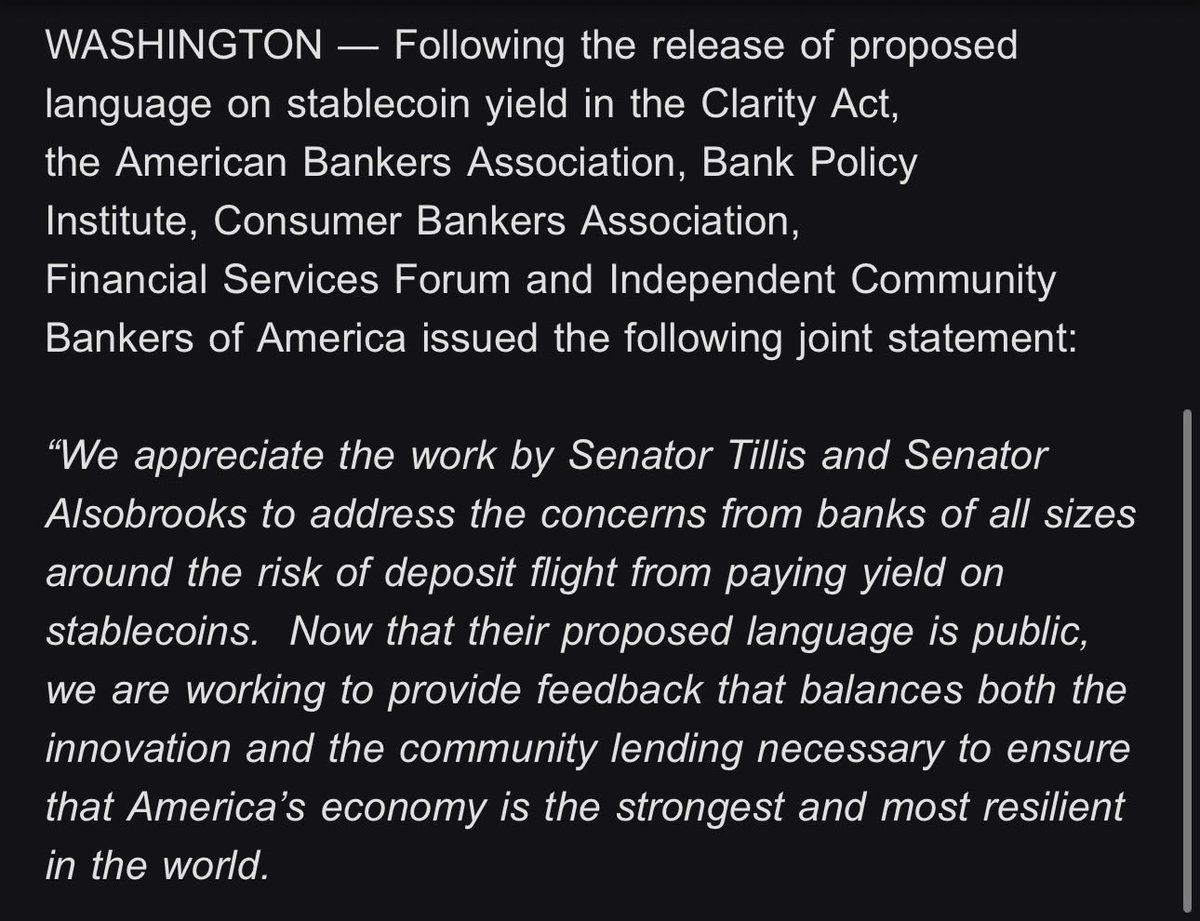
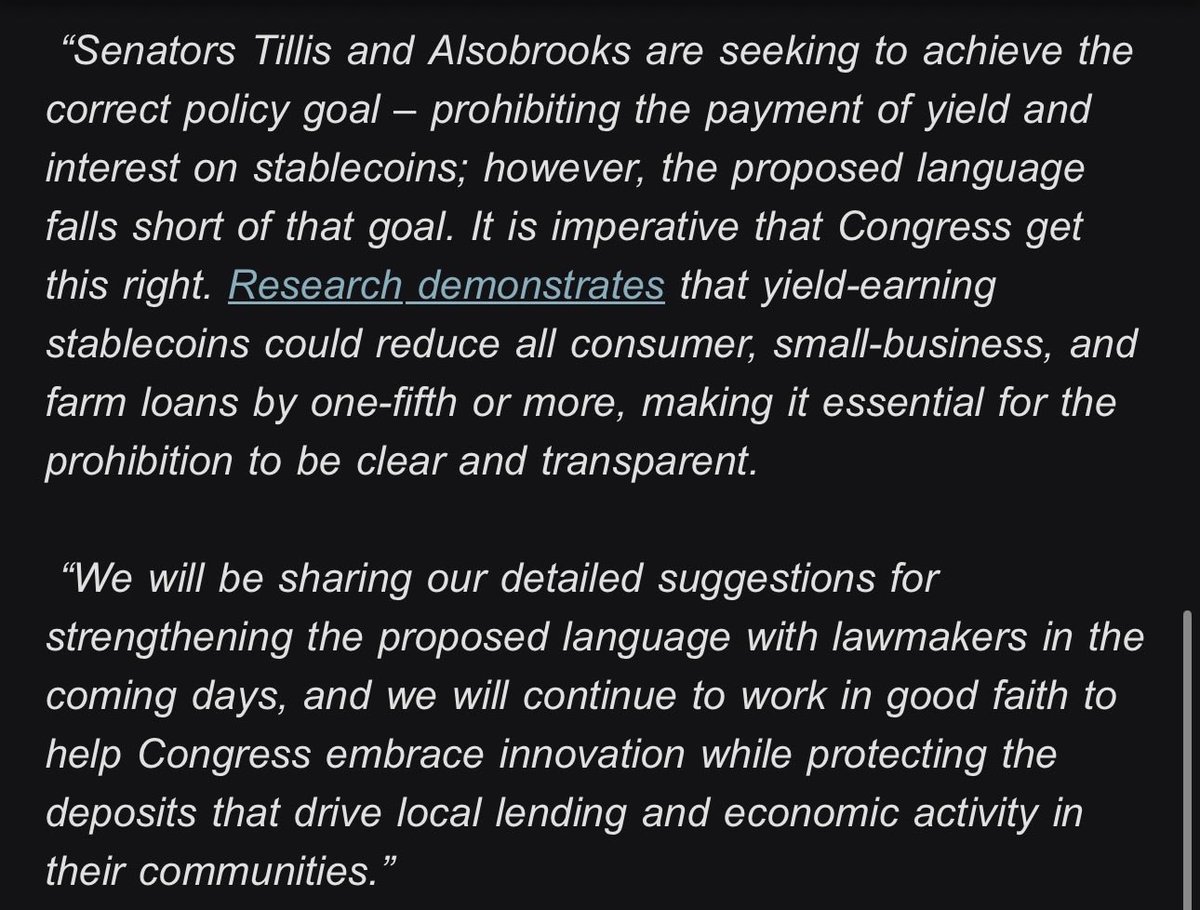
News: Banking groups released a statement Monday criticizing a compromise on stablecoin yield from Sens. Thom Tillis (R-N.C.) and Angela Alsobrooks (D-Md.), saying it "falls short" of protecting bank deposits.
233
245
1,255
144,553
Chris Hayes retweeted

May 4
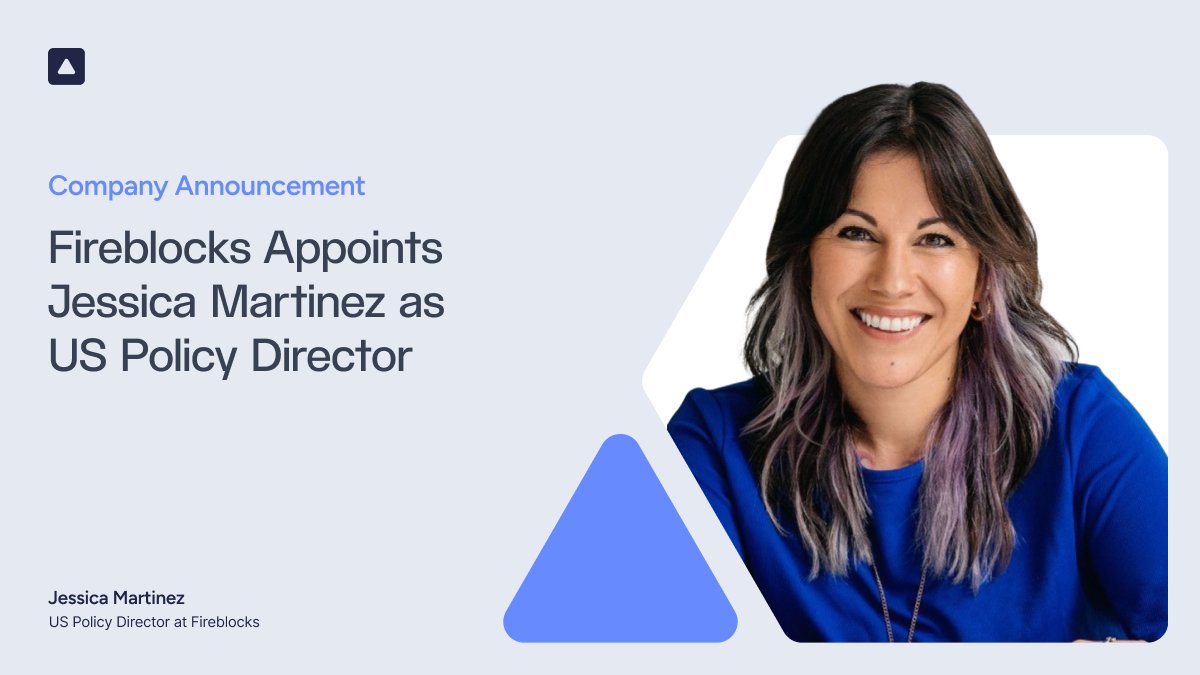
Jessica Martinez spent the last year helping pass the GENIUS Act. Now she's joining Fireblocks as US Policy Director.
The work of turning legislation into infrastructure is just beginning. We're glad to have her leading that effort.
Welcome, Jessica. → fblks.co/news-jessica-martin…
2
2
19
2,308
Chris Hayes retweeted

Apr 27
Self-custody must be protected. The United States was founded on the principle of private property, and the seizure of assets is something we must guard against. At the @CFTC, that means protecting Americans’ ability to hold and control their own digital assets.
34
73
401
48,035
Chris Hayes retweeted

Apr 12
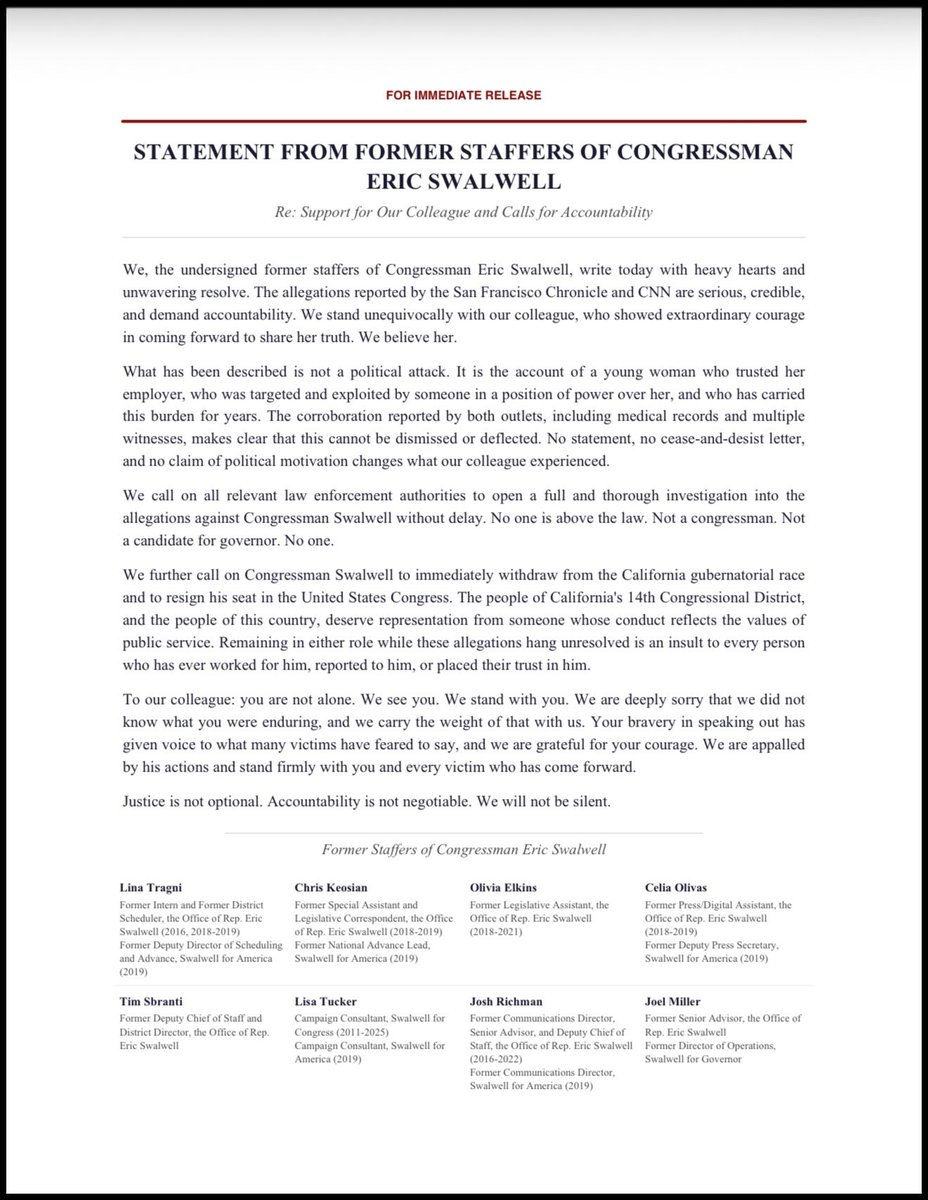
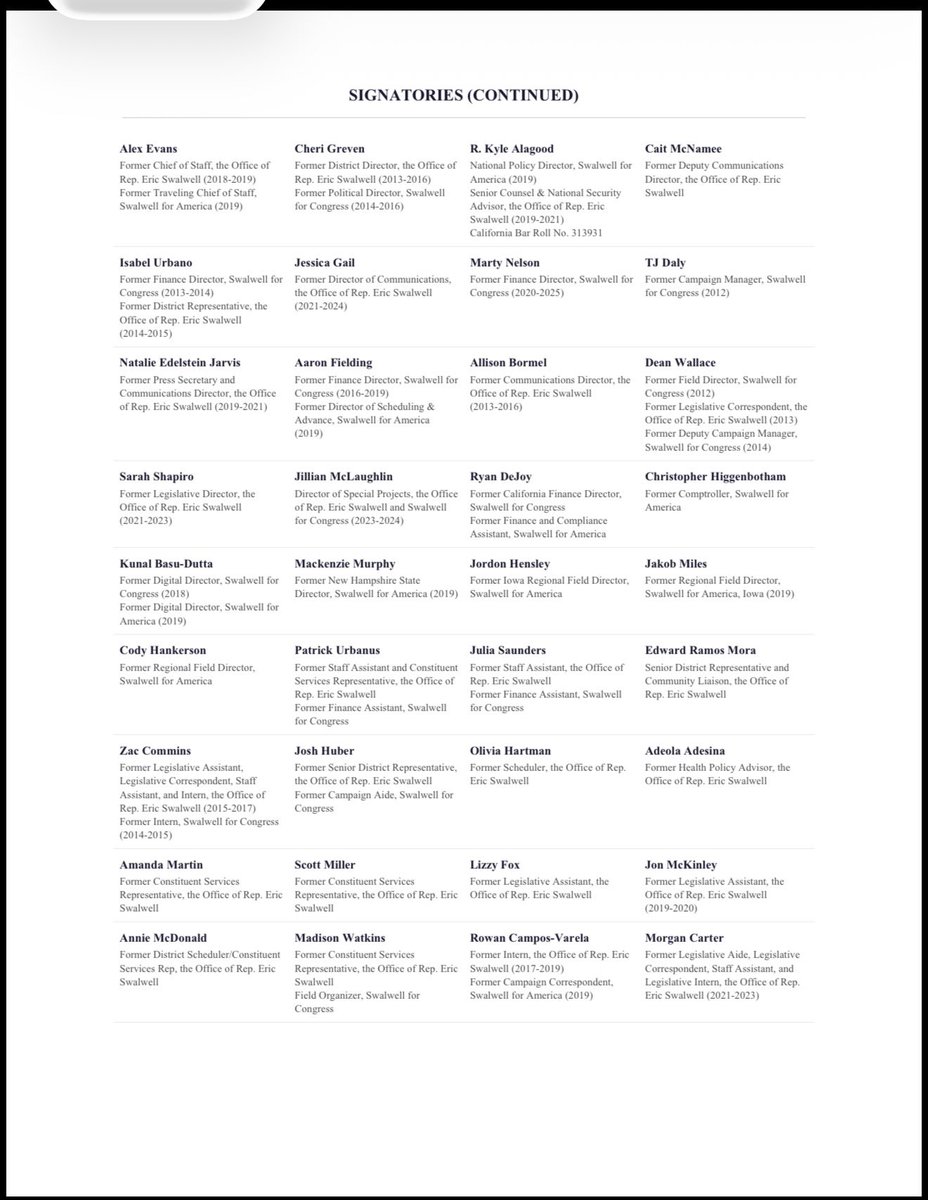
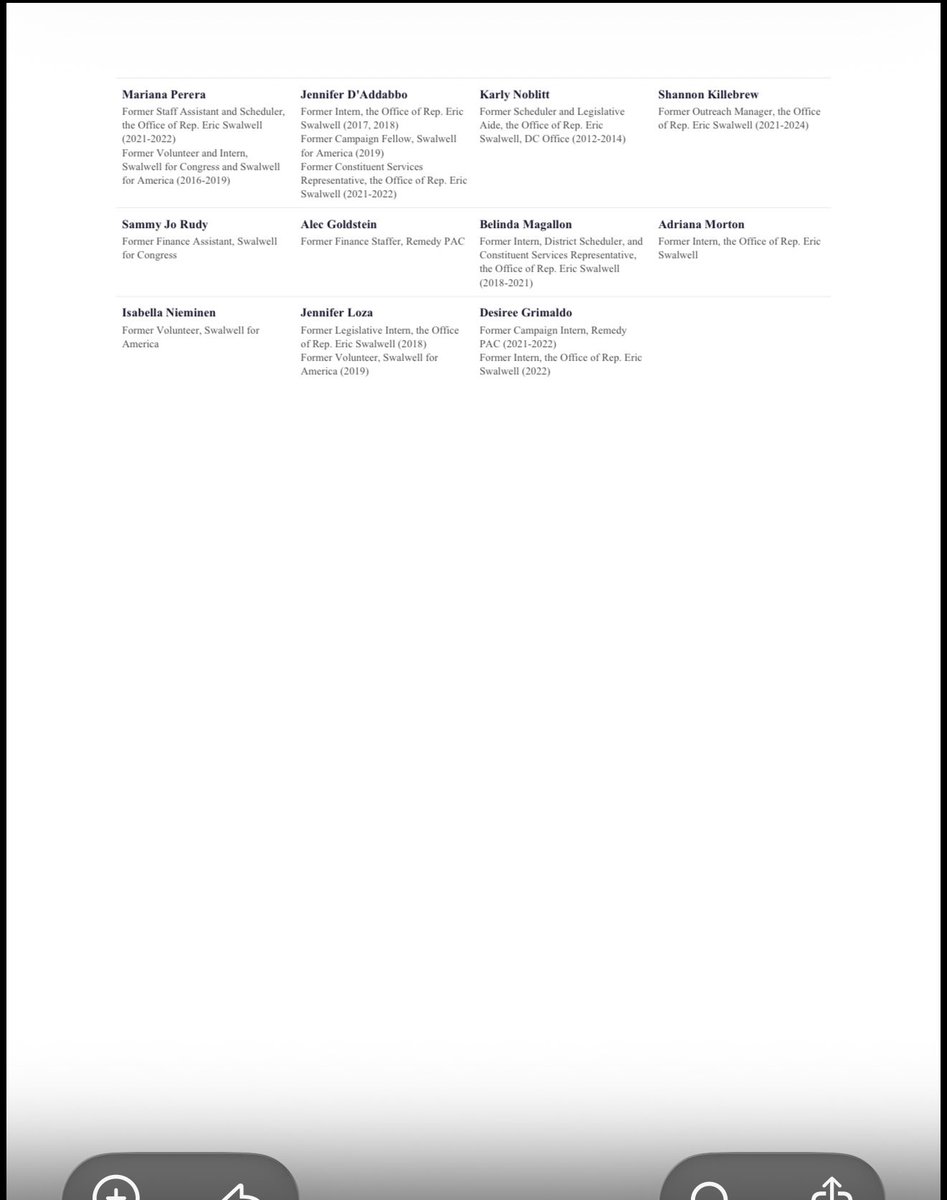
🚨 Former congressional staffers of Eric Swalwell release a letter calling on him to resign and drop out of the California governor’s race
“Justice is not optional. Accountability is not negotiable. We will not be silent.”
Read ⬇️
13
70
228
25,076
Mar 25
Pleased to be invited on @paulbarrontv today to share my perspective on #CLARITY and the current political state of play for #crypto in DC. We had an extensive discussion on the #stablecoin #yield debate.
@Thorn_Run
Mar 25

6
150
Chris Hayes retweeted

Mar 23
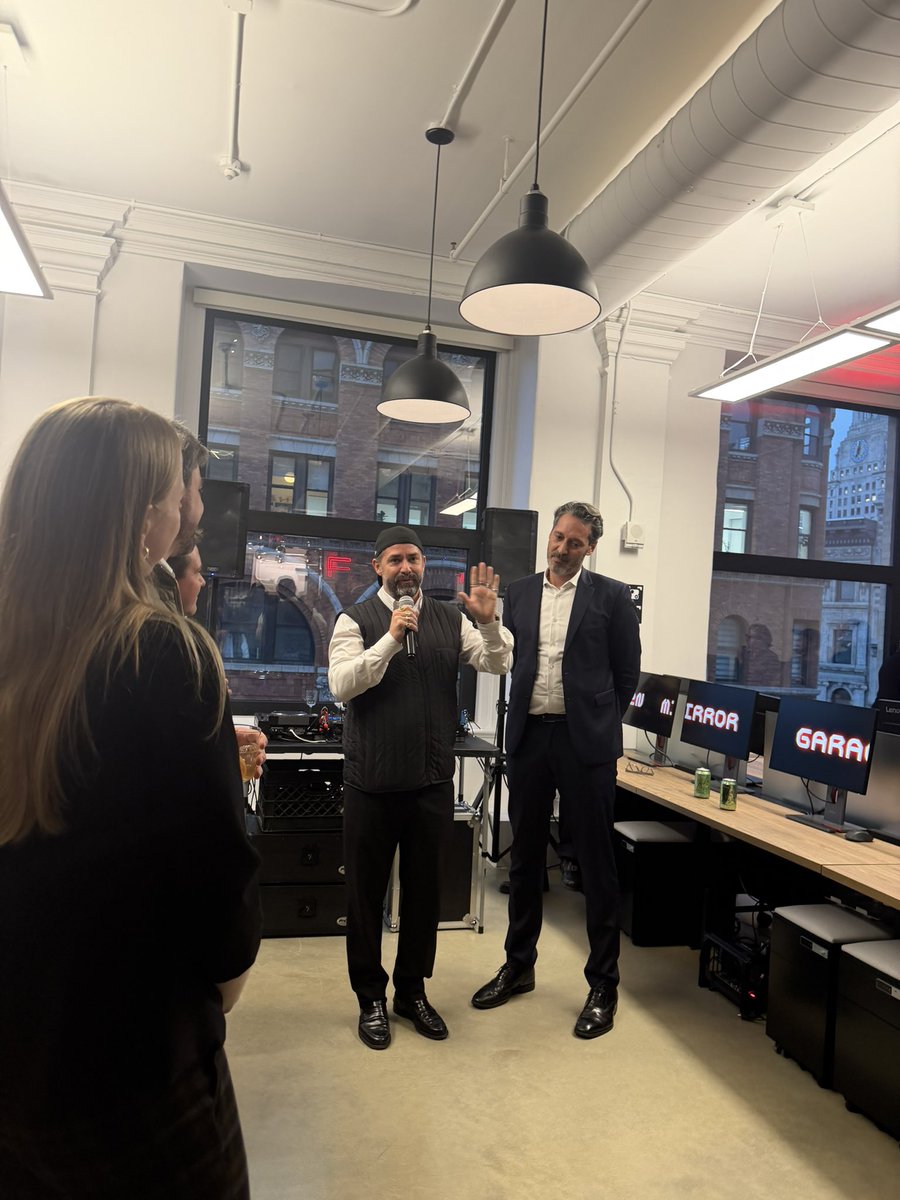
Ahead of its IPO, @Ledger has opened an office in NYC.
A huge win for the French company - but in some ways a setback for Europe.
A lot of US funds were at the event, betting on the French unicorn’s stock-market success after its record 2025 results.
Interesting detail: Ledger Enterprise’s head will run the NYC office (15 people).


6
4
58
10,180
Mar 21
On point. #Hospitals shouldn’t have a monopoly.
Mar 21

OK…. Promise it’s my last response. I think it will be eye opening for many of you and expose the hypocrisy of the @FAHhospitals. Hold onto your hats.
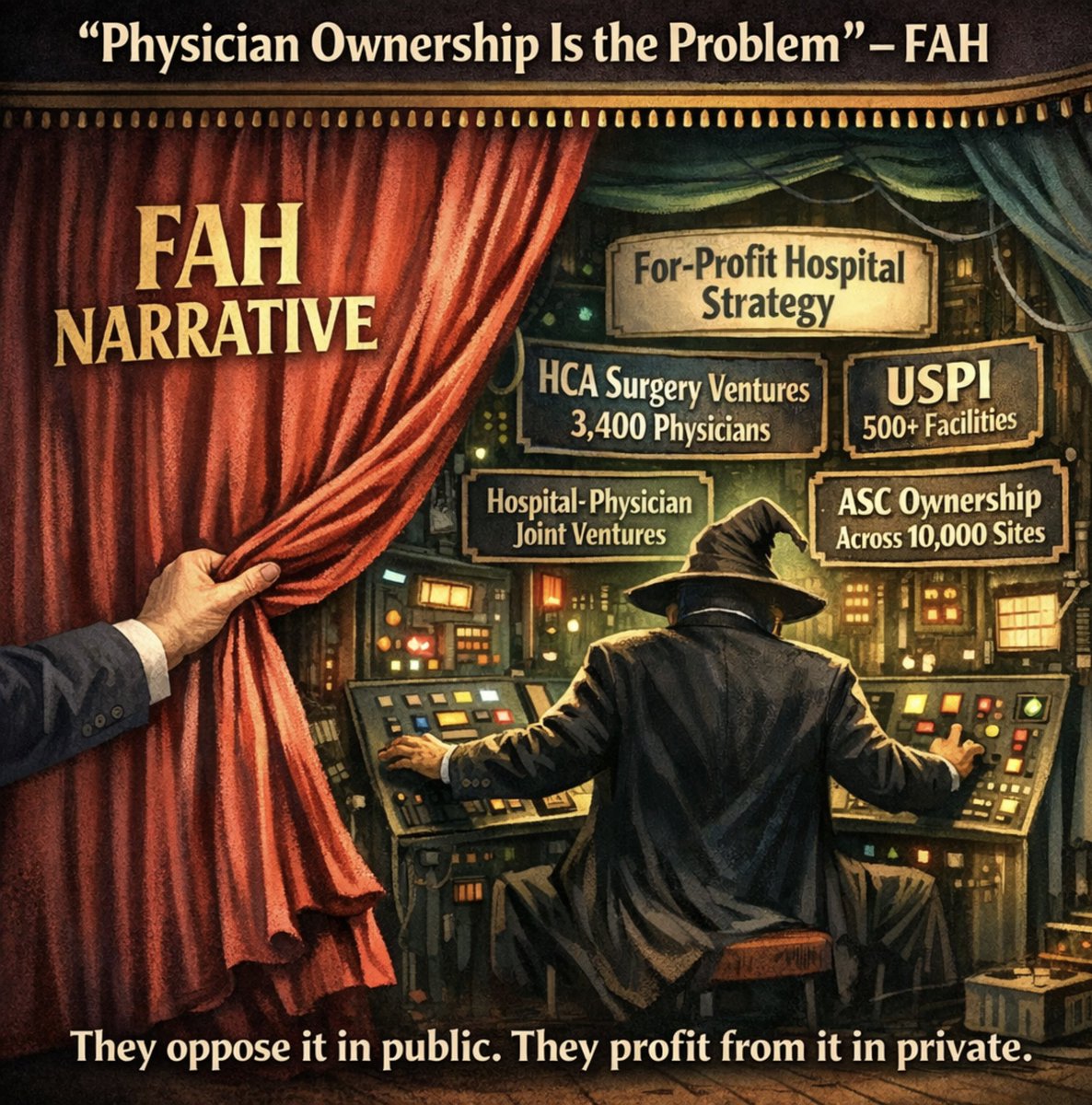
We need to dive into who the FAH is and who their members are. They represent the largest for-profit hospitals like HCA, Tenet/USPI, and Community Health Systems.
HCA was formerly known as Columbia Healthcare. They paid $1.7B in a fraud settlement for systematically overbilling Medicare, upcoding diagnoses, and paying physicians kickbacks for referrals and then changed their name to HCA. Part of their argument against POHs is blocking self-referrals, which we already proved is still happening today and clearly HCA has utilized for a long time.
But let’s look a little deeper. Let’s look at the hospital and ASC portfolio of these organizations.
HCA’s Surgery Ventures division jointly owns ~150 surgery centers with over 3,400 physician partners across 16 states. Tenet’s USPI owns over 500 facilities including surgical hospitals and ASCs partnering with thousands more surgeons. They market these arrangements aggressively.
HCA also owns Texas Orthopedic Hospital in Houston in partnership with surgeons and in particular with Fondren Orthopedic Group. In September 2024, a Houston Jury awarded Fondren $25.6M after finding that HCA brok its non-compete agreement by opening 10 competing hospitals while blocking its own physician partners from doing the same.
The Anti-Kickback safe harbor protecting physician investment in ASCs was finalized in 1999. The original proposal in 1993 protected only surgeon-owned ASCs. After “many in the industry” pushed for it through the comment process, the final rule added a hospital/physician joint venture category. HCA and Tenet built massive ASC portfolios as a result. By 2010, over 5000 ASCs were operating across American, predominantly physician-owned and many through joint ventures.
Then in 2010, the same hospital lobby used the ACA process to close the whole hospital exception for physician-owned inpatient hospitals. They pulled up the ladder behind them after locking in their own position.
I’ve never seen HCA or Tenet or USPI argue that their ASC or hospital joint ventures are somehow cherry picking patients or damaging their hospital ventures. Why would they engage and create these new facilities at scale if that were the case?
Today there are nearly 10,000 ASCs. Nobody has banned them. Insurers and the government are actively trying to move cases to these facilities. They are nearly universally owned in part or in whole by the physicians who work there. We have an embarrassingly large amount of data showing that physicians can own their own facilities and drive better outcomes at a lower cost. The most common procedures at these facilities? Orthopedic, cardiac, GI, and other “high value” cases argued by the AHA and FAH are being stolen by physician owned hospitals.
So my last question to you @FAHhospitals …. If this is your position as you stated below, are you going to ask all of your members to divest from every one of your joint ventures (hospitals and ASCs) given your ethical responsibility to do so? I think we all know the answer to that question.
I’m a partner with FAH members on some of these facilities as are many of my colleagues. We can all work together to help our healthcare system. None of this rhetoric is necessary or helpful.
Let’s evaluate a repeal of Section 6001 on its merit, not what the for-profit hospital lobby has argued despite participating in the very model they claim to despise.
29
Chris Hayes retweeted

A lawyer can own a law firm. A chef can own a restaurant. Apparently anybody in Los Angeles can own a hospice facility.
Yet doctors can’t own hospitals.
This is pure protectionism.
Mar 19

When @RepMGriffith asked insurance executives earlier this year if they opposed lifting the ban on physician-led hospitals, not a single hand went up.
This week, he asked physicians and hospital leaders the same question. Only ONE hand was raised — the CEO of the American Hospital Association.
‼️Let that sink in.
Communities in healthcare deserts are being denied care — not because physicians can’t help, but because special interest doesn’t want them to lead.
The same physicians trusted to treat patients every day are blocked from owning and operating hospitals — while large systems consolidate power, drive up costs and limit options.
Since the ban took effect in 2010:
• Hospital consolidation has increased.
• Prices have risen.
• Patient outcomes have declined.
✅ This policy hasn’t worked. It’s protected special interests — not patients.
✅ Physicians should be empowered, not controlled.
When physicians lead, patients succeed.
✅ It’s time for Congress to change course
✅ Time is up on the arbitrary ban on physician-led hospitals.
📺Watch the exchange:
youtube.com/live/SgsYVQf6QVE…
21
152
734
19,198
Chris Hayes retweeted

Mar 18
The SEC just approved tokenized securities trading on @NasdaqExchange, first nat'l exchange to get the green light
The headlines will start flying about how groundbreaking this is, but I think there's some nuances worth thinking about too 🧵
12
11
61
13,938
Mar 17
Pretty solid analysis of the all bad options available to exit this war.
Mar 16

Three weeks into the war with Iran, a number of observations as someone who spent years war-gaming this scenario.
1. The U.S. and Israel may have produced regime transition in the worst possible way.
Ali Khamenei was 86 and had survived multiple bouts of prostate cancer. His death in the coming years would likely have triggered a real internal reckoning in Iran, potentially opening the door to somewhat more pragmatic leadership, especially after the protests and crackdown last month. Instead, the regime made its most consequential decision under existential external threat giving the hardliners a clear upperhand. Now we appear to have a successor who is 30 years younger, deeply tied to the IRGC, and radicalized by the war itself – including the killing of family members. Disastrous.
2. About seven years ago at CNAS, I helped convene a group of security, energy, and economic experts to walk through scenarios for a U.S.--Iran war and the implications for global oil prices. What we’re seeing now was considered one of the least likely but worst outcomes. The modeling assumed the Strait of Hormuz could close for 4–10 weeks, with 1–3 years required to restore oil production once you factored in infrastructure damage. Prices could spike from around $65 to $175–$200 per barrel, before eventually settling in the $80–$100 range a year later in a new normal.
3. One surprising development: Iran is still moving oil through the Strait of Hormuz while disrupting everyone else. In most war games I participated in, we assumed Iran couldn’t close the Strait and still use it themselves. That would have made the move extremely self-defeating. But Iran appears capable of harassing global shipping while still pushing some of its own exports through. That changes the calculus.
4. The U.S. now finds itself in the naval and air equivalent of the dynamic we faced in Iraq and Afghanistan. It’s a recipe for a quagmire where we win every battle and lose the war. We have overwhelming military dominance and are exacting a tremendous cost. But Iran doesn’t need to win battles. They just need occasional successes. A small boat hitting a tanker. A drone slipping through defenses in the Gulf. A strike on a hotel or oil facility. Each incident creates insecurity and drives costs up while remind everyone that the regime is surviving and fighting.
5. The deeper problem is that U.S. objectives were set far too high. Once “regime change” becomes the implicit or explicit goal, the bar for American success becomes enormous. Iran’s bar is simple: survive and keep causing disruption.
6. The options for ending this war now are all bad. You can try to secure the entire Gulf and Middle East indefinitely – extremely expensive and maybe impossible. You can invade Iran and replace the regime, but nobody is seriously going to do that. Costs are astronomical. You can try to destabilize the regime by supporting separatist groups. It probably won’t work and if it does you’ll most likely spark a civil war producing years of bloody chaos the U.S. will get blamed for. None of these are good outcomes.
7. The other escalatory options being discussed are taking the nuclear material out of Esfahan or taking Kargh Island. Esfahan is not really workable. Huge risk. You’d have been on the ground for a LONG time to safely dig in and get the nuclear material out in the middle of the country giving Iran time to reinforce from all over and over run the American position.
8. Kharg Island can be appealing to Trump. He’d love to take Iran’s ability to export oil off the map and try to coerce them to end the war. It’s much easier because it’s not in the middle of IRan. But it’s still a potentially costly ground operation. And again. Again, the Iranian government only has to survive to win and they can probably do that even without Kargh.
9. The least bad option is the classic diplomatic off-ramp. The U.S. declares that Iran’s military capabilities have been significantly degraded, which is how the Pentagon always saw the purpose of the war. Iran declares victory for surviving and demonstrating it can still threaten regional actors. It would feel unsatisfying. But this is the inevitable outcome anyway. Better to stop now than after five or ten more years of escalating costs. Remember in Afghanistan we turned down a deal very early in the war with the Taliban that looked amazing 20 years later. Don’t need to repeat that kind of mistake.
10. The U.S. and Israel are not perfectly aligned here. Trump just needs a limited win and would see long-term instability as a negative whereas for Netanyahu a weak unstable Iran that bogs the U.S. down in the MIddle East is a fine outcome. If President Trump decided he wanted Israel to stop, he likely has the leverage to push it in that direction just as he pressured Netanyahu to take a deal last fall on Gaza.
11. When this is over, the Gulf states will have to rethink their entire security strategy. They are stuck in the absolute worst place. They didn’t start this war and didn’t want it and now they are taking with some of the worst consequences. Neither doubling down with the U.S. and Israel nor placating the Iranians seems overwhelmingly appealing.
12. One clear geopolitical winner so far: Russia. Oil prices are rising. Sanctions are coming off. Western attention and military resources are shifting away from Ukraine. From Moscow’s perspective, this war is a win win win.
13. At some point China may have a role to play here. It is the world’s largest oil importer, and much of that supply comes from the Middle East. Yes they are still getting oil from Iran. But they also buy from the rest of the Middle East, and a prolonged disruption in the Gulf hits Beijing hard. That gives China a real incentive to help push toward an end to the conflict.
52
Chris Hayes retweeted

The federal government is buying your private data to avoid getting a warrant.
Today, I introduced the Government Surveillance Reform Act to close the data broker loophole and require a warrant for every search of Americans’ data. wired.com/story/us-lawmakers…
241
1,480
5,654
110,143
Chris Hayes retweeted

Mar 1
Insider trading in broad daylight. This should be illegal no question.
Pricks like this are cashing in on our service members dying. Disgusting and immoral.
Mar 1

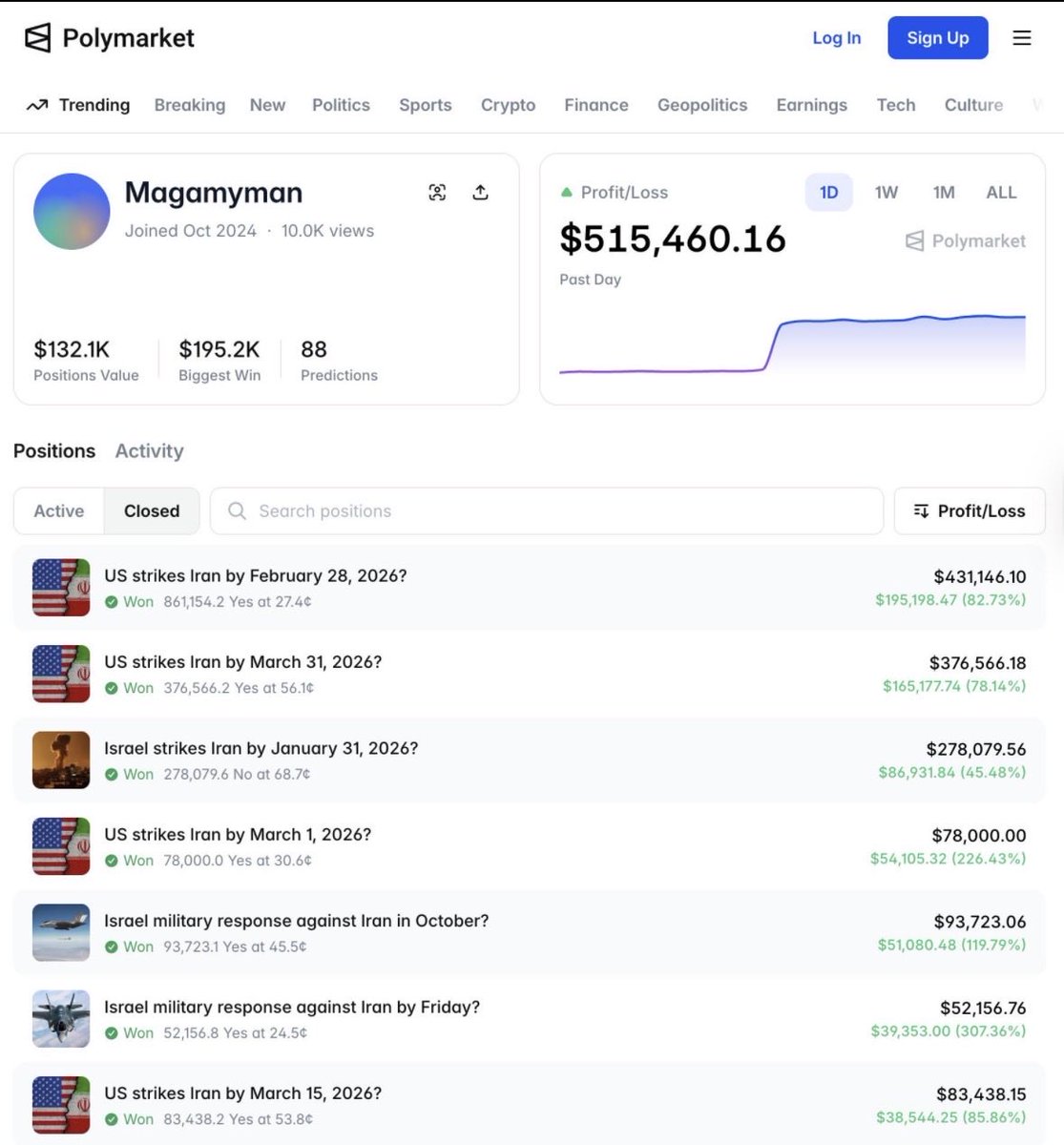
It appears that a Polymarket account called "Magamyman" made $515,000 in a single day betting on last night's U.S. strike on Iran, with the first trade placed 71 minutes before the news broke publicly.
When this person bought in, the market had this at a 17% probability. They turned roughly $87,000 into over half a million dollars overnight.
Reminder that Donald Trump Jr. sits on Polymarket's advisory board and his firm invested double-digit millions into the platform last year. The DOJ and CFTC both had active investigations into Polymarket that were dropped after Trump took office.
Prediction markets cannot be a vehicle for profiting off advance knowledge of military action.
We need answers, transparency, and oversight.
122
960
3,796
145,606
Chris Hayes retweeted

Feb 23
When industry participants bring an idea to leverage new technologies and foster modernization in our capital markets, we listen.
This relief marks another significant move toward promoting innovation related to tokenization. ⬇️

Today, the Division of Investment Management issued an exemptive order for WisdomTree Treasury Money Market Digital Fund to permit investors to trade the MMF's shares at $1 with a dealer on an intraday basis, regardless of its end-of-day NAV.
Read here: sec.gov/files/rules/ic/2026/…
75
116
615
45,679
Chris Hayes retweeted

Feb 18
Protect BRCA, protect developers
The most critical part of landing a good market structure bill from here is keeping amendments out of BRCA that weaken it
DeFi will be built outside the US if devs can be criminally prosecuted just for writing open source code

5/ The BRCA ensures the next Satoshi, @VitalikButerin , or @haydenzadams can build in the United States.
It clarifies that developers are not civilly or criminally liable as money transmitters solely because they deploy software that enables peer-to-peer value exchange.
22
27
168
25,863
Chris Hayes retweeted

Feb 1
When a boat doesn’t come home in a fishing town like Gloucester, the whole community feels it. We’re grieving with the families of the crew lost aboard the Lily Jean.
For the families, this is also an economic shock. If you’re able to support them, please visit fishingpartnership.org and designate your gift for the Lily Jean.
28
69
298
14,334