
CEO @ bashmarketing.co.nz | Crypto investor | Aquarius ♒🏺| Spirituality | New Zealand | Collating all essential X news right here | #XRP #SUI
Joined November 2024
- Tweets 8,409
- Following 249
- Followers 364
- Likes 9,371
47 Photos and videos














Pinned Tweet

Feb 24
No really, #Webull it's a great platform weather you're a beginner or a seasoned pro.
#Stocks, #shares, #crypto, #commodities and beat of all near 0 fees!
Join Webull today and unlock your bonus! Get started >>
Register with my referral link now>> a.webull.com/3Dbus4iinyu8bQ4…
3
12
200
Colourfullmask retweeted

May 1
This trader raked in a whopping $49,000 in profits in just two short weeks.
I've never seen a script on this level before.
His account balance is practically doubling every single day.
He started with just $500 in capital, plus a $20 Claude subscription.
I spent 10 hours completely breaking down his strategy:
He specializes in arbitrage plays on divergences between BTC spot prices and Polymarket odds,
then nails the precise close when the two converge back.
He doesn't need to predict the future at all—math formulas have already seen through everything.
He just reads the data accurately, then pockets the cash with ease.
This system runs fully automated 7x24, pure passive earnings while you chill.
You only need Claude laptop 1 hour/day.
Giving This Free for 24 hours. To get it:
1. Comment the word 'BTC'
2. Like and Retweet this post
3. Follow me @marryevan999 (so i can DM you)
308
233
539
57,636
Colourfullmask retweeted

Apr 30
🇺🇸 NOW: The White House opposes Anthropic's plan to expand access to Mythos, citing security concerns over a tool capable of carrying out cyberattacks, per WSJ.


32
20
146
15,515

Apr 29
RT @getphantomflow: If you’ve tried RSI, MACD, EMAs — and still lose trades…
It’s not your fault.
Those tools were never designed to follow…
116

Trained to be superhuman
Apr 23

FSD V14 is incredibly hyper-aware. The moment the blinker comes on, it recognizes this isn’t just a normal lane change, but a risky move to cut across for the exit. It starts braking in just 0.25 seconds. No human can match that.
267
1,144
8,697
568,462
Colourfullmask retweeted

Apr 20
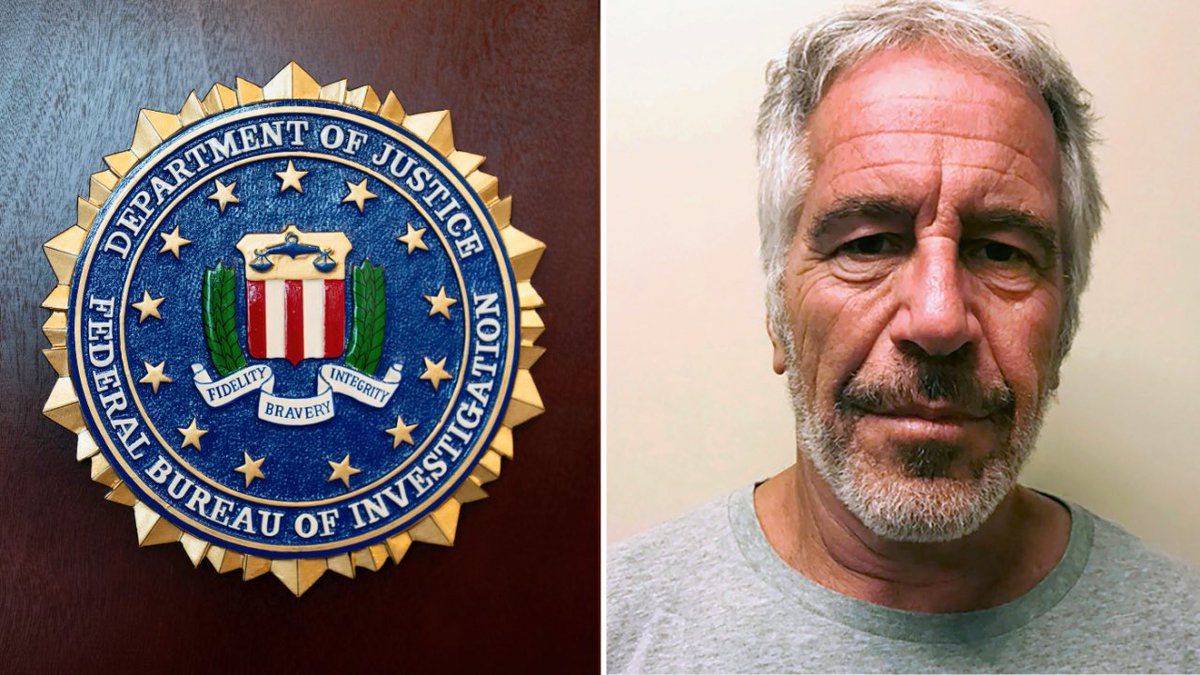
Pedophiles protecting pedo files

74
14,503
82,845
803,036
Colourfullmask retweeted

Apr 21
I became a Christian later in life and as someone who is curious by nature I researched the Bible. Noah’s Arc was one of those things I researched. I’ve been following this team for several years now and it’s been amazing to see Noah’s Ark uncovered.👇
Apr 18

We are the only team executing advanced underground scans of the site where Noah’s Ark landed.
Soon we will show it all to the world..
25
6
148
14,106
Colourfullmask retweeted

Apr 20
You are unequivocally safer using FSD!
Apr 20

Tesla FSD 14.2.2.5
On the way home yesterday, a kid on his bike who was distracted by his cellphone, lost control and swerved in front of my vehicle. As you’ll see, FSD spotted him early, was cautious upon seeing him, and came to a complete stop, preventing every parent’s nightmare.
I really hope he learned a lesson.
177
517
4,170
347,263
Colourfullmask retweeted

Apr 20
Two days ago, Kelp DAO suffered a $292 million exploit, the largest DeFi hack of 2026. The attack is elegant in its simplicity, terrifying in its implications, and a case study in how a single misconfiguration can cascade through the entire DeFi stack.
▶ The Setup
Kelp is a liquid restaking protocol. It creates rsETH -- a liquid token representing ETH restaked on EigenLayer. DeFi being DeFi, users want these tokens available across multiple chains. So Kelp uses LayerZero, a cross-chain messaging protocol, to bridge rsETH between networks.
The core idea behind any cross-chain bridge is straightforward:
- A user locks (or burns) tokens on Chain A
- An oracle observes and verifies that transaction
- The bridge mints an equivalent amount of tokens on Chain B
LayerZero's oracle mechanism is its Decentralized Verifier Network (DVN), a set of independent verifiers that must agree a cross-chain message is legitimate before it is executed.
The critical word here is "independent." And that's where things went wrong.
▶ The Vulnerability
For reasons that remain unclear, Kelp had configured a 1-of-1 DVN setup. One verifier. No redundancy. No independent confirmation. LayerZero had explicitly warned against this configuration. Kelp ignored the warning.
A single point of failure in a system securing hundreds of millions of dollars.
▶ The Attack
The attackers, preliminarily attributed to North Korea's Lazarus Group, didn't need to break any smart contract. They went after the infrastructure layer.
To verify blockchain state, a DVN relies on RPC nodes, the servers that synchronize and serve blockchain data. The attackers compromised two RPC nodes used by Kelp's lone DVN, then launched a DDoS attack against the remaining healthy nodes, forcing failover to the poisoned ones.
From there, it was trivial. The compromised RPC nodes presented a fabricated blockchain state to the DVN, pretending that 116,500 rsETH (~18% of total circulating supply) had been legitimately deposited on the source chain. The DVN, seeing no contradicting signal from any other verifier, approved the message. The attacker retrieved 116,500 rsETH freshly minted on the destination chain.
▶ The Liquidation
The attacker deposited the stolen rsETH as collateral on Aave V3 and Compound V3, then borrowed approximately $236 million in (W)ETH against it. By the time lending protocols reacted, freezing rsETH markets, halting new deposits, restricting withdrawals, the damage was done.
Aave now carries an estimated $177-196 million in bad debt. Its TVL plunged from ~$26.4 billion to ~$17.7 billion as panic withdrawals exceeded $5.4 billion. Whether Aave's safety module can fully absorb the loss remains an open question.
Not the decentralized and trustless ideal we went for... The Deeper Problem
Poisoning a handful of RPC nodes and DDoS'ing a few others was enough to fabricate $292 million out of thin air and erodes trust across the entire DeFi ecosystem. No smart contract exploit. No zero-day. Just a misconfigured verifier and an infrastructure-level attack on the nodes it relied on.
But the root cause runs deeper than Kelp's configuration. The fundamental problem is the trust model. Kelp's bridge, like most bridges and many Layer 2 rollups, relies on oracles reading blockchain state from RPC nodes and attesting that "this thing happened." The security of the entire system reduces to one question: can you trust the nodes feeding data to your verifier?
The Kelp hack proves the answer is no. Not the decentralized and trustless ideal we went for...
There is a fundamentally different approach: validity proofs. Instead of trusting oracles to honestly report what happened on another chain, you require a cryptographic proof, a zero-knowledge proof, that the state transition actually occurred according to the protocol's rules. The verifier on the destination chain doesn't trust any RPC node, any oracle, or any DVN. It checks the math. Either the proof is valid or it isn't.
This is exactly the model ZK rollups use to settle on Ethereum. The L1 doesn't ask an oracle "did these transactions happen?" It verifies a succinct proof that they did.
▶ The Goose That Lays the Golden Eggs
One could argue the attacker showed restraint. With a 1-of-1 DVN, they could have minted any amount, $292 BILLION, if they wanted. There are liquidity arguments (you can only extract what lending markets will let you borrow against) and detection arguments (the larger the mint, the faster the response). But there's a more cynical reading.
The Lazarus Group and similar state-sponsored actors are in a peculiar position. They could mint an amount large enough to collapse the entire DeFi ecosystem. But doing so would kill the very system they profit from. So they calibrate, enough to fund their operations, not so much that the ecosystem loses confidence and collapses. The goose must keep laying.
The DeFi ecosystem likes to talk about trustlessness and decentralization. But when a handful of poisoned RPC servers can drain nine figures and trigger a systemic crisis, we should be honest about where we actually are, and serious about the cryptographic tools that can actually get us there.
Stay safe.
33
59
232
49,940
Colourfullmask retweeted

Apr 15
Iran social media going nuclear

Trump is one of the reasons that proves the existence of the Satan in the world.
182
8,227
114,980
6,151,044
Colourfullmask retweeted

Apr 15
We were joking earlier about this being Biblical but holy fuck - kinda crazy. A bunch of bees shutting down the Israeli genocide machine, we didn't see this on this whacky ass timeline.
467
8,402
60,616
1,145,417
Colourfullmask retweeted

Apr 16
This is the most powerful AI trading use case I've come across all year.
Claude now has full control over your TradingView environment.
Build custom indicators, personalised AI workflows - all of it.
This guide gets your setup working in minutes ( shows you real use cases):

23
53
410
78,657
Colourfullmask retweeted

Apr 15
Building a institutional powerhouse with Hashi.
Sui Network
┃
┣ 📁 Custody & Wallets
┃ ┣ 📁 @BitGo
┃ ┣ 📁 @BlockdaemonHQ
┃ ┣ 📁 @Cobo_Global
┃ ┣ 📁 @FordefiHQ & @Ledger
┃
┣ 📁 Brokerages & Liquidity
┃ ┣ 📁 @Bullish
┃ ┣ 📁 @ereborbank
┃ ┗ 📁 @FalconXGlobal
┃
┣ 📁 Assets & Yield
┃ ┣ 📁 Sui Dollar (USDsui)
┃ ┣ 📁 @FDLabsHQ (FDUSD)
┃ ┣ 📁 @Matrixdock (XAUm)
┃ ┗ 📁 @wavedigital_ (Bonds)
┃
┣ 📁 Protocols
┃ ┣ 📁 @Navi_Protocol
┃ ┣ 📁 @Scallop_io
┃ ┣ 📁 @Suilendprotocol
┃ ┗ 📁 @bluefinapp
┃
┗ 📁 Infrastructure & Data
┣ 📁 @CFBenchmarks
┣ 📁 @Cubistdev
┗ 📁 @InveniamIO
The era of institutional $BTC utility is here on Sui.
32
87
482
20,602
Colourfullmask retweeted

You can enable FSD Supervised without setting a destination to let your Tesla show you around
Apr 14

Driving without a destination. The car drives itself and makes his own decisions. He’s drives off towards the horizon.
275
379
4,180
22,155,108
Colourfullmask retweeted

Apr 16
I genuinely can’t believe how anyone can see this and still think God isn’t real

3,771
13,294
123,354
6,665,724
Colourfullmask retweeted

Apr 15
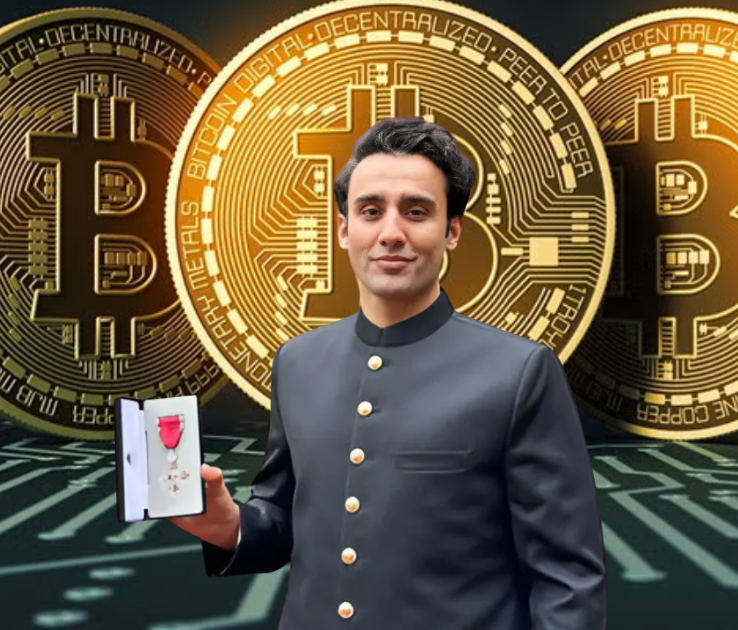
🚨 PAKISTAN OFFICIALLY LIFTS ITS BITCOIN BAN - EFFECTIVE TODAY
The State Bank of Pakistan has reversed its 2018 crypto ban under the new Virtual Assets Act 2026.
220 million people.
An estimated $25B–$300B in informal crypto activity now entering a formal market. 👀

15 Sep 2025

🇵🇰 LATEST: Pakistan’s PVARA is inviting global crypto exchanges / VASPs to apply for local licenses under its new framework.
With over 40M crypto users & ~$300B in annual trade, the market’s primed.

14
28
166
10,641


"For with God nothing will be impossible" Luke 1:37
God gave you hope so you can overcome.
Never give up on yourself or your family. That is the core fundamental.
Cultivate your friendships. Good friends around you will help you build and grow.
Be optimistic about the future. Be hopeful.
God bless 🙏
8
6
46
2,876
Colourfullmask retweeted

Apr 13
MSTR Premium Analysis (BTC Value)
Bitcoin: $70,809.1600
MSTR: $125.0800
Sats per Share: 225,157
BTC Value per Share: ₿0.00225157
($159.43)
$1,000 in MSTR: ₿0.01800104 BTC exposure
$1,000 in BTC: ₿0.01412247 BTC
✓ MSTR provides 0.00387857 MORE BTC exposure
( 27.46% premium = more sats per dollar)
$BTC $MSTR
1
1
12
1,584
Colourfullmask retweeted

Apr 13
Strategy has acquired 13,927 BTC for ~$1.00 billion at ~$71,902 per bitcoin and has achieved BTC Yield of 5.6% YTD 2026. As of 4/12/2026, we hodl 780,897 $BTC acquired for ~$59.02 billion at ~$75,577 per bitcoin. $MSTR $STRC strategy.com/press/strategy-…
1,426
3,079
21,276
1,960,898